Saturday, May 26, 2012
Ansel Adams: At the Water's Edge, Eloquent Light
This summer, the Peabody Essex Museum (PEM) will unveil an exhibition shedding new light on one of history's most iconic and beloved photographers. Ansel Adams: At the Water's Edge features more than 100 photographs combining famous images with extraordinary lesser-known works that focus on the artist's treatment and exploration of water in all its forms. Full of energy and dynamism, Adams' photographs of seascapes, beaches, bays, tide pools, clouds and waterfalls provide a fresh perspective on the artist's celebrated career. Ansel Adams: At the Water's Edge was organized by the Peabody Essex Museum where it will be on view for its exclusive U.S. engagement from June 9 through October 8, 2012, and will then travel to the National Maritime Museum in Greenwich, UK.
"Throughout his life, Adams was drawn to the water for its visual potential, exploring where elemental forces meet," says Phillip Prodger, exhibition curator and PEM's curator of photography. "As an innovative Modernist, he explored seriality, motion and time, using a range of techniques to capture a definitively fluid and elusive substance."
In this exhibition, drawn from the Ansel Adams Archive at the Center for Creative Photography at the University of Arizona and other prominent private and institutional collections, viewers will have the opportunity to see the pictures that Adams made for himself. Both grand and intimate at turns, these personal, and sometimes experimental images express his thoughts about the natural world, and often push the boundaries between realism and abstraction. Ranging in size from 3 x 5-inch prints to 10 x 12-foot murals, many will be appearing publicly for the first time at the Peabody Essex Museum. Adams was one of the first photographers to work in the large-scale mural format which has now become standard among contemporary artists.
At the Water's Edge provides a fresh look at Ansel Adams, as well-known and beloved pictures of rugged mountains, desert landscapes, and rocky cliffs blend with sparkling, spraying, whirling waters in all of their flowing power and reflective nuance. The undeniable attraction of water as a photographic subject captured Adams at an early age. The very first photograph Adams ever made, shown at PEM for the first time, features a watery pool at the Panama Pacific Exhibition of the 1915 World's Fair, made when Adams was just 14 years old. Over time, his lens claimed the territory between Yosemite National Park and the Pacific, as well as Hawaii and Alaska, where he shot images shown in this exhibition.
Notably, he made a powerful group of photographs of New England, the only coastal location outside of California that Adams photographed steadily. Over a course of decades, he explored the coast from Connecticut to Maine, especially in Massachusetts, making repeated trips to Cape Cod and Boston's North Shore.
HIGHLIGHTS
Visitors will have the opportunity to see rarely-viewed objects, including the print of Golden Gate before the Bridge that used to hang over Ansel Adams' desk, and which he considered among his very best photographs. At the same time, stunning, oversized exhibition prints of iconic photographs including Clearing Winter Storm, Yosemite, Tetons and the Snake River, Grand Teton National Park and Stream, Sea, Clouds, Rodeo Lagoo, Marin County, California will be on display, among others.
One of the surprises revealed in At the Water's Edge is Adams' interest in using sequential imagery to freeze motion in time. An especially powerful example is the majestic surf sequence, San Mateo County Coast, California, 1940. Adams was possibly the first well-known photographer since Eadweard Muybridge to attempt to use photography in this way, employing seriality and sequence to create a cohesive narrative. Another series of photographs of Old Faithful Geyser, Yellowstone National Park, shows a different approach to sequentiality. A poignant exploration of form, movement and time, they can be viewed as Adams' version of Monet's haystacks. As with Monet, Adams visited Old Faithful at different times of day, photographing in varying light and changing atmospheric conditions.
Another unexpected addition is the exceedingly rare Japanese-style screen, Grass and Pool, 1948, dating from a period of tremendous creativity in Adams' work. Standing on round metal feet, it was designed to be shown directly on the floor in a domestic environment. In subject and treatment, it was inspired by Asian painted screens in which picture planes are flattened and perspectives tilted. The three articulated panels can be angled to catch the light differently, the rhythm of the fold cleverly mirroring the angular pattern of the exposed grass.
For Adams, part of the appeal of creating such a work was thwarting conventional expectations about what a photograph might look like and where and how it could be shown. Like many modernists, Adams considered photographs not just as images but as objects - the craft and sheer physical presence of the work reinforced its significance as a work of art and the focus of contemplation.
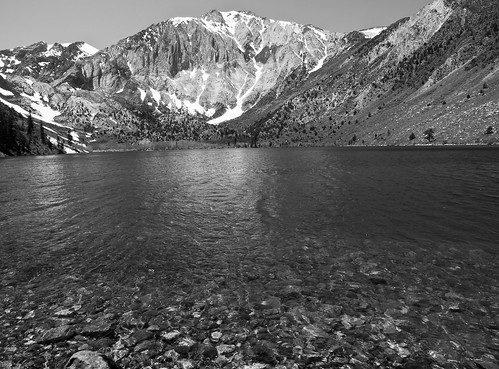
Reflections at Mono Lake, California, 1948; Photograph by Ansel Adams; Gelatin silver print; David H. Arrington Collection; ©2011 The Ansel Adams Publishing Rights Trust
ABOUT THE PEABODY ESSEX MUSEUM
The Peabody Essex Museum presents art and culture from New England and around the world. The museum's collections are among the finest of their kind, showcasing an unrivaled spectrum of American art and architecture (including four National Historic Landmark buildings) and outstanding Asian, Asian Export, Native American, African, Oceanic, Maritime and Photography collections. In addition to its vast collections, the museum offers a vibrant schedule of changing exhibitions and a hands_on education center. The museum campus features numerous parks, period gardens and 22 historic properties, including Yin Yu Tang, a 200_year_old house that is the only example of Chinese domestic architecture on display in the United States.
Amon Carter Museum Exhibited Ansel Adams Photographs in 2010
Ansel Adams (1902–1984) Leaf, Glacier Bay National Monument, Alaska, ca. 1948. From What Majestic Word, In Memory of Russell Varian, Portfolio IV (1963) Gelatin silver print ©2010 The Ansel Adams Publishing Rights Trust
Works by one of the world’s most widely recognized and celebrated photographers was on view in 2010. Ansel Adams: Eloquent Light featured 40 photographs by the artist and ran from May 29 through November 7, 2010. at the Amon Carter Museum, Fort Worth , Texas
“Ansel Adams was the last major artist to subscribe to the romantic tradition of American landscape, an artistic lineage that included Albert Bierstadt, Thomas Cole, William Henry Jackson and Carleton Watkins,” says John Rohrbach, senior curator of photographs. “This exhibition, comprised of prints from the museum’s holdings and a private collection, spans 50 years of Adams’ spectacular career and gives museum visitors insight into his vision of inspiring beauty.”
Adams’ uplifting images have helped define landscape photography, fulfilling an ideal of a glorious American West before tourism and development marked the land. A hallmark use of light coupled with an affinity for grand gestures yielded his trademark oversized prints. This exhibition, however, also showcases his lesser-known, non-landscape work and his initial devotion to Pictorialism, a photographic movement (in vogue from around 1885 to the early years of the 20th century) that subscribed to the idea that art photography should emulate — through soft focus, exotic printing techniques, and other methods — the more established art mediums of the time, particularly painting and etching.
Early in his career, Adams aimed to reveal the character of a landscape through the balance of light and dark. By limiting his photographs to contact size (the size of the originating negative) and printing them on matte-finish papers, he made works that delivered the intimacy of fine etchings. The exhibition shows how, in his later years, Adams sought to broaden his audience by publishing finely crafted portfolios of original prints that, along with his signature landscapes, included portraits, close-ups and even industrial photographs.
“A trained pianist, Adams often used musical analogy to explain his artistic practice — calling each negative a composer’s score and each print a unique performance,” Rohrbach says. “He visualized his results at the time he made each negative in order to better reflect his psychological experience of his subjects.”
An educator and a leader among West Coast artists, Ansel Adams (1902–1984) led photography workshops for years around Yosemite National Park. A strong advocate of environmental causes, he served on the board of the Sierra Club from 1937 to 1971. Among his many honors, he won three John Simon Guggenheim Memorial Foundation fellowships, was elected to the American Academy of Arts and Sciences, and in 1980 was awarded the Presidential Medal of Freedom.
Adams was a consummate and ardent admirer of the natural world, and he traveled the country from the national parks of Yosemite and Big Bend to the Taos Pueblo in New Mexico. From Mount McKinley (Ala.) to Death Valley (Calif.), he searched high and low, sharing his vision through exquisitely rendered prints bound in hand-crafted books and portfolios. His longstanding goal — “to rekindle an appreciation of the marvelous” — is evidenced here in this exhibition.
Photos from exhibit:
Ansel Adams (1902–1984) Clearing Winter Storm, Yosemite National Park, 1944 Gelatin silver print, before 1975 ©2010 The Ansel Adams Publishing Rights Trust Amon Carter Museum, Fort Worth, Texas Anonymous gift
Ansel Adams (1902–1984) Vernal Fall, Yosemite Valley, California, ca. 1948 From What Majestic Word, In Memory of Russell Varian, Portfolio IV (1963) Gelatin silver print ©2010 The Ansel Adams Publishing Rights Trust Amon Carter Museum, Fort Worth, Texas
Ansel Adams (1902–1984) Santa Elena Canyon, Big Bend National Park, Texas, 1947 Gelatin silver print, 1975 ©2010 The Ansel Adams Publishing Rights Trust Amon Carter Museum, Fort Worth, Texas
Friday, May 25, 2012
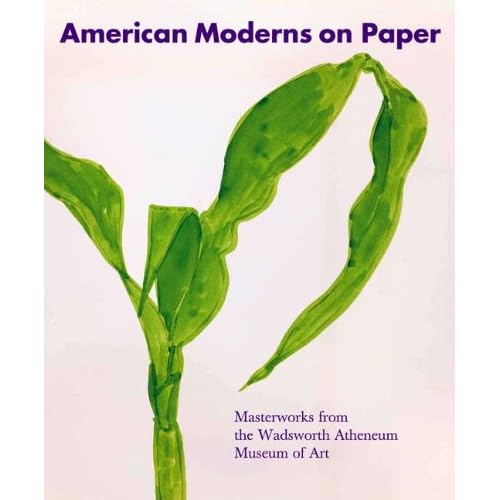
Marin, Hopper, Davis and O’Keeffe: American Moderns on Paper: Masterworks from the Wadsworth Atheneum Museum of Art
Andrew Wyeth (1917–2009) Granddaughter, 1956. Dry brush and opaque watercolor on thick wove paper © Andrew Wyeth Wadsworth Atheneum Museum of Art, Hartford, CT; Gift of Mrs. Robert Montgomery, 1991.79
Georgia O’Keeffe (1887–1986) Slightly Open Clam Shell, 1926. Pastel on white ground on pressed artist’s board © Georgia O’Keeffe Museum/Artist Rights Society (ARS) Wadsworth Atheneum Museum of Art, Hartford, CT; The Douglas Tracy Smith and Dorothy Potter Smith Fund, 2009.1.1
Stuart Davis (1892–1964) Yellow Truck, 1939. Opaque watercolor and black ink with traces of pencil on wove paper © Estate of Stuart Davis/Licensed by VAGA, New York, NY Wadsworth Atheneum Museum of Art, Hartford, CT; Gift of Mrs. James Laughlin, 1981.61
Edward Hopper (1882–1967) Marshall's House, 1932 Opaque and transparent watercolor over graphite on wove paper Wadsworth Atheneum Museum of Art, Hartford, CT; Purchased through the gift of Henry and Walter Keney, 1933.93 Wadsworth3
Begining on February 27, 2010, the Amon Carter Museum presented American Moderns on Paper: Masterworks from the Wadsworth Atheneum Museum of Art. The exhibition, from the country’s oldest public art museum, was on view through May 30, 2010, and showcased a selection of the finest watercolors, pastels and drawings by avant-garde American artists working from 1910 to 1960. Admission is free.
John Marin (United States, 1870-1953), From the Bridge, N.Y.C., 1933, opaque and transparent watercolor and charcoal, collage pieces on ivory paper, 21 7/8 x 26 3/4 inches. Wadsworth Atheneum Museum of Art, The Ella Gallup Sumner and Mary Catlin Sumner Collection Fund, 1948.479.
Edward Hopper (United States, 1882-1967), Rockland Harbor, 1926, watercolor on paper, 13 7/8 x 20 inches. Wadsworth Atheneum Museum of Art, The Ella Gallup Sumner and Mary Catlin Sumner Collection Fund, 1928.324.
Edward Hopper (United States, 1882-1967), Truro Station Coal Box, 1930, watercolor on paper, 19 1/2 x 13 1/2 inches. Wadsworth Atheneum Museum of Art, The Ella Gallup Sumner and Mary Catlin Sumner Collection Fund, 1934.9.
Edward Hopper (United States, 1882-1967), Custom House, Portland, 1927, watercolor on paper, 14 x 20 inches. Wadsworth Atheneum Museum of Art, Gift of Robert W. Huntingon, 1946.232.
Edward Hopper (United States, 1882-1967), Methodist Church, Provincetown, 1930, watercolor on paper, 25 x 19 3/4 inches. Wadsworth Atheneum Museum of Art, The Ella Gallup Sumner and Mary Catlin Sumner Collection Fund, 1951.19.
“The exhibition featured major works by some of the leading artists of the early twentieth century, including Charles Demuth, Edward Hopper, John Marin and Georgia O’Keeffe, and it supports the premise that some of their finest and most innovative work was executed on paper, rather than on canvas,” said Jane Myers, senior curator of prints and drawings at the Amon Carter Museum.
Organized by the Wadsworth Atheneum Museum of Art in Hartford, Conn., this exhibition included nearly 100 works on paper, bringing to the local audience works by artists seldom featured at the Carter, such as Arshile Gorky, Hans Hofmann and Ellsworth Kelly. It was the first major display of the Wadsworth Atheneum’s American works on paper from the early twentieth century.
The exhibition also spotlighted the Neo-Romantics and surrealists who came to America in the 1930s. Featuring a diversity of styles from the early twentieth century, it juxtaposes modernism and anti-modernism and explores the tension between the two movements.
The Carter was the first venue for American Moderns on Paper before it traveled to the Portland Museum of Art in Maine and then home to be on view at the Wadsworth Atheneum.
A scholarly catalog, published by Yale University Press, accompanied the exhibition and presented new research on the relevance of watercolors, drawings and pastels on paper to the history of modern art in America. The exhibition was curated by Elizabeth Mankin Kornhauser, Chief Curator and Krieble Curator of American Painting and Sculpture at the Wadsworth.
T
Van Gogh's Van Goghs
Seventy paintings by Vincent van Gogh (1853-1890), the largest survey of his career outside The Netherlands in more than a quarter of a century, were on view at the National Gallery of Art, Washington, October 4, 1998 - January 3, 1999. Van Gogh's Van Goghs: Masterpieces from the Van Gogh Museum, Amsterdam presented the work of one of the world's most renowned and original artists. This unique group of paintings -- part of Van Gogh's treasured oeuvre kept together by his brother Theo and his family -- will form an unprecedented loan from the Van Gogh Museum, home to the single greatest collection of Van Gogh's paintings, drawings, and letters.
After its Washington showing at the National Gallery, the exhibition traveled to the Los Angeles County Museum of Art, its only other venue, January 17 - May 16, 1999. The Van Gogh Museum generously offered to loan the paintings to the two U.S. museums during the period when it was closed to the public for renovation and construction of a new wing, from September 1, 1998, to the reopening in the spring of 1999.
The seventy Van Gogh paintings, the largest number ever loaned by the Van Gogh Museum since its opening in 1973, have been selected by curator Louis van Tilborgh and director John Leighton of the Van Gogh Museum in consultation with the National Gallery. The exhibition is organized by the National Gallery of Art, Washington, and the Van Gogh Museum, Amsterdam, in collaboration with the Los Angeles County Museum of Art.
"Only a visit to Amsterdam in the past twenty-five years could equal the experience visitors will have when they see these breathtaking works created during the intensely productive years of Van Gogh's brief life," said Earl A. Powell III, director, National Gallery of Art. "His uncompromisingly insightful self-portraits, his deeply sympathetic depictions of working Dutch folk, and his discovery of radiant light and the Mediterranean landscape are represented in works that span all periods of his career."
According to John Leighton, director of the Van Gogh Museum, "Since its foundation over twenty years ago, the Van Gogh Museum has become one of the most popular and successful museums in Europe. Millions of visitors from all over the world have come to pay homage to Van Gogh and to enjoy a collection that offers a comprehensive overview of his work. We are delighted that the temporary closure of our building will offer a unique opportunity for the American public to share this experience of coming face to face with one of the most important artists of the last century."
Van Gogh's work went largely unrecognized during his lifetime. Today, more than a century after the artist's death, the vibrant colors, explosive brushwork, and emotional intensity of his paintings make them some of the best-known and loved images in all of art. The exhibition encompassed all phases of Van Gogh's oeuvre: his earliest works in the Netherlands; his reactions to French impressionism in 1886 when he went to Paris; the images he painted while in Arles and in hospitals in Saint-Rémy in southern France; and his last months in Auvers-sur-Oise.
The exhibition included such icons as
Potato Eaters (1885),
The Bedroom (1888),
Self-Portrait as an Artist (1888),
The Harvest (1888), and
Wheatfield with Crows (1890).
Works never before seen in the United States were also on view, such as
Scheveningen Beach in Stormy Weather (1882), one of the earliest works,
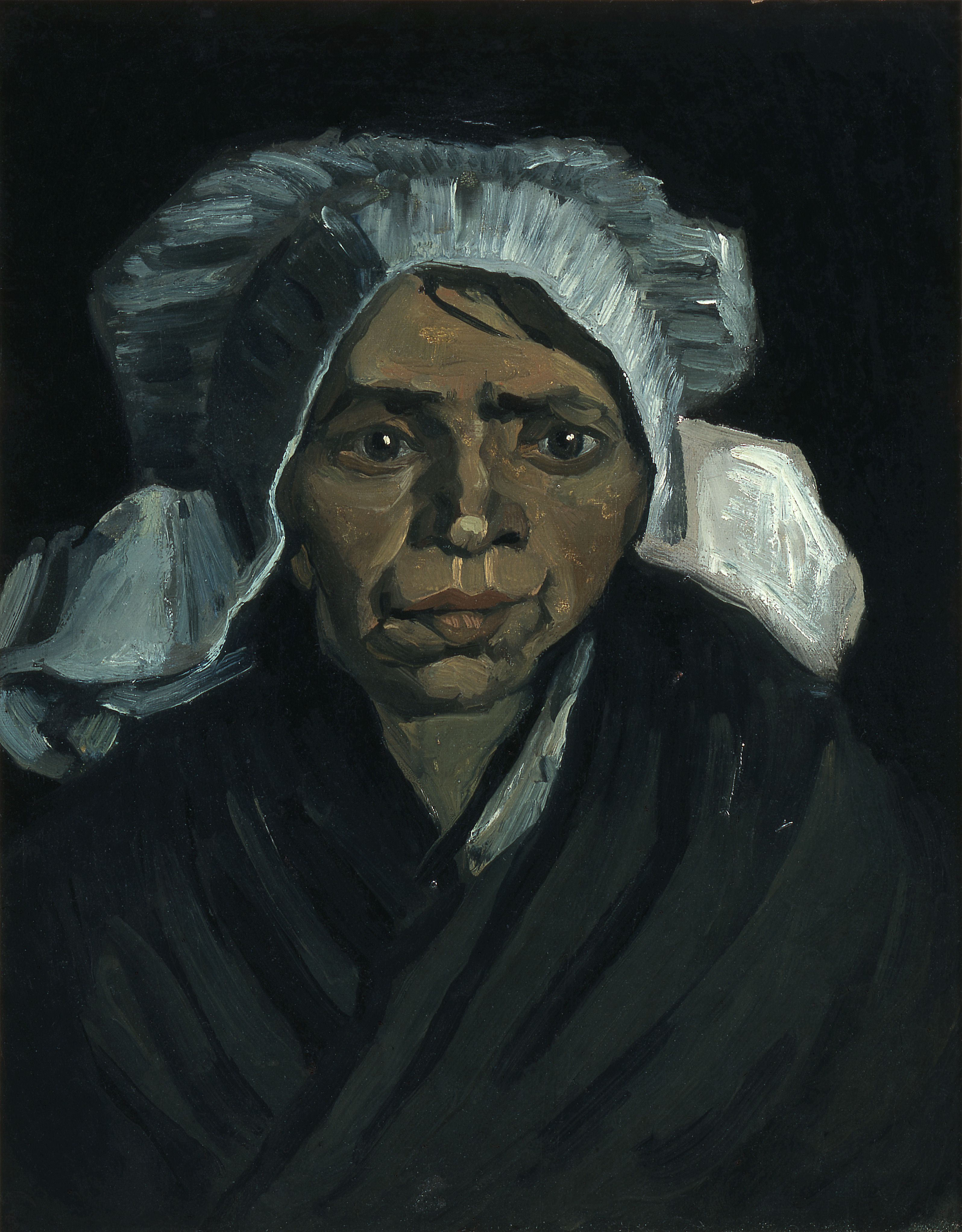
as well as Head of a Peasant Woman
(1885) and
Flying Fox (1886).
Founded by Van Gogh's nephew, Dr. V.W. van Gogh, the Van Gogh Museum opened to the public in 1973. Its holdings, on loan from the Vincent van Gogh Foundation, include some 200 paintings and more than 500 drawings and 700 letters by the famous Dutch master, as well as an important collection of works by other nineteenth-century artists. An increasingly popular tourist site, the museum welcomed one million visitors last year, twenty to thirty percent of whom were from the U.S. during the summer season.
From Homer to Hopper: American Watercolor Masterworks from the Currier Museum of Art
Maurice Brazil Prendergast, (American, 1859-1924), The Stony Pasture, circa 1896-1897. Watercolor and graphite on paper, 19 3/8 in. x 13 7/8 in. (49.21 cm x 35.24 cm). Currier Museum of Art, Manchester, New Hampshire. Museum Purchase: George A. Leighton and Mabel Putney Folsom Fund, 1959.6
The Currier Museum of Art brought from its vault a magnificent collection of watercolor paintings as it presents From Homer to Hopper: American Watercolor Masterworks from the Currier Museum of Art, from March 6 through June 7, 2010.
From Homer to Hopper is drawn from the impressive collection of watercolors that the museum has built over its 80-year history. These extraordinary works - by such nationally known masters as Winslow Homer, Maurice Prendergast, Childe Hassam, Rockwell Kent, Edward Hopper, Charles Burchfield, John Marin, Stuart Davis, and Andrew Wyeth - have not been exhibited as a group in almost twenty years. The exhibition also includes watercolors by Georgia O'Keeffe, Arthur Dove, and William Zorach, among others, borrowed from regional private collections.
More than seventy-five works trace the dynamic history of the watercolor medium over the last 175 years. Some of the earliest painters in the exhibition are itinerant folk artists like Joseph H. Davis, who painted lively, decorative portraits of families in domestic settings along the Maine-New Hampshire border in the mid 1830s. By the 1880s as watercolor gained recognition among critics and the public, Winslow Homer exploited the expressive potential of the medium taking it to new heights. He merged technical virtuosity with compelling narratives to produce profoundly moving and striking images such as
Four Fishwives (1883) and
The North Woods (1894).
As a young man Andrew Wyeth was inspired by Homer. Wyeth's four watercolors in the exhibition trace his development from the brightly colored, broadly executed early work to the muted tones of his arresting mature compositions. Another great realist in the show, Edward Hopper, composed haunting views of New England architecture in a straightforward style.
In contrast, Impressionists Childe Hassam and Maurice Prendergast found the portability of watercolor and its brilliant colors conducive to painting landscapes and scenes of daily life along the New England coast. Modernists of the twentieth century - like Zorach, Demuth, Dove and Marin - use the translucency of watercolor to explore forms abstracted from the landscape.
Many artists represented in the exhibition worked in another media as well as watercolor. In several instances throughout the exhibition, examples of their watercolors were paired with an oil to demonstrate the different aesthetic outcomes they achieved in the two media. For example, the pairing of Andrew Wyeth's watercolor study next to his major egg tempera Spindrift painted in Maine in 1951 revealed the luminous reflection of sunlight he could convey in watercolor, in contrast to the minute detail and sense of texture he could capture in tempera.
About the Currier
The Currier Museum of Art (www.currier.org) in Manchester, NH is home to an internationally respected collection of European and American paintings, decorative arts, photographs and sculpture. New galleries showcase the collection of over 11,000 objects, including works by Picasso, Matisse, Monet, O'Keeffe, and Warhol. Visitors of all ages will enjoy engaging traveling exhibitions, a series of dynamic programs ranging from music to lectures to hands-on art-making, an expanded gift shop and an airy new café filled with light and equipped with Wi-Fi.
The associated Art Center offers studio classes, art camps and intensive workshops for all ages. The museum also owns the Zimmerman House designed by Frank Lloyd Wright, complete with the original furnishings and the owners' fine art collection. The Zimmerman House is the only Wright-designed house in New England open for public tours which are offered April - December. To book a tour or get more information, visit www.currier.org or call 603.669.6144 x108.
American realists, Homer to Hopper [Hardcover]
Gruppe, Hibbard and Thieme - Three Artists of Cape Ann
Marine Arts Gallery presents an exhibition and sale showcasing "The Big Three~Artists of Cape Ann School of Art~ Emile A. Gruppe (1896-1978) Aldro T. Hibbard (1886-1972) and Anthony Thieme (1888-1954).
Gruppe paintings include views of Rockport's famous "Motif #1", several Gloucester harbor fishing scenes and a colorful fall landscape of New Hampshire.
A stunning winter scene by A.T. Hibbard of Rockport Harbor 1942 is included.
Busy Day At The Dock A.Thieme
Working On The Schooner A. Thieme
There is also as a pair of Anthony Thieme paintings of Gloucester Harbor that were purchased directly from Thieme's widow in 1966. Paperwork with the paintings include the original bill of sale and cancelled check made out to Mrs. Thieme.
The exhibit opens May 30th through June 30th. Marine Arts Gallery is celebrating its 44th year in historic Salem, Massachusetts next door to the Peabody-Essex Museum, 135 Essex Street, Salem, MA 01970. (978)745-5000.
Thursday, May 24, 2012
Martin Lewis - National Gallery
Born in Victoria, Australia, Martin Lewis was a printmaker who is known for his scenes of urban life in New York during the 1920s and 1930s. As a youth Lewis held a variety of jobs that ranged from working on cattle ranches in the Australian Outback, in logging and mining camps, to being a sailor. In 1898, he moved to Sydney for two years where he received his only formal art training. During this period he may have been introduced to printmaking; a local radical paper, The Bulletin, published two of his drawings.
Lewis left Australia in 1900 and first settled in San Francisco. He eventually worked his way eastward to New York. Little is known about his life during the following decade except that he made a living as a commercial artist and produced his first etching in 1915. Lewis' skill as an etcher was noticed by Edward Hopper, who became a lifelong friend. In 1920, dissatisfied with his job, Lewis used his entire savings to study art and to sketch in Japan. He returned to New York after a two-year stay and resumed his commercial art career, but also pursued his own work as a painter and printmaker.
During the Depression, Lewis moved to Newtown, Connecticut, but later returned to Manhattan, where he helped establish a school for printmakers. From 1944-1952 Lewis taught a graphics course at the Art Students League in New York.
During his thirty-year career, Lewis made about 145 drypoints and etchings. His prints, like Shadow Dance and Stoops in Snow, were much admired during the 1930s for their realistic portrayal of daily life and sensitive rendering of texture. The artist's skill in composition and his talent in the drypoint and etching media have received renewed attention in recent years. Lewis is one of the few printmakers of this era who specialized in nocturnal scenes. Some scholars consider his print Glow of the City his most significant work because of the subtlety of handling. A minute network of dots, lines, and flecks scratched onto the plate creates the illusion of transparent garments hanging in the foreground, while the Chanin Building, an art deco skyscraper, towers over the nearby tenements.
* Arc Welders at Night, 1937,
* Chance Meeting, 1940-1941
* Glow of the City, 1929,
* Shadow Dance, 1930,
* Stoops in Snow, 1930,
Americans in Florence: Sargent and the American Impressionists
From 2nd March to 15th July 2012 the exhibition "Americans in Florence. Sargent and the American Impressionists" will be displayed at Palazzo Strozzi in Florence._
In 2012, exactly 500 years since the death of Amerigo Vespucci, Florence will be marking this event with an exhibition designed to celebrate the strong ties linking the Old World and the New, and the cosmopolitan ambiance that bound the city to the New World for ever, transmitting European culture and sophistication to America.
The exhibition explores the American impressionists' relationship with Italy, and with Florence in particular, in the decades spanning the close of the 19th and dawn of the 20th centuries. There was a marked upswing in the number of American artists travelling to Europe after the Civil War ended in 1865, and the trend continued on into the early 20th century.
Hundreds of painters came to Paris and other parts of France while others studied in Germany, with England, Holland and Spain being other favourite locations. Italy, however, was an inescapable pole of attraction for most of them. Florence, Venice and Rome had been at the heart of the Grand tour for centuries and had become legendary for all those eager to study the art of the past, quite apart from their appeal in terms of the climate, the countryside, the people, and the overall atmosphere prevailing in them.
For the first time since recent exhibitions in France and England explored these American artists' relationship with those two countries, this exhibition will be hosting the work of American painters who embraced the artistic vocabulary of Impressionism and spent time in Italy.
he exhibition will contain works by painters who, while not explicitly subscribing to the new style, were nevertheless crucial masters for the younger generations: men such as Winslow Homer, William Morris Hunt, John La Farge and Thomas Eakins.
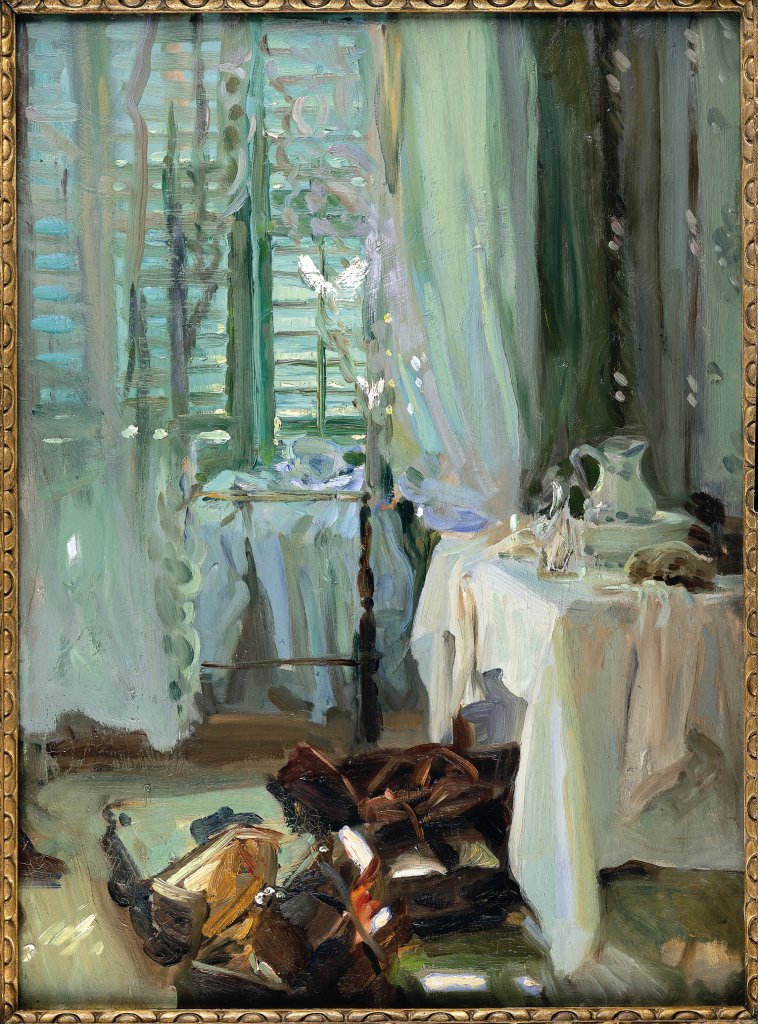
John Singer Sargent, The Hotel Room, oil on canvas; 60.9 x 44.4 cm; Private collection
These will be followed by the great forerunners, artists such as John Singer Sargent, Mary Cassatt and James Abbott McNeill Whistler, who could boast of strong cosmopolitan leanings.
The main part of the exhibition will comprise works by artists of remarkable quality who spent time in Florence and who deserve to be better known. Their number includes members of the American impressionist group known as the Ten American Painters: William Merrit Chase, John Henry Twachman and Frederick Childe Hassam. Franck Duveneck also played an important role in fostering relations between American and local artists by putting together the “Duveneck boys“, a group that included his wife Elisabeth Boott and the painter Joseph Rodefer De Camp.
The Americans in Florence lived their lives and pursued their activities in close contact with their scholar, collector, writer and art critic compatriots in the city, with some of whom they had previously had dealings in America: Gertrude Stein, Mabel Dodge, Bernard Berenson, the brothers Henry and William James, Egisto Fabbri and his family (his sisters Ernestine, a painter, and Cora, a poet) Mabel Hooper La Farge, Bancel La Farge, Charles Loeser and Edith Wharton.
Though tending not to mix with the local population, these American colonies in Italy learnt the lesson of the most up-to-date Italian painting of the day – in Florence it is worth highlighting the importance of the Macchiaioli – and had a certain impact on Italian artists and thinkers, introducing sophisticated and cosmopolitan lifestyles and adopting a more relaxed attitude towards women.
The exhibition will include female portraits of great quality in which women symbolise the modern American nation: young girls, adolescents and even children, often dressed in white, personify the purity and hopes of an entire nation. The female portrait theme provides a link with the activity of American women painters, who were far more emancipated than their French and European counterparts. The more enterprising among them came to Europe and contributed to the cultural osmosis between their country and the Old World, a shining example of this trend being Mary Cassatt. Painting for women was considered little more than a passtime in Europe. Women painters in America were allowed to frequent the academies on an equal footing with their male countparts, while in Paris they had no option but to enrol in private schools for a long time yet.
Catalogue: Americans in Florence: Sargent and the American Impressionists
Subscribe to:
Posts (Atom)


.jpg)


7.jpg)
50.jpg)