Monday, December 17, 2012
Picasso and the Avant-Garde in Paris
One of the most innovative and influential artists of the 20th century, Pablo Picasso (Spanish, 1881–1973) was at his most inventive between 1905 and 1945. The Philadelphia Museum of Art presented Picasso and the Avant-Garde in Paris (February 24 - April 25, 2010) surveying Picasso’s remarkable output during these years, from the pioneering role he played in the development of Cubism to his dialogue with Surrealism and other important art movements in the 1920s and 1930s. The exhibition also explored the pivotal role that the city of Paris played in the history of modern art, where artists from around the world made the French capital a center of innovation. It included nearly 200 paintings, drawings, and sculptures by Picasso, Georges Braque, Juan Gris, Fernand Léger, Joan Miró, and many others, who collectively formed a vibrant, international avant-garde group that became known as the School of Paris.
Drawn from the Philadelphia Museum of Art’s extraordinary collection of paintings, sculptures, prints, and drawings by Picasso, and supplemented with loans from private American collections, this exhibition provided a unique opportunity to re-examine the remarkable burst of creativity that took place during one of the most revolutionary periods in the history of Western art. It includes a number of important works on paper, including collages which are rarely on display due to their inherent fragility and sensitivity to light, as well as important paintings that have not been on view in recent decades.
Among the major works in the exhibition were Picasso’s bold
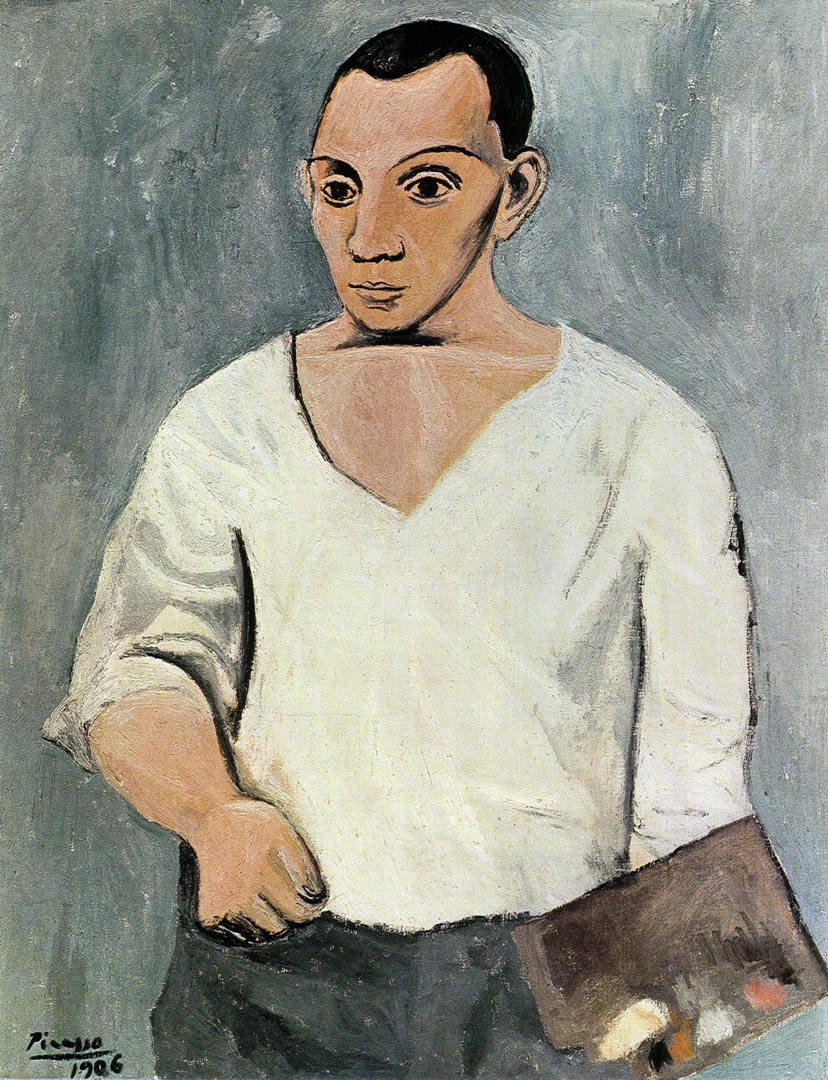
Self-Portrait with Palette (1906)
and Three Musicians, (1921), a grand summation of the artist’s almost decade-long exploration of Synthetic Cubism,
Léger’s monumental Cubist masterpiece The City (1919),
Jean Metzinger’s Tea Time (Woman with a Teaspoon) (1911), known in its day as “The Mona Lisa of Cubism,”
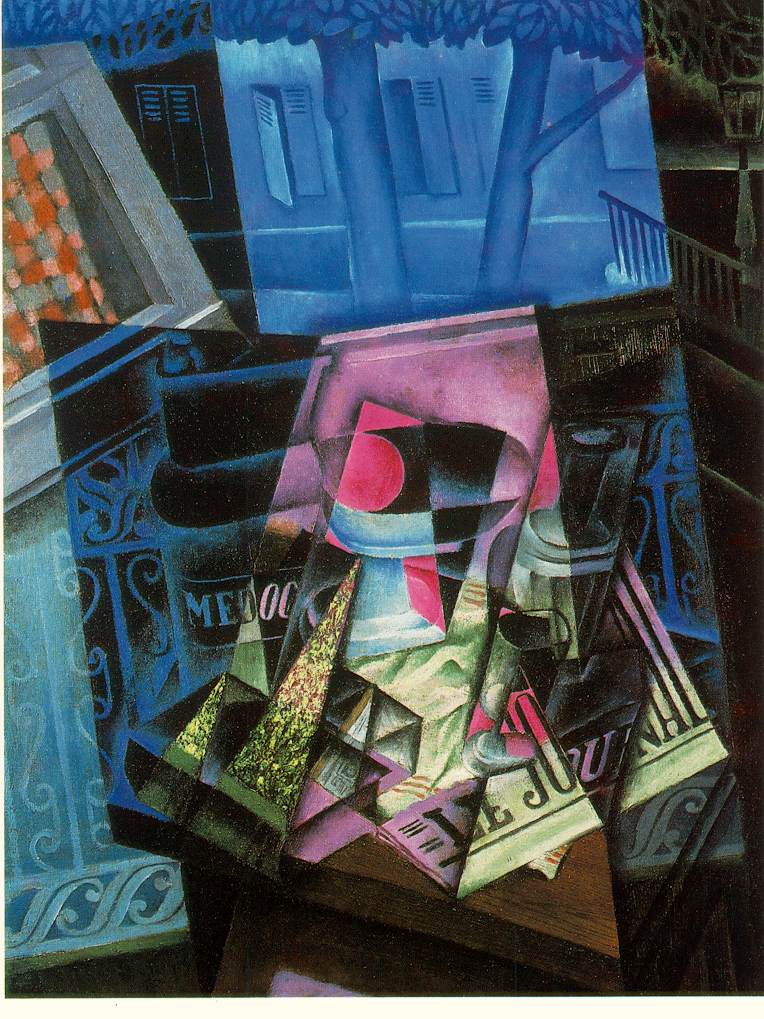
Juan Gris’s Still Life Before an Open Window, Place Ravignan,
which reveals the artist at the height of his powers, expertly balancing lyricism and geometric rigor in a composition of evocative spatial juxtapositions and luxurious color,
and Marc Chagall’s lyrical and kaleidoscopic Half Past Three (The Poet) (1911).
In the spring of 1904, when the twenty-three year-old Picasso made the decision to move permanently to Paris, he had already established a reputation in his native Spain as a painter of exceptional ability. He plunged into the city’s bohemian community, soon establishing what would become lifelong friendships with a number of fellow artists and writers, including the French painter Georges Braque who would become his close collaborator in the development of Cubism. The exhibition will be chronologically arranged in order to show the rapid evolution of Picasso’s art during his time in Paris, starting with his early Self-Portrait with Palette (1906) in which the young painter unabashedly proclaims his artistic mastery. The next gallery will highlight the lively interchange between Picasso and Braque between 1910 and 1913, when they developed a shared vocabulary of grid-like scaffolding, overlapping planes, and a reduced palette of beige, ocher, white, and gray that marked the beginning of Cubism, as seen in
Braque’s Still Life (Violin)
and Picasso’s Man with a Guitar, both of 1912.
“Cubism represented a seismic shift in the way visual artists depicted the world around them,” said Michael Taylor, the Muriel and Philip Berman Curator of Modern Art at the Philadelphia Museum of Art, who organized the exhibition. “Forms were flattened, dissected and recomposed into various essential shapes and lines that were shown from multiple angles and viewpoints. No longer was pictorial fidelity to the natural world considered paramount to a painting’s success, as artists were now free to engage in a profound imaginative reordering of reality.”
Although Picasso and Braque invented the new pictorial language of Cubism, with its flattened forms and multiple perspectives, artists such as Juan Gris and Fernand Léger soon made significant contributions of their own, especially to the development of what has come to be known as ‘Synthetic’ Cubism. One of the highlights of the exhibition will be a partial re-creation of the 1912 Salon d’Automne, where paintings by Gris, Albert Gleizes, and Metzinger were densely hung and interspersed with sculptures by Amedeo Modigliani, Jacques Lipchitz, and Raymond Duchamp-Villon.
A section of the exhibition titled “Americans in Paris” dealt with the numerous expatriates—among them the painters Max Weber, Charles Demuth, and Arthur Beecher Carles—who made their home in Paris and sought inspiration in the atmosphere of artistic and intellectual ferment that flourished in the years between the two World Wars. The installation also includes a selection of photographic portraits of the poets, writers, musicians, and performers who were a part of this eclectic circle, including Gertrude Stein, F. Scott Fitzgerald, and Josephine Baker.
The exhibition further chronicled Cubism’s persistence and adaptations during the war years, and Picasso’s return to figuration in his neo-classical works of the early 1920s, a direction echoed more broadly in the work of many artists at this time that moved toward more traditional subject matter and techniques. Picasso’s experiments in Cubism were also an essential precursor to the development of Surrealism and the work of artists such as Joan Miró and Salvador Dalí who came to prominence in the 1920s.
Picasso maintained a complex relationship with this hugely influential movement, developing his own independent variant of Surrealism in paintings such as
Bullfight (1934)
and Head of a Woman (1937-38). The exhibition also considers the role of Eastern European artists who joined the thriving modern art scene in Paris, among them Alexander Archipenko, Marc Chagall, and Constantin Brancusi.
The onset of civil war in his native Spain, and the approach of the World War II, laid the groundwork for the increasingly dark and political content of Picasso’s later works. He remained in Paris for the duration of these conflicts and continued to be productive, despite the scarcity of art supplies.
The works he created in the late 1930s and early 1940s are often somber in mood, as seen in the austere
Chair with Gladiolas (1943)
and in the melancholy still lives which feature human skulls in a macabre pun on the French term for still life, nature morte.
His magnificent sculpture Man with a Lamb (1943-44) references the themes of sacrifice and redemption that were also explored by
Jacques Lipchitz in works like The Prayer of 1943.
Through the dramatic shifts in style and technique that marked these tumultuous years, Picasso continued to be a galvanizing force and an inspiration to the artists around him. The exhibition demonstrates the tremendous variety and consistently high quality of his work during this period, and brings to life the extraordinary atmosphere of early 20th century Paris and the lasting significance of the art created at this time.
The exhibition was accompanied by an online catalogue that includes all the works from the Museum’s permanent collection, and is available at: www.philamuseum.org.
Brueghel: The fascinating world of Flemish art
From 18 December 2012 to 2 June 2013 the Chiostro del Bramante is hosting Brueghel. The Fascinating World of Flemish Art, the largest exhibition devoted to the famous artistic dynasty ever to be held in Rome. The exhibition represents a unique opportunity to admire the masterpieces produced by an entire dynasty of exceptional talent active between the sixteenth and seventeenth centuries, and trace the 150-year timeline of this family and artistic history.
Featuring more than 100 pieces, the exhibition offers an extraordinary opportunity to see these marvellous works of art from major national and international museums and important collections, presented in the atmospheric setting of the Italian capital, in an organic progression that reveals their full story. A truly exceptional event, the show boasts works from prestigious private collections located around the world – works which would not normally be accessible and some of which have never been exhibited before.
This is therefore an unmissable opportunity to appreciate some outstanding masterpieces for the first time in Italy, such as the magnificent work
The Seven Acts of Mercy (1616-1618 ca.) by Pieter Brueghel the Younger,
where various manifestations of charity are explored and highlighted in intensely rendered figures, or the superb
The Seven Deadly Sins by Hieronymus Bosch (1500 ca.)
and The Conjurer by the school of Bosch, also present in the exhibition and never previously exhibited in Rome.
And it is the relationship between Bosch and the head of the Brueghel dynasty, Pieter the Elder (1525/1530 ca. – 1569), that marks the start of this story: Bosch_s disenchanted vision of humanity shaped European art for centuries to come.
Pieter Brueghel the Elder drew inspiration from the dreamlike visions of his _spiritual teacher_, reworking them in a more earthly key, and moving from a sophisticated style with a traditional focus to a more vivid, realistic aesthetic. He paid close attention to the landscape and the relationship between man and nature, and his depictions of peasant dances and illustrated proverbs were to have a lasting influence on Flemish painting, heralding a definitive turning point that opened it up to the modern world.
His renderings of the rural world, symbolic explorations of the meaning of life, rose to international success in their day, while after his death, the comic and grotesque elements typical of his paintings were adopted as a model by his sons, Pieter the Younger (1564 –1638) and Jan the Elder (1568 – 1625).
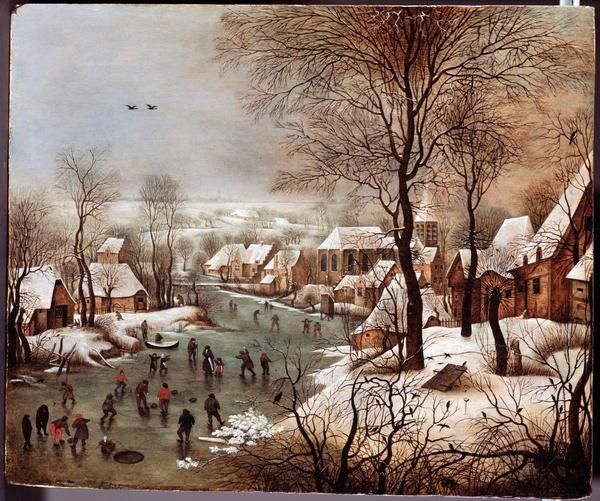
Compared to his brother, Pieter the Younger followed more closely in his famous father_s footsteps (to the point of creating genuine copies of his works, some of which remain the only trace of originals that have now been lost). He did however enrich his predecessor's style and subject matter with his own personal interpretations, as can be seen in the splendid painting
The Bird Trap (1605)
– the vibrant colours and atmosphere of which encapsulate all the distinctive features of Flemish Baroque.
On the other hand, Jan the Elder, nicknamed "Velvet" Brueghel for his consummate technique, showed more of an interest in renewing his father_s aesthetic, becoming a point of reference for subsequent “Brueghelian” artists.
The family tree continued to grow and branch out, from the patriarch to his furthest descendents, in a complex network of relationships that the exhibition presents with great precision, right down to the eleven children of Jan the Younger, five of whom also became painters. By the mid seventeenth century the Brueghel _style_ was recognised as a genuine hallmark of quality.
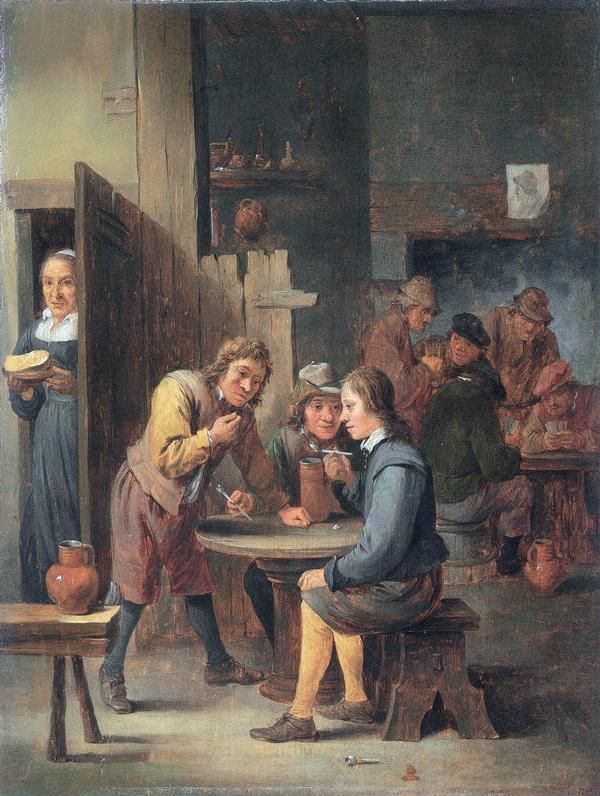
The exhibition focuses on the story of each artist and analyses the lives of figures such as Jan van Kessel I (1626 – 1679), the son of Paschaise, Jan Brueghel_s sister, and Ambrosius Brueghel (1617 – 1675), an artist who was extremely talented but is little known and studied. The show closes with David Teniers the Younger (1610 –1690), who was connected to the Brueghels through marriage to the daughter of Ambrosius, and Abraham (1631 – 1697), the last distinguished representative of the artistic dynasty, which with more than a 100 years of history, had risen to legendary status.
THE EXHIBITION
The exhibition explores the works of Pieter Brueghel the Elder and his descendants, taking us on a fascinating journey through the golden age of Flemish painting in the seventeenth century to discover the visionary genius of an incredible five generations of artists who together – like no-one before or after them - encapsulate the style and trends of more than a century of art.
SECTION 1 - The background and origins of the dynasty
The first section is devoted to the historic and cultural setting which formed the milieu for the art produced by the head of the entire dynasty, Pieter Brueghel the Elder. In the sixteenth century, while in Italy the work of Michelangelo, Leonardo and Titian pursued a sublime, ideal vision of humanity, in the Netherlands – also thanks to the Protestant Reform and the theories of Calvin – attention began to move towards nature, which became a subject in its own right, rather than just a backdrop. The landscapes of Henri met de Bles and Joachim Patinir and the stunning Tower of Babel by Marten van Valckenborch and Hendrick van Cleve were the first signs of significant developments that Pieter Brueghel the Elder was to interpret with striking originality. Brueghel began his artistic career in the studio of Pieter Coeck Val Aelst, but found his true inspiration in Hieronymus Bosch, whose works The Seven Deadly Sins and The Conjurer, created together with Bosch school, also appear in the exhibition.
SECTION 2 – Following in the footsteps of Pieter Brueghel the Elder
The second section is dedicated to the sons of Pieter Brueghel the Elder: Pieter the Younger and Jan the Elder. The former, chronicler of his time, revisited his father's themes but also succeeded in developing and enriching them, particularly rural scenes and depictions of everyday life. He analysed human weaknesses with tolerance and insight – as we can see in the paintings
Wedding Dance in the Open Air and The Seven Acts of Mercy – also anticipating the romantic idea of the sublime force of nature, in the renowned work Winter Landscape with Bird Trap. Jan the Elder, unlike his brother, was a more cosmopolitan, urbane figure: he travelled to Italy, worked with Rubens and was the first significant painter of flowers and still lifes. Nicknamed "Velvet" Brueghel for his consummate technical prowess, he features in the exhibition with around 20 works, including the refined Temptation of St. Anthony and Rest on the Flight into Egypt, where his depictions of nature reveal the vivid, independent style he was pioneering.
SECTION 3 – Genius and innovation in Flemish art: the Brueghel style
The third section looks in detail at the complicated artistic relationships between various members of the Brueghel family tree and their profitable creative partnerships with different artists, such as that between Jan Brueghel the Younger and Frans Francken, Joos de Momper and Hendrick van Balen. By now the Brueghel _style_ had become a sort of hallmark, a sure-fire guarantee of quality, and it was for this reason that many family members decided to go into painting, following in the family tradition. These included Ambrosius Brueghel (the brother of Jan the Younger) and Jan Pieter Brueghel (the son of the latter), who went on to produce allegories and still lifes, capitalising on the popularity of an instantly identifiable style which was incredibly recognisable to the public and much appreciated.
SECTION 4 – The wonders of the world, symbols and allegories
Jan the Elder's technique and style were taken up by his son Jan the Younger, to whom ample space is devoted in the exhibition, along with a specific section on genre painting that looks at flowers and symbolism. With his use of allegory, the artist followed in the footsteps of his father, whose lush, striking floral compositions were almost a recognised _brand_. Flowers conveyed the vanitas message and expressed Christian values, also referencing classical traditions. The idea of the wonders of the world – the unexpected and the exotic – which can also be observed in the contemporary popularity of the Wunderkammer (literally "Chamber of Wonders"), comes through clearly in the paintings of Jan the Younger, which were much in vogue in the seventeenth century and a great success with the rich bourgeoisie. Works in the exhibition include his splendid allegories.
SECTION 5 – The legacy of a dynasty
The last section of the exhibition completes the overview of more than 100 years of the Brueghel workshop, which rose to legendary status in the second half of the seventeenth century. Their story also includes other great painters linked to the dynasty by marriage, like David Teniers the Younger, who married Jan the Younger's sister Anna, and was one of the greatest narrators of the rural world in the seventeenth century, albeit not with the stern moral gaze of Pieter Brueghel the Elder. Also featured is Jan van Kessel the Elder, the son of Paschaise , another of Jan the Younger's sisters (Jan the Younger was the first of ten siblings and in turn went on to have eleven children), who has a room of his own in the exhibition, presenting his painstakingly detailed _studies of butterflies, insects and shells_.
And Josef van Bredael, who signed himself JB to recall Jan Brueghel and was an attentive imitator of the great artist. Lastly we come to Abraham, the last distinguished figure of this famous family, who broke with tradition to pursue a more textural, less calculated and more instinctive style (his telling nickname, _the riotous_, is a far cry from his grandfather_s _Velvet_ moniker). After undertaking the classic tour of Italy he decided not to return to Flanders, thus bringing to an end the largest and most significant lineage of Flemish artists, shortly before the new languages of the eighteenth century made their appearance.
Hieronymus Bosch, I sette peccati capitali, olio su tavola, 86,5x56 cm
With its sheer scope, rich historical background and fascinating works of art, the exhibition promises to appeal to a varied audience, and also offers educational activities for children and animated guided tours for the youngest visitors, with workshops designed to involve them in the intriguing artistic and family history of the extraordinary Flemish dynasty of the Brueghels.
Pieter Brueghel il Vecchio, La Risurrezione, olio su tavola, 107x73,8 cm
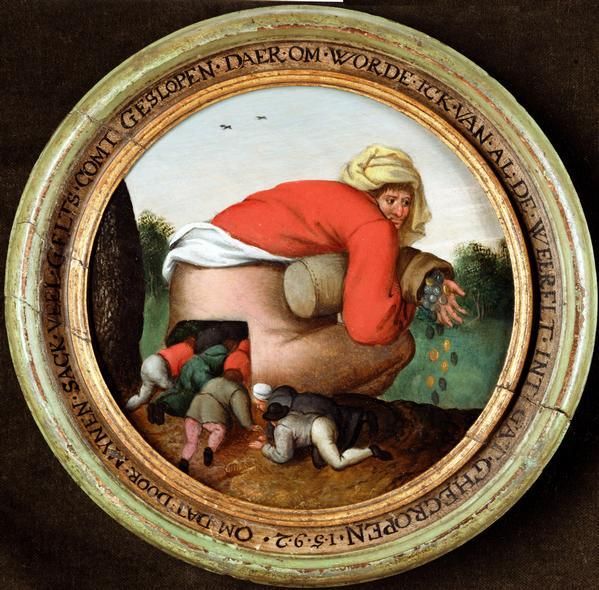
Pieter Brueghel il Giovane, L'Adulatore, 1592 ca., olio su tavola circolare, diam. 18,5 cm
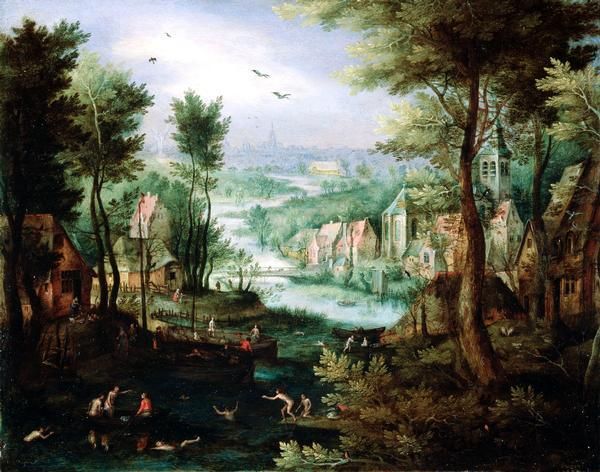
Jan Brueghel il Vecchio, Paesaggio fluviale con bagnanti, 1595-1600 ca., olio su rame, 17x22 cm
Jan Brueghel il Vecchio & Peter Paul Rubens, Madonna con Bambino in una ghirlanda di fiori, 1616-18 ca., olio su tavola, 64,5x49 cm
Jan Brueghel il Giovane, Allegoria dell'amore, 1648-50 ca., olio su rame, 88x104 cm
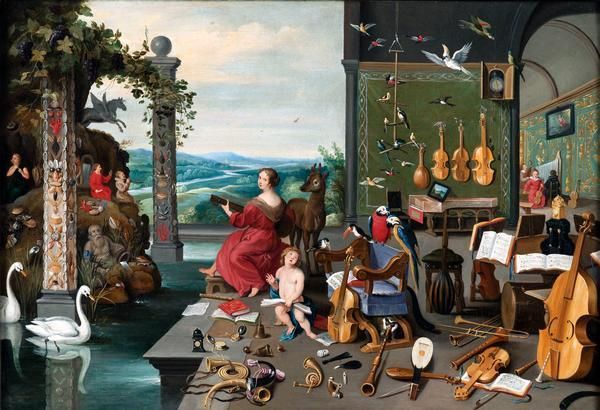
Jan Brueghel il Giovane, Allegoria dell'udito, 1645-1650 ca, olio su tela, 57x82,5 cm
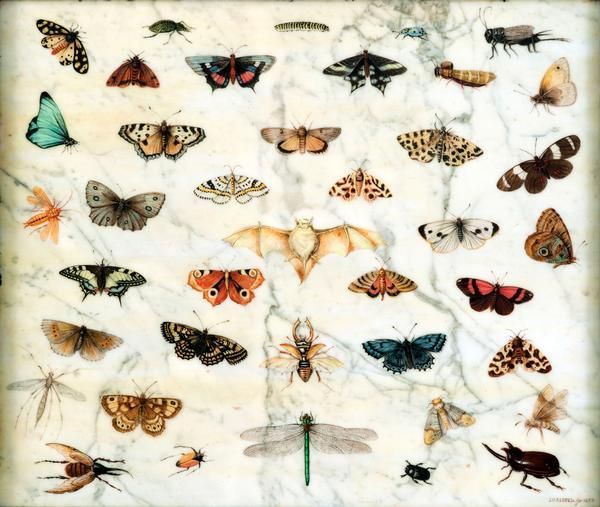
Jan Van Kessel il Vecchio, Studi di farfalle e altri insetti, 1659, olio su marmo, 38,4x45x7 cm
Ambrosius Brueghel, Coppia di nature morte con fiori, olio su tavola, 12,5x26x5 cm ciascuna
David Teniers il Giovane, Contadini in una taverna, olio su tavola, 30,5x25,2 cm
Pieter Brueghel il Giovane, Trappola per uccelli, 1605, olio su tavola, 50,5x61 cm
Jan Brueghel il Giovane, Villaggio con contadini vicino a un fiume con barche a vela, inchiostro bruno su carta marrone chiaro, 15,5x30,8 cm
Bartolomeus Spranger, Ritratto di Peter Brueghel, incisione, 30,1x21,1 cm
Tags : Ambrosius Brueghel, Bartolomeus Spranger, Hieronymus Bosch, Jan Brueghel le Jeune, Pieter Brueghel the Elder, Pieter Brueghel the Younger
Saturday, December 15, 2012
Becoming Picasso: Paris 1901
The Courtauld Gallery's exhibition Becoming Picasso: Paris 1901, on view February 14 to May 26, 2013, tells the remarkable story of Pablo Picasso’s breakthrough year as an artist – 1901. It was the year that the highly ambitious nineteen-year-old first launched his career in Paris at a debut summer exhibition with the influential dealer Ambroise Vollard. Refusing to rest on the success of this show, Picasso (1881-1973) charted new artistic directions in the second half of the year, heralding the beginning of his now famous Blue period. Becoming Picasso focuses on the figure paintings of 1901 and explores his development during this seminal year when he found his own artistic voice. This exhibition is a unique opportunity to experience works, now considered to be Picasso’s first masterpieces, which established his early reputation. They are also among the earliest paintings to bear the famously assertive and singular Picasso signature, which he adopted in 1901.
1901 was a momentous and turbulent year for the young Picasso. He spent the first part of it in Madrid where he helped to set up Arte Joven, an avant-garde journal with ambitions to shake up the staid culture of the Spanish capital. This role could not hold him for long as Picasso’s sights were firmly set upon becoming a great painter in Paris, the ‘capital of the arts’. His first visit to Paris, in the autumn and winter of 1900, had fuelled his ambitions and led to the prospect of the 1901 exhibition with Vollard, one of the city’s most important modern art dealers. In February 1901, whilst still in Madrid, Picasso received news from Paris that his close friend, Carles Casagemas, had committed suicide in dramatic fashion. Casagemas shot himself in Montmartre’s Hippodrome café in front of the young woman who had jilted him and his friends. The tragedy would have a profound impact upon Picasso’s art as the year unfolded.
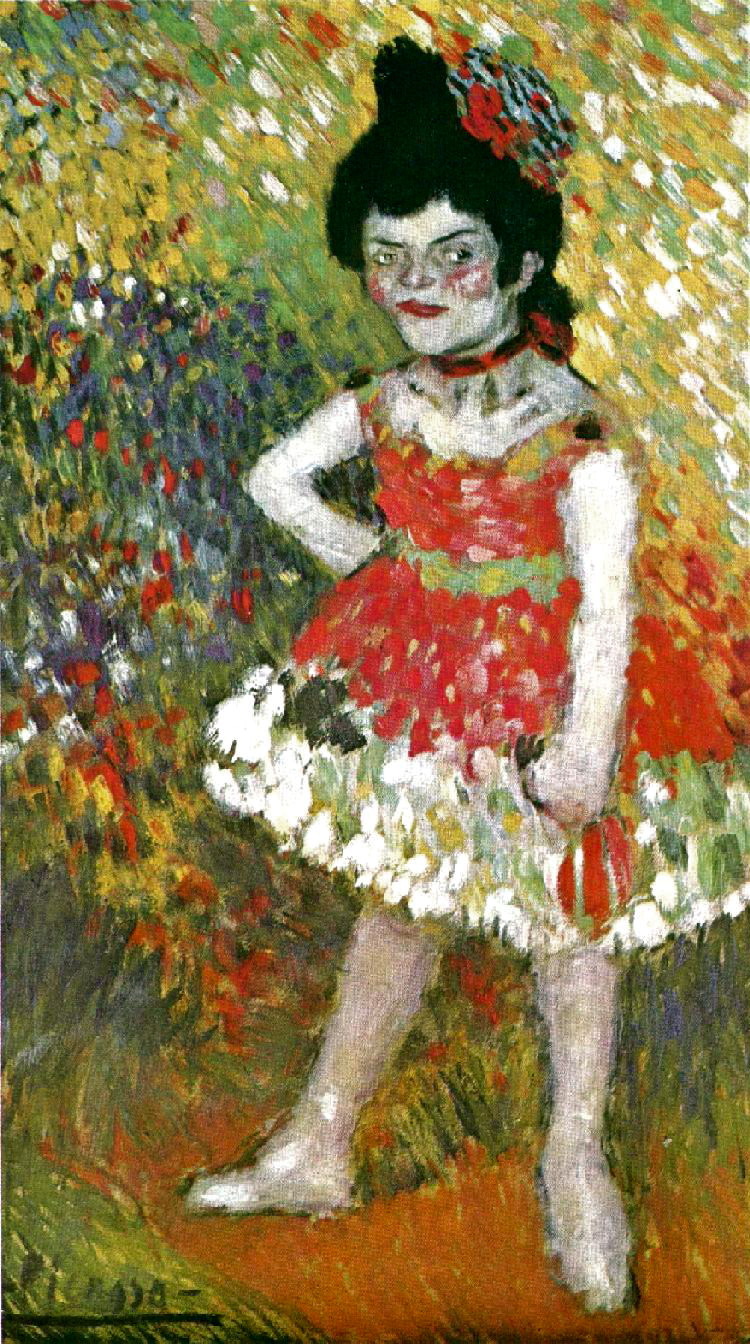
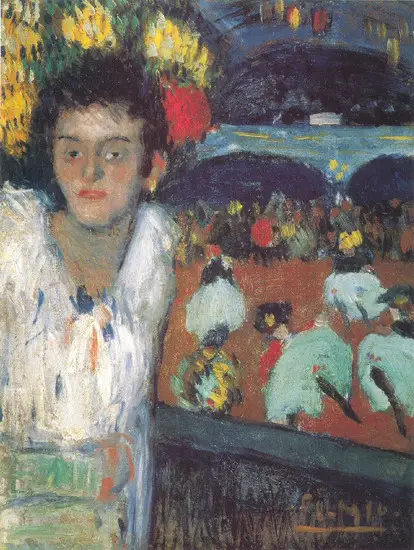
Picasso left Spain for Paris, probably at the beginning of May, with a clutch of drawings and just a few paintings. He had little over a month to produce enough work for his Vollard exhibition. Arriving in Paris, Picasso took a studio in Montmartre at 130ter boulevard de Clichy with Pere Mañach who acted as his agent. The studio had previously been occupied briefly by Casagemas before his suicide. Picasso then painted unstintingly, sometimes finishing three canvases in a single day. This outpouring of creative energy resulted in most of the sixty-four works shown at the Vollard exhibition (24 June to 14 July). They demonstrate Picasso taking on and reinventing the styles and motifs of major modern artists, including Van Gogh, Degas and Toulouse-Lautrec. In works such as
Dwarf-Dancer, Museu Picasso, Barcelona,
and At the Moulin Rouge, Private collection,
we see these influences coming together and being transformed into bold and daring expressions of Parisian night life, captured in showers of broken brushwork and bright colours.
The Vollard exhibition was a critical success with respectable sales. Reviewers were won over by Picasso’s youthful energy, creative powers and insatiable visual appetite. As Gustave Coquiot introduced him: “Pablo Ruiz Picasso – an artist who paints all round the clock, who never believes the day is over, in a city that offers a different spectacle every minute… A passionate, restless observer, he exults, like a mad but subtle jeweller, in bringing out his most sumptuous yellows, magnificent greens and glowing rubies”. The exhibition effectively launched Picasso’s career in Paris but, despite this success, he took his art in daring new directions in the second half of 1901.
Picasso evidently wanted to move away from the belle époque gaiety of the Vollard show paintings, with their exuberant brushwork, towards pictures that expressed a more profound and reflective account of human existence. He was inspired, in part, by the spectre of Casagemas’ death.
The Blue Room, Phillips Collection, Washington, is often thought to mark a turning point, demonstrating Picasso’s move to the use of more muted colours, tending towards blue, and painted outlines to enclose form, giving his figures an almost sculptural effect. These qualities are a defining feature of the celebrated series of paintings of melancholic café drinkers, numbed by ennui and absinthe, which are now considered one of his greatest early achievements.
This exhibition brings together a number of major examples including
Absinthe Drinker, The State Hermitage Museum, St Petersburg,
which is redolent of
Degas’ infamous earlier treatment of the subject.
In other café scenes, such as
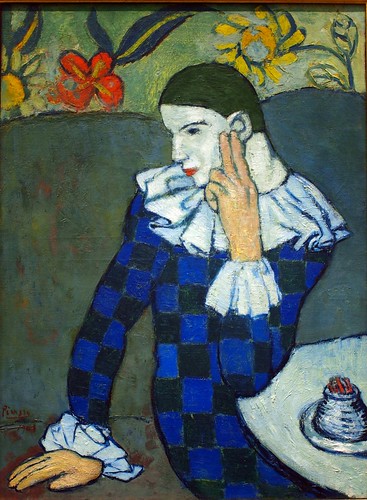
Seated Harlequin, (above) The Metropolitan Museum of Art, New York,
and Harlequin and Companion, The State Pushkin Museum, Moscow,
Picasso introduces the unexpected figure of Harlequin, reinventing this familiar subject in a highly original manner. This is the first appearance of the mischievous Harlequin in Picasso’s paintings. The character became a recurrent feature of his later art and indeed was adopted as an alter ego for the artist.
Related to this group is Picasso’s much-loved
Child with a Dove, Private collection,
which also expresses a sense of melancholy but in relation to the fragility of childhood innocence.
This series of works anticipate his Blue period paintings of the following few years. They demonstrate the early emergence of a number of major themes that preoccupied the young Picasso in the second half of 1901 and would continue to drive his art throughout his long career. The paintings explore the interplay between innocence and experience, purity and corruption, and life and death. These concerns were bound up with Casagemas’ death and further inspired by a number of visits Picasso made in the late summer and autumn of 1901 to the Saint-Lazare women’s prison where he observed, and subsequently painted, the former prostitutes and their infants who were incarcerated there.
Picasso’s new pictorial world of innocence and corruption, of prostitutes, melancholic drinkers, mothers and children found its fullest expression in his large-scale
Evocation (The Burial of Casagemas), Musée d’art moderne, Paris.
This ‘secular altarpiece’ was a valediction to Picasso’s dead friend and shows Casagemas ascending to heaven on a white stallion, surrounded by naked prostitutes, playful children, mourners and a madonna and child. This radical and highly unusual painting challenged the conventions of religious art. It will form the centrepiece of this exhibition and demonstrates the scale of Picasso’s aspirations, developed in 1901, to reinvent the language and traditions of painting. His ambition and confidence is further expressed in one of his most powerful and famous self-portraits in which he appears lit up against a dark background with a bold inscription proclaiming
Yo - Picasso (or I - Picasso), Private collection.
Friday, December 14, 2012
Gerard ter Borch
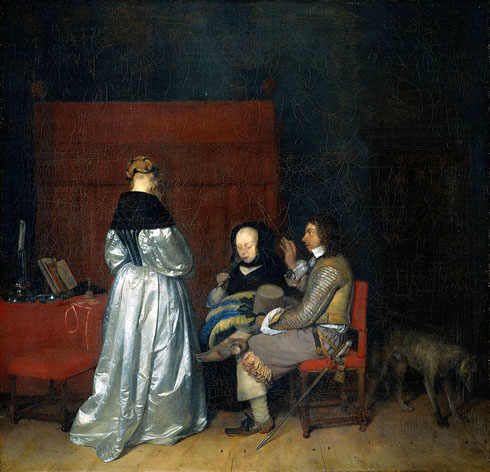
Gerard ter Borch II The Suitor's Visit, c. 1658 oil on canvas, 80 x 75 cm (31 1/2 x 29 9/16); framed: 110.8 x 106 x 12.7 cm (43 5/8 x 41 3/4 x 5) National Gallery of Art, Washington, Andrew W. Mellon Collection
Gerard ter Borch, one of the finest of all Dutch 17th-century painters, was shown in his full splendor in this magnificent exhibition, the first ever devoted to his work in the United States. Gerard ter Borch presented over 50 of the artist's exquisite portraits and genre scenes from public and private collections in the United States and Europe. On view at the National Gallery of Art, West Building, from November 7, 2004, through January 30, 2005, Gerard ter Borch then traveled to the Detroit Institute of Arts, where it will be on view from February 27 through May 22, 2005. A small selection of paintings from the exhibition were shown at the Rijksmuseum, Amsterdam, from June 9 through September 4, 2005.
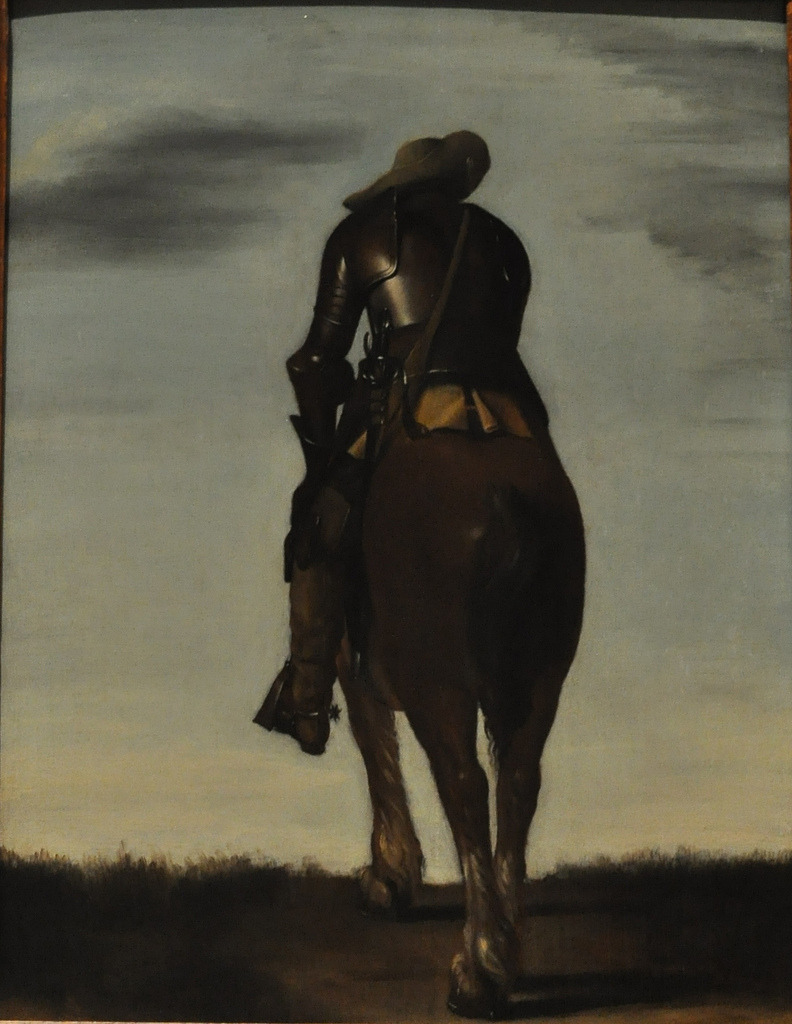
The paintings of Gerard ter Borch (1617-1681) are remarkably varied, and the selection in this exhibition represented each aspect of his career, from his striking early picture
of a lonely soldier on horseback from the 1630s, to his masterful depiction of the delegates signing the Treaty of Münster in 1648, to his mid-career representations of women engaged in domestic activities, and to the refined portraits of Dutch burghers that brought him prosperity throughout his professional life.
The exhibition was organized by the American Federation of the Arts, New York, and the National Gallery of Art, Washington.
Exhibition Support
The exhibition is supported by an indemnity from the Federal Council on the Arts and the Humanities.
The Exhibition
Ter Borch is best known today for his refined genre scenes, which typically depict two or three elegantly clad figures engaged in an activity such as letter writing or music making. No other Dutch artist has ever captured so well the subtle psychological interactions between figures. Neither has any artist conveyed as effectively as he the shimmering surface of satin nor the undulating rhythms of a translucent lace cuff. Ter Borch captured with exceptional sensitivity the complex inner life of his subjects through tiny gestures, covert glances, and carefully observed expressions. Among the major paintings in the exhibition that represent this facet of his oeuvre are
A Young Woman at Her Toilet with a Maid (c.1650/1651),
Gallant Conversation--better known as Paternal Admonition (c.1654)
and The Suitor's Visit (c. 1658) (Above).
Though his "high-life" scenes are more familiar, Ter Borch also showed extraordinary skill in painting more humble subjects, and the exhibition presents several examples, including
The Grinder's Family (c.1653),
A Maid Milking a Cow in a Barn (c.1653/1654)
and A Horse Stable (c.1654).
Ter Borch was also a remarkable portrait painter. The confident postures and solemn expressions of the burghers in his small-scale, full-length portraits reflect their dignity and affluence. Executed with great sensitivity of touch, these portraits are distinctive for their psychological intensity. One particularly delightful example is his portrait of the young Helena van der Schalcke (c.1648).
By the 1640s, Ter Borch was asked to accompany the Dutch delegates to Münster to record the signing of the treaty that would end the Eighty Years' War between Spain and the Dutch Republic. His remarkable painting,
The Swearing of the Oath of Ratification of the Treaty of Münster, 15 May 1648 (1648)
is the most important image recording this historic event. In Münster, Ter Borch also painted sensitive small-scale portraits on copper of individual delegates from the Netherlands and Spain.
Ter Borch's later full-length portraits depict sitters with reserved yet confident postures. Their solemn, noble expressions reflect the dignity and affluence of his sitters. One remarkable work in the exhibition was the large-scale group portrait,
The Town Council of Deventer (1667). Its opulent frame is decorated with symbolic elements indicating the powers and responsibilities of the magistrates.
The Artist
Ter Borch was born into a wealthy family of artists in Zwolle, a garrison town near the eastern border of the Netherlands. There the artist observed aspects of military life that would later figure in his paintings. Ter Borch received his first artistic training from his father, an amateur artist and tax collector. After serving apprenticeships in Amsterdam and Haarlem in the early 1630s, he traveled to London to study with his stepuncle, who made engravings after the refined portraits of Anthony van Dyck. In 1637, Ter Borch set off for Spain where his style was further influenced by the expressive portraiture of Diego Velásquez. Ter Borch, however, rendered his portraits on a smaller scale and in a more delicate manner, often on copper or panel.
After returning to the Netherlands, Ter Borch probably settled in Amsterdam. His reputation as a portrait painter earned him an invitation to accompany Dutch delegates to the peace congress in Münster, where he painted the ratification of the treaty that marked the foundation of the Dutch Republic. During the 1650s, Ter Borch began to paint the elegant genre scenes for which he is now most celebrated. Following his marriage to a wealthy widow in 1654, the artist moved to her hometown of Deventer and became the preferred portraitist of its leading citizens. Ter Borch soon joined the ranks of the city's ruling elite and died there at the age of 64 in 1681.
Curators, Catalogue, and Related Activities
The exhibition was curated by Arthur K. Wheelock Jr., curator of northern baroque painting at the National Gallery of Art since 1984 and curator of such major Gallery exhibitions as Johannes Vermeer (1995–1996) and Jan Steen: Painter and Storyteller (1996).
Gerard ter Borch was accompanied by the first major English-language publication on the artist, which is a significant contribution to the study of 17th-century Dutch painting. Published in English by the National Gallery of Art and the American Federation of Arts in association with Yale University Press, the 240-page exhibition catalogue includes full-color reproductions and entries for each of the paintings in the exhibition written by Wheelock, Alison McNeil Kettering, and Marjorie E. Wieseman. It also includes essays on the artistic development of Ter Borch by Wheelock and on the artist's modern style by Kettering, as well as a study of Ter Borch's techniques for painting satin by Arie Wallert, curator at the Rijksmuseum. A Dutch edition is available from Waanders Publishers, Zwolle.


_-_The_Family_of_the_Stone_Grinder_-_WGA22124.jpg)