Friday, February 22, 2013

American Modern: Abbott, Evans, Bourke-White


A special exhibition that explored the evolution of documentary images through the work of three of the foremost photographers of the 20th century was on view at the Art Institute of Chicago from February 5 through May 15, 2011. American Modern: Abbott, Evans, Bourke-White presented Abbott (1898–1991), Walker Evans (1903–1975), and Margaret Bourke-White (1906–1971)—all taken between the years of 1929, when the stock market crashed, and 1941, when Pearl Harbor was bombed.

This exhibition not only showed, for the first time, the photographs of Abbott, Evans, and Bourke-White in relation to one another, but it also chronicled how documentary photography had a hand in transforming modern art in America.

It was during this period, the 1930s, that photographers pushed the genre of documentary photography to the forefront of public culture in the United States and onto the walls of newly opened museums and art galleries. Photographic activity blossomed in America during the Great Depression, and the genre of documentary emerged as a primary mode of relaying and understanding contemporary events and the nation’s role in them. While the world was in a turbulent state—national and international economies were being severely tested, political systems were in flux, and Europe was preparing again for war—Americans recognized their own viable cultural heritage and sought to record and expand that history. Indeed, the country’s literary, artistic, and architectural expressions all flourished in the period’s explosion of popular literature, the founding of new art museums, and the establishment of New Deal government-funded arts programs. At the same time, advances in technology, production, and distribution transformed mass media in the United States: Americans enjoyed weekly picture magazines, radio broadcasts, and popular movies in unprecedented numbers.

Photography played an especially critical role in contemporary culture, appearing in books, newspapers, and magazines as well as being accorded exhibitions in art museums and galleries. It could be argued that it was during this decade that photography became a truly popular art, infiltrating every home and newsstand and captivating an anxious audience. And photography began redefining itself, crossing the boundaries between public and private use, impersonal documentation and expressive creation, and popular visual culture and fine art. American Modern examines the practice of documentary photography through the work of three of the most important photographers of the decade, each of whom contributed a fundamental, independent, and novel idea about documentary to the common pool of artistic practice.

For Berenice Abbott, who photographed the transformation of New York City into a modern metropolis, it was the notion that photography was a means of critical dialogue and communication. She always seemed to include a human element that suggested the sacrifice or promise of living alongside new buildings.

Walker Evans, who worked with the Farm Security Administration, shot some of the most iconic images from the Great Depression. He thoroughly investigated the idea that photography has a unique and essential relationship to time. Evans was not as captivated with the new urbanization as Abbott; he tended to photograph people within environments exhibiting a universal humanity, even amid a great deal of tragedy. As Evans said, at the time, "I'm doing this for the record alone."

Margaret Bourke-White—the first female photographer for Life magazine and the first female war correspondent—fused the logic and pageantry of modern industry with the drama and individual narratives of its subjects. Her images emphasized the diminution of humans framed by the colossus of industrialization, placing anonymous workers amid enormous gears, smokestacks, and turbines. Machinery became a heroic element, the people dwarfed by their scale if not the business of production itself. Together for the first time in the exhibition, these works offer a compelling glimpse of a moment of great transformation in the United States and suggest how documentary photography reframed artistic priorities across many media.


A scholarly catalogue, published by the University of California Press, accompanied the exhibition. The 213-page American Modern includes spectacular images by Berenice Abbott, Walker Evans, and Margaret Bourke-White, and features essays by co-curators Jessica May, Sharon Corwin, and Terri Weissman. It can be purchased in hardcover for $39.95 in the Museum Shop.

American Modern: Abbott, Evans, Bourke-White was co-organized by the Amon Carter Museum and the Colby College Museum of Art in Waterville, Maine. The exhibition is curated by Jessica May, assistant curator of photography at the Amon Carter Museum; Sharon Corwin, the Carolyn Muzzy Director and Chief Curator of the Colby College Museum of Art; and Terri Weissman, assistant professor of art history at the University of Illinois, Urbana-Champaign. The Chicago presentation is curated by Katherine Bussard, associate curator of photography at the Art Institute of Chicago.

Images:


Walker Evans. Posed Portraits, New York, 1932. The Art Institute of Chicago, Gift of Mrs. James Ward Thorne. © Walker Evans Archive, The Metropolitan Museum of Art.


Walker Evans (1903–1975) [Lunchroom Window, New York City], 1929. Gelatin silver print © Walker Evans Archive, The Metropolitan Museum of Art. The Metropolitan Museum of Art, Gift of Arnold H. Crane, 1971, 1971.646.35


Margaret Bourke-White (1906–1971), (Iron Mountain, Tennessee), 1937. Gelatin silver print. © Estate of Margaret Bourke-White/ Licensed by VAGA, New York, NY. Margaret Bourke-White Collection, Special Collections Research Center, Syracuse University Library.


Berenice Abbott Canyon, Broadway and Exchange Place, 1936 Gelatin silver print, 9 5/16 x 7 1/2 inches
National Gallery of Art, Gift of Marvin Breckinridge Patterson
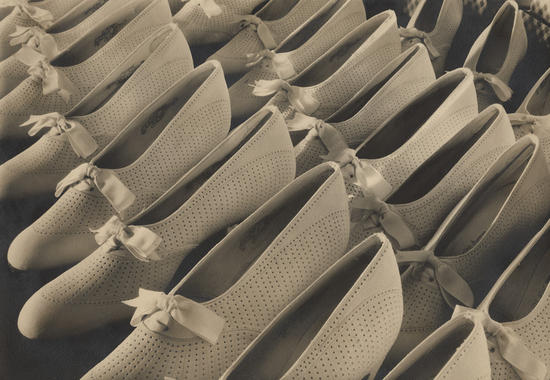


Margaret Bourke-White (1906-1971). Delman Shoes, 1933. Gelatin silver print. Margaret Bourke-White Collection, Special Collections Research Center, Syracuse University Library. © Estate of Margaret Bourke-White/ Licensed by VAGA, New York, NY.


Berenice Abbott (1898-1991). Hell Gate Bridge, 1937. Gelatin silver print. Collection of Norma B. Marin, Courtesy Meredith Ward Fine Art.


Berenice Abbott (1898-1991). Bread Store, 259 Bleeker Street, 1937. Gelatin silver print. Museum of the City of New York, 49.282.57.


Berenice Abbott (1898-1991). Manhattan Bridge Looking Up, 1936. Gelatin silver print. The Art Institute of Chicago, Works Progress Administration Allocation, 1389.1943.


Walker Evans (1903-1975). Penny Picture Display, Savannah, 1936. Gelatin silver print. Amon Carter Museum, P1987.4.1.


Berenice Abbott (1898-1991). Squibb Building with Sherry Netherland in Background, 1935. Gelatin silver print. Collection of Norma B. Marin, Courtesy Meredith Ward Fine Art.


Walker Evans (1903-1975). People in Downtown Havana, 1933. Gelatin silver print. The Metropolitan Museum of Art, Gift of Lincoln Kirstein, 1952, 52.562.7. © Walker Evans Archive, The Metropolitan Museum of Art.
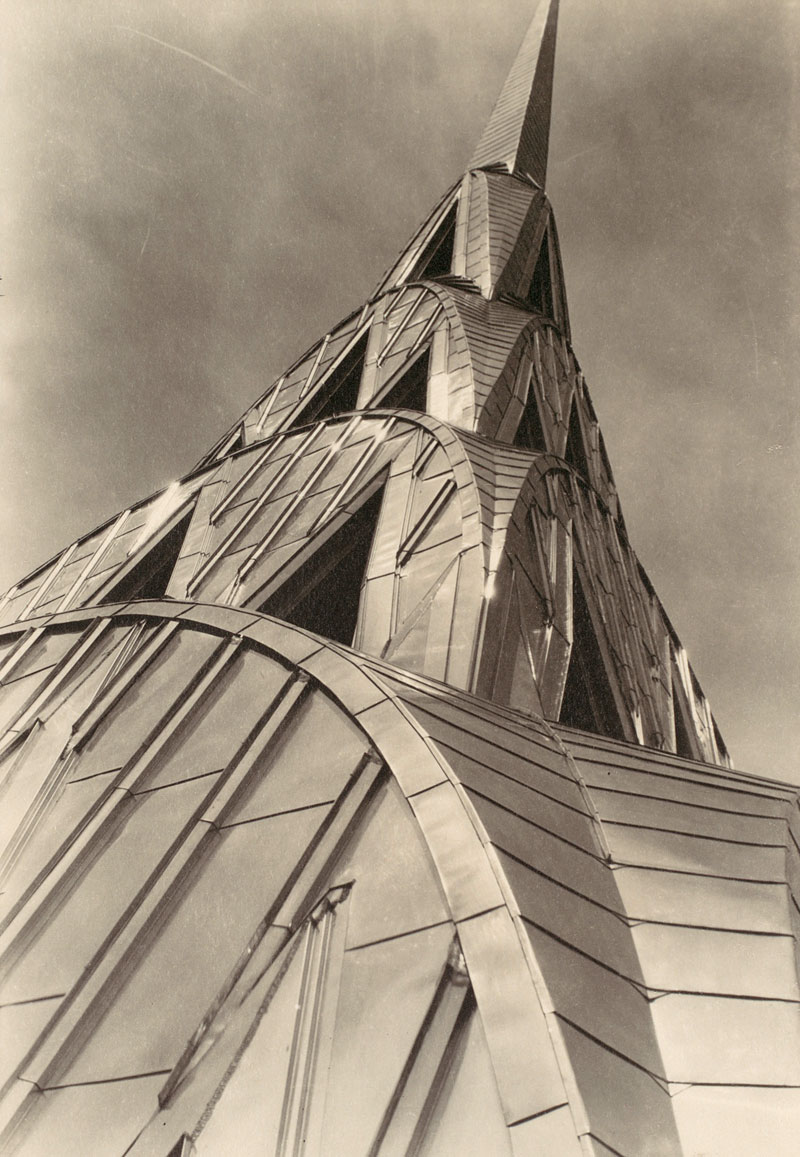


Margaret Bourke-White (1906–1971) Chrysler Building, New York, ca. 1930–31 Gelatin silver print
© Estate of Margaret Bourke-White/ Licensed by VAGA, New York, NY
The Metropolitan Museum of Art, Ford Motor Company Collection
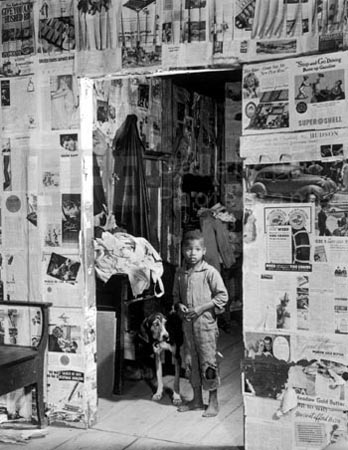


Margaret Bourke-White: You Have Seen Their Faces: Little boy and hound dog, 1936 Gelatin silver print ©Time Inc.


Truck and Sign, 1930 Vintage gelatin silver print 16.3 x 22.3 cm Private collection (c) Walker Evans Archive, The Metropolitan Museum of Art

Thursday, February 21, 2013

FRENCH TWIST: MASTERWORKS OF PHOTOGRAPHY FROM ATGET TO MAN RAY


June 29, 2013 – September 15, 2013 Delaware Art Museum
2301 Kentmere Parkway, Wilmington, Delaware 19806
302.571.9590 | 866.232.3714 (Toll free)

This groundbreaking exhibition features 90 rare vintage prints from the golden age of French photography, 1900-1940. From the lyrical architectural views of Eugène Atget to the Surrealist inventions of Man Ray and Dora Maar, from the boyish wonder of Jacques-Henri Lartigue to the twilight-inspired moodiness of Brassaï, from the elegant still lifes of André Kertész to the sophisticated street theater of Henri Cartier-Bresson and Ilse Bing, all major facets of French photography are surveyed and celebrated. This is a singular opportunity for those who appreciate photography to see these masterworks in one exhibition.

All works are from the collection of Michael Mattis and Judith Hochberg._This exhibition was organized by art2art Circulating Exhibitions.


Brassaï, Fille de Montmartre Playing
Russian Billiards, Blvd. Rochechouart, 1932-33,


Kiki de Montparnasse, 1923
Man Ray (1890–1976)
11 x 8 3/4 inches
Collection of Michael Mattis and Judith Hochberg
© 2012 Man Ray Trust / Artists Rights Society (ARS), NY / ADAGP, Paris


Hyères, 1932
Henri Cartier‐Bresson (1908–2004)
7 7/8 x 11 5/8 inches
Collection of Michael Mattis and Judith Hochberg
© Henri Cartier-Bresson/Magnum Photos


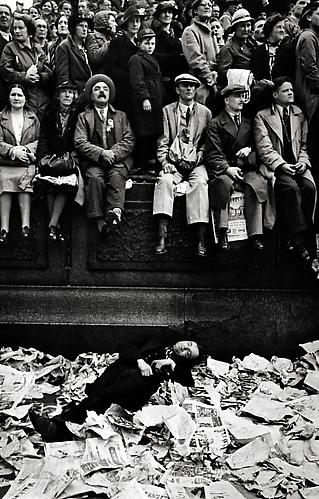
Coronation of King George VI, London, 1938
Henri Cartier‐Bresson (1908–2004)
10 x 7 inches
Collection of Michael Mattis and Judith Hochberg
© Henri Cartier-Bresson/Magnum Photos


Champ‐de‐Mars from the Eiffel Tower, 1931
Ilse Bing (1899–1998)
7 1/2 x 11 inches
Collection of Michael Mattis and Judith Hochberg
© Estate of Ilse Bing. Courtesy Edwynn Houk Gallery, New York


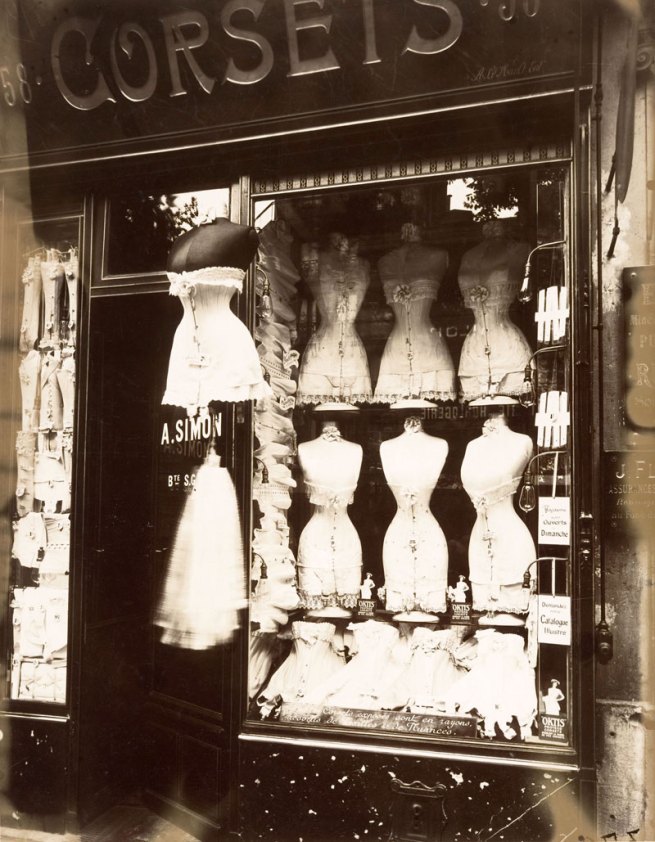
Boulevard de Strasbourg, Corsets, 1912
Eugène Atget (1857–1957)
Printing‐out paper, 8 3/4 x 7 inches
Collection of Michael Mattis and Judith Hochberg

Ansel Adams: Masterworks


Berkshire Museum presents the special photography exhibition Ansel Adams: Masterworks from February 9 to June 2, 2013. An opening reception will be held Saturday, February 9, from 5 to 7 p.m. The exhibition features forty-eight works by Ansel Adams (1902 – 1984), about two-thirds of a selection Adams made late in his life to serve as a succinct representation of his life’s work. He himself felt these photographs were his best. The images are from the Collection of the Turtle Bay Exploration Park in Redding, CA.

Called “The Museum Set,” these works reveal the importance Adams placed on the drama and splendor of natural environments, from Yosemite National Park to a secluded grove of aspens; from the Sierra Nevada range to a barn in Cape Cod. Included are many of Adams’ most famous and best-loved photographs which encompass the full scope of his work: elegant details of nature, architectural studies, portraits, and the breathtaking landscapes for which he is revered.


The exhibition also includes a photo portrait of Ansel Adams by James Alinder.

In a career that spanned more than five decades Ansel Adams became one of America’s most beloved landscape photographers and one of its more respected environmentalists. There are few artists whose name and works represent the extraordinary level of popular recognition and artistic achievement as that of Ansel Adams. Adams profoundly influenced the course of 20th century photography not only through his sumptuous and technically precise images, but also by means of his devotion to advancing the cause of photography as an art form. As an artist, educator, innovator, and writer, he helped establish many of the institutions that have come to represent the highest aspirations of the medium of photography.

The collection was donated to Turtle Bay Exploration Park, Redding, CA, by Dr. Fidel Realyvasquez in 2002. Turtle Bay Exploration Park is a 300-acre cultural complex located in Northern California on the Sacramento River. Its facilities include a museum with permanent, interactive exhibits and two large special exhibition galleries. The traveling exhibition is organized by Turtle Bay Exploration Park, Redding, CA, in association with Landau Traveling Exhibitions, Los Angeles, CA.


Ansel Adams (American, 1902-1984), “Orchard”, Portola Valley, California, c. 1940. Gelatin silver print. Photo; Courtesy: Turtle Bay Exploration Park, Redding, CA. ©Ansel Adams Publishing Right


Oak Tree, Snowstorm


Trailer Camp Children


Rose and Driftwood


Siesta Lake


The Tetons and the Snake River


Road, Nevada Desert


Sand Dunes


Paul Strand: The Mexican Portfolio


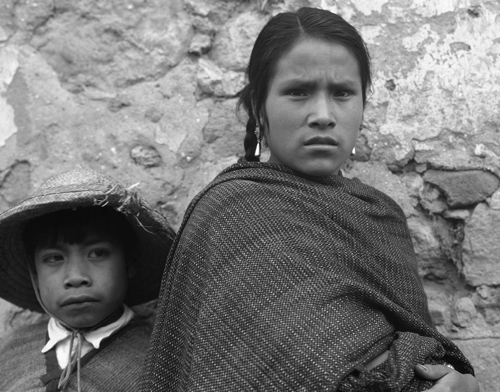
Paul Strand was an ardent proponent of photogravure, a laborious form of printing from etched metal plates. He chose the process for his seminal 1940 portfolio Photographs of Mexico and, twenty-seven years later, reissued it as The Mexican Portfolio. Comprised of twenty images, the portfolio depicts the indigenous peoples, landscapes, architecture, and religious objects he encountered in Mexico in 1932–33. It was created at the suggestion of close friends, and satisfied his own wish to offer high quality art to a wide audience. He carefully supervised the printing of these gravures, and, for the 1940 edition, even recruited a group of friends to complete the final lacquering of the prints.

This exhibition includes all twenty gravure plates from the 1967 edition of The Mexican Portfolio, which are drawn from the collection of the Paul Strand Archive of Aperture Foundation. The images, seen alone or sequenced in a film-like narrative, are a celebration of the subjects’ pride, dignity, and endurance, and are a clear testament to Strand’s belief that the photogravure process is capable of yielding the finest results achievable in photographic printmaking.


Contents:

The exhibition consists of twenty images from The Mexican Portfolio as well as several Ned Scott photographs from the making of Strand’s film Redes (The Wave). A DVD of Redes is included.

Images:


More images

Book:


Paul Strand in Mexico
11 3/8 x 12 7/8 in.
356 pages 435 tritone, four-color, and black-and-white images
Hardcover with DVD


Venues:

Bronx Museum of Art
1040 Grand Concourse
Bronx, NY
Friday, September 9, 2010–Sunday, January 2, 2011

Pensacola Museum of Art
407 South Jefferson Street
Pensacola, FL
Friday, January 28, 2011–Sunday, March 27, 2011

Bakersfield Museum of Art
1930 R Street
Bakersfield, CA
Thursday, September 13, 2012–Sunday, November 25, 2012

Art Museum of South Texas
1902 N. Shoreline Blvd.
Corpus Christi, TX
Thursday, September 12, 2013–Thursday, November 7, 2013

The Steins Collect: Matisse, Picasso, and the Parisian Avant-Garde


The Steins Collect: Matisse, Picasso, and the Parisian Avant-Garde Premiered in San Francisco and Traveled to Paris and New York in 2011–2012


Pablo Picasso, Portrait of Gertrude Stein, 1906; Collection Metropolitan Museum of Art, New York; © Estate of Pablo Picasso / Artists Rights Society (ARS), New York

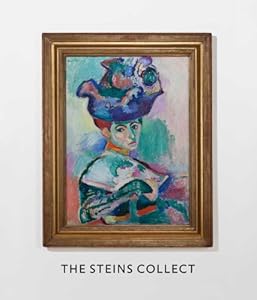
The Steins are responsible in many ways for the turn-of-the century revolution in the visual arts through their adventurous patronage, deep ties to leading minds of the era, and legendary Paris salon gatherings. As powerful tastemakers, they had a commitment to the new, a confidence in their inclinations, and a drive to build appreciation for the work they loved. From the moment they first dared to admire Matisse's scandalous


Woman with a Hat (1905)—the "nasty smear of paint"1 that gave the fauves their name—the foursome were staking claims for modern art that would heavily influence their peers and transform the careers of several of the most important artists of the century.


Marie Laurencin Apollinaire and His Friends 1909
Musee National d’Art Modern, Paris
Left to right: Gertrude, Fernande Olivier, unidentified, Apollinaire, Picasso Marguerite Gillot, Maurice Crmnitz, and Laurencin


The Steins Collect: Matisse, Picasso, and the Parisian Avant-Garde
reunited the unparalleled modern art collections of author Gertrude Stein, her brothers Leo and Michael Stein, and Michael's wife, Sarah Stein. Jointly organized by the San Francisco Museum of Modern Art (SFMOMA), the Metropolitan Museum of Art, New York, and the Réunion des Musées Nationaux-Grand Palais, Paris, this major touring exhibition gathered approximately 200 iconic paintings, sculptures, drawings, prints, and illustrated books not only by Matisse and Picasso, who were each represented by dozens of works, but also by Pierre Bonnard, Paul Cézanne, Juan Gris, Marie Laurencin, Henri Manguin, Francis Picabia, Pierre-Auguste Renoir, Henri de Toulouse-Lautrec, and Félix Vallotton, among others. The Steins Collect premiered at SFMOMA from May 21 through September 6, 2011, before traveling to Paris and then New York.


Matisse Study for Joy of life landscape collioure 1905

Supplemented by a rich array of archival materials—including photographs, family albums, film clips, correspondence, and ephemera—the exhibition provides a new perspective on the artistic foresight of this innovative family, tracing their enduring impact on art-making and collecting practices and their inestimable role in creating a new international standard of taste for modern art.


Sarah and Michael Stein's return to San Francisco with a cache of important Matisse works in 1935, the same year SFMOMA was founded, was particularly instrumental in the advocacy of modern art on the West Coast as well as the making of the museum's early collection; SFMOMA's presentation will underscore the Steins' deep connections to the Bay Area.

As American expatriates living in France, the four Steins were pivotal in shaping the city's vibrant cultural life. Leo Stein (1872–1947) and younger sister Gertrude Stein (1874–1946) were the first to leave the family home in Oakland, traveling to Paris along with millions of tourists to visit the 1900 World's Fair and then relocating to the city in 1902 and 1903, respectively. Sarah Stein (1870–1953) and Michael Stein (1865–1938) soon followed from San Francisco with their eight-year-old son, Allan, arriving in early 1904. The family established their apartments on rue de Fleurus (Leo and Gertrude) and rue Madame (Sarah and Michael) and quickly integrated into the intellectual circles of the Parisian avant-garde. Gertrude and Leo lived modestly off family investments and had to team up to afford their early purchases. "You can either buy clothes or buy pictures. It's that simple. . . . No one who is not very rich can do both," was Gertrude's legendary quote from Hemingway's A Moveable Feast.

The Steins also formed close friendships with the emerging artists they championed, particularly Matisse and Picasso, whose works they aggressively collected and promoted to their associates, almost single-handedly creating markets for their work outside Paris. They dined and vacationed regularly with Matisse and his family, counseled Fernande Olivier on her stormy relationship with Picasso, and made countless introductions. Sarah was instrumental in helping Matisse establish his art school and was among his devoted students.


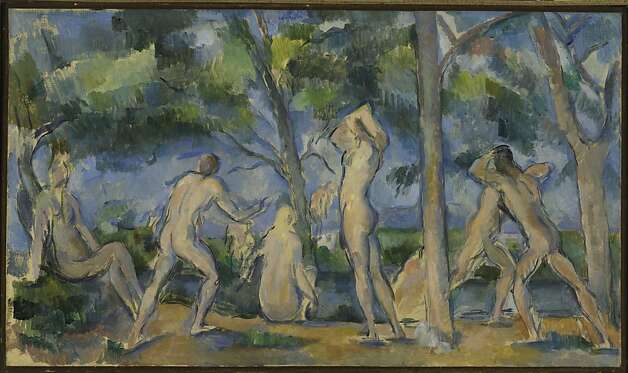
Paul Cezanne, Bathers, 1898-1900; oil on canvas; 10 5/8 x 18 1/8 in. (27 x 46 cm); The Baltimore Museum of Art: The Cone Collection, formedby Dr. Claribel Cone and Miss Etta Cone of Baltimore, Maryland; Photo: Mitro Hood Photo: Sfmoma

Read more: http://www.sfgate.com/entertainment/article/Striking-Woman-lies-at-heart-of-Steins-legacy-2371774.php#ixzz2LZbG17Lo

Along the way, the Steins covered their studio walls with cutting-edge paintings by the most controversial artists of the day and were soon overwhelmed with requests to see the collections. They eventually had to establish regular visiting hours so that Gertrude could attend to her writing in peace. Michael and Sarah decided to open their apartment on the same night of the week and so began the prestigious Saturday evening salons where the brightest artists, writers, musicians, and collectors of the day convened to discuss the latest developments. Anyone with a proper referral was welcome to strain their eyes to see the works by candlelight, as neither apartment was wired with electricity yet.

Following its SFMOMA debut, The Steins Collect traveled to the Grand Palais, Paris (October 3, 2011, through January 16, 2012) and the Metropolitan Museum of Art, New York (February 21 through June 3, 2012). The exhibition was cocurated by Janet Bishop, curator of painting and sculpture at SFMOMA; Cécile Debray, curator of historical collections at the Musée national d'Art moderne, Centre Pompidou, Paris; Rebecca Rabinow, associate curator and administrator, Department of Nineteenth-Century, Modern, and Contemporary Art at the Metropolitan Museum of Art; and Gary Tinterow, Engelhard Chairman, Department of Nineteenth-Century, Modern, and Contemporary Art at the Metropolitan Museum of Art. A richly illustrated catalogue accompanied the exhibition, with new research and original essays from a range of French and American experts in the field.

The Steins Collect draws from prominent public and private collections worldwide and spans the family's entire collecting history. Among some 40 works by Picasso and approximately 60 by Matisse are such masterpieces as Matisse's Blue Nude (Baltimore Museum of Art), Woman with a Hat (SFMOMA), Self-Portrait (Statens Museum, Copenhagen), and Tea (LACMA); and Picasso's Lady with a Fan (National Gallery of Art, Washington, D.C.), Boy Leading a Horse (Museum of Modern Art, New York), Nude with Joined Hands (Museum of Modern Art, New York), and portrait of Gertrude Stein (Metropolitan Museum of Art), among many others.

Works were presented roughly chronologically by when they were originally acquired by the family, highlighting major themes and benchmarks of both art history and the Steins' parallel journey: the Paris art scene and Leo's early interests in Cézanne, Renoir, and Manet to the infamous 1905 Salon d'Automne; Leo and Gertrude's joint acquisitions and the rue de Fleurus; Michael and Sarah Stein's particular devotion to Matisse and the rue Madame; Gertrude's collecting patterns, from her complex relationship with Picasso and their artistic influence on each other through her later promotion of Gris, André Masson, and Picabia in the 1920s and '30s; and Michael and Sarah's history-making art advocacy in the United States, from a 1906 trip home, when they brought the first Matisse paintings to be seen on American soil, to their 1935 return to Palo Alto, California. The exhibition will also feature a special gallery devoted to the Académie Matisse, as well as a gallery conceived by SFMOMA project assistant curator Carrie Pilto devoted to the Steins' patronage of modern architecture with their commission of the Villa Stein-de Monzie by Le Corbusier.

Informed by new research, the exhibition expanded upon Four Americans in Paris: the Collections of Gertrude Stein and Her Family, an exhibition organized by The Museum of Modern Art, New York, in 1970—the last and only significant occasion for which these collections were assembled. Additionally, The Steins Collect seeks to address the historical bias toward Gertrude, which has obscured the fact that the family comprised multiple, interlocking centers of gravity, each with a particular aesthetic and set of favored artists. "Married into a family of brilliant minds and self-mythologizers, Sarah was the one who stood out to Matisse as 'the really intellectually sensitive member of the family'—a patron in every sense of the word," says Bishop.


To accompany the exhibition, SFMOMA, in association with Yale University Press, published a lavishly illustrated exhibition catalogue (cloth, 464 pages), featuring previously unpublished archival information and original essays by Isabel Alfandary, Janet Bishop, Emily Braun, Edward Burns, Cécile Debray, Claudine Grammont, Hélène Klein, Martha Lucy, Carrie Pilto, Rebecca Rabinow, and Gary Tinterow. A benchmark contribution to scholarship on the period, this authoritative volume also includes a complete timeline of the Steins' collecting activity created by Kate Mendillo and a catalogue of the family's holdings compiled by Robert McDonald Parker, who also annotates a selection of rare photographs depicting the changing configurations of works on the walls of the various Stein salons.

Wednesday, February 20, 2013

Rembrandt, Van Dyck, Gainsborough: The Treasures of Kenwood House, London,


The Seattle Art Museum (SAM) presents Rembrandt, Van Dyck, Gainsborough: The Treasures of Kenwood House, London, featuring about 50 masterpieces from this magnificent painting collection, many of which have never traveled to the United States. The exhibition is on view February 14 through May 19, 2013 and is organized by the American Federation of Arts and English Heritage.

This collection, known as the Iveagh Bequest, resides at Kenwood House, a neoclassical villa in London that Scottish architect Robert Adam remodeled in the eighteenth century. Set in beautiful landscaped parkland in the midst of Hampstead Heath, Kenwood House is one of the most magnificent visitor attractions in London. This elegant villa, houses a superb collection of paintings that includes masterpieces by Rembrandt van Rijn, Johan Vermeer, Joseph Mallord William Turner and Thomas Gainsborough, as well as the Suffolk collection of rare Jacobean portraits.

Donated to England by Edward Cecil Guinness, (1847–1927), the first Earl of Iveagh and heir to the Guinness Brewery, the collection was shaped by the tastes of the Belle Époque—Europe’s equivalent to America’s Gilded Age—when Lord Iveagh shared the cultural stage and art market with other industry titans such as the Rothschilds, J. Pierpont Morgan, and Henry Clay Frick. Lord Iveagh’s purchases, made mainly between 1887 and 1891, reveal a taste for the portraiture, landscape, and 17th-century Dutch and Flemish works that could typically be found in English aristocratic collections.

Among the works by Dutch and Flemish masters in the exhibition is


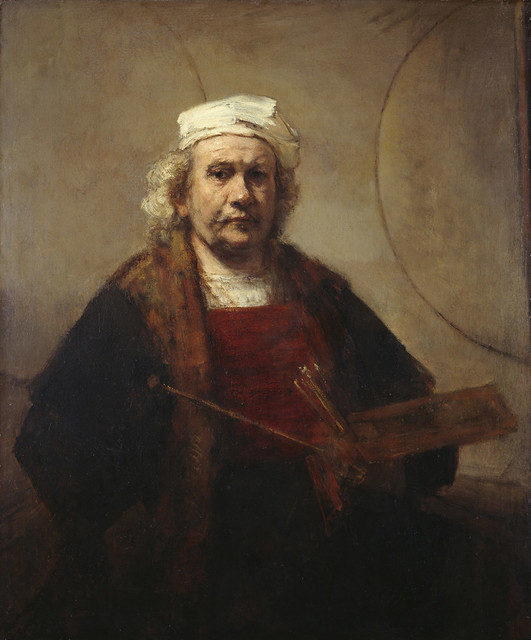
Rembrandt’s sublime Portrait of the Artist (ca. 1665), one of the artist’s last self-portraits and one of only a few of his many self-portraits that show him as a working painter. His barely articulated brushes and palette are painted in the same tones as his robe and seem like a natural extension of his arm. The prime focus of the painting is the artist’s face, illuminated by light and a bright white cap against an otherwise murky background.

There are several paintings by Gainsborough in the exhibition including the full-length portrait


Mary, Countess Howe (ca. 1764), in which Gainsborough has created both an image of aristocratic elegance against the natural setting of the English countryside and one of a landowner among her properties.

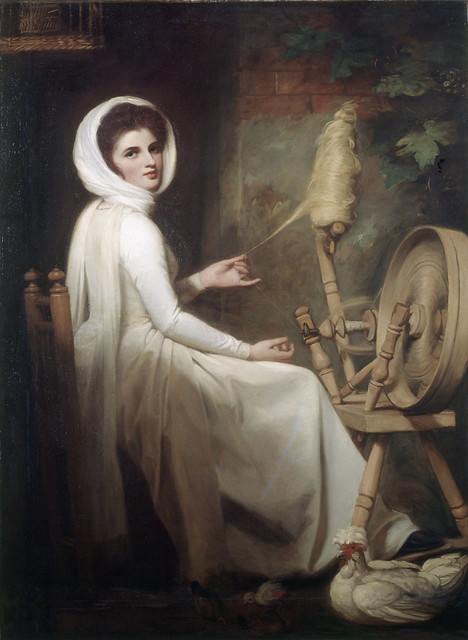
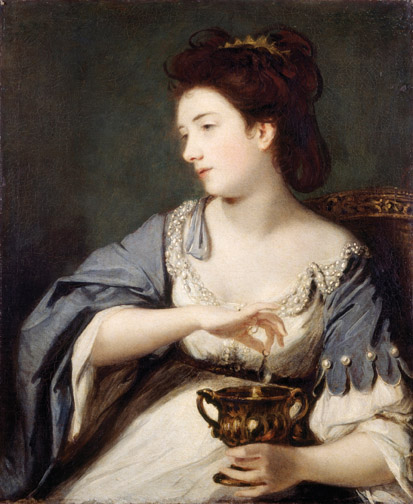
Such full-length portraits of ladies in nature were popular during this period, owing to a great admiration for the aristocratic portraits of Sir Anthony Van Dyck, royal painter to Charles I of England in the 17th century. Along with such aristocratic ladies, the collection’s “virtual harem” of English portraits features celebrity demimondaines including actresses and mistresses. Foremost among these are


Emma Hart—later Lady Hamilton—who served as George Romney’s muse,


and Kitty Fisher—one of the most celebrated courtesans in London society.

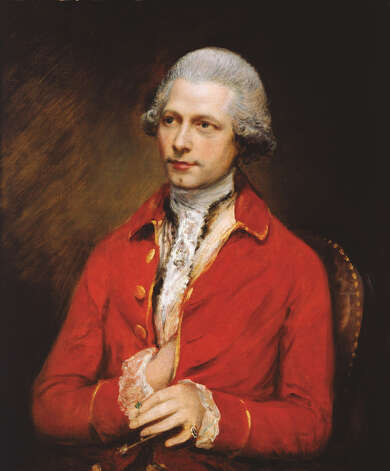
British portraits of 18th century gentlemen are often placed indoors in dignified settings that indicate their accomplishments or status as leisured aristocrats.


Van Dyck’s influence on such portraits is evident in a comparison of his James Stuart, 1st Duke of Richmond and 4th Duke of Lennox (ca. 1636)


to Gainsborough’s portrait of John Joseph Merlin (1781), which echoes Van Dyck’s 17th-century aristocratic portrait in its use of a seated pose, elegant hands, and bold, red fabric against a brown background.

The exhibition also includes two rare hunting scenes by Gainsborough and a thrilling Edwin Henry Landseer picture of a heron caught in the grip of a hawk.

While the exhibition is on tour, Kenwood House will be undergoing a major repair and conservation program. The work will make the roof wind and weather tight—protecting the magnificent interior and important art collection from serious leaks and damp—and will also repair and revive Kenwood’s beautiful exterior. The project will be complete in summer 2013.

The exhibition is organized by the American Federation of Arts and English Heritage. It is supported by an indemnity from the Federal Council on the Arts and the Humanities, with additional funding from the Samuel H. Kress Foundation. In-kind support is provided by Barbara and Richard S. Lane.


ABOUT SEATTLE ART MUSEUM

Seattle Art Museum (SAM) provides a welcoming place for people to connect with art and to consider its relationship to their lives. SAM is one museum in three locations: SAM Downtown, Seattle Asian Art Museum at Volunteer Park, and the Olympic Sculpture Park on the downtown waterfront. SAM collects, preserves and exhibits objects from across time and across cultures, exploring the dynamic connections between past and present. SAM is committed to taking action to protect our environment and to finding creative ways to reduce our ecological footprint.

ABOUT AMERICAN FEDERATION OF ARTS The AFA is a nonprofit institution that organizes art exhibitions for presentation in museums around the world, publishes exhibition catalogues and develops educational materials and programs for children and adults. The AFA’s mission is to enrich the public’s experience of art and understanding of culture by organizing and touring a diverse offering of exhibitions embracing all aspects of art history. The AFA has organized or circulated approximately 3,000 exhibitions with presentations in museums in every state, Canada, Latin America, Europe, Asia and Africa that have been viewed by more than 10 million people. For more information about its programs, see www.afaweb.org.

ABOUT ENGLISH HERITAGE English Heritage is the government’s lead advisory body for the historic environment in England and is responsible for the national collection of historic sites and monuments, as well as their contents and archives. The collection comprises more than 400 historic places and spans 5,000 years of architecture, from prehistoric sites to nuclear bunkers. It includes Stonehenge and much of Hadrian’s Wall, the ruins of the greatest medieval abbeys, the world’s first iron bridge, Charles Darwin’s diaries and the Duke of Wellington’s boots. www.english-heritage.org.uk.

More info om artists and works.


IMAGE CREDITS

Rembrandt van Rijn. Portrait of the Artist, ca. 1665. Oil on canvas. 47 x 45 in. Kenwood House, English Heritage; Iveagh Bequest (88028836). Photo courtesy American Federation of Arts.

Thomas Gainsborough. Mary, Countess Howe, ca. 1764. Oil on canvas. 95 x 61 in. Kenwood House, English Heritage; Iveagh Bequest (88029039). Photo courtesy American Federation of Arts.

George Romney, Emma Hart as “The Spinstress," ca. 1784–85, oil on canvas, 68 5/8 x 50 5/8 in., Kenwood House, English Heritage; Iveagh Bequest (88028814). Photo courtesy American Federation of Arts

Kitty Fisher as “Cleopatra” Dissolving the Pearl, 1759, by Joshua Reynolds (English, 1723–1792, oil on canvas, 30 1/4 x 25 1/4 in.) Kenwood House, English Heritage; Iveagh Bequest (Photo: American Federation of Arts)

MORE IMAGES FROM EXHIBITION


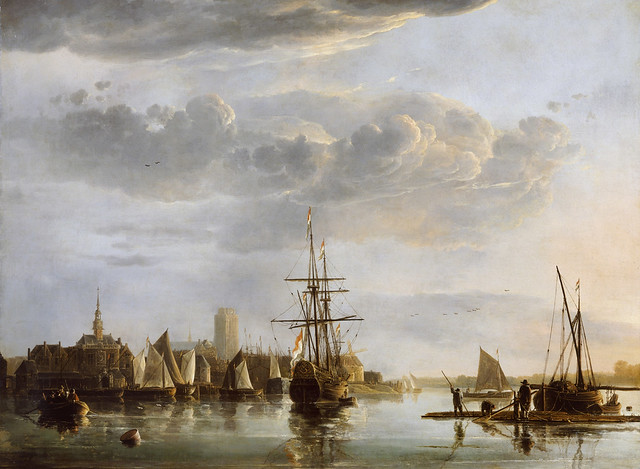
Aelbert Cuyp. View of Dordrecht, ca. 1655. Oil on canvas. 39 3/8 x 53 1/4 in. Kenwood House, English Heritage; Iveagh Bequest (88028825). Photo courtesy American Federation of Arts.


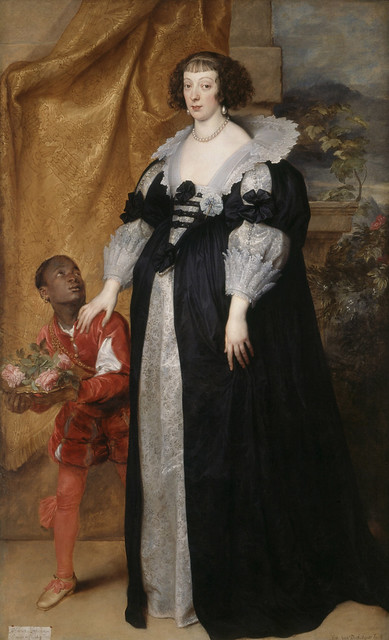
Anthony van Dyck. Princess Henrietta of Lorraine Attended by a Page, 1634 Oil on canvas. 84 3/8 x 50 3/4 in. Kenwood House, English Heritage; Iveagh Bequest (88028826). Photo courtesy American Federation of Arts.


Frans Hals. Pieter van den Broecke, 1633. Oil on canvas. 28 x 24 in. Kenwood House, English Heritage; Iveagh Bequest (88028830). Photo courtesy American Federation of Arts.


Joseph Mallord William Turner. A Coast Scene with Fishermen Hauling a Boat Ashore ("The Iveagh Sea-Piece"), ca. 1803-04. Oil on canvas. 36 1/8 x 48 1/4 in. Kenwood House, English Heritage; Iveagh Bequest (88028820). Photo courtesy American Federation of Arts.

EUROPEAN MASTERS: THE TREASURES OF SEATTLE

Focusing on a great collector of the 19th century, the Treasures of Kenwood House also presents the perfect moment to reveal some of the extraordinary collecting of European painting that has been quietly taking place in Seattle over the last 20 years. The Treasures of Seattle exhibition features approximately 40 paintings, all from local collections, which will share the special exhibition galleries with the paintings from Kenwood House. The paired exhibitions will give visitors the opportunity to observe different approaches to collecting, the history of taste, and how the market has changed since Lord Iveagh began to form his collection in 1887. Featured artists include Vittore Carpaccio, Francisco de Zurbarán, J.A.D. Ingres, Eugène Delacroix, and Frans Hals.


Portrait of an Unknown Man, ca. 1660-1665 Oil on panel Frans Hals Dutch, 1581-1666 13 7/16 x 10 9/16 in. (34.2 x 26.8 cm) Mr. Richard Hedreen


This exhibition is organized by the Seattle Art Museum. Visionary Circle support is provided by Jeffrey and Susan Brotman, Barney A. Ebsworth, Jon and Mary Shirley, Virginia Wright, and Ann P. Wyckoff.

Presenting sponsor for the Seattle presentation is JPMorgan Chase & Co. Supporting sponsors are Melbourne Tower and Washington State Arts Commission/National Endowment for the Arts.