Tuesday, October 28, 2014


Samuel F. B. Morse’s “Gallery of the Louvre” and the Art of Invention
Samuel F. B. Morse’s monumental paintingGallery of the Louvre will embark on a multi-year tour across the United States in January. Kicking off at The Huntington Library, Art Collections, and Botanical Gardens, in San Marino, CA (January 24–April 20, 2015), the tour will visit nine museums across the country, including venues in Fort Worth, TX; Bentonville, AR; Detroit, MI; Salem, MA; and Winston-Salem, NC.

The exhibition, Samuel F. B. Morse’s “Gallery of the Louvre” and the Art of Invention, is the culmination of the painting’s extensive conservation treatment in 2010 and two years of scholarly investigation.

It will be accompanied by an anthology of the same title, published by the Terra Foundation and distributed by Yale University Press.

Chicago businessman and art collector Daniel J. Terra (1911–1996) poses next to Samuel F. B. Morse’s iconic painting Gallery of the Louvre, which has been a signature work in the Terra Foundation’s collection ever since it was acquired in by Mr. Terra in 1982.
“We are delighted to host the kickoff of this extraordinary tour,” said Kevin Salatino, director of the art collections at The Huntington. “And Gallery of the Louvre is particularly fitting here, where our collections span the history of American art as well that of science and technology—interests shared with Morse himself. Los Angeles audiences are sure to be fascinated in many ways by this gem of an exhibition.”
Exhibition tour dates are as follows:
- The Huntington Library, Art Collections, and Botanical Gardens, San Marino, CA, January 24, 2015–April 20, 2015
- Amon Carter Museum of American Art, Fort Worth, TX, May 23, 2015–September 7, 2015
- Seattle Art Museum, Washington, September 22, 2015–January 10, 2016
- Crystal Bridges Museum of American Art, Bentonville, AR, January 2016–April 2016
- Detroit Institute of Arts, MI, June 2016–September 2016
- Peabody Essex Museum, Salem, MA, October 2016–January 2017
- Reynolda House Museum of American Art, Winston-Salem, NC, February 2017–June 2017
- New Britain Museum of American Art, New Britain, CT, June 2017–October 2017
- Iris & B. Gerald Cantor Center for Visual Arts, Stanford University, Stanford, CA, November 2017–January 2018
“Morse’s ‘gallery picture,’ a form first popularized in the seventeenth century, is the only major example of such in the history of American art,” says Peter John Brownlee, curator at the Terra Foundation. “For this canvas, Morse selected masterpieces from the Louvre’s collection and imaginatively ‘reinstalled’ them in one of the museum’s grandest spaces, the Salon Carré.”
In addition to highlighting renowned works by the Old Masters, Gallery of the Louvre serves as a painted treatise on artistic practice, positioning Morse, depicted as the centrally placed instructor in the work, as a link between European art of the past and America’s cultural future.
In 2010 Gallery of the Louvre underwent a six-month conservation treatment in the studio of Lance Mayer and Gay Myers, specialists in American painting who have restored such major works as Emanuel Leutze’s Washington Crossing the Delaware (1851; Metropolitan Museum of Art) and Rembrandt Peale’s The Court of Death (1824; Detroit Institute of Arts). The conservation repaired damages that had occurred over time and yielded insight into Morse’s working methods.
“The conservation treatment greatly improved the overall look of the Gallery of the Louvre and confirmed that Morse was as fearless an experimenter with painting media as he was with the daguerreotype and the electromagnetic telegraph later in his career,” added Brownlee.
The painting’s conservation was documented in the 30-minute video A New Look: Samuel F. B. Morse’s “Gallery of the Louvre,” produced by Sandpail Productions for the Terra Foundation. The video provides information about Morse’s career, as well as paintings depicted in the picture, and features interviews with conservators, curators at the Terra Foundation and the Musée du Louvre, and other specialists, including Morse scholar Paul J. Staiti, Alumnae Foundation Professor of Fine Arts at Mount Holyoke College.
From 2011 to 2013, the painting was exhibited for extended periods at the Yale University Art Gallery,

the National Gallery of Art,
and the Pennsylvania Academy of the Fine Arts, where it was the subject of scholarly investigation and dialogue.

Monday, October 27, 2014
Eleanor Fortescue-Brickdale among the highlights of the 19th Century European Paintings auction at Bonhams Nov. 5
On November 5, an exquisite painting by acclaimed British female artist, Eleanor Fortescue-Brickdale, will feature among the highlights of the 19th Century European Paintings auction at Bonhams. Botticelli's studio:
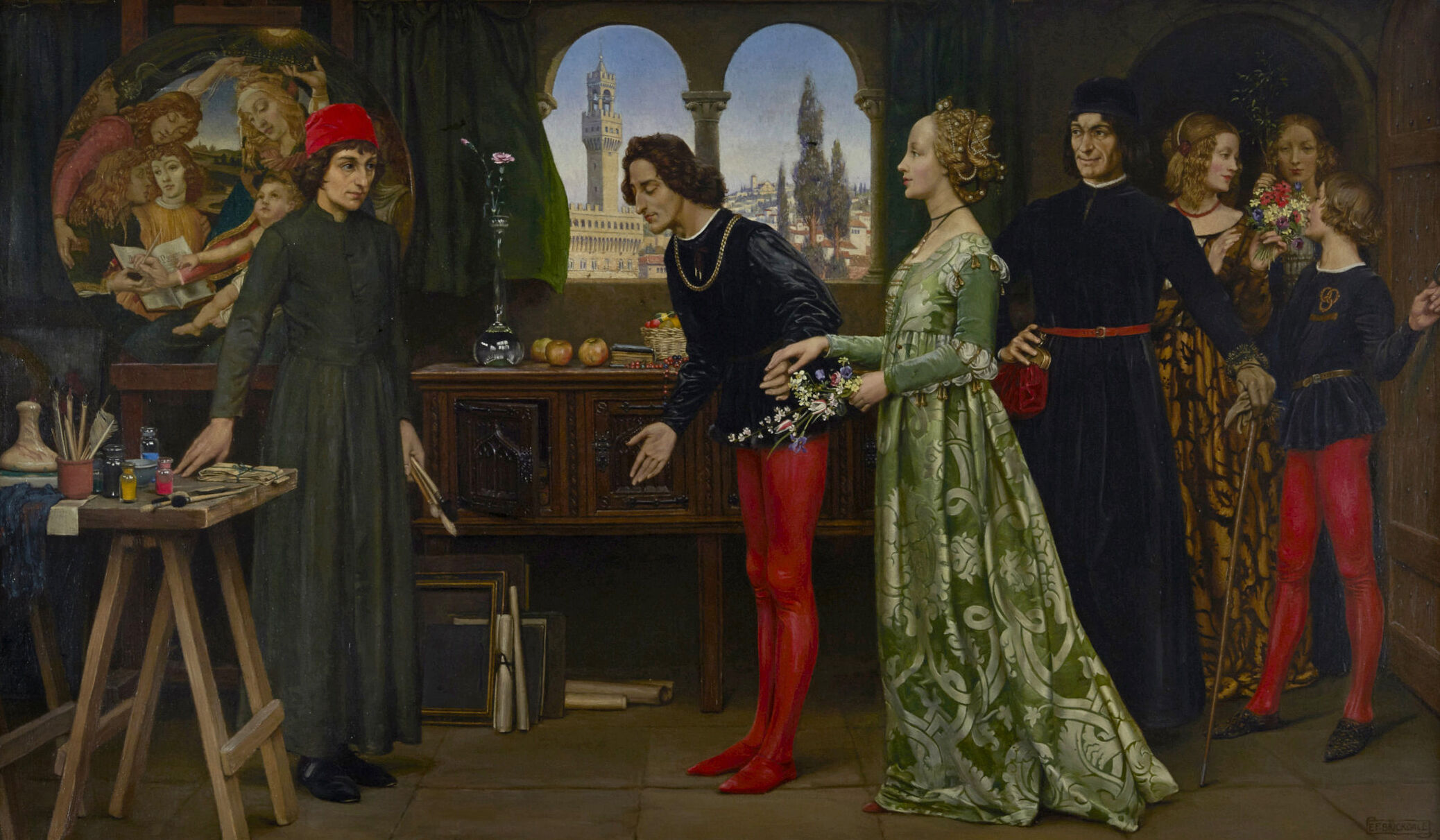
The first visit of Simonetta presented by Giulio and Lorenzo de Medici is estimated to fetch $200,000-300,000.
Painted in 1922, Botticelli's studio is a rare find given that Fortescue-Brickdale was known to work mostly in watercolor. The painting depicts Renaissance master Sandro Botticelli in his studio, upright and reverent in the presence of noblewoman Simonetta, who is introduced by notable patrons of the arts, Giulio and Lorenzo de Medici. The superb brushwork used to portray the elegant details in the clothing, furniture, drapery, and landscape visible through the window is a testament to Fortescue-Brickdale's skill as an artist, illustrator and colorist.
Eleanor Fortescue-Brickdale enjoyed early commercial success and later became known for her commemorative stained-glass windows dedicated to the victims of the Great War, as well as for altarpieces for various churches in northern England.
"Botticelli's Studio is an important sequel to
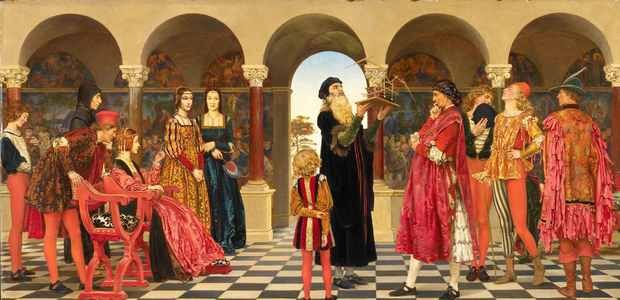
The Forerunner, which is a celebration of the unparalleled Leonardo Da Vinci, now in the Lady Lever Art Gallery in Liverpool. Both paintings echo Fortescue-Brickdale's love for early Italian art," says Madalina Lazen, Senior Specialist of European Paintings at Bonhams New York.
The Forerunner, which is a celebration of the unparalleled Leonardo Da Vinci, now in the Lady Lever Art Gallery in Liverpool. Both paintings echo Fortescue-Brickdale's love for early Italian art," says Madalina Lazen, Senior Specialist of European Paintings at Bonhams New York.
Also featured is a work by one of the most successful German Orientalist painters of the 19th century,
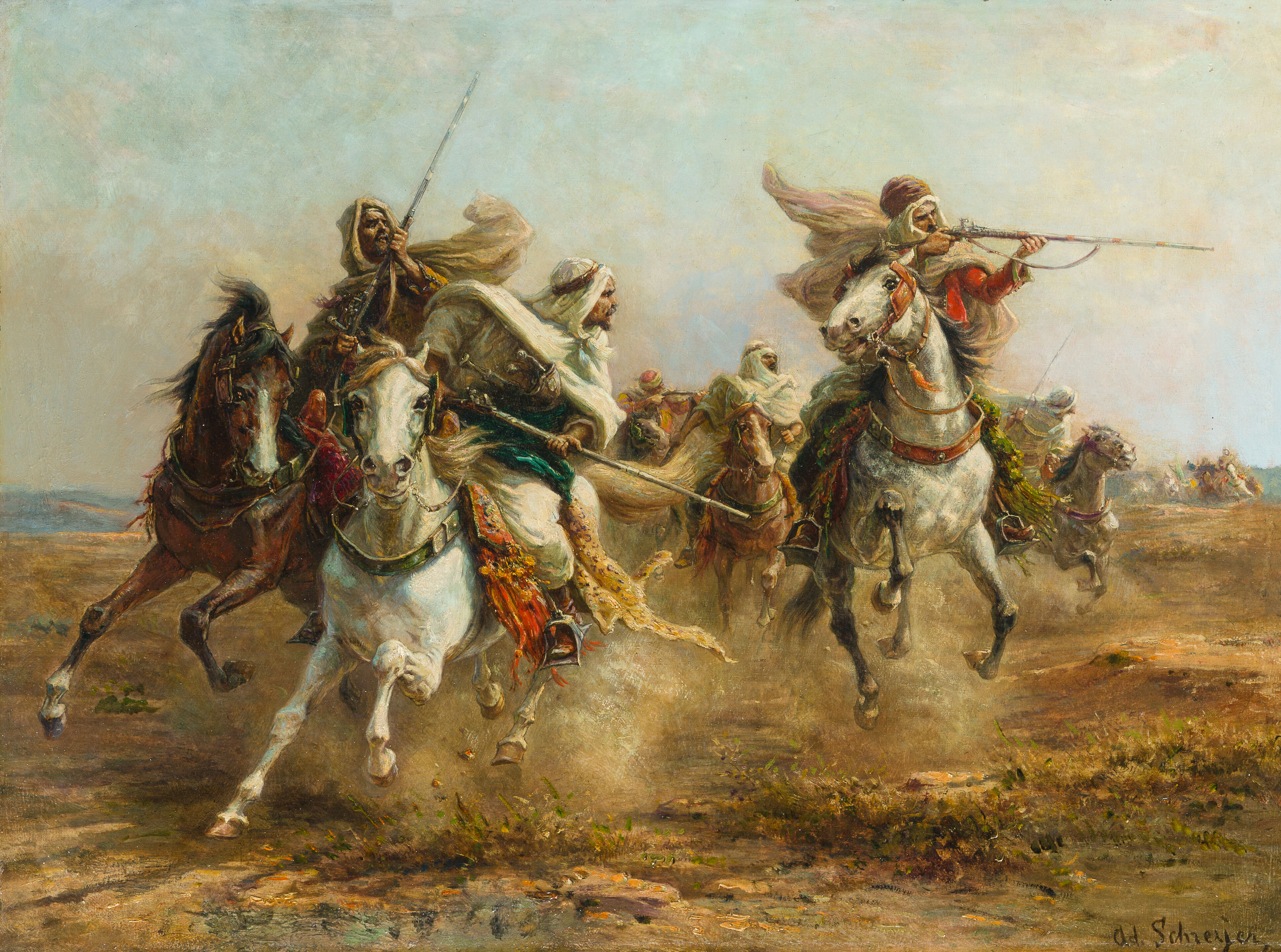
Adolf Schreyer. Bedouins Taking Aim (est. $80,000-120,000)
is an exceptional demonstration of Schreyer's technical skill and fascination with Algeria, where he spent time traveling and riding with Bedouin horsemen. His rendering of armed horseback riders galloping towards the viewer demonstrates his deftness at capturing perspective, movement and intensity in paint. This superb composition is one of Schreyer's best works to appear on the market in recent years.
Another masterpiece in the Orientalist theme is an exotic portrait of a harem beauty holding a pink fan by famed artist Leon Francois Comerre (est. $150,000-200,000):
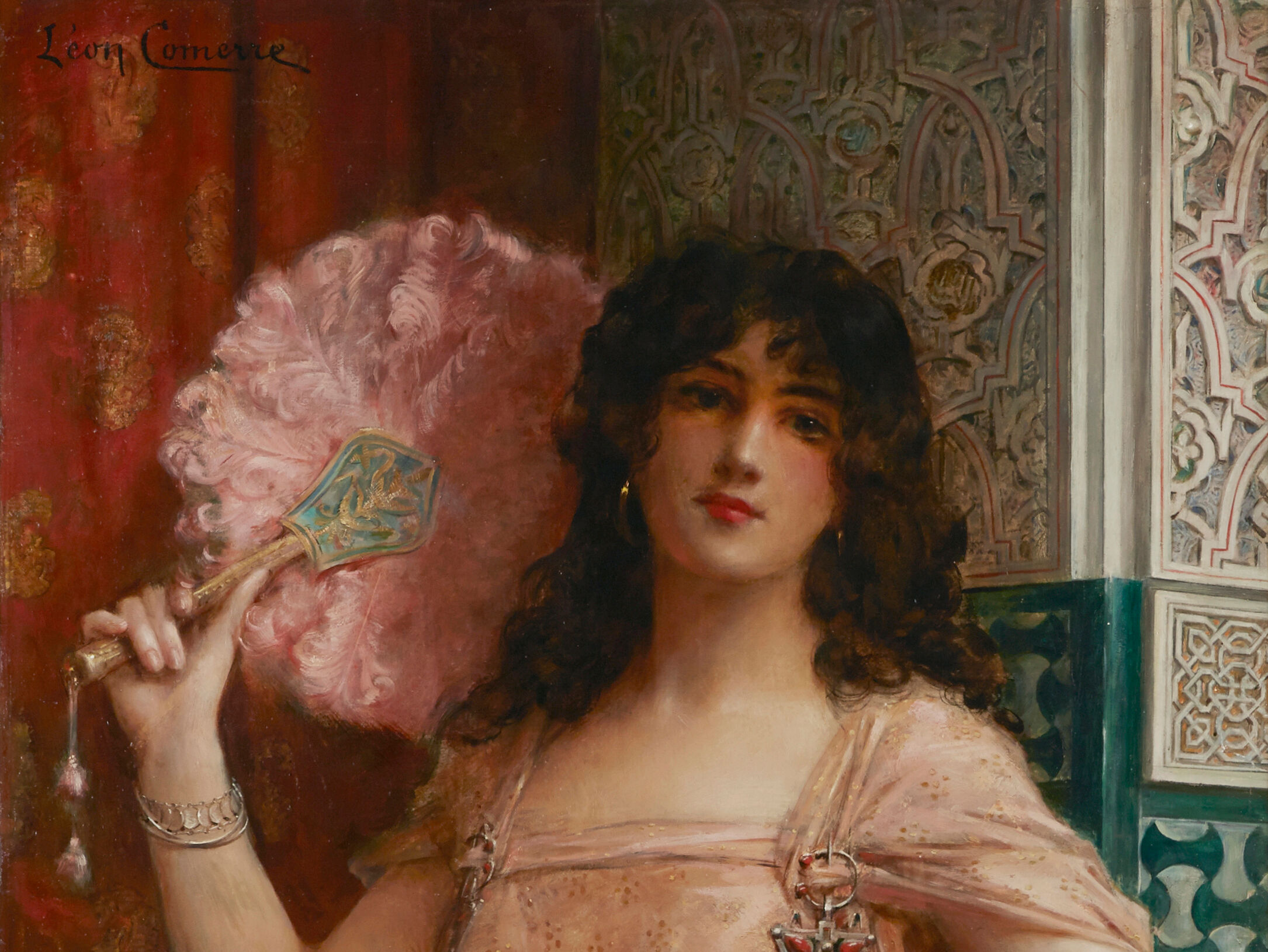
Comerre's masterful treatment of intricate texture, fabric and jewelry made him a highly sought after artist throughout Europe during the late 19th century.
Adolf Schreyer. Bedouins Taking Aim (est. $80,000-120,000)
is an exceptional demonstration of Schreyer's technical skill and fascination with Algeria, where he spent time traveling and riding with Bedouin horsemen. His rendering of armed horseback riders galloping towards the viewer demonstrates his deftness at capturing perspective, movement and intensity in paint. This superb composition is one of Schreyer's best works to appear on the market in recent years.
Another masterpiece in the Orientalist theme is an exotic portrait of a harem beauty holding a pink fan by famed artist Leon Francois Comerre (est. $150,000-200,000):
Comerre's masterful treatment of intricate texture, fabric and jewelry made him a highly sought after artist throughout Europe during the late 19th century.
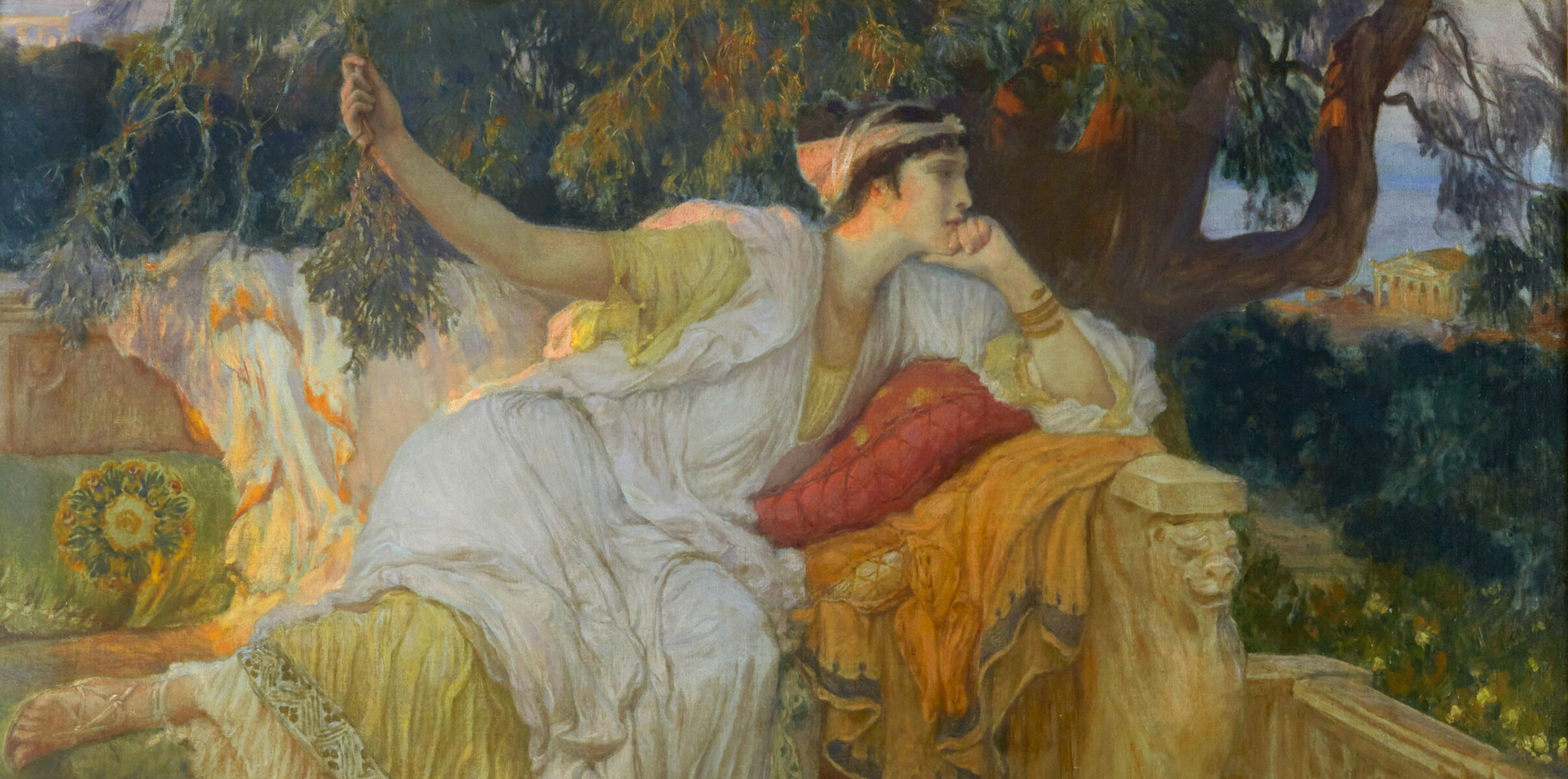
Another spectacular oil is A Grecian Lady (est. $200,000 - 300,000) created circa 1899 by Orientalist artist Frederick Arthur Bridgman.
Bridgman was one of the most accomplished American painters of this genre, however, this painting is unusual in that it portrays a European subject; it was around the turn of the century that Bridgman began to experiment with neo-classical themes and thin layers of paint. Iridescent, delicate colors infuse the serene view of a young woman, draped in cascading folds of white, as she pensively stares into the distance, with the rays of the setting sun lending the entire composition a warm glow.
Bridgman was one of the most accomplished American painters of this genre, however, this painting is unusual in that it portrays a European subject; it was around the turn of the century that Bridgman began to experiment with neo-classical themes and thin layers of paint. Iridescent, delicate colors infuse the serene view of a young woman, draped in cascading folds of white, as she pensively stares into the distance, with the rays of the setting sun lending the entire composition a warm glow.
Other notable lots include

Dosmare Pool, an oil on canvas by Harold Knight (est. $20,000 – 30,000)
that uses an eerie, soft, minimal palette, lending the work a Surrealist intensity; and
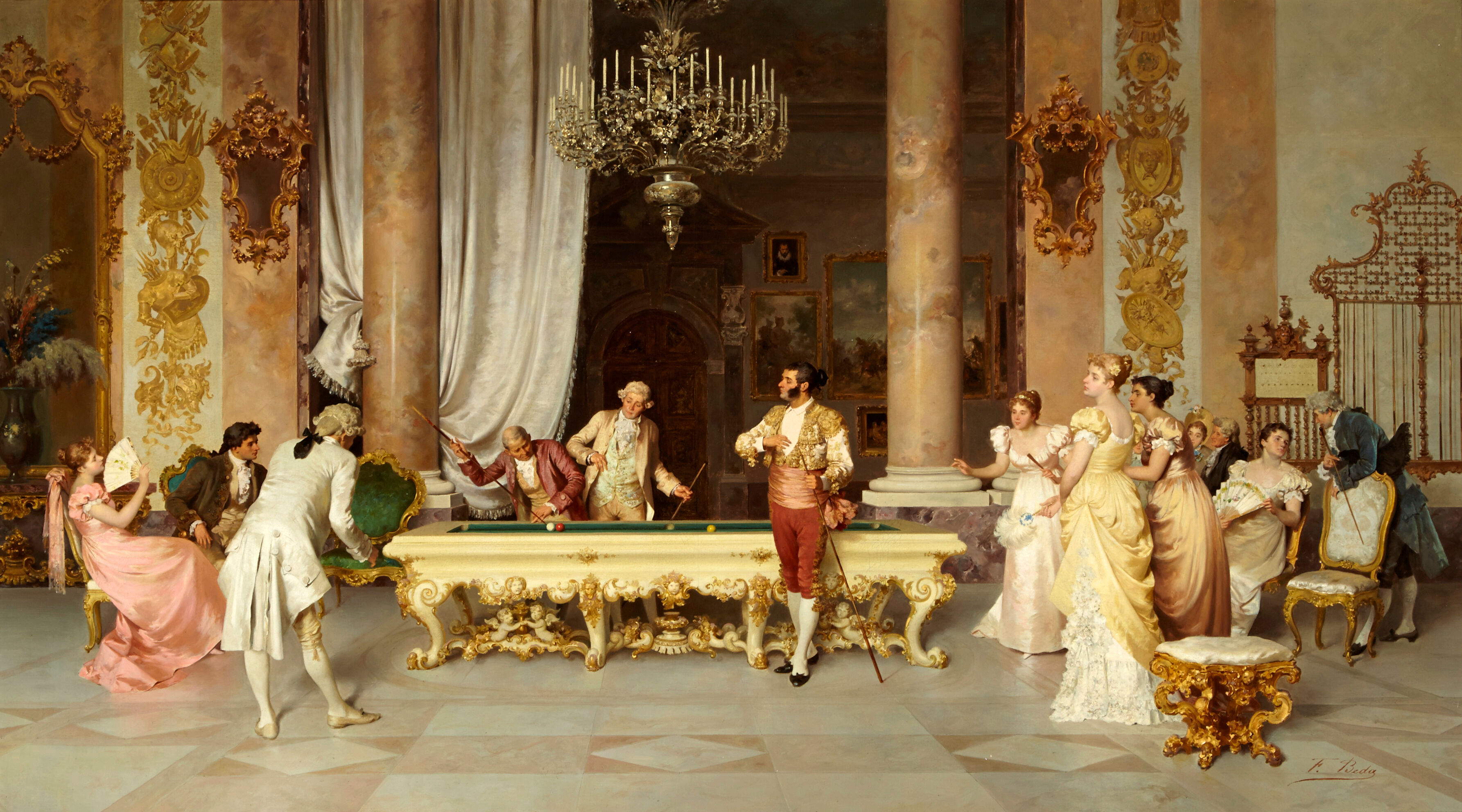
A Game of Billiards by Francesco Beda (est. $40,000 – 60,000), which is a delightful portrayal of the 18th century world, depicting a group of gentlemen playing a game of billiards under the intent gaze of their female admirers.
Dosmare Pool, an oil on canvas by Harold Knight (est. $20,000 – 30,000)
that uses an eerie, soft, minimal palette, lending the work a Surrealist intensity; and
A Game of Billiards by Francesco Beda (est. $40,000 – 60,000), which is a delightful portrayal of the 18th century world, depicting a group of gentlemen playing a game of billiards under the intent gaze of their female admirers.
Realms of Imagination. Albrecht Altdorfer and the Expressivity of Art around 1500
“Realms of Imagination. Albrecht Altdorfer and the Expressivity of Art around 1500”, taking place from 5 November 2014 to 8 February 2015, the Städel Museum is shedding light on far- reaching innovations that came about in the early sixteenth century in the art of Europe, which took on a surprisingly modern appearance as a result. With the aid of 120 objects, the show vividly conveys how, around 1500, an entire generation of artists formulated the genres of landscape and history painting as well as the portrait anew.
Far removed from naturalistic representation, an innovative, expressive interplay of light effects, exuberant colouration and grotesque forms and poses evolved throughout the spectrum of artistic media: painting, sculpture, printmaking, drawing and book illumination. Taking the artists Albrecht Altdorfer (ca. 1480–1538), Wolf Huber (ca. 1485–1553), the Master IP of Passau (active until after 1520) and Hans Leinberger (documented in Landshut, 1510–1530) as a point of departure, the phenomenon of “expressivity” – a chief pursuit of the artists of the so-called Danube School – will here be placed in a pan-European context for the first time.
To this end, the works by Altdorfer, Huber, Leinberger and the Master IP are juxtaposed with examples by contemporaries such as Lucas Cranach the Elder (1472–1553), Hans Leu (ca. 1490–1531) or Albrecht Dürer (1471–1528). The exhibition emphasizes the importance of examining their œuvres within a broader European reference framework, because not only the artists in the Danube valley but also their colleagues in the Netherlands, on the Lower and Upper Rhine, in Switzerland and Upper Italy, Bohemia, Poland and Northern Germany availed themselves of a directly comparable pictorial and formal language. The Frankfurt show demonstrates this phenomenon to its visitors in a range of media and themes whose breadth is unprecedented in the history of exhibitions on this subject.
“Realms of Imagination” is the outcome of a joint exhibition project of the Städel
Museum and the Liebieghaus Skulpturensammlung in Frankfurt am Main and the
Kunsthistorisches Museum in Vienna in cooperation with the
Geisteswissenschaftliches Zentrum Geschichte und Kultur Ostmitteleuropas e.V. of
the Universität Leipzig.
After its presentation at the Städel, the show will be on view at the Kunsthistorisches Museum in Vienna from 17 March to 14 June 2015.
It has been nearly fifty years since the last comprehensive presentation of the art of the “Danube School”, and thirty years since the last major thematic show on Altdorfer. Now, with a selection of striking masterworks, the special exhibition at the Städel Museum is illuminating the phenomenon of expressivity in the art around 1500 in all its thematic and artistic facets and media in a panoramic survey of this stylistic development, which was not confined solely to the Danube region. Particularly in the area of religious depictions, the approaching Reformation granted artists of the time entirely new expressive liberties. They would not enjoy this freedom for long, however, because once the process of confessionalization was over the Protestant faith renounced certain images entirely, while the Catholic Church returned to a policy of insisting on iconographic conventions. As a result, in the art around 1500 we encounter narrative strains that were no longer conceivable in the same form in the further course of the sixteenth century.
The exhibition assembles and deliberately juxtaposes all of the artistic genres prevalent and displaying expressive tendencies in the period around 1500. Within this context, paintings and prints from the Städel collection as well as sculptures from the Liebieghaus Skulpturensammlung form the show’s core, which is enhanced with prominent loans from other museums. Key works from the Kunsthistorisches Museum in Vienna, the Alte Pinakothek and the Bayerisches Nationalmuseum in Munich, the Národni Galerie in Prague, the Skulpturensammlung and Gemäldegalerie of the Staatliche Museen Preussischer Kulturbesitz in Berlin, the Graphische Sammlung of the Universitätsbibliothek Erlangen, the Museo Thyssen- Bornemisza in Madrid, the Szépművészeti Múzeum in Budapest and other collections will be on view. We moreover succeeded in obtaining a substantial number of loans belonging to churches, for example the Retable of St John from the Church of Our Lady before Týn in Prague (1520s) and paintings from St Florian’s Priory in Linz. With this presentation, the Städel is continuing its series of major exhibitions on art of the Early Modern era, of which the most recent example was the show on Albrecht Dürer.
The exhibition is divided thematically into six parts.
The introductory section, entitled Weight of the World, Forces of Nature: Depictions of St Christopher, is devoted to one of the most frequently portrayed saints in the Late Middle Ages. Images of St Christopher, who carries the Christ Child across a river on his shoulders, not only decorated church walls and altarpieces in the form of paintings or sculptures, but were also very popular as prints used in domestic settings. Albrecht Altdorfer, Wolf Huber and Georg Lemberger depicted the saint in a previously unheard-of manner, employing bizarrely exaggerated forms to lend expression to the tremendous burden Christopher took upon himself when he carried the Child.
After its presentation at the Städel, the show will be on view at the Kunsthistorisches Museum in Vienna from 17 March to 14 June 2015.
It has been nearly fifty years since the last comprehensive presentation of the art of the “Danube School”, and thirty years since the last major thematic show on Altdorfer. Now, with a selection of striking masterworks, the special exhibition at the Städel Museum is illuminating the phenomenon of expressivity in the art around 1500 in all its thematic and artistic facets and media in a panoramic survey of this stylistic development, which was not confined solely to the Danube region. Particularly in the area of religious depictions, the approaching Reformation granted artists of the time entirely new expressive liberties. They would not enjoy this freedom for long, however, because once the process of confessionalization was over the Protestant faith renounced certain images entirely, while the Catholic Church returned to a policy of insisting on iconographic conventions. As a result, in the art around 1500 we encounter narrative strains that were no longer conceivable in the same form in the further course of the sixteenth century.
The exhibition assembles and deliberately juxtaposes all of the artistic genres prevalent and displaying expressive tendencies in the period around 1500. Within this context, paintings and prints from the Städel collection as well as sculptures from the Liebieghaus Skulpturensammlung form the show’s core, which is enhanced with prominent loans from other museums. Key works from the Kunsthistorisches Museum in Vienna, the Alte Pinakothek and the Bayerisches Nationalmuseum in Munich, the Národni Galerie in Prague, the Skulpturensammlung and Gemäldegalerie of the Staatliche Museen Preussischer Kulturbesitz in Berlin, the Graphische Sammlung of the Universitätsbibliothek Erlangen, the Museo Thyssen- Bornemisza in Madrid, the Szépművészeti Múzeum in Budapest and other collections will be on view. We moreover succeeded in obtaining a substantial number of loans belonging to churches, for example the Retable of St John from the Church of Our Lady before Týn in Prague (1520s) and paintings from St Florian’s Priory in Linz. With this presentation, the Städel is continuing its series of major exhibitions on art of the Early Modern era, of which the most recent example was the show on Albrecht Dürer.
The exhibition is divided thematically into six parts.
The introductory section, entitled Weight of the World, Forces of Nature: Depictions of St Christopher, is devoted to one of the most frequently portrayed saints in the Late Middle Ages. Images of St Christopher, who carries the Christ Child across a river on his shoulders, not only decorated church walls and altarpieces in the form of paintings or sculptures, but were also very popular as prints used in domestic settings. Albrecht Altdorfer, Wolf Huber and Georg Lemberger depicted the saint in a previously unheard-of manner, employing bizarrely exaggerated forms to lend expression to the tremendous burden Christopher took upon himself when he carried the Child.
In the first gallery of the exhibition annex, the four leading artists of the Danube region are introduced with a selection of key works: Albrecht Altdorfer, Wolf Huber and the sculptors Meister IP and Hans Leinberger. Here the focus is on Images of Man. On the one hand, the objects on display shed light on how these masters differed from the preceding generation of artists in the depiction of the human being; on the other hand attention is called to stylistic devices they employed in the realization of this pictorial motif. Albrecht Dürer, as the protagonist and originator of a mathematically and scientifically constructed image of the human being, is moreover juxtaposed here with his contemporaries Altdorfer, Huber, Master IP and Leinberger.
In contrast to Dürer’s precisely proportioned bodies, the figures in the works of the other artists are extremely dynamic, and their anatomy is often depicted in a manner that is anything but realistic. The art of the Danube masters is distinguished by the employment of expressive colour and form. With works by Wolf Huber such as his painting

The Arrest of Christ (after 1522) or his Altarpiece of St Anne (1521), the second leading artist of the Danube region after Altdorfer is presented. What is more, in addition to Hans Leinberger, the monogrammist IP is featured here – with the central panel of his

Retable of St John (1520s)
– as one of the most prominent representatives of sixteenth-century sculpture.
In the section Oblique Views in Crucifixions and Other Passion Scenes, the expressivity of the art of this epoch is examined with the aid of various religious motifs. Within the œuvres of Altdorfer, Huber, the Master IP and Leinberger, expressive means such as ornamentalization, dramatization and distortion are encountered in particularly striking form in depictions of the Crucifixion and the Deposition. A Crucifixion scene known as the so-called

Schottenkreuzigung (ca. 1500) serves to introduce a further artist active in the Danube region in the early sixteenth century: Lucas Cranach the Elder; it is his first painting. The depiction of the theme by Cranach contrasts with other interpretations of the motif particularly by virtue of its drastic character.
The positioning of the crosses at oblique angles would later be adopted frequently by other artists. Leinberger unites all these various phenomena in his low reliefs of the Crucifixion, the Deposition and the Lamentation of Christ (ca. 1515/16). The Master IP is represented in this section with a Crucifixion group in the round, part of the Retable of St John from the Church of Our Lady beforeTýn (1520s). Huber, in his Large landscape with a city (ca. 1525) relegates the actual pictorial theme of the Crucifixion to the background, giving the landscape centre stage instead.
The section with the heading Landscape as a Vehicle of Expression features striking examples of how, in art around 1500, landscape and its components no longer serve as mere backdrops for the actual event, but – for the first time – become a pictorial subject and a theme in their own right. Skies threatening to erupt in storm or lyrical sunsets underscore the expressivity and moods of scenes usually devoid of people, and in many artworks the vegetation develops a mysterious life of its own. Pen-and-ink drawings by Albrecht Altdorfer and his younger brother Erhard, for example, show willows and spruces not as static trees but as eerily animated beings:

Erhard Altdorfer (1480–1561), The large Spruce Tree, about 1525/30
The following section, Means of Expressivity, is devoted to examining the various expressive devices employed in the art of the period in question. With the aid of deliberate contortion, deformation, ornamentalization and dramatization, as well as with draughtsmanship, the treatment of light, colouration and pathos, the artists undermined traditional visual expectations and presented the depicted figures in a new, astonishing, and often downright modern manner. In his painting The Birth of Christ (ca. 1511), for example, Altdorfer achieves an extreme intensification of the scene’s impact with his use of colour and his handling of the light:

The figure of an Abbot Saint (ca. 1520/30) by a Lower Bavarian artist is distinguished by tremendous distortion and deformation. The new generation of artists conceived of the human body virtually as a malleable material which could be modelled at will, regardless of established ideals.
The exhibition comes to a close with the topic Artists and Their Clients. Here we take a look at the role played in the development of the new style by the persons who commissioned the artworks. The Prayer Book of Emperor Maximilian I (1514/15) from the Bibliothèque Municipale in Besançon once again shifts the focus to the importance of Dürer and his function as an authority to be resisted, but also as a source of inspiration and point of departure for the exponents of the new approach. Recent findings in connection with the financers and clients of large sculptural ensembles of the altarpieces and epitaphs executed above all for Bohemian churches moreover shed light on the special production conditions and mechanisms of what in many cases were monumental commissions.
The themes explored and the insights gained within the framework of the show offer a fresh and comprehensive look at the unique phenomenon of expressivity in art around 1500.
Catalogue: An extensive catalogue edited by Stefan Roller and Jochen Sander will accompany the
exhibition. With a foreword by Max Hollein and essays by Daniela Bohde, Katrin Dyballa, Markus
Hörsch, Susanne Jaeger, Guido Messling, Jochen Sander and Matthias Weniger. German edition,
approx. 290 pages, Hirmer Verlag,
More images from the exhibition:
More images from the exhibition:


Subscribe to:
Posts (Atom)