Tuesday, September 1, 2015

The Wrath of the Gods: Masterpieces by Rubens, Michelangelo, and Titian


Philadelphia Museum of Art September 12-December 6, 2015

This fall, the Philadelphia Museum of Art will present The Wrath of the Gods: Masterpieces by Rubens, Michelangelo, and Titian.


Prometheus Bound
Peter Paul Rubens, Flemish (active Italy, Antwerp, and England), 1577 - 1640, and Frans Snyders, Flemish (active Antwerp), 1579 - 1657. (The eagle was painted by Snyders.)

The exhibition focuses on one of the finest works by the great Flemish painter Peter Paul Rubens (1577–1640), Prometheus Bound. This ambitious, large-scale painting, described by the artist himself as “the flower of my stock,” will be presented alongside works by the Renaissance and Baroque masters who inspired Rubens’s dramatic treatment of the eternal torment to which the Titan Prometheus was condemned by Zeus for giving the gift of fire to humanity. These include Michelangelo’s famous drawing of the Titan Tityus, on loan from the British Royal Collection, and Titian’s large canvas depicting the same subject from the collection of the Museo del Prado. Neither work has ever been displayed together with Prometheus Bound by Rubens.

In depicting Prometheus chained to a rocky outcropping, Rubens recast the story of an immortal rebel who suffered for humanity, making this painterly tour-de-force an allegory for creation and ambition. He conceived it at a formative moment in his career, having returned to Antwerp after eight years in Italy, where he had widely studied the art of the Renaissance and antiquity. He fused these inspirations to create a revolutionary style that helped give rise to the Baroque movement of the seventeenth century.

In Prometheus Bound, Rubens created a horrific, yet emotionally gripping scene. The massive semi-nude male figure tumbles on his back, writhing, kicking, and clenching his fist as an eagle rips open his chest to devour his liver, the eternal punishment inflicted by Zeus who was outraged when Prometheus stole the fire of Olympus and gave it to humanity.


Tityus, 1548 1549. Titian (Tiziano Vecellio), (Museo Nacional del Prado, Madrid) 

The artist’s debt to Titian is vividly reflected in the exhibition, evident in the precarious placement and foreboding color treatment of the figure in the Venetian painter’s Tityus. Like Rubens’s Prometheus Bound, it portrays the terrible punishment of a Titan, similarly attacked by a raptor.
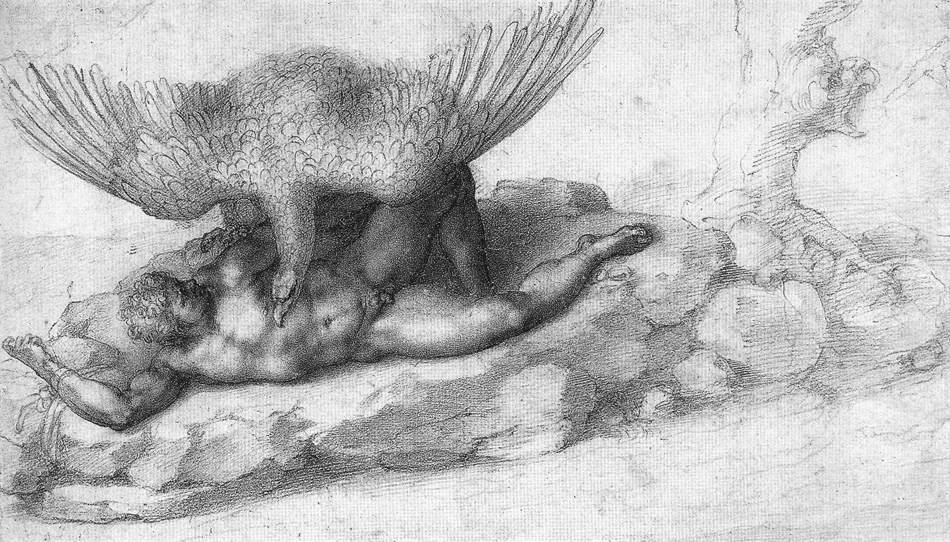


Michelangelo’s double-sided drawing, like Titian’s painting, also bears striking affinities to Rubens’s canvas, especially in the poses of its figures and the expressive rendering of their musculature. Famous even in his own lifetime, Michelangelo’s Tityus depicts a heroically-scaled figure in torment as well.
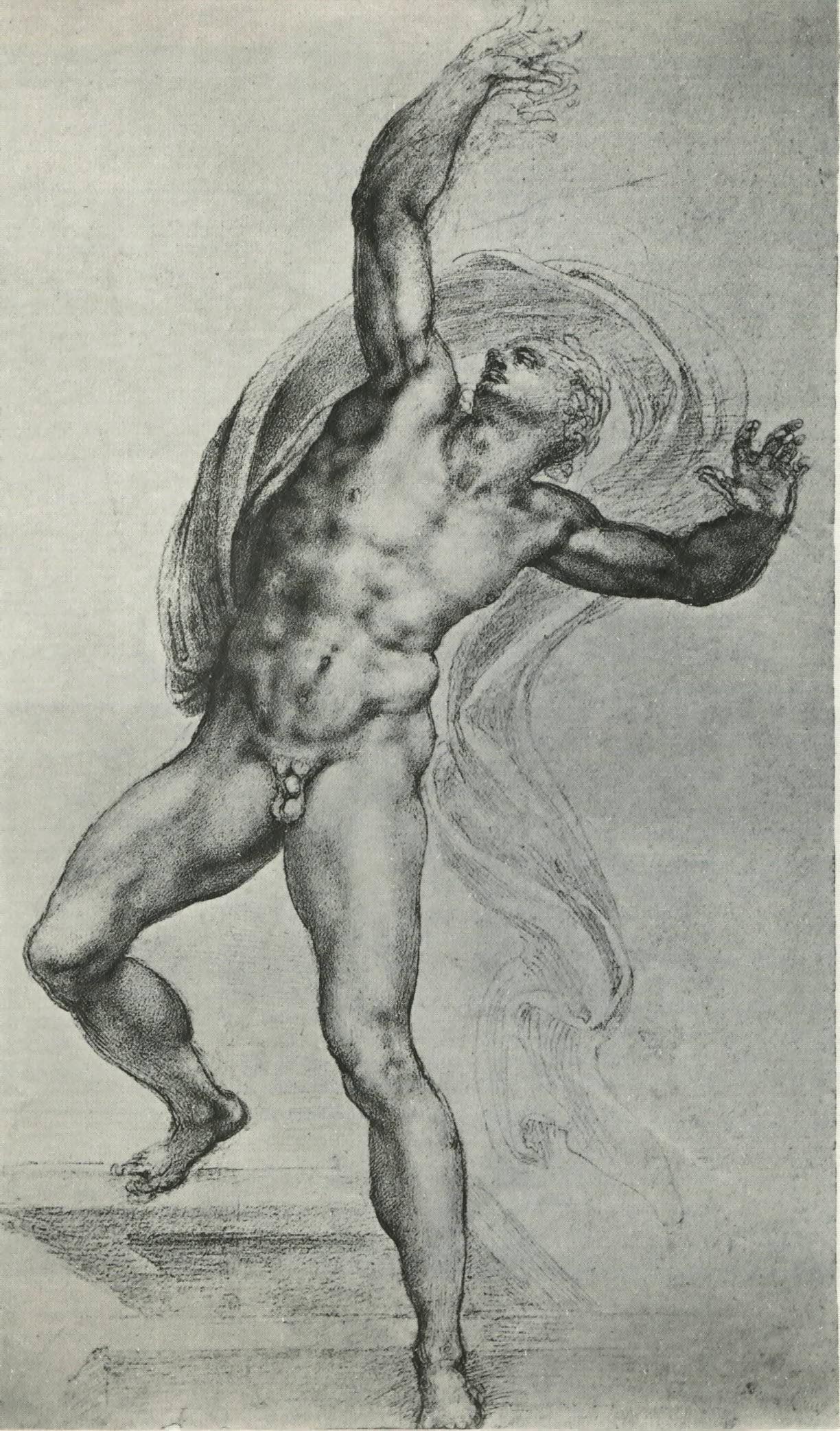


On the other side of Michelangelo’s drawing, this figure is reworked into a sketch of the resurrected Christ, an image that foreshadows Michelangelo’s depiction of the Risen Christ in the Last Judgment in the Vatican’s Sistine Chapel. Both sides of this drawing will be seen in the exhibition, conveying a direct parallel between Prometheus and Christ, each of whom sacrificed himself for the benefit of mankind. The relations between the two subjects will be explored further through examples of Rubens’s simultaneous interest in representing the torment that Christ suffered during his crucifixion.


Also on display will be an 1805 cast of the ancient Greek sculpture called Laocöon, on loan from the Pennsylvania Academy of the Fine Arts, which depicts a Trojan priest and his two sons attacked by giant snakes. The near life-size work was discovered early in the sixteenth century and became widely known as the most intense exploration of pain and punishment in the history of art. Rubens drew directly upon the example of the Laocöon for developing his own aesthetic of horror.


 Works by northern European artists such as Michiel Coxcie and Hendrik Goltzius are included. The impact of these Dutch and Flemish artists on his painting further illuminates Rubens’s process of creation and the ways in which ideas circulated before the modern era, at a time when the Baroque movement was being formed.

About Peter Paul Rubens

Peter Paul Rubens was raised in Antwerp and became one of the major painters of the Counter-Reformation. He was the preeminent painter of his day, an international celebrity. A prolific artist, he traveled to Italy in 1600 to study the Renaissance masters, returning to Antwerp in 1608 where he was appointed court painter to Archduke Albert, who governed the Netherlands on behalf of Spain. He worked for the leading courts of Europe, including the kings of Spain and England as well as the regent of France. Rubens’s style is distinguished by sensuality, rich color, and dramatic sense of movement, qualities that make him a leading figure of the Baroque era. His works number more than 1,400 yet only a handful of his large-scale paintings are found in American collections.


More images from the exhibition:
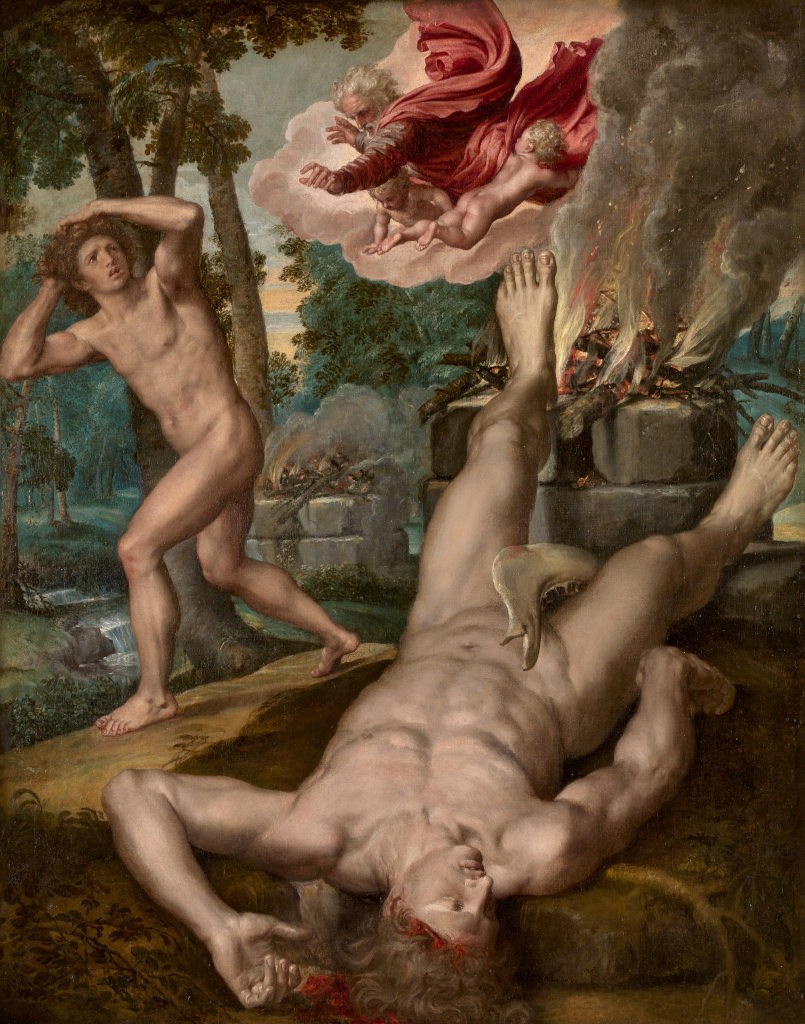


Death of Abel, 1539. Michiel Coxcie, (Museo Nacional del Prado, Madrid)
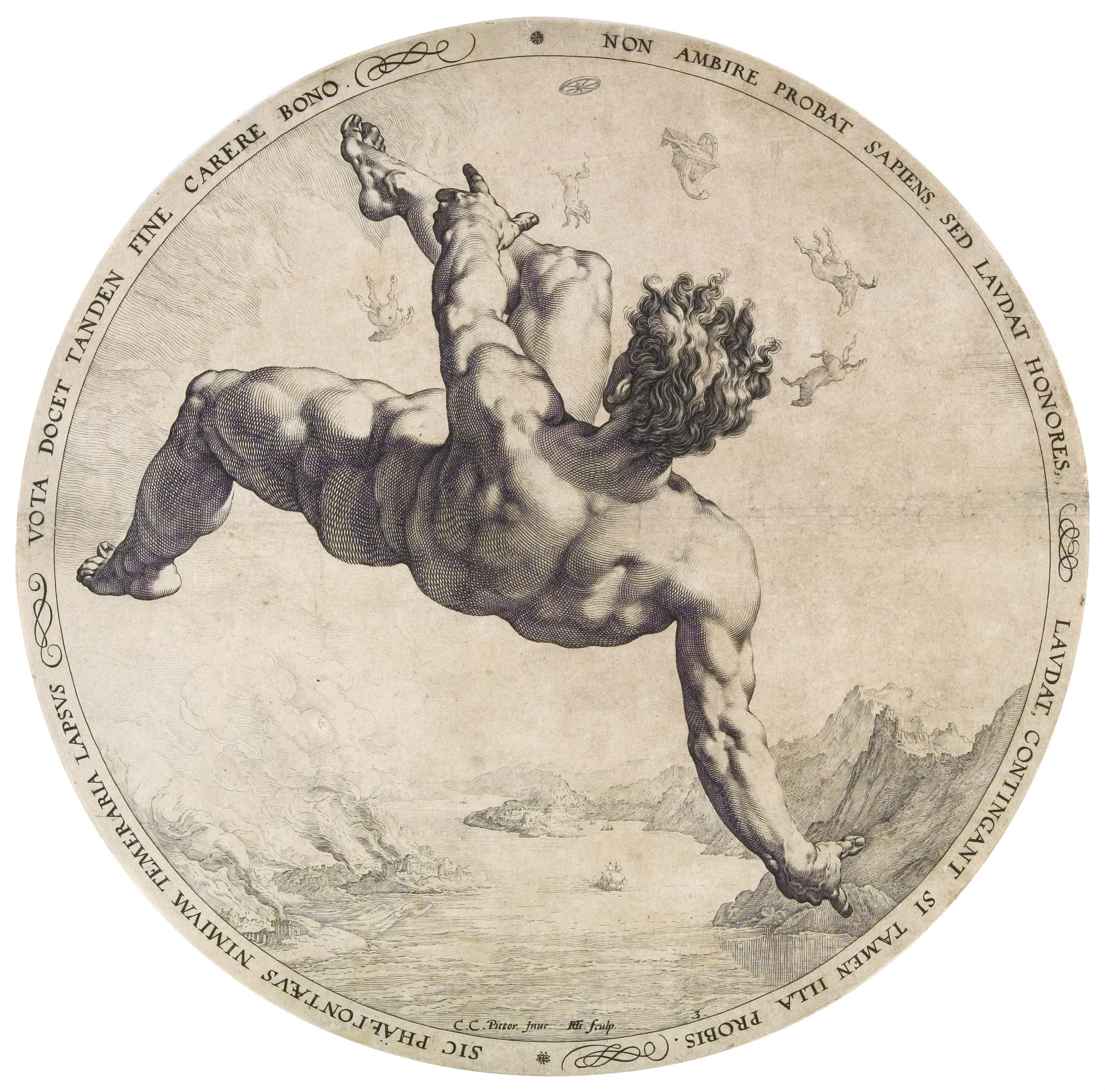


Phaeton, 1588. Hendrick Goltzius, Dutch, (Philadelphia Museum of Art, The Charles M. Lea Collection) 


Study for Prometheus, 1612. Frans Snyders, (On loan from The British Museum, London, (Donated by Count Antoine Seilern)


Catalogue


The exhibition will be accompanied by a fully illustrated catalogue, published by the Philadelphia Museum of Art in association with Yale University Press (112 pages, 75 color illustrations). It offers an in-depth case study of the Flemish artist’s process and style and demonstrates why this painting has appealed to viewers throughout the centuries. Christopher Atkins presents a new interpretation of Prometheus Bound, showing how Rubens created parallels between the pagan hero Prometheus and Michelangelo’s Risen Christ from the Sistine Chapel’s Last Judgment. He explores how Rubens synthesized the works he saw in Italy, Spain, and his native Antwerp, and how Prometheus Bound in turn influenced Dutch, Flemish, and Italian artists. By emulating Rubens’s composition, these artists circulated it throughout Europe, broadening its influence from his day to ours.
Paper over board, $35
ISBN: 9780300215243

Monday, August 24, 2015

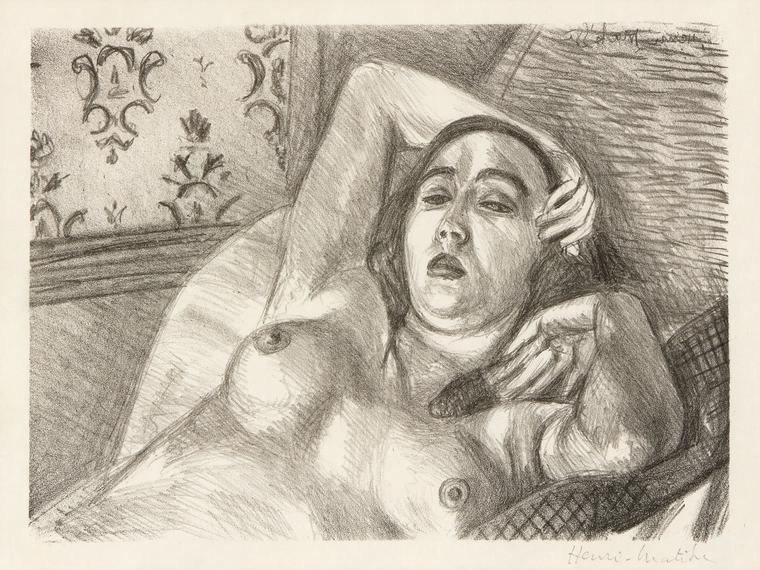
New Exhibition at Heather James Fine Art: Matisse, Cassat, Glackens, Ruscha


An exhibition spanning more than 100 years and including some of the biggest names in art — from Mary Cassatt to Pablo Picasso to Andy Warhol — has opened for the summer at Heather James Fine Art and is on view through September.

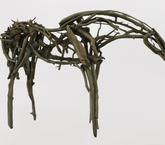
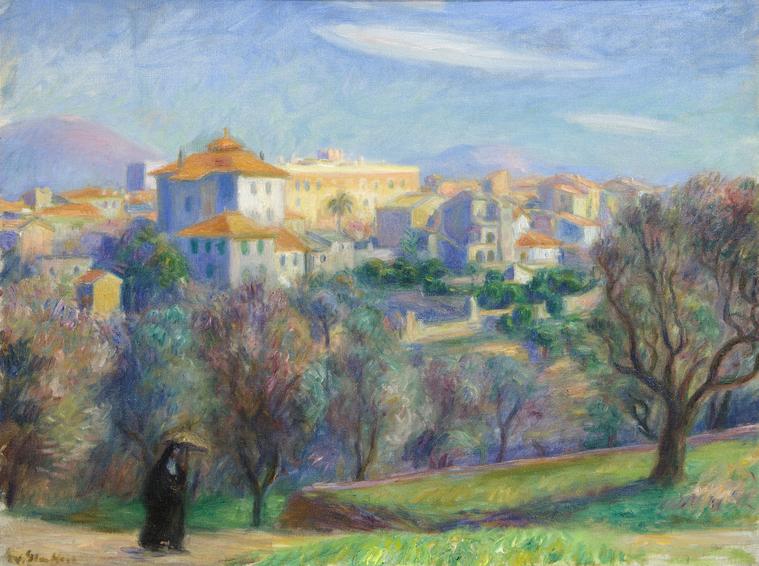
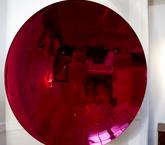
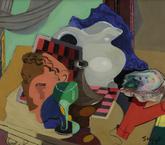
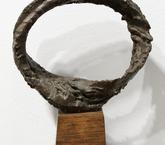
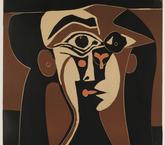
An exquisite mixed media piece by Robert Rauschenberg and a bronze horse by Deborah Butterfield share a space with a stunning Cubist work by Pablo Picasso, and works on paper by by Anish Kapoor and Sean Scully. The Impressionist and Modern salon includes early California paintings, including a portrait by Joseph Kleitsch, and landscapes by William Wendt. This salon also features an intimate pastel by Mary Cassatt, a Surrealist canvas by Salvador Dalí, a Cubist painting by Maria Blanchard, and one of the earliest and best bronze sculptures by Henri Matisse.
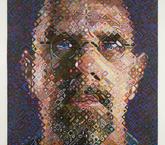
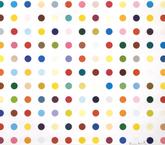
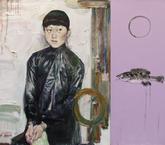
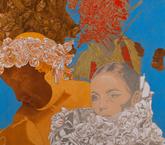
The exhibition also includes paintings by Hung Lui, sculptures by Sophie Ryder, and Pop prints by Chuck Close, Jim Dine, Damien Hirst, Ed Ruscha, and Andy Warhol. Heather James Fine Art welcomes you to visit the gallery and enjoy a world-class, museum-quality experience in the heart of beautiful Jackson.
Exhibition Video
Artists

Friday, August 21, 2015

WHITNEY TO PRESENT ARCHIBALD MOTLEY: JAZZ AGE MODERNIST


This fall, the Whitney Museum of American Art will present Archibald Motley: Jazz Age Modernist, the first retrospective of this pioneering artist in New York City in more than two decades. One of the most important figures associated with the Harlem Renaissance, Motley was a master colorist with a daring sense of spatial invention, qualities he combined with keen observational skills honed on urban culture. The exhibition offers an unprecedented opportunity to carefully examine Motley’s dynamic depictions of modern life, and will be on view from October 2, 2015, through January 17, 2016, in the Museum’s eighth-floor Hurst Family Galleries.

Prior to its presentation at the Whitney, it traveled to the Amon Carter Museum of American Art in Fort Worth, Texas (June 14–September 7, 2014), the Los Angeles County Museum of Art (October 19, 2014–February 1, 2015), and the Chicago Cultural Center (March 6–August 31, 2015).

Comprised of forty-two paintings spanning 1919 to 1963, the exhibition is a full-scale survey of Motley’s career and a rare opportunity to see such a large collection of his relatively small surviving body of work. Although the artist worked in Chicago most of his life, he was also inspired by Jazz Age Paris, and, later in his career, visits to Mexico. Motley’s bold use of vibrant, expressionistic color and keen attunement to issues of race, society, and class make him one of the great visual chroniclers of his era.

According to Carter E. Foster, Steven and Ann Ames Curator of Drawing at the Whitney: “Archibald Motley’s achievement is on par with the greatest American artists of his generation. He inflected his paintings with an extraordinary visual rhythm and highly unusual sense of artificial light and color—his version of modernism is a unique and thrilling one. The presentation of this landmark exhibition at the Whitney and in the context of its collection argues for his long overdue place in the canon of great American painters.”

Richard J. Powell, John Spencer Bassett Professor of Art, Art History & Visual Studies, and Dean of Humanities at Duke University, who curated the exhibition, writes: “Archibald Motley offers a fascinating glimpse into a modernity filtered through the colored lens and foci of a subjective African American urban perspective. Fusing psychology, a philosophy of race, upheavals of class demarcations, and unconventional optics, Motley’s art wedged itself between, on the one hand, a Jazz Age set of iconographic cultural passages, and on the other hand, an American version of Weimar Germany.”

Arranged thematically, with some chronological overlap, the exhibition has six sections, each looking at a particular facet of Motley’s oeuvre. It begins with a selection of the artist’s portraits, a traditional genre he treated with great sophistication, combining his strong sense of art history with an interest in changing social roles. The artist first achieved recognition for his dignified depictions of African Americans and people of mixed race descent, which challenged numerous contemporary stereotypes of race and gender.

In 1929, Motley received a Guggenheim Fellowship that allowed him to work for a year in Paris, where he created several lively paintings that vividly capture the pulse and tempo of the city. These canvases, which make up the section “Paris Blues,” depict diverse social worlds in Paris’s meandering streets and congested cabarets. Some of Motley’s greatest works came about during this period, including Blues (1929), a closely cropped image of couples dancing amid jazz musicians that is among the artist’s masterworks and an icon of the Harlem Renaissance.

Upon returning to the United States, Motley built further on the visual rhythms he honed in Paris in his scenes of “Bronzeville,” the common contemporary term for the thriving African-American neighborhood on the South Side of Chicago that greatly inspired the artist. His resulting works occupy the fourth section, “Nights in Bronzeville,” and together form a loose series that, taken together, is one of the most significant visual statements on modern urban life in America.

Paintings in the following section, “Between Acts,” reflect on leisure activity and societal changes within the African-American community. These urban scenes of dance halls, bars, parks, and playgrounds, at once celebrate the modernity of the Jazz Age, and simultaneously address influx of African-Americans from the south to northern cities as part of the Great Migration.

In “Hokum,” the artist’s penchant for outrageous humor and satire comes to the fore, his approach to his subject here sharing much in common with the genre of blues music from which the section takes its title. The final segment of the exhibition, “Caliente,” gathers works that were inspired by Motley’s travels through Mexico, where he created vivid and often surreal depictions of life and landscapes. The exhibition ends with a highly unusual, allegorical painting: a moving and disturbing meditation on race relations in America.

Archibald Motley is organized by the Nasher Museum of Art at Duke University and curated by Richard J. Powell, John Spencer Bassett Professor of Art, Art History & Visual Studies and Dean of Humanities at Duke.

ABOUT THE ARTIST

Archibald John Motley Jr. (1891–1981) was born in New Orleans but moved to Chicago, the city with which he is most closely associated, in 1894. His father was a Pullman porter, who lived and worked for the first half of the twentieth century in a predominately white neighborhood on Chicago’s Southwest side, providing a middle class lifestyle for his family.

Motley studied at the School of the Art Institute of Chicago from 1914 to 1918. Following his graduation, he participated in a string of group shows at the Art Institute of Chicago, receiving several awards for his work. In 1928, an exhibition of his paintings at New York City’s New Gallery garnered coverage in both The New York Times and The New Yorker.

Throughout the 1930s and 40s, Motley’s work was included in several exhibitions in the United States, including Contemporary Black Artists in America at the Whitney (1933), as well as group shows at the National Gallery of Art in Washington D.C. (1933), the Baltimore Museum of Art (1939), and the Library of Congress (1940).

In the 1950s, Motley made several lengthy visits to Mexico, where his nephew, the writer Willard F. Motley, lived. He largely stopped painting in 1972. In 1980, he was one of ten African-American artists honored by Jimmy Carter at the White House. He died in Chicago in 1981.

ABOUT THE CATALOGUE


Archibald Motley: Jazz Age Modernist is accompanied by an illustrated exhibition catalogue with critical texts by scholars Davarian L. Baldwin, David C. Driskell, Oliver Meslay, Amy M. Mooney, Richard J. Powell and poet/essayist/novelist Ishmael Reed. The catalogue is published by the Nasher Museum and distributed by Duke University Press.

From the Duke Chronicle (images added):


Staring at the viewer from his 1933 “Self-Portrait (Myself at Work)” is Archibald J. Motley Jr., a painter who here, donning a navy beret, long triangular mustache and thick tan bohemian jacket, paints a nude woman. His room has a few relics: a small cross on the wall, an elephant statue, a small bottle of alcohol and a palette spotted with bold and blended paints...

Motley’s paintings are modern and jazz-influenced, navigating pieces from familiar—sometimes voyeuristic—portraits to depictions of wild Saturday nights.


His 1924 “Mending Socks” captures a rustic image of his grandmother in an orange shawl, working in a rocking chair next to a table with a bowl of fruit.
 
“Brown Girl After Bath” (1931) features a woman—with a distinctly more Modern-looking face—wearing nothing but hoop earrings, red lipstick and dance shoes. She looks into a mirror; not at herself, but at her viewers, questioning traditional representations of race, sexuality and art’s engagement with its audience.


And in the much more stylized cultural scene, “Barbecue” (1934), the canvas is filled with movement, conversation and a night sky that blends into the orange background...


The palette in “Bronzeville at Night” (1949) is mostly blue, with highlights in red stoplights, gauzy windows and women’s dresses. There’s a mixture of romance and nervousness, leisure and labor. Thin lines of orange paint create neon reflections and highlights on the bodies of Motley's subjects.


In “Street Scene” (1936), a woman wails in song, arms lifted and high-heeled feet spread wide apart. A dog howls, three women chorus with trumpets, one man blows into his trombone. The onlookers look more uncertain, more suspicious. A white police officer glares out of the corners of his eyes, and a small child cocks her head and watches.
From an outstanding review in Bloiun Artinfo:


“Archibald Motley: Jazz-Age Modernist,” now at LACMA, could be mistaken for two shows. Motley came to attention in the 1920s with riveting portraits of persons of color (above, Woman Peeling Apples, 1924). Not long afterward Motley’s output shifted to the work he’s mainly known for: colorful, cartoonish crowd scenes of black nightlife in Paris and Chicago (below, Saturday Night, 1935). It’s possible to feel that Spike Lee had turned into Tyler Perry.


One key to Motley’s career arc is the “New Negro” movement. The African-American intellectual Alain Locke called for blacks to create literature and art presenting their race in a dignified manner. Motley’s early portraits exemply this and prove that “dignified” does not have to be boring. Below is Motley’s 1933 Self-Portrait (Myself at Work). It recalls the the New Objectivity of Germany (which, by the way, will have a LACMA show next fall). Germans of the period favored occupational portraits with a magic-realist slant. While the French developed surrealism, the New Objectivists—and Motley—understood the power of the Dutch proverb, “Be yourself, and you will be strange enough.”


Videos about Archibald Motley: Jazz Age Modernist from the Nasher Museum at Duke University: 


Another video about Archibald Motley: Jazz Age Modernist: