Wednesday, November 25, 2015

Ingres at The Museo del Prado

24 November 2015 - 27 March 2016

The Museo del Prado and Fundación AXA are presenting Ingres, the first monographic exhibition in Spain on one of the most important painters in the history of art but an artist who, for complex historical reasons, is not represented in Spanish public collections. For this reason, the present comprehensive reassessment of the work of Jean-Auguste-Dominique Ingres offers visitors to the Prado a unique and outstanding opportunity to appreciate and analyse this French painter’s relationship with the artistic movements of his day – Neo-classicism, Romanticism and Realism – from which his style and ideology remained resolutely unaffected.

Inspired by the Romantic quest for ideal beauty, which for Ingres arose from his fascination with the classical past and with the art of Raphael, he broadened the genres of portraiture, the nude and history painting. Ingres’ remarkable skills as a draughtsman also make him an outstanding exponent of this technique while revealing his ceaseless quest for perfection.

Nonetheless, Ingres’ art defies categorisation, given that he explored all the themes and aesthetic approaches of his time and rejected the hindrances implied by affiliating himself with a particular school, movement or style. His uniqueness is evident in the importance of the role he has played as a key forerunner of the language of the avant-garde movements and abstraction and the influence that he exercised on some of Spain’s most important painters, such as Federico de Madrazo, Pablo Picasso and Salvador Dalí.

As the generous lender of some of its most important works, the Musée Ingres in Montauban has been crucial for the presentation of this exhibition at the Prado. For this reason and with the collaboration of Acción Cultural Española as the co-organiser of the project, on 3 December and during the time the exhibition on Ingres is on display, the Prado will be exhibiting a series of 11 works from its collections at the Musée Ingres with the aim of offering a survey of portraiture in Spanish art.

The exhibition

Ingres offers a unique chronological survey of the artist’s career as a whole, revealing him in all his splendour. The exhibition thus opens with a seductive self-portrait that conveys his youthful energy, loaned from the Metropolitan Museum in New York, and closes with Self-portrait of Ingres aged 78 loaned from the Gallerie degli Uffizi in Florence, a work that transmits the master’s supreme artistic authority in his final years.

The exhibition pays close attention to Ingres’ activities as a portraitist, which gave rise to one of the most beautiful chapters of 19th-century art. Perfectly capable of precisely capturing his sitters’ characters, Ingres was able to depict both the imposing presence of an Emperor in the iconic  


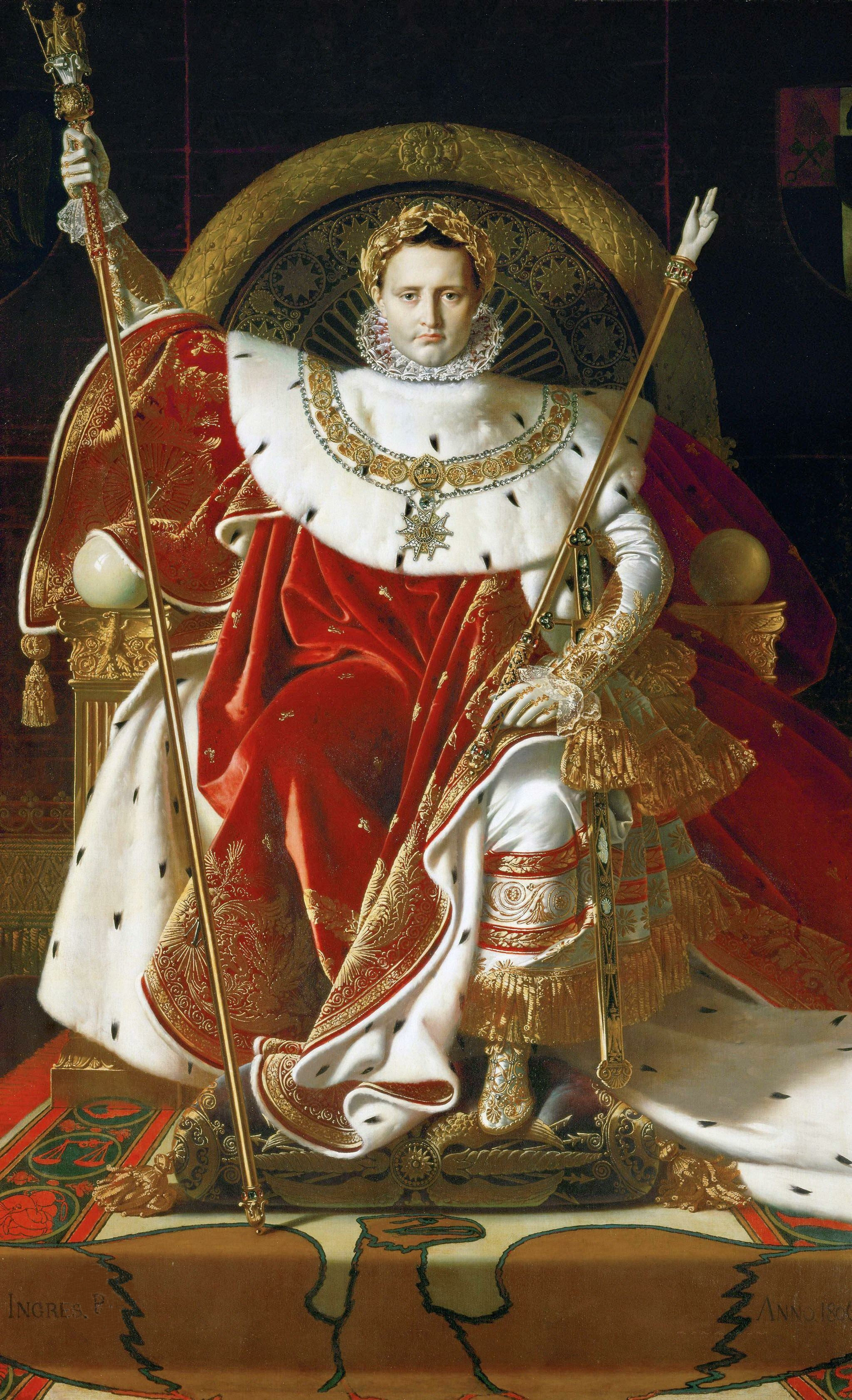
Napoleon I on his Imperial Throne


and the dreamy nature of an artist in François-Marius Granet from the Musée Granet in France.


All these images reveal an authentic language that arose from the artist’s ongoing dialogue with the portraits he had studied in the Musée Napoleón and the ones he later saw in Italy.


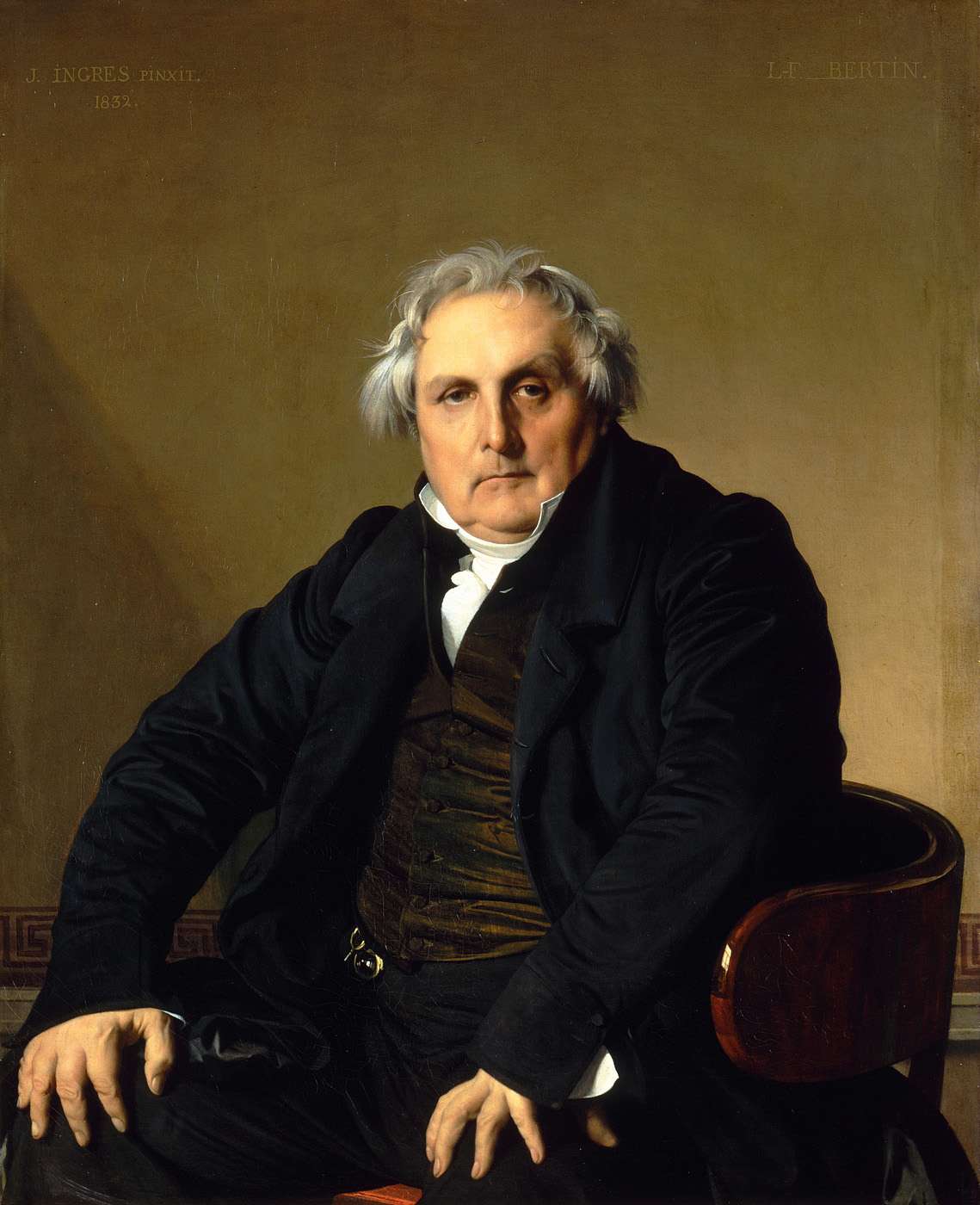
The portrait of Monsieur Bertin, loaned from the Louvre, which is a dynamic image of the fourth estate, or that of the


The Countess of Haussonville. Jean-Auguste-Dominique Ingres. Oil on canvas, 132 x 92 cm. 1845. New York, The Frick Collection, 1927.

The Countess of Haussonville. Jean-Auguste-Dominique Ingres. Oil on canvas, 132 x 92 cm. 1845. New York, The Frick Collection, 1927.

Countess of Haussonville from the Frick Collection in New York offer a superb conclusion to Ingres’ endeavours in this genre.

Displayed alongside these work is a marvelous series of sensual female nudes.


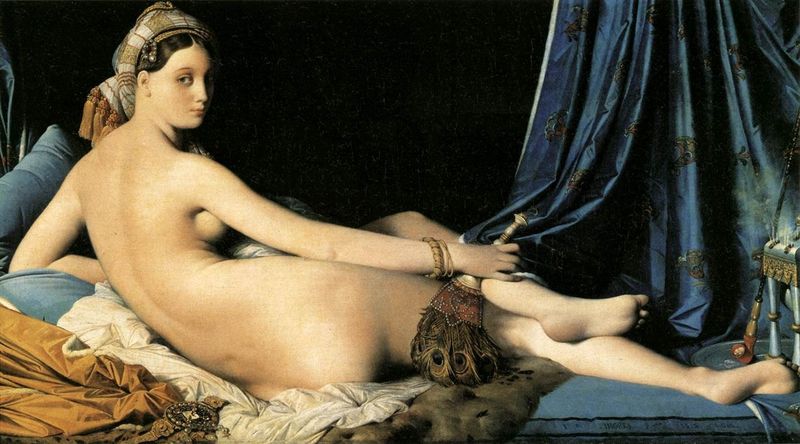
The Grande Odalisque from the Musée du Louvre, an image of pure nudity with no narrative justification, has been one of the most influential images in the history of modern painting.  


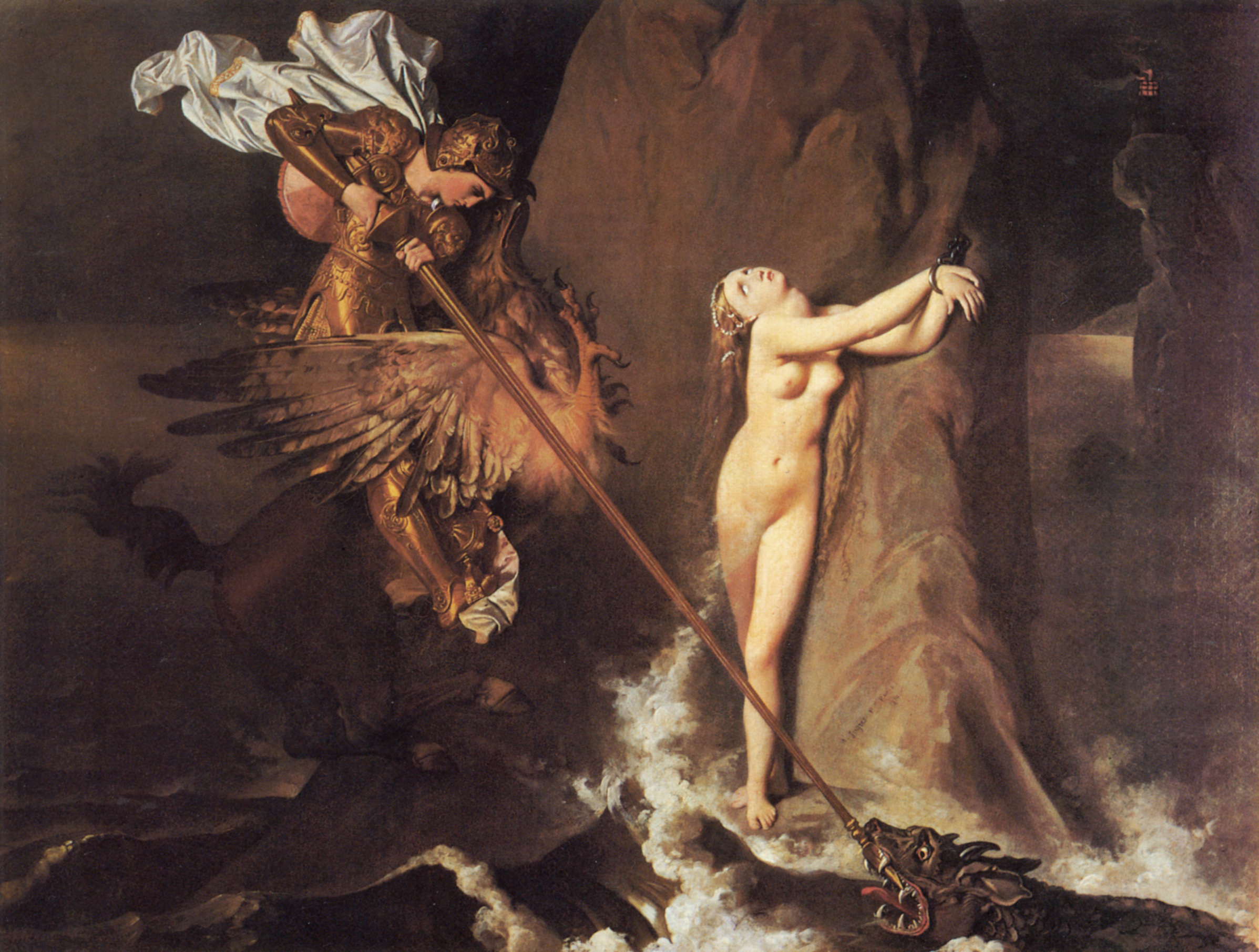
Ruggiero rescuing Angelica depicts a sensual, voluptuous woman who is a clear paradigm of contemporary eroticism,


while The Turkish Bath from the Louvre, a legendary work that summarizes Ingres’ fascination with repetition, champions the curve as the ideal form for expressing his tireless enthusiasm with the female body, once again located in an exotic context.

This survey of Ingres’ work also includes a focus on his interest in the genre of history painting, represented by works painted in Rome in which the artist measured himself against the power of the myths of Greco-Roman literature and of Homer and Virgil, as in  


Virgil reading the Aeneid (loaned from Brussels)


and the Studies for “The Apotheosis of Homer”.

This section also includes examples of Ingres’ “troubadour” paintings in which he gave free rein to his obsession with the artists of the past whom he most admired, including Raphael and Leonardo da Vinci, in works such as


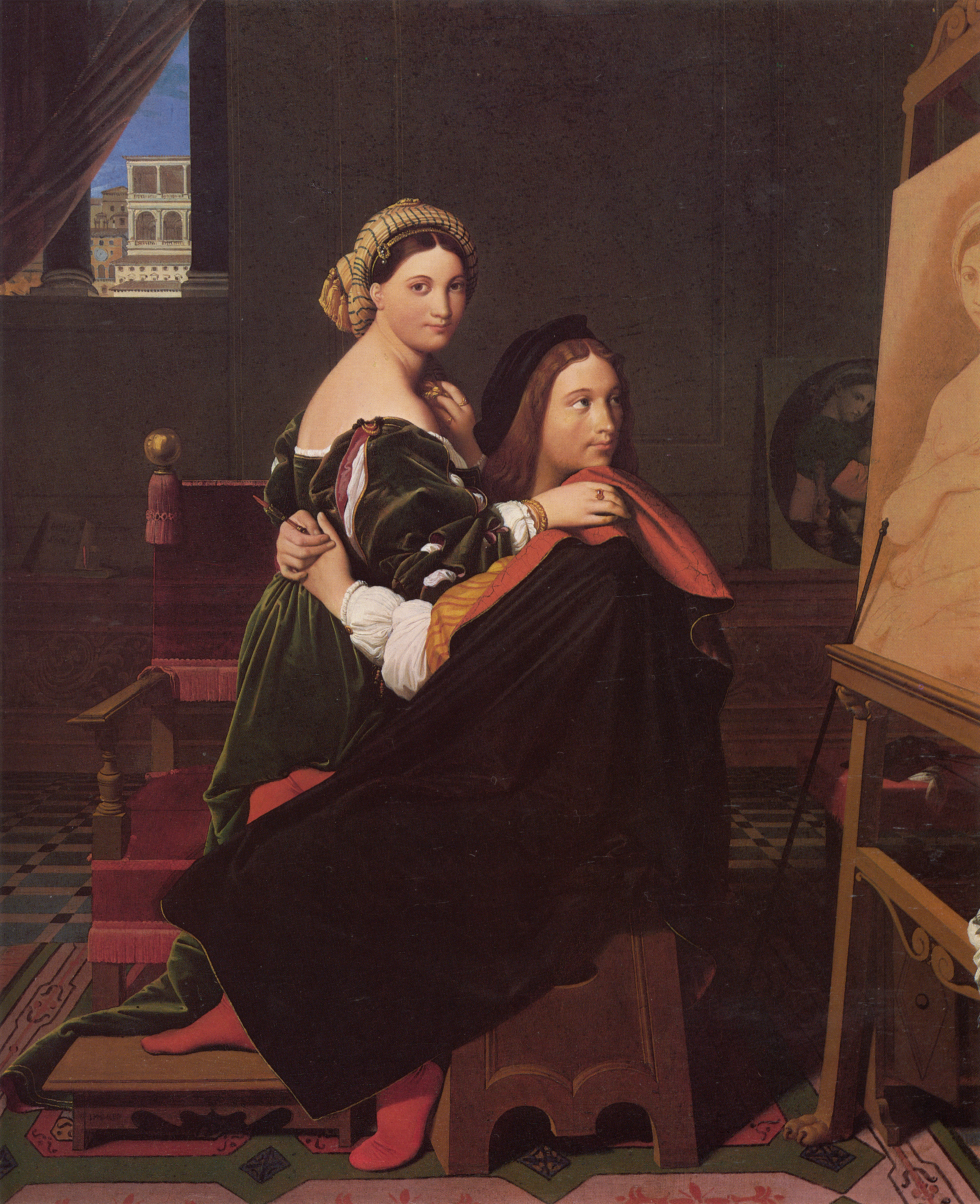
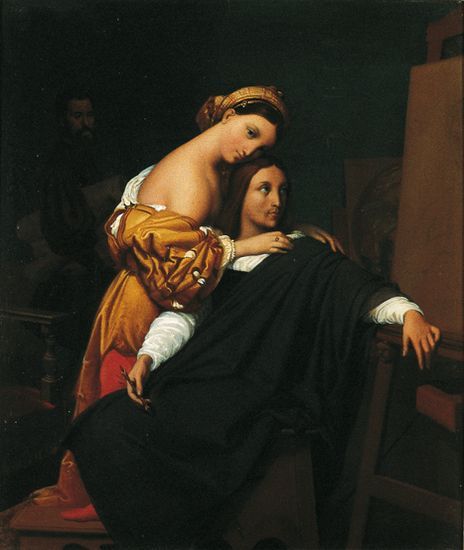
Raphael and La Fornarina (loaned from Ohio) (one of the many versions he produced)


and François I at the Deathbed of Leonardo da Vinci (from the Petit Palais, Paris).

Finally, the exhibition analyses Ingres’ relationship with religious painting, represented in all its variants, from small-scale intimate works such as the moving


Virgin adoring the Host from the Louvre

to monumental compositions such as  


Christ among the Doctors.


Monday, November 23, 2015

Frank Stella: A Retrospective


The most comprehensive U.S. career retrospective to date of the work of Frank Stella, co-organized by the Whitney Museum of American Art and the Modern Art Museum of Fort Worth, debuted at the Whitney on October 30, 2015. 

The exhibition will be on view at the Whitney from October 30, 2015 through February 7, 2016, and at the Modern Art Museum of Fort Worth from April 17 through September 4, 2016; it will subsequently travel to the de Young Museum, San Francisco, from November 5, 2016, to February 27, 2017. 


Frank Stella, "Das Erdbeben in Chili [N#3]" (The Earthquake in Chile), 1999. Acrylic on canvas, 144 x 486 in (365.8 x 1234.4 cm).
Private collection. © 2016 Frank Stella / Artists Rights Society (ARS), New York


Frank Stella: A Retrospective brings together the artist’s best-known works installed alongside lesser known examples to reveal the extraordinary scope and diversity of his nearly sixty-year career. Approximately 100 works, including icons of major museum and private collections, will be shown. Along with paintings, reliefs, sculptures, and prints, a selection of drawings and maquettes have been included to shed light on Stella’s conceptual and material process. 

With the close collaboration of the artist, Frank Stella: A Retrospective is organized by Michael Auping, Chief Curator, Modern Art Museum of Fort Worth, in association with Adam D. Weinberg, Alice Pratt Brown Director, Whitney Museum of American Art, New York, with the involvement of Carrie Springer, Assistant Curator, Whitney Museum of American Art, New York. 

This will be the inaugural special exhibition and the first career retrospective devoted to a living artist in the Whitney’s new downtown home on Gansevoort Street. It will fill the entire 18,000-square-foot fifth floor—the Museum’s largest gallery for temporary exhibitions. Selldorf Architects is doing the exhibition design for the Whitney installation.This is the first comprehensive Stella exhibition to be assembled in the United States since the 1987 retrospective at The Museum of Modern Art, New York. 

“A Stella retrospective presents many challenges,” remarks Michael Auping, “given Frank’s need from the beginning of his career to immediately and continually make new work in response to previous series. And he has never been timid about making large, even monumental, works. The result has been an enormous body of work represented by many different series. Our goal has been to summarize without losing the raw texture of his many innovations.”“It’s not merely the length of his career, it is the intensity of his work and his ability to reinvent himself as an artist over and over again over six decades that make his contribution so important,” said Adam D. Weinberg. 

“Frank is a radical innovator who has, from the beginning, absorbed the lessons of art history and then remade the world on his own artistic terms. He is a singular American master and we are thrilled to be celebrating his astonishing accomplishment.”Throughout his career, Stella has challenged the boundaries of painting and accepted notions of style. Though his early work allied him with the emerging minimalist approach, Stella’s style has evolved to become more complex and dynamic over the years as he has continued his investigation into the nature of abstract painting. 

Adam Weinberg and Marla Price, Director of the Modern Art Museum of Fort Worth, note in the directors’ foreword to the catalogue, “Abstract art constitutes the major, and in many ways, defining artistic statement of the twentieth century and it remains a strong presence in this century. Many artists have played a role in its development, but there are a few who stand out in terms of both their innovations and perseverance. Frank Stella is one of those. As institutions devoted to the history and continued development of contemporary art, we are honored to present this tribute to one of the greatest abstract painters of our time.” 

Although the thrust of the exhibition is chronological, the artist, who has been closely involved in the installation, has juxtaposed works from various periods allowing some rooms to function as medleys. The presentation highlights the relationships among works executed across the years, suggesting that even the most minimalist compositions may invite associations with architecture, landscapes, and literature. 


The earliest works in the exhibition are rarely seen early paintings, such as 


Frank Stella, East Broadway, 1958. Oil on canvas. 85 1/4 x 81 in. (216.5 x 205.7 cm). Addison Gallery of American Art, Phillips Academy, Andover, Massachusetts; gift of the artist (PA 1954) 1980.14. © 2015 Frank Stella/Artists Rights Society (ARS), New York.


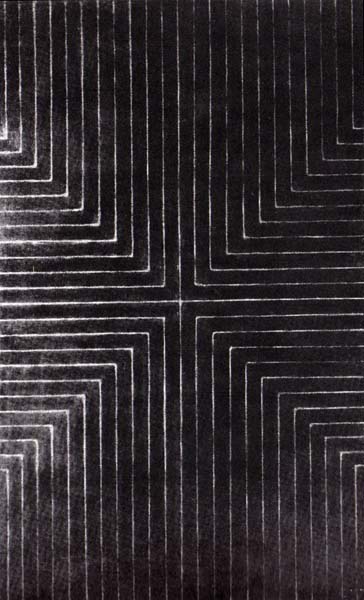
East Broadway(1958), from the collection of Addison Gallery of American Art, which show Stella’s absorption of Abstract Expressionism and predilections for bold color and all-over compositions that would appear throughout the artist’s career. Stella’s highly acclaimed Black Paintings follow. Their black stripes executed with enamel house paint were a critical step in the transition from Abstract Expressionism to Minimalism. 


The exhibition includes such major works as 


Die Fahne hoch! ( 1959), a masterpiece from the Whitney’s own collection, and 


The Marriage of Reason and Squalor II( 1959) from The Museum of Modern Art’s collection. 

A selection of the artist’s Aluminum and Copper Paintings of 1960–61, featuring metallic paint and shaped canvases, further establish Stella’s key role in the development of American Minimalism. Even with his early success, Stella continued to experiment in order to advance the language of abstraction. 

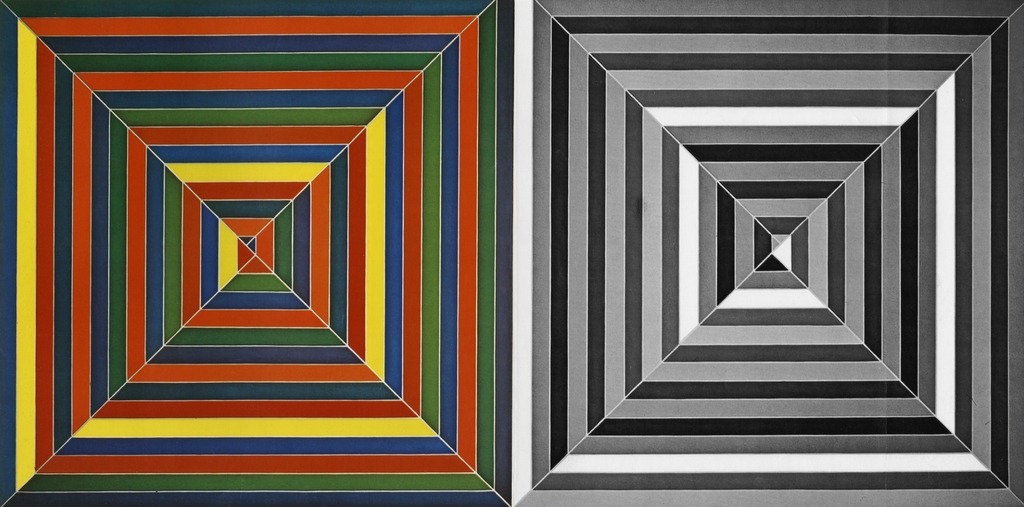
The presentation of Stella’s work highlights the artist’s exploration of the relationship between color, structure, and abstract illusionism, beginning with his Benjamin Moore series and Concentric Square Paintingsof the early 1960s and 70s—including the masterpiece 


Jasper’s Dilemma (1962). 

In his Dartmouth, Notched V, and Running V paintings, Stella combines metallic color with complex shaped canvases that mirror the increasingly dynamic movement of his painted bands. 

These were followed by the even more radically shaped Irregular Polygon Paintings, such as 


Frank Stella, Chocorua IV, 1966. Fluorescent alkyd and epoxy paint on canvas. 120 x 128 x 4 in. (304.8 x 325.1 x 10.2 cm). Hood Museum of Art, Dartmouth College, Hanover, NH; purchased through the Miriam and Sidney Stoneman Acquisition Fund, a gift from Judson and Carol Bemis, Class of 1976, and gifts from the Lathrop Fellows, in honor of Brian P. Kennedy, Director of the Hood Museum of Art, 2005–2010. © 2015 Frank Stella/Artists Rights Society (ARS), New York.


Chocorua IV (1966) from the Hood Museum, with internally contrasting geometric forms painted in vibrant fluorescent hues; 


and the monumental Protractor Paintings, such as 


Frank Stella, Harran II, 1967. Polymer and fluorescent polymer paint on canvas. 120 x 240 in. (304.8 x 609.6 cm). Solomon R. Guggenheim Museum, New York; gift, Mr. Irving Blum, 1982. © 2015 Frank Stella/Artists Rights Society (ARS), New York.

Harran II (1967) from the Guggenheim's collection, composed of curvilinear forms with complex chromatic variations.

The Polish Village series marks the beginning of Stella’s work in collage. He begins to build paintings and incorporate various materials into large-scale constructions, further probing questions of surface, line, and geometry. In works like Bechhofen (1972), from the San Francisco Museum of Modern Art, the interlocking geometric planes of unpainted wood stretch the purely pictorial into literal space.The work of the mid-1970s and 1980s constitutes yet another form of expressive abstraction and illustrates Stella’s absolute insistence on extending his paintings into the viewer’s space. During his tenure as the Charles Eliot Norton Professor in Poetry at Harvard University (1983-4), Stella said that “what painting wants more than anything else is working space—space to grow with and expand into, pictorial space that is capable of direction and movement, pictorial space that encourages unlimited orientation and extension. Painting does not want to be confined by boundaries of edge and surface.” 

Works from the artist’s Brazilian; Exotic Bird; Indian Bird; Circuit; and Cones and Pillarsseries, including 


St. Michael’s Counterguard (1984) from the Los Angeles County Museum of Art, address this interest. 

In these works, sheets of cut metal project out from the picture plane, creating gestures that are further activated with drawing and the addition of various reflective materials. The radical physical and material nature of these works was quite influential to a younger generation of painters in the 1980s. In the last thirty years, much of Stella’s work has been related in spirit to literature and music. 

The large-scale painted metallic reliefs in the Moby Dick series (1985-97), titled after each of the chapters of Melville’s novel, also exemplify Stella’s idea of “working space.” The complexity of this series, made primarily in metallic relief with fabricated, cast, and found parts; prints; and freestanding sculpture, is a tour de force. 

Extraordinary abstractions such as 


Loomings from the Walker Art Center and 


The Grand Armada (IRS-6, 1X) from the Fondation Beyeler, Riehen/Basel, suggest an abstract narrative composed of visual elements, such as waves and fins, which recur in Melville’s novel. 

Since the 1990s Stella has explored this concept in increasingly complex two-and three-dimensional works of various materials, 


such as the large-scale aluminum and steel sculpture Raft of the Medusa(Part I)( 1990) from the collection of The Glass House; 


and the mural-size painting Earthquake in Chile (1999), part of the artist’s Heinrich von Kleist series (1996-2008), which takes as its point of departure the writings of the early 19thcentury German author. 

Extraordinary metal reliefs from his Bali series (2002-2009), as well as the lightweight and dynamic sculpture from his Scarlatti Sonata Kirkpatrick series (2006-present), whose delicacy and intricacy suggest the musical compositions of the Baroque master, represent the later work in the exhibition. In many of these works Stella has used computer generated images and modeling to extend the complexity, layers, and allusions of his material process well beyond traditional media for painting and sculpture. Two of Stella’s recent sculptures, 


Black Star (2014) 


and Wooden Star I (2014), 


are installed on the fifth-floor roof terrace.

Frank Stella: A Retrospective underscores the important role Stella’s work plays within the art historical framework of the last half century. It provides a rare opportunity for viewers to discover the visual and conceptual connections within the extraordinarily expansive and generative body of work of an artist restless with new ideas.

About Frank Stella

Born in Malden, Massachusetts, in 1936, Stella attended Phillips Academy and then Princeton University, where he studied art history and painting. In college, he produced a number of sophisticated paintings that demonstrated his understanding of the various vocabularies that had brought abstract painting into international prominence. After graduating in 1958, Stella moved to New York and achieved almost immediate fame with his Black Paintings(1958–60), which were included in The Museum of Modern Art’s seminal exhibition Sixteen Americansin 1959-60. The Leo Castelli Gallery in New York held Stella’s first one-person show in 1960. The Museum of Modern Art presented his first retrospective in 1970, under William Rubin’s stewardship, when Stella was only thirty-four years old. A second retrospective was held at MoMA in 1987. Since then, Stella has been the subject of countless exhibitions throughout the world, including a major retrospective in Wolfsburg in 2012. 

Frank Stella: A Retrospective is the first survey of the artist’s career in the U.S. since 1987. He was appointed the Charles Eliot Norton Professor of Poetry at Harvard University in 1983. “Working Space,” his provocative lecture series (later published as a book), addresses the issue of pictorial space in postmodern art. Stella has been the recipient of numerous awards and honors, including the 2009 National Medal of Arts and the 2011 Lifetime Achievement in Contemporary Sculpture Award from the International Sculpture Center, as well as the Isabella and Theodor Dalenson Lifetime Achievement Award from Americans for the Arts (2011) and the National Artist Award at the Anderson Ranch Arts Center in Aspen (2015).

More images from the exhibition:


Frank Stella, Plant City, 1963. Zinc chromate on canvas. 102 1/2 x 102 1/2 in. (260.4 x 260.4 cm). Philadelphia Museum of Art; gift of Agnes Gund in memory of Anne d’Harnoncourt, 2008. © 2015 Frank Stella/Artists Rights Society (ARS), New York.


Frank Stella, Marrakech, 1964. Fluorescent alkyd on canvas. 77 x 77 x 2 7/8 in. (195.6 x 195.6 x 7.6 cm). The Metropolitan Museum of Art, New York; gift of Mr. and Mrs. Robert C. Scull, 1971 (1971.5). © 2015 Frank Stella/Artists Rights Society (ARS), New York.


Frank Stella, Eskimo Curlew, 1976. Litho crayon, etching, lacquer, ink, glass, acrylic paint, and oil stick on aluminum. 98 3/4 x 127 x 18 in. (250.8 x 322.6 x 45.7 cm). Portland Art Museum, Portland, Oregon; museum purchase: funds provided by Mr. and Mrs. Howard Vollum 79.36. © 2015 Frank Stella/Artists Rights Society (ARS), New York.
 
 
Frank Stella, Gobba, zoppa e collotorto, 1985. Oil, urethane enamel, fluorescent alkyd, acrylic, and printing ink on etched magnesium and aluminum. 137 x 120 1/8 x 34 3/8 in. (348 x 305 x 87.5 cm). The Art Institute of Chicago; Mr. and Mrs. Frank G. Logan Purchase Prize Fund; Ada Turnbull Hertle Endowment 1986.93. © 2015 Frank Stella/Artists Rights Society (ARS), New York.


Frank Stella, The Whiteness of the Whale (IRS-1, 2X), 1987. Paint on aluminum. 149 x 121 3/4 x 45 1/4 in. (378.5 x 309.2 x 114.9 cm). Private collection. © 2015 Frank Stella/Artists Rights Society (ARS), New York. Photograph by Steven Sloman.


Frank Stella, The Fountain, 1992. Woodcut, etching, aquatint, relief, drypoint, collage, and airbrush. 91 x 275 3/4 in. (231.1 x 700.4 cm). Whitney Museum of American Art; gift of Marabeth Cohen-Tyler and Kenneth Tyler 2015.97a-c. © 2015 Frank Stella/Artists Rights Society (ARS), New York. Photograph by Steven Sloman.


Frank Stella, redjang, 2009. Fiberglass with stainless steel tubing. 155 x 212 x 64 in. (393.7 x 538.5 x 162.6 cm). Private collection. © 2015 Frank Stella/Artists Rights Society (ARS), New York.


About the Catalogue


The exhibition is accompanied by a fully illustrated scholarly catalogue, published by the Modern Art Museum of Fort Worth, the Whitney Museum of American Art, and Yale University Press. The publication addresses in depth such themes as the artist’s complex balancing of expressionist gesture and geometric structure, his catholic referencing of the history of art (abstract, figurative, and decorative), the importance of seriality in Stella’s process, and his work’s impact on subsequent generations of American artists.

 The book’s spectacular plate section comprises more than 100 works, including paintings, sculptures, reliefs, and works on paper. Notable inclusions are his seminal Black Paintings, recent high-relief aluminum works, and a selection of drawings, maquettes, and digital renderings—many of which are reproduced here for the first time—that offer fresh insight into Stella’s thinking and process.

The catalogue includes an essay by Michael Auping that encompasses Stella’s entire artistic output and connects the many different series and transitions in the artist’s 60-year career. Adam Weinberg addresses Stella’s formative years at Andover and Princeton and his earliest influences. Art historian and artist Jordan Kantor contributes an essay about the artist’s more recent work, and artist Laura Owens interviews Stella. Stella’s highly articulate Pratt Lecture(1960) is also included. The book concludes with a substantial chronology. 

Frank Stella: A Retrospective is jointly organized by the Whitney Museum of American Art, New York, and the Modern Art Museum of Fort Worth.

Great review. more images

Another good review


Saturday, November 21, 2015

THE COLLECTIONS OF THE PRINCE OF LIECHTENSTEIN


Autumn of 2015, the Caumont Centre d’Art in Aix-en-Provence

Art lovers and patrons since the 16th century, the Princes of Liechtenstein have amassed one of the largest private art collections in Europe. Primarily dedicated to Western art, from the Renaissance to the late 18th century, the Princely Collections include paintings (approximately 1,700), sculptures, drawings, engravings, furniture, books and precious objects. The collection was started in the 17thcentury, inspired by the ideals of princely patronage of the arts, characteristic of the Baroque period, ideals which the family continue to promote today. If the majority of the Princely Collections is to be found in Vaduz, a selection is nevertheless accessible to the public in some of the other family residences, notably in Vienna: the Liechtenstein City Palace (with its neoclassical and Biedermeier style) and the Liechtenstein Garden Palace (with its Renaissance and Baroque influences).

THE PRINCIPALITY OF LIECHTENSTEIN

Bordered by the Rhine and the Alps, the State of Liechtenstein is situated between the Austrian province of Vorarlberg and the Swiss cantons of St. Gallen and Graubünden. This small principality of 160 km2is the last surviving remnant of the Holy Roman Empire, founded in 962. A constitutional monarchy, with German as its official language, today it is closely linked to Switzerland. Switzerland represents Liechtenstein’s diplomatic interests abroad. The two countries share the same postal system and form a customs and monetary union. The Principality comprises the former feudal territories of Schellenberg (current-day Oberland) and Vaduz (current-day Unterland), acquired by Prince Johann Adam Andreas I von Liechtenstein, respectively in 1699 and 1712. on 23 January 1719, these lands were united and elevated to the rank of Principality by Emperor Charles VI. In 1806, Liechtenstein became a sovereign state of the Confederation of the Rhine (1806-1814) with Napoleon’s aid. Between 1815 and 1866, it was part of the German Confederation and was later attached to Austria, from which it separated after the revolution of 1921. It was from that time onward that Liechtenstein forged close ties with Switzerland. Neutral during the Second World War, Liechtenstein benefitted from an industrial and economic boom in the 1950s.The current sovereign, Hans-Adam II (b. 1945) has significantly increased the importance of Liechtenstein on the world stage.

THE GRAND GALLERY OF THE 16TH CENTURY
With the exception of the Italian artworks, the quasi totality of the 16th-century paintings displayed in this room are representative of the most significant and recent acquisitions by Prince Hans-Adam II. These include Renaissance paintings from Germany 


Quentin Massys (1466-1530)The Tax Collectors Late 1520s oil on panel - 86,4 x 71,2 cm Liechtenstein. The Princely Collections, Vaduz–Vienna© LIECHTENSTEIN. The Princely Collections, Vaduz–ViennaEntered the collections in 2008, acquired by Prince Hans-Adam II

(The Tax Collectors by Massys, acquired in 2008, and  


Lucas Cranach the Elder (1472-1553)
Venus
1531
oil on panel, 38.7 x 24.5 cm
Liechtenstein. The Princely Collections, Vaduz–Vienna
© LIECHTENSTEIN. The Princely Collections, Vaduz–Vienn


Venus by Cranach, acquired in 2013), 


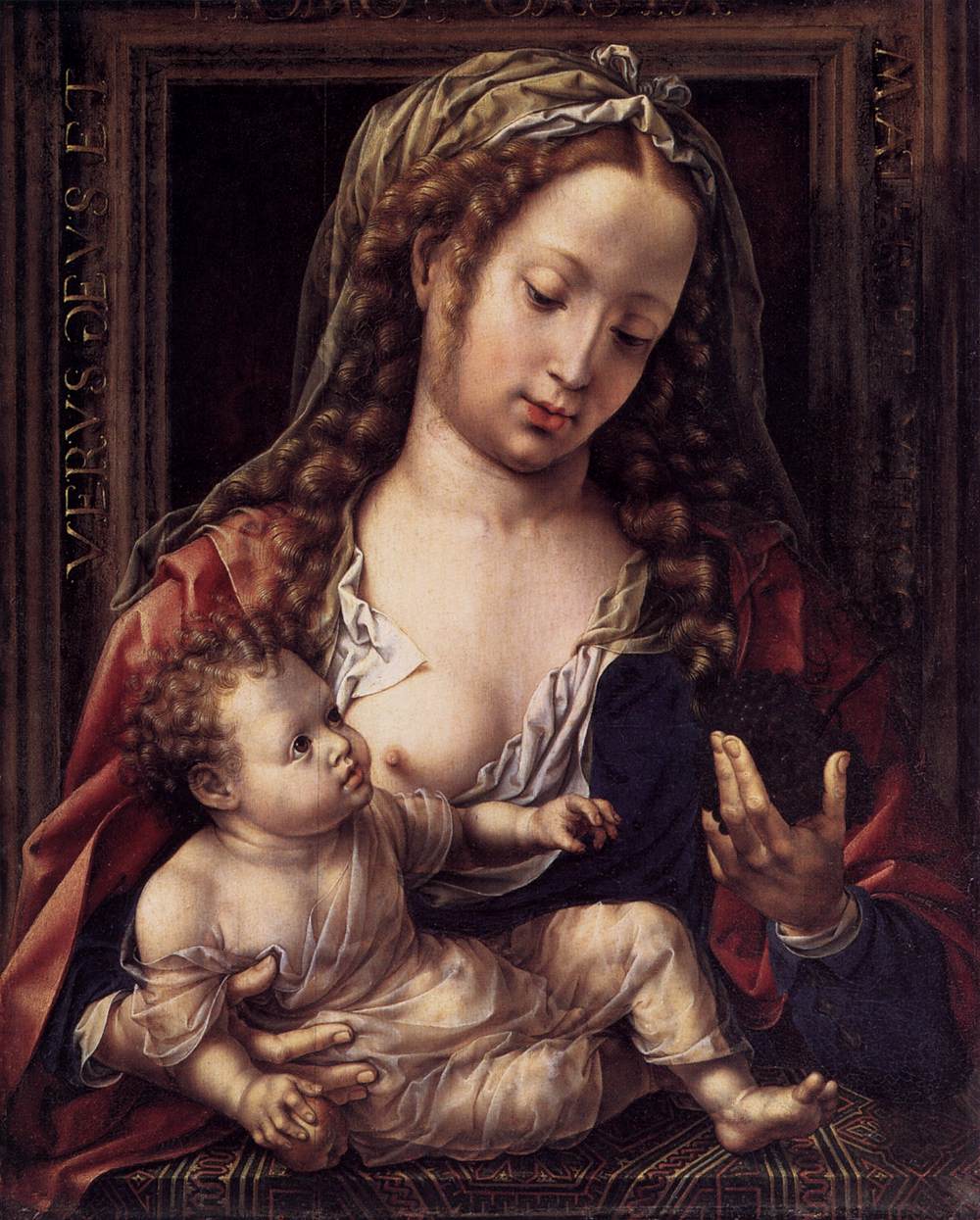
Flanders (Virgin and Child by Gossaert acquired in 2015), 


Holland (Saint Sebastian by Cornelisz. von Haarlem 


and Portrait of Alessandro Farnese by Mor, acquired in 2010 and 2015 respectively),


and Spain (Portrait of Don Diego by Sánchez Coello, acquired in 2007).

The human figure is omnipresent in all thirteen paintings, attesting to the return to favour of the human figure in Renaissance art. In painting, this triumphant advent of the individual may be seen in both the prevalence of the portrait and of nudes, as well as the large-scale representation of sacred, historical or mythological figures. 

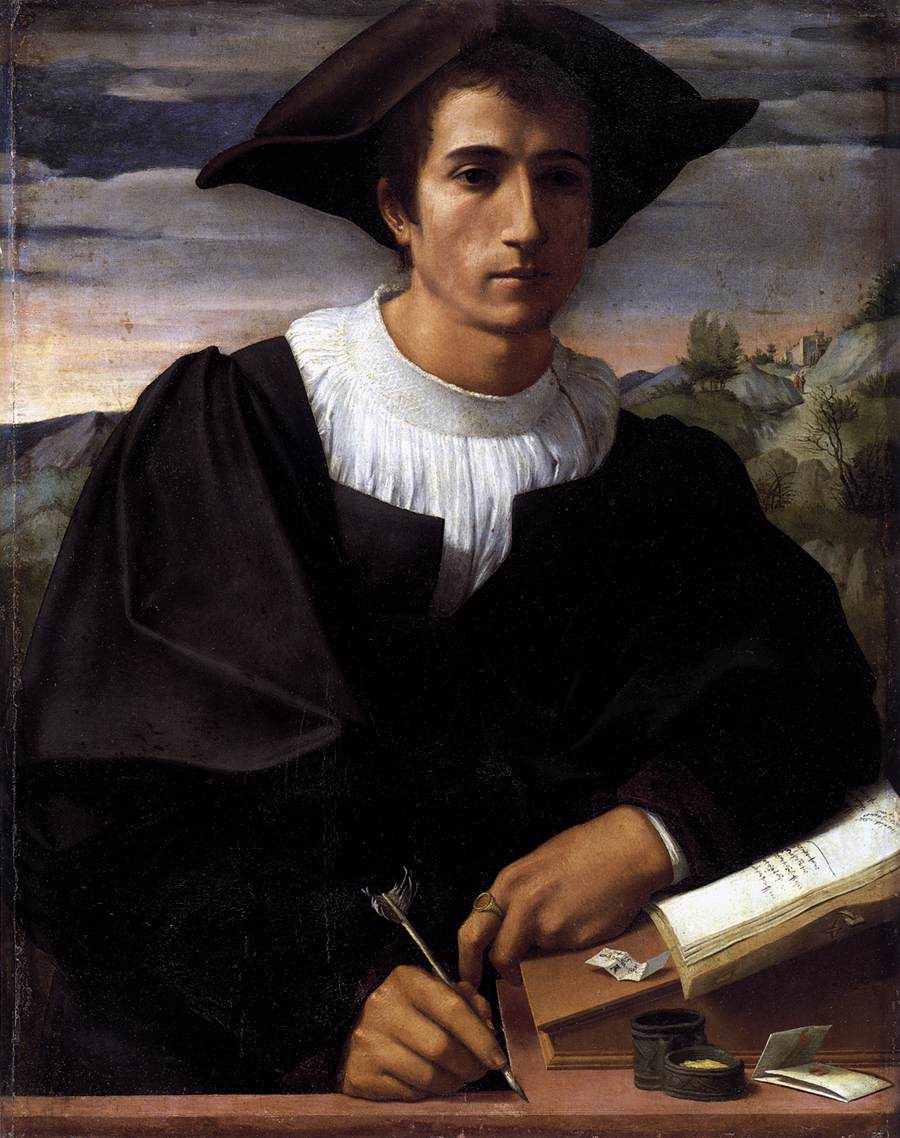
Focused on the physiognomic and psychological representation of an individual, the art of portraiture, in the Flemish and Italian traditions, comes in the form of intimate likenesses, three-quarter view


(Raphael’s and 


Franciabigio’s Portrait of a Man  


Bernardino Zaganelli da Cotignola (c.1470-c.1510)
Portrait of a Lady
circa 1500
oil on panel - 32,7 x 25 cm
Liechtenstein. The Princely Collections, Vaduz–Vienna
© LIECHTENSTEIN. The Princely Collections, Vaduz–Vienna
This piece entered the collections in 1882, sold in 1950, and acquired a second time in 2003 

and Portrait of a Lady by Bernardino da Cotignola), and ceremonial portraits, where the subjects are depicted standing (for example, the portrait of Alessandro Farnese by Antonis Mor) (above). Another aspect of Renaissance art is the prevalence of sacred figures, imbued with human attributes, and oftentimes depicted within an intimate or private setting, such as  Jan Gossaert’s Virgin and Child (above.)

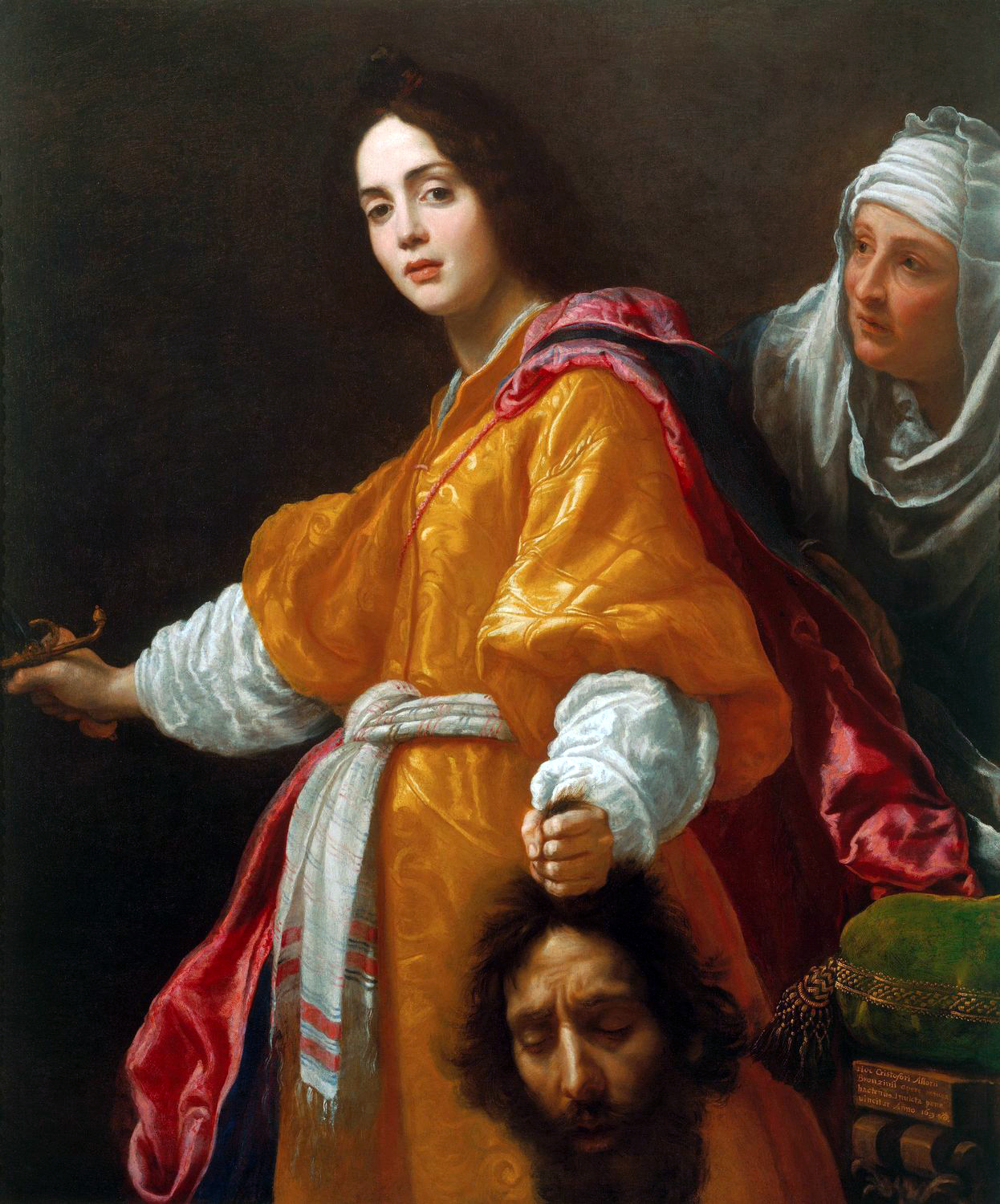
Also common were representations of the saints by Cranach the Elder and Cornelis Cornelisz. van Haarlem for example, or 


Cristofano Allori
Judith with the Head of Holofernes,
1613 - oil on canvas - 141 x 117 cm
Liechtenstein. The Princely Collections, Vaduz–Vienna © LIECHTENSTEIN. The Princely Collections, Vaduz–Vienna


figures from the Old Testament (Cristofano Allori). These figures tended to dominate the entire composition. 

 From 1509 onward, Lucas Cranach the Elder painted a large amount of naked Venuses, standing, sitting or lying down. If some convey an explicit moral message, by means of the presence of the goddess of love or a moralizing inscription in Latin, others, like this one, do not. According to a formula of which he was particularly fond, the German artist paints the young woman against a black background, with her feet on stony ground. He displays his mastery of the female canon through this slender body, endowed with small high breasts and a doll-like face. The long wavy blond hair, almond-shaped eyes and necklace—a gold band decorated with stones and pearls—are also typical of the painter. Another trademark, the transparent veil that covers her sexual organs, revealing more than it covers. Moreover, the female subject fixes the viewer with an insolent look. This nude is decidedly ambiguous: is this a heroic nude of a chaste Venus or an erotic nude of the priestess of love?


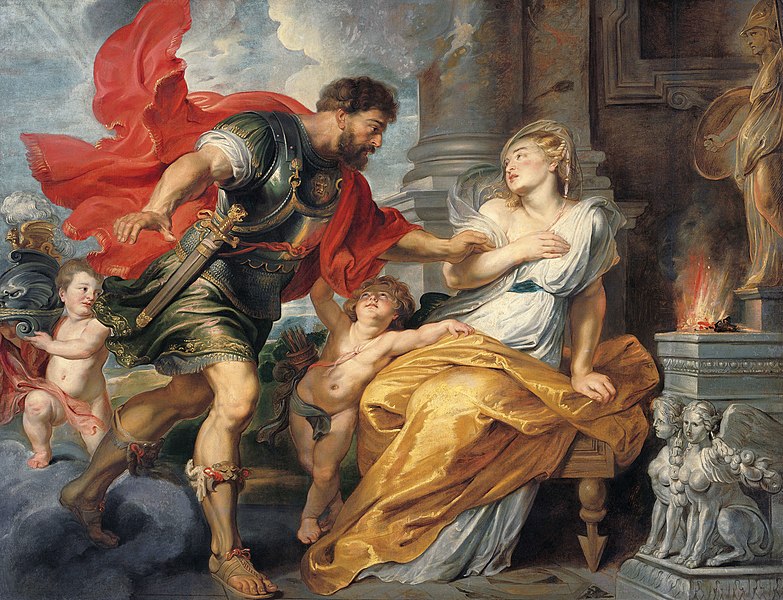
RUBENS


Peter Paul Rubens (1577-1640)
Mars and Rhea Silvia
circa 1616/1617 - oil on canvas - 207,5 x 271,5 cm
Liechtenstein. The Princely Collections, Vaduz–Vienna
© LIECHTENSTEIN. The Princely Collections, Vaduz–Vienna

This artwork depicts Mars and Rhea Silvia, the parents of Romulus and Remus, whose myth evokes the founding of Rome. The enterprising god of war benefits from the aid of the matchmaking Love in order to approach the frightened priestess, seated before the altar of the goddess Vesta. Between 1610 and 1620, Rubens was at the head of a flourishing workshop in Antwerp. The master executed preparatory studies and detailed sketches which his students then painted under his direction, with the exception of the faces, hands and other delicate sections. Particularly representative of the painter’s pictorial verve, the ample drapes or folds of the fabric, and the skin colour accented with tones of pink, yellow or purple may be clearly seen in this work.


The Princely Collections boast thirty-five signed works by Rubens—one of the largest ensembles of Rubens in the world. The oldest date from the early 17thcentury, while the most recent, the monumental  


Assumption of the Virgin Mary was painted by the Flemish master in 1637, three years before his death. The latter was acquired by Karl Eusebius I von Liechtenstein, who met the artist at the court of the Archduchess Isabella in Brussels in 1628. 


However it was Karl Eusebius’s son, Johann Adam Andreas I who amassed the majority of the Rubens collection, with the aid of the Forchondt brothers, merchants from Antwerp and Berlin.Thanks to the latter, in 1693 he acquired the eight monumental canvases of the Decius Mus cycle (the name is in reference to the history of the Roman consul, Decius Mus), which at that time, had been attributed to Van Dyck, as well as  


Venus in Front of a Mirror (circa 1614). 

Furthermore, thanks to the assistance of Jan Peeter Bredael, another important Antwerp merchant, Johann Adam Andreas I acquired the monumental Mars and Rhea Silvia in 1710. He also succeeded in acquiring another jewel for the collection:  


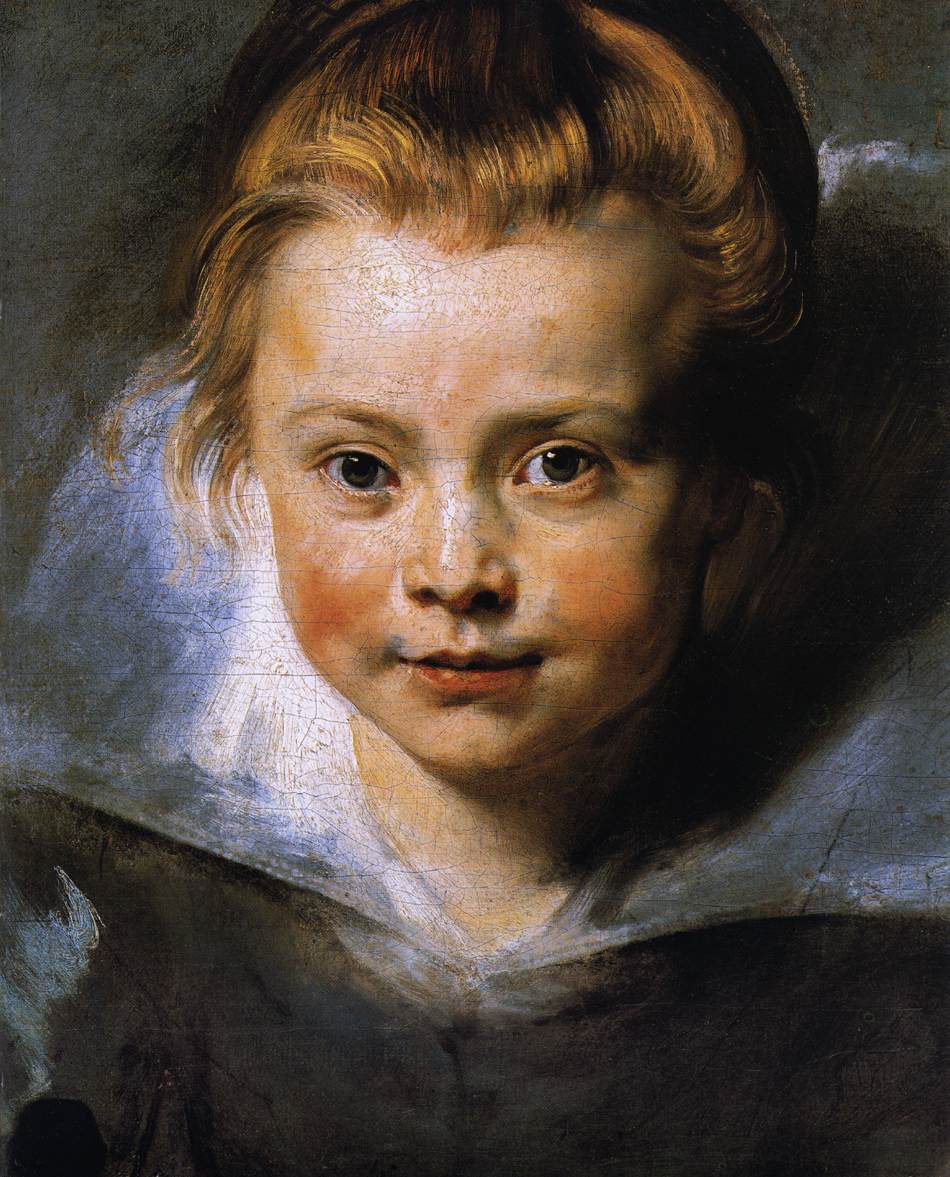
Portrait of Clara Serena Rubens, at the age of five, as well as the 


double portrait of Albert and Nikolaus, the painter’s sons (circa 1626). 


Several of the Rubens acquired by Johann Adam Andreas I would later leave the Liechtenstein Collection. However, these shortcomings were filled, in part, thanks to the acquisitions of Franz Josef II—the Modello of Mars and Rhea Silvia—and by Hans-Adam II—


The Conversion of Saint Paul, 


Christ Triumphant over Sin and Death, 

sketches for The hunt of Meleager and Atalanta and Diana’s Hunt.

AN ECLECTIC TASTE

The paintings in this room, each with a strong narrative dimension, depicting objects, animals or figures, may be characterized by their eclecticism. In this, they can be said to illustrate the stylistic and iconographic evolution of European painting between the sixteenth and nineteenth centuries, resulting in the advent of different pictorial genres. 

Alongside ‘high genre painting’ devoted to sacred and profane history, which continued to be the subject of numerous commissions, new subject matter presented itself, including landscapes, genre scenes and still lifes.Particularly present in the Princely Collections, religious painting can be seen in all its stylistic and iconographic diversity. 

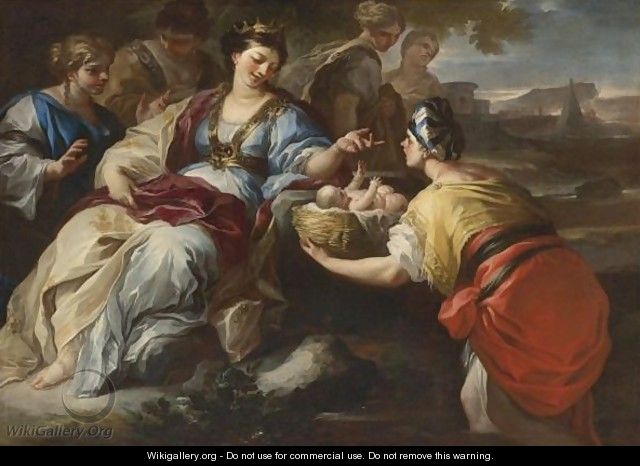
When Hans-Adam II acquired in 2008 


The Finding of Moses by Francesco Solimena (circa 1690), his intention was to continue the tradition linking the Princely family to the Neapolitan painter who had painted a portrait of Josef Wenzel I when he visited the Imperial Court of Naples, in 1725. The Princes of Liechtenstein have always had a particular penchant for Classical antiquity and mythology. Indeed, it was during a trip to Rome in 1748 that Josef Wenzel I commissioned 


Batoni’s Venus Presenting Aeneas with Armour forged by Vulcan and Hercules at the Crossroads for his Viennese palace on the Herrengasse.


THE GOLDEN AGE OF DUTCH AND FLEMISH PAINTING


Rembrandt Harmensz. van Rijn (1606-1669)
Cupid with the Soap Bubble
1634 - oil on canvas - 74,7 x 92,5 cm
Liechtenstein. The Princely Collections, Vaduz–Vienna
© LIECHTENSTEIN. The Princely Collections, Vaduz–Vienna


Pompeo Girolamo Batoni (1708-1787)
Hercules at the Crossroads
1748 - oil on panel - 99 x 74 cm
Liechtenstein. The Princely Collections, Vaduz–Vienna
© LIECHTENSTEIN. The Princely Collections, Vaduz–Vienn

Among the jewels of the Princely Collections can be seen a remarkable series of Flemish and Dutch paintings dating from the 17thcentury. Some are representative of the Flemish Baroque style—beginning with two of the most prestigious collaborators of Rubens, Frans Snyders and Anthonis van Dyck, while others evoke the austere context experienced by many of the great Dutch Masters working in the Northern Netherlands, including Rembrandt and Frans Hals. Talented portraitists, capable of adding a psychological dimension to a face, the two latter artists revolutionized the genre of portraiture, whether individual or collective, which at that time was increasingly popular. In the second half of the century, in Amsterdam, Rembrandt also provided history painting with a new lease of life, both religious and secular (historical and mythological). From the outset, Dutch and Flemish painting of the Golden Age was one of the preferred domains of the Liechtenstein family, advised in this matter by veritable experts, such as Berlin art historian, Wilhelm von Bode, during the reign of Johann II.


Frans Hals (1582-1666)
Portrait of a Man
circa 1650/1652 - oil on convas - 108 x 80 cm
Liechtenstein. The Princely Collections, Vaduz–Vienna
© LIECHTENSTEIN. The Princely Collections, Vaduz–Vienna

This portrait of a non-identified male subject is emblematic of the production of the famous Haarlem portraitist, Frans Hals. The work is typical of the artist’s oeuvre on the one hand, for its rapid execution, and the large, visible brush strokes making use of a sober palette of blacks, browns, greys and whites, and on the other hand, through the expressiveness of the face. The model’s raised eyebrows and hint of a smile seem to address the viewer with a rather mischievous look.Hals’ narrative device is both simple and effective: he focuses on the face and the hands, rendering these in great detail, whereas the rest appears very rough, almost sketched. The magic therefore, comes from this very paradox: the figure seems to come alive on the canvas despite its unfinished aspect. The ability to inject life into his models is synonymous here with the instantaneousness expression of his character portraits.Hals is one of the most skilled portraitists in terms of capturing and expressing the psychological traits of his models.


Anthonis van Dyck (1599-1641)Portrait of Maria de Tassis (1611-1638)circa 1629/1630 - oil on convas - 129 x 92,8 cmLiechtenstein. The Princely Collections, Vaduz–Vienna © LIECHTENSTEIN. The Princely Collections, Vaduz–Vienna

Painted at the age of nineteen, Maria de Tassis came from the Antwerp branch of the family. The subject’s family originally came from Bergamo and were credited with introducing the first European postal system at the end of the 15th century.Van Dyck also produced two likenesses of Maria’s father, Antonio, which are also part of the Princely Collections.This portrait perfectly illustrates the painter’s skill and his innate sense of elegance. The rendering of the silk and the lace of the French-style dress, but also the pearls, precious stones and ostrich feather is typical of Van Dyck’s style between 1627 and 1632.Parallels may be drawn between this portrait of Maria de Tassis and the portrait by Van Dyck of a non-identified female model housed at the National Gallery of Washington. The rendering of the women’s clothing seems to suggest a type of signature or hallmark from this particular period of the artist’s production. 


Giovanni Paolo Pannini (1691-176 5)Interior of the Pantheon, Rome 1735 - oil on canvas - 127,3 x 99,4 cm Liechtenstein. The Princely Collections, Vaduz–Vienna © LIECHTENSTEIN. The Princely Collections, Vaduz–Vienna


Josef Höger (1801-1877), View of Palais Rasumofsky from the Garden Pavilion circa 1837, watercolour over pencil, 22.5 x 32.3 cmThe Princely Collections, Vaduz–Vienna © LIECHTENSTEIN. The Princely Collections, Vaduz–Vienna


THE PRINCELY RESIDENCES

The Princes of Liechtenstein are the owners of numerous properties, each built in a different architectural style. Some of these have been beautifully depicted in some remarkable gouaches and watercolours, which provide the viewer with an insight into the princes’ elegant taste in decor. At the request of Johann I Ferdinand Runk, a gouache series of thirty views of the Liechtenstein family properties was painted between 1813 and 1824, including views of the unfinished Baroque chateau in Plumlov, the facade of the Garden Palace in Rossau, and the colonnades of Feldsberg and Adamsthal. Furthermore, in the 1830s, Josef Höger executed exterior views of Liechtenstein Fortress near Mödling, the ‘Frontier Chateau’ and of the Palais Rasumofsky in Vienna. During the reign of Alois II, Rudolf von Alt executed several watercolours of the Liechtenstein properties in Moravia and Vienna. He reproduced the intimate atmosphere of various Viennese princely mansions, at Eisgrub and Maria Enzersdorf, with their furniture and works of art in situ. The views of the living rooms, bedrooms, libraries and offices are as much an illustration of the interior design, as they are a testimony to the taste and art de vivre of the various members of the Princely family.

LANDSCAPES AND STILL LIFES

Paintings of landscapes and still lifes emerged in the 16thcentury in northern Europe, but became widespread in the following century. Despite being classified as ‘minor genres’, they proved to be extremely popular with art lovers. The Liechtenstein family were no exception and collected both the Great Masters, such as Jan Davidszoon de Heem whose still lifes were already being sold at astronomical prices during his lifetime, as well as rarer names such as the Dutch painter of flowers, Jan van Huysum. 
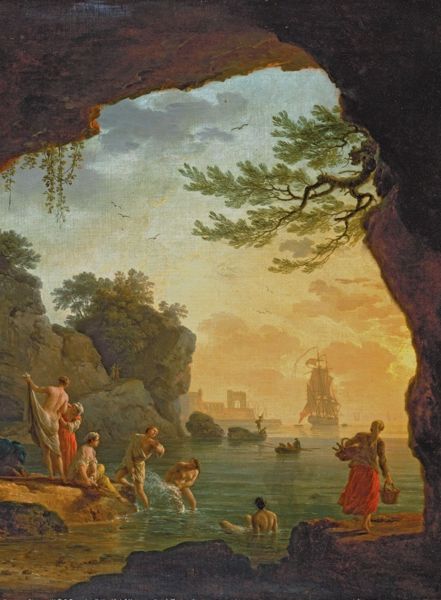


Claude-Joseph Vernet (1714-1789)
Bathers
1759
oil on convas, 66,5 x 82,5 cm
Liechtenstein. The Princely Collections, Vaduz–Vienna
© LIECHTENSTEIN. The Princely Collections, Vaduz–Vienna
This piece entered the collections in 2007, acquired by Prince Hans-Adam I

The princes’ abiding interest in antiquity was centred on the theme of Arcadia as evidenced in the neoclassical-style landscapes painted by Giovanni Paolo Panini, Claude Joseph Vernet and Hubert Robert. First appearing in the 17th century, the taste for urban landscapes known as ‘vedute’ continued to gain in popularity during the 18thcentury. The imaginary landscapes of Hubert Robert combined nature and the lyricism of ruins, a subject matter specific to the Enlightenment, in works such as 


Hubert Robert (1733-1808)
Capriccio with the Pantheon and the Porto di Ripetta
1761
oil on canvas - 101,9 x 145,9 cm
Liechtenstein. The Princely Collections, Vaduz–Vienna
© LIECHTENSTEIN. The Princely Collections, Vaduz–Vienna
Capriccio with the Pantheon and the Porto di Ripetta (1761), a prototype of the reception piece that would allow him to enter the Académie Royale in 1766. Jan Davidszoon de Heem ranks high amongst the Dutch and Flemish painters specializing in still lifes, a genre imbued with a poetic, even metaphysical dimension.


KAROLINE, FRANZ-JOSEF, MARIE FRANZISKA


Elisabeth Vigée-Lebrun (1755-1842)
Portrait of Princess Karoline von Liechtenstein, née Countess von
Manderscheidt-Blankenheim (1768-1831), as Iris
1793 - oil on canvas - 222 x 159 cm
Liechtenstein. The Princely Collections, Vaduz–Vienna
© LIECHTENSTEIN. The Princely Collections, Vaduz–Vienna

The famous French portraitist Elisabeth Vigée-Lebrun painted this portrait of the wife of Prince Alois I during a sojourn in Vienna. Forced into exile between 1792 and 1795, the former official painter of Marie-Antoinette toured Europe and painted portraits of aristocrats and high society.In 1793, she executed for the Liechtenstein Palace on the Herrengasse, pendants of Princess Karoline as Iris, 


and of her sister-in-law, Maria Josepha Hermenegilde von Esterhazy, as Ariadne on Naxos. 

Amongst the traditional attributes of Iris, the female messenger of the gods—usually represented with wings, the caduceus and winged shoes—the artist retains only the veil. The latter symbolizes the connection between heaven and earth, and is traditionally painted in the colours of the rainbow, although this is not the case here. In mythology, Iris is the personification of the rainbow and according to Homer, the rainbow represents the trail of Iris’s ‘storm-swift feet’ across the sky. This is why Vigée-Lebrun depicts the princess as flying in this portrait.  


Friedrich von Amerling (1803-1887)
Portrait of Princess Marie Franziska von Liechtenstein (1834–1909) at the
age of two,
1836 - oil on board - 56,7 x 50,5 cm
Liechtenstein. The Princely Collections, Vaduz–Vienna
© LIECHTENSTEIN. The Princely Collections, Vaduz–Vienna


In 1836, Friedrich von Amerling painted the tender portrait of Princess Marie Franziska at age two, which is one in a series of portraits of the children of Alois II. Close to the prince, of whom he painted an official portrait in 1845, at that time Amerling was the preferred portraitist of the Liechtenstein family. Ferdinand Georg Waldmüller, famous for his landscape paintings, depicted the future Emperor, Franz Josef I of Austria at the age of two, dressed in a soldier’s outfit, a kind of state portrait in miniature. The Biedermeier style developed in Germany and Austria between 1815 and the revolution of 1848. The Biedermeier style is evocative of a comfortable homely lifestyle, and is characterized by its fine craftsmanship showcasing the materials and regional expertise. In painting, the style is distinguished by its sensitive approach to nature, meticulous execution and a predilection for the smaller format. The Liechtenstein family played an important role in the spread of the Biedermeier style. Their wealth, coupled with the desire to decorate some of their homes in a more contemporary, less ornate style, for example the Liechtenstein City Palace in Vienna, contributed to the style’s growing renown. The Liechtenstein family is the owner of the most complete Biedermeier collection in the world despite the sale of numerous pieces to the Wien Museum and the Belvedere Museum.


Friedrich von Amerling
Lost in Her Dreams,
circa 1835 - oil on canvas - 55,3 x 45,1 cm
Liechtenstein. The Princely Collections, Vaduz–Vienna © LIECHTENSTEIN. The Princely Collections, Vaduz–Vienna


Ferdinand Georg Waldmüller
Portrait of the Future Emperor Franz Josef I of Austria (1830-1916) as a Grenadier with Toy Soldiers
1832 - oil on panel - 34,8 x 29 cm - Liechtenstein. The Princely Collections, Vaduz–Vienna
© LIECHTENSTEIN. The Princely Collections, Vaduz–Vienna