Monday, December 28, 2015

Georgia O'Keefe and American Modernism in Santa Fe and Taos, New Mexico


O’Keeffe in Process
New Mexico Museum of Art
Through January 17, 2016

Featuring 36 O'Keeffe oil paintings, 15 works on paper, and supporting materials from the New Mexico Museum of Art, the Georgia O'Keeffe Museum, and private collections, this exhibition tells the story of the working technique of this twentieth-century New Mexico Master.

Artworks on view will span the artist's career from early student portraits of family members created in 1905, to paintings executed during stays at Lake George in the late teens and first half of the twenties, to her iconic depictions of flowers, bones, and New Mexico landscapes, to her discovery of the view from the sky.

In a rare opportunity to see some of these artworks together in one space, the exhibition brings related paintings from the two museum's collections into conversation.  Preliminary sketches and photographs hung alongside finished works will reveal both the steps in O'Keeffe's creative process and her technical, art-making technique. Viewers will come to understand what makes an O'Keeffe artwork recognizable as an O'Keeffe.


Georgia O'Keeffe, Chama River, Ghost Ranch, New Mexico (Blue River), 1937, oil on canvas, 30 1/2 x 16 1/2 in. Collection of the New Mexico Museum of Art. Gift of the Georgia O'Keeffe Estate, 1987 (1987.312.1)

An American Modernism
New Mexico Museum of Art
Through February 21, 2016

An American Modernism joins the exhibition O’Keeffe in Process, both at the New Mexico Museum of Art, in the “Fall of Modernism” cultural collaboration with the Georgia O’Keeffe Museum. Drawn primarily from the museum’s rich collection of Modernist art, An American Modernism explores the quest by early twentieth-century artists to find a distinctive American voice and to define art for the modern age.

The international cultural movement known as Modernism resulted in radical new approaches to art making. This selection of more than fifty works from the museum’s collection explores how Modernists in the United States struggled to define modern art in terms of the American experience. Concentrating on the 1920s and 1930s, the selection of paintings, drawings, prints, and photographs illustrate the complexities of establishing a recognizable American style in the early years of the twentieth century. While some believed it should be defined by the precision and dynamism of the machine age, others rejected industrialization and commercialism for the perceived authenticity of nature and rural life. The tensions between these motives and the struggle to find a distinctively American visual vocabulary is demonstrated in works by Andrew Dasburg, Marsden Hartley, Georgia O’Keeffe, Paul Strand, Alfred Stieglitz, Cady Wells, Edward Weston, and many other modern masters.


Louis Lozowick, Untitled, 1933, lithograph, 12 3/4 x 8 1/8 in. Collection of the New Mexico Museum of Art. Bequest of Vivian Sloan Fiske, 1978 (4376.23G) Photo by Blair Clark © Louis Lozowick Estate


From New York to New Mexico: Masterworks from the Vilcek Foundation Collection 
Georgia O’Keeffe Museum.
Through January 10, 2016  


The Georgia O’Keeffe Museum reveals its latest exhibition From New York to New Mexico: Masterworks of American Modernism from the Vilcek Foundation Collection, an exhibition organized by Philbrook Museum of Art, Tulsa Oklahoma in cooperation with The Vilcek Foundation New York,

 With more than 60 works, the exhibition represents one of the country’s finest collections of American modernism from the period 1910’s to the Post-war era.

Organized by the Chief Curator and Curator of American Art at the Philbrook Museum, Catherine Whitney, in cooperation with The Vilcek Foundation, New York City, this is the first time many of these noted Modernist works have been accessible to the public. Jan and Marica Vilcek, both immigrants to the United States from former Czechoslovakia, became interested in American modernism due in part to Marica’s art history career at the Metropolitan Museum of Art, Dr. Jan Vilcek’s interest in collecting, and a shared desire to give back to the country that gave
them so much as new immigrants. 

The Vilcek Collection reunites three of four important still lifes by Stuart Davis—painted in 1922. The painter was responsible for the Vilcek’s initial foray into American modernism; when in 1990, they purchased a work by Davis entitled Tree (1921) on a trip to Santa Fe, New Mexico. The Vilceks credit this acquisition with their “firm, yet not always easy,” commitment to Modernism.

The exhibition, which comprises paintings, sculptures and works-on-paper divides the collection into four parts. The first section, “Nature” includes the work of Georgia O’Keeffe, Marsden Hartley, Arthur Dove and Max Weber — the first generation of abstract artists to translate the transcendent qualities of nature into metaphors of color, geometry and line.

The second section of the exhibition, “Cubism” explores the aesthetics and philosophical constructs of Cubism as applied to American subjects. Highlights include the aforementioned Stuart Davis still lifes: Still Life with Dial, 

Still Life, Brown,  

and Still Life, Red, which the artist described as “rigorously...American.”

“Town and Country” the exhibition’s third section, examines modernist views of structure, industrialization and architecture. 


 Rockefeller Center (1939) by painter Ralston Crawford evidences the construction of Rockefeller Center in New York City. 

Finally “The Southwest” recognizes the importance of this region as the inspiration for many of the artworks in the collection. Nearly one third of the Vilcek collection’s paintings were painted in New Mexico. In the period after World War I, many New York artists spent time in New Mexico experiencing the landscape, investigating spiritualism, and taking up residence at the Mabel Dodge Luhan art and writer’s colony in Taos.

From New York to New Mexico: Masterworks from the Vilcek Foundation Collection
captures the unique perspectives of the American modernism movement and provides insight into a group of artists defining American abstraction.

The Vilcek Collection is one of the finest collections of American modernism ever gathered. It explores the emergence of America’s first truly homegrown, avant-garde art movement. We are pleased to feature this important exhibition that explores a generation of abstract artists who truly made the 20th century an American century,” said Cody Hartley, Director of Curatorial Affairs at the Georgia O’Keeffe Museum. 

See more images here 


ADDISON ROWE GALLERY
229 East Marcy Street
Santa Fe, New Mexico 87501


John Marin 
 The Tree, New Mexico
1929
Watercolor on paper
15 x 17 7⁄8 inches
Signed and dated: lower right


John Marin was born in Rutherford, New Jersey, and grew up in nearby Weehawken. He attended the Pennsylvania Academy of the Fine Arts, studying with Thomas Anshutz, then studied at the Art Students League in New York, and from 1905 to 1909, studied in Europe. In Paris, he associated with the Fauvist circle.

He had a long association in New York City with Alfred Stieglitz, who exhibited his work, and in the 1930s, he developed interest in the human figure and marine subjects and oil painting.

In Taos, which he visited in 1929 and 1930, he was the guest of Mabel Dodge Luhan, and was unique because he was using a drybrush watercolor technique and vividly demonstrated how watercolor could capture the New Mexico landscape. Because he was so respected nationally, his use of watercolor in New Mexico set a precedent for others painting there. 


Mabel Dodge Luhan & Company: American Moderns and The West 
Harwood Museum of Art (Taos)


The Harwood Museum of Art, Taos, New Mexico
May 22 to September 11, 2016
The Albuquerque Museum of Art and History, New Mexico
October 29, 2016 to January 22, 2017
Burchfield Penney Art Center, Buffalo, New York
March 10 to May 28, 2017

Mabel Dodge Luhan & Company: American Moderns and The West is a traveling exhibition organized by the Harwood Museum of Art that focuses on the life and times of one of the early 20th century’s most significant cultural figures: Mabel Dodge Luhan (1879-1962). Luhan brought modern art to Taos, New Mexico, putting Taos on the national and international map of the avant-garde and creating a “Paris West” in the American Southwest. From 1918-1947, Luhan influenced legions of European and American “movers and shakers” to find Northern New Mexico’s physical and cultural landscapes—new aesthetic, social, and cultural perspectives on modern life. 

The exhibition will include 150 works of art and ephemera produced by the visual, literary, and performance artists who came to Taos at Mabel's behest. The works of Andrew Dasburg, Marsden Hartley, John Marin, Ansel Adams, Agnes Pelton, and Georgia O'Keeffe will be displayed in conversation with the works of Pueblo and Hispano artists who inspired their modernist sensibilities.

Co-curated by a dynamic scholarly team, MaLin Wilson-Powell and Dr. Lois Rudnick, this project offers a transformative and multi-disciplinary contribution to the evolution of American Modernism as it expanded westward. 


The accompanying publication, Mabel Dodge Luhan & Company: American Moderns & the West was designed by David Skolkin and published by the Museum of New Mexico Press.
This publication is a beautiful full-color, 9 x 12 inch, hardbound, 219-page book that further illustrates the story of Mabel Dodge Luhan, her impact on American Modernism, and the complex issues of Anglo patronage of Native American and Hispano art and culture. The publication includes an introduction by Dr. Wanda Corn and essays by Dr. Lois Rudnick, MaLin Wilson-Powell, and Carmella Padilla.


Marsden Hartley. An Abstract Arrangement of Indian Symbols. c. 1914–15. Oil on canvas. Yale Collection of American Literature, Beinecke Rare Book and Manuscript Library, Yale University;


Georgia O'Keeffe. Grey Cross with Blue, 1929. Oil on canvas. Albuquerque Museum of Art, Albuquerque, NM;


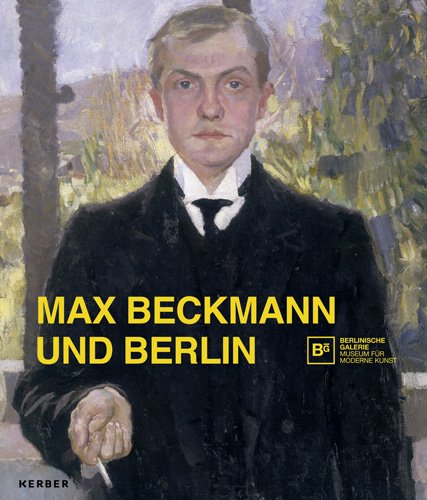
Max Beckmann and Berlin


To mark its 40th anniversary, the Berlinische Galerie presents "Max Beckmann and Berlin“. This is the first major Beckmann exhibition in Berlin in 30 years, and the first devoted to the decisive role the city played in the artist ́s life and work. There are 50 exhibits from the period between 1905 and 1936, including numerous self-portraits and key works loaned by eminent institutions or drawn from the museum‘s own collection, including 


“The Flood” (1908), 


“Women’s Bath” (1919), 


Alongside them hang paintings by celebrated contemporaries such as Edvard Munch, Max Lieberman, Franz Marc and Ernst Ludwig Kirchner. “Max Beckmann is the new Berlin,” declared the art historian Julius Meier-Graefe in 1924. The exhibition illustrates Beckmann’s journey to become one oft he leading protagonistis of modern art. It recounts how the young and unknown artist fought off crises and failures in Berlin, developed a style of his own, and ultimately made his mark not only the city, but across the world. The works on display were produced in Berlin, are thematically associated with the city, or were chosen for its great exhibitions and set their stamp on its art scene. The self-portraits from very different creative periods reveal how the artist saw himself and his circumstances at the time. 

Works by contemporaries cast spotlights of their own on Berlin’s vibrant and versatile artistic output from the turn oft he century until the 1920s. 

Max Beckmann (1884 –1950) lived initally in Berlin for 10 years (1904 until 1914). After studying art in Weimar and a staying shortly in Paris, he obtained his first studio here in the autumn of 1904. At 20 years old, the ambitious artist tried to distinguish himself in the capital city, one of the most important modern centers. 

His first Berlin work 


Max Beckmann,
Junge Männer am Meer, 1905, Klassik Stiftung Weimar, © VG BILD-KUNST Bonn, 2015, Repro: Renno, Weimar

“Young Men by the Sea” (1906)  already brought him much attention and acknowledgements. Henceforth Beckmann was sponsored by the Weimar museum director and patron Harry Graf Kessler, whose portrait by Edvard Munch can be seen in the exhibition. “Young Men by the Sea”also impressed the gallery owner Paul Cassirer, who then included Beckmann in his program and promoted his works for many years. His works were regularly displayed in the Berliner Secession as well. To Beckmann’s disappointment, his trainedImpressionism style could not prevail over the newly emerged Expressionism.  

It was in Berlin in 1919 that Max Beckmann’s lithographic series  


Die Hölle (Hell) was published, one of the seminal print cycles of the early Weimar years. It was followed in 1922 by the portfolio 


Max Beckmann,
aus dem Mappenwerk "Berliner Reise", Blatt 1: Selbst im Hotel, 1922, Berlinische Galerie, Leihgabe des Landes Berlin, © VG BILD-KUNST Bonn, 2015, Repro: Kai-Annett Becker


Max Beckmann,
aus dem Mappenwerk "Berliner Reise", Blatt 4: Nackttanz, 1922, Berlinische Galerie, Leihgabe des Landes Berlin, © VG BILD-KUNST Bonn, 2015, Repro: Kai-Annett Becker

Berliner Reise 1922 (Trip to Berlin 1922), which the Berlinische Galerie has just acquired for its own collection. These two cycles were pictorial commentaries on recent history and they contain many references to Berlin. 

The painter entered World War I as a medic, which unsettled him greatly. Backmann moved to Frankfurt am Main and stayed there for many years, mentally ailing and disappointed from the Berlin art scene. He gathered new strength and found a new style here. He wanted to conquer Berlin and the world, as stated in letters written in 1926: “Berlin, Dresden, Munich, and then Paris and New York.” It was in this year that Beckmann’s first important works found their way into the collection of the Berliner Nationalgalerie. Included was the painting 


“Mardi gras parisino” (1930), 

which a contemporary described in its first year as “one of the greatest achievements of contemporary art.” 

A last, and for Beckmann overdue, success could be celebrated in Berlin in 1933: Ludwig Justi, the director of the Nationalgalerie Berlin, devoted him a room entirely to his work in the New Department of the Nationalgalerie. Shortly before, Adolf Hitler was named Chancellor of the Reich. Then unfortunately in the summer of 1933, the National Socialist Regime temporarily ordered to close the Kronprinzenpalais. 

Beckmann’s works were found “entartet” (degenerate) and the artist was released from his office at the Städelschule in Frankfurt am Main. He moved with his second wife Mathilde, called “Quappi” from Frankfurt back to Berlin. There, prior to emigrating to Amsterdam in 1937, he produced motifs of the city, portraits of his wife, 


Max Beckmann,
Quappi mit Papagei, 1936,
Kunstmuseum Mülheim an der Ruhr,
© VG BILD-KUNST Bonn, 2015

“Quappi with Parrot” (1936), and also his earliest triptychs and mythologically inspired works like 


“The Hurdy-Gurdy Man” (1935), and also – for the first time – sculptures. After leaving for Amsterdam in July 1937, Beckmann never returned to the country of his birth. 


The exhibition is accompanied by a detailed catalogue in German and English reflecting the latest research on the theme of Max Beckmann and Berlin. 

More images from the exhibition:

Max Beckmann,
Doppelbildnis Max Beckmann und Minna Beckmann-Tube, 1909,
Stiftung Moritzburg – Kunstmuseum,
© VG BILD-KUNST Bonn, 2015


Max Beckmann,
Die Straße (Teil einer großformatigen Straßenszene, die Beckmann 1928 zerschnitten hat), 1914,
Berlinische Galerie, © VG BILD-KUNST Bonn, 2015


Max Beckmann,
Selbstbildnis vor rotem Vorhang, 1923, Leihgabe aus Privatbesitz, © VG BILD-KUNST Bonn, 2015


Max Beckmann,
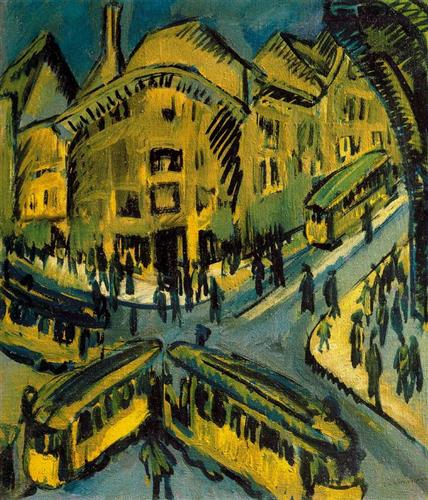
Blick auf den Nollendorfplatz, 1911, Stiftung Stadtmuseum Berlin, © VG BILD-KUNST Bonn, 2015


From an outstanding review (read the whole thing);{images added}
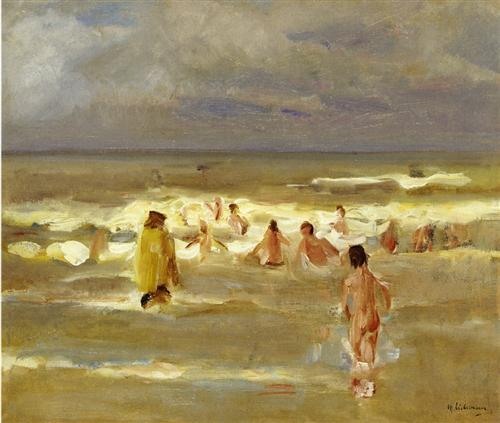
Straight away, you’re bound to get drawn into the first painting Beckmann made in Berlin, “Young Men by the Sea” (1906), (above) a large-scale, picturesque scene of nude, muscular men loitering on the beach, choppy waters and dramatic clouds in the distance. Right next to it is a very similar image,
 

Max Liebermann’s “Bathing Boys” (1907). The theme, use of colour modulation and similarities between the two make a great case for the influence German Impressionism (Liebermann’s camp) had on Beckmann as a young painter.
In the same room is a pairing that is stylistically dissimilar yet closely related:


Beckmann’s “Small Death Scene” (1906)


and Edvard Munch’s lithograph “The Death in the Sickroom” (1896), each depicting quietly distraught mourners, with their deceased loved ones in the background. Comparing the two is interesting in its own right, but make sure to glance back at “Young Men by the Sea,” painted the same year, yet astonishingly different. Beckmann’s artistic agility, employing diverse sets of colours, brushstrokes and compositions, is already vivid in the first room.
 
“The Flood” (1908) commands the second room of the exhibition, exemplary of his controversial push back against the burgeoning Expressionism of the day. This work could not be more different in style and mood than


“Girl with Cat II” (1912) by Franz Marc, who had a heated public debate with Beckmann over the new movement...
The third room is dedicated to the bustling metropolis Beckmann temporarily called home. Other paintings provide comparisons to the Berlin of today –

“Kaiserdamm” (1911), a peaceful, snowy European boulevard scene with a decadent purple sky

and “Tauentzienstraße” (1913), which offers a view of the pre-war Kaiser-Wilhelm-Gedächtniskirche, as if seen from the front door of the recently opened KaDeWe.

Ernst Ludwig Kirchner’s “Nollendorfplatz” (1912) brings you back from the delight of studying the Berlin of the past, to considering the dramatic variations in depicting it....
Turning the corner out of the last room, you are met with Beckmann himself, in the form of several self-portraits made throughout his life, for which he is much celebrated. Here, too, a major jump occurs in


Max Beckmann,
Selbstbildnis mit Sektglas, 1919, Privatsammlung, Städel Museum, Frankfurt am Main, Dauerleihgabe, © VG BILD-KUNST Bonn, 2015
“Self-Portrait with Champagne Glass” (1919).

 
Max Beckmann,
Selbstbildnis Florenz, 1907,
Hamburger Kunsthalle, Leihgabe aus einer Privatsammlung,
© VG BILD-KUNST Bonn, 2015, Foto: Elke Walford

Seen alongside “Self-Portrait, Florence” (1907), you wouldn’t guess they were painted by the same man.
 

Monday, December 21, 2015

The Golden Age Revisited - (Museum voor Schone Kunsten Gent)


The Museum of Fine Arts in Ghent (Belgium) (Museum voor Schone Kunsten Gent) houses more than 60 Dutch paintings from the 17th century, a period known as ‘The Golden Age’ by its northern neighbors. On the occasion of ‘Gent Kleurt Oranje’, this rich collection comes under scrutiny: when was it established and how was it subsequently developed? What is the relationship between the North and South? And is everything really what it seems? 


A new exhibition, The Golden Age Revisited,  goes in search of answers to these questions and shine the spotlight upon this unique, sometimes curious, collection. 

An outstanding collection 

The Museum boasts one of the most remarkable collections of Dutch painting outside the Netherlands. It includes works by masters such as Frans Hals, Jan van Goyen, Willem Claesz. Heda, Albert Cuyp and Roelant Savery. In addition, the museum owns some extremely rare pieces. 


AE van Rabel, Stilleven, Nature Morte, 1653
Olieverf op doek, huile sur toile, Museum voor Schone Kunsten Gent, Musée des Beaux-Arts Gan

It possesses the only known work by AE van Rabel, (above)

while  Almshouse in Utrecht by Joost Cornelisz Droochsloot is the only known image of that institution.

More images from the exhibition:


Melchior d'Hondecoeter, Water fowl (Watervogels), ca. 1686,  Watervogels, Sauvagines, 17e eeuw- 17ème siècle
Olieverf op doek, huile sur toile, Museum voor Schone Kunsten Gent, Musée des Beaux-Arts Gand


Hendrick Andriessen, Vanitas, 17e eeuw- 17ème siècle
Olieverf op doek, huile sur toile, Museum voor Schone Kunsten Gent, Musée des Beaux-Arts Gand 

Albert Jansz. van der Schoor, The smoker (De roker), ca. 1656, De roker, Le Fumeur, 17e eeuw- 17ème siècle
Olieverf op doek, huile sur toile, Museum voor Schone Kunsten Gent, Musée des Beaux-Arts Gand


Nicolaes Pietersz. Berchem, Dieren (fragment uit groter geheel), Animaux, fragment, 17e eeuw- 17ème siècle,
Olieverf op doek, huile sur toile, Museum voor Schone Kunsten Gent, Musée des Beaux-Arts Gand


Cornelis de Heem, Stilleven, Nature Morte, 1670
Olieverf op doek, huile sur toile, Museum voor Schone Kunsten Gent, Musée des Beaux-Arts Gand


Joost Cornelisz. Droochsloot, Dorpskermis, Kermesse du village, 17e eeuw- 17ème siècle Olieverf op doek, huile sur toile, Museum voor Schone Kunsten Gent, Musée des Beaux-Arts Gand 


Roelant Savery, Paradijselijk landschap, Paysage paradisiaque, 17e eeuw- 17ème siècle Olieverf op doek, huile sur toile, Museum voor Schone Kunsten Gent, Musée des Beaux-Arts Gand 


Frans Hals, Portret van onbekende vrouw, Portrait d'une femme inconnue, 1640
Olieverf op doek, huile sur toile, Museum voor Schone Kunsten Gent, Musée des Beaux-Arts Gand

Tuesday, December 15, 2015

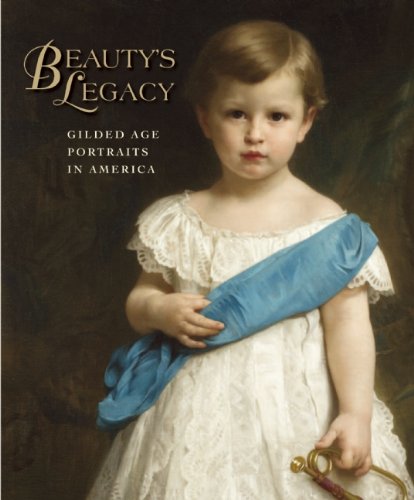
Beauty's Legacy: Gilded Age Portraits in America


  • Flagler Museum
  • January 26 - April 17, 2016
Flagler Museum
One Whitehall Way
Palm Beach, Florida 
 
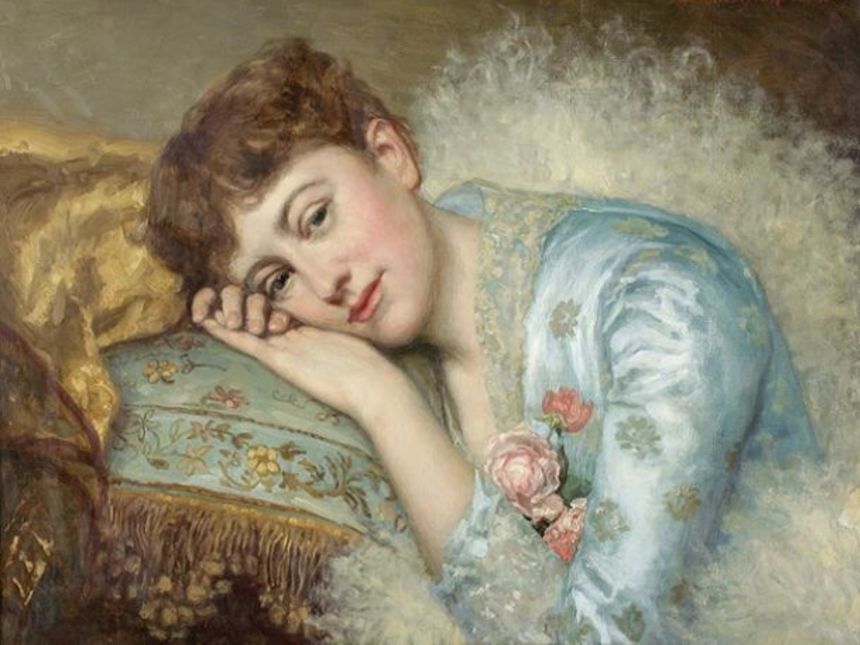
Beauty's Legacy: Gilded Age Portraits in America explores the critical and popular resurgence of portraiture in the United States during the period bounded by the close of the Civil War and the beginning of World War I. As great fortunes were amassed in America, so too came the drive to document the wealthy with great portraiture. A brilliant generation of American and European artists rose to meet that demand.

This exhibition features fifty eight portraits selected from New-York Historical Society's outstanding holdings. The sitters — ranging from famous society beauties to powerful titans of business and industry — left lasting legacies that have contributed to the cultural and economic growth of the Nation.

Beauty's Legacy includes portraits of prominent Americans painted and sculpted by noted American artists such as James Carroll Beckwith, George Peter Alexander Healy, Daniel Huntington, John Singer Sargent, and John Quincy Adams Ward. But the exhibition also reveals the highly competitive nature of the portrait market, as these American portraitists found themselves in fierce rivalry for American patronage with their European counterparts, such as Léon Bonnat, William-Adolphe Bouguereau, Alexandre Cabanel, Théobald Chartran, and Anders Zorn.

The exhibition also includes a selection of twenty-four exquisite portraits from Peter Marié's vast collection of miniatures, known by his contemporaries as his "Gallery of Beauty," underscoring the intersection of beauty, celebrity, and social prestige.

This exhibition has been organized by the New-York Historical Society.


George Peter Alexander Healy (American, 1813 –1894), Jeannie Ovington (1863-1926), 1887. Oil on canvas. New- York Historical Society. Gift of the Estate of Ina Love Thursby, through Walter M. Brown, 1944.18.


James Montgomery Flag; Nellie McCormick Flagg, ca. 1906 Oil on canvas


More images


Beauty's Legacy: Gilded Age Portraits in America is accompanied by a fully-illustrated catalogue published by the New-York Historical Society in association with D Giles Limited, London.


Thursday, December 10, 2015

Van Dyck: The Anatomy of Portraiture at The Frick Collection, March 2 through June 5, 2016


Anthony van Dyck (1599–1641), one of the most celebrated and influential portraitists of all time, enjoyed an international career that took him from his native Flanders to Italy, France, and, ultimately, the court of Charles I in England. Van Dyck’s elegant manner and convincing evocation of a sitter’s inner life—whether real or imagined—made him the favorite portraitist of many of the most powerful and interesting figures of the seventeenth century. His sitters—poets, duchesses, painters, and generals—represent the social and artistic elite of his age, and his achievement in portraiture marked a turning point in the history of European painting. 

Van Dyck: The Anatomy of Portraiture, on view only at New York’s Frick Collection, looks comprehensively at the artist’s activity and process as a portraitist. It is also the first major exhibition devoted to his work to be held in the United States in more than twenty years. Through approximately one hundred works, the show explores the versatility and inventiveness of a portrait specialist, the stylistic development of a draftsman and painter, and the efficiency and genius of an artist in action. 

Organized chronologically around the different geographic chapters of Van Dyck’s career, the exhibition documents the artist’s development from an ambitious young apprentice into the most sought-after portrait painter in Europe. 

The show also includes a small selection of comparative works by Van Dyck’s contemporaries, including Rubens, Jordaens, and Lely, and a special installation of the Iconographie, Van Dyck’s celebrated series of portrait prints. Lenders to the exhibition include the Palazzo Pitti in Florence, the Kunsthistorisches Museum in Vienna, the British Museum and National Gallery in London, the Prado Museum in Madrid, and major private collectors such as the Duke of Devonshire and the Duke of Buccleuch and Queensberry. 

ABOUT VAN DYCK

Born in 1599 to a family of patrician merchants, Anthony van Dyck endured a childhood marred by his mother’s early death and his father’s financial instability. In 1610, he enrolled as an apprentice to the painter Hendrick van Balen, although Peter Paul Rubens, Antwerp’s most celebrated artist, would exert a far greater influence on his development. By his late teens, the young Van Dyck was already assisting Rubens on large-scale commissions. A brief sojourn in England followed by a stay of roughly six years in Italy cemented his emergence as a mature painter in his own right, familiar with the great masters of the Italian Renaissance and the most sophisticated courts of Europe. 


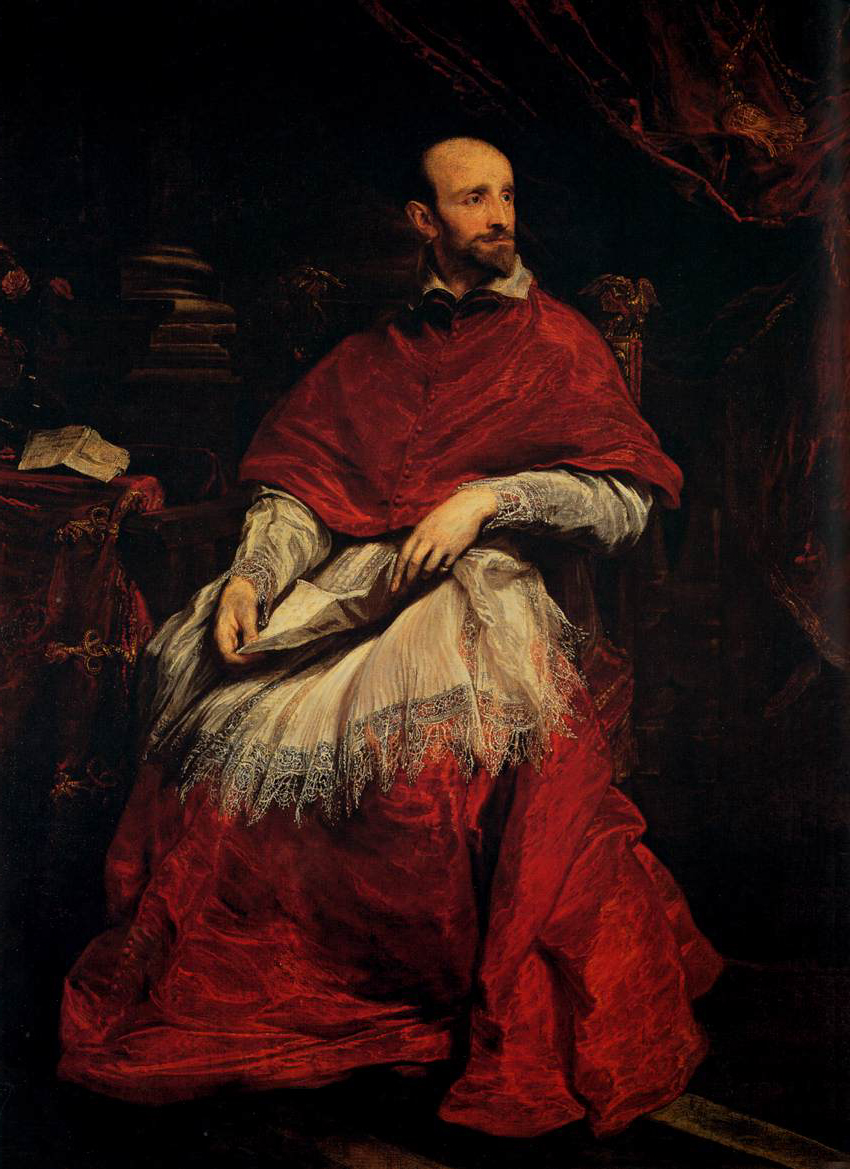
 Anthony van Dyck (1599–1641) Cardinal Guido Bentivoglio, 1623 Oil on canvas Galleria Palatina, Palazzo Pitti, Florence (Pal. 82)


One of the most important loans in the exhibition was painted during this period: Van Dyck’s 1623 portrait of Cardinal Guido Bentivoglio, from the Galleria Palatina at the Palazzo Pitti in Florence.. In the Baroque period, Van Dyck's depiction of Bentivogliowas much emulated and became the benchmark for any portrait of a prince of the Church. Its exclusive trip to the Frick marks only the second time in the painting's history that it has left Italy.

In 1632, Van Dyck was appointed principal painter to Charles I of England. The portraits he produced over the following decade, before his premature death in 1641, are among his most celebrated and feature heavily in the exhibition. 


Van Dyck, Charles I and Henrietta Maria Holding a Laurel Wreath, 1632, oil on canvas, Archiepiscopal Castle and Gardens, Kroměříž

Included in the exhibition is a horizontal portrait of Charles I and his queen Henrietta Maria, now in the collection of Archiepiscopal Castle and Gardens, Kroměříž, The Czech Republic. This remarkable canvas has never before traveled to the United States.


Anthony van Dyck (1599–1641) Queen Henrietta Maria with Jeffery Hudson, 1633
Oil on canvas
National Gallery of Art, Washington; Samuel H. Kress Collection


Coming from the National Gallery of Art, Washington D.C., is Van Dyck’s portrait Queen Henrietta Maria with Jeffrey Hudson. 


Anthony van Dyck (1599–1641) The Princesses Elizabeth and Anne, Daughters of Charles I, 1637 Oil on canvas Scottish National Portrait Gallery, Edinburgh; purchased with the aid of the Heritage Lottery Fund, the Scottish Office and the Art Fund 1996

A more intimate work of Princesses Elizabeth and Anne comes to New York from the Scottish National Portrait Gallery.

In addition to showcasing notable works from European collections, Van Dyck: The Anatomy of Portraiture will also shine a spotlight on important paintings by Van Dyck from American private and public collections, many of which have not been included in previous exhibitions on the artist. These paintings are a legacy of the longtime fascination that Van Dyck has exerted on American collectors, including Henry Clay Frick, who acquired no fewer than eight paintings by the artist. 


Anthony van Dyck (1599–1641)
Frans Snyders, ca. 1620
Oil on canvas
The Frick Collection;
Henry Clay Frick Bequest Photo: Michael Bodycomb


Among these is the portrait of Frans Snyders, a fellow painter and close artistic collaborator, purchased in the summer of 1909 by Frick, who also acquired that same year 


Anthony van Dyck (1599–1641)
Margareta de Vos, ca. 1620
Oil on canvas
The Frick Collection; Henry Clay Frick Bequest Photo: Michael Bodycomb 


the pendant portrait of Snyders’s wife, Margareta de Vos. 

Painted about 1620 when the artist was roughly twenty years old, the two portraits reveal the prodigy’s startling talent, expressed in likenesses that combine supreme elegance with a subtle element of melancholy. 

Other Frick-owned works included in the exhibition will be 


Anthony van Dyck (1599–1641)
Lady Anne Carey, Later Viscountess Claneboye and Countess of Clanbrassil, ca. 1636
Oil on canvas
The Frick Collection; Henry Clay Frick Bequest Photo: Michael Bodycomb 


the full-length canvas Lady Anne Carey, Later Viscountess Claneboye and Countess of Clanbrassil, 


Anthony van Dyck (1599–1641) Genoese Noblewoman, ca. 1625–27
Oil on canvas
The Frick Collection; Henry Clay Frick Bequest Photo: Michael Bodycomb 


and the recently conserved Portrait of a Genoese Noblewoman.

APPROACH TO PREPARATION OF PORTRAITS A MAJOR THEME

Van Dyck’s singularity is most apparent in his approach to preparing a portrait, and initial sketches and unfinished paintings compose one of the major themes of the show. Portrait drawings by his contemporaries, including Peter Lely and Jacob Jordaens, will highlight the distinct way he created his celebrated portraits. Whereas many artists made detailed studies of a sitter’s face before beginning work on a painting, Van Dyck preferred rough sketches that mapped a sitter’s pose but left many details unresolved. He would then usually paint the sitter directly from life, studying his or her face without an intermediary drawing.

 Anthony Van Dyck, Portrait of a Woman, ca. 1640 Oil on canvas Speed Art Museum, Louisville; Museum Purchase, Preston Pope Satterwhite Fund


This approach is apparent especially in unfinished works, such as the Portrait of a Woman from the Speed Museum in Louisville, above. Here, the haunting depiction of the unknown woman’s face contrasts with passages intended to be completed by studio assistants. The Frick’s exhibition will reunite preparatory works and finished paintings, in some cases for the first time since they left Van Dyck’s studio several hundred years ago. 


Van Dyck, Portrait Study of Nicholas Lanier, ca. 1628, black chalk, heightened with white chalk,on blue paper, Scottish National Gallery, Edinburgh; Lady Murray of Henderland gift 1860 as a memorial of her husband, Lord Henderland

A preparatory drawing of the English court musician and painter Nicholas Lanier, above, from the Scottish National Gallery, for example, 


Van Dyck, Nicholas Lanier, ca. 1628, oil on canvas, Kunsthistorisches Museum, Vienna

will be displayed alongside the related portrait, on loan from Vienna’s Kunsthistorisches Museum, above. 

In the drawing, Van Dyck worked with black and white chalk on blue paper, swiftly laying out the fall of fabric of Lanier’s cloak, the play of his curls, his elegant hands, and his almost supercilious expression. Nonetheless, the artist made a number of changes in the final composition: instead of holding out a glove in his right hand, Lanier’s arm is akimbo, the hand tucked invisibly at his side. Less obviously, Van Dyck removed a lock of hair to leave Lanier’s temple exposed. These alterations indicate how Van Dyck continued to think through his composition as he transitioned from preparatory drawing to canvas. Remarking on the artist’s meticulous process, Lanier told the painter Peter Lely that he “sat seven entire days” for his portrait, but “was not permitted so much as once to see it till [Van Dyck] had perfectly finished the face to his own satisfaction.” Such anecdotes combinewith the physical evidence of Van Dyck’s works to allow for the exhibition’s reconstruction of the artist’s working method.

PAN-EUROPEAN DISTRIBUTION OF HIS WORK IN PRINT

Van Dyck made astute use of reproductive prints to ensure that his portraits had apan-European distribution. This is particularly apparent in his so-called Iconographie series of printed portraits, depicting a range of sitters who included fellow Flemish artists, learned scholars, statesmen, and aristocratic ladies. The Iconographie will receive its own special installation at the Frick, encompassing prints, drawings, oil sketches, and one of the earliest bound volumes of Van Dyck’s portrait prints, on loan from the Rijksmuseum. As well as the work of professional engravers, the Iconographie features some of Van Dyck’s autograph etchings, which are among the greatest prints ever made.


Anthony van Dyck (1599–1641) Frans Snyders, ca. 1625–37 Etching Fogg Museum, Harvard Art Museums, Cambridge; Gift of Walter C. Klein, Class of 1939

These include Van Dyck’s etching, above after his portrait of Frans Snyders (illustrated above). 

In his paintings of Snyders and his wife, the young Van Dyck depicted the pair amidst various trappings of prosperity—elegant clothing, furniture, and a distant view of parkland. In his print, made more than a decade later, Van Dyck stripped Snyders’s portrait down to just head and shoulders. Translated from oil on canvas into a new medium, the etching reveals the variety of Van Dyck’s graphic vocabulary. Stippling maps the contours of Snyders’s brow, cheekbones, and forehead, yielding to loose crosshatching in areas of greater shadow. Calligraphic lines, meanwhile, convey Snyders’s nonchalantly arranged hair and upturned mustache. Such a minimal etching was intended to appeal to the most sophisticated collectors, but Van Dyck also collaborated with highly skilled professional engravers to create more traditional prints for wider distribution. To assist these engravers, Van Dyck prepared both drawings and exquisite grisailles, or gray-scale oil sketches. In the exhibition, four of these grisailles, will demonstrate Van Dyck’s unusual mastery of this refined medium.


BEYOND SOCIETY: FAMILY AND SELF-PORTRAITS

Van Dyck used portraiture to represent the very pinnacle of contemporary society, but it also provided him with a vehicle to explore intimate relationships and his own identity. The exhibition will include portraits of 


Anthony van Dyck (1599–1641) Mary, Lady van Dyck, née Ruthven, ca. 1640 Oil on canvas Museo Nacional del Prado, Madrid

Van Dyck’s wife, Mary, 


Van Dyck, Margaret Lemon, ca. 1638, private collection, New York


as well as the woman believed to have been his mistress, the courtesan Margaret Lemon. Lemon appears in three-quarter profile, delicately touching the fabric at her shoulder in a gesture of refinement that would fascinate subsequent generations of artists. The painting, long considered lost but now in a New York private collection, inspired a spate of imitations during the seventeenth century. 

Van Dyck was an avid self-portraitist throughout his career, and four of his self-portraits will be included in the exhibition. 


Anthony van Dyck (1599–1641) Self-Portrait, ca. 1613–15 Oil on panel Gemäldegalerie der Akademie der bildenden Künste, Vienna


Anthony van Dyck (1599–1641) Self-Portrait, ca. 1620–21 Oil on canvas The Metropolitan Museum of Art, New York; The Jules Bache Collection, 1949


In the earliest of these, executed about 1613–15, an adolescent Van Dyck turns his head to study his own likeness. His piercing stare and the boldness of his brushwork presaged a career that would prove seminal for the history of European painting. Visitors to Van Dyck: The Anatomy of Portraiture will have an unprecedented chance to immerse themselves in that achievement.

PUBLICATION


A landmark volume accompanies the exhibition, providing a comprehensive survey of the portrait drawings, paintings, and prints of Anthony van Dyck (1599–1641), one of the most celebrated portraitists of all time. Written by Stijn Alsteens and Adam Eaker with contributions by An Van Camp, Ashmolean Museum; Xavier F. Salomon, The Frick Collection; and Bert Watteeuw, Rubenianum, Antwerp; the book showcases the full range of Van Dyck’s fascinating international career and makes a compelling case for the distinctiveness and importance of his work. Published by Yale University Press in association with The Frick Collection, 9 ½ x 11 inches, 267 illustrations.

More images from the exhibition:


Anthony van Dyck (1599–1641) Prince William of Orange and Mary, Princess Royal, 1641 Oil on canvas Rijksmuseum, Amsterdam


Anthony van Dyck (1599–1641) Pomponne II de Bellièvre, ca. 1637–40 Oil on canvas Seattle Art Museum


 Anthony van Dyck (1599–1641) James Stanley, Lord Strange, Later Seventh Earl of Derby, with His Wife, Charlotte, and Their Daughter, ca. 1636 Oil on canvas The Frick Collection; Henry Clay Frick Bequest Photo: Michael Bodycomb
·          


Anthony van Dyck (1599–1641) John Suckling, ca. 1638 Oil on canvas The Frick Collection; Henry Clay Frick Bequest Photo: Michael Bodycomb


Anthony van Dyck (1599–1641) Nicolaes Rockox, 1636 Oil on panel Private collection\

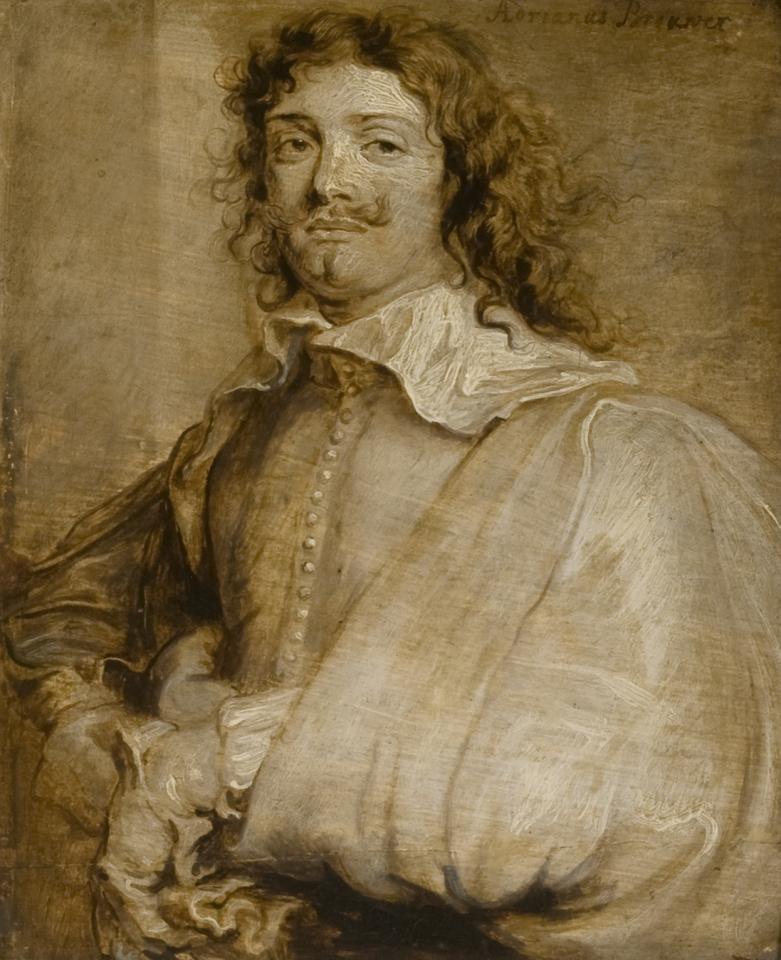
·         Anthony van Dyck (1599–1641) Adriaen Brouwer, ca. 1634 Oil on panel The Duke of Buccleuch and Queensberry, KBE, Boughton House, Northamptonshire


·         Anthony van Dyck (1599–1641) Portrait Study of a Man on Horseback with His Groom, 1620– 21 (or 1628–32?) Pen and brown ink The Metropolitan Museum of Art, New York; Gift of Harold K. Hochschild


·         Anthony van Dyck (1599–1641) François Langlois Playing a Musette, 1641 (?) Black chalk, heightened with white chalk, on buff paper Frits Lugt Collection, Fondation Custodia, Paris


Anthony van Dyck (1599–1641) Inigo Jones, 1632–36 Black chalk, pen and brown ink, squared for transfer in black chalk; laid down The Duke of Devonshire and the Trustees of the Chatsworth Settlement, Chatsworth, Derbyshire


·         Anthony van Dyck (1599–1641) Self-Portrait, ca. 1627–35 Etching (first state) The Fitzwilliam Museum, Cambridge


·         Anthony van Dyck (1599–1641) Lucas Vorsterman, ca. 1631 (?) Etching (first state) The Fitzwilliam Museum, Cambridge


One of the most important loans in the exhibition was painted during this period: Van Dyck’s 1623 portrait of Cardinal Guido Bentivoglio, from the Galleria Palatina at the Palazzo Pitti in Florence.. In the Baroque period, Van Dyck's depiction of Bentivogliowas much emulated and became the benchmark for any portrait of a prince of the Church. Its exclusive trip to the Frick marks only the second time in the painting's history that it has left Italy.

In 1632, Van Dyck was appointed principal painter to Charles I of England. The portraits he produced over the following decade, before his premature death in 1641, are among his most celebrated and feature heavily in the exhibition.