Tuesday, August 9, 2016

First Exhibition Devoted to Valentin de Boulogne, the Greatest French Follower of Caravaggio


Exhibition Dates:
October 7, 2016–January 16, 2017
Exhibition Location:   
The Met Fifth Avenue

The greatest French follower of Caravaggio (1571–1610), Valentin de Boulogne (1591–1632) was also one of the outstanding artists in 17th-century Europe. In the years following Caravaggio's death, he emerged as one of the most original protagonists of the new, naturalistic painting. Valentin de Boulogne: Beyond Caravaggio will be the first monographic exhibition devoted to this artist who is little known because his career was short-lived—he died at age 41—and his works are so rare. Around 60 paintings by Valentin survive, and this exhibition will bring together 45 of them, with works coming from Rome, Vienna, Munich, Madrid, London, and Paris. Exceptionally, the Musée du Louvre, which possesses the most important and extensive body of Valentin's works, will lend all of its paintings by the artist.

The exhibition is organized by The Metropolitan Museum of Art and the Musée du Louvre.

Not since 1973, when an exhibition of the French followers of Caravaggio was held at the French Academy in Rome and at the Grand Palais in Paris, has there been an attempt to bring the achievements of this extraordinary painter before a large public. Therefore, this exhibition will be a landmark event not only for scholars and students, but also for art lovers, who will discover one of the giants of French painting. Although he is not well known to the general public, Valentin has long been admired by those with a passion for Caravaggesque painting. His work was a reference point for the great realists of the 19th century, from Courbet to Manet, and his startlingly vibrant staging of dramatic events and the deep humanity of his figures, who seem touched by a pervasive melancholy, make his work unforgettable.

In the early years of the 17th century, Rome was the cultural capital of Europe, where aspiring artists from France, Spain, Germany, and the Lowlands flocked to experience the great monuments of the Roman past as well as the masterpieces of Raphael and Michelangelo. But once there it was the novel art of Caravaggio—one of the great revolutionaries of Western art—that attracted them. Caravaggio famously rejected the grand tradition that looked to the past, espousing instead a new kind of art based on painting directly from the posed model observed under a raking light that enhanced its dramatic impact—a lighting effect that was emulated by filmmakers in the 1930s.

Caravaggio's revolution redrafted the artistic landscape of Europe and when he suddenly died in 1610 of malaria, the void he left was filled by two painters of genius. One was the famous Spaniard Jusepe de Ribera (1591–1652) who in 1616 moved from Rome to Naples, where he spent the rest of his life; the other was the Frenchman Valentin de Boulogne who spent the whole of his short career in Rome.

There is scant information about Valentin's life before he arrived in Italy, although it is known that he was born on January 3, 1591, not far from Paris, in the small town of Coulommiers. He was the son of a painter and glazier and he had a brother, 10 years his junior, who was also a painter. It is likely that Valentin first apprenticed with his father, but nothing is known about his career before he arrived in Rome, where he is documented by 1614.

Like so many young artists from the north of Europe and Spain, Valentin arrived in Rome with little training but a strong desire to make a name for himself. Caravaggio's practice of painting directly from the model, eliminating the intervening training that had been thought essential to the artist, opened a new dynamic for aspiring artists, as did the emergence of the art market. Artists no longer necessarily required the connections provided by a well-established master. And their realistic vocabulary was no longer aimed only at erudite connoisseurs—it appealed to the masses, thereby challenging the authority of Antiquity, Raphael, and Michelangelo. It also introduced an existential subtext to conventional images, such as Valentin's Samson with the Jawbone of an Ass (Cleveland Museum of Art). Painted for Cardinal Francesco Barberini, the nephew of Pope Urban VIII, the picture incorporates a self-portrait of the artist.

Valentin's most frequent subjects are scenes of merriment, with music-making, drinking, and fortune-telling—themes associated with Caravaggesque painting, but treated in a hauntingly reflective fashion, as though meditations on the transience of the pleasures of life. But Valentin's greatest achievements were in the field of dramatic narratives and among the exhibition's highlights are the monumental  


Allegory of Italy (Finnish Institute, Rome), perhaps the most extreme statement of naturalism before Courbet;


and the prestigious altarpiece commissioned from Valentin for Saint Peter's Martyrdom of Saints Processus and Martinian (Pinacoteca Vaticana, Rome). Much admired by contemporaries, the latter must have been studied by Velázquez, who visited Rome shortly after the painting was installed.
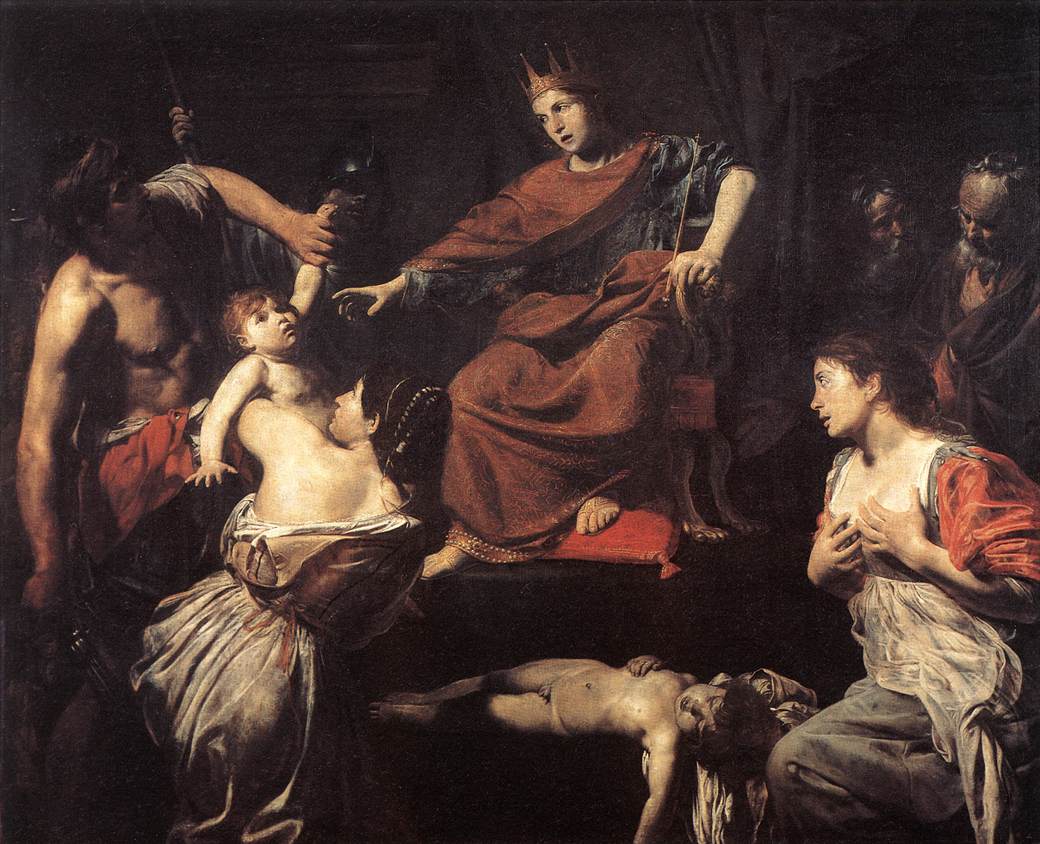


In The Judgment of Solomon (Musée du Louvre), Valentin presents the Biblical story of the young Solomon, deciding the fate of a baby claimed by two women, as an unfolding drama, with the viewer as active participant.


Valentin's life was cut short when, following a night of tavern-hopping, he contracted a fatal fever.


Also from the Louvre:
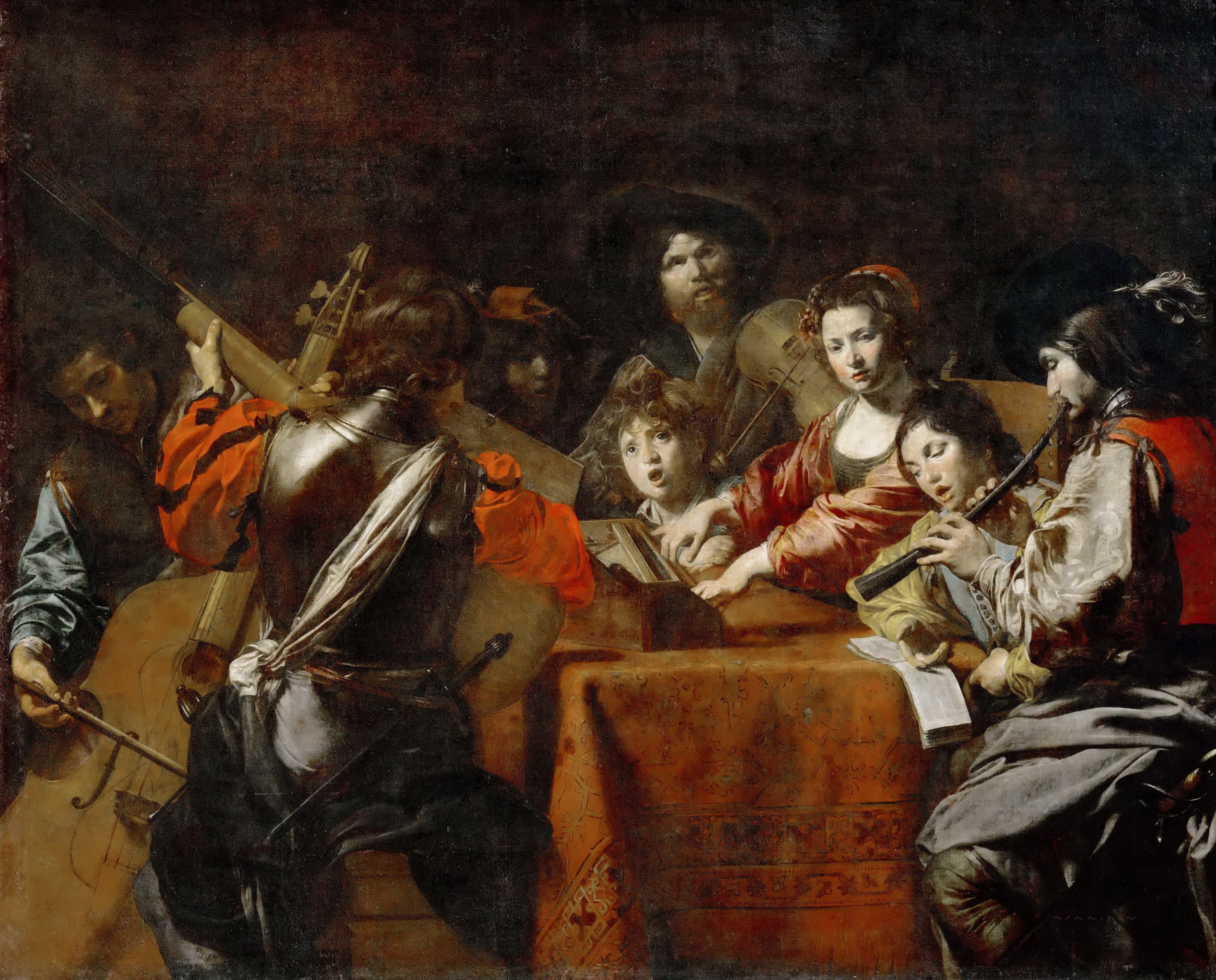


A Concert [c.1628]
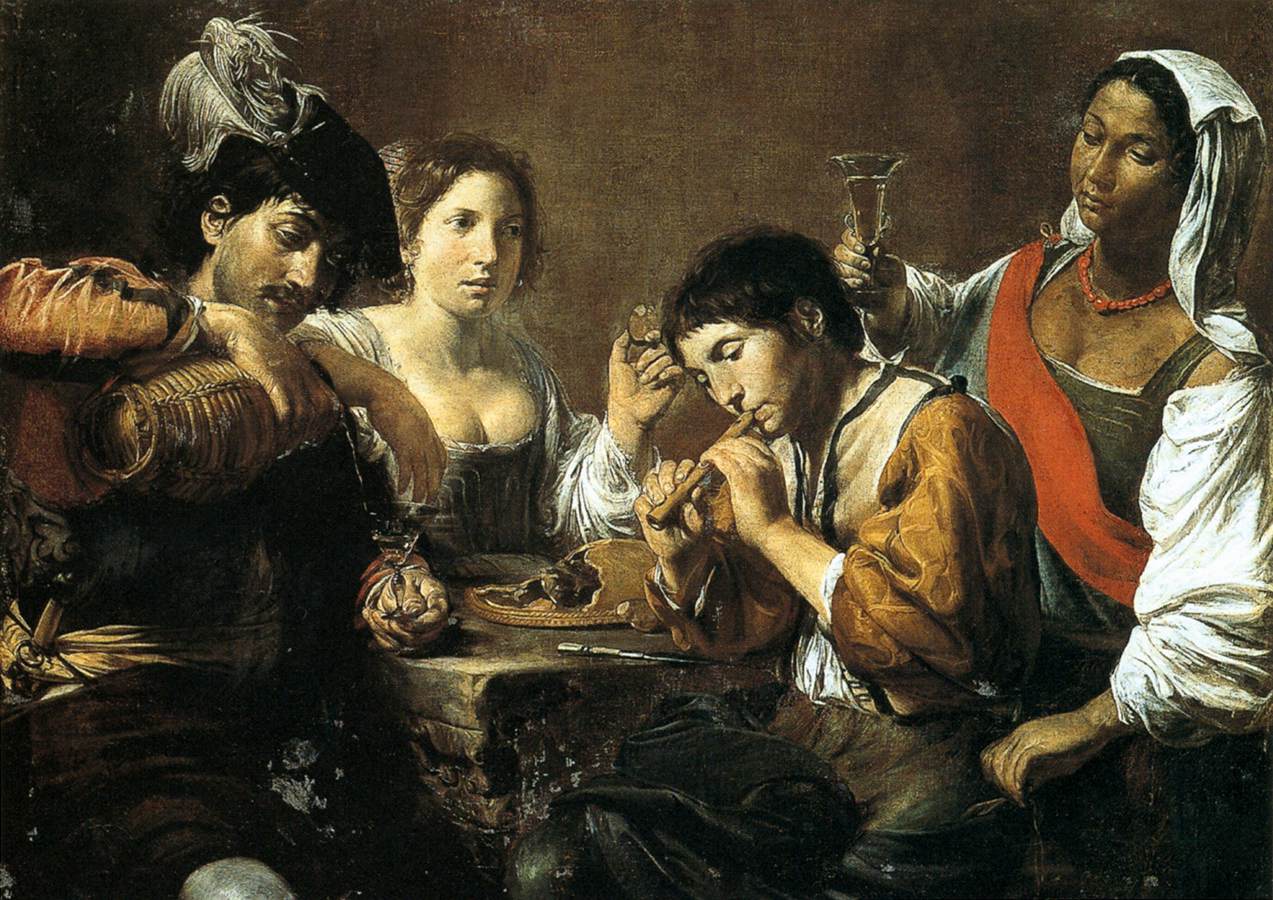

Musician and Drinkers
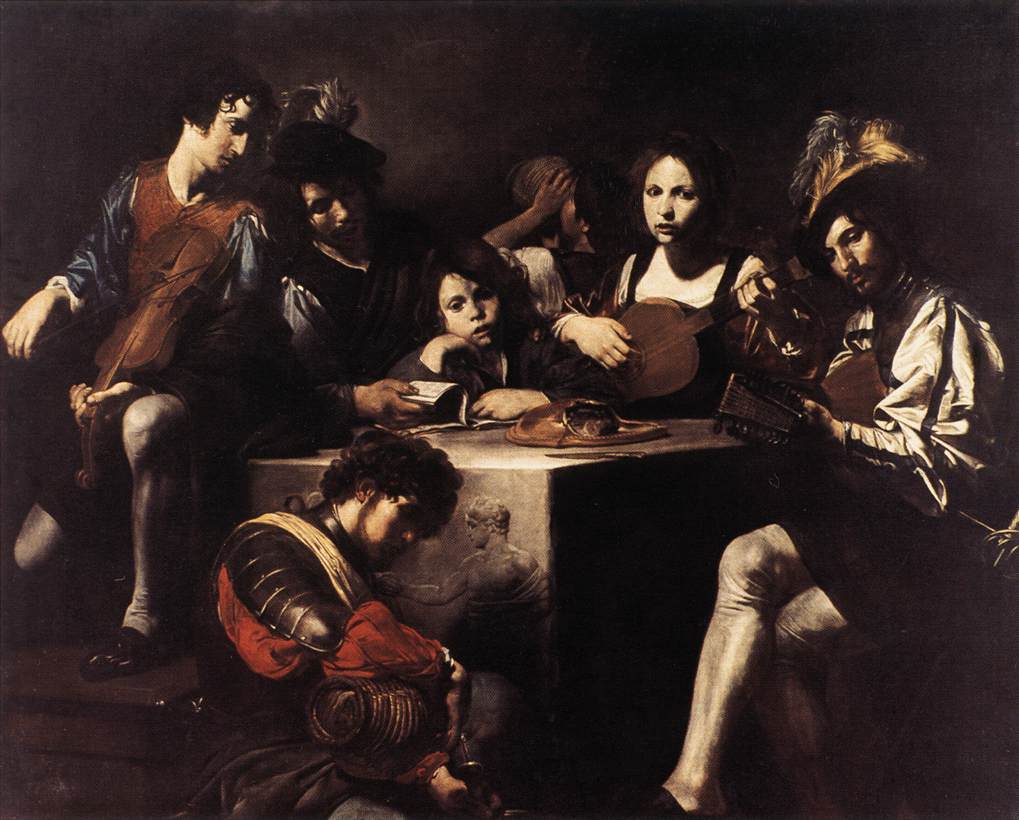


The concert at the bas-relief (Le Concert au bas-relief).


The Fortune Teller

c. 1628
Oil on canvas, 125 x 175 cm
Musée du Louvre, Paris


[Musée du Louvre, Paris - Oil on canvas, 175 x 216 cm]


[Musée du Louvre, Paris - Oil on canvas, 175 x 216 cm]


Chagall: Daphnis & Chloé


Presented by the Winnipeg Art Gallery in partnership with the National Gallery of Canada, Chagall: Daphnis & Chloé showcases 42 lithograph prints by the artist, widely considered the crowning achievement of his career as a printmaker. The exhibit run until September 11.

The collaboration features Russian-born Jewish artist Chagall, a pioneer of modernism, and his illustrations of Daphnis & Chloé, depicting the semi-erotic tale written by the ancient Greek poet Longus. “Chagall: Daphnis & Chloé presents some of the treasures of the national collection seldomly shown in public given their fragility. The exhibition highlights Chagall’s unique style and fanciful, richly coloured imagery.


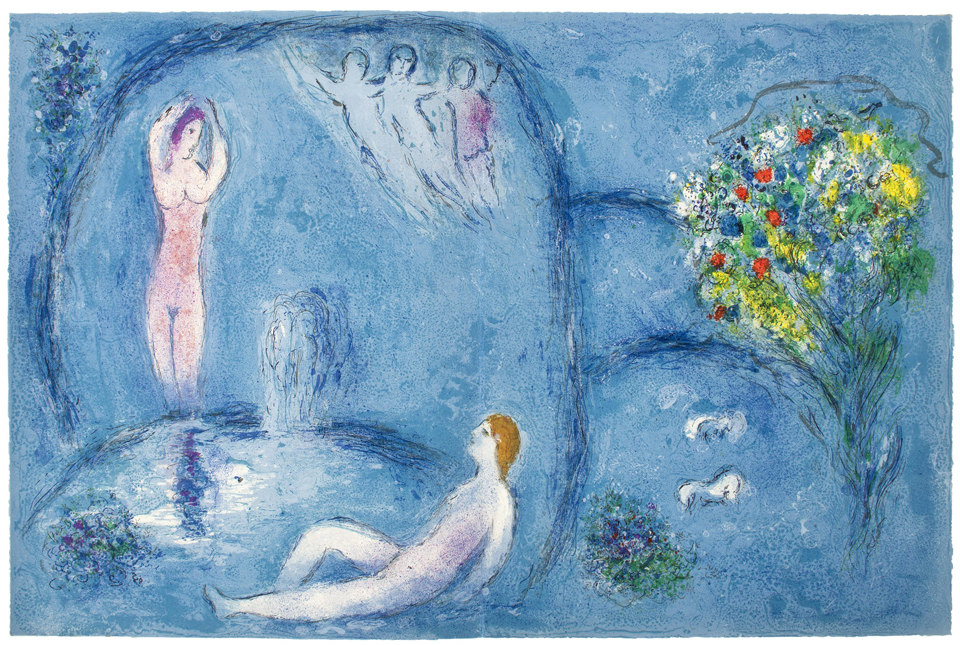
 Marc Chagall Philetas's Lesson, from Daphnis and Chloe


 Marc Chagall The Trampled Flowers, from Daphnis and Chloe


Marc Chagall Philetas's Orchard, from Daphnis and Chloe


From Christie's:
 

Daphnis and Chloé is a timeless tale of innocence, cruel fate, loyalty, betrayal, vengeful gods and even dastardly pirates, but one in which love ultimately conquers all. Almost nothing is known about the author — even his name is in doubt — although he was probably a native of Italy who wrote in Greek, familiar with the island of Lesbos where the action takes place. But the one thing we do know for certain is that it was written over 2,000 years ago. 
That the artist Marc Chagall came to illustrate it is due to a combination of factors, one of which was the turbulent state of his personal life during his years of exile in the U.S., during and after World War II. With the death of his beloved first wife, Bella, in 1944, Chagall lost the tranquility and security essential to his work. It was with a great deal of relief, then, that he met and finally married Valentina (Vava) Brodsky, in 1952.

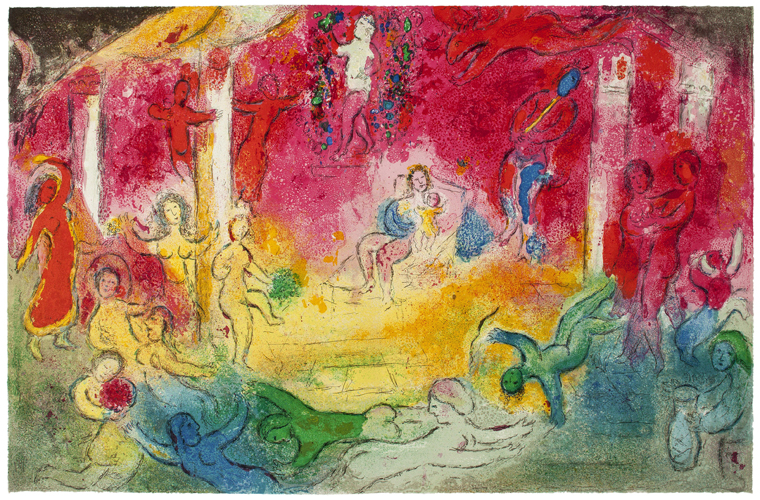
Marc Chagall (1887-1985), Temple et Histoire de Bacchus (1961), lithograph in colours on Arches wove paper.
 

To mark this new, calmer phase in his life, Chagall embarked on a long honeymoon, travelling from Rome to Athens, then Delphi, and finally the island of Poros. The itinerary was suggested by his friend Tériade, not only a great supporter but also one of the most important art publishers of the 20th century. Tériade commissioned Chagall to provide a series of illustrations to Daphnis and Chloe, believing that Chagall was uniquely suited to depicting this tale of young love triumphing over adversity, and that exposure to the light and sun of the Greek islands would also be a perfect tonic for his long-suffering friend. It was probably no coincidence that Tériade, although a French national, was a native of Mytilene, capital of Lesbos.

Tériade was right. Chagall fell in love with the sea, the landscape and the light of the Peloponnese. On the trip he made a series of sun-filled gouaches and pastel drawings, preparatory studies for the 42 lithographs he would subsequently create back in Paris with the master lithographer Fernand Mourlot. The result has come to be regarded as one of the most beautiful illustrated books of the last century.

Our latest online sale, Daphnis & Chloé: Prints by Marc Chagall, runs from 28 April – 7 May 2015, and features all 42 works from this renowned suite. Each work displays the vibrant colors and the whimsical imagery for which the artist is justly famous.


Friday, July 29, 2016

Fra Bartolommeo – The Divine Renaissance


In 2017 it will be the 500 years since the Italian painter Fra Bartolommeo died at the age of forty-four. He was famed for his drawings and paintings, characterised by monumental figures, bright colours and a tranquil lyricism. From 15 October 2016, Museum Boijmans Van Beuningen is staging a spectacular tribute to this great artist with the exhibition Fra Bartolommeo – The Divine Renaissance.

Fra Bartolommeo (1473-1517) was one of the leading artists of the Italian High Renaissance. A Dominican friar, he trained in the workshop of the Florentine painter Cosimo Rosselli and was a highly skilled perfectionist. His use of perspective and geometry was carefully considered and he made numerous preparatory sketches for the depiction of the voluminous drapery of his figures’ clothing. The results are extremely imposing, harmonious paintings that exude a rarefied piety.

Bonfires 
 
Religion played an important role in Fra Bartolommeo’s work. Under the influence of the puritan Dominican preacher Fra Girolamo Savonarola (1452-1498), who organised bonfires of songbooks, musical instruments, images of naked bodies and other ‘vanities’, Fra Bartolommeo destroyed his nude study drawings in 1498. Fra Bartolommeo’s famous posthumous portrait of Savonarola became the icon of the Dominican order.

Light, atmosphere and colour 
 
Fra Bartolommeo entered the Dominican order in 1500 and briefly stopped painting. From 1504 he headed the painting studio in the convent of San Marco. In the years 1504-05 Leonardo da Vinci, Michelangelo and the young Raphael – the three other great masters of the High Renaissance ¬– were active in Florence and became acquainted with each other’s work. In 1508 Fra Bartolommeo took a short trip to Venice, where his exposure to the Venetian masters increased his appreciation of light, atmosphere and colour. Between 1509 and 1517 Fra Bartolommeo was at the height of his fame, creating a furore with ambitious altarpieces, two of which are four metres high. The museum has succeeded in bringing several of them to Rotterdam, indeed more than was initially envisioned. None of these paintings have been shown in the Netherlands before and several of them have never even left Tuscany.

From drawing to painting 
 
Fra Bartolommeo – The Divine Renaissance shows how Fra Bartolommeo planned his paintings in great detail with preparatory drawings. No other 16th-century artist’s working process can be reconstructed in such detail: there are no fewer than sixty surviving preparatory drawings for his famous fresco The Last Judgement (1499-1501), half of which are featured in the exhibition.


The exhibition brings together 11 paintings, ranging from small, early works to large, late works; each accompanied by their preparatory drawings. 120 of these drawings come from the collection of Museum Boijmans Van Beuningen and twenty have been loaned by prestigious foreign museums.

Gabburri Albums
 
Museum Boijmans Van Beuningen has the world’s largest collection of drawings by Fra Bartolommeo. In 1729, the Florentine collector Francesco Maria Niccolò Gabburri (1676-1742) assembled five hundred drawings on four hundred sheets into two magnificent albums. The albums changed hands several times following Gabburri’s death. In 1940 they were given to the museum by harbour baron D.G. van Beuningen as part of the former Koenigs Collection.


Francis Picabia. A Retrospective

Exhibition website

Kunsthaus Zürich
3 June – 25 September 2016
 
This ground-breaking exhibition is part of events to mark the 100th anniversary of the Dada movement, which came into being in Zurich. The retrospective explores the historical sweep of Picabia’s (1879 –1953) provocative career – from his early successes as an Impressionist painter and his essential contribution to Dada, via his controversial pin-up girls and through to his abstract works created after the Second World War. Picabia remains a hotly debated figure among the great artists of the 20th century, owing to his distinctive eclecticism and persistent, deliberate contradictions.


Throughout his life, he reflected on the operation of style, subverted categorizations and set his face against systems of value judgment that distinguished high art from kitsch and conservatism from radicalism, and this in a self-critical manner and with acerbic humour. For all the demystification of painting that underpinned his Dada activities, Picabia continued to paint frenetically until his death while at the same time constantly reinventing the technique.

While the works from Picabia’s Dada years are well known, his oeuvre as a whole and his propensity for working in a wide variety of painting styles still await more in-depth examination.

Taken as a whole this comprehensive exhibition, which opens the Festspiele Zürich 2016, shows the extent to which Picabia’s work questions the principles of the modern. It comprises some 200 works, including around 150 paintings, complemented by a meticulously compiled selection of works on paper, avant-garde magazines for which he wrote or which he published himself, and examples of his film and theatre production.

The exhibition is a collaboration with the Museum of Modern Art, New York, where it will be on display from November 2016.


A lavishly illustrated catalogue (368 pages, around 300 illustrations) containing new scholarly essays by Cathérine Hug (incorporating comments by Peter Fischli, Albert Oehlen, Rita Vitorelli and other personalities), Anne Umland, George Baker, Carole Boulbès, Masha Chlenova, Michele Cone, Briony Fer, Gordon Hughes, David Joselit, Jean-Jacques Lebel, Bernard Marcadé, Arnaud Pierre, Rachel Silveri, Juri Steiner, Adrian Sudhalter and Aurélie Verdier, is published by N.V. Mercatorfonds (Brussels). It is available in bookstores and the Kunsthaus shop.

Related article and  illustrations

Impressions of War, featuring The Disasters of War, Francisco de Goya’s 80-plate contemplation of war


  • The Saint Louis Art Museum will present Impressions of War, an exhibition featuring The Disasters of War, Francisco de Goya’s 80-plate contemplation of war and its aftereffects, as well as additional series of prints by three artists whose works equally respond to the darker side of war and its aftermath.


    Organized as a counterpart to the upcoming exhibition Conflicts of Interest: Art and War in Modern Japan, Impressions of War shows alternative approaches to the tragedies of war. The free exhibition will be on view in galleries 234 and 235 from Aug. 5 through Feb. 12, 2017.

    Responding to the French occupation of Spain by Napoleon Bonaparte between 1808 and 1814, The Disasters of War stands as one of the major achievements in the history of European art. Although Goya made the prints between 1810 and 1820, they were not formally published until 1863, more than three decades after his death.

    The series broke ground with the intensity of its focus on war’s cruelties, yet the prints also shed light on the bravery of the Spanish people on the ground in the face of foreign occupation.

    The artist’s fearless and personal approach to the topic of war sets it apart from official military imagery celebrating triumphs on the battlefield or the deaths of great generals. Instead, some plates concentrate on unmentionable brutality between soldiers and civilians as evidenced by the harrowing display in This is Worse, while others highlight the heroism of individuals, such as in Neither do These, in which women resist sexual attacks from the enemy.

    Impressions of War also includes print series by three other artists in France, Germany, and the United States from the 17th to the 21st centuries in which the artists respond—as Goya did—on a personal rather than an official level.

    Jacques Callot produced the earliest European print series chronicling the “miseries” of the great upheaval—largely sparked by religious conflict—that rocked Europe during the mid-17th century, establishing a tradition that inspired many artists after him. Callot’s petite scenes portray in exceptional detail the deeds and misdeeds of enlisted men and civilians during unstable times.
    Max Beckmann’s portfolio Hell scrutinizes the bloody political clashes and material hardship that afflicted Berlin in the months following World War I. In Martyrdom, for example, Beckmann portrays the murder of the prominent communist leader Rosa Luxemburg, whose lifeless, outstretched body he depicts in the form of a cross.

    Daniel Heyman’s Amman Portfolio—the most recent of the four series—responds to the earlier series even as it departs from them. Heyman was invited to witness interviews of Iraqi citizens who had been detained and tortured in the infamous Abu Ghraib prison in Iraq, and he produced eight descriptive drypoint portraits with fragments excerpted from the traumatic interviews.
    Impressions of War is curated by Elizabeth Wyckoff, curator of prints, drawings, and photographs; Leah Chizek, research assistant; and Ann-Maree Walker, senior research assistant, and Gretchen Wagner, Andrew W. Mellon Fellow in Prints, Drawings, and Photographs.


    Henri de Toulouse-Lautrec in Bohemian Paris


    Fenimore Art Museum Cooperstown, NY
    May 28 – September 5, 2016


    La Revue Blanche, 1895. Henri de Toulouse-Lautrec (1864-1901), color lithograph. © Herakleidon Museum, Athens, Greece, courtesy PAN Art Connections, Inc.
    Henri de Toulouse-Lautrec is most famous for his posters that depict the nightlife of Paris, although he only created thirty, of which thirteen were actually intended as cabaret and theater advertisements. The rest were used to advertise books, products such as bicycles, and a professional photographer. His images captured the imagination of his contemporaries and generations to follow, as well as helped define the end of the 19th century period and what is known as "La Belle Epoque." They remain a testimony to his artistic acumen and his enduring art.


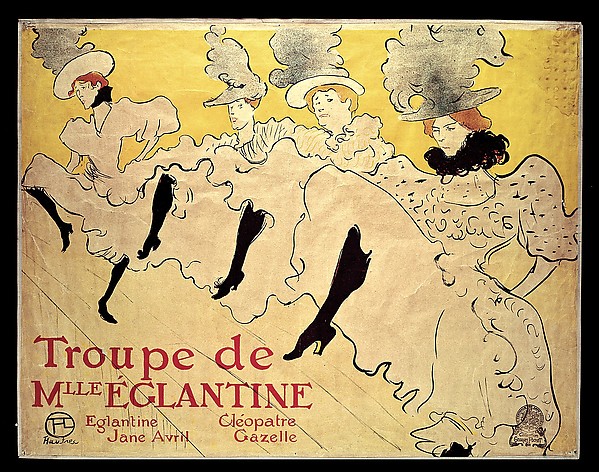
    Henri de Toulouse-Lautrec “La Troupe de Mademoiselle Eglantine” 
     
    This exhibit, from the collection of Herakleidon Museum, Athens, Greece, uses examples of Lautrec’s sketches, drawings, books, albums, and original posters to examine his artistic process.

    The exhibit also incorporates costumes from several of the Metropolitan Opera’s productions of La Boheme – Puccini’s unforgettable tale of love, youth, and tragic loss during “La Belle Epoque.” With more than 1,200 performances, La Bohème is the most frequently staged opera at the Met. Other select pieces from the Met’s archives including, photographs, playbills, jewelry, and props will also be on view.

    Thursday, July 28, 2016

    Masterpieces of The Sanford B.D. Low 
Illustration Collection

    New Britain (CT) Museum of American Art
     July 08, 2016–October 02, 2016

    Newell Convers Wyeth, “One more step, Mr. Hands,” said I, “and I’ll blow your brains out”, 1911, Oil on canvas, 47 x 38 1/8 in., New Britain Museum of American Art
    One of the most unique and exceptional aspects of the NBMAA’s permanent collection of over 1,800 artworks is The Sanford B.D. Low Illustration Collection, named in memory of the Museum’s first director.\

    Conceived in 1965, the collection was founded by well-known illustrators Stevan Dohanos, Robert Fawcett, Howard Munce, Arthur William Brown, Henry Pitz, and Walt Reed, who established the Sanford B.D. Low Memorial Illustration Committee. Carrying on Low’s desire to preserve and promote the great art of illustration, the Committee invited America’s preeminent illustrators to donate their work to the Museum. Today, the collection comprises nearly 1,800 works, making it one of the nation’s three largest.

    From July 8–October 2, 2016, the Museum will present Masterpieces of The Sanford B.D. Low Illustration Collection. Providing a veritable history of American illustration, the show will highlight the work of groundbreaking artists such as Howard Pyle, Frederic Rodrigo Gruger, J.C. Leyendecker, Maxfield Parrish, N.C. Wyeth, Norman Rockwell, and many others. During their time, these artists captured distinctly American values through story and advertisement illustrations, as well as iconic cover illustrations for publications such as Scribner’s Magazine and The Saturday Evening Post.

    Relatable images such as


    John Falter’s idyllic Boys and Kites (1950)


    and Stevan Dohanos’s Fourth of July Parade (1947) graced American households and influenced pop culture during some of the most significant cultural transformations of the early twentieth century. Other artists, such as Howard Pyle, illustrated stories and works of fiction, whose subject matter transcended the boundaries of the United States. Likewise, much of the pulp art in the Low Illustration Collection depicts narratives that take place beyond America, and even Earth.

    Masterpieces of The Sanford B.D. Low Illustration Collection will take visitors on a journey through American illustration, a genre of art that has continued to impact our everyday lives and the formation of a diverse national identity.


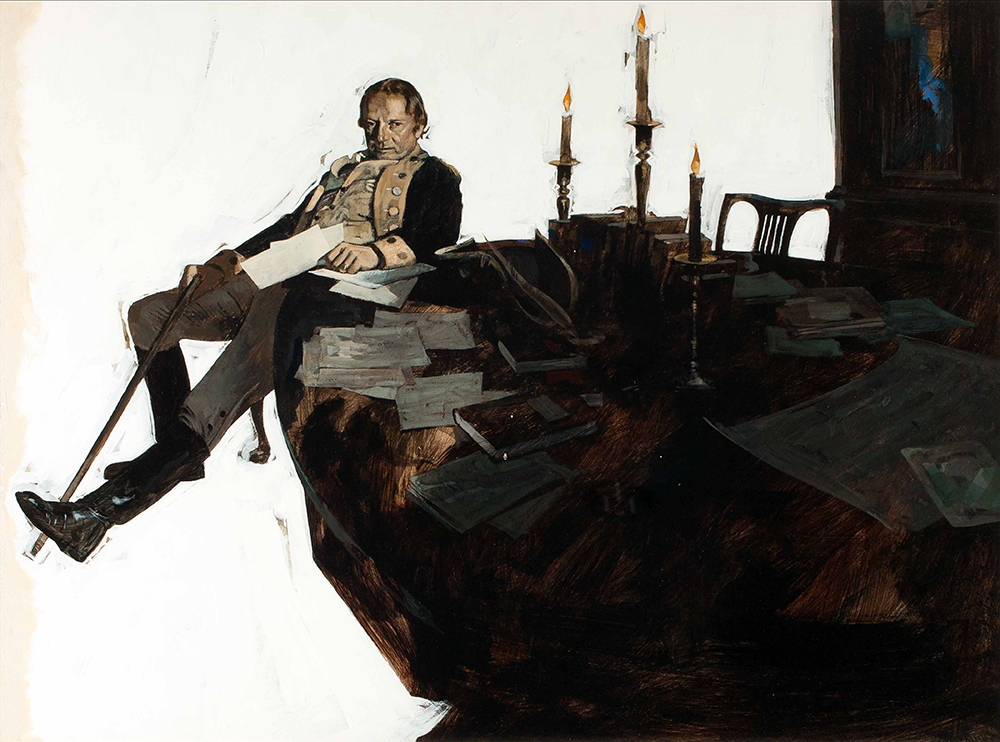
    Blossom,David,BenedictArnold,1987.26LIC
    David BlossomBenedict Arnold, n.d., Acrylic polymer on board, 22 x 29 in. ,Gift of David Blossom, 1987.26.LIC
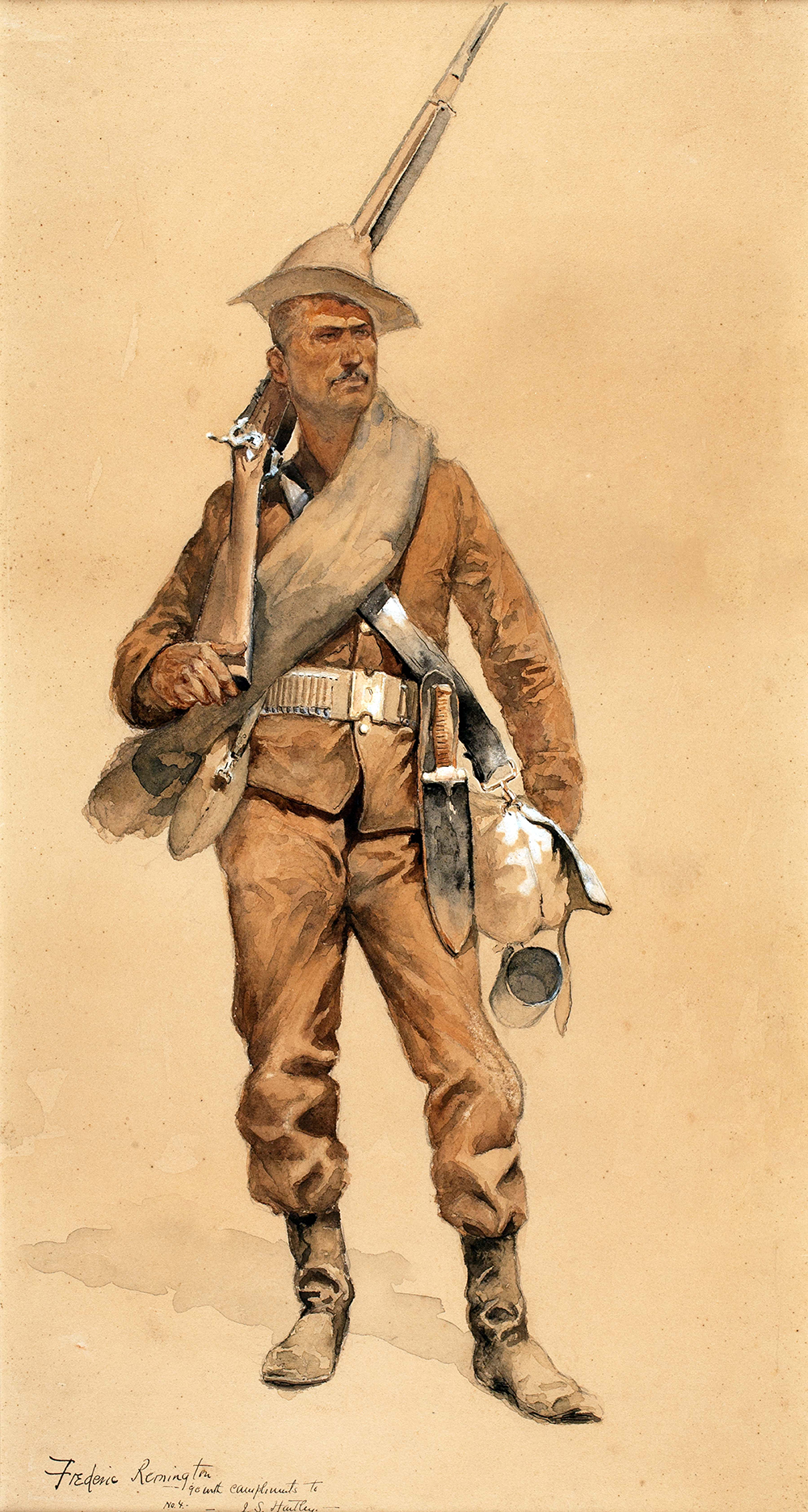
    Remington,Frederic,Infantryman in Field Costume,1952.16

    Infantryman in Field Costume, 1890, Watercolor and gouache on board, 21 x 13 1/16 in. Harriet Russell Stanley Fund, 1952.16LIC
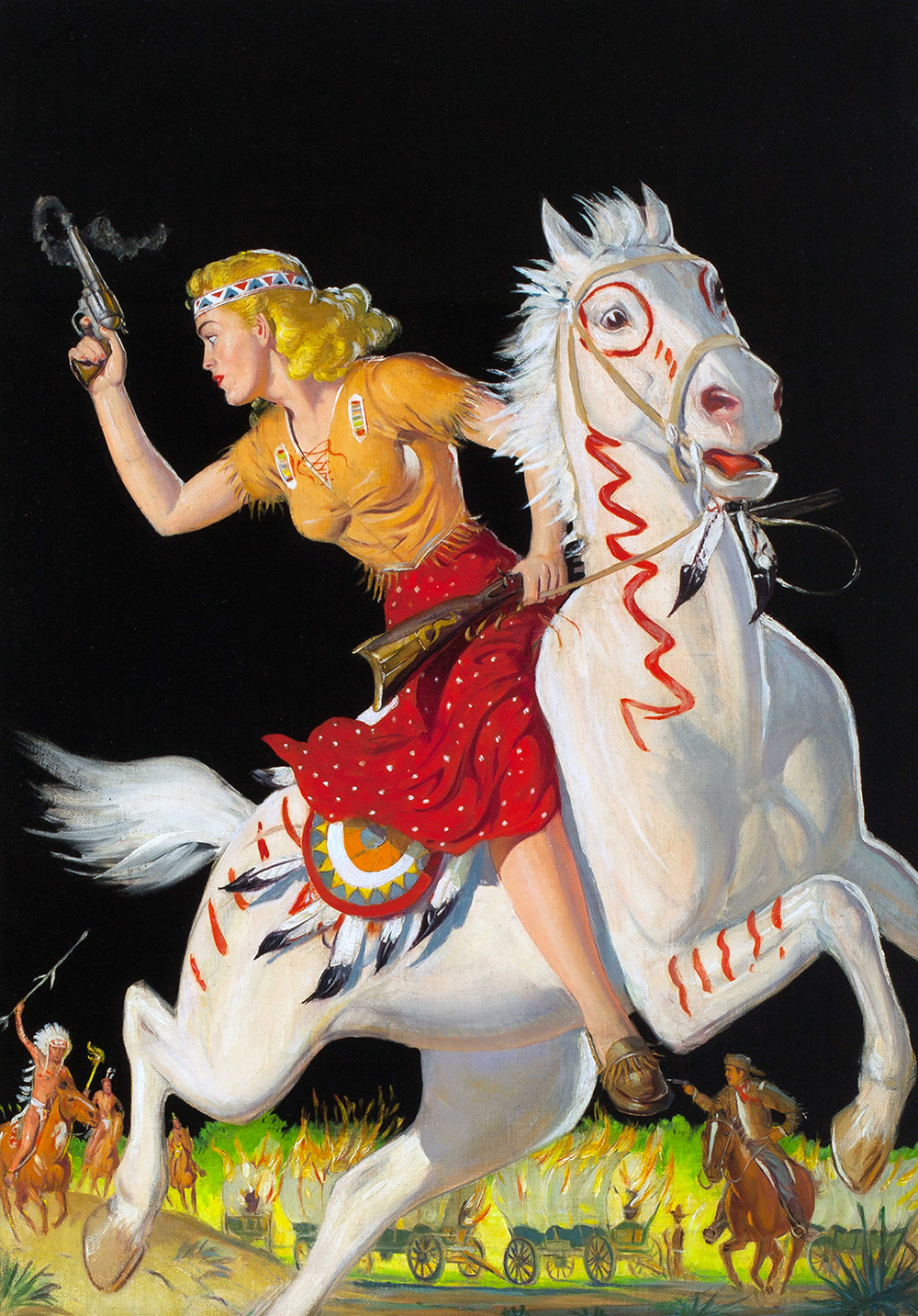
    Anderson,Allen,ApacheFlame!FromFrontierStories,2009.22.1LIC

    Apache Flame! From Frontier Stories, Summer 1950, Oil on canvas, 30 x 20 ½ in., The Robert Lesser Collection, 2009.22.1LIC

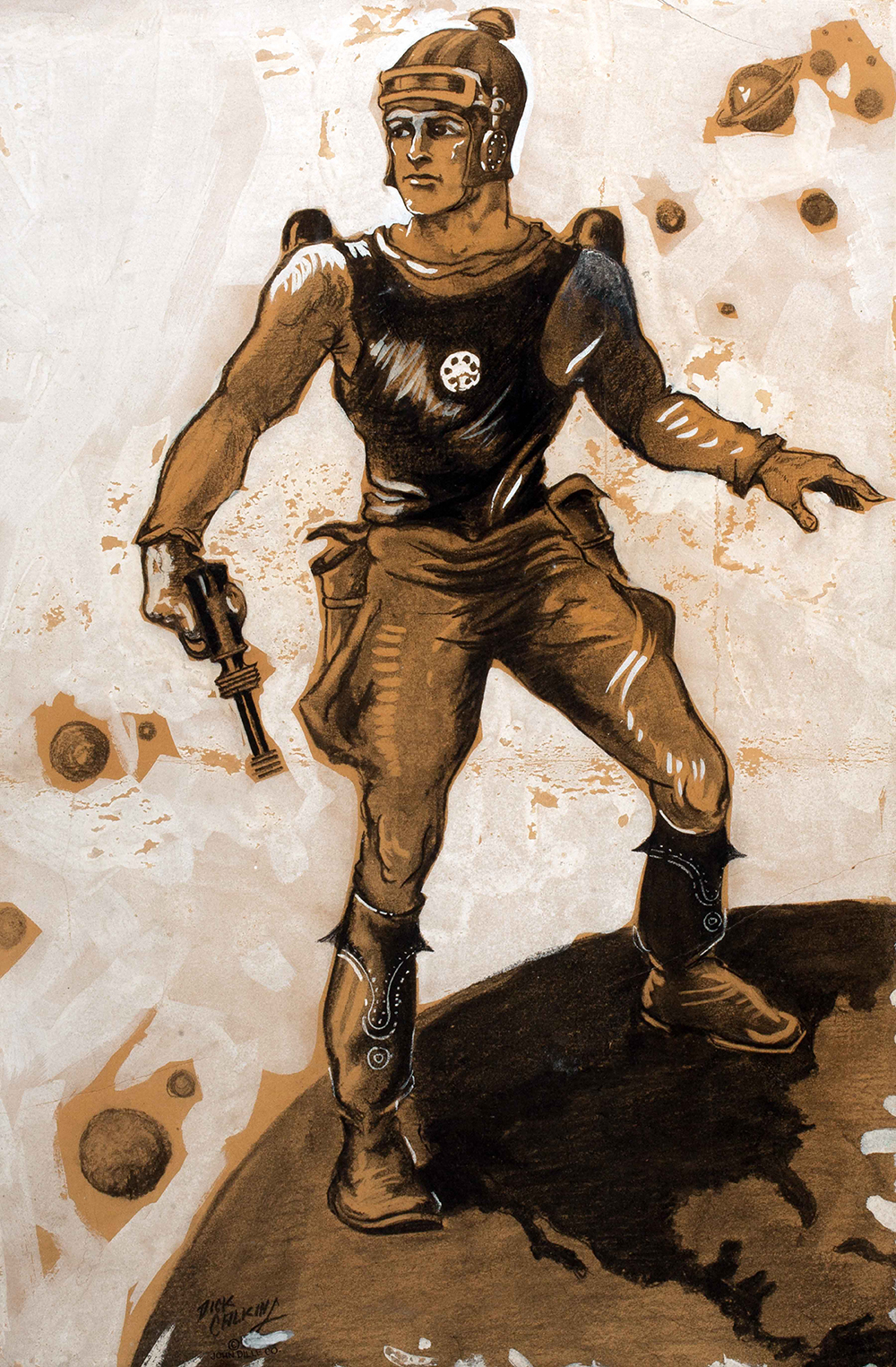
     Calkins,Richard,Buck Rogers in the 25th Century, National Newspaper Service, Chicago 1936,2009.22.78LIC
    Richard CalkinsBuck Rodgers in the 25th Century, National Newspaper Service, Chicago: 1936, Gouache, pen and ink, 26 ½ x 18 ¼ in., The Robert Lesser Collection, 2009.22.78LIC
    Allen Anderson
    A 196-page catalogue has been produced in conjunction with this exhibition