Thursday, May 18, 2017

David Hockney Retrospective


Tate Britain 
February 2017 - 29 May 2017
 
See images here

Centre Pompidou 
June 21 to Oct. 23 2017

Metropolitan Museum of New York
November 2017 to February 2018
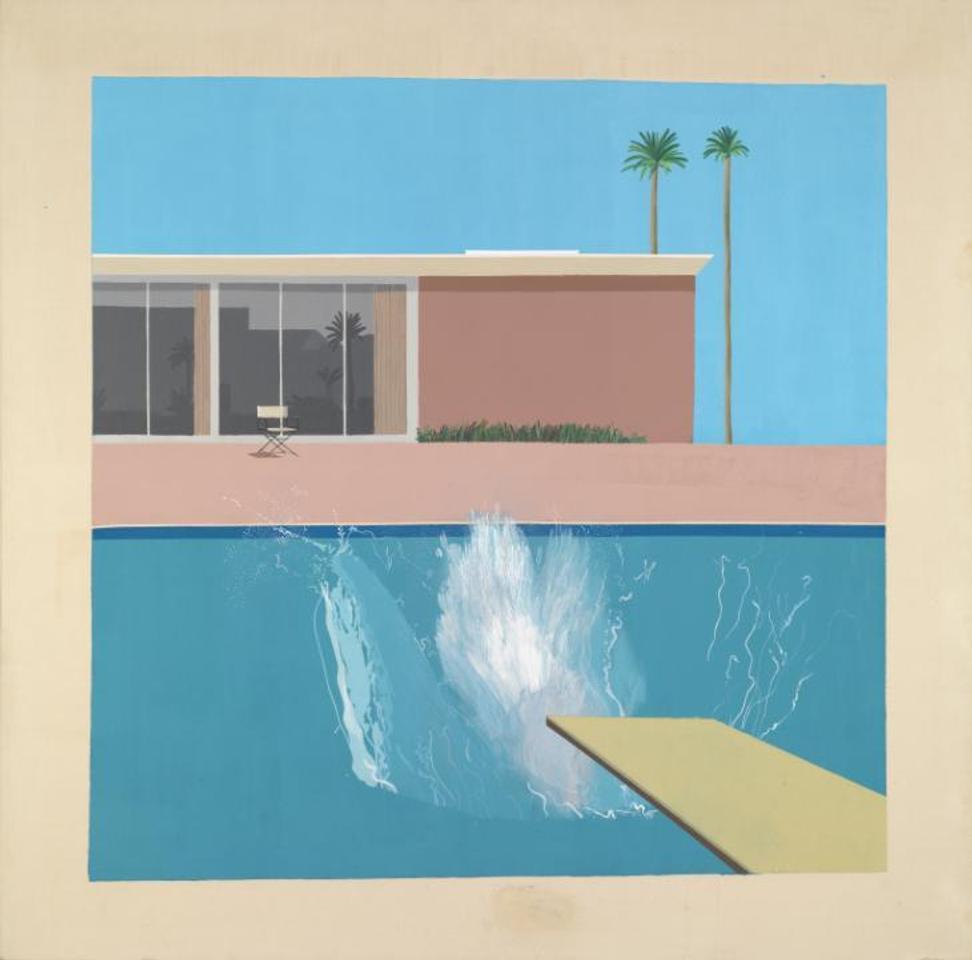
David Hockney, A Bigger Splash, 1967.  Acrylic on canvas, support: 2425 x 2439 x 30 mm Purchased 1981© David Hockney 2010
David Hockney, A Bigger Splash, 1967. Acrylic on canvas, support: 2425 x 2439 x 30 mm Purchased 1981© David Hockney 2010

In collaboration with London’s Tate Britain and the Metropolitan Museum of New York, the Centre Pompidou in Paris will present the most comprehensive retrospective ever devoted to the work of David Hockney, from June 21 to Oct. 23. The retrospective closes at the Tate later this month on May 29 and will be at the Met from November 2017 to February 2018.

The exhibition celebrates the artist’s 80th birthday, retracing his entire career through more than 160 works (paintings, photographs, engravings, video installations, drawings and printed works), including his most iconic paintings (swimming pools, double portraits and monumental landscapes) and some of his most recent creations. It focuses in particular on Hockney’s interest in modern technologies for the production and reproduction of visual images.

Moved by a constant concern to ensure a wide circulation for his work, he has successively taken up the camera, the fax machine, the computer, the printer, and most recently the iPad. For him, artistic creation is an act of sharing. Edited by Didier Ottinger, curator of the exhibition, a 320-page catalogue with 300 illustrations will be published by the Centre Pompidou. This will include essays by Didier Ottinger, Chris Stephens, Marco Livingstone, Andrew Wilson, Ian Alteveer and Jean Frémon, and also an extensive chronology.

The exhibition opens with paintings of Hockney’s youth, produced while at art college in his native Bradford, UK. Images of an industrial England, they testify to the influence of the gritty social realism of his teachers, members of the so-called Kitchen Sink School. At the Bradford School of Art and the Royal College of Art in London, Hockney discovered and assimilated the English take on Abstract Expressionism represented by Alan Davie. In Jean Dubuffet he found a style (informed by graffiti, naïve art...) that corresponded to his quest for an expressive and accessible art, and in Francis Bacon the boldness to explicitly thematise the subject of homosexuality.

His discovery of Picasso, finally, convinced him that an artist should not limit himself to a single style: he called one of his early exhibitions “Demonstrations of Versatility”. In 1964, he discovered the West Coast of the United States, where he became the painter of a sunny and hedonistic California, his Bigger Splash (1967) acquiring an iconic status. It was there, too, that he embarked on the large double portraits that celebrate the realism and perspectival vision of the photography he also assiduously engaged in.

In the United States, where he now lived, Hockney was confronted by the critical ascendancy of abstract formalism (Minimal Art, Colour Field Painting…). To the Minimalist grid, he responded by painting building facades and geometrically mowed lawns, and to “stain colour field painting” (which used dilute paint to stain the canvas itself) with a series of works on paper depicting the water of a swimming pool under different lights.

In his costumes and stage designs for opera Hockney took his distance from a photographic realism whose possibilities he now felt he had exhausted. Abandoning the classical perspective associated with the camera (“the perspective of a paralysed Cyclops”, he once said), he experimented with different ways of constructing space. Looking again at Cubism, which sought to synthetically represent the vision of a viewer who moved in relation to the subject, Hockney used a Polaroid camera to produce what he called “joiners”, representations of the subject through multiple images joined together. Systematising this “polyfocal” vision, he created Pearblossom Highway from more than a hundred photos taken from different points of view.

Searching for new principles for the pictorial representation of space, Hockney found inspiration in the Chinese scroll paintings that render the visual perceptions of a viewer in movement. Combined with the multiple viewpoints of Cubist space, this allowed him to produce Nichols Canyon, a representation of his car journey from the city of Los Angeles to his studio in the hills.

In 1997, Hockney returned to Northern England and the countryside of his childhood. His landscapes reflect his complex reconsideration of the question of space in painting. Using high-definition cameras, he also brought movement to the Cubist space of his Polaroid “joiners”, juxtaposing video screens to compose a cycle of four seasons – a subject that since the Renaissance has evoked the inexorable passage of time.

In the 1980s, Hockney began to explore the new, digital graphics tools available for the computer, producing new kinds of images. The computer was followed by the smartphone, and then the iPad, which he has used to create ever more sophisticated drawings, circulated among his friends by means of the Web.

Max Beckmann, Egon Schiele and Vincent van Gogh to Star in Christie’s London Impressionist & Modern Art Evening Sale, 27 June 2017


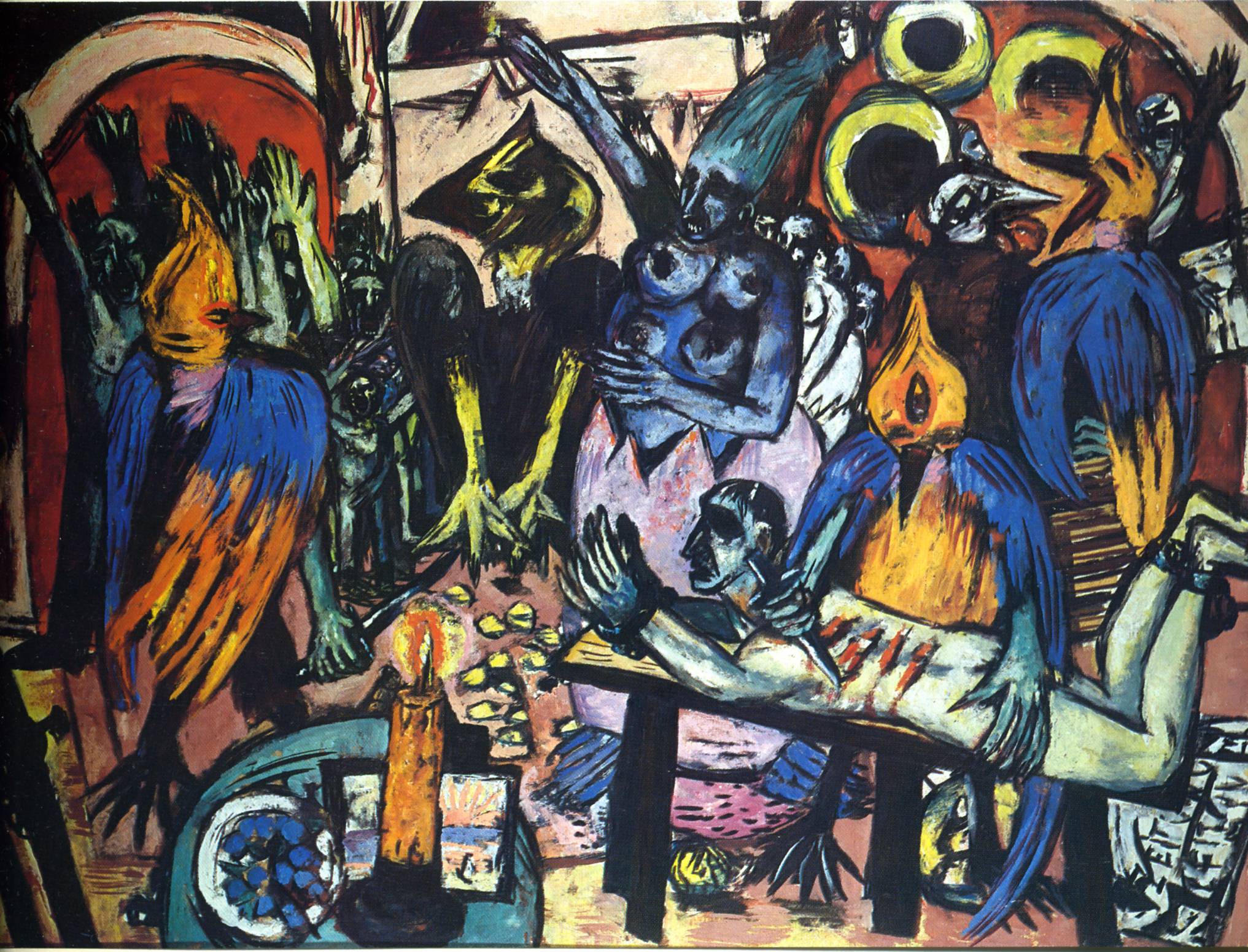
Max Beckmann, Bird’s Hell, Oil on canvas, 47 1/4 x 63 1/4 in. (1938, estimate on request)
Max Beckmann’s Bird’s Hell (1938, estimate on request) will lead 20th Century at Christie’s, a series of sales that take place from 17 to 30 June 2017, in the Impressionist & Modern Art Evening Sale on 27 June 2017, when it will be offered at auction for the first time. One of the most powerful paintings that Beckmann created while in exile in Amsterdam it presents a searing and unforgettable vision of hell and is poised to set a world record price for the artist at auction. Begun in Amsterdam and completed in Paris at the end of 1938, this work ranks amongst the clearest and most important anti-Nazi statements that the artist ever made, mirroring the escalating violence, oppression and terror of the National Socialist regime. The painting will be on view in New York until 17 of May, Hong Kong from 25 to 29 May and London from 17 to 27 June 2017.
Painted with vigorous, almost gestural brushstrokes and bold, garish colours, Bird’s Hell envelops the viewer in a sinister underworld in which monstrous bird-like creatures are engaged in an evil ritual of torture. Presiding over the scene is a multi-breasted bird who emerges from a pink egg in the centre of the composition. To her right, a crouching black and yellow bird looms over golden coins spread before him, while behind the central figure, a group of naked women stand huddled together. Heightening the sense of hysteria is the group of figures standing within a glowing, blood red doorway to the left of the composition. Guarded by another knife-wielding bird, they return the bird-woman’s gesture, their right arms raised in unison in the same furious salute. At the front of the scene, a naked man – the symbol of innocence within this reign of terror – is shackled to a table, held down by another bird that is slashing his back in careful, horizontal lines.

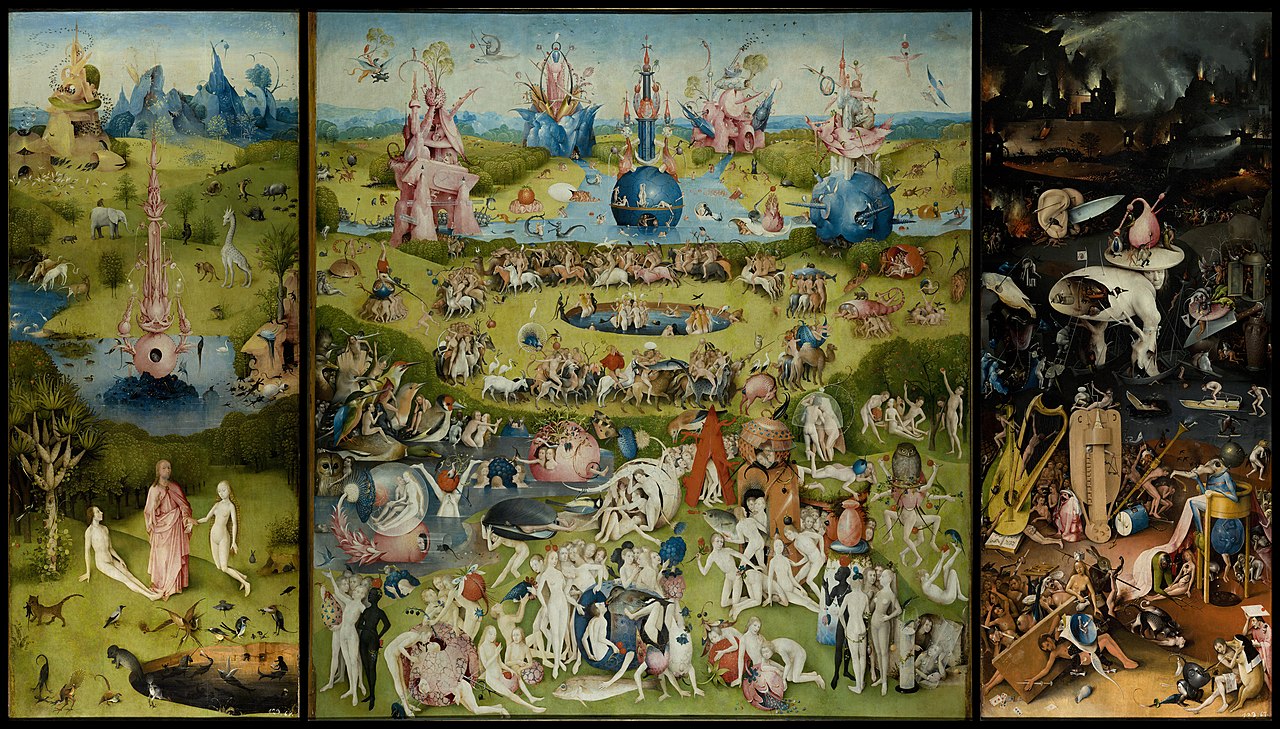
Continuing the Germanic tradition of the depiction of hell, this painting echoes the gruesome allegorical scenes of


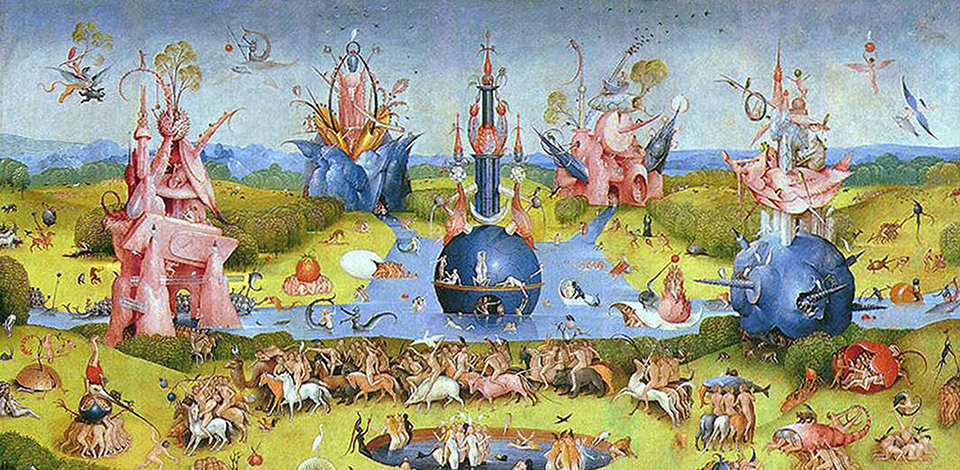
Hieronymus Bosch’s famed The Garden of Earthly Delights, while at the same time, takes aspects of Classicism and mythology to turn reality into a timeless evocation of human suffering. In this way, Bird’s Hell, like


Pablo Picasso’s Guernica 


 or Max Ernst’s Fireside Angel

 of the same period, transcends the time and the political situation in which it was made to become a universal and singular symbol of humanity.

Adrien Meyer, International Director of Impressionist & Modern Art, Christie’s New York: "Bird’s Hell was painted in 1938 in Amsterdam as a direct attack on the cruelty of the Nazi regime. A year earlier, Hitler's government had confiscated over 500 of his works from German museums, and included some of these in the notorious Degenerate Art exhibition. This emblematic picture has since been unanimously recognized as the Guernica of Expressionism. The grasping composition echoes the fantastical world of 16th century master Hieronymus Bosch. The current owner first attempted to buy this masterpiece in 1956 and succeeded thirty years later, lending it since to the most prestigious exhibitions around the world. Its upcoming sale represents a unique opportunity to acquire not only a Beckmann monument but also a true piece of history."
Jay Vincze, Head of Impressionist & Modern Art, Christie’s, London: “We are honoured to present such a seminal work by Max Beckmann at auction for the first time. Bird’s Hell stands alongside Picasso’s Guernica as one of the most politically charged paintings of its time and it is a rare opportunity to offer a work of such historical significance by Beckmann. For the artist there were two worlds, one of spiritual life and the other of political life. In this painting he is asking the viewer to decide which is more important. It is a terrifying, yet timeless history painting and a masterpiece of the artist’s oeuvre.”

Egon Schiele Einzelne Häuser (Häuser mit Bergen) (1915, estimate: £20,000,000-30,000,000) was painted in the middle of the First World War and exemplifies the artist’s visionary understanding of landscape, which he used as an allegory of human emotion.


Van Gogh’s Le Moissonneur (d’après Millet) (1889, estimate: £12,500,000-16,500,000), was painted in 1889, the same year that he left Arles and admitted himself into an asylum. The auction will take place on 27 June 2017 as part of 20th Century at Christie’s, a series of sales that take place from 17 to 30 June 2017. The works will tour to Hong Kong from 25 to 29 May 2017 and will be on view in London from 17 to 27 June 2017.

EGON SCHIELE:

Schiele created landscapes filled with melancholy, charging the natural world with a deeper spiritual meaning. The autumnal setting of Einzelne Häuser (Häuser mit Bergen) can be seen as a metaphor for mortality; the crumbling facades of the townscape and surrounding trees used as an alternate physical expression of the elemental forces of growth, death and decay. As with almost all of Schiele’s townscapes, the buildings in Einzelne Häuser (Häuser mit Bergen) appear to represent his mother’s hometown, Krumau, a medieval Bohemian town on the Moldau River, known today as Český Krumlov on the Vltava in the Czech Republic. Schiele painted Einzelne Häuser (Häuser mit Bergen) on the reverse of a fragment of an older picture known as Monk I that dates from 1913. It is believed to have formed part of one of his largest attempted projects, Bekehrung (‘Conversion’), and is linked to the two monumental allegories that he produced the same year, of which only fragments, sketches and photographic evidence are now known.

VINCENT VAN GOGH: Painted in September of 1889 Le Moissonneur (d’après Millet) is one of ten paintings that Van Gogh made after a series of drawings by Jean-François Millet entitled Les Travaux des Champs (1852), seven of which now reside in the Van Gogh Museum, Amsterdam, with the other two in private hands. The work of Millet became a major focus for Van Gogh during this period, following the gift of a set of engravings of Millet’s Les Travaux des Champs by Jacques-Adrien Lavielle that was sent to Van Gogh from his brother Theo van Gogh the same year. Le Moissonneur (d’après Millet), employs the composition of Millet but is filled with Van Gogh’s own dramatic and intense use of colour. With his back to the viewer, bent over as he works the fields, the male figure is illuminated against the deep blue sky and golden yellow fields.

Visionaries: Creating a Modern Guggenheim Part II


Opening on February 10, 2017, on the occasion of the eightieth anniversary of the Solomon R. Guggenheim Foundation, Visionaries: Creating a Modern Guggenheim features more than 170 modern objects from the permanent collections of the Solomon R. Guggenheim Museum, New York, and the Peggy Guggenheim Collection, Venice. 

Assembling many of the foundation’s most iconic works along with treasures by artists less familiar, this celebratory exhibition explores avant-garde innovations of the late nineteenth through mid-twentieth centuries, as well as the groundbreaking activities of six pioneering arts patrons who brought to light some of the most significant artists of their day and established the Guggenheim Foundation’s identity as a forward- looking institution. Visionaries includes important works by artists such as Alexander Calder, Paul Cézanne, Marc Chagall, Vasily Kandinsky, Paul Klee, Fernand Léger, Piet Mondrian, Pablo Picasso, Jackson Pollock, and Vincent van Gogh. 

More than a dozen works on paper by Picasso and Van Gogh, rarely on view to the public, will be installed in the Thannhauser Gallery, where the earliest works represented in the Guggenheim collection are typically on display. Additionally, sculptures by Edgar Degas and paintings by Pierre- Auguste Renoir, Paul Gauguin, and Édouard Manet will be placed on the ramps for the occasion of the exhibition. In May, a fresh selection of works on paper by artists including Klee, Picasso, and Van Gogh will replace the first grouping.


Pablo Picasso(1881-1973)
Woman Ironing, Paris, 1904 La repasseuse, Paris, 1904
Oil on canvas
45 3/4 x 28 3/4 inches (116.2 x 73 cm)
Solomon R. Guggenheim Museum, New York, Thannhauser Collection, Gift, Justin K. Thannhauser, 1978
78.2514.41 


Pablo Picasso(1881-1973)
Accordionist, Céret, summer 1911 L’accordéoniste, Céret, summer 1911
Oil on canvas
51 1/4 x 35 1/4 inches (130.2 x 89.5 cm)
Solomon R. Guggenheim Museum, New York, Solomon R. Guggenheim Founding Collection, By gift
37.537 


Pablo Picasso(1881-1973)
Carafe, Jug and Fruit Bowl, Horta de San Juan, summer 1909 Carafon, pot et compotier, Horta de San Juan, summer 1909
Oil on canvas
28 1/4 x 25 3/8 inches (71.8 x 64.6 cm)
Solomon R. Guggenheim Museum, New York, Solomon R. Guggenheim Founding Collection, By gift
37.536 


Pablo Picasso(1881-1973)
Bottles and Glasses, Paris, winter 1911–12 Bouteilles et verres, Paris, winter 1911–12
Oil on paper, mounted on canvas
25 3/8 x 19 1/2 inches (64.4 x 49.5 cm)
Solomon R. Guggenheim Museum, New York, Solomon R. Guggenheim Founding Collection, By gift
38.539


Robert Delaunay(1885-1941)
Eiffel Tower, 1911 (dated 1910 by the artist) Tour Eiffel, 1911 (dated 1910 by the artist)
Oil on canvas
79 1/2 x 54 1/2 inches (202 x 138.4 cm)
Solomon R. Guggenheim Museum, New York, Solomon R. Guggenheim Founding Collection, By gift
37.463


Fernand Léger(1881-1955)
Nude Model in the Studio, 1912–13 Le modèle nu dans l’atelier, 1912–13
Oil on burlap
50 5/8 x 37 3/4 inches (128.6 x 95.9 cm)
Solomon R. Guggenheim Museum, New York, Solomon R. Guggenheim Founding Collection
49.1193


Fernand Léger(1881-1955)
The Smokers, December 1911–January 1912 Les fumeurs, December 1911–January 1912
Oil on canvas
50 7/8 x 38 inches (129.2 x 96.5 cm)
Solomon R. Guggenheim Museum, New York, Solomon R. Guggenheim Founding Collection, By gift
38.521


Franz Marc(1880-1916)
Yellow Cow, 1911 Gelbe Kuh, 1911
Oil on canvas
55 3/8 x 74 1/2 inches (140.7 x 189.2 cm)
Solomon R. Guggenheim Museum, New York, Solomon R. Guggenheim Founding Collection
49.1210 


Franz Marc(1880-1916)
Stables, 1913 Stallungen, 1913
Oil on canvas
29 x 62 inches (73.6 x 157.5 cm)
Solomon R. Guggenheim Museum, New York, Solomon R. Guggenheim Founding Collection
46.1037
Remarks: Acquired through Karl Nierendorf


Robert Delaunay(1885-1941)
Window on the City No. 3, 1911–12 La fenêtre sur la ville no. 3, 1911–12
Oil on canvas
44 3/4 x 51 1/2 inches (113.7 x 130.8 cm)
Solomon R. Guggenheim Museum, New York, Solomon R. Guggenheim Founding Collection
47.878.R 


Robert Delaunay(1885-1941)
Simultaneous Windows (2nd Motif, 1st Part), 1912 Les fenêtres simultanées [2e motif, 1re partie], 1912
Oil on canvas
21 5/8 x 18 1/4 inches (55.2 x 46.3 cm)
Solomon R. Guggenheim Museum, New York, Solomon R. Guggenheim Founding Collection, By gift
41.464 


Pierre Bonnard(1867-1947)
Dining Room on the Garden, 1934–35 Grande salle à manger sur le jardin, 1934–35
Oil on canvas
50 x 53 1/4 inches (126.8 x 135.3 cm)
Solomon R. Guggenheim Museum, New York, Solomon R. Guggenheim Founding Collection, By gift
38.432 


Vasily Kandinsky(1866-1944)
Composition 8, July 1923 Komposition 8, July 1923
Oil on canvas
55 1/8 x 79 1/8 inches (140 x 201 cm)
Solomon R. Guggenheim Museum, New York, Solomon R. Guggenheim Founding Collection, By gift
37.262


Ernst Ludwig Kirchner(1880-1938)
Dancers, 1906 Tänzerinnen, 1906
Ink on paper
17 5/8 x 13 3/4 inches (44.8 x 34.9 cm)
Solomon R. Guggenheim Museum, New York, Estate of Karl Nierendorf, By purchase
48.1172.438
Remarks: FULL RUN


Oskar Kokoschka(1886-1980)
Knight Errant, 1915 Der irrende Ritter, 1915
Oil on canvas
35 1/4 x 70 7/8 inches (89.5 x 180 cm)
Solomon R. Guggenheim Museum, New York, Estate of Karl Nierendorf, By purchase

Édouard Manet(1832-1883)
Portrait of Countess Albazzi, 1880 Portrait de la comtesse Albazzi, 1880
Pastel on primed canvas
22 1/2 x 18 1/2 inches (56.5 x 46.5 cm)
Solomon R. Guggenheim Museum, New York, Thannhauser Collection, Bequest, Hilde Thannhauser, 1991
91.3909 


Georges Seurat(1859-1891)
Peasant with Hoe, 1882 Paysan à la houe, 1882
Oil on canvas
18 1/4 x 22 1/8 inches (46.3 x 56.1 cm)
Solomon R. Guggenheim Museum, New York, Solomon R. Guggenheim Founding Collection, By gift
41.716


Claude Monet(1840-1926)
The Palazzo Ducale, Seen from San Giorgio Maggiore, 1908 Le Palais Ducal vu de Saint-Georges Majeur, 1908
Oil on canvas
25 9/16 x 39 9/16 inches (65 x 100.5 cm)
Solomon R. Guggenheim Museum, New York, Thannhauser Collection, Bequest, Hilde Thannhauser, 1991
91.3910

Vincent van Gogh(1853-1890)
The Road to Tarascon, late July–early August 1888 La route de Tarascon, late July–early August 1888 Reed pen and ink over graphite on paper
9 9/16 x 12 9/16 inches (24.3 x 31.9 cm)
Solomon R. Guggenheim Museum, New York, Thannhauser Collection, Gift, Justin K. Thannhauser, 1978
78.2514.22 


Vincent van Gogh(1853-1890)
Boats at Saintes-Maries, late July–early August 1888 Bateaux à Saintes Maries, late July–early August 1888 Reed pen and ink over graphite on paper
9 9/16 x 12 9/16 inches (24.3 x 31.9 cm)
Solomon R. Guggenheim Museum, New York, Thannhauser Collection, Gift, Justin K. Thannhauser, 1978
78.2514.21


Pablo Picasso(1881-1973)
Le Moulin de la Galette, Paris, autumn 1900
Oil on canvas
34 3/4 x 45 1/2 inches (88.2 x 115.5 cm)
Solomon R. Guggenheim Museum, New York, Thannhauser Collection, Gift, Justin K. Thannhauser, 1978
78.2514.34


Max Ernst
The Antipope, December 1941–March 1942
Oil on canvas, 160.8 x 127.1 cm
The Solomon R. Guggenheim Foundation,
Peggy Guggenheim Collection, Venice, 1976
© 2017 Artists Rights Society (ARS), New York/ADAGP, Paris


Paul Delvaux
The Break of Day (L’aurore), July 1937
Oil on canvas, 120 x 150.5cm
The Solomon R. Guggenheim Foundation,
Peggy Guggenheim Collection, Venice, 1976
© 2017 Foundation Paul Delvaux, Sint-Idesbald—ARS/SABAM Belgium


Jackson Pollock
Alchemy, 1947
Oil, aluminum, alkyd enamel paint with sand, pebbles, fibers, and broken wooden sticks on canvas, 114.6 x 221.3 cm
The Solomon R. Guggenheim Foundation,
Peggy Guggenheim Collection, 1976
© 2017 The Pollock-Krasner Foundation/Artists Rights Society (ARS), New York 


Museo Nacional de Arte (Mexico) presents ‘Melancholy'


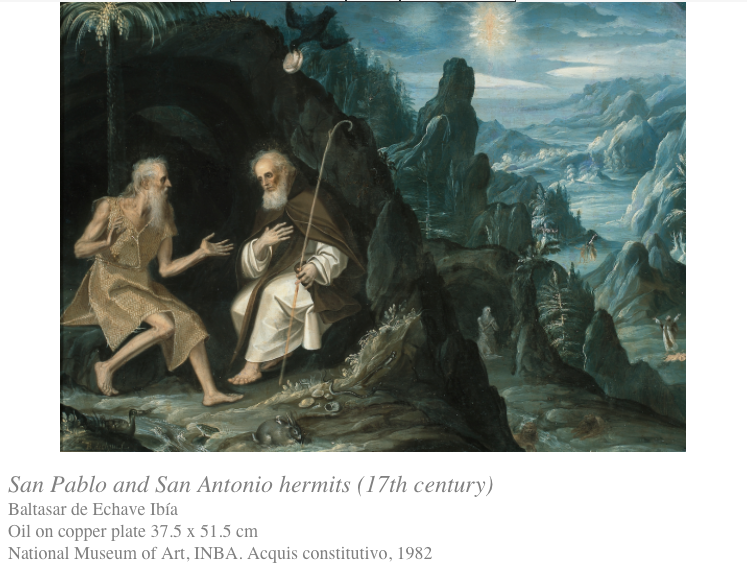
Baltazar de Echave Ibía, San Pablo y San Antonio ermitaños, siglo XVII. Museo Nacional de Arte, Inba Adjudicación, 2000.

The Museo Nacional de Arte (MUNAL, National Art Museum of Mexico) presents ‘Melancholy’, an exhibition that delves into the manner that melancholy, commonly characterized by reflecting the darkest human sides of passion and affection, is represented in Mexican art through a selection of 137 works of art including paintings, etchings, sculptures and writings. The exhibits can be visited through April 9th of July, 2017, in the rooms on the first floor of the site.

Under the curatorship of Abraham Villavicencio Garcia, and comprised of the work of nearly 80 Mexican artists, this exposition reflects the way that human feelings are explained, interpreted and represented - revealing melancholy as a possible source for inspiration and artistic creativity.

In Villavicencio’s words, “This exhibition seeks to exalt the emotional charges evoked in the works of important novohispano, modern, and contemporary artists through themes such as sin, blame, mourning, lost love, death, spirituality, creation and magic.”

“’Melancholy’ manifests that in addition to sorrow, madness, and fear the sentiment is capable of producing creativity, heroism, intellectualism, and of the quests deep within the human psyche. To ponder upon it, through the Mexican artists’ hands that participate in this exhibition, is an opportunity to reacquaint ourselves with our age-old cultural roots that permit us to discover, under a new light, our potential for transcendence, salvation, and self-knowledge”, points out Sara Baz Sánchez, Director of the National Art Museum of Mexico.

The exhibition is comprised by four thematic nucleuses. The first theme is given the name ‘The Loss of Paradise’ where the various manners that Christianity represents bitterness and hopelessness after the fall of Adam and Eve is reflected upon, brought on by the belief of original sin and a life deprived of divine contemplation. Melancholy is seen wandering endlessly through suffering because of reproach and self-punishment. Some of the pieces that make up this section are  “King of Ridicule”, 17th – 18th Century, by Cristobal de Villalpando,


and “After the Storm”, 1910, by Diego Rivera.

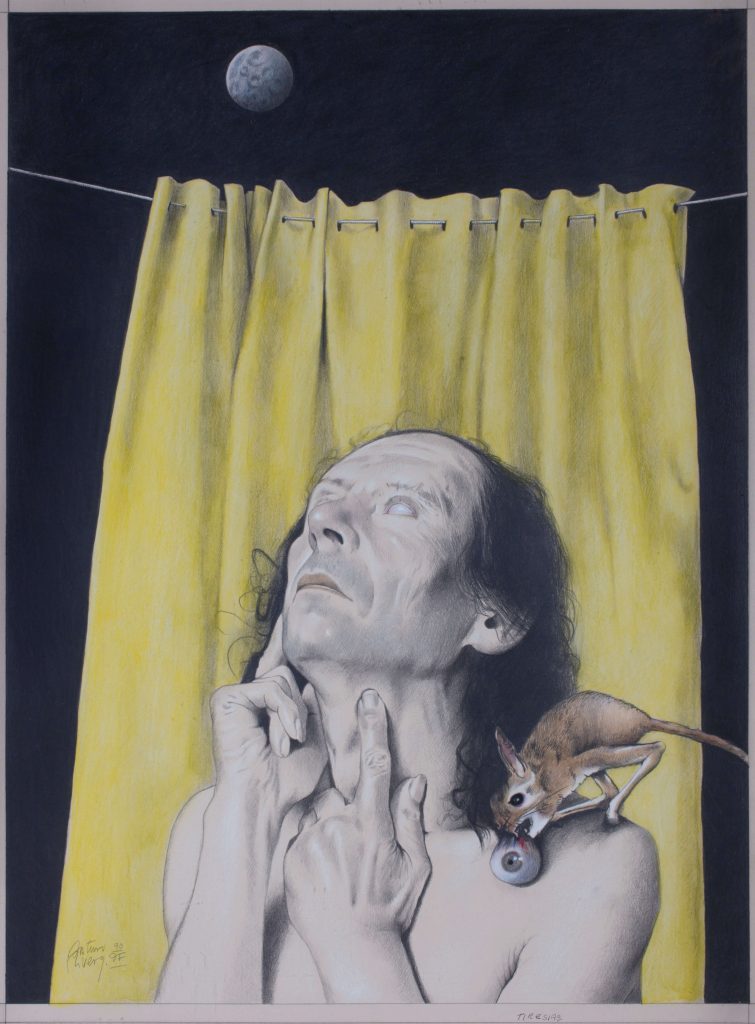
On its behalf, ‘The Night of the Soul’ - the second nucleus of the exhibition - brings together artistic representations that refer to the lost of love such as through the death of children for mothers, widowhood, being an orphan, and love that was lost, which upon occasion lead to suicide and lifelessness. “The Empty Crib”, 1871, by Manuel Ocaranza; “Repented Margarita”, 1881, by Felipe Ocádiz; “Portrait of Sofía” ,1991, by Julio Galán; “The Lady of the Violets”, 1908, by Germán Gedovius and “Weddings from Heaven and Hell”, 1996 by Arturo Rivera are some of the works that make up this selection.

Saturn, the historic God who personifies time and identified as the most somber of the planets, was considered responsible for melancholy. Its powers gain strength in ‘The Shadow of Death’, the third nucleus of the exhibition, though which pieces like “Mary Magdalene”, c.a. 1690-1700, by Juan Tinoco; “This is the Mirror that Deceives You”, also known as “Allegory to Death”, 1856, by Tomás Mondragón; “That’s Life”, 1942, by Robert Montenegro, and “Death and Resurrection”, c.a. 20th century, by José Clemente Orozco address the reality of the world by those that bear witness to melancholy. Death becomes its greatest obsession - like a faithful dialectics and necessary for life.

Finally, ‘The Children of Saturn’ - the last of the parts of the exhibition - alludes to the idea of a renaissance by claiming that those who are born under the zodiacal sign of Sagittarius and Aquarius, regented by Saturn, are impregnated with a cosmic wisdom and artistic genius for which these individuals stand out among humanity as ascetics, prophets, saints, mystics, poets, artists, philosophers, and alchemists. They were the proof that melancholy was the pathway to ascend to the clarity of the human soul and mindfulness of the universe. Among the works that conform this section “Pierrot Doctor”, 1898, by Julio Ruelas; “Woman at the Window”, 1948, by Alfonso Michel; “The Illuminated”, 1982, by Rufino Tamayo and “Magus”, 2010, a bronze sculpture by Leonora Carrington, stand out.


Wednesday, May 17, 2017

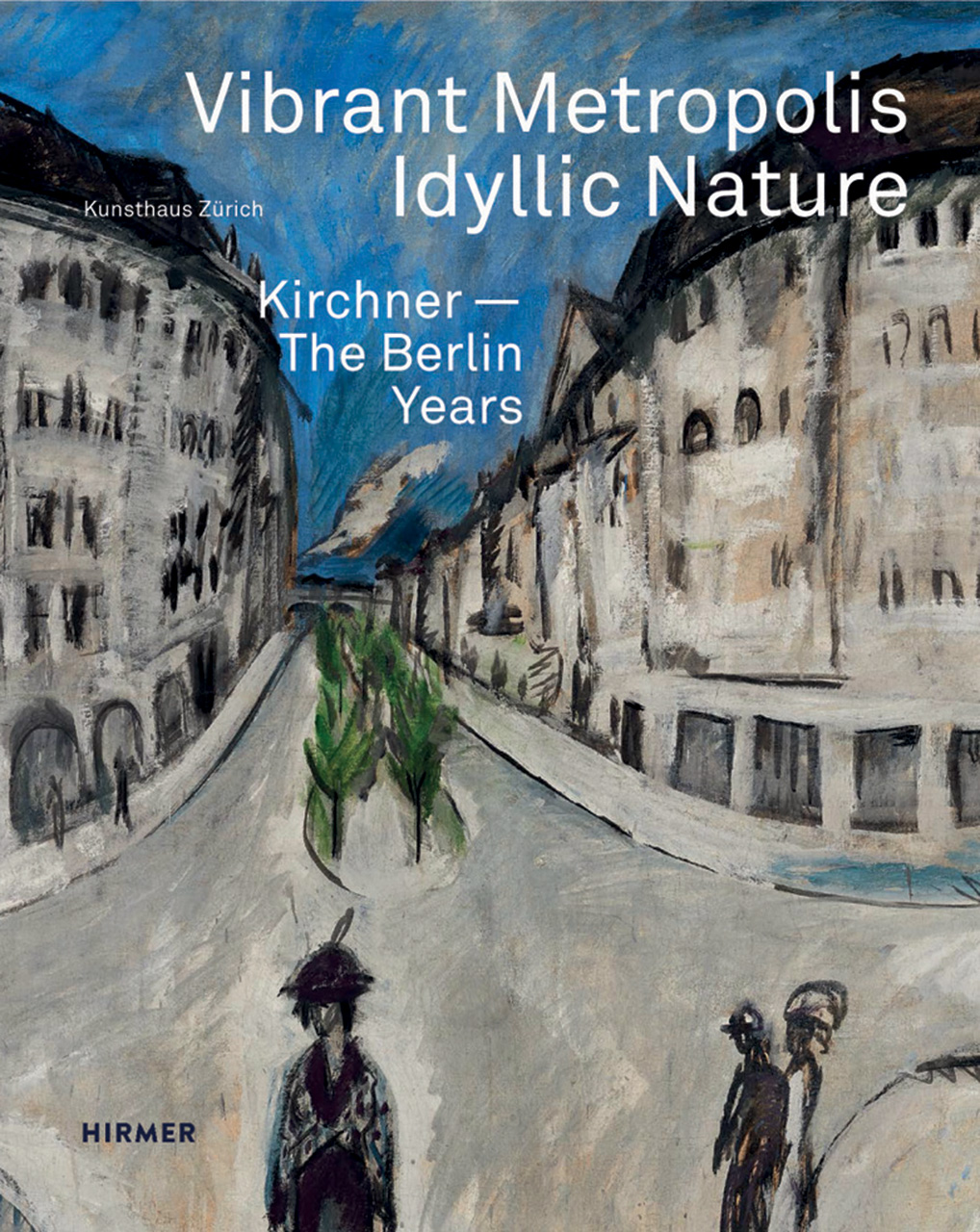
Vibrant Metropolis / Idyllic Nature Kirchner. The Berlin Years


Kunsthaus Zürich 
10 February to 7 May 2017 


Switzerland sees its first major exhibition devoted to the Berlin years of Ernst Ludwig Kirchner (1880–1938). The Kunsthaus Zürich has gathered together some 160 paintings, pastels, drawings, prints, sketchbooks and a selection of textiles, sculptures and photographs for a survey of Kirchner’s work in Germany’s bustling capital city and on the idyllic Baltic Sea island of Fehmarn. Between 1912 and 1914, these two contrasting places of inspiration marked the high point of Kirchner’s Expressionist oeuvre. The co-founder of theartists’ association ‘Brücke’, who is best known in Switzerland for his images of the ‘unspoilt’ mountain scenery around Davos, appears here in what, for Swiss audiences, is a less familiar, edgier guise.


LOANS FROM BERLIN, SYDNEY, NEW YORK, MADRID .


The Kunsthaus Zürich has teamed up with the renowned Brücke-Museum in Berlin to bring together works on loan from many continents in a dialectical exploration of Kirchner. Important exhibits come from the Städel (Frankfurt), the Pinakothek der Moderne (Munich), the Museo Thyssen-Bornemisza (Madrid),the Guggenheim Museum and Museum ofModern Art (both New York), the Getty Research Institute (Los Angeles),the Art Gallery of New South Wales (Sydney) and the popular Kirchner Museum Davos. Private lenders are supplying works that, in some cases, have never before been shown in public. There is also a full-size reconstruction of the mansard niche of Kirchner’s second Berlin live-in studio – again, for the first time in Switzerland. The artist decorated it with textiles he designed himself, featuring Fehmarn motifs.


BERLIN AND FEHMARN: PLACES OF INSPIRATION


The exhibition is arranged chronologically, alternating between Berlin and Fehmarn – the two places of inspiration. They are often viewed as diametric opposites: on the one hand the frenetic lifestyle of a city that never rests, on the other the relaxing peace of a rural retreat; the hardship and alienation of the city dweller versus a harmonious existence in union with nature. Our exhibition, together with the accompanying catalogue, presents these two poles –metropolis and idyllic nature – as two conjoined aspects of Kirchner’s life and work. Both exemplify his longing for an existence removed from bourgeois norms and for a new and contemporary form of expression. In addition to exhibits from Kirchner’s time in Berlin, the presentation also includes a representative selection of his early paintings from Dresden and some of the first pieces produced in Switzerland. They provide the context without which it is impossible to comprehend the profound changes in Kirchner’s art between 1911 and 1917. The focused presentation investigates this pivotal phase in Kirchner’s work, and with it the socio-political changes of the early 20th century.


EARLY 20TH-CENTURY ATTITUDES TO LIFE


Ernst Ludwig Kirchner’s move from Dresden to Berlin in autumn 1911 marks a turning point in his art. In the years from 1912 to 1915, in thrall to Europe’s most modern metropolis, the young artist created works that, in their exaggerated and condensed way, can be regarded as metaphors for an early 20th-century attitude to life. In this era of radical transformation, the imperial capital held out the prospect of progress and limitless potential, but also isolation and a struggle to survive. It was the centre of unbridled industrial growth, the rise of the automobile and, with two million inhabitants, the largest ‘tenement city’in Europe. Yet Berlin was also the metropolis of art, hedonism and prostitution. In this melting pot of opportunities and risks, Kirchner created works of breathless, existential directness that took aim squarely at Wilhelmine conventions. His motifs were also shaped by these observations: fashionably dressed passers-by; motorised traffic and industrial plants ‘eating’ their way through the city; café and brothel scenes. Movement, dynamism and multiple perspectives typify Kirchner’s work during the Berlin years, in what, looking back, he described as a ‘painting of motion’. The prime example – ‘Street, Berlin’ (1913) from the Museum of Modern Art, New York – will be on show at the Kunsthaus, as will the double-sided canvas ‘Two Women on the Street (recto)/‘Two Bathers in Surf’ (verso) from the Kunstsammlung Nordrhein-Westfalen, Düsseldorf.


GETTING AWAY FROM IT AL


LIn the summer months of 1912 to 1914, Kirchner left Berlin for the Baltic Sea island of Fehmarn, which he already knew from an earlier visit. Here, together with his new companion Erna Schilling and his fellow painters, he led an uninhibited life close to nature. Far from the big city and freed from all conventions, they enjoyed an Arcadian existence. It was in this idyll that, in 1912, he painted the long-lost and recently rediscovered square painting ‘Mexico Bay, Fehmarn’, which is in private ownership. The celebrated ‘Three Bathers’ (1913, from the Art Gallery of New South Wales, Sydney) also bears witness to their bond withnature. Contrasts of warm and cold, colours that range from muted to strong, and dynamic forms express this exalted sense of harmony with nature.


ARMY AND DRUGS: THE CRISIS


The outbreak of the First World War took Kirchner by surprise during his 1914 summer retreat on Fehmarn, forcing him to break off his stay abruptly and return to Berlin. His army training as a field artilleryman in Halle and his general experiences of war plunged him into a deep psychological and physical crisis in 1915, with large-scale alcohol and drug abuse threatening his artistic identity. The works that arose despite – or perhaps because of – this crisis, such as the celebrated ‘Schlemihl’ woodcut cycle or the drawing ‘Self-Portrait under the Influence of Morphine’ (1917), made using a reed pen and ink on gesso paper, form a further key focus of the exhibition. Following a number of stays in sanatoria in Königstein, Berlinand Kreuzlingen, Kirchner moved to Switzerland in 1918, embarking on his long road to recovery in the mountains of Davos, where he remained until he took his own life in 1938. The exhibition closes with this new turning point in Kirchner’s career.


KIRCHNER AND THE KUNSTHAUS


The Kunsthaus Zürich first exhibited works by Kirchner in a group exhibition in 1918, from which two woodcuts were acquired. Projects for major solo shows in 1926 and 1936 did not come to fruition. After Kirchner’s death there were monograph exhibitions in 1952 and 1954 followed, in 1980, by the biggest retrospective to date. Now, a hundred years on from Kirchner’s move to Switzerland, the Kunsthaus Zürich is devoting an exhibition to the master of Expressionism, with a particular focus on the Berlin years (1911–1917).


Kunsthaus curator Dr. Sandra Gianfreda has designed the presentation together with Prof. Magdalena M. Moeller, director of the Brücke-Museum, Berlin.
 

Catalogue


Edited by Sandra Gianfreda

272 pages | 210 color plates | 8 1/2 x 10 1/2 


Ernst Ludwig Kirchner (1880–1938) was one of the most prolific and creative members of the German expressionist movement. His move from Dresden to Berlin in 1911 marked a turning point in his career and ignited the most important and innovative period of his work. Ernst Ludwig Kirchner: The Berlin Years looks in-depth at this significant time during which he produced his most celebrated masterpieces.

As Sandra Gianfreda reveals, under the influence of the most modern metropolis in Europe, Kirchner created works whose exaggerated and condensed style could be regarded as a true metaphor for the attitude to life during the early years of the twentieth century. During this time of rapid change, Berlin was not only the center of industry, but it was a metropolis of the arts and encouraged a new kind of hedonism. Berlin vibrated with energy and intellectual questions that Kirchner channeled in his work, creating pictures of breathless, existential directness that challenged conventions of the age. An essential book for fans of Kirchner’s work, it presents his greatest paintings and demonstrates the profound changes in his style that were inspired by his time in Berlin.


Ernst Ludwig Kirchner
Self-portrait in the live-in studio in Berlin-Friedenau, 1913/1915
Glass negative, 13 x 18 cm
Kirchner Museum Davos, Gift of the Estate of Ernst Ludwig Kirchner 2001


Ernst Ludwig Kirchner
Two Nudes by a Tree, Fehmarn, 1912/13
Oil on canvas, 100 x 75 cm
Private collection


Ernst Ludwig Kirchner
Erna with Japanese Umbrella (Japanese Girl), 1913
Oil on canvas, 80 x 70.5 cm
Aargauer Kunsthaus, Aarau / Bequest of Dr Othmar und Valerie Häuptli
Photo: Jörg Müller


Ernst Ludwig Kirchner
Curving Bay (Laburnum Tree), c. 1914
Oil on canvas, 146 x 123 cm
Museo Thyssen-Bornemisza, Madrid


Ernst Ludwig Kirchner
Nervous Persons at Table (Kohnstamm Sanatorium), 1916
Woodcut on cardboard, 42 x 28 cm
Kassel, Museumslandschaft Hessen, Graphische Sammlung, Städtischer Kunstbesitz


Ernst Ludwig Kirchner
The Lighthouse of Fehmarn, 1912
Oil on canvas, 119.5 x 91 cm
Carnegie Museum of Art, Pittsburgh: Patrons Art Fund
Photo © 2017 Carnegie Museum of Art, Pittsburgh


Ernst Ludwig Kirchner
Three Bathers, 1913
Oil on canvas, 197.5 x 147.5 cm
Collection: Art Gallery of New South Wales, Sydney, Foundation Purchase 1984
Foto: AGNSW


Ernst Ludwig Kirchner
Erich Heckel and Otto Mueller Playing Chess, 1913
Oil on canvas, 35.5 x 40.5 cm
Brücke-Museum, Berlin


Ernst Ludwig Kirchner
Friedrichstrasse Berlin, 1914
Oil on canvas, 125 x 91 cm
Staatsgalerie Stuttgart
Photo: bpk/Staatsgalerie Stuttgart


Ernst Ludwig Kirchner
Self-Portrait in Morphine Rush, 1917
Reed pen and ink on gessoed paper, 50 x 38 cm
Brücke-Museum, Berlin


Ernst Ludwig Kirchner
Mexico Bay, Fehmarn, 1912
Oil on canvas, 50.5 x 50.5 cm
Private collection, Germany


Ernst Ludwig Kirchner
Circus, 1913
Oil on canvas, 120 x 100 cm
Bayerische Staatsgemäldesammlungen, Munich,
Pinakothek der Moderne,
Photo: bpk/Bayerische Staatsgemäldesammlungen/
Sybille Forster


Ernst Ludwig Kirchner
Mansard niche in Kirchner’s live-in studio, Berlin-Friedenau, 1914/15
Glass negative, 24 x 18 cm
Kirchner Museum Davos, Gift of the Ernst Ludwig Kirchner Estate, 2001


Ernst Ludwig Kirchner
Schlemihl’s Encounter with the Shadow (Sheet 6 from the Schlemihl-Cycle), 1915
Colour woodcut on blotting paper, 30.5 x 29.3 cm
Brücke-Museum, Berlin, Karl and Emy Schmidt-Rottluff Foundation


Ernst Ludwig Kirchner
Street at Schöneberg City Park, 1912/13
Oil on canvas, 121 x 151 cm
Milwaukee Art Museum, Gift of Mrs Harry Lynde Bradley
Foto: Larry Sanders


Ernst Ludwig Kirchner
Street, Berlin, 1913
Oil on canvas, 120.5 x 91 cm
The Museum of Modern Art, New York, purchase, 1939
© 2017. Digital image, The Museum of Modern Art, New York/Scala, Florence


Ernst Ludwig Kirchner
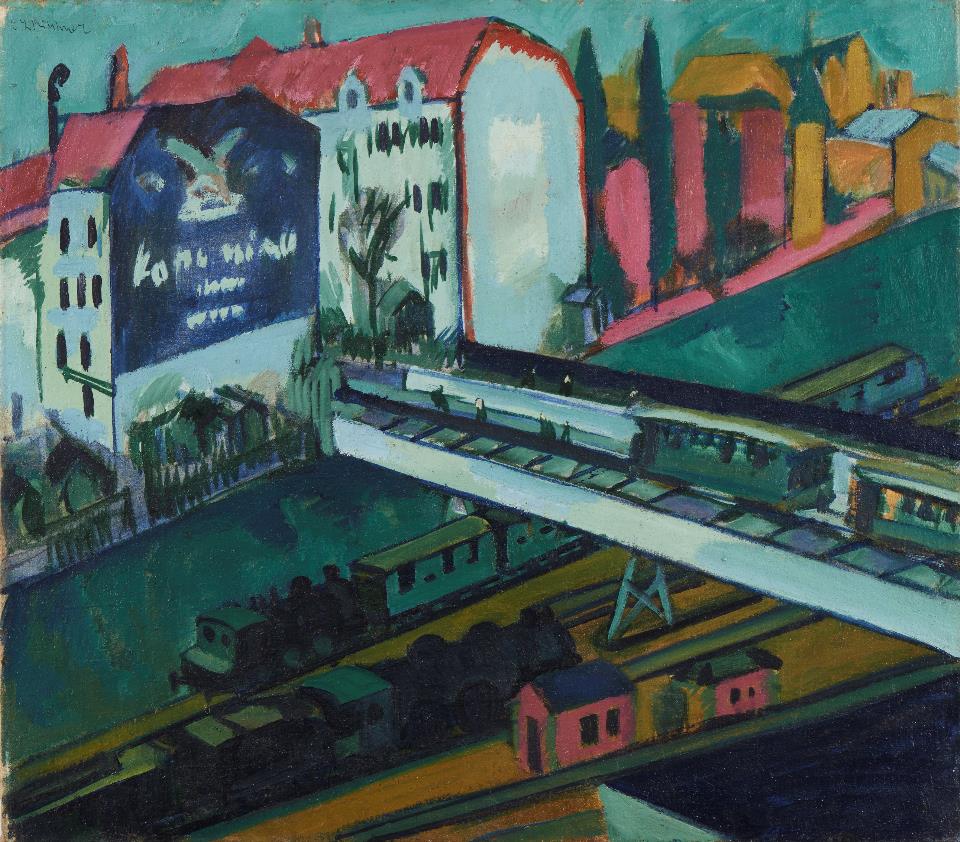
Streetcar and Train, 1914
Oil on canvas, 71 x 81 cm
Die Lübecker Museen, Museum Behnhaus Drägerhaus


Ernst Ludwig Kirchner
Artillerists’ Bath – Bathing Soldiers, 1915
Lithograph on yellow paper, 50.5 x 59.0/4 cm
E.W.K. Collection, Bern/Davos
Collection E.W.K., Bern / Davos