Friday, October 27, 2017

Sotheby’s American Art on 13 November 2017 .

 
Sotheby’s has unveiled the full offerings of our New York auction of American Art on 13 November 2017 . Led by two masterworks by Norman Rockwell, sold to benefit the Berkshire Museum in Pittsfield, Massachusetts, the sale of 84 works of art represents the diversity of the American Art category, including strong examples of illustration, impressionist, modern and western art spanning the 19 th and 20 th centuries . The New York exhibition will be open to the public for 10 days, beginning 3 November.

NORMAN ROCKWELL
https://www.nrm.org/wp2016/wp-content/uploads/2013/05/Shuffletons_NR_Berkshire_Mu.jpg

Shuffleton’s Barbershop © SEPS licensed by Curtis Licensing, Indianapolis, IN. All rights reserved.

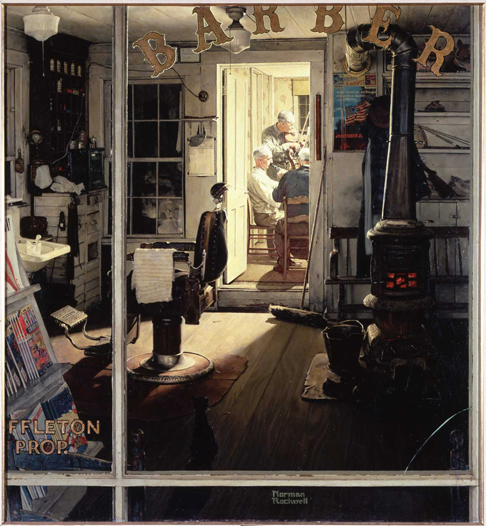
The undisputed highlight of the November auction is Norman Rockwell’s Shuffleton’s Barbershop , one of the artist’s masterpieces, being sold to benefit the Berkshire Museum (below , estimate $20 /30 million). Painted in 1950 – at the height of Rockwell’s career and just one year prior to

https://upload.wikimedia.org/wikipedia/en/1/1a/Saying_Grace%2C_Norman_Rockwell.jpg

Saying Grace, which holds the current auction record for the artist set at Sotheby’s in 2013 – the work is a visual testament to the full extent of Rockwell’s artistic abilities and incomparable imagination. Rockwell’s ambitious composition positions the viewer as the witness to the action taking place beyond the cracked plate -glass window of the storefront. His dramatic treatment of light – the golde n light that bathes the trio of musicians contrasts vividly with the shadows that blanket the rest of the closed- up shop – immediately captivates. 

Further engaging is the variety of naturalistic details Rockwell includes to emphasize the authenticity and immediacy of the scene. When considered together, however, these minute elements – a World War II remembrance poster; a December 1949 issue of Walt Disney Comics and Stories ; a fishing rod a nd creel; the scroll of a cello – adopt a much more potent meaning. 

At its core, Shuffleton’s Barbershop is the culmination of Rockwell’s investigation into the power of observation and the process of making art. Thus as he presents a subtle and unexpected marriage of high and popular culture, Rockwell asserts the idea that art can be found in the most unexpected of places or inde ed, that an illustrator can be a true artist.

https://c.o0bg.com/rf/image_960w/Boston/2011-2020/2017/08/04/BostonGlobe.com/ReceivedContent/Images/Blacksmith_s_Boy--Heel_and_Toe__I_ll_never_forget_that_lasthour..._.jpg

Also selling to benefit from the Berkshire Museum is Blacksmith’s Boy – Heel and Toe (Shaftsbury Blacksmith Shop) by Norman Rockwell ( above , estimate $7/10 million). Monumental in size – measuring 70 1/4 inches across – the painting was commissioned for a story that appeared in a 1940 edition of The Saturday Evening Post about a horseshoe-forging contest, which included the following lines: “I’ll never forget that last hour. And never, I imagine, will any of those who watched. Both men were lost to everything now but the swing from the forge to the anvil, the heels to be turned and the toes to be welded.” The excitement of the narrative, articulated from the point of view of the local blacksmith’s son, is brilliantly portrayed by the two men who captivate the growing crowd with this demonstration of their strength and skill . Working from a series of photographs, which he exactingly orchestrated down to the last detail, Rockwell depicts a total of 23 figures in the composition , including a self - portrait and two different representation s of one of his favorite models, Harvey McKee, the undersheriff of the town of Arlington, Vermont.

Sotheby’s sale of American Art features 7 works by this beloved American artist  with estimates starting at $80,000

Half the artworks consigned by the Berkshire Museum in a Nov. 13 Sotheby's sale have been withdrawn, reports Berkshire Eagle. Seven works remain in the sale, including two Norman Rockwell paintings that the artist's family has filed a lawsuit to oppose the museum's deaccessioning of the works.

Removed from the Nov. 13 auction: Albert Bierstadt, "Giant Redwood Trees of California"; Ralph Albert Blakelock, "Rocky Mountains"; Frederick Edwin Church, "Valley of Santa Isabel, New Granada"; George Inness, "Mountain Landscape — The Painter at Work"; Thomas Moran, "The Last Arrow"; Charles Wilson Peale, "Portrait of General David Forman"; and Rembrandt Peale, "George Washington."

Berkshire Museum, in Pittsfield, Mass., announced in July that it would sell 40 artworks from its collections to generate about $50 million, to help fund a New Vision plan to refocus the museum on science and history. Sales at Sotheby's are set to start in November and extend to March 2018. The artworks removed from the Nov. 13 sale could appear at a later date.


MODERN MASTERS: MILTON AVERY & GEORGIA O’KEEFFE

http://www.sothebys.com/content/dam/sothebys-pages/auction-sales-slides/2017/11/N09689_500_2.jpg

This season’s offerings of American modernism are led by Milton Avery’s Sunset Sea. Executed in 1960, and having been owned by only one private collector , Sunset Sea embodies the innovative consideration of color for which the artist is acclaimed today (estimate $2/3 million). The seascape, inspired by the landscape of Provincetown, Massachusetts, where Avery spent several summers, strikes a balance between pre-war realism and post-war abstraction; fields of shimmering , subtly modulated color stretch across the canvas, drawing comparisons with the works by renowned contemporary Color Field artists including Mark Rothko and Adolph Gottlieb.

The November sale features two works by Georgia O’Keeffe, an icon of American modernism  Shell and Blue and White Abstraction evoke her lifelong fascination with the natural world. The first, painted in 1937, exemplifies the artist’s mastery of form and color (,estimate $700/1,000,000). Her keen understanding of tones of white and her thoughtful experimentation with orientation shine through in this stunning depiction of a subject that attracted her attention from a young age.

The second, Blue and White Abstraction, searches the expansive New Mexico sky and captures a bird in flight (estimate $500/700,000). O’Keeffe reduces the subject to its most essential lines and shapes, compelling the viewer to consider the abstract qualities inherently present in the natural world.

AN AMERICAN IN GIVERNY: FREDERICK CARL FRIESEKE

http://www.sothebys.com/content/dam/sothebys-pages/auction-sales-slides/2017/11/N09689_500_3.jpg


An American who lived in France for most of his career, Frederick Carl Frieseke’s work often featured his favorite model: his wife Sadie. In Gray Day on the River, painted by 1908, she and her companion float serenely on a boat, surrounded by the verdant landscape of Giverny (estimate $1.5/2.5 million). Exhibited across the United States, including Massachusetts, Tennessee, Georgia and Florida, this striking example of American Impressionism will be included in the forthcoming catalogue raisonné being completed by the artist’s grandson, Nicholas Kilmer.

EXPLORING THE WEST WITH ALBERT BIERSTADT

Albert Bierstadt’s Indians Crossing the Columbia River brings the American West of the 19 th century to life this November (estimate $1.5/2. 5 million). Belonging to a distinguished American collection for over 40 years since its acquisition in the 1970s, the work offers a romanticized vision of the Oregon landscape ; Mount Hood, the imposing peak in the background, majestically rises above the radiant Columbia River where a group of Indians row across the water towards shore. Embodying tranquility and serenity, the sublime landscape attests to the national desire for renewal and peace following the Civil War.
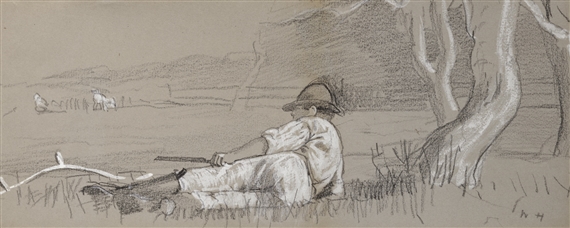
 
Executed circa1879, the double -sided drawing  


https://media.mutualart.com/Images/2017_10/20/14/142139621/2c1fd13e-1a64-47de-a656-1332e6c44bd9_570.Jpeg 
 
Rest and Two Men Scything epitomizes Winslow Homer’s quiet depictions of rural life, demonstrating the personal connection he felt with the pastoral countryside and its inhabitants (estimate $150/250,000). The two renderings explore  the beauty of the American landscape and the inno cence of youth—themes that appear frequently in Homer’s work. In the post -Civil War period, the scyther became an especially poignant motif that sought to evoke hope for rebirth and a desire to return to the country’s agrarian roots.

Thursday, October 26, 2017

Christie's Impressionist and Modern Art on 13 November


http://www.christies.com/PresscenterImages/8802/Picasso,%20Jacqueline.jpg

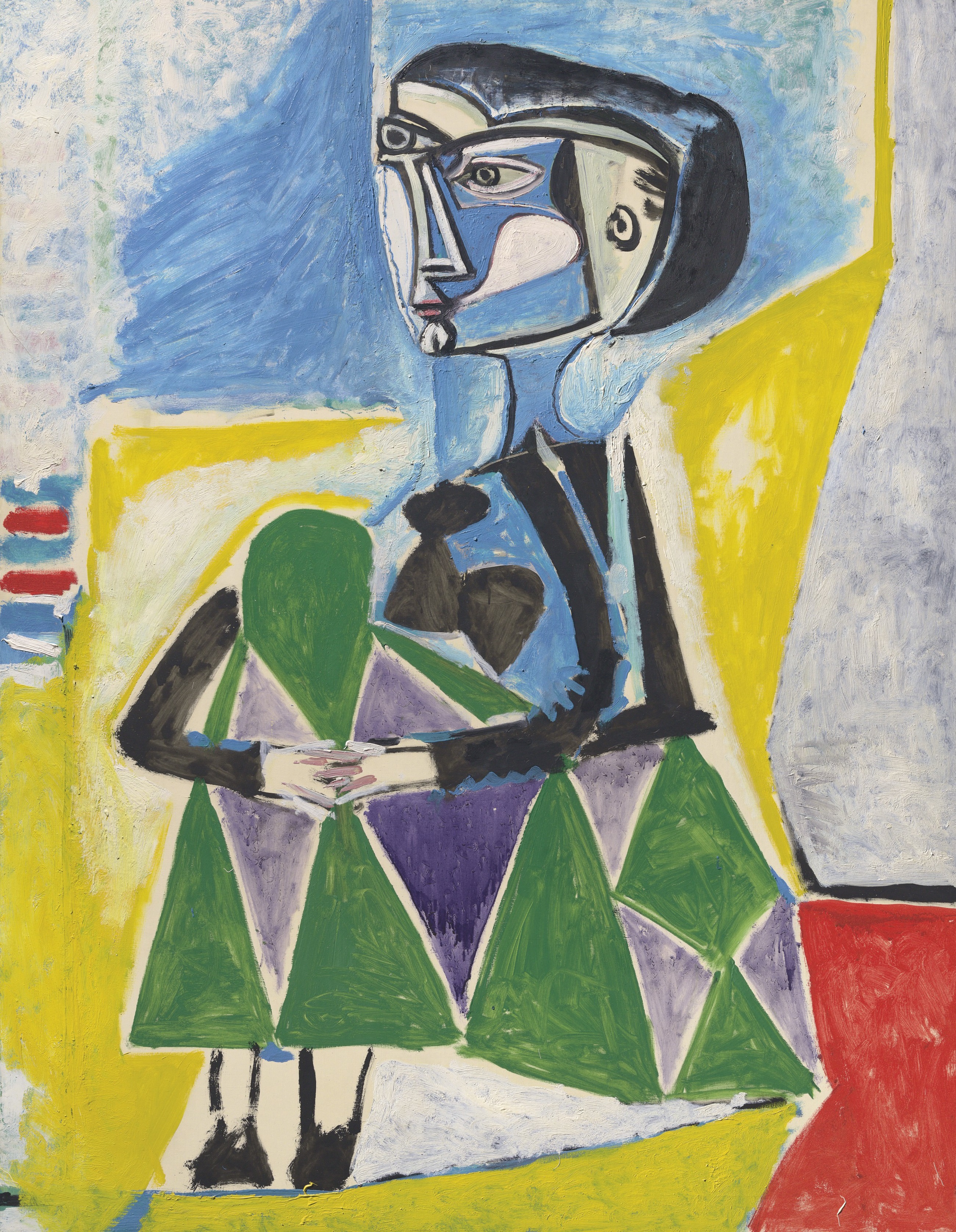
Pablo Picasso (1881-1973), Femme accroupie (Jacqueline), Painted on 8 October 1954
Oil on canvas, 57 1/2 x 44 7/8 in. | Estimate: $20-30 million
© 2017 Estate of Pablo Picasso / Artists Rights Society (ARS), New York
Christie’s will offer Pablo Picasso’s Femme accroupie (Jacqueline), painted on October 8, 1954 as a central highlight of its Evening Sale of Impressionist and Modern Art on 13 November in New York. Marking its first time at auction, Femme accroupie (Jacqueline) comes from a private collection, and is estimated to sell for $20-30 million. 
Christie’s Global President, Jussi Pylkkanen, remarked, “Jacqueline was a beautiful woman and one of Picasso’s most elegant muses. This painting of Jacqueline hung in Picasso’s private collection for many years and has rarely been seen in public since 1954. It is a museum quality painting on the grand scale which will capture the imagination of the global art market when it is offered at Christie’s New York this November.”
The brilliant primary colors in Femme accroupie (Jacqueline) illustrate a sunny day in the South of France during early autumn, 1954. Picasso and Jacqueline Roque, his ultimate paramour and eventual second wife, had begun living together in the Midi and would soon return to Paris to reside in the artist’s studio. The present painting is one of three large-easel-format canvases that Picasso painted on October 8th, in a flourish of portraits that celebrate the artist’s new mistress, declaring her newly established pride of place in the artist’s life and work. 
In each of the three October paintings, Jacqueline is seated on the floor; in a compact, crouching pose, clasping her knees. From an open window behind her, golden light fills the room. The space is likely a corner of Picasso’s studio on the rue du Fournas in Vallauris, in a building that had previously housed a perfume factory, the scents from which still graced the air. 
Jessica Fertig, Senior Vice President, Head of Evening Sale, Christie’s New York, continued, We are thrilled to be bringing to market for the first time this powerful portrait of Picasso’s great love Jacqueline. Picasso delighted in capturing Jacqueline’s beautiful features, here rendered with a wonderfully thick impasto. Picasso embarked on his late, great period, which his biographer John Richardson succinctly defined and characterized as “l’époque Jacqueline“—It is Jacqueline's image that dominates Picasso's work from 1954 until his death, longer than any of the women who preceded her.”
The color forms in Femme accroupie (Jacqueline) reflect Picasso’s admiration for Matisse’s distinctive cut outs. Less than a month after completing the present portrait, Matisse, who was the only living artist whom Picasso recognized as his peer, passed away. 

 Les femmes d’Alger, Picasso, version O.jpg


A month after that Picasso commenced work on his painted variations, which would finally number fifteen in all, on Delacroix’s two versions of Les femmes d’Alger. The series was ostensibly his tribute to the Delacroix-inspired odalisques of Matisse, to honor the memory of his longtime rival, but also an admired friend. The Femmes d’Alger paintings are also a declaration of affection for Jacqueline. 


 An homage to Delacroix had been on Picasso’s mind for more than a decade, and the advent of Jacqueline, just as importantly as the idea of a tribute to Matisse, induced Picasso to undertake his own series of odalisques. Picasso had become intrigued at Jacqueline's resemblance to the odalisque crouching at lower right in the Louvre version of Delacroix’s harem scene, whose face is seen in left profile. 


Buste de femme au chapeau - Picasso - 1943


Pablo Picasso’s Portrait de Femme Buste de femme au chapeau (Dora Maar) 

Painted on 28 May 1943  With its severely simplified, jagged composition, Portrait de Femme is an emblematic portrait of one of the artist’s most influential muses, Dora Maar. However, breaking from the wartime tension that often defines Picasso’s portraits of Maar, this canvas also encompasses a measure of humor and delight in her likeness. The large and striking hat worn by the subject, is a definitive element of Picasso’s portraits of Maar. She regularly sported whimsical hats, and Picasso often utilized them as a symbolic externalization of her inner moods, as well as a counterbalance to the severity with which he presented her features. This work will be included in the Impressionist and Modern Evening Sale on November 13. 

 
Property from an Important Private Collection. René Magritte (1898-1967), L’empire des lumières, Painted in Brussels, 1949. Oil on canvas, 19.1/8 x 23.1/8 in. Estimate: $14-18 million
On November 13, Christie’s will offer René Magritte’s L’empire des lumières, 1949 (estimate: $14-18 million) as a highlight of the Impressionist and Modern Art Evening Sale. The present canvas is celebrated as one of the artist’s most iconic works and is the very first example that Magritte completed from his landmark L’empire des lumières series. A theme that he would spend the subsequent fifteen years exploring. Coming from a private collection, L’empire des lumières, was first-owned by Nelson A. Rockefeller. It was acquired by Rockefeller in 1950, then chairman and president of Chase National Bank, while also serving in similar roles at The Museum of Modern Art, New York. This marks the first time that this canvas has ever been offered at auction. L’empire des lumières, 1949 will be on public view at Christie’s Hong Kong from 28 September – 3 October.

Sharon Kim, International Director of Impressionist & Modern Art at Christie’s, comments, “Christie’s is honored to have the opportunity to bring this important work to auction for the first time when the global market is currently exhibiting a strong demand for surrealist masterpieces. This a landmark work in Magritte’s oeuvre—the first complete canvas in the artist’s iconic series L’empire des lumières—making this an extremely exciting opportunity for buyers.” 

The iconic series, that was launched with this picture, is centered around a concept which explores the harmony and tension between day-and-night, a theme at the very heart of Surrealism. Additional paintings from this series were acquired by many of the greatest private collectors of the 20th-century, including Jean and Dominique de Menil, Peggy Guggenheim, composer Richard Rodgers, and Harry Torczyner, one of Magritte’s most dedicated collectors. They also can be seen in the permanent collections of The Museum of Modern Art, New York, and the Musées Royaux des Beaux-Arts de Belgique, Brussels.

Each successive picture displays the key elements seen in the present, original L’empire des lumières—a nocturnal street scene in a placid, well-maintained quarter of town. This quiet view was similar to Magritte’s own rue de Esseghem in Brussels, with eerily shuttered houses, windows faintly lit from within and a single lamppost, shining forth like a beacon. The hour is late, and most of the occupants are presumably asleep. Only the onlooker is witness to the bizarre vision above—a night sky with neither moon nor stars, lacking the least hint of darkness. For as far as one can see, a blue sunlit sky with lazily drifting white clouds fills the ether expanse. In the characteristic, straightly descriptive manner in which Magritte painted this scene, all is as natural—but in myriad connotations, also as paradoxical—as night and day.

The beauty and revelation of L’empire des lumières—perhaps what contributed to its enduring status—is that Magritte reconciles the traditionally opposing elements of earth and sky, night and day, darkness and light to the underlying harmony found in these contrasts. “After I had painted L’empire des lumières,” Magritte explained to a friend in 1966, “I got the idea that night and day exist together, that they are one. This is reasonable, or at the very least it’s in keeping with our knowledge: in the world night always exists at the same time as day. (Just as sadness always exists in some people at the same time as happiness in others.) But such ideas are not poetic. What is poetic is the visible image of the picture” (quoted S. Whitfield, Magritte, exh. cat., The South Bank Centre, London, 1992, no. 111). 


PROPERTY FROM THE ANNA-MARIA AND STEPHEN KELLEN FOUNDATION
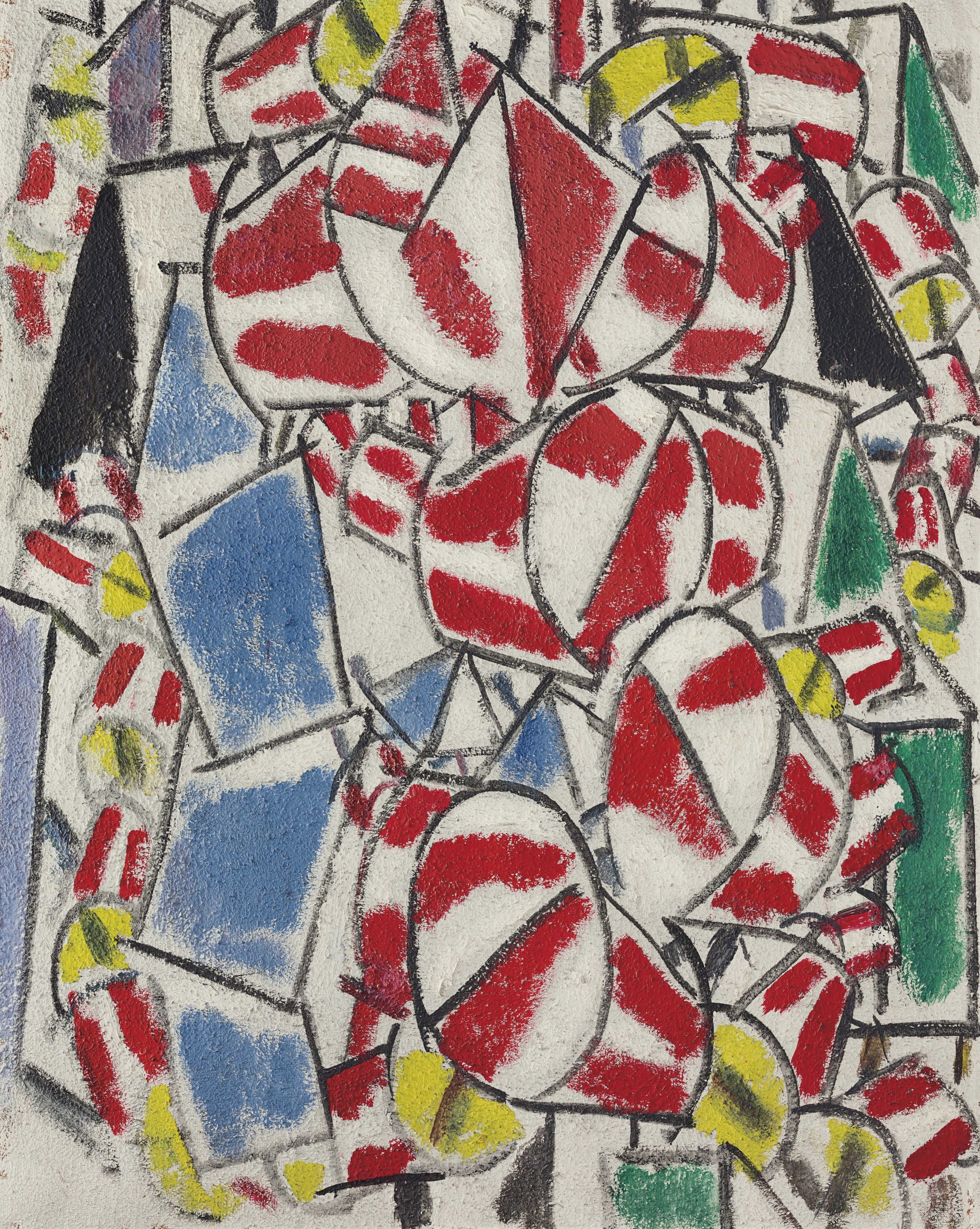
Fernand Léger, Contraste de formes, oil on burlap, Painted in 1913
On November 13, 2017, Christie’s will present Fernand Léger’s Contraste de formes, 1913, the most important canvas by the artist offered at auction in several decades (estimate on request). This exquisite picture comes from Property from the Anna-Maria and Stephen Kellen Foundation, and proceeds from the sale of this work will go towards the foundation’s philanthropic mission.

Originally acquired from Léger at the end of 1913 by his dealer Daniel-Henry Kahnweiler, Contraste de formes was bought in 1956 from Galerie Rosengart in Lucerne by Ludmilla and Hans Arnhold, an international banker and art collector. Mr. Arnhold later bequeathed the painting to their daughter and son-in law, Anna-Maria and Stephen Kellen. Mr. Kellen was the esteemed and longtime CEO of the highly respected investment banking firm, Arnhold and S. Bleichroeder, Inc. (now First Eagle Holdings, Inc.), and with his wife were both passionate collectors and distinguished philanthropists.

The Kellens were deeply captivated by Léger and his work, often visiting the Musée National Fernand-Léger in Biot, France, with their children and eventually their grandchildren. Contraste de formes was a cherished highlight of the Kellens’ collection and it enriched their New York home for over 40 years. November 13 will mark the painting’s first time at auction.


Conor Jordan, Deputy Chairman, Impressionist and Modern Art, remarked: “This is pure painting seen in its most exciting form, bursting with visual and intellectual ideas. The Kellen Foundation’s Contraste de formes, among the greatest Léger’s still in private hands, has a startling intensity. Executed just months before the First World War, Contraste de formes with its groundbreaking abstract conception and its thrillingly preserved physical state, is without question a major work of Modern Art. Standing at the threshold of 20th century art, this picture marks a departure from the purely figurative, leading the way for abstract art.” 

Painted in 1913, Contraste de formes belongs to a series of paintings that changed forever the way we look at art. Across the course of just a few months, in a sequence of some fourteen canvases, Léger advanced beyond Cubism into a visual language that abandoned the representational concerns of his contemporaries, Picasso and Braque. Instead Léger made abstract shapes and colors, hinged on a network of forceful lines his only subject. The work of Léger during 1912-1914 is the story of the push towards pure or non-representational painting in France and the subsequent return to the subject in the months preceding the mobilization for war. The Contrastes de formes have long been considered cornerstones of important collections of modern art and thus nearly all examples from the series are today housed in major institutions.

In his Contrastes de formes series, Léger utilized simple geometric volumes composed of cylinders and planar elements which he rendered into multiple elements by means of line and color. He fabricated a tumbling surface in which shapes simultaneously appear to project out of the picture plane or recede into it suggesting volume. All the component lines, forms and colors are actively engaged as they play off each other to create a jolting, rhythmic composition. At first glance these surfaces display a helter-skelter appearance; however, there is a visual logic based on the simple aspect of his chosen component forms. In the second Académie Wassilief lecture, prepared as Léger was bringing this series of paintings to a close, he wrote, “Composition takes precedence over all else; to obtain their maximum expressiveness lines, forms, and colors must be employed with the utmost logic. It is the logical spirit that will achieve the greatest result.”

Marina Kellen French, daughter of Anna-Maria and Stephen Kellen and a trustee of the Metropolitan Museum of Art, vividly remembered The New York Times art critic Roberta Smith’s review of the 2014 Met exhibition “Reimagining Modernism: 1900-1950.” “Just beyond the Picasso head in the “Avant-Garde” section hangs a fabulous early Léger…” wrote Roberta Smith, “filled with curving planes of red and blue girded by black lines and patches of rough white. A truly fabulous picture.”

http://1uyxqn3lzdsa2ytyzj1asxmmmpt.wpengine.netdna-cdn.com/wp-content/uploads/2017/10/Van-Gogh.jpg

Vincent Van Gogh (1853-1890), Laboureur dans un champ, St Remy 1889. Estimate on Request.

 On mornings between 9 May 1889 and 16 May 1890, Van Gogh rose from bed and gazed through his window; the world outside appeared to him much like it does in this painting. Each morning the spectacle of the ascending sun would exhilarate and inspire him. The artist began this painting of a ploughman tilling the plot of land through his window in late August 1889 and completed it on 2 September. This was a significant development for Van Gogh, who had not handled his brushes since being removed from his studio by the doctors at the asylum of Saint-Paul-de-Mausole following a devastating psychological episode.

An attack of this magnitude had last occurred in Arles on 23 December 1888, following a violent argument with Paul Gauguin in the small “Yellow House” they had shared for the previous two months. The argument led him to sever the larger part of his upper left ear.

The artist referred to Laboureur dans un champ in his letter to his brother Theo dated on or around 2 September: “Yesterday I started working again a little—a thing I see from my window—a field of yellow stubble which is being ploughed, the opposition of the purplish ploughed earth with the strips of yellow stubble, background of hills. Work distracts me infinitely better than anything else, and if I could once again really throw myself into it with all my energy that might possibly be the best remedy.” The image of the horse and ploughman is repeated in only one other Saint-Rémy painting, a related version but with variant motifs, which Vincent painted later in September.


Joan Miró (1893-1983), Peinture (from collage), 4 April 1933. Estimate: $18-25 million.

 The present work comes from the series of eighteen large paintings completed in 1933, marking Miró’s commitment to resume oil painting on canvas following the period 1928-1931, when the artist had chosen to explore alternative means of expression including collage and assemblages. The present Peinture and its companion canvases are the direct outcome of this contest between painting and anti-painting, in which Miró revealed some of the most tantalizingly enigmatic, yet succinct plastic forms he had yet conceived.Between 26 January and 11 February 1933, Miró fabricated the eighteen preliminary collages as the studies for the final canvases, at the rate of about one per day. Apart from dating each sheet on the reverse, Miró added nothing to the collages in his own hand. Realizing there would be insufficient room to store the completed canvases, Miró decided to paint the large works one at a time, pausing to unstretch and roll the completed canvas, and then reuse the stretchers for the next Peinture. Each picture would take several days, a week, or sometimes even fortnight to complete. Within each of these pictures, mysterious biomorphic shapes drift weightlessly within a seemingly boundless, yet cavernous inner space. These finished paintings are among the largest Miró had done to date; only a few earlier works surpass them in height or width.

http://www.christies.com/media-library/images/features/articles/2017/10/20/bass-collection-highlights/croppedlot18amatisselesregatesdenice.jpg?w=780

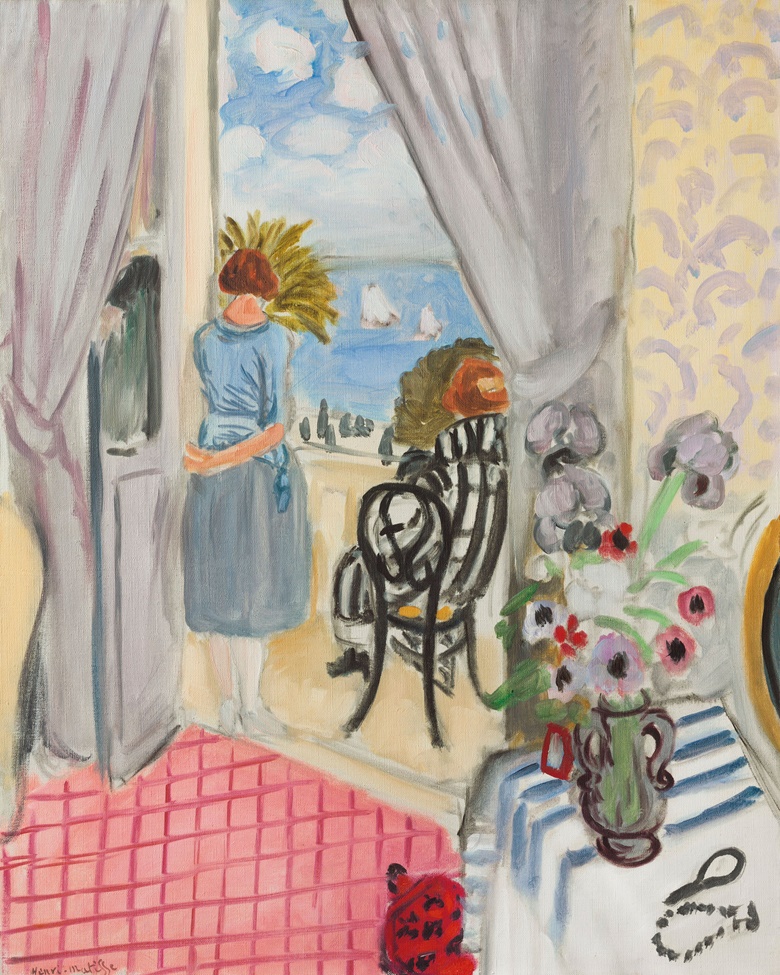
Henri Matisse (1869-1954), Les régates de Nice, 1921. Estimate: $12-18 million.

Les régates de Nice, 1921, by Henri Matisse (estimate: $12-18 million)was painted only a few years into the artist’s life-long love affair with the city of Nice on the Cȏte d’Azur, this work was likely completed during the early spring of 1921. Les régates de Nice, portrays two young women at ease, in an airy, luminous interior, with a large French window opening to blue skies and the sea in the distance—classic hallmarks of Matisse’s art during the early 1920s. The standing figure is Henriette Darricarrère, the best known of Matisse’s models, and the second seated figure on the balcony is in fact Marguerite Matisse, the artist’s 26-year-old daughter, who had been staying with her father in Nice since late 1920.

In contrast to the often-gray atmosphere of the north, the artist delighted in the Mediterranean light during the winter. He moreover recognized that in this light, the way in which he organized his new pictures required a new synthesis of conception. The window, as the conveyor of light, became the crucial motif in the exploratory process Matisse commenced in early 1918. Matisse viewed the interior in Les régates de Nice as if from a ladder-like height, resulting in a perspective that flattens the deep space, which extends from the interior foreground to the far marine horizon. Throughout this vast distance, Matisse employs cinematic deep focus: every pictorial element, regardless of placement, is accorded the same degree of clarity.

https://i.pinimg.com/originals/12/1d/57/121d57628b1763e16584c974eb1f4fb5.jpg

Kees van Dongen (1877-1968), Portrait de Madame Malpel, 1908. Estimate: $7-10 million.

Elegant and dramatically lit, evoking an haut bourgeois aura of opulent refinement, Kees van Dongen’s 1908 Portrait de Madame Malpel (estimate: $7-10 million) presaged a new line in the artist’s work, one which would increasingly define his career in coming decades—formal portraiture. Until this time his models were nearly all paid demi-mondaines—Van Dongen painted singers and dancers who performed in the cabarets and dance halls of Montmartre. Mme Malpel, however, was of far more elevated social standing; she was the wife of Charles Malpel, a lawyer from Montauban who became an art dealer and impresario in Toulouse, seeking to develop the city into an arts center for southwestern France.

Van Dongen presented Mme Malpel à l’espagnole, attired in a lace shawl and colorfully embroidered dress, her décolletage bordered with strands of sequins. In availing himself of espagnolisme in this portrait, Van Dongen was tapping into a potent and evocative theme with a distinguished pedigree in French painting. For the past century, artists of the School of Paris had been strongly attracted to the flesh-and-blood realism, the deeply sonorous color tonalities, and the sharp contrasts of light and shade that were the hallmarks of Spanish painting during its Siglo de Oro, and resonated as well in the much-admired art of Francisco Goya. Van Dongen's Madame Malpel thrusts upward against a fiery, volcanic background—the effect is stunning, Fauve, and superbly sophisticated.

 
Mark Rothko (1903-1970), Untitled, 1969. Estimate: $10-15 million.

Highlighting the selection of Post-War and Contemporary Art, which will be sold on November 15, is Mark Rothkos masterful painting of 1969, Untitled (estimate: $10-15 million) – pictured on page 1. Painted in 1969, the work belongs to a celebrated series of paintings that Rothko created in the last year of his life. Having suffered an aortic aneurism in 1968, Rothko was advised by his physicians to limit himself to small-scale works on paper no larger than 40 inches. Rather than diminish the artist’s creativity, the series had the opposite effect. By late 1969 Rothko was painting on large-scale sheets of paper in a wide variety of media, producing some of his most significant work. Untitled envelops the viewer in its expansive field of luxurious color, gesturally applied in wide swathes of the brush that actively display the physical workings of the artist’s hand. In one of his most profound color pairings, Rothko creates a lavish, unmodulated field of highly saturated red alongside its counterpart, a luminous field of golden yellow.
 
Also 
 
Bonnard, French Window with Dog (Est $4-6m)

Christie’s has announced that Property from the Collection of Stanford Z. Rothschild, Jr. will be offered across a series of sales in November and December, including the Impressionist and Modern Art sale. Stanford Z. Rothschild, Jr. was an investor, philanthropist and collector who helped champion civic leadership in his Maryland community. Enthralled with artists and the creative process, Stan assembled a striking collection of paintings, sculpture, and works on paper by artists whose work was both intellectually rigorous and historically provocative. He was especially drawn to El Greco, Claude Monet, Robert Delaunay, Georgia O’Keeffe, and Russian artists of the twentieth century. In his lifetime, Stan amassed one of the largest, privately owned collections of Russian avant-garde art in the United States. Certain works in the collection are being sold by the Rothschild Art Foundation, a charitable organization founded by Stanford Z. Rothschild, Jr. Overall, the collection includes 51 works and is expected to exceed $30 million.  


https://uploads2.wikiart.org/images/claude-monet/rio-della-salute-03.jpg

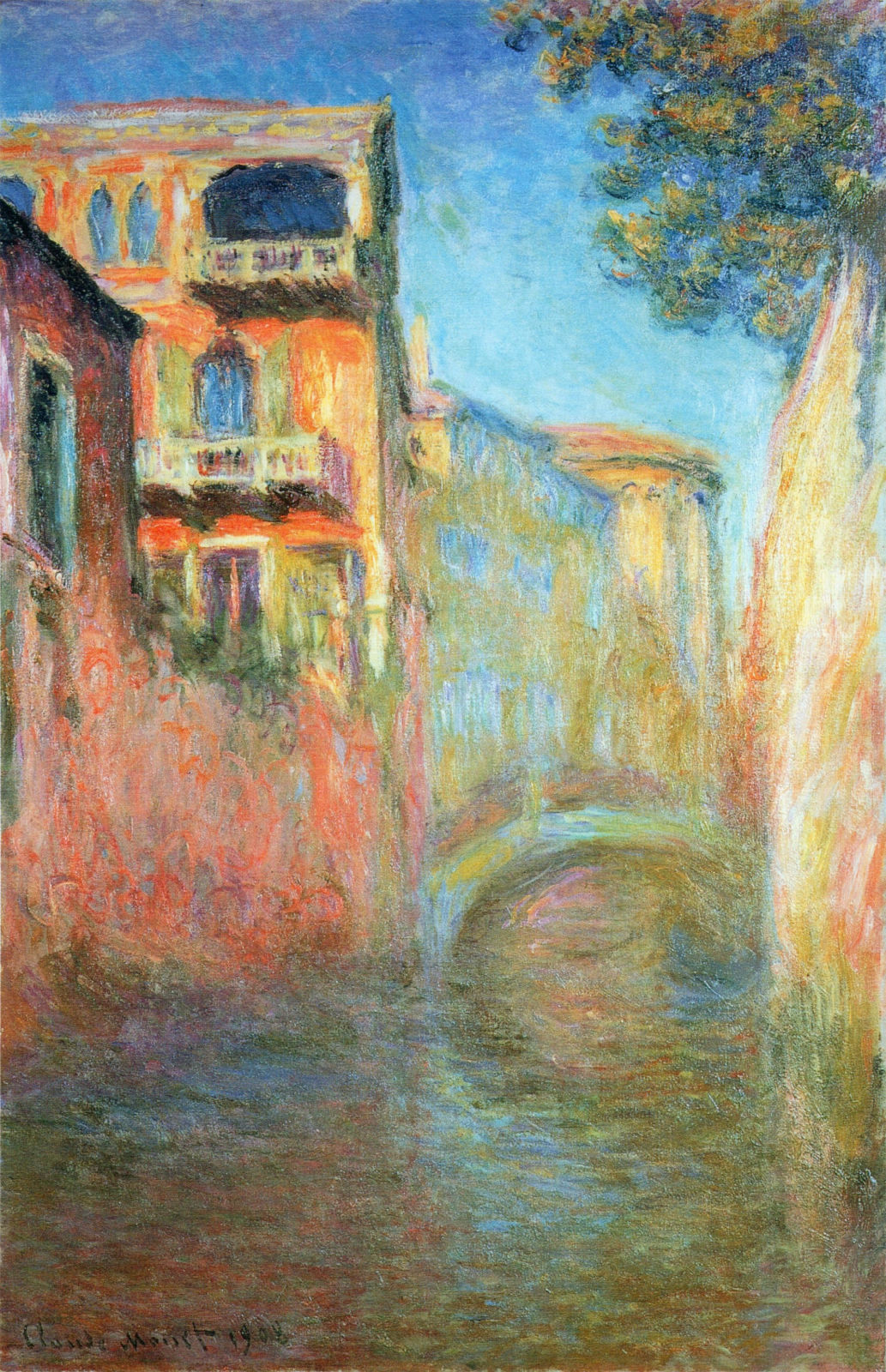
CLAUDE MONET (1840-1926)
Le Rio de la Salute,
oil on canvas, 32 x 25 in. Painted in 1908. Estimate: $7,000,000-10,000,000 

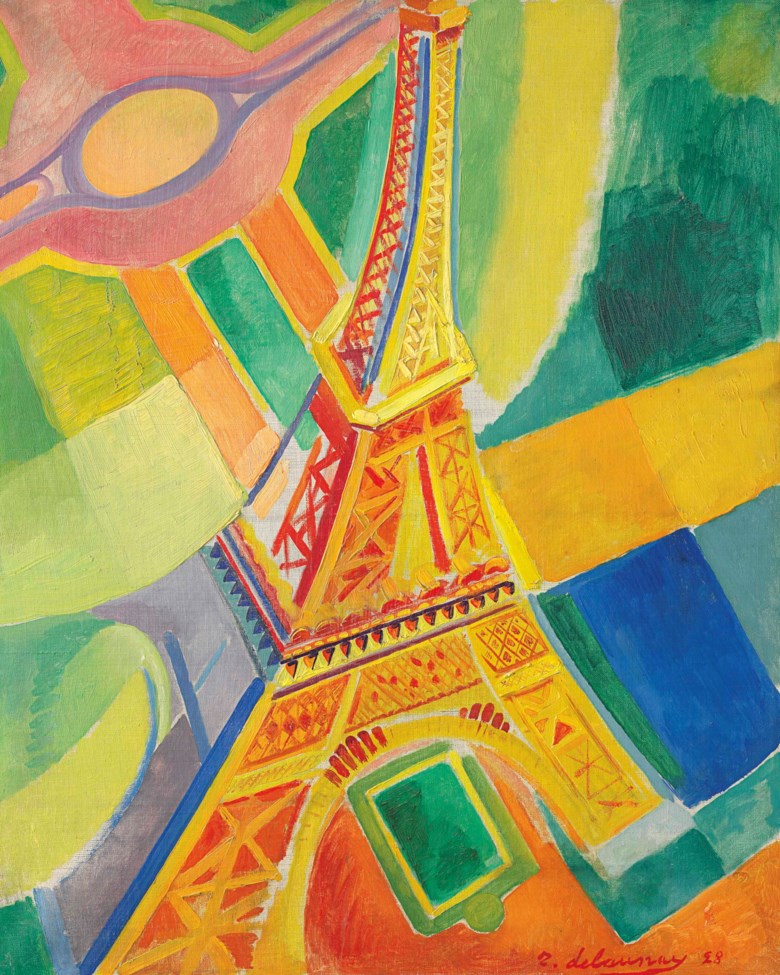
 http://www.christies.com/img/LotImages/2017/NYR/2017_NYR_15004_0027A_000(robert_delaunay_la_tour_eiffel).jpg?w=780
ROBERT DELAUNAY (1885-1941)
La Tour Eiffel,
oil on canvas
31 x 25 in. Painted in Paris, 1928 Estimate: $2,500,000-3,500,000 

Highlights from the collection in the Impressionist and Modern Art Evening Sale on November 13 include two outstanding works by Claude Monet, Le Rio de la Salute ($7,000,000-10,000,000) painted in 1908; La Pointe du Petit Ailly ($6,000,000-8,000,000) painted in 1897; and a vibrant depiction of the Eiffel tower by Robert Delaunay, La Tour Eiffel ($2,500,000-3,500,000). 

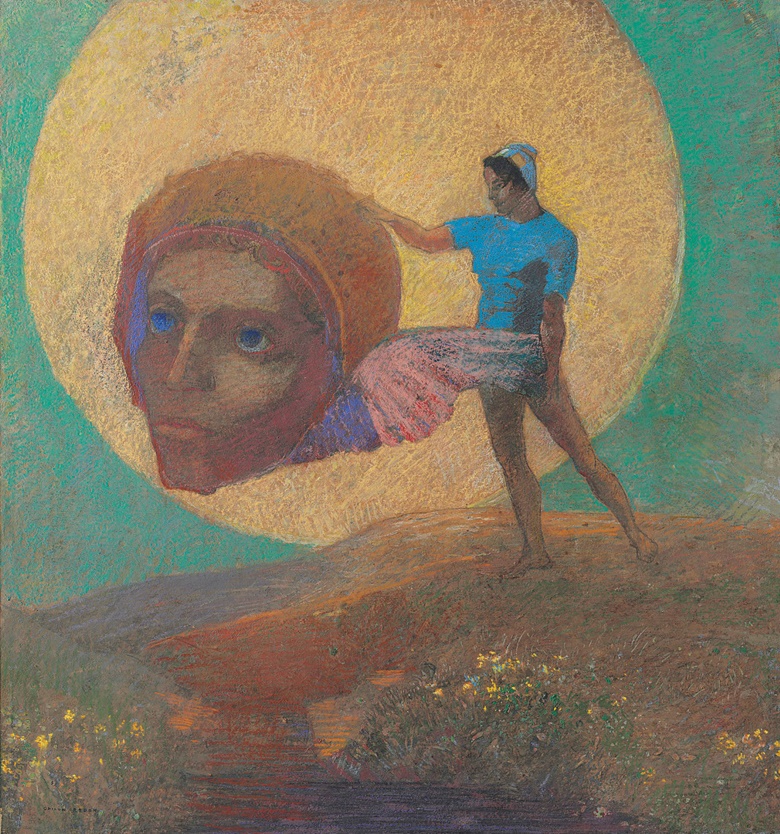
http://www.christies.com/media-library/images/features/articles/2017/10/23/rothschild-collection/56082586.jpg?w=780

ODILON REDON (1840-1916)
Figure portant une tête ailée (La chute d’lcare)
pastel on paper laid down on board 19 1⁄2 X 18 in.
Executed circa 1876 Estimate: $800,000-1,200,000

 http://art-monet.com/image/1890/1897%20The%20Pointe%20du%20Petit%20Ailly.jpg
CLAUDE MONET (1840-1926)
La Pointe du Petit Ailly
oil on canvas
29 x 36 in.
Painted in 1897 Estimate: $6,000,000-8,000,000


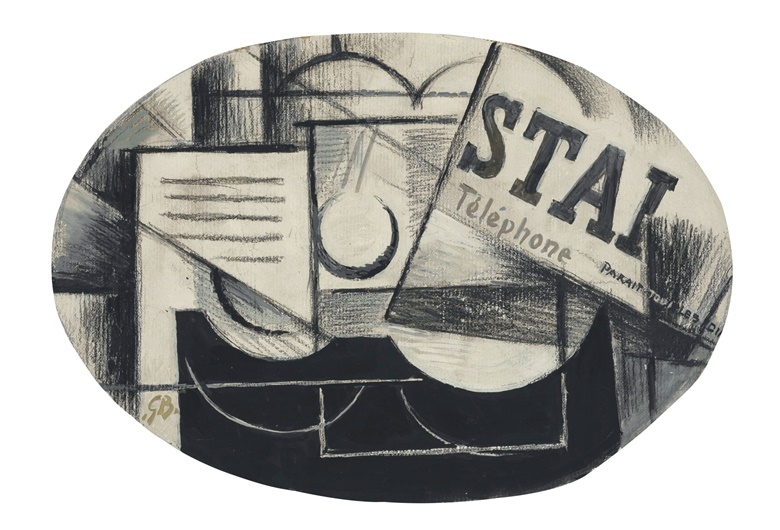
GEORGES BRAQUE (1882-1963)  

http://www.christies.com/media-library/images/features/articles/2017/10/23/rothschild-collection/cropped-56082593_cover.jpg?w=780

Guitare et journal: STAL (recto);  

https://i.pinimg.com/736x/c5/85/f8/c585f8d702b82cb8d60d00da8019812f--georges-braque.jpg

Femme à la mandoline (verso)
11 x 16 in.
Executed in 1913
Estimate: $900,000-1,200,000

Sotheby’s Impressionist & Modern Art on 14 November 201.


IMPRESSIONIST & MODERN ART EVENING SALE 
Auction 14 November 2017 

Works from the Mellon Family Collection are led by 

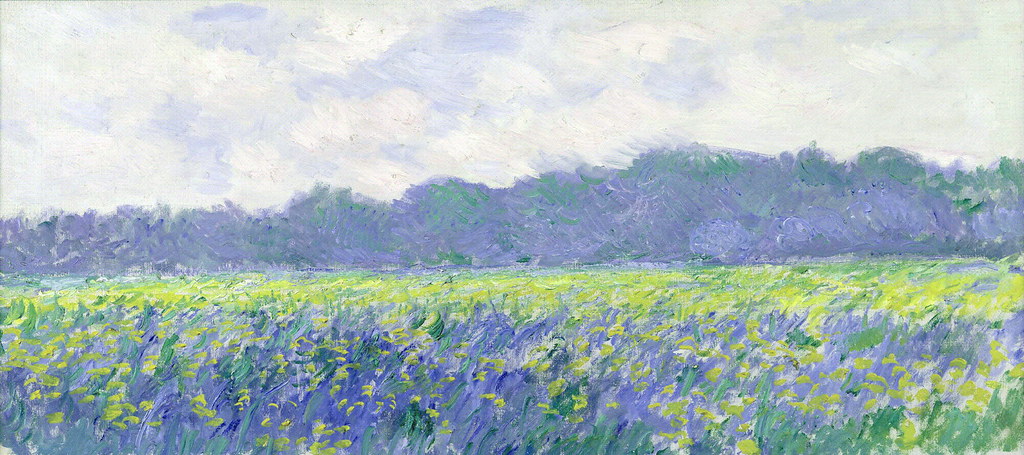
 https://c1.staticflickr.com/3/2747/4345463459_5b5ea8f35d_b.jpg

Claude Monet’s Champ d’iris à Giverny, painted in 1887 during a period of respite from the artist’s extensive travels in Holland, Brittany and, finally, his newly- established permanent studio at Giverny (estimate $3/5 million) . The idyllic , pastoral subject matter of this work encapsulates the central focus of Monet’s oeuvre toward the end of the 19 th century, when he divorced himself from painting urban scenes of Paris and devoted himself fully to his beloved countryside in Giverny. 

The present work was acquired by the Mellons in 1953 and has remained in the family’s collection since . 

http://www.sothebys.com/content/dam/stb/lots/N09/N09740/152N09740_4HLWY_DF.jpg

Jeanne dite Cocotte, et Ludovic Rodolphe Pissarro sur un tapis is one of the remarkable compositions in which Camille Pissarro turns his at ention to his own family as the subject for his art (estimate $800,000/1.2 million) . The canvas depicts two of the artist’s youngest children – Rodo and Cocotte – and was later inherited by his older son Georges Henri Manzana Pissarro, himself an artist. Acquired by the Mellons in 1963, the painting hasn’t been seen in public since 1966 . In 1969, a study for the present work came up for auction at Sotheby’s in London and was purchased by the Mellons. That watercolor and gouache was later included in Sotheby’s 2014 sale of Mrs. Mellon’s Collection, selling for $185,000. 

https://www.sothebys.com/content/dam/sothebys-pages/blogs/sothebys-at-large/10/Mellon_Family_Collection_Editorial3.jpg

The tranquil seaside scene depicted in Le Phare (Antibes) from 1954 exemplifies Nicolas de Staël’s fusion of abstraction with the figurative landscape ( estimate $800,000/1.2 million). The work reflects the artist at the pinnacle of his output, when he abandoned the palette knife for the paint brush and relied solely on color to create the illusion of space, light and form . Held in the Mellon Family Collection since 1970, the painting is a superb example of the artist’s unique ability to capture the profound intimacy of lived experience within a limited vernacular of purified geometric forms.


https://news.artnet.com/app/news-upload/2017/10/Sothebys-Chagall-Les-Amoureux-780x1024.jpg

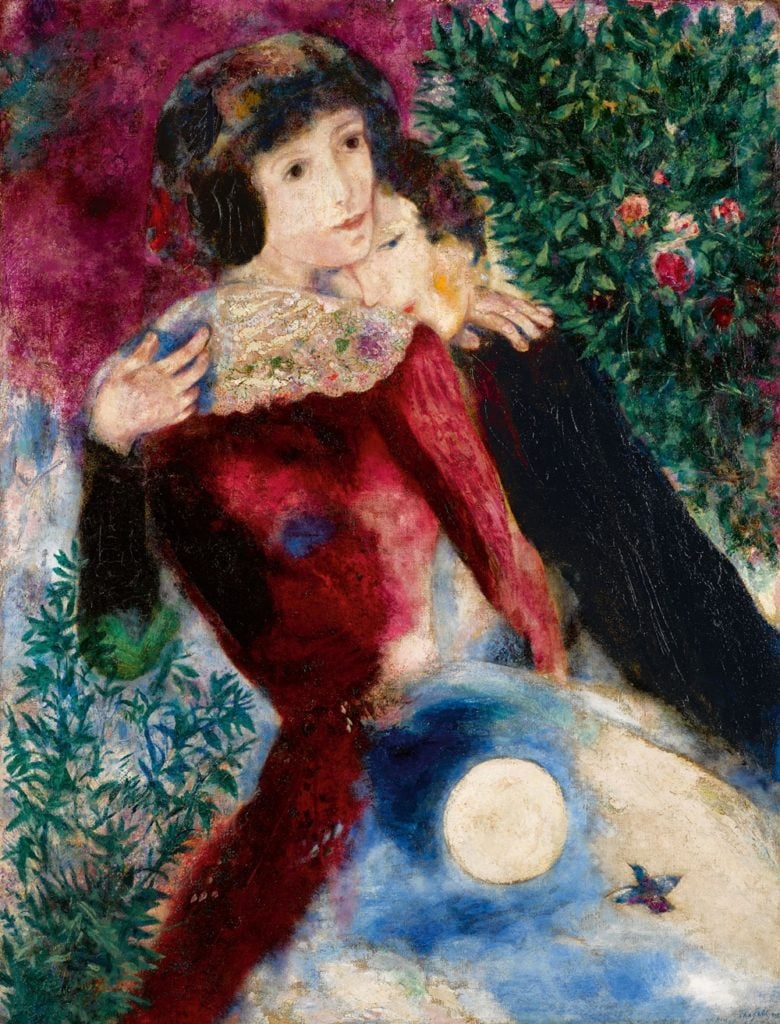
Marc Chagall’s lyrical masterpiece,  Les  Amoureux   will highlight Sotheby’s   that  New York Evening Sale of Impressionist & Modern Art  on 14 November 2017. A stunning  image  of the artist’s two great loves – his  childhood  sweetheart and muse, Bella Rosenfeld, and his  adoptive  home  of  France   Les Amoureux encapsulates the best  characteristics of Chagall’s oeuvre . The work has remained in  the same family collection for nearly 90 years, having been  purchased from legendary Pari ian gallery Bernheim -Jeune  in  October of 1928  – the year it was painted. 

The enchanting oil on canvas is estimated to sell for $12/18  million during the  November Evening S ale. Simon Shaw, Co -Head of Sotheby’s Worldwide Impressionist & Modern Art Department , remarked:  “ It is  an honor to offer this exquisite  painting by Marc Chagall , perhaps his greatest work of the  1920s . Les Amoureux  captures  at a critical moment one of the most celebrated love stories in art  history – the romance between the  artist and Bella  is palpable, and their  happiness is at its  very heart . In addition to the  painting’s  importance  with in Chagall’s career, it is truly exceptional to offer a  work of this caliber that was acquired so soon after its creation, and which has remained in the same  collection since. We have seen a compelling demand for important works by  the artist in recent  yea rs, an d we look forward to presenting Les Amoureux this fall .”  Sotheby’s set the current auction record for any work by Marc Chagall in May 1990, when  we  sold  his 1923 painting  Anniversaire for  $14 .9 million . Similar  in subject matter to the present work ,  Anniversaire depicts the  starry -eyed lovers sharing a kiss while, q uite literally, floating on air .   

LES AMOUREUX 

The present  work fully evokes the devotion and tenderness so  present in Marc and Bella’s relationship. Entwined together in  the night sky, surrounded by verdant, flowering bushes and a  bird soaring through the clouds, the lovers  lay engulfed in a  dream -like space, with  Bella’s dress and skirt saturated with  colors of the French fl ag.  Chagall’s love for his first wife and most  celebrated muse is  difficult to overstate. Upon meeting Bella for the first time, the  artist wrote of his certainty: 
“Her silence is mine. Her eyes,  mine. I feel she has known me always, my childhood, my  present life, my future; as if she is watching over me, divini ng my innermost being....Her pale  coloring, her eyes...They are my eyes, my soul.” * 

The artist met Bella Rosenfeld in Vitebsk in 1909 and the couple became engaged within a year, shortly before Chagall’s first trip to Paris in the  summer of 1910. During the a rtist’s first four years abroad, he and Bella would correspond  frequently and his homesickness for Russia became  enmeshed  with  his desire for his distant  fiancée.  Following Chagall’s return to Russia and his marriage to Bella, paintings depicting the couple  dominated the artist’s work. In 1916 -17,  he created four oils of the two embracing on abstracted  backgrounds. It was in these years that the couple in flight – a trope that would become one of  Chag all’s prime pictorial devices in later years – became firmly established. 

Just as Bella inspired many of the works in his oeuvre, France also became  a prominent source of  inspiration for the artist. Chagall arrived in Paris at the young  age of 23; within his first two days, the  artist visited the Salon des Indépendants, where he observed works by André Derain, Fernand Léger, Henri Matisse, Pablo Picasso, and Robert Delaunay, who would later become Chagall’s mentor.   

During this time, the artist lodged in La Ruche , the legendary block of studios in Montparnasse  known for its lively bohemian atmosphere and diverse array of inhabitants, next door to Amedeo Modigliani  and Chaim Soutine. It was in this milieu of spontaneity and rich cultural exchange that Chagall began his first period of painting in Paris. Chagall returned to his beloved city with Bella , and  their first and only child, Ida ,in September of 1923 and remain ed there until 1941, when World War II forced them to flee to the US. 

With his great  loves with him in France, Chagall was able to fully enjoy his adopted  home country. All of the portraits of him and Bella together during  their time in Russia were now imbued with a new -found peace and  tenderness in this new stage of their life together.  These years in France were particularly fruitful for Chagall , marking a period of comm ercial and  critical success, happiness and security . Having returned to the C ity of Light after a nine -year hiatus,  the artist found a new equilibrium of mind, a peaceful atmosphere and an audience . Young  Surrealists welcomed  him back to Paris , and in turn  Chagall was pleasantly surprised to find that  they  supported  a changing attitude towards the sort of dream -like  poetry painti ng he pioneered  many years before. Despite their flattery, Chagall declined the group ’s invitation to join the  4 movement, though his influence can be seen throughout their work , from ambiguous space to  collections of objects. The moon and sky of the present work , for example, evoke René Magritte’s  composition s of later years.   

*This quote was reproduced in J. Baal- Teshuva, ed,  Chagall, A Retrospective , New York, 1995, pp.58 -59 #  


Sotheby’s will present Pablo Picasso’s Buste de femme au chapeau as a highlight of their Impressionist & Modern Art Evening Sale in New York on 14 November 2017. Characterized by its vibrant color palette, sharp angularity and bold form, the portrait is a salient example of the Madonna-and-Magdalene dichotomy that manifested in Picasso’s work while he was simultaneously involved with two of his greatest muses: Marie-Thérèse Walter and Dora Maar. This tumultuous time in the artist’s life in turn yielded one of the most groundbreaking and creative periods of his oeuvre.

The daring oil painting is being sold to benefit charitable organizations including the American Society for the Prevention of Cruelty to Animals (ASPCA), and carries a pre-sale estimate of $18/25 million.


The present work illustrates a particularly turbulent time in the Picasso’s life – his mother died in January 1939, during a period of intense political upheaval throughout Europe and particularly in the artist’s native Spain. However, this period also provided the impetus for some of Picasso’s most revolutionary stylistic techniques.

Unable to travel to Spain and living in a country facing increasing pressure from Nazi Germany, Picasso maintained relationships with both Marie-Thérèse and Maar. Both of the women, markedly different in their temperament and physical appearance, populated Picasso’s life and his paintings, and the present work is a strong manifestation of their shared influence throughout his oeuvre. While many attributes of Buste de femme au chapeau point to Marie-Thérèse − the blonde sweep of hair and bright-yet-soft tonalities of the palette − whispers of Maar are also reflected.

In contrast with his depictions of a more passive Marie-Thérèse, the present painting is one of Picasso’s most animated, tactile and sculptural renderings of the young woman. Her figure is punctuated with incisions into the thick paint, adding dimension to her features. Maar’s presence appears vis-a-vis the artist's focus on Marie-Thérèse's hat. While the accessory may have been important to the sitter at the time, its significance in this painting is elucidated in retrospect. Maar was immortalized in Picasso's portraits as the wearer of stylish hats, and what may have been an flamboyant personal item to Marie-Thérèse at the time, becomes a symbolic indicator of her status as the saintly new mother of Picasso's daughter, and the antithesis of her new rival.

 https://i.pinimg.com/236x/47/2c/63/472c635d094fcae9863139d4bb3b0595--georgia-okeefe-art-georgia-o-keeffe.jpg


Also, Georgia O’Keeffe's Yellow Sweet Peas (1925) has a pre-sale estimate of $2.5/3.5 million