Monday, July 23, 2018

Brand-New & Terrific: Alex Katz in the 1950s

Colby College Museum of Art
July 11, 2015 - October 18, 2015 

04/30/2017 - 08/06/2017

Neuberger Museum of Art
July 01, 2018 - October 14, 2018


Brand-New & Terrific: Alex Katz in the 1950s is the largest museum exhibition to showcase Alex Katz’s (b. 1927) innovative portraits, landscapes and still lifes from this pioneering period. Organized by the Colby College Museum of Art in Waterville, Maine, in close collaboration with Katz, this presentation explores the first decade of the artist’s career, a period characterized by fierce experimentation from which his signature brightly colored figurative paintings emerged. 

The exhibition’s title derives from Katz’s early manifesto announcing his intentions to invigorate traditional artistic subject matter. Creating work at a time when abstract painting dominated the art scene, Katz forged an ingenious way to wed abstraction with recognizable imagery by paring down his compositions to their most fundamental elements. In retrospect, these works prefigured the subsequent development of Pop Art. The exhibition includes more than 60 key loans from public and private collections, including many rarely seen works from the artist’s own holdings as well as a sampling of Katz’s works from the Colby College Museum of Art collection.

 
Brand - New & Terrific: Alex Katz in the 1950s explore s the first decade of the artist’s career, a period characterized by fierce experimentation and innovation from which Katz’s signature style emerged. The exhibition is the first museum survey to focus on the artist ’s output from this formative decade. Curated by Diana Tuite, Katz Curator at the Colby Museum, Brand - New & Terrific draws from the Colby Museum’s deep collection of artworks by Alex Katz and will include many rarely seen loan s from the artist and other public and private collections. 

Born and raised in New York, Katz studied at the Cooper Union in the late 1940s and then attended Maine’s Skowhegan School of Painting and Sculpture in 1949 and 1950. There, the artist first began to paint from life and found the subjects that he would depict for years to come — the Maine landscape, his circle of friends, and domestic interiors. Within the same period Katz also turned to found photographs as a source for paintings, such as Group Portrait 2 ( c. 195 0). With faceless sitter s and backgrounds reduced to bands of color, he found the essence of composition by paring it down to its most fundamental elements. 

By 1954, inspired in part by the cut paper constructions of Henri Matisse, Katz began to make collages from pieces of watercolored paper. Intimate in scale and delicate in construction, these works were often created at the kitchen table of the Lincolnville, Maine, farmhouse where he still spends his summers. 

Image result

Collages such as Wildflowers in Vase ( c. 1954 - 55), a small bouquet of bright flowers, explore the economy of line and form and the proportionality of color. These early works helped to lay the foundation for Katz’s mature style — the vibrant palette, use of repetition, and the graphic placement of a figure against a solid ground — that emerged toward the end of the decade. 

In spite of their small size, paintings like
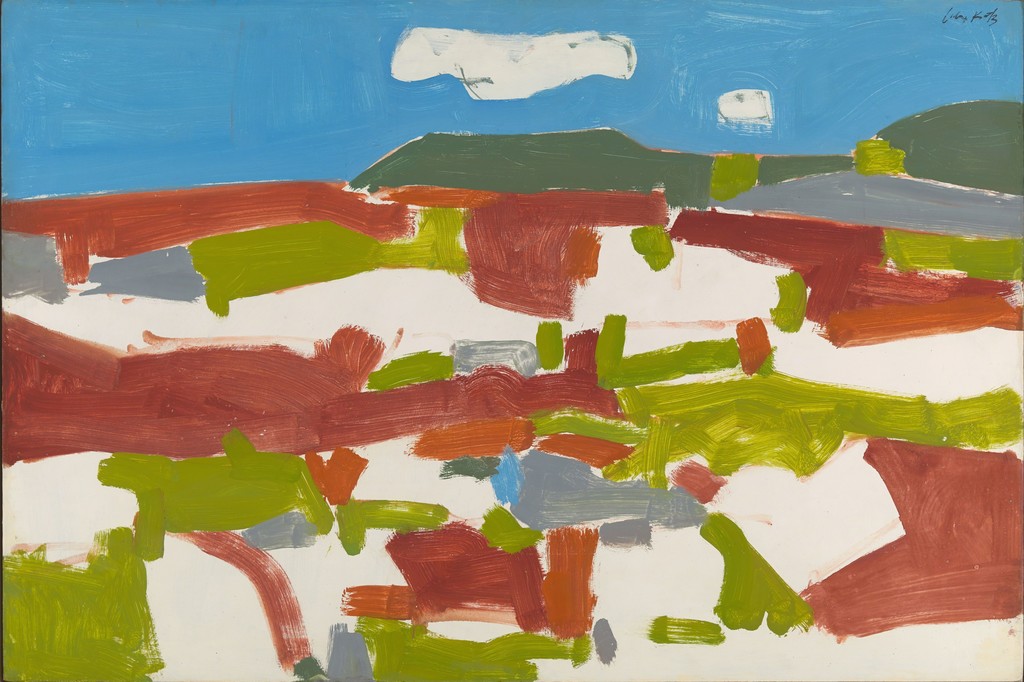
Image result

 Blueberry Field (1955)

 Image result

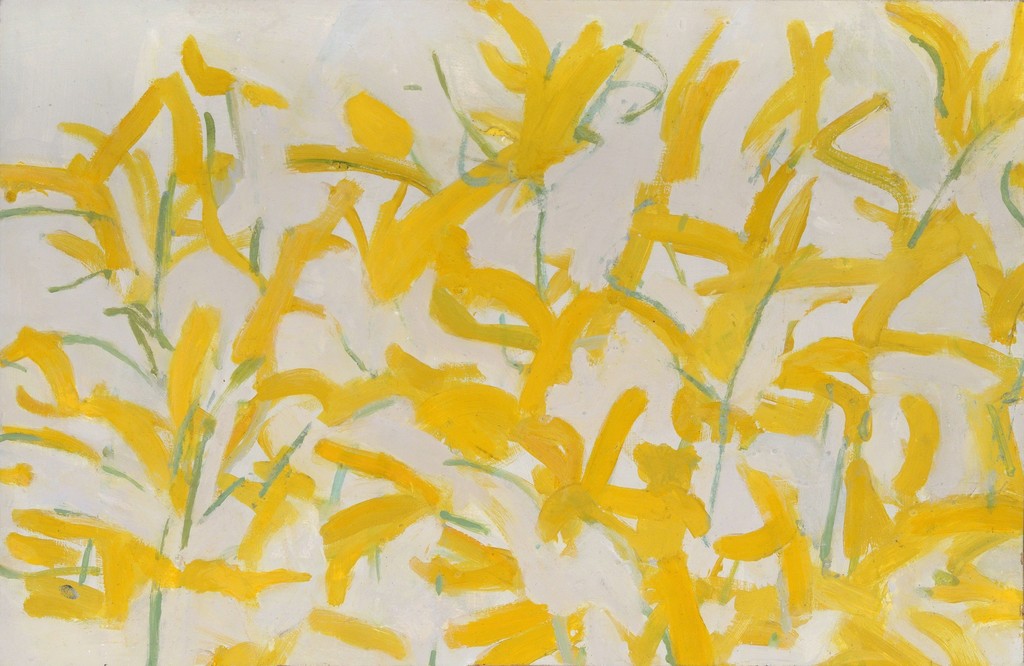
 and Goldenrod (1955) rehearse the immersive experience of nature for which Katz has become so well - known. 

Katz’s portraits, often full - length depictions of friends and, after 1957, his wife Ada, primarily appear before chromatic backgrounds. 

 Image result

In Ada (1959), Katz’s wife is rendered in blue against a brilliant green backdrop. Another example of work from this period is

 Alex Katz, 'Irving and Lucy,' 1958, Colby College Museum of Art

 Irving and Lucy (1958), a portrait of art historian Irving Sandler and his wife set into a vigorously painted but neutral colored ground. 

In 1959 Katz began to experiment with repetitions of the same figure within a single composition. These so - called “reduplicative portraits” include 

 Image result

Ada Ada (1959), a painting with two images of his wife in a blue housecoat with arms crossed, and the equally conceptually sophisticated 
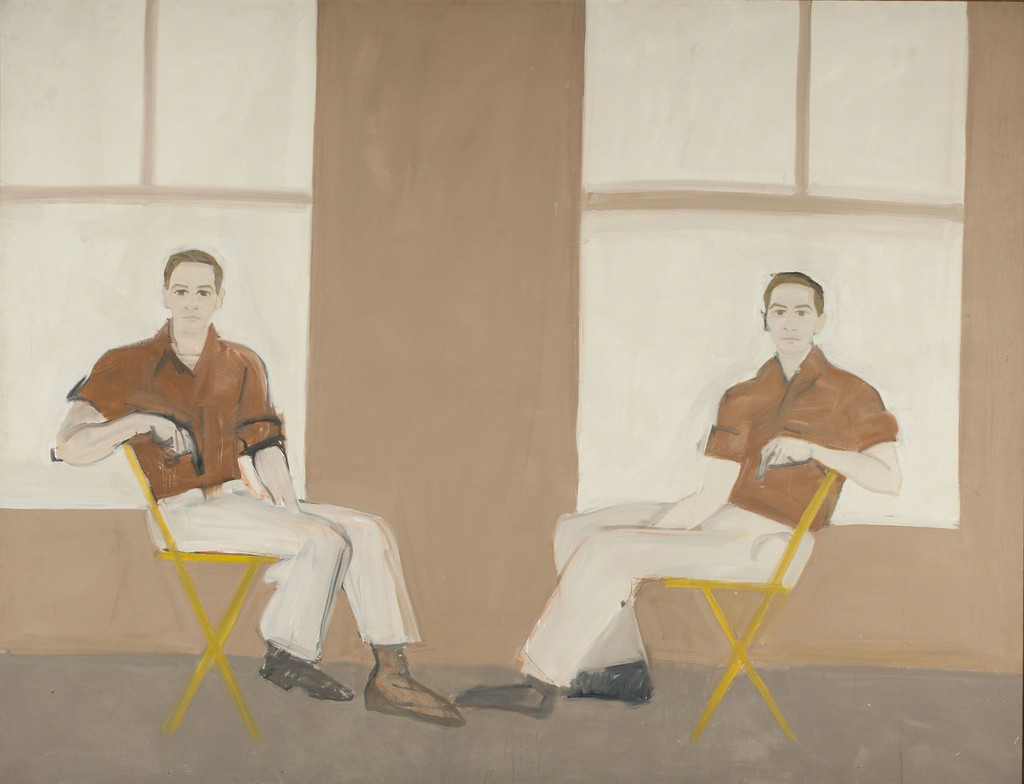
 Image result

Double Portrait of Robert Rauschenberg (1959), in which the artist appears twice, almost mirror ed across the center of the canvas. Multiplied but not identical, these figures inspire close examination, raising questions about copies and originals, reproduction, and representation. 

Also created in 1959, Katz’s first cutouts are freestanding or wall - mounted figures liberated from any ground whatsoever. 


https://www.clevelandart.org/sites/default/files/styles/banner/public/banners/Katz_Bather_B_0.jpg?itok=C6zfyQTR 

 Bather (detail), 1959. Alex Katz (American, b. 1927). Oil on linen; 121.9 x 182.9 cm. Colby College Museum of Art, Museum purchase made possible by Peter and Paula Lunder through the Lunder Foundation, Michael Gordon ’66, Barbara and Theodore Alfond through the Acorn Foundation, and the Jere Abbott Acquisitions Fund, 2016.189. Art © Alex Katz / Licensed by VAGA, New York, NY.


Catalogue:
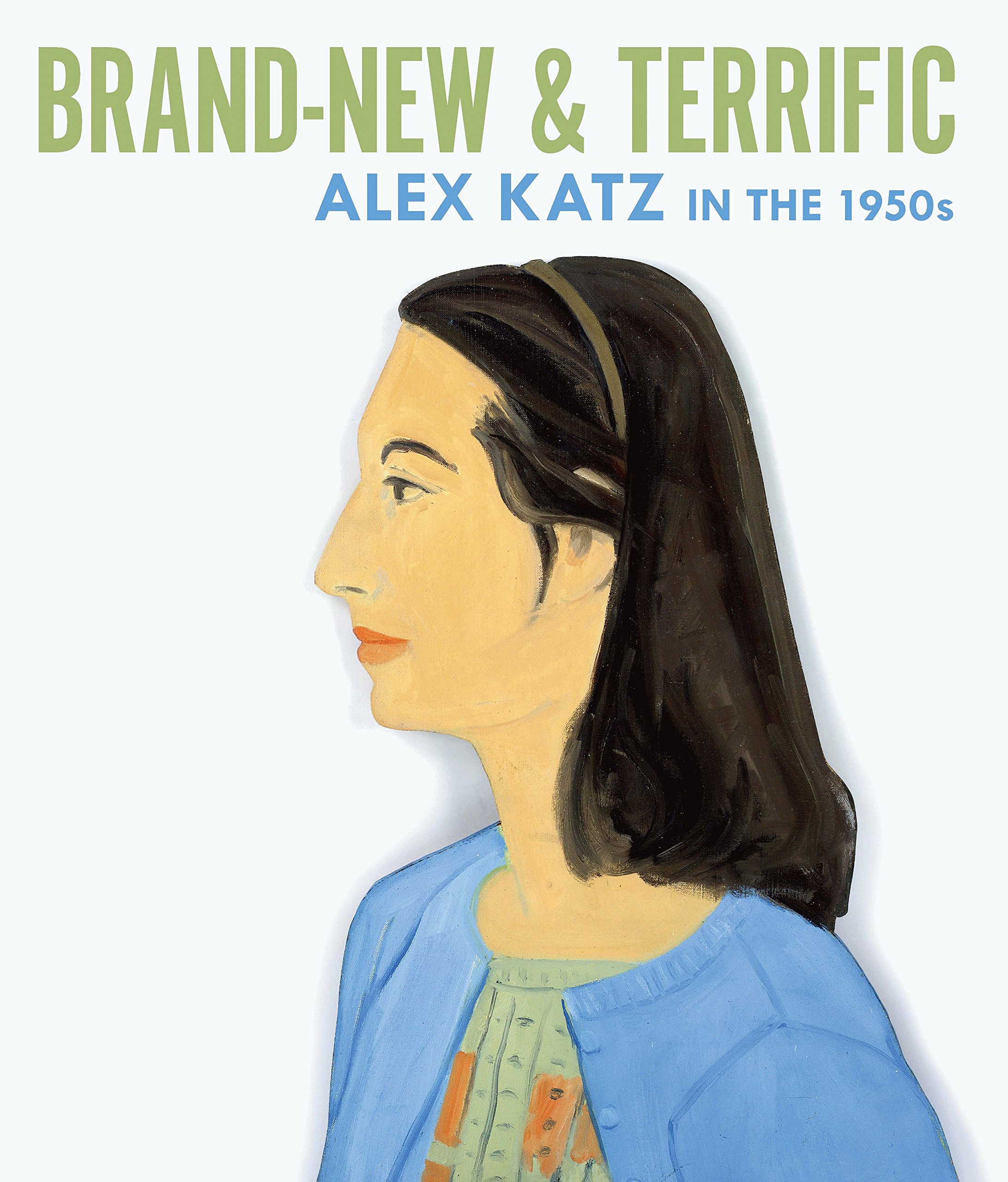


Celebrating an experimental decade in the career of Alex Katz, this book introduces audiences to a relatively unknown body of his work. Coming of age as an artist in the 1950s, Alex Katz set out to reinvent representational painting in the wake of Abstract Expressionism. At first, Katz struggled to find an audience, destroying hundreds of canvases. 

This book surveys the artwork that survived from this momentous decade, one in which he first painted outdoors, innovated with collages, and met Ada del Moro, his wife and muse. The essays in this book contextualize Katz’s painting, consider how he and his peers looked at one another, mined 19th-century portraiture, and borrowed from television, advertising, and cinema. 

The result is a fascinating study of a young artist laying the groundwork for an astonishingly successful career. Fans of Katz will be inspired by the radicality of his early work, and those being introduced to the artist will be struck by its freshness and relevance.

Saturday, July 21, 2018

Corot: Women


Musée Marmottan Monet, Paris
February 8–July 22, 2018

National Gallery of Art 
September 9 through December 31, 2018


29.100.193

Jean-Baptiste-Camille Corot
The Muse: History, c. 1865
oil on canvas
overall: 46 × 35.2 cm (18 1/8 × 13 7/8 in.) framed: 73.7 × 61 × 11.5 cm (29 × 24 × 4 1/2 in.)
Lent by The Metropolitan Museum of Art, H.O. Havemeyer Collection, Bequest of Mrs. H. O. Havemeyer, 1929

Dressed in rustic Italian costume or nude on a grassy plain, rendered with a sophisticated use of color and a deft, delicate touch, Corot's women convey a mysterious sense of their inner lives. Corot: Women features 44 paintings created between the 1840s and the early 1870s: nudes, individual figures in costumes, and an allegorical series of the model in the studio. The National Gallery of Art is the only venue for Corot: Women, on view from September 9 through December 31, 2018.


Jean-Baptiste-Camille Corot, Woman Reading in the Studio, c. 1868 (detail), oil on paperboard on wood, overall: 32.5 x 41.3 cm (12 13/16 x 16 1/4 in.) framed: 50.5 x 59.1 x 6.4 cm (19 7/8 x 23 1/4 x 2 1/2 in.) National Gallery of Art, Washington, Collection of Mr. and Mrs. Paul Mellon.


"Recognized as a great master of landscape painting, Corot is among the best represented artists in the Gallery's collection of 19th-century French art. This unique exhibition presents an opportunity to examine a smaller and less well-known aspect of his career," said Earl A. Powell III, director, National Gallery of Art. "We are grateful to The Edwin L. Cox Exhibition Fund, as well as Leonard and Elaine Silverstein, who helped to make this exhibition possible."

One of the greatest landscape painters of the 19th century, Jean-Baptiste-Camille Corot (1796–1875) bridged the French neoclassical tradition and the impressionist movement of the 1870s. His figure paintings constitute a much smaller and less well-known portion of his oeuvre, but are of equal importance to the history of art, in particular for the founders of modernist painting, such as Paul Cézanne, Pablo Picasso, and Georges Braque. Corot: Women both distills and expands upon the Musée Marmottan Monet's exhibition Corot: The Painter and His Models (Paris, February 8–July 22, 2018).

About the Exhibition

Corot: Women focuses on Corot's images of women painted throughout his career but rarely exhibited in his lifetime. Corot's figural oeuvre is comprised largely of three major motifs: nudes, single figures in costume posed three-quarter and full-length, and a late series of allegories focused on his studio. The model served a series of established poetic types: modern, Italian, or Greek women reading, seated or walking; women at wells; girls weaving crowns of flowers; women playing mandolins or tambourines, seated or standing, in an interior or against a landscape.

The costumed, single-figure works make up the largest component of Corot's figural paintings. They range from vaguely neoclassical images of models in muted tones, antique garb, and simplified compositions, such as

 Image result for [[["xjs.sav.en_US.lxRHmxI2TrQ.O",5]],[["id","type","created_timestamp","last_modified_timestamp","signed_redirect_url","dominant_color_rgb","tag_info","url","title","comment","snippet","image","thumbnail","num_ratings","avg_rating","page","job"]],[["dt_fav_images"]],10000]


Jean-Baptiste-Camille Corot
The Blonde Gascon, c. 1850
oil on canvas
overall: 40.01 x 30.16 cm (15 3/4 x 11 7/8 in.)
Smith College Museum of Art, Northampton, Purchased with the Drayton Hillyer Fund
Photo by Stephen Petegorsky

The Blonde Gascon (c. 1850),

to more romantic evocations of sitters in richly colored exotic dress, as depicted in

https://upload.wikimedia.org/wikipedia/commons/thumb/0/05/Jean-Baptiste-Camille_Corot_-_%27Young_Woman_in_a_Pink_Skirt%27%2C_c._1845%E2%80%9350.jpg/627px-Jean-Baptiste-Camille_Corot_-_%27Young_Woman_in_a_Pink_Skirt%27%2C_c._1845%E2%80%9350.jpg 

Jean-Baptiste-Camille Corot
Young Woman in a Pink Skirt, c. 1845–1850
oil on canvas
overall: 47.8 x 39.3 cm (18 13/16 x 15 1/2 in.)
framed: 71.12 x 62.87 x 7.62 cm (28 x 24 3/4 x 3 in.)
Sterling and Francine Clark Art Institute, Williamstown
Image © Sterling and Francine Art Institute, Williamstown, Massachusetts, USA (photo by Michael Agee)
Young Woman in a Pink Skirt (c. 1845–1850). Incorporating Corot's sophisticated color sensibility in the costume details, each work conveys a distinct feminine subjectivity.

In the mid-1850s the nude became a way for Corot to give a new direction to his career and to establish himself as more than a landscape painter. Corot's engagement with the traditional genre of the nude was complicated by the shifting social position of artists' models and the incursion of photography into artistic practice in France's Second Empire.

Corot's studio, recognized by his contemporaries as essential to understanding his method and the meaning of his art, embodied his artistic aspirations and achievements. Beginning around 1865 Corot transcribed and reinvented his studio in a group of paintings that reference the studio's broader artistic and cultural significance. More than just a working space, Corot's studio was integral to his identity and was a recurring theme in his art, especially in the final decade of his life.

Three highlights in this exhibition are from the Gallery's collection:

 https://upload.wikimedia.org/wikipedia/commons/thumb/f/f1/Jean-Baptiste-Camille_Corot_-_Agostina_-_Google_Art_Project.jpg/555px-Jean-Baptiste-Camille_Corot_-_Agostina_-_Google_Art_Project.jpg


Jean-Baptiste-Camille Corot
Agostina, 1866
oil on canvas
overall: 132.4 x 97.6 cm (52 1/8 x 38 7/16 in.)
framed: 173.7 x 138.4 cm (68 3/8 x 54 1/2 in.)
National Gallery of Art, Washington, Chester Dale Collection
Agostina (1866), Corot's largest figure painting;  

File:Repose by Jean-Baptiste-Camille Corot, 1860, reworked c. 1865-1870 - Corcoran Gallery of Art - DSC01293.JPG


Jean-Baptiste-Camille Corot
The Repose, 1860, reworked c. 1865/1870
oil on canvas
overall: 57.8 x 101.6 cm (22 3/4 x 40 in.)
framed: 83.8 x 127.3 x 12.1 cm (33 x 50 1/8 x 4 3/4 in.)
National Gallery of Art, Washington, Corcoran Collection (William A. Clark Collection)
The Repose (1860, reworked c. 1865/1870), the only female nude he exhibited publicly;

 Image result for [[["xjs.sav.en_US.lxRHmxI2TrQ.O",5]],[["id","type","created_timestamp","last_modified_timestamp","signed_redirect_url","dominant_color_rgb","tag_info","url","title","comment","snippet","image","thumbnail","num_ratings","avg_rating","page","job"]],[["dt_fav_images"]],10000]


Jean-Baptiste-Camille Corot
Corot's Studio: Woman Seated before an Easel, a Mandolin in Her Hand, c. 1868
oil on wood
overall: 61.8 x 40 cm (24 5/16 x 15 3/4 in.)
framed: 78.4 x 56.5 cm (30 7/8 x 22 1/4 in.)
National Gallery of Art, Washington, Widener Collectio
and Corot's Studio: Woman Seated before an Easel, a Mandolin in Her Hand (c. 1868), which is the most resolved from his series of studio paintings.

Corot's female figures hover between the sitter's likeness, art historical precedents, and formal innovations, resulting in mysterious images that go beyond the generic categories of portraiture, allegory, and erotica.

Exhibition Curator

The exhibition is curated by Mary Morton, curator and head of the department of French paintings at the National Gallery of Art, Washington.

https://upload.wikimedia.org/wikipedia/commons/thumb/1/18/Gypsy_Girl_with_Mandolin%2C_by_Jean-Baptiste-Camille_Corot.jpg/555px-Gypsy_Girl_with_Mandolin%2C_by_Jean-Baptiste-Camille_Corot.jpg


Jean-Baptiste-Camille Corot
Gypsy Girl with Mandolin, c. 1870
oil on canvas
overall: 63.5 x 50.8 cm (25 x 20 in.)
framed: 87 x 75.6 x 9.5 cm (34 1/4 x 29 3/4 x 3 3/4 in.)
National Gallery of Art, Washington, Gift of Count Cecil Pecci-Blunt

https://upload.wikimedia.org/wikipedia/commons/thumb/0/01/Jean-Baptiste_Camille_Corot_-_Fille_italienne_%28ca.1872%29.jpg/650px-Jean-Baptiste_Camille_Corot_-_Fille_italienne_%28ca.1872%29.jpg


Jean-Baptiste-Camille Corot
Italian Girl, c. 1872
oil on canvas
overall: 65 x 54.5 cm (25 9/16 x 21 7/16 in.)
framed: 94.9 x 84.5 x 11.4 cm (37 3/8 x 33 1/4 x 4 1/2 in.)
National Gallery of Art, Washington, Gift of the Avalon Foundation


Jean-Baptiste-Camille Corot
Interrupted Reading, c. 1870
oil on canvas mounted on board
overall: 92.23 x 65.09 cm (36 5/16 x 25 5/8 in.)
framed: 131 x 104 x 14 cm (51 9/16 x 40 15/16 x 5 1/2 in.)
The Art Institute of Chicago, Potter Balmer Collection
The Art Institute of Chicago / Art Resource, NY

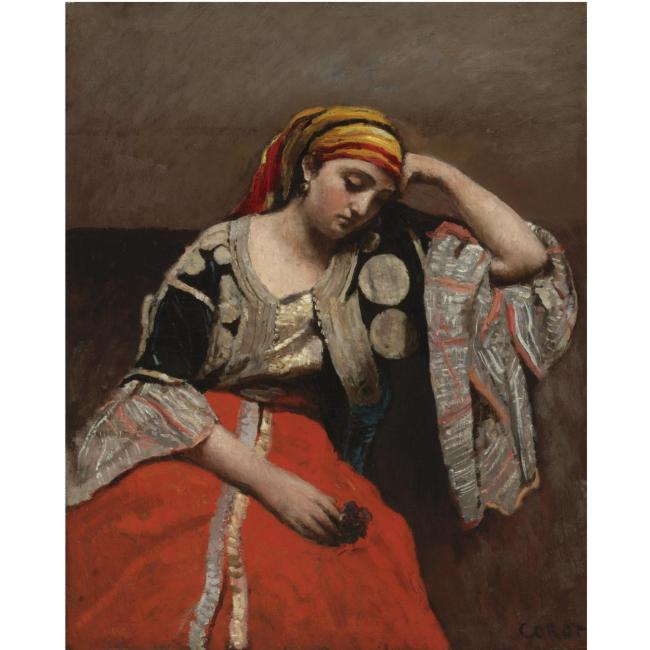
https://upload.wikimedia.org/wikipedia/commons/c/c7/Jean-Baptiste-Camille_Corot_-_Juive_d%27Alger.jpg

Jean-Baptiste-Camille Corot
Juive d'Alger, c. 1870
oil on canvas
overall: 81.9 x 64.8 cm (32 1/4 x 25 1/2 in.)
Private Collector

Image result for [[["xjs.sav.en_US.23uiea-BVMI.O",5]],[["id","type","created_timestamp","last_modified_timestamp","signed_redirect_url","dominant_color_rgb","tag_info","url","title","comment","snippet","image","thumbnail","num_ratings","avg_rating","page","job"]],[["dt_fav_images"]],10000]


Jean-Baptiste-Camille Corot
Melancholy, c. 1860
oil on canvas
overall: 48 x 36 cm (18 7/8 x 14 3/16 in.)
framed: 75.2 x 63.2 x 11 cm (29 5/8 x 24 7/8 x 4 5/16 in.)
Ny Carlsberg Glyptotek, Copenhagen


Image result for [[["xjs.sav.en_US.23uiea-BVMI.O",5]],[["id","type","created_timestamp","last_modified_timestamp","signed_redirect_url","dominant_color_rgb","tag_info","url","title","comment","snippet","image","thumbnail","num_ratings","avg_rating","page","job"]],[["dt_fav_images"]],10000]

Jean-Baptiste-Camille Corot
Wounded Eurydice, c. 1868–1870
oil on canvas
overall: 60.64 x 45.4 cm (23 7/8 x 17 7/8 in.)
Minneapolis Institute of Art, Bequest of Mrs. Egil Boeckmann


Image result for [[["xjs.sav.en_US.sjmJ-Qqmk9Q.O",5]],[["id","type","created_timestamp","last_modified_timestamp","signed_redirect_url","dominant_color_rgb","tag_info","url","title","comment","snippet","image","thumbnail","num_ratings","avg_rating","page","job"]],[["dt_fav_images"]],10000]

Jean-Baptiste-Camille Corot
Woman with a Large Toque and a Mandolin, c. 1850–1855
oil on canvas
overall: 112 x 88 cm (44 1/8 x 34 5/8 in.)
Private Collection


Image result for [[["xjs.sav.en_US.sjmJ-Qqmk9Q.O",5]],[["id","type","created_timestamp","last_modified_timestamp","signed_redirect_url","dominant_color_rgb","tag_info","url","title","comment","snippet","image","thumbnail","num_ratings","avg_rating","page","job"]],[["dt_fav_images"]],10000]


Jean-Baptiste-Camille Corot
Young Woman at The Fountain, c. 1860
oil on canvas
overall: 65 x 42 cm (25 9/16 x 16 9/16 in.)
Musée d'Art d'Historie de Genève
© Musées d’art et d’histoire, Ville de Genève, Dépôt de la Fondation Jean-Louis Prévost & de laFondation Gandur pour l’art, Genève, 1875, n° inv. BA 2010-0001, photo by Bettina Jacot-Descombes

fine art with gypsy  | -Camille Corot - Gypsy Girl at a Fountain, 1870 at the Museum of Art ...

Jean-Baptiste-Camille Corot
Bohemian Woman at a Fountain, c. 1865–1870
oil on canvas
overall: 58.1 x 42.86 cm (22 7/8 x 16 7/8 in.)
Philadelphia Museum of Art, The George W. Elkins Collection, 1924
The Philadelphia Museum of Art / Art Resource, NY

Image result for [[["xjs.sav.en_US.y5vqFNLwkD0.O",5]],[["id","type","created_timestamp","last_modified_timestamp","signed_redirect_url","dominant_color_rgb","tag_info","url","title","comment","snippet","image","thumbnail","num_ratings","avg_rating","page","job"]],[["dt_fav_images"]],10000]


Jean-Baptiste-Camille Corot
The Crown of Flowers, c. 1865–1870
oil on canvas
overall: 64.8 x 43.2 cm (25 1/2 x 17 in.)
framed: 91.44 x 49.53 x 10.16 cm (36 x 19 1/2 x 4 in.)
The Baltimore Museum of Art, The Helen and Abram Eisenberg Collection
Photo by Mitro Hood

Image result for [[["xjs.sav.en_US.y5vqFNLwkD0.O",5]],[["id","type","created_timestamp","last_modified_timestamp","signed_redirect_url","dominant_color_rgb","tag_info","url","title","comment","snippet","image","thumbnail","num_ratings","avg_rating","page","job"]],[["dt_fav_images"]],10000]


Jean-Baptiste-Camille Corot
Springtime of Life, 1871
oil on canvas
overall: 105.09 x 74.61 cm (41 3/8 x 29 3/8 in.)
Minneapolis Institute of Art, Bequest of Mrs. Erasmus C. Lindley in memory of her father, James J. Hill


Image result

Jean-Baptiste-Camille Corot
Diana and Actaeon (Diana Surprised in Her Bath), 1836
oil on canvas
overall: 156.53 x 112.71 cm (61 5/8 x 44 3/8 in.)
Lent by The Metropolitan Museum of Art, Robert Lehman Collection, 1975

 File:Jean-Baptiste Camille Corot - Marietta.jpg

Jean-Baptiste-Camille Corot
Marietta (Roman Odalisque), 1843
oil on paper mounted on canvas
overall: 29.3 x 44.2 cm (11 9/16 x 17 3/8 in.)
framed: 49 x 63 x 8 cm (19 5/16 x 24 13/16 x 3 1/8 in.)
Petit Palais, Musée des Beaux-Arts de la Ville de Paris

 File:Jean-Baptiste Camille Corot Bacchante with a Panther.jpg


Jean-Baptiste-Camille Corot
Bacchante with a Panther, 1860, reworked c. 1865–1870
oil on canvas
overall: 55 x 95 cm (21 5/8 x 37 3/8 in.)
framed: 81 x 121 x 9 cm (31 7/8 x 47 5/8 x 3 9/16 in.)
Collection of Shelburne Museum, Anonymous gift in memory of Harry Payne Bingham

File:Camille Corot - Bacchante by the Sea - 1865.jpg


Jean-Baptiste-Camille Corot
Bacchante by the Sea, 1865
oil on wood
overall: 38.74 x 59.37 cm (15 1/4 x 23 3/8 in.)
framed: 54 x 75 x 7 cm (21 1/4 x 29 1/2 x 2 3/4 in.)
Lent by The Metropolitan Museum of Art, H.O. Havemeyer Collection, Bequest of Mrs. H. O.Havemeyer, 1929


Image result

Jean-Baptiste-Camille Corot
Saint Sébastien, c. 1850–1860
oil on canvas
overall: 90 x 60.5 cm (35 7/16 x 23 13/16 in.)
Musée des Beaux-Arts, Lyon
© Lyon MBA - Photo RMN / Ojeda-Le Mage

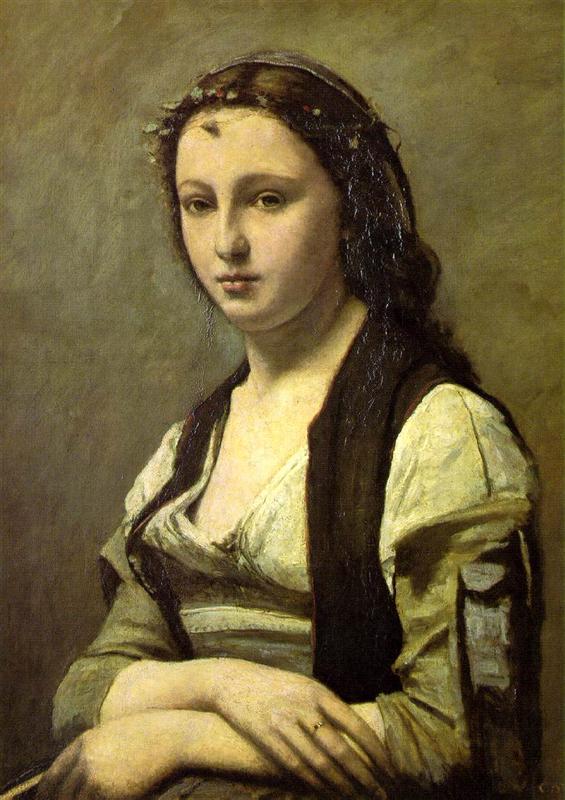
https://uploads4.wikiart.org/images/camille-corot/the-woman-with-a-pearl-1870.jpg!HalfHD.jpg

Jean-Baptiste-Camille Corot
Woman with a Pearl, c. 1868–1870
oil on canvas
overall: 70 x 55 cm (27 9/16 x 21 5/8 in.)
framed: 93 x 74.5 x 9 cm (36 5/8 x 29 5/16 x 3 9/16 in.)
Musée du Louvre, Paris, Départment des Peintures
© RMN-Grand Palais / Art Resource, NY, photo by Stephane Marechalle


Image result

Jean-Baptiste-Camille Corot
Young Greek Woman, c. 1870–1871
oil on canvas
overall: 84.14 x 70.49 cm (33 1/8 x 27 3/4 in.)
framed: 102.3 x 73.7 x 10.8 cm (40 1/4 x 29 x 4 1/4 in.)

Image result

Jean-Baptiste-Camille Corot
Mademoiselle de Foudras, 1872
oil on canvas
overall: 88.9 x 59.3 cm (35 x 23 3/8 in.)
Lent by Glasgow Life (Glasgow Museums) on behalf of Glasgow City Council. Presented by Trustees of DWT Cargill, 1950


Jean-Baptiste-Camille Corot
Woman with a Pink Shawl, c. 1865–1870
oil on canvas
overall: 66.7 x 55.2 cm (26 1/4 x 21 3/4 in.)
Museum of Fine Arts, Boston, The Henry C. and Martha B. Angell Collection
Photograph © 2018 Museum of Fine Arts, Boston

Image result for [[["xjs.sav.en_US.y5vqFNLwkD0.O",5]],[["id","type","created_timestamp","last_modified_timestamp","signed_redirect_url","dominant_color_rgb","tag_info","url","title","comment","snippet","image","thumbnail","num_ratings","avg_rating","page","job"]],[["dt_fav_images"]],10000]

Jean-Baptiste-Camille Corot
Sibylle, c. 1870
oil on canvas
overall: 81.92 x 64.77 cm (32 1/4 x 25 1/2 in.)
framed: 95.7 x 83 x 7.5 cm (37 11/16 x 32 11/16 x 2 15/16 in.)
Lent by The Metropolitan Museum of Art, H.O. Havemeyer Collection, Bequest of Mrs. H. O. Havemeyer, 1929


Fixed size image

Jean-Baptiste-Camille Corot
Italian Woman (Woman with the Yellow Sleeve), c. 1870
oil on canvas
overall: 73 x 59 cm (28 3/4 x 23 1/4 in.)
framed: 87 x 57.4 x 13.5 cm (34 1/4 x 22 5/8 x 5 5/16 in.)
The National Gallery, London, Accepted in lieu of Inheritance Tax by HM Government from the estate of Lucian Freud and allocated to the National Gallery, 2012
© The National Gallery, London


File:Jean-Baptiste-Camille Corot, 1860–65, Girl with Mandolin, oil on canvas, 51.4 x 40.3 cm, Saint Louis Art Museum (cropped).jpg

Jean-Baptiste-Camille Corot
Woman with a Mandolin, c. 1860–1865
oil on canvas
overall: 51.4 x 40.3 cm (20 1/4 x 15 7/8 in.)
framed: 69.2 x 59.4 x 7 cm (27 1/4 x 23 3/8 x 2 3/4 in.)
Saint Louis Art Museum, Museum Purchase

https://upload.wikimedia.org/wikipedia/commons/thumb/9/92/Camille_Corot_-_A_Woman_Reading_-_The_Metropolitan_Museum_of_Art.jpg/707px-Camille_Corot_-_A_Woman_Reading_-_The_Metropolitan_Museum_of_Art.jpg

Jean-Baptiste-Camille Corot
Woman Reading in the Country, c. 1868–1870
oil on canvas
overall: 54.3 x 37.5 cm (21 3/8 x 14 3/4 in.)
framed: 76 x 61 x 9 cm (29 15/16 x 24 x 3 9/16 in.)
Lent by The Metropolitan Museum of Art, Gift of Louise Senff Cameron, in memory of her uncle,Charles H. Senff, 1928

https://upload.wikimedia.org/wikipedia/commons/thumb/8/82/Young_Girl_Reading_by_Jean-Baptiste-Camille_Corot_c1868.jpg/980px-Young_Girl_Reading_by_Jean-Baptiste-Camille_Corot_c1868.jpg


Jean-Baptiste-Camille Corot
Woman Reading in The Studio, c. 1868
oil on paperboard on wood
overall: 32.5 x 41.3 cm (12 13/16 x 16 1/4 in.)
framed: 50.5 x 59.1 x 6.4 cm (19 7/8 x 23 1/4 x 2 1/2 in.)
National Gallery of Art, Washington, Collection of Mr. and Mrs. Paul Mellon


https://upload.wikimedia.org/wikipedia/commons/5/59/Jean-Baptiste-Camille_Corot_-_Lady_in_Blue_-_WGA5304.jpg

Jean-Baptiste-Camille Corot
The Lady in Blue, 1874
oil on canvas
overall: 80 x 50.5 cm (31 1/2 x 19 7/8 in.)
framed: 125.5 x 95.5 x 16.5 cm (49 7/16 x 37 5/8 x 6 1/2 in.)
Musée du Louvre, Paris, Départment des Peintures
© RMN-Grand Palais / Art Resource, NY, photo by Stephane Marechalle

Friday, July 20, 2018

Charles Demuth: Definitively Modern


Demuth Museum, Lancaster, PA
June 2 through September 2, 2018

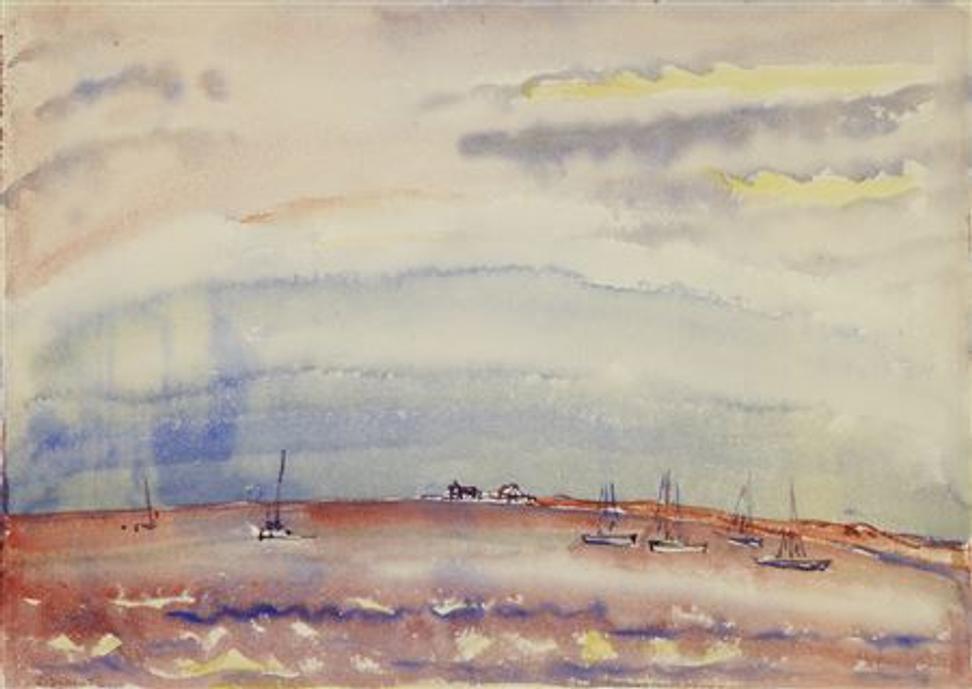
Charles Demuth, Marine, n.d., watercolor on paper, collection of the Demuth Museum, Lancaster, PA

Charles Demuth, Marine, n.d., watercolor on paper, collection of the Demuth Museum, Lancaster, PA

The exhibition Charles Demuth: Definitively Modern and accompanying catalog focus on the Demuth Museum’s collection of original art by Charles Demuth.  The collection is now the largest in the world with 52 works of art as well as it is the largest repository of original archival material on the artist.

File:Charles Demuth, Landscape, watercolor, Demuth Museum Collection.jpg
Charles Demuth, Landscape, watercolor, Demuth Museum Collection

The exhibit will feature highlights from the collection.


Demuth played a vital role in the American modernist art scene both abroad and at home while surrounded by the who’s who of the expatriate art scene and close friends including, Leo and Gertrude Stein, Marsden Hartley, Eugene O’Neill, and Marcel Duchamp. Demuth soaked up the experience and dynamism that was life as an artist in the early 20th century and brought it home to his studio on East King Street in Lancaster, where his primary subject matter was the city of Lancaster and his mother’s flower garden.

Demuth's evolving style and pioneering artistic achievements, celebrated in his famous architectural works, are inseparable from his lifelong exploration and contributions in watercolor. Demuth suffered from diabetes, a debilitating disease that rendered him incapable of anything other than bed rest for periods of his life, and assisted his developments in watercolor, which was more suited to his lifestyle and was currying favor with the early modernists of the time.

During the years 1914-1919, which are considered to be Demuth's most prolific, he utilized the free-flowing effects of the watercolor medium to capture his travels to New York and Provincetown. During these frequent excursions, he spent time with a group of companions, many of whom formed the cultural elite, and was exposed to the work of expatriate artists, often via exhibitions of European and American modern art in the galleries of Alfred Stieglitz. Despite his attachment to New York, Demuth consistently returned to Lancaster and painted most in his home studio. He preferred to interpret what he saw literally in his own backyard, including the vegetables and flowers that were so important in his agricultural city.


Accompanying this exhibition is a major catalogue, Charles Demuth: The Demuth Museum Collection by Anne M. Lampe published by the Demuth Museum, 176 pages. $29.95


In Praise of Painting: Dutch Masterpieces at The Met


Exhibition Dates:October 16, 2018–October 1, 2020
Exhibition Location:
The Met Fifth Avenue, Lower Level, Robert Lehman Wing, 
Galleries 964–965


Dutch paintings of the 17th century—the Golden Age of Rembrandt, Hals, and Vermeer—have been a highlight of The Metropolitan Museum of Art's collection since the Museum's founding purchase in 1871. Opening October 16, the exhibition In Praise of Painting: Dutch Masterpieces at The Met will bring together some of the Museum's greatest paintings to present this remarkable chapter of art history in a new light. Through roughly 65 works organized thematically, the exhibition will orient visitors to key issues in 17th-century Dutch culture—from debates about religion and conspicuous consumption to painters' fascination with the domestic lives of women.
 

The exhibition will provide a fresh perspective on the canon and parameters of the Dutch Golden Age by uniting paintings from The Met's Benjamin Altman, Robert Lehman, and Jack and Belle Linsky bequests. Works typically displayed separately in the Museum's galleries—such as Rembrandt's Gerard de Lairesse and Lairesse's own Apollo and Aurora—will be presented side by side, producing a visually compelling narrative about the tensions between realism and idealism during this period.


The presentation will offer an opportunity to display recently conserved and rarely exhibited works, including

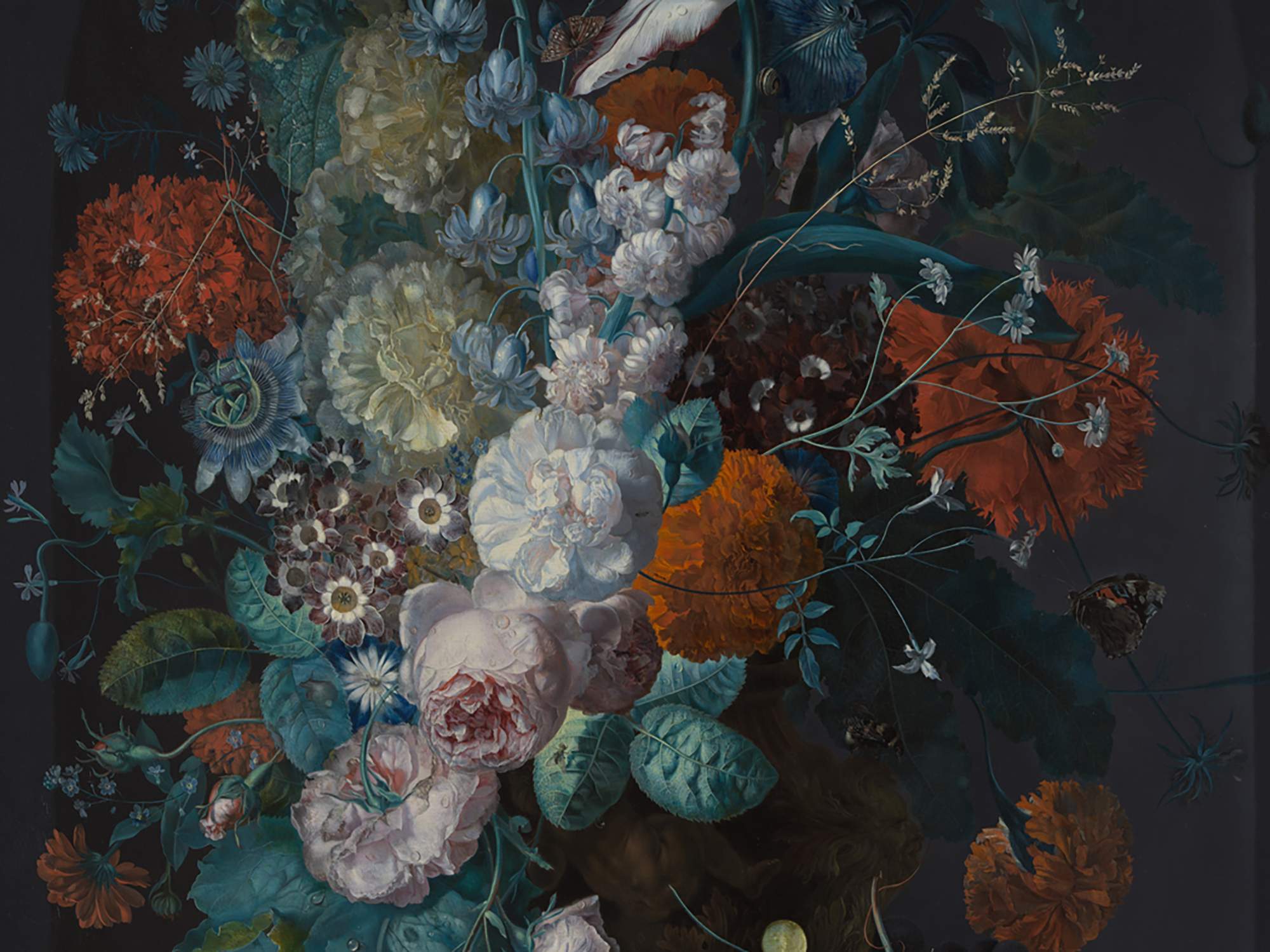
A Vase of Flowers

Margareta Haverman's A Vase of Flowers—one of only two known paintings by the artist and the only painting by an early modern Dutch woman in the Museum's collection. The exceptional quality of Rembrandt's late self-portrait will be even more evident following the removal of a synthetic varnish dating to the mid-20th century.
The title of the exhibition comes from one of the period's major works of art theory, Philips Angel's The Praise of Painting (1642), a pioneering defense of realism in art. Exhibition visitors will also be able to peruse a comprehensive two-volume catalogue by the late Walter Liedtke about The Met's Dutch paintings collection.


In Praise of Painting: Dutch Masterpieces at The Met is organized by Adam Eaker, Assistant Curator in The Met's Department of European Paintings.
The exhibition will be featured on The Met's website, as well as on Facebook, Instagram, and Twitter using the hashtag #MetDutchMasterpieces.

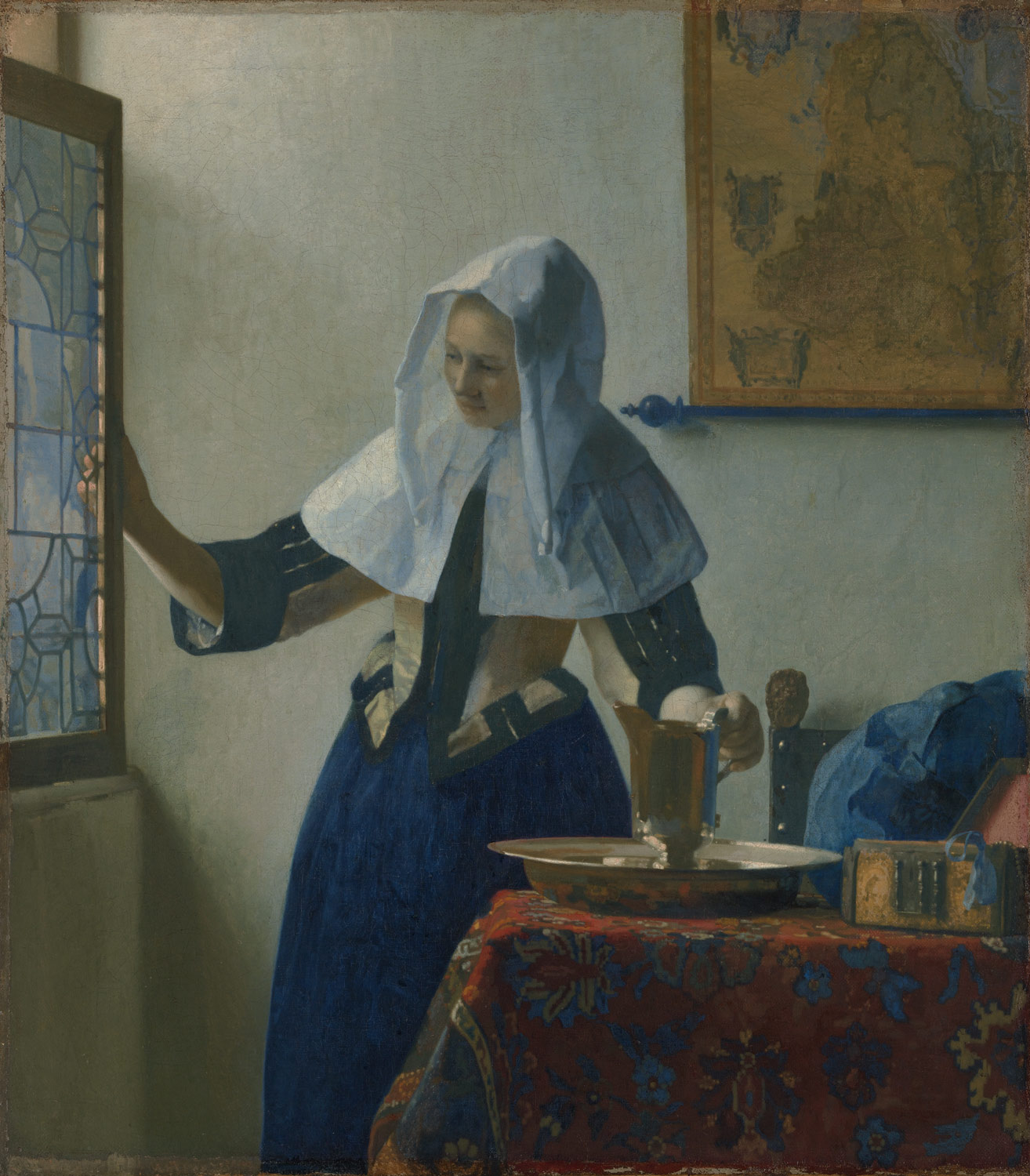
Young Woman with a Water Pitcher

Johannes Vermeer (Dutch, Delft 1632–1675 Delft). Young Woman with a Water Pitcher, ca. 1662. Oil on canvas, 18 x 16 in. (45.7 x 40.6 cm). The Metropolitan Museum of Art, New York, Marquand Collection, Gift of Henry G. Marquand, 1889

Vermeer. The Complete Works

Vermeer. The Complete Works

Karl Schütz
Hardcover with 3 fold-outs and ribbon bookmark, 11.4 x 15.6 in., 258 pages, in cardboard box with handle
TASCHEN

ISBN 978-3-8365-3641-7
Edition: English

GALA SALVADOR DALÍ


Museu Nacional d'Art de Catalunya , Barcelona
July 5th to October 14th, 2018  

CURATOR : Estrella de Diego, professor of Art History (UCM)

With this exhibition, the Museu Nacional d'Art de Catalunya and Fundació Gala - Salvador Dalí intend to reveal Gala: muse, artist and a key figure in twentieth - century art. Companion to Dalí and before that, to the poet Paul Éluard, admired sometimes, sometimes ignored or slighted, Gala is undoubtedly a key figure of the vanguards. Without her, the surrealist playing board is missing a piece. Paintings by Max Ernst, photographs by Man Ray and Cecil Beaton and especially the works by Salvador Dalí are much more than portraits: they make up an autobiographical journey where, as a post modernism heroine, Gala imagined and created her own image. 

Moreover, this exhibition will follow Salvador Dalí’s evolution as a painter and brings together a significant collection of his works, some 60 in total, including oil paintings and drawings. 

The exhibition will also present a selection of paintings, drawings and photographs by ot her artists who were part of the surrealist universe, such as Max Ernst, Picasso, Man Ray, Cecil Beaton and Br assa ï . An interesting collection of letters, postcards and books will also be on display for the first time, as well as dresses and objects from Gala's personal boudoir . 

In total, the exhibition will present approximately 180 pieces that reconstruct Gala’s complex and fascinating character. The exhibition will unveil a Gala who camouflaged herself as a muse while forging her own path as an artist: she writes, imagines and creates her own image, in addition to playing an essential role in Dalí's artistic development. 

“Who was the real Gala? Who was this woman whom everybody noticed, who awakened the hatred of Breton or Buñuel; unconditional love in Éluard and Dalí; passion in Max Ernst; loyal friendship in Crevel and was Man Ray’s model... Was she, above a ll else, simply an inspiring muse for artists and poets? Or, de spite having few signed pieces – only a few surreal objects that are currently lost, certain cadavres exquis and the pages of a diary – was she more of a creator? 

Gala was a creative woman who wrote, read and designed her own clothes, in addition to her image when Dalí portrays her; she co - authored so many of her second husband’s work that towards the end of his life, he began to sign his pieces with both their names – ‘Gala - Salvador Dalí’ . 

And we could go further still: if we believe that Dalí is not only the paintings he paints but the image he constructs, to what extent can we say that Gala is part of that maneuver of the “artist as a work of art?” These are some of the questions that Estrella de Diego poses in this exhibition. Never before has an exhibition dedicated to Gala been proposed at an international level, partly because of the preconceptions regarding her and partly because of the extreme fragility of many of the pieces that are essential to reconstruct her portrait. 

 
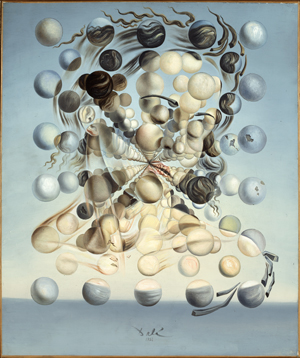
Salvador Dalí
Galatea of the Spheres
1952
© Salvador Dalí, Fundació Gala-Salvador Dali, VEGAP, Barcelona, 2018

Exhibition view from Serielle Formationen. 1967/2017 at Daimler Contemporary Berlin
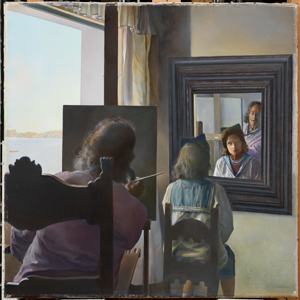
Salvador Dalí
Dalí Seen from the Back Painting Gala from de Back Eternalized by Six Virtual Corneas Provisionally Reflected by Six Real Mirrors
1972-1973
© Salvador Dalí, Fundació Gala-Salvador Dali, VEGAP, Barcelona, 2018


trait
Exhibition view from Serielle Formationen. 1967/2017 at Daimler Contemporary Berlin
Salvador Dalí
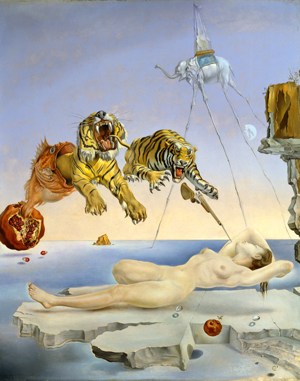
Dream caused by the Flight of a Bee Around a Pomegrate one second before awakening
c. 1944
© Salvador Dalí, Fundació Gala-Salvador Dali, VEGAP, Barcelona, 2018

The works in this exhibition will come mainly from Dalí Foundation , contributing more than 40 pieces, and from private collections and international museums such as the Dalí Museum in St. Petersburg (Florida); Haggerty Mu seum of Art, (Milwakee); Centre d’Art Georges Pompidou (Paris); Bayerische Staatsgemäldesammlungen, Pinakothek der Moderne (Munich); Museo di Arte Moderna e Contemporanea di Trento e Rovereto (Rovereto); Fundación Thyssen - Bornemisza and Museo Nacional Cent ro de Arte Reina Sofía (Madrid), among others.