Christie’s
Post-War and Contemporary Art Evening Auction will present work by some of the great artists of the 20
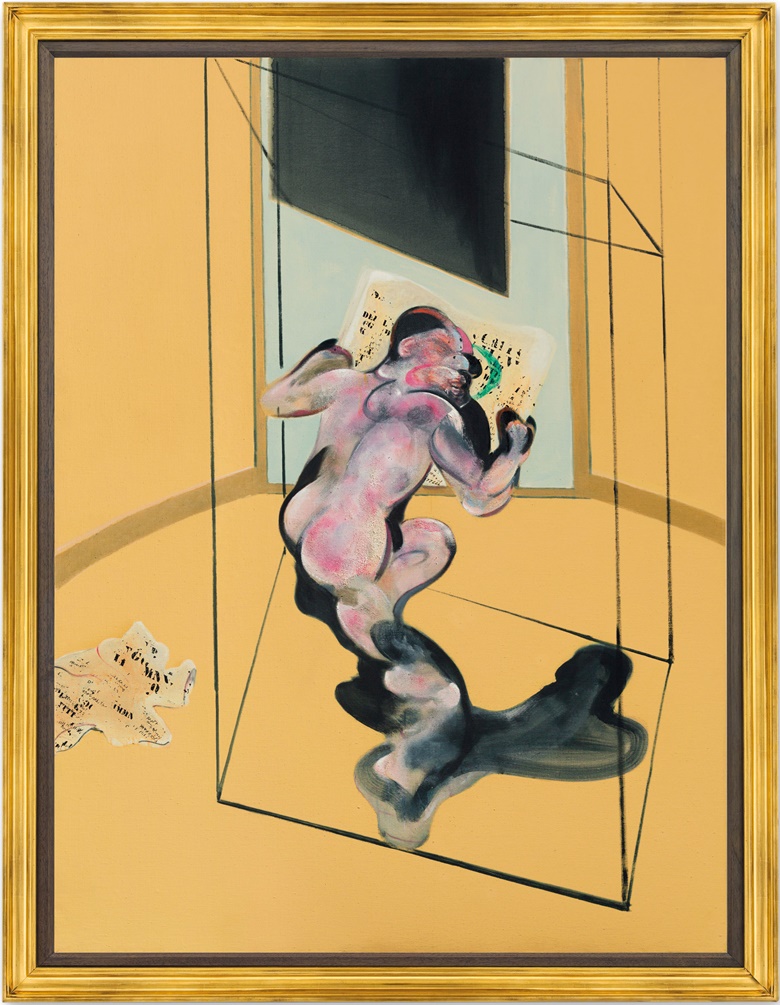
th Century alongside those currently at the forefront of their artistic practice. The season will be led by Francis Bacon’s
Figure in Movement (1972,
estimate: £15,000,000-20,000,000), a seminal work which creates a vivid
sense of the transition from life to death, and Gerhard Richter’s
Schädel (Skull)
(1983, estimate on request), unveiled for the first time in 30 years.
Alongside these are masterpieces by American Contemporary artists Jeff
Koons and Mark Grotjahn, as well as the finest examples of European
Post-War Abstraction with works by Lucio Fontana, Piero Manzoni, Yves
Klein, Jean Dubuffet and Pierre Soulages, and German artists such as
Georg Baselitz, Anselm Kiefer, Martin Kippenberger, Albert Oehlen and
Sigmar Polke.
Three works from the personal collection of Paul Maenz and
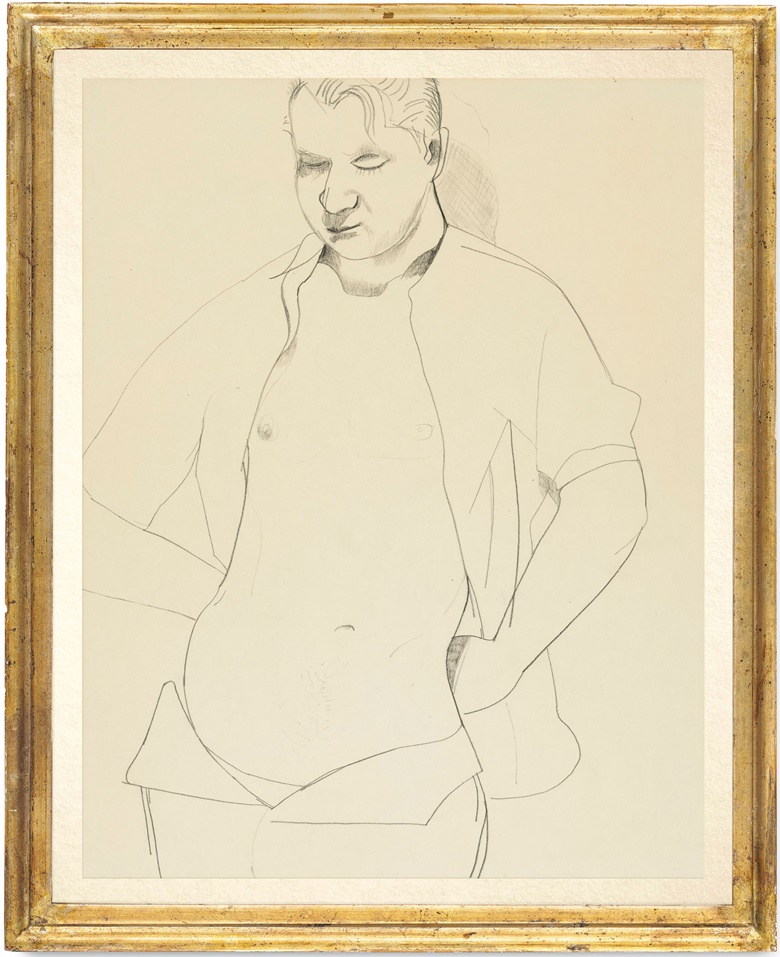
12 works by Francis Bacon and Lucian Freud
(see separate post here) will be offered, the largest
and most diverse selection of works ever offered at auction by the
artists. The
Post-War and Contemporary Art Evening Auction will be held on 4 October 2018 and is followed by the
Post-War and Contemporary Art Day Auction on 5 October 2018. All works will be exhibited at King Street from 28 September 2018.
American Contemporary Art

Jeff Koons, Cracked Egg (Blue) (1994-2006, estimate: £10,000,000-15,000,000). © Christie’s Images Limited 2018.
With its monumental scale, vibrant colour, elegant contours and dual mirrored surface,
Cracked Egg (Blue)
(19942006, estimate: £10,000,000-15,000,000), is an icon of Jeff
Koons’s sculptural practice. A feat of technical virtuosity, engineered
to precision over a twelve-year period, it is one of the central works
in Koons’s landmark
Celebration series, taking its place alongside masterpieces such as
Balloon Dog and
Tulips.
.jpg)
The current auction record for any living artist was set by Jeff Koons’s
Balloon Dog (Orange), 1994-2000, which sold for $58,405,000 at at Christie’s New York on November 12, 2013.
Mark Grotjahn’s
Face Paintings
combine expressive abstraction and kaleidoscopic hues, with strong
connections to the mask-like faces rendered by Picasso and Matisse.
Within
Untitled (Yellow and Green Low Fall Face 41.80) (2011,
estimate: £6,000,000-8,000,000) a palette of whites, greens, yellows,
blues and blacks conjures an animated surface of movement and colour.
Bright light appears to explode from the centre of intertwined lines
that subtly intimate the features of a face.
Works from the Collection of Paul Maenz
Christie’s will offer three works from the personal collection of Paul Maenz: Albert Oehlen’s
Stier mit Loch (Bull with Hole) (1986, estimate: £800,000-1,200,000), Anselm Kiefer’s
Midgard (1983-85, estimate: £1,200,000-1,800,000)
Keith Haring, Untitled (1984, estimate: £3,000,000-5,000,000). © Christie’s Images Limited 2018.
and Keith Haring’s
Untitled (1984,
estimate: £3,000,000-5,000,000).
One of the most influential gallerists
of his generation, Maenz had a pivotal impact on the international art
world during the 1970s and 1980s, introducing new waves of Avant-garde
artists to both European and American audiences. Working closely with
artists, curators and critics, Maenz gave voice to some of the most
pioneering movements of the time: most notably Conceptualism, Arte
Povera, Italian Transavanguardia and Neo-Expressionism. The works
presented from his collection offer a snapshot of this world during the
mid-1980s, capturing the spirit of political subversion, painterly
radicalism and restless creative optimism that captivated Maenz during
this period.
European Abstraction
‘Beyond the Monochrome’
brings into focus the seminal achievements of Lucio Fontana, Piero
Manzoni and Yves Klein. United by their far-reaching innovations in
relation to the picture plane, the artistic process, materiality,
spirituality and transcendence, Fontana, Manzoni and Klein together
forged a new era.
Concetto spaziale, Attese (1959, estimate:
£1,200,000-1,800,000) is an early example of Fontana’s tagli or
‘slashes’, which ruptured the canvas as part of his Spatialist mission
to introduce an infinite fourth dimension into the work of art. Made in
the same year,
Untitled Blue Monochrome (IKB 276) (1959,
estimate: £4,000,000-6,000,000) exemplifies Klein’s ‘International Klein
Blue’ monochromes, through which art became a portal to the unknown.
Manzoni’s
Achrome (1957-58, estimate: £3,000,000-5,000,000)
takes the monochrome to absolution, creating a colourless surface of
pure, limitless potential.
Held in the same collection since the
1980s, and featured in the Hirshhorn Museum & Sculpture Garden’s
major Jean Dubuffet retrospective in 1993,
Madame au Jardin (Lady in the Garden) (1956, estimate: £2,500,000-3,500,000) is a romantic large-scale work from the artist’s important series of
Assemblages. Never before seen in public,
Peinture 162 x 114 cm, 29 août 1958
(1958, estimate: £1,800,000-2,200,000) is a dramatic large-scale oil
painting by Pierre Soulages. It has been held in the same private
collection for the last 60 years, and dates from a defining decade in
the artist’s career.
German Art
The diversity of German
contemporary art is represented by a group of 13 works by Georg
Baselitz, Anselm Kiefer, Martin Kippenberger, Albert Oehlen and Sigmar
Polke. Georg Baselitz’s inverted portrait
Fingermalerei - Haubentaucher (Finger Painting - Great Crested Grebe) (1972, estimate: £1,000,000-1,500,000) is one of the earliest works within his series of
Fingermalerei (‘Finger-Paintings’)
which encompass birds, trees and self-portraits, some of his most
significant motifs.
This is presented alongside Baselitz’s
11 P.D. Füße (11 P.D. Feet) (1960-63, estimate: £6,000,000-10,000,000), a seminal suite of early works depicting wounded feet.
A third work by the artist,
Locke (
Tress) (1990, estimate: £500,000-700,000), is a totemic example of his sculptural portraits. Anselm Kiefer’s
Die Ungeborenen (
The Unborn)
(1978, estimate: £700,000-1,000,000) is one of the earliest examples
where he explores the theme of a netherworld of unborn people, ideas and
creative possibility. In contrast, the sophisticated psychedelia of
Sigmar Polke’s
Mexiko (1977-79, estimate:
£1,200,000-1,800,000), depicts saguaro cacti in saturated hues of green
and purple against a white ground; at the foot of the foremost cactus is
a Jeep, revealed only by its purple shadows while two people stand to
the centre.
Dreiteiliges Genähtes (
Three-Piece Sewn)
(1988, estimate: £2,500,000-3,500,000) is a monumental abstraction by
Polke, which towers three metres in height, comprised of four pieces of
translucent fabric sewn together.
Martin Kippenberger’s
Ohne Titel aus der Serie Krieg Böse (Untitled from the Series War Wicked)
(1991-92, estimate: £800,000-1,200,000) is from a seminal series that
formed an ongoing conceptual riposte to the high seriousness of
Neo-Expressionists.
Painted on a dramatic scale, Albert Oehlen’s
Untitled (1989, estimate: £1,000,000-1,500,000) is a frenzy of techniques that marks the birth of his abstract period while,
Bigote (
Moustache) (2003, estimate: £500,000700,000) is a vast, shimmering and playful work from his series of Grey Paintings.
Additional Highlights
Stretching over three metres in height,
Untitled
(2010, estimate: £1,500,0002,000,000) is a monumental example of Rudolf
Stingel’s Baroque-inspired works. Executed in 2010, its shimmering
painterly surface confronts the viewer like a piece of ornamental
architecture or a fragment of decorative carpet.
Country Club
(2003, estimate: £1,000,000-1,500,000) is an early painting from Hurvin
Anderson’s celebrated ‘Country Club’ series. Poised between figurative
and abstract worlds, it depicts a deserted tennis court bathed in
tropical heat, inspired by photographs taken on an artist’s residency in
Trinidad, following in the footsteps of his former teacher Peter Doig.
Ball Watching IV (2003,
estimate: £350,000-550,000) is a deeply personal work that combines
Anderson’s central thematic concerns: the vicissitudes of memory, the
presence of the past, the barriers erected between cultures and the
mutability.
Gerhard Richter
Unveiled for the first time in 30 years, Gerhard Richter’s
Schädel (Skull)
(1983, estimate on request) is one of the highlight works of Christie’s
Frieze Week auction series. Last exhibited in January 1988 at the
Galerie Fred Jahn, Munich,
Schädel (Skull) is the first of the iconic series of only eight skull paintings created that year.
Francis Bacon and Lucian Freud
(see separate post here)
Held for 41 years in the prestigious collection of Magnus Konow,
Figure in Movement can be placed among an extraordinary
group of works painted in the aftermath of George Dyer’s tragic death
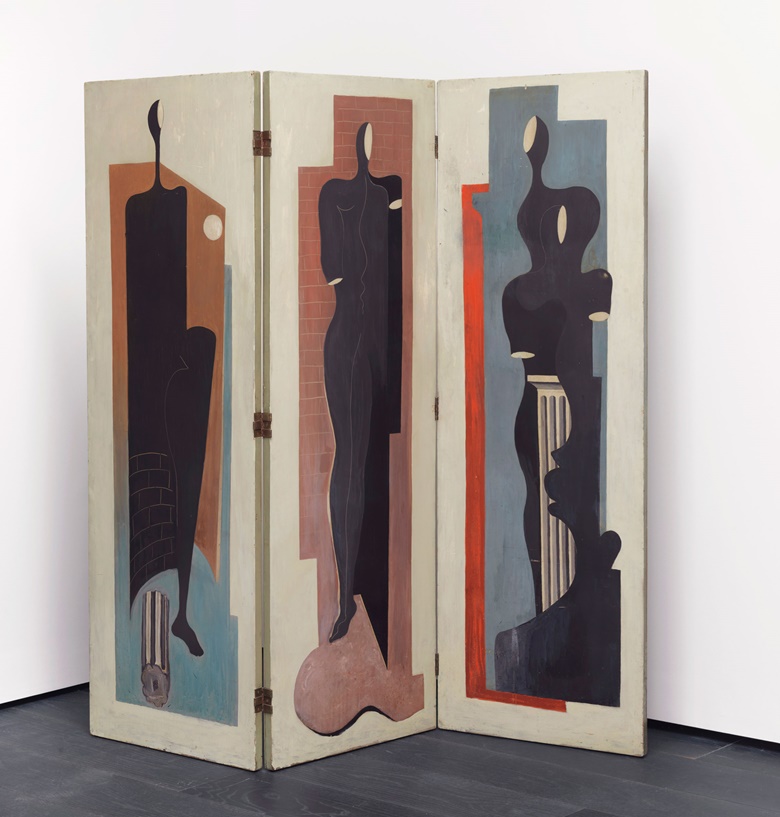
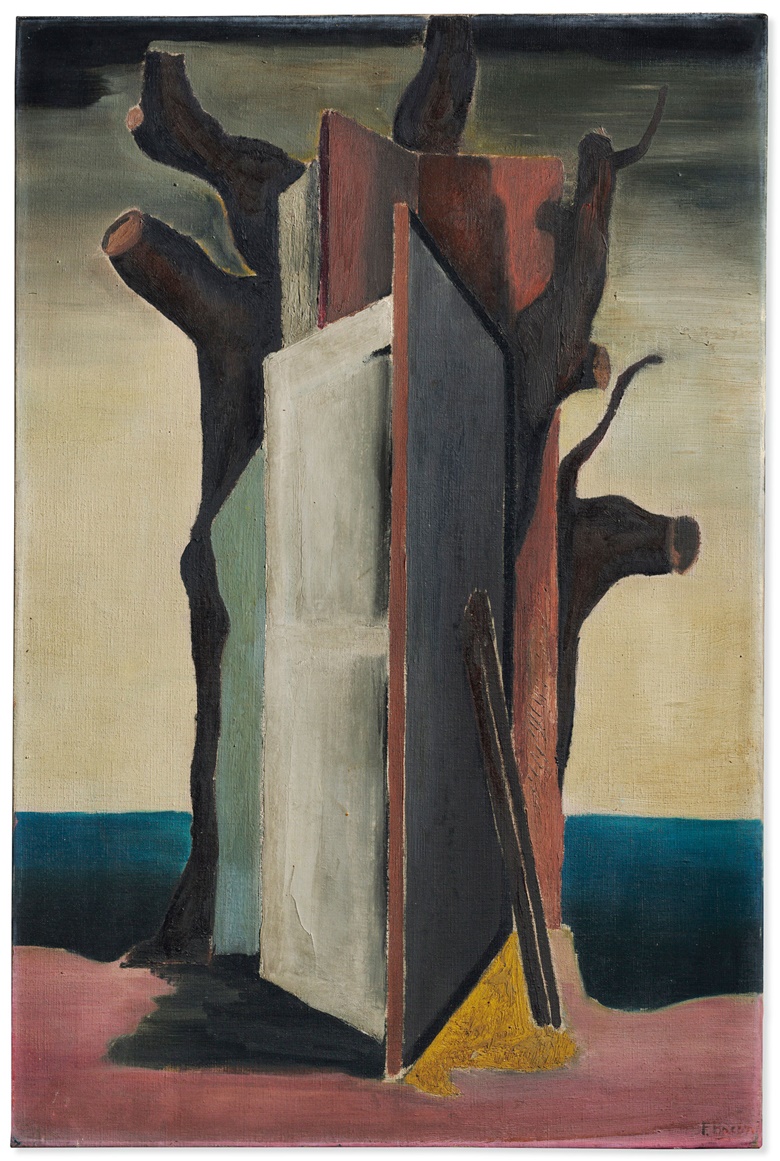
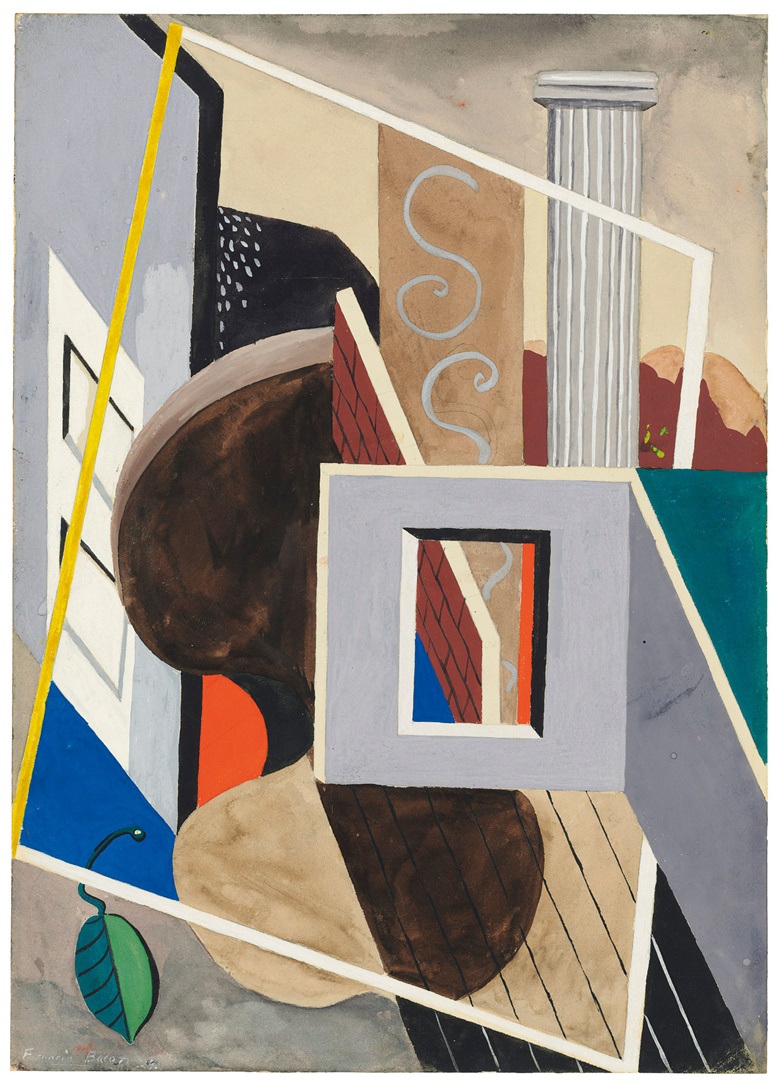
the previous year. In addition to this are some of the very first works
in Bacon’s catalogue raisonné, chronicling Bacon’s formative influences
of furniture design and the contemporary innovations of the European
avant-garde. The present group includes
Painted Screen (
circa 1930, estimate: £700,000-1,000,000), the earliest surviving largescale work and a precursor to his famed triptychs.
These are presented alongside early paintings by Lucian Freud including
Man in a Striped Shirt (1942, estimate: £1,000,0001,500,000), a portrait of Richard Chopping painted when Freud was just 19 years old, and
Head of a Woman (
circa 1980, estimate: £350,000-450,000), one of the artist’s earliest depictions of his friend Susanna Chancellor. .

.jpg)