Friday, February 22, 2019

The Print Series in Bruegel’s Netherlands: Dutch and Flemish Works from the Permanent Collection


The Fralin Museum of Art at the University of Virginia 
Feb. 22-July 7, 2019
Just as modern streaming services give us unprecedented freedom to watch television series in our own order, time and place, print series allowed viewers in the Renaissance Netherlands to enjoy the same sets of images as their peers in more personalized and accessible ways. The Print Series in Bruegel’s Netherlands: Dutch and Flemish Works from the Permanent Collection places 16th- and 17th-century Netherlandish prints in their original series context to explore the practices of looking at a succession of images. Many of these series illustrate cosmological, religious and social ideas, challenging Pieter Bruegel the Elder and other print designers to represent these themes in a manner that appealed to both personalized and general tastes. This exhibition also allows the visitor to consider the ways in which abstract ideas were illustrated in more recognizable contexts.


 1982.7cropped (1).jpg

Hieronymus Cock, Netherlandish, c.1510–1570, after Pieter Bruegel the Elder, Netherlandish, 1529–1569. Prudence (Prudentia) from the series The Seven Virtues, 1559 (detail). Engraving, 8 7/8 x 11 5/8 in (22.5 x 29.5 cm). Museum Purchase with Curriculum Support Funds, 1982.7.

1995.22.21.jpg

Jan or Lucas van Doetechum (Dutch, 1530-1606), after Master of the Small Landscapes (Dutch,
1530- 1606).
Landscape With Woodcutters
from the series
Multifariarum Casularum, 1500-
1599.
Etching, 5 1/2 x 7 3/4 in (14 x 19.7 cm). Gift of Gertrude Weber, 1995.22.21


Thursday, February 21, 2019

Sotheby’s London Impressionist & Modern Art Sale 26 & 27 February 2019

Marking the 100th anniversary of the founding of the influential German school of art and design, Sotheby’s Impressionist and Modern Art Evening and Day Sales will present artworks by th ose who taught at the Bauhaus and those whose outputs were transformed by its teachings. Founded in 1919 by the architect Walter Gropius , the Bauhaus – which resided in Weimar, Dessau and Berlin until it was closed down under pressure from the Nazis in 1933 – aimed to unite the disciplines of crafts, art and architecture. This core objective was conceived as a reimagining of the material world that would reflect unity in all the arts as a response to the rapid modernisation of life. 

The auctions on 26 and 27 February will comprise works by key proponents of the emblematic movement, including Wassily Kandinsky, Paul Klee, Oskar Schlemmer, László Moholy -Nagy and Lyonel Feininger .

WASSILY KANDINSKY 


Wassily Kandinsky, Vertiefte Regung (Deepened Impulse) , oil on canvas, 1928 (est. £ 5,500,000 - 7,500,000 ) 

“Every work of art comes into being in the same way as the cosmos – by means of catastrophes, which ultimately create out of the cacophony of the various instruments that symphony we call the music of spheres. The creation of the work of art is the creation of the world .” Painted in February 1928 while Kandinsky was teaching at the Bauhaus in Dessau, this meditation on the essential beauty of circles embodies the aesthetic principles that he promoted to his students. 

Circles dominated Kandinsky’s most meaningful compositions of this intellectually sophisticated period of his career, and he expounded upon their incomparable aesthetic values in his writing s. In this composition, the circles appear to be floating in space, like stars eclipsing and colliding with one another in their perpetual motion t hrough the cosmos . When the school moved to Dessau, having been closed by the National Socialists in Weimar, Gropius designed a housing estate for the Bauhaus masters. 

Once Kandinsky completed this work, he hung it in the exotically coloured living room in the Masters ’ House that he shared with Klee – set against walls painted gold, pale pink and ivory. The painting’s first owner was businessman and collector Otto Ralfs, who went bankrupt in 1930s and sold it to Salomon Hale, a private collector of Polish origin, based in Mexico City. This was organised with the assistance of Mexican muralist Diego Rivera, who had wanted to purchase it for himself but was sadly unable to afford it. 

Wassily Kandinsky, Sans titre , watercolour and ink on paper, 1941 (est. £450,000 - 550,000) 

Painted in Paris in 1941 , this wonderfully playful and optimistic work on paper belongs to the last great period of abstraction in Kandinsky’s art. Drawing on the severe geometric construction which characterised the works of his final Bauhaus years, in Paris he superimpose d a repertoire of stylised and biomorphic shapes that seem to have been borrowed from the realm of molecular biology (first explorations into which were occurring at the same moment) . Here, a variety of forms – both geometric and organic – are scattered across the surface of the paper, set against a neutral monochrome background . 

OSKAR SCHLEMMER 

Schlemmer tirelessly strove to achieve a synthesis of the arts, and of all those who taught at the Bauhaus, his works most completely embody its aesthetic and ideals. In 1920 the artist was invited by Walter Gropius to join the Bauhaus school , working as the ‘master’ of mural, wood and metal workshops – combining dance, stage and costume design as well as architecture with the three -dimensional medium of painting . His art focuses on positioning figures within a pictorial space, which he formed by opposing horizontal, vertical and diagonal planes. 


Oskar Schlemmer, Tischgesellschaft (Group at Table) , oil and lacquer on canvas, 1923 (est. £1,000,000 - 1,500,000) 

“The figure is static, the space is movement .” Painted a year after the creation of his ballet, Tischgesellschaft was Schlemmer’s first painting to show a group of people in perspectival space . This space is defined simply by a vertical line at the top, which deno tes the corner of a room that is dominated by a dramatically foreshortened table . The exaggerated dive of the table into the background causes an almost Surreal effect, and Moholy -Nagy illustrated this work in his discussion of the importance of dream and the language of the subconscious in the art of the Surrealists . The figures are rendered in solid, gently curved shapes , evok ing a sense of classical harmony and give the composition a meditative quality . The human shape is contained in regular, linear, geometric patterns, and purified of all individual features , reminiscent of the te achings of Plato, the Egyptians and Greeks, Leonardo da Vinci and Albrecht Dürer. 


Oskar Schlemmer, Am gel änder, fünf - figuren - gruppe (By the Handrail, Group of Five Figures) , pencil and coloured crayon on paper affixed to the artist’s mount, circa 1931 (est. £40,000 - 60,000) 

Offering an insight into the artist’s working process, and the idea of sublime perfection in his art, this refined drawing depicts five women, each holding onto the handrail of a staircase , superimposed upon each other. Schlemme r achieves a perfect harmony despite the opposing planes of movement, imbuing the figures with a meditative, calming poise as they climb ever higher. The theme of the staircase proved particularly compelling for the artist and this series culminated in the monumental Bauhaustreppe of 1932, today on view at the Museum of Modern Art in New York. 

LÁSZLÓ MOHOLY - NAGY 


László Moholy - Nagy , Segments , tempera and traces of pencil on canvas, 1921 (est. £300,000 - 500,000) “

Art is the most complex, vitalising and civilising of human actions. Thus it is of biological necessity.” Maholy -Nagy firmly believed that the art of the present must parallel contemporary reality – and the new technological advancements – in order to communicate meaning to its publi c. Thus he c onsidered traditional, figurative painting obsolete and turned to pure geometric abstraction – attempting to define an objective science of essential forms, colours, and materials, which would promote a more unified social environment . This work demonstrates Maholy -Nagy ’s characteristic innovative boldness , establishing a dialogue between the elongated black bar and the semi -circular shapes, as well as between these finely painted elements and the coarse appearance of the bare canvas . The piece also explores a way of representing light and shadow through the purely abstract vocabulary. 

LYONEL FEININGER 

Feininger illustrated the front cover of the Bauhaus’ founding proclamation, depicting the united vision of the artistic movement with a radiant image of a gothic cathedral 


Lyonel Feininger, Brücke II (Bridge II) , oil on canvas , 191 4 - 15 (est. £4,000,000 - 6,000,000) 

One of Feininger’s most accomplished and striking oils painted in the cubist manner , Brücke II , prefigures the artist’s involvement with the Bauhaus by a few years. It was inspired by a small Gothic bridge over the Ilm River near Weimar – a region that provided some of the most iconic motifs in his work . Employing a geometric faceting of forms, the broken -down diagonals of the bridge and its surroundings are at once complex and legible. 

Demonstrating a strong influence of French Cubism, particularly the landscapes of Georges Braque, Feininger depicts the scene on a monumental scale and renders the modest stone bridge with a sense of majestic splendour. Between 1912 and 1919, the bridge featured in seven oils and several works on paper, tracing the trajectory from his earliest Cubist- inspired style pieces to the more abstract, broken -down forms of his later painting . The series was a turning point, as the move to greater freedom of form revolutionised his entire oeuvre and provided a stepping stone towards the pure forms abstraction developed at the Bauhaus . 


Lyonel Feininger, Wüste see (Desert Sea) , oil on canvas, 1945 (est. £140,000 - 1 80,000) 

“Reminiscence, for which I, like all of us, possess an unusual talent, is the most common source for the best in my work .” Feininger did not create art for purely aesthetic reasons, but rather because of an urge to bring his innermost memories to life , and capturing a fleeting memory was at the core of his creative process. Feininger moved to New York in 1937 after almost fifty years in Germany, and expressed his longing for the Baltic Sea with a series of watercolours and paintings depicting his beloved seaside . 

Completed on 9 February, just two months before the end of World War II, Desert Sea is a reflection of both blissful and melanchol ic memories of summers spent swimming, sailing and fishing . Though Feininger managed to leave Germany, he worried about his friends who remained behind, and mourned the destruction of his adopted country. The deep dark colours and almost violent black slashes of the work are in stark contrast to earlier brighter and more tranquil depictions of the motif, as two lonely figures cling to each other against the immense red sky with a tiny ship only just visible on the horizon . The rich reds and ochres, rather than the tranquil blues of his other seascapes, reference the striking rock formations of the California desert and are emblematic of the graphic style of Feininger’s later period.

PAUL KLEE 


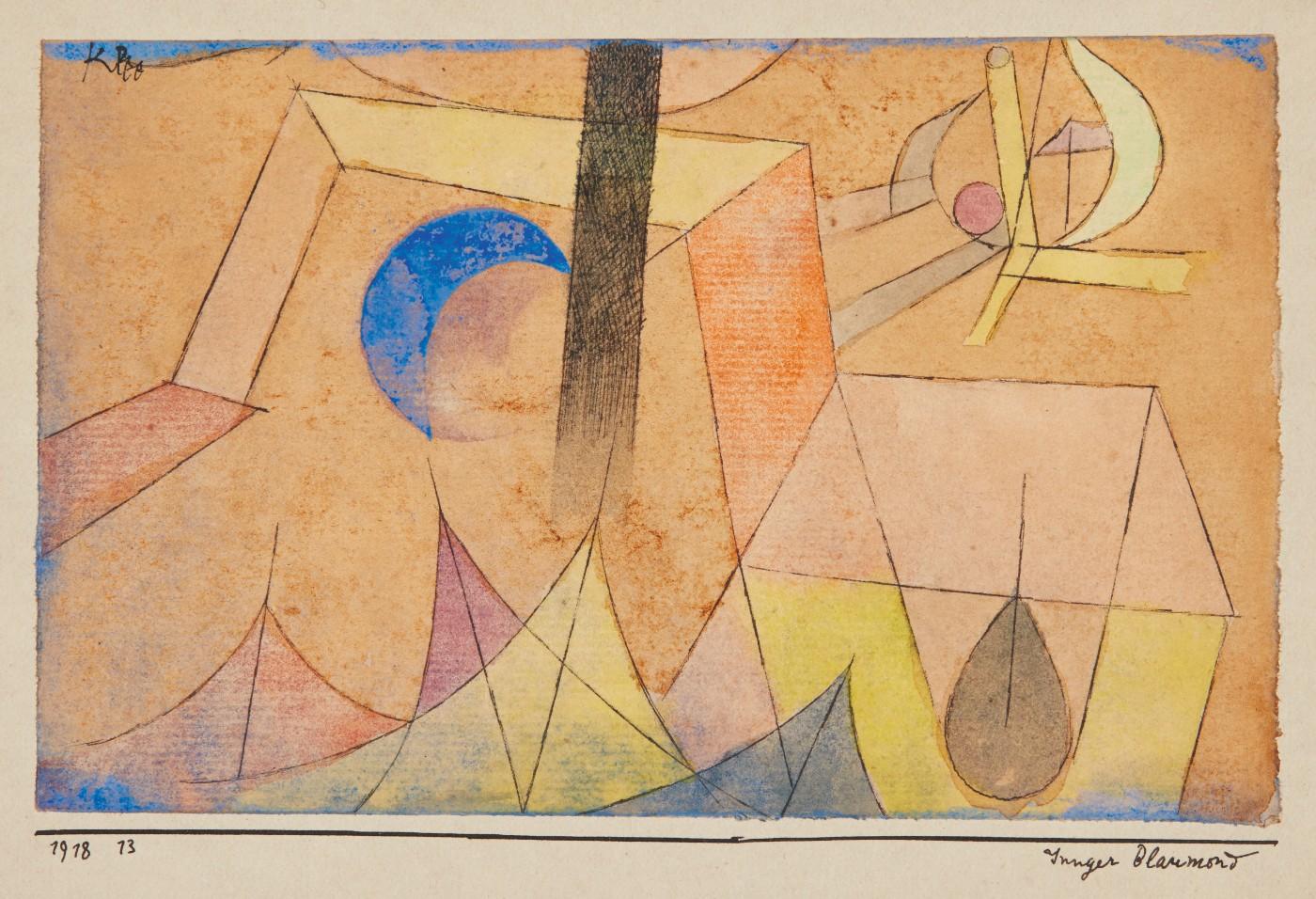
Paul Klee, Junger Blaumond (Young Blue - Moon) , gouache and watercolour on paper mounted on paper, 1918 (est. £70,000 - 100,000) 

A delicate and luminous watercolour representing a seascape by night , created by Klee at a time when colour returned to the forefront of the artist’s oeuvre for the first time since his celebrated series of Tunisian landscapes in 1914. Inspired by a Chagall exhibition in Berlin i n 1917, Klee introduces a palette of tender and transparent washes of colour complementing the fine lines of his drawing. The motif of the moon was of great importance to the artist, and the vibrant blue colour ing here can be associated with the Blaue Reiter group’s search for the ‘spiritual in art’ . In 1920 Walter Gropius invited Klee to join the staff of the Bauhaus at Dessau, where he taught various aspects of design, from book -binding to metalwork.
 

All the Rembrandts


Rijksmuseum marks the 350th anniversary of Rembrandt’s death in 2019 with ‘Year of Rembrandt’. The year-long celebration opens with ‘All the Rembrandts’ (15 February to 10 June), in which the Rijksmuseum will present for the first time an exhibition of all 22 paintings, 60 drawings and more than 300 best examples of Rembrandt’s prints in its collection

As well as holding the world’s largest collection of Rembrandt paintings – including

https://upload.wikimedia.org/wikipedia/commons/f/f0/Amsterdam_-_Rijksmuseum_1885_-_The_Gallery_of_Honour_%281st_Floor%29_-_De_Nachtwacht_-_The_Night_Watch_1642_by_Rembrandt_van_Rijn.jpg

The Night Watch,


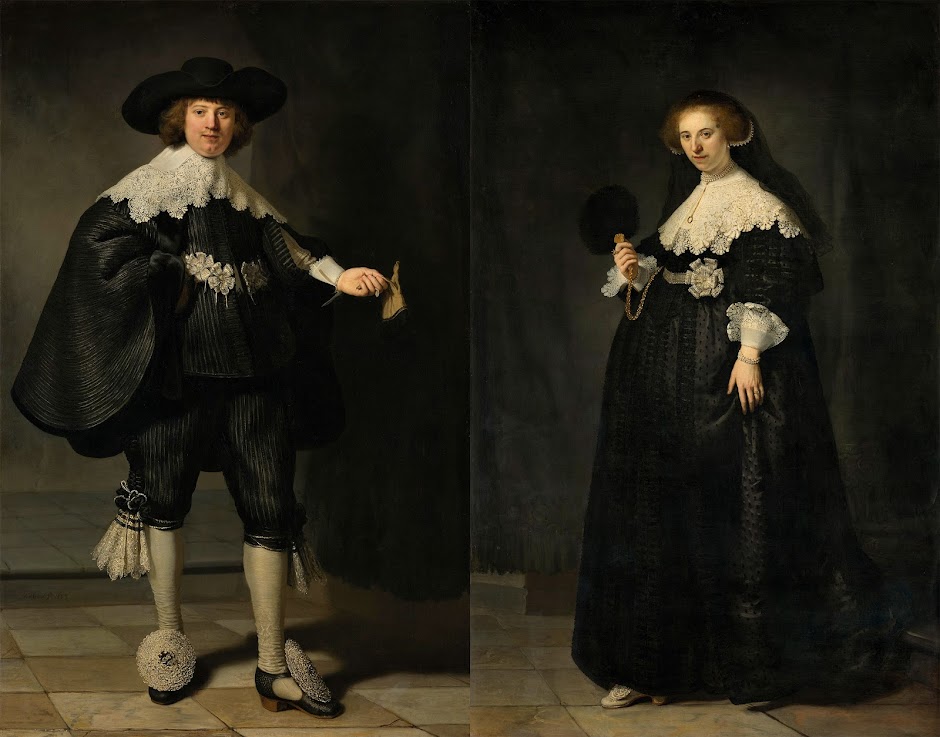
the portraits of Marten Soolmans and Oopjen Coppit,

and The Jewish Bride – the Rijksmuseum collection offers the world’s most comprehensive and representative overview of Rembrandt’s painting oeuvre.

Given the extreme rarity that many of these delicate drawings and prints go on display, All the Rembrandts offers a once-in-a-lifetime opportunity to glean an unparalleled perspective on Rembrandt the artist, the human, the storyteller, the innovator.

The Rembrandt collection in the Rijksmuseum

foto1  

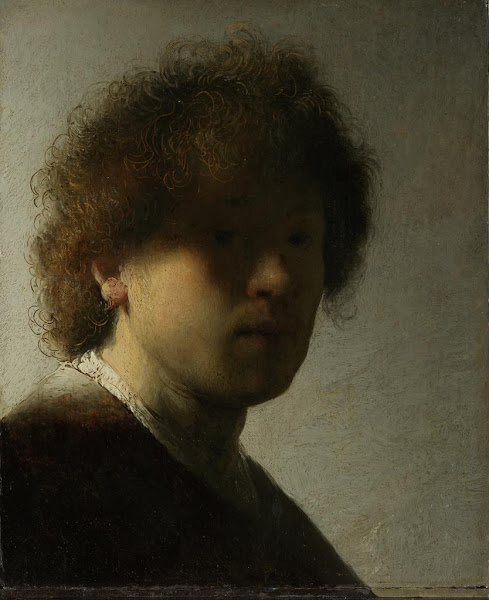
Rembrandt van Rijn, Self-portrait, c. 1628

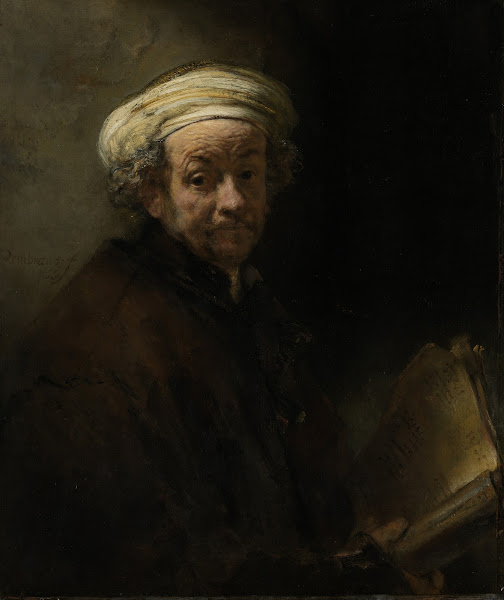
The recent acquisition of the spectacular marriage portraits of Marten Soolmans and Oopjen Coppit means the Rijksmuseum’s collection of Rembrandt paintings is now the largest in the world. With its total of 22 works, from the early _Self-Portrait as a Young Man to the later Self-Portrait as the Apostle Paul, the collection forms a coherent overview of his entire life. The highlight of the collection of Rembrandt’s paintings is his greatest masterpiece, The Night Watch.

The comprehensive collection of drawings encompasses all Rembrandt’s periods and styles, and includes numerous exceptional drawings from his early period. The Rijksmuseum will show only the most beautiful and finest of Rembrandt’s 1300 prints. The 17th-century prints are exceedingly fragile and rarely displayed in public.

The exhibition

All the Rembrandts will explore different aspects of Rembrandt’s life and work through a number of themes. The first section presents the milestones of his career as a young artist; when Rembrandt looks at himself in the mirror, the viewer looks over his shoulder. A close examination of Rembrandt’s many self-portraits reveals his growth as an artist of incomparable talent.
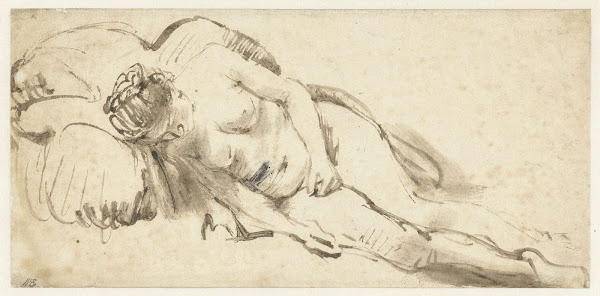
foto2 Rembrandt van Rijn, Nude Woman Resting on a Cushion, c. 1658

The second section of the exhibition focuses on Rembrandt’s surroundings and the people in his life. As a young man Rembrandt honed his craft by painting portraits of his mother, his family and acquaintances. He even made a powerful portrait of his wife Saskia as she lay ill in bed. The artist was also fascinated by the wider world around him: the beggars, the buskers, the vagrants, the actors. He drew and painted countless portraits of the people he encountered.

Rembrandt was a gifted storyteller, and his stories are at the heart of the last section of the exhibition.

The Old Testament tales inspired

 File:Rembrandt Harmensz. van Rijn - Portret van een paar als oudtestamentische figuren, genaamd 'Het Joodse bruidje' - Google Art Project.jpg

 Isaac and Rebecca (the alternative title for The Jewish Bride, c. 1665–1669)


foto4  

Rembrandt van Rijn, Self-Portrait as the Apostle Paul, 1661


and Self-Portrait as the Apostle Paul (1661) in which he gives masterful expression to gestures and emotions that are familiar, tangible and intimate. Early depictions of these tales tend to be delicate and refined; later in life Rembrandt used a coarser experimental technique, applying ingenious colour and light effects to further enhance the narrative and draw out its essence.


The Wardens of the Amsterdam Drapers’ Guild (known as The Syndics) (1662), Rembrandt van Rijn. Rijksmuseum, Amsterdam


Jeremiah Lamenting the Destruction of Jerusalem, Rembrandt
Jeremiah Lamenting the Destruction of Jerusalem (1630), Rembrandt van Rijn. Rijksmuseum, Amsterdam
The Three Trees, Rembrandt
The Three Trees (1643), Rembrandt van Rijn. Rijksmuseum, Amsterdam

Recumbent Lion, Rembrandt
Recumbent Lion (c. 1660), Rembrandt van Rijn. Rijksmuseum, Amsterdam
Landscape with a Stone Bridge, Rembrandt
Landscape with a Stone Bridge (c. 1638), Rembrandt van Rijn. Rijksmuseum, Amsterdam


Curators: Erik Hinterding and Mireille Linck
Exhibtion and graphic design: Irma Boom


Bouguereau & America


Milwaukee Art Museum 
February 15–May 12, 2019
Memphis Brooks Museum of Art
(06/22/19–09/22/19)
San Diego Museum of Art
(11/09/19–03/15/20)
Bouguereau & America showcases more than forty masterful paintings by the French academic painter William-Adolphe Bouguereau (1825–1905). The exhibition explores the artist’s remarkable popularity throughout America’s Gilded Age, from the late 1860s to the early 1900s. During this period, owning a painting by the artist was de rigueur for any American who wanted to be seen as a serious collector: the artist’s grand canvases brought a sense of classic sophistication to newly formed collections. Their chastely sensual maidens, Raphaelesque Madonnas, and impossibly pristine peasant children mirror the religious beliefs, sexual mores, social problems, and desires of that period. Moreover, the exhibition offers an opportunity to examine how society’s perspectives can shift over time.


As the first major exhibition on the artist since the 1980s, Bouguereau & America will offer fresh perspectives on works that form the backbone of many museum collections.


  • William-Adolphe Bouguereau (French, 1825–1905), Homer and His Guide (Homère et son guide), 1874. Oil on canvas. Layton Art Collection Inc., Gift of Frederick Layton L1888.5. Photographer credit: Larry Sanders.


  Subscribe

Bouguereau & America

Milwaukee Art Museum
15 Feb - 12 May 2019
William-Adolphe Bouguereau’s highly polished, sentimental paintings were stars of the Paris Salon in the late 19th century, and much sought-after by American collectors. This show looks at the reasons for the artist’s tremendous popularity and later falling out of fashion. Find out more from the Milwaukee Art Museum’s website.
Preview the exhibition below | See Apollo’s Picks of the Week here
Washerwomen of Fouesnant, William-Adolphe Bouguereau
Washerwomen of Fouesnant (1869), William-Adolphe Bouguereau. Memorial Art Gallery of the University of Rochester
With his paintings of cherubic children, melancholy Madonnas, and rustic scenes such as this, Bouguereau has come to encapsulate our image of artistic taste in America in the second half of the 19th century. During this time, he was one of the most desirable living artists for US collectors – when he died in 1905, an obituary observed that ‘no respectable amateur would mention his new fad of picture-collecting until he had secured a “Bouguereau” for his parlor’.
Portrait of Frances and Eva Jonhston, William Adolphe-Bouguereau
Portrait of Frances and Eva Jonhston (1869), William-Adolphe Bouguereau
Bouguereau’s fame brought him prestigious commissions in the US; this work depicts the two daughters of John Taylor Johnston, a railroad executive who would become the first president of the Metropolitan Museum of Art in New York. The portrait reveals the artist’s great skill for painting children, as well as his knack for arresting compositions; the younger Eva looks directly at the viewer, ignoring her sister and her book.
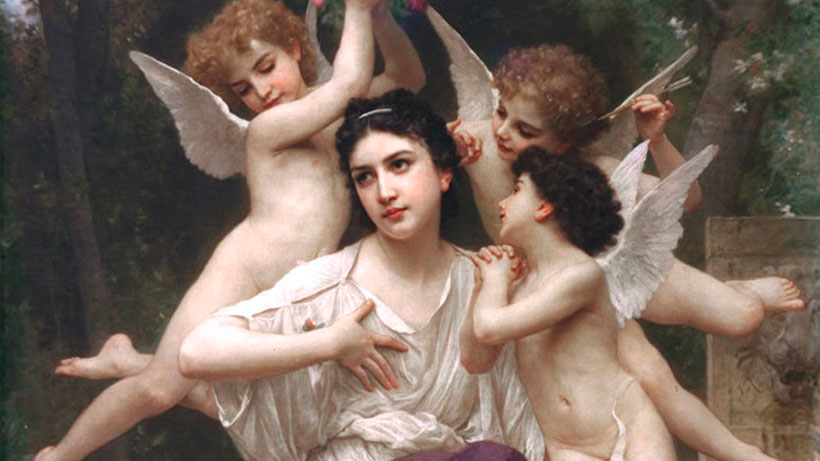
Admiration, Bouguereau
Admiration (1897), William-Adolphe Bouguereau. San Antonio Museum of Art. Photo: Roger Fry


Image from Bouguereau & America

Good article

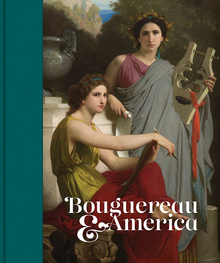
Catalogue

Edited by Tanya Paul and Stanton Thomas; With texts by Tanya Paul, Stanton Thomas, Eric Zafran, Martha Hoppin, Abigail Solomon-Godeau, and Catherine Sawinski


An in-depth exploration into the immense popularity of William-Adolphe Bouguereau’s work in America throughout the late 19th and early 20th centuries

Seeking to bring Gallic sophistication and worldly elegance into their galleries and drawing rooms, wealthy Americans of the late 19th and early 20th centuries collected the work of William-Adolphe Bouguereau (1825–1905) in record numbers.  
 
This fascinating volume offers an in-depth exploration of Bouguereau’s overwhelming popularity in turn-of-the-century America and the ways that his work—widely known from reviews, exhibitions, and inexpensive reproductions—resonated with the American public. While also lauded by the French artistic establishment and a dominant presence at the Parisian Salons, Bouguereau achieved his greatest success selling his idealized and polished paintings to a voracious American market. 
 
In this book, the authors discuss how the artist’s sensual classical maidens, Raphaelesque Madonnas, and pristine peasant children embodied the tastes of American Gilded Age patrons, and how Bouguereau’s canvases persuasively functioned as freshly painted Old Masters for collectors flush with new money.
Tanya Paul is Isabel and Alfred Bader Curator at the Milwaukee Art Museum. Stanton Thomas is curator of collections and exhibitions at the Museum of Fine Arts, Saint Petersburg, Florida.

Monet: The Late Years

de Young museum 
February 16 through May 27, 2019

Kimbell Art Museum 
June 16, 2019 to September 15, 2019


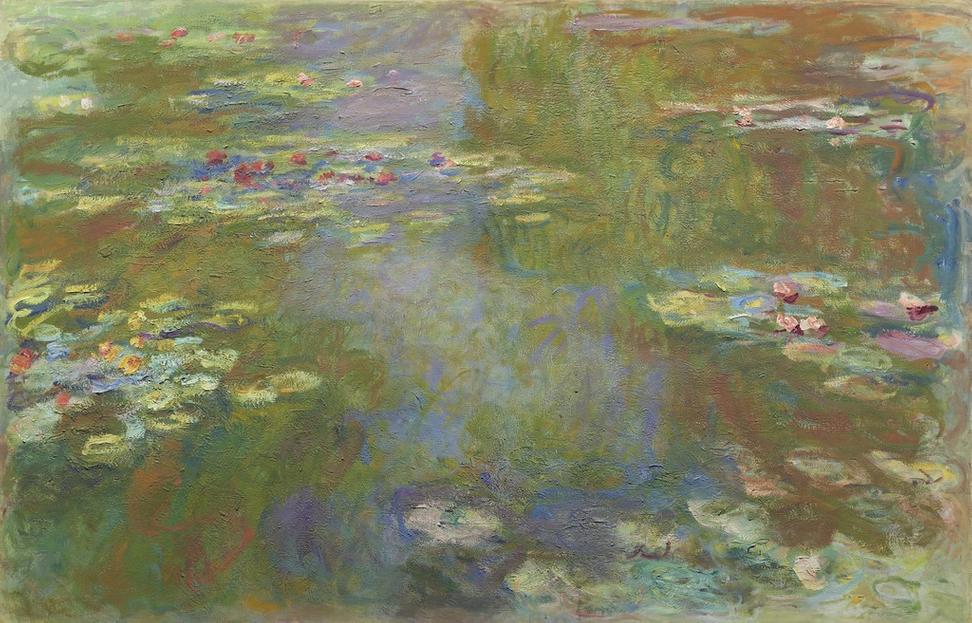
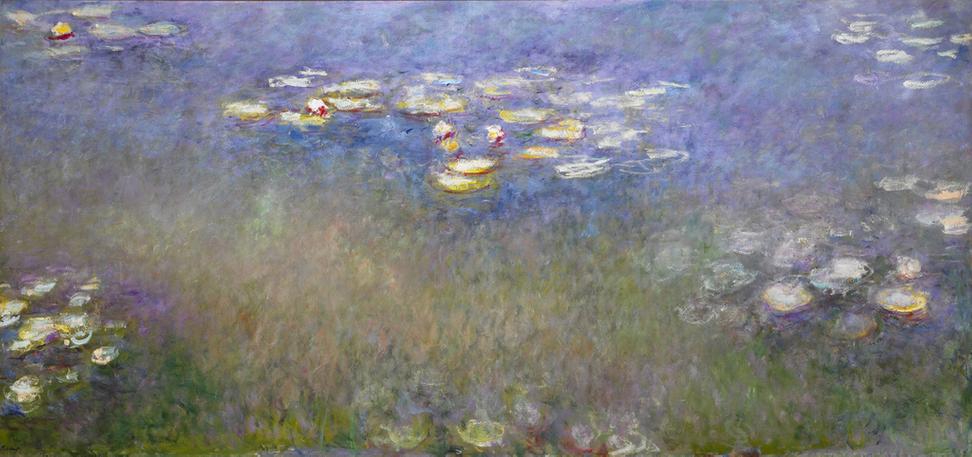
Claude Monet (French, 1840–1926) "Water Lily Pond" 1917-22.  130.2 x 201.9 51 1/2 x 79 1/2 in.  The Art Institute of Chicago
Claude Monet (French, 1840–1926) "Water Lily Pond" 1917-22. 130.2 x 201.9 51 1/2 x 79 1/2 in. The Art Institute of Chicago (Image courtesy of the Fine Arts Museums of San Francisco)

The Fine Arts Museums of San Francisco and the Kimbell Art Museum have announced Monet: The Late Yearsthe first exhibition in more than 20 years dedicated to the final phase of Monet’s career. Through approximately 60 paintings, the exhibition will trace the evolution of Monet’s practice from 1913, when he embarked on a reinvention of his painting style that led to increasingly bold and abstract works, up to his death in 1926.


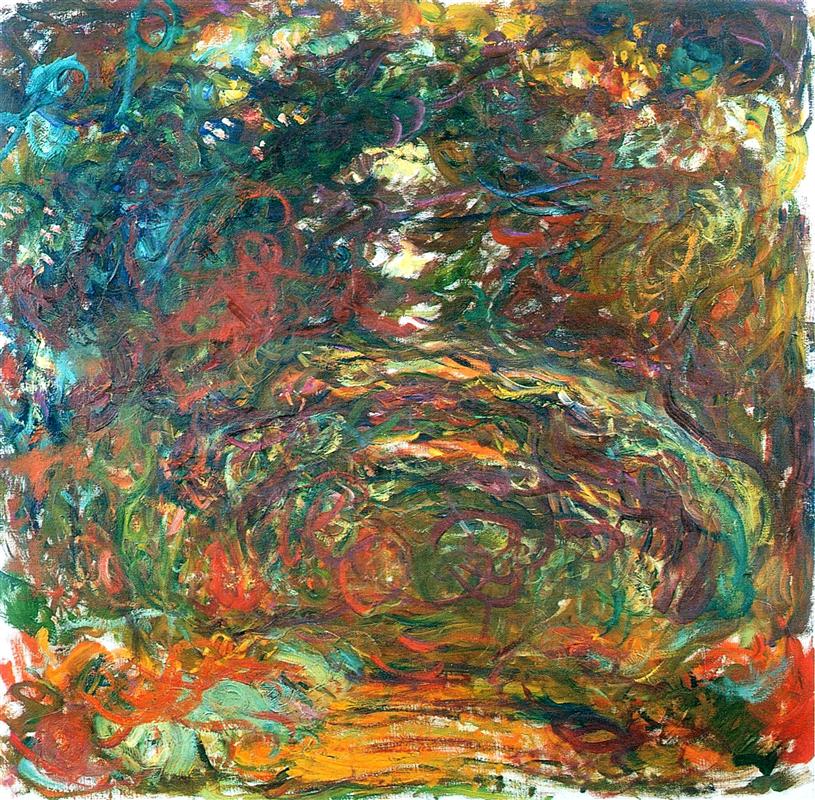
Claude Monet (French, 1840–1926) "The Artist's House Seen from the Rose Garden," 1922-24. Oil on canvas, 35 x 36 in. (89 x 92 cm). Musée Marmottan Monet, Paris, France
Image courtesy of the Fine Arts Museums of San Francisco

Assembled from major public and private collections in Europe, the United States, and Asia, including the holdings of the Fine Arts Museums and the Kimbell, Monet: The Late Years will include more than 20 examples of Monet’s beloved water lily paintings. In addition, the exhibition will showcase many other extraordinary and unfamiliar works from the artist’s final years, several of which will be seen for the first time in the United States.

Majestic panoramas will be displayed alongside late easel paintings, demonstrating Monet’s continued vitality and variety as a painter. This exhibition will redefine Monet—widely known as the greatest landscape painter of the Impressionists—as one of the most original artists of the modern age.

"Building on the strong history of partnership between our institutions, Monet: The Late Years was inspired by seminal paintings by Monet in the collections of the Fine Arts Museums of San Francisco and the Kimbell Art Museum,” said Eric M. Lee, director of the Kimbell, and Melissa Buron, director of the art division at the Fine Arts Museums of San Francisco. “Together, we are delighted to reveal a newly considered Monet in this thrilling exploration of his last works.”

Monet: The Late Years focuses on the period when the artist, his life marked by personal loss, deteriorating eyesight, and the threat of surrounding war, remained close to home to paint the varied elements of his garden at Giverny. His worsening vision and a new ambition to paint on a large scale stimulated fundamental changes in the tonality and intensity of his palette, toward vivid color combinations and broader, more apparent, application of paint. The complex surfaces of his canvases reveal layers of activity spread out over the course of days, months, and years. The result was a remarkable new body of work with increasingly feverish, dramatic brushwork. Far removed from his earlier, more representational production, the artist’s late paintings close in on a stylistic threshold into abstraction.

“The last dozen years of Monet’s life were a challenging time for the painter, who contended with personal loss and the afflictions of old age in his 70s and 80s,” said exhibition curator George T. M. Shackelford, deputy director of the Kimbell Art Museum. “But they were also among the most triumphant of his long career—because in his mid-70s, Monet decided to reinvent himself, mining his past, yet creating works that looked like nothing he had ever done before.”

Thematically arranged, the exhibition opens with a prologue concentrating on scenery from Monet’s outdoor studio at Giverny. Paintings from the late 1890s and early 1900s include depictions of the Japanese footbridge over the newly created lily pond, and the artist’s house as seen from the rose garden—all sources of inspiration that he would revisit in his late career.

Next, the exhibition enters the period between 1914 and 1919, when Monet returned to painting anew after a hiatus in work prompted by the loss of his second wife, Alice, and his eldest son, Jean.

Opening with the vibrant 1914–1917 Water Lilies from the Fine Arts Museums’ collection,  (above)the section features a number of the dynamically rendered water lily paintings from this period, juxtaposed with audacious large-scale floral studies from the evolving scenery of his garden.

Continuing to study natural phenomena, the artist focused on elements that had been relegated to the fringes in earlier works, such as Day Lilies, Agapanthus, and Yellow Iris, in addition to Water Lilies, among the 20 paintings on loan from the Musée Marmottan Monet, Paris.

Monet’s ambitions as a muralist, in contrast with his renewed activity as an easel painter, are explored next. With the completion of a vast studio building on his property in 1916, Monet was able to undertake significantly larger canvases, measuring between 14 and 20 feet wide, forming a series of mural-style paintings now known as the Grandes Décorations.


In such immersive, panoramic paintings as Agapanthus from the Saint Louis Art Museum, more than 6 x 14 feet in size—the artist paralleled themes undertaken in an important series of paintings of his water lily pond, each about 3 x 6 feet, their number rivaling the scale and ambition of his mural project.

Groups of paintings from his late garden series—several on view in the United States for the first time—conclude the exhibition. During his final years, while continuing to perfect his largest panels, Monet returned to working in smaller-format paintings, on the scale of his famous series paintings of the 1890s and early 1900s. Working again in his classic serial method, he revisited familiar motifs on his property, such as the Japanese bridge and the rose-covered trellises over the path leading from his house to the edge of his flower garden.

The exhibition showcases these works in greater numbers than ever before attempted: in addition to seven studies of the Japanese bridge at Giverny, six compelling portrayals of a tree with a twisting trunk and craggy outreaching branches are shown. Among these is Weeping Willow, a masterwork from the Kimbell Art Museum’s collection, painted in 1918–1919 in mournful response to the tragedies of World War I.

By his final years, Monet’s cataracts had affected the tonal balance of his perception. Nonetheless, as seen in  

 https://uploads6.wikiart.org/images/claude-monet/path-under-the-rose-arches-giverny-1922.jpg!HalfHD.jpg


Path under the Rose Arches and The Artist’s House Seen from the Rose Garden, (above) both on loan from the Musée Marmottan Monet, the artist triumphed over this adversity by producing his most radical works yet. The expressive style of these paintings, with a complex layering of gestural strokes in red and yellow hues over blue and green, affirms Monet’s continued vitality as a painter and redefines him, in the near abandonment of subject matter in favor of increasingly rapturous execution, as a pioneer of abstraction.


Monet: The Late Years is a sequel to Monet: The Early Years, which focused on the artist’s youthful pre-Impressionist years—from ages 17 to 31—when he developed his unique visual language and technique, on view in Fort Worth and San Francisco in 2017.

Organized by George T. M. Shackelford, deputy director of the Kimbell Art Museum, and installed in San Francisco by Melissa Buron, director of the art division at the Fine Arts Museums. Monet: The Late Yearsis on view at the de Young museum from February 16 through May 27, 2019, and then at the Kimbell Art Museum from June 16 through September 15, 2019.

Catalogue


 This beautiful publication examines the last phase of Monet’s career, beginning in 1913, bringing together approximately 60 of his greatest works from this period. More specifically, Monet: The Late Years focuses on the series that Monet invented and reinvented at Giverny, reevaluating many large-scale works that have long been considered preparatory studies, reexamining their relationship to and status as finished works. Essays by a roster of distinguished scholars address topics such as Monet’s plans for displaying his late paintings, the mechanics of his painting technique, and the critical and market reception of these works. Through this visually stunning reassessment, Monet’s late works, still astonishing a century later, recast the titan of Impressionism as a radical modern painter.


City of Women Female Artists in Vienna from 1900 to 1938

Belvedere
25 January 2019 to 19 May 2019 

Today, hardly anyone knows who they were, even though they made a part of art history: artists such as Elena Luksch-Makowsky, Helene Funke, and Erika Giovanna Klien contributed significantly to Viennese Modernism and artistic trends that manifested after the First World War. To commemorate these artists, their art, and their emancipatory achievements, a long overdue retrospective has now been staged in the Lower Belvedere.


 Helene Funke, Dreams, 1913. Photo: Johannes Stoll © Belvedere, Vienna.


Helene Funke, Nude Looking in the Mirror, 1908-1910 © Belvedere, Wien. Photo: Johannes Stoll © Belvedere, Vienna.

Wednesday, February 20, 2019

Vincent van Gogh: His Life in Art


 Few artists have left behind as complete an account of their life and work as Vincent van Gogh (1853–1890). In March 2019, the Museum of Fine Arts, Houston, presents Vincent van Gogh: His Life in Art, an exhibition showcasing key passages in the artist’s life, from his early sketches to his final paintings, and chronicling his pursuit of becoming an artist. The Museum is the only venue for His Life in Art, presenting more than 50 portraits, landscapes, and still lifes. The exhibition will be on view at the Museum of Fine Arts, Houston (MFAH), from March 10 to June 27, 2019.

In a major collaboration, the Van Gogh Museum, Amsterdam, and the Kröller-Müller Museum, Otterlo, which, together, hold the largest collections in the world of Van Gogh’s work, will lend pieces to Houston. Significant works will also travel from Musée d’Orsay, Paris; Wallraf–Richartz Museum, Cologne; the Virginia Museum of Fine Arts, Richmond; Art Institute of Chicago; the Dallas Museum of Art; McNay Art Museum, San Antonio; and private collections.

“This exhibition will offer visitors a vivid portrait of Van Gogh’s evolution as an artist,” commented MFAH Director Gary Tinterow. “We are grateful to the Van Gogh and Kröller-Müller museums for lending so many of these rarely traveled masterworks from their collections for this exclusive presentation here in Houston.”

“The popular story of Van Gogh has tended to focus on his last few years and his death,” said David Bomford, curator of the exhibition and chair, Department of Conservation, and Audrey Jones Beck curator, Department of European Art, MFAH. “But there is a rich and complex narrative that starts much earlier, one that is defined by Van Gogh’s tremendous drive to become an artist.”

Exhibition Overview

The exhibition explores Vincent van Gogh’s early years as an artist in the Dutch village of Nuenen from 1883 to 1885; his renewed inspiration following exposure to fellow artists and city life in Paris; his further development in Arles, where he created series of landscapes and vibrant portraits; and lastly his inspiration from nature, reflected in the paintings he created toward the end of his life in Saint-Rémy and Auvers. In addition, facsimiles of Van Gogh’s letters will build out the narrative of the artist’s life. Incorporated throughout the exhibition, they trace his hopes of becoming a marketable painter in Paris, his longing to live among a community of artists, and his struggles with his personal relationships and his mental health.

Early Years as an Artist

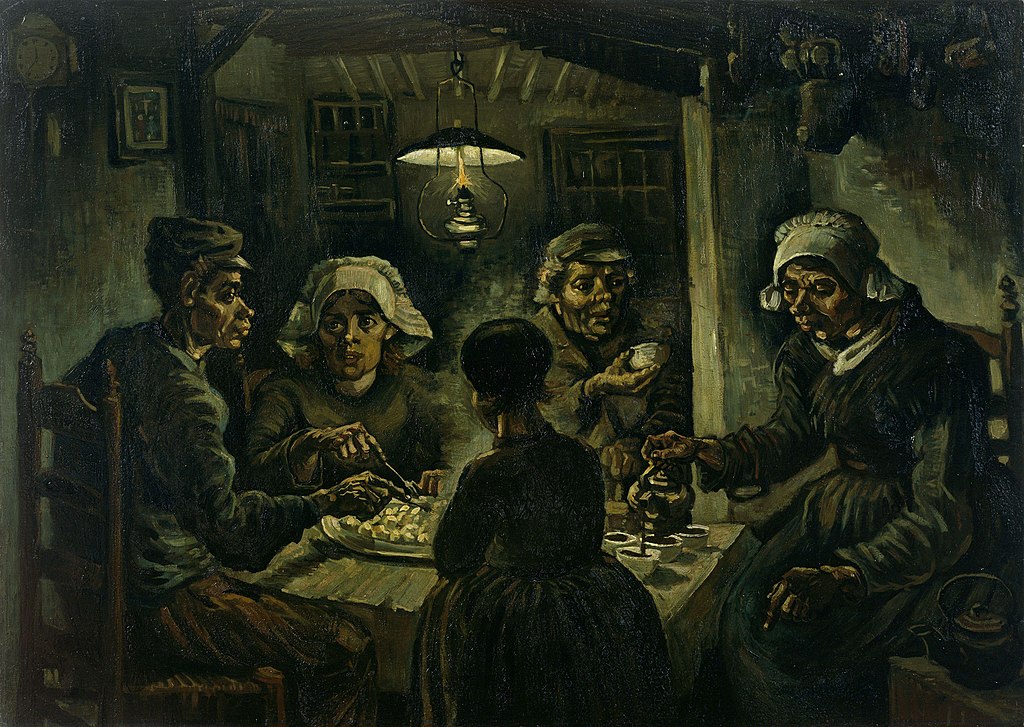
Vincent van Gogh became an artist at 27, taking up painting in 1881 after stints as an art dealer, teacher, bookseller, and minister, all unsuccessful. His brother, Theo, encouraged him to concentrate on drawing, spurring Van Gogh to work on his technique and connect with other artists. He was largely self-taught, and his early work reflects an engagement with Realism and an interest in conveying both the physical and psychological conditions of his subjects. Van Gogh sent his work to Theo in exchange for the financial support his brother offered. “I’m sending you three scratches that are still awkward, but from which I hope you’ll nonetheless see that there’s gradual improvement. You must remember that I haven’t been drawing for long, even if I did sometimes make little sketches as a boy,” Van Gogh wrote in a letter to his brother on April 2, 1881.

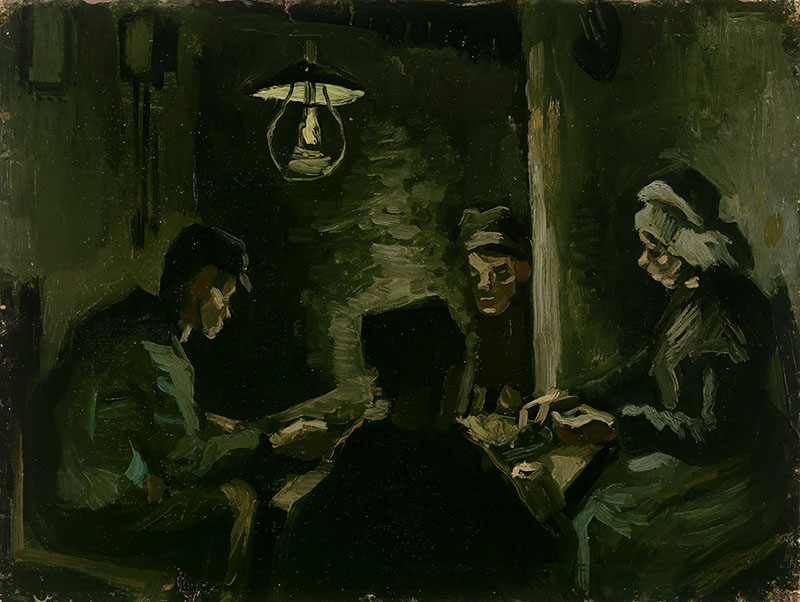
His development as a painter continued, as he produced farm scenes in the village of Nuenen following in the footsteps of admired artists such as Jean-François Millet. He studied and recorded every facet of rural life, realistically portraying with the harsh circumstances of farm laborers rather than idealizing them. During this time, Van Gogh’s character studies culminated in portrayals of rural life.

 Van Gogh Study for The Potato Eaters
 
Second Study for The Potato Eaters, 1885, Kröller-Müller Museum, Otterlo
 

 Van Gogh Study for The Potato Eaters

 Three of Van Gogh’s studies for  
 Van-willem-vincent-gogh-die-kartoffelesser-03850.jpg

The Potato Eaters (1885), his first major painting and one of his best-known, will be on view, alongside sketches of the day-to-day life of villagers.


Van Gogh’s works from his time in Nuenen also feature an old church tower, which he painted as a tribute to those who had been laid to rest among the fields they had planted.

In Search of Renewal

From Nuenen, Van Gogh left for Antwerp to enroll in an art academy and take drawing classes in November 1885. Abandoning the theme of rural farm life, he shifted his focus to portraiture. Shortly following, he left for Paris where he moved in with Theo. The city inspired a brighter palette, while his friendships with Emile Bernard and Henri de Toulouse-Lautrec had a major influence on his work.


Featured in this section is a portrait of Agostina Segatori, the owner of Café du Tambourin, a gathering spot for Parisian artists that Van Gogh frequented.

While in Paris, he discovered a new source of inspiration in Japanese woodcuts, which he had begun to collect. Their influence is reflected in the bold outlines, dramatic cropping, and color contrasts of Van Gogh’s work.
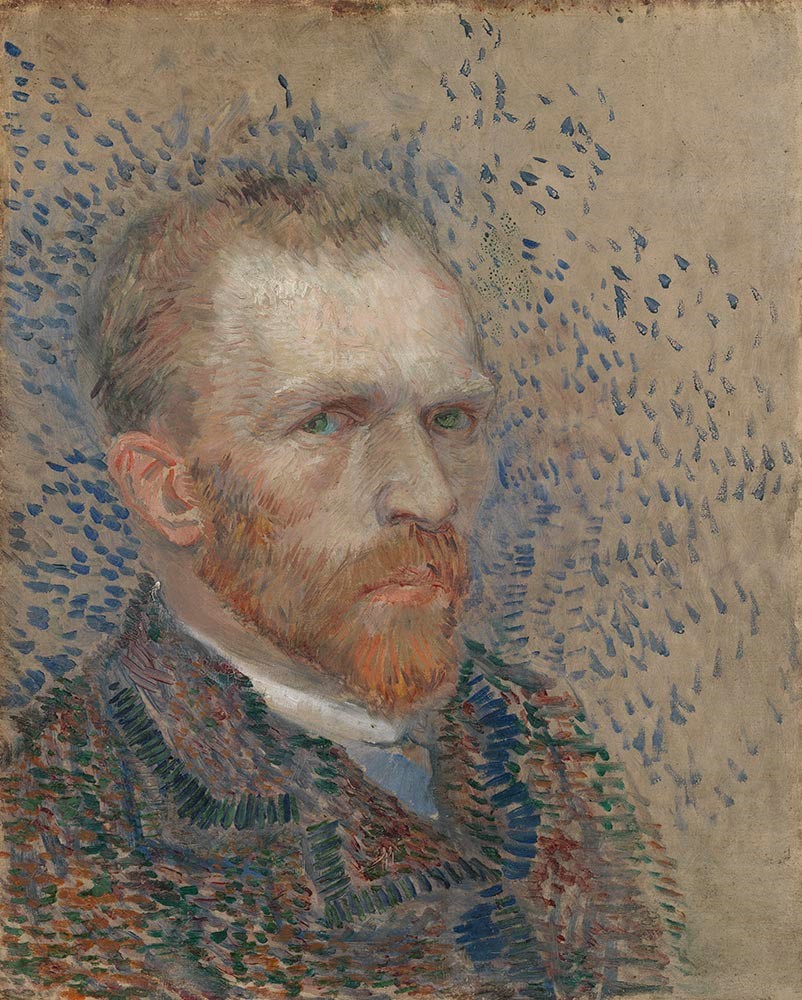
Van Gogh - Self-Portrait, 1887 (Van Gogh Museum)
Vincent van Gogh, Self-Portrait, 1887, oil on cardboard, Van Gogh Museum, Amsterdam (Vincent van Gogh Foundation).


Light and Color in the South

After two years in Paris, Van Gogh grew weary of city life and longed for a setting like those in the Japanese landscapes he admired. He hoped to find it in the south of France, and relocated to Arles. “I noticed some magnificent plots of red earth planted with vines, with mountains in the background of the most delicate lilac. And the landscape under the snow with the white peaks against a sky as bright as the snow was just like the winter landscapes the Japanese did,” he wrote to Theo on February 21, 1888.

With this return to the countryside, Van Gogh developed a recognizable style of his own, characterized by long, rhythmic brushstrokes and thick layers of paint in increasingly brighter colors. Inspired by the bright light and the colors of southern France, he painted fields of wheat, vineyards, and vibrant portraits. But months of personal crisis followed.  
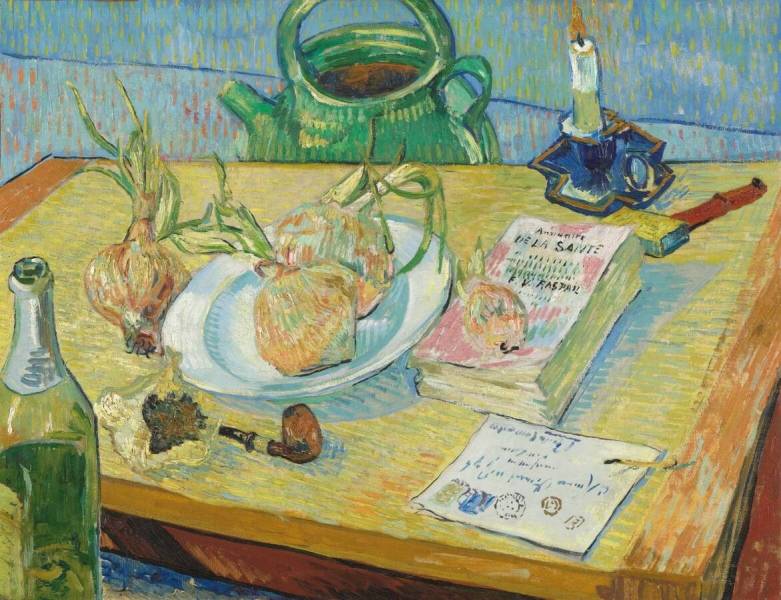


Still Life with a Plate of Onions (1889) was one of the first paintings Van Gogh completed after returning home from the hospital where he was treated after slicing off his ear. On that day, January 17, 1889, he wrote to his brother Theo that he intended to begin working to get used to painting again and had already done a few studies. But Van Gogh’s mental health continued to fluctuate. He admitted himself to Saint-Paul-de-Mausole psychiatric asylum in Saint-Rémy in May 1889.

Nature as a Source of Enduring Inspiration

At the asylum in Saint-Rémy, Van Gogh created dozens of paintings of the gardens of the institution, the fields outside his window, and of the few possessions that he had in his room. During this period, in which he produced some of his most iconic masterworks,
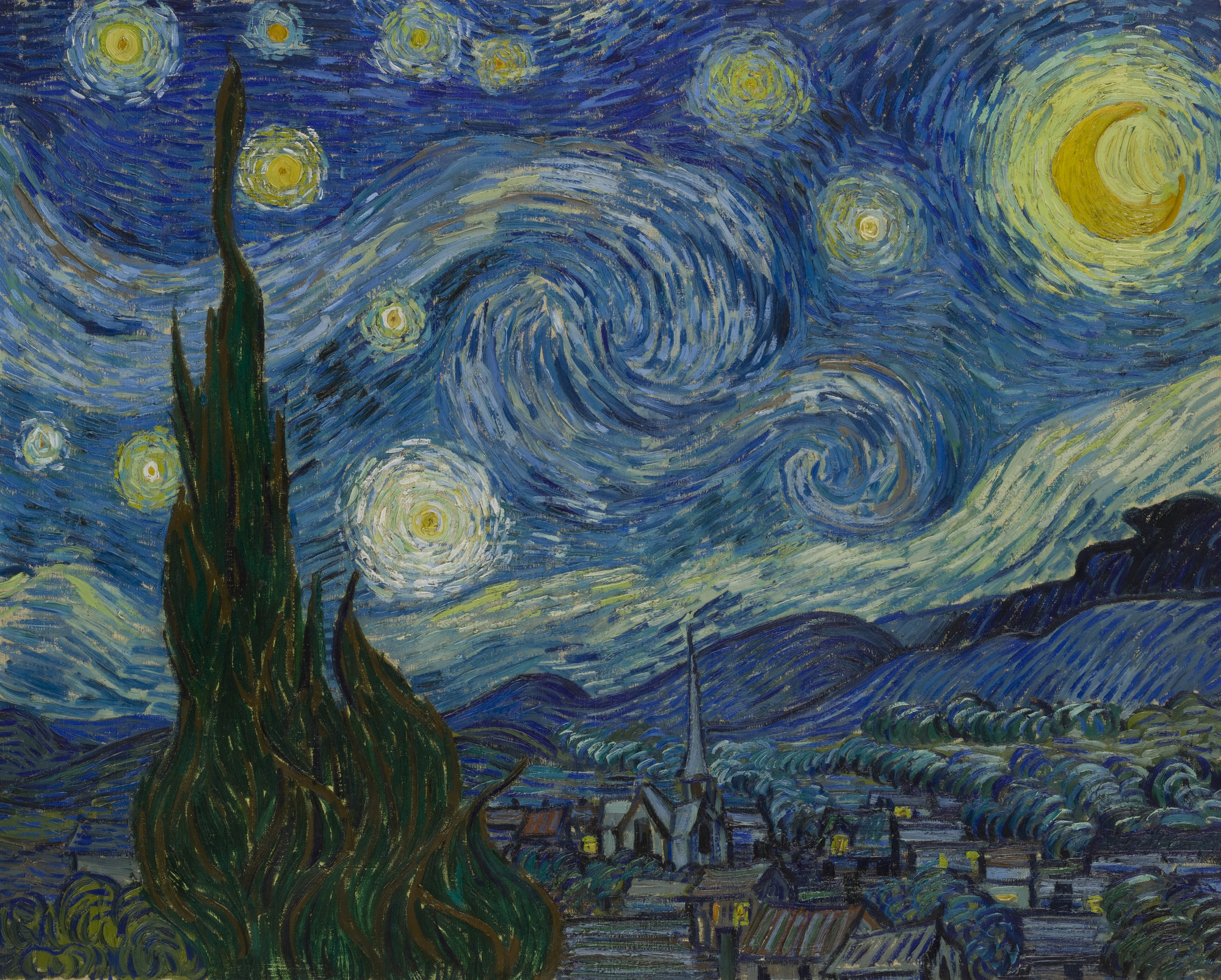

MoMA
Vincent van Gogh The Starry Night Saint Rémy, June 1889

including Starry Night, 


 Irises (Getty Museum)

 and Irises,

he also ventured into the wheat fields and olive groves. In his studio, he made a series of paintings after prints, resulting in such idyllic scenes as

 https://upload.wikimedia.org/wikipedia/commons/thumb/8/81/Vincent_van_Gogh_-_Peasant_woman_binding_sheaves_%28after_Millet%29_-_Google_Art_Project.jpg/777px-Vincent_van_Gogh_-_Peasant_woman_binding_sheaves_%28after_Millet%29_-_Google_Art_Project.jpg

Van Gogh Museum

Peasant Woman Binding Sheaves (after Millet). Vincent van Gogh (1853 - 1890), Saint-Rémy-de-Provence, September 1889. oil on canvas on cardboard

Peasant Woman Binding Wheat Sheaves (1889), once again inspired by the work of Millet.

In May of 1890, Van Gogh left Saint-Rémy for Auvers, seeking out the care of the doctor Paul Gachet at the suggestion of painter Camille Pissarro. Van Gogh spent his last weeks painting landscape after landscape,
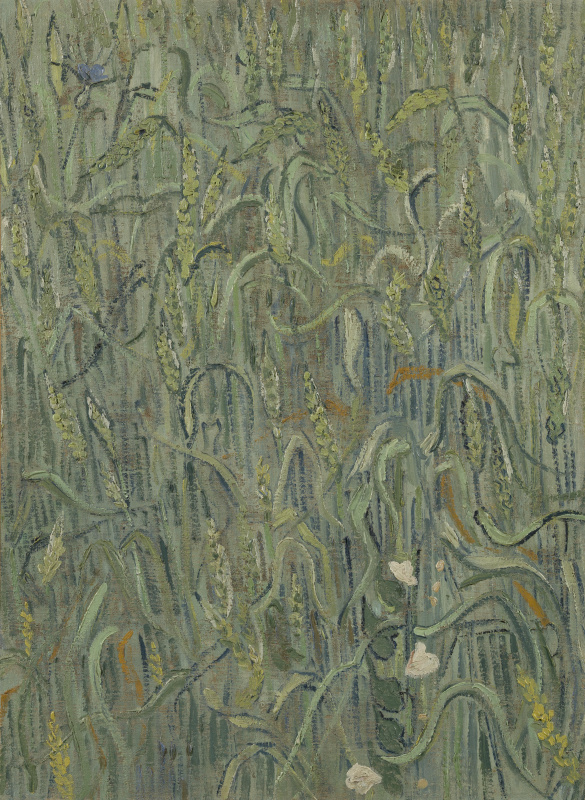
 Vincent van Gogh. Ears of wheat

including Ears of Wheat in June 1890, one of the latest of his works in the MFAH exhibition. He died from suicide on July 27 of that year.


Vincent van Gogh, Portrait of a Man, end of October–mid-December 1888, oil on canvas, Kröller-Müller Museum, Otterlo, the Netherlands. © Kröller-Müller Museum.

Publication
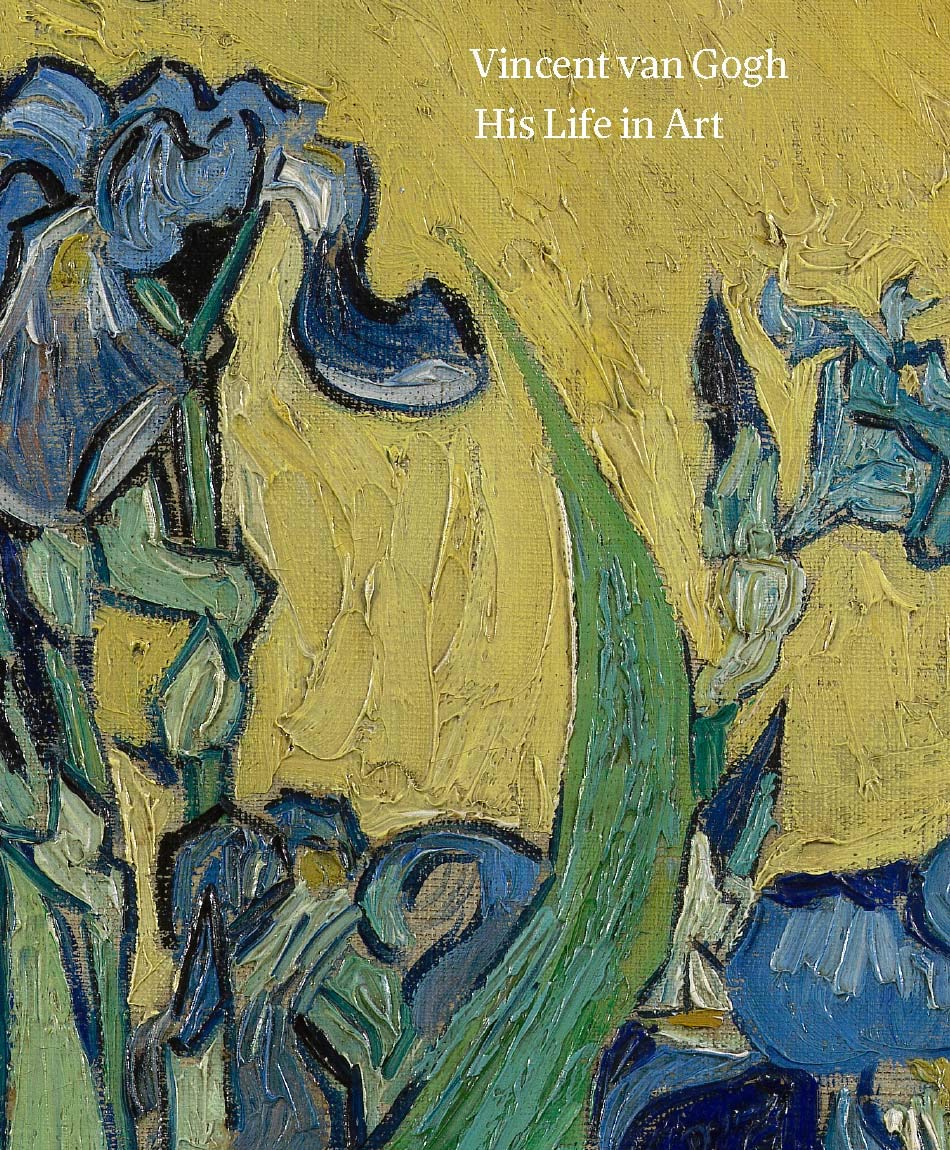


This exhibition is accompanied by an illustrated catalogue highlighting the 50 drawings and paintings, drawn primarily from the Van Gogh Museum, Amsterdam, and the Kröller-Müller Museum, Otterlo.

Vincent van Gogh: His Life in Art surveys the artist’s creative evolution across his short but influential career. The narrative begins with Van Gogh’s drawings, which were the foundation of his early practice, and describes how he transitioned into painting by consulting instructional handbooks and copying images. Written by a team of international experts, the book follows his moves from the landscapes and peasant life of his native Holland to Antwerp, Paris, Provence, and finally the countryside north of Paris. In the brilliant light of southern France, he began painting portraits and landscapes while refining his characteristic style of rhythmic brushstrokes and expressive impasto in vivid colors.

In addition to the main essay with its overview of Van Gogh’s shifting techniques and artistic concerns, the publication features a pair of essays highlighting two museums with exceptional collections of the artist’s work: the Van Gogh Museum, Amsterdam, and the Kröller-Müller Museum, Otterlo. Beautifully reproduced images showcase approximately 50 outstanding pieces from these and other institutions, from rough drawings to vibrant late-career canvases.