Monday, December 11, 2023

Angelica Kauffman

Royal Academy of Arts

 1 March - 30 June 2024  

 In March 2024, the Royal Academy of Arts will celebrate the life and work of Angelica Kauffman (1741-1807), a founding member of the Royal Academy and one of the most acclaimed artists of the 18th century. Presenting history paintings as well as portraits, including some of her finest selfportraits, the exhibition will trace Kauffman’s artistic career from child prodigy to one of Europe’s most sought-after painters. The exhibition will feature over 30 artworks by Kauffman and include important international loans, many of which have never been seen in the UK before.  


Born in Chur, Switzerland, in 1741, Kauffman’s artistic talent was soon recognised during her childhood. As her family moved between Switzerland, Austria and Italy, Kauffman was trained as both a musician and as a painter, eventually choosing to pursue the latter professionally. She spent much of her early life in Italy, where she was able to study the works of the Old Masters. She moved to London in 1766 and enjoyed a prosperous career, earning significant fame, fortune and an influential circle of patrons, many of whom were women. When the Royal Academy was established in 1768, Kauffman was one of only two women founding members, along with Mary Moser. Kauffman exhibited extensively at the Royal Academy throughout her time in London and continued to exhibit there after her return to Rome in 1782, where she would live for the rest of her life.   

The exhibition will be presented in four sections. Introducing the exhibition will be a group of Kauffman’s most celebrated self-portraits. Throughout her career, Kauffman returned to the practice of self-portraiture and presented herself in many different guises. As a woman artist, portraying herself enabled Kauffman to define her identity and take control of how she was seen by others. Highlights will include Self-portrait in the Traditional Costume of the Bregenz Forest, 1781 (Tiroler Landesmuseum Ferdinandeum, Innsbruck) and Self-portrait in All-antica Dress, 1787 (Gallerie degli Uffizi, Florence), a work she presented to the Grand Duke of Tuscany for his famous gallery of artists’ self-portraits.   

The following section will explore Kauffman’s training in Rome and her career after her arrival in London. In London, Kauffman was widely regarded as one of the most sought-after artists of the period; as one contemporary stated ‘the whole world is Angelicamad.’ Her Portrait of Johann Joachim Winckelmann, 1764 (Kunsthaus Zurich), painted when she was just 22 years old, was applauded for its exceptional likeness. Though very successful as a portraitist, she identified herself primarily as a history painter, the genre at the heart of the Royal Academy’s mission. Notably, Kauffman often chose to focus on female protagonists, such as in Cleopatra Adorning the Tomb of Mark Anthony, c.1769-70 (The Burghley House Collection, Lincolnshire), a picture she exhibited in the second Annual Exhibition of the Royal Academy in 1770.  

The third section will examine Kauffman and the Royal Academy of Arts, looking at her success and influence in the male dominated society of the 18th century. This section will include Johan Zoffany’s famous group portrait of the Royal Academy members, The Academicians of the Royal Academy, 1771-1772 (Royal Collection Trust, London) in which Kauffman and Moser’s position as women members is starkly apparent as they are not allowed in the Life Room, where the portrait is set, and instead their presence is reduced to portraits on the wall.  Other works in this section will include two of the four ceiling paintings Kauffman was commissioned to create for the original home of the Royal Academy in Somerset House: Design, and Composition, 1778-80 (both Royal Academy of Arts, London), Portrait of Joshua Reynolds, 1767 (Saltram House, Devon, National Trust Collection) as well as Self-portrait with a Bust of Minerva, c. 1780-84 (Bündner Kunstmuseum, Chur), which alludes to Reynold’s famous self-portrait painted in 1780.  

The final section of the exhibition will focus on Kauffman’s late career in Rome. When she returned to Italy in 1782, her studio near the Spanish Steps became a hub for the cultural elite and her status and reputation continued to prosper. One contemporary described her as ‘the most cultivated woman in Europe.’ She continued to be popular among contemporary women who wanted themselves portrayed, such as Portrait of Emma, Lady Hamilton, as Muse of Comedy, 1791 (Private Collection). In Self-portrait at the Crossroads between the Arts of Music and Painting, 1794 (Nostell Priory, West Yorkshire, National Trust Collection) Kauffman looks back at a key turning point in her life: when she decided to abandon her musical career to devote herself entirely to painting. The work is one of the most highly regarded self-portraits of the 18th century. 

The exhibition will conclude with one of Kauffman’s few religious paintings, Christ and the Samaritan Woman, 1796 (Neue Pinakothek, Munich), which was one of two canvases carried in triumph at the artist’s funeral procession, organised by the sculptor, and her close friend, Antonio Canova along with other contemporary artists and scholars.   

Biography

Angelica Kauffman RA Biography 

Organisation 

The exhibition is curated by Bettina Baumgärtel, Head of the Department of Painting at the Kunstpalast (a.D) in Düsseldorf and Head of the Angelica Kauffman Research Project, and Per Rumberg, Jacob Rothschild Head of the Curatorial Department at the National Gallery, with Annette Wickham, Curator of Works on Paper at the Royal Academy of Arts.  

Accompanying Publication 
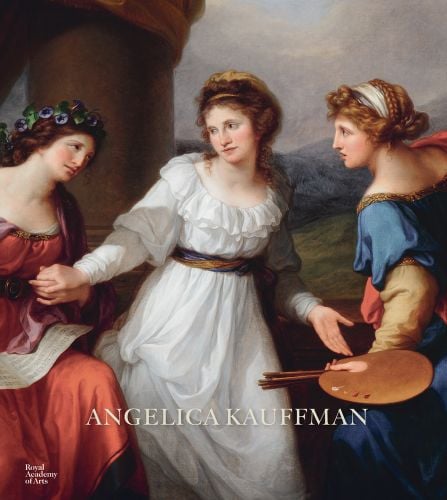


The exhibition is accompanied by a fully illustrated publication with texts by Bettina Baumgärtel and Annette Wickham. 


Images

Angelica Kauffman, Self-portrait with Bust of Minerva, c. 1780-1781. Oil on canvas, 93 x 76.5 cm. Grisons Museum of Fine Arts, on deposit from the Gottfried Keller Foundation, Federal Office of Culture, Bern


Angelica Kauffman, Design, 1778-80. Oil on canvas, 128.3 x 149 cm. © Royal Academy of Arts, London. Photo: John Hammond


Angelica Kauffman, Self-portrait at the Crossroads between the Arts of Music and Painting, 1794. Oil on canvas, 147.3 x 215.9 cm. National Trust Collections (Nostell Priory, The St. Oswald Collection). Purchased by private treaty with the help of a grant from the Heritage Lottery Fund 2002. Photo: © National Trust Images/John Hammond


Key 37

Angelica Kauffman, Portrait of Joshua Reynolds, 1767. Oil on canvas, 127 x 101.6 cm. National Trust Collections, Saltram, The Morley Collection (accepted in lieu of tax by H. M. Treasury, and transferred to The National Trust in 1957). Photo: © National Trust Images/Rob Matheson


Key 38

Angelica Kauffman, Portrait of Emma, Lady Hamilton, as Muse of Comedy, 1791. Oil on canvas, 127 x 101.6 cm. Private collection


Angelica Kauffman, Cleopatra Adorning the Tomb of Mark Anthony, c. 1765. Oil on canvas, 125.5 x 105 cm. The Burghley House Collection. Photo © The Burghley House Collection


Angelica Kauffman, Portraits of Domenica Morghen and Maddalena Volpato as Muses of Tragedy and Comedy, 1791. Oil on canvas, 125 x 158 cm. National Museum in Warsaw MNW. Photo © Collection of National Museum in Warsaw. Photo: Piotr Ligier


Angelica Kauffman, Self-portrait in the Traditional Costume of the Bregenz Forest, 1781. Oil on canvas, 61.4 x 49.2 cm. Innsbruck, TLM, Ältere kunstgeschichtliche Sammlung, inv. Gem 301. Photo: Innsbruck, Tiroler Landesmuseen


Angelica Kauffman, Portrait of Johann Joachim Winckelmann, 1764. Oil on canvas, 97 x 71 cm. Kunsthaus Zurich, Gift of Conrad Zeller, 1850. © Kunsthaus Zurich

Friday, December 8, 2023

Phillips Works from the James Rosenquist Estate Auction 15 February 2024

Auction viewing: 1 – 14 February  

Location: 432 Park Avenue, New York, NY, United States, 10022


Phillips is proud to present Works from the James Rosenquist Estate, the largest Rosenquist print auction and exhibition to date, which celebrates the evolution of the artist’s printmaking from 1965 to 2012. The auction on 15 February marks the first time that these impressions will be offered for sale publicly, after having long been cherished by the artist’s family. Open to the public at 432 Park Avenue from 1 – 14 February, Phillips offers an extended opportunity for the public to view this unparalleled curation of Rosenquist’s print oeuvre. Interspersed throughout the main gallery installation will also be a selection of source collages on loan from the James Rosenquist Estate, displayed alongside those works being offered for auction, adding to the depth of work on offer and a glimpse into the artist’s creative process.


One of the original Pop artists, Rosenquist consistently pushed the boundaries of image making and embraced printmaking techniques to further present a lifelong body of work that consistently commented on consumerism and American life across the second half of the 20th century. Many of the works in the sale have been included in esteemed museum exhibitions. Some of the most notable impressions being sold are F-111Welcome to the Water PlanetThe Bird of Paradise Approaches the Hot Water Planet, and Time Door Time D'Or, which were exhibited in James Rosenquist, Painting as Immersion, the acclaimed retrospective presented by Museum Ludwig, Cologne from November 2017 to March 2018. In addition, the works Welcome to the Water Planet, 1987, and Off the Continental Divide, 1973-74, were included in the James Rosenquist: A Retrospective at the Guggenheim, along with Night Smoke II, 1969–72, and Head Stand, 1977.


Cary Leibowitz and Kelly Troester, Worldwide Co-Heads of Editions and Deputy Chairpersons, Americas, said, “We’re incredibly lucky to have the opportunity to work with the James Rosenquist Estate on this monumental project. The selection on offer spans the entirety of Rosenquist’s career and chronicles many of his significant collaborations. From the early days at Tanya Grosman’s U.L.A.E. workshop, to establishing his own print shop, Aripeka Ltd Editions, in Florida and engaging in cutting-edge collaborations with Ken Tyler, Rosenquist represents a lifetime of dedication to the innovation of the print medium. It's exciting to introduce these prints to a new group of collectors who are discovering Rosenquist for the first time and re-introduce him in this robust context to seasoned collectors and scholars. We’re looking forward to welcoming visitors into the gallery in February to experience this important body of work.”


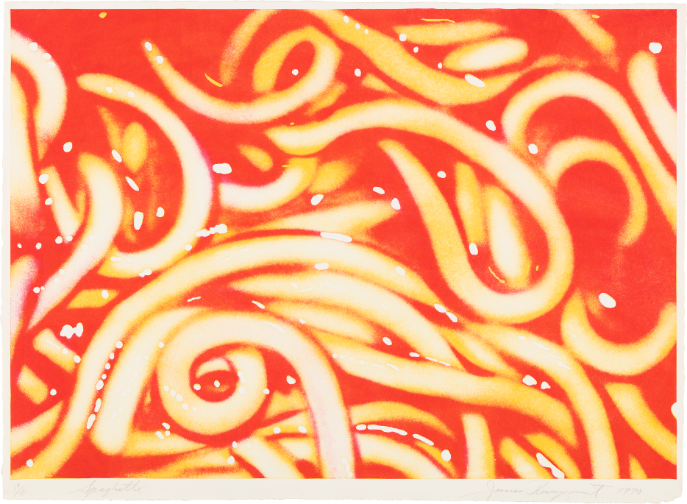
Spaghetti, 1970

Estimate $3,000 - 5,000


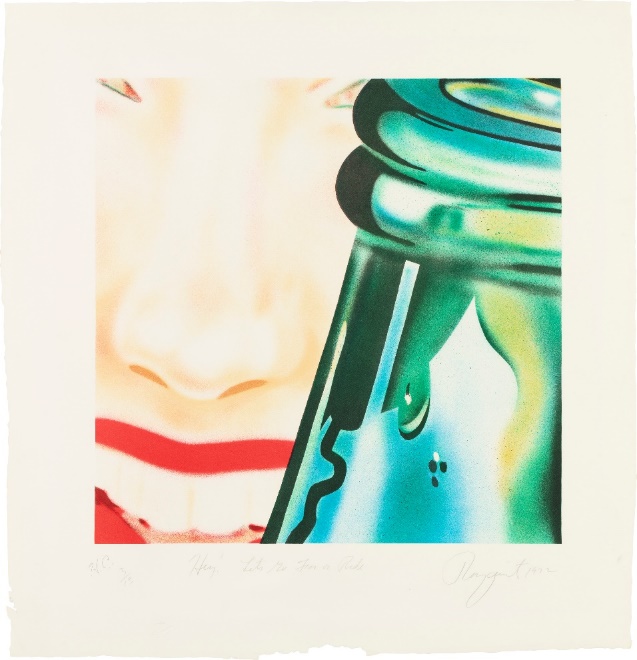
As a recognizable motif in many of James Rosenquist’s works, the sinuous form of spaghetti permeates the vernacular of Pop that has come to define much of his career, reaching its pinnacle with the 1970 print Spaghetti. The image, first used in the 1961 painting I Love You With My Ford, has made its iconic appearance in F-111Forehead I and II, among others. Besides being a budget meal enjoyed by the artist and friends early in his career, Rosenquist regarded the image of spaghetti as a manifestation of pure color and form. In the 1970s, Rosenquist revisited many of his early Pop paintings and translated them into print media. Hey! Let’s Go for a Ride, 1972, was also painstakingly re-rendering by hand to create the lithograph, providing an opportunity re-examine the work that had identified him at the height of the Pop movement.


F-111, 1974

Estimate $30,000 - 50,000

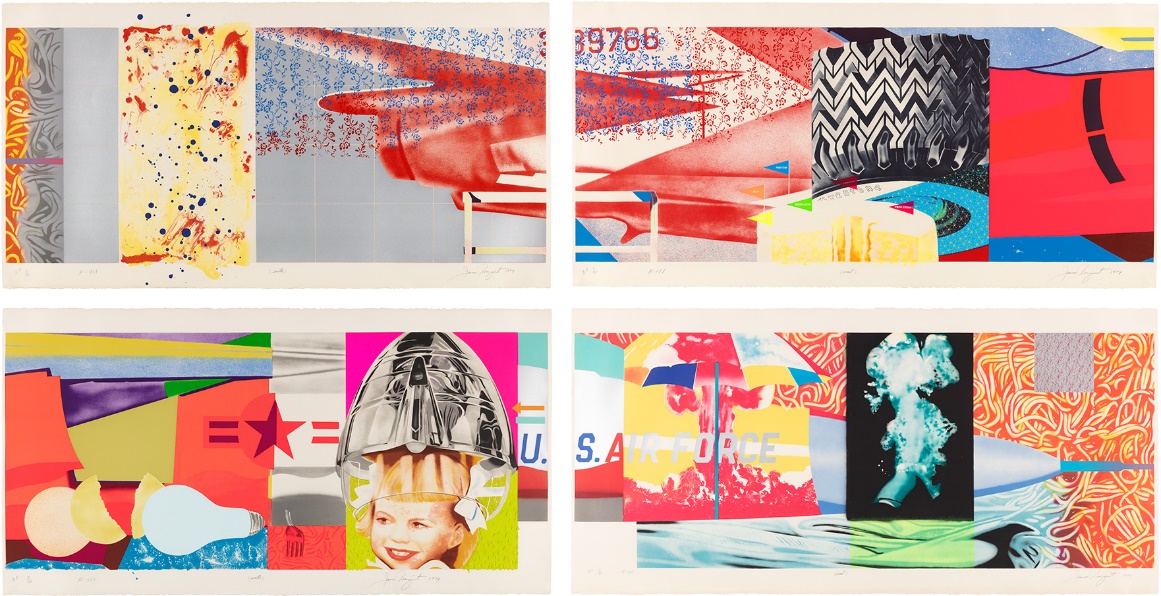
Another highlight of the sale is Rosenquist’s F-111, 1974. Based on his monumental and immersive painting of the same name, Rosenquist uses a Pop lens to tell the story of life in America on the cusp of atomic uncertainty. The painting is currently on view at the Museum of Modern Art in New York and is the institution’s largest painting. Substantial in their own right, each print measures nearly 6 feet in length and together the series spans over 24 feet, capturing the viewer’s attention in the same way the painting has mesmerized on-lookers for nearly 60 years. However, it wasn’t largeness on its own that interested the artist – it was in presenting work at a significant scale that forced the viewer to question the self, specifically when it engulfs the peripheral vision. The print series, published by Petersburg Press in 1974, endeavors to emulate a similar monumental feeling by dividing the image into four prints, each named after the direction of the wall in Leo Castelli’s gallery where the painting would have originally been hung.


The Bird of Paradise Approaches the Hot Water Planet, from Welcome to the Water Planet, 1989

Estimate $8,000 - 12,000

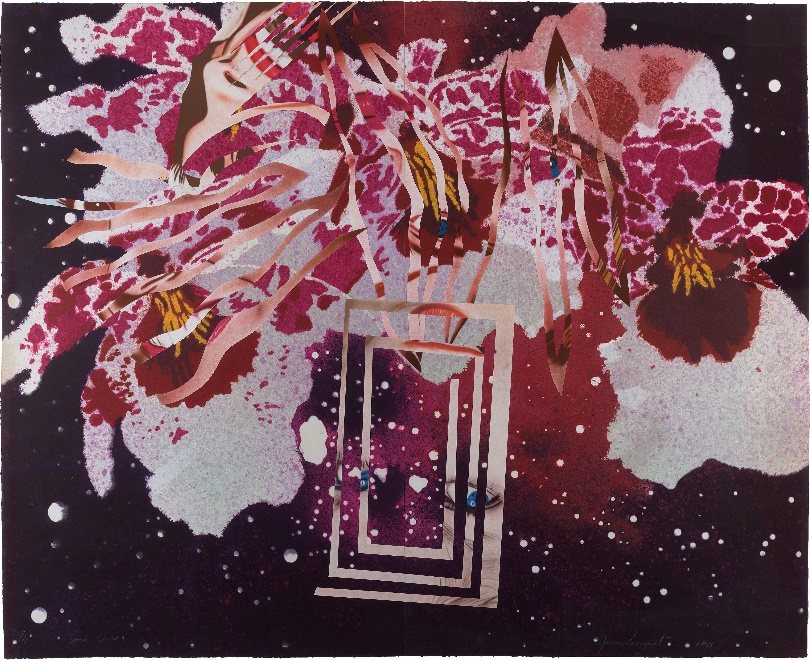
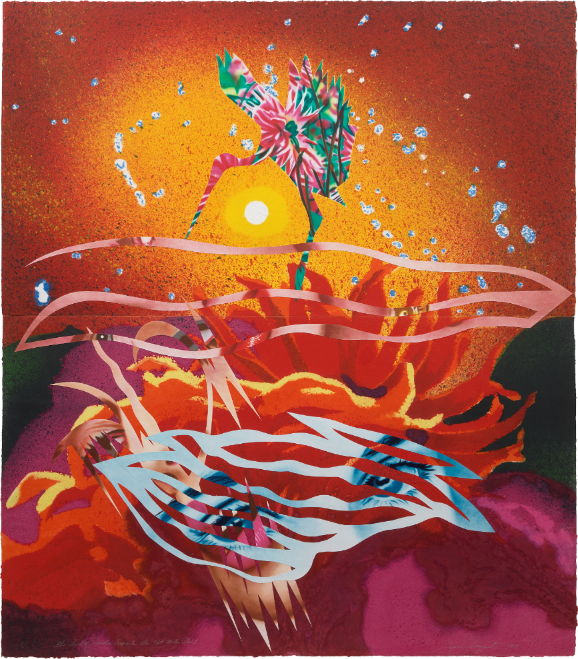
In 1987, Rosenquist released his first prints in the Welcome to the Water Planet series, some measuring up to 10 feet across, shattering earlier limitations of scale and technique. In this series, one can see the artist’s earlier interest in consumer culture evolve to reflect the intwined fate of man and nature in a world determined by advertising, technology, and science. The first two works, Welcome to the Water Planet, 1987, and The Prickly Dark, 1987, are rich monumental aquatints printed at Graphicstudio in Tampa, Florida. Following these prints, Rosenquist spent a year with Ken Tyler of Tyler Graphics experimenting with paper pulp, stencils, and lithographic collage to produce some of the most impressive feats of printmaking in the three works from that series on offer – The Bird of Paradise Approaches the Hot Water Planet, 1989, Time Door Time D'Or, 1989, and Space Dust, 1989. Enormous in scale, these prints are a technical tour de force that required the creation of entirely new papermaking machinery and dynamic systems to produce the vibrant handmade sheets. This groundbreaking series solidified Rosenquist’s status as one of the most innovative printmakers of the American print renaissance.


Hey! Let’s Go for a Ride, 1972

Estimate $3,000 - 5,000

Time Door Time D'Or, from Welcome to the Water Planet, 1989

Estimate $10,000 - 15,000


https://www.phillips.com/auctions/auction/NY030224

Thursday, December 7, 2023

Southern/Modern

  Frist Art Museum January 26 through April 28, 2024.

 Dixon Gallery and Gardens, Memphis  July 2024 

The Mint Museum , Charlotte, North Carolina,October 2024.

 The Frist Art Museum presents Southern/Modernthe first comprehensive survey of paintings and works on paper created in the American South between 1913 and 1955 that reflect a period of change and upheaval across the region. Organized by the Mint Museum in collaboration with the Georgia Museum of Art, the exhibition will be on view in the Frist's Ingram Gallery from January 26 through April 28, 2024.


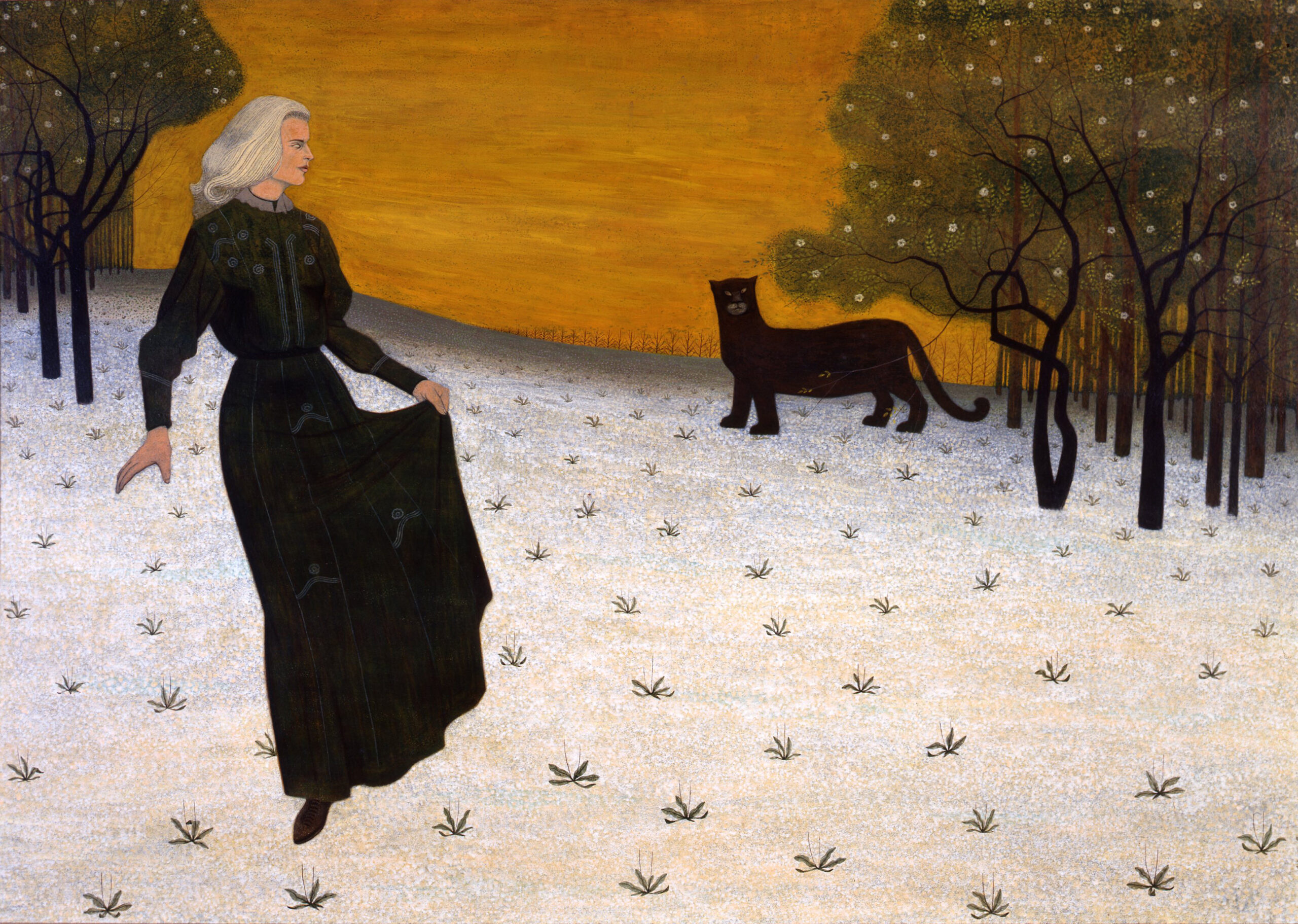
Carroll Cloar. A Story Told by My Mother, 1955. Casein tempera on Masonite; 28 3/8 x 40 1/4 in. Memphis Brooks Museum of Art, Memphis, TN. Bequest of Mrs. C.M. Gooch, 80.3.16. © Estate of Carroll Cloar

Southern/Modern features more than one hundred works by artists such as Carroll CloarAaron DouglasCaroline DurieuxWill Henry Stevens, Alma Thomas, and others who worked in states below the Mason-Dixon line and as far west as the Mississippi River. It also includes artists from outside the South, such as Josef AlbersJacob LawrenceElaine de Kooning, all of whom spent time at North Carolina's experimental Black Mountain College, as well as Thomas Hart BentonElizabeth Catlett, and others whose works reflect on Southern experiences from a distance.

"The exhibition explores the history of socially and stylistically progressive art in the American South," writes Frist Art Museum chief curator Mark Scala. "Treating a subject long neglected by art historians and museums outside the region, Southern/Modern shows how in the South as elsewhere, the goal of modernism was to lead the way toward a more open-minded and equitable society." To explore this idea, the exhibition curators Dr. Jonathan Stuhlman, senior curator of American art at the Mint Museum and Dr. Martha R. Severens, an independent scholar, included important works by women and people of color, with styles ranging from American scene painting and regionalism to cubism and abstraction.

Thematic groupings of works weave together the region's rich cultures, telling stories of agriculture and industry, class division and racial injustice, natural beauty, and stylistic innovation. The exhibition begins with a section titled "Southerners," a look into the lives of people engaged in everyday activities—chatting, out for a stroll, or shopping. While challenging stereotypes often ascribed to people from this region, this section does illustrate the racial divide that has marked the South and the nation for centuries, with only a few images showing Black and white people together in the same setting. 

Works in "Landscape as Metaphor" explore the South's rural and agricultural identity through scenes of natural beauty from the Ozarks to the Carolina low country. Several paintings also feature views of environmental abuse and neglect, the desolate landscape a metaphor for the hardscrabble lives of the people living in these places. For artists in this section, says Scala, the land was not simply defined as topography, but "is a stage for memory, legend, and history. Exemplifying this is Carroll Cloar's A Story Told by My Mother, illustrating family lore in which a dreamlike landscape is the setting for an encounter between the ethereal figures of a woman and a panther."


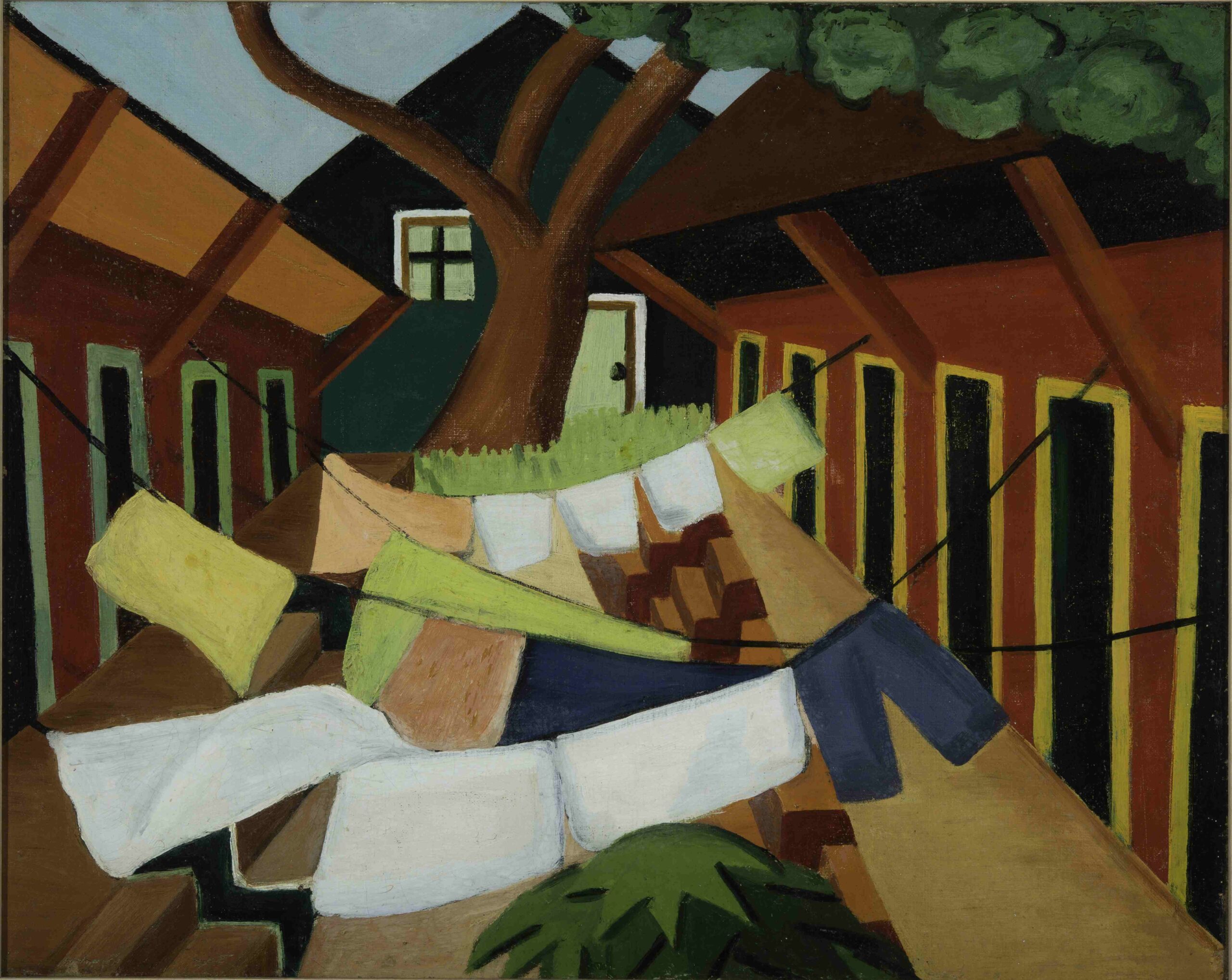
Dusti Bongé. Where the Shrimp Pickers Live, 1940.
Oil on canvas; 16 x 20 in. Mississippi Museum of Art, Jackson, MS. Gift of Dusti Bongé Art Foundation, Inc., 1999.012.
© Dusti Bongé Art Foundation
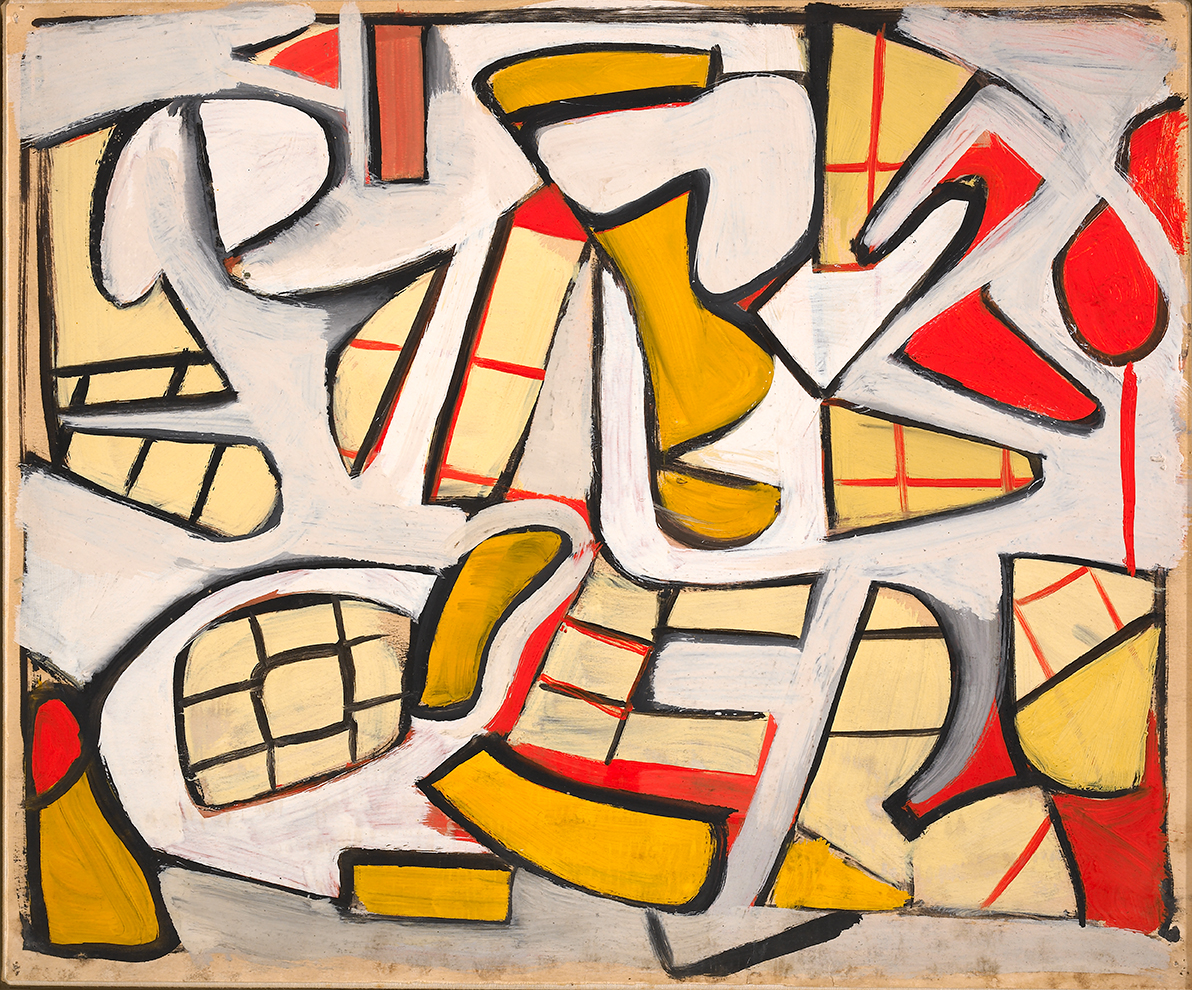
Abstract painting of off white, beige, red and yellow shapes and curves
Elaine de Kooning. Black Mountain #6, 1948.
Enamel on paper mounted on canvas; 26 x 32 in.
The Heckscher Museum of Art, Huntington, NY. Museum purchase, 1991.20

"Religion and Ritual" includes several works visualizing the cohering power of faith in Black communities. Several artists were inspired to depict Black spirituals in works such as John McCrady's version of Swing Low, Sweet Chariot and Malvin Gray Johnson's Roll, Jordan, Roll.

Artists in the section "Segregation and Jim Crow" portray a darker side of Black experience in the South, creating powerful indictments of segregation in public life, on the beach, in the military, and in the town square. References to racial violence include Loïs Mailou Jones's powerful portrait Mob Victim (Meditation) and Eldzier Cortor's devastating painting Southern Souvenir, representing two fragmented Black bodies as if they were shattered statuary.

Laborers—farmers, coal miners, fishermen, and factory workers—are spotlighted in the next section. During the Great Depression, many artists sought to bring the dire conditions of the working poor to wider public attention, as seen in Thomas Hart Benton's Ploughing it Under and John Biggers's drawing The Harvesters. Other works depict the effects of industrialization in cities like Atlanta and Birmingham, as tenant farmers frequently moved there seeking better working conditions only to be trapped in industries that had moved south in search of cheap labor. Yet, the period covered by the exhibition saw tremendous growth in the region's economy and a dramatic expansion of its cities leading to a revitalization that continues unabated today in places like Nashville.

The final two sections, "Planting New Seeds: Colonies and Schools" and "Many Modernisms," feature works that are more abstract by artists from outside the South or Southerners who had gone to cities like New York and Paris to learn about new movements and experience firsthand the works of luminaries such as Paul Cezanne, Henri Matisse, and Pablo Picasso. Several artists in this section traveled south to teach at schools like the University of Georgia, Richmond Polytechnic Institute, and most notably Black Mountain College near Asheville, North Carolina, which boasted an international faculty and was lauded for its interdisciplinary approach to modern practices.

Full of vibrant, often emotionally charged works, Southern/Modern shows how in the South, as elsewhere, modern artists linked social and aesthetic progress, hoping to change the way people saw their world. Scala writes, "While the paintings in the exhibition's last sections reflect aspects of the region, their subjects are often so generalized that they could be from anywhere—modernism in the South was truly a part of an international phenomenon. Yet, what distinguishes the art of this region from other modernisms is the story that it tells of a transformative period in America's cultural identity. How does progressive art, which for many people symbolized the nation's trajectory toward modernization, survive and even thrive in a part of the country known for its resistance to change?"


Exhibition Publication


The exhibition is accompanied by a fully illustrated catalogue, published by the University of North Carolina Press, containing more than 175 rich illustrations and a dozen essays by contributing curators and leading art scholars.

Leonard Baskin, The Great Birdman

Oregon Jewish Museum and Center for Holocaust Education

October 8, 2023 – January 21, 2024

Leonard Baskin’s Orthodox Jewish upbringing and his deep knowledge of Jewish texts and history are evident throughout his oeuvre. Other important influences include monumental Egyptian and Mesopotamian sculpture and Greek mythology and literature. Always a representational artist, Baskin’s images in every media confirm his deep engagement with the natural world of birds, animals, insects, and plants. However, it is commitment to the human figure and its fate in a world of turmoil and suffering that is preeminent in his work.

Leonard Baskin, The Great Birdman features more than 70 works from the collection of Judith Baskin and Warren Ginsberg and is guest curated by Kenneth Helphand, Philip H. Knight, Professor of Landscape Architecture Emeritus, University of Oregon and Judith Baskin, Philip H. Knight Professor of Humanities Emerita at the University of Oregon.

Being Jewish confounds things. The people of the book are intelligently defined as a religion. I, a believing atheist, proudly declare my Jewishness. It is to Yiddish that my spirit warms; to that heritage of persecution and sensual denial, that Yiddish so richly expresses. Not religion, but religious texts: not beliefs or superstition, fear or malignant custom, but the literacy, artistic, cultural and human relics of that religion.
Leonard Baskin

Leonard Baskin (1922-2000) was born in New Brunswick, NJ, the second child of Rabbi Samuel and May Guss Baskin. In his childhood the family moved to Brooklyn, New York. He attended Yale University, before serving in the US Navy in the Second World War; he finished his undergraduate degree at the New School for Social Research in New York City. Between 1950 and 1952 he studied in Paris and Florence and between 1953 and 1974 he taught sculpture and printmaking at Smith College in Northampton, Mass. Baskin received many honors and awards throughout his career and six honorary doctorates.

One fair day, I chanced upon the shelves laden with books by and about William Blake. Confronting Blake plain and unexpected was like being struck by a locomotive. Here was the model, praxis, paradigm and example, an artist and poet coupled. He made his own strange and marvelous books, their impact was overwhelming and I determined to learn to print.
Leonard Baskin

William Blake’s combined commitment to words and images spurred Baskin to found the Gehenna Press, one of the first fine art presses in the United States. A line from Paradise Lost by English poet John Milton inspired the name of the press: “And Black Gehenna call’d, the type of Hell” (1:405). Initially a novice in printing, Baskin learned and taught others the complex artistry involved. These included typographic variations, selecting quality papers, and binding techniques. He did not operate alone but worked with skilled printers who became part of the staff of the press. The press published works by classic writers, including Euripides, Shakespeare, Robert Burns, Emily Dickinson, Herman Melville, Hart Crane, William Morris, and Walt Whitman, as well as contemporary writers and artists, such as James Baldwin, Stanley Kunitz, Archibald MacLeish, and Baskin’s good friend and frequent collaborator Ted Hughes. Books published by the press sometimes featured illustrations by Baskin as well as other artists. In 1992, a 50-year retrospective of Gehenna Press books toured the country, including a major exhibition at the Library of Congress.

On the collection of work on view at OJMCHE, Judith Baskin, the artist’s niece, notes, “This is very much a family assemblage and its contents have come to me and my husband, Warren Ginsberg, often piece by piece, over many years. Leonard Baskin, my father’s younger brother, was immensely generous. He was always amenable to helping family and friends celebrate life cycle events, creating invitations and birth announcements, often in his beautiful Hebrew calligraphy. Some of the works on display here were given to me or to Warren and me directly by my uncle; others originally belonged to my paternal grandparents, my maternal grandmother, or to my parents, Rabbi Bernard and Marjorie Shatz Baskin.”

IMAGES

Self Portrait


Self Portrait at 59, Lithograph, 1981. :copyright:Estate of Leonard Baskin


Tobias and the Angel 1958

Tobias and the Angel, Wood engraving, 1958. ©Estate of Leonard Baskin


Romeyn De Hooghe


Romeyn de Hooghe (1645–1708)

Wood engraving, 1968


Short Bull, Sioux (1845–1923)


Short Bull, Sioux (1845–1923), Lithograph, 1974)

Wood engraving, 1968


Red Cloud Oglala


Red Cloud, Oglala (1822–1909)

Lithograph, 1993


Yom Kippur Angel


Yom Kippur Angel, Etching and aquatint, 1978. OJM2017.43. ©Estate of Leonard Baskin, Image Courtesy R. Michelson Gallery


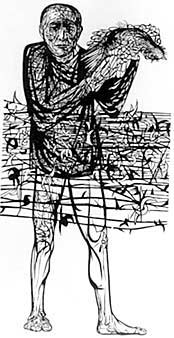
Leonard Baskin, Man of Peace (1952)


Leonard Baskin, Hydrogen Man (1954)