Friday, July 19, 2024

Dalí: Disruption and Devotion

Museum of Fine Arts, Boston (MFA)

July 6 through December 1, 2024


A surrealist painting of floating fish, melted clocks, broken tree branches, bullet-like objects, and a mountain range.

Salvador Dalí, The Disintegration of the Persistence of Memory (detail), 1952–54. Oil on canvas. Collection of the Dalí Museum. Gift of A. Reynolds and Eleanor Morse. © 2024 Salvador Dalí, Fundació Gala-Salvador Dalí, Artists Rights Society.

The outlandish and iconoclastic artist Salvador Dalí (1904–1989) is famous for his bizarre imagery, eccentric behavior and unparalleled technical skill. The renowned Surrealist was also, however, deeply rooted in tradition. He revered his artistic predecessors—among them Dürer, Raphael, El Greco, Vermeer and above all Velázquez. 

Opening this summer, the first-ever exhibition of work by Dalí at the Museum of Fine Arts, Boston (MFA) examines this sustained engagement with European art of the past. Dalí: Disruption and Devotion presents nearly 30 paintings and works on paper on loan from the Salvador Dalí Museum in St. Petersburg, Florida, as well as books and prints from a private collection, which are shown alongside works from the MFA’s European collection made by artists who inspired him. The unique juxtapositions, presented in both pairings and small thematic groupings, offer a new take on one of the most celebrated artists of the 20th century.

Dalí spent his youth in the small Spanish town of Figueres, north of Barcelona near the Catalan coast. His artistic talent was noticed early on, and at 18, he enrolled at Madrid’s San Fernando Royal Academy of Fine Arts. On a trip to Paris in 1929, Dalí connected with the Surrealist group through another Catalan artist, Joan Miró. In the words of the group’s leader, André Breton, Surrealism aimed to “resolve the previously contradictory conditions of dream and reality into an absolute reality, a super-reality.” The unconscious mind was first explored in literature, but the movement soon expanded to the visual arts, with Dalí a highly visible member of the circle.

“The Surrealist movement, announced by André Breton in 1924, is 100 years old. The MFA’s exhibition, using superb loans from the Salvador Dalí Museum in St. Petersburg, Florida, offers a timely opportunity to reconsider the most famous Surrealist in terms of the historical artists he deeply admired,” said Frederick Ilchman, Chair and Mrs. Russell W. Baker Curator of Paintings, Art of Europe.

Dalí: Disruption and Devotion showcases a broad range of Dalí’s best-known works, in terms of subject matter, chronology and scale. Highlights include:

  • The Disintegration of the Persistence of Memory (1952–54), a reworking of Dalí’s single most famous picture, painted two decades earlier, which shows his preoccupation with the elasticity of time
  • The 10-foot-tall Ecumenical Council (1960), which includes art historical references, religious themes, elements from earlier works and a hyper-realistic self-portrait in the lower left corner
  • Velázquez Painting the Infanta Marguerita with the Lights and Shadows of His Own Glory (1958), paired with Velázquez’s Infanta Maria Theresa (1653) to demonstrate Dalí’s deep reverence for the 17th-century Spanish painter
  • Morphological Echo (1936) and Nature Morte Vivante (Still Life-Fast Moving) (1956), examples of how Dalí distorted and riffed upon 17th-century Dutch and Flemish still lifes
  • Four of Dalí’s reinterpretations of Francisco Goya’s Los Caprichos (1799), one of the greatest print series of European art, which include detailed embellishments and revised captions, shown facing Goya’s original etchings
  • Sainte Hélène à Port Lligat (1956), presenting Dalí’s wife and muse Gala in the guise of Roman Emperor Constantine’s mother Saint Helena, which is paired with El Greco’s Saint Dominic in Prayer (about 1605) to show both artists meditating on solitude and the power of spiritual experience


Old Age, Adolescence, Infancy (The Three Ages), 1940

Salvador Dalí (Spanish, 1904–1989)

Oil on canvas

* Collection of The Dalí Museum, St. Petersburg, FL (USA); Gift of A. Reynolds & Eleanor Morse

* Courtesy Museum of Fine Arts, Boston


Infanta Maria Theresa, 1653

Diego Rodríguez de Silva y Velázquez (Spanish, 1599–1660)

Oil on canvas

* Gift of Charlotte Nichols Greene in memory of her father and mother, Mr. and Mrs. Howard Nichols

* Photograph © Museum of Fine Arts, Boston


Velázquez Painting the Infanta Marguerita with the Lights and Shadows of His Own Glory, 1958

Salvador Dalí (Spanish, 1904–1989)

Oil on canvas

* Collection of The Dalí Museum, St. Petersburg, FL (USA); Gift of A. Reynolds & Eleanor Morse

* Courtesy Museum of Fine Arts, Boston


Shades of Night Descending, 1931

Salvador Dalí (Spanish, 1904–1989)

Oil on canvas

* Collection of The Dalí Museum, St. Petersburg, FL (USA); Gift of A. Reynolds & Eleanor Morse

* © 2024 Salvador Dalí, Fundació Gala-Salvador Dalí, Artists Rights Society

* Courtesy Museum of Fine Arts, Boston


Nature Morte Vivante (Still LifeFast Moving), 1956

Salvador Dalí (Spanish, 1904–1989)

Oil on canvas

* Collection of The Dalí Museum, St. Petersburg, FL (USA); Gift of A. Reynolds & Eleanor Morse

* © 2024 Salvador Dalí, Fundació Gala-Salvador Dalí, Artists Rights Society

* Photo © Daniel Portnoy, 2023

* Courtesy Museum of Fine Arts, Boston
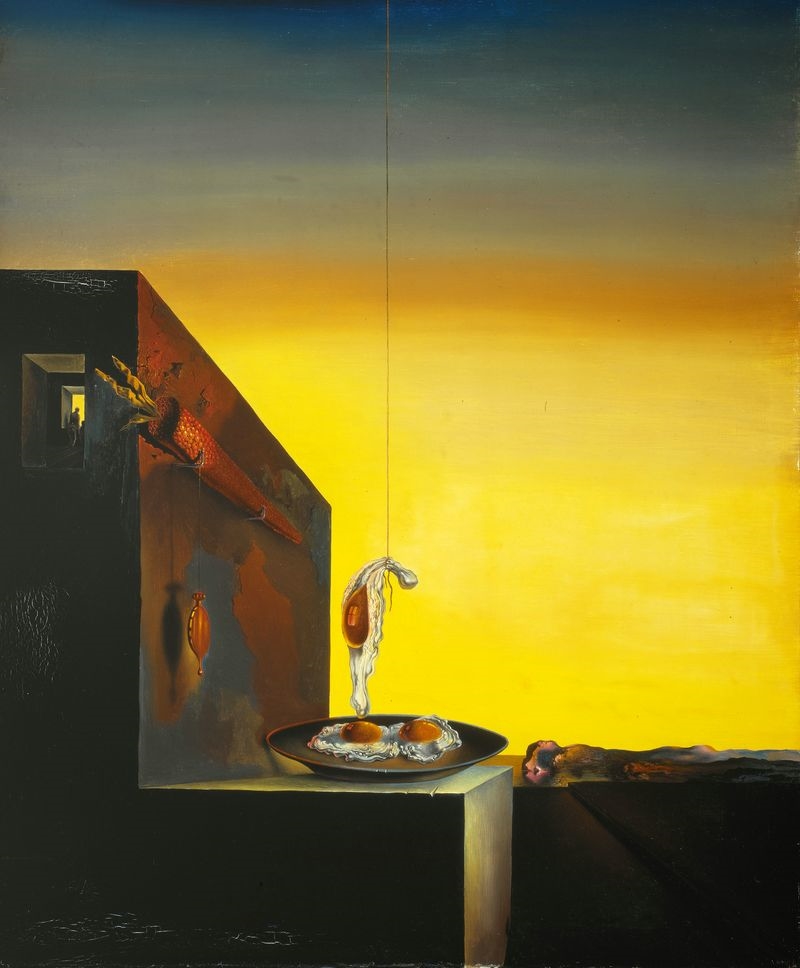


Oeufs sur le Plat sans le Plat, 1932

Salvador Dalí (Spanish, 1904–1989)

Oil on canvas

* Collection of The Dalí Museum, St. Petersburg, FL (USA); Gift of A. Reynolds & Eleanor Morse

* © 2024 Salvador Dalí, Fundació Gala-Salvador Dalí, Artists Rights Society

* Photo © David Deranian, 2021 |

* Courtesy Museum of Fine Arts, Boston


The Ecumenical Council, 1960

Salvador Dalí (Spanish, 1904–1989)

Oil on canvas

* Collection of The Dalí Museum, St. Petersburg, FL (USA); Gift of A. Reynolds & Eleanor Morse

* © 2024 Salvador Dalí, Fundació Gala-Salvador Dalí, Artists Rights Society

* Photo © Doug Sperling and David Deranian, 2021 |

* Courtesy Museum of Fine Arts, Boston
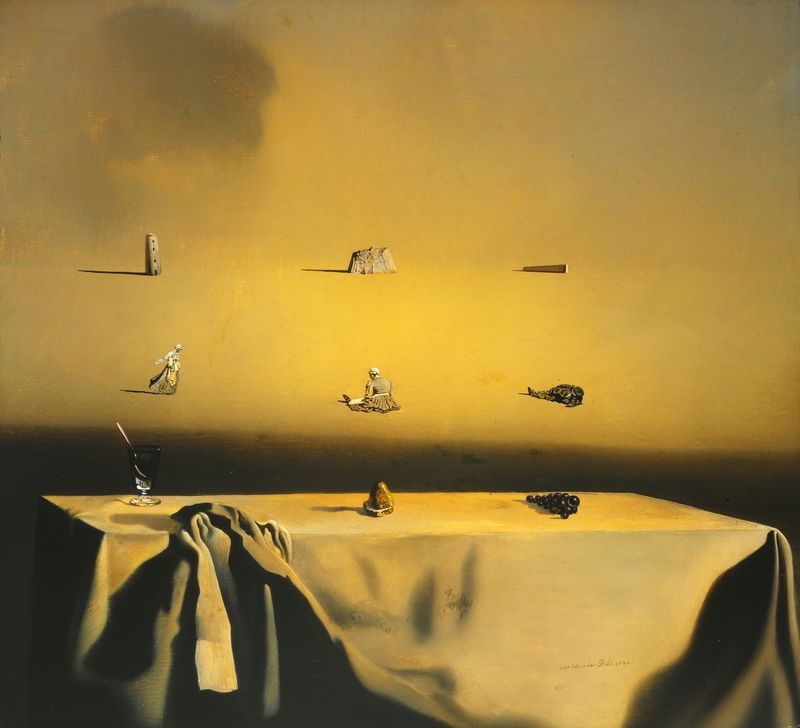


Morphological Echo, 1936

Salvador Dalí (Spanish, 1904–1989)

Oil on wood panel

* Collection of The Dalí Museum, St. Petersburg, FL (USA); Gift of A. Reynolds & Eleanor Morse

* © 2024 Salvador Dalí, Fundació Gala-Salvador Dalí, Artists Rights Society

* Courtesy Museum of Fine Arts, Boston


Saturday, July 13, 2024

WILLIAM BLAKE’S UNIVERSE

Hamburger Kunsthalle

14 June to 8 September 2024


The Hamburger Kunsthalle is devoting a large-scale exhibition to the astonishing oeuvre of the English draughtsman, printmaker and poet William Blake (1757–1827). Blake worked in the years around 1800 against the backdrop of revolution and war in Europe, slavery in the European colonies, and oppression in his native Great Britain. His works express his critique of his world while at the same time conjuring a vision of universal redemption. Both his mystical imagery and grim literary works continue to be emulated even in today’s pop culture, even though his oeuvre is still little-known outside of England. The exhibition, featuring around 90 of Blake’s works on paper, sets the artist in the context of his European contemporaries, so that a total of 170 exhibits are on view. Even though Blake never left Great Britain, the show reveals him to have been a genuine European, giving it special pertinence for our present-day world. Nearly 50 years after the first William Blake show at the Hamburger Kunsthalle, curated by David Bindman in 1975, this is now the second museum exhibition ever of Blake’s work in Germany. It is at the same time the first public presentation of the entire Blake collection of the Fitzwilliam Museum in Cambridge together with the bequest of the well-known Blake collector Geoffrey Keynes.


In three chapters – Past, Present, Future – WILLIAM BLAKE’S UNIVERSE introduces definitive aspects of Blake’s art, from his training at the Royal Academy of Arts in London, to his engagement with antiquity and the Renaissance, and onward to his enthusiasm for the mystical imagery of the early modern period. The »universe« in the title refers to the worlds that Blake created in his visionary imagination but also to the larger intellectual and artistic cosmos to which his ideas and imagery belong. He was not personally acquainted with his German contemporaries Philipp Otto Runge (1777–1810) and Caspar David Friedrich (1774–1840), and perhaps had not even heard of them, but even during his lifetime, comparisons were already being drawn between his work and the German art of the period. Like Blake, both Runge and Friedrich were faced with the devastating political crises of their time and turned to visual art to rebuild the world. The Romantic artist Runge strove like Blake to visualise the spiritual renewal of humanity in a novel artistic form. Blake’s depictions of the soul’s journey from the fall of man to redemption are also compared to works by Friedrich and other contemporaries such as Blake’s younger compatriot Samuel Palmer (1805–1881), illustrating the artistic tensions that prevailed around 1800 between personal, national and universal liberation.


An extensive catalogue (380 pages, Hatje Cantz Verlag) is available for 39 euros in the museum shop or at www.freunde-der-kunsthalle.de at the bookstore price of 54 euros. The Hamburger Kunsthalle app offers audio tours for adults in German and English and for children and young people aged 8 and over in German. An animated film in the exhibition as well as a short film place William Blake in the context of his time. In addition, an accompanying publication in the form of a graphic novel by Noëlle Kröger recounts the life of William Blake (in German and English / free for visitors to take with them).


WILLIAM BLAKE (1757–1827)
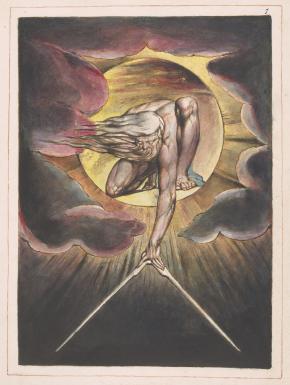
Europa, eine Prophezeiung, Frontispiz – Urizen (Europe a Prophecy, frontispice – Urizen), 1794
Relief- und Weißlinienradierung, koloriert, 30,3 x 23,1 cm
The Fitzwilliam Museum, Cambridge
© The Fitzwilliam Museum, University of Cambridge
WILLIAM BLAKE (1757–1827)
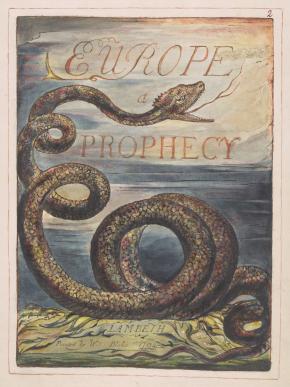
Europa, eine Prophezeiung, Titelseite (Europe a Prophecy, title page), 1794
Relief- und Weißlinienradierung, koloriert, 30,3 x 23,1 cm
The Fitzwilliam Museum, Cambridge
© The Fitzwilliam Museum, University of Cambridge
WILLIAM BLAKE (1757–1827)
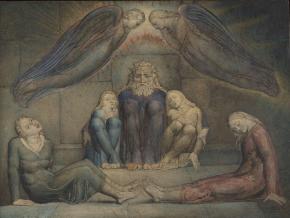
Ugolino und seine Söhne im Gefängnis (Ugolino and his Sons in prison), 1826
Tempera-Malerei, 33 x 44 cm
The Fitzwilliam Museum, Cambridge
© The Fitzwilliam Museum, University of Cambridge
JOHN LINNELL (1792–1882)
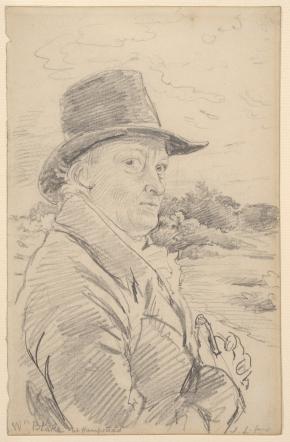
Porträt William Blakes in Hampstead (Portrait of William Blake at Hampstead), ca. 1820
Graphit, 17,9 x 11,5 cm
The Fitzwilliam Museum, Cambridge
© The Fitzwilliam Museum, University of Cambridge
CATHERINE BLAKE (1762–1831)
Wahrscheinlich posthumes Porträt von William Blake als junger Mann (Probably posthumous portrait of William Blake as a young man), um 1830 (?)
Graphit, 155 x 104 mm
The Fitzwilliam Museum, Cambridge
© The Fitzwilliam Museum, University of Cambridge

WILLIAM BLAKE (1757–1827)
Albion erhebt sich (Glücklicher Tag oder Der 


Monday, July 1, 2024

Gauguin's World: Tōna Iho, Tōna Ao


From 29 June until 7 October 2024


Trace the trajectory of Paul Gauguin’s distinctive work, from impressionist beginnings to Polynesian visions.


Paul Gauguin, Te faaturuma (The brooding woman), 1891. Oil on canvas, 91.1 × 68.7 cm. Worcester Art Museum. Museum Purchase, 1921.186.

Paul Gauguin, Still life with Hope, 1901. Private collection, Milan © Paolo Vandrasch.

PUBLICATION

Gauguin’s World: Tōna Iho, Tōna Ao inspires new ways of seeing and thinking about one of the most renowned artists of the nineteenth century. Revisiting Paul Gauguin at a particular moment in his life, when he was approaching death, looking back on scattered memories from his final resting place in the Marquesas Islands, Gauguin’s World: Tōna Iho, Tōna Ao deepens our understanding of one of the most polarising artists of his time and ours.

This magnificent and authoritative publication, edited by the internationally esteemed scholar of nineteenth century French art, Henri Loyrette, traces Gauguin’s physical, spiritual and artistic journey as he travelled first to Denmark, Brittany and Provence, then to Martinique, Tahiti and finally the Marquesas Islands in Polynesia. Tracing Gauguin’s path as he sought increasingly remote locations to live and work, Loyrette explains how Gauguin ‘believed in a real correspondence between man and the world around him’. Thoughtful, wide-ranging perspectives on Gauguin’s life and practice by Nicholas Thomas, Vaiana Giraud, Norma Broude and Miriama Bono, with particular focus on Gauguin’s time in the Pacific, illuminate the artist in all his human and artistic complexity.

Featuring more than 150 colour reproductions, this publication is the first to explore Gauguin’s inner journey and quest to develop his own identity, surveying his practice from its impressionist beginnings and symbolist leanings to his Polynesian periods.

Friday, June 28, 2024

Alphonse Mucha: Spirit of Art Nouveau.

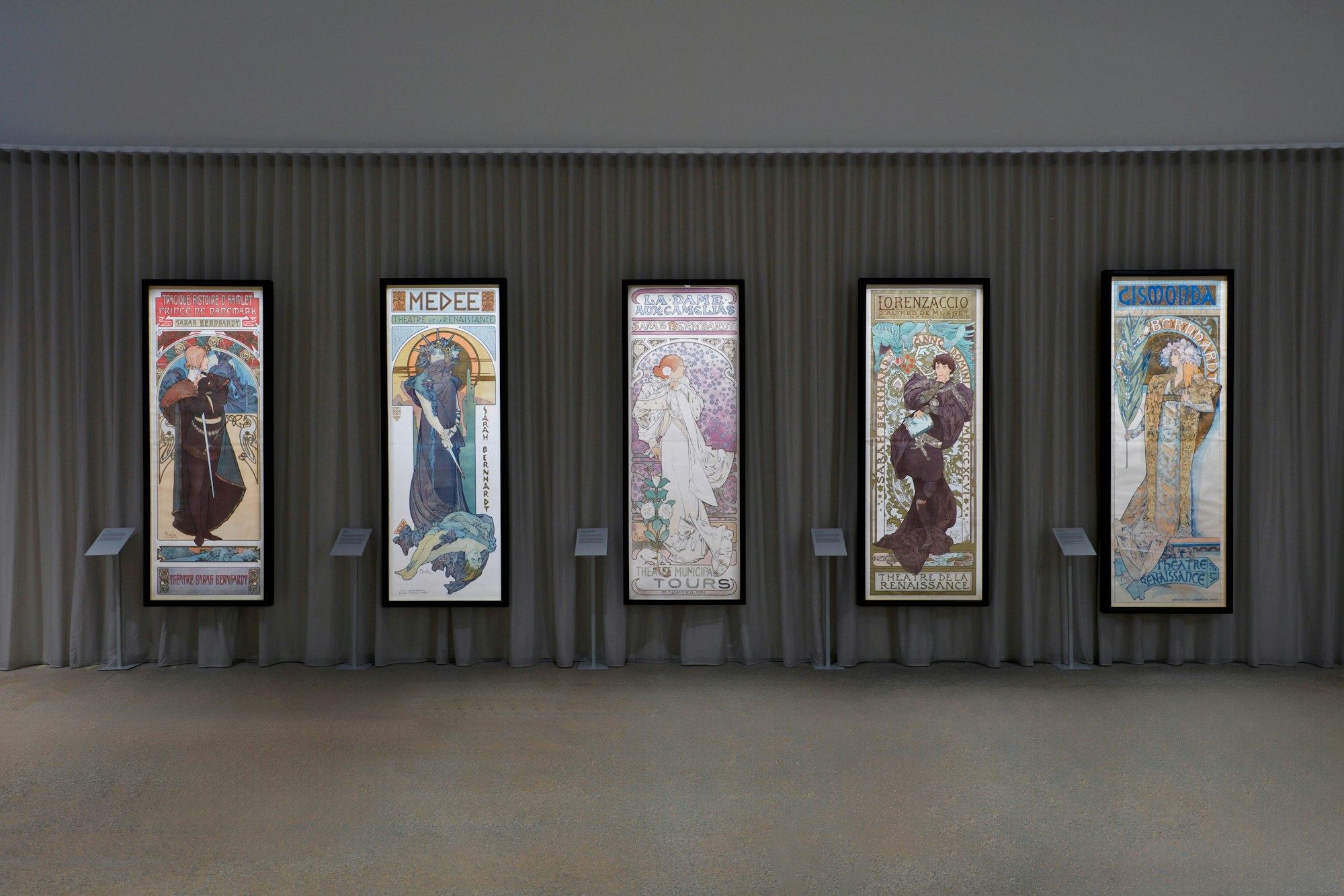
Installation view of the Alphonse Mucha: Spirit of Art Nouveau exhibition at the Art Gallery of New South Wales, photo © Art Gallery of New South Wales, Diana Panuccio

Installation view of the Alphonse Mucha: Spirit of Art Nouveau exhibition at the Art Gallery of New South Wales, photo © Art Gallery of New South Wales, Diana Panuccio


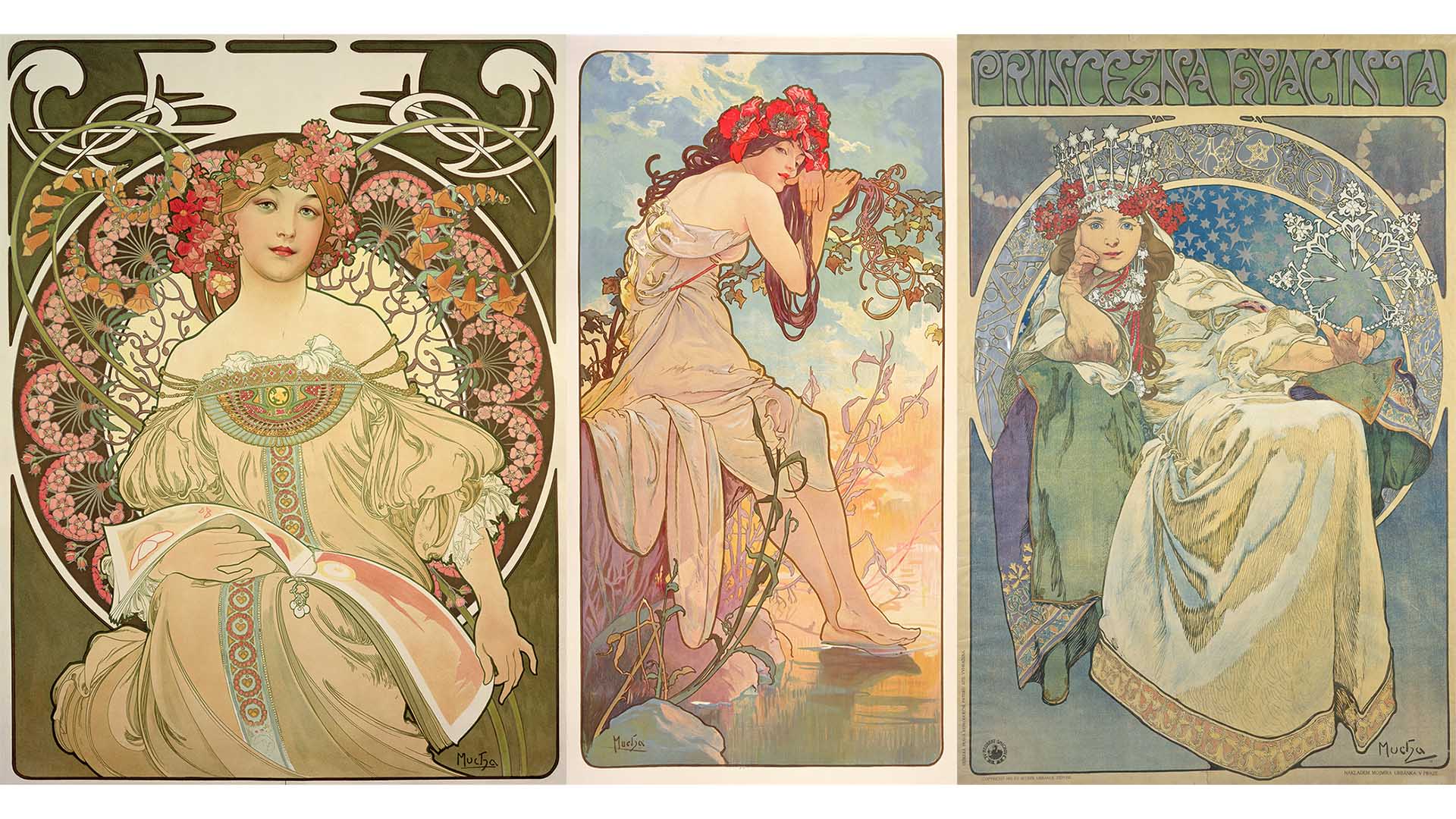
Alphonse Mucha 'Reverie' 1898, colour lithograph, 72.7 x 55.2 cm © Mucha Trust 2024.


Alphonse Mucha 'Reverie' 1898, colour lithograph, 72.7 x 55.2 cm © Mucha Trust 2024 // Alphonse Mucha 'The Seasons: Summer' 1896, colour lithograph, 103 x 54 cm © Mucha Trust 2024. // Alphonse Mucha 'Princess Hyacinth' 1911, colour lithograph 125.5 x 83.5 cm © Mucha Trust 2024

The Art Gallery of New South Wales presents Alphonse Mucha: Spirit of Art Nouveau. This exhibition traces the remarkable life and work of one of the great pioneers of the 19th-century art world, Czech art nouveau master Alphonse Mucha, and will be the largest exhibition ever seen in Australia of this visionary artist’s work. 

In seductive, sinuous compositions, Alphonse Mucha (1860–1939) developed a new stylistic language that defined the look of late 19th-century Paris to be the very spirit of art nouveau, creating some of the most instantly recognisable and best-loved works in modern European art.  

This exhibition, exclusive to the Art Gallery, is realised in close cooperation with the Mucha Foundation, Prague, and is drawn from the Mucha Family Collection. The exhibition features more than 200 works including paintings, illustrations, posters, jewellery, photographs, sculpture and more. It is co-curated by Tomoko Sato, curator of the Mucha Foundation, and Jackie Dunn, senior curator of exhibitions at the Art Gallery.  
 
Declared during his lifetime as ‘the greatest decorative artist in the world’, Mucha rocketed to fame with the posters he created for legendary actor and international superstar Sarah Bernhardt, before going on to receive global recognition through his advertising and product design – and the ‘decorative panels’ that were his first steps towards the democratisation of art that he so desired.  

This exhibition will explore his full oeuvre from the early years before he moved to Paris in 1887, to his famed poster art and the development of the ‘Mucha style’. His late great painting cycle the Slav Epic (1912–26), comprising 20 grand canvases, is brought to life in Sydney as an immersive digital experience. 

Art Gallery director Michael Brand said: ‘Alphonse Mucha was one of art’s great stylistic innovators and whilst best known for his iconic posters and decorative designs that contributed to the development of art nouveau, we hope this truly comprehensive exhibition will offer audiences the chance to take a deeper look at the remarkable life of this fascinating artist and his humanistic ideals.’ 

‘We are grateful to the Mucha Foundation for their generosity in lending these treasures to allow audiences here in Sydney the chance to discover an exhibition not only rich in art but also in history, human achievement and political commitment,’ said Brand. 

Minister for the Arts, Music and the Night-time Economy, and Minister for Jobs and Tourism John Graham said: ‘Lovers of art nouveau will be treated to a spectacular exhibition of the life and work of this visionary artist. Between this and the annually anticipated Archibald Prize exhibition, visitors to the Art Gallery of New South Wales are in for a visual feast this winter.’ 

Alongside Mucha’s own work, the exhibition will also feature a selection of Japanese prints from the Art Gallery’s exceptional ukiyo-e collection, the likes of which circulated during Mucha’s time in Paris in the late 19th century and profoundly influenced the art nouveau style. Also on display will be an exciting selection of 1960s and 1970s band posters and LP record covers, as well as more recent Japanese manga, that followed the countercultural rediscovery of Mucha’s art, showcasing his recent and ongoing influence on modern culture.  

The exhibition is accompanied by a richly illustrated catalogue, written by Tomoko Sato, a leading Mucha expert and curator at the Mucha Foundation. The publication features over 200 stunning images depicting Mucha’s art and life, including rarely seen archival photographs.   

Van Gogh: Poets and Lovers

 The National Gallery

14 September 2024 ‒ 19 January 2025


One of Vincent van Gogh’s 'Sunflowers' paintings from Arles in France is to travel outside the United States for the first time since it was acquired in 1935 – offering the unique opportunity to realise one of Van Gogh’s ideas for a decorative arrangement.

The picture, now at Philadelphia Museum of Art, will be lent to the National Gallery’s exhibition Van Gogh: Poets and Lovers (14 September 2024 ‒ 19 January 2025), where it will be seen alongside the Gallery’s own Sunflowers painting for the first time since early 1889 when they were in the artist’s studio.


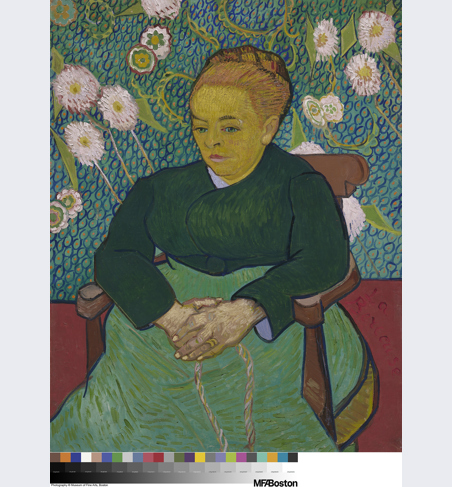
Vincent van Gogh, 'Lullaby: Madame Augustine Roulin Rocking a Cradle (La Berceuse)', 1889. Bequest of John T. Spaulding (48.548) © Museum of Fine Arts, Boston


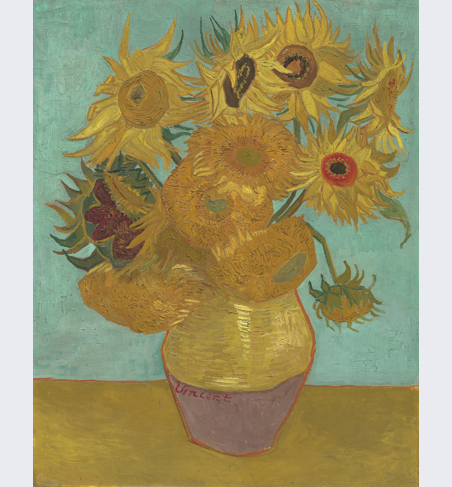
Vincent van Gogh, 'Sunflowers', 1889. The Mr. and Mrs. Carroll S. Tyson, Jr., Collection (1963-116-19) © Philadelphia Museum of Art

​​​​​​​
The Philadelphia 'Sunflowers' was left initially with Van Gogh's friends, Mr and Mrs Ginoux in Arles and was bought by Mr Carroll Tyson, of Chestnut Hill Philadelphia, in 1935, before being acquired by the Philadelphia Museum of Art in 1963. The London 'Sunflowers' was sent to Van Gogh’s brother Theo in May 1889 and stayed in the family until the National Gallery bought the picture in 1924. The two pictures were never been exhibited together and, therefore, were in the artist’s studio when they were last together in early 1889.

While the National Gallery Sunflowers was painted in August 1888, the Philadelphia version was executed in Arles in January 1889, reaffirming the artist’s continued fascination with these still lifes.The two 'Sunflowers' will be shown flanking 'La Berceuse' (1889), his symbolic portrait of a woman with cradle cord, a very important loan from the Museum of Fine Arts, Boston, United States.

Months after he painted these pictures, while in Saint-Rémy, near Arles, Van Gogh discussed potential arrangements of them for display and sent a sketch to his brother Theo in a letter of late May 1889.

While in Arles, Van Gogh first painted several portraits of Augustine Roulin. He undertook a new interpretation in bold colours against a highly stylised floral background. The rope in her hands suggests a cradle beyond the confines of the frame. At right, the painter inscribed the title La Berceuse, which can be translated as ‘lullaby’ or ‘she who rocks the cradle.’

Writing to his brother he imagined his painting ‘in the cabin of a boat’ where fishermen in ‘their melancholy isolation, exposed to all the dangers, alone on the sad sea…would experience a feeling of being rocked, reminding them of their own lullabies.’

As well as marking the Gallery’s 200th anniversary this year, 'Van Gogh: Poets and Lovers' also marks the centenary of the Gallery’s acquisition of 'Sunflowers' as well as Van Gogh’s Chair (1888), two of its most famous pictures, in 1924.

The Gallery’s first exhibition devoted to Vincent van Gogh (1853‒1890) will also be the first anywhere to focus on the artist’s imaginative transformations. It will feature over 50 works and loans from museums and private collections around the world, including important pictures from the Kröller Müller Museum, Otterlo, Netherlands, the Van Gogh Museum, Amsterdam, and the Musée d’Orsay, Paris. Groups of Van Gogh’s most ambitious canvases and works on paper will explore the artist’s creative process and his sources of inspiration.

Dwelling on Van Gogh’s time in Arles and Saint-Rémy in Provence (1888‒1890), the exhibition investigates the artist’s fascinating practice of turning the places he encountered into idealised spaces in his art, thus crafting a deeply resonant and poetic framework for his oeuvre. The exhibition will also show how portraits played a vital role, as Van Gogh assigned his models symbolic meaning within his artistic universe such as the Poet and Lover of the exhibition’s title.

'Van Gogh: Poets and Lovers' will explore how the poetic imagination and ideas associated with love evolved into central themes for the artist. In Arles, for example, Van Gogh designated the public park in front of the Yellow House (in which, in 1888, Van Gogh rented four rooms) as a Poets’ Garden, envisioning Italian Renaissance poets Petrarch and Boccaccio strolling there. Some of Van Gogh’s most glorious paintings and drawings of the time are associated with this idea, and pairs of lovers appear in paintings such as Starry Night (Musée d’Orsay, Paris, 1888).

In May and June of 1889, after Van Gogh was admitted to the Saint-Paul-de-Mausole hospital in Saint-Rémy, he imagined the asylum’s overgrown garden as a secluded site for lovers. He painted spectacular compositions depicting views of the grounds. The exhibition will show how this idealising, euphoric exploration of the asylum garden contrasts dramatically with works from the autumn when Van Gogh instead associated the very same location with his and his fellow patients’ sufferings.

In Arles, in late summer of 1888, Van Gogh planned to decorate his Yellow House with his pictures on the theme of the Poet’s Garden, the Sunflowers and the Poet and the Lover. These paintings were instrumental in his conception of a decorative scheme that quickly grew beyond the walls of the Yellow House. 'Van Gogh: Poets and Lovers' will show how the artist sought to create important compositions for exhibitions in Paris, initially in 1889, year of the Exposition Universelle, when he hoped to display them as a cohesive group alongside works by fellow avant-garde artists.

The exhibition will explore how Van Gogh’s choices for these works reflect his thinking about painting in series, his repeated references in letters to pendants, his use of opposites or contrasts to create harmony and cohesion. The artist continued to pursue these ideas later in Saint-Rémy, as his works became increasingly known in avant-garde circles.

As well as the many loans, the exhibition will draw on the artist’s works in the National Gallery’s collection. In addition to 'Sunflowers' and 'Van Gogh’s Chair', the Gallery owns other major paintings of great significance to the exhibition’s reassessment of Van Gogh at a key moment of his career: Wheatfield with Cypresses (1889) acquired in 1923, and Long Grass with Butterflies (1890), which entered the collection in 1926.

'Van Gogh: Poets and Lovers' is curated by guest curator Cornelia Homburg, and Christopher Riopelle, the Neil Westreich Curator of Post 1800 Paintings at the National Gallery, from an initial concept by Cornelia Homburg.

Dr Gabriele Finaldi, Director of the National Gallery, London, says: ‘This is the first exhibition devoted to Van Gogh ever held at the National Gallery. It marks two centuries of the Gallery’s existence and one since its acquisition of 'Sunflowers'. Museums and collectors have been astoundingly generous in lending great paintings to this show.’