Wednesday, November 27, 2024

JACKSON POLLOCK: THE EARLY YEARS (1934-1947)

 Musée national PicassoParis

October 15, 2024 to January 19, 2025
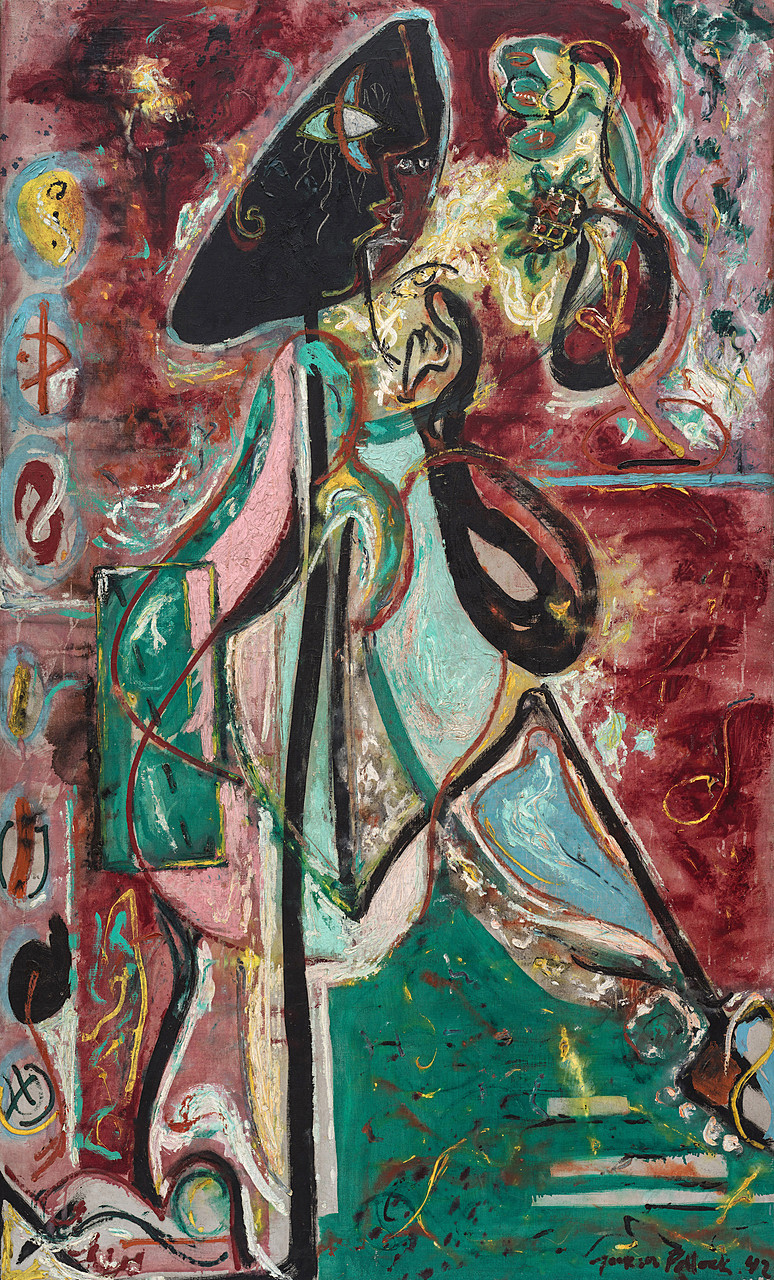
Jackson Pollock – The Moon Woman (1942) – Oil on canvas The Solomon R. Guggenheim, Foundation Peggy Guggenheim Collection, Venice © Pollock-Krasner Foundation / ADAGP, Paris 2024 

The Musée national Picasso-Paris presents a new temporary exhibition devoted to the American artist Jackson Pollock. First exhibition in France since 2008, it will focus on his early works, from 1934 to 1947. The exhibition "Jackson Pollock: The Early Years (1934-1947)" revisits the early career of Jackson Pollock (1912-1956), marked by the influence of regionalism and Mexican muralists, right up to his first drippings in 1947. This body of work, rarely exhibited for its own sake, bears witness to the diverse sources that nourished the young artist's research, crossing the influence of native American arts with that of the European avant-gardes, among which Pablo Picasso figures prominently. Compared to the Spanish painter and the great names of European painting by the critics, Pollock was quickly established as a true monument of American painting, and in so doing, isolated from the more complex networks of exchanges of influences that nourished his work during his New York years. The exhibition aims to present in detail these years, which were the laboratory for his work, by restoring the artistic and intellectual context from which both were nourished. 

The exhibition focuses on several key moments in the young Pollock's artistic and intellectual development during these years of experimentation. By calling on key figures in his artistic career (Charles Pollock, William Baziotes, Lee Krasner, André Masson, Pablo Picasso, Janet Sobel...), the exhibition highlights the intensity and singularity of his work in its various dimensions (painting and working with materials, printmaking, sculpture). The exhibition features some one hundred works from prestigious international institutions such as New York's Museum of Modern Art, the Metropolitan Museum of Art, the Centre Pompidou, the Tate and the Stedelijk Museum. 

INTRODUCTION

 Jackson Pollock and his gestural style of painting are emblematic of the triumph of American art following the Second World War. The artist’s origins, career and spirit embody the iconic, almost legendary face of American culture in the 1950s. Born on the plains of West Wyoming in 1912, Pollock spent his youth near Los Angeles. He was a disciple of Thomas Hart Benton’s social regionalism during the years of the Great Depression, and reinforced his leftist political sensibility through the powerful programmatic wall paintings produced by Mexican muralists. Then, in 1936, he joined David Alfaro Siqueiros’s studio within the context of the WPA’s Federal Art Project and Franklin D. Roosevelt’s New Deal policies. It was to be however, his encounter with Pablo Picasso’s work in the late 1930s that led him towards a unique, figurative and informal style of expressive painting. He was fascinated by Guernica but equally by the ensemble of Picasso’s work shown at the MoMA in 1939, and in particular the hybrid figures of the 1930s paintings. He became involved in the New York scene, which was driven by the European Surrealists in exile, and was sensitive to automatic writing and drawing, as well as to psychoanalysis. His painting was nourished by native American myths, stylised forms and signs, technical experimentation and a fresh gestural approach. 

The years leading up to the production of his large, abstract, numbered drip paintings, championed by the critic and theorist Clement Greenberg, reveal the complex, artistic and intellectual construction of one of the greatest American artists, and, through his dialogue with Picasso, the full extent of the latter’s influence on his work. This dialogue would seem to embody the shift of artistic predominancy from the Parisian art scene to the New York school.

The work of Pablo Picasso was a key reference for Jackson Pollock. It was initially the article “Primitive Art and Picasso” (1937) by John D. Graham which made an impact on the American artist. It echoed with his own attraction to Native American culture. After having seen the vast, anti-fascist painting Guernica in May 1939 at the Valentine Gallery, a few months later he discovered Picasso’s entire oeuvre at the MoMA, during the “Picasso: Forty Years of His Art" retrospective. Inspired by Les Demoiselles d’Avignon (1907) or Girl before a Mirror (1932), he produced a large series of drawings of hybrid creatures, a bestiary bringing together Picasso-like sources and borrowing from Native American sculptures and masks. The artist and theorist John D. Graham was undoubtedly the first person to have shown interest in Jackson Pollock. After introducing him to the work of Pablo Picasso, in 1942, he organized a major group exhibition entitled “American and French Painting”, bringing face to face great names from the Parisian art scene such as Georges Braque, André Derain, Henri Matisse and Picasso with American artists Stuart Davis, Walt Kuhn, Lee Krasner and Pollock. The latter showed his work Birth with its vertical composition made up of fragments of deformed, stylised faces recalling a totem pole and a clear allusion to Kwakwaka’wakw sculptures. 
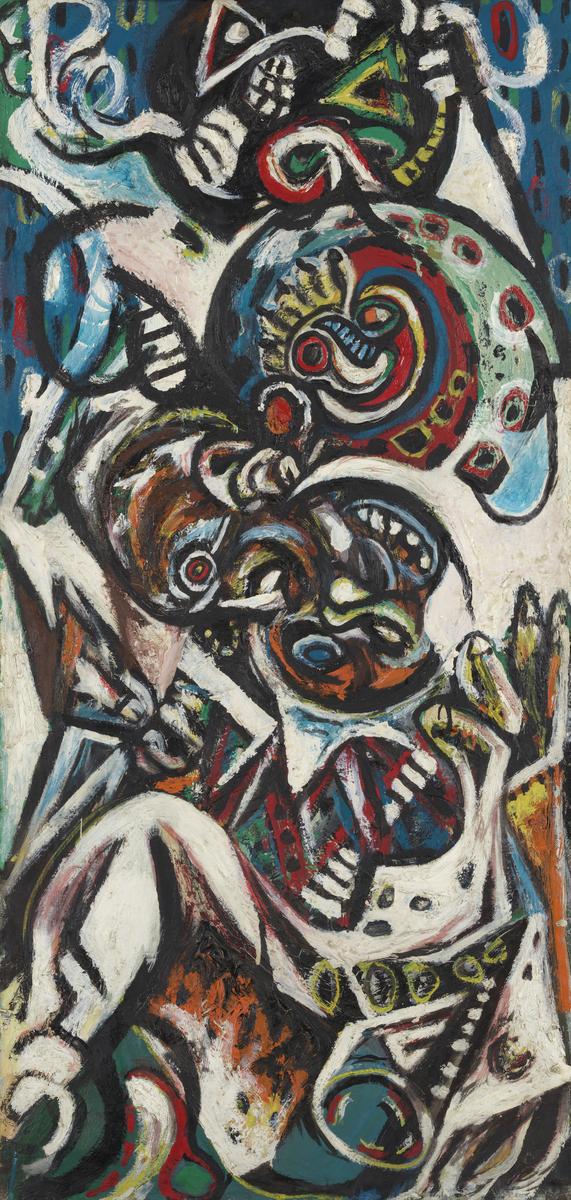

Jackson Pollock Birth (v. 1941) Oil on canvas Tate, Londres © Pollock-Krasner Foundation / ADAGP, Paris 2024

POPULAR AMERICAN AND NATIVE AMERICAN MODERNITY1930-1941 

In September 1930, Jackson Pollock moved to New York and joined the Art Students League to study under the Regionalist painter Thomas Hart Benton. In his realist paintings, Benton depicted a picture of a country gripped by the Great Depression, greatly influencing both Pollock’s and his brother Charles’ work in the early 1930s. As they travelled from East to West, they stopped to sketch the workers coming out of local factories and those labouring in the fields. 

Guided by Benton, the young artist became passionate about the art of frescos, from the Italian Renaissance to the Mexican mural painters. Accompanied by his friends and family, he travelled across the United States to see the most recent creations of José Clemente Orozco. Then in 1935, he began working in the mural department of the Federal Art Project – a program developed by the American Federal government to support artists. Pollock gradually moved away from social themes towards a form of painting that combined Pablo Picasso’s influence with that of the Mexican mural painters, from whom he borrowed both his symbolic language and colour palette. 

The Mexican muralists 

During the presidency of Álvaro Obregón, who had governed Mexico since the 1910-1920 Revolution, the mural painters José Clemente Orozco, Diego Rivera and David Alfaro Siqueiros developed a monumental artform that celebrated both popular modern life and pre-Columbian cultures. In the early 1930s, the United States government commissioned several works from the trio, nicknamed “Los Tres Grandes”, who were living in the country at that time. It is in this context that Jackson Pollock joined Siqueiros’ studio in the spring of 1936. During the summer of 1936, Jackson Pollock travelled to Dartmouth College in Vermont with his brother Sande and his friend the painter Philip Guston to see a mural which had been completed two years earlier by Orozco: The Epic of American Civilization. The work chronicled the American history from its preColumbian origins to its more recent industrial era. This complex composition, combining profiles of humans and animals, was reminiscent of Orozco’s scenes of war and had a long-lasting impact on Pollock. 

 Indian Art of the United States, 1941, MoMA, New York 

In January 1941, the Museum of Modern Art in New York dedicated a vast exhibition to Native American arts: Indian Art of the United States. The aim of this exhibition was to break with the primitivist reading of Native American cultures by restoring the history and diversity of their practices. More than a thousand artworks and objects were presented in a modern scenography organised into three main parts: “Prehistoric”, “Living traditions” and “Indian Art for Modern Living”. During the exhibition, Navajo artists gave demonstrations of traditional sand painting while at the museum entrance, a gigantic totem pole sculpted in 1939 by the Haida artist John Wallace was erected. Already receptive to these arts, which he had discovered in Los Angeles, Pollock visited the exhibition and later insisted on their influence on his work. 

In a letter dating from 1932 Jackson Pollock, the young artist, who was at that time attending classes by the sculptor Ahron Ben-Shmuel wrote to his father: “Sculptoring I think is my medium.” This work, carved ten years later out of animal bone, bears witness to his taste for this technique and the interest he nurtured for Native American arts. Simultaneously outlining a human face and an animal profile, the work expresses the idea of metamorphosis and recalls the Haida totems he had seen at the MoMA exhibition in 1941. 
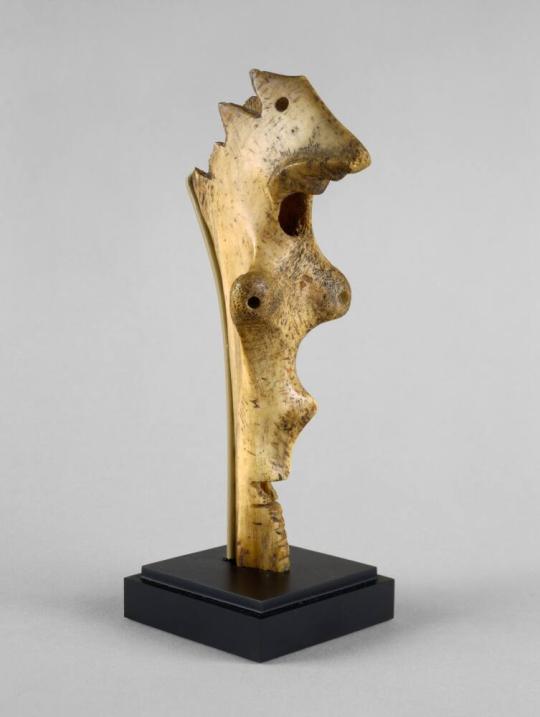


Jackson Pollock Untitled (v. 1943) Carved bone The Museum of Fine Arts, Houston © Pollock-Krasner Foundation / ADAGP, Paris 2024

The mask motif was omnipresent in the work of Jackson Pollock between 1938 and 1941, just like Masqued Image, which can also be seen in this room. It is a key symbol in the indigenous cultures of North America, believed to have the power to transform and to reincarnate. The psychiatrist Carl Gustav Jung associated masks with the notion of persona, our external personality that defines who we are in the world in the eyes of others, and revealing as much as it hides. 


Jackson Pollock Mask, v.1941 Oil on canvas The Museum of Modern Art, New-York © Pollock-Krasner Foundation / ADAGP, Paris 2024 9 

 NEW YORK, A SURREALIST HUB. 1940-1943 

The arrival of French artists and thinkers fleeing the Occupation contributed to the cultural vibrancy in New York at the beginning of the 1940s. In particular, the Surrealist circles – featuring André Breton, Marcel Duchamp, Marx Ernst, Jacqueline Lamba, André Masson, Roberto Matta, Yves Tanguy – played a part in reinforcing the trend for psychoanalysis, the idea of expression through automatism and the unconscious. According to Claude Lévi-Strauss, "New York is the conservatory, the collision of modern and archaic time”. Jackson Pollock got acquainted with several members of the Surrealist movement in the city. He took part in the automatic writing workshops organised by Matta. At this time the artist was undergoing psychoanalytic treatment with Jungian analyst Joseph Henderson, and was trying his hand at automatism. 
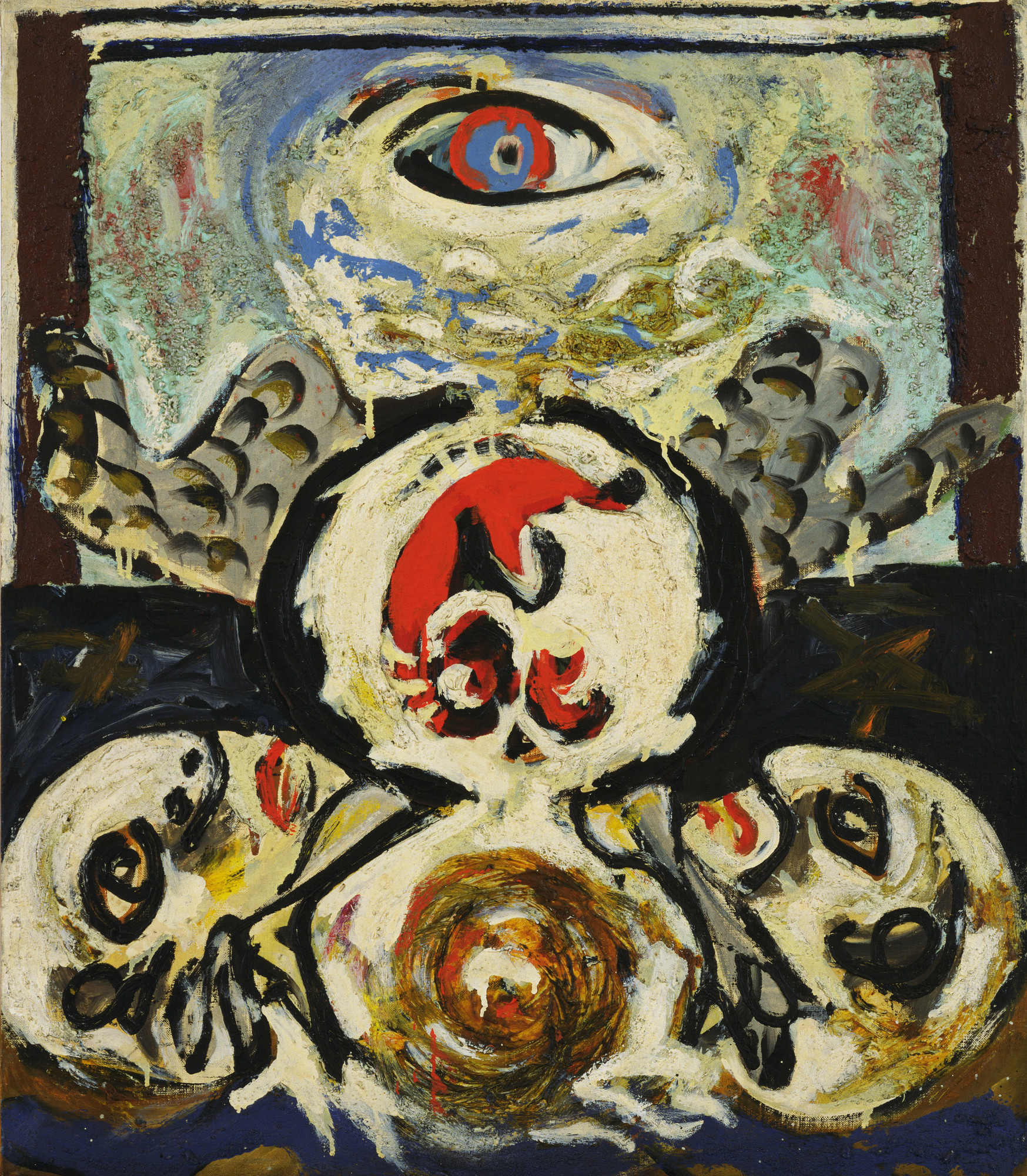


Jackson Pollock Bird (v. 1938-1941) Oil and sand on canvas The Museum of Modern Art, New-York © Pollock-Krasner Foundation / ADAGP, Paris 2024 

)Psychoanalytical drawing

In early 1939, Jackson Pollock underwent therapy with the Jungian analyst Joseph Henderson to treat his serious problem with alcohol. The artist was already very familiar with the principles of psychoanalysis which he had discovered thanks to a close friend, librarian and activist Helen Marot. During these sessions, Pollock brought almost seventy drawings to be used as therapeutic aids. These sheets, which reflect the artist's subjects of interest, were exhibited for the first time at the Whitney Museum in 1970. 


Jackson Pollock Untitled (Sheet of Studies), v. 1939-42 Black ink, graphite and colored pencil on cardboard The Metropolitan Museum of Art, New-York © Pollock-Krasner Foundation / ADAGP, Paris 2024 

Jackson Pollock often spoke about the influence of the Swiss psychiatrist Carl Gustav Jung’s thinking on his work. Jung was a pioneer of “depth psychology”, which affirmed the bond between the structure of the psyche and its cultural productions, the importance of studying dreams, myths and religion. Thus, in this work, the painter seems to illustrate the notions of anima/animus defined by Jung as the feminine side of a man and the masculine side of a woman. The symbolic union of masculine and feminine is further reinforced here by the fusion of abstraction and figuration. 


Jackson Pollock Male and Female (1942-1943) Oil on canvas Philadelphia Museum of Art © Pollock-Krasner Foundation / ADAGP, Paris 2024

ART OF THIS CENTURY. NOVEMBER 1943 

In November 1943, Peggy Guggenheim hosted Jackson Pollock’s first solo show at the new Art of this Century gallery. For the occasion, the artist presented some figurative works with a complex mythological vocabulary inspired by the automatic processes of Surrealism. The New York gallery-museum, which had opened its doors in October 1942, stood out for its groundbreaking scenography designed by the architect Frederick Kiesler. The gallery became a key place of European painting through its collection of Surrealist works by artists such as Pablo Picasso, Joan Miró or Kurt Schwitters. It was following this exhibition that Guggenheim commissioned Pollock a huge piece for the entrance of her home. The work, entitled Mural, was the artist’s first major monumental canvas. In 1944, Jackson Pollock declared: "She-Wolf came into existence because I had to paint it. Any attempt on my part to say something about it, to attempt an explanation of the inexplicable, could only destroy it.” Despite the title of the work, “she-wolf”, which seemingly refers to the myth regarding the foundation of Rome, the artist himself suggested that the figure gradually appeared on the canvas through an unconscious manifestation. 
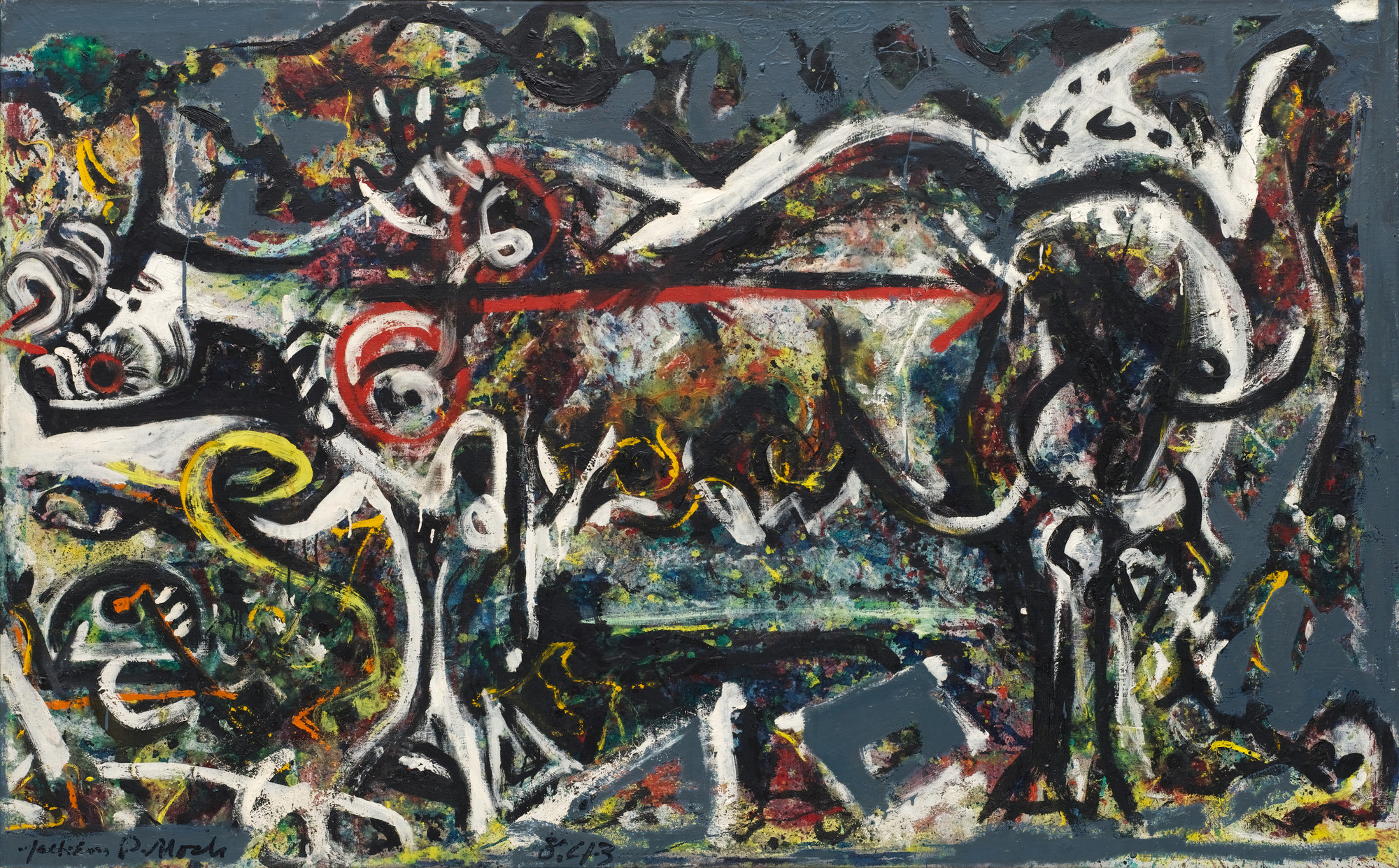


Jackson Pollock The She-Wolf (1943) Oil, gouache and plaster on canvas The Museum of Modern Art, New-York © Pollock-Krasner Foundation / ADAGP, Paris 2024 

ACCABONAC CREEK SERIES. 1945-1946 

In the autumn of 1945, Jackson Pollock and his wife, the artist Lee Krasner, left New York to set up home in a former farm in Long Island, Springs. It was in his studio, installed in the barn, that he developed his practice of painting on the ground: “I hardly ever stretch my canvas before painting. I prefer to tack the unstretched canvas to the hard wall or the floor. I need the resistance of a hard surface. On the floor I am more at ease. I feel nearer, more a part of the painting, since this way I can walk around it, work from the four sides and literally be in the painting. This is akin to the method of the Indian sand painters of the West.” 

The Accabonac Creek Series created in this new setting, testifies to an affirmation of the monumental in his work, both a legacy of his interest in Mexican muralists, the recollection of Guernica, and a continuation of Mural (1943). A few months after this series, inspired by the natural landscapes in his immediate surroundings, Pollock started working on more radical, more abstract compositions, where the surface was uniform and continuously handled, and where the paint was directly projected onto the canvas. 

Atelier 17 

In New York, Pollock frequented Stanley William Hayter’s Atelier 17, which reunited European artists in exile such as Yves Tanguy, Max Ernst or André Masson along with young American artists. There, he experimented with drypoint engraving. The plates made between 1944-1945 mark a transitional phase in his work with more emphasis on line as a trajectory rather than contour. 


 Jackson Pollock, The Key (1946) Oil on linen The Art Institute of Chicago © Pollock-Krasner Foundation / ADAGP, Paris 2024 

The centrepiece of the Accabonac Creek series, The Key was painted on the artist’s studio floor. Jackson Pollock may have been inspired by Guernica, on show at the MoMA at that time, as acknowledged by the face motifs in the upper part of the composition and by the two outstretched arms. Although here, Pollock still used his paintbrush in a traditional way, as you can see from the impressions made by the parquet floor on the canvas, the gestural spontaneity and importance attached to the accidental are increasingly apparent.

 VEILING THE IMAGE. 1943-1947 

From 1943 on, Jackson Pollock developed his experimentations with matter using industrial enamel paint combined with pouring and dripping techniques. These consisted of letting the paint drip directly onto the canvas, laid out on the ground, while at the same time, controlling the fluidity and thickness of the lines. His compositions testify to a new radicality, a process which he only systematised from 1947. Between these two dates, similarly to other artists such as Hans Hofmann or Janet Sobel, Pollock explored different ways of applying the paint onto the canvas while still retaining the figurative dimension in the rest of his work. 

Thus, the first large drip painting series shown by Pollock at the Betty Parsons gallery in January 1948, which ended the period, appeared to be the result of the research and explorations around automatism and gesturalism, carried out by the artist during these early years. Although Clement Greenberg saw these large abstract compositions as the culmination of the autonomy of form, Pollock however, did not relinquish figuration, to which he returned in 1951. 


Jackson Pollock Composition with Pouring II (1943) Oil on canvas Hirshhorn Museum & Sculpture Garden © Pollock-Krasner Foundation / ADAGP, Paris 2024 14 Press kit | Jackson Pollock: The Early Years (1934-1947) 

Composition with Pouring II is part of a series of three works painted by Jackson Pollock at the same period he made Mural for Peggy Guggenheim’s apartment. Whereas the bottom layers of this composition are cleverly applied with a brush, Pollock used liquid black paint for the top layers applied with the pouring technique. This work marks a return to the technique he acquired in David Alfaro Siqueiros’s studio and which he systematized from 1947 onwards. 

EXHIBITION CURATORS 

Joanne Snrech is a heritage curator. Formerly in charge of the modern and contemporary collections at the Musée des Beaux-Arts de Rouen (2017-2020), she curated several exhibitions there on the presence of major 19th- and 20thcentury artists in Normandy, including Duchamp (2018) and Braque, Miro and Calder (2019), and contributed to the development of contemporary art in the Metropole's museums, through events such as La Ronde (2017-2020) or the “So British” in partnership with the Pinault Collection (2019-2020). Since 2020, she has been in charge of paintings at the Musée national Picasso-Paris, where she curated the “Picasso à l'image” exhibition (2021-2022) and the “Picasso et Abstraction” exhibition at the Musées Royaux des Beaux-Arts de Belgique (2022). She has also curated the exhibition “Célébration Picasso, la collection prend des couleurs!” alongside Cécile Debray in 2023. 

Orane Stalpers is a student heritage curator. After serving as assistant curator for the second edition of the Riga Biennial in 2020, she worked as a research fellow at the Musée national Picasso-Paris from 2022 to 2024. In this capacity, she contributed to the “Picasso et l'abstraction” exhibition at the Musées Royaux des Beaux-Arts de Belgique (2022), and to the “Picasso consuming images” exhibition (2024). Since 2020, she has also been working on a doctoral thesis at the Université Paris 1 Panthéon-Sorbonne, devoted to metaphors of human animality in the post-war years (1945-1960). Since January 2024, she has been training at the Institut national du patrimoine. 


CATALOGUE

Jackson Pollock: The Early Years: 1934¿1947

Trace the genesis of Jackson Pollock’s work in this intimate portrait of the radical twentieth-century artist through the diverse cultural influences that charted his artistic evolution.

Jackson Pollock’s “drip technique” paintings are among the most readily recognizable works of modern art, and they launched his career in 1947. But Pollock’s earlier works vacillate between figurative references and abstract formal experimentation; they bear witness to diverse sources that nourished the young artist’s experimentation, including Native American influences, Mexican muralists, European avant-garde artists—notably Picasso—and the Surrealists. Jungian psychoanalysis also left a mark on his art, and this book offers intimate insight into the artist’s psyche. Through this comprehensive volume—produced to accompany the exhibition at the Musée National Picasso-Paris—readers will discover how these influences merged to forge Pollock’s distinctive and singular artistic voice.

About The Author

The Musée National Picasso-Paris is the world's preeminent Picasso museum; its collection comprises over 5,000 works and tens of thousands of archived pieces. Joanne Snrech is heritage curator at the Musée National Picasso-Paris. Ruben Gallo is the Walter S. Carpenter, Jr., Professor in Language, Literature, and Civilization of Spain at Princeton University. Orane Stalpers is research manager at the Musée National Picasso-Paris. Helen Harrison was director of the Pollock-Krasner House and Study Center at Stony Brook University in Springs, New York. Nina Zimmer is an art historian and director of the Zentrum Paul Klee and the Museum of Fine Arts in Bern. Choghakate Kazarian is a heritage curator and former Terra Foundation fellow.

  • Publish Date: February 25, 2025
  • Format: Hardcover
  • Category: Art - Individual Artists - Monographs
  • Publisher: Flammarion
  • Trim Size: 7-1/4 x 10-1/2
  • Pages: 208
  • US Price: $45.00
  • CDN Price: $60.00
  • ISBN: 978-2-08-046729-4

Monday, November 25, 2024

Hallowed Ground: Tanguy, Lam, Penalba, Cárdenas,

 Di Donna Galleries is present ing Hallowed Ground: Tanguy, Lam, Penalba, Cárdenas, an exhibition on view at the gallery’s Madison Avenue location from October 29 to December 6. The exhibition unites the works of Yves Tanguy, Wifredo Lam, Alicia Penalba, and Agustín Cárdenas—artists whose journeys from diverse locales converged in the creative capital of Paris. Highlights of Hallowed Ground will be the focus of Di Donna’s inaugural Art Basel Paris presentation from October 18 to 20. 

Hallowed Ground: Tanguy, Lam, Penalba, Cárdenas explores how these masters revered and integrated their native environments within the framework of Parisian Modernism, showcasing Tanguy and Lam’s fantastical painted worlds alongside Penalba and Cárdenas’ poignant sculptures. Each of these artists used their shifting environments, as well as their native natural landscapes, as resonant material, emphasizing their respective cultures and individual narratives. Elements found in both Tanguy and Lam’s painted worlds appear to come forth into real space with the sculptures of Penalba and Cárdenas.

The exhibition celebrates the enduring global legacy of Surrealism, a cornerstone of Di Donna Galleries’ curatorial focus. Since its inception in 2010, the gallery has mounted landmark exhibitions showcasing Surrealism’s diverse spectrum—from explorations of Surrealism in Mexico, the materiality of Surrealist objects and experimental landscapes, to significant surveys dedicated to individual artists such as René Magritte, Man Ray, and Jean (Hans) Arp. Hallowed Ground reveals how Tanguy, Lam, Cárdenas, and Penalba synthesized cultural influences, resulting in compositions that embody the often-elusive nature of Surrealism, exploring the uncanny through the lens of place as a vital expression of identity and significance. This exhibition continues to underscore the lasting influence and relevance of Surrealist art, reaffirming its pivotal role in the contemporary art world, coinciding with the centennial of the Surrealist Manifesto.

The four artists presented in Hallowed Ground all journeyed to Paris from their homelands in search of furthering their artistic practice. Tanguy had spent his childhood in Brittany, a region steeped in both Celtic and Druidic traditions replete with immense natural, prehistoric beauty. His work, which he produced after moving to Paris in 1922, reflects memories of Brittany’s rocky coasts and neolithic menhirs, which often populate his Surrealist landscapes.

After leaving Cuba in 1923, Lam eventually found himself in Paris, entrenched within the city’s avant-garde circles. His Afro-Cuban and Chinese roots are evident within his paintings, which abound with fantastical figures and mystic symbolism. When Germany invaded France in 1940, Lam and his wife Helena Holzer fled to Marseille alongside André Breton and his wife Jacqueline Lamba. Eventually Lam returned to his native Cuba, which ushered an explosion of creativity, where he merged elements of European Cubism and Surrealism with local Cuban and African subject matter.

Within the sculptural sphere, Argentine artist Penalba’s austere stacks of metallic shards recall her transient childhood spent traveling the Cuyo region, Patagonia, and Chile. In 1949, Penalba worked at the Académie de la Grande Chaumière in Paris. She eventually moved to the studio of Ossip Zadkine, who exposed her to the works of Jean (Hans) Arp, Constantin Brâncuși, and Alberto Giacometti—all of whom greatly influenced her practice. Though commonly associated with an abstract practice, her proximity to the Surrealist movement in Paris and the impact it had on her work is subtle but can be observed in the organic dream-like forms she created, which often evoke a sense of the fantastic or otherworldly.

Afro-Cuban sculptor Cárdenas employed diverse material processes to investigate the totemic history of his birthplace. Born in Matanzas, Cuba—a region renowned for its rich fusion of African, Spanish, and Indigenous cultures—Cárdenas' practice was deeply shaped by this diverse cultural heritage. He arrived in Paris in 1955 and was quickly accepted into the Surrealist group led by André Breton. Cárdenas’s sculptural works evoke the natural world and explore themes related to the subconscious and states of transformation.

Hallowed Ground: Tanguy, Lam, Penalba Cárdenas will be on view at Di Donna Galleries from October 29 – December 6, 2024.


Wifredo Lam

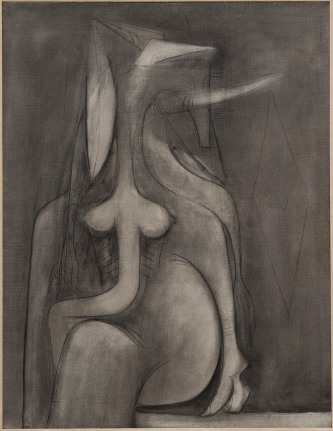
Sans titrecirca 1950
Oil and charcoal on canvas
111.4 by 86.7 cm (43⅞ by 34⅛ in.)
© 2024 Artists Rights Society (ARS), New York / ADAGP, Paris


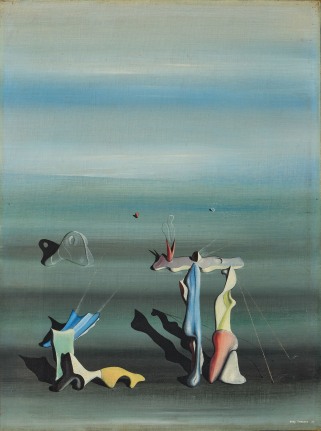
Yves Tanguy
Aux Aguets le jour (On the Look-out by Day), 1939
Oil on canvas
40.6 by 30.8 cm (16 by 12⅛ in.)
© 2024 Estate of Yves Tanguy / Artists Rights Society (ARS), New York


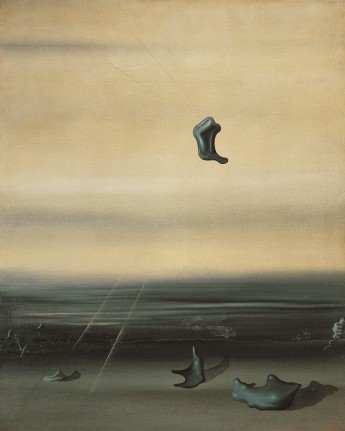
Yves Tanguy
En le temps menaçant (Time for Foreboding) , 1929
Oil on canvas
100 by 81 cm (39⅜ by 31⅞ in.)
© 2024 Estate of Yves Tanguy / Artists Rights Society (ARS), New York

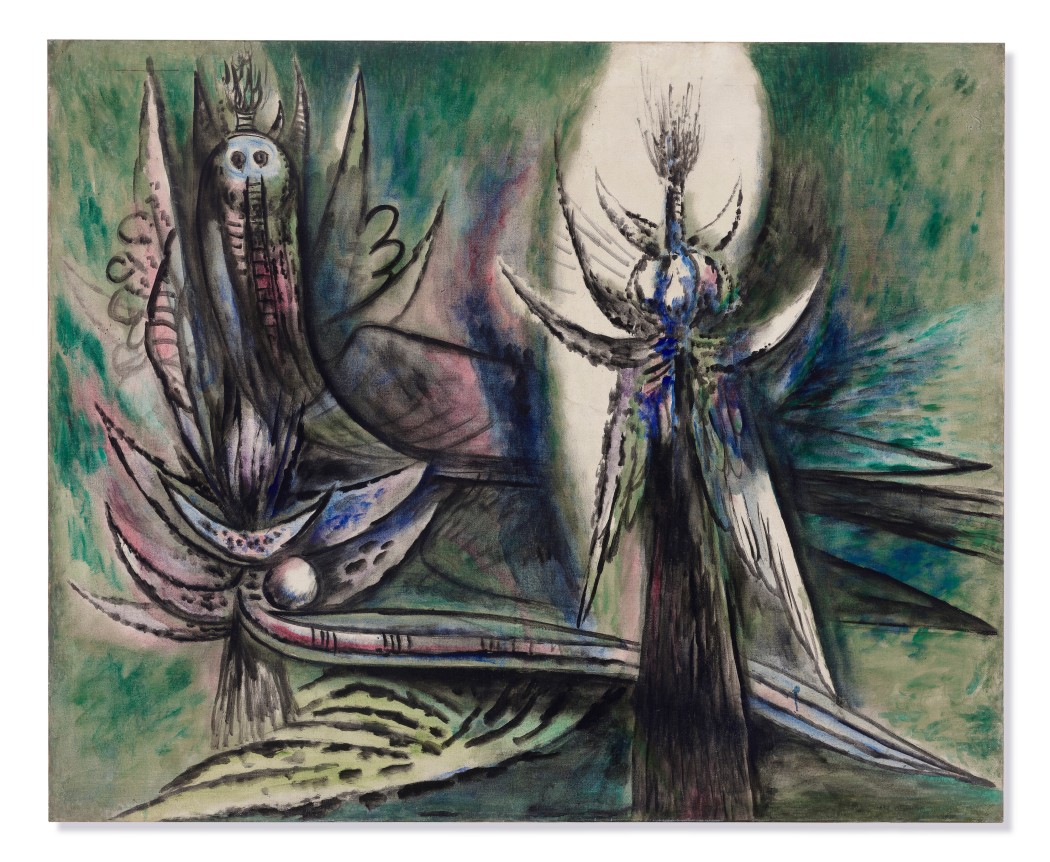
Wifredo Lam, Damballah, circa 1945-47

Wifredo Lam
Damballah, circa 1945-47
Oil on canvas
125 by 153 cm (49¼ by 60¼ in.)
© 2024 Artists Rights Society (ARS), New York / ADAGP, Paris


Perspective Should Be Reversed: Prints by David Hockney from the Collections of Jordan D. Schnitzer and His Family Foundation

Palm Springs Art Museum 

November 24, 2024 - March 31, 2025


This exhibition features more than 160 works from the collections of Jordan D. Schnitzer and his Family Foundation, showcasing six decades of Hockney’s innovative prints, collages, photographs, and digital drawings on iPhone and iPad.

I am so pleased that Palm Springs Art Museum is showcasing the work of David Hockney from our Collection. To many, David Hockney is the most important artist working today. His images take us on a journey through country roads and gardens and let us view his exploration of perspective. More than any other artist, he has used technology to create art,” said ARTnews Top 200 Collector Jordan Schnitzer. “Whether it was Xerox prints, Polaroid photographs, or on the iPad, Hockney’s eye and hand create some of the most intriguing and beautiful art ever made.”

As part of the museum’s Q+ Art initiative, which centers on the work of artists who identify as LGBTQ+, this exhibition highlights Hockney’s lifelong experiments with non-traditional perspectives and his exploration of identity as a gay man. Q+ Art is a major new initiative that encompasses exhibitions, public programs, collection-building, and awards, all dedicated to foregrounding LGBTQ+ voices in the arts.

“This exhibition not only showcases Hockney’s creative innovation but also aligns perfectly with our Q+ Art initiative,” said Adam Lerner, JoAnn McGrath Executive Director of Palm Springs Art Museum. “Hockney’s work challenges viewers to see the world through his unique lens, embracing both artistic and personal freedom.” 


David Hockney

"Joe with Green Window" 1979 Lithograph
Edition of 54
44" x 30"
© David Hockney / Tyler Graphics Ltd.

David Hockney
"Gregory in the Pool (Paper Pool 4)" 1978 Colored and pressed paper pulp Variation Q
32 x 50"
© David Hockney / Tyler Graphics Ltd.


David Hockney
"Green Grey & Blue Plant, July 1986"
Home made print on 2 sheets of paper (17 x 11" each) Edition of 60
17 x 22"
© David Hockney

Photo Credit: Richard Schmidt 

David Hockney
"Photography is Dead Long Live Painting 26th Sept. 1995" Digital inkjet print
Edition of 45
© David Hockney
Photo Credit: Steve Oliver

David Hockney
"Early Morning" 2009
iPhone drawing printed on paper Edition of 25
37 x 25 1/2"
© David Hockney
Photo Credit: Richard Schmidt

David Hockney
"Two Boys Aged 23 or 24" from "Illustrations for Fourteen Poems from C.P. Cavafy" 1966 - 1967 Etching
Editioned
31 1/2 x 22 1/2"
© David Hockney
Photo Credit: Richard Schmidt

David Hockney
"My Mother Sleeping, Los Angeles, Dec. 1982" Photographic collage
Edition of 20
23 x 23"
© David Hockney
Photo Credit: Richard Schmidt

David Hockney
"25th June 2022, Looking at the Flowers (Framed)"
Photographic drawing printed on five sheets of paper, mounted on five sheets of Dibond Edition of 15
300 x 518 cm (118 x 204 Inches)
© David Hockney
assisted by Jonathan Wilkinson

Saturday, November 23, 2024

Paper, Color, Line: European Master Drawings from the Wadsworth Atheneum

January 16–April 27, 2025


A rarely-seen trove of European drawings spanning 500 years will be on view at the Wadsworth Atheneum Museum of Art from January 16–April 27, 2025. Featuring works on paper from the 16th- to the late 20th- centuries, Paper, Color, Line is a survey of great European artists showcasing 65 works, some of them on view for the very first time.


Edgar Degas, Dancers with Fans, c. 1898. Pastel on paper. The Ella Gallup Sumner and Mary Catlin Sumner Collection Fund, 1945.209


“This is a unique opportunity to explore some extraordinary highlights of our European drawing collection. Few people are aware of the breadth and depth of what we have, and this is our moment to share our collection with the world,” said Oliver Tostmann, Susan Morse Hilles Curator of European Art at the Wadsworth Atheneum, “We have exceptional works on paper and thanks to recent research, we have made new discoveries we are excited to display.”

The earliest drawings in the Wadsworth’s collection span the Renaissance and Rococo periods, including masterpieces by Giorgio Vasari, Carlo MarattiRosalba Carriera, and Jean-Baptiste Greuze. Although the collection features distinguished examples from these periods, the selection of works from the 19th through the 20th centuries is even stronger. Dazzling drawings by Gustave Courbet, Edgar Degas, and Henri de Toulouse-Lautrec can be seen alongside works by Egon Schiele, Paul Klee, and Joan Miró. Theatrical designs and other drawings by Pablo PicassoLéon Bakst, and Natalia Gontcharova give a glimpse behind the scenes of the Ballets Russes making a dynamic contribution to the exhibition. All the drawings show exceptional skill and verve, embodying the timeless immediacy of the physical act of drawing, the singular qualities of each artist’s hand, and the shifts in artistic approach over the centuries.


Organized chronologically along subtle themes, Paper, Color, Line offers a rich overview of five centuries of draftsmanship in Europe. The variety of styles, schools, techniques, and artistic media will appeal to audiences of all ages and backgrounds and those who have ever picked up a pencil and paper—from experienced artists to those just starting out. A drawing can be a deeply personal manifestation of an individual’s vision and abilities, revealing the immediate touch and gesture of the artist who made it. While the exhibition explores broader topics such as artistic education, technical innovation, and the art market—it is this ability to both see and feel the artist’s individuality through the impact of marks made on paper that has universal appeal.


“The Wadsworth Atheneum began collecting drawings in 1848 and was among the first museums in the United States to acquire great works on paper by artists from Europe. Through gift and purchase, we have formed a remarkable collection that represents some of the finest qualities of Western drawing. This exhibition will make this important, and growing, collection better known and increase public appreciation for this endlessly compelling art form,” said Matthew Hargraves, Director of the Wadsworth Atheneum.”


This handsome catalogue will shine a spotlight on the Wadsworth Atheneum’s impressive collection of European drawings, watercolors and pastels. It features renowned artists, including Courbet, Degas, Toulouse-Lautrec, Schiele, Klee, Miró and Picasso, and includes fresh scholarship.


The Wadsworth Atheneum Museum of Art’s rich collection of European drawings, watercolors and pastels is little-known and rarely seen. Since the mid-nineteenth century, the museum has acquired by purchase and gift a diverse group of nearly 1,250 European drawings of impressive quality. Paper, Color, Line: European Master Drawings from the Wadsworth Atheneum showcases some sixty highlights on view for the first time in decades.


This long-overdue exhibition is a unique survey of artists working in drawing media over a span of more than five hundred years. The museum’s holdings are particularly strong in works from the nineteenth and twentieth centuries. Renowned drawings by Gustave Courbet, Edgar Degas and Henri de Toulouse-Lautrec are included in thisexhibition, as well as highlights by Egon Schiele, Paul Klee and Joan Miró. The collection is distinguished by its theatrical designs, particularly those linked with the Ballets Russes, with contributions by Pablo Picasso, Léon Bakst and Natalia Goncharova. Significant works from the Renaissance to the Rococo by artists such as Giorgio Vasari, Carlo Maratti and Jean-Baptiste Greuze emphasize the timeless appeal of drawing and will complement the overview.


The catalogue of the exhibition will be the first catalog devoted to European drawings at the Wadsworth Atheneum. It will present fresh research on the objects as well as on the history of collecting European drawings at the museum. The catalogue is written by Oliver Tostmann, Susan Morse Hilles Curator of European Art at the Wadsworth Atheneum.


Italian Renaissance Drawings from Museum Boijmans Van Beuningen, Rotterdam


Fondation Custodi

Naissance et Renaissance du dessin italien

12 October 2024 to 12 January 2025


Among the large variety of collections held by Museum Boijmans Van Beuningen in Rotterdam can be found one of the most noteworthy holdings of Old Master Drawings in the world. Eager to introduce this prestigious collection to a wider public, the Fondation Custodia presents a selection of 120 of the finest fifteenth- and sixteenth-century Italian drawings from the Rotterdam museum.


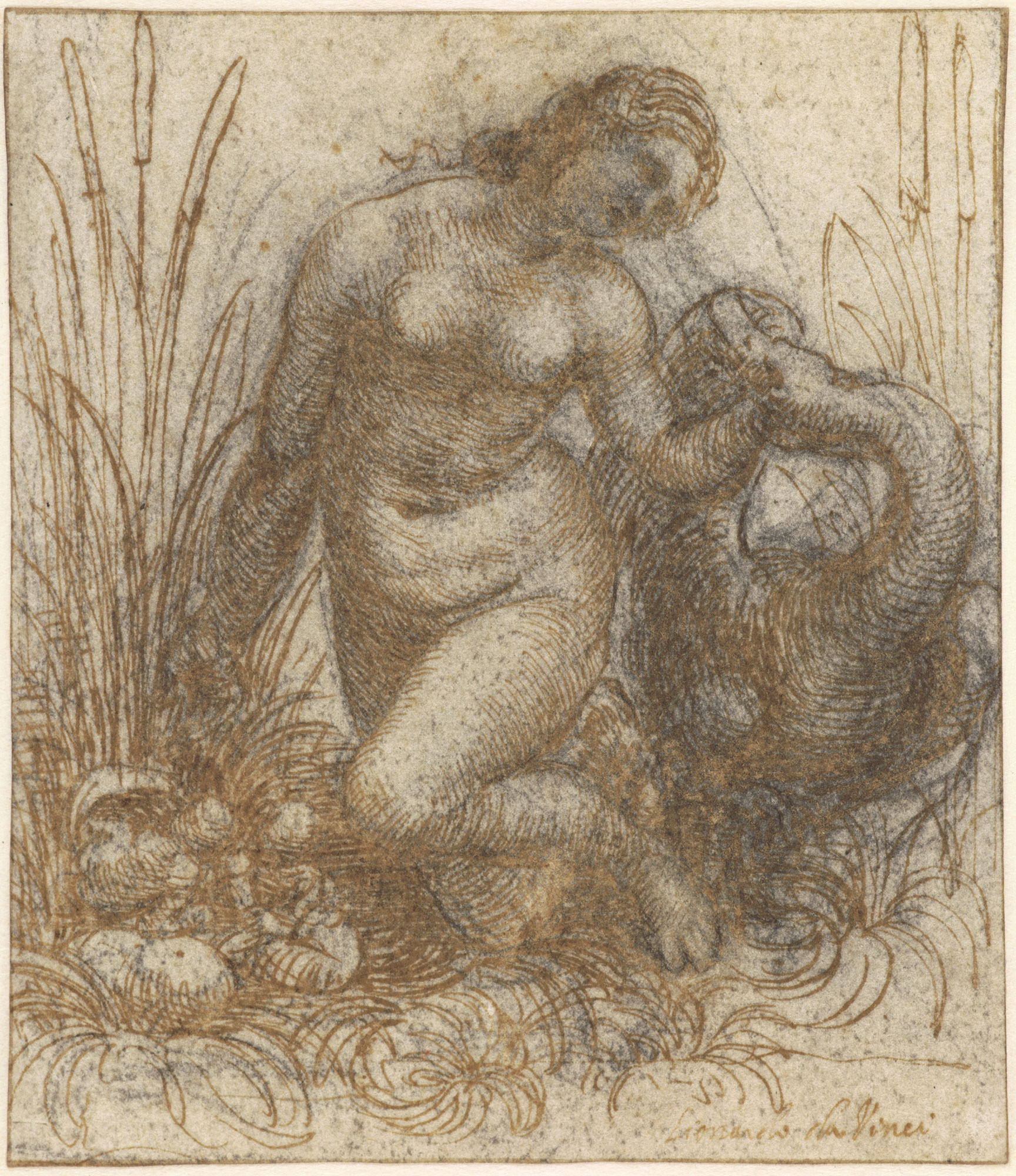
Leonardo da Vinci (1452-1519), {Leda and the Swan}, c. 1505-07 Leonardo da Vinci (1452-1519), Leda and the Swan, c. 1505-07
Black chalk, pen and ink. – 128 × 109 mm
Museum Boijmans Van Beuningen, Rotterdam. Loan Stichting Museum Boijmans Van Beuningen (former Koenigs Collection), inv. no. I 466

The aim of the exhibition is to reveal those talented draughtsmen whose artistic innovations were at the core of the Italian Renaissance. Pisanello, Leonardo da Vinci, Raphael, Michelangelo, Veronese, Correggio... Thanks to recent research carried out at Museum Boijmans Van Beuningen, in collaboration with international experts and the Fondation Custodia, a number of important discoveries have been made regarding the drawings and some have been re-attributed to leading artists including Pontormo, Federico Zuccari, Aurelio Lomi and Pellegrino Tibaldi.


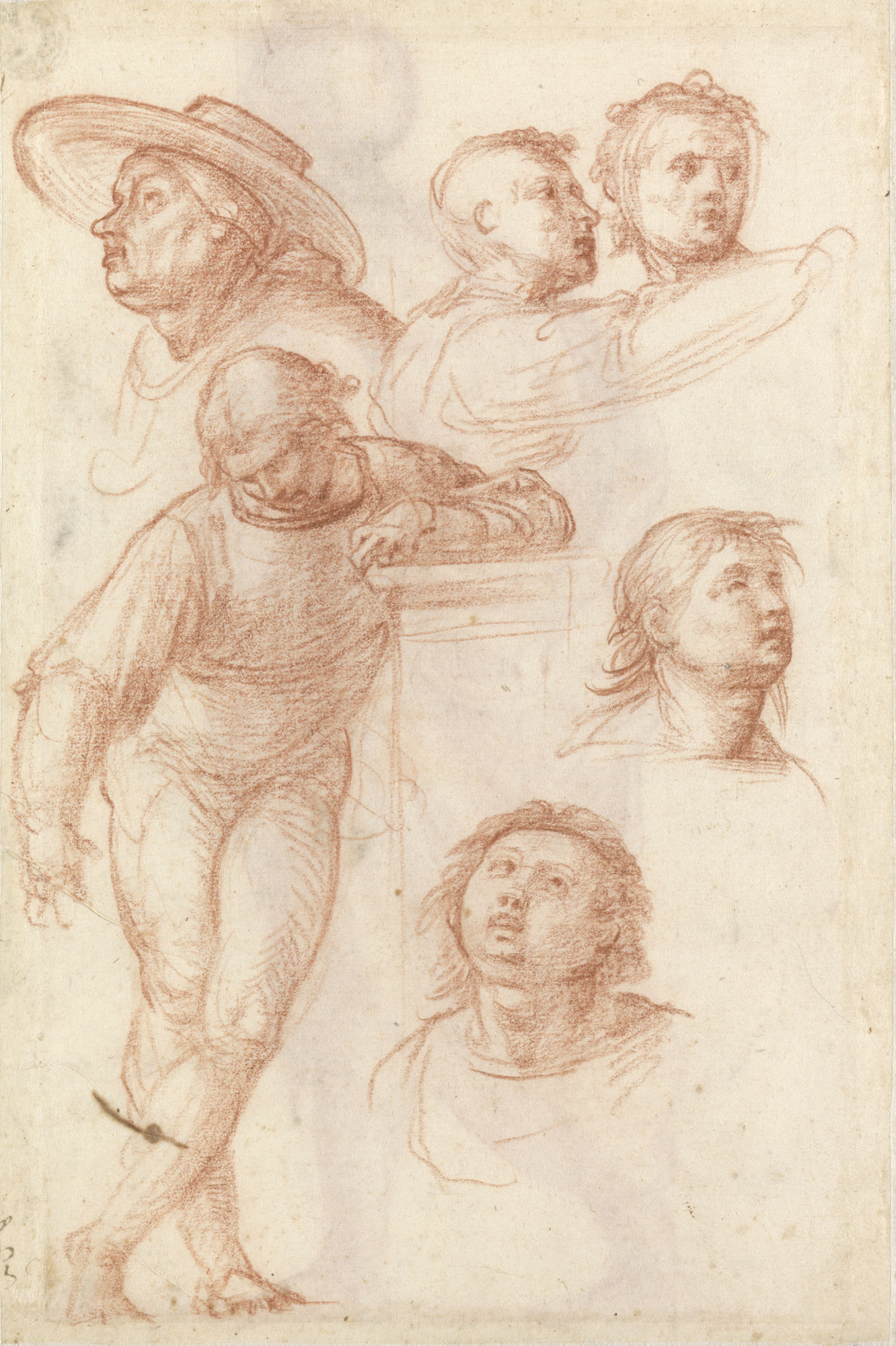
Fra Bartolommeo (1472-1517), {Studies of a Young Man Leaning on a Pedestal, and Five Heads}, c. 1515 Fra Bartolommeo (1472-1517), Studies of a Young Man Leaning on a Pedestal, and Five Heads, c. 1515
Red chalk. – 287 × 197 mm
Museum Boijmans Van Beuningen, Rotterdam. Loan Stichting Museum Boijmans Van Beuningen (former Koenigs Collection), inv. no. I 563 M 3

Drawings made by some of the early fifteenth-century precursors of the Italian Renaissance, today of the greatest rarity, are one of the salient features of the collection of Museum Boijmans Van Beuningen. Several studies by Pisanello, Parri Spinelli and Benozzo Gozzoli open the exhibition in an impressive way. From then on, the pre-eminent centres of Florence and Venice take over. These were the principal hubs of artistic creation at the time and indeed dominate the Rotterdam collection. The museum is famous for its exceptional collection of 400 drawings by the Florentine painter Fra Bartolommeo, thirteen of which are presented in Paris. Venice is not far behind and the exhibition contains work by its greatest representatives: Vittore Carpaccio, Gentile Bellini, Veronese, Jacopo Tintoretto and their workshops, as well as that of the Bassano family.


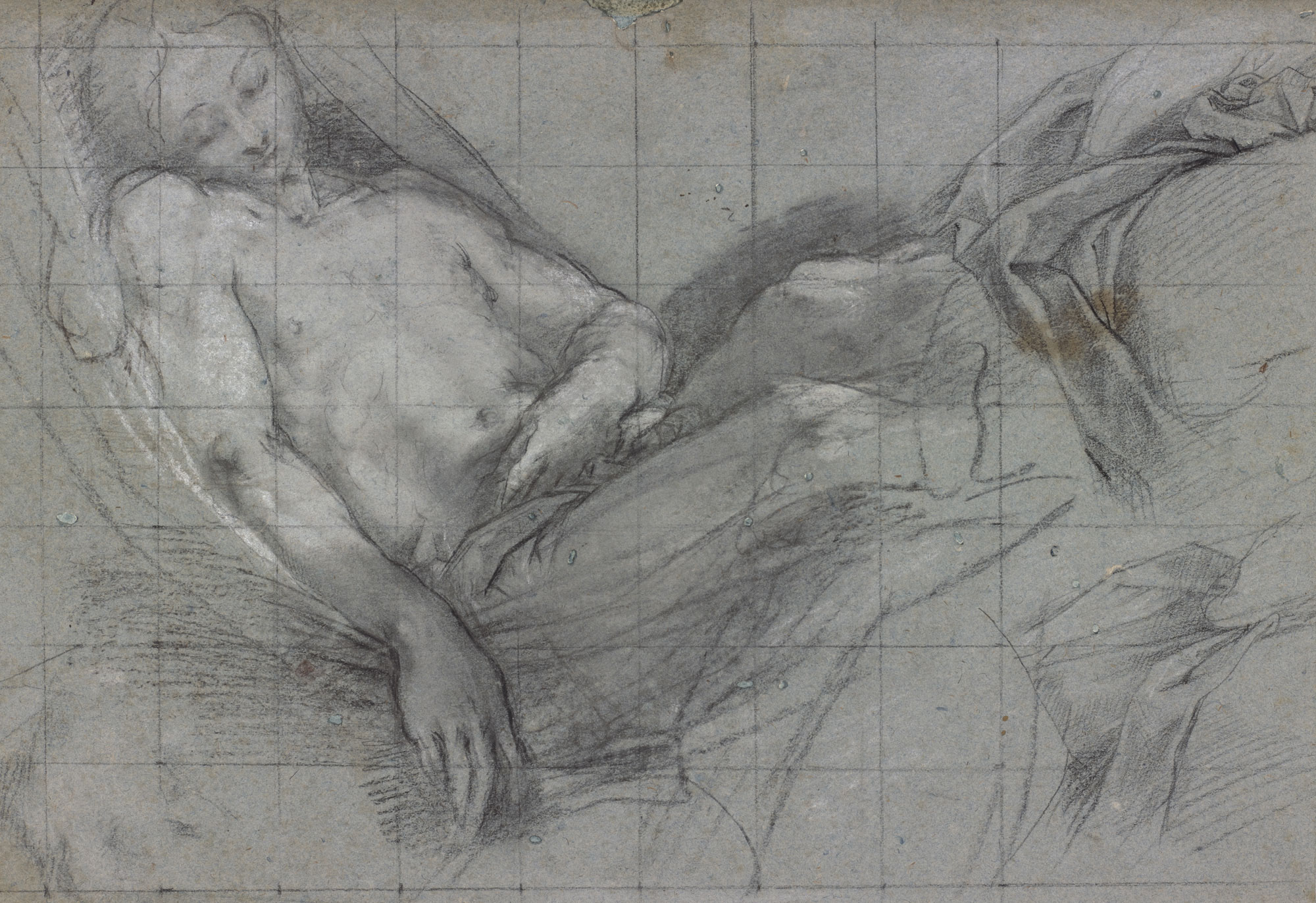
Federico Barocci (1535-1612), {Study for the Entombment}, c. 1579-82 Federico Barocci (1535-1612), Study for the Entombment, c. 1579-82
Black and white chalk, squared for transfer, on blue paper. – 259 × 374 mm
Museum Boijmans Van Beuningen, Rotterdam. Loan Stichting Museum Boijmans Van Beuningen (former Koenigs Collection), inv. no. I 428

Drawings by the three great masters of the Renaissance – Leonardo da Vinci, Raphael and Michelangelo – constitute another high point in the exhibition and lead us on to the work of Roman artists (Giulio Romano, Sebastiano del Piombo), those from Parma and Emilia (Parmigianino, Correggio) and other regional schools. The exhibition ends with drawings by the generation of artists active at the end of the sixteenth century and the turn of the seventeenth, including Federico Barocci, the Zuccari, Cavaliere d’Arpino and the Carracci.


The exhibition has been made possible by the generous loan from Museum Boijmans Van Beuningen, Rotterdam.


Catalogue

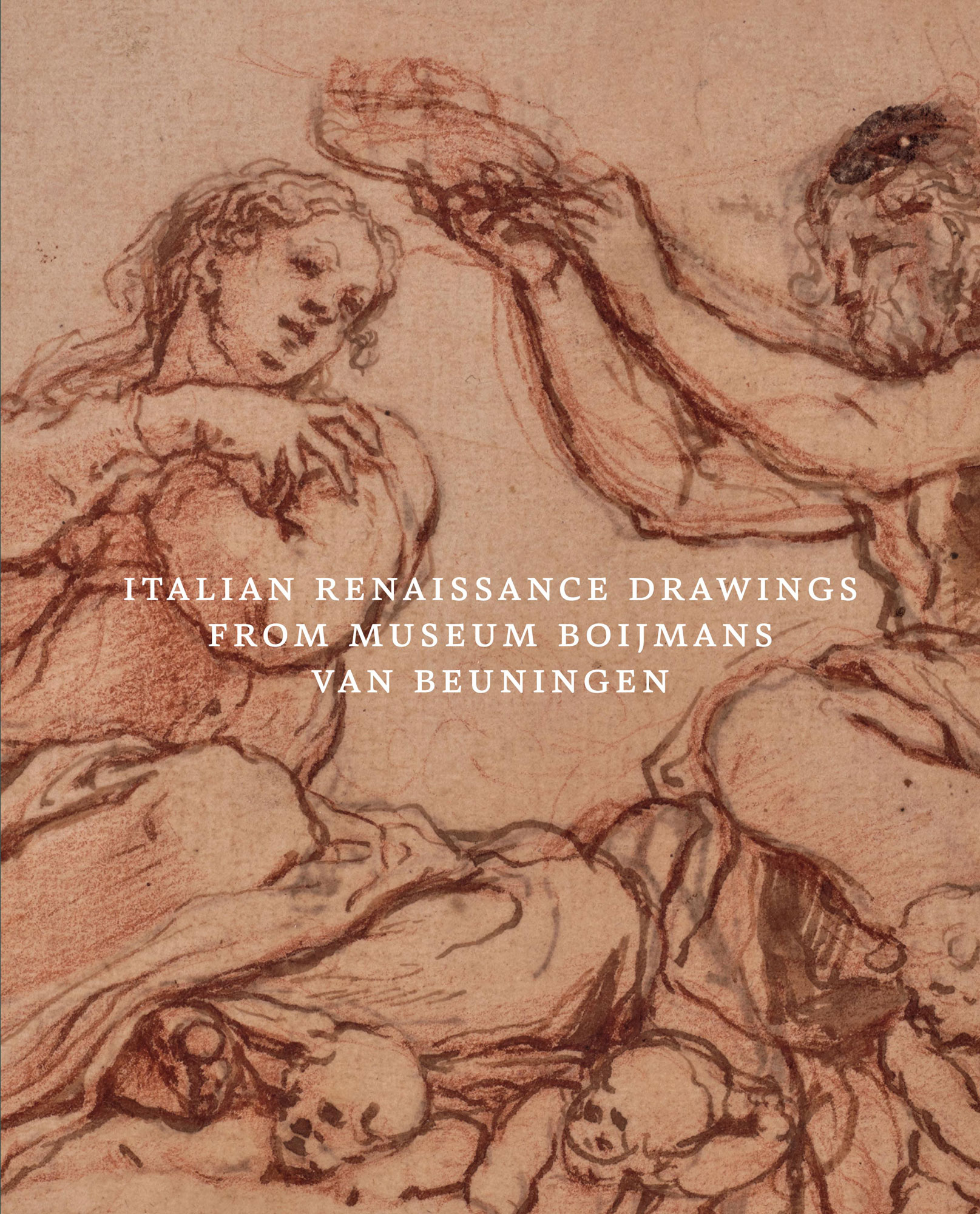
Italian Renaissance Drawings from Museum Boijmans Van Beuningen
Edited by Maud Guichané and Rosie Razzall
London, Paul Holberton Publishing, 2024
296 p., 200 colour illustrations
28 × 22,6 cm, paperback, in English
ISBN 978 1 913645 77 9
40,00 €


PDF
Visitor guide Naissance et Renaissance du dessin italien
Download (416.9 KiB)

Wednesday, November 20, 2024

Why substitute sugar with maple syrup?


A new study published in the The Journal of Nutrition, found that substituting two tablespoons of pure maple syrup for refined sugars reduced several cardiometabolic risk factors in humans.  It was the first placebo-controlled clinical trial exploring potential health benefits of maple syrup in humans.

“We know from decades of research that maple syrup is more than just sugar. It contains over 100 natural compounds, including polyphenols, that are known to prevent disease in part through their anti-inflammatory effects,” remarked Dr. André Marette, PhD, and lead scientist on the study.  “Because the fundamental chemistry of maple syrup is unique, I wondered if ingesting maple syrup instead of an equivalent amount of refined sugar would differently impact the cardiometabolic health and the intestinal microbiota in humans.  The results were extremely encouraging. I did not expect to see so many improvements of risk factors within a relatively short treatment period.”   

The study was conducted by a Laval University team led by Dr. André Marette, PhD, at the Quebec Heart and Lung Institute and Dr. Marie-Claude Vohl, PhD, at the Institute of Nutrition and Functional Foods.

Study Protocol

Forty-two volunteers from the greater Québec city area, between the ages of 18-75 in good health, and with a BMI of 23-40, participated in the study. Participants substituted 5% of their daily caloric intake (corresponding to 2 tablespoons) from refined sugars with either Canadian maple syrup or an artificially flavored sucrose syrup. Each phase lasted 8 weeks with participants switching between maple syrup and sucrose syrup groups after a four-week washout period. The cross-over design ensured that the same test subject was his or her own control, consuming both placebo and maple syrup. Primary outcomes focused on the oral glucose tolerance test, the OGTT.  Secondary outcomes included changes in blood lipid profile, blood pressure, body fat composition (measured by DEXA scan) and changes in gut microbiota composition.  

Maple, the Smarter Sweetener, Improves Multiple Cardiometabolic Risk Factors

Blood Sugar Lowered

Study participants who consumed pure maple syrup had an improved response to the oral glucose tolerance test (OGTT) than those who received a flavored syrup of refined sugar. Their bodies managed blood sugar levels better after eating (-50.59 vs. +29.93).

Blood Pressure Lowered

Blood pressure was also lowered in the subjects who consumed maple syrup during the trial.  Systolic blood pressure decreased significantly in the maple syrup group (-2.72 mm Hg) while it increased slightly in the sucrose group (+0.87 mm Hg). “Lowering blood pressure continues to be an important factor in lessening the risk of cardiovascular disease,” Dr. Marette commented. “Natural sweeteners, such as pure maple syrup, when substituted for refined sugars, can be part of an overall solution in helping to prevent metabolic diseases.”

Abdominal Fat Reduced

Visceral fat is the deep fat that wraps around the internal organs in your belly.  It can increase an individual’s risk of serious health problems such as heart disease, diabetes and stroke. The maple syrup trial showed that android fat mass, the fat in the abdominal region, significantly decreased in the maple syrup group as compared to an increase in the group consuming the sucrose solution (-7.83 g vs. +67.61 g).

Healthier Gut

An unexpected discovery was the improved levels of potentially beneficial gut bacteria and a decrease in levels of potentially harmful gut bacteria in the maple syrup participants. The study showed a reduction in Klebsiella species and Bacteroides pectinophilus, which are linked to inflammation and metabolic disorders, and the increased growth of beneficial bacteria like Lactocaseibacillus casei and Clostridium beijerinckii.

“Both individually and collectively, the study findings are quite significant,” Dr. Marette noted.  “The combined decrease of such key risk factors may help to reduce the risk of diabetes and cardiovascular disease. Making a commitment to lifestyle changes and small adjustments to our everyday diets is important and can be a powerful tool in preventing future diseases.”

According to one participant: “Before the study, I would consume pure maple products regularly but not consistently. I have always enjoyed it. Today my routine is to replace refined sugars with 2 tablespoons of pure Canadian maple syrup daily.”

First Human Trial Builds Upon American Researcher’s Cellular and Animal Studies

Dr. Marette’s clinical study builds upon his own work in animal models of diabetes and previous work on maple syrup and its bioactives by  American scientist Navindra P. Seeram, PhD, of the University of Rhode Island, College of Pharmacy. Dr. Seeram’s extensive foundational work with maple syrup set the stage for this first human clinical trial. “With each new study, we learn more benefits that natural products from medicinal plants and functional foods, like maple syrup, provide.” noted Dr. Seeram. “The significant promising results of this first human trial provide more reasons for us to educate consumers about maple syrup’s many health benefits. It is truly a ‘smarter sweetener’ and a healthier alternative to refined sugar.”

“While this study was limited to a relatively small sample size (42 men and women) and took place during a relatively short duration of time, the results are still significant,” Dr. Marette remarked.  “We now have human evidence to support replacing refined sugars with maple syrup, a natural sweetener, for preventing metabolic diseases.  Our next goal is to conduct larger studies with other populations to explore how replacing refined sugars with maple syrup might impact their unique health conditions.”     

General nutrition claims for 2 tablespoons of maple syrup:

  • Excellent source of manganese (35%).
  • Good source of riboflavin (15%).
  • Source of calcium (2%), thiamin (2%), potassium (2%) and copper (8%).
  • It contains 12% fewer calories than in light corn syrup.
  • By comparison, refined sugar requires a large amount of processing and therefore lacks any real nutritional value.