Monday, February 24, 2025

Neue Sachlichkeit / New Objectivity

xxx


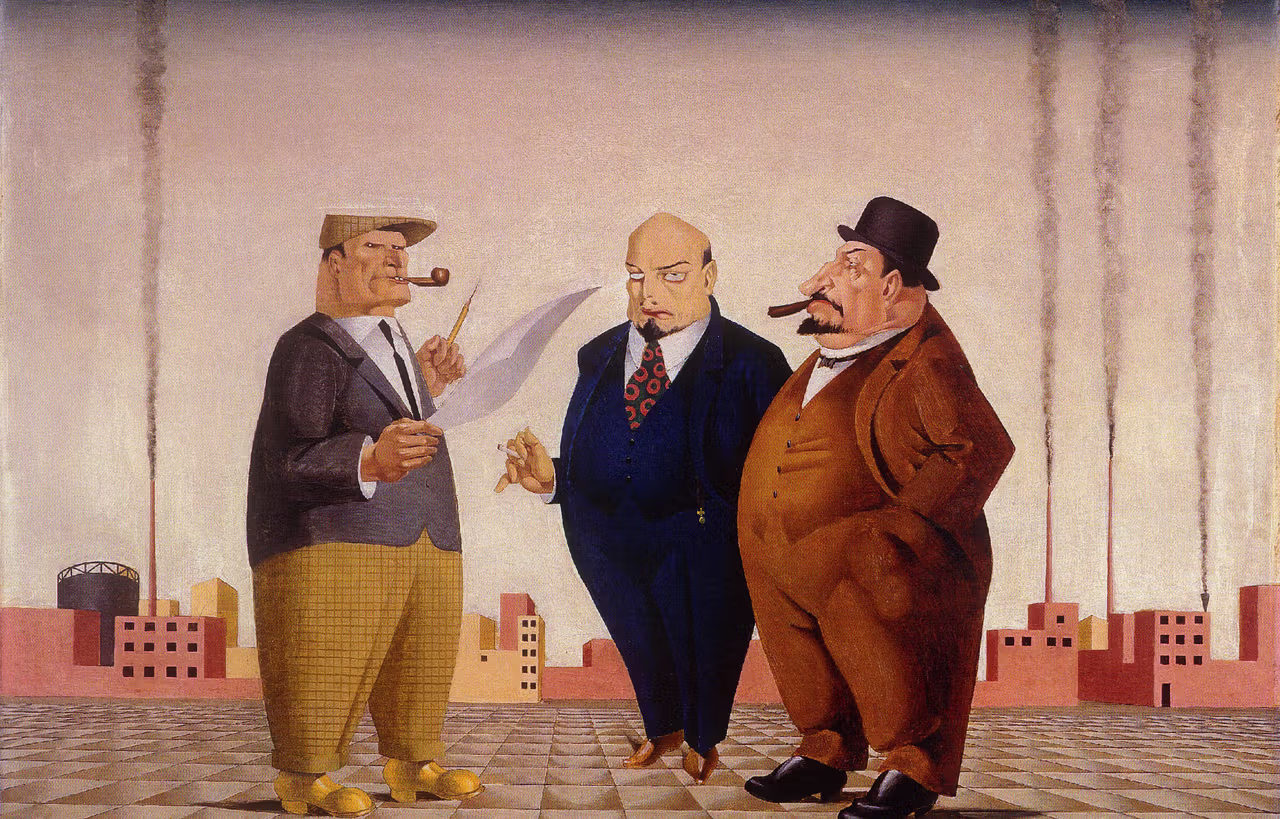
Georg Scholz
(1890-1945)
Of Things to Come, 1922
Oil on board
Neue Galerie New York

This special exhibition at Neue Galerie New York debuts in conjunction with the centenary of Gustav F. Hartlaub’s 1925 groundbreaking survey of the same name held at the Kunsthalle Mannheim. The New Objectivity movement is considered one of the most significant artistic developments of the twentieth century. Hartlaub’s presentation showcased a new style of art that had emerged in the aftermath of World War I, characterized by its critical realism, social commentary, and detailed depiction of contemporary life, and marking a significant departure from Expressionism’s emotional intensity.


George Grosz, Eclipse of the Sun, 1926, oil on canvas. The Heckscher Museum of Art, Huntington, NY. Museum Purchase © 2025 Estate of George Grosz / Licensed by VAGA at Artists Rights Society (ARS), NY.

The Neue Sachlichkeit movement was divided by two philosophies—the unflinching and socially critical Verists (represented by Otto Dix, George Grosz, and Georg Scholz, for example), and the Classicists (such as Alexander Kanoldt, Georg Schrimpf, and Christian Schad), who focused on harmony and beauty. The show will offer a wide-ranging perspective, exploring the tension between the Verists and the Classicists, which will be illustrated through a multidisciplinary installation, featuring paintings, sculpture, photography, decorative arts, works on paper, and film. The artists represented include Max Beckmann, Marianne Brandt, Marcel Breuer, Otto Dix, Carl Grossberg, George Grosz, Karl Hubbuch, August Sander, Christian Schad, Oskar Schlemmer, and Georg Scholz, among others. The presentation interprets these two camps as a coherent chapter in art history, focusing on the ways that the New Objectivity proponents mirrored the Weimar Republic’s cultural, political, and social complexities.

“Neue Sachlichkeit / New Objectivity” is organized by Neue Galerie New York. This exhibition is curated by Dr. Olaf Peters, a professor of modern art at Martin Luther University in Halle-Wittenberg, Germany. At the Neue Galerie, Dr. Peters has previously organized “Max Beckmann: The Formative Years, 1915-1925,” “Otto Dix,” “Degenerate Art: The Attack on Modern Art in Nazi Germany, 1937,” “Berlin Metropolis: 1918-1933,” and “Before the Fall: German and Austrian Art of the 1930s.”

Also see:

 "Degenerate" Art: The Trial of Modern Art under Nazism

From February 18 to May 25, 2025, the Musée national Picasso-Paris presents its new temporary exhibition: "Degenerate" Art: The Trial of Modern Art under Nazism". The first exhibition in France devoted to so-called "degenerate" art, it explores and puts into perspective the methodical attack of the Nazi regime against modern art and the place occupied by Pablo Picasso, the archetype of the "degenerate" artist in this history.

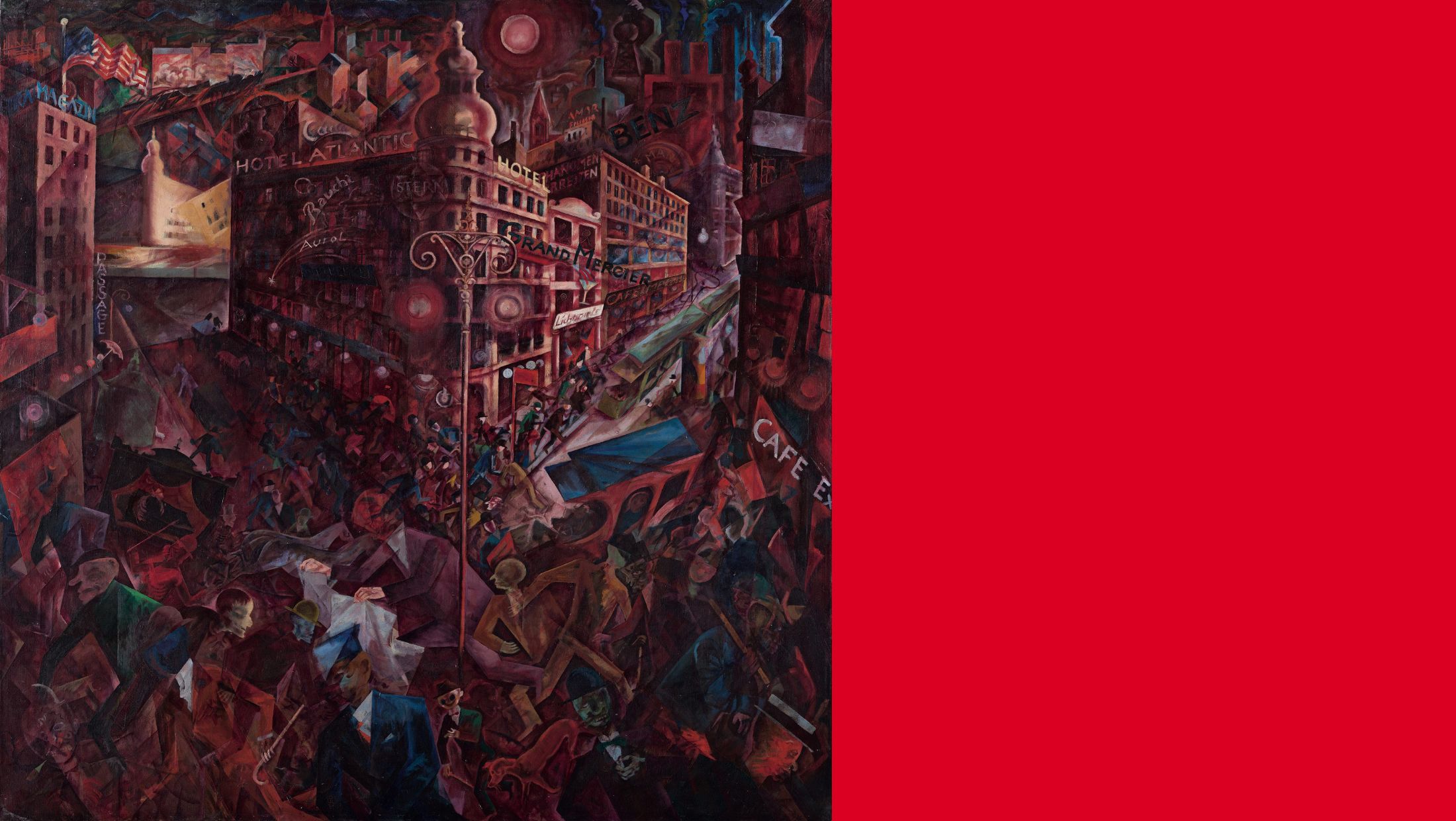
George Grosz, Metropolis, 1916-1917

"Degenerate" Art: The Trial of Modern Art under Nazism" examines in particular the propaganda exhibition "Entartete Kunst" (Degenerate Art), organized in 1937 in Munich, showing more than 700 works by a hundred artists, representatives of the different currents of modern art, from Otto Dix to Ernst Ludwig Kirchner, from Vassily Kandinsky to Emil Nolde, from Paul Klee to Max Beckmann, in a staging designed to provoke disgust in the visitor.

The culmination of a series of infamous exhibitions set up in several museums from 1933 (Dresden, Mannheim, Karlsruhe, etc.) to denounce the artistic avant-gardes as a threat to German "purity", "Entartete Kunst" is part of a methodical "purge" of German collections. More than 20,000 works, including those of Vincent Van Gogh, Marc Chagall and Pablo Picasso, designated as a "degenerate" artist from the 1920s in both France and Germany, were thus removed, sold or destroyed. At the heart of this story, the term "degeneration", emerging during the 19th century in different disciplines (natural history, medicine, anthropology, art history, etc.) until its crystallization at the heart of the National Socialist "world view", serves as a vector for the deployment of racist and anti-Semitic theories within the history of art.

Sunday, February 23, 2025

Christie’s Latin American Art 28th of February


Christie’s is pleased to announce Latin American Art as a part of the Contemporary New York sale series. The auction, which will take place on the 28th of February in Christie’s Rockefeller Center saleroom, features exceptional works of art by notable artists from across the region. Leading the sale are works by 


image/jpeg


Diego Rivera, 


image/jpeg


Fernando Botero, Francisco Toledo, Leonora Carrington, Matta, and Rufino Tamayo. Also included are exemplary pieces by contemporary artists such as María Magdalena Campos-Pons, Sarah Grilo, and Pablo Atchugarry.

image/jpeg

Leading the sale is Ikon by the Surrealist artist Leonora Carrington (estimate: $1,200,000-1,800,000). Executed in 1988 in tempera on panel, Ikon is a superb example by the artist, demonstrating Carrington’s unwavering interest in the occult mysticism and animism. Ikon comes fresh to the auction market, having been acquired directly from the artist’s eponymous show at Brewster Gallery in New York, in 1988. 


Further sale highlights include Arcángel by Fernando Botero,

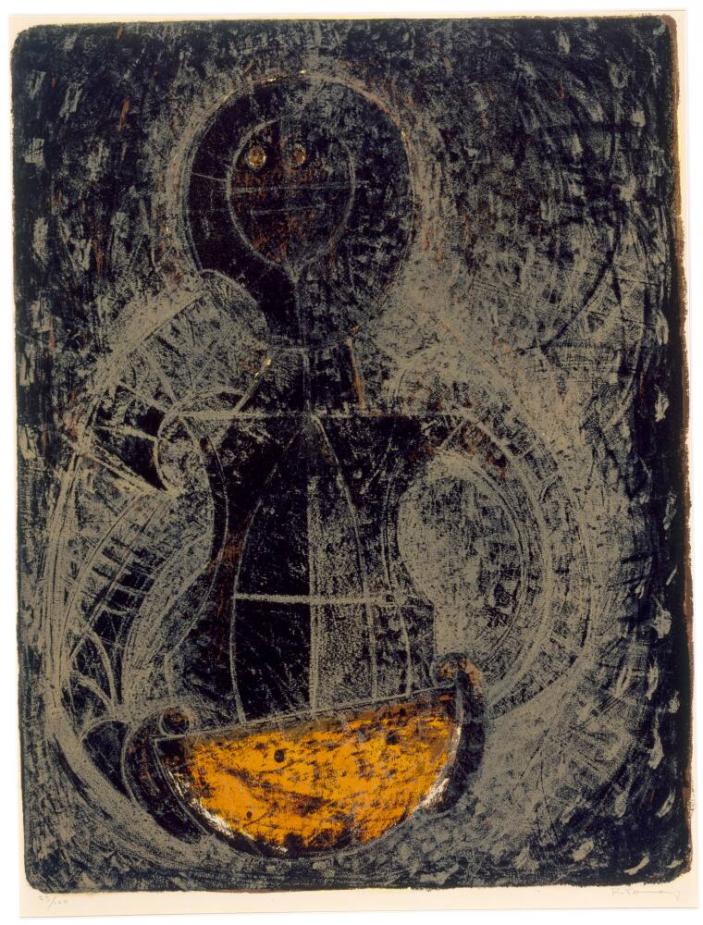
 and Mujer con sandía by Rufino Tamayo, each estimated at $800,000-1,200,000. Christie’s holds the record price for Botero at auction, established in 2023 with the sale of The Musicians for $5,132,000 as well as for Rufino Tamayo, established in 2008 with Trovador for $7,209,000.

Coinciding with the Live auction, Christie’s Latin American Art Online auction will be open for bidding 24 February – 6

More Images:

image/jpeg
image/jpeg


image/jpeg
image/jpeg

Monday, February 17, 2025

The Myth of Paris: City Marketing Before the Letter

Kunstmuseum Den Haag presents a major retrospective on the social upheavals in the second half of nineteenth-century Paris. The cradle of Impressionism has two faces and this most famous new housing estate in the world unmistakably resembles our current society.  New Paris: from Monet to Morisot shows what is cherished about the city, and what was collectively preferred to be forgotten.  On view from 14 February 2025 to 9 June 2025.


Claude Monet, Quay du Louvre, 1867, Kunstmuseum The Hague.

In 1867, Claude Monet painted the view of Paris from the balcony of the famous Louvre. Monet literally turned his back on classical art to capture life on the street, the arbitrariness of his here and now. A radical break with the norm. Paris was in motion in those years, there was life, the world was at his feet. A 'liveable' city with growing pains, which drove those who had the least to the frayed edges. They became three paintings that show the new face of the city. 

In the spring of 2025, Kunstmuseum Den Haag will show New Paris: from Monet to Morisot , a major Impressionism exhibition that focuses on the imagination of that new Paris. In collaboration with the Alte Nationalgalerie (Berlin) and Allen Memorial Art Museum (Oberlin, Ohio), these three cityscapes will be brought together for the first time in the Netherlands. But New Paris will also show 65 works from French Impressionism by Berthe Morisot, Edgar Degas, Pierre-Auguste Renoir, Édouard Manet, Frédéric Bazille, Gustave Caillebotte, Paul Cezanne, Armand Guillaumin, Mary Cassatt, from collections all over the world. The Impressionist layer will be complemented by prints by Honoré Daumier and photographs by inventor, photographer and hot air balloon pilot Felix Nadar. 

Margriet Schavemaker, director of Kunstmuseum Den Haag: “When we think of Impressionism, we always think of landscapes, but its birthplace is really Paris. In this exhibition, we show how artists from Monet to Morisot dealt with that modern urban ambiguity. Is this city marketing avant la lettre or is there more layering to be found in those soft, rosy images? I am proud of the years of research and the many unique loans that take visitors back to the start of Impressionism and offer new perspectives on the history of a city that we all love.”

Frouke van Dijke, curator of 19th-century art, Kunstmuseum Den Haag: “The Impressionists met during the heyday of Haussmann's urban renewal. Tens of thousands of workers were not only building new houses and streets at that time, but also the myth of Paris: the city of light, beauty and romance. Paris was given a new face. People looked to the future with a mix of optimism and fear at a time when both modern art and the city of Paris were completely transformed. How fantastic to bring together so many works from all over the world, to bring the richness of Paris to The Hague.” 

From Monet to Morisot 
Renowned and recently deceased art historian Linda Nochlin described Monet's three cityscapes from 1867 as "the most meaningful gesture" by an artist towards a museum. New Paris shows the 'birth' of Impressionism and the ten years that followed: the siege of the city by Prussia in 1870, famine, the struggle for equality, civil war and the reconstruction that followed. By mapping the imagination of Paris from Monet to Morisot, the exhibition is a portrait of the modern city in general. 

Charles Marville, Haute de la rue Champlain (vue prize á droit), c.1877, Museé Carnavalet

The ideal city 
Under the leadership of urban planner Georges-Eugène Haussmann, the old medieval city was demolished in record time from 1853 onwards, and rebuilt just as quickly into a modern metropolis. This megalomaniac project emerged from new ideas about a liveable city, with attention to safety and infrastructure, hygiene, social cohesion, nature and leisure. The transformation of Paris reflects these visions of the ideal design of a city – and therefore of society. Yet it became primarily a city for a new elite. The poor population was pushed to the fringes and there was speculation on the housing market from which only a few profited. Labour migration led to exploitation and friction between the different classes in society. Cartoons by Daumier illustrate the impact of these developments on the population with humour and a sharp sarcasm.


Mary Cassatt, Autumn, portrait of Lydia Cassatt, 1880, oil on canvas, Petit Palais, Musée des Beaux-Arts de la Ville de Pariss

Protest Parisienne 
The fashionable Parisienne becomes the epitome of the new Paris. Suddenly, there are public spaces such as department stores and theatres that offer her much more freedom. It is looking and being looked at. Times are changing, that is exactly what fashion shows in the street scene. In Paris, the new woman is everywhere: from who wears couture, who makes it, who depicts it to who looks at it and what it triggers - the Parisienne as a symbol. 

At the same time, female artists such as Morisot and Cassat have fewer privileges and access to Paris than the other Impressionists. For example, they could not go to the café with male colleagues, that was still not done . Where, for example, Manet or Renoir portray the Parisienne as a type or symbol for the city, Cassatt and Morisot portray women as individuals. The female gaze  as a counter-voice to the prevailing inequality. 

The exhibition is accompanied by a catalogue and a children's art book by Charlotte Dematons, in the successful series of children's art books that the Kunstmuseum publishes with Uitgeverij Leopold. 

The exhibition is supported by numerous museum and private lenders, with partners including Alte Nationalgalerie (Berlin), Allen Memorial Art Museum (Oberlin), Musée Carnavalet – Histoire de Paris (Paris), and others such as The National Gallery of Art (Washington), The Metropolitan Museum of Art, Musée d'Orsay, Musée Marmottan Monet, Museum Barberini and many other collections. 

IMAGES


Auguste Renoir, Le Pont-neuf, 1872, National Gallery of Art, Washington DC


Charles Marville, Haute de la rue Champlain (vue prize á droit), c.1877, Museé Carnavalet


Claude Monet, Le Jardin De L'infante, 1867, Allen Memorial Art Museum, Oberlin, Ohio


Claude Monet, Saint Germain l'Auxerrois Paris, 1867, Alte Nationalgalerie Berlin


Honoré Daumier, from the series Tenants and Homeowners, 1854, Musée Carnavalet - Histoire de Paris

Berthe Morisot, Jeanne Fourmanoir sur le lac (Jeanne Fourmanoir on the Lake), 1892, oil on canvas, FAMM Museum, Mougins (The Levett Collection)

Mary Cassatt, Autumn, portrait of Lydia Cassatt, 1880, oil on canvas, Petit Palais, Musée des Beaux-Arts de la Ville de Paris


Berthe Morisot, In the Woods (Au bois) 1867, pencil and watercolor on paper, Van Gogh Museum, Amsterdam


Claude Monet (1840-1926) La Rue Montorgueil, à Paris. Fête du 30 juin 1878 (La Rue Montorgueil, in Paris. Feast day of June 30, 1878), 1878, Musée d'Orsay
Gustave Caillebotte (1848-1894) Rue Halévy, view from the sixth floor, 1878, Museum Barberini, Potsdam

Saturday, February 15, 2025

The Farnese in 16th-century Rome. Origins and fortune of a collection


Capitoline Museums
12/02 - 18/05/2025

The exhibition, curated by Chiara Rabbi Bernard and Claudio Parisi Presicce, is dedicated to the Farnese collection, the highest expression of erudite collecting, supported by Pope Paul III (1534-1549) and his grandchildren. The exhibition, set up at the Capitoline Museums, Villa Caffarelli, is organized in collaboration with Civita Mostre e Musei and Zètema Progetto Cultura.

One hundred and forty masterpieces including ancient sculptures, bronzes, paintings, drawings, manuscripts, gems and coins from the most prestigious collection of works of art and archaeological finds of the Renaissance follow one another in the exhibition spaces of Villa Caffarelli, at the Capitoline Museums . A scientific project of high value and great relevance in the context of the jubilee year tells the story of the Farnese Collection by reconstructing the moment of its maximum splendor , from the first decades of the 16th century to the beginning of the 17th.

The exhibition project stems from a reflection on the impact that Pope Paul III Farnese had on the city of Rome on the eve of the Jubilee of 1550.

The pontiff was responsible for several significant interventions in the city, including the monumentalization of the Piazza del Campidoglio, entrusted to the genius of Michelangelo .

The exhibition “ The Farnese in 16th-century Rome. Origins and fortune of a Collection ” brings together part of the immense artistic heritage of the Farnese family, thanks to the collaboration of the many museums and institutions that today preserve this invaluable legacy. The largest contributions have come from Naples, a city that houses numerous works that belonged to the Farnese Collection in the National Archaeological Museum , the Museum and Royal Wood of Capodimonte and the National Library "Vittorio Emanuele III" . Equally valuable is the collaboration of other lending institutions, including the National Galleries of Ancient Art in Rome – Galleria Corsini and the Galleria Borghese in Rome , the Uffizi Galleries and the National Museum of Bargello in Florence , the National Gallery of Parma - Palazzo della Pilotta, the Vatican Apostolic Library, as well as prestigious foreign institutions such as the Louvre Museum in Paris, the Museum of Fine Arts and Archaeology in Besançon , the Royal Collection Trust , and the Morgan Library in New York.

Begun by Alessandro Farnese, who ascended to the papal throne as Paul III in 1534, and further enriched by the work of his nephews, Cardinals Alessandro and Odoardo, the Farnese Collection was among the most famous artistic and archaeological collections, bringing together a large number of masterpieces of ancient art, including  sculptures, paintings and drawings by the greatest artists of the time, gems, coins and precious manuscripts. It also represented the instrument through which the Farnese family sought to consolidate its prestige in papal Rome. In fact, it served to legitimize it as the promoter of a new Rome, capable of bringing ancient majesty back to life through culture and the arts and, at the same time, to give lustre to the figure of Pope Paul III by strengthening his pontificate.

In the first half of the 16th century, the birth and above all the development of the Collection took place in a particular context: the profound and rapid urban transformation of Rome, desired and promoted by Pope Paul III, after the tragic Sack of Rome in 1527. In particular, Pope Farnese was responsible for the initiative of the grandiose renovation of the Piazza del Campidoglio, entrusted to the genius of Michelangelo, with the placement of the famous bronze statue of Marcus Aurelius , transferred in 1538 from the Piazza del Laterano. 

If the passion that Paul III had for antiquity, shared and increased by his nephew, the Grand Cardinal Alessandro, brought Rome back to the glorious imperial era, the fact that the Farnese acquired and placed an increasingly important number of ancient masterpieces in their Palace in Campo de' Fiori (including, for example, the Hercules, the Bull and the Flora Farnese , discovered between 1545 and 1546 during the excavations in the Baths of Caracalla and immediately transferred to the courtyard of the Palace), symbolically manifested the power that the Family had assumed in those years. The formation of such an exceptional nucleus of works clearly highlighted the vocation of Palazzo Farnese: that of a museum. A function that can be further validated by the fact that already in the 16th century the Palace, known not only for its architectural majesty but also as an important political and social center for the nobility and the clergy, was included among the most important places in Rome, which the guides invited to visit.

Fulvio Orsini , a humanist scholar and antiquarian, also played a significant role in this development. He dedicated himself entirely to the valorization of the collection, so much so that he was considered the Deus ex machina of the Collection. In fact, he was the scholarly curator, librarian, antiquarian and iconographer of some important frescoes in the Palazzo Farnese.

The exhibition path

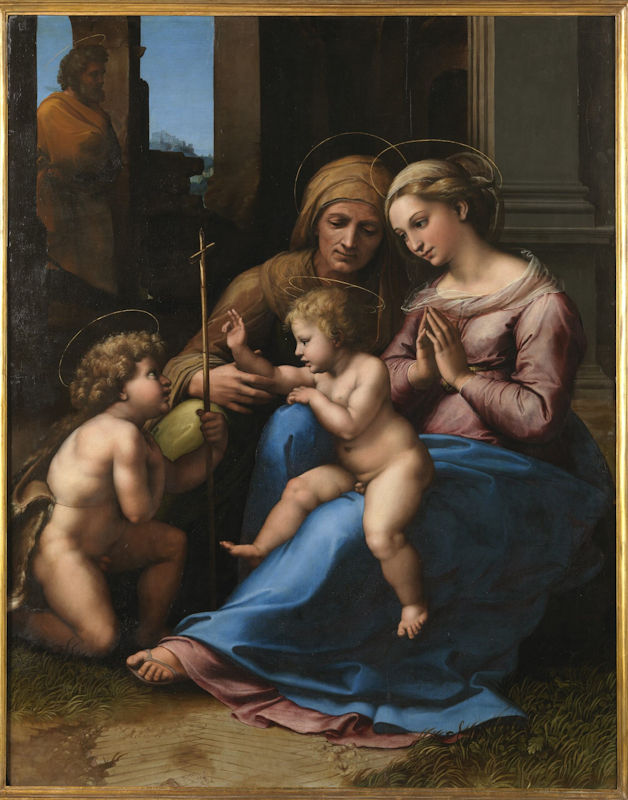
The exhibition itinerary winds through twelve rooms , through which the visitor can immerse himself in the reality of the Farnese family, reconstructing the bond between the family, the city of Rome and the Collection. Some of the masterpieces that at the time embellished the most sumptuous rooms of the Palace are on display (the Carracci Gallery, the Hall of the Philosophers, the Grand Cardinal's Chamber, the Rooms of the Sacred Paintings and the Room of the Portraits), such as the splendid group of Pan and Daphni , dating back to the mid-2nd century AD, the refined group of Ganymede with the Eagle , also from the imperial age, and absolute masterpieces of Renaissance art, such as the Madonna of Divine Love by Raphael and the Portrait of Pope Paul III with the Camauro by Titian, as well as the precious preparatory drawings from the Carracci Gallery. And finally, a space has been dedicated to the relationship between the Farnese family and Fulvio Orsini.

The visit opens with an introduction dedicated to the bond between Paul III and Rome, and to the important urban planning interventions commissioned by Pope Farnese in preparation for the Jubilee of 1550, summarised here on the reproduction of a map from 1555, arranged chronologically and evoked by the presentation of an inscription celebrating the opening of the Via Paola in 1543. The bond that the Farnese had established between Rome and their Collection is also demonstrated by the presence in the exhibition of the Testament of Grand Cardinal Alessandro , which explicitly states that the Collection, inalienable, was to remain in Rome.

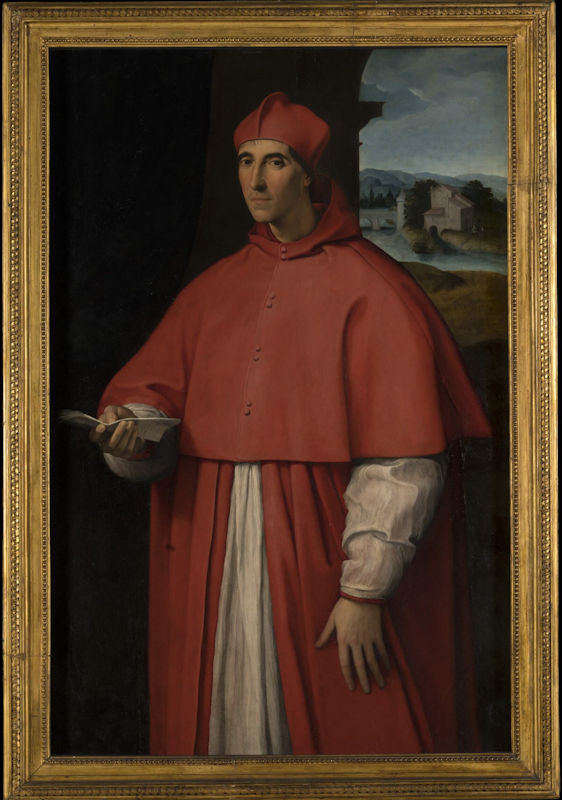
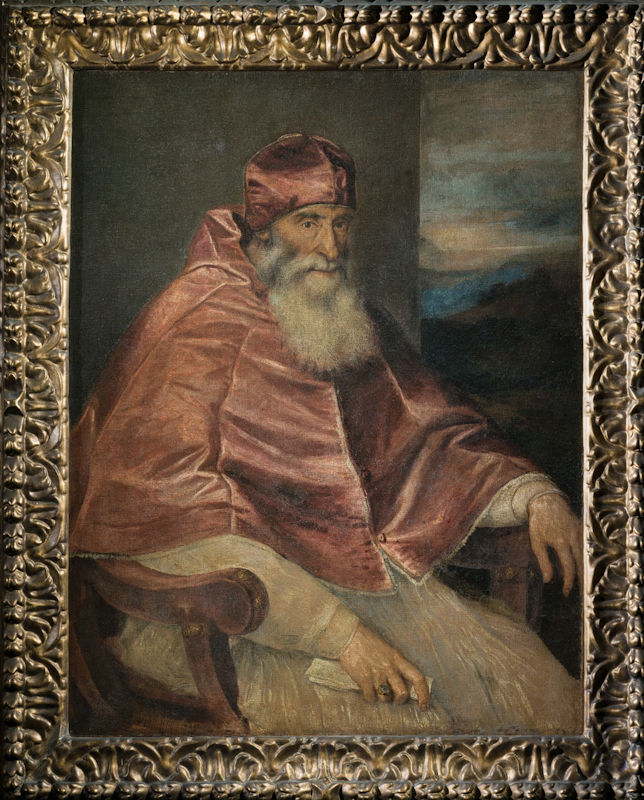
The Collection reached its peak in those years because it was supported by important figures of the Farnese family, obviously, but not only, as can be seen in the room entitled “ The Creators of the Collection ”, with a precious gallery of portraits. First of all, Pope Paul III, who is depicted here first in cardinal's robes in the Portrait of Cardinal Alessandro Farnese by Raffaello Sanzio and then in papal robes in the Portrait of Paul III by Titian Vecellio. There is no shortage of paintings dedicated to his nephews, the Grand Cardinal Alessandro, Ottavio, Ranuccio and also Odoardo, represented here in a portrait by Domenichino. There is also a portrait of Margaret of Austria, a woman of great intelligence and wife of Ottavio, whose collection integrated the Farnese upon her death.

Paul III's commitment to starting the collection of art and antiquities is recounted in the rooms entitled “ A palace for 'a public school of the world' ” and “ The Farnese and antiquity: passion and prestige”. The works in the collection not only represented a symbol of power, but were also a vindication of the continuity of the papacy with Ancient Rome. The original layout of the ancient collection in Palazzo Farnese, which today houses the French Embassy, ​​is recalled through the presentation of some of the most symbolically interesting spaces of the Palace, including the large courtyard, where the Colossi from the Baths of Caracalla stood, such as the Farnese Hercules and the Farnese Bull. The famous Hercules , a copy of the original bronze by Lysippus from the 4th century BC, was among the symbols of the collection and one of the most studied ancient sculptures, as demonstrated by the numerous studies and reproductions exhibited here, including the two splendid drawings by the Dutchman Hendrick Goltzius and the small bronze by Pietro da Barga . Again, among the emblematic examples of the passion for the ancient, the visitor can admire three reproductions, two in bronze, the other in porcelain of the Farnese Bull , today preserved in the National Archaeological Museum of Naples, and the sculptural group of Pan and Daphni , a fine example of Roman art dating back to the mid-2nd century AD, and the Saucer of the Farnese Cup with Drunken Silenus , an elegant and precious silver plate engraved with a burin, commissioned to Annibale Carracci.

This is followed by a focus on the “ Galleria del Palazzo ”, which was painted with mythological subjects inspired by Ovid’s Metamorphoses and considered the masterpiece of the Carraccis. Here it is evoked by important preparatory drawings of the frescoes and by some of the most significant sculptures exhibited in the large reception room, such as the Farnese Eros and the Satyr with the infant Bacchus , which are now visible again in Rome after being transferred to Naples during the last decade of the 18th century. We then arrive in the “ Hall of the Philosophers” , which housed works dedicated to the theme of the Venuses: here it is possible to admire, among the many masterpieces, the famous Venus Callipygia from the Hadrianic era, a copy of a Greek original, and the beautiful bronze copy of the Camillo from the Capitoline Museums made by Guglielmo Della Porta.

A section is dedicated to the figure and work of “ Fulvio Orsini ”. His role in the acquisition and valorization of numerous finds is explored here, as well as his commitment to increasing the Farnese library, which became an important center for the study and conservation of ancient manuscripts, codices and literary works. He was also a passionate collector: a precious selection of gems belonging to the scholar is exhibited here, in addition to the precious table of the Salvator Mundi attributed to Marcello Venusti from the Borghese Gallery, and the precious Capponian Code of the Vatican Apostolic Library, with the preparatory drawings of the Imagines et elogia virorum , published in several editions starting in 1570, a summa of Fulvio Orsini's antiquarian erudition.

The evocative nature of the journey inside the palace is evoked in the next room entitled “ Il Camerino ” or “Cabinet of the Cardinal”, whose decoration, commissioned to Carracci, alternated mythological scenes with allegorical figures intended to celebrate the virtues of Odoardo and secondarily of his brother Ranuccio. In the centre of the ceiling of the room stood the scene of Hercules at the Crossroads , an oil painting now preserved in the Museum and Royal Wood of Capodimonte in Naples, in which Hercules is forced to choose between vice and virtue. On display are two preparatory studies for the canvas and a large selection of sheets that follow the creative process of the figure of Hercules, as well as a precious selection of gems and coins that belonged to Fulvio Orsini and which, upon his death in 1600, were incorporated into the Farnese collection.

The masterpieces of the Collection dedicated to the sacred theme, such as the exceptional Madonna of Divine Love by Raphael, the Healing of the Man Born Blind by El Greco and the Christ and the Canaanite Woman by Annibale Carracci, are exhibited in the room entitled “ The Rooms of Paintings and Drawings ”, located on the upper floor of Palazzo Farnese.

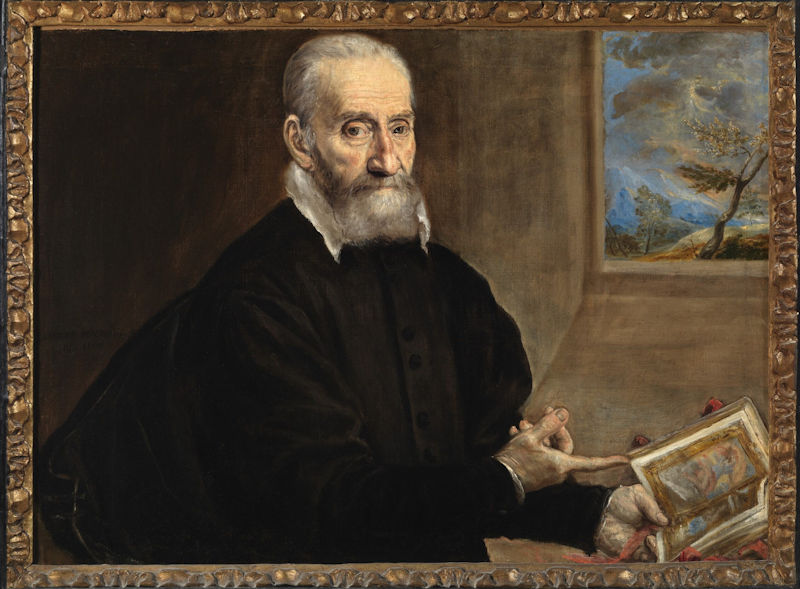
1600, the year that closes the chronological arc of this exhibition, is the year of Orsini's death and the year that will also mark the end of the most prestigious period of the Farnese Collection. This exceptional bond between the Farnese and Orsini is paid homage to in the last room, entitled " Two collections, one destiny ". Here there is a selection of works from both collections. This union is emblematically represented by the presence of the Portrait of Giulio Clovio by El Greco, which depicts the artist holding in his left hand the Book of Hours he illuminated for Cardinal Alessandro Farnese. The painting, part of the Fulvio Orsini collection, is exhibited here right next to the Book of Hours now kept at the Morgan Library in New York. In the center of the room stands the extraordinary Farnese Cassette , commissioned by Grand Cardinal Alessandro, now kept in the Museum and Royal Wood of Capodimonte.

 Raffaello Sanzio (Urbino, 1483 - Rome, 1520) Portrait of Cardinal Alessandro Farnese, future Pope Paul III 1509-1511


Tiziano Vecellio (Pieve di Cadore, 1488/1490 - Venezia, 1576) Ritratto di Paolo III con camauro 1545-1546 circa


Raffaello e aiuti (Urbino, 1483 - Roma, 1520) Madonna del Divino Amore 1516-1518


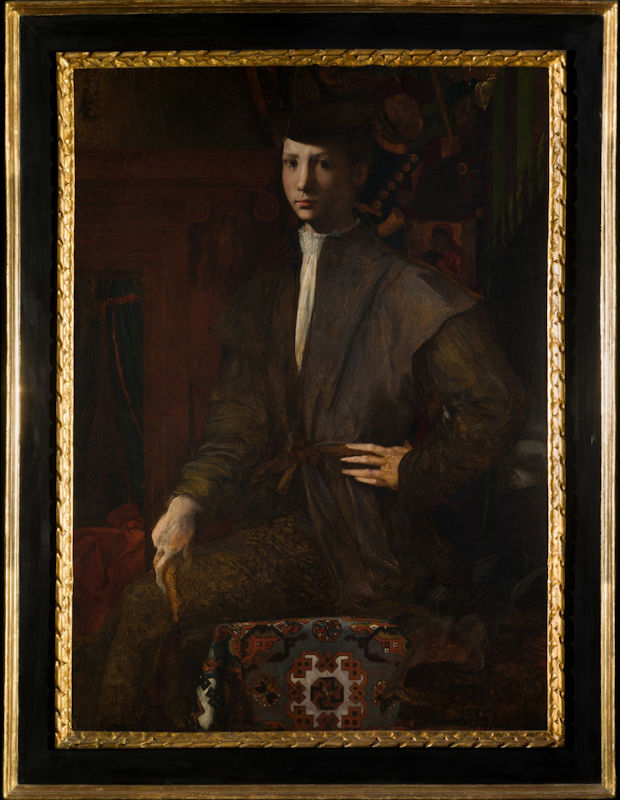
Giovan Battista di Jacopo di Gasparre detto Rosso Fiorentino (Firenze, 1494 - Fontainebleau, 1540) Ritratto di giovane uomo 1529 circa


Dominikos Theotokopoulos detto El Greco (Candia, 1541 - Toledo, 1614) Ritratto di Giulio Clovio 1571-1572