.jpg?mode=max&w=1&hash=a5940f37ab33d1cca29aa088e6ac4d0a54214270)
 GIOVANNI ANTONIO CANAL, CALLED IL CANALETTO (VENICE 1697–1768) Venice, the Return of the Bucintoro on Ascension Day, circa 1732 Oil on canvas 33⅞ x 54⅜ in. (86 x 138.1 cm) Estimate on request; in excess of £20 millionCanaletto’s masterful views, replete with details and unparalleled in atmospheric effects, made him the most successful vedutista of his age and influenced succeeding generations of landscape painters. In this work his technique is supremely confident: controlled flicks of the brush evoke feathered parasols and trailing ribbons. Vivid accents of colour guide the viewer’s eye around the composition, with touches of vibrant red punctuating the entire composition. Canaletto seems to have already mastered the formula for creating the effect of rippled water, as pale arcs skip across the surface of the lagoon. The artist demonstrates a lightness of touch in describing figures in movement, even those in different planes. The scene has an airy, spontaneous quality and yet Canaletto’s technique is very precise and his architecture meticulously constructed, with every building outlined and detailed with rigorous precision. He demonstrates a great sensitivity to changing weather conditions, intersecting a fluffy white cloud at centre with a bold horizontal brushstroke, painted wet-in-wet, and applying a streaky haze on the horizon. A gentle breeze can be felt through the water ripples in the Bacino and the movement of the gondoliers’ feathered caps. The picture is imbued with the warm tonality of an early summer’s day. The lagoon is populated with elegantly-dressed figures reclining in gondolas, the moored Bucintoro stands majestically beyond, and a crowd of onlookers gathers on the Molo in the distance.
London – Canaletto’s breathtaking view of Venice, the Return of the Bucintoro on Ascension Day, circa 1732, will lead Christie’s Old Masters Evening Sale on 1 July, during Classic Week London (estimate on request; in excess of £20 million). Having only appeared at auction twice in its 300-year history, in 1751 and 1993, this picture is in a remarkable state of preservation with the surface of the painting beautifully textured and the rich impasto of the figures intact. Inaccessible to scholars throughout much of its history, it has only recently come to light that the picture hung at 10 Downing Street, where it is first recorded in 1736, in the collection of Britain’s first Prime Minister, Sir Robert Walpole (1676-1745). This illustrious early 18th century provenance makes it – along with its pendant of the Grand Canal – the earliest recorded work by the Venetian master to be hung in an English house, predating King George III’s purchase of Consul Joseph Smith’s Canalettos by a quarter of a century. Exceedingly ambitious in both scale and conception, this highly evocative view is testimony to Canaletto’s prodigious talent and exacting technique, painted at the highpoint of his career. It is his earliest known representation of a subject to which he would return repeatedly, marking the starting point for Canaletto painting such festivities. This picture will be on on view at Christie’s New York from 3 until 15 May, followed by Hong Kong from 22 to 28 May, before returning to London for the pre-sale exhibition from 27 June to 1 July.
Andrew Fletcher, Christie’s Global Head of the Old Masters Department commented: “Seldom does a true masterpiece such as this - particularly by a painter as important as Canaletto - appear on the art market, and it is utterly thrilling to be handling its sale. This extraordinary painting of the grandest and most familiar view of Venice, by the city’s most recognisable painter, dates to Canaletto’s finest period and is as notable for its illustrious provenance as much as for its impeccable condition. It is unquestionably the greatest work by the artist to have come to the market in a generation.”
10 DOWNING STREET
Venice, the Return of the Bucintoro on Ascension Day was formerly accompanied by a pendant showing The Grand Canal, looking North-East from Palazzo Balbi to the Rialto Bridge. The two paintings remained together until the present work’s sale at Ader Tajan in 1993 where, appearing at auction for the first time in nearly 250 years, it fetched a record price for an old master painting at auction in France. The exceptional pictorial quality and condition together with the distinguished provenance of both pictures ensured that when the pendant was sold in 2005 it made a world record price for the artist at auction, a title it still holds twenty years later. What was not known when the present picture was last offered for sale is that the two paintings share a remarkable early history, having been owned by Britain’s first Prime Minister, the great patron and collector Sir Robert Walpole.
Their presence in Walpole’s collection was first noticed by British Art historian and Old Master expert Sir Oliver Millar (1923-2007), who found them referenced in the 1736 manuscript catalogue of paintings at 10 Downing Street and in the 1751 auction when they were sold by Sir Robert’s grandson, George Walpole; the manuscript copy of the sale is held in the National Art Library at the Victoria & Albert Museum.
It is not known how or when Sir Robert acquired this magnificent view and its pendant. It may have been through his son Edward, who was dispatched to Venice charged with acquiring works of art between January 1730 and January 1731, though both views are datable on stylistic grounds to circa 1731-32 and, as such, slightly postdate Edward’s Venetian sojourn. Whilst no doubt facilitated by Edward’s connections in Venice, the purchase of the pictures must have been instigated by the refurbishment of the Downing Street residence in 1732-35, after the residence was offered to Sir Robert Walpole by King George II in 1732. The British architect William Kent gutted the interiors of two adjacent properties and united them to create a new complex of sixty rooms. Sir Robert and his wife took up residence in 1735, remaining there until Walpole left office in 1742, whereupon he took his collection of pictures to Houghton Hall.
THE SUBJECT
Falling on the fortieth day after Easter Sunday, the Feast of the Ascension of Christ was the most spectacular of all Venetian festivals and was frequently commented upon by visitors and travellers. It was on this day exclusively that the Bucintoro, the official galley of the Doge of Venice and a symbol of the Serenissima, was used. The model depicted here, the last to be made at the Arsenale, was designed by Stefano Conti and decorated by the sculptor Antonio Corradini, identifiable by the lion – symbol of the city of Venice – on the prow and the figure of Justice. Accompanied by the city’s officials, the doge would sail out to the Lido on the Bucintoro and cast a ring into the water, a symbolic act representing the marriage of Venice to the sea. It was a ceremony that brought the entire city together and remained a key date in the Venetian calendar until the fall of the Republic in 1797. The Bacino di San Marco, where the scene is set, was the usual – and certainly the most thrilling – point of arrival for visitors in Venice.
TECHNIQUE
- Lot 4
JAN DAVIDSZ. DE HEEM (UTRECHT 1606-1684 ANTWERP)
A pie on a pewter plate, a partially peeled lemon and overturned silver spoon on a pewter plate, crayfish and shrimp in a Wanli bowl, fruit, a walnut and an oyster on a pewter plate, a basket of fruit, a fluted glass, a silver-gilt cup, a roemer, an overturned silver tazza on a strong box, a silver ewer and a bread roll all on a partially draped table with a curtain beyond
EstimateGBP 3,000,000 - 5,000,000 .jpg?mode=max&w=1&hash=e35248d0bdcdcc07c08af05d0a4812f888b8dced)
Lot 5FRANS HALS (ANTWERP 1582⁄3-1666 HAARLEM)
Portrait of Johannes Hoornbeeck (1617-1666), half-length, in black dress, holding a book
EstimateGBP 600,000 - 800,000.jpg?mode=max&w=1&hash=f97dc1349fbd8c921af5f46931b6ff07fd6cc5b5)
Lot 6PIETER BRUEGHEL THE YOUNGER (BRUSSELS 1564-1638 ANTWERP)
The Birdtrap
EstimateGBP 1,000,000 - 1,500,000.jpg?mode=max&w=1&hash=df36c71c1bbdec0dd3cd64ef1b6dfd8a254291c5)
Lot 10JAN BRUEGHEL THE ELDER (BRUSSELS 1568-1625 ANTWERP)
A mountainous wooded landscape with hermits and a mass being held at a shrine
EstimateGBP 500,000 - 800,000.jpg?mode=max&w=1&hash=416f41105f76ad3988e52941ce2017d372202213)
Lot 12JAN VAN HUYSUM (AMSTERDAM 1682-1749)
Roses and other flowers in a terracotta vase with a bird’s nest on a marble ledge; and Fruit, roses and peonies in a basket with hazelnuts on a marble ledge
EstimateGBP 1,200,000 - 1,800,000.jpg?mode=max&w=1&hash=80cd10562e66d3dc07560a1d3eb11ab484a84a6a)
Lot 15LUCAS CRANACH THE YOUNGER (WITTENBERG 1515-1586 WEIMAR)
Venus with Cupid the Honey Thief
EstimateGBP 500,000 - 800,000.jpg?mode=max&w=1&hash=04a8e8fcc33ba2540fb92d8a462adec5f35f99b6)
Lot 16DOMÉNIKOS THEOTOKÓPOULOS, CALLED EL GRECO (CRETE 1541-1614 TOLEDO) AND STUDIO
Christ taking leave of His Mother
EstimateGBP 600,000 - 800,000.jpg?mode=max&w=1&hash=52ea64d6d7a6e85eeb6793bb186b64ae8a900c08)
Lot 17GERRIT DOU (LEIDEN 1613-1675)
A cottage interior with an old woman ('Rembrandt's Mother') delousing a boy's hair
A cottage interior with an old woman ('Rembrandt's Mother') delousing a boy's hair exemplifies the seductively refined pictorial language and remarkable technique that made Gerrit Dou, like his master Rembrandt, one of the most successful Dutch artists of the seventeenth century. Celebrated for his painstakingly executed works, he enjoyed the favour of artists and connoisseurs alike, within his lifetime and in the centuries that followed..
EstimateGBP 1,000,000 - 1,500,000.jpg?mode=max&w=1&hash=3ea957c5d959dae8208ea67a86b6fbf27afd6e8e)
Lot 19BERNARDO BELLOTTO (VENICE 1721-1780 WARSAW)
The Fishermen’s Village at Pirna
EstimateGBP 600,000 - 800,000.jpg?mode=max&w=1&hash=b39b747e34aa724a97f99abd8719be4cb27961f7)
Lot 23GEORGE STUBBS, A.R.A. (LIVERPOOL 1724-1806 LONDON)
A prancing horse with two dogs, in a landscape
EstimateGBP 800,000 - 1,200,000.jpg?mode=max&w=1&hash=352f4c7e28f365bf0df9d39c3312bda4bf05f1b1)
Lot 26JACOPO BELLINI (VENICE 1400-1470⁄71)
Saint Benedict (?); and Saint Bernard of Clairvaux: panels from a polyptych
EstimateGBP 800,000 - 1,200,000.jpg?mode=max&w=1&hash=889ed8c1be62267e1fbe51ffe3c801d068c74e35)
Lot 27MATTIA PRETI (CALABRIA 1613-1699 VALLETTA)
Samuel anointing David
EstimateGBP 600,000 - 800,000.jpg?mode=max&w=1&hash=164144fc15a90fcafaa7bd395de8f84113816b43)
Lot 31TIZIANO VECELLIO, CALLED TITIAN (PIEVE DI CADORE C. 1485⁄90-1576 VENICE)
Portrait of a nobleman, seated before a window
EstimateGBP 3,000,000 - 5,000,000.jpg?mode=max&w=1&hash=76483cca2e3f94a3964a3f18b6b5119d23b39e59)
Lot 40BERNARDO BELLOTTO (VENICE 1721-1780 WARSAW)
Venice, The Grand Canal looking South-East from the Palazzo Michiel dalle Colonne to the Fondaco dei Tedeschi
EstimateGBP 500,000 - 800,000.jpg?mode=max&w=1&hash=8b51fc1093f2642b9da5c9e91647a5a9cb9dce68)
Lot 42JOSEPH MALLORD WILLIAM TURNER, R.A. (LONDON 1775-1851)
Lake Brienz, with the setting Moon
Showing late Turner at the height of his powers as a watercolourist Lake Brienz, with the Setting Moon is a mesmerizingly peaceful Swiss view, from the 1840s (estimate: £600,000-800,000). Paving the way for the Impressionists, this work shows Turner focusing on the effects of changing light.
EstimateGBP 600,000 - 800,000
Thursday, June 5, 2025
Christie's Old Masters Evening Sale 1 JUL

Thursday, May 29, 2025
Venice and the Ottoman Empire
Frist Art Museum
May 31–September 1, 2025
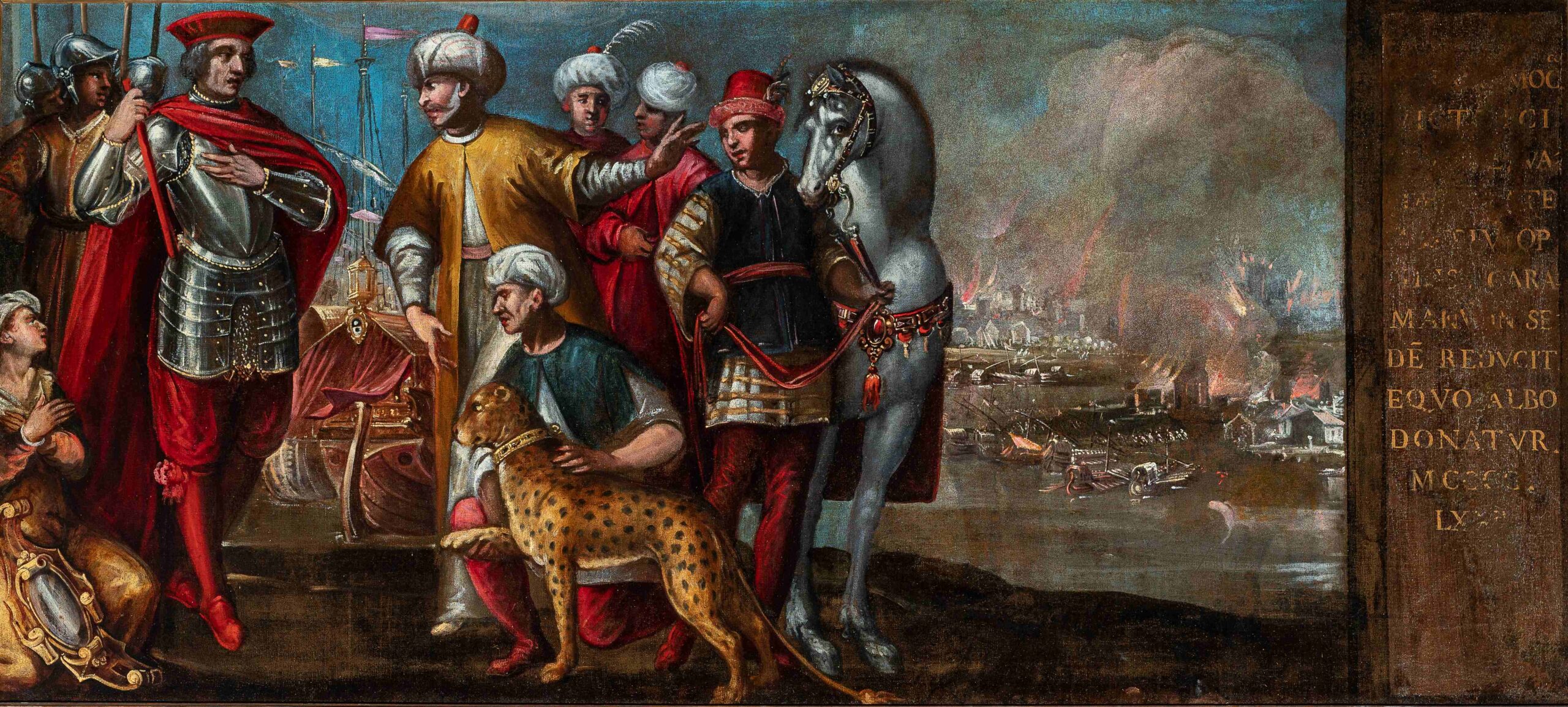
The Frist Art Museum presents Venice and the Ottoman Empire, an exhibition that explores the artistic and cultural exchange between the Republic of Venice and the Ottoman Empire over four centuries. Organized by the Fondazione Musei Civici di Venezia and The Museum Box, the exhibition will be on view in the Frist’s Ingram Gallery from May 31 through September 1, 2025.
This ambitious cross-cultural exhibition examines the complex links between the Republic of Venice and the Ottoman Empire from 1400 to 1800 in artistic, culinary, diplomatic, economic, political, and technological spheres. “The relationship between Venice and the Ottomans represents a fascinating and multifaceted chapter in the history of Mediterranean geopolitics, one marked by a blend of cooperation and conflict, handshake- and arms-length approaches, diplomacy and back-stabbing, understanding and misunderstanding,” writes exhibition curator Stefano Carboni in the exhibition catalogue.
Featuring a richly diverse selection of more than 150 works of art in a broad range of media, including ceramics, glass, metalwork, paintings, prints, and textiles, the exhibition draws from the vast collections of seven of Venice’s renowned museums. The creative contributions of well-known Venetian artists such as Gentile Bellini, Vittore Carpaccio, and Cesare Vecellio are showcased alongside works created by the best anonymous craftspeople both in Venice and the Ottoman Empire. The Venetian loans are joined by a trove of recently salvaged objects from a major 16th-century Adriatic shipwreck of a large Venetian merchant vessel that have never been exhibited outside Croatia. A gallery dedicated to Mariano Fortuny’s Venetian- and Ottoman-inspired fashions and decorative arts created in the early 20th century brings the exhibition to a spectacular conclusion.
“Venice stood at the crossroads of a vast trade network connecting Africa, Asia, and Europe,” writes Frist Art Museum Curator at Large Trinita Kennedy. “To maintain its status as an international emporium, with markets full of ceramics, metalwork, spices, textiles, and other goods, Venice acquired overseas territories to its east and cultivated close ties with the Ottomans, whose empire became the wealthiest and most powerful in the Eastern Mediterranean after their conquest of Constantinople in 1453 and widespread expansion in the 16th century.”
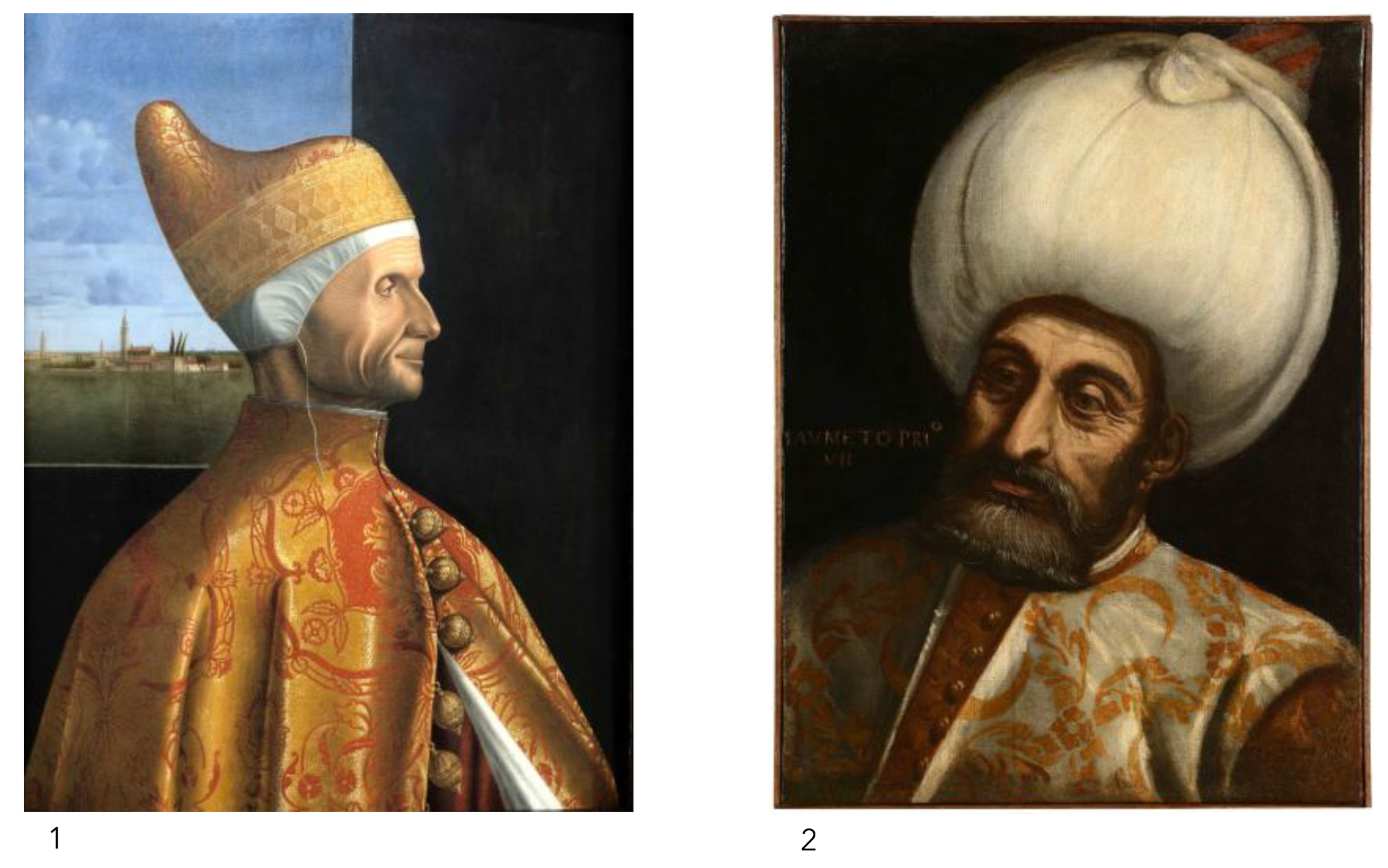
Organized thematically, the exhibition begins with an overview of diplomacy and trade during the period illustrated through portraits of powerful Venetian and Ottoman leaders including doges, sultans, and ambassadors. On display are nautical maps as well as a printed manual that illustrates how merchants who spoke different languages conducted business using hand gestures. Despite diplomatic efforts, relations were not always harmonious. Between 1400 and 1800, the two powers fought seven major wars, with the Venetians gradually losing almost all their overseas territories to the Ottomans.
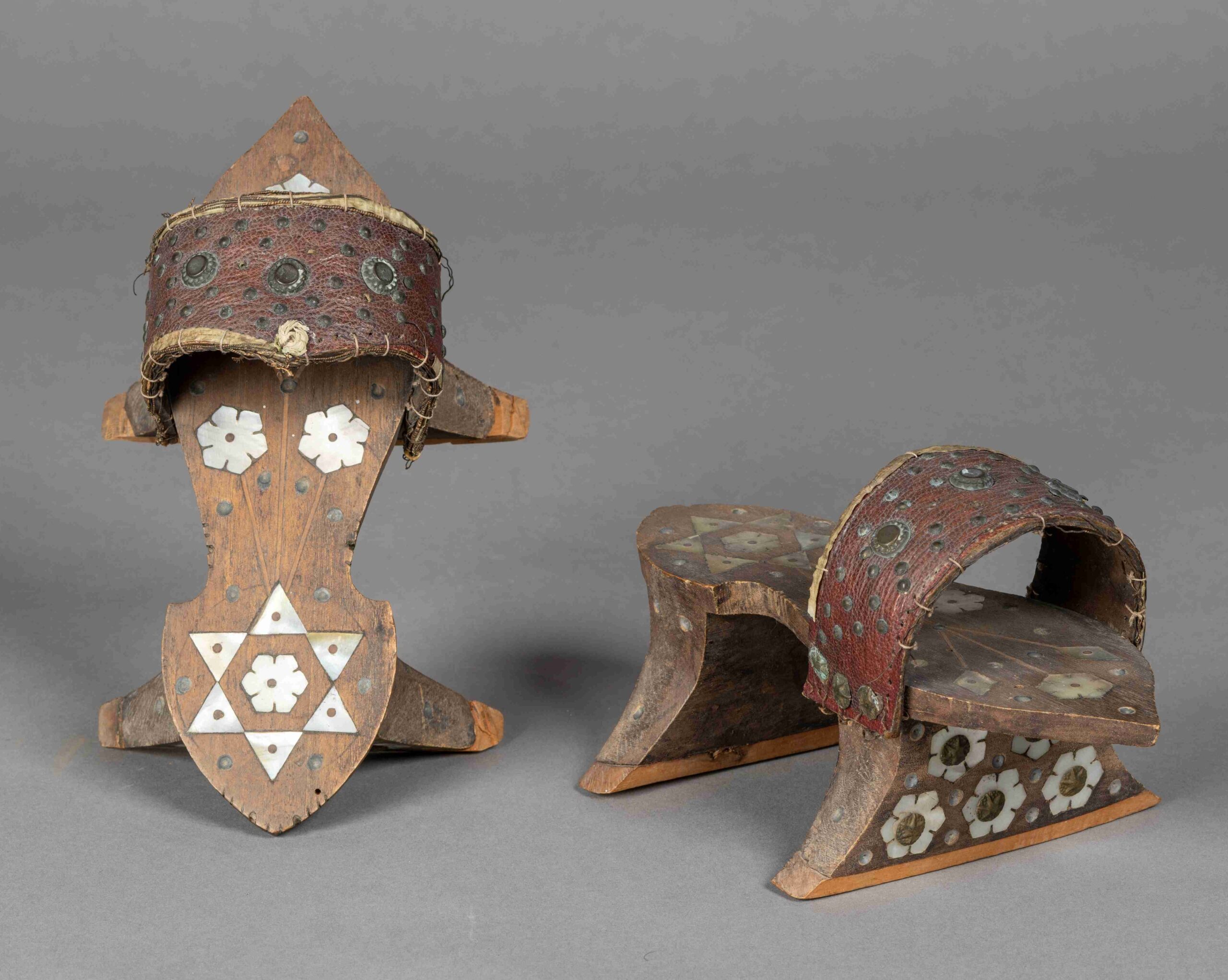
The exhibition, however, emphasizes that during periods of peace, the two powers forged a close relationship and shared aesthetic tastes. “Venetians and Ottomans admired and sought one another’s luxury goods and gave them to each other as gifts,” writes Kennedy. “Ottoman sultans liked Murano glass and portraits of themselves by Venetian artists, while Venetian women wore Ottoman clogs and perfumed their homes with incense burners imported from Ottoman regions.”
The next two sections are dedicated to decorative arts and textiles, which figured prominently in commercial exchanges and the interior design of Venetian homes. Extravagant Ottoman velvets and brocaded silks were synonymous with status and survive in Venetian museums today. The Ottomans were just as enthusiastic about Venetian textiles. “Both cultures favored red and gold and bold designs with carnation, pomegranate, and tulip motifs,” writes Kennedy. “Their textiles are so similar that sometimes it can be difficult to discern whether a textile was made in Venice or Bursa, the Ottomans’ principal textile center.”
A section dedicated to the spice trade traces how Venetian merchants sailed to Ottoman-controlled ports in Africa and Asia to purchase goods and then sold them in markets back home to merchants from elsewhere in Western Europe. In addition to spices such as cardamom, nutmeg, pepper, and saffron, Venetians depended on trade with Ottomans for coffee, figs, pistachios, raisins, salted sturgeon, sugar, vinegar, and, most importantly, wheat. Through a video featuring two Nashville chefs, a take-home recipe card, a display of spices, and scent devices with fragrant aromas, guests will learn about Venetians’ and Ottomans’ shared culinary culture.
Ship building, sailing, and a storied shipwreck are the focus of the next two sections. One of the highlights of the exhibition is a large group of objects recovered from a shipwreck that illustrates the opportunities and perils of seafaring in this age. They come from the Gagliana Grossa, a fully loaded Venetian ship that sank in 1583 in the waters off the Dalmatian coast of modern-day Croatia while traveling to Constantinople. The ship’s diverse cargo offers evidence of the types of goods Venetians traded in the Eastern Mediterranean. “The Venetian Senate sent a Greek diver to salvage diamonds, emeralds, pearls, and some luxury textiles onboard, but the rest of the goods remained on the seabed until the site was rediscovered in the 1960s,” explains Kennedy. “Excavations are ongoing, and this exhibition presents some of the most recently found objects.”
Works in the penultimate section center the revered Venetian naval commander and doge Francesco Morosini (1619–1694), who played a major role in Venice’s interactions with the Ottoman Empire in the seventeenth century and amassed a large collection of art taken from his campaigns as well as acquired from the Venetian art market. The exhibition concludes with an enchanting gallery devoted to the exquisite creations of Mariano Fortuny (1871–1949)—the Spanish artist, designer, and inventor who lived and worked for most of his life in a Gothic palace in Venice creating sumptuous textiles with new printing techniques that recalled the bygone era of Venice and the Ottoman Empire.
Image Credits
1. Vittore Carpaccio. Portrait of Doge Leonardo Loredan, 1501–5. Tempera and oil on panel; 26 1/2 x 20 1/8 in. Fondazione Musei Civici di Venezia—Museo Correr, Cl. I n. 0043
2. School of Paolo Veronese, Venice. Portrait of Mehmed I, second half of the 17th century. Oil on canvas; 26 x 19 1/4 in. Fondazione Musei Civici di Venezia—Museo Correr, Cl. I n. 0856
3. Ottoman Turkish artisanship. Bath clogs, 17th century. Wood inlaid with mother-of-pearl, studded leather; 2 3/4 x 9 1/8 in. Fondazione Musei Civici di Venezia—Museo di Palazzo Mocenigo, Cl. XXIV n. 0119
Exhibition Catalogue

The accompanying catalogue, Venice and the Ottoman Empire: A Tale of Art, Culture, and Exchange, offers freshly reviewed and new perspectives on the intricate artistic relationship that existed between Venice and the Ottoman Empire. Published by Rizzoli Electa and edited by exhibition curator Stefano Carboni, the fully illustrated hardcover volume features newly researched essays by esteemed international scholars, including the Frist Art Museum’s Curator at Large Trinita Kennedy, on topics such as trade routes, the involvement of international communities in Venice, diplomatic interactions, and military power dynamics.