Thursday, October 23, 2025

Old Master Through Modern Prints at Swann October 30


Swann Galleries sale of Old Master Through Modern Prints on Thursday, October 30 will include Part II of the Reba W. & Dave H. Williams Collection of Color Woodcuts.

            Reba W. and Dave H. Williams began their collection in the mid-1970s and amassed one of the largest most prestigious collections of American prints in the world with over 5,000 works spanning from the late nineteenth through the twentieth centuries, the Williamses championed the history of printmaking in the United States. They were devoted to the study and promotion of the field, founding The Print Research Foundation in 2003 in Stamford, Connecticut, and organizing 18 exhibitions from their collection that traveled around the world. In 2009, they donated a large portion of their collection to the National Gallery of Art in Washington, D.C. Part II of the collection will include Edna Boies Hopkins’s Lilies (also known as Moonfloers), color woodcut, circa 1920-23 ($10,000-15,000), and Blanche Lazzell’s Petunias, color woodcut, 1928 ($10,000-15,000).

            American prints include works by Mary Cassatt, Blanch Lazzell, Edward Hopper, Bror J. Nordfeldt and Benton Spruance. Top highlights include Cassatt’s Picking Daisies in a Field, drypoint and color aquatint, 1890 ($50,000-80,000); Lazzell’s My Provincetown Studio, color woodcut, 1933 ($40,000-60,000); Hopper’s Night Shadows, etching, 1921 ($30,000-50,000); Nordfeldt’s The Skyrocket, color woodcut, 1906 ($15,000-20,000); and Spruance’s The People Work — Morning, Noon, Evening & Night, set of four lithographs, 1937 ($25,000-35,000). Works by Louis Lozowick, Grant Wood, Thomas Hart Benton, Roy Lichtenstein, and Robert Motherwell also feature. Martin Lewis, Thomas Hart Benton, Rockwell Kent, and Arthur Wesley Dow round out the selection.

            Works by Old Master a run of works by Rembrandt van Rjn with Self Portrait Leaning on a Stone Sill, etching, 1639 ($30,000-50,000), and The Blindness of Tobit: The Larger Plate, etching, 1651 ($30,000-50,000) leading the selection. Albrecht Dürer, Giovanni B. Piranesi, and Francisco Goya also feature.

            European Modern masters include Pablo Picasso with Femme au corsage à fleurs, lithograph, 1958 ($70,000-100,000); Maurits C. Escher with Sky and Water I, woodcut, 1938 ($20,000-30,000); Marc Chagall’s Then Said the King in Himself, color lithograph, 1948 ($15,000-20,000); and Henri Matisse’s Études pour la Vierge, Visage, lithograph, 1950-51 ($8,000-12,000). Prints by Albert Giacometti, Joan Miró, Rene Margritte, Edvard Munch and more feature. 


Lot 213: Mary Cassatt, Picking Daisies in a Field, drypoint and color aquatint, circa 1893. Estimate $50,000

to $80,000.


Lot 311: Pablo Picasso, Femme au corsage à fleurs, lithograph, 1958. Estimate $70,000 to $100,000.

Edward Hopper (1882-1967) N... image

258: Edward Hopper (1882-1967) Night Shadows, 1921.

Estimate:$30,000 - $50,000
Current Bid:$15,0001 Bid
Rembrandt van Rijn (1606-16... image

119: Rembrandt van Rijn (1606-1669) Self-Portrait Leaning on a Stone Sill, 1639.

Estimate:$30,000 - $50,000
Starting Bid:$15,0000 Bids
Rembrandt van Rijn (1606-16... image

141: Rembrandt van Rijn (1606-1669) The Blindness of Tobit: The Larger Plate, 1651.

Estimate:$30,000 - $50,000
Starting Bid:$15,0000 Bids


268: Benton Murdoch Spruance (1904-1967) The People Work—Morning, Noon, Evening & Night, 1937.

Estimate:$25,000 - $35,000
Starting Bid:$13,0000 Bids
James Abbott McNeill Whistl... image

202: James Abbott McNeill Whistler (1834-1903) J.H. Woods' Fruit Shop, Chelsea, 1887-8.

Estimate:$25,000 - $35,000
Starting Bid:$13,0000 Bids
Maurits C. Escher (1898-197... image

348: Maurits C. Escher (1898-1972) Sky and Water I, 1938.

Estimate:$20,000 - $30,000
Current Bid:$11,0002 Bids
Rembrandt van Rijn (1606-16... image

112: Rembrandt van Rijn (1606-1669) Self Portrait with Saskia, 1636.

Estimate:$20,000 - $30,000
Starting Bid:$10,0000 Bids
Rembrandt van Rijn (1606-16... image

98: Rembrandt van Rijn (1606-1669) Self Portrait in a Cap and Scarf with the Face Dark: Bust, 1633.

Estimate:$20,000 - $30,000
Starting Bid:$10,0000 Bids
Pablo Picasso (1881-1973) M... image

310: Pablo Picasso (1881-1973) Marie-Thérèse en Femme Torero, 1934.

Estimate:$20,000 - $30,000
Current Bid:$10,0001 Bid
Marc Chagall (1887-1985) Th... image

351: Marc Chagall (1887-1985) Then Said the King in Himself, 1948.

Estimate:$15,000 - $20,000
Current Bid:$7,5001 Bid
Pablo Picasso (1881-1973) B... image

315: Pablo Picasso (1881-1973) Bright Dove, 1953.

Estimate:$15,000 - $20,000
Current Bid:$7,5001 Bid
Pablo Picasso (After) Les S... image

308: Pablo Picasso (After) Les Saltimbanques, 1922.

Estimate:$15,000 - $18,000
Starting Bid:$7,5000 Bids
Pablo Picasso (1881-1973) D... image

306: Pablo Picasso (1881-1973) Deux figures nues, 1909.

Estimate:$15,000 - $20,000
Starting Bid:$7,5000 Bids
Pablo Picasso (After) Seate... image

307: Pablo Picasso (After) Seated Figure, circa 1920.

Estimate:$15,000 - $20,000
Starting Bid:$7,5000 Bids
Martin Lewis (1881-1962) We... image

263: Martin Lewis (1881-1962) Wet Night, Route 6, 1933.

Estimate:$15,000 - $20,000
Starting Bid:$7,5000 Bids
Bror J. O. Nordfeldt (1878-... image

239: Bror J. O. Nordfeldt (1878-1955) The Skyrocket, 1906.

Estimate:$15,000 - $20,000
Starting Bid:$7,5000 Bids
Rembrandt van Rijn (1606-16... image

136: Rembrandt van Rijn (1606-1669) Canal with an Angler and Two Swans, 1650.

Estimate:$20,000 - $30,000
Starting Bid:$7,5000 Bids
Rembrandt van Rijn (1606-16... image

135: Rembrandt van Rijn (1606-1669) Cottage and Boundary Post on the Spaarndammerdijk (Landscape with an Obelisk), circa 1650.

Estimate:$15,000 - $20,000
Starting Bid:$7,5000 Bids
Rembrandt van Rijn (1606-16... image

127: Rembrandt van Rijn (1606-1669) View of Amsterdam from the Kadijk, circa 1641.

Estimate:$15,000 - $20,000
Starting Bid:$7,5000 Bids
Rembrandt van Rijn (1606-16... image

116: Rembrandt van Rijn (1606-1669) Abraham Casting Out Hagar and Ishmael, 1637.

Estimate:$15,000 - $20,000
Starting Bid:$7,5000 Bids
Rembrandt van Rijn (1606-16... image

102: Rembrandt van Rijn (1606-1669) Woman Reading, 1634

Estimate:$15,000 - $20,000
Starting Bid:$7,5000 Bids

Richard Diebenkorn

Gagosian,  980 Madison Avenue, New York

November 8–December 20, 2025


Gagosian has announced its representation of Richard Diebenkorn (1922–1993). To inaugurate its partnership with the Richard Diebenkorn Foundation, Gagosian will present an exhibition of paintings and works on paper at 980 Madison Avenue in New York, opening on November 8, 2025. This marks a return of the distinguished American painter, draftsman, and printmaker’s work to the location, as the gallery presented eleven Ocean Park paintings there from November 1992 to January 1993—the artist’s final exhibition of paintings before his death in March 1993. 

     
  •  
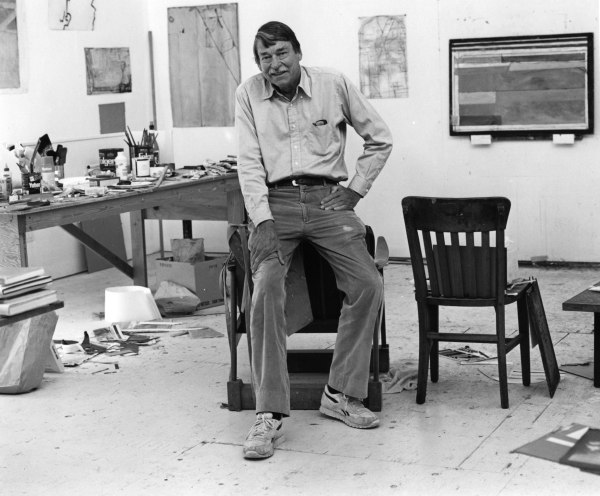
    Richard Diebenkorn in his studio, Healdsburg, California, 1992.
    Artwork © 2025 Richard Diebenkorn Foundation/Artists Rights Society (ARS), New York
  •  
  •  

  •  

Larry Gagosian notes: “Richard Diebenkorn was an incredibly important figure of the postwar era whose work remains influential today. We got to know each other in California, and I was fortunate to have the opportunity to visit his studio a handful of times. It’s a great honor for me and the gallery to carry his legacy forward, and I am thrilled that his works will once again be shown at 980 Madison.”

Working for almost all his life in California, Diebenkorn pursued a distinctive career, beginning as an Abstract Expressionist, developing a unique approach to figuration in the mid-1950s, and a decade later returning to abstraction with the masterful Ocean Park series (1967–88). The interchange between abstraction and figuration that took place over the course of his career is an essential aspect of his achievement. In an era when a single direction defined many artists’ production, Diebenkorn moved fluidly across modalities and embraced an active approach to composition and revision, often retaining traces of a work’s process and creation—what the artist referred to as a picture “sitting right.” 

Curated by Jasper Sharp in collaboration with the Richard Diebenkorn Foundation, the exhibition features six decades of the artist’s works on paper and paintings from every period, emphasizing continuity and variation. The works on view include a striking range of examples from across Diebenkorn’s career, including a 1943 watercolor that reflects the influence of Edward Hopper and Paul Cezanne, paintings from his Abstract Expressionist years, a rarely seen monumental 1960 canvas of nudes that exemplifies his long-term engagement with Henri Matisse and anticipates the scale of the epic Ocean Park cycle, and selections from his final decade that provide insights into his working practice. 

Richard Diebenkorn
Untitled, c. 1952–53
Gouache on paper
17 x 14 inches (43.2 x 35.6 cm)
© 2025 Richard Diebenkorn Foundation/Artists Rights Society (ARS), New York

Courtesy the Richard Diebenkorn Foundation and GagosianDiebenkorn’s drawings and paintings on paper, using ink, graphite, charcoal, collage, gouache, oil, and acrylic evince the artist’s love of both mark making and using paper as a substrate. The sweep of this work reveals a vigorous experimentation with forms and subjects, from the rigid geometry of a 1975 ink and gouache Ocean Park sheet, to an intricate and luminous c. 1988 mixed-media work on joined poster board; from a c. 1988–91 gouache in which he maximized the simplicity of a flat brush’s rectilinear stroke against a creamy, coated surface, to a vertical work made late in life on which he used charcoal to layer foliage-inspired lines over a modified grid. 


Diebenkorn Richard Diebenkorn, Untitled, 1969, gouache, graphite, and ink on graph paper, 15 1/2 × 11 inches (39.4 × 27.9 cm) © 2025 Richard Diebenkorn Foundation/Artists Rights Society (ARS), New York

Esteemed scholar John Elderfield, who began visiting the artist at his home in 1985 prior to curating The Drawings of Richard Diebenkorn for the Museum of Modern Art in New York (1988–89), referred to his “thinking in drawing” that “allows him access to what he intended.” “The exhibition demonstrates Diebenkorn’s extraordinary facility with different media and his command of scale, as well as the pictorial refrains that resonate across his oeuvre through decades of both abstract and representational work,” observes Sharp. “Diebenkorn sustained conversations that have unfolded across centuries, engaged deeply with his contemporaries, and forged a path that continues to inspire artists today.”

Saturday, October 18, 2025

Over 100 Works of Austrian Expressionism to the Los Angeles County Museum of Art (LACMA)

 24 works from this gift will be on view beginning November 23, 2025

The Los Angeles County Museum of Art (LACMA) has announced a gift of more than 130 works of Austrian Expressionism from the family of Otto Kallir, including the first paintings by Gustav Klimt, Egon Schiele, and Richard Gerstl to enter the collection. Transferred to LACMA over several years, the donation broadly surveys Austrian Expressionism from its roots at the turn of the 20th century to the 1920s with paintings, more than 100 drawings, prints, and posters, and a selection of works by artist-designers who were affiliated with the Wiener Werkstätte, founded in 1903. In addition to the paintings by Klimt, Schiele, and Gerstl, the donation includes works by Oskar Kokoschka, Alfred Kubin, and Marie-Louise von Motesiczky and by the German artists Lovis Corinth and Käthe Kollwitz.

 A venerable art dealer active in Vienna from the early 1920s, Otto Kallir (1894-1978) emigrated in 1938 after the National Socialist annexation of Austria. Arriving in New York in 1939, he established the Galerie St. Etienne, which continued to advance the work and legacy of Austrian Expressionists for 80 years. Many of the works in the gift were brought by Kallir from Vienna when he emigrated. Following his death in 1978, the gallery was run for 40 years by his granddaughter Jane Kallir, together with his business partner Hildegard Bachert. The Galerie St. Etienne closed in 2020, and Jane Kallir, a recognized scholar of Austrian modernism, has established The Kallir Research Institute, which promotes critical research on Austrian and German Expressionism

 A selection of 24 works from this gift will be on view beginning November 23, 2025. Curated by Timothy O. Benson, Helgard Field Curator of the Rifkind Center for German Expressionist Studies, Austrian Expressionism and Otto Kallir will be presented in the Modern Art Galleries on BCAM, Level 3, through May 31, 2026. “

Gustav Klimt (1862-1919) has long been considered a fountainhead of Austrian Expressionism by virtue of his radical approach to figuration and his lasting influence over other members of the Austrian avant-garde, among them, the younger Egon Schiele (1890-1918). The Kallir gift offers the opportunity to track Klimt’s groundbreaking engagement with the human form across the two final and defining decades of his oeuvre with eight drawings and a painting. 


 Gustav Klimt, Woman with Fur Collar, 1897, gift of Kallir Family photos courtesy Kallir Research Institute, New York 

The shimmering and intimate Woman with the Fur Collar (1897), puts the artist’s Symbolist impulse on ample display, and bears witness to the beginning of an artistic revolution in the Austro-Hungarian capital with Klimt’s co-founding of the Vienna Secession the same year. 

The core of the gift are the 27 works by Schiele, two major landscape paintings of 1913 and 19 works on paper including 14 unflinching studies of the human figure, the most celebrated aspect of his oeuvre.


Egon Schiele, Self-Portrait with Brown Background, 1912, gift of Kallir Family; photos courtesy Kallir Research Institute, New York 

The four Schiele self-portraits, created in a span of six years, evidence the pace of Schiele’s unprecedented stylistic development, culminating in the outstanding and deeply probing Self-Portrait with Brown Background (1912), which was executed at the height of his ill-fated romance with Wally Neuzil. 

Egon Schiele, Sawmill, 1913, Kallir Family Collection, promised gift to Los Angeles County Museum of Art;  photos courtesy Kallir Research Institute, New York 


Egon Schiele The Bridge: 1913;

The two Schiele landscape paintings are remarkable not only for their vigor, but also for marking turning points in Kallir’s life. The Bridge was shown in 1923 at the first posthumous Schiele exhibition organized by Kallir in his Neue Galerie in Vienna, and Kallir brought it and Sawmill with him when he fled Nazi-occupied Austria for New York. 

Coming of age during the tumultuous last decade of the Austro-Hungarian Empire, Kallir began professionally championing the legacy of Schiele and Klimt soon after their passing in 1918. In the case of the tragically short-lived Richard Gerstl (1883– 1908), Kallir’s efforts around 1931 directly led to the recuperation of the little-known artist’s estate and its introduction to the Viennese public via Gerstl’s first posthumous exhibition the same year. 

Much sought-after but extremely rare are the five works by Gerstl in the gift, including the crystalline and piercing Self-Portrait, thought to have been executed a mere five weeks before the artist ended his life at the age of 25. 

The enigmatic work of Bohemian artist Alfred Kubin (1877-1959) has recently experienced a resurgence of interest; the gift of 10 works complements the museum’s two drawings and 46 prints by him, making possible a more comprehensive presentation of his work. The first Austrian Expressionist to attain international renown, 

Oskar Kokoschka (1886-1980) led an itinerant life on a pan-European scale. One of his earliest travels to Italy is documented in the gift by two lively, veduta-like seascapes from 1913, both formerly owned by his lover Alma MahlerWerfel, the widow of the illustrious composer and conductor Gustav Mahler and, in Page 4 the 1940s, a prominent Los Angeles émigré. Two later Kokoschka drawings of women attest to the innovative potential of drawing as a modernist medium, prefiguring the gestural and compositional vitality of Willem de Kooning. 

Similar to Kokoschka, Kallir did not limit himself to the Austrian art scene and quickly became a proponent of international, especially German, art. During his lifetime, Kallir devoted 15 solo exhibitions to Käthe Kollwitz (1867-1945), and the gift brings two important preparatory charcoal drawings, which provide clues about the creative process behind two corresponding, iconic prints already in the Rifkind Center’s collection. 

The gift also creates an opportunity to narrate the full extent of the prominent Berlin Secessionist Lovis Corinth’s (1858-1925) activities as a prolific draughtsman and printmaker via a landscape painting, 42 works on paper, and two sketchbooks. The depth of Austrian-German interactions in the artistic sphere is further exemplified by two early portraits by the Viennese-born Marie-Louise Motesiczky (1906-1996), who was a student of Max Beckmann in Frankfurt in the 1920s. 


Dorotheum`s Old Masters auction on 23 October 2025

 Dorotheum`s Old Masters auction on 23 October 2025 features an important selection of 17th century Spanish still life paintings, landscapes, capricci and vedute, as well as religious paintings and portraiture.


Francisco de Goya (1746–1828), Portrait of The Young Duke of Alba, oil on canvas, 52.5 x 42.7 cm, estimate €400,000 – 600,000

One of the highlights of the sale is a portrait by Francisco de Goya of The Young Duke of Alba, from one of Spain’s leading noble families, painted in c.1783. This portrait by the great Spanish master demonstrates his mastery of the genre which is evident in his naturalistic style and his nuanced observation of character. It is the portrayal of the personality and the realistic presence of the sitter displayed in this painting that marks the difference between traditional aristocratic portraiture and a new sense of psychological realism that is associated with Goya’s work. The colour of the silk coat, a mixture of brown and violet, also known as “flea colour” was fashionable at the time. Use of the colour in depictions of courtly dress signals the social prestige and sophisticated taste of the sitter. (estimate €400,000 – 600,000).


Giovanni Paolo Panini (1691–1765), An offering to Aesculapius on the Isola Tiberina, Rome, oil on canvas, 102.5 x 92.5 cm, estimate €300,000 – 400,000

Giovanni Paolo Panini was one of the most celebrated painters in 18th century Rome. His depiction of the Isola Tiberina was commissioned as a tribute to Aesculapius, the god of medicine and healing, by the British physician and art collector, Dr Richard Mead. He was a pioneer in the eradication of contagious diseases and was so renowned as a healer that he listed Queen Anne, and King George II as well as the great physicist, Sir Isaac Newton and the artist Antoine Watteau amongst his patients. It would be hard to find a more fitting patron for Panini’s tribute to the god Aesculapius. According to classical tradition, as plague gripped Rome, a sacred serpent, symbol of the healing deity, came ashore on the Isola Tiberina and ended the plague. The painting portrays the founding of the sanctuary of Aesculapius on the Isola Tiberina and depicts the statue of the god presiding over worshippers offering their devotions. It is both a visual hymn to the divine origins of medicine and a reflection of Mead’s enlightened ideals. It unites science, mythology and art in a radiant vision of ancient Rome. (est: €300,000 – 400,000).  

The significant selection of 17th century Spanish still lifes included in this sale is also worthy of mention. These Spanish works have an additional characteristic which sets them apart from their Dutch and Italian counterparts. With their muted colours, restrained composition and lighting effects, they reveal a certain austerity, the roots of which lie in the piety of the Counter-Reformation. Works of particular note include Mirabelle plums and cherries in porcelain dishes by a basket of yellow pomegranates by an as yet unidentified artist (estimate on request), and the Fruit on pewter plates on a multi-tiered sideboard by Juan de Espinosa (€80,000 – 120,000).

A work Jan Brueghel II entitled Tazza with a garland of flowers, a jewellery box, a pocket watch and flowers in a glass vase is an eloquent example of the allegorical nature of Flemish still life painting. It includes a pocket watch representing the theme of vanitas or the intransience of human existence. A wreath of flowers and a necklace of pearls are symbols of feminine virtue, and the glass vase is a reminder of the fragility of life (€120,000 – 180,000). 


Further notable works from northern Europe include an atmospheric night scene by Jan Brueghel I entitled Aeneas and Anchises fleeing the burning Troy (€120,000 – 180,000), and other paintings by Jan Steen and Jan van Goyen.


Ferdinand Georg Waldmüller, Hansl’s first outing (Homecoming children), 1858, oil on panel, 63 x 79 cm, estimate €400,000 – 600,000

One of the highlights of the auction of 19th Century Paintings on 22 October 2025, is a masterpiece by Ferdinand Georg Waldmüller. It was owned by Jewish entrepreneur Grete Klein, who fled Austria with her family in 1938 (see press release). Having been forcibly confiscated from the Klein family by the Nazi regime, the painting was intended for the infamous but never realised ‘Führer Museum’. The work was hidden in the salt mines of Aussee before being recovered by the US army’s ‘Monuments Men’ at the end of the war. It has since been in the custodianship of the Federal Republic of Germany. The painting has recently been restituted to its owners. This action-packed, multi-figure genre scene entitled Hansl's first outing, painted by Austria's most celebrated Biedermeier artist captivates the viewer with its unique composition and bright directional lighting (€400,000 – 600,000).