Jewish Museum
March 20 through July 26, 2026
This spring, the Jewish Museum presents the first U.S. museum exhibition to explore Paul Klee’s powerful creative output from the final unsettled decade of his life. Paul Klee: Other Possible Worlds traces the Swiss-German artist’s departure from the Bauhaus and his experience throughout the political upheaval of the 1930s prior to his death in 1940, providing a new basis for understanding his socio-political perspective and commitment to artistic freedom. The exhibition features some 100 paintings and drawings, among them select works from Klee’s earlier practice, including his rarely exhibited and iconic Angelus Novus (1920). This broader context dramatically frames his late practice, during which Klee’s lifelong individuality and imagination prevail as a form of resistance to Nazi ideology and persecution.
On view from March 20 through July 26, 2026, Paul Klee: Other Possible Worlds is curated by Mason Klein, Senior Curator Emeritus, and organized by the Jewish Museum in collaboration with the Zentrum Paul Klee and the Kunstmuseum Bern.
“Paul Klee: Other Possible Worlds provides a critical recontextualization of the artist’s practice, illustrating Klee’s commitment to innovative artistic creation in response to the horrors of the 1930s,” said James S. Snyder, Helen Goldsmith Menschel Director. “Many recognize Klee for his highly inventive approach to abstraction, but fewer are familiar with his graphic, and often metaphorical, depictions of the rising fascism of the period. The exhibition also reflects the Jewish Museum’s ongoing commitment to showcasing the work of artists engaging with the pressing artistic, social, and political challenges of their times.”
Born in 1879 in Switzerland to a music teacher and singer, Klee possessed early creative proclivities, initially training in the violin before shifting to the visual arts—among other disciplines—during his teenage years. He was involved with a range of burgeoning artistic movements during his early career and went on to establish an esteemed reputation during a decade-long tenure at the Bauhaus. In 1931, Klee resigned his position in Dessau and was offered another at the academy in Düsseldorf, where he sought to free himself from the demands of lecturing and to concentrate on painting. However, during Hitler’s ascent to power, the National Socialists deemed Klee’s art subversive and degenerate and dismissed him from his position at the Düsseldorf Academy, referring to him as “a Galician Jew.” Forced into exile as an immigrant in his country of birth, Klee abandoned his uplifting chromatic style of painting as he confronted the harsh terrain of fascism and soon, in 1935, the effects of scleroderma, a then-fatal autoimmune disease.
Other Possible Worlds traces the progression of the artist’s work as he experienced the rise of fascism during the final decade of his life, illuminating his relentless search for new methods of expressing social critique, non-conformism, mythopoetic thinking, and an evolving approach to developing a new vocabulary for confronting the horrors of political persecution and violence.
“Other Possible Worlds reveals Klee’s enduring commitment to creative freedom—to making deeply personal work that engages with multiple perspectives, including aesthetics, philosophy, and spirituality,” noted Mason Klein, Senior Curator Emeritus and curator of the exhibition. “During a period of growing political repression and following his personal expulsion from the Düsseldorf Academy, his work turned to both subtle and overt explorations of the impact of fascist rule and political violence. The selection of works on view showcases the complexities of Klee’s often-overlooked late work—not only in terms of the creative resurgence of his ever-evolving artistic lexicon, but also his ever-relevant exploration of the tension between what is and what could be.”
About the Exhibition
Organized chronologically, Other Possible Worlds reveals new points of connection between the artist’s earlier experimentation with form and style and the growing political consciousness that radically shaped his work in his final years. The exhibition features approximately 100 works by the artist, accompanied by archival photographs of Klee himself, including loans from major public institutions and private collections. The exhibition’s six main thematic sections span key areas of inquiry and points of engagement in the artist’s practice and include:
- Toward a Higher Point of View introduces the artist’s inherent socio-political attitude in his early work, including his youthful satirical critique of bourgeois conventions, Inventions (1902-5), as well as his relatively unknown Harlequin on the Bridge (1919), which speaks to his political disillusionment at the time. This section also features works made during his experimental decade at the Bauhaus.
- The next section spotlights one of Klee’s most impactful works, Angelus Novus (1920), an early oil transfer and watercolor created during the artist’s period of experimentation with puppets and marionettes. The drawing was purchased by Walter Benjamin, who hid it in the stacks of the Bibliothèque Nationale when he attempted to flee Nazi persecution in France. The philosopher notably wrote about the work in his 1940 “Theses on the Philosophy of History.”
- Idyll in the Light illustrates the liberating release Klee felt after he ended his decade of teaching at the Bauhaus. Featured works reveal a more playful and optimistic attitude, including experimentation with vibrant color, exemplified by such works as Clarification (1932) and Rising Star (1931). Alongside these otherwise carefree works are more explicit social critiques, as in Monument in Progress (1929), a satirical portrait of Benito Mussolini.
- Is Europe Limping or Am I? marks the darker turn of upheaval that Klee and his family experienced, following his defamation as a degenerate artist and dismissal from the Düsseldorf Academy and the removal of all of his paintings from German museums. Klee’s self-portrait, Struck from the List (1933) commemorates this debacle, and numerous works address the specter of Hitler’s ascent, including Europa (1933), Die Zeit (1933), and Mask: Red Jew (1933).
- National Socialist Revolution Drawings presents the artist’s historically significant body of drawings depicting what Klee termed “the National Socialist Revolution,” on view as a series for the first time in the United States. Depicting violence in stark terms, the series reflects the artist’s attempts to grapple with the reality of the unfathomable impact of fascism on modern society. This section also features a series of paintings depicting fruit in various stages of decay, one of the motifs he employed to mock the ideology of Aryan superiority.
- The last section of the exhibition, Leap Year, focuses on the works produced during the final years of Klee’s life, characterized by simpler color schemes and more symbolic imagery which often addressed death, morality, identity, self and fate, reflecting both the artist’s daily experience in a society on the brink of World War II and his desire to return to a sense of childlike wonderment. The artist’s ultimate phase of production involved a special effort to counter all forms of suppression through a startlingly renewed creativity, evidenced in works such as (Untitled) Last Still Life (1940), one of the last works the artist created before his death, posthumously titled by his son Felix Klee.
Publication

The exhibition is accompanied by a 176-page hardcover catalogue copublished by the Jewish Museum and Yale University Press. Featuring more than one hundred illustrations—many rarely published—and spanning Paul Klee’s career, Paul Klee: Other Possible Worlds situates Klee’s late work within the broader arc of his oeuvre. It presents new scholarship reassessing Klee’s legacy, featuring contributions by Mason Klein, Senior Curator Emeritus at the Jewish Museum, and Fabienne Eggelhöfer, Chief Curator at the Zentrum Paul Klee, and includes a new English-language edition of the seminal text on Klee’s anti-Nazi drawings by art historian Pamela Kort.
IMAGES
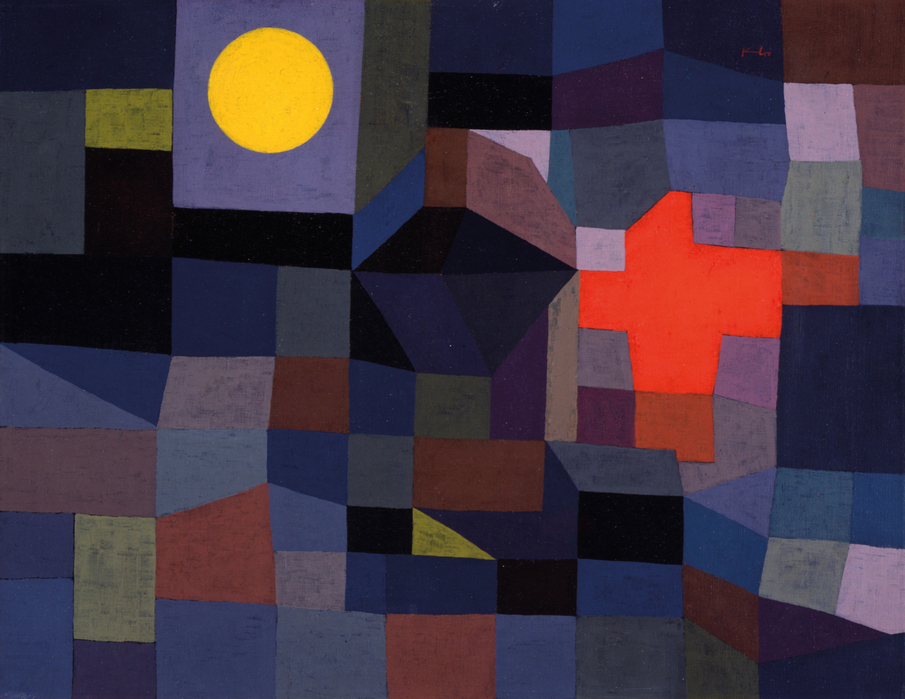
Paul Klee, "Fire at Full Moon (Feuer bei Vollmond)," 1933, 353. Mixed media on canvas, 19 3/4 × 25 1/2 in. (50 × 65 cm). Museum Folkwang, Essen, G 284. © 2026 Artists Rights Society (ARS), New York
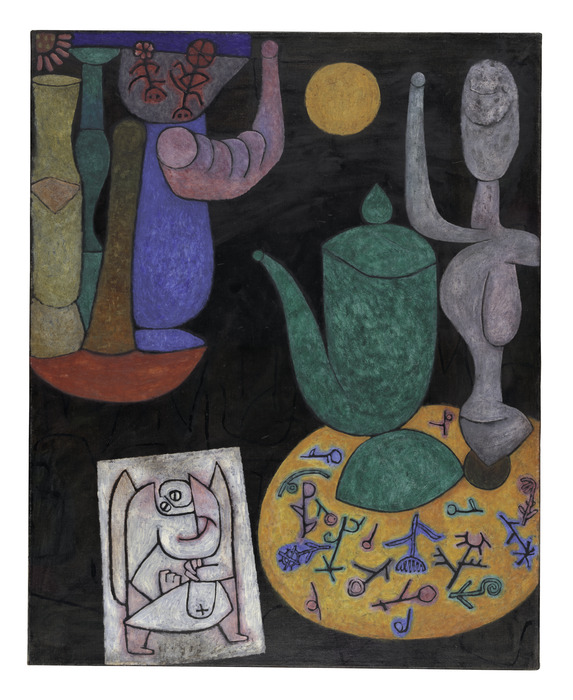
Paul Klee, "Untitled" (Last Still Life) (Ohne Titel [Letztes Stilleben]), 1940. Oil on canvas, 39 3/8 × 31 11/16 in. (100 × 80.5 cm). Zentrum Paul Klee, Bern, Livia Klee Donation. © 2026 Artists Rights Society (ARS), New York

Paul Klee, Around the fish (Umden fisch) (detail), 1926. Courtesy of The Museum of Modern Art, New York, Abby Aldrich Rockefeller Fund, 271. 1939. © 2026 Artists Rights Society (ARS), New York