Wednesday, February 26, 2014

Face to Face: The Neo-Impressionist Portrait, 1886-1904


Venues

ING Cultural Centre, Brussels, February 19, 2014, to May 18, 2014, under the title TO THE POINT
Indianapolis Museum of Art, June 15 through September 7, 2014

The first exhibition devoted solely to portraits of the Neo-Impressionist movement will open at the Indianapolis Museum of Art on June 14, 2014, the only U.S. venue for the exhibition. Face to Face: The Neo-Impressionist Portrait, 1886-1904 will feature more than 30 paintings and 20 works on paper by artists including Paul Signac, Henri- Edmond Cross, Maximilien Luce and Vincent van Gogh. Face to Face will be on view June 15 through September 7, 2014.

Rooted in recent discoveries in optics and perception, Neo-Impressionism was developed in late 19th-century Paris by French painter Georges Seurat. While his use of brilliant color and pointillist brushwork is largely associated with landscapes, seascapes and scenes of modern life, the approach also produced arresting portraits of unusual beauty and perception. Face to Face represents the first major museum exhibition to examine this significant facet of the Neo- Impressionist movement.

“Perhaps because Neo-Impressionism is so linked to the pursuit of natural light and brilliant color, the primary vehicles for analyzing the technique have been landscapes and other outdoor scenes,” said Ellen W. Lee, The Wood-Pulliam Senior Curator at the IMA and co-organizer of the exhibition. “This exhibition reveals the Neo-Impressionists’ ability to invest psychological intensity and vivid expression into that most natural of subjects—the human face.” The exhibition features 15 painters from France, Belgium and The Netherlands. The earliest followers of Seurat, artists such as Paul Signac, Lucien Pissarro and Albert Dubois-Pillet, are represented. The exhibition also will introduce under-recognized figures such as Henri Delavallée and Achille Laugé to American audiences.

Highlights of the exhibition include:


• Albert Dubois-Pillet, Mlle. B.; a striking portrait of a seated woman, recognized through research for this exhibition as the earliest Neo-Impressionist portrait


• Henri-Edmond Cross, Madame Hector France; a life-size portrait and the first Neo- Impressionist painting by one of Seurat’s most important followers.


Vincent van Gogh, Self-portrait, Spring 1887 , oil on cardboard Dimensions 42 × 33.7 cm (16.5 × 13.3 in), Art Institute of Chicago


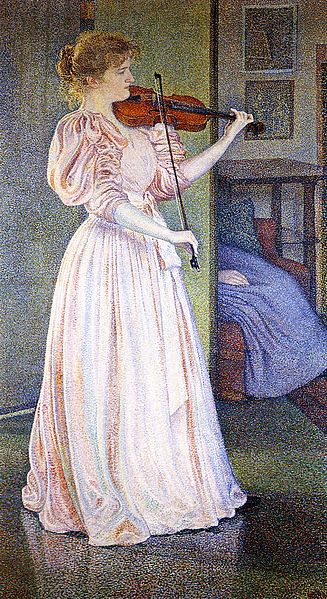
• Théo van Rysselberghe, a stunning trio of full-length portraits of the three sisters of the Sèthe family, painted by Belgium’s most distinguished Neo-Impressionist portraitist:


Alice Sethe, 1888


Maria Sethe at the Harmonium, 1891


Irma Sethe, 1894


Neo-Impressionism was developed decades after photography made realistic images widely available. While physical resemblance remained an important aspect of portraiture, artists of the era were also free to emphasize individual technique, their pursuit of psychological or spiritual identity, and their own emotional connection with their subjects. These subjects were often drawn from the circles of the artists’ families and friends, and their portraits record in vivid color some of the era’s most intriguing and influential personalities. Exquisite drawings also play a prominent role in the exhibition, demonstrating the expressive potential of black and white pencil and crayon portraits.

Drawn from museums such as the Musée d’Orsay, the Metropolitan Museum of Art and the Art Institute of Chicago, libraries and private collections throughout Europe and the United States, the exhibition presents a variety of engaging images, offering fresh insight into the aesthetics and character of one of the era’s most fascinating chapters.

The Neo-Impressionist Portrait, 1886-1904
is organized by the Indianapolis Museum of Art. Exhibition curators are Ellen W. Lee, The Wood-Pulliam Senior Curator at the IMA, and Professor Jane Block, Ph.D., of the University of Illinois, a specialist on turn-of-the century Belgian art and culture. Before coming to the IMA, the exhibition will premiere at the ING Cultural Centre in Brussels, a city whose artists made significant contributions to Neo- Impressionism. The exhibition will be presented there from February 19, 2014, to May 18, 2014, under the title TO THE POINT.

Exhibition catalogue


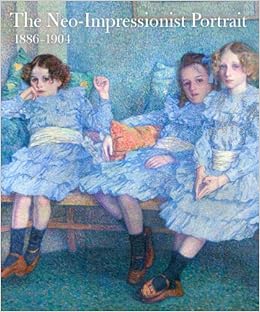
The exhibition is accompanied by a fully-illustrated catalogue, The Neo-Impressionist Portrait, 1886-1904, published by Yale University Press in association with the Indianapolis Museum of Art. The authors are exhibition curators Jane Block and Ellen W. Lee, with contributions by French scholars Marina Ferretti Bocquillon and Nicole Tamburini. The book will appear in February 2014 and will be the first comprehensive survey of Neo-Impressionist portraiture.


Tuesday, February 25, 2014

Degas, Renoir, and Poetic Pastels


Degas, Renoir, and Poetic Pastels at the Cincinnati Art Museum, October 26, 2013—January 19, 2014, gave viewers the opportunity to contemplate a special conversation with


Renoir’s thoughtful and glamorous portrait of “Jeanne Samary”

and to admire the petals on one of the flowers in


Odilon Redon’s simple and joyful “Blue Vase with Flowers”.

The selection of works from the Cincinnati Art Museum’s permanent collection highlighted the achievements of the French artists who worked with pastels in the second half of the nineteenth century.

Rarely on display because of their sensitivity to light, works in the exhibition include five masterpieces by Edgar Degas featuring his preferred subject of the ballet dance. Also on display was


Rosa Bonheur’s Sheepfold by Moonlight in the Pyrenees,

measuring four-and-a-half by six feet.

The exhibition placed the works by these renowned artists in their historical context while also addressing issues of conservation and materials.


Alfred Sisley, "Approach to the Railway Station," 1888, pastel, 15 1/8 x 18 1/8 in. Cincinnati Art Museum

In the first exhibition of what we now know as the Impressionists, in 1874, one critic praised the pastels and said they were “full of light and vigor” and “delicious.” Pastel, derived from the Latin word pasta, or “paste,” has been a preferred medium for artists since the fifteenth century. It is a chalky colored powder, modeled into a stick by combining pigment (such as an aquamarine), filler (often white chalk), and a binder such as gum tragacanth (a weak adhesive that holds the materials together). Artists such as Degas, Renoir and their contemporaries, were able to use pastel faster without the fuss of wet paint that might take up to a year to dry. These works, with their saturated hues and dense layers of velvety pigment, are some of the greatest achievements produced in newly industrialized and artistically fertile nineteenth-century France.

From a review of the show:
Both Renoir and Sisley have admirable works on display, but serious artists such as Redon, Cassatt, and Millet are under served by less than quality examples of their work, while pastel paintings such as Sheepfold By Moonlight in the Pyrenees by Rosa Bonheur (above) are long on public-friendly content but lacking in artistic merit.

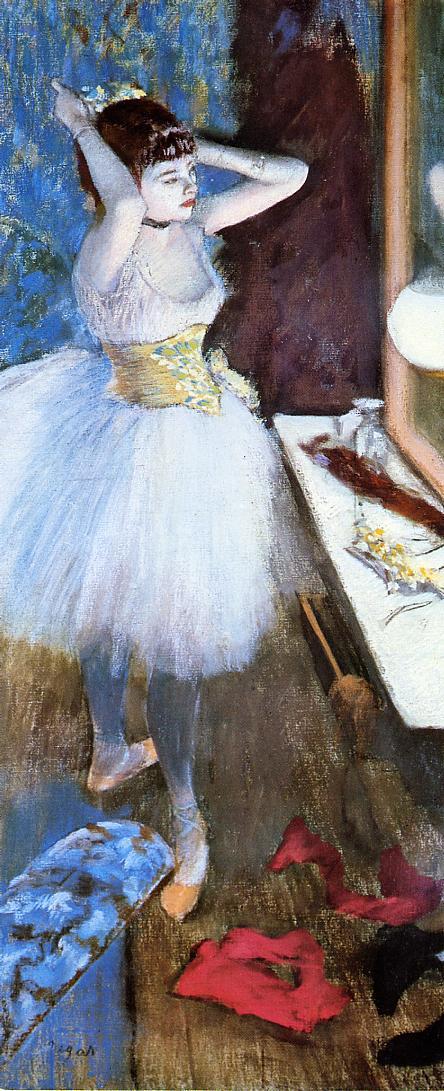
The real treasures in the show come from the hand of Degas. Here we see five fine works, all depicting the ballet. These pieces appear both ancient and startlingly modern: ancient because although the Ballet is the “subject”, the works really point at more universal concerns of physicality, gesture and the unspoken realm of body language. Like other great draftsmen such as the cave painters of Chauvet, Michelangelo, Ingres, or Kitaj more recently, Degas is able to conjure a physical and emotional response to his works. The movement of the bodies, diversity of touch, and brilliance of pictorial invention activate and provoke us as viewers. Degas used pastel in a free way, constantly changing his approach to suit the needs of a particular work. In the masterpiece


Dancer In Her Dressing Room,

Degas has mixed the pastel with paint to rich effect. The pastel blooms caresses and skitters across the image in a way that mimics the diversity and unpredictable nature of the real world.

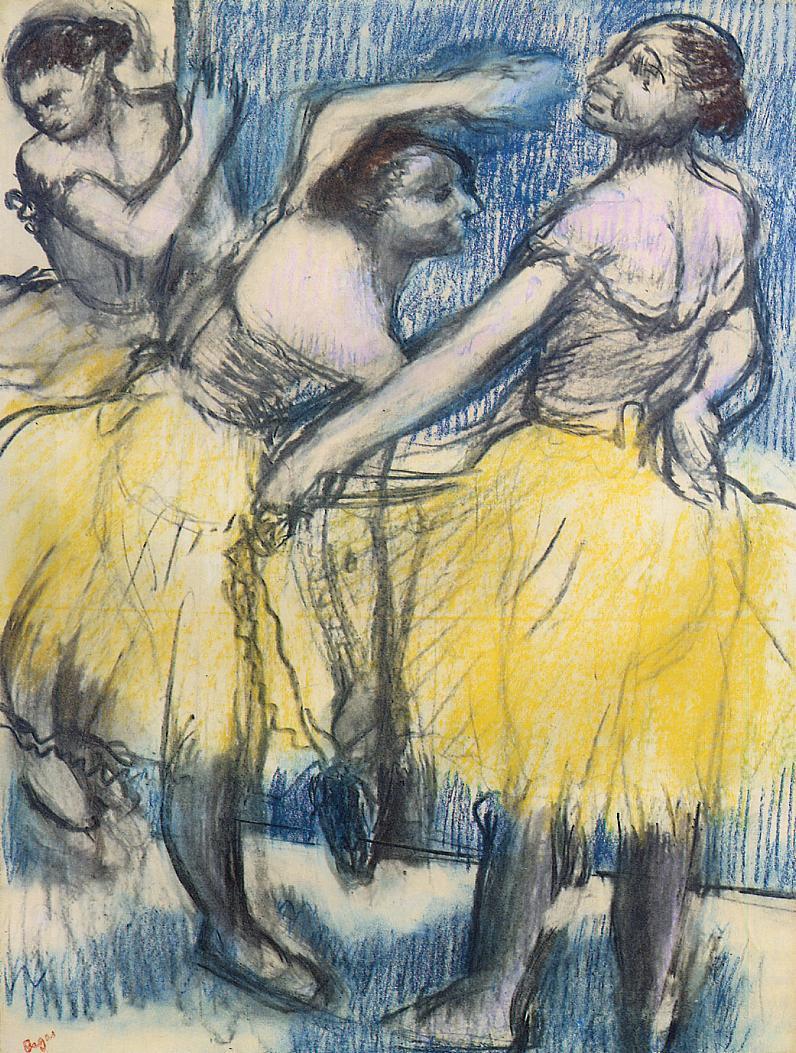
My favorite work in the show is the gripping late work


Three Dancers In Yellow Skirts from 1900.

The powerful contrasting poses of the dancers pull and wrench across the picture plane. The monumentality of Degas’ suggestion here, whether a result of failing eyesight or the urgency of old age, renders the figures as solid and solemn as Egyptian statues, yet the work is gutsy and risky. As death approached, Degas pulled no punches.

Théodore Géricault - Museum of Fine Arts Ghent


Venues

Schirn Kunsthalle Frankfurt October 18, 2013, to January 26, 2014 (Click link for many more images and more info.)
Museum of Fine Arts Ghent 21 February to 26 May 2014


Théodore Géricault, The Raft of the Medusa, the Argus View), 1818-19. Brown ink on paper, 21 x 26.8 cm Lille, Palais des Beaux-Arts© RMN – Grand Palais | Philippe Bernard, Paris
.

In 1908, the Friends of the Museum of Fine Arts in Ghent acquired a painting by Théodore Géricault (1791-1824) for a bargain price at a Parisian auction. Entitled The Mad Murderer, the local press speculated at the time as to who would be fool enough to hang such a picture in his living room! The painting – which in fact depicts a kleptomaniac – forms part of a series of portraits that Géricault painted of mentally ill patients in the Salpêtrière hospital in Paris. These include, amongst others,


Portrait of a Woman Suffering from Obsessive Envy (Musée des Beaux-Arts, Lyon)


and Portrait of a Kidnapper (Museum of Fine Arts, Springfield, Massachusetts).


In 1819, Théodore Géricault presented his large historic painting, The Raft of the Medusa, which elicited public admiration but also repelled many precisely because of the tragic circumstances in which the ship sank. Moreover, the canvas denounced the government’s political bungling, which did not sit well at all with the existing powers. Géricault’s monumental composition represented a new direction in painting and sounds more contemporary than ever as it echoes recent events around Lampedusa. Soon after, Géricault produced a series of portraits of mental patients, deciding to abandon the conventional ways of depicting madness and rather highlighting the personality and humanity of his subjects.

The exhibition aims to show that far from being a painter of tragic and insane subjects, Géricault, above all, desired to represent the margins of everyday life with a profound empathy and compassion for the protagonists of his paintings. Various international museums have also lent their paintings, drawings and prints by Eugène Delacroix, Jean-Baptiste Carpeaux, Francisco Goya, Johan Heinrich Füssli and Adolf Friedrich Menzel for this exhibition.

Along His Own Lines A Retrospective of New York Realist Eugene Speicher


Samuel Dorsky Museum of Art
State University of New York at New Paltz, New Paltz, NY
February 5 – July 13, 2014


Eugene Speicher, Girl in a Coral Necklace, c. 1935, oil on canvas, 24 x 20 in., Private collection


New York painter Eugene Speicher (1883-1962) was one of the foremost American realists of his generation, closely associated with George Bellows, Robert Henri, Leon Kroll, and Rockwell Kent. Born in Buffalo, NY, Speicher first garnered national recognition in the 1910s for his incisive portraits of actors, artists, and friends, which were collected by many prominent American museums. Splitting his professional time between New York City and Woodstock, NY, Speicher expanded his repertoire to include still life, nudes, and landscape. Along His Own Lines will be the first Speicher museum survey since 1963. The exhibition and accompanying catalogue will explore Speicher's role in the Woodstock art colony and the New York art world and reevaluate his place in the canon of early twentieth-century American art.

Speicher is now best remembered as a portrait painter, for his association with Robert Henri, George Bellows, and Leon Kroll, and other New York realists, and for his involvement with the Woodstock art colony. From the 1920s on, Speicher's paintings were highly sought after by collectors and major American museums, such as The Metropolitan Museum of Art and the Art Institute of Chicago. He presented critically acclaimed solo exhibitions, and received many prestigious awards and numerous portrait commissions. From the vantage point of mid-career, Speicher's reputation seemed assured.

However, at the height of his success in the mid-1920s he largely abandoned the commissioned portraiture for which he was known in favor of painting likenesses of his own choosing, flower still lifes, and landscape subjects that resulted in a substantial body of work dedicated to the latter two genres. The new direction in his art, combined with the later onset of a riptide of change in the art world, left his style of painting out of favor. He had never been considered a modernist, and modernism and abstraction quickly assumed the progressive forefront.


Eugene Speicher, Portrait of a Young Girl, 1923, oil on canvas, Courtesy Lois Wagner Fine Arts, Inc.


The issues of artistic identity, professional success, and the current progressive aesthetic that Speicher confronted remain as relevant in our time as they were in his. A new generation of artists and audiences will find his art and life unexpectedly instructive. Through a review of Speicher's work the development of realist painting in America in the twentieth century can be reconsidered.


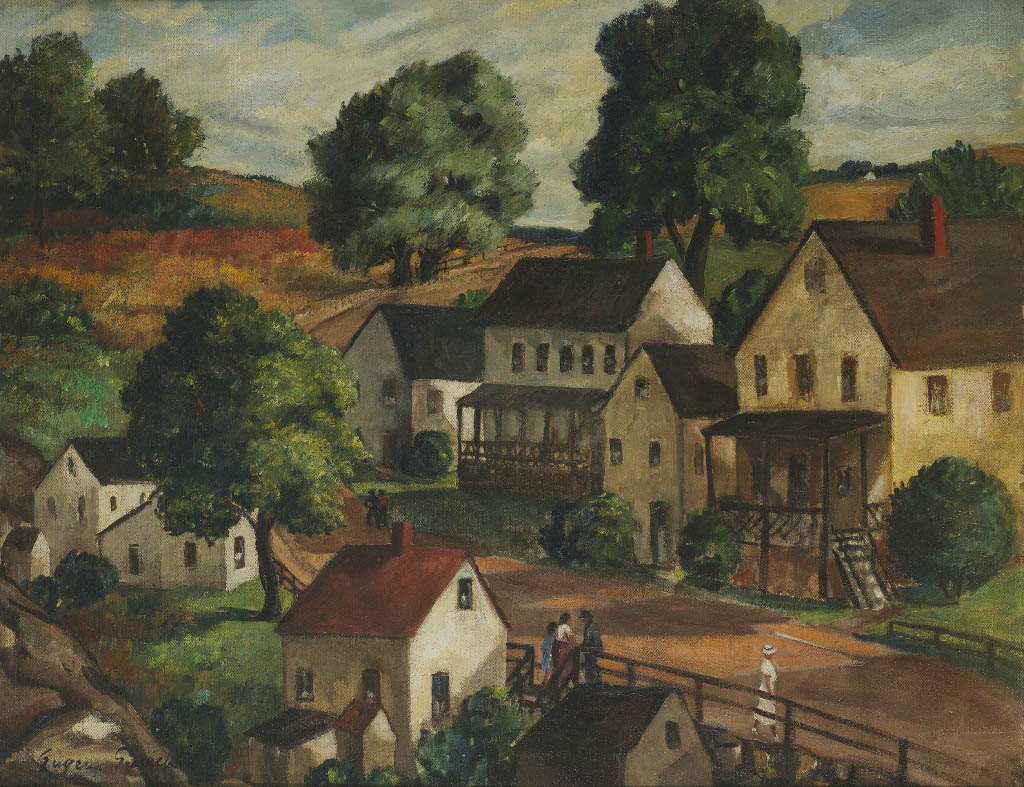
Eugene Speicher, . Kingston, New York, 1935 Oil on canvas mounted on Masonite 28 x 35 3⁄4 in.
Collection of Neil Scherer


Curated by Valerie Ann Leeds

Fascinating review, more images

Catalogue

Along His Own Lines
A Retrospective of New York Realist Eugene Speicher


Valerie Ann Leeds - Author
Tom Wolf - Author
Daniel Belasco - Author
Sara J. Pasti - Author
Samuel Dorsky Museum of Art
Price: $20.00
Paperback - 105 pages
Release Date: February 2014
ISBN10: N/A
ISBN13: 978-0-615-86102-9


The first scholarly exhibition catalogue of the work of Eugene Speicher (1883–1962), one of the foremost American realists of his generation, who was closely associated with George Bellows, Robert Henri, Leon Kroll, and Rockwell Kent.

Called “America’s greatest living painter” by Esquire magazine in 1936, Speicher (1883–1962) was one of the foremost realists of his generation, closely associated with George Bellows, Robert Henri, and Leon Kroll. The exhibition catalogue examines Speicher’s oeuvre, including his artistic development, subject matter, choice of models, influences, and the critical reception of his work. The catalogue contains three essays. The primary essay by curator Valerie Ann Leeds consists of a general assessment and critical review of Speicher’s career and his place in the art world of his day. Another essay authored by Tom Wolf explores Speicher and his relationship to Woodstock. A third essay, by Daniel Belasco, surveys Speicher’s drawings. The catalogue is the first to present a significant body of Speicher’s work in color.

Valerie Ann Leeds is an independent curator and scholar, and a renowned expert on Robert Henri and American art. Tom Wolf is Professor of Art History at Bard College and specializes in American art, with an emphasis on the art and artists of the Woodstock art colony. Daniel Belasco is Curator of Exhibitions and Programs at the Samuel Dorsky Museum of Art at the State University of New York at New Paltz. Sara J. Pasti is Neil C. Trager Director of the Samuel Dorsky Museum of Art at the State University of New York at New Paltz.

Monday, February 24, 2014

A Country House in New York: Highlights from The Frick Collection


Mauritshuis Royal Picture Gallery, The Hague
5 February through 10 May 2015

Over 30 masterpieces from the celebrated Frick Collection were seen outside New York for the first time as part of a special exhibition at the Mauritshuis Royal Picture Gallery in The Hague in 2015.

A Country House in New York: Highlights from The Frick Collection was the first major exhibition to be displayed in the new wing of the Mauritshuis following the opening exhibition of the museum in 2014. The exhibition gave visitors to the Mauritshuis a fascinating insight into the history of The Frick Collection and its founder, wealthy American steel magnate Henry Clay Frick (1849—1919). The works selected for the exhibition are masterpieces from the 13th to 19th centuries, which include not only paintings, but also drawings, sculpture and decorative arts, reflecting the outstanding quality and diversity of The Frick Collection. They perfectly complemented the Mauritshuis’s own collection which focuses on Dutch art of the Golden Age.

The Frick only lends works of art acquired after the death of its founder Henry Clay Frick. A Country House in New York: Highlights from The Frick Collection included significant works of art by such renowned artists as Cimabue, Van Eyck, Memling, Liotard, Reynolds and Gainsborough.


John Constable’s spectacular The White Horse,

a key work in the oeuvre of the artist,

and his spontaneous studies of clouds are highlights of the exhibition.

French Classical painter Jean-Auguste-Dominique Ingres is represented with a masterpiece that has become an icon of The Frick Collection:


the enchanting portrait of the Comtesse d’Haussonville.

There are few or no works by artists such as Ingres, Cimabue, Van Eyck and Liotard on display in Dutch museum collections, making these loans of significant interest for the Dutch public.


Jan van Eyck and workshop, Virgin and Child, with Saints and Donor, c.1441-43, panel, 18 5/8 x 24 1/8 inches, The Frick Collection, New York; photo: Michael Bodycomb


Hans Memling (ca. 1430/40-1494), Portrait of a Man, ca. 1470
The Frick Collection, New York (photo: Michael Bodycomb)


Max Beckmann' s Blind Man's Buff


Minneapolis Institute of Arts
November 19, 2013-March 1, 2014


Max Beckmann (German, 1884 – 1950), Blind Man's Buff, 1945, oil on canvas, Gift of Mr. and Mrs. Donald Winston, 55.27a-c. ©Artists Rights Society (ARS), New York / VG Bild-Kunst, Bonn.


Of Max Beckmann’s nine triptychs, Blind Man’s Buff is the largest and arguably the most important. The work was painted during Beckmann’s exile in Amsterdam between September 1944 and October 1945, under difficult wartime circumstances. In his journal, Beckmann refers to air raids and lack of food, coal, and electricity; in fact, much of the triptych was painted by candlelight

More Max Beckmann:


Max Beckmann

Beckmann & America ,


Max Beckmann, Exile in Amsterdam, 1937-1947

Pinakothek der Moderne Munich
September 13, 2007-January 6, 2008

Max Beckmann (1884-1950) is widely regarded as one of the most important artists of the twentieth century. In his use of colour, spatial composition and levels of symbolism Beckmann exerted a major influence on modern art in Germany and beyond. Beckmann himself drew inspiration from the work of the Flemish Primitives and Vincent van Gogh, among others. Above all, it was his daring use of colour that ranked Beckmann alongside Matisse and Picasso as one of the most sensational artists of the first half of the twentieth century. Beckmann succeeded in expressing the mysteries of life like no other painter. He created his own entire lexicon of images, with which he communicated his dreams and fears by means of a highly personal symbolism. The question of the meaning of existence is a dominant presence in his work. Beckmann came to the conclusion that man is not free, but is shackled by earthly chains. He looked on life as a play or a masquerade, in which each person plays their own role.

In 1937 Max Beckmann fled the Nazi terror in Germany to settle in Amsterdam in the Netherlands, where he was to live for the next ten years. The immediate cause for his flight was the speech Hitler held at the opening of the Haus der deutschen Kunst (House of German art), just one day before the opening of the Degenerate Art show on 19 July 1937. This speech, in which Hitler clearly threatened modern artists, was broadcast on the radio. Beckmann heard it and immediately packed his bags. Beckmann painted over a third of his entire oeuvre while in the Netherlands. This period may thus justifiably be identified as his most productive. It was here that he produced five of his nine monumental triptychs. These spectacular works of art, comprising a central panel with flanking wings, rank among the icons of modern art. In 1947 Beckmann was given a visa for the United States, where he died after just three years.

The exhibition showed masterpieces from this Amsterdam period, including the three impressive triptychs


Max Beckmann, Carnival (Triptych), 1942-43, University of Iowa Museum of Art, Iowa City.


Max Beckmann, The Actors 1942, Fogg Art Museum, Cambridge, Massachusetts,


and Perseus.


His paintings bear witness to his interest in the world of the cabaret, Dutch landscape and life in Amsterdam. Through his diary, letters, photographs and an impression of his studio, the visitor to the exhibition is given an insight to the life Beckmann lived in Amsterdam.

From an outstanding review: (some images added)


Felix Nussbaum’s Self in Concentration Camp (1940),


a painting included in the exhibition Max Beckmann: Self-Portrait With Horn at the Neue Galerie, is as bleak as the title implies. Wearing a wool cap, a tattered jacket and a lean beard, the artist looks askance with steely distrust. In the background, a figure defecates into a large metal can. There’s barbed wire, a sky the color of steel wool and an air of Boschian portent.

Bosch’s hell couldn’t compare with Hitler’s. While studying in Rome, Nussbaum, a German Jew, heard Hitler’s minister of propaganda advocate for the Nazi ideal of art; Nussbaum realized soon enough that neither he nor his paintings fit the standard. Nussbaum spent the majority of the war in hiding, continuing to paint, and ultimately died in Auschwitz at the age of 39. Self in Concentration Camp has the awful clarity of a foregone conclusion


Max Beckmann, Self-Portrait with Horn, 1938, Oil on canvas, 43-1/4 x 39-3/4", Collection Dr. and Mrs. Stephan Lackner, Santa Barbara, California.

Nussbaum’s painting is diverting enough to make one curious as to what else he did. It’s included in the Neue Galerie exhibition to provide a sense of social and artistic context. There are paintings, drawings and prints—all portraits—by other Beckmann contemporaries as well, but none can equal the brooding power of Self-Portrait with Horn, not even the magisterially detached


Self-Portrait in Front of Red Curtain (1923
) by the man himself.

Catalogue


Schulz-Hoffmann, Carla, Christian Lenz, Beatrice von Bormann and Reinhold Baumstark. MAX BECKMANN: Exile in Amsterdam. 440 pp., 231 color and 42 b&w illustrations. 4to, cloth. Osfildern, HatjeCantz, 2007.


More images from the exhibition:
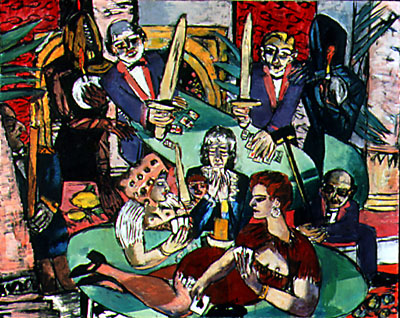


Max Beckmann, Dream of Monte Carlo (1939), 1940-43, Staatsgalerie Stuttgart.


Max Beckmann, Self-Portrait in Black, 1944, Pinakothek der Moderne, © VG Bild-Kunst, Bonn 2006


Max Beckmann, Resting Woman with Carnations, 1040-42, Sprengel Museum, Hanover.


Max Beckmann, Death, 1938, Staatliche Museen, Nationalgalerie, Berlin.


Max Beckmann. The Landscapes

Kunstmuseum Basel
09.04.2011–01.22.2012
Curators: Bernhard Mendes Bürgi & Nina Peter

Max Beckmann (Leipzig 1884 – 1950 New York) is one of the titans of modernism, even though he saw himself as the last Old Master. He never joined any of the avant-gardist schools of the twentieth century, but the experiences of Impressionism, Expressionism, New Objectivity, and abstract art left their traces in his oeuvre. Beckmann was long perceived as a typically German artist, and only in the past few years has his importance been fully appreciated on the international stage, with retrospectives in Paris, London, and New York. Against the modernist tendency to dissolve the traditional genres, Beckmann remained a lifelong defender of classical genres: the depiction of the human figure—in the form of portraits, mythological tableaus, and acts—the still life, and the landscape. Famous as a painter of the human condition, he also renewed the genre of landscape painting with outstanding and haunting works that are virtually without equal in twentieth-century art.

The comprehensive special exhibition at the Kunstmuseum Basel now turns the focus on the artist’s oeuvre in landscapes, showing seventy paintings, among them masterworks such as


The Harbor of Genoa from the St. Louis Art Museum


and the Seashore ("Meeresstrand") from the Museum Ludwig, Cologne,

but also sublime works from numerous private collections that have rarely been on public display.


From a review:

Highlights of the exhibition include "Meeresstrand" from the Museum Ludwig, Cologne, painted in 1935. "The Harbor of Genoa" (1927), on loan from the St. Louis Art Museum, is a quite dark and melancholic work, especially when compared with the later "Promenade des Anglais in Nizza" (1947).


Max Beckmann (1884–1950)
Promenade des Anglais in Nizza, 1947
Oil on canvas
80.5 x 90.5 cm
Göpel 741
Museum Folkwang, Essen
© ProLitteris, Zürich


Beckmann’s landscapes allow the beholder to trace the development of his art in its purest form. Less shaped by allegorical layers of meaning, they directly reveal his magnificent qualities as a painter. Beckmann’s reserved view of the landscape remains striking: vistas framed by windows, curtains, parapets, columns, and elevated vantage points often mediate the distance between the inhabited world and the boundless expanses of nature. Private objects from Beckmann’s possessions frequently appear in the foregrounds of these landscapes as vestiges of the still life, giving the beholder a sense of the painter’s presence. The dramaturgy of these vistas is evidence that Beckmann fuses an abstractly conceived image of the landscape with the recollection of the impression he received from a particular scenery that is the foundation of each painting. The gaze he fixes on nature helps clarify his standpoint and places him in a relationship with the world. Landscapes from different phases of his life illustrate how this relationship evolves.


Catalogue:


More images from the exhibition:


Max Beckmann (1884–1950) Das Nizza in Frankfurt am Main, 1921 Öl auf Leinwand
100.5 x 65 cm Göpel 210 Kunstmuseum Basel, mit einem Sonderkredit der Basler Regierung erworben, 1939
Foto: Kunstmuseum Basel, Martin P. Bühler © ProLitteris, Zürich


Max Beckmann (1884–1950) Riviera-Landschaft mit Felsen, 1942 Öl auf Leinwand 55.5 x 96 cm Göpel 594 Privatbesitz Foto: Peter Schälchli, Zürich © ProLitteris, Zürich


Max Beckmann, Small Landscape, Viareggio (Kleine Landschaft, Viareggio) September 1925 Frankfurt, Germany
Nice review, more images

Two other exhibitions formed perfect complements, offering visitors an unparalleled opportunity to study Beckmann’s oeuvre: Max Beckmann. Face to Face at the Museum der bildenden Künste, Leipzig (September 17, 2011–January 22, 2012)

and Beckmann & America at the Städel Museum, Frankfurt (October 7, 2011–January 8, 2012).


Max Beckmann. “Face to Face”

Museum of Fine Arts, Leipzig,(September 17, 2011 – January 22, 2012)

Max Beckmann (Leipzig 1884 – New York 1950) is regarded as one of the great mavericks of modern art. His life’s work includes a large number of different portrait types: individual and double portraits, family and group depictions and also “hidden” portrayals in the allegorical works. In his portrait painting, Beckmann reflects a very personal fabric of relationships – with his family, his wives and to a wide circle of friends and acquaintances.

Max Beckmann. “Face to Face”
presents on the one hand a classic portrait gallery, a “Who’s Who” of Beckmann’s life; on the other hand, it shows all the pictures in which the artist integrated portraits, whereby he cast his family and friends in roles within his allegorical world theatre.


Max Beckmann, Quappi in Blue, 1926, Pinakothek der Moderne, Munich. © VG Bild-Kunst, Bonn 2011


From a review of another show:

Four paintings by the German artist Max Beckmann (1884-1950) are the centerpiece of the exhibition and suggest the qualities the collectors look for . A contemplative image of the artist's second wife Quappi, one of his friend the Alsatian engraver Sabine Hackenscmidt, and the two reproduced here.


A fiercely thoughtful gaze aimed straight at the viewer belies the height of his successful career, and hints at the middle-aged Beckmann's attempt to understand the mystical aspects of life.


The Oyster-Eaters provides a challenge of another sort. Quappi Beckmann lifts the oyster to her lips as Sabine Hackenschmidt looks on, eyebrow arched enigmatically. A white-jacketed waiter stands behind. What is last-noticed is an ominous gray face looming in the background that seems to represent all that came after the pinnacle of 1926 for these people.

Saturday, February 22, 2014

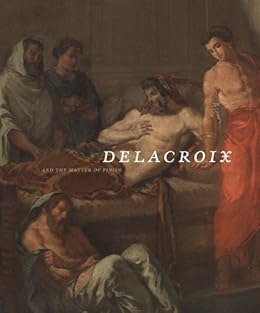
Delacroix and the Matter of Finish


Venues

Santa Barbara Museum of Art October 27,2013 through January 26, 2014
Birmingham Museum of Art February 22, 2014 through May 18, 2014

Delacroix and the Matter of Finish, organized by Eik Kahng, assistant director and chief curator at the Santa Barbara Museum of Art, features the dramatic work of the leader of the French Romantic Movement, who is often heralded as the “father of impressionism.”


Eugène Delacroix, The Fanatics of Tangier, 1857. Oil on canvas, 18 _ x 22 1/16 in. Toronto, Art Gallery of Ontario (62.5).


Eugène Delacroix, Collision of Arab Horsemen (Collision of Moorish Horsemen), 1843-44. Oil on canvas, 32 x 39 in. Walters Art Museum,
Baltimore, Bequest of Henry Walters, 1931 (37.6).


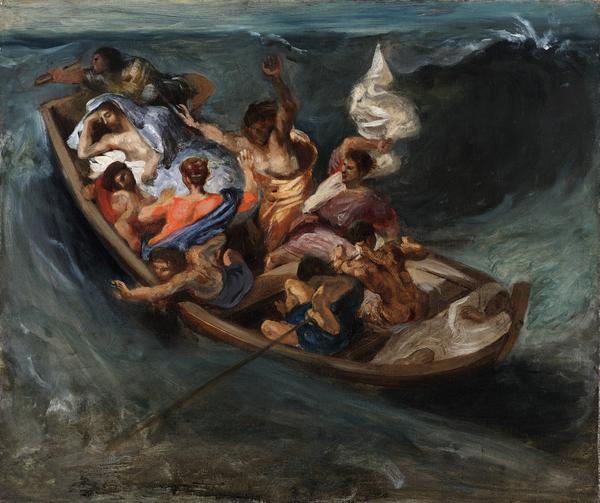
Delacroix, Christ on the sea of Galilee


Delacroix, Nereid, Copy after Rubens

Comprised of 25 paintings and 20 works on paper, the exhibition will highlight Delacroix’s unparalleled coloristic surface effects, his famously vigorous brushwork, his troubled collaboration with his studio assistants, his journey to North Africa, and the brilliant palette of his late works.

This important and beautiful international loan exhibition marks the first presentation on the celebrated French artist Eugène Delacroix (1798–1863) in the United States in over a decade, and the first major monographic show devoted to the Romantic artist on the West coast.

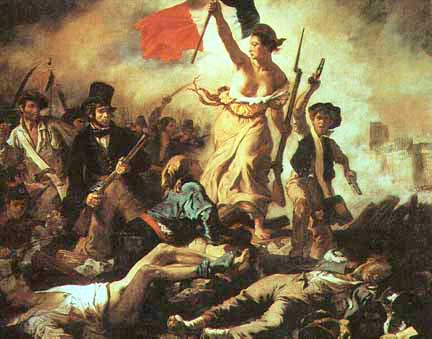
Delacroix is typically associated with Romanticism and thought of as its primary exponent _ i.e. the leader of an art movement that dominated French painting in the first half of the 19th century, characterized by the representation of extreme states of emotion through an expressive use of bold color in dynamic compositions. The artist’s most beloved images include the so-called “Orientalist” pictures, featuring exotic subjects such as The Fanatics of Tangier (above), featured in the exhibition, as well as his more overtly political allegories, the most famous of which is


Liberty On the Barricades (1830–31, Musée du Louvre).

Yet the artist was also drawn to dramatic moments in Greek and Roman history, and demonstrated a life-long fascination with the Stoic Roman philosopher-emperor, Marcus Aurelius.

Featuring 27 paintings and 18 works on paper, the exhibition also showcases a previously unknown and unpublished version of Delacroix’s dramatic masterpiece, The Last Words of Marcus Aurelius, which recently surfaced in a Santa Barbara private collection. After several years of scholarly and technical study, the painting has now been authenticated by Santa Barbara Museum of Art (SBMA) Assistant Director and Chief Curator, Eik Kahng:


Eugène Delacroix, The Last Words of Marcus Aurelius, n.d. Oil on canvas, 25 5/8 x 31 3/4 in. The van Asch van Wyck Trust.

(original):


Eugène Delacroix, preparatory drawing for The Last Words of Marcus Aurelius, circa 1844, black chalk on paper

Delacroix’s allegiance to classical subjects was the consequence of his deep admiration for the greatest art of the past, which the ambitious artist strove to surpass, especially in his public, large-scale decorations. At the same time, his restless search for the technical means to convey the vividness of the hallucinatory scenes of human drama played out in his mind’s inner eye_whether plucked from the pages of history, Homer, or the poetry of Lord Byron_make him one of the most innovative artists of the 19th century.

In the accompanying exhibition catalogue, curator Eik Kahng offers an extensive iconographic study of the sources for the subject of The Last Words of Marcus Aurelius, thereby reassessing the artist’s relationship to Romanticism’s supposed antithesis, Neoclassicism, and to artists such as Jean-Baptiste Greuze (1725–1805) and Jacques-Louis David (1748–1825), painters with whom Delacroix is not often compared.

Problems of attribution have long plagued Delacroix studies, particularly given the artist’s reliance on students as collaborators to support the most ambitious of public commissions, which included vast decorative cycles for the ceiling and walls of the Palais Bourbon and the Luxembourg Palace in Paris. Delacroix and the Matter of Finish is the first exhibition to invite side-by-side comparison between Delacroix’s paintings and the so-called “sketch-copies” by his closest students, Pierre Andrieu (1849–1935) and Louis de Planet (1814–1876), revealing a gulf in technical skill . The exhibition also offers a snapshot of the evolution of Delacroix’s painterly touch over the course of his rich career, from the relatively tight brushwork of


Milton Dictating Paradise Lost to his Daughters (ca. 1827-28, Kunsthaus Zürich)


to the explosive and almost abstract colorism of the last decades, as instanced by Winter (below). The artist’s willingness to allow for the “completion” of his “rough” painterly idea in the imagination of the viewer is a hallmark of the Romantic aesthetic and yet another play on the various connotations of the word “finish” in the exhibition’s title.

The 27 lenders for this exhibition include museums and private collectors throughout America, as well as distinguished institutions in Canada and Europe, including the Art Gallery of Ontario; the Honolulu Museum of Art; the Kunsthaus Zürich; the Kunstmuseum Basel; the Musée des Arts décoratifs, Paris; the Musée des Beaux-Arts, Lyon; the Musée du Vieux-Toulouse; the Musée national Eugène Delacroix, Paris; the Musée Fabre, Montpellier; and the Museo Thyssen-Bornemisza, Madrid.


Catalogue


The accompanying, groundbreaking publication centers on a previously unknown variation of Eugène Delacroix’s (1798–1863) dramatic masterpiece The Last Words of the Emperor Marcus Aurelius, published here for the first time. This book offers a compelling reassessment of the relationship of the artist, widely considered a primary exemplar of Romanticism, to Neoclassical themes, as demonstrated by his life-long fascination with the death of Marcus Aurelius. Through this investigation, the authors reinterpret Delacroix’s lineage to such fellow artists as Jacques-Louis David (1748–1825). Playing on the various interpretations of the word “finish,” the book also offers a fascinating account of Delacroix’s famously troubled collaboration with his studio assistants, his conflicted feelings about pedagogy, and his preoccupation with the fate of civilizations. The catalogue features essays by Dr. Kahng; Marc Gotlieb, Director of the Graduate Program and Class of 1955 Memorial Professor of Art, Williams College; and Michèle Hannoosh, Professor of French, University of Michigan.