Cooper Hewitt, Smithsonian Design Museum
Oct. 30 through Feb. 15, 2027
This fall, Cooper Hewitt, Smithsonian Design Museum will present “Frederic Church in Jamaica,” featuring the artist’s rarely exhibited sketches from his 1865 travels to Jamaica. On view Friday, Oct. 30, through Monday, Feb. 15, 2027, the exhibition brings together over 60 works documenting Jamaica’s plant life and landscapes in detailed observational studies, framed within Church’s personal biography, grieving the loss of his two young children, and the wider context of a society and environment under colonial rule. Celebrating the 200th anniversary of Church’s birth, the exhibition draws from Cooper Hewitt’s holdings of over 2,000 of the artists’ oil studies and graphite sketches—the largest collection of Church works in the world.
“‘Frederic Church in Jamaica’ offers a window into the creative process of one of America’s most influential artists through oil studies and ‘en plein air’ sketches, which have rarely—if ever—been publicly exhibited,” said Caitlin Condell, curator and head of Drawings, Prints & Graphic Design at Cooper Hewitt. “The 200th anniversary of Church’s birth is an ideal moment for a celebration of the artist’s extraordinary work and a reinterpretation of these objects in the context of Jamaican history. These intimate drawings, made during a period of intense grief, have a powerful resonance in our contemporary moment.”
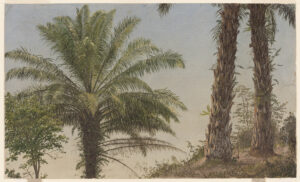
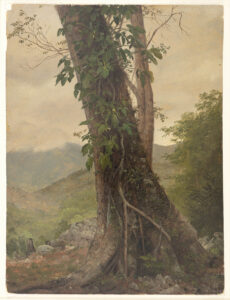
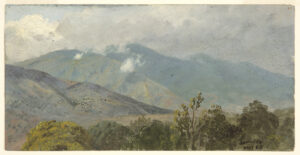
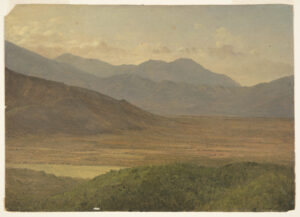
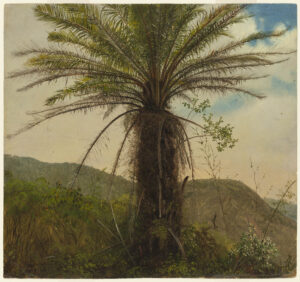
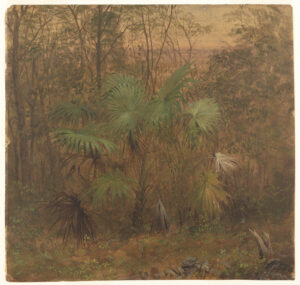
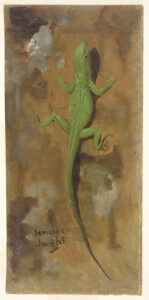
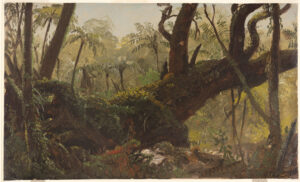
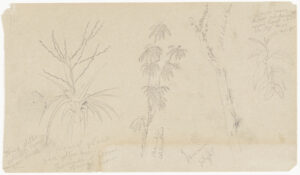
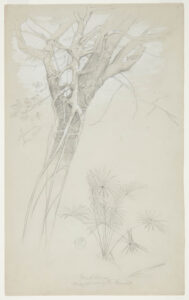
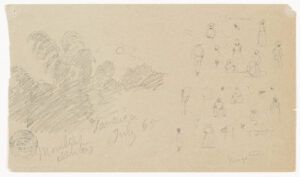
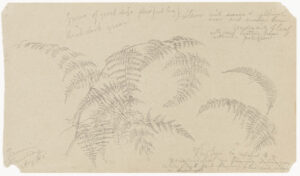
Acclaimed for his monumental and astonishingly detailed landscape paintings, Church (American, 1826–1900) was an intrepid traveler and regularly journeyed around the globe seeking inspiration for his pictures. However, his April 1865 trip to Jamaica with his wife, Isabel, was in search of emotional and spiritual refuge, following the recent deaths of their two young children from diphtheria. Every day for five months, Church trekked on foot and by horse documenting the island’s topography and plant life and capturing dramatic moments of light and weather. Created during the artist’s private anguish and the public turmoil engulfing the country, where Black Jamaicans lived in extreme poverty under British colonial rule, the breathtaking sketches attest to the expressive and healing power of drawing from nature and the complexity of memory imbued in the land.
Whether executed in moments or over the course of hours, the sketches on view reveal Church’s extraordinary artistic range. The picturesque, atmospheric drawings and oil studies reflect his aspiration to accurately record details of light, color and form, but also the emotional experience of a place or scene. His graphite sketches are frequently annotated with brief notations that are both informative and poetic.
The exhibition will offer important historical context and surface the voices of Black Jamaicans, including Paul Bogle and George William Gordon, who actively addressed political tensions in the island. On view will be reproductions of period photographs (some collected by Church and some from the National Library of Jamaica), as well as rare books from Smithsonian Libraries and Archives.
Throughout the span of the exhibition, a dynamic lineup of public programs will draw in contemporary perspectives to reflect on Church’s career and the relevance of his drawings today, the economic and climate legacy of Jamaica, and the significance of observation and drawing through time. On Thursday, Nov. 12, Victoria Johnson, author of the 2026 Church biography, Glorious Country, will present an illustrated lecture that places Church within the broader global context of his time. Additional programming includes a hands-on workshop with the Smithsonian’s botanical illustrator, Alice Tangerini, highlighting the flora native to Jamaica through the practice of drawing specimens.
“Frederic Church in Jamaica” is organized by Caitlin Condell, curator and head of Drawings, Prints & Graphic Design, with Mackenzie Jones, collections assistant.
