Friday, January 26, 2018

The Robbers: German Art in a Time of Crisis


George Grosz (Germany, 1839–1959), "Lions and tigers nourish their young, ravens feast their brood on carrion... Series: The Robbers" (detail), 1922, Photolithograph on paper, 27 1/2 x 19 3/4 inches. Gift of David and Eva Bradford, 2002.53.6.5, Art © Estate of George Grosz/Licensed by VAGA, New York, NY

In February 2018, the Portland Museum of Art will open The Robbers: German Art in a Time of Crisis in the Palladian Gallery. The exhibition of approximately thirty German prints executed between the World Wars will highlight the complete portfolio of George Grosz’s 1922 The Robbers. Grosz based his lithographic suite on Friedrich Schiller iconic 1781 play of the same name, yet when Grosz depicted the canonical story he situated the action in the tumultuous climate of early 1920s Berlin.

https://www.portlandmuseum.org/sites/default/files/styles/event/public/images/event/2002.53.6.8_pm.jpg?itok=35M95w7b&c=9622d280f7ef079153922c98f4919cf6

With figures culled from the modern era, Grosz’s imagery suggests the vast social discord where the traumatic effects of the mechanized war, greed, industry, and poverty intersected to undermine national stability in the young Weimar Republic.

 
 Georg Grosz, "I will root up from my path whatever obstructs my progress towards becoming the master" Act 1 Scene 2; From The Robbers by Friedrich Schiller, ...

Grosz’s prints were part of a broader artistic culture in which other printmakers and theater directors produced modern interpretations of canonical of German literature, overtly politicizing the hallmarks of the nation’s cultural heritage. Their work, available to broad audiences through widely disseminated prints or stage performances, was a type of social intervention at a moment when conceptions of German identity vacillated wildly. The interplay between contemporaneous politics and historic literature highlighted the tensions between tradition and modernity, which strained German society and which remain continually resonant today across the world.

In addition to the Grosz’s Robbers portfolios, the exhibition will also include provocative artworks, by printmakers including Max Beckmann, Otto Dix, Käthe Kollwitz. These works, many of which are gifts to the PMA from David and Eva Bradford, add context to Grosz’s social and artistic expression and are equally probing in their evaluation of German society and national identity.

More images

Many of these prints, including the Grosz series, represent a post-World War I aesthetic known as New Objectivity.” Whereas German expressionists of an earlier generation often depicted emotional responses to the modern condition, highlighting themes of angst, inner turmoil, and social alienation, the leaders of New Objectivity rooted their prints in a type of biting, provocative realism, often relying on satire and caricature.

 The division between the two styles was never absolute, and both allowed artists to participate actively in cultural debates about social class, politics, and modern, urban phenomena. Because of their goals to be socially engaged artists shaping the national discourse, many of the artists working in these styles found the print medium to be especially efficient as prints could be disseminated more broadly than painting or sculpture.

This exhibition, opening in the centenary year of the end of World War I, turns our attention away from the conflict itself and towards the aftermath that defined the next two decades. History, politics, art, and national identity will intersect and provoke questions about who we are and what we value in ways that are as pertinent today as they were a century ago.
Image:

Midnight in Paris & New York: Scenes from the 1890s - 1930s, William Glackens and His Contemporaries

NSU Art Museum Fort Lauderdale
 February 4 – October 18, 2018

http://www.artfixdaily.com/images/pr/Jan23_glackens600x480.jpg
           
William Glackens, Study for Music Hall Turn, c.1918, oil on canvas, NSU Art Museum Fort Lauderdale; Bequest of Ira D. Glackens, 

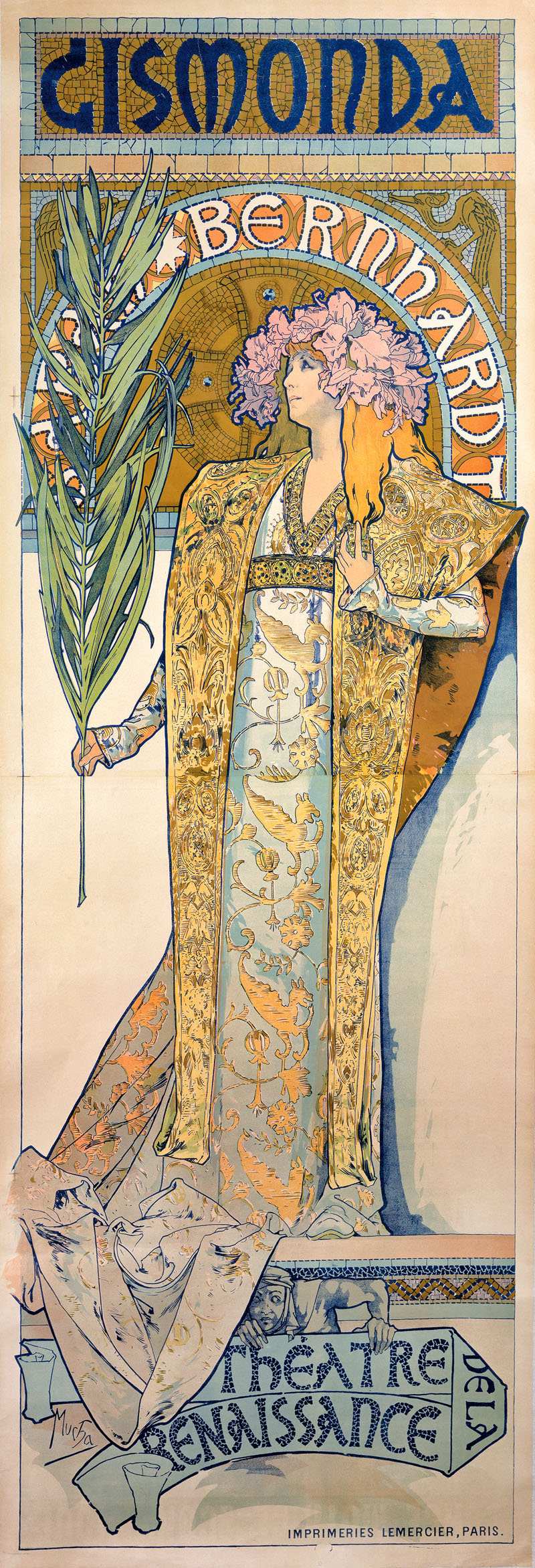
https://upload.wikimedia.org/wikipedia/commons/2/2f/Alfons_Mucha_-_1894_-_Gismonda.jpg
Alphonse Mucha, Gismonda, 1894, vintage poster, color lithograph, NSU Art Museum Fort Lauderdale; gift of Drs. Walter and Mildred Padow.  
NSU Art Museum Fort Lauderdale will present Midnight in Paris & New York: Scenes from the 1890s – 1930s, William Glackens and His Contemporaries from February 4 through October 18, 2018. Featuring drawings, paintings and photographs by Eugène Atget, Brassai, William Glackens, André Kertesz, Henri de Toulouse-Lautrec, Alphonse Mucha, Pablo Picasso, John Sloan, Louis Comfort Tiffany and others along with distinctive architectural designs, furniture, glass, metalwork and silver, this new exhibition offers a fascinating glimpse into the rapidly changing society of the turn of the century and life in the new modern city. 

The Museum’s Sunny Kaufman Senior Curator Barbara Buhler Lynes, Ph.D. curated the exhibition.

https://i.pinimg.com/736x/2b/88/5a/2b885a8201ad21e03ab5a2dcd20a76bf--james-darcy-fort-lauderdale.jpg
William Glackens (1870-1938) : Café de la Paix, c. 1906

William J. Glackens (1870-1938) came of age as an artist in the 1890s, when he distinguished himself as one of America’s most celebrated illustrators. He subsequently became known as an important and leading modernist artist for his lively, realistic depictions of modern life and an important advocate of modern art in America. The years of his creativity from the1890s to the 1930s were marked by dramatic social, political and technological changes that revolutionized the character of cities around the world, such as New York, where the Philadelphia-born Glackens moved in 1896, and Paris, where he lived from 1895-96 and to which he returned many times.
During these decades, the completion of the Eiffel Tower (1889) and the Basilica of Sacré-Coeur (1914), among other architectural achievements redefined the Parisian skyline, as did skyscrapers in New York, such as the Flatiron (1902) and Woolworth (1912) buildings. 

The population of both cities surged with the influx of immigrants and people from rural areas, which increased diversity, and led to building booms, the establishment of businesses, and the opening of department stores that acquainted people with the latest fashions, household products and furnishing. Newspapers and illustrated popular magazines flourished and their wide distribution disseminated new ideas and trends. Inventions like the airplane, automobile, escalator, elevator, light bulb, neon, movies, telephone, and radio revolutionized how people communicated, lived, worked and spent leisure time. 

Glackens and a group of his American contemporaries first distinguished themselves in the 1900s for their dynamic, realistic depictions of life in the modern city. Like their French contemporaries, they brought the diversity of city dwellers in New York and Paris to life in depictions of actors, dancers, circus performers, celebrations, crowds, immigrants, city streets, and tenements. Their scenes of bars, cabarets, cafes, circuses, dance halls, and theaters reveal how the magic of the electric light bulb transformed nightlife into glittering and colorful spectacles. 
Highlighted in the exhibition is NSU Art Museum's distinctive William J. Glackens art and archival collection, the largest holding of the artist's work in the world. Works on loan and from the museum’s collection by Berenice Abbot, Eugène Atget, William Bradley , Brassaï, Daum, Edith Dimock, Emile Gallé, William J. Glackens, Jabez Gorham, Hector Guimard, René Jacques, André Kertesz, Marie Laurencin, George Luks, Henri de Toulouse-Lautrec, Alphonse Mucha, Pablo Picasso, Maurice Prendergast, John Sloan, Louis Comfort Tiffany, and Edouard Vuillard add to the exhibition’s recreation of the ambiance, environment, and historical context of the dynamic period in which Glackens lived and worked.   
The exhibition features four recent gifts to NSU Art Museum, including three renowned art nouveau posters by Alphonse Mucha dating from the 1890s to 1908, from Drs. Walter and Mildred Padow, and 

https://i.pinimg.com/736x/86/6e/a1/866ea1a60857c7efd9c1b501d67ca7fc--making-charcoal-american-realism.jpg

William J. Glackens’s Patriots in the Making,1907, from Patricia O’Donnell.  

Magical & Real: Henriette Wyeth and Peter Hurd, A Retrospective


Michener Art Museum , Doylestown, PA 
January 21 through May 6, 2018

— In January 2018, the James A. Michener Art Museum will present Magical & Real: Henriette Wyeth and Peter Hurd, A Retrospective, a major exhibition that explores the work, marriage, and careers of two remarkable artists who contributed to the canon and dialogue of 20th century American art. Co-organized by the Michener Art Museum and Roswell Museum and Art Center, the exhibition includes more than 100 works by Wyeth, Hurd, and family members—including Andrew Wyeth, Henriette’s brother, and N.C. Wyeth, her father—in the influential Wyeth sphere.  The exhibition will be on view from January 21 through May 6, 2018.


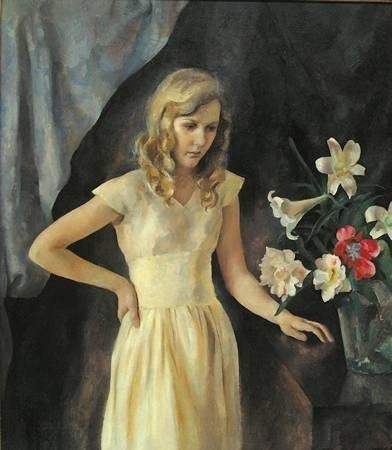
PORTRAIT OF MY FATHER”: Henriette Wyeth, 1937 (painting of her father, artist N.C. Wyeth)


“Very little attention has been given to N.C.’s role in shaping and guiding the artistic development and career of his daughters Henriette, Ann, and Carolyn,” said Kirsten M. Jensen, Ph.D., the Michener’s Gerry and Marguerite Lenfest Chief Curator. “Magical & Real is the first exhibition to explore the work and career of N.C.’s eldest child, Henriette, and N.C.’s student Peter Hurd, whom Henriette married in 1929. It’s also the first scholarly project to probe family archives to flesh out their relationships to other family members, particularly to N.C. and Andrew.”

https://upload.wikimedia.org/wikipedia/en/6/67/Portrait_of_Peter_Wyeth_Hurd_%28born_1930%29%2C_oil_on_canvas_painting_by_Henriette_Wyeth%2C_El_Paso_Museum_of_Art.JPG
Portrait of Peter Wyeth Hurd (1937) by Henriette Wyeth, El Paso Museum of Art, El Paso, Texas.

Henriette Wyeth (1907–1997) and Peter Hurd (1904–1984) were important contributors to the arts of both the Philadelphia region and the Southwest. Henriette studied with her father and at the Pennsylvania Academy of the Fine Arts, where she enrolled at the age of sixteen.

https://media.mutualart.com/Images/2012_02/18/04/041738181/75359965-b872-48d7-a6ef-7c075acdda74_570.Jpeg
Henriette Wyeth, Beulah Emmett, 1933
She quickly earned critical recognition for her luminous and lyrical large-scale canvases of psychological presence and magic, and local recognition for her talent as a portraitist. But when she moved permanently to Roswell, New Mexico in 1940 (and her studio became Andrew’s), she was largely forgotten.


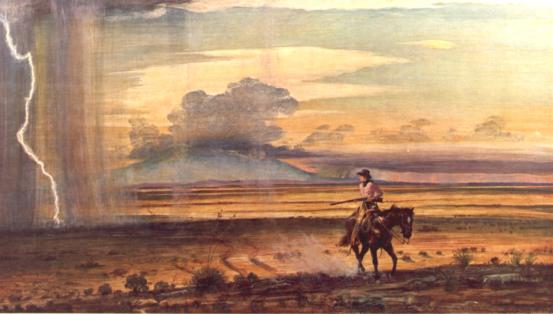
Peter Hurd, The Escape of Billy the Kid, 1965

Peter Hurd, a native of Roswell, became a pupil of N.C. Wyeth’s in 1924. While studying with N.C., he met Henriette. Hurd was a significant artistic influence in the development of N.C. and Andrew’s practice;  he introduced them to tempera, which became Andrew’s medium of choice. Hurd painted a number of Pennsylvania landscapes, but it is the impressive vistas, stark rolling hills, and dramatic light of the Southwest for which he is best known.

http://www.wyethhurd.com/evestjohn.jpg

 Peter Hurd, Eve of Saint John,1960

“This exhibition engages the tensions between eastern and western arts communities, tensions that permanently marked the lives and careers of Hurd and Wyeth,” said Jensen. “Henriette’s work changed substantially in both style and tone following their move to New Mexico. Magical & Real will broaden the awareness of the entire scope of the couple’s work in the regions with which they are most closely associated.”

Magical & Real includes more than 100 works, most of which have been in private collections since they were created and thus have not been seen in public. After being on view at the Michener Art Museum, the exhibition will travel to Roswell, where it will be on display from June 15 to September 16, 2018. Co-curated by Jensen and Sara Woodbury, Curator of Collections and Exhibitions at Roswell, it will be accompanied by a richly illustrated scholarly catalogue, with essays by Jensen and Woodbury as well as additional contributors.

“In addition to the works coming from private collections, several pieces in the exhibition come from the Roswell Museum and Art Center itself, so this is a great opportunity to share our Hurd and Wyeth collection with new audiences,” said Woodbury.

Dox Thrash, Black Life, and the Carborundum Mezzotint

PALMER MUSEUM OF ART
The Pennsylvania State University
University Park, PA 16802

January 16th - May 20th, 2018


Dox Thrash, "Saturday Night," c. 1944-45, etching. Courtesy of Dolan/Maxwell, Philadelphia.
Dox Thrash, Saturday Night, c. 1944-45, etching. Courtesy of Dolan/Maxwell.
Philadelphia-based artist Dox Thrash (1893–1965) was both a pioneering printmaker and a noted participant in the “New Negro” movement of the 1930s and ’40s. A veteran of World War I as well as the minstrel stage, he trained at the School of the Art Institute of Chicago before making his way to Philadelphia, where he ultimately forged a career as both a painter and a graphic artist.


Dox Thrash, Cabin with a Star in the Window, c. 1944–45, carborundum mezzotint, proof reworked in ink. Private collection, image courtesy of Dolan/Maxwell.
Image: Penn State

In 1937, Thrash signed on for employment with the Federal Art Project’s Fine Print Workshop. There, while working with fellow artists Hugh Mesibov and Michael Gallagher, he began to experiment with a new approach to intaglio printmaking, which today is known as the carborundum mezzotint process. With its broad tonal range, the new process was ideally suited to the sensitive portrayals of Black life for which Thrash would become known.

http://news.psu.edu/sites/default/files/styles/photo_gallery_large/public/TODAYLife.jpg?itok=LQxPSCY5
Dox Thrash, "Life," c. 1938–39, carborundum mezzotint, 10 7/8 x 8 13/16 inches.
Image: Dox Thrash / Courtesy of Dolan/Maxwell
Dox Thrash, Black Life, and the Carborundum Mezzotint brings together numerous examples of the experimental process by Thrash and other colleagues working in the Fine Print Workshop. Also on view are works by Thrash in other print mediums, as well as watercolors and drawings, all of which powerfully document the artist’s intimate, invested engagement with African American culture in the middle decades of the twentieth century.

https://i.pinimg.com/originals/c0/f5/3d/c0f53d56d49f11f1223fc3bd131d378f.jpg
Dox Thrash, "Defense Worker", c. Carborundum mezzotint over etched guidelines

Friday, January 19, 2018

Sotheby’s Old Masters 31 January in New York


Sotheby’s will offer property from the gallery and private collection of Otto Naumann, the preeminent dealer of Old Master and 19th century paintings, in a dedicated auction on 31 January in New York. After almost four decades of collecting and dealing Old Masters, Mr. Naumann is stepping down from his gallery space to allow his son, Ambrose, to establish Ambrose Naumann Fine Arts as a new venture.

Mr. Naumann is selling his collection of paintings and sculpture, including Dutch, Italian, and Spanish masterpieces by Giovanni Baglione, Carlo Dolci, Bartholomeus van der Helst, Antonio Mancini and Joaquín Sorolla which have decorated his gallery space and apartment for years. The collection will be on view alongside our public exhibitions of Old Master Paintings and Drawings from 26 – 31 January 2018.

Dealing in fine art for over 30 years , Otto Naumann is regarded as one of the most respected figures in the international art scene. A celebrated scholar, earning his master's degree from Columbia University and a doctorate in Art History from Yale, Mr. Naumann is renowned for his exceptional eye for quality and for determining difficult attributions. In 1981, he wrote the authoritative monograph on Frans van Mieris (1635 - 1681) and helped organize the 2005 exhibition on the artist at the Mauritshuis, The Hague and in the National Gallery of Art, Washington. Having made a name for himself specializing in Dutch and Flemish art, Mr. Naumann expanded the breadth of his trade in 2007 to include Italian, French, Spanish and British works as well as 19th century painting .


HIGHLIGHTS FROM THE COLLECTION


http://www.sothebys.com/content/dam/stb/lots/N09/N09810/027N09810_9JC4G.jpg

Giovanni Baglione’s impressive and exquisitely painted Saint John the Baptist in the Wilderness  (estimate $400/600,000) is a recent addition to the artist’s oeuvre. The painting was rediscovered in a private collection where it had remained since 1970, bearing a later inscription in the lower right corner, reading CARRACCI . Despite the inscription, the hand was recognized as that of Giovanni Baglione, and the painting was sold with the correct attribution at Sotheby’s London in 2012.

While in the hands of Mr. Naumann, cleaning not only revealed its rich surface and intricate detail but also the artist’s own signature and date, hidden beneath the old varnish: EQ IO. / BALGIONVS / .R.P.1610. Baglione, who had been knighted four years earlier in 1606, prominently proclaimed his title, EQ , a shorthand for Eques or “knight,” while the R.P. stood for “Roma Pinxit,” or perhaps “Roma Pictor.”

With its starkly lit figure and pronounced chiaroscuro effect, it is believed to be an early reaction to Caravaggio’s revolutionary style in Rome. Baglione's distinctive hand can be discerned in many of the details, from his characteristic way of painting the hands, feet and eyes, to the outlines of the nails. While he is known to have treated the subject of Saint John numerous times over the course of his care er, the present work is by far th e largest and most accomplished.

http://www.sothebys.com/content/dam/stb/lots/L14/L14102/990L14102_7N9R8.jpg

Joaquín Sorolla y Bastida’s Viejo castellano sirviéndose vino ( The Old Man of Castille ) (estimate $200/300,000) is one of a group of major life - sized figural compositions that the artist painted in 1907 . This series can be divided into themes: portraits of Spanish royals, members of Sorolla’s family and, as with the present work, depictions of regional people. Sorolla began the series in El Pardo, north of Madrid, and later Segovia, before traveling further north to Léon, where he made extensive oil sketches and drawings of local life. These studies shaped the present work and others of the period, which demonstrate the artist’s interest in ethnography and variations in Spain’s regional dress, customs, and culture.

The “old man” in the present work is enrobed by multiple layers of a heavy brown cloak , which frames his grey stubbled and sun - reddened skin, as a bandaged hand emerges to pour wine from a green and yellow glazed clay pitcher. Beyond its impressive technique and scale, this monumental portrait of the common man connects Sorolla to the foundational giants of Spanish art history, most notably Velázquez, who always sought ways to communicate the essence of his country in his art .

https://upload.wikimedia.org/wikipedia/commons/6/62/Venus%2C_Cupid_and_Pan%2C_oil_on_copper_painting_by_Giovanni_Bilivert.jpg

Giovanni Bilivert’s small -scale painting on copper, Venus, Cupid and Pan (estimate $300/500,000), with its highly -polished surface, displays the artist’s superb sense of refinement and delight in vivid colors  In this intimate painting we see Venus, the goddess of love, dipping her feet in a shallow, crystalline pond; n aked save for her pearl headdress and earrings, she is assisted by Cupid, wearing only a silk sash, who tenderly washes her left leg. Standing in the background is Pan , who holds Venus’s crimson cloak and a shepherd’s crook, the attribute by which the god of the wild and protector of flocks is normally identified. Throughout the painting, Bilivert brilliantly conveys different text ures; the fleshy body of Venus contrasts with the still -like water around her legs ; whilst the sheen of her hair, like that of Cupid's, offsets the shiny pearls of her headdress.

Highlights will be on view in Los Angeles 24 -25 October, San Francisco 1 -2 No vember, and London 1 - 7 December ahead of its New York exhibition 26 – 31 January 2018 . 5 

More on Sotheby's Master Paintings Evening Sale 1 February 2018


The Evening Sale property is led by 
 http://www.sothebys.com/content/dam/stb/lots/L15/L15033/004L15033_6Z37X.jpg


http://www.sothebys.com/content/dam/stb/lots/N09/N09812/362N09812_8ZZN5_COMP.jpg.thumb.319.319.png
a pair of still life paintings from the pioneering female painter Fede Galizia (estimate $2/3 million). Celebrated for her still-life painting in Italy and throughout Europe in the first quarter of the 17th century – particularly ones depicting fruit – the present pair is a testament to her sensitive approach to subject matter and acute eye for detail. Galizia’s pared-down compositions rarely depict more than two varieties of fruit and are never overfilled or cluttered , typifying her naturalistic style . 

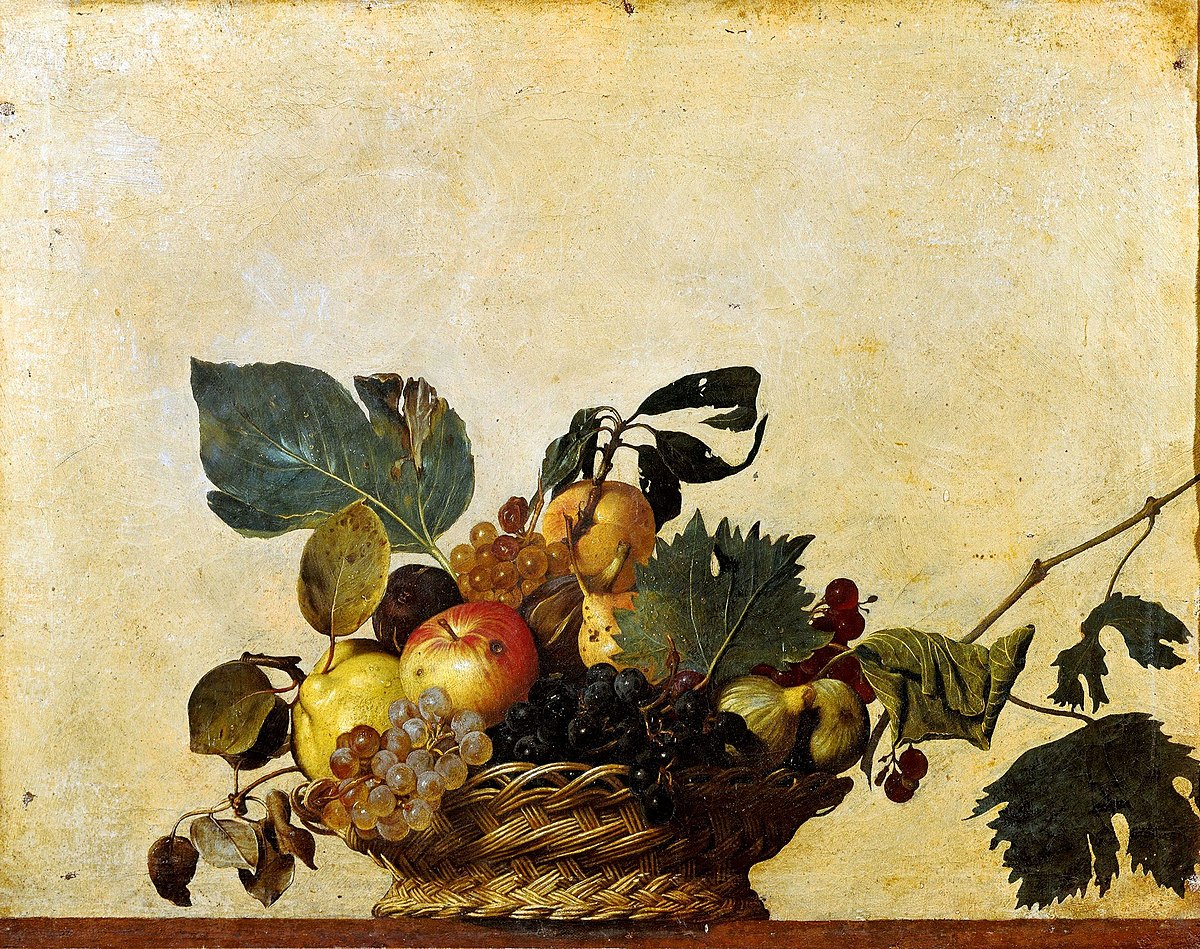
At the turn of the 17th-century, still lifes of fruit alone were uncommon in Italy, the earliest known being the  

https://upload.wikimedia.org/wikipedia/commons/thumb/1/1e/Canestra_di_frutta_%28Caravaggio%29.jpg/1200px-Canestra_di_frutta_%28Caravaggio%29.jpg


Basket of fruit by Caravaggio in the Pinacoteca Ambrosiana, Milan. While it’s possible that Fede was influenced by the intense realism of Caravaggio’s works, her innovative approach to th e genre was unique and unpar alleled during her lifetime, inspiring generations of artists to follow. 

Safra’s collection also features a monumental landscape by Jan Wijnants, one of the most important Dutch landscape painters of the second half of the 17th century.

http://www.artnet.com/WebServices/images/ll00218lldOtkFFgPNECfDrCWvaHBOcKxUC/jan-wijnants-a-wooded-evening-landscape-with-a-hunter-and-his-dogs-(collab.-w/-adriaen-van-de-velde).jpg

Painted in collaboration with Adriaen van de Velde, Wooded Evening Lands cape With A Hunter And His Dogs, was inspired by the dunes of Haarlem , the artist’s native city ($2/3 million) . 

The work is further distinguished by its provenance, having been formerly in the collection of the most important collecting dynasties in modern times. The picture entered the Viennese Rothschild collection by 1873 , and thus descended in the family for decades. Displayed in the aptly named ‘Gemäldesaal’ or ‘Museum’ room of Baron Anselm von Rothschild (1803 -1874 )’s palatial home in Vienna, it hung alongside the family’s most important pictures by the best names from the Dutch Golden Age. 

When the contents of the family’s palace in Vienna were targeted and seized by Nazi authorities in 1938, the collection – including the present work – was removed to the central depot of the Kunsthistorisches Museum in Vienna  where it was earmarked for Hitler’s planed museum-complex in Linz.

Following the conclusion of the War, the picture was recovered by The Allied Forces’ celebrated Monuments Men from the Nazi storage facilities in the Salt Mines in Alt Aussee before being restituted to Baroness Clarice de Rothschild in 1947  The Wijnants was one of 11 key paintings from the Rothschild collection for which the Kunsthistorisches Museum in Vienna selected in exchange for the grant of a license to export the remainder of the collection to New York. Under the restitution laws introduced in Austria in 1998, the Rothschild family was able to reclaim the ir collection, and so the Wijnants was returned to the family, and sold at auction in 1999 to the present owner. 

https://media.mutualart.com/Images/2017_12/26/00/002404323/66959c90-c6b0-4230-9855-8ae6c0c47250_570.Jpeg

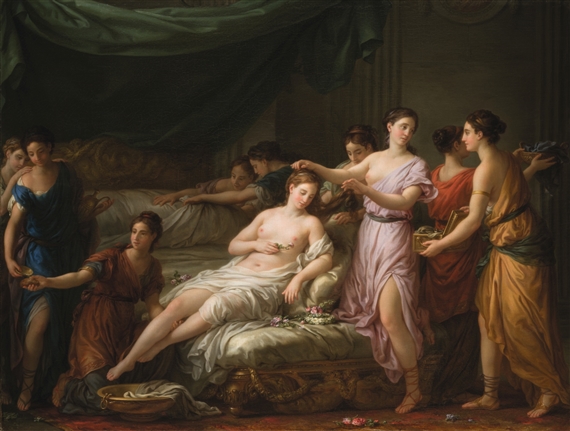
Dated to 1777, Women In Classical Dress Attending A Young Bride (estimate $400/600,000) is one of Joseph - Marie Vien’s finest works in the neo -classical style, and the first of four major works painted by the artist during his tenure as Director of the French Academy in Rome. Though history and religious painting dominated his early career, Vien went on to become one of France’s earliest proponents of neo-classicism – catering to the growing demand for antique and classical subjects. 

Commissioned by the Comte d’Angiviller, Directeur des Bâtiments du Roi, in 1776, the painting was shown at the Paris Salon of 1779  the first and only museum exhibition to include the work.

http://www.sothebys.com/content/dam/stb/lots/N09/N09812/107N09812_5VW79.jpg

Vanvitelli’s View Of The Ripa Grande in Rome, is a beautifully -rendered depiction of the Eternal City's main river port (estimate $800,000/1.2 million). 

One of the leading fathers of the Italian vedute, the present oil on canvas provides a glimpse into daily life at the end of the 17th century. The right side of the painting shows the Via Marmorata, along which marble from the quarries at Carrara was transported, while on the opposite bank are the main ramps of the port, near the Customs House, with the tower of the church of the Santa Maria in Torre behind it. In the distance is the Church of Santa Maria in Capella, the only building in this group that is still standing to this day. Signed and dated to 1690, it is one of the earliest Italian views by the artist, and one of the finest to remain in private hands. 


Sunday, January 14, 2018

Berthe Morisot, Woman Impressionist

Berthe Morisot

Berthe Morisot, Woman at Her Toilette, 1875–1880, oil on canvas, The Art Institute of Chicago, Inv.  no.  1924.127, Photo courtesy The Art Institute of Chicago / Art Resource, NY
Berthe Morisot, Woman at Her Toilette, 1875–1880, oil on canvas, The Art Institute of Chicago, Inv. no. 1924.127, Photo courtesy The Art Institute of Chicago / Art Resource, NY [NOTE: The Barnes Foundation and Dallas Museum of Art presentations only]

The Musée national des beaux-arts du Québec (Québec City, Canada), the Barnes Foundation (Philadelphia, PA), the Dallas Museum of Art (Dallas, TX), and the Musée d’Orsay (Paris, France) have announced an internationally touring exhibition dedicated to one of the revolutionary artists of the French Impressionist movement, Berthe Morisot (1841–1895). Co-organized by the four institutions, Berthe Morisot, Woman Impressionist will focus on the artist’s figure paintings and portraits through approximately 50 to 60 paintings from both public institutions and private collections. This tour will be the first dedicated presentation of Morisot’s work to be held in the United States since 1987, the very first solo exhibition of her work to be mounted in Canada, and the first time since 1941 that a French national museum will devote a monographic show to this important painter.
One of the founding members of the French Impressionists, Berthe Morisot was celebrated in her time as one of the leaders of the group, and her innovative works were coveted by dealers and collectors alike. Despite her accomplishments, today she is not as well-known as her Impressionist colleagues, such as Claude Monet, Edgar Degas, and Pierre-Auguste Renoir. Co-curated by Sylvie Patry, Chief Curator/Deputy Director for Curatorial Affairs and Collections at the Musée d’Orsay, Paris and Consulting Curator at the Barnes Foundation, and Nicole R. Myers, The Lillian and James H. Clark Curator of European Painting and Sculpture at the Dallas Museum of Art, Berthe Morisot, Woman Impressionist will both illuminate and reassert Morisot’s role as an essential figure within the Impressionist movement and the development of modern art in Paris in the second half of the 19th century.
The exhibition traces the exceptional path of a female painter who, in opposition to the norms of her time and social background, became an important member of the Parisian avant-garde from the late 1860s until her untimely death in 1895. Through her portrayal of the human figure, Morisot was able to explore the themes of modern life that came to define Impressionism, such as the intimacy of contemporary bourgeois living and leisure activities, the importance of female fashion and the toilette, and women’s domestic work, all while blurring the lines between interior and exterior, public and private, finished and unfinished.
Organized semi-chronologically, the exhibition will examine Morisot’s painterly innovations and fundamental position within Impressionism across the arc of her productive, yet relatively short life. The exhibition explores the following periods and themes of Morisot’s work:
  • Becoming an Artist – The introductory section looks at Morisot’s formative years, when she left behind the amateur artistic practice associated with women of her upbringing and established herself as both a professional artist and a key contributor to the emerging Impressionist movement in the late 1860s and early 1870s.
  • Painting the Figure en plein air – A selection of Morisot’s plein-air paintings of figures in both urban and coastal settings highlights her innovative treatment of modern themes and immersive approach that integrates her subjects within their environments through brushwork and palette.
  • Fashion, Femininity, and la Parisienne – The importance of fashion in constructing modern bourgeois femininity forms a central part of the artist’s paintings of the 1870s and 1880s. This interest is revealed in Morisot’s creations and adaptations of quintessential Impressionist subjects, such as elegant Parisian women shown at the ball or dressing in their homes, and the leisure activities associated with suburban parks and gardens.
  • Women at Work – Morisot’s depictions of the domestic servant—the majority of whom she employed in her household—reflect her own status as a working professional woman. Her interest in painting these women raises questions about bourgeois living and the intimacy of the shared domestic setting.  
  • Finished/Unfinished – The increasing immediacy of Morisot’s technique, and her radical experimentation with the concept of finished and unfinished in her work, exposes the process of painting and furthers the indeterminacy between figure and setting begun in her plein-air work.
  • Windows and Thresholds – Morisot’s interest in liminal spaces is revealed in her paintings of subjects such as doorways and windows. Within these often spatially ambiguous settings, Morisot’s masterful evocation of light and atmosphere, the most ephemeral of her subjects, serves to anchor the human figure within these transitory spaces. 
  • A Studio of Her Own – Morisot’s late career paintings from the 1890s often depict her personal  domestic space, which served as both studio and setting. During this period, Morisot reached a new expressiveness in her painting as figures become increasingly enveloped by their surroundings. The vibrant, saturated palette and sinuous brushwork that she adopted in these final works demonstrate their visual and symbolic affinities with the emerging Symbolist aesthetic of the time.
Exhibition Organization:

Berthe Morisot, Woman Impressionist is organized by Musée national des beaux-arts du Québec, the Barnes Foundation, the Dallas Museum of Art, and the Musées d’Orsay and de l’Orangerie. The exhibition is co-curated by Sylvie Patry, Chief Curator/Deputy Director for Curatorial Affairs and Collections at the Musée d’Orsay, Paris and Consulting Curator at the Barnes Foundation, and Nicole R. Myers, The Lillian and James H. Clark Curator of European Painting and Sculpture at the Dallas Museum of Art.

Exhibition Catalogue:


The exhibition is accompanied by a fully illustrated catalogue that emphasizes the importance of understanding Morisot’s work in light of her dialogue with contemporary artistic movements—Impressionism, but also Post-Impressionism and Symbolism. Berthe Morisot, Woman Impressionist makes an important contribution to the field, with interdisciplinary scholarship and a specific focus on Morisot’s pioneering developments as a painter first, woman second. Edited by Sylvie Patry, an English- and French-language catalogue will be co-published by Rizzoli International Publications, Inc. and the Barnes Foundation, Philadelphia, in association with the Dallas Museum of Art and the Musée national des beaux-arts du Québec, Québec.

A separate French-language catalogue will be published by the Musée d’Orsay, Paris. The book contains essays by Morisot scholars including the exhibition co-curators Sylvie Patry and Nicole R. Myers; Cindy Kang, Barnes Foundation; Marianne Mathieu, Musée Marmottan; and Bill Scott, Pennsylvania Academy of the Fine Arts, as well as a chronology by Amy Wojciechowski with additional research by Monique Nonne,

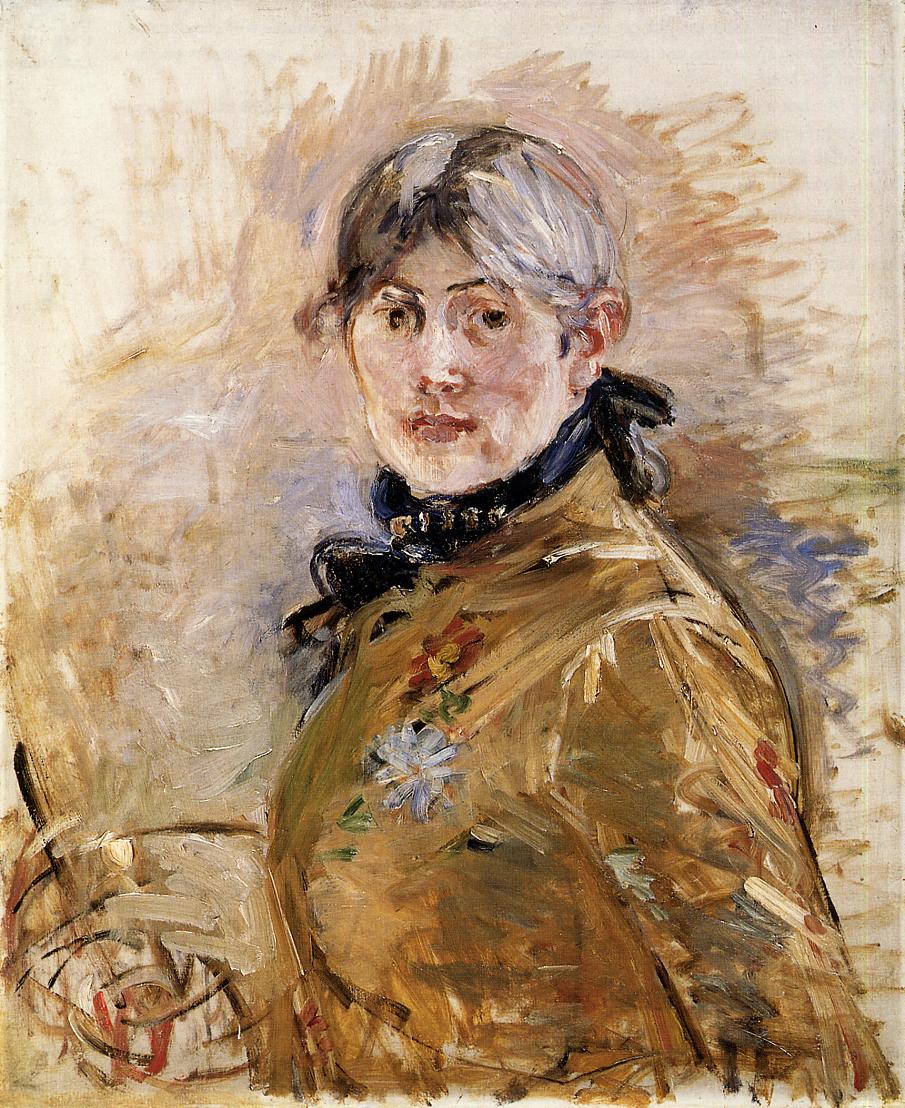
 https://uploads3.wikiart.org/images/berthe-morisot/self-portrait-1885.jpg

Berthe Morisot, Self-Portrait, 1885, oil on canvas. Musée Marmottan-Claude Monet, Fondation Denis et Annie Rouart, 
 https://upload.wikimedia.org/wikipedia/commons/4/42/Berthe_Morisot%2C_Le_berceau_%28The_Cradle%29%2C_1872.jpg

Berthe Morisot, The Cradle, 1872, oil on canvas, Musée d’Orsay, Paris, RF 2849 © Musée d’Orsay, Dist. RMN-Grand Palais / Patrice Schmidt
 https://i.pinimg.com/736x/09/57/b4/0957b4e208e5641a273be21b431132fe--berthe-morisot-oil-on-canvas.jpg
 
Berthe Morisot, Winter, 1880, oil on canvas, Dallas Museum of Art, Gift of the Meadows Foundation, Incorporated, 1981.129; 
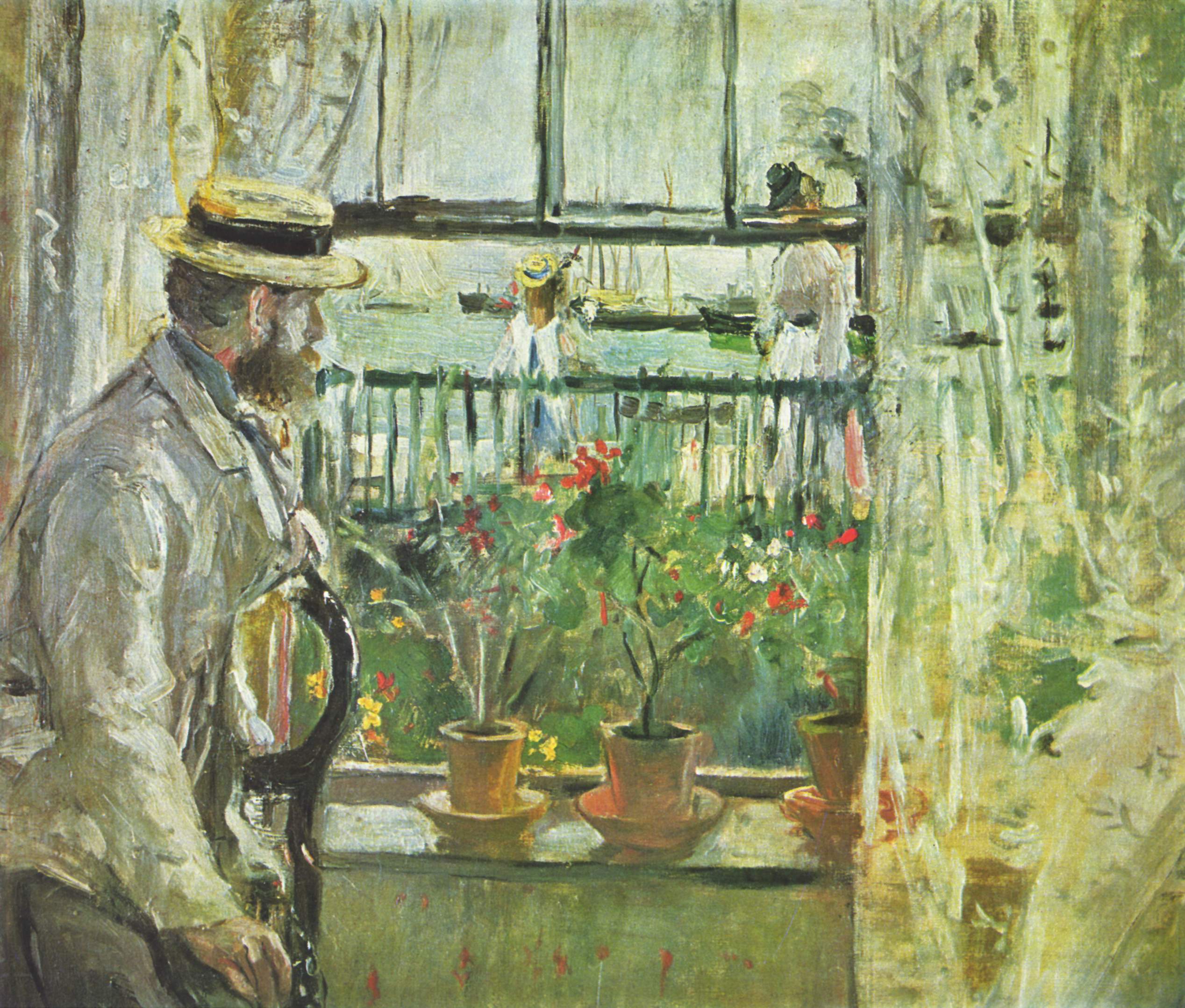
https://upload.wikimedia.org/wikipedia/commons/6/6b/Berthe_Morisot_002.jpg
Berthe Morisot, In England (Eugène Manet on the Isle of Wight), 1875, oil on canvas, Musée Marmottan-Claude Monet, Fondation Denis et Annie Rouart, Photo by Erich Lessing / Art Resource, NY;