Saturday, March 27, 2021

Photograhy Art History

 Check out my Photograhy Art History blog:

Phillips to Offer Iconic Works by Masters of Photography, Including William Eggleston, Richard Avedon, André Kertész, Robert Frank, and Diane Arbus

Jonathan Kantrowitz, Photographers - 6 days ago
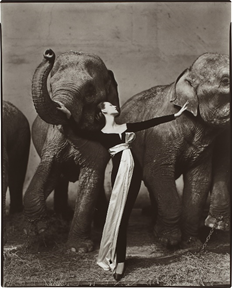
On 8 April, Phillips’ Photographs auction will bring together over 250 lots by some of the most influential photographers of the past century. The sale, which will be livestreamed from the New York saleroom, will offer collectors the chance to acquire rare-to-market photographs from the 19th, 20th, and 21st centuries. Richard Avedon Dovima with elephants, Evening dress by Dior, Cirque d’Hiver, Paris, August, 1955 Estimate $150,000 – 250,000 William Eggleston’s Graceland, the dynamic suite of eleven photographs of Elvis Presley’s famous mansion in Memphis, Tennesse...
Walker Evans
Jonathan Kantrowitz, Photographers - 5 weeks ago

Also see: https://arthistorynewsreport.blogspot.com/2020/09/book-walker-evans-starting-from-scratch.html Walker Evans was a preeminent American photographer who shaped the history of twentieth-century photography with photographs from the 1920s to the 1970s, including the iconic images Evans made in the American South during the Great Depression—work that played a major role in solidifying the term we now refer to as documentary photography. Born in St. Louis, Missouri, Evans initially aspired to become a writer. He studied literature for a year at Williams College in Massachusett...
Ansel Adams
Jonathan Kantrowitz, Photographers - 5 months ago

Sotheby's to present largest private collection of Ansel Adams photographs this December Ansel Adams, Yosemite Valley from Inspiration Point, Winter, Yosemite National Park. Mural-sized, sepia toned, mounted to Homasote board, framed, circa 1940, printed 1950s, 84 ¾ by 119 ¾ in. (215.3 by 304.2 cm.) Estimate $70/100,000. Courtesy Sotheby's. Ansel Adams, Gravel Bars, American River, California. Mural-sized gelatin silver print, mounted to Homasote board, framed, 1950, probably printed in the 1950s, image: 106¾ by 82¾ in. (271.1 by 210.2 cm.) frame: 109 by 85 in. (276.9 by 215.9 c...
Margaret Bourke-White
Jonathan Kantrowitz, Photographers - 5 months ago
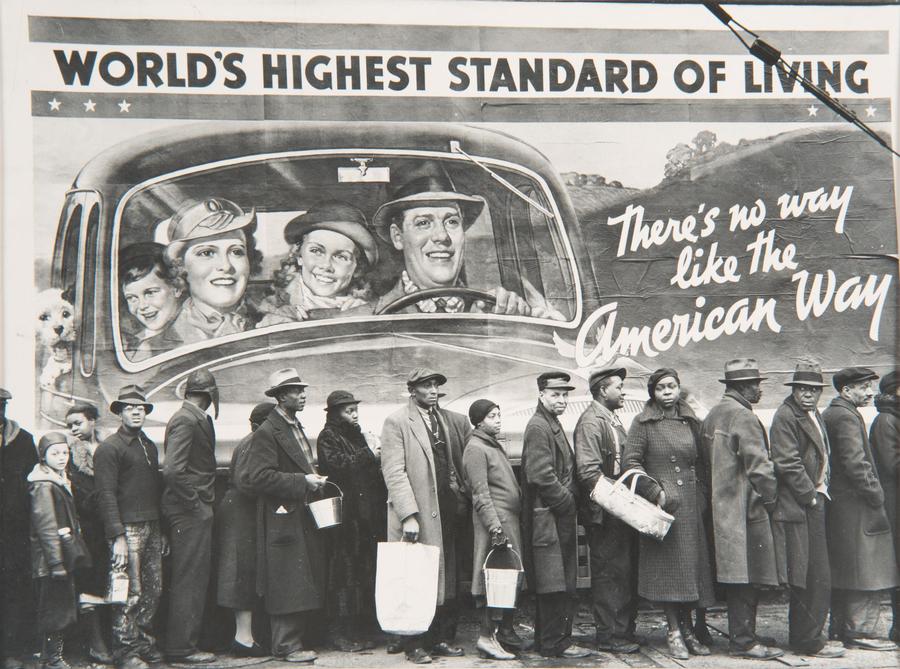
Margaret Bourke-White (1904-1971), Louisville Flood, 1937, gelatin silver print (printed no later than 1971), 7 x 9 3/8 inches, Shogren-Meyer Collection Margaret Bourke-White (1906–1971), (Iron Mountain, Tennessee), 1937. Gelatin silver print. © Estate of Margaret Bourke-White/ Licensed by VAGA, New York, NY. Margaret Bourke-White Collection, Special Collections Research Center, Syracuse University Library. Margaret Bourke-White (1906-1971). Delman Shoes, 1933. Gelatin silver print. Margaret Bourke-White Collection, Special Collections Research Center, Syracuse Universit...
Dorothea Lange
Jonathan Kantrowitz, Photographers - 5 months ago
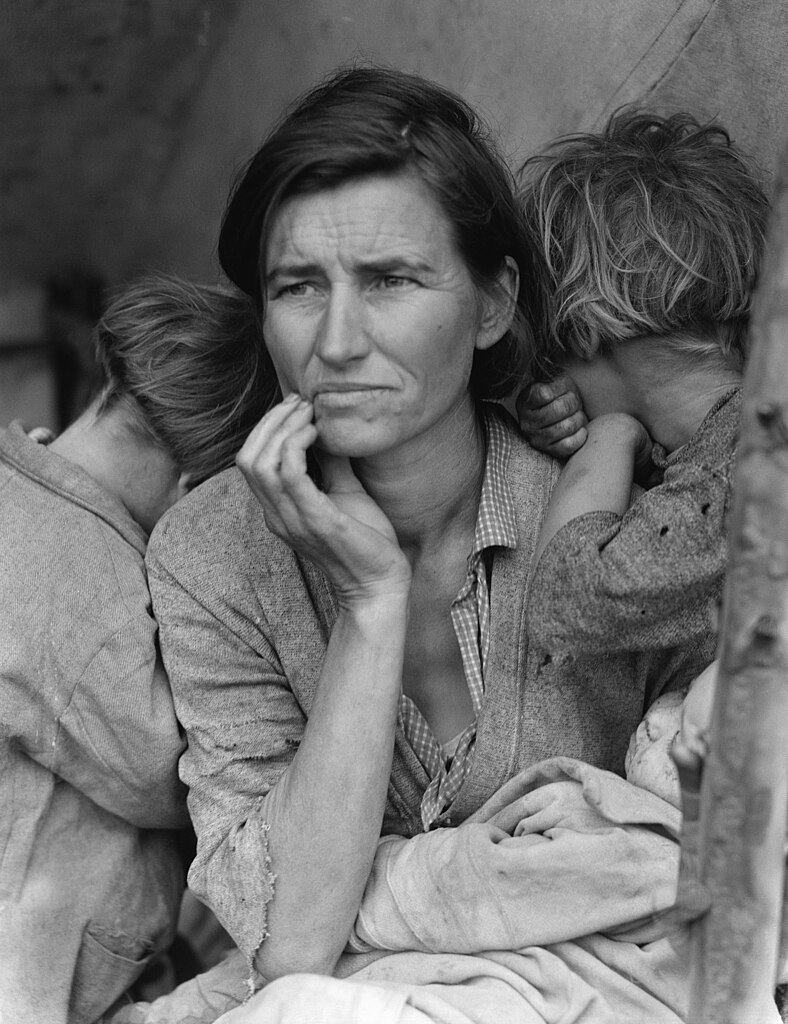
[image: https://upload.wikimedia.org/wikipedia/commons/thumb/5/54/Lange-MigrantMother02.jpg/788px-Lange-MigrantMother02.jpg] Dorothea Lange’s well-known 1936 photograph *Migrant Mother, Nipomo, California,* photographed when Lange was employed by the Farm Security Administration, is included and documents the conditions of the West in rural areas during the Great Depression. Her photographs had a humanist purpose and resulted in putting a face on the hardships of that era. Recently named the most downloaded photograph in the Library of Congress' archive, it is also one of the m...
Paul Strand
Jonathan Kantrowitz, Photographers - 7 months ago

Paul Strand (American, 1890–1976) was one of the greatest photographers in the history of the medium. It will explore the remarkable evolution of Strand’s work, from the breakthrough moment in the second decade of the twentieth century when he brought his art to the brink of abstraction to his broader vision of the place of photography in the modern world, which he would develop over the course of a career that spanned six decades. Born in New York City, Strand first studied with the social documentary photographer Lewis Hine at New York’s Ethical Culture School from 1907–09, an...
Helen Levitt
Jonathan Kantrowitz, Photographers - 7 months ago
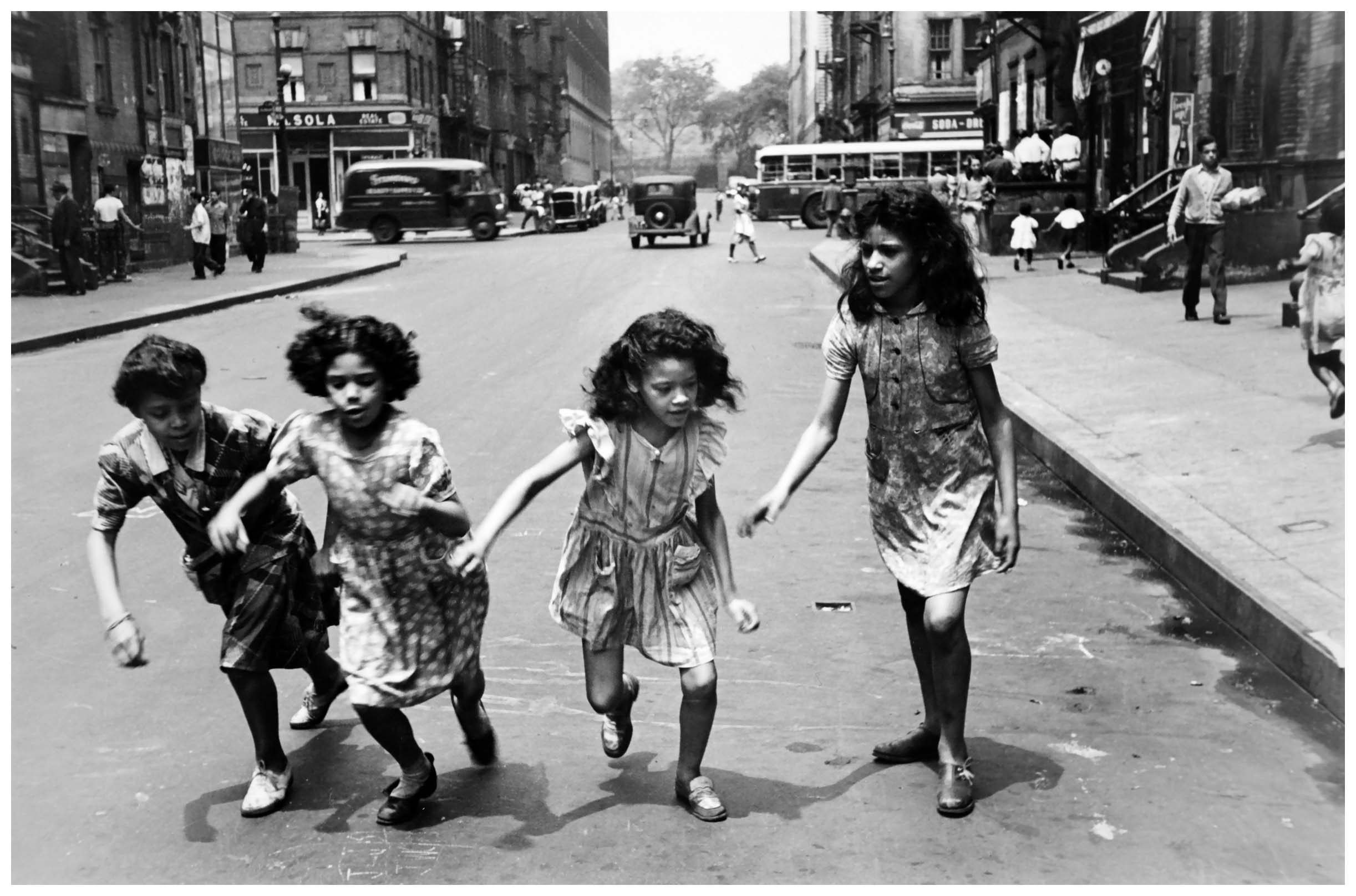
A lifelong New Yorker, Helen Levitt frequented the Lower East Side, Spanish Harlem, and other working-class neighborhoods of the city where life played out on the stoops and sidewalks. Using a handheld Leica camera outfitted with a right-angle viewfinder that allowed her to look in one direction but snap photographs in another, Levitt often passed unnoticed by her subjects, capturing unguarded instants of joyful play and meditative melancholy that constitute the mystery and poetry of everyday lives. Showcasing the honest, humorous and inventive works of prolific documentary photo...
Weegee
Jonathan Kantrowitz, Photographers - 7 months ago
Weegee Summer, *Lower East Side,* ca. 1937 Laurence Miller Gallery is pleased to present WEEGEE: Mayhem, an exhibition of eight select images from this artist’s New York City street scenes from the 1930s and 40s. The portrays NYC in all it's range: from stark and gritty urban crime to the sponanteous humor and lyricism of it's street life. http://www.laurencemillergallery.com/exhibitions/weegee/selected-works?view=thumbnails Crowd with Mannequin, ca. 1940 Weegee was the pseudonym adopted by Arthur Fellig, born in 1899 in what is now part of the Ukraine. He and his family emi...
Garry Winogrand
Jonathan Kantrowitz, Photographers - 7 months ago

Working in the tumultuous postwar decades, Winogrand captured moments of everyday American life, producing an expansive picture of a nation rich with possibility yet threatening to spin out of control. He did much of his best-known work in New York City in the 1960s, but he also traveled widely around the United States, from California and Texas to Miami and Chicago. Combining hope and buoyancy with anxiety and instability, his photographs trace the mood of the country itself, from the ebullience of the postwar optimism to the chaos of the 1960s and the gloom and depression of the...
Carleton E. Watkins
Jonathan Kantrowitz, Photographers - 7 months ago
Carleton E. Watkins (American, 1829-1916) captured the grand depictions of an American paradise in his photographs of Yosemite Valley in California. Arguably the world’s first renowned landscape photographer, Watkins made his first photographs there in 1861—large sized prints made with an 18-by-22-inch mammoth plate camera, well suited to the grandeur of the land. Included were the three contiguous photographs that make up his extraordinarily detailed *View from the Sentinel Dome* (1865-66). The exhibition balanced the early work of landscape photographers with the twentieth ...
William Eggleston
Jonathan Kantrowitz, Photographers - 7 months ago
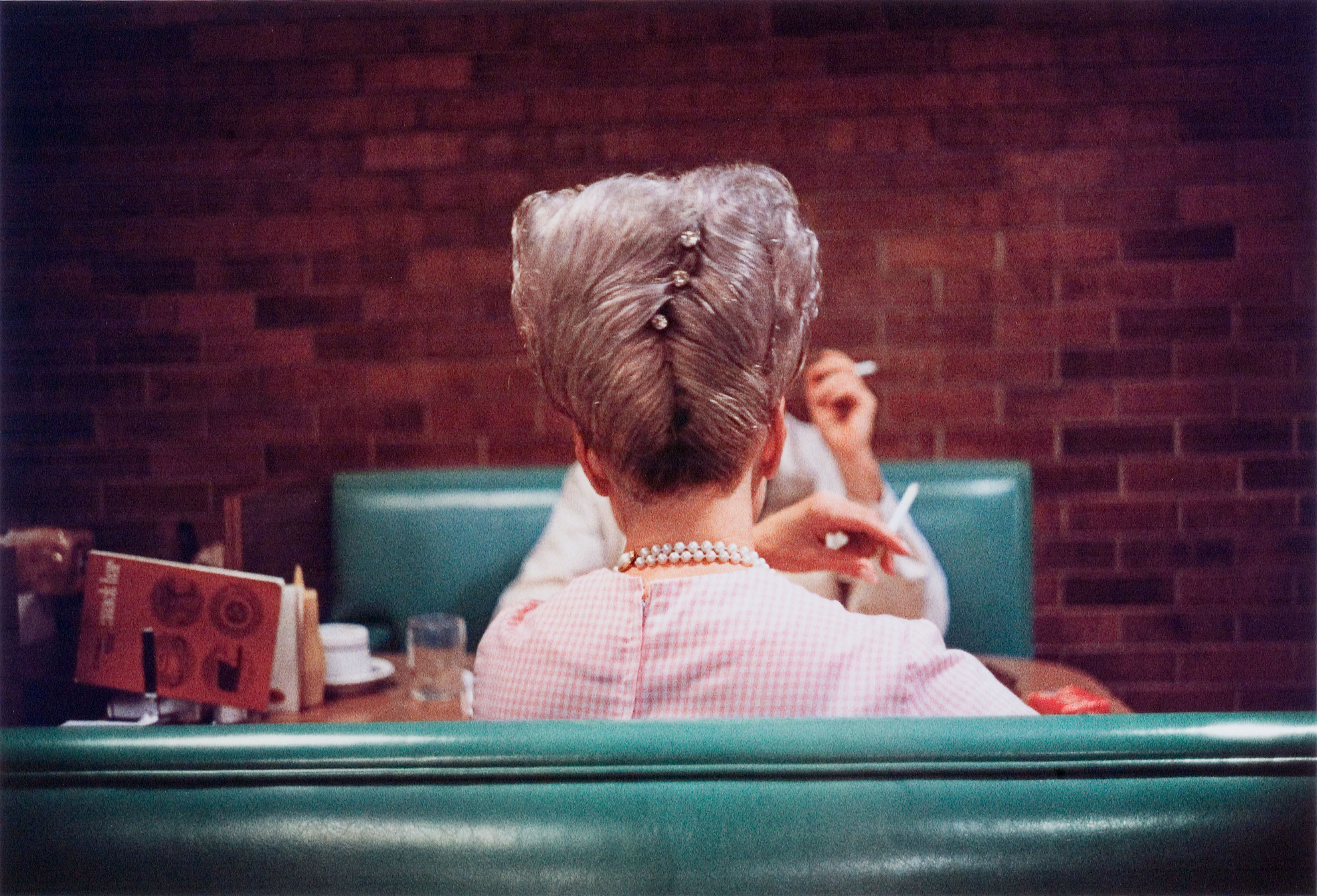
The American photographer William Eggleston (born 1939) emerged in the early 1960s as a pioneer of modern color photography. Now, 50 years later, he is widely considered its greatest exemplar. Opening February 14 at The Metropolitan Museum of Art, the exhibition *William Eggleston: Los Alamos* features a landmark gift to the Museum from Jade Lau of the artist's most extraordinary portfolio, *Los Alamos*, comprising 75 dye-transfer prints from color negatives made between 1965 and 1974. The exhibition marks the first time the series will be presented in its entirety in New York City...
Alfred Stieglitz
Jonathan Kantrowitz, Photographers - 7 months ago

Alfred Stieglitz (1864–1946), the great American impresario of photography at the turn of the 20th century. Featuring 36 photographs, the exhibition showcases fine examples of his New York views, portraits and photographs that Stieglitz took at his family’s country home at Lake George. Alfred Stieglitz's “The Terminal”1893 Alfred Stieglitz “The Steerage” 1907 Alfred Stieglitz “From the Shelton, Looking West,” 1934 The New York views reveal the artist’s lifelong interest in the urban city, from his early explorations of the picturesque effects of rain, snow and nightfall to ...
Berenice Abbott
Jonathan Kantrowitz, Photographers - 7 months ago
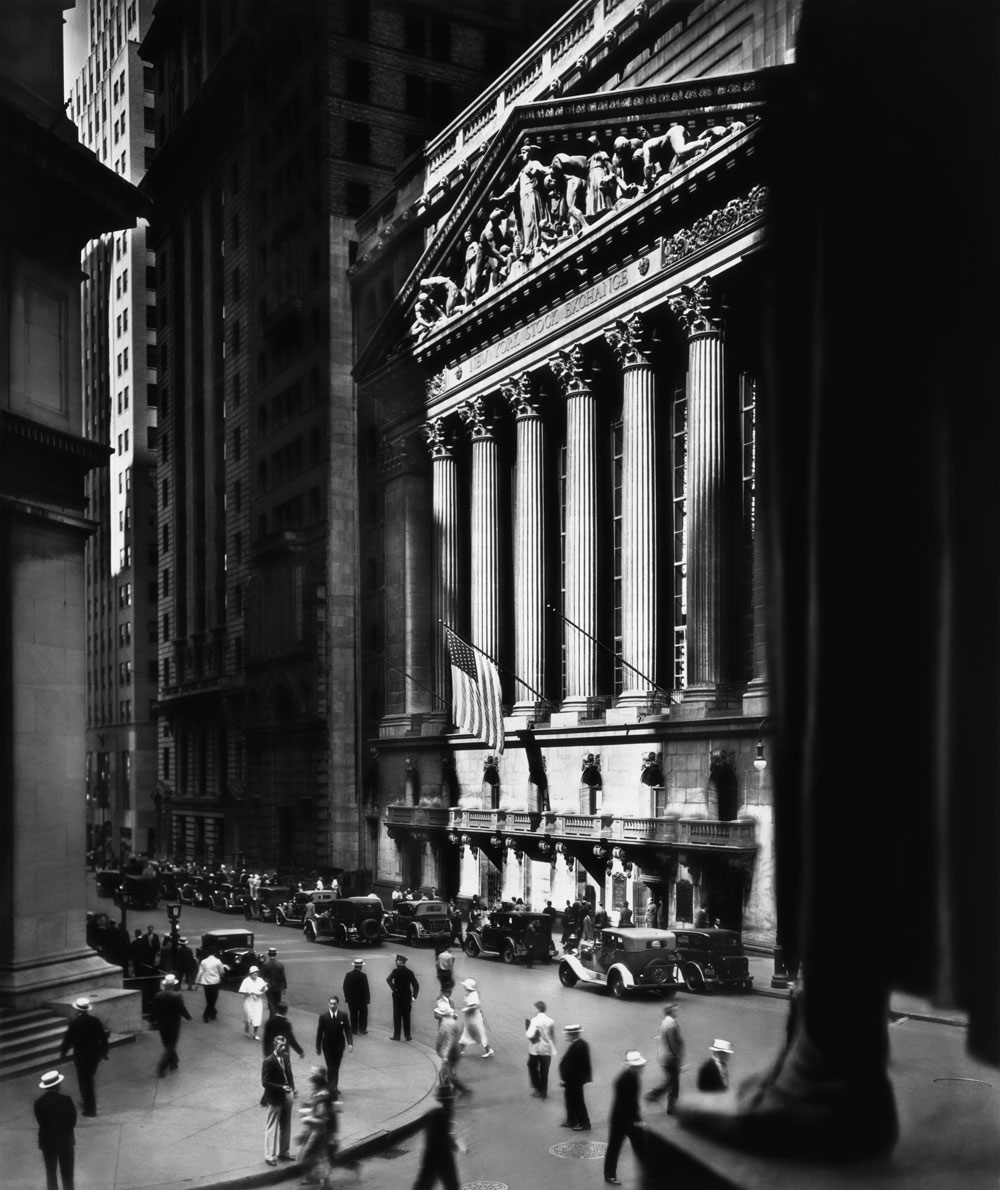
Remembered as one of the most independent, determined and respected photographers of the 20th century, Berenice Abbott chronicled the evolution of New York City for decades beginning with the Great Depression. Images of iconic New York City landmarks such as the New York Stock Exchange (est. $3,000-5,000), the construction of Rockefeller Center (est. $1,500-2,500) and Broadway to the Battery ($1,000-2,000) (below)highlight this collection of original prints. "Berenice Abbott spent years chronicling the evolution of New York City. She captured the architecture, the people a...
Robert Frank
Jonathan Kantrowitz, Photographers - 7 months ago

Robert Frank, one of the most influential photographers of the 20th century’s postwar years, revolutionized classic reportage and street photography. Over a period spanning six decades, this Swiss - American artist created photographs, experimental montages, books, and films. The Albertina is showing selected works and series that trace Robert Frank’s development: from his early photojournalistic images created on trips through Europe to the pioneering work group The Americans and on to his later, more introspective projects, over 100 works will serve to illuminate central aspe...
Diame Arbus
Jonathan Kantrowitz, Photographers - 7 months ago

Never-before-seen early work of Diane Arbus (1923–71), focusing on the first seven years of her career, from 1956 to 1962—the period in which she developed the idiosyncratic style and approach for which she has been recognized, praised, criticized, and copied the world over. *diane arbus: in the beginning* [image: diane arbus: in the beginning] *diane arbus: in the beginning *focuses on seven key years that represent a crucial period of the artist’s genesis, showing Arbus as she developed her style and honed her practice. Arbus was fascinated by photography even before she received...
Irving Penn
Jonathan Kantrowitz, Photographers - 7 months ago
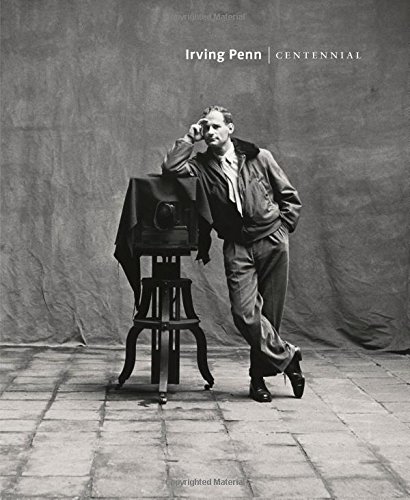
*Artist’s Biography* Irving Penn was born in 1917 in Plainfield, New Jersey. In 1934 he enrolled at the Philadelphia Museum School of Industrial Art, where he studied design with Alexey Brodovitch. In 1938 he began a career in New York as a graphic artist. Then, after a year painting in Mexico, he returned to New York City and began work at Vogue magazine, where Alexander Liberman was art director. Liberman encouraged Penn to take his first color photograph, a still life that became the October 1, 1943, cover of Vogue, beginning a fruitful collaboration with the magazine that cont...

Friday, March 26, 2021

Claude Monet's Waterloo Bridge, effet de brouillard to lead Christie's Newly Launched 20th Century Evening Sale in May


A Modern Masterpiece 

This May, Christie’s will present Claude Monet’s Waterloo Bridge, effet de brouillard, 1899-1903, Estimate on Request (in the region of $35 million) as a highlight of Christie’s newly introduced 20th Century Evening Sale. This rare and important painting is a fine example of Monet’s celebrated Waterloo Bridge series, an exquisite example of his capacity to capture the ephemeral, intangible effects of light on the River Thames. With these pivotal works, Monet effectively paved the way for the trajectory of 20thCentury Art as we now know it.

“I adore London, it is a mass, an ensemble, and it is so simple. What I like most of all in London is the fog... I so love London!” – Claude Monet in conversation with René Gimpel the celebrated London dealer.

Monet’s impassioned declaration is masterfully conveyed in Waterloo Bridge, effet de brouillard, one of the artist’s monumental, landmark series of London views, the Vues du Londres. Begun in London in 1899, this series remains one of the artist’s greatest achievements, as he transformed the city and its famed fog-filled skies into ethereal, timeless visions of the modern city. Of the three key subjects of this ambitious campaign, the Waterloo Bridge series is the largest, and is renowned for being the most radical and varied and also the most poetic and avant-garde.   Waterloo Bridge, effet de brouillard is the finest example from this iconic series to be offered at auction for over a decade.

The finest works from this series are now housed in the great museums of the world, including the National Gallery of Art, Washington, the Art Institute of Chicago, The State Hermitage Museum, St. Petersburg and the Philadelphia Museum of Art. The present painting compares very favourably with each of these and like them was chosen by Monet to feature as one of eighteen Waterloo Bridges included in his ground-breaking 1904 exhibition, Claude Monet: Vues de la Tamise à Londres at the Galerie Durand-Ruel.  Reacting to this show Georges Lecomte wrote that Monet had never “attained such a vaporous subtlety, such power of abstraction and synthesis”.

In Waterloo Bridge, effet de brouillard, Monet has pictured the panoramic eastward vista from the balcony of his hotel room at the fashionable Savoy Hotel. The expansive, waters of the Thames are traversed by the stone bridge that recedes toward the factory-lined south bank beyond. The entire scene is cloaked in an ephemeral, evanescent mist that is illuminated by the invisible sun beyond, its veiled presence casting the city into an extraordinary iridescent blue and pink light. Here, Monet performed alchemy with brush and pigment, deploying the most nuanced flickers and strokes of color to create a composition that has captured the vaporous quality of the atmosphere, and the magical power of light. In his quest to depict his impression of the scene that lay before him, Monet has transformed a fleeting vista of industrial London into a mysterious and deeply contemplative evocation that transcends the bounds of time and place.

“It’s a miracle,” wrote Octave Mirbeau. “It’s almost a paradox that one can, with impasto on canvas, create impalpable matter, imprison the sun…to make shoot forth from this Empyrean atmosphere, such splendid fairylands of light. And yet, it’s not a miracle, it’s not a paradox: it’s the logical outcome of the art of M. Claude Monet.” (Claude Monet, Vues de la Tamise a Londres, exh. cat., Galeries Durand-Ruel, Paris, 1904, p. 8).

Waterloo Bridge, effet de brouillard was one of the earliest London paintings to enter an American collection when it was acquired in early 1905 by the pioneering Pulitzer Prize winning poet, Amy Lowell. Waterloo Bridge, effet de brouillard remained in the Lowell family by descent until 1978, and was included in the Boston Museum of Fine Arts retrospective of masterpieces by Claude Monet held in America the year after the artist’s death in 1927.

Thursday, March 25, 2021

The Painters of Pompeii: Roman Frescoes from the National Archaeological Museum, Naples

Oklahoma City Museum of Art

June 26 to Oct. 17, 2021

×

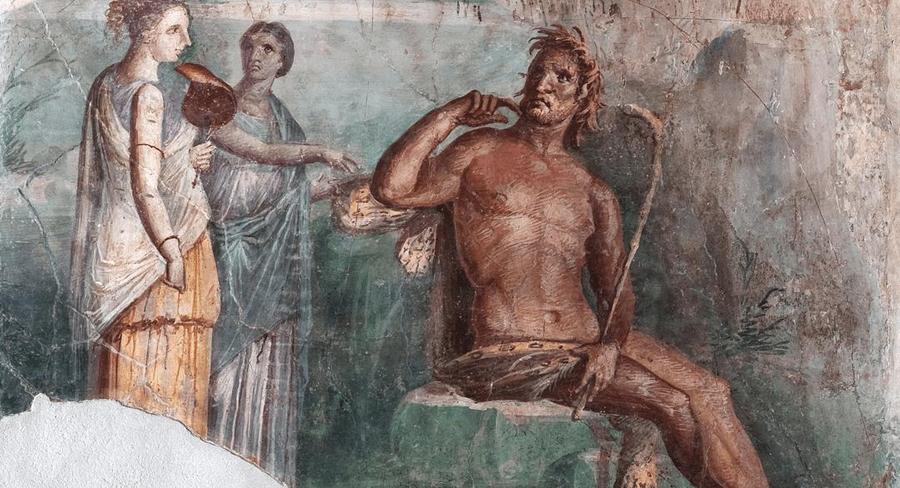
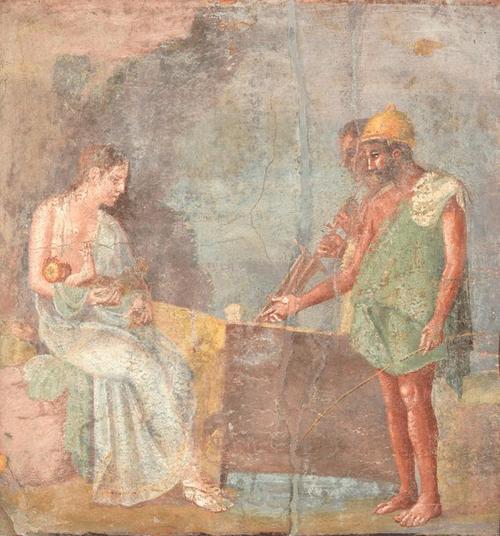
“The Painters of Pompeii: Roman Frescoes from the National Archaeological Museum, Naples" will travel exclusively to Oklahoma City Museum of Art, from June 26 to Oct. 17, 2021. Archivio Fotografico del Museo Archeologico Nazionale di Napoli

The exhibition “The Painters of Pompeii: Roman Frescoes from the National Archaeological Museum, Naples" will travel exclusively to Oklahoma City Museum of Art from Italy and be on view from June 26 to Oct. 17, 2021.  

“The Painters of Pompeii” highlights a seldom seen medium – the Roman wall painting – which was pervasive in ancient Rome, through over 80 artifacts and artworks. As one of only two large bodies of ancient painting in existence today, this exhibition represents a once-in-a-lifetime opportunity. The exhibition is organized by the National Archaeological Museum, Naples and MondoMostre.

Danae and Perseo. Archivio Fotografico del Museo Archeologico Nazionale di Napoli

“We are honored to be the exclusive venue for this extraordinary exhibition,” said OKCMOA president and CEO, Michael J. Anderson, Ph.D. “These works are extremely delicate and rarely leave Italy. With travel still difficult to plan, we are incredibly grateful to be able to bring these paintings to Oklahoma City. We will continue to limit capacity throughout the summer in order to follow health and safety guidelines and allow for social distancing. Due to the rarity of the exhibition as well as the limited availability, I encourage everyone to book tickets early to secure their preferred day and time.”

Additionally, OKCMOA has released new virtual programming in advance of the exhibition. Opportunities to “house hunt” in ancient Italian coastal towns, experience the food and wine of Pompeii and more – all from the comfort of home – are now available. Armchair travelers can register for this special programming at okcmoa.com.

“We had an incredible response to our first slate of virtual classes inspired by ‘The Painters of Pompeii,’” said Rosie May, OKCMOA director of curatorial affairs and audience engagement. “Many of the classes sold out, and the feedback we heard from participants was wonderful. We are thrilled to offer new virtual classes beginning later this month and new ways to immerse visitors in the culture of southern Italy.”

Virtual Classes:

·    The Rediscovery of Pompeii, Tuesday, April 6, 7 p.m. CDT

·    Food & Wine in Pompeii: Then and Now, Tuesday, April 13, 7 p.m. CDT

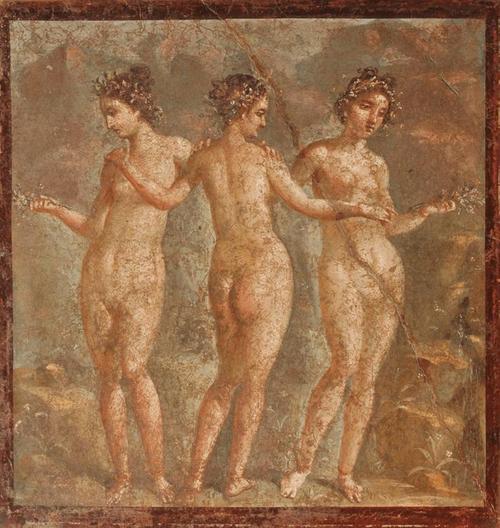
Three Graces. Archivio Fotografico del Museo Archeologico Nazionale di Napoli

·    Roman House Hunters International, Tuesday, April 20, 7 p.m. CDT

·    Pompeii and Roman Painting, Wednesday, April 28, 7 p.m. CDT

·    Livia Drusilla and Powerful Elite Women in Imperial Rome, Sunday, May 16, 1 p.m. CDT

Classes are $30 for Museum members and $40 for non-members. Registration is limited and expected to fill quickly. The museum encourages those interested to register soon at okcmoa.com/pompeii. All class registrations include one complimentary ticket to “The Painters of Pompeii.”


GEORGIA O'KEEFFE


Museo Nacional Thyssen-Bornemisza
 
20 April to 8 August 2021

OKeeffe_lirio
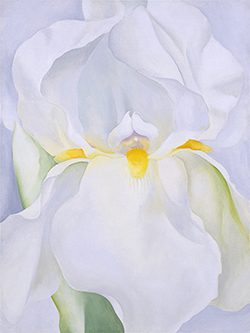
Georgia O'Keeffe. White Iris No. 7, 1957. Museo Nacional Thyssen-Bornemisza, Madrid

The Museo Nacional Thyssen-Bornemisza is presenting the first retrospective in Spain of Georgia O’Keeffe (1887-1986), one of the most important representatives of 20th-century American art. Featuring a selection of 90 works, the exhibition offers a complete survey of O’Keeffe’s career; a unique opportunity to discover and admire the work of this fascinating artist who is little represented outside the United States. With the five paintings in its collection, the Museo Thyssen is in fact the institution with most works by the artist outside her native country.

This ambitious exhibition project has been made possible thanks to the collaboration of more than 35 international museums and collections, principally in the United States and most notably the Georgia O’Keeffe Museum in Santa Fe, which has been outstandingly generous with its loans and unconditional support. After being seen in Madrid the exhibition will travel to the Centre Pompidou in Paris and then to the Fondation Beyeler in Basel. It is also benefiting from the sponsorship of the Terra Foundation for American Art and JTI.

A great modern American artist

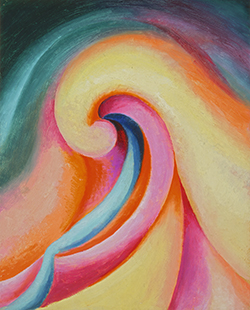
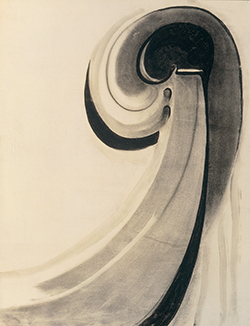
Okeeffe serie I
Georgia O'Keeffe. Series I—No. 3, 1918. Milwaukee Art Museum, Milwaukee. Gift of Jane Bradley Pettit Foundation and The Georgia O'Keeffe Foundation

Georgia O’Keeffe is one of the few women artists associated with the avant-garde trends of the first half of the 20th century in the United States. After first arousing enormous admiration in artistic circles at the early date of 1916 for her daring abstract works and establishing a reputation as a pioneer of non-figuration, O’Keeffe became one of the principal figures in modern American art. The exhibition opens with some of those works which provoked such surprise in New York towards the end of the second decade of the 20th century, then moves on to a complete survey of the artist’s entire career. The paintings are arranged both chronologically and thematically, allowing visitors to follow a series of masterpieces within her career and to simultaneously appreciate her principal artistic concerns.

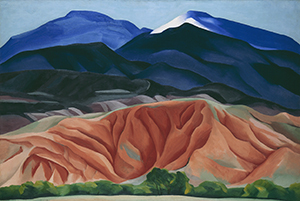
OKeeffe Black Mesa
Georgia O'Keeffe. Black Mesa Landscape, New Mexico / Out Back of Marie’s II, 1930. Georgia O’Keeffe Museum. Gift of The Burnett Foundation

The different sections of the exhibition thus reveal an artist whose language always moved between figuration and abstraction. The early landscapes of Texas and Lake George show O’Keeffe’s latent interest in capturing nature and its vibrant colours as well as her desire to create a composition in which the formal elements - colour and shape - are the true protagonists. Also on display is an important selection of the artist’s celebrated large-format flower paintings which are exhibited alongside her canvases of leaves, shells and bones. A special section is devoted to views of New York which leads on to the change of direction that came about in her life and work when she turned her attention to the American West in the late 1920s. Fascinated by the landscapes and cultural mix of New Mexico, O’Keeffe made this remote state the principal subject of her paintings and her lifelong home from the late 1940s. In the early 1950s two visits to Spain marked the start of extensive international travel and inspired new works. Finally, the last gallery in the exhibition shows some of the objects that the artist kept in her studio; specially loaned for this occasion, they allow her creative method to be reconstructed.

A travelling artist / a walking artist

The unexplainable thing in nature that makes me feel the world is big far beyond my understanding – to understand maybe by trying to put it into form. To find the feeling of infinity on the horizon line or just over the next hill.

Georgia O'Keeffe
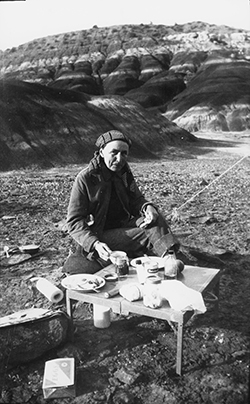
Maria Chabot. Georgia O'Keeffe, Breakfast, Black Place, 1944. Maria Chabot Archive. Georgia O'Keeffe Museum. Gift of Maria Chabot

The exhibition in Madrid, curated by Marta Ruiz del Árbol, curator of the Department of Modern Painting at the Museo Thyssen, aims to present Georgia O’Keeffe as a travelling artist: a painter for whom travel was not just a source of new themes but also a fundamental part of her creative process.

O’Keeffe’s boundless curiosity and her interest in the unknown lie at the origins of all her creative activity. Over the course of her long life (she lived to be 98) she travelled ceaselessly, firstly across the United States then in every continent in the last third of her life. The exhibition reminds visitors of the appeal that these numerous destinations held for the artist. O’Keeffe first discovered the beauty and immensity of the American landscape, from the plains and canyons of Texas to the urban scenes in which she captured Manhattan’s rapid transformation into the city of skyscrapers. Other subjects include the famous storms on Lake George in New York State and the spectacular rock formations of the country’s Southwest. Finally, visitors to the exhibition can appreciate O’Keeffe’s fascination with flying in paintings that employ a bird’s eye view to depict river courses. All these works deploy a truly individual language which in some cases precisely refers to visible reality but in others seems to move away from the motif that is the source of inspiration to offer a harmonious, abstract combination of forms and colours.

I have never had a more beautiful walk […] I seem to be hunting for something of myself out here.

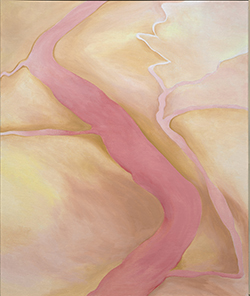
O'Keeffe Era amarillo y rosa

Georgia O'Keeffe. It Was Yellow and Pink II, 1959. The Cleveland Museum of Art, Bequest of Georgia O'Keeffe

The exhibition also reveals Georgia O’Keeffe the walker, who covered the ground of the places she visited. Throughout her life these walks were part of her daily routine and are emphasised in the exhibition as the first step in her creative process. Like Nietzsche, who said that he needed his feet in order to write, in a reference to his need to walk in order to make his thoughts flow, O’Keeffe walked first then painted afterwards. While doing so she also collected a wide range of objects - flowers, leaves, shells, pieces of wood and bones - which then became the subjects of her paintings. The depiction of these organic records in close-up, foreground presentations also points to the influence on the artist of her numerous photographer friends, including her partner Alfred Stieglitz. Above all, however, it points to her interest in making the busy inhabitant of the modern city stop to look at these objects: “But one rarely takes the time to really see a flower”, she said in 1926, “I have painted what each flower is to me and I have painted it big enough so that others would see what I see”: a slow, aware gaze which the exhibition aims to encourage in the viewer.

1. Early work

O'Keeffe Abstraccion temprana
Georgia O'Keeffe. Early Abstraction, 1915. Milwaukee Art Museum, Milwaukee. Gift of Jane Bradley Pettit Foundation and The Georgia O’Keeffe Foundation

The exhibition starts with a room devoted to the works with which Georgia O’Keeffe surprised New York’s cultural and artistic circles in 1916 when they were exhibited for the first time at the 291 gallery. “Finally, a woman on paper”, exclaimed its proprietor, the photographer Alfred Stieglitz when he saw these creations, in which O’Keeffe evoked the growth and movement of nature through abstract forms. Executed while she was teaching in South Carolina and Texas, they mark her decision to move away from the artists who had previously inspired her and to embark on her own path, a dazzling one from the outset due to its modernity and originality.

During this early period O’Keeffe was notable for her mastery of the technique of watercolour. The mountains of South Carolina and the Texan plains are depicted in works of intense colour which already reveal the artist’s interest in nature and the appeal of the horizon line. Shown alongside them are various nudes in colours which seem to establish a dialogue with the landscapes.

2. Abstractions

I found I could say things with color and shapes that I couldn’t say any other way, things I had no words for.

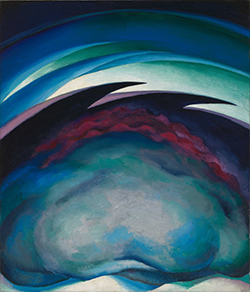
O'Keeffe Llanuras I
Georgia O'Keeffe. Series I - From the Plains, 1919. Georgia O'Keeffe Museum. Gift of The Burnett Foundation

The second room in the exhibition presents the paintings that O’Keeffe produced from 1918 after giving up her teaching job in Texas and moving to New York to devote herself entirely to painting. These are organic abstractions in which the artist investigated relationships between form and colour and which elevated her to the status of a pioneer of pictorial abstraction.

Some of these canvases reveal O’Keeffe’s interest in creating a visual equivalent to music. Others refer to her intense experience of the Texan landscape or are examples of her earliest floral abstractions. When they were exhibited in Manhattan in the early 1920s they became the subject of psychoanalytical interpretations by certain critics and provoked debates on the importance of O’Keeffe’s gender for her work.

3. New York / Lake George

I am divided between my man and a life with him, and some thing of the outdoors [...] that is in my blood.

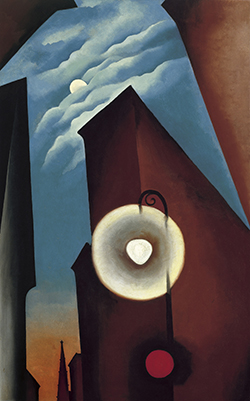
O'Keeffe Nueva York
Georgia O'Keeffe. New York Street with Moon, 1925. Carmen Thyssen-Bornemisza Collection on loan at the Museo Nacional Thyssen-Bornemisza, Madrid

From the end of the second decade of the century O’Keeffe divided her time between the city and the countryside. This contrast, between winter and spring in New York and summer and autumn at Lake George, is reflected in her painting.

Living in a modern skyscraper, O’Keeffe began to look at the metropolis, which became the quintessential theme of modern art in the 1920s. Her views of Manhattan are exceptional within her oeuvre and are essentially characterised by her interest in depicting nature. At the same time she continued to focus on that other, rural America which she encountered during her periods of retreat in the countryside. Among her favourite motifs were the grain silos that reminded her of her childhood on a Wisconsin farm.

4. Flowers and natural world

Most people in the city rush around so, they have no time to look at a flower. I want them to see it whether they want to or not.

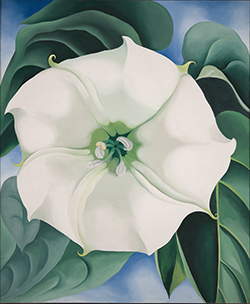
O'Keeffe Estramonio
Georgia O'Keeffe. Jimson Weed/White Flower No. 1, 1932. Crystal Bridges Museum of American Art, Bentonville, Arkansas

The exhibition’s central gallery is devoted to Georgia O’Keeffe’s celebrated paintings of flowers, one of the principal themes on which she consistently focused from the mid-1920s onwards. Irises, poppies, Jimson weed and arum lilies are shown alongside depictions of other natural objects such as leaves and shells which the artist collected during her walks in order to then represent them on canvas.

In some of these works O’Keeffe’s focus lies in progressively moving away from the natural form while on other occasions the sharp focus and close-up viewpoint seem to suggest a photographic blow-up. Through the use of these daring compositions, through which she aimed to oblige the hurried city dweller to pause and look at small details, O’Keeffe became one of America’s most acclaimed female artists by both critics and the public. In 2014 her painting Jimson Weed/White Flower no. 1 (1932), which is present in the exhibition, made a world record price at Sotheby’s for a work by a woman artist.

5. First trips to New Mexico

When I got to New Mexico, that was mine. As soon as I saw it, that was my country. I’d never seen anything like it before, but it fitted to me exactly.

O'Keeffe carnero
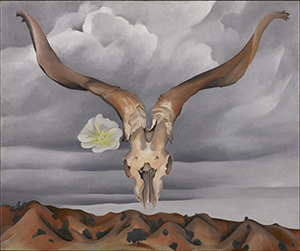
Georgia O'Keeffe. Ram's Head, White Hollyhock-Hills (Ram's Head and White Hollyhock, New Mexico), 1935. Brooklyn Museum, Bequest of Edith y Milton Lowenthal

In the summer of 1929 Georgia O’Keeffe travelled to northern New Mexico, an experience that would change her life forever. The landscape, the powerful presence of Native American culture and the region’s Spanish colonial past inspired a new direction in her art.

The spectacular terrain, vernacular architecture, wayside crosses in the remote countryside and the bones of dead animals that she found on her walks filled O’Keeffe’s paintings over the following years. These works mark a return to a landscape that recalls her early experience in Texas and coincide with a growing interest in rural America on the part of the artistic avant-garde which was seeking for its own vision unaffiliated with the European canons.

6. Exploring New Mexico

Okeeffe Black Place
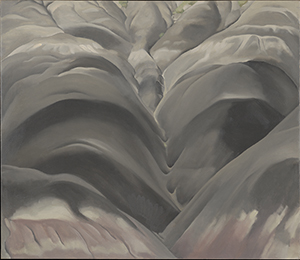
Georgia O'Keeffe. Black Place I, 1944. San Francisco Museum of Modern Art. Gift of Charlotte Mack

Over the next two decades the artist spent most of her summers in New Mexico. The landscape that surrounded her adobe house in Ghost Ranch, a desert area that she had discovered in 1934, became the subject of many of her works. Others focused on two places which she also frequently painted: the one she called “White Place” and another, more remote one within the Navajo nation that she called “Black Place” and which inspired particularly abstract works.

During those years O’Keeffe also embarked on a series of paintings of pelvis bones, returning to a theme which had fascinated her since her first summer in New Mexico. Despite the metaphysical nature of many of these works the artist always denied that they had any relation with Surrealism.

7. Travels around the world

Okeeffe puerta

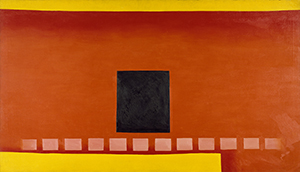
Georgia O'Keeffe. Black Door with Red, 1954. Chrysler Museum of Art, Norfolk, VA. Bequest of Walter P. Chrysler, Jr.

The penultimate gallery shows a selection of O’Keeffe’s late work. Firstly, the series on the courtyard of the hacienda that she purchased in the small village of Abiquiú in 1945, a few years before New Mexico became her permanent home in 1949.

Secondly and in the manner of a contrast, this room features various canvases inspired by the numerous international trips that O’Keeffe made in the last third of her life. Having never previously left the American continent, after her visit to Spain from 1953 to 1954 O’Keeffe started to travel to every part of the globe. The long hours that she spent on aeroplanes inspired a series of views from their windows. Alongside horizons painted in a multitude of different tones, she also produced abstract compositions that recall aerial images of winding rivers.

8. The studio

Okeeffe
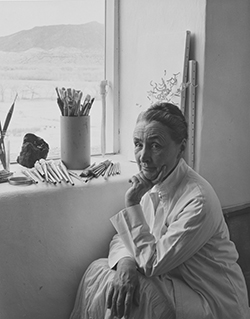
Laura Gilpin. Georgia O'Keeffe, 1953. Georgia O'Keeffe Museum

On her return from her travels and walks O’Keeffe would go into her studio, a place where she liked to work alone. Hidden from the gaze of others, it was here she pursued her painstaking, meticulous creative process which has been revealed through a study of the technique of the five canvases by the artist in the Thyssen-Bornemisza collections. The results produced by the multi-disciplinary team of restorers, curators and chemists from both the Museo Nacional Thyssen-Bornemisza and the Georgia O’Keeffe Museum are on display in the last gallery of the exhibition, accompanied by some of the objects still housed in the artist’s studio which have been specially loaned for this event. This final room reveals a methodical, rigorous, reserved artist who was fascinated by colour and textures, concerned for the conservation of her paintings and for ensuring that the original intention of her works be maintained intact for the future.


Wednesday, March 24, 2021

The Woman Who Broke Boundaries: Photographer Lee Miller

 The Dalí Museum 

July 3, 2021-Jan. 2, 2022


Special exhibit celebrates the trailblazing woman whose camerawork captured celebrities, surrealists and the zeitgeist of the last century


In conjunction with Women’s History Month, The Dalí Museum has announced new dates for an exhibition featuring the work of a groundbreaking female photographer. Lee Miller (1907-1977) was the trusted confidante of many influential artists and an eyewitness to some of the most extraordinary moments of the 20th century. Sweeping in scope and intimate in focus, The Woman Who Broke Boundaries: Photographer Lee Miller surveys her fascinating personal life and remarkably incisive portraiture and photojournalism. The exhibition is organized by the Dalí Museum and will feature more than 130 images from Miller’s prolific body of work. Originally scheduled to open in early 2020 and postponed due to the pandemic, The Woman Who Broke Boundaries will now be on view exclusively in St. Petersburg beginning this July.


       The exhibition concentrates on Miller’s portraits of important writers and artists, the majority associated with the Surrealist movement in Paris, and with whom she had sustained personal relationships. Also featured is a small selection of striking self-portraits, images captured during the liberation of Paris and Germany at the end of the Second World War, and photos representative of technical advancements in the medium she chose to express herself and capture the times.


       The Woman Who Broke Boundaries: Photographer Lee Miller is curated by William Jeffett, chief curator of exhibitions at The Dalí Museum. The photographs are on loan from the Lee Miller Archives in Sussex, England. 


       “Equally unconventional and ambitious, Lee Miller continually reinvented herself, much like the artists she lived among and photographed,” said Dr. Hank Hine, executive director of The Dalí. “With a wry Surrealist quality, her work intimately captured a range of people and historical moments; however, the passion, intensity and restlessness of the woman behind the camera is where the most extraordinary stories can be told.”


       Born in New York, Miller started her career as a Vogue model in the 1920s. After moving to Paris in 1929, she began a three-year personal and professional partnership with American Surrealist photographer Man Ray. In addition to modeling for many of Ray’s most significant works, Miller also served as an active assistant and collaborator, rediscovering the “Sabatier effect” that she and Ray adopted to create solarized prints with a brief secondary exposure resulting in an aura around the subject. 


Salvador Dali and Gala, c1930 by Lee Miller (no number) © LeeMiller Archives England 2021. All Rights Reserved.www.leemiller.co.uk


Toward the end of her time in Paris, Miller photographed Dalí and his wife Gala.


Great article


       In 1932 Miller returned to the U.S, where she set up her own portrait studio and contributed to such publications as Condé Nast’s Vogue. Later, upon her return to Europe, she met British artist, historian and poet, Roland Penrose, and together they visited Pablo Picasso in 1937 and established a lifelong family friendship. While not a member of the Surrealist movement, she brought to her work a technical innovation and poetic vision akin to Surrealism, and she was invited to exhibit with the group in London in 1940.


       During WWII, Miller traveled with the U.S. Army as an officially accredited war correspondent, rare for a woman at the time. Miller bore witness to the horrors of war and the death camps of Nazi Germany. After the war, she married Penrose and continued her friendship with key figures of the avant-garde, many of whom she photographed for various publications and for biographies written by Penrose. Portraiture was the only form of photography Miller continued to practice until the end of her life in 1977.


       The Woman Who Broke Boundaries: Photographer Lee Miller is organized by The Dalí Museum, with works on loan from the Lee Miller Archives in Sussex, England. www.leemiller.co.uk.


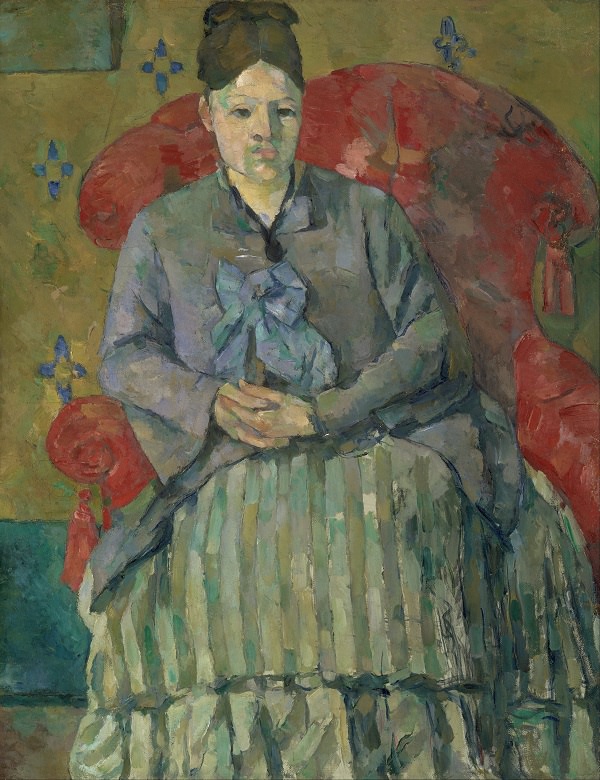
Paul Cézanne: Influence

Featuring 21 portraits, landscapes, and still lifes, the exhibition brings together works by painters from the 18th through the 20th centuries. Masterworks on view include MFA icons such as 


Paul Cézanne, Madame Cézanne in a Red Armchair (detail), about 1877. Oil on canvas. Bequest of Robert Treat Paine, 2nd.

Madame Cézanne in a Red Armchair (about 1877) in addition to seven rarely seen loans of works by Cézanne from private collections. From Chardin and Corot to Picasso, Sheeler, Braque, and Matisse, “Paul Cézanne: Influence” speaks to the generative power of the conversation between artists across time. 


New Exhibition of Monet Masterpieces Alongside Works by Millet and Rodin


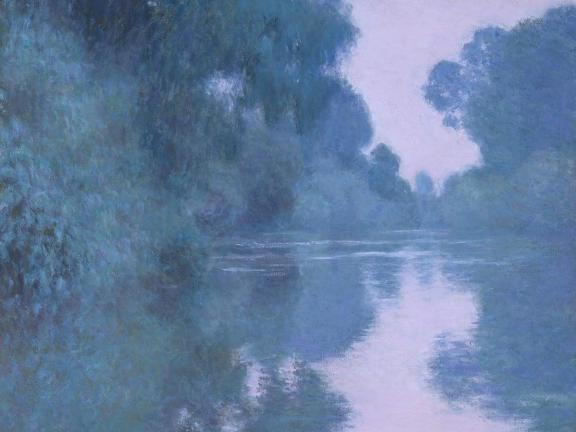
Impressionist painting of Seine River by Claude Monet


Claude Monet, Morning on the Seine near Giverny (detail), 1897. Oil on canvas. Gift of Mrs. W. Scott Fitz.

Claude Monet (1840–1926) saw the world differently. He found extraordinary beauty in settings both mundane and majestic, and he shared that enthusiasm—that commitment to the everyday, the here and now—in paintings that changed the course of art. Perhaps no other artist has captured Boston’s imagination as enduringly as Monet. Opening at the Museum of Fine Arts, Boston (MFA), on April 17, Monet and Boston: Legacy Illuminated highlights 25 masterpieces by the artist—selections drawn from the Museum’s extraordinary holdings of his work, alongside select loans from local private collections.

The exhibition begins by looking at Monet’s development and early career as well as his engagement with Japanese art, through juxtapositions of the artist’s paintings with prints from the MFA’s renowned ukiyo-e collection. It then broadens to consider Monet’s work alongside nine paintings by his predecessor Jean-François Millet (1814–1875) and seven sculptures by his contemporary Auguste Rodin (1840–1917), artists whose works were likewise embraced by Bostonians. A generation older, Millet helped pave the way for Impressionism with images of French landscapes and rural labor such as The Sower (1850), beloved by Boston’s collectors and Monet alike. Monet and Rodin, who is represented in the exhibition with celebrated works such as Eternal Springtime (modeled about 1881; cast about 1916–17) and Psyche (1899), shared a deep mutual respect and their art was often shown together, including in Boston in 1905.

Monet never traveled to Boston himself, but even during his lifetime his paintings could be found in astonishing numbers on the walls of the city’s art galleries, in collectors’ homes—and at the MFA. Monet and Boston: Legacy Illuminated celebrates that history, following Monet and Boston: Lasting Impression, which was organized in honor of the Museum's 150th anniversary in