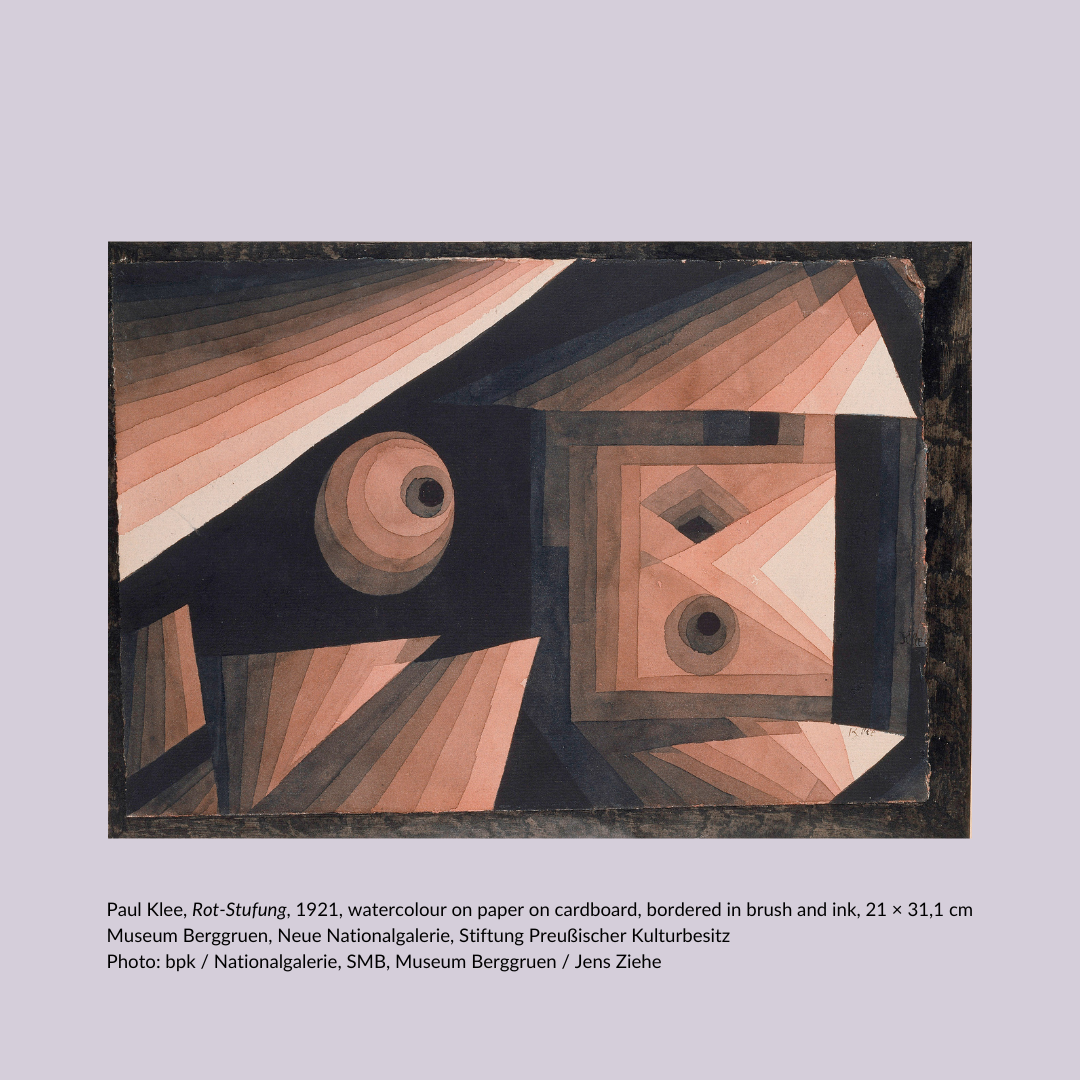
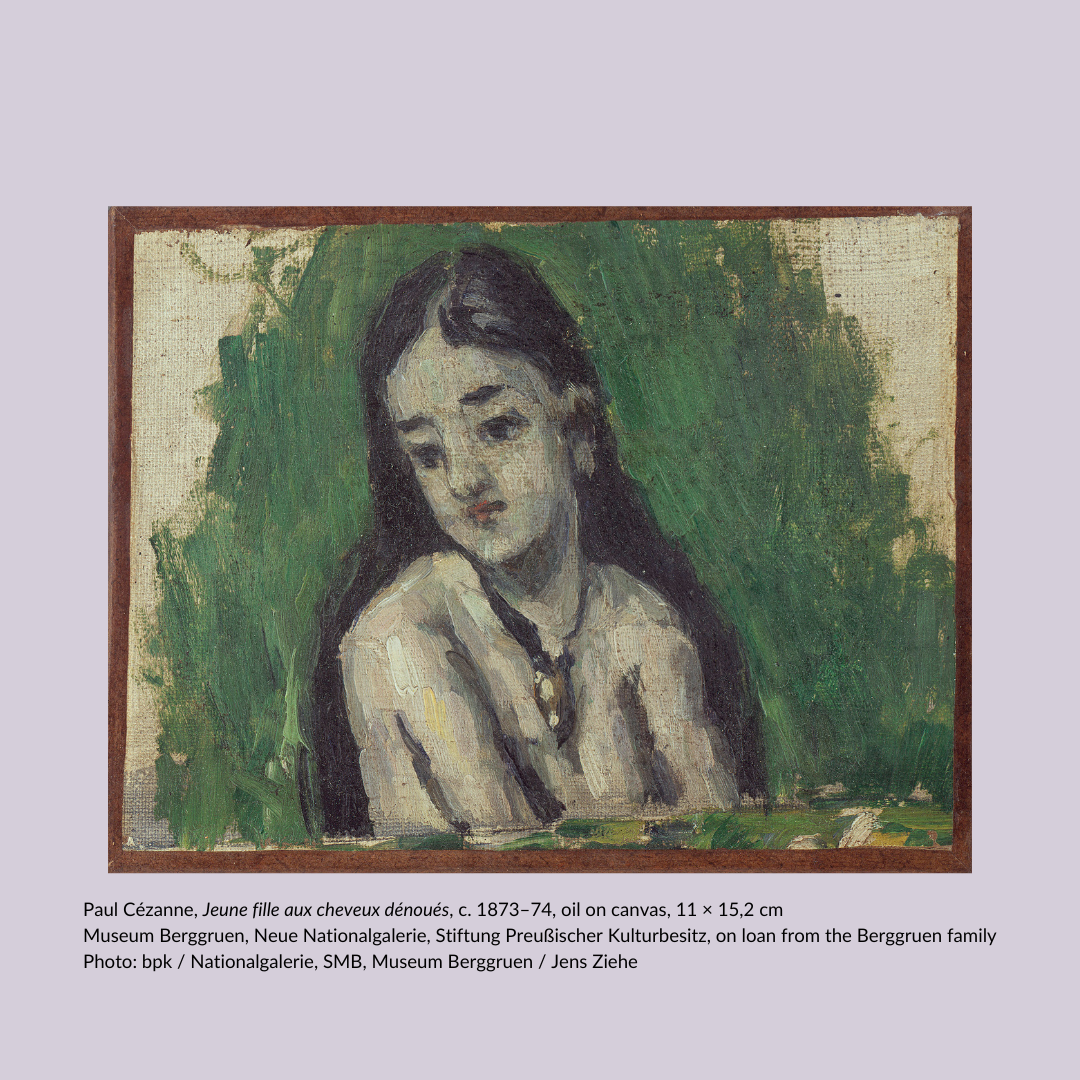
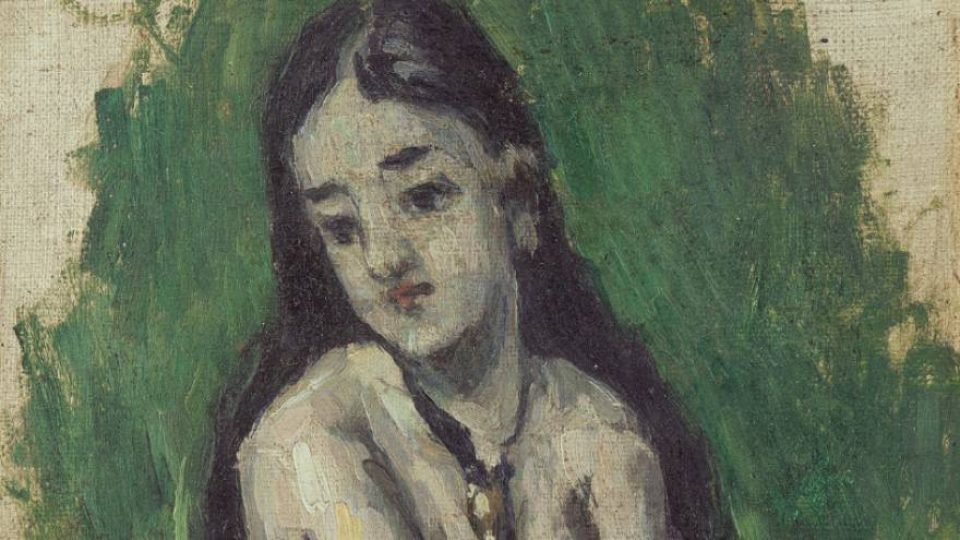
From 24 March to 23 June 2024 a selection of paintings and drawings from Museum Berggruen in Berlin, which is part of Neue Nationalgalerie, will be on display in Italy for the first time. More than 40 extraordinary works by Picasso, Matisse, Klee, Giacometti and Cézanne will join those by Giorgione, Sebastiano Ricci, Pietro Longhi, Giambattista Tiepolo and Canova at the Gallerie dell’Accademia in Venice.
The exhibition, Elective Affinities, will take place at Gallerie dell’Accademia and Casa dei Tre Oci on the Giudecca. The latter is the new headquarters of the Berggruen Institute Europe, which has recently reopened to the public after a restoration programme.
The exhibition is curated by Giulio Manieri Elia and Michele Tavola, Director and Curator of the Gallerie dell'Accademia of Venice, and Gabriel Montua and Veronika Rudorfer, Head of and Curator of Museum Berggruen in Berlin, one of the most important European state institutes of modern art, named after the Paris-based art dealer and collector Heinz Berggruen (1914-2007). In the year 2000, the Stiftung Preussischer Kulturbesitz (Prussian Cultural Heritage) managed to purchase Heinz Berggruen’s collection for the Nationalgalerie with funding from the German government and the state of Berlin.
The title of the exhibition, Elective Affinities, was chosen to evoke and underline the potential dialogue that arises from the meeting of these two important collections from similarities in iconography to subject matter. The title is inspired by the famous novel of the same name by Johann Wolfgang von Goethe, a writer who spent time in Venice during his travels to Italy.
Image
Image
Paul Cézanne, Jeune fille aux cheveux dénoués, ph: bpk Nationalgalerie, SMB, Museum Berggruen / Jens Ziehe
AT THE GALLERIE DELL'ACCADEMIA
16 works from Museum Berggruen will be integrated into Gallerie dell'Accademia's permanent displays, where visitors are invited to discover two very different collections - some of the greatest Venetian paintings alongside Heinz Berggruen’s collection of modernist masterpieces.
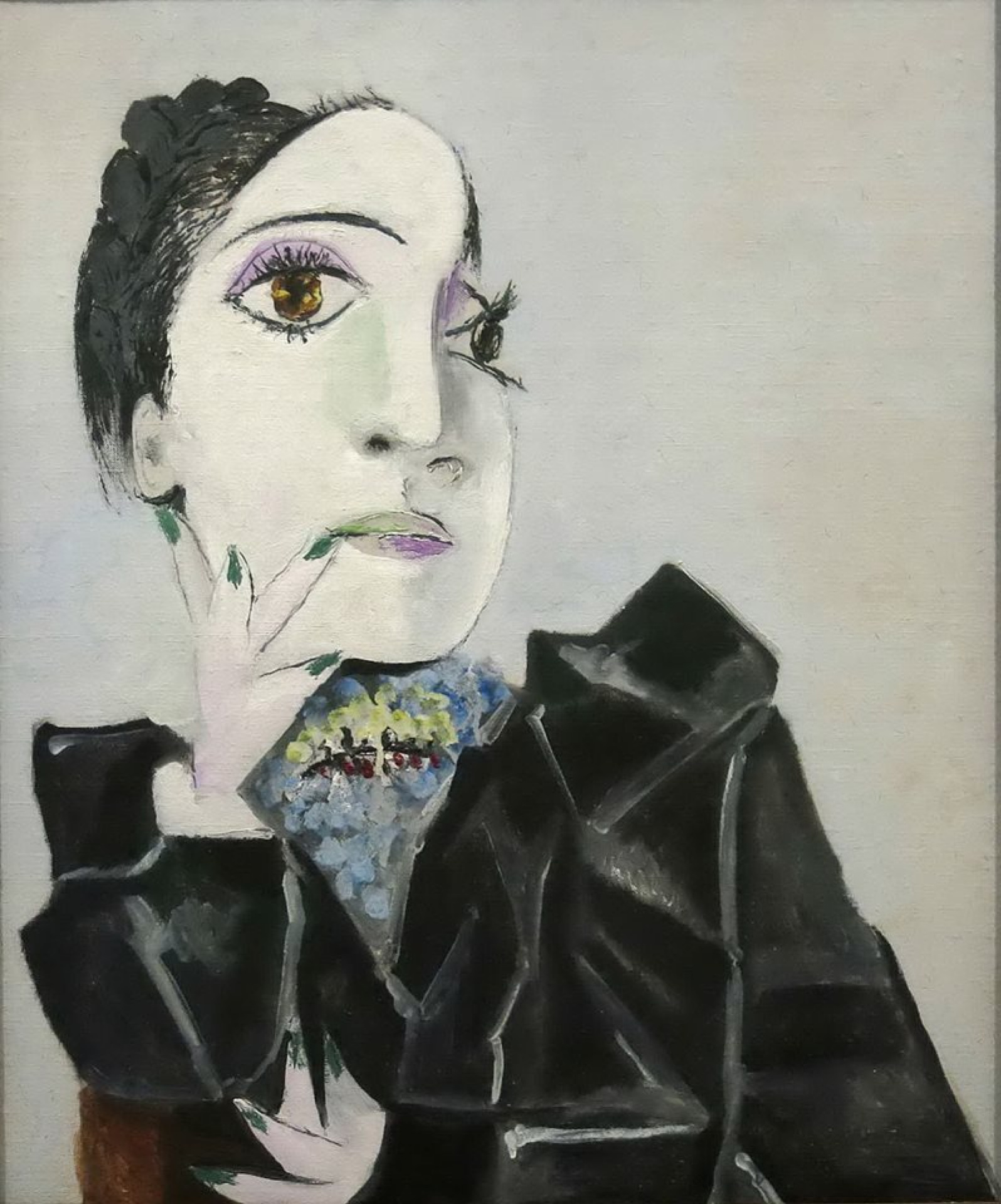
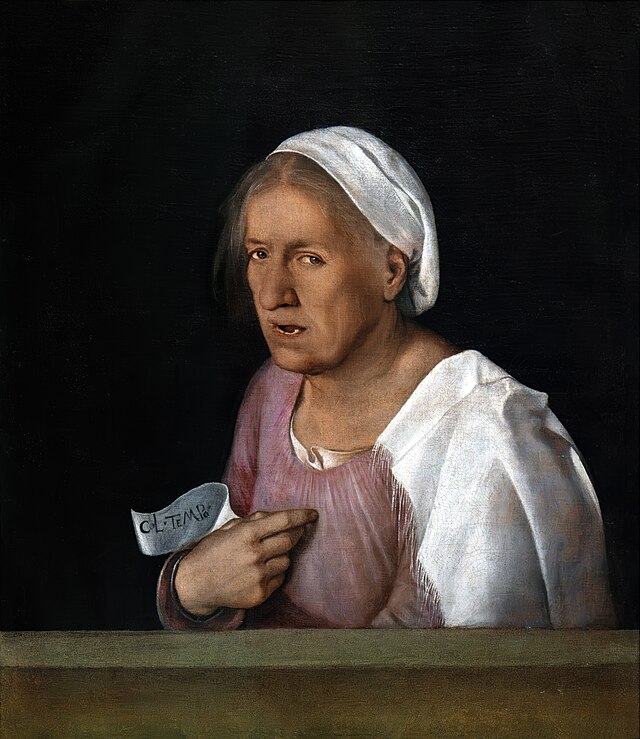
Picasso's portrait of Dora Maarwith Green Fingernails
is shown alongside
Giorgione's La Vecchia - very different works linked by an intimate relationship with the sitter. Two studies by Picasso for Les Demoiselles d'Avignon are displayed alongside a series of sketches by Tiepolo. Sculptures by Giacometti and Canova will also be in dialogue with each other.
AT CASA DEI TRE OCI
On display at Casa dei Tre Oci on the Giudecca, are four works on paper from the graphic collection of Gallerie dell'Accademia and 26 from Museum Berggruen, including works on paper by Klee, Picasso, Cézanne and Matisse.
This neo-Gothic palace, designed as a home and studio by the artist Mario de Maria and built in 1913, will reopen to the public after major restoration works to become the new headquarters of the Berggruen Institute Europe - a place of study and international discussion, hosting exhibitions, workshops and symposiums.
The UBS Art Collection has opened an exhibition of etchings and paintings by the acclaimed British artist Lucian Freud (1922-2011)at theUBS Art Gallery in NewYork.The exhibition brings together 45 exemplary works by Freud, representing one of the Collection’s notable pockets of depth, and marks the first time this group has been displayed in the United States or anywhere outside of a museum setting.
Lucian Freud is considered one of the most distinguished artists of the last century and the greatest portraitist of his time. His works are known for their psychological penetration and unsparing realism, which redefined public understanding of portraiture. In addition to a large body of the artist’s late etchings encompassing landscapes, portraits, and nudes, the exhibition will also feature two compelling oil paintings—
Double Portrait(1988–90) and
Head of a Naked Girl (1999)—
that are representative of his expressive style.
The UBS Art Collection is one of the world’s most significant corporate collections of contemporary art with over 30,000 artworks by influential artists of our time, including more than 50 works by Freud.
Born in Berlin in 1922, Freud was the grandson of Sigmund Freud, the founder of psychoanalysis. At the age of ten, his family immigrated to London to escape the forces of National Socialism and Freud became a British subject in 1939. He studied briefly at the Central School of Art, then went on to attend the East Anglian School of Painting and Goldsmith’s College. While his early work is influenced by German painters and even Surrealism, by 1960 Freud settled into his own distinctive style. He was a key figure in the School of London, a group who pursued a unique form of figuration, even as conceptual art and minimal art dominated the scene.
While Freud has been most widely recognized as a painter, etchings are an integral part of his practice.The etchings on display span an18-year period from 1982 to 2000, a prolific phase in Freud's graphic work. The artist’s process was as unorthodox as his approach to his subjects. Freud would position the copper etching plate upright on an easel, like a canvas, creating his impressions while standing. While the subjects of his prints often relate to certain paintings, the etchings were not derivative but created from life during extended sittings. His etchings are thus as intimate as his paintings, their linear constructions and croppings only heightening the sense of inherent tension .Presented alongside a substantial number of his works as context, these pieces inspire introspection.
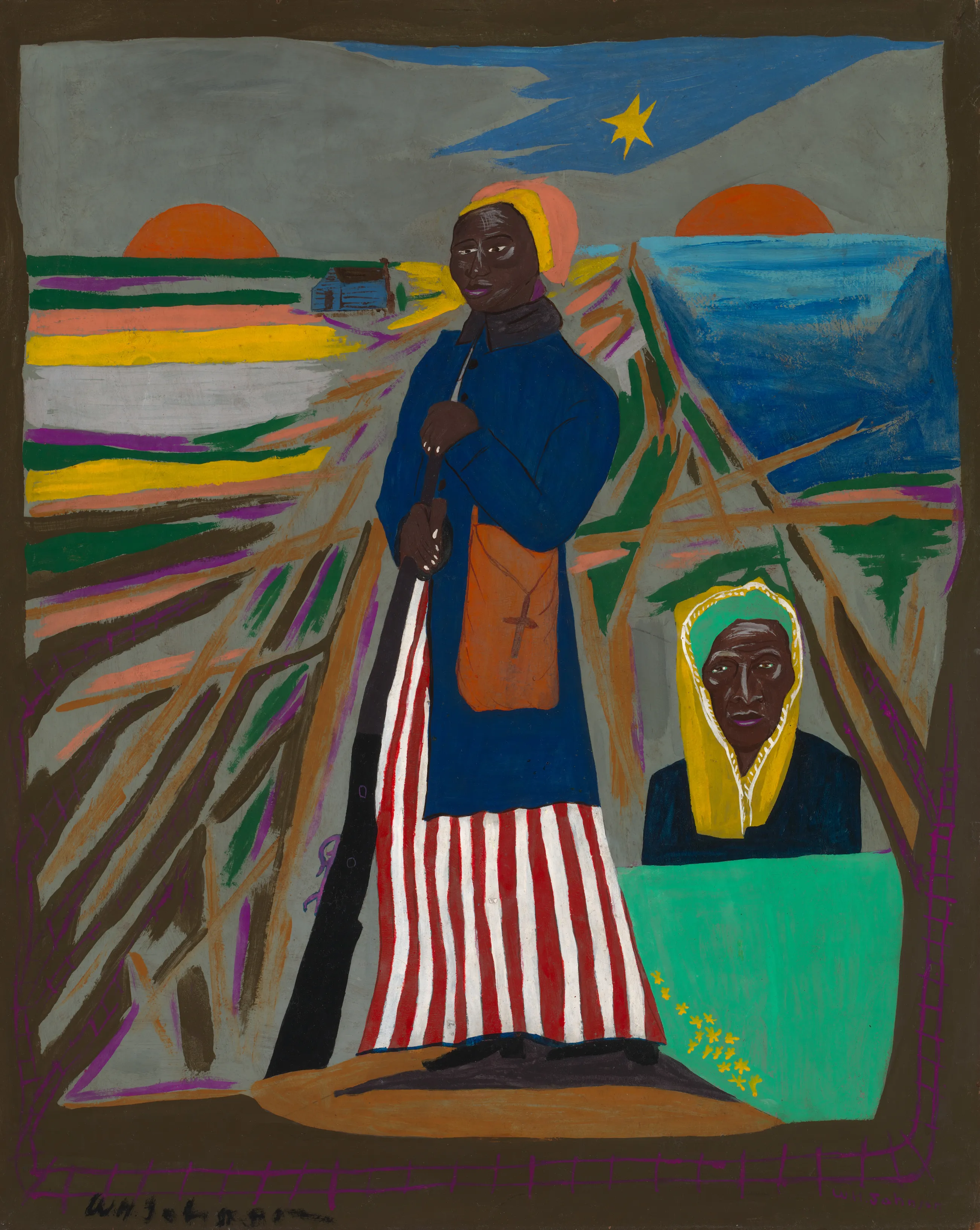
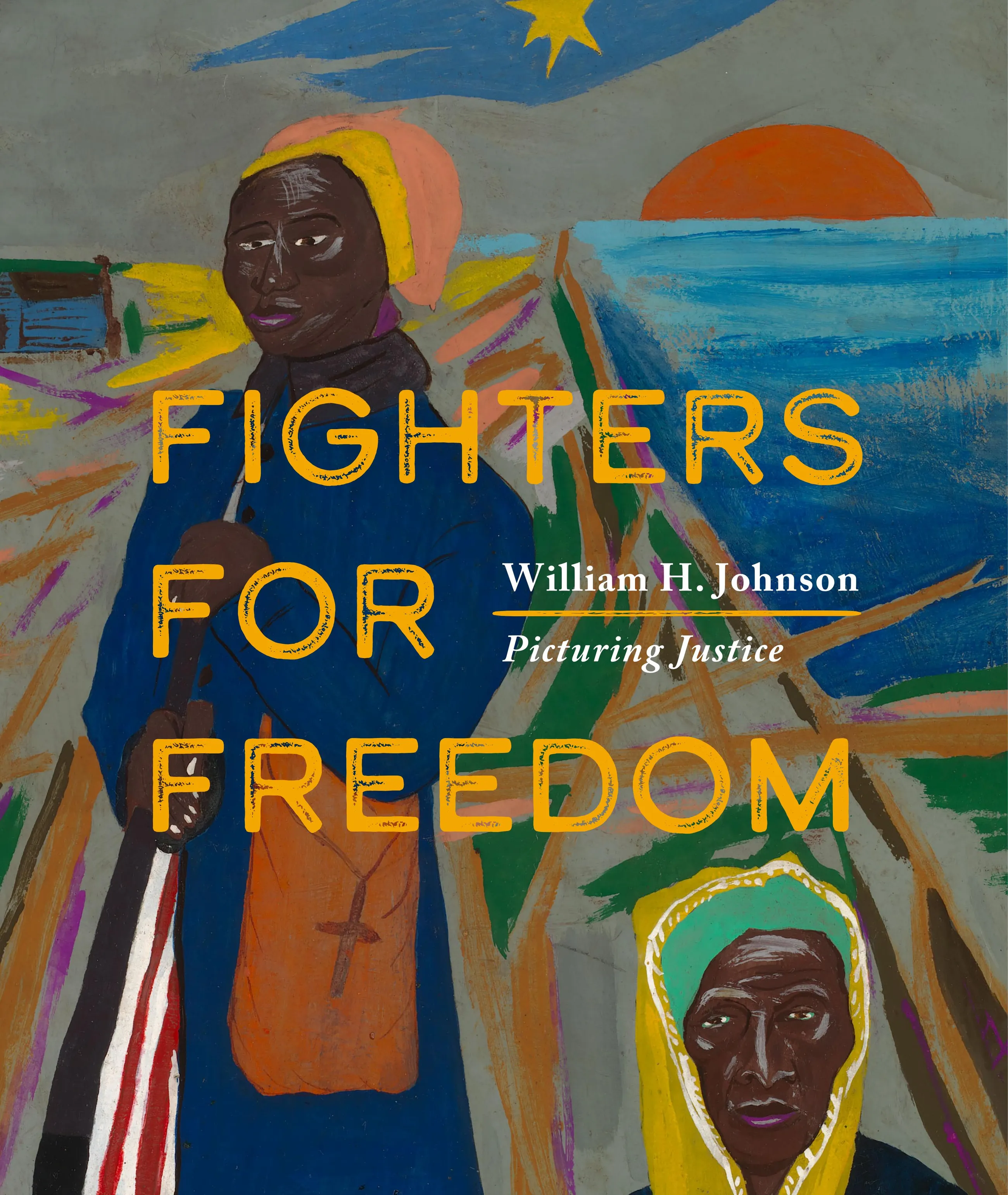
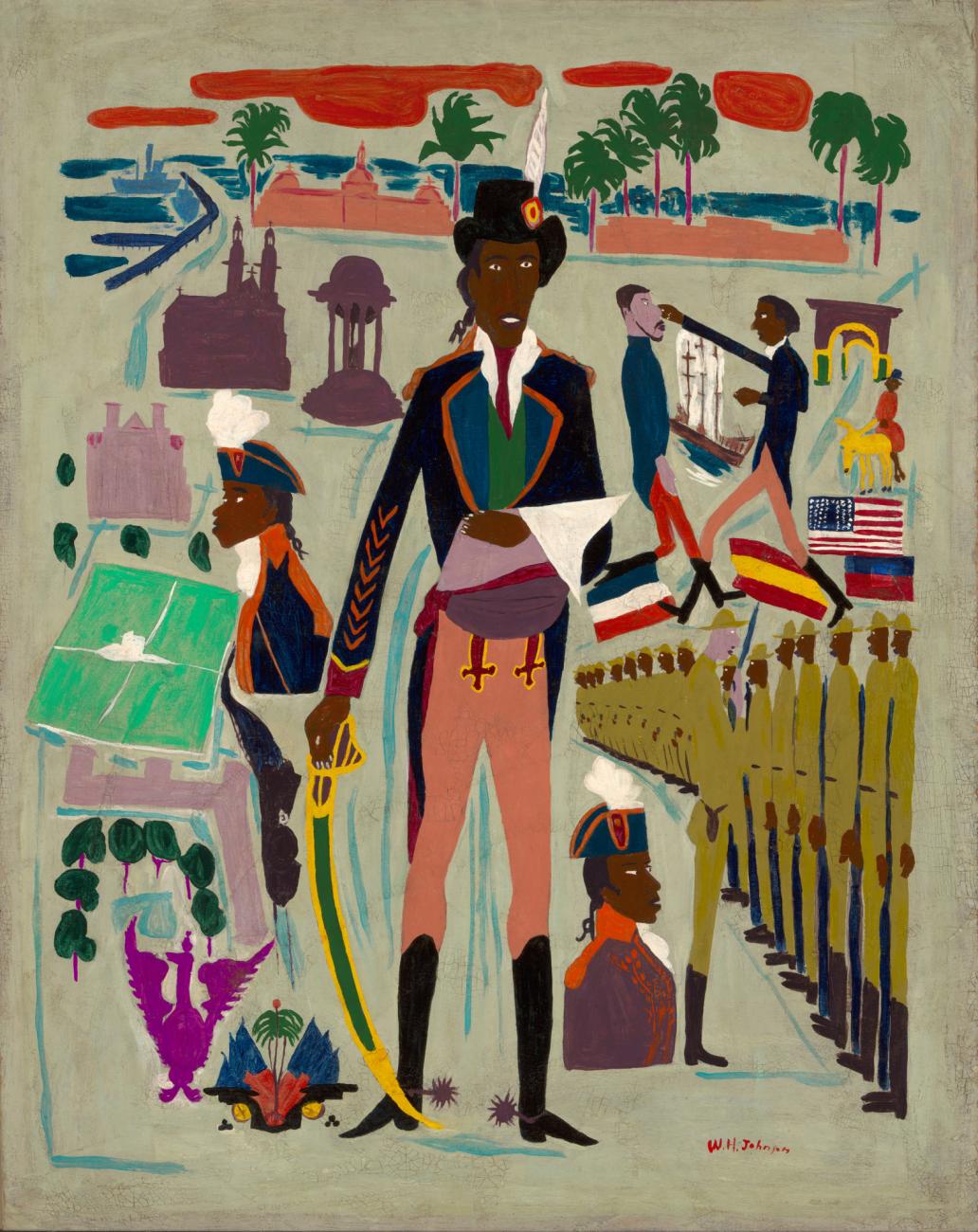
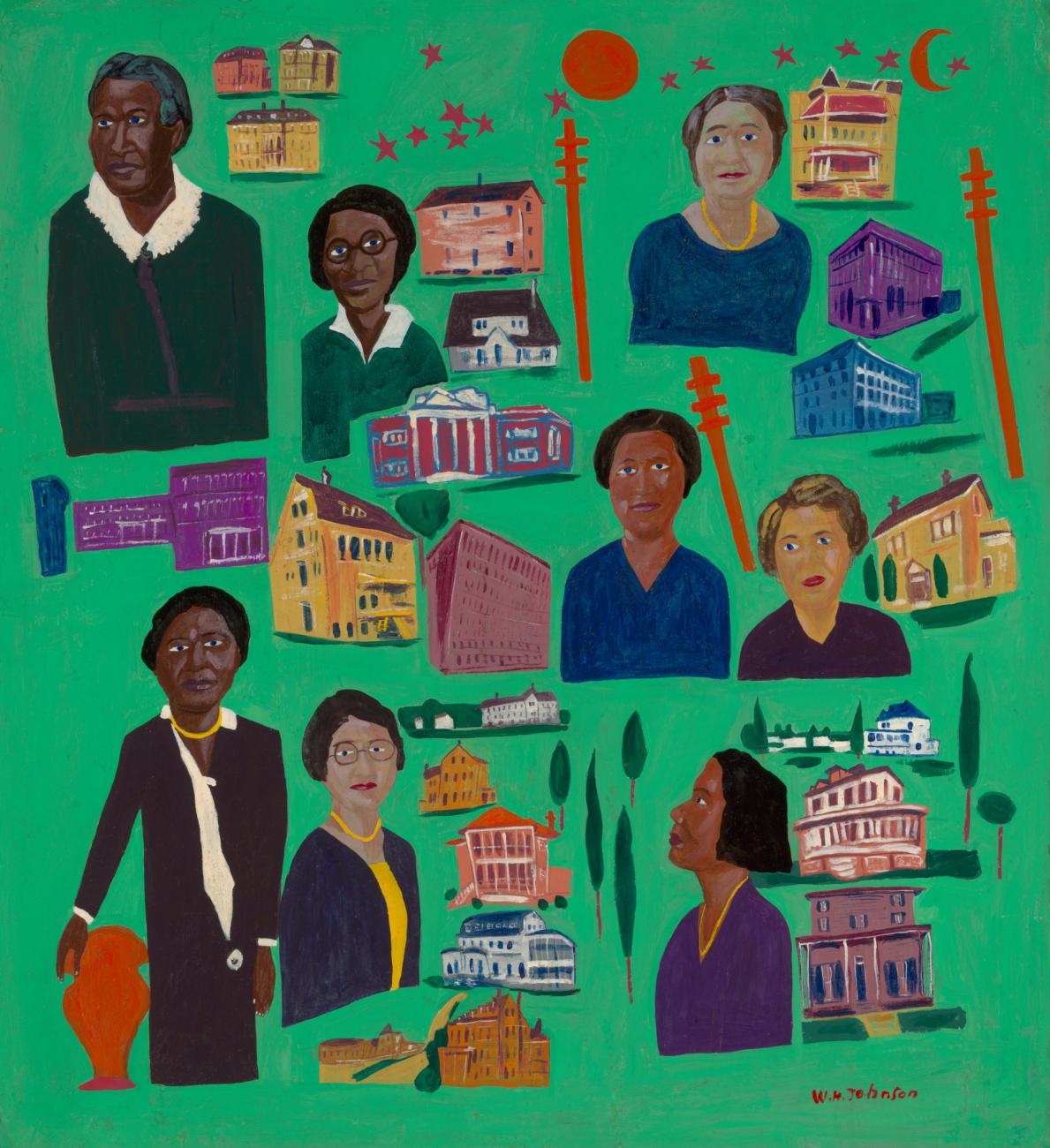
William H. Johnson (1901–1970) painted his last body of work, the “Fighters for Freedom” series, in the mid-1940s as a tribute to African American activists, scientists, teachers and performers as well as international leaders working to bring peace to the world. The landmark exhibition “Fighters for Freedom: William H. Johnson Picturing Justice,” brings together—for the first time since 1946—34 paintings featured in the series, including 32 drawn from the museum’s collection of more than 1,000 works by Johnson.
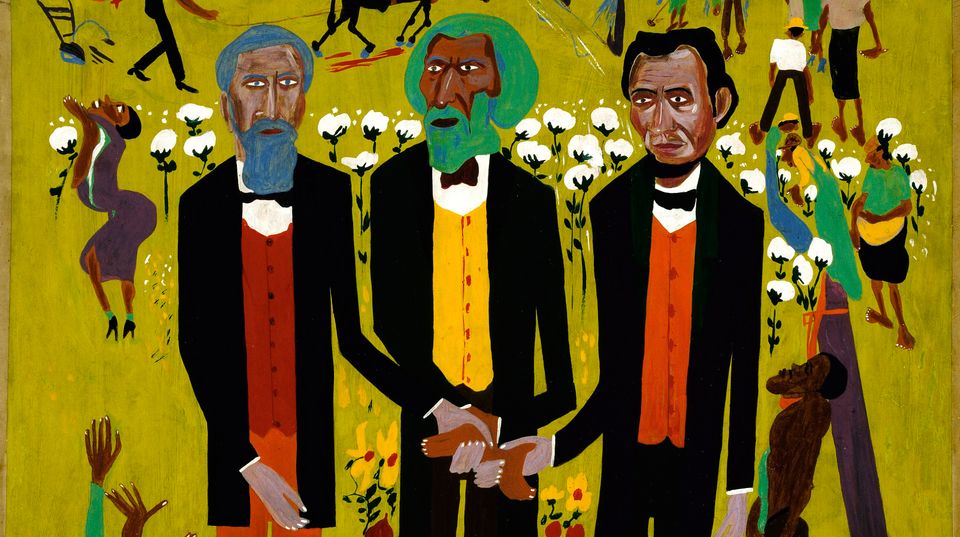
Two paintings, “Three Great Freedom Fighters” and “Against the Odds,” are on loan from the Hampton University Museum of Art exclusively for the presentation at the Smithsonian American Art Museum. The exhibition illuminates the extraordinary life and contributions of Johnson, an artist associated with the Harlem Renaissance but whose practice spanned several continents, as well as the contributions of historical figures he depicted.
“Fighters for Freedom: William H. Johnson Picturing Justice” is on view from March 8 through Sept. 8 at the Smithsonian American Art Museum’s main building in Washington, D.C. It is organized by Virginia Mecklenburg, senior curator at the Smithsonian American Art Museum, and Laura Augustin Fox, curatorial collections coordinator.
“By telling the stories of those who fought for social and racial justice, both historically and in his own time, the remarkable artist William H. Johnson should be more widely known and this exhibition aims to do that by reaffirming the central importance of African Americans to the American narrative,” said Stephanie Stebich, the Margaret and Terry Stent Director. “It is an awesome and humbling responsibility to build on more than 50 years of the Smithsonian American Art Museum of preserving, displaying and interpreting a lifetime of work by this great American artist whose bold graphic images are not soon forgotten.”
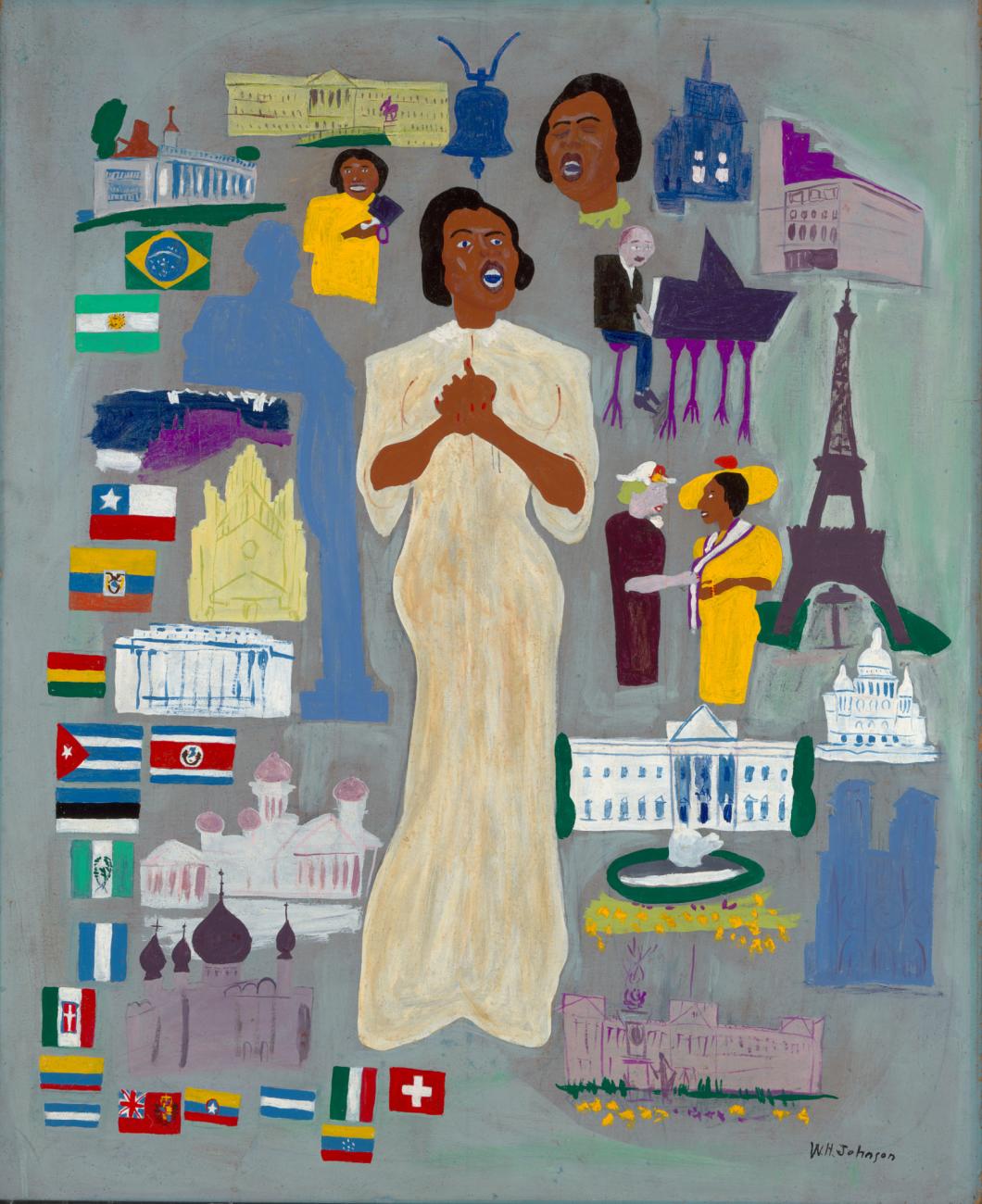
Some of Johnson’s “Fighters”—Marian Anderson, George Washington Carver, Mohandas Gandhi and
William H. Johnson,Harriet Tubman, ca. 1945, oil on paperboard, Smithsonian American Art Museum, Gift of the Harmon Foundation, 1967.59.1146
Harriet Tubman’s Shawl
Harriet Tubman—are familiar figures; others—Nannie Helen Burroughs and William Grant Still, among them—are less well-known individuals whose achievements have been eclipsed over time. Johnson celebrates their accomplishments even as he acknowledges the realities of racism, oppression and sometimes violence they faced and overcame. Johnson clues viewers to significant episodes in the “Fighters” lives by punctuating each portrait with tiny buildings, flags and vignettes that give insight into their stories. Using a colorful palette to create evocative scenes and craft important narratives, he suggests that the pursuit of freedom is an ongoing, interconnected struggle, with moments of both triumph and tragedy. These paintings invite the viewer to reflect on the struggles for justice today.
“Through Johnson’s ‘Fighters for Freedom’ paintings, we learn about people who changed lives, promoted equality, valued legacy and demonstrated unflagging determination in the face of almost insurmountable challenges,” Mecklenburg said. “He tells us that the continued fight for equity, dignity and equality for all is central to the American story.”
The museum has created extensive educational materials and in-gallery interpretation strategies to deepen visitors’ understanding of Johnson and the featured historical figures. A visual timeline puts Johnson’s life events in context with key moments in African American history and the lives of his “Fighters.”
The museum has produced short videos to accompany five paintings on view, each featuring commentary from curators from across the Smithsonian discussing collection objects, including Nat Turner’s Bible and Marian Anderson’s fur coat, that give insight into the people depicted in each work. Four interactive in-gallery kiosks provide information about Johnson’s visual references and historical source material that “decode” selected compositions and uncover the meaning behind the imagery. A separate media space invites visitors to experience select “Fighters” in action through archival video, audio and images. The museum’s efforts to conserve Johnson’s artworks are documented in a short video and wall panels, highlighting the recent preservation work of the “Fighters for Freedom” paintings. Additional elements include tactile reproductions and visual descriptions of key works; an all ages reading room that offers visitors a chance to gather, learn and reflect; and a mural featuring responses from students across the country about people they consider fighters for freedom today.
About William H. Johnson
Johnson was born in Florence, South Carolina, in 1901, but left the Jim Crow South as a teenager to go to New York City. In 1921, he passed the entrance exam at the National Academy of Design. By the time he finished five years later, he had won most of the prizes the academy offered. Johnson left for Europe, where he painted landscapes that marked him as an up-and-coming modernist. After three years in France, Johnson returned to the United States in 1929, meeting Harlem Renaissance luminaries Alain Locke and Langston Hughes during that time. He left again for Europe after less than a year. He married Danish weaver Holcha Krake in 1930, and they spent most of the decade in Scandinavia, where Johnson's interest in European modernism had a noticeable impact on his work.
In late 1938, with World War II imminent, the couple returned to New York, where he was soon recognized as a central figure in the Harlem Renaissance. Johnson abandoned the dazzling landscapes he painted in Scandinavia to focus instead on the lives of African Americans. He painted Southern sharecroppers, city hipsters, Black soldiers training for war, religious scenes and his last series, “the Fighters for Freedom.” It was a trying time in Johnson’s personal life. His wife developed breast cancer, and after she died in 1944, Johnson’s mental health deteriorated. In 1947, he was confined to Central Islip State Hospital in New York, where he remained until his death in 1970.
In 1967, the William E. Harmon Foundation, the patron of African American artists that cared for Johnson’s work after his hospitalization, entrusted his life’s work—paintings, watercolors, prints and drawings—to the Smithsonian American Art Museum. The museum, in turn, offered almost 150 paintings and prints to other institutions. As a result, historically Black universities, including Fisk, Hampton, Howard, Morgan State and others, have rich collections of Johnson’s work. The Smithsonian American Art Museum holds the largest and most complete collection of work by Johnson. It has done much in the past 50 years to preserve Johnson’s art and establish his reputation by organizing exhibitions and installations of his work and an ongoing program of conservation for these fragile paintings. Most recently, the museum has loaned six works by Johnson to the Metropolitan Museum of Art’s groundbreaking exhibition “The Harlem Renaissance and Transatlantic Modernism” (2024).
Book
A beautifully illustrated catalog accompanies the exhibition, co-published by the Smithsonian American Art Museum in association with Scala Arts Publishers Inc. It is written by Mecklenburg, with an introduction by Smithsonian Secretary Lonnie G. Bunch III, a foreword by Stebich and contributions by Tiffany D. Farrell and Emily H. Rohan.
National Tour
The exhibition debuted at the Gibbes Museum of Art in Charleston, South Carolina, in 2022. It traveled to the Albany Museum of Art in Georgia; the Oklahoma City Museum of Art; The Rockwell Museum in Corning, New York; and the Wichita Museum of Art in Kansas. Future presentations include the Patricia and Phillip Frost Museum in Miami.
Images
: William H. Johnson, Three Great Abolitionists: A. Lincoln, F. Douglass, J. Brown (detail), ca. 1945. Oil on paperboard, 37 3/8 x 34 1/4 in. Smithsonian American Art Museum. Gift of the Harmon Foundation, 1983.95.51
William H. Johnson, Marian Anderson, ca. 1945, oil on paperboard, Smithsonian American Art Museum, Gift of the Harmon Foundation, 1967.59.657
William H. Johnson, Toussaint l'Ouverture, Haiti, ca. 1945, oil on paperboard, Smithsonian American Art Museum, Gift of the Harmon Foundation, 1967.59.1154
William H. Johnson, Women Builders, 1945, oil on paperboard, Smithsonian American Art Museum, Gift of the Harmon Foundation, 1967.59.1150


,%202000.JPG)
,%202000.JPG)


.jpg)