Dixon Gallery and Gardens
Jun 19, 2026 - Sep 6, 2026
Joslyn Art Museum
Sep 26, 2026 – Jan 17, 2027
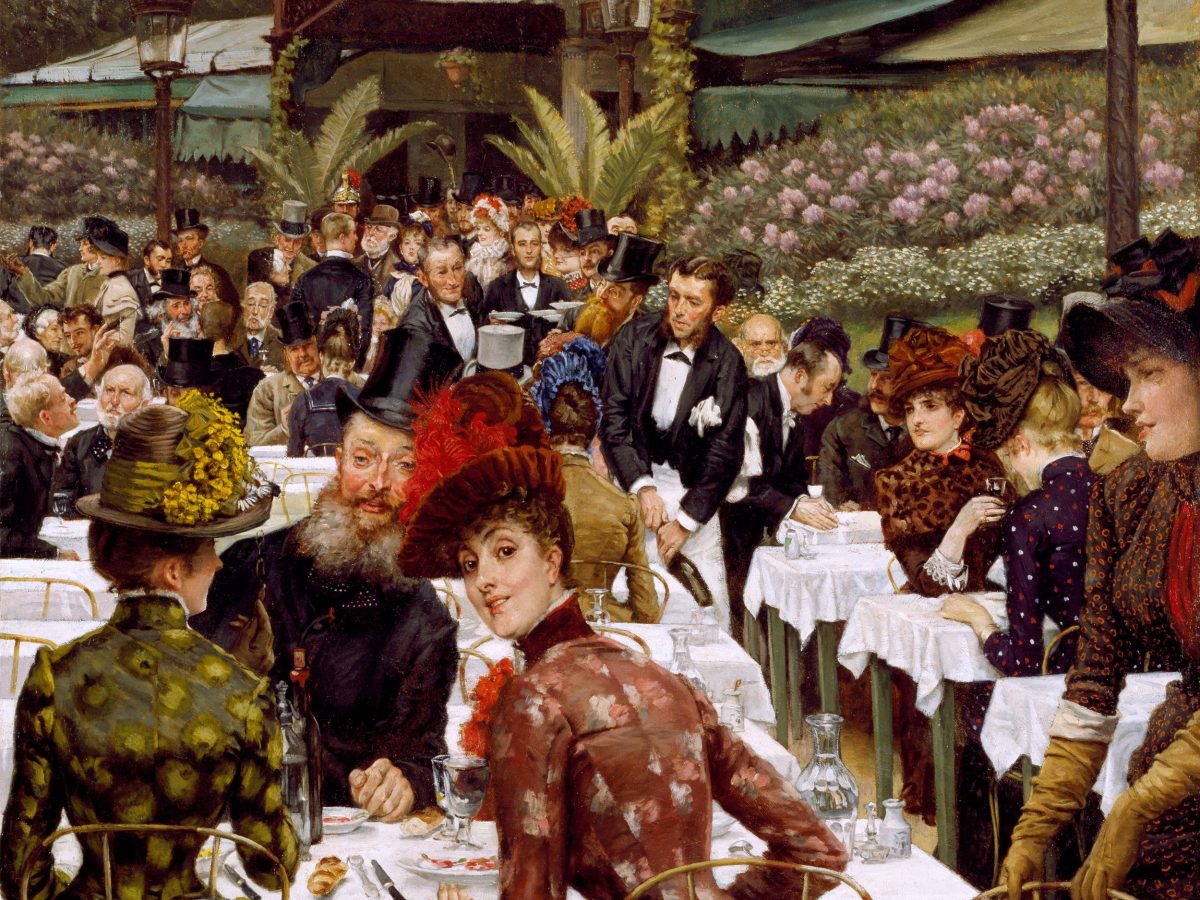 James Tissot (French, 1836–1902), "The Artists’ Wives," 1885; oil on canvas; Chrysler Museum of Art, Norfolk, Virginia; Gift of Walter P. Chrysler, Jr., and The Grandy Fund, Landmark Communications Fund, and "An Affair to Remember" 1982, 81.153
ORGANIZED BY DIXON GALLERY AND GARDENS WITH ORDRUPGAARD AND JOSLYN ART MUSEUM
The Dixon’s summer season kicks off with the spectacular exhibition Café Society: Art and Sociability in Paris, 1855 – 1914. In this show, the audience is invited to visit Parisian cafés by artists such as Jean-Louis Forain, Edvard Munch, Pablo Picasso, Pierre-Auguste Renoir, James Tissot, and Édouard Vuillard. In the late nineteenth and early twentieth centuries, the Parisian café served as the central arena for modern public life. Artists, writers, musicians, and poets gathered daily at cafés of all sorts to discuss art and nurture new alliances in dialogues stimulated by coffee, beer, wine, and absinthe.
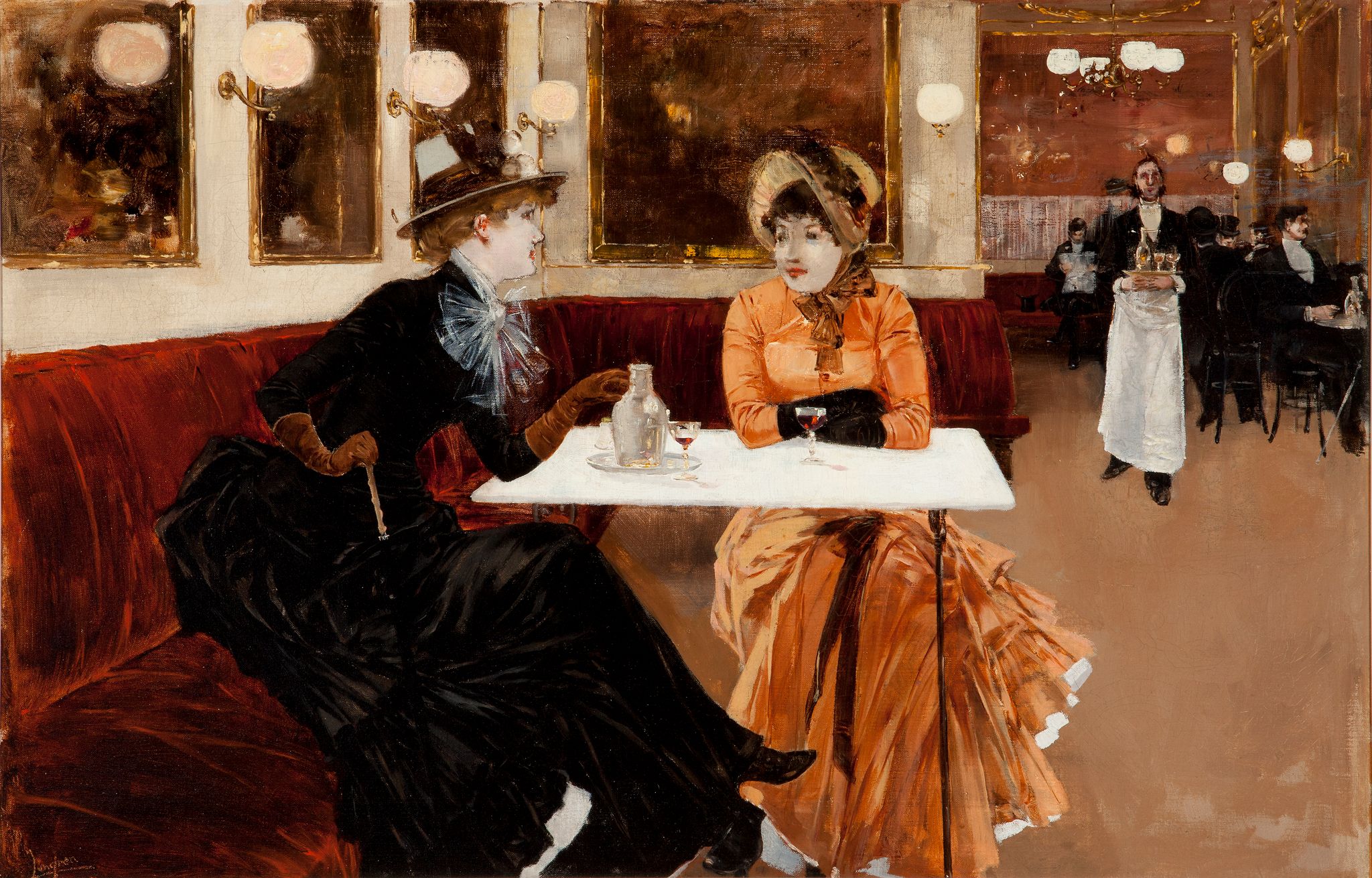
Fernand Lungren; In the Café, 1882-84. Oil on canvas; Dixon Gallery and Gardens; Museum purchase with funds provided by the estate of Cecil Williams Marshall, 2018.2
Gradually, as modern life became a core motif in late nineteenth century French art, cafés began to function as informal hatching grounds for new artistic ideas and trends. Paris became the center of an increasingly international art world, and the many foreign artists in the city found inspiration in fashionable café life and the alliances formed there. American artists, among them Robert Henri, Willard Metcalf, and James McNeill Whistler, also flocked to the French venues to depict modern life, a motif adopted by avant-garde artists to replace the historical and mythological motifs that had defined art for centuries. In the first decades of the twentieth century, the international art scene around cubist artists such as Pablo Picasso, Juan Gris, and Elisabeth Epstein moved to the left bank of the Seine where cafés remained a central part of artists’ everyday lives and their art.

Pierre-Auguste Renoir, French, 1841–1919; Young Woman (La Servante), c. 1875; oil on canvas; The Metropolitan Museum of Art; Bequest of Stephen C. Clark, 1960.
Café Society: Art and Sociability in Paris, 1855 – 1914 examines the development of the French café, a crucial and accessible site for artistic discussion, and, ultimately, how cafés became the subject of works of art themselves. Organized into thematic sections, the exhibition and catalogue seek to demonstrate the multitude of factors that led to the rise of café culture, from the French Revolution and the growth of the bourgeoisie to Haussmannization and the Franco-Prussian War. Though ubiquitous, cafés were also infinitely varied in their nature, making them intriguingly difficult to categorize both in the fin-de-siècle and today. As places where Parisians and expatriates of various backgrounds mingled daily, cafés were often considered a microcosm for the city of Paris itself. At the dawn of the twentieth century, the café remained an important part of daily life for artists and provided inspiration for experiments with new approaches to artmaking.
 |
The works presented in Café Society navigate these complexities while simultaneously demonstrating how the café fundamentally changed the fabric of Parisian life, allowing for daily collective social activity. These spaces proliferated rapidly, shifting how people experienced the city and each other, leading to increasingly connected populations. Alongside this social progress, the Paris café became a pervasive motif in European and American art of the nineteenth century.
