From Impressionism’s opening moments to the post-war era, the 20th Century Evening Sale tracks the major movements of the modern art canon—from Claude Monet and Paul Signac to Mark Rothko and Robert Ryman.
This November, the auction expands its scope to celebrate 500 years of invention in art with Heroes & Lovers: Property of a Distinguished Collector bringing modern masters Pablo Picasso and Edouard Manet in dialogue with predecessors Cornelis Cornelisz. van Haarlem and Tilman Riemenschneider—and introducing Old Masters into the 20th Century Evening Sale for the first time since the record-shattering sale of Leonardo da Vinci’s Salvator Mundi in 2017.
Featured collections also include Herbert Lust: Collector, Scholar, Friend, led by an astounding sculpture by Alberto Giacometti among other artists the prescient collector personally befriended and championed, including Frank Stella and Robert Indiana. The Clive Davis Collection represents the legendary music executive’s talent in recognizing brilliance across artistic mediums, featuring an Andy Warhol portrait of David Hockney that compliments a late, vibrant landscape by the British master himself. Further remarkable collections include Points of Light: The Mickey and Edna Weiss Collection and Property from the Collection of Wilma (Billie) and Laurence Tisch, each including exceptional sculptures by Henry Moore.
Explore early highlights from the 20th/21st Century Art auction series in New York prior to the exhibition opening on 7 November at Rockefeller Center.

Christie's New York is honored to announce that Litzlbergkeller, one of Gustav Klimt's finest landscape paintings, will lead New York's 20/21 Fall Marquee Week. The masterpiece will be in the premier auction of the season, the 20th Century Evening Sale, taking place on November 17, just days after the highly anticipated reopening of the Neue Galerie. In the same private collection for nearly three decades, Litzlbergkeller previously set a world record for Klimt when last at auction in May 1997 in the estate sale of Neue Galerie co-founder Serge Sabarasky. The work will be on view at Christie's Hong Kong from October 27-29 prior to exhibition at Rockefeller Center from November 7.
Giovanna Bertazzoni, Chairman of Christie's Europe: “We are honoured to be trusted with the sale of Litzlbergkeller in our momentous auctions in November. This landscape reads like a lyrical composition in three stanze – the forest with majestic, whispering oak trees; the house embraced by their foliage; the shimmering reflection in the lake. A shot of soothing potion in our veins, like the Mermaids' song: the mission delivered by the best works of art to the most passionate collectors. Inestimable.”
Max Carter, Global Chairman of 20th and 21st Century Art, Christie's: “The inn of Litzlbergkeller sits at the water's edge, between Klimt's allover technique and abstraction, form and dissolution, prewar certainties and the unknown. Our 20th Century Evening Sale was created six years ago to reflect and celebrate the range and curiosity of collectors across categories—and to span the great divides of hinge masterpieces like Litzlbergkeller.”
From 1900 through the end of his life in 1918, Klimt spent most of his summers in the Austrian countryside on the shores of Lake Attersee. The present work depicts a scenic view on the lake, centered around the Litzlberg Cellar—a brewery and inn on the north shore where Klimt had formerly stayed during his first several summers in the area from 1900-1907. Painted a decade later, after the artist had relocated to accommodations in a cottage on the lake's southern shore, the scene reflects on the past.
Composing the painting from across the lakeshore with the use of a telescope and postcard images, Klimt renders the building, grassy knoll and trees in his typically flattened style—crisp, interwoven planes in varying green jewel tones laid out with tapestry-like application, all over the canvas. The foreground presents a sharp departure, a semi-abstracted mirroring of the landscape above. Intriguingly, Klimt eliminates any signs of seasonal bustle around the popular inn. Instead, the painting is a calm, contemplative vision with all traces of human activity erased—an idealized reflection of the quiet serenity of his Lake Attersee summers.
Unlike the commissioned portraiture which won Klimt acclaim in Vienna, the vast majority of landscapes within his oeuvre were deeply personal, often inspired by his yearly escapes to Attersee, where he was free to experiment artistically and explore new techniques without the pressure of designing to a patron's taste. Litzlbergkeller is a rare hybrid, a picture motivated both by his own creative vision as well as a commission, by notable patron Otto Primavesi. Klimt painted the work over the course of nearly a year, starting in the summer of 1915, but not finishing until nearly a year later in May 1916 at his studio in Vienna.
The patron and first owner of the work, Otto Primavesi was a banker and entrepreneur from Olmütz, and along with his wife Eugenia, was an active champion of art, literature, music and theatre. The couple were among Klimt's most important patrons during this era, beginning with the commission of two family portraits in 1912. The following decade, several of their works, including Litzlbergkeller entered the possession of the Austrian photographer and anthropologist, Hugo Bernatzik. The work remained with him until it was acquired by Kurt Wieser in the early 1930s, then subsequently entered the collection of renowned gallerist, connoisseur and collector, Serge Sabarsky.
A crucial figure in the promotion of Klimt throughout the latter half of the twentieth century, Sabarsky curated the first show in Japan dedicated to Klimt's work in 1981, and later co-founded the Neue Galerie. Litzlbergkeller was acquired by the family of the present owner from Sabarsky's estate sale in May 1997—setting a record price for Klimt's work. A jewel within the esteemed private collection, the work has been on long-term loan at Vienna's Leopold Museum for the past several years.
This November, William I. Koch’s collection returns to Christie’s with an exceptional selection of Impressionist, Post-Impressionist, Modern European and Latin American art. Leading its highlights is

Claude Monet’s Champ d’avoine et coquelicots, a picturesque landscape from 1890, among works by Paul Cezanne, Henri Matisse and Diego Rivera, reflecting Mr. Koch’s discerning eye and wide-ranging connoisseurship.
Works from the William I. Koch Collection headline this season’s 20th and 21st Century Art auctions. The selection follows two landmark auctions of Mr. Koch’s collections, continuing a collecting story that crosses centuries and continents.
Christie's is pleased to announce the sale of Property from the Collection of Wilma (Billie) and Laurence Tisch best known for their business and philanthropic leadership in New York and beyond. Led by a bronze by Henry Moore, the collection's diverse approaches to figuration by Jean Arp, Jean Dubuffet, Fernand Léger, and Pablo Picasso represent a compelling profile of top iconic artists across the 20th Century. The majority of the collection will be offered in New York during November Marquee Week within the 20th Century Evening Sale, the Impressionist and Modern Art Day Sale, and the Post-War and Contemporary Art Day Sale, and in subsequent sales into 2027. In total, the collection is expected to realize in excess of $15 million, with proceeds going to the Tisch family foundations to continue the couple's lifelong philanthropic mission.
HENRY MOORE (1898-1986) Seated Figure, numbered '1/5' (on the back of the base) bronze with dark brown and green patina, 41¾ x 21 x 21¼ in. (106 x 54 x 55 cm.) Conceived in 1952-1953, Estimate: $5,000,000-8,000,000
The top lot of the collection is British master Henry Moore's bronze Seated Figure (estimate: $5 - 8 million), conceived in 1952-53 and closely related to the stylized female form in Moore's King and Queen sculpture, which set a new world auction record for the artist when it sold for over £26 million at Christie's London earlier this year. Seated Figure was acquired by the couple in 1965, while another cast from the edition is owned by the Frederick R. Weisman Art Foundation, Los Angeles.
Additional highlights include

Picasso's Femme assise, painted in April of 1958 ($4 - 6 million), and

Gens et Lieux, a large collage on canvas made by Jean Dubuffet in 1976 ($2.5 - 3.5 million).
_____________________________________________________

Christie's is delighted to announce Points of Light: The Collection of Mickey and Edna Weiss, a collection from the Los Angeles home of an extraordinarily benevolent couple who were twice awarded the President's “Points of Light” award in honor of their efforts to end hunger. Their richly diverse collection spans the 20th century, from paintings with dazzling color and brushwork by Helen Frankenthaler, Maurice de Vlaminck and Raoul Dufy to Modern sculptures by Alexander Calder and Henry Moore that employ movement and negative space to play with light in three-dimensions. The collection will be presented at Christie's New York this November during the Marquee Week with offerings in the 20th Century Evening Sale, the Impressionist and Modern Art Day Sale, the Post-War and Contemporary Art Day Sale and online sales. Christie's exhibition of highlights in Los Angeles from October 14-17 will mark the first time works from the collection have been publicly viewed since they were acquired by the family in the 1980s.
Cyanne Chutkow, Deputy Chairman of Impressionist and Modern Art, remarks, "Mickey and Edna Weiss were deeply beloved members of the Los Angeles community, whose extraordinary philanthropic contributions touched countless lives, most notably through their steadfast commitment to the fight against world hunger. Their generosity extended far beyond food security, however, encompassing meaningful support for music, science, and the Jewish faith.
The collection they assembled is a deeply personal reflection of the compassion, curiosity, and generosity of spirit that defined their lives. They approached collecting with thoughtfulness and discernment, seeking out exceptional examples of the most celebrated artists of their time—often discovering works through friends who shared their passion for great art. Each acquisition reflects not only their remarkable eye, but also the relationships, friendships, and shared enthusiasm that enriched their lives. We are honored to bring this superb collection to market this fall and, through its presentation, to celebrate the remarkable legacy of a truly extraordinary couple.”
The collection's offerings span a range of movements and mediums, with a diverse array of sculptures created by pioneering artists of the modern and contemporary eras at the height of their careers. The 20th Century Evening Sale features a wonderful bronze sculpture by British icon Henry Moore of a mother and child in his highly celebrated semi-abstract style, which is estimated to realize $1.5 - 2.5 million. Other examples from the edition are in the collections of the Prefectural Museum of Modern Art, Fukushima; National Gallery of Victoria, Melbourne; and the Henry Moore Foundation. The 20th Century Evening Sale will also include two outstanding works by Alexander Calder:

Tres Plat a 1972 hanging mobile estimated to achieve $2 – 3 million, and

Performing Seal, a standing mobile executed in 1966 which is estimated to realize $1 – 1.5 million.
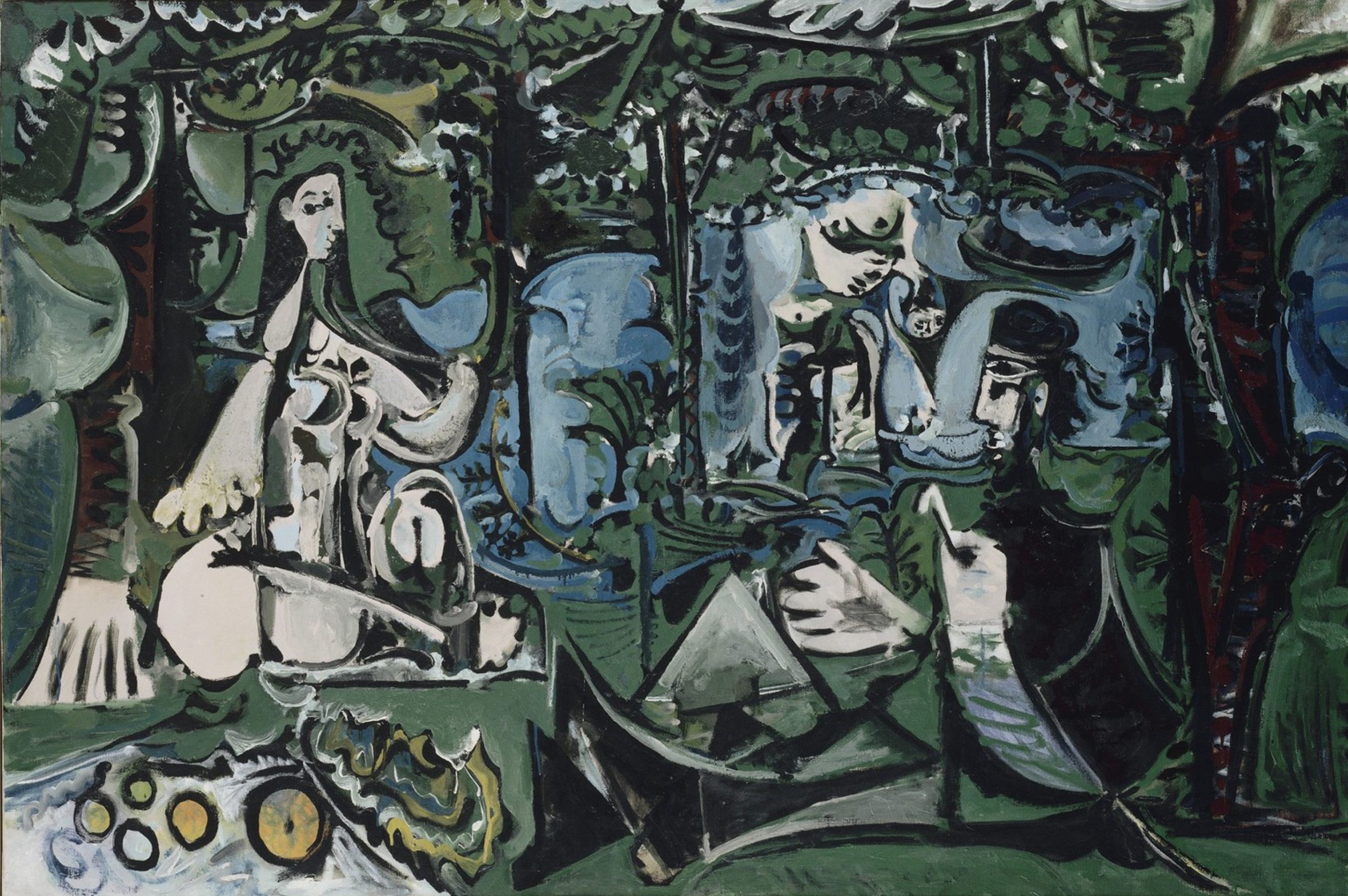
In 1932, Picasso wrote a note to himself about this work: ‘When I see Manet’s Luncheon on the Grass I tell myself there is pain ahead.’
Close to 30 years later, the masterwork would inspire Picasso in a series of 140 drawings, 27 paintings and four linoleum cuts, including the above. Artwork: Pablo Picasso, Le déjeuner sur l’herbe d’après Manet, 3 mars-20 août 1960, 1960. Paris, Musée Picasso. © 2026 Estate of Pablo Picasso / Artists Rights Society (ARS), New York
Myths and legends
Just like Picasso’s lovers in the throes of passion, Cornelis Cornelisz. van Haarlem’s dramatic and monumental depiction of Hercules and Achelous from Ovid’s Metamorphoses plunges the viewer into the midst of a battle — intense passion of a different kind.
Van Haarlem was an icon of northern Baroque art and one of the most gifted Dutch Mannerist painters working in Haarlem in the late 16th century. When depicting the violent struggle between the two mythological figures, Van Haarlem chose to focus on the moment of greatest drama: just before Hercules pulls the horn from the bull’s head in an act of strength and bravery.
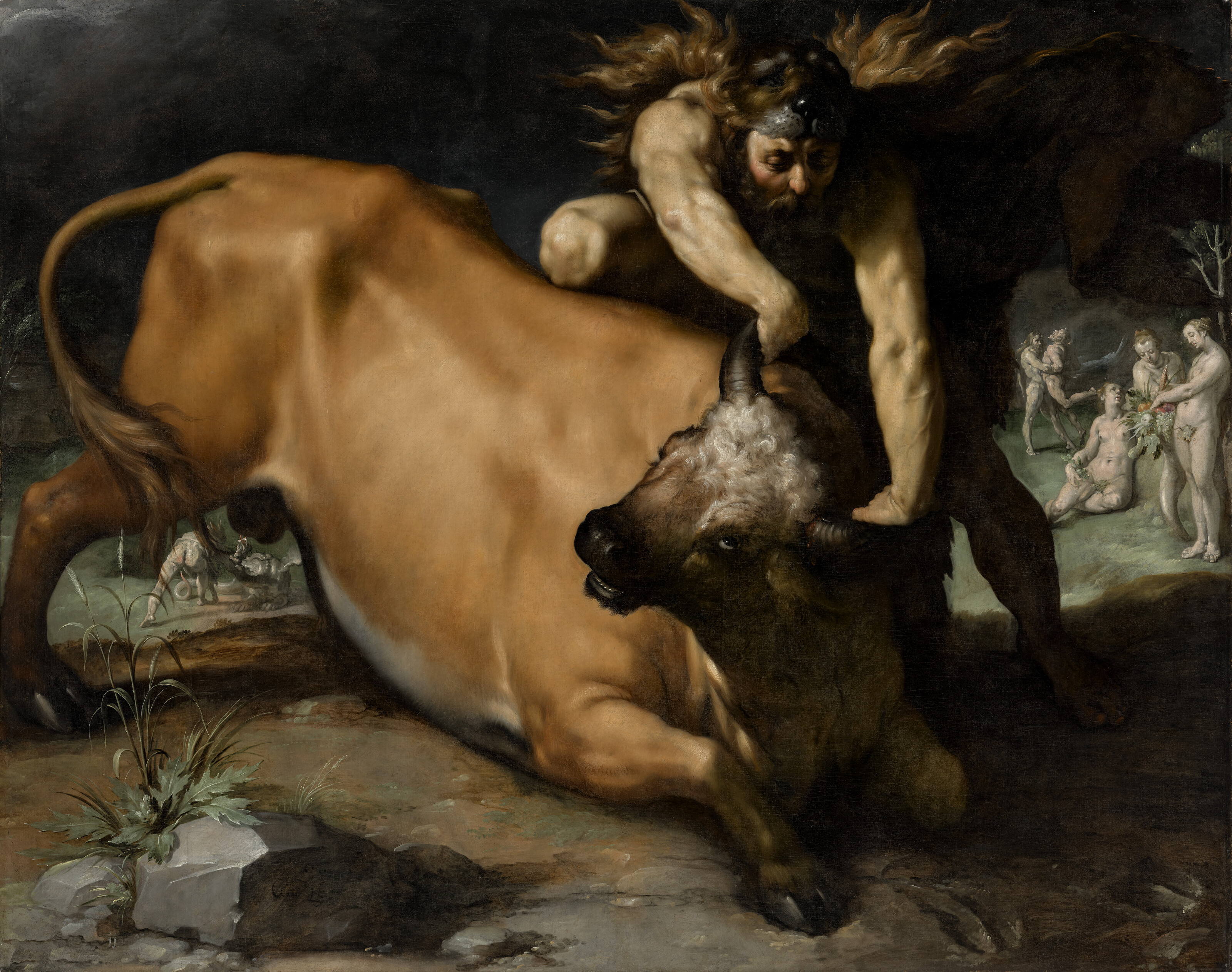
Cornelis Cornelisz. van Haarlem (1562-1638), Hercules and Achelous, 1590. Oil on canvas. 75⅜ x 95½ in. (191.4 x 242.5 cm.) Offered in the 20th Century Evening Sale on 17 November 2026 at Christie’s in New York
‘The composition captures Hercules at the brink of victory. His taut, muscular arms twist the bull’s horns, his knee presses into the bull’s flank, and that bracing intensity contrasts with the bull’s agony,’ says Jennifer Wright, Christie's head of Old Master Paintings in New York. 'Ovid’s story is partly an allegory of logic and reason over impulse: though the bull embodies a more formidable physical power, Hercules relies on strategy and cunning to overcome it. The transformation of the bull’s horn into a cornucopia is a sign of hope and abundance in addition to symbolising Hercules’ victory.’
Traversing centuries, these images of heroes and lovers encapsulate not only defining moments of art history but celebrate some of the many deep and varied emotions that constitute what it is to be human. Above all, it is love which has — and will always remain — one of the most enduring and powerful forces of artistic imagination.
