Sunday, January 8, 2017

Portrait of the Artist: Rubens, Rembrandt, Hockney and Freud


Sir Peter Paul Rubens, A Self-Portrait, 1623

Some of the finest portraits of artists, collected by monarchs since Charles I, go on display in a new exhibition at The Queen's Gallery, Buckingham Palace. Portrait of the Artist explores the changing image of the creative genius from the 15th century to the present day through more than 150 works from the Royal Collection.  It includes paintings and drawings by, and of, some of the world's greatest artists, including Rembrandt van Rijn, Sir Peter Paul Rubens and Leonardo da Vinci.

For centuries images of artists have been a valuable commodity. Charles I was one of the first European monarchs to acquire them, including Artemisia Gentileschi's extraordinary  


Self-Portrait as the Allegory of Painting (La Pittura) (c.1638–9). Produced at the height of his fame, Rubens' self-portrait (1623) was given to Charles I by the artist as an apology for sending the King a work by studio assistants two years earlier. The painting hung alongside


Daniel Mytens' self-portrait (c.1630) in the Breakfast Chamber outside the King's Withdrawing Room at Whitehall, showing the high esteem in which the artists were held.

Rembrandt captured his own image throughout his life, producing approximately 80 self-portraits in total. His


Self-Portrait in a Flat Cap (1642) was one of three of the artist's works that entered the Royal Collection during the reign of George IV.  The monarch was so keen to own Sir Joshua Reynolds' self-portrait of c.1788 that he purchased an inferior copy of the painting in 1812, before being presented with the original version by the artist's niece just 15 days later.

The acquisition of artists' portraits by members of the royal family has continued into the 20th and 21st centuries. The friendship between The Duke of Edinburgh and Edward Seago is recorded in reciprocal portraits, which show the painters at their easels aboard HMY Britannia on His Royal Highness's return from his world tour in 1956–7. The Duke invited Seago to accompany him on the voyage from Australia, where he had opened the 1956 Olympic Games, in the hope that the artist would 'find something to challenge his remarkable talent for landscape painting' in the scenery of the Antarctic Peninsula

Self-portraits by Lucian Freud and David Hockney were presented by the artists to Her Majesty The Queen on their appointment to the Order of Merit, an honour recognising distinguished service in science, art, literature or culture.


Freud's Self-Portrait: Reflection (1996), produced at the age of 74, was one of a series of life-sized portrait etchings made by the artist in the 1990s.


Hockney's Self-Portrait, 6 April 2012 was created on an iPad using the Brushes app, allowing him to play back the drawing 'stroke by stroke' to watch himself at work.

The world's most important group of artists' self-portraits hangs in the Vasari Corridor of the Galleria degli Uffizi, Florence. In the 1760s, the Italian artist Giuseppe Macpherson was commissioned by Lord Cowper, a leading patron of the arts, to create miniature copies of 224 of the works for presentation to George III.  In the note accompanying the gift, Cowper wrote: 'There is nothing of the kind to be found in any Cabinet whatever in Europe, as it is the first time they have been permitted to be copied'. The complete set is on display for the first time in the exhibition.

The relationship between contemporaries in the art world is also explored in the exhibition through representations of artists by their friends, admirers and pupils.
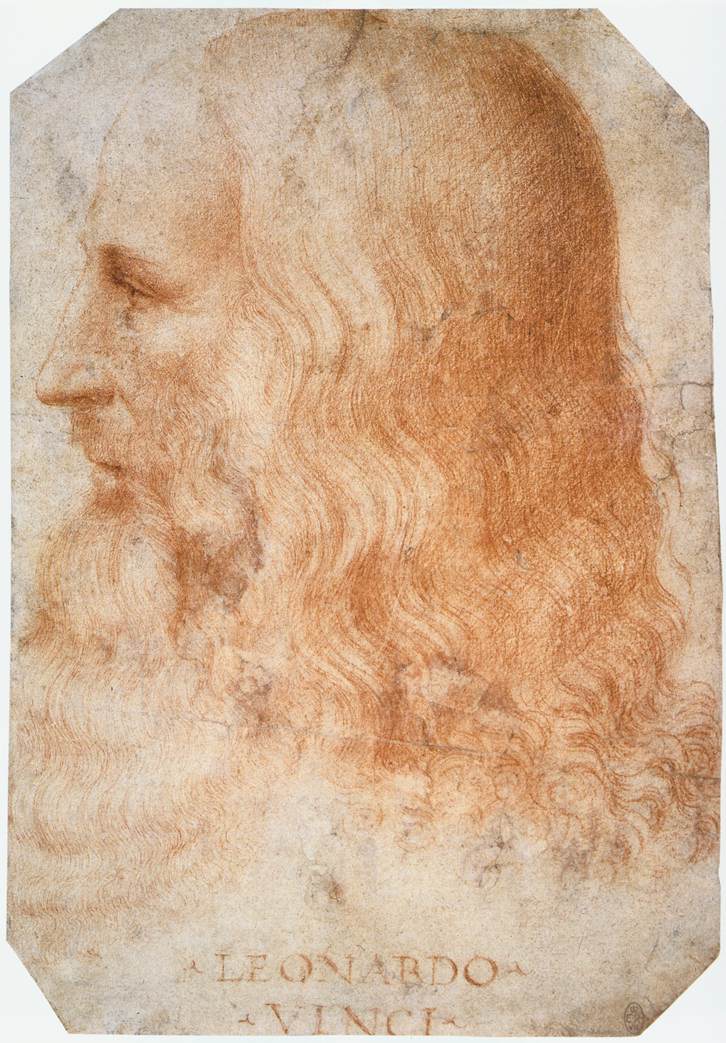

Francesco Melzi's drawing of the aged Leonardo da Vinci (c.1515–18) is the most reliable surviving likeness of his teacher.


Rubens's portrait of his former assistant and lifelong friend Van Dyck (c.1627–8) shows the painter in an unusually reflective manner, unlike the assertive and confident figure presented in Van Dyck's self-portraits.


Dürer’s Self-Portrait at Age Twenty-Eight.


Hockney’s Self-Portrait with Cigarette


Publication
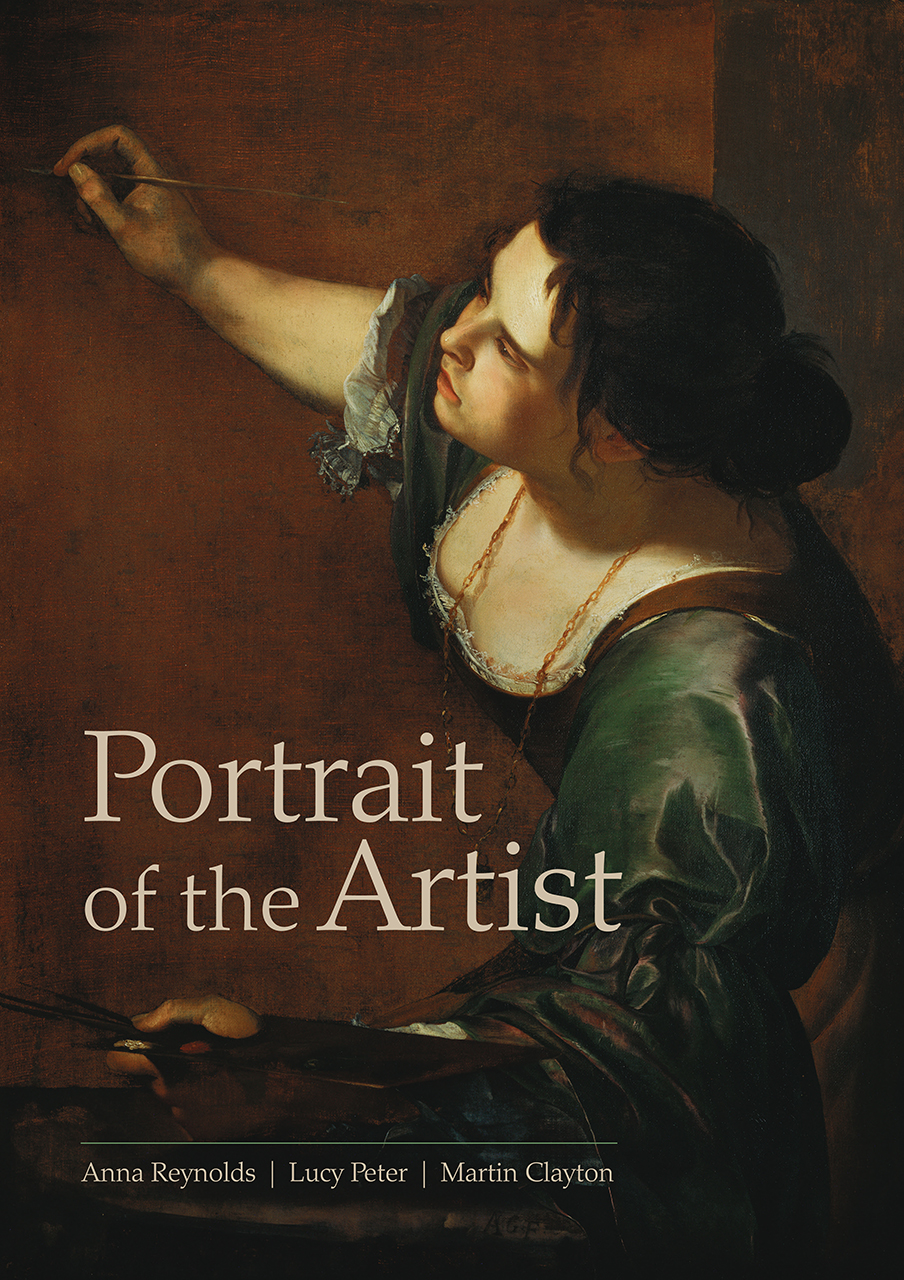


Throughout history, many of the world’s most renowned artists have made portraits to represent themselves and others.

The first book to focus on images of artists from within the Royal Collection, Portrait of the Artist brings together paintings, drawings, prints, and photographs by artists from across the centuries, including works by Rembrandt van Rijn, Peter Paul Rubens, David Hockney, and Lucian Freud. While some of the portraits included in this book were created to showcase the artist’s talent, others were motivated by more personal reasons, to preserve the images of cherished friends. Anna Reynolds, Lucy Peter, and Martin Clayton explore the miscellany of themes running throughout the discipline of portraiture, from the rich symbolism found in images of the artist’s studio to the transformation of styles with which artists depictedthemselves, changing their portrayals to align with their changing status. They also explore the relationships between artists and patrons, including the important role of the monarchy in commissioning and collecting portraits of artists.

Published to accompany a major exhibition opening in the fall at The Queen’s Gallery, Buckingham Palace, Portrait of the Artist provides a fascinating new perspective on this tradition, with lavish color illustrations of works from the fifteenth century to the present.

Cézanne Portraits


Musée d'Orsay from 13 June 2017 - 24 September 2017
National Portrait Gallery from 26 October 2017 - 11 February 2018
National Gallery of Art from 25 March - 1 July 2018

The National Portrait Gallery is to stage the first exhibition devoted entirely to portraits by Paul Cézanne, it was announced today, Thursday 8 December 2016. This major new exhibition, Cézanne Portraits, will bring together for the first time over 50 of Cézanne's portraits from collections across the world, including works never before on public display in the UK.

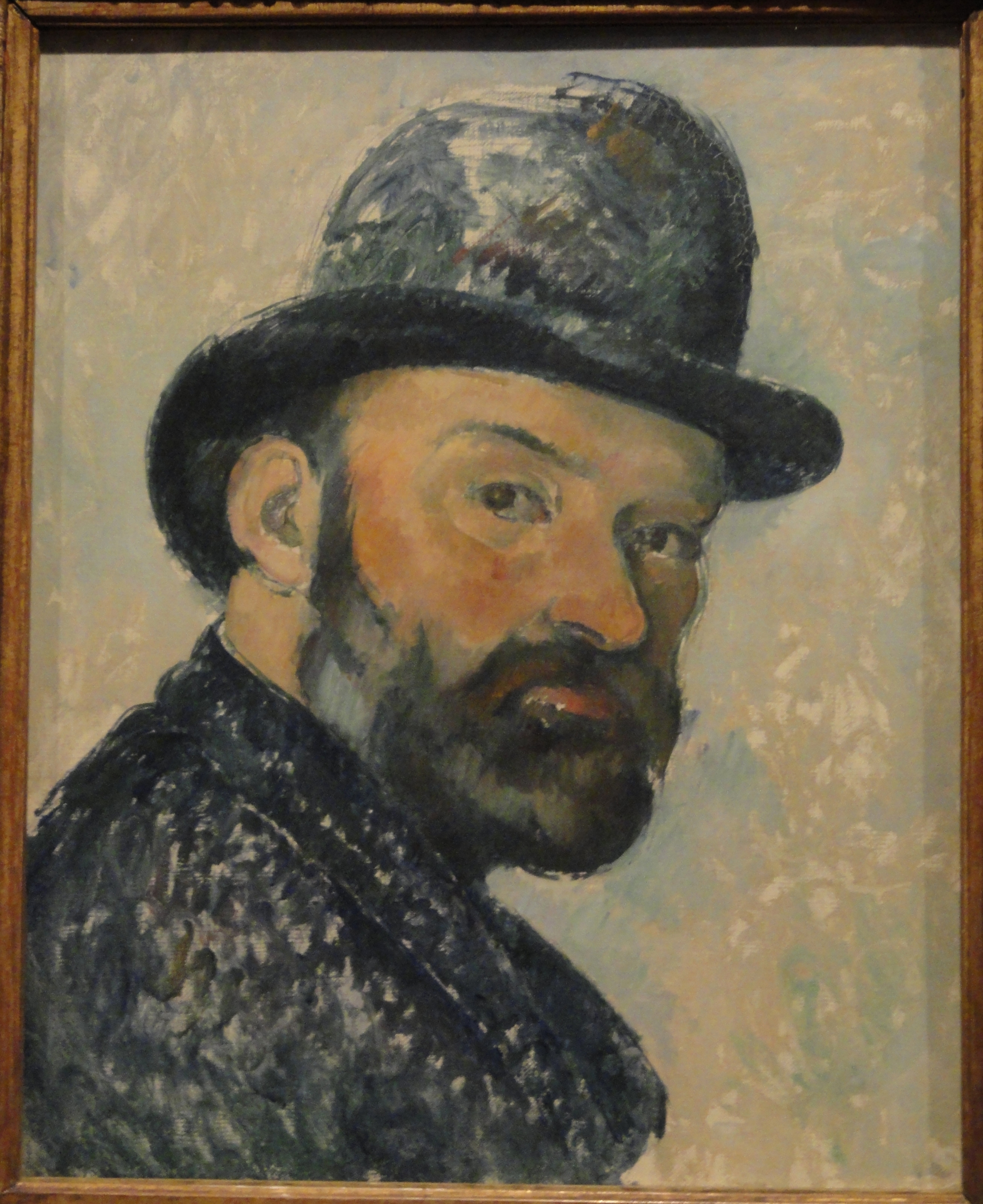
Portraits previously unseen in the UK include the artist's arresting  


Self Portrait in a Bowler Hat (1885-6) on loan from the Ny Carlsberg Glyptotek gallery in Copenhagen. 

Also on UK display for the first time since the 1930s will be  


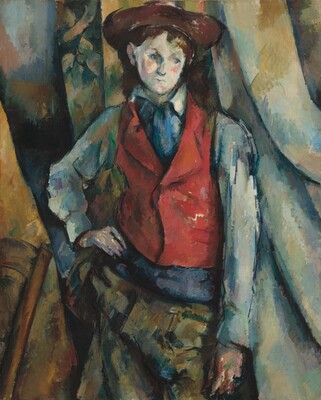
Boy in a Red Waistcoat (1888-90),
from the National Gallery of Art, Washington DC,


 one of a series of paintings of a young man in Italian clothes identified as Michelangelo de Rosa,


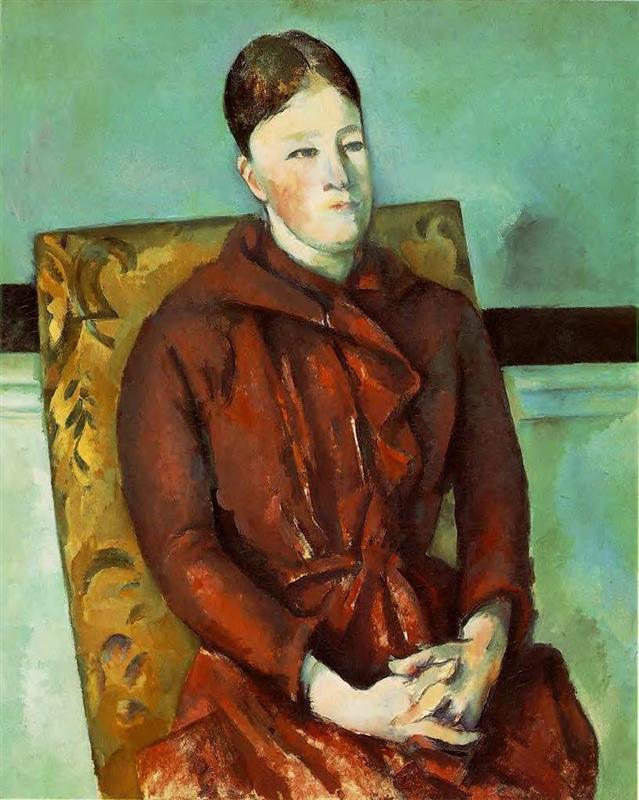
and Madame Cézanne in a Yellow Chair (1888-90) on loan from The Art Institute of Chicago, last exhibited in London in 1936 and 1939 respectively.

Paul Cézanne (1839-1906) painted almost 200 portraits during his career, including 26 of himself and 29 of his wife, Hortense Fiquet. Cézanne Portraits will explore the special pictorial and thematic characteristics of Cézanne's portraiture, including his creation of complementary pairs and multiple versions of the same subject. The chronological development of Cézanne's portraiture will be considered, with an examination of the changes that occurred with respect to his style and method, and his understanding of resemblance and identity. The exhibition will also discuss the extent to which particular sitters inflected the characteristics and development of his practise.

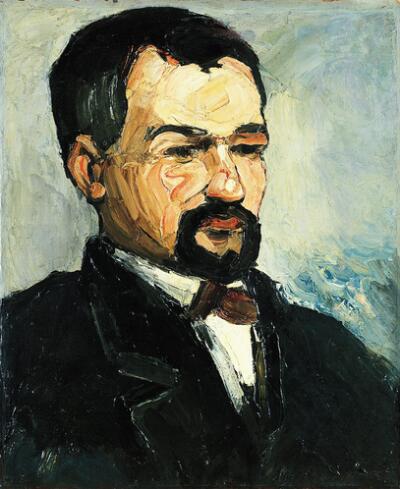
Works included in the exhibition will range from Cezanne's remarkable portraits of his Uncle Dominique, dating from the 1860s, through to his final portraits of Vallier, who helped Cézanne in his garden and studio at Les Lauves, Aix-en-Provence, made shortly before the artist's death in 1906. The paintings are drawn from museums and private collections in Brazil, Denmark, France, Japan, Russia, Sweden, the United Kingdom, and the United States.

Cézanne is widely understood to be one of the most influential artists of the nineteenth century. Generally categorised as a Post-Impressionist, his unique method of building form with colour, and his analytical approach to nature influenced the art of Cubists, Fauvists, and successive generations of avant-garde artists. Both Matisse and Picasso called Cézanne ‘the father of us all.'

Dr Nicholas Cullinan, Director, National Portrait Gallery, London, says: ‘We are delighted to be staging this once in a lifetime exhibition in collaboration with the National Gallery of Art in Washington DC and the Musée d'Orsay in Paris. Up until now, Cezanne's portraiture has received surprisingly little attention, so we are thrilled to be able to bring together so many of his portraits for the first time to reveal arguably the most personal, and therefore most human, aspect of Cézanne's art.'

Cézanne Portraits is curated by John Elderfield, Chief Curator Emeritus of Painting and Sculpture at The Museum of Modern Art, New York, where he has organised numerous exhibitions, including major retrospectives devoted to Willem de Kooning, Henri Matisse, and Kurt Schwitters; with Mary Morton, Curator and Head of Department, French Paintings, National Gallery of Art and Xavier Rey, Director of Collections, Musée d'Orsay.

The exhibition is collaboration between the National Portrait Gallery, London; the National Gallery of Art, Washington DC and the Musée d'Orsay, Paris.

Publication

The exhibition will be accompanied by a fully illustrated book featuring 170 beautifully reproduced portraits, with an introductory essay on Cézanne's portraiture by exhibition curator John Elderfield and a dramatis personae on the sitters featured by the artist's biographer, the late Alex Danchev. Catalogue texts are by John Elderfield, Mary Morton and Xavier Rey, and a chronology by Jayne Warman sets the artist's work in the context of his life.

Uncle Dominique

Paul Cézanne 

Uncle Dominique

1865 - 1867  
Oil on canvas 
18-1/8 x 15 in. (46.1 x 38.2 cm) 
Norton Simon Art Foundation 
Copyright: © Norton Simon Art Foundation 


Paul Cézanne


The Gardener Vallier


c.1906


Antoine-Fortuné Marion by Paul Cézanne 1870-1 Kunstmuseum, Basel. Photo © Kunstmuseum Basel - Martin P. Bhler; Uncle Dominique in Smock and Blue Cap by Paul Cézanne 1866-7 Metropolitan Museum of Art, Wolfe Fund, 1951 acquired from The Museum of Modern Art, Lillie P. Bliss Collection (53.140.1); Uncle Dominique in Profile by Paul Cézanne 1866-7 Lent by the Syndics of The Fitzwilliam Museum, Cambridge © The Provost and Scholars of King's College, Cambridge
Antony Valabrègue by Paul Cézanne 1866 National Gallery of Art, Washington D.C. Collection of Mr. and Mrs. Paul Mellon, 1970.35.1; Anthony Valabrègue by Paul Cézanne 1869-70 J. Paul Getty Museum, Los Angeles. Digital image courtesy of the Getty's Open Content Program; Paul Alexis Reading a Manuscript to Emile Zola by Paul Cézanne 1869-70 Gift Congresso Nacional, 1952. Museu de Arte de São Paulo Assis Chateaubriand.
The Artist's Father, Reading "L'Evénement" by Paul Cézanne 1866 National Gallery of Art, Washington, D.C. Collection of Mr. and Mrs. Paul Mellon, 1970.5.1; Self-Portrait by Paul Cézanne c.1862-4 Private Collection, New York; Victor Chocquet by Paul Cézanne 1877 Columbus Museum of Art, Ohio: Museum Purchase, Howald Fund 1950.024
Madame Cézanne in a Red Armchair by Paul Cézanne c.1877 Museum of Fine Arts, Boston. Bequest of Robert Treat Paine, 2nd. Photo © 2017 Museum of Fine Arts, Boston; Self-Portrait by Paul Cézanne 1880-1 The National Gallery, London. Bought, Courtauld Fund, 1925 © The National Gallery, London; The Artist's Son by Paul Cézanne 1881-2 Musée de l'Orangerie, Paris. Photo © RMN-Grand Palais (Musée de l'Orangerie) / Franck Raux
Self Portrait with Bowler Hat by Paul Cézanne 1885-6 NY Carlsberg Glyptotek, Copenhagen. Photo: Ole Haupt; Self-Portrait with Bowler Hat by Paul Cézanne 1885-6 Private Collection; Self-Portrait by Paul Cézanne c.1885 Carnegie Museum of Art, Pittsburgh; acquired through the generosity of the Sarah Mellon Scaife Family
Madame Cézanne in a Red Dress by Paul Cézanne 1888-90 Art Institute of Chicago, Wilson L. Mead Fund, 1948.54; Boy in a Red Waistcoat by Paul Cézanne 1888-90 National Gallery of Art, Washington D.C.; Collection of Mr. and Mrs. Paul Mellon, in Honour of the 50th Anniversary of the National Gallery of Art, (1995.47.5); Man with Pipe by Paul Cézanne 1891-6 The Samuel Courtauld Trust, The Courtauld Gallery, London; Self-Portrait, Rose Ground by Paul Cézanne c.1875 Musée d'Orsay, Paris. Gift of Philippe Meyer, 2000. Photo © RMN-Grand Palais (Musée d’Orsay) / Michèle Bellot
Woman with a Cafetière by Paul Cézanne c.1895 Musée d'Orsay, Paris: Gift of Mr and Mrs Jean- Victor Pellerin, 1956. Photo © RMN-Grand Palais (Musée d’Orsay) / Hervé Lewandowski; Old Woman with a Rosary by Paul Cézanne 1895-6 The National Gallery, London. Bought, 1953 © The National Gallery, London; Portrait of a Woman by Paul Cézanne c.1900 Private Collection; Girl with a Doll by Paul Cézanne c.1895 Private Collection, New York
Child in a Straw Hat by Paul Cézanne 1896 Los Angeles County Museum of Art, Mr. and Mrs. George Gard De Sylva Collection (M. 48.4); Ambroise Vollard by Paul Cézanne 1899 Musée des Beaux-Arts de la Ville de Paris, Petit Palais, Paris © RMN-Grand Palais / Agence Bulloz; Man with Crossed Arms by Paul Cézanne c.1899 Solomon R. Guggenheim Museum, New York (54.1387); Self-Portrait with Beret by Paul Cézanne 1898-1900 Museum of Fine Arts, Boston, Charles H. Bayley Picture and Painting Fund and Partial Gift of Elizabeth Paine Metcalf, (1972.950). Photo © 2017 Museum of Fine Arts, Boston
Seated Woman in Blue by Paul Cézanne 1902-04 Phillips Collection, Washington D.C.; Man in a Blue Smock by Paul Cézanne c.1897 Kimbell Art Museum, Fort Worth, Texas; Acquired in 1980 and dedicated to the memory of Richard F. Brown; The Gardener Vallier by Paul Cézanne 1902-06 National Gallery of Art, Washington D.C.; Gift of Eugene and Agnes E. Meyer, (1959.2.1);The Gardener Vallier by Paul Cézanne 1905-06 Tate, London, Bequeathed by C. Frank Stoop 1933 © Tate, London 2017
Madame Cézanne Sewing by Paul Cézanne 1877 Nationalmuseum, Stockholm. Photo © Eric Cornelius / Nationalmuseum, Stockholm; Madame Cézanne in a Striped Dress by Paul Cézanne 1885-6 Philadelphia Museum of Art, The Henry P. McIlhenny Collection in memory of Frances P. McIlhenny, (1986-26-1); Madame Cézanne by Paul Cézanne 1886-7 Musée d’Orsay, Paris. Photo © RMN-Grand Palais (Musée d’Orsay) / Hervé Lewandowski
Madame Cézanne by Paul Cézanne 1885-6 Philadelphia Museum of Art, The Samuel S. White 3rd and Vera White Collection, 1967-30-17; Madame Cézanne by Paul Cézanne 1886-7 Detroit Institute of Arts; Bequest of Robert H. Tannahill. Photo © Bridgeman Images; Madame Cézanne in Blue by Paul Cézanne 1886-7 The Museum of Fine Arts, Houston. The Robert Lee Blaffer Memorial Collection, gift of Sarah Campbell Blaffer; Madame Cézanne in a Red Dress by Paul Cézanne 1888-90 Lent by The Metropolitan Museum of Art, The Mr. And Mrs. Henry Ittleson Jr. Purchase Fund, 1962 (acc no. 62.45)


Bernard Buffet Retrospective

The Musée d’Art Moderne de la Ville de Paris 
 14  October  2016  - 26  February  2017 


The Musée d’Art Moderne de la Ville de Paris is organising a retrospective of the work of Bernard Buffet (1928 – 1999), one of the most famous French painters of the 20th century, but also one of the most contentious . In a choice of a hundred paintings this exhibition takes a fresh look at an oeuvre wh ch in fact remains little known to the public at large . 

The Musée d’Art Moderne being the only public museum with a large Buffet collection – thanks to the substantial Girardin bequest in 1953 and the Ida and Maurice Garnier donation in 2012 – it seemed appropriate to proceed with a project dating back to a contact initiated with the artist's long -time dealer Maurice Garnier (1920– 2014) some ten years ago, but delayed by the ongoing controversy surrounding the oeuvre. The passing of time brings greater objectivity, however, and many artists , art professionals and collectors are beginning to reconsider a body of work that has become slightly less perplexing. 

Given Buffet's prolific output, this overview is necessarily highly selective ; nonetheless the exhibition will reveal the unsuspected quality and variety of what will perhaps live on as one of the most fascinating and most influential painterly oeuvres of the last century. The chronologically structured retrospective opens with Buffet's beginnings, when his work was triggering a new awareness of a wide range of artistic forms and objects. Thus it covers the postwar years and their debate about reali sm, figuration and abstraction; and overall it highlights the paradox of an artist who was drawing on history painting in the context of the disappearance of the subject, and whose life was a blend of artistic austerity and financial ease, of public success and a rejection of the art world. 

Alongside his favourite subjects – self -portraits, still lifes – the exhibition will present the other themes he worked through in his annual exhibitions at Galerie Garnier: 

religion 


( The Passion of Christ ), 

literature 


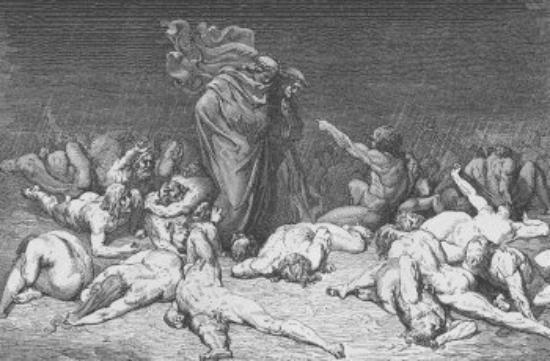
(Dante's Inferno


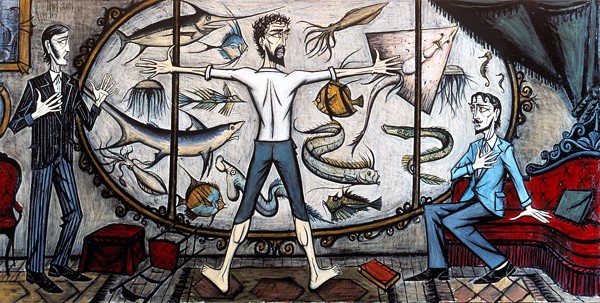
Twenty Thousand Leagues under the Sea

and allegory 


( The Birds ). 

The emphasis will be on his enduring concern with history painting


(the Horror of War series) 

and the history of painting 


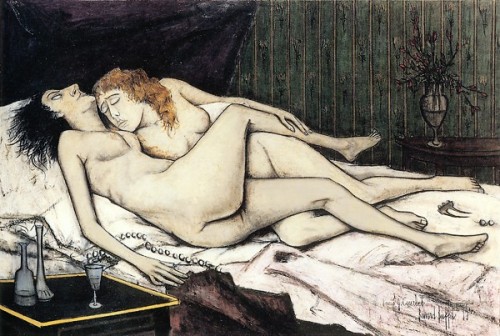
( The Sleepers, after Courbet ),


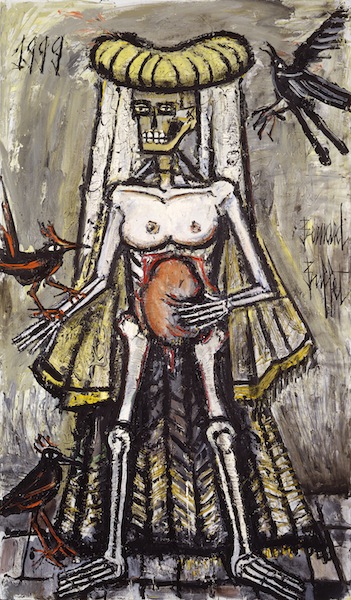
 and on his last, spectacular series, Death

with its references to the memento mori of medieval times. 

Generously backed up with documentary material, the retrospective will also offer an insight into the mechanisms behind Buffet's fame. The catalogue provides new studies of the artist by French and international historians, as well as articles by writers and critics of the time and interviews with Buffet's artist contemporaries.

 Excellent article, more images

DALÍ, ERNST, MIRÓ, MAGRITTE ...

Scottish National Gallery of Modern Art. Edinburgh 
4 June to 11 September 2016

Hamburger Kunsthalle
07. Oct 2016 to 22. Jan 2017


Museum Boijmans Van Beuningen,  Rotterdam
11 February to 28 May 2017


With the major exhibition Dalí, Ernst, Miró, Magritte ... the Hamburger Kunsthalle is presenting more than 150 masterpieces of Surrealism (some have never travelled) from four of the most renowned European private collections of the 20th century. World-famous icons like the Mae West Lips Sofa (1938) and a four-meter-high folding screen designed by the young Salvador Dalí, thought-provoking images by René Magritte like Not to be Reproduced (1937), poetic form creations by Joan Miró and future-oriented pictorial experiments by Max Ernst.

Renowned artworks are featured beside works yet to be discovered, like those by the little known surrealists Leonora Carrington, Dorothea Tanning and Leonor Fini. With brilliant works of all artistic media, the exhibition seduces the viewer, just as the Surrealists sought to do in the 1920s, to enter the fantasy worlds of the subconscious. Until today these works have lost nothing of their shocking and surprising, their humorous and fascinating appeal.

Surrealism, the most influential art movement of the 20th century, thus can be experienced in an unprecedented scope. At the same time, the exhibition, providing insight into the development and quality of four of the most legendary 20th century collections of Surrealism, brings forth a new focus in research: In »surreal encounters« between the works, artists and collectors, the show explores the differences and similarities in collecting behaviour and developments of the art market over a period of 50 years. It allows us to comprehend how and why the collector integrated surrealist thinking into his home, and for the first time illustrates the complex relations of collectors, supporters and artists with regard to Surrealism:


​​​​​​​SALVADOR DALÍ (1904–1989)
Mae West Lips Sofa (Mae-West- Lippen sofa), 1938
Holz, Wolle, 92 x 215 x 66 cm
Ehemals Sammlung Edward James
Museum Boijmans Van Beuningen,
Rotterdam
© Salvador Dalí, Fundació Gala-Salvador
Dalí / VG Bild-Kunst, Bonn 2016


MAX ERNST (1891–1976)
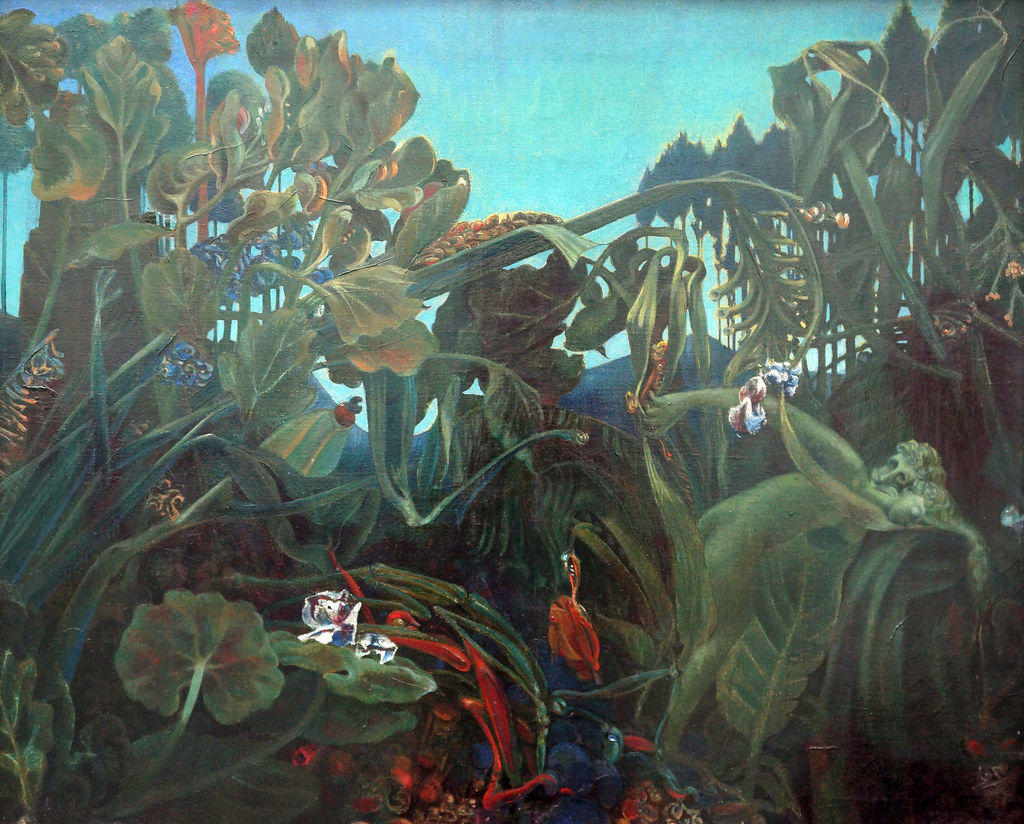
La joie de vivre (Die Lebensfreude), 1936
Öl auf Leinwand, 73,5 x 92,5 cm
Ehemals Sammlung Roland Penrose
Scottish National Gallery of Modern Art,
Edinburgh
Erworben mit Unterstützung des Heritage
Lottery Fund und des Art Fund 1995
© VG Bild-Kunst, Bonn 2016


LEONORA CARRINGTON (1917–2011)
Portrait of the Late Mrs. Partridge (Porträt der verstorbenen Mrs. Partridge), 1947
Öl auf Holz, 100,3 x 69,9 cm
Ehemals Sammlung Edward James
Privatsammlung
© VG Bild-Kunst, Bonn 2016


​​​​​​​MAX ERNST (1891–1976)
Jeune homme intrigué par le vol d'une mouche non-euclidienne (Junger Mann, beunruhigt durch den Flug einer nichteuklidischen Fliege), 1942-47
Öl und Lack auf Leinwand, 82 x 66 cm
Sammlung Ulla und Heiner Pietzsch, Berlin
© VG Bild-Kunst, Bonn 2016
Fotograf: Jochen Littkemann, Berlin


MAX ERNST (1891–1976)
Masques et phantasmes (Masken und Phantasmen), 1929
Öl auf Leinwand, 130 x 130 cm
Sammlung Ulla und Heiner Pietzsch, Berlin
© VG Bild-Kunst, Bonn 2016
Foto: Jochen Littkemann, Berlin


LEONOR FINI (1907–1996)
Due Donne (Zwei Frauen), 1939
Öl auf Leinwand, 34 x 24,5 cm
Sammlung Ulla und Heiner Pietzsch, Berlin
© VG Bild-Kunst, Bonn 2016
Fotograf: Jochen Littkemann, Berlin


RENÉ MAGRITTE (1898–1967)
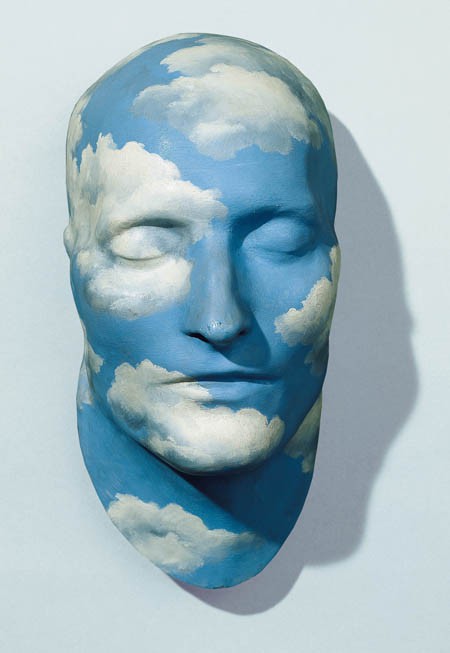
L’avenir des statues (Die Zukunft der Statuen), 1937
Öl auf Gipsguss, 33 x 16,5 x 20,3 cm
Ehemals Sammlung Edward James
Tate, London
© Tate, London 2016 / VG Bild-Kunst,
Bonn 2016


RENÉ MAGRITTE (1898–1967)
La reproduction interdite (Reproduktion verboten), 1937
Öl auf Leinwand, 81,5 x 65,5 x 2 cm
Ehemals Sammlung Edward James
Museum Boijmans Van Beuningen,
Rotterdam
© VG Bild-Kunst, Bonn 2016


JOAN MIRÓ (1893–1983)
Peinture (Malerei), 1927
Öl auf Leinwand, 33 x 24,1 cm
Ehemals Sammlung Gabrielle Keiller
Scottish National Gallery of Modern Art,
Edinburgh, Nachlass Gabrielle Keiller 1995
© Successió Miró / VG Bild-Kunst, Bonn
2016


JOAN MIRÓ (1893–1983)
Tête de paysan catalan (Kopf eines katalanischen Bauern), 1925
Öl auf Leinwand, 92,4 x 73 cm
Ehemals Sammlung Roland Penrose
Scottish National Gallery of Modern Art,
Edinburgh
Erworben gemeinsam mit der Tate,
London, mit Unterstützung des Art Fund,
1999
© Successió Miró / VG Bild-Kunst, Bonn
2016


DOROTHEA TANNING (1910–2012)
Voltage (Spannung), 1942
Öl auf Leinwand, 29 x 30,9 cm
Ehemals Sammlung Gabrielle Keiller
Sammlung Ulla und Heiner Pietzsch, Berlin
© The Estate of Dorothea Tanning /
VG Bild-Kunst, Bonn 2016

While the eccentric English Poet and commissioner Edward James (1907-1984) and his fellow countryman, the artist and curator Roland Penrose (1900-1984), were supporters and friends of the scene from the earliest, the collections of the Scottish Gabrielle Keiller (1908-1996) and the Berlin collector couple Ulla and Heiner Pietsch, active until today, reveal the lasting allure of Surrealism since the 1960s. The four collections, in parts scattered in all corners of the world, are for the first time being partially reconstructed and compared. They reinforce and complement each other in an astounding way. Precise juxtapositions of works illustrate the different collection emphases and show us how the collectors would integrate the surreal concept of the »wonderful« into their reality as well as the »uncanny« into their home.

The exhibition project of the Hamburger Kunsthalle was developed in a first-time tri-national cooperation with the Scottish National Gallery of Modern Art in Edinburgh and the Museum Boijmans Van Beuningen in Rotterdam. A large number of further international loans from significant European and American museums and private collections allow for this exiting dialogue.

The show features major works by, among others, Jean Arp, Hans Bellmer, Victor Brauner, André Breton, Leonora Carrington, Salvador Dalí, Paul Delvaux, Oscar Domínguez, Marcel Duchamp, Max Ernst, Léonor Fini, Alberto Giacometti, Valentine Hugo, René Magritte, Man Ray, André Masson, Joan Miró, Richard Oelze, Meret Oppenheim, Wolfgang Paalen, Roland Penrose, Valentine Penrose, Francis Picabia, Pablo Picasso, Kurt Seligmann, Yves Tanguy and Dorothea Tanning.

A richly illustrated catalogue with numerous scholary essays of international Surrealism experts will be published for the exhibition in German, English and Dutch. Accompanying the exhibition, the Hamburger Kunsthalle is also offering a comprehensive and multimedia programme.

Curator of the exhibition: Dr. Annabelle Görgen-Lammers
Assistance: Dr. Désirée de Chair

Masterpieces of the Leiden collection : The Age of Rembrandt


Musée du Louvre
22 February - 22 May 2017


As part of its season devoted to the Dutch Golden Age, the Musée du Louvre is presenting a selection of masterpieces by 17th-century Dutch painters from the collection of Thomas Kaplan and his wife, Daphne Recanati Kaplan. This selection, brought together at a major international museum for the first time, showcases the largest private collection of works by Rembrandt. Visitors will discover some thirty paintings and drawings by the greatest painters of the Golden Age from the region of Leiden in the Netherlands, primarily ten works by Rembrandt and a painting recently attributed to the artist.
Among the Leiden Collection’s Rembrandt paintings is the Minerva, a particularly spectacular large-format work, part of a series of strong women and mythological goddesses. As its name indicates, this collection highlights the “fine painters” of Leiden, among them Gerrit Dou and Frans van Mieris. It also includes a number of Rembrandts—currently the largest private holding of his work—and numerous “Rembrandtesques.” Thus the collection is made up of excellent pictures by the greatest artists—Jan Steen, Rembrandt, and Jan Lievensz, and their master Lastman, Frans van Mieris, Gerrit Dou, and others—and covers the various specialties of Dutch art.
The thematic presentation shows how a single painter can practice different genres. It also reminds us that Dutch painting, often seen as simultaneously ribald, colorful, charming, and bourgeois, draws on a mixed repertoire and makes use of all the modes from the satirical to the solemn
On the occasion of this exhibition, the large-format painting  


Eliezer and Rebecca at the Well is to be officially gifted to the Musée du Louvre by Thomas Kaplan and Daphne Recanati Kaplan. The work was painted by Ferdinand Bol (1616–1680), one of Rembrandt’s most talented pupils. Acquired by the Kaplans in 2009, the work has been on loan to the Louvre’s Dutch galleries since 2010.
After Masterpieces from the Leiden Collection. The Age of Rembrandt has been shown at the Louvre, an expanded group of approximately 60 highlights will travel to The Long Museum in Shanghai and the National Museum in Beijing in 2017 and 2018 and to the Louvre Abu Dhabi before returning to Europe and the Americas.


Jan Lievens Boy in a cape and turban (Portrait of the Prince Rupert of the Palatinate) (c) New York_The Leiden  


  • Rembrandt  
    Minerva in her study
    (c) New York_The Leiden Gallery


  • Rembrandt
    Self-Portrait with Shadded eyes
     (c) New York_The Leiden Gallery


  • Jan Steen
    Prayer before the Meal 
    (c)New York_The Leiden Gallery


  • Gerrit Dou
    Cat Crouching on the Ledge of an Artist’s Atelier 
    (c) New York_The Leiden Gallery


  • Rembrandt  
    Unconscious patient (Allegory of Smell) 
    (c) New York_The Leiden Gallery
Organized by: Blaise Ducos, curator at the Department of Paintings of the Musée du Louvre
The Leiden Collection, assembled since 2003 by the American philanthropist and Francophile Thomas Kaplan (Chevalier of the Legion of Honor) and his wife, Daphne Recanati Kaplan, contains some 250 paintings and drawings by Rembrandt and several generations of his pupils among the Leiden fijnschilders. Since its inception, the Leiden Collection has loaned works on more than 170 occasions. 

A further illustration of the collectors’ generosity, 


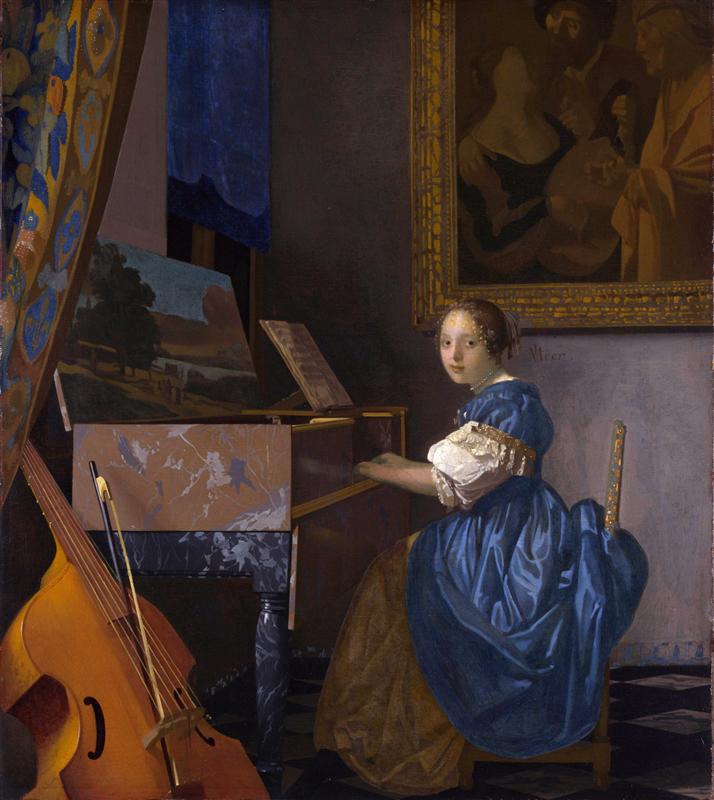
A Young Woman Seated at a Virginal by Johannes Vermeer 


and Woman Feeding a Parrot by Frans van Mieris the Elder 

will also be shown at this exhibition focusing on Vermeer and the masters of genre painting.
 

Exhibition catalog
Masterpieces of the Leiden collection : The Age of Rembrandt
Authors : Blaise Ducos and Dominique Surh 
A musée du Louvre éditions / Somogy éditions d'art coedition
80 pages
40 illustrations

French/English bilingual edition

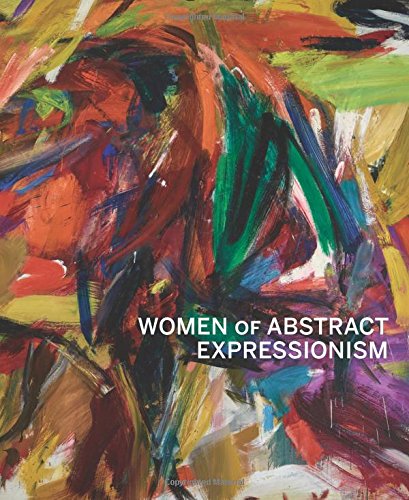
Women of Abstract Expressionism


Denver Art Museum
June 12, 2016 - Sept. 25, 2016

Mint Museum, Charlotte, NC
Oct 22, 2016 - Jan 22 ,2017

Palm Springs Art Museum
Feb. 18, 2017 - May 29, 2017

 Organized by the Denver Art Museum and curated by Gwen Chanzit, Women of Abstract Expressionism brings together 51 paintings to examine the distinct contributions of 12 artists who played an integral role in what has been recognized as the first fully-American modern art movement. On view June 12, 2016 through Sept. 25, 2016, the exhibition presents a nuanced profile of women working on the East and West Coasts during the 1940s and ’50s, providing scholars and audiences with a new perspective on this important chapter in art history.

The exhibition focuses on the expressive freedom of direct gesture and process at the core of abstract expressionism, while revealing inward reverie and painterly expression in these works by individuals responding to particular places, memories and life experiences. Women of Abstract Expressionism also sheds light on the unique experiences of artists based in the Bay Area on the West Coast where they were on a more equal footing with their male counterparts than those working in New York. The featured artists include Mary Abbott, Jay DeFeo, Perle Fine, Helen Frankenthaler, Sonia Gechtoff, Judith Godwin, Grace Hartigan, Elaine de Kooning, Lee Krasner, Joan Mitchell, Deborah Remington and Ethel Schwabacher.
 
Lee Krasner, who often lived in husband Jackson Pollock’s shadow, is one notable Abstract Expressionist painter featured in the exhibition. Seven of Krasner’s works will be on view, showing the breadth of her artistic development and her responses to the natural world around her. This is visible in prominent works such as  


Lee Krasner, The Seasons, 1957. Oil and house paint on canvas, 92-3/4 × 203-7/8 in. Whitney Museum of American Art, New York; purchase, with funds from Frances and Sydney Lewis by exchange, the Mrs. Percy Uris Purchase Fund and the Painting and Sculpture Committee 87.7. Photograph by Sheldan C. Collins. © 2015 Pollock-Krasner Foundation / Artists Rights Society (ARS), New York.

The Seasons (1957)

. Oil paint on canvas 70 × 98 in

and Charred Landscape (1960).
Elaine de Kooning is another artist whose work will be placed in a context independent from her husband, and well-known contemporary, Willem de Kooning. Elaine de Kooning was a skilled draughtswoman and abstract painter as shown in her monumental canvas


Elaine de Kooning, Bullfight, 1959. Oil on canvas; 77-5/8 x 130-1/4 x 1-1/8 in. Denver Art Museum: Vance H. Kirkland Acquisition Fund. © Elaine de Kooning Trust

Bullfight (1959). The artwork depicts the impact of energy and excitement brought on by her experience of witnessing bullfights in Mexico.


A lesser-known artist featured in Women of Abstract Expressionism, Sonia Gechtoff, experienced a career that spanned both coasts. Her artistic contributions are pivotal in understanding the situation for women during the Abstract Expressionist movement. Gechtoff had much success in the Bay Area, but was surprised to experience gender bias in New York.

“Women of Abstract Expressionism, for the first time, positions this expanded group of painters within the context of abstract expressionism and its cultural milieu,” said Gwen Chanzit, curator of modern art at the DAM. “The exhibition will contribute to a more complete understanding of this important mid-20th century movement by presenting artists beyond the handful of painters who have previously defined the whole in textbook accounts. It also will present these female artists together for the first time. While visitors discover the significant role of women in the formation of abstract expressionism, they will be treated to a powerful presentation of remarkable paintings.”

An original video made for the exhibition will include some of the few living artists from the Abstract Expressionist movement—including Mary Abbott, Sonia Gechtoff and Judith Godwin—and a few children of the painters, sharing memories of their mothers. This account will highlight exciting journeys, as well as trials and tribulations, women experienced during the 1950s. Women of Abstract Expressionism will span the entire level 4 of the Hamilton Building, with the video being shown inside the gallery’s Fuse Box.


Epic1959 Oil paint on canvas (diptych) 82 x 100 in. (208.28 x 254 cm) National Museum of Women in the Arts, Washington, DC, Gift of Caroline Rose Hunt Photograph by Lee Stalsworth © Judith Godwin

Exhibition Catalog


A fully illustrated catalog, edited by Joan Marter and published by Yale University Press in association with the DAM, will serve as a permanent record of Women of Abstract Expressionism. Essays by leading scholars of abstract expressionism will be included in the catalog, as well as an extensive compilation of artist biographies of women featured in the exhibition and some additional 30 artists whose work paralleled the movement.

Saturday, January 7, 2017

Picasso Portraits

National Portrait Gallery
6 October 2016 - 5 February 2017


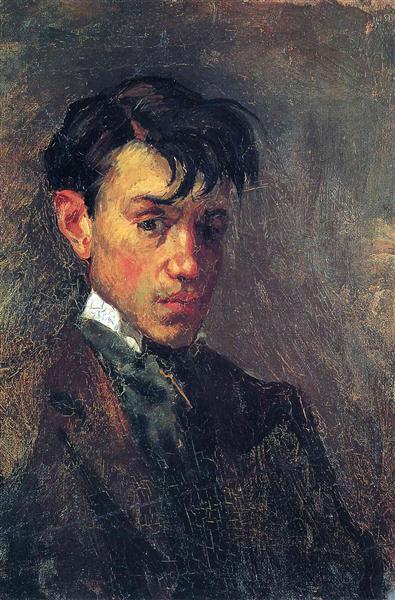
Picasso Portraits will include over 75 portraits by the artist in all media, ranging from well-known masterpieces to works that have never been shown in Britain before.  All phases of the artist’s career will be represented, from the realist portraits of his boyhood to the more gestural canvases of his old age. It is the first large-scale exhibition devoted to his portraiture since Picasso and Portraiture at the Museum of Modern Art, New York and the Grand Palais, Paris in 1996.

The exhibition includes a group of revealing self-portraits as well as portraits and caricatures of Picasso’s friends, lovers, wives and children.  Guillaume Apollinaire, Carles Casagemas, Santiago Rusiñol, Jaume Sabartés, Jean Cocteau, Olga Picasso, Marie-Thérèse Walter, Dora Maar, Lee Miller, Françoise Gilot and Jacqueline Picasso are among the people visitors will encounter.  Complementing these images of Picasso’s intimates are portraits and caricatures inspired by artists of the past – Velázquez and Rembrandt among them – with whom he identified most closely.


Picasso Portraits is curated by Elizabeth Cowling, Emeritus Professor of the History of Art at the University of Edinburgh.  Her publications include Picasso: Style and Meaning (2002) and Visiting Picasso: The Notebooks and Letters of Roland Penrose (2006). She has co-curated several exhibitions, including Picasso Sculptor/Painter (1994), Matisse Picasso (2002–3), and Picasso Looks at Degas (2010–11).


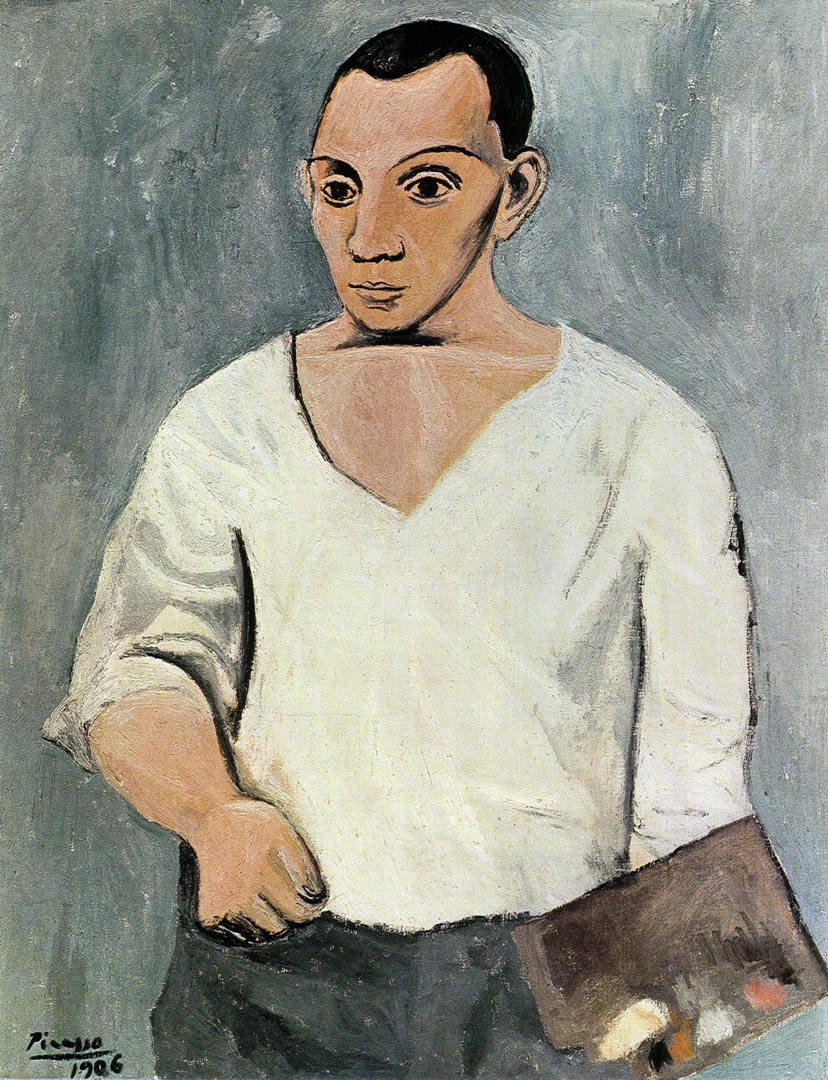
Self-Portrait with Palette by Pablo Picasso, 1906; Philadelphia Museum of Art: A. E. Gallatin Collection, 1950

Great Review, more images