Thursday, January 19, 2017

Vermeer and the Masters of Genre Painting

Musée du Louvre
February 20 through May 22, 2017

National Gallery of Ireland 
June 17 through September 17, 2017

The Musée du Louvre, in collaboration with the National Gallery of Ireland in Dublin and the National Gallery of Art in Washington, is holding a landmark exhibition about renowned painter Johannes Vermeer. For the first time since 1966, this event will bring together twelve of the Delft master’s paintings—a third of his total known body of work—providing an insight into the fascinating relationships the artist maintained with other great painters of the Dutch Golden Age.

Thanks to special loans from the most prominent American, British, German, and—naturally—Dutch museums, visitors will be able to see Vermeer in a new light.

The exhibition does away with the legend of the reclusive artist living in his own inaccessible, silent world—without ever implying that Vermeer was just one painter of many. Indeed, his artistic temperament grew more distinct through encounters with other artists. Vermeer did more than launch a new movement: he acted as an agent of metamorphosis.
“The Sphinx of Delft”: coined by French journalist and art critic Théophile Thoré-Bürger when he revealed Vermeer to the world late in the 19th century, this famous expression has served mainly to promote an enigmatic image of the painter. The myth of the solitary genius has done the rest. Yet Johannes Vermeer (1632–1675) did not attain his level of creative mastery in isolation from the art of his time.

Through comparisons with the works of other artists of the Golden Age—among them Gerrit Dou, Gerard ter Borch, Jan Steen, Pieter de Hooch, Gabriel Metsu, Caspar Netscher, and Frans van Mieris—the exhibition brings to light Vermeer’s membership of a network of painters specializing in the depiction of everyday life while admiring, inspiring, and vying with each other.

The third quarter of the 17th century saw the Dutch Republic’s global economic power reach its apogee. Proud of their social standing, the Dutch elite demanded art that would reflect their prestige. This demand led to the emergence of a “new wave” of genre painting in the early 1650s, with artists shifting their focus to idealized depictions of domesticity in elegant society. The men and women portrayed in these masterfully-executed pieces display a staged civility.

Although the artists in question worked in different cities across the Republic of the United Netherlands, their technique, and the style, subjects, and compositions featured in their work showed considerable similarities. The exceptional quality of their creations can be partly attributed to the lively professional rivalry that existed between them.
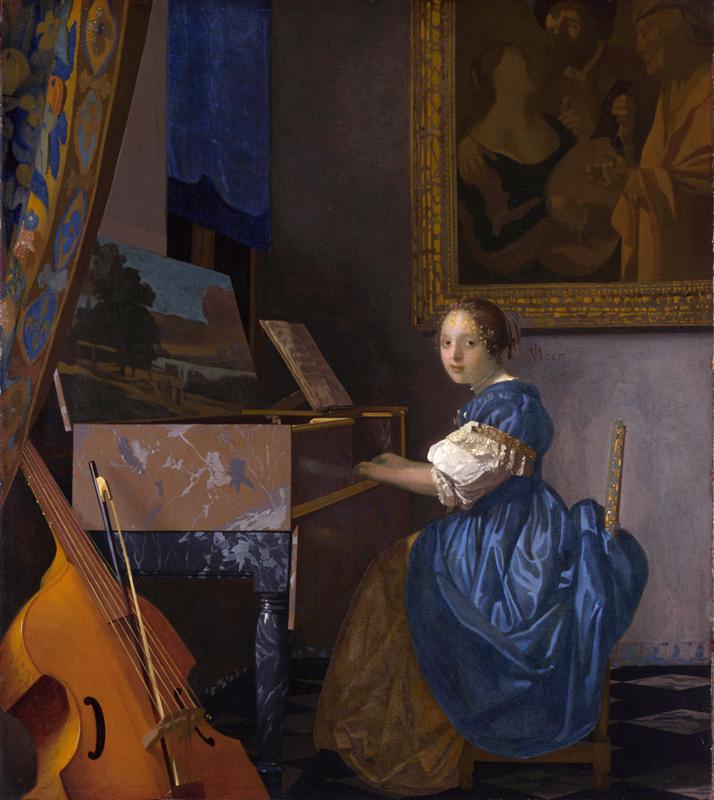


A Young Woman Seated at a Virginal by Johannes Vermeer 


and Woman Feeding a Parrot by Frans van Mieris the Elder 


Exhibition curators: Blaise Ducos, Department of Paintings, Musée du Louvre, Paris, Adriaan E. Waiboer, National Gallery of Ireland, Dublin, and Arthur K. Wheelock Jr., National Gallery of Art, Washington


  • De Hooch
    Woman with a balance
    (c)BPK, Berlin, Dist. RMN-Grand Palais / Jörg P.Anders


  • Vermeer
    Woman with a Balance
    (c)Washington, National Gallery of Art


  • Metsu
    A Man Writing a Letter
    (c)Dublin, National Gallery of Ireland


  • Metsu
    A woman reading a letter
    (c)Dublin, National Gallery of Ireland


  • Vermeer
    A Lady Writing a Letter, with her Maid
    (c)Dublin, National Gallery of Ireland

  • 6. Vermeer_ A Lady Writing(c)Washington, National Gallery of Art.jpg

    Vermee
    A Lady Writing
    (c)Washington, National Gallery of Art


  • Ter Borch
    A Woman at a Mirror
    (c)Amsterdam, The Rijksmuseum


  • Van Mieris
    A Woman examining Herself in a Mirror
    (c)BPK, Berlin, Dist. RMN-Grand Palais / Jörg P. Anders


  • Vermeer
    Young Woman with Pearls
    (c)BPK, Berlin, Dist. RMN-Grand Palais Jörg P. Ander


  • Netscher
    A Woman Feeding a Parrot with a Page
    (c)Washington, National Gallery of Art
     

  • Van Mieris
    The Duet
    (c)BPK, Berlin, Dist. RMN-Grand Palais /image Staatliches Museum Schwerin


  • Vermeer
    A woman sitting at a Virginal
    (c)National Gallery, London


  • Van Hoogstraten
    The Slippers
    (c)RMN-Grand Palais (musée du Louvre) / Tony Querrec


  • Steen
    A Woman at her Toilet
    (c)Royal Collection Trust/ Her Majesty Queen Elizabeth II 2016


  • De Hooch
    A Woman Nursing an Infant with a Child and a Dog
    (c)Fine Arts Museums of San Francisco


  • Dou
    Astronomer by Candlelight
    (c)Los Angeles, J. Paul Getty Museum


  • Vermee
    The Astronomer
    (c)RMN-Grand Palais (musée du Louvre) / Franck Raux


  • Vermeer
     The Geographer
     (c)Städel Museum - ARTOTHEK
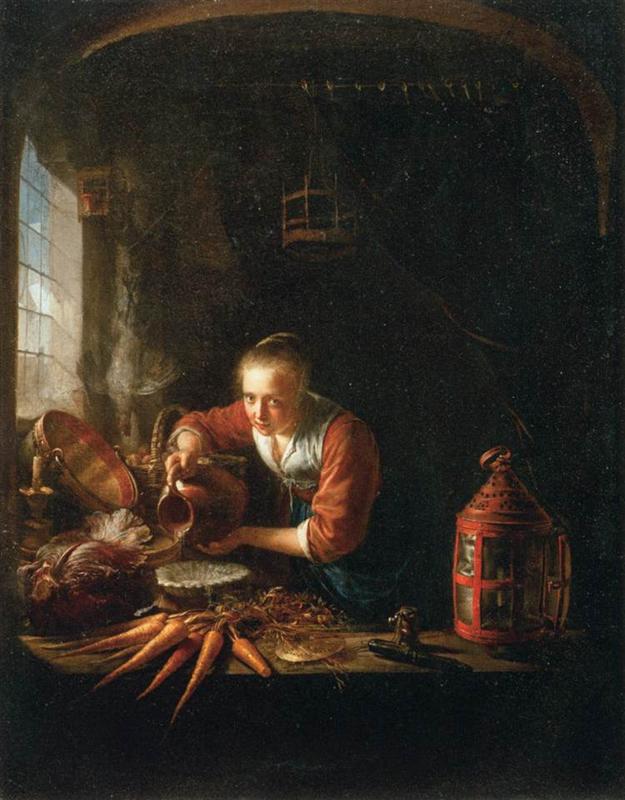

  • Dou
    A kitchen Maid pourring water into a jar
    (c)RMN-Grand Palais (Musée du Louvre) / Tony Querrec


  • Vermeer
    The Milkmaid
    (c)Amsterdam, The Rijksmuseum


  • Maes
    A Young Woman sewing
    (c)Guildhall Art Gallery, City of London / Harold Samuel Collection / Bridgeman Images


  • Vermeer
    The Lace Maker
    (c)RMN-Grand Palais (musée du Louvre) / Gérard Blot


  • Ter Borch
    Galant Conversation-The Paternal Admonition
    (c)Amsterdam, The Rijksmuseum


  • Vermeer
    The Allegory of the Catholic Faith
    (c)The Metropolitan Museum of Art, Dist. RMN-Grand Palais / image of the MMA

Christie’s Post-War and Contemporary Art Evening Auction on 7 March 2017: Rothko, Rauschenberg


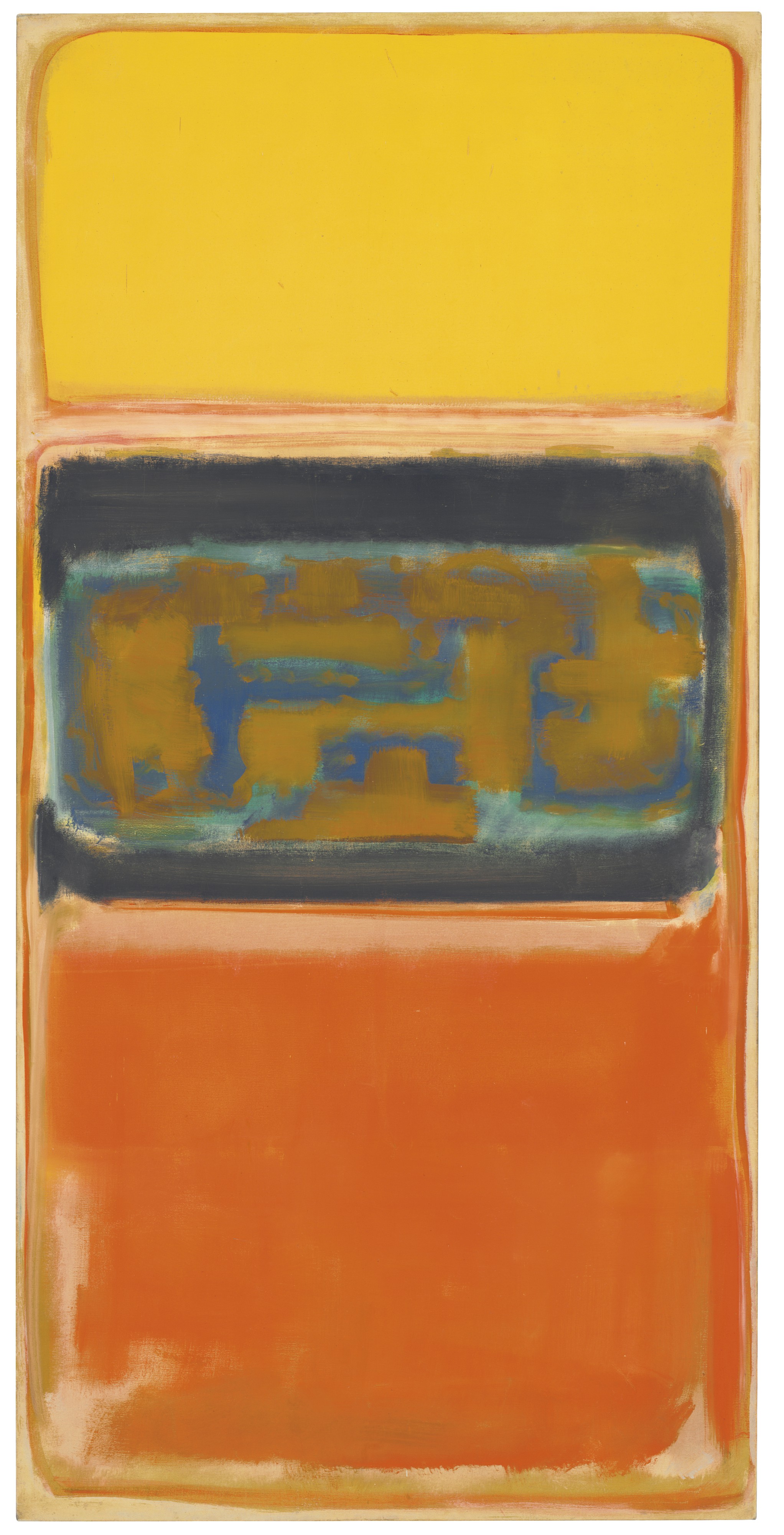
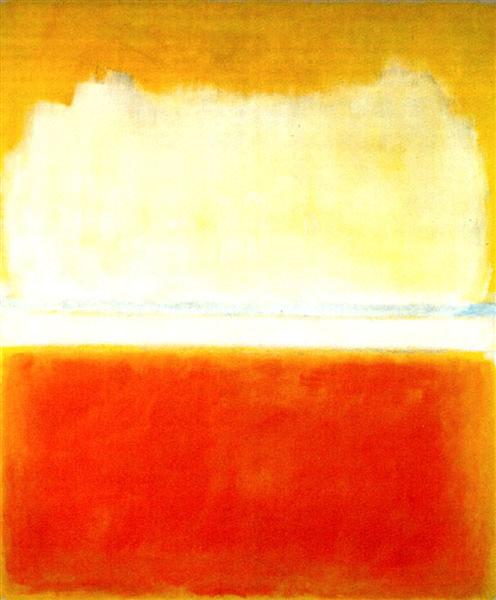
MARK ROTHKO (1903-1970), No. 1 (Painted in 1949). Oil on canvas, 78.3 x 39.7 in. (198.8 x 100.8 cm.) Estimate on Request.
 Two giants of Post-War American painting will be united in Christie’s Post-War and Contemporary Art Evening Auction on 7 March 2017 in London. Mark Rothko’s groundbreaking No. 1 (1949, estimate on request), is one of the artist’s earliest examples of his mature artistic vocabulary, dating from the pioneering year of his practice and was first shown in 1950 as part of his historic solo exhibition at New York’s Betty Parsons Gallery.


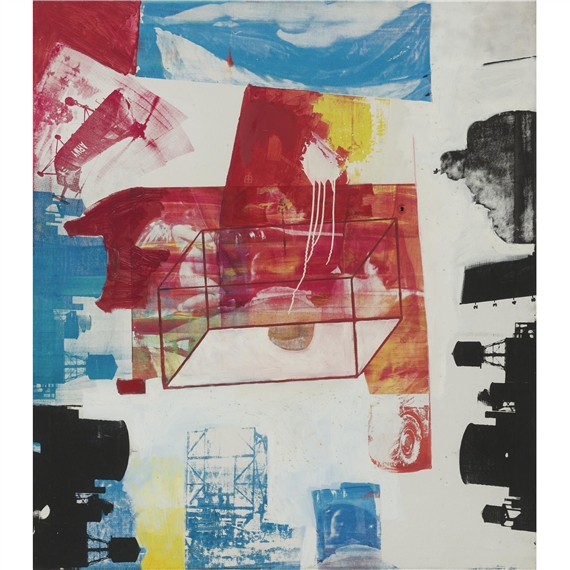
Robert Rauschenberg’s Transom (1963, estimate on request) comes to auction alongside a major retrospective of his work at London’s Tate Modern, and demonstrates the radical new visual language that went on to lead a generation of American artists towards global domination. Together these two masters of 20th-Century painting will lead the field of American talent that will take centre stage during 20th Century at Christie’s, a series of sales that takes place from 28 February to 10 March 2017.  Ahead of the auction the works will tour and be exhibited in Hong Kong (17-20 January), Shanghai (8 February), Beijing (11-13 February) and New York (24-26 February).

Francis Outred, Chairman and Head of Post-War and Contemporary Art at Christies: “America is a profound force on the global stage and has been unstoppable in defining the contemporary culture of the last century. It is a privilege to present two seminal works that date from the beginning of this cultural dominance. Mark Rothko’s No.1 dates from 1949 and was one of his first works to incorporate the planes of colour as mood that defined his career. Robert Rauschenberg’s Transom is one of the breakthrough series of Silkscreen Paintings with which he not only sparred with Warhol but also became the very first American artist to win the Golden Lion at the 1964 Venice Biennale. Following the much-celebrated Abstract Expressionism exhibition at London’s Royal Academy and the major Robert Rauschenberg retrospective at Tate Modern we very much look forward to drawing a global audience to London in March.

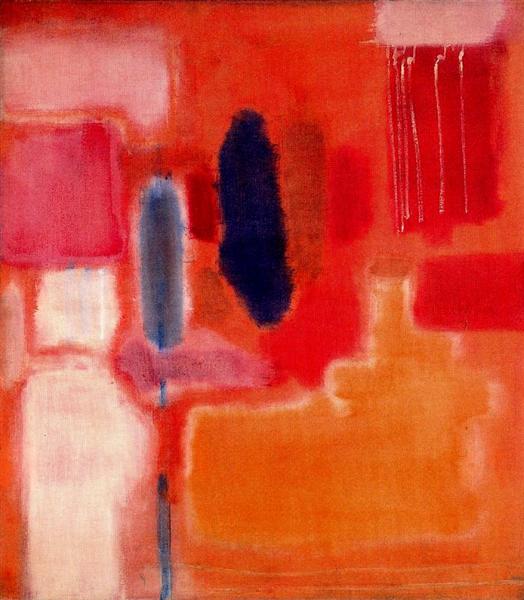
Having never been previously offered at auction, Rothko’s No. 1 is one of the few works from the 1950 Betty Parsons Gallery show that remain in private hands and heralds the incandescent union of light and colour for which his work would come to be much celebrated. Of the suite of 12 paintings, nine are now held in major American museums including:


The Museum of Contemporary Art, Los Angeles (No. 2),


The Museum of Modern Art, New York (No. 3),


Los Angeles County Museum of Art (No. 4),


Walker Art Center, Minneapolis (No. 6),


National Gallery of Art, Washington (No. 7),


National Gallery of Art, Washington (No. 8),


Hirshhorn Museum and Sculpture Garden, Washington (No. 9),


and Frances Lehman Loeb Art Center, New York (No. 12).

The importance of No. 1 to Rothko’s practice is underlined by the fact that he guarded the work and kept it in his possession until his untimely death. A glowing vision of rich orange and lemon-bright yellow, punctuated at its core by a dramatic zone of ochre strokes upon a bar of vaporous blue and teal, No.1 paved the way for the transformative painting as mood for which he is critically acclaimed.

Robert Rauschenberg honed the visual language of his series of Silkscreen Paintings between 1962 and 1964, which went on to earn him the Grand Prize for painting at the 1964 Venice Biennale. A central focus of the current Tate Modern retrospective is a room dedicated to the Silkscreen Paintings, reflecting their centrality to his oeuvre and the profound contemporary relevance for artists working today. Amongst the first artists to use silkscreens in his practice, Rauschenberg commenced this series around the same time his friend Andy Warhol also started to employ the process.


Transom demonstrates Rauschenberg’s unmatched skill for the technique: against a white ground, repeated rooftop water towers are silkscreened in black and blue, framing the composition right and left as if each edge is a horizon. Transom sees images of war, urbanisation and consumer culture jostle for attention with a paragon of art history:


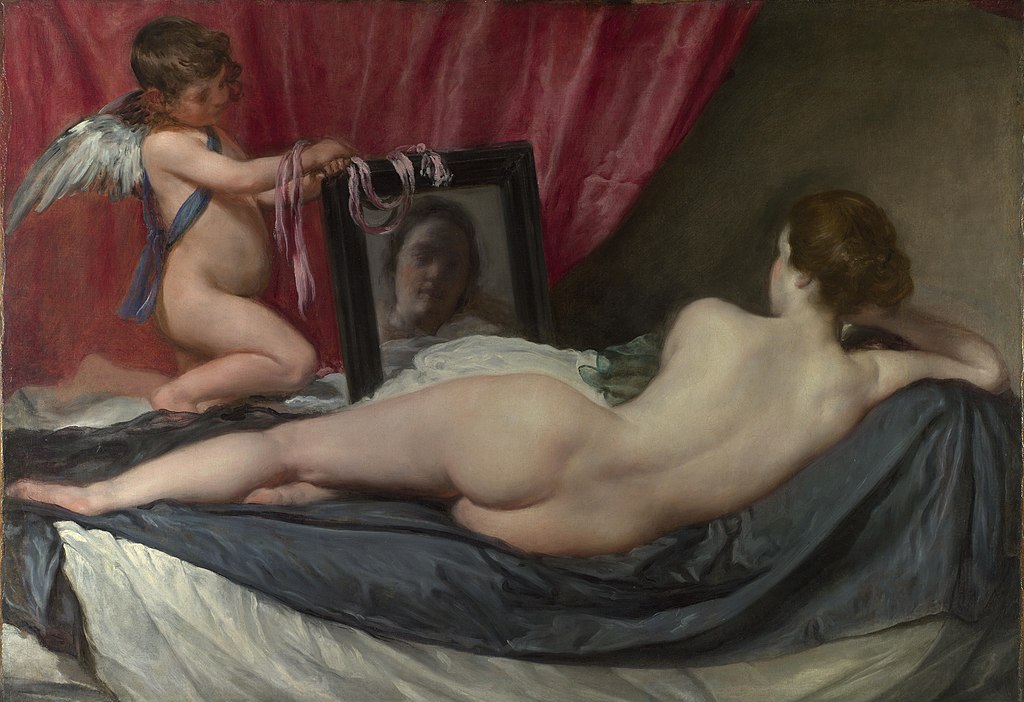
Velázquez’s Rokeby Venus. The iconic nude appears three times in the work - in a blaze of red and yellow in the centre of the canvas; in a slice of blue stretched along the upper edge; and at the lower edge her free-floating face peers out from her mirror below a red truck wheel. This vivid tableaux demonstrates Rauschenberg’s talent at its height, marking the dramatic shift of focus towards America as the dominant force in contemporary culture.

Saturday, January 14, 2017

Christie’s Old Master & British Drawings January 24, Old Master Prints January 25,


Christie’s Old Master & British Drawings sale on January 24 is comprised of 131 lots including works from distinguished private collections and institutions. Important works leading the sale are  


Francisco de Goya’s  Hunter with his dog in a landscape 
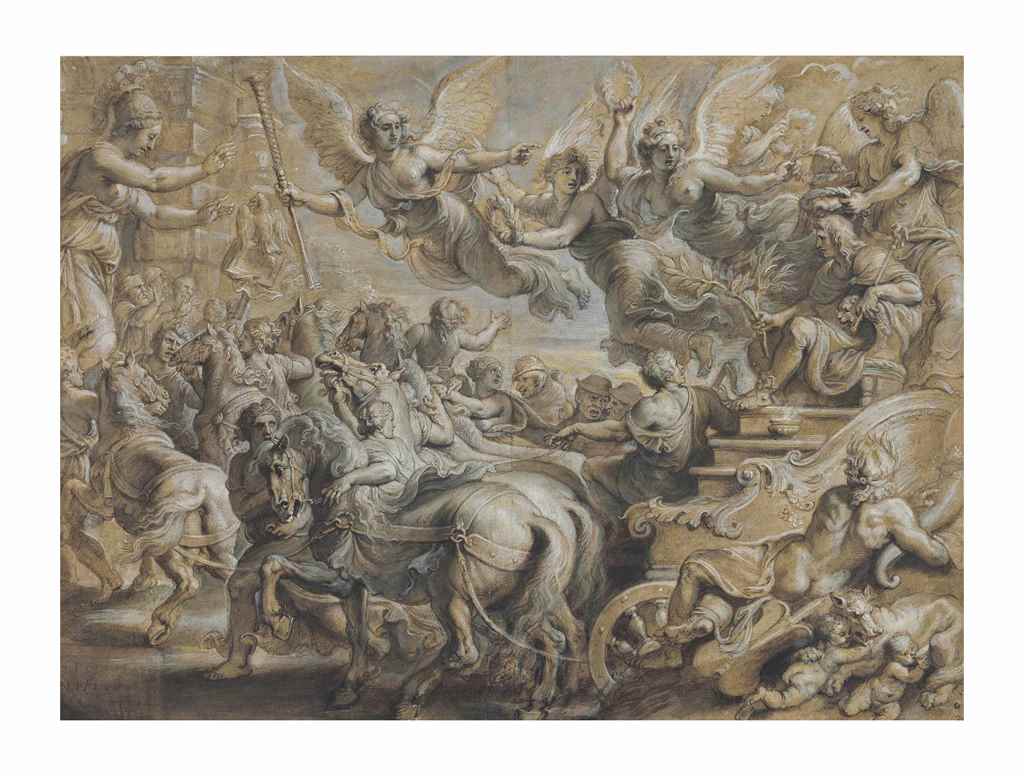
PETER PAUL RUBENS (Siegen 1577-1640 Antwerp)Scipio Africanus welcomed outside the gates of Rome, after Giulio Romano, black chalk, pen and ink, brown wash, grey, cream, white and touches of green bodycolor with heightening in oil. Estimate: $500,000-700,000.

and a lavish design by Peter Paul Rubens inspired by a composition by Renaissance artist Giulio Romano.

The sale features a strong selection of Italian drawings including studies by Giacomo Cavedone, Parmigianino  and Taddeo Zuccaro, together with several works inspired by Michelangelo by Battista Franco, Giulio Clovio and Cesare da Sesto’s early study after the Sistine ceiling. Works by Piazzetta, Giovanni Battista and Giovanni Domenico Tiepolo, Piranesi and Francesco Guardi constitute the highlights of an outstanding selection of Venetian drawings.


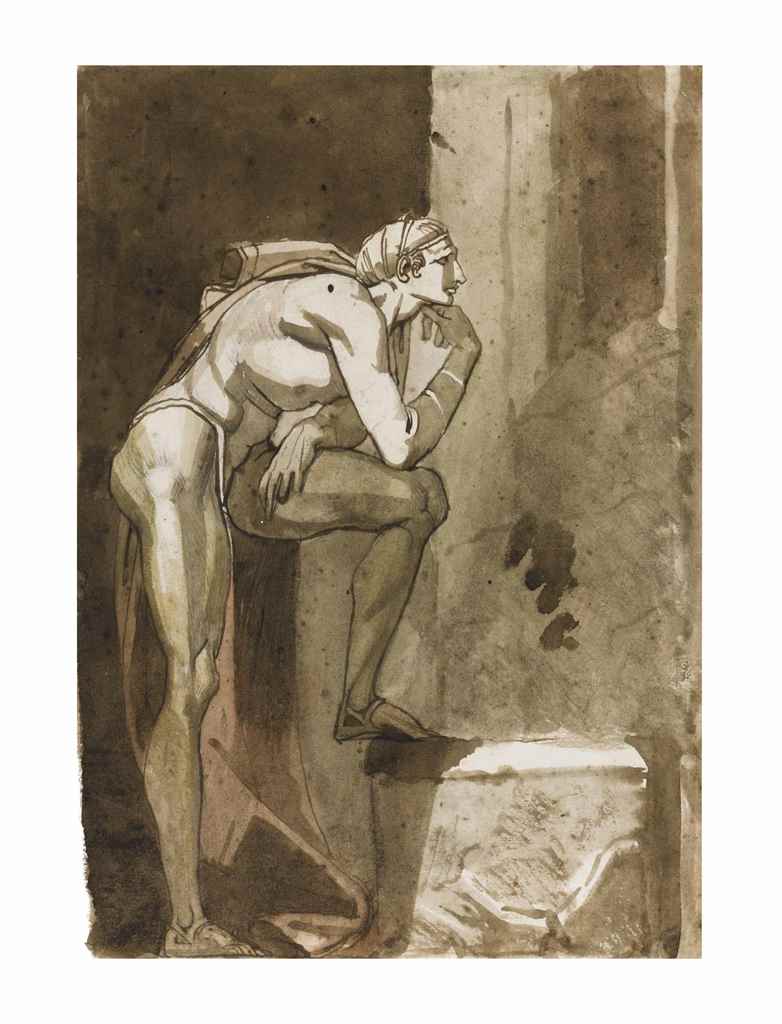
Highlights from the British section include A male nude by Henry Fuseli, and works by Gainsborough and Burne-Jones. Charles de la Fosse’s preparatory study for the painting The Virgin’s Coronation with a selection of nineteenth-century works round out the sale.

The sale of Old Master Prints encompasses 220 prints from five centuries, offering an in-depth survey of the printed image in Europe, from Martin Schongauer’s (1450-1491) engravings created in the 1470s to


 a View of San Francisco by the French Charles Meryon (1821-1868), printed around 1855.

Classic prints by the most celebrated and widely collected artist-printmakers, including Albrecht Dürer (1471-1528), Rembrandt (1606-1669), and Francisco de Goya (1746-1828), stand side by side with extreme rarities, such as an anonymous, hand-coloured woodcut of the Virgin nursing the Child, printed in Northern Italy around 1530; one of a few surviving devotional prints of the period.
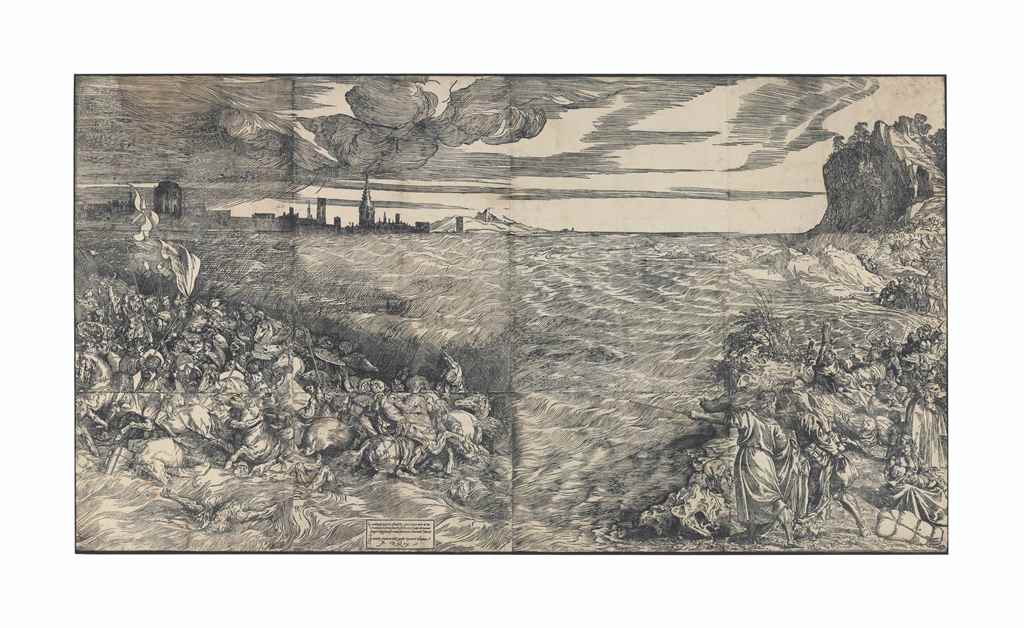
The estimates vary as much as the dimensions of the works: the exquisite little engravings by Hans Sebald Beham (1500-1550) are the size of a postage stamp, while the monumental woodcut  


AFTER TIZIANO VECELLIO, CALLED TITIAN (CIRCA 1488-1576), The Submersion of Pharaoh’s Army in the Red Sea the complete woodcut printed from 12 blocks, circa 1514-15. Estimate: $200,000-300,000.

The Submersion of Pharaoh’s Army (estimate: $200,000-300,000) after a design by Titian leads the sale and fills an entire wall in its scale.

Sotheby’s MASTER PAINTINGS EVENING SALE 25 January 2017: Orazio Gentilesch


Following the record-breaking sale of 


Orazio Gentileschi’s Danaë 

in January 2016, the Master Paintings Evening sale will be led by another striking painting by the artist:  


Head of a Woman (estimate $2/3 million), 

last seen in the landmark exhibition on Orazio and Artemisia Gentileschi at the Metropolitan Museum of Art in 2001. One of only two known panel paintings by the artist, Head of a Woman was executed during the first half of the 1630s, when Gentileschi was working at the court of King Charles I of England. Based on the inventory records and notes from 1637 / 1639, the picture was purchased from the artist by the King, suggesting that the King responded to the work personally, and had not directly commissioned it. Coming to the market for the first time in nearly three decades, the work is being sold in part to benefit the Department of European Painting and Sculpture at the Philadelphia Museum of Art. 

The sale also offers an outstanding group of Spanish paintings: from a large-scale religious scene by Francisco de Zurbarán, to a late work attributed to El Greco, to a detailed still life by Pedro de Camprobín y Passano. 


Leading the group is a newly-discovered painting attributed to Velázquez: Kitchen Still Life (estimate $1.5/2 million). According to renowned scholar William B. Jordan, the work is the only pure bodegón pantry painting of its kind by the artist. Qualities and aspects from this humble and intimate painting depicting kitchen utensils are replicated in other works by Velázquez, 


including ‘The Old Woman Frying Eggs’, in the National Gallery of Scotland. 


The Spanish section will also include a rare first edition of Francisco Goya’s first and most celebrated printed work Los Caprichos. [Madrid: Printed by Rafael Esteve for the artist, 1799.] (estimate $500/700,000). Consisting of 80 plates in the original binding, the book is generally considered the artist’s finest printed work, and remembered for its satirical presentation of society’s follies; many specific themes and allusions defy interpretation. 

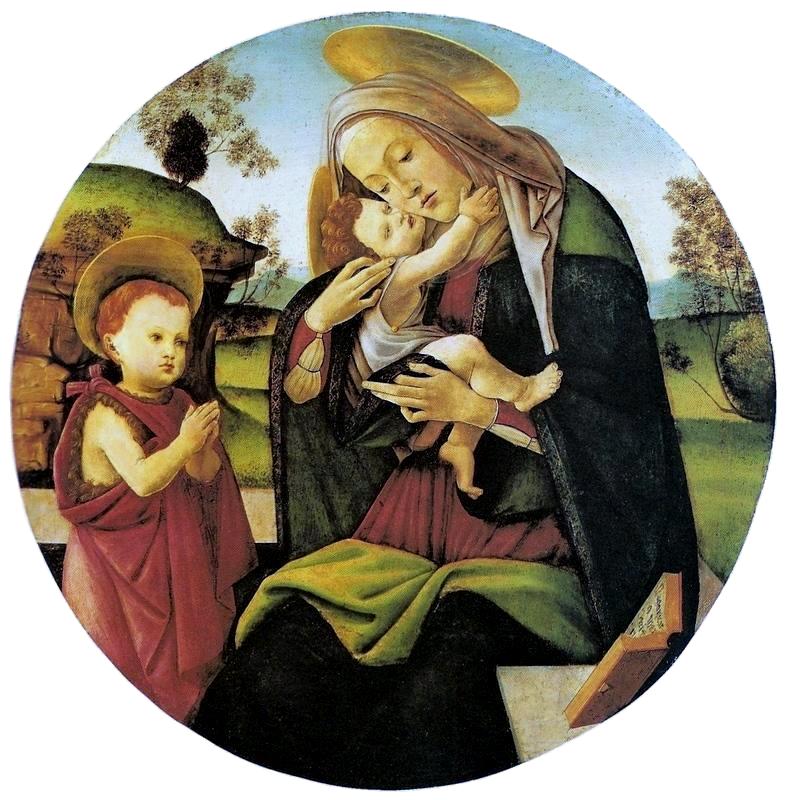
The Master Paintings Evening and Day Sales feature five Florentine tondi from the Italian Renaissance. Leading the group is The Madonna and Child Enthroned with Saint John the Baptist and an Angel ( estimate $600/800,000), a late work by Sandro Botticelli and workshop. Most likely painted in the last five years of his life, the work features Botticelli’s crisp drapery folds and sharp outlines – distinguishing characteristics of his late works. 


A similar work, without the angel.

Furthermore, the sale will offer a newly-discovered work by the celebrated Flemish painter Sir Peter Paul Rubens. Study of a Horse with a Rider (estimate $1/1.5 million) is a rare example of a large-scale animal study by the artist. Until recently the painting had been described as by a follower of Sir Anthony Van Dyck, however the authorship had been difficult to discern due to overpaint and background added later that dominated the original scene. With the removal of these later additions, the canvas has been revealed as a work of high quality, and a typical example of the spirited and rapidly painted oil sketches for which Rubens is celebrated. A similar composition and pose is evident in the foreground of Rubens’ Henry IV at the Siege of Amiens, at the Gothenburg Museum of Art. 


Jean-Honoré Fragonard’s The Fountain of Love ( estimate $1.5/2.5 million) is one of four allegorical portrayals of love that the artist executed in the 1780s. The present work is one of the artist’s most distinguished compositions of his mature career – versions of the celebrated composition hang in the Wallace Collection, London and the J. Paul Getty Museum, Los Angeles. The work, which combines a classical story with an atmosphere and dynamism, has enchanted audiences for centuries. 

Wednesday, January 11, 2017

Francis Bacon: From Picasso to Velazquez

Guggenheim Museum Bilbao

September 30, 2016, to January 8, 2017

The Guggenheim Museum Bilbao presents Francis Bacon: From Picasso to Velázquez, an exhibition of almost 80 works including some of the most important and yet least exhibited paintings by this British artist born in Ireland, alongside the works of the classic masters from French and Spanish culture who played a huge role in his career. Transgressive in both is life and his art, Bacon broke down many barriers that were deeply entrenched at the time, placing human beings in front of a mirror in which we could see ourselves in a raw, violent way.

Portraits, nudes, landscapes, bullfighting... the exhibition offers a new perspective on Bacon’s oeuvre by highlighting the influence that French and Spanish cultures exerted on his art.

Bacon created a new universe of images conceived via literature, film, art, and his own life using a totally unique language, reflecting human vulnerability with utter rawness.

Bacon’s nudes tend to feature isolated figures in everyday poses which the painter transformed by twisting their bodies into almost animal-like shapes, thus reinventing the portrait.


Francis Bacon Three Studies for a Crucifixion , 1962 Oil on canvas, three panels 198.1 x 144.8 cm, each panel Solomon R. Guggenheim Museum, New York, 64.1700 © The Estate of Francis Bacon. All rights reserved DACS/VEGAP, Bilbao, 2016 

Francis Bacon Three Studies of Figures on Beds, 1972 Oil and pastel on canvas Three panels, 198 x 147.5 cm each Esther Grether Family Collection © The Estate of Francis Bacon. All rights reserved. DACS/VEGAP, Bilbao, 2016 Photo: Bildpunkt AG, Münchenstein 

Francis Bacon Study for Self- Portrait , 1976 Oil and pastel on canvas 198 x 147.5 cm Art Gallery of New South Wales, Purchased 1978 © The Estate of Francis Bacon. All rights reserved DACS/VEGAP, Bilbao, 2016 Photo: © Jenni Carter, Viscopy 

Francis Bacon Portrait of Michel Leiris , 1976 Oil on canvas 34 x 29 cm Centre Pompidou, Paris  – Musée national d’art moderne. Centre de création industri elle, Donation Louise et Michel Leiris, 1984  © The Estate of Francis Bacon. All rights reserved DACS/VEGAP, Bilbao, 2016 Photo © Centre Pompidou, MNAM -CCI, Dist. RMN Grand  Palais / Bertrand Prévost 


Francis Bacon Study for Self- Portrait , 1981 Oil, pastel and dry transfer lettering on canvas 198 x 147.5 cm Private collection  © The Estate of Francis Bacon. All rights reserved DACS/VEGAP, Bilbao, 2016 Photo: Prudence Cuming Associates Ltd. 


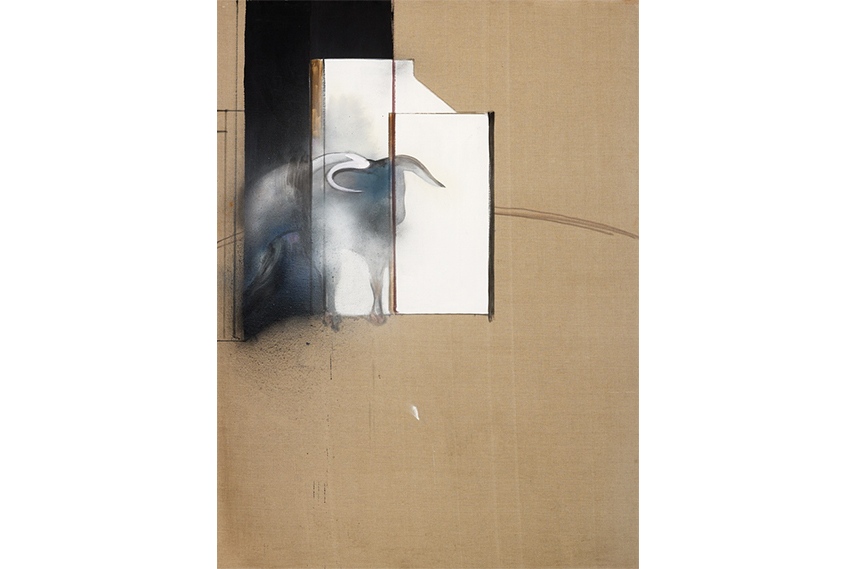
Francis  Bacon Study of a Bull , 1991 Oil, aerosol paint and dust on canvas 198 x 147.5 cm Private collection, London © The Estate of Francis Bacon. All rights reserved DACS/VEGAP, Bilbao, 2016 Photo: Prudence Cuming Associates Ltd. 


El Greco Saint Francis in Prayer Before the Crucifix , ca. 1585 Oil on canvas 105.5 x 86.5 cm Museo de Bellas Artes de Bilbao 


Diego Velázquez The Buffoon el Primo , 1644 Oil on canvas 106.5 x 82.5 cm Museo Nacional del Prado, Madrid 


Pablo Picasso Composition ( Female Figure at the Beach ) [ Composition ( Figure féminine sur une plage )], 1927 Oil on canvas 18.8 x 17.6 cm Private collection  © Sucesión Pablo Picasso, VEGAP, Madrid 2016 


Alberto Giacometti Bust of a Man in a frame ( Buste d’homme dans un cadre ), ca. 1946 Oil on canvas 28.1 x 22.4 cm Fondation Alberto et Annette Giacometti, Paris  


Tuesday, January 10, 2017

Canaletto and the Art of Venice


Queen's Gallery, Buckingham Palace 

19 May - 12 November 2017

The Bacino di S. Marco on Ascension Day by Canaletto
In 1762 the young monarch George III purchased virtually the entire collection of Joseph Smith, the greatest patron of art in Venice at the time. Thanks to this single acquisition, the Royal Collection contains one of the finest groups of 18th-century Venetian art in the world, including the largest collection of works by Giovanni Antonio Canal, better known as Canaletto.

Through over 200 paintings, drawings and prints from the Royal Collection's exceptional holdings, Canaletto and the Art of Venice presents the work of Venice's most famous view-painter alongside that of his contemporaries, including Sebastiano and Marco Ricci, Rosalba Carriera, Francesco Zuccarelli, Giovanni Battista Piazzetta and Pietro Longhi, and explores how they captured the essence and allure of Venice for their 18th-century audience, as they still do today.

Joseph Smith (c.1674−1770) was an English merchant and later British Consul in Venice, a post dealing with Britain’s maritime, commercial and trading interests.  He had moved to Italy in around 1700 and over several decades built up an outstanding art collection, acting as both patron and dealer to many contemporary Venetian artists.  Smith was Canaletto's principal agent, selling his paintings to the wealthy Grand Tourists who were drawn to Venice's cultural attractions.  His palazzo on the Grand Canal became a meeting place for collectors, patrons, scholars and tourists, where visitors could admire his vast collection and commission their own versions of Canaletto's views to take home.

One of the most important of Smith's commissions from Canaletto was the series of 12 paintings of the Grand Canal, which together create a near complete journey down the waterway.  Canaletto's sharp-eyed precision makes these views seem powerfully real, yet he rearranged and altered elements of each composition to create ideal impressions of the city. Two larger paintings are of festivals, including the 'Sposalizio del Mar', or 'Wedding of the Sea', which took place on Ascension Day and attracted crowds of British visitors.  The Grand Canal was a subject frequently captured by Canaletto, including in a series of six drawings, among them Venice: The central stretch of the Grand Canal, c.1734.  Intended as works of art in their own right, rather than as preparatory studies for paintings, the drawings are carefully constructed and rich in tone and detail.

Alongside the grand public entertainments, Venice boasted a thriving opera and theatre scene, especially during carnival season.  The need to create stage sets within a very short period of time provided plentiful employment for Venetian artists.  Both Marco Ricci and Canaletto worked for the theatre, where they learned how to manipulate perspective to heighten drama.  The exhibition includes several of Ricci's designs for the Venetian stage, such as A room with a balcony supported by Atlantes, c.1726.  Marco Ricci also produced caricatures of opera singers, such as the drawing of the internationally famed castrato Farinelli, which were circulated among Joseph Smith and his fellow Venetian collectors and opera aficionados.

On display together for the first time are personifications of the Four Seasons by Rosalba Carriera, whose pastels were highly prized by European collectors.  They were intended to be hung in private domestic spaces, such as dressing rooms, bedrooms or small antechambers.  Carriera was one of the first artists to develop a commercial relationship with Joseph Smith, and her sensual pastel of 'Winter', c.1726, an allegorical female figure wrapped in furs, was one of the most admired works in Smith's collection.

Canaletto, Marco Ricci and Francesco Zuccarelli all contributed to the development of the genre known as the capriccio – scenes combining real and imaginary architecture, often set in an invented landscape, to create poetically evocative works.  The ruins of ancient Rome in both


Marco Ricci, Caprice View with Roman Ruins,c.1729
Royal Collection Trust/(c)Her Majesty Queen Elizabeth II 2016

Ricci's Caprice View with Roman Ruins, c.1729,


and Zuccarelli's pastoral scene Landscape with Classical Ruins, Cattle and Figures, c.1741–2, convey a sense of the irrevocable loss of a great age.


Canaletto, Venice: The Bacino di S. Marco on Ascension
Day, c.1733-4
Royal Collection Trust/(c)Her Majesty Queen Elizabeth II 2016

Marco Ricci, Farinelli in walking dress, c.1729-30
Royal Collection Trust/(c)Her Majesty Queen Elizabeth II 2016


Canaletto, Venice: The Central Stretch of the Grand Canal, c.1734
Royal Collection Trust/(c)Her Majesty Queen Elizabeth II 2016

Marco Ricci, A room with a balcony supported by Atlantes, c.1726
Royal Collection Trust/(c)Her Majesty Queen Elizabeth II 2016

There was a major revival in printmaking in Venice in the 18th century, with many publishers recruiting established artists, such as Giovanni Battista Piazzetta and Antonio Visentini, to provide designs for their publications.  Joseph Smith was an enthusiastic print collector and one of the major supporters of contemporary printmaking in Venice.  Smith financed and directed the Pasquali press, which contributed to the circulation of Enlightenment ideas, such as those of Isaac Newton, and imported banned foreign texts into Venice, including the work of Voltaire.  Visentini was the chief draughtsman for the press, providing many hundreds of pen and ink drawings of initials and tailpieces, several of which will be on display in the exhibition.


Matisse and American Art

Montclair Art Museum, Montclair NJ
February 5–June 18, 2017


Montclair Art Museum will present Matisse and American Art, the first exhibition to examine this French master’s profound impact upon the development of American modern art from 1907 to the present. His art has provided a liberating model for American artists’ varied explorations of vibrant color, strong, fluid lines, and clear compositional structures in their pursuits of self-expression.

Featuring 65 paintings, archival objects, sculpture, prints, and works on paper, Matisse and American Art will juxtapose 19 works by Matisse with 44 works by American artists, including Max Weber, Alfred Maurer, Maurice Prendergast, Stuart Davis, Richard Diebenkorn, Robert Motherwell, Ellsworth Kelly, Roy Lichtenstein, Andy Warhol, Romare Bearden, John Baldessari, Sophie Matisse, Faith Ringgold, and Helen Frankenthaler.

Matisse’s transformative impact on their works is revealed not only by their adaptations of his palette and pictorial structures but also through their choice and appropriation of his subject matter—still lifes, landscapes, figurative works, studio interiors, and portraits. While previous projects have illuminated Matisse’s relationship with postwar artists, this will be the first exhibition to expand Matisse’s impact beyond the typical focus upon the New York School by extending it back to the beginning of the 20th century and forward to the 21st.

The exhibition will open with an introductory section evoking a range of responses to the master, from the early 20th century study by his student Morgan Russell to Faith Ringgold’s late 20th century appropriation titled Matisse’s Model, with a fictional character based on the artist and other modern young women of color.

The exhibition then proceeds with early 20th century explorations of the nude as seen in the work of Matisse’s students Max Weber and Sarah Stein, as well as William Zorach and Maurice Prendergast. The next section of the show addresses Matisse’s theme of the window as a metaphor for the dialogue between the interior world of the artist and the external world of reality.

An archival section featuring Matisse on the cover of Time magazine in 1930, as well as various exhibition catalogues and publications, will serve as an orientation to the history of the dissemination of Matisse’s influence.

The final sections of the exhibition explore Matisse’s pervasive postwar impact on artists, especially in terms of the bold, simplified profiles and vibrant colors of his cut-outs. Works by Ellsworth Kelly, Robert Motherwell, Stuart Davis, Judy Pfaff, Romare Bearden, and the illustrator Eric Carle represent the wide-ranging responses to Matisse’s inventive “drawing with scissors.”

The exhibition concludes with the work of Roy Lichtenstein, Tom Wesselman, Andy Warhol, Janet Taylor Pickett, and John Baldessari, who have appropriated and adapted Matisse’s classic themes of the dance, the studio, the nude, portraiture, and the goldfish bowl as varying approaches to his universal art and fame.

The exhibition is organized by Gail Stavitsky, MAM chief curator, with Dr. John Cauman and Lisa Mintz Messinger. It is complemented by a major scholarly catalogue, Matisse and American Art, and two concurrent exhibitions Inspired by Matisse: Selected Works from the Collection and Janet Taylor Pickett: The Matisse Series.

Morton Livingston Schamberg, Study of a Girl (Fanette Reider), ca. 1912, oil on canvas. Williams College Museum of Art, Williamstown, Massachusetts, Bequest of Lawrence H. Bloedel, Class of 1923, 77.9.11.

Faith Ringgold (b. 1930)Matisse's Model, 1991 From the Series: The French Collection Part I; #5Acrylic on canvas, printed and tie-dyed fabric, ink73 x 79 # in. (185.42 x 201.93 cm)Baltimore Museum of Art: Frederick R. Weisman Contemporary Art Acquisitions Endowment (BMA 1999.66)© 2016 Faith Ringgold / Artists Rights Society (ARS), New York 


William Zorach,  
Spring in Central Park (recto), 1914, oil on canvas, 
Lent by The Metropolitan Museum of Art, New York, 
Gift of Peter Zorach, 1979 (1979.223a,b). ©The Zorach Collection, LLC

Henri Matisse (1869-1954)
Nude in a Wood (Nu dans la forêt; Nu assis dans le bois), 1906
Oil on board mounted on panel
16 x 12 " in. (40.6 x 32.4 cm) Brooklyn Museum, Gift of George F. Of, 52.150
©2016 Succession H. Matisse / Artists Rights Society (ARS), New York


Max Weber (1881-1961)
Apollo in Matisse’s Studio, 1908
Oil on canvas 23 x 18 in. (58.42 x 45.72 cm)
Estate of Max Weber, courtesy of Gerald Peters Gallery, New York
© 2017 Estate of Max Weber, courtesy Gerald Peters Gallery, New York