Wednesday, August 11, 2021

The Collectors’ Cosmos. The Meakins-McClaran Print Collection


More than half of the remarkable print collection belonging to Dr. Jonathan Meakins and Dr. Jacqueline McClaran is entering the National Gallery of Canada (NGC) national collection.


Lucas or Jan van Doetechum after Pieter Bruegel I, Soldiers at Rest (Milites Requiescentes), c. 1555–57, from the set of 12 Large Landscapes, etching and engraving, 32 × 42.5 cm. Collection of Dr. Jonathan Meakins and Dr. Jacqueline McClaran. Photo: Denis Farley. 

The two Montreal-based doctors are donating 258 Dutch and Flemish etchings, engravings, and woodcuts from the 16th and 17th centuries for the benefit of all Canadians. The Meakins-McClaran print collection of more than 450 works spans more than 500 years, from the 15th to the 20th century, and was patiently built up over four decades following an afternoon spent in a gallery full of Camille Pissarro prints at the Grand Palais in Paris. At present, it is the largest private collection of Northern European prints in Canada.

A large selection of the prints is currently on display in the exhibition The Collectors’ Cosmos. The Meakins-McClaran Print Collection, organized by the National Gallery of Canada and on view at the Gallery until November 14, 2021. The exhibition includes seven prints by Rembrandt, one of the most accomplished printmakers of all time.

It began modestly forty years ago with an attraction to Camille Pissarro’s masterful etchings, his experimentation with line and texture, and his profound empathy for his subjects. In time, their interest grew to include the great artists of northern European printmaking, such as Dürer and Rembrandt, and their focus naturally coalesced around Dutch and Flemish 16th- and 17th-century landscape and genre.

The exhibition at the National Gallery of Canada will reveal both the strength and breadth of the collection today, as well as the collectors’ love of the etched and engraved line and plate tone. The selection of prints will range from the German 15th century through the Dutch 17th century, to the 20th century in Europe and North America, and will include works by Pieter Bruegel the Elder, Albrecht Dürer, Hendrik Goltzius, Jusepe de Ribera, Jacob van Ruisdael, Jean-François Millet, and John James Audubon, among many others.


Susan Hudson, Jacqueline & Jonathan, 1987, etching, drypoint and aquatint; plate


Susan Hudson, Jacqueline & Jonathan, 1987, etching, drypoint and aquatint; plate: 44.5 × 60 cm; sheet: 56.5 × 76 cm. Collection of Dr. Jonathan Meakins and Dr. Jacqueline McClaran. © Susan Hudson. Photo: NGC

Dr. Jonathan L. Meakins OC, MD, D.Sc.

As a youth, Dr. Jonathan Meakins recalls regular visits to the Montreal Museum of Fine Arts (MMFA), where his appreciation of prints began – particularly after seeing Goya’s Disasters of War exhibition. This experience would be the foundation of a lifelong passion of collecting.

Dr. Meakins’ relationship with the MMFA would come full-circle, as years later, he would become a trustee and a member of their Acquisition Committee.

Appointed an Officer of the Order of Canada in 2000, Dr. Jonathan Meakins’ medical career served him well. He’s worn many hats: Head of Surgery (McGill University Health Centre), Chair of Surgery (both at McGill University and University of Oxford), Nuffield Professor of Surgery (University of Oxford), and Professorial Fellow (Balliol College).

Dr. Meakins is presently a member of the Prints and Drawings Committee at the Art Gallery of Ontario, recently appointed to the Acquisitions Committee - International Art Before 1945 and Ancient Art at the MMFA, as well as the Director of the Art and Heritage Centre of the McGill University Health Centre.

When he’s not working on his education – as an M.A. student in Fine Arts at Concordia University – he enjoys playing tennis, golf and duplicate bridge.
 

—

Dr. Jacqueline Cox McClaran B.Sc., MD, B.Th.

Dr. Jacqueline Cox McClaran has had a distinguished career in medicine. As the founder and first Director of the McGill Centre for Studies in Aging, Dr. McClaran also served as Director of Geriatric Medicine (Montreal General Hospital), Board Member (Canadian Council for Health Service Accreditation), Associate Medical Director (University of Oxford affiliated hospitals), Director of Faculty Development and Assistant Director of Clinical Studies (Oxford Medical School), and Lecturer in Medicine (Balliol College Oxford).

Outside of her career, Dr. McClaran’s interest in art – first sparked by Albrecht Dürer’s wood engravings in the Nuremberg Museum in the 60s – became a passion, which she shares with her husband, Dr. Meakins. To this day, they’ve acquired and built their very own collection of prints, many of which are displayed in their home. Dr. McClaran is the archivist of their collection.

Into her retirement, Dr. McClaran recently completed her Degree in Theology. She keeps busy with community service, church activities, golf, and she plays violin in her string quartet - which over the past year evolved into solo performances on Zoom.


The Collectors’ Cosmos: In Conversation with Dr. Meakins and Dr. McClaran:


Collector's Cosmos

CATALOGUE

The Collectors’ Cosmos:
The Meakins–McClaran Print Collection

This beautiful and fully illustrated catalogue takes us through Dr. Jonathan Meakins and Dr. Jacqueline McClaran’s collection’s history, which began forty years ago in Paris following an afternoon in a room full of prints by Camille Pissarro at the Grand Palais.

Private Lives: Home and Family in the Art of the Nabis, Paris, 1889–1900 i

Cleveland Museum of Art 

through September 19, 2021

Portland Art Museum, Portland, Oregon

October, 2021

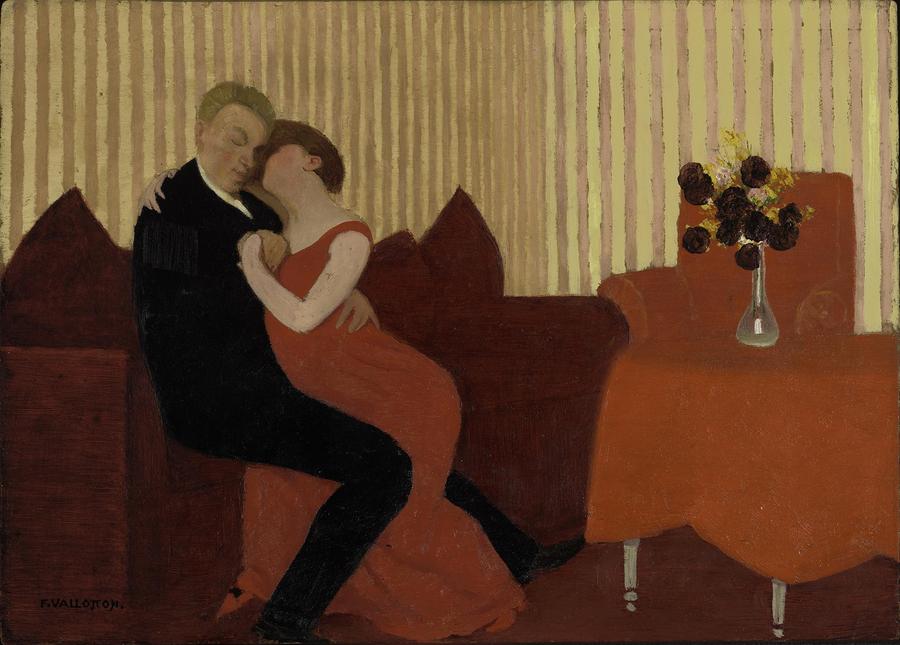
The Lie , 1898. F é lix Vallotton (Swiss, 1865 – 1925). Oil on artist’s board; 24 x 33.3 cm. The Baltimore Museum of Art, The Cone Collection, formed by Dr. Claribel Cone and Miss Etta Cone of Baltimore, Maryland, BMA 19 5 0.298. Photo: Mitro Hood

In 1889, a small group of avant-garde artists in Paris formed a brotherhood to promote a radical new direction in art. Adopting the name Nabis—Hebrew for “prophets”—they shifted away from the Impressionist style, which sought to capture the fleeting effects of nature, and instead aimed to depict subjective experience and emotion in their paintings, prints and drawings. Private Lives: Home and Family in the Art of the Nabis, Paris, 1889–1900 is the first exhibition to focus on intimate views of home and family by four Nabi artists: Pierre Bonnard (1867–1947), Maurice Denis (1870–1943), Félix Vallotton (1865–1925) and Édouard Vuillard (1868–1940). Loans from museums including the National Gallery of Art, Washington, DC; the Metropolitan Museum of Art, NYC; the Museum of Modern Art, NYC; the Museum of Fine Arts, Boston; the Musée d’Orsay, Paris; the Petit Palais, Paris; the National Gallery of Ireland; and the Van Gogh Museum, Amsterdam, as well as private collections in the US and Europe, enrich the exhibition. More than 40 paintings and 110 works on paper are included in the show.

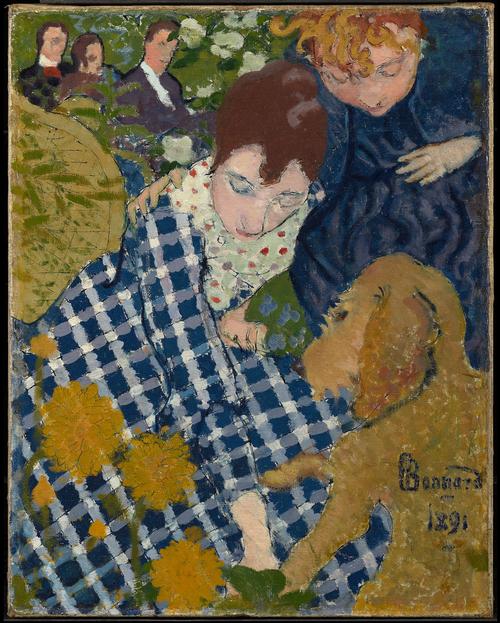
Women with a Dog, 1891. Pierre Bonnard (French, 1867–1947). Oil and ink on canvas; 41 x 32.5 cm. The Clark Art Institute, Acquired by the Clark, 1979, 1979.23. Image courtesy of the Clark Art Institute. clarkart.edu. ©2021. Artists Rights Society (ARS), New York / ADAGP, Paris

Private Lives: Home and Family in the Art of the Nabis, Paris, 1889–1900 is organized by the Cleveland Museum of Art (CMA) and the Portland Art Museum. It is on view now at the CMA to September 19, 2021, before heading to Portland, Oregon, in October.

“Private Lives is our first major international loan exhibition since the pandemic began,” said William M. Griswold, director of the CMA. “It explores the humble subjects that resonated most with four important Post-Impressionist artists: quiet interiors, family, scenes of children and pets playing in gardens and parks and Paris city life.”

Private Lives examines depictions of home, family and children, or what Bonnard referred to as the small pleasures and “modest acts of life.” Throughout their formative years in the 1890s, these four artists were deeply entwined in each other’s lives; Bonnard, Vuillard and Denis shared a studio, and Swiss-born Vallotton became a close associate of all three. Although their styles varied, each returned repeatedly to the motifs of homelife, romantic love and family. The Nabis’ art was both of the home and for the home; their domestically scaled works of art were intended to be lived with, enabling the viewer to revisit a single moment laden with emotion and memory.

The domestic world was not always what it seemed; suppressed secrets, hidden affairs and familial tension lie beneath the surface, challenging the viewer to construct the unspoken narrative of these small but powerful images. Glimpses of close family life can simultaneously suggest claustrophobic confinement and unease. The artists depicted their family and friends, but often abstracted or obscured their loved ones so that they were recognizable to only a few viewers. Although the Nabis referenced their own private lives, their art ultimately suggests depths of feeling, memory, nostalgia, joy and melancholy that are universal.

“Domestic life is at the core of the Nabis’ worldview, and Private Lives delves deeply into this subject as the artists’ source of inspiration,” said Heather Lemonedes Brown, the Virginia N. and Randall J. Barbato Deputy Director and Chief Curator. “To these four Post-Impressionists, emotion and subjective experience were more important than verisimilitude. The exhibition prompts visitors to interpret the works of art and draw their own conclusions.”

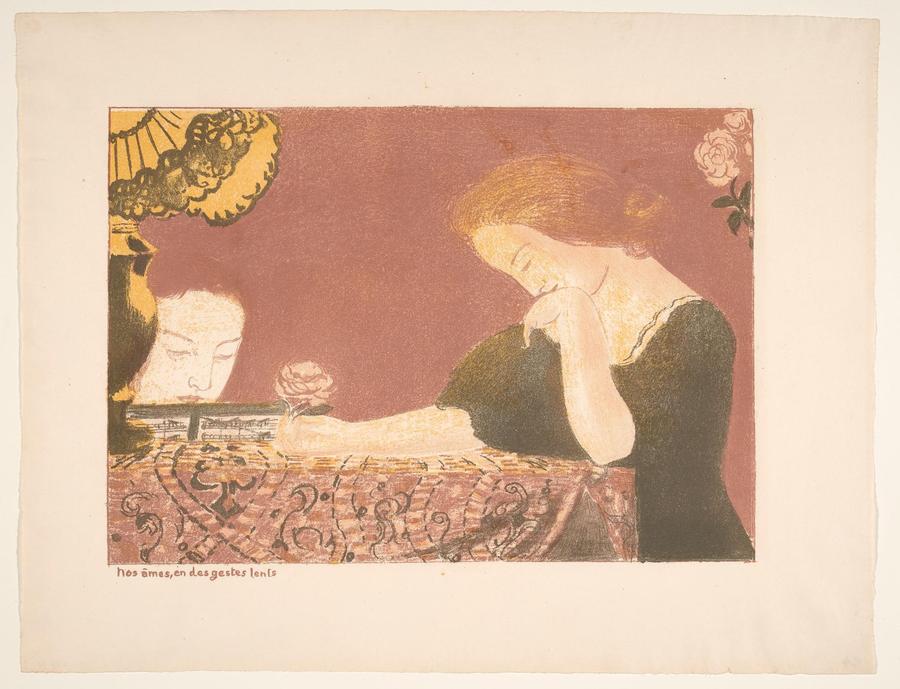
Our Souls, in Languorous Gestures , from Love ( Amour ), 1899. Maurice Denis (French, 1870 – 1943). Color lithogra ph on wove paper ; image: 28.3 x 40 cm; sheet: 40.8 x 53 cm. Portland Art Museum, Portland, Oregon, Gift of James D. Burke in honor of Diane Davies Burke, 2016.90.1j. © 2021 Artists Rights Society (ARS), New York / ADAGP, Paris

The exhibition consists of five sections that take viewers through the themes of the artists’ work.

The Intimate Interior / The Troubled Interior

Nabi interiors are celebrated for their intimate views of domestic comforts, but these artists used the same signifiers of cozy life—snug salons, lamplit activities and animated wallpaper—to hint at the discontents simmering below the surface. Portraits are generalized to the point of anonymity, impassable flatness and pattern block the visual penetration of the rooms and figures emerge from and disappear in the shadows. Artful distortions of scale keep the viewer off-balance, while ambiguity invites completion of the narrative.

The Red Room, Étretat , 1899. F é lix Vallotton (Swiss, 1865 – 1925). Oil on artist’s board; 49.2 x 51.3 cm. The Art Institute of Chicago, Bequest of Mrs. Clive Runnells , 1977.606

Family Life

Family life occupied a central role in the Nabis’ art. Their imagery depicting families allowed them to explore romantic love, maternal affection and the joys of childhood. But far from being a sentimental retreat for the artists, these images of family life also offered an opportunity to examine nuance, conflict and grief.

Music chez soi

Music and musicality played a crucial role in the Nabi aesthetic from the time of the group’s inception. In the late 1800s, music and painting were often considered sister arts, both evoking emotions through harmony, rhythm and form. Each artist in this exhibition depicted music in the home, expressing a wide variety of moods and emotions, ranging from the refined musical soirée captured by Vallotton in The Symphony to Bonnard’s playful designs for a children’s music primer to Vuillard’s contemplative portrayal of Misia Natanson at the piano.

Washing the Baby , 1899. Maurice Denis (French, 1870 – 1943). Oil on canvas; 65 x 45 cm. Private collection. Image © Catalogue raisonné Maurice Denis. © 2021 Artists Rights Society (ARS), New York / ADAGP, Paris

Selections from composer Claude Terrasse’s Petites scènes familières (Familiar Little Scenes) performed by pianist and composer Arseniy Gusev can be heard in this gallery. In 1895, Terrasse published a suite of piano compositions illustrated with lithographs by his brother-in-law, Bonnard, to suggest the mood for each song, ranging from lively to melancholic.

In the Garden

The garden played an important role in the personal lives and the art of Bonnard, Denis and Vuillard. The orchard and gardens of Le Clos (the Orchard), the Bonnard family home in Le Grand-Lemps in southeastern France, were a retreat and regular subject for the artist throughout his Nabi years. Denis frequently turned to the garden at his home in Saint-Germain-en-Laye, northwest of Paris, as a theme in his art. Although the urbanite Vuillard never had his own garden, he painted those of his friends. Nabi gardens were outdoor living spaces inhabited by family, friends and pets.

The Nabi City

The Nabi artists were deeply invested in depicting family life in domestic interiors and private gardens. However, the city of Paris appeared frequently in the work of Bonnard and Vuillard during the 1890s. The art in this gallery reflects the artists’ aims to establish a dialogue between public and private life, to domesticize the glittering City of Lights and to bring the city into the realm of the home.

Friday, August 6, 2021

HANSKEN, REMBRANDT’S ELEPHANT


THE REMBRANDT HOUSE MUSEUM 

on view until 29 August 2021


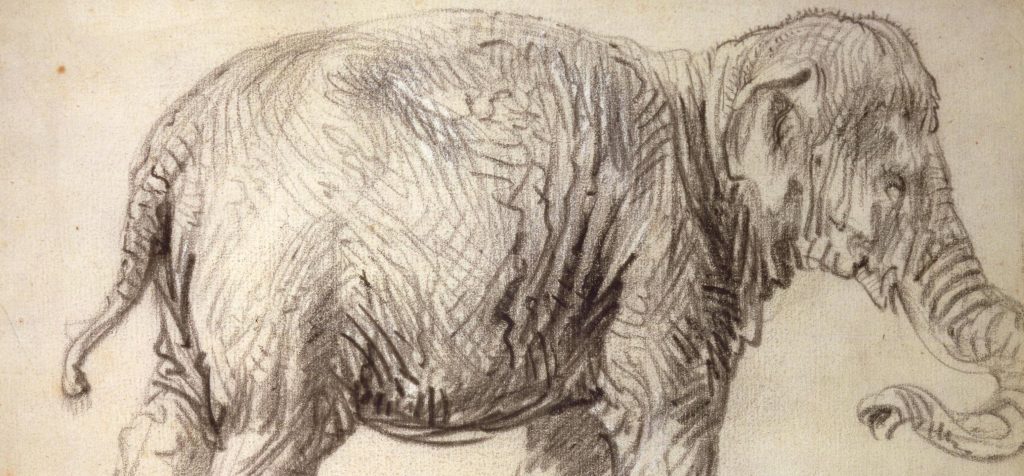
She was famous across Europe: the Asian elephant Hansken. In the middle of the seventeenth century, she was the only living elephant on the continent and was toured to markets, fairs, and courts. When Hansken was in Amsterdam, Rembrandt drew her. Occasion for The Rembrandt House Museum to tell her life’s story in an exhibition for young and old. Hansken, Rembrandt’s Elephant presents works of art by Rembrandt and his contemporaries, historical documents, and a digital map on which you can follow Hansken’s trail through Europe. But also Hansken’s skull, which has been preserved and has been brought from Italy to The Rembrandt House Museum specially for this exhibition. The story of Hansken is astonishing, but also moving. She had to put up with a lot in her life; she was forced to go on long journeys and constantly had to make appearances. Besides the beautiful works of art made after her by Rembrandt and his contemporaries, this exhibition also sheds light on elephant welfare from today’s standpoint. Hansken, Rembrandt’s Elephant is on view until 29 August in The Rembrandt House Museum.

Rembrandt meets Hansken
In 1633 Hansken first appeared in Amsterdam. She could be seen that summer on the Kloveniersburgwal, just around the corner from Rembrandt. But the artist may have been in Friesland at the time. In the autumn of 1637 she was in Amsterdam once more and then Rembrandt seized his opportunity. He must have been filled with wonder, as he had never seen an elephant before in real life. The enormous, grey animal with her long trunk will have made a deep impression on him: he immortalized her on several occasions.

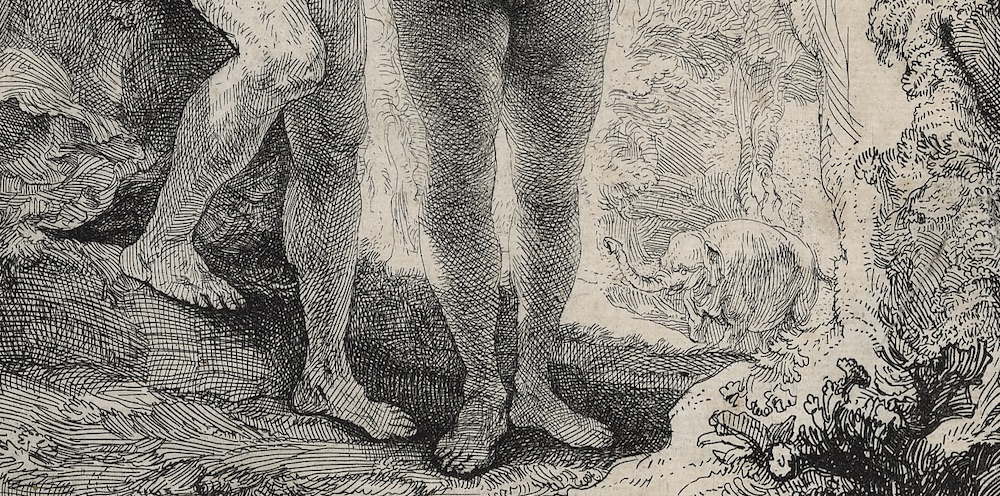
Leonore van Sloten, curator at The Rembrandt House Museum: ‘Rembrandt’s drawings of Hansken really show him observing closely and with great interest: he drew her “after life”, with attention to every detail including her short hairs, skin folds and the movement of her feet and trunk. These drawings hang next to Rembrandt’s etching of Adam and Eve in Paradise in the exhibition. There, you see Hansken in the background. Rembrandt incorporated a contemporary element in the Biblical scene, which made the print even more appealing to buyers.

Rembrandt, Adam and Eve in Paradise, 1638. Etching. The Rembrandt House Museum, Amsterdam (detail).


Hansken did not only leave traces behind in works of art. In 1647 she sank through a wooden bridge on the dyke beside the Amstel just outside the city, and ended up in the water – but remained unharmed. A short poem, The Elephant Bridge, by the seventeenth-century poet Jan Six van Chandelier, commemorates this event. The bridge was restored, but now made of stone and named The Elephant Bridge. In the same neighbourhood there was also an Elephant Path and a tavern called The Elephant.


Wednesday, August 4, 2021

Christie’s: The Cox Collection: The Story of Impressionism


THE MOST SIGNIFICANT COLLECTION OF ITS KIND IN AMERICA TO BE OFFERED AT CHRISTIE’S IN NOVEMBER

MASTERPIECES BY CAILLEBOTTE, CÉZANNE, VAN GOGH, AS WELL AS WORKS BY MONET, SISLEY, REDON, VUILLARD

GUSTAVE CAILLEBOTTE (1848-1894) 
Jeune homme à sa fenêtre
oil on canvas 
45⅝ x 31⅞ in. (116 x 81 cm.) 
Painted in 1876. 
Estimate on request

Christie’s has announced The Cox Collection: The Story of Impressionism, one of the greatest American collections to ever appear on the market. Masterpiece works by Caillebotte, Cézanne and van Gogh will headline the 25 works from the collection offered in November, and a dedicated sale of decorative arts and furniture will take place online in December. The collection was assembled half a century ago and is expected to realize in excess of $200 million. A portion of the sale proceeds will benefit educational purposes. A global tour of highlights from the collection will include stops in Taipei, Tokyo, Hong Kong and London, before the auction preview at Christie’s Rockefeller Galleries in New York.

For more than half a century, the businessman, collector, and philanthropist Edwin Lochridge Cox stood at the forefront of civic life in Texas and the greater United States. A cherished figure in his home city of Dallas, Cox was celebrated as not only a true visionary in the field of American energy, but as an indispensable benefactor and patron of some of America’s most important cultural institutions. Throughout his 99 years, Edwin L. Cox cultivated a profound personal legacy centered on the core values that guided his extraordinary trajectory: entrepreneurship, scholarship, and the importance of helping others.The Cox Collection tells the story of Impressionism and Post-Impressionism at the highest level and encapsulates many of the defining stylistic and thematic characteristics that constitute these seminal movements. Highlighting the collection is one of the most iconic paintings in Gustave Caillebotte’s oeuvre, and cover of the catalogue raisonné, the imposing Jeune homme à sa fenêtrecompleted in 1876, estimate on request (in excess of $50 million). The work depicts the artist’s middle brother René gazing out of the window of the family’s residence in Paris’s 8th arrondissement. Presenting a novel view of Parisian bourgeois life in which a young man is captured in a moment of contemplation as he watches the street from an elegant apartment, this work showcased the influence of Caillebotte’s academic training alongside his growing interest in realism. The painting, which would later be featured in the first exhibition of Impressionist works ever staged in America in 1886, earned the artist a reputation within the Parisian art scene as an insightful chronicler of contemporary life. Jeune homme à sa fenêtre quickly became known as one of his most emblematic works.


Vincent van Gogh’s Cabanes de bois parmi les oliviers et cyprès combines the artist’s favorite Provençal motifs and encapsulates the characteristics of the artist’s mature style that emerged at Saint-Rémy, where it was executed in October 1889, estimate on request (in the region of $40 million). van Gogh’s yearlong stay in Saint-Rémy would see his work reach a climax of expression, as he depicted the world around him with an ever-greater intensity. Sheltered in the asylum, he encountered spells of mental illness interspersed with periods of prolific production. “I’m ploughing on like a man possessed,” van Gogh wrote to his brother Theo from Saint-Rémy in September 1889, “more than ever I have a pent up fury for work, and I think that this will contribute to curing me.” With the motif of the olive tree, van Gogh was able to explore his now famed expressionistic artistic language—as the present work masterfully shows. These circular strokes and snaking, impastoed lines came to dominate van Gogh’s work in Saint-Rémy.


Paul Cézanne’s L’Estaque aux toits rouges painted circa 1883-1885 is one of the most innovative landscapes of its period (estimate $35,000,000-55,000,000). Carefully cropped and vibrantly colored, the cubically constructed houses and plane of blue sea encapsulate the various aspects that Cézanne had been pursuing. It is one of the culminating works of the intense surge of creativity that L’Estaque had unleashed in the artist over a series of visits there in the late 1870s and early 1880s. Reducing the landscape to its elemental components Cézanne increasingly experimented with an abstract construction of the world around him, in which overlapping planes of color take the place of conventional modeling.

Goya: Drawings from the Prado Museum

 National Gallery of Victoria

June 25 to October 3 


The world-exclusive exhibition Goya: Drawings from the Prado Museum features more than 160 works on paper by Francisco Goya (1746 – 1828), celebrating the artist’s extraordinary draughtsmanship and imagination. Considered to be one of the first truly modern artists, Goya produced humorous and critical images of Spanish society that comment on gender relationships, social inequality and violence, as well as visions of fantastic creatures. 


Photograph: Images courtesy Museo Nacional del Prado and National Gallery of VictoriaFrancisco Goya 'Dream 27: Witches disguised as ordinary doctors' (1797) and 'The Sleep of reason produces monsters' (1797-9)


Goya: Drawings from the Prado Museum is the first major presentation of Goya’s work at the NGV in more than 20 years and features 44 drawings on loan from the Prado Museum, the largest group of Goya’s drawings ever seen in Australia. Ranging from bold ink drawings to delicate red chalk sketches, the drawings on display have been selected by the Prado especially for this NGV presentation. Highlights include examples from the artist’s earliest albums of social satires, preparatory drawings for his iconic print series, through to pages from the late albums, which contain some of Goya’s most complex and surreal images. This rich and diverse selection of drawings showcases the breadth of Goya’s drawing practice, as well as offering a rare insight into the artist’s image-making process. 


Francisco Goya, They carried her off! c. 1797. Preparatory drawing for Los Caprichos, plate 8, red ink wash over traces of black chalk. Museo Nacional del Prado, Madrid. Photo © Photographic Archive. Museo Nacional del Prado, Madrid.

Following a near-fatal illness in 1792, which left him profoundly deaf, Goya turned to drawing to record his private thoughts, visions and dreams, and continued this practice until the end of his life. In eight private albums, as well as in single sheet drawings, he gave expression to a vision of humanity that had no equivalent in the art of his day. Highlight works include This is how useful men usually end up 1814-23, a moving commentary on the consequences of poverty and war, and Literate animal 1824-28, a satirical image of an educated animal, which Goya drew in the last years of his life. 

The works drawn from the Prado collection have been complemented by more than 120 etchings from Goya’s renowned print series: the Caprichos 1797-98, which satirised vices and follies in Spanish society; The Disasters of War 1810–15, based on the atrocities of the war and famine that followed the Napoleonic invasion of Spain in 1808; Tauromaquia 1815-16 on the subject of bullfighting; and the enigmatic Disparates c. 1815–19, made during the reign of Ferdinand VII, whose suppression of civil liberties affected the lives of many intellectuals and reformers, including Goya and his friends. The prints are drawn from the NGV Collection with fifteen works on loan from the Art Gallery of South Australia. Goya’s most famous etching, The sleep of reason produces monsters, a striking composition of the sleeping artist haunted by monstrous apparitions, is also featured in the exhibition. 

The exhibition is structured chronologically and thematically around recurring themes in Goya’s art, many of which are as relevant today as they were in Goya’s time: the relationship between men and women; the condemnation of ignorance and religious zeal; the exploration of violence and its consequences; and the device of the nightmare or dream to critique social and political realities. 

Tony Ellwood AM, Director of the National Gallery of Victoria, said: ‘All aspects of society came under Goya’s critical eye – from education and marriage, to social justice and power relationships. Audiences to this exhibition will be astonished by the contemporary relevance of this exhibition and the universal themes that underpin the works of this celebrated Spanish artist.’ 

‘The NGV has a longstanding relationship with the Prado Museum in Madrid, a cultural partnership which has resulted in the Melbourne Winter Masterpieces exhibition Italian Masterpieces from Spain’s Royal Court, as well as the NGV’s commitment to sharing its significant collection of William Blake watercolours with Spanish audiences in the near future. We are indebted to the Prado Museum for generously lending these important Goya drawings. Without their continued support and commitment to this cultural exchange between Europe and Australia, a presentation of this significance would not be possible,’ said Ellwood. 

Francisco Goya (1746–-1828) was the most celebrated artist of his time in Spain. He was court painter to four monarchs, and lived through the turbulent events of the French occupation, the subsequent Peninsular War, and the Inquisition. He moved in elite circles and painted portraits of statesmen, aristocrats, influential writers and intellectuals. His friendships with liberals sharpened Goya’s political awareness and social conscience, which was particularly evident in his drawings and prints.

Monday, August 2, 2021

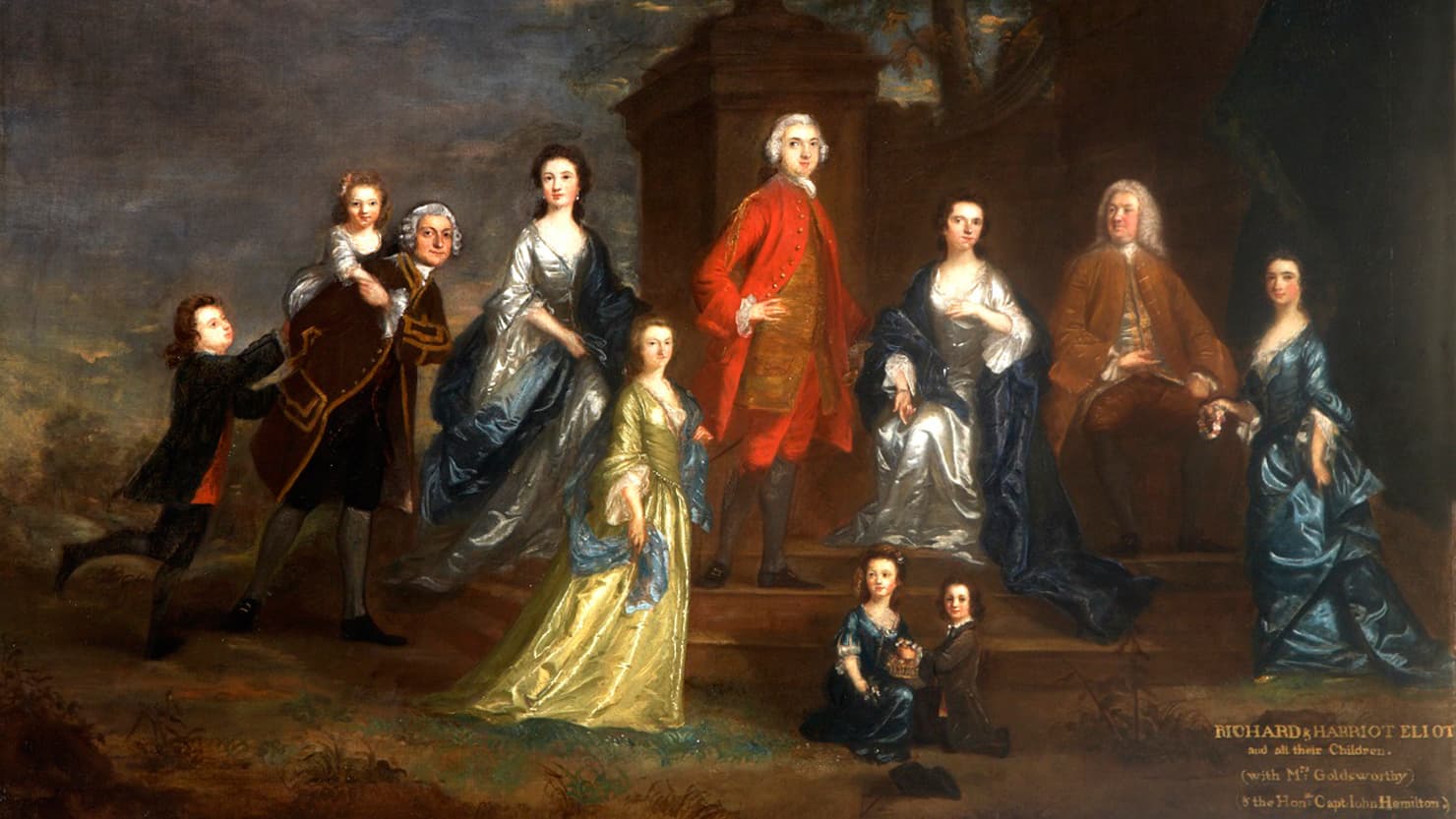
Family & Friends: Reynolds at Port Eliot

The Box Museum. Plymouth UK

24 July - 5 September


A new, free exhibition that draws on The Box’s extensive collection of Sir Joshua Reynolds paintings – the UK’s single largest public collection of his work outside of London – to explore the enduring connection between the Plymouth-born master painter and the Eliot family of Port Eliot in St Germans, Cornwall. 

Family & Friends: Reynolds at Port Eliot


Ann Bonfoy by Sir Joshua Reynolds. Image courtesy of The Box, Plymouth

15 miles west of Plymouth in the Cornish countryside stands Port Eliot. Home to the Eliot family since 1565, the house contains the largest surviving group of early portraits by Joshua Reynolds in the South West. In 2007, many of them joined The Box’s permanent collections through the Government’s Acceptance in Lieu Scheme.

Reynolds was born in Plympton St Maurice in 1723, and became Britain’s foremost portrait painter. As Founding President of the Royal Academy of Art, his approach to the making and teaching of art changed the way art was thought about in this country.

In this exhibition we use 14 of the 23 works that were acquired in 2007 to explore the relationship between Reynolds and the Eliot family - a relationship that began at the dawn of Reynolds’ artistic career, and ended with Edward, 1st Lord Eliot carrying his coffin into St Paul’s Cathedral almost 50 years later. After Reynolds’ death, the family continued to seek out his work for their home.

Hope Nursing Love by Sir Joshua Reynolds. Image courtesy of The Box, Plymouth

Sunday, August 1, 2021

A a new open-access journal dedicated to the panel paintings of Jacques Jordaens and Anthony Van Dyck


The Jordaens Van Dyck Panel Paintings Project has announced the publication of a new open-access journal dedicated to the panel paintings of the famous Flemish artists Jacques Jordaens (1593-1678) and Anthony Van Dyck (1599-1641). The four-part series will publish the wide-ranging, scholarly findings of the international and multidisciplinary Jordaens Van Dyck Panel Paintings Project (JVDPPP).

Anthony Van Dyck, Sir Kenelm Digby (1603–1665), c.1640, oil on canvas, 116.8 by 91.4 cm, London, The National Portrait Gallery. © National Portrait Gallery, London / Illustration to the JVDJ article Rubens, Van Dyck and Jordaens in the collection of the French painter Hyacinthe Rigaud (1659–1743) by Alexis Merle du Bourg.

The beautifully illustrated first issue is now free to view online and will be available to print on demand at cost price through jordaensvandyck.org/journal. The publication is accompanied by the online launch of the Summary Catalogues of the Van Dyck and Jordaens panels examined by the project. The online expansion publishes over 500 high-resolution photos and includes multidisciplinary research data of more than 250 panel paintings. The journal and expanded website have been designed to be complementary resources.

The Jordaens Van Dyck Journal is made possible by the Fonds Baillet Latour with the support of the Royal Museums of Fine Arts of Belgium and the University of Amsterdam.

Inaugural issue


Cover of the Jordaens Van Dyck Journal issue no. 1 showing John the Baptist by Jacques Jordaens, c.1620, oil on panel, 66.8 by 48.6 cm, Groninger Museum, loan from Municipality of Groningen, donation Hofstede de Groot. 


This first issue introduces the methodologies of the JVDPPP and shares the first tranche of its findings. The publication is edited by Dr. Emily Burns and has been designed to explore the panel paintings of Jordaens and Van Dyck through focusing on the different disciplines the project employs: dendrochronology, analysis of panel marks, archival research, stylistic and iconographic analysis and connoisseurship.


The first issue begins by setting seventeenth-century Antwerp panel making in context (by Sara Mateu, Panels Advisor), while Justin Davies (Co-founder) and Ingrid Moortgat (Archival Research Fellow) explore panel makers and their marks, and Andrea Seim (Lead Dendrochronologist) introduces how dendrochronology can be used in the study of panel paintings. The Project’s Co-founders Joost Vander Auwera and Justin Davies have provided introductions to their extensive research into the use of panels by Jordaens and Van Dyck, and Alexis Merle du Bourg (Archival Research, France) shares the product of his research into the paintings of Rubens, Van Dyck and Jordaens in the collection of Hyacinthe Rigaud. The issue closes with an exciting selection of discoveries from the archives made by Ingrid Moortgat, James Innes-Mulraine and Justin Davies.Cover of issue 1

Three further issues will follow in September, November 2021 and January 2022, containing new research and new discoveries on Van Dyck, Jordaens and their contemporaries.

Summary Catalogues
In conjunction with the launch of the Jordaens and Van Dyck Journal, the JVDPPP is also publishing Summary Catalogues of the panel paintings of these two famous artists examined by the Project, including works by their studios and copies, through an expansion on the project’s website jordaensvandyck.org. The new section on the website serves as a permanent resource for information and further scholarship into Jordaens, Van Dyck and seventeenth-century Flemish panel paintings.

Currently the Summary Catalogues include more than 250 paintings that have been examined by the JVDPPP in the past five years. The panels are in public and private collections worldwide, from Puerto Rico to Budapest. Some are well known, others are published for the first time. Further paintings examined before the end of the project in early 2022 will be added as they are studied.

The Summary Catalogues present the paintings in a multidisciplinary context combining data from analysing the reverses of the panels, archival research, and dendrochronology. Each entry offers a wealth of information such as the most recent published attribution, available literature and known provenance of the artwork. The entries are accompanied by a bibliography for each cited source. All paintings are displayed with high-resolution images of the front and back of the panel in addition to detailed photos of guild marks, panel maker marks, inscriptions and labels (if present). If dendrochronological examination of the panel was possible, the results for each plank are presented by approximate felling dates, the origin of the wood and the number of tree rings. Links to related translated articles and archival documents that are available on the project website are offered wherever possible.