Tuesday, September 21, 2021

CLOSE-UP : nine women artists - portraits and self-portraits


Fondation Beyele

now through January 2 


MARY CASSATT, LYDIA AT A TAPESTRY FRAME, CA. 1881. Oil on canvas, 65.1 × 92.4 cm. Collection of the Flint Institute of Arts, Flint, Michigan. Gift of The Whiting Foundation, 1967
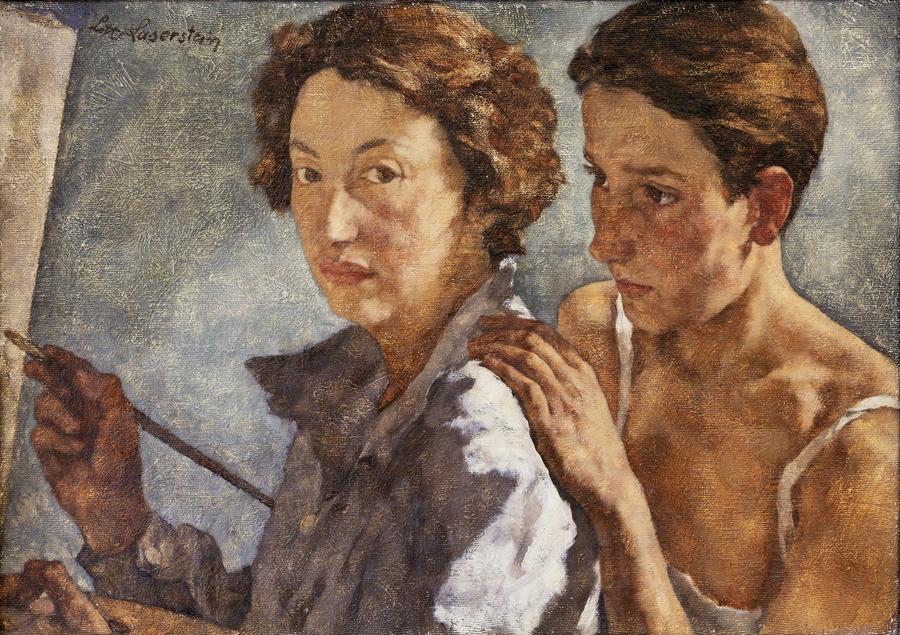
LOTTE LASERSTEIN, ICH UND MEIN MODELL (I AND MY MODEL), 1929–30. Oil on canvas, 49.5 x 69.5 cm. Private family collection © 2021, ProLitteris, Zurich
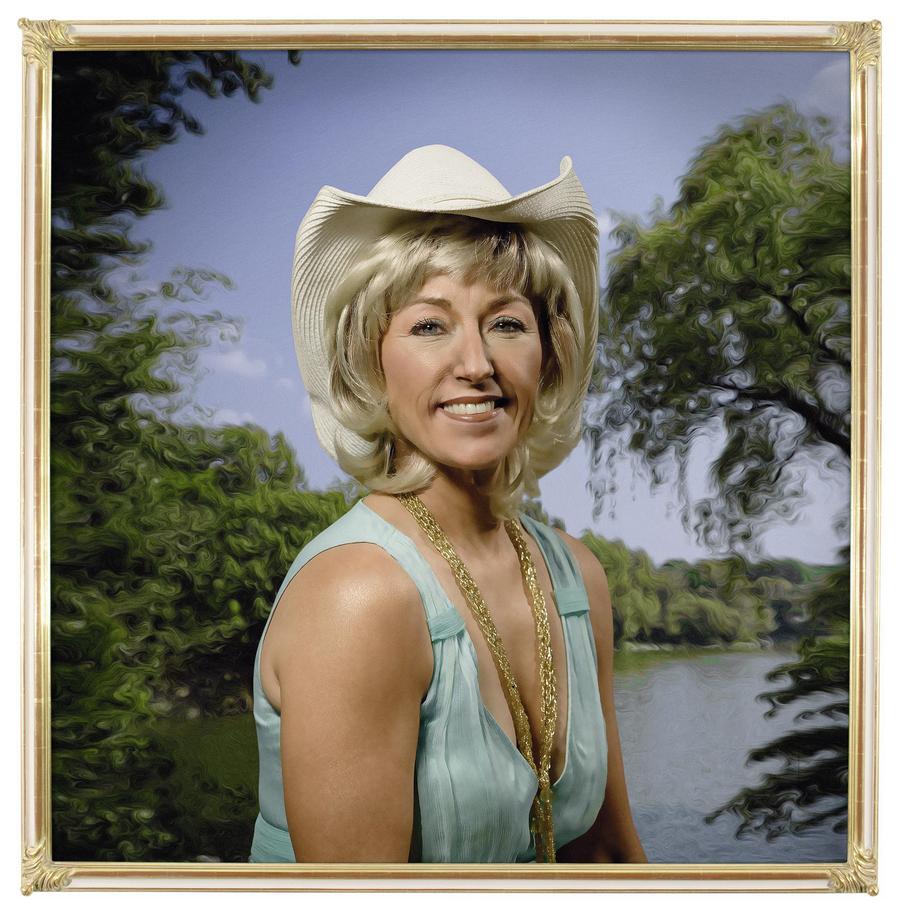
CINDY SHERMAN, UNTITLED, 2008. Chromogenic color print. 148.6 x 146.7 cm. Collection of Carla Emil & Rich Silverstein © 2021 Cindy Sherman
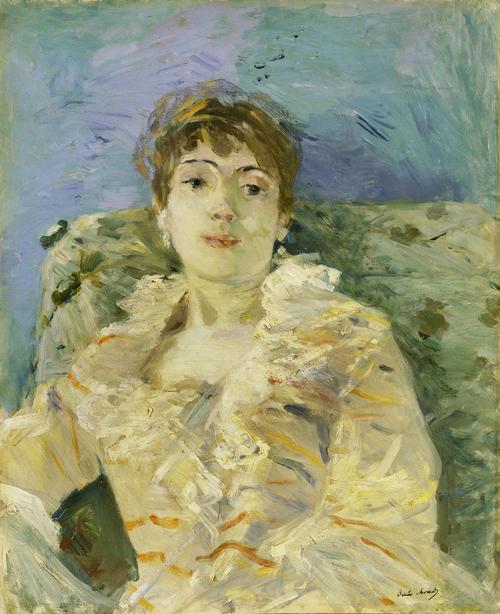
BERTHE MORISOT, GIRL ON A DIVAN, (JEUNE FEMME AU DIVAN), 1885. Oil on canvas, 61 x 50.2 cm. Tate, London; Bequeathed by the Hon. Mrs A.E. Pleydell-Bouverie through the Friends of the Tate Gallery 1968, Photo ©Tate
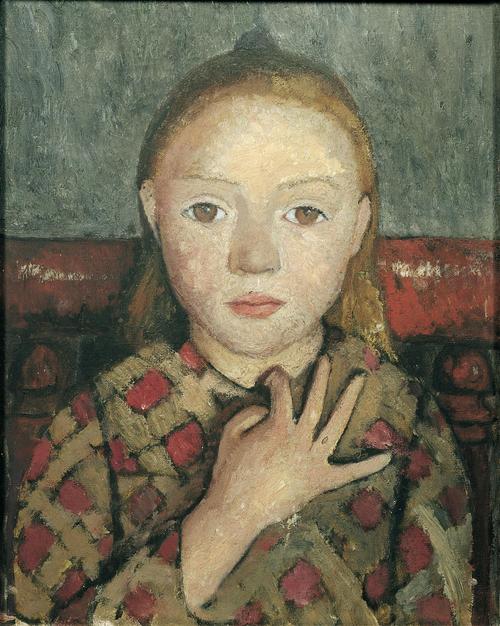
PAULA MODERSOHN-BECKER, PORTRAIT OF A GIRL WITH HER HAND SPREAD ACROSS HER CHEST (MÄDCHENBILDNIS MIT GESPREIZTER HAND VOR DER BRUST), 1905. Oil on canvas, 41 x 33 cm. Von der Heydt-Museum Wuppertal Photo: Antje Zeis-Loi, Medienzentrum Wuppertal
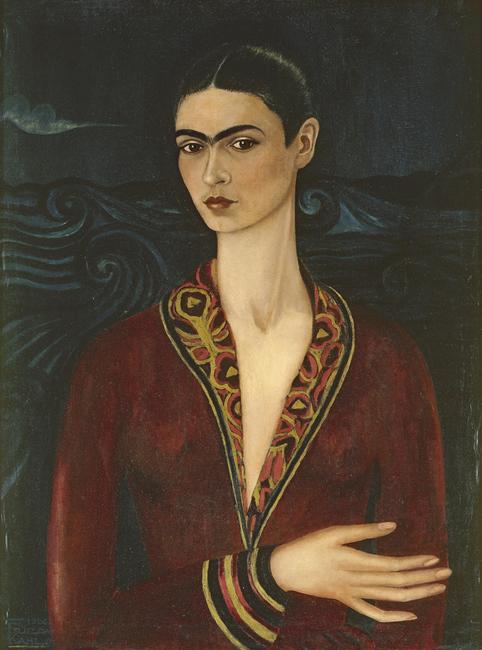
FRIDA KHALO, AUTORRETRATO CON TRAJE DE TERCIOPELO / SELF-PORTRAIT IN A VELVET DRESS, 1926. Oil on canvas, 79.7 x 60 cm. Private Collection; © Banco de México Diego Rivera & Frida Kahlo Museums Trust, México D.F. / 2021, ProLitteris, Zurich
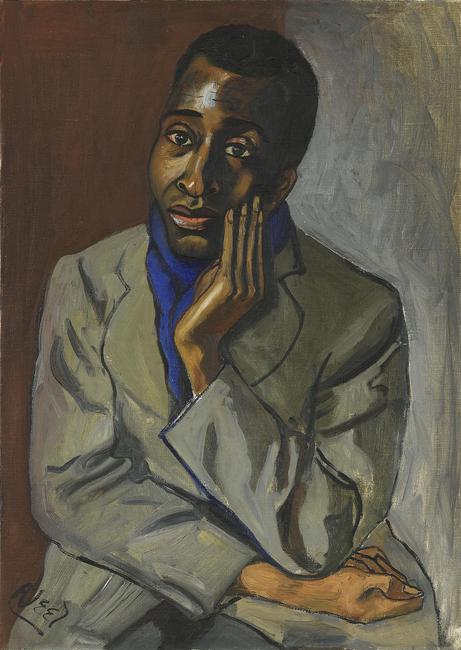
ALICE NEEL, HAROLD CRUSE, CA. 1950. Oil on canvas, 78.7 x 55.9 cm. Private collection © The Estate of Alice Neel Courtesy The Estate of Alice Neel and David Zwirner
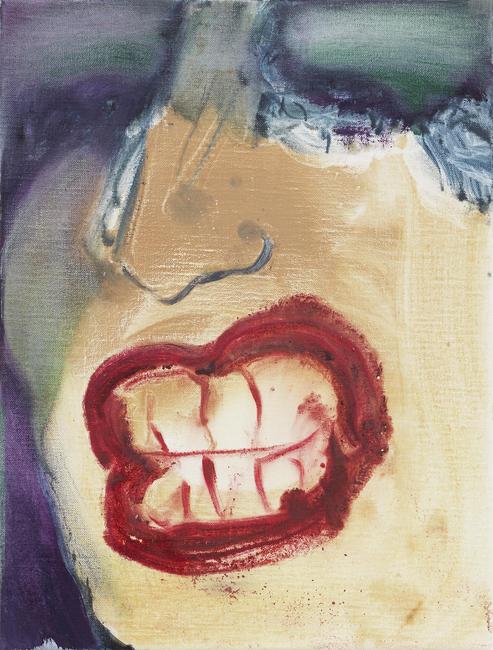
MARLENE DUMAS, TEETH, 2018. Oil on canvas, 40 x 30 cm. Private Collection, Madrid © Marlene Dumas. Courtesy the Artist and David Zwirner Photo: Kerry McFate

“CLOSE-UP” brings together nine women artists whose work shares a focus on the depiction of the human figure in the form of portraits and self-portraits, and who occupy prominent positions within the history of modern art from 1870 to the present day. The exhibition, on view now through January 2 at Fondation Beyeler in Switzerland, centers on the artists’ specific perception, on their personal vision of the world that finds expression in the portraits of themselves and others. By juxtaposing these artists, it becomes possible to understand how the artists’ view of their subject shifts between the second half of the 19th century and today, and to appreciate what is reflected in that view and what makes it significant.

The exhibition considers a period at the beginning of which it first became possible for women artists in Europe and America to become professionally active on a broad basis. It was also a time in which the notion of the portrait underwent a profound shift, along with a radical reassessment of the notion of the individual. Just as Impressionism ushered in a transformation of classical portraiture, so the beginning of the 20th century saw artists experiment with altogether relinquishing any notion of likeness. Subsequently, the portrait turned into a form of expression in which to explore new conceptions of subjectivity and new possibilities of representation. The artists featured in the exhibition provide an exemplary illustration of this trajectory. While the exhibition does not intend to provide a history of portraiture since the inception of modernity, each of the artists’ bodies of work presents a specific form of portraiture that is rooted in and arises from their respective time.

The exhibition opens with Berthe Morisot (1841–1895) and Mary Cassatt (1844–1926). The two artists helped shape Impressionism and became important role models for subsequent generations of women painters. The works of Paula Modersohn-Becker (1876–1907) featured in the exhibition were created between 1900 and 1907, the years of her exceptionally intense and promising early work, which came to an abrupt end with the artist’s death in childbirth in November 1907. Thirty years stand between her and Morisot and Cassatt, and artistically speaking Modersohn-Becker occupies a different position, figuring among the first who may be considered pioneers of modernism. With Lotte Laserstein (1898–1993), the exhibition shifts its focus from Paris to 1920s Berlin. Her portraits feature types of everyday modern life, in particular the “New Woman” whose image was then propagated in photography, magazines and film.

The work of Frida Kahlo (1907–1954) probably presents the most complex form of the portrait, and more particularly the self-portrait, in the exhibition. Kahlo’s self-portraits are unmistakably representations of the artist, yet they do not attempt to capture the real self. Rather, they are highly constructed self-portraits, but no less authentic for being so. Though belonging to the same generation as Lotte Laserstein and the slightly younger Frida Kahlo, Alice Neel (1900–1984) represents a completely different position both historically and artistically. Unlike many of her American fellow artists, Neel did not choose the path of abstraction and remained true to figuration. Nor did she distance herself from her models or take an ironic view of them. She created realistic portraits, painted from live models or from memory, aiming to capture the character of an individual.

A new section of the exhibition begins with Marlene Dumas (*1953), followed by Cindy Sherman (*1954) and Elizabeth Peyton (*1965), as contemporary portraiture takes centre stage with three very different positions. Common to all three artists is the fact that their perception and experience of reality are shaped and influenced by the mass media and the power of its imagery. Each of their approaches to portraiture expresses this in a different way.
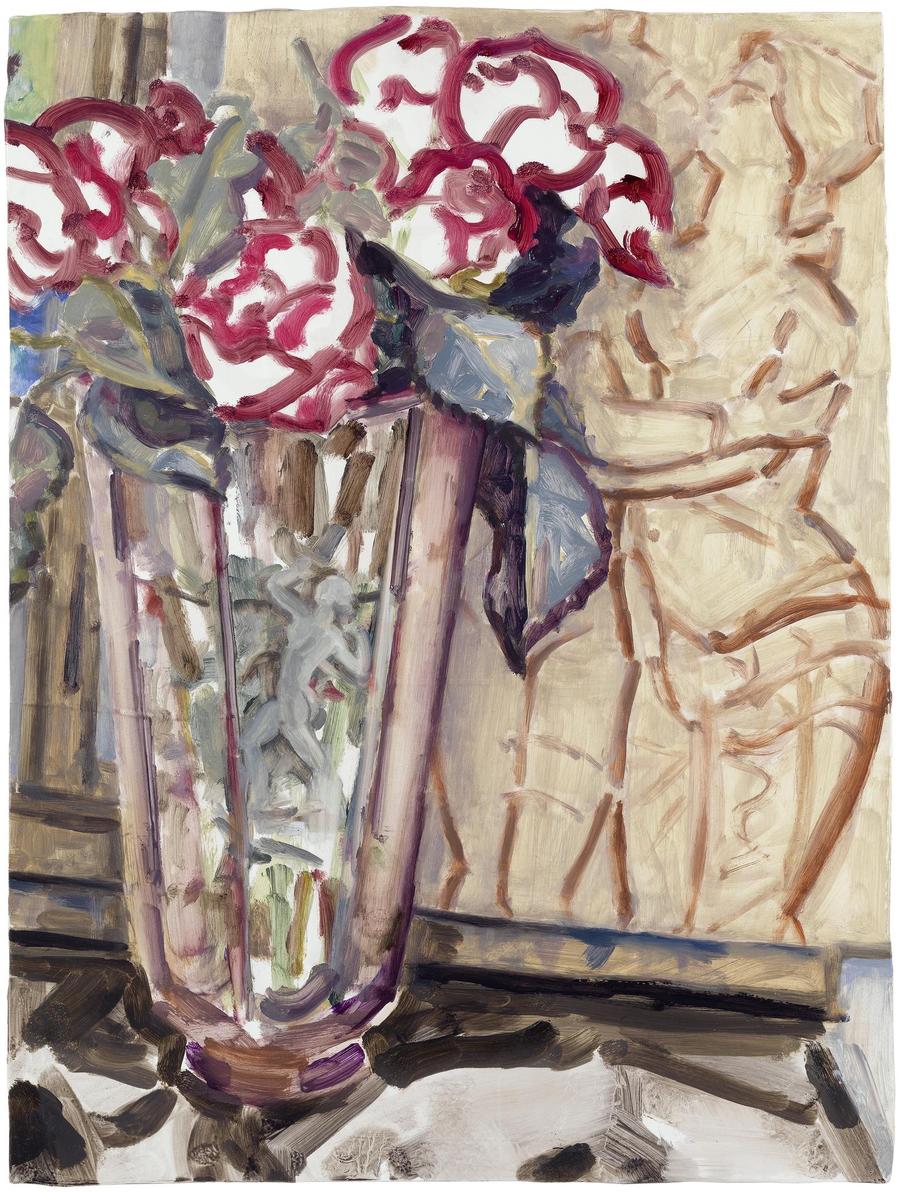
ELIZABETH PEYTON, TWO GREEK GIRLS + PEONIES (BERLIN), 2011–2012. Oil on panel, 40.6 x 30.5 cm. Private collection © Elizabeth Peyton, Courtesy the artist and Gladstone Gallery, New York and Brussels

With around 100 loans from international museums and private collections in Europe, the United States and Mexico, the exhibition provides unexpected and unique perspectives on the history of portraiture and the artists’ journeys.

The exhibition is rounded off by a series of short films featuring nine acclaimed international actresses: Irène Jacob, Martina Gedeck, Luna Wedler, Meret Becker, Ángela Molina, Bettina Stucky, Romana Vrede, Maria Furtwängler and Valerie Pachner, inviting viewers to discover the artists’ complex and diverse personalities from another vantage point. Soon to be available on www.fondationbeyeler.ch 

The exhibition catalogue is published in German and in English by Hatje Cantz Verlag, Berlin. With 342 pages, it features essays on each of the artists by Tere Arcq and Hilda Trujillo, Tamar Garb, Peter Geimer, Donatien Grau, Anna-Carola Krausse, Sylvie Patry, Uwe M. Schneede, Jennifer A. Thompson and Theodora Vischer.

Monday, September 20, 2021

Picturing a Nation: American Drawings and Watercolors

 Chazen Museum of Art, University of Wisconsin–Madison 

now through Nov. 28, 2021

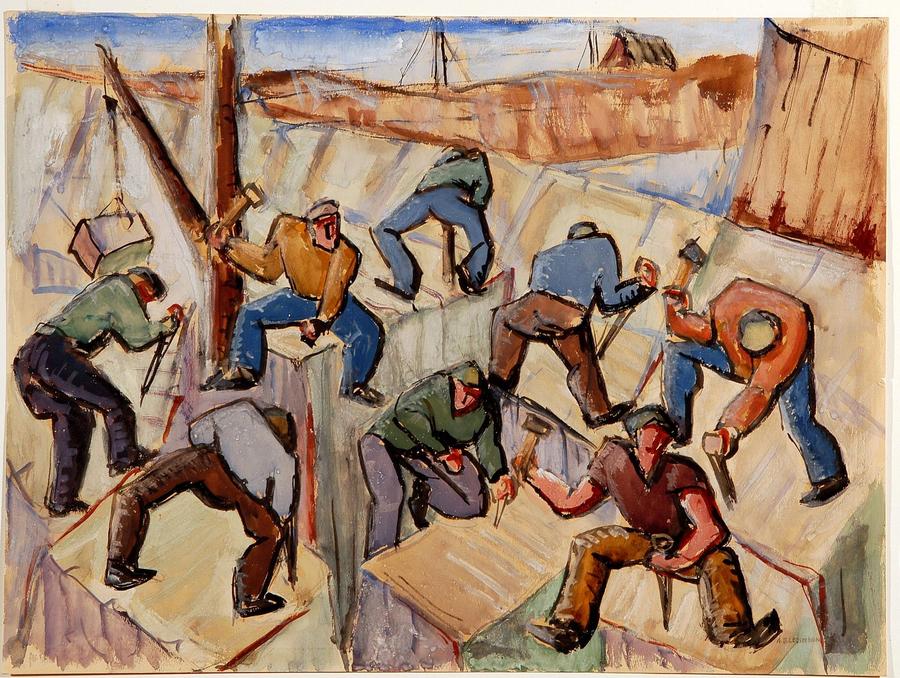
Men Working in Granite Quarry, Cape Ann, by Abraham Frater Levinson (American, 1883 - 1946) ca. 1935. Watercolor with graphite on tan wove paper. Gift of Velma Mekeel Stauffe.
Chazen Museum of Art

A survey of American drawings from the 18th century to the early 20th century introduces audiences to a range of artists, from anonymous to well-known practitioners, who excelled in a variety of drawing media and subject matter. Organized by the Chazen Museum of Art at the University of Wisconsin–Madison, Picturing a Nation: American Drawings and Watercolors traces colonial folk art to European-inspired academic styles to a distinctly modern, American form of draftsmanship. With pen and ink, graphite, watercolor, chalk and pastels, these artists composed incisive portraits, sweeping landscapes, historical narratives and scenes of everyday life. The exhibition is on view exclusively at the Chazen Museum of Art now through Nov. 28, 2021.

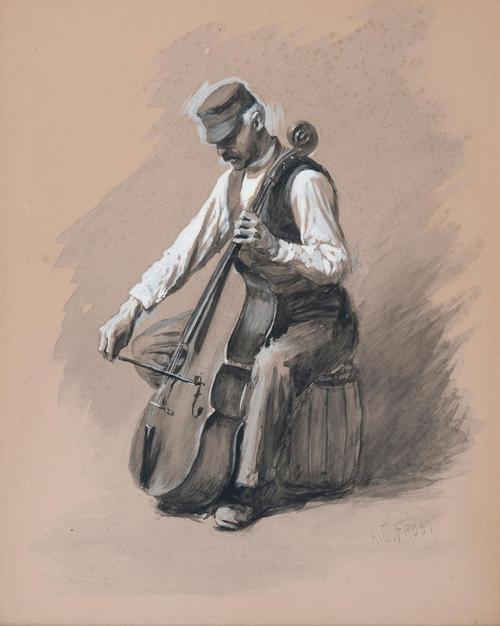
The Cellist (Portrait of Antonio Knauth, 1855 - 1915) by Arthur Burdett Frost (American, 1851 - 1928) ca. 1875. Watercolor and white gouache on beige wove paper. Gift of D. Frederick Baker from the Baker/Pisano Collection
Chazen Museum of Art

Picturing a Nation: American Drawings and Watercolors is co-curated by the Chazen’s Janine Yorimoto Boldt, associate curator of American art, and James R. Wehn, Van Vleck Curator of Works on Paper. The majority of the drawings in the exhibition are drawn from a series of exceptional gifts to the Chazen over the years from D. Frederick Baker and the Baker/Pisano Collection and from Mr. and Mrs. Stuart P. Feld.

“Thanks to the breadth of these wonderful collections from Fred Baker and the Felds, this exhibition provides an opportunity to spotlight both celebrated American artists and views, as well as several self-taught artists, particularly women, who deserve to be better known for their creative contributions,” said Yorimoto Boldt.

The exhibition includes remarkable works by Ruthy Batcheller, Mather Brown, George Catlin, William Merritt Chase, Thomas Cole, John Singleton Copley, John Steuart Curry, Lilian Westcott Hale, Eastman Johnson, Frances Jauncey Ketchum, Louisa Jauncey Ketchum, John Marin, William Sidney Mount, Titian Ramsey Peale, Eliza Quincy, John Trumbull, John Vanderlyn, Elihu Vedder and Benjamin West, among others.

Themes such as the colonial foundation of American drawing, the formation of the American school of artists who traveled to Europe, the development of the American Academy on the east coast of the United States, portraiture, landscape and self-taught women artists will be examined through the scope of drawings in the exhibition. Select locations represented in the images include the Niagara River, Lake George, Hudson River Valley, White Mountains, Lake Superior region of Wisconsin and the Mississippi River.

Among the exhibition’s many highlights are 


Benjamin West’s neoclassical Rustic Lovers Forewarned of the Approach of a Thunderstorm(1785), Louisa Jauncey Ketchum’s watercolor and ink botanical study Hepatica of Noble Liverwort (circa 1819), the compelling charcoal and chalk portrait of Miss Brinkley by Eastman Johnson (1855) and John Marin’s modern abstraction of the Brooklyn Bridge in graphite (circa 1913).

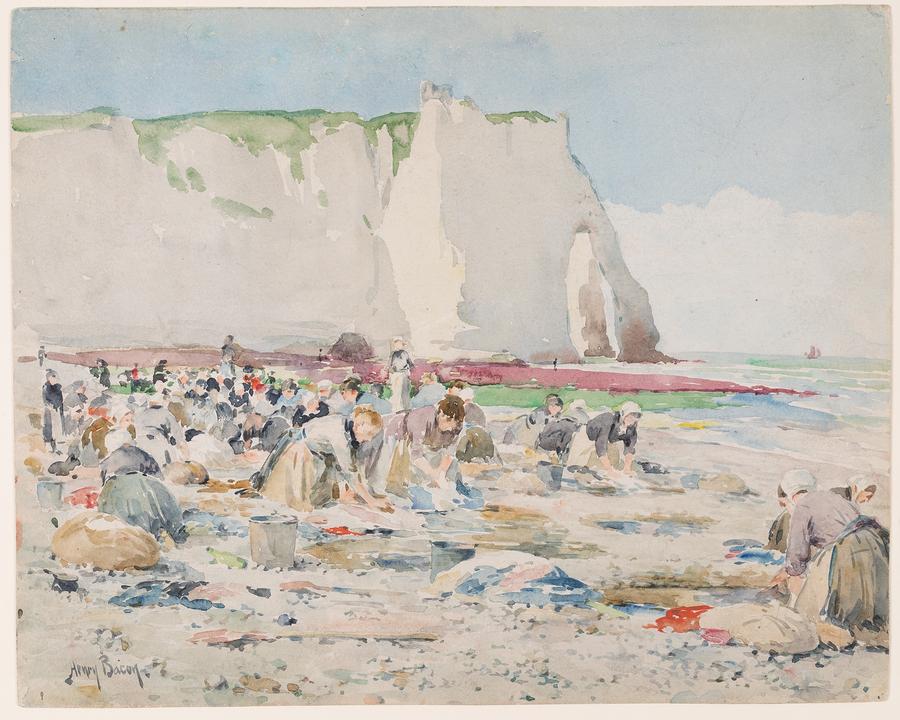
Clam Gatherers at Etretat by Henry Bacon (American, 1839 - 1912) ca. 1890. Watercolor with graphite on thick wove paper. Gift of Mr. and Mrs. Stuart P. Feld
Chazen Museum of Art

“One of our goals for the exhibition was to share with viewers how drawing embodied the colonialist value system and advanced as a fine art in the U.S. and the impact on our more inclusive understanding of American drawing today,” said Wehn.

Tuesday, September 14, 2021

Face to Face. Picasso and the Old Masters

 Museo de Bellas Artes de Sevilla 

7th October 2021 to 6th February 2022

Museo Picasso Málaga 

21st February to 26th June 2022

  • The exhibition Face to Face. Picasso and the Old Masters is an outstanding chance to see great works by Pablo Picasso side by side with others by El Greco, Francisco Pacheco, Giovanni Battista Caracciolo, Francisco de Zurbarán, Cornelius Norbertus Gijsbrechts, Bernardo Lorente Germán and Diego Bejarano.

Pablo Picasso (1881-1973). Restaurant. Paris, spring 1914 Oil on cut-out canvas pasted on glass, 42 × 34 cm
Fundación Almine y Bernard Ruiz-Picasso para el Arte © FABA photo: unknown photographer, all rights reserved © Sucesión Pablo Picasso, VEGAP, Madrid, 2021
The show can be seen at the Museo de Bellas Artes de Sevilla from 7th October 2021 to 6th February 2022, and at Museo Picasso Málaga from 21st February to 26th June 2022. The exhibition will feature seven works from the Seville museum hung alongside nine works from the Fundación Almine y Bernard Picasso para el Arte (FABA). These dialogue exchanges between works by Picasso and the Spanish Golden Age masters, aim to show the undeniable importance of these painters in terms of the development of the Málaga-born artist’s own revolutionary art.
 
Face to Face. Picasso and the Old Masters highlights the fundamental importance of Picasso’s relationship with the past: by juxtaposing these 16th- 17th- and 18th-century paintings with a selection of works by Picasso, the viewer can sense Picasso’s admiration of traditional painting and appreciate the major role the work of the Spanish Old Masters played in devising the radical departures from tradition that were to define 20th-century modernism.
 
By confronting the present and the past, the exhibition, which is curated by Michael FitzGerald, professor of modern and contemporary art at Trinity College, Hartford, Connecticut, and director of the Pablo Picasso research programme initiated by the Fundación Almine y Bernard Ruiz-Picasso para el Arte (FABA), will highlight the fact that the art of the Old Masters was not only worthy of Picasso’s admiration, but also drove his ambition to surpass his predecessors.
Cornelius Norbertus Gjsbrechts (1610-1675). Vanitas. C. 1660. Oil on canvas, 130 × 177 cm
Museo de Bellas Artes de Sevilla © Museo de Bellas Artes de Sevilla. Photo: Pepe Morón, all rights reserved

Wednesday, September 8, 2021

Medieval Bologna: Art for a University City


 Frist Art Museum 


November 5, 2021–January 30, 2022

NASHVILLE, Tenn. (September 8, 2021)—The Frist Art Museum presents Medieval Bologna: Art for a University City, the first major museum exhibition in the United States to focus on medieval art made in the prosperous northern Italian city of Bologna. Conceived and organized by Frist Art Museum senior curator Trinita Kennedy, the exhibition of illuminated manuscripts, paintings, and sculptures will be on view in the Frist’s Upper-Level Galleries from November 5, 2021, through January 30, 2022.

The nearly 70 objects in the exhibition span from 1230 to 1400, from the first great flowering of manuscript illumination in Bologna to the beginnings of the construction and decoration of the ambitious Basilica of San Petronio in the city’s Piazza Maggiore. On view will be many illuminated law textbooks, which are fascinating for their distinctive page layouts and iconography as well as their notable size and heft. The works are drawn primarily from American libraries, museums, and private collections, including the J. Paul Getty Museum, the Library of Congress, The Metropolitan Museum of Art, the National Gallery of Art, the New York Public Library, and Princeton University Library. Loans are also being sought from the Museo Civico Medievale in Bologna.

The exhibition explores how medieval Bologna, with its porticoed streets, towers, communal buildings, main piazza, and mendicant churches, became a center for higher learning at the end of the Middle Ages. Home to the oldest university in Europe, Bologna fostered a unique artistic culture with its large population of sophisticated readers. The city became the preeminent center of manuscript production south of the Alps, and it helped bring about a revolution in the medieval book trade. Manuscripts circulated in a thriving market of scribes, illuminators, booksellers, and customers operating mostly outside traditional monastic scriptoria. The university initially specialized in law, and many law books were illuminated in Bologna with brightly colored narratives. Professors enjoyed high social status and were buried in impressive stone tombs carved with classroom scenes.
A highly respected curator in the field of medieval and renaissance art, Kennedy also organized the award-winning exhibition Sanctity Pictured: The Art of the Dominican and Franciscan Orders in Renaissance Italy, on view at the Frist in 2014–15, and edited the companion catalogue of the same title. The research that originated with the exhibition was the basis for an honors seminar at Tulane University. 

Exhibition Catalogue
The exhibition is accompanied by a 256-page lavishly illustrated hardback catalogue titled Medieval Bologna: Art for a University City, published by Paul Holberton Publishing (London). Edited by Frist Art Museum senior curator Trinita Kennedy, the publication includes seven essays and is the first major study in English about manuscript illumination, painting, and sculpture in Bologna between the years 1200 and 1400. The essays—by academics, a conservator, curators, and a museum educator—create a rich context for the works in the exhibition, many of which have never been studied in depth or published before. The book aims to expand our understanding of art and its purposes in the medieval world. 


Image Credits

1. Nerio (active late 13th and early 14th centuries). Cutting from a Choirbook (antiphonary): Easter Scenes (in initial A), ca. 1315. Tempera, gold, and ink on parchment, 9 3/8 x 9 3/8 in. The Metropolitan Museum of Art, Rogers Fund, 1912, 12.56.1

2. Seneca Master (active early 14th century). Cutting: The Sixth Day of Creation, early 1300s. Tempera and gold on parchment, 2 3/4 in. diameter. The Cleveland Museum of Art, The Jeanne Miles Blackburn Collection, 2006.9

3. Nicolò di Giacomo di Nascimbene (active 1349–1403). Cutting from a Choirbook (gradual): The Trinity (in initial B), ca. 1392–1402. Tempera, gold, and ink on parchment, 14 x 12 in. J. Paul Getty Museum, Los Angeles, Gift of Elizabeth J. Ferrell, Ms. 115 (2017.122.1), leaf 1

Friday, September 3, 2021

Ansel Adams: Compositions in Nature.


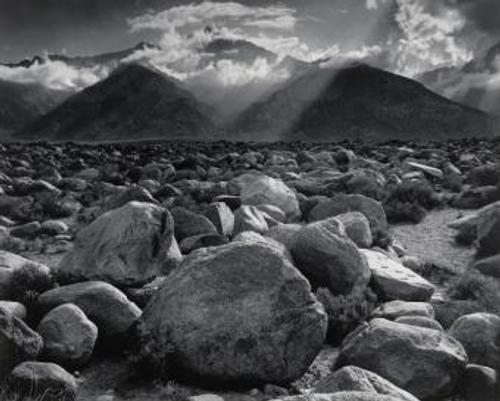
Mount Williamson, The Sierra Nevada, from Manzanar, California, 1944, printed 1973–75, Ansel Adams (American, 1902–1984), gelatin silver print. Virginia Museum of Fine Arts, Adolph D. and Wilkins C. Williams Fund. Photograph by Ansel Adams © The Ansel Adams Publishing Rights Trust.
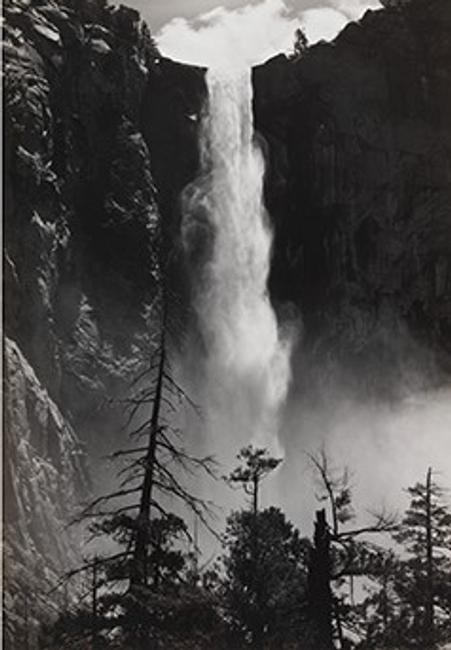
Ansel Adams (American, 1902-1984), Bridalveil Fall, ca. 1952, printed 1960 from Portfolio Three: Yosemite Valley, Gelatin silver print on Kodak Medalist F paper, Courtesy of Virginia Museum of Fine Arts, Richmond. Gift of Dr. and Mrs. Bernard J. Sabaroff. Photograph by Ansel Adams, © The Ansel Adams Publishing Rights Trust.

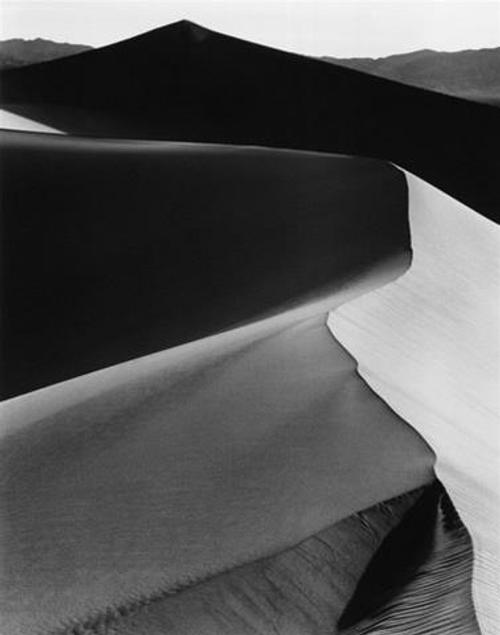
The Virginia Museum of Fine Arts (VMFA) is set to host the exhibition Ansel Adams: Compositions in Nature. The exhibition, which features an iconic collection of more than 70 works by American photographer Ansel Adams (1902-1984), will be on view at the Richmond museum from September 25, 2021, through January 2, 2022. Adam’s photography, as well as his lifelong interests in the environment and classical music, will be explored, allowing visitors to gain a full appreciation of the artist through special areas of the exhibition that will include Adams’ own musical recordings.

“Through this exhibition, VMFA celebrates Ansel Adams’ photographs which so dramatically capture the sublimity of the American landscape,” said Alex Nyerges, VMFA Director and CEO. “In a career that spanned more than five decades, Adams became one of America’s most recognized and influential landscape photographers and one of its more respected environmentalists. His works continue to inspire us to take a deeper, even meditative, look at our extraordinary natural surroundings and appreciate the profound beauty around us.”

Adams’ works reveal the importance he placed on the sensational splendor of natural environments that might have been overlooked by the ordinary passerby. His use of light and shadow create photographs that abound with visual details, textures and patterns and evoke an emotional response and a greater appreciation of nature from viewers. Adams’ photography also supported his lifelong involvement as an environmental activist and his black-and-white prints became his greatest influence on environmental protections and conservation efforts. His photographs continue to resonate with viewers today.

Ansel Adams (American, 1902-1984), Sand Dunes, Sunrise, Death Valley National Monument, California, 1948, printed 1974, Gelatin silver print, Courtesy of Virginia Museum of Fine Arts, Richmond. Gift of Andrea Gray Stillman. Photograph by Ansel Adams, © The Ansel Adams Publishing Rights Trust.

Many of the photographs featured in the exhibition were selected by Adams to represent his life’s work. VMFA will complement the artist’s selections with works from the museum’s own permanent collection. Comprised of some of Adams’ most beloved images and never-before published photographs, these additions will provide a comprehensive survey of the artist’s career, demonstrating changes in aesthetics and technique, as well as his keen eye for visual composition and fascination with the natural environment.

With the proliferation of photography in contemporary life, it may be difficult to imagine a time when taking a photograph was a visionary, planned and deliberate act. Adams was a pioneer and his work elevated the medium. “There are few artists whose name and works represent the extraordinary level of universal recognition and artistic achievement as that of Ansel Adams,” said Dr. Christopher C. Oliver, VMFA’s Assistant Curator of American Art. “Adams influenced the course of 20th-century photography not only through his striking, technically precise images but also through his devotion to advancing the cause of photography as an art form.”

Helen Frankenthaler: Late Works, 1990-2003,

 Palm Springs Art Museum 

Oct. 14, 2021 and will run through February 27, 2022

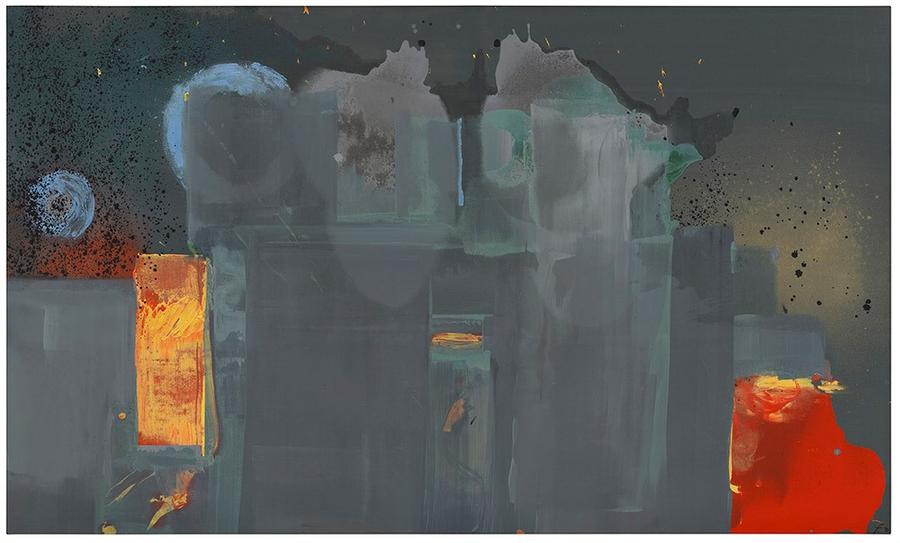
Helen Frankenthaler, Janus, 1990. Acrylic on canvas, 57 x 94 3/4 in. (144.8 x 240.7 cm). Helen Frankenthaler Foundation, New York © 2021 Helen Frankenthaler Foundation, Inc. / Artists Rights Society (ARS), New York

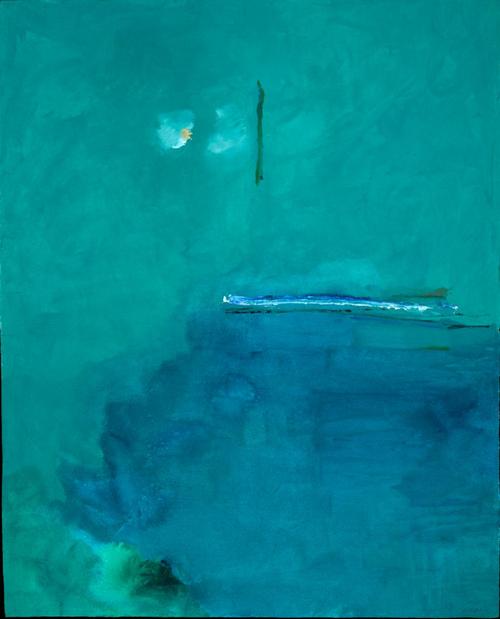
This fall, Palm Springs Art Museum will present Helen Frankenthaler: Late Works, 1990-2003the first museum exhibition dedicated to the late work of Helen Frankenthaler. The exhibition will feature 20 paintings on paper and 10 paintings on canvas on loan from the Helen Frankenthaler Foundation. It opens Oct. 14, 2021 and will run through February 27, 2022.

As a second-generation postwar abstract artist, Helen Frankenthaler (1928-2011) played a key role in the transition from Abstract Expressionism to Color Field painting beginning in the 1950s with her soak-stain technique, which involved pouring thinned oil paint directly onto unprimed canvas. She was a fearless experimenter, particularly when it came to new materials and processes.

Frankenthaler (1928–2011), whose career spanned six decades, has long been recognized as one of the great American artists of the 20th century. She was eminent among the second generation of postwar American abstract painters and is widely credited for playing a pivotal role in the transition from Abstract Expressionism to Color Field painting. Through her invention of the soak-stain technique, she expanded the possibilities of abstract painting while referencing figuration and landscape in unique ways. In later years, her practice continued to evolve through her use of diverse media and processes, as she shifted from painting canvas on the floor to using larger sheets of paper that were laid out on the floor or on table tops for easier accessibility. The continuity between the late work and what came before is striking, as Frankenthaler continued to move in intuitive directions that were inspired by her mood and imagination.

Helen Frankenthaler, (American, 1928-2011), Contentment Island, 2002, acrylic on paper, 74 1/8 inches x 60 1/8 inches (188.3 cm x 152.7 cm). Collection: Helen Frankenthaler Foundation, New York © 2021 Helen Frankenthaler Foundation, Inc. / Artists Rights Society (ARS), New York. Photo credit: Roz Akin, courtesy Helen Frankenthaler Foundation

“Frankenthaler is one of the great American artists of the 20th century. She demonstrated continuous innovation and creativity over the course of her illustrious six-decade career,” says Adam Lerner, Executive Director/CEO of Palm Springs Art Museum. “We’re delighted to be working with the Frankenthaler Foundation to present this first opportunity for the public to view her later work, which built upon her early successes and furthered some of her ongoing studies.”

Towards the end of her life, Frankenthaler deployed many of the same media and instruments that had been her longtime staples: charcoal, crayon, pastel, pen, and ink, as well as acrylic paint thinned out and applied with brushes, sponges, and an array of hardware utensils (windshield wipers, basters, and scrapers).

Having always painted canvases directly on the studio floor, she started using larger sheets of paper—some measuring over 6 feet—likewise laid out on the floor or on table tops for easier accessibility.

“We are pleased that a significant body of Helen Frankenthaler’s late work has been brought together in this exhibition,” says Elizabeth Smith, Executive Director of the Helen Frankenthaler Foundation. “With the addition of late canvases, the presentation at Palm Springs Art Museum offers a more complete view of the evolution of Frankenthaler’s creative process in the later decades of her lengthy career.”

Curated by Douglas Dreishpoon, Director of the Helen Frankenthaler Catalogue Raisonné and Chief Curator Emeritus at the Albright-Knox Art Gallery, with loans from the Collection of the Helen Frankenthaler Foundation, the project will be documented by a multi-authored publication with Radius Books.

Thursday, September 2, 2021

Frick Announces Its Most Significant Gift of Drawings and Pastels Artists include Caillebotte, Degas, Delacroix, Fragonard, Goya, Sargent, Vigée Le Brun, and Watteau

The Frick Collection announces the largest and most significant gift of drawings and pastels in its history, thanks to the generosity of Elizabeth “Betty” and Jean-Marie Eveillard. Over the past forty-five years, the Eveillards have assembled an outstanding collection of European works on paper, ranging in date from the end of the fifteenth century to the twentieth century and representing artists working in France, Britain, Italy, Spain, and the Netherlands. 

The Eveillards have made a promised gift to the Frick of twenty-six of these works— eighteen drawings, five pastels, two prints, and one oil sketch—among them some of their finest acquisitions. Along with preparatory figurative sketches and independent studies and portraits are two vivid landscape scenes. Fittingly for the Frick, artists represented include François Boucher, Edgar Degas, Jean-Honoré Fragonard, Francisco José de Goya y Lucientes, Thomas Lawrence, and Jean-François Millet. The group also introduces to the Frick’s holdings works by artists not yet represented in its primary collecting areas, including Gustave Caillebotte, Maurice Quentin de La Tour, Jan Lievens, John Singer Sargent, and Elisabeth Vigée Le Brun. 

In the fall of 2022, at its temporary Frick Madison location, the museum will present an exhibition of these extraordinary works, to be accompanied by a catalogue and public programs. Comments Xavier F. Salomon, the Frick’s Deputy Director and Peter Jay Sharp Chief Curator, “It has been a pleasure studying and selecting from this remarkable collection of two longtime supporters of the Frick, assembled just as our own holdings have been, according to criteria of beauty, quality, and condition. Each of the twenty-six works either appreciably deepens our holdings of a familiar artist or brings to us the work of one who is not—but should be—represented within our core areas of European Old Master art. In adding five pastels and an oil sketch, the gift also strengthens our examples of these media. We very much look forward to sharing these works with the public next year.” 

Betty and Jean-Marie Eveillard have been deeply involved with the Frick for many years, both having served as Trustees. Betty is currently the Board’s Chair.

The Eveillards acquired their first important work in 1975, John Singer Sargent’s Virginie Amélie Avegno, Mme. Gautreau (Mme. X), and have been active collectors ever since. This drawing is the most modern work in the promised gift to the Frick and is a particularly satisfying addition to the museum’s holdings: It is known from archival correspondence that Henry Clay Frick desired a portrait by Sargent but did not succeed in securing a sitting with the artist. Dated to about 1884, Sargent’s Mme. Gautreau is one of some dozen studies produced for the famous painted portrait Madame X, a highlight of the collection of The Metropolitan Museum of Art. This sheet shows the artist working out the figure’s pose, representing her lithe figure kneeling on a sofa and looking out a window. Sargent was captivated by Gautreau and strived in studies like this and in the final painting to capture her “unpaintable beauty and hopeless laziness.” 

Other later nineteenth-century drawings coming to the Frick are by Degas and Caillebotte, selected to complement the collection’s Impressionist paintings. While the institution owns a quintessential Degas canvas of dancers, the Eveillards’ early drawing of Adelchi Morbilli, created in Naples in 1857, will be the first work on paper by the artist in the Frick’s collection. It is one of—and arguably the best of— his series of drawings of his cousin. When it was drawn, Degas was particularly interested in the work of JeanAuguste-Dominique Ingres, and the portrait reflects this affinity. Gustave Caillebotte is best known and perhaps most celebrated for his 1877 painting at Chicago’s Art Institute, Paris Street; Rainy Day. A man of wealth, Caillebotte was also a patron and supporter of fellow Impressionist colleagues. His works only rarely appear on the market, most still being in the possession of his descendants. The promised gift includes a preparatory drawing for the iconic Paris street scene.

Eighteenth-century French art is one of the Frick’s strengths, with holdings by Boucher, Fragonard, Greuze, and Watteau. The gift brings to the museum works in chalk and pastel on paper by these four artists, media in which none of them is currently represented. Among these is a pastel drawing lauded by the influential writers Edmond and Jules Goncourt as one of the most beautiful by Boucher. The image of a reclining woman is associated with a pastoral painting now at the Louvre. Young Woman (“La Coquette”) by Fragonard is one of a series of spectacular drawings of female models standing outdoors. These were made in the early 1770s, contemporaneous with his creation of the four original canvases of The Progress of Love that today are a highlight of the Frick. 

The most renowned—and arguably the best—pastelist in eighteenth-century France was the eccentric Maurice Quentin de La Tour. The Eveillards have the finest pastel by him in private hands in the United States, the portrait of Madame Rouillé. It too comes to the Frick along with a sheet by De La Tour’s near contemporary Nicolas Lancret, neither of whom is currently represented at the museum in any medium. 

Widely traveled and celebrated during her life, Elisabeth Vigée Le Brun was a highly accomplished portraitist and writer. Her work also enters the collection with Head of a Woman, a sketch signed and dated 1784 and likely made in preparation for a history painting that was never executed. 

The scope of the institution’s French works is broadened further with sheets by Pierre-Paul Prud’hon and Jean-Baptiste Wicar. 

Painter Eugène Delacroix was among those artists to herald French Romanticism. 

In 2010, former Frick Director Charles Ryskamp left to the Frick the artist’s Moroccan Interior, a delicate and personal drawing from one of the sketchbooks Delacroix made in 1832 during a visit to North Africa. The Eveillard gift includes a pastel by the artist depicting two North African figures in a landscape, based on sketches made two decades later. Of the twenty known Delacroix pastels of such subjects, only a dozen can be located today; the Eveillard sheet is the only one in private hands, making this acquisition a particularly rare occurrence. 

The Frick is also celebrated for Spanish art, including five works by Goya: four paintings and one drawing, The Anglers. The Eveillards’ Tambourine Player (illustrated below) will deepen the institution’s holdings by the artist. This depiction of a dancing Spanish man comes from the same album as the aforementioned drawing and likewise exemplifies the artist’s use of everyday people as subjects, as is also the case with the Frick’s large Goya painting of laborers, The Forge. 

 Other works in the gift enrich the Frick’s celebrated collection of Italian works, with sheets ranging from a rare anonymous fifteenth-century Venetian drawing to Italian Renaissance and Baroque sheets by Federico Barocci, Guido Reni, and Salvator Rosa and eighteenth-century works by Giovanni Battista Piazzetta and Giovanni Domenico Tiepolo. 

The group includes two remarkable portraits by Jan Lievens, the Dutch contemporary of Rembrandt, and by Sir Thomas Lawrence, the leading British portraitist of his age. As a young collector, Henry Clay Frick was particularly interested in the Barbizon school, and a drawing by Jean-François Millet, one of the movement’s founding members, will also enter the collection through this generous gift. The landscape joins a genre scene by Millet already in the collection. 

Crowning this remarkable group of works is an oil sketch by John Constable, made in preparation for the last of the artist’s famous series of “six-footer” paintings, of which The White Horse at the Frick was the first. 


Images: All of the works are part of the promised gift from the Collection of Elizabeth and Jean-Marie Eveillard and all photos are by Joseph Coscia Jr. unless otherwise noted:


Millet, Thatched Cottage along the Sichon near Vichy


Tiepolo, Christ and the Centurion.


 Elisabeth Vigée Le Brun, Head of a Woman, 1784, Pastel on paper, 12 x 9 7/8 inches; 


John Singer Sargent, Virginie Amélie Avegno, Mme. Gautreau (Mme. X), ca. 1884, Graphite on paper, 12 3/8 x 8 7/8 inches; 


Edgar Degas, Adelchi Morbilli, ca. 1857, Graphite on paper, 9 5/8 x 6 1/2 inches; 


Gustave Caillebotte, Man with an Umbrella, 1877, Graphite and pencil on paper, 18 x 11 11/16 inches; 

; Eugène Delacroix, North African Man and Woman, ca. 1853, Pastel on paper, 8 9/16 x 12 1/2 inches; 

Francisco de Goya y Lucientes, Tambourine Player, ca. 1812–20, Brush and brown wash on paper, 8 1/16 x 5 5/8 inches