June 1–September 8, 2024
FloGris Museum
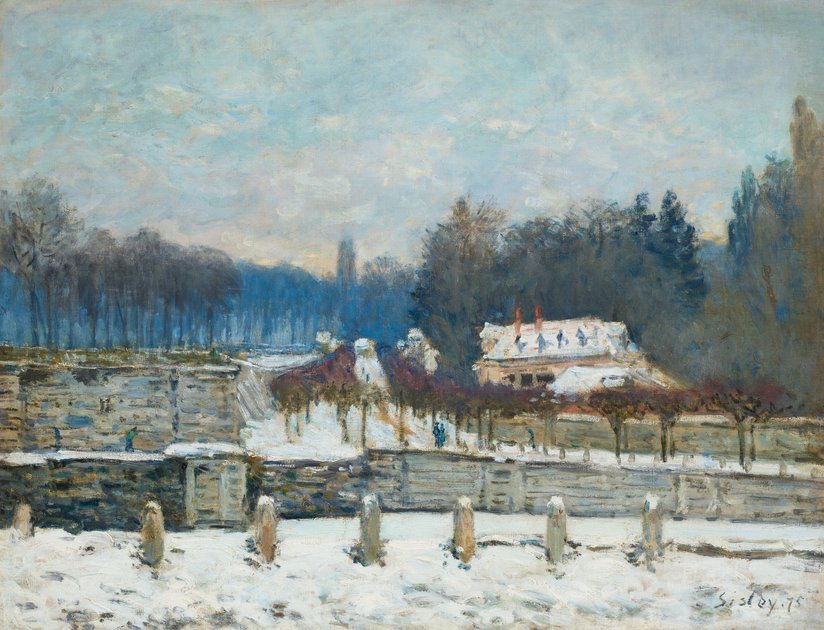
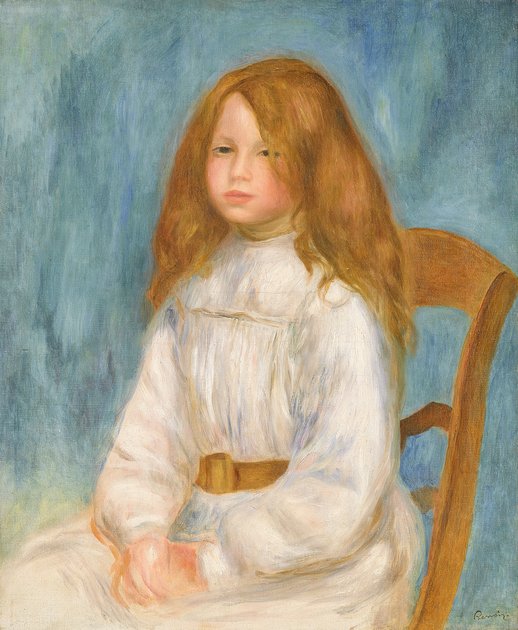
The year 2024 marks the 150th anniversary of the first exhibition in France by the group of artists we now call Impressionists. Thirty-one painters, including Claude Monet, Édgar Degas, Pierre-Auguste Renoir, Paul Cézanne, Berthe Morisot, and Alfred Sisley, claimed independence from the official government-sponsored exhibition known as the Salon. Favoring self-determination they joined together to show their works as an alternative to the Salon’s jury of selection.
This exhibition commemorates the French artists' break with the past and the spread of Impressionism by those who translated the style to the United States. As the historic site of the Lyme Art Colony, considered the home of American Impressionism, the Museum’s collection illustrates how American artists embraced the movement. Impressionism 150 acknowledges Americans’ academic tendencies in the 1870s, then explores those artists' exposure to Impressionism abroad, the role of French artist colonies in nurturing the style, and the replication of the colony model that facilitated Impressionism's spread at home through the beginning of World War I. Old Lyme's painters made Impressionism their brand, and the exhibition traces the style's fate as European abstraction re-shaped American art after 1913. Disregarded for decades, Impressionism attracted revived interest beginning in the 1970s–1980s, eventually reaching blockbuster status in major museum exhibitions. The exhibition concludes with current scholarship on American Impressionism that points toward its relevance today.
What Is Impressionism?
In the years leading up to their April 1874 debut exhibition, the group we now know as the “Impressionists” turned away from centuries of academic painting that had prized symbolic compositions full of carefully modeled figures. French Impressionists broke with the past in favor of registering the rapid pace of contemporary life. They worked outdoors using quickly applied dashes of paint to capture changing effects of light and atmosphere. Claude Monet urged artists to “Paint what you really see,” signaling that Impressionism required replacing old formulas with momentary observations.
Often loosely painted to convey a sense of immediacy, Impressionist canvases appeared less finished than those at the Salon. At that first exhibition, the critic Louis Leroy disparaged the works as “impressions” because of their emphasis on individual perception articulated via gesture and quasi-abstract color. The term stuck and was eventually even embraced by artists who preferred approaches to painting expressive of modernity. Not a movement with a manifesto, “Impressionism” is a broad label that encompasses a range of formal approaches to lighting, paint application, finish, and subject matter.
On the Cusp of a New Age
When French artists staged what became known as the first Impressionist exhibition in Paris in April 1874, American painters did not embrace the controversial style. Many young U.S. artists cared deeply about French art but remained dedicated to academic tradition and aspired to inclusion in the prestigious official Salon exhibitions that would pave the way for success with patrons back home. Except for expatriate painters Mary Cassatt and John Singer Sargent, Americans largely ignored Impressionism until the 1880s, when the professional risk of employing the style had decreased.
Like many American artists, J. Alden Weir sought training in the late 1870s in Paris. The son of West Point's drawing professor Robert W. Weir and the brother of Yale Art School director John Ferguson Weir, he enrolled at the École des Beaux-Arts as a pupil of the academic master Jean-Léon Gérôme. Despite a sophisticated background as a member of a family of respected artists, Weir responded to the 1877 French Impressionist exhibition with disbelief. He wrote home, "I never in my life saw more horrible things. They do not observe drawing nor form but give you an impression of what they call nature. It was worse than the Chamber of Horrors" (a reference to a section of Madame Tussaud's wax museum). Weir's shock recaptures for us the profound departure from convention represented by Impressionism.
Audiences in the United States became aware of Impressionism over a decade after its Paris debut, when French examples were exhibited in New York in 1886. The same year, American artist William Merritt Chase began to paint in an Impressionist style, a trend that would increase as Americans made their way to French artist colonies.

Fidelia Bridges (1835–1923)Wild Roses Among Rye, 1874
Watercolor and gouache over pencil on heavy wove paper
Gift of The Hartford Steam Boiler Inspection and Insurance Company
2002.1.13
Following its 1874 debut after roughly a decade of French artists gradually rejecting historical and allegorical themes, Impressionism would become known for making the everyday a subject for art. In works of that year like Wild Roses Among Rye, American artist Fidelia Bridges also sought inspiration in what she saw around her. However, influenced by the writings of British theorist John Ruskin she composed delicate watercolors not of city life but of plants and birds, each delineated with reverence for detail. As a reviewer stated in February 1875, "Miss Bridges apparently selects the most commonplace subjects, and yet, by her pleasant manner of treatment, transforms them into interesting pictures.”
While Impressionism's French practitioners strolled Paris's recently-built boulevards taking in modern life, American women artists such as Bridges lacked physical and social access to contemporary spaces and subjects. In a still life like Wild Roses Among Rye, Bridges has closely observed the outdoors but with only a vague reference to the larger landscape. While her watercolors are rooted in a detailed approach to nature associated with Ruskin, the diaphanous pastel coloring and graceful arch of rye suggest Bridges's awareness of Japanese prints, also a source of inspiration for Impressionists.
J. Alden Weir (1852–1919)

The Marine (Portrait of Arthur Quartley), 1879
Oil on canvas
Gift of Richard Buel
2022.9
Upon seeing French Impressionist works for the first time in 1877, J. Alden Weir declared them "worse than the Chamber of Horrors." But despite his initial dismay, Weir, like other Americans, would come around. The Marine (Portrait of Arthur Quartley) from only two years later, was painted on a New York barge excursion by the Tile Club. This aesthetically-minded group of artists included not only Weir but also the marine painter Quartley and the future Impressionist John Henry Twachtman.
Like the French Impressionists in their opposition to the official Salon, Tile Club members chafed against the perceived conservatism of institutions such as the National Academy of Design--a major New York venue for exhibiting and selling art. The emphasis on painting outdoors during Tile Club excursions allowed Weir to capture strong light effects like those in The Marine, helping him and Twachtman hone their skills as practitioners of plein-air Impressionism.
French Encounters
With its loose brushwork, unmodulated color, and disregard of detailed finish Impressionism marked a major shift toward modern approaches to both painting and subject matter. But Impressionism was by no means the mainstream of French art in the 1870s. The artworks in this section of the exhibition demonstrate the range of ways that Americans who traveled to France between the mid 1870s and early 1900s engaged with contemporary French art. They took note of avant-garde movements such as Impressionism but were more interested in the academic tradition of figure painting celebrated at the official Salon and by the Barbizon school of outdoor painting that asserted landscape as a subject in its own right beginning in the 1820s.
While encountering Impressionism in France did not inspire instant conversion among American artists, the works shown here attest to the gradual but steady identification they developed with modern Paris and its art offerings. Like French Impressionists, American artists roamed the boulevards, parks, and museums observing fashionable people and capturing informal sketches directly from the world around them. The freedom they felt to step outside traditions of academic figure drawing prepared many future Impressionists to leave Paris entirely in order to explore the possibilities of landscape painting outdoors at France’s rural artist colonies.

- Childe Hassam (1859–1935)
Across the Common on a Winter Evening, ca. 1885–1886
Oil on panel
Gift of The Hartford Steam Boiler Inspection and Insurance Company
2002.1.70
As early as 1883, Childe Hassam had opportunities to see French Impressionism in Boston and New York. He made his first trip abroad in the summer of 1883, with a brief stop in Paris as part of a longer itinerary. He returned to France in 1886 to study at the Académie Julian and stayed three years.
Between those two journeys Hassam lived in Boston, where the growing city’s newly constructed streetscapes attracted his eye. He began a series of urban scenes like Across the Common on a Winter Evening. The depiction of dark figures traversing the Boston park under glowing streetlights suggests his awareness of artists such as Gustave Caillebotte and Giuseppe DeNittis, Impressionists who in the 1870s painted similar views of a modernizing Paris. Hassam’s measured approach to Impressionism in these early years seems particularly comparable to that of DeNittis, who participated in Paris’s first Impressionist exhibition in 1874. DeNittis’s conservative balance of Impressionist subject matter with traditional academic techniques received greater critical welcome than the radical approaches of the now more widely remembered Claude Monet. While many American Impressionists focused on rural landscapes, Hassam would continue to depict cities, including in his patriotic paintings of flag-draped New York during World War I.
Walter Griffin followed in the footsteps of his sculptor father before switching to painting. Like other American artists, he studied in Boston and New York until sailing for France in 1887. He would spend over a decade there, initially as a student at the private Académie Colarossi with the figure painter Raphaël Collin, and at the government-run École des Beaux-Arts under history painter Jean-Paul Laurens. Griffin sought to bolster his technical skills and reputation at home through association with these brand-name artists as well as through entry of his art into the Paris Salon.
Portrait of a Lady attests to the ability Griffin developed as a figure painter in France. The woman's broad fur-draped shoulders, feathered hat, and aloof expression give her the imposing, fashionable air he would have observed on Paris's modern boulevards. Portraits like this one provided the artist with income that enabled him to extend his time in France. Griffin moved to Fleury-en-Bière, a village near the famous Fontainebleau forest whose landscapes had been sought out by artists since the 1820s. There, he befriended the family of the legendary late French painter Jean-François Millet and hosted visiting American artists, who helped spread his cachet back home. Griffin would continue to cite his French credentials as a selling point for the plein-air painting classes he later taught in Quebec and Connecticut. While the dissection of color into little flecks in Portrait of a Lady hints at Griffin's eventual embrace of Impressionism, his transition away from solid forms to loosely handled landscapes would not occur until his time at the Lyme Art Colony with American Impressionist Childe Hassam.

- Matilda Browne (1869–1947)
An Unwilling Model, ca. 1892
Oil on canvas
Purchase, Dorothy Clark Archibald Acquisition Fund
2023.12
While she would become a dazzling Impressionist painter of gardens, early in her career Matilda Browne aspired to be America's version of renowned French animal painter Rosa Bonheur (1822–1899). Like her male peers, she studied in France to further her ambition and absorbed academic techniques through a combination of formal instruction and study of historic and contemporary art in museums and exhibitions. After a winter of tutelage at the Académie Julian under master Adolphe William Bouguereau in 1888-89, she returned to Paris in 1890 to study with Julien Dupré, the painter of farm life. Browne achieved her aim of having work accepted to the Salon, in her case a still life of azaleas--considered an appropriately delicate subject and not an overly complex composition for a woman.
An Unwilling Model, completed in Holland after Browne and her mother left France, is a calling card for her accomplishments. The accurate anatomy, realistic straining pose, attention to texture and the balance of light and dark all announce to potential patrons that Browne has mastered French teachings. She entered An Unwilling Model into the prestigious 1893 World's Columbian Exposition as a testament to her qualifications and received an Honorable Mention.

- Robert W. Vonnoh (1858–1933)
Sketch of a Boat at Point-du-Jour, 1883
Graphite on paper
Museum Purchase with Partial Gift from Mr. and Mrs. David W. Dangremond
1991.19.3
Robert W. Vonnoh was one of the first Americans to translate Impressionism from France to the United States. He would travel between the two countries throughout his career, beginning with his first trip from 1881 to 1883. Vonnoh enrolled at the Académie Julian, visited the Louvre, and made Paris itself the subject of sketches like this impromptu pencil drawing of a boat. Perhaps by strolling the city, Vonnoh made his way to Point-du-Jour, where a bridge provided the first railroad access over the Seine River. Trains on the bridge puffing smoke into the air shared space with wooden boats on the muddy riverbank like the one that caught Vonnoh's eye, a contrast of new and old that the Impressionists sought to capture in their art.

- George Brainerd Burr (1876–1951)
Fountain in Paris
Color etching on paper
Gift of Miss Patricia Allen Bott
1989.1.5
Born in Middletown, Connecticut, George Brainerd Burr went abroad to study architecture in Germany. He switched his focus to painting and made his way to Paris to take classes at the Académie Colarossi, an alternative to the traditional École des Beaux-Arts.
The inventive treatment of perspective, color, and atmosphere in Fountain in Paris suggests Burr's excitement about the artistic possibilities in France. Water spilling from the basin merges with lines in the sky, creating a spontaneous, all-over quality associated with Impressionism. Burr remained in France and exhibited at the Salon in 1904 and 1908 before returning to Connecticut in 1910, which enabled him to explore not only Impressionism but also the evolution away from naturalism toward a more expressive and abstract use of gesture and color. A painting Burr completed in Connecticut may be seen in the next gallery.
The French Art Colony Experience
The development of painting practices that came to be identified as Impressionist, such as working quickly outdoors with attentiveness to light and atmosphere at a particular instant, went hand-in-hand with artists painting rural landscapes. In the country, away from Paris's competitive ateliers and juried exhibitions, artists felt freer to try out new approaches during long summer days at portable easels set up en plein air (outside). While a few American artists settled down in French villages, artist colonies in locales such as Barbizon, Concarneau, Pont-Aven, Grez sur Loing, and Giverny played a key role in Impressionism's flourishing and duration. There, inexpensive inns and the comfortable presence of friends fostered artists' experimentation. Each rural colony held particular attractions, ranging from the availability of country people as models, access to fields and woods, aesthetically appealing architecture, and the chance to paint in proximity—as one could in Giverny—to French Impressionists like Claude Monet. More than any other colony, the Giverny experience inspired generations of artists from around the world who translated Impressionism to American shores and beyond. It provided an important model for art colony life as a means of obtaining access to nature in all its diversity, and to the companionable interchanges that fostered creativity.

- Willard Metcalf (1858–1925)
Spring Study à Grez, 1885
Oil on canvas
From the Family of Anne Earle (Babcock) Smullen, gifted by Eleanor Tennyson Smullen
2023.6
Painter Willard Metcalf lived in France from 1883 to 1889, studying at the Académie Julian and traveling through Brittany and Normandy as well as to England and North Africa. Sensitive to each locale, he varied his approach to lighting and brushwork. In this painting of an overcast landscape around Grez sur Loing, he applied the lessons of his Paris teacher, Jules Bastien-Lepage, exploring muted tones to suggest the spring’s earliest days. Metcalf also takes the more radical steps of trailing his brush down and dabbing it across the canvas to suggest with almost abstract spareness the wispy tree trunks and sodden leaves reflected in the water. Other than a dash of vermillion for a leaf at the water's edge, his palette does not yet include high-key colors associated with Impressionist radiance. But Metcalf’s emphasis on loose paint application and interest in the effect of the whole rather than its parts indicate his growing comfort with the style.
Metcalf gave Spring Study à Grez to the anthropologist Frank Hamilton Cushing. The men met at the Zuni Pueblo in America’s southwest where Metcalf made illustrations for an article about Cushing’s work before leaving for France. Cushing’s descendants recently donated this painting, which is in its original frame, to the permanent collection. Following conservation, it now makes its debut in this anniversary exhibition, its first public viewing in a century.

- Theodore Robinson (1852–1896)
Autumn Sunlight, 1888
Oil on canvas
Gift of The Hartford Steam Boiler Inspection and Insurance Company
2002.1.114
Looking with fresh eyes at the world around them to perceive nature's truths unimpeded by artistic convention, plein-air painters began to achieve, as had Claude Monet, what artist Theodore Robinson called "the instantaneousness seldom seen in the completed landscape, as understood by the studio landscape-painter."
Painted in the village of Giverny, where Monet had moved in 1883, Robinson’s Autumn Sunlight asserts immediacy through the blurring of details such as the woman’s facial expression, her truncated arm, and the jottings of paint on a partly bare ground to suggest leaves and bundled sticks. At times, Robinson used photographs, with their abrupt cropping and occasionally fuzzy areas, as compositional aids in his work. Like his friend John Henry Twachtman, whose work may be seen in the next gallery, Robinson gave his paintings a subjective immediacy with brushy textures that soften some passages of paint, making us feel as though we are amid the swirling sunlit leaves.

- Willard Metcalf (1858–1925)
The Eel Trap (On the River), ca. 1888
Oil on canvas
Purchase with an additional gift provided by Charles T. Clark
2014.13
In 1885, Willard Metcalf was one of the first American artists to visit Giverny, a date known from notations on some of the bird eggs in his naturalist cabinet, exhibited nearby. He returned over the next several years with artists including Theodore Robinson and the two often worked side by side painting peasant subjects like The Eel Trap (On the River) in addition to sharing studio space in Paris.
Throughout his time in France, Metcalf was finding his way artistically. Depending on the locale and the artistic company, he worked in what a journalist called “soft, French gray-day atmosphere” (as in Spring Study à Grez, hanging nearby) or lush greens “as varied as they are true” (as in The Eel Trap). American newspaper accounts of expat artists’ works reveal the fine balance Metcalf and others had to strike in pleasing both themselves and potential patrons back home who were not yet fans of Impressionism. In 1887 a Boston critic wrote that paintings that Metcalf and other Americans had sent back from Giverny, “show that they all got the blue-green color of Monet’s impressionism and ‘got it bad.’” Assessing an 1889 Boston exhibition of Metcalf’s French output, which included green-hued Giverny paintings like The Eel Trap, another newspaper writer was pleased that Metcalf had not “come under the influence of some one of those groups of innovators who saw everything through the patent spectacles of their hobby, and who painted not only by rule, but by a new rule, worse than the old ones.”
- Robert Vonnoh (1858–1933)
Beside the River (Grez), 1890
Oil on canvas
Purchase with additional gifts from Jonathan D. Carlisle and Charles T. Clark
2022.17
Beside the River (Grez) depicts a bridge that visitors to the vibrant international artist colony in Grez sur Loing (about fifty miles south of Paris) depicted countless times in weather ranging from gray to glorious. Robert Vonnoh’s experiences there between 1887 and 1891 contributed to his bold use of violets, blues, and reds in a bright key. Beside the River shows his comfort with avant-garde Impressionist technique by leaving strokes of pure color on the canvas. When he returned to America the year after its completion to teach at the Pennsylvania Academy of the Fine Arts Vonnoh played a leading role in Impressionism’s embrace in the United States.

- Katherine Langhorne Adams (1885–1977)
Untitled (Waterfall)
Oil on canvas
Purchase
2014.7
The mastery of bold color and form in Katherine Langhorne Adams’s abstracted waterfall holds its own against compositions painted by the most celebrated male Impressionists. Yet work by female artists like Adams were often subjected to gender bias. Adams studied at the Art Students League with John Henry Twachtman and Frank Vincent DuMond. When she exhibited her paintings in New York City at the Milch, Babcock, and Montross Galleries, reviews noted Twachtman’s influence on her abstract landscapes. While it was not uncommon to credit teachers for their students’ success, gender discrimination often meant that women received less systemic support than their male counterparts.
Like Mary Bradish Titcomb, whose work is on view nearby, Adams boarded at the female-friendly Boxwood hotel in Old Lyme, while the Griswold House overwhelmingly accommodated male painters and their families (with a few exceptions). Although Adams won a number of prizes in her day, including the 1935 Marcia Tucker Prize from the National Association of Women Painters and Sculptors, she is largely unknown today. Scholars are now probing whether the work of female artists was merely overlooked and forgotten by previous generations, or if more deliberate exclusion and erasure of women’s accomplishments took place.


- Mary Bradish Titcomb (1856–1927)
Morning at Boxwood, ca. 1910
Oil on canvas
Purchase
2019.30
An artist’s gender played a role in the quality of training, access, and reception they received. Mary Bradish Titcomb first traveled from Boston to Old Lyme in 1905, around the same time that she began signing her work with the gender neutral M.B. Titcomb (or M. Bradish Titcomb). The social lives of artists like Titcomb in the early 20th century centered on spaces where women congregated. Here, she depicts the porch of Boxwood, the hotel that lodged the female artists not accommodated by the mostly male group at the clubby "Holy House"—as Florence Griswold's boardinghouse was known. Viewed as less accomplished than their male counterparts, women artists often exhibited in separate venues or concentrated their work in genres like still life, considered appropriate to their sex and adaptable to caretaking responsibilities many bore even if unmarried. A notice in the Deep River New Era in August 1905 reported an exhibition held by “the amateur artists and students” known as “The 'Boxwood Blots'”—a derogatory term by which male artists referred to female artists wearing white summer dresses (like those worn by the women in Titcomb’s painting) as “blots on the landscape.”
Ideas about gender in Old Lyme were mixed. A small anti-suffrage group (advocating against women’s right to vote) formed in 1912 and had 125 members in 1915. The wives of several prominent Lyme Colony landscape painters joined the Anti-Suffrage League, as did Miss Florence Griswold.

- Willard Metcalf (1858–1925)
Café at Biskra, Algiers, 1887
Oil on wood
Gift of The Hartford Steam Boiler Inspection and Insurance Company
2002.1.88
Willard Metcalf is best known for his New England landscapes, but he made a body of works depicting daily life during his travels to colonial North Africa. Metcalf undertook an eight-day journey from Paris, including a long carriage ride, before arriving in the desert oasis of Biskra in the winter of 1887. Located in northeastern Algeria, Biskra was an outpost on the Sahara Desert that was colonized by the French in 1844. The expansive, sandy foreground puts visual distance between Metcalf and the Algerian men congregated outside a café, accentuating his position as an outsider. Several figures turn their gaze to the artist—is this a fleeting moment or a staring contest? As art historian Emily C. Burns has pointed out, this type of picture is “tied to the period desire for Orientalist images, which contributed to building a cultural sense of superiority that reinforced and justified colonization.” Metcalf exoticized scenes like these in letters to his parents, "The arabs [sic] are very picturesque - in white cloaks - which come to their feet and a pointed hood pulled over their head." The decorative design of the painting’s frame underscores its Orientalism—a term describing literature and media that emphasizes the “otherness” of Asian and North African cultures from a Western perspective.

- Will Howe Foote (1874–1965)
West Indian, ca. 1932
Oil on panel
Purchase
2002.28
Will Howe Foote was one of the first artists to arrive at the Lyme Art Colony in 1901. Born in Grand Rapids, Michigan, Foote traveled often and throughout his life to such locations as Florida, Massachusetts, Arizona, Mexico, the Bahamas, Bermuda, Europe, and Jamaica, where he made this portrait in the 1930s. A label on the back reveals that he likely exhibited the work at the Lyme Art Association in 1936 and 1937.
Foote’s choice to paint a woman of color against a consciously decorative backdrop shows his participation in a representational trend of the period, in which paintings of non-white women were marketable for their exoticization as “other.” The “othering” of the sitter is emphasized by the title, West Indian, which generalizes her identity as a type, rather than providing her name, which would acknowledge her humanity. Foote paints the model in profile to highlight the shape of her nose and lips. Her eyes are cast down, underscoring the difference in power between her and the viewer—first Foote, for whom she models, and later a presumably white patron of the arts. Contemporary audiences would have recognized the colorful pattern behind the model as non-European, having seen similar representations in the art world by such artists as Paul Gauguin, whose paintings of Tahitian teenagers were known since the 1890s.


.jpg?mode=max)