Le Semeur dans un champ de blé au soleil couchant


Bildnis Elisabeth Lederer (Portrait of Elisabeth Lederer)


Fränzi mit Pfeilbogen (Fränzi with Bow and Arrow)

Waldabhang bei Unterach am Attersee (Forest Slope in Unterach on the Attersee)


Le Semeur dans un champ de blé au soleil couchant
Bildnis Elisabeth Lederer (Portrait of Elisabeth Lederer)
Fränzi mit Pfeilbogen (Fränzi with Bow and Arrow)
Waldabhang bei Unterach am Attersee (Forest Slope in Unterach on the Attersee)

This November, Sotheby’s will present A Legacy Reimagined, the latest offering of works from The Collection of Dorothy and Roy Lichtenstein. Marking the culmination of a year-long, landmark series of sales that began in New York in November 2024 and traversed London, Paris, Hong Kong and beyond, this sale will take place at Sotheby’s new home in the iconic Breuer building on Madison Avenue — the former site of the Whitney Museum of American Art. Fittingly, it was within these very walls that Roy Lichtenstein’s 1981 mid-career retrospective cemented his place among the giants of twentieth-century art.
One work featured in that exhibition, the painting Cubist Still Life with Vase and Flowers (est. $4-6 million), will anchor the sale, bringing the artist’s dialogue with the Breuer full circle. Now, more than four decades later, the building once again becomes the stage for a defining moment in his legacy. The sale will also feature Brushstrokes (est. $4-6 million), one of Lichtenstein’s most spirited sculptures, which will be installed at the Southwest Corner of 3 World Trade Center in Lower Manhattan ahead of the auction. This dynamic installation extends Lichtenstein’s presence across the city — from uptown at the Breuer to downtown at the Word Trade Center — underscoring his enduring impact on New York’s cultural and architectural landscape. Encompassing paintings, sculptures and works on paper that span the breadth of his career, A Legacy Reimagined brings to a close a year of extraordinary discovery and reflection on one of the most influential artists of the modern era. The sale is estimated to achieve in excess of $30 million, and follows the white-glove results achieved for all works offered from the estate at Sotheby’s since November 2024. The running total for the collection stands at $128.3 million - surpassing the combined pre-sale estimate of $60.1 - 87.5 million.
“To showcase these extraordinary examples of Lichtenstein’s work at the Breuer is to place them within one of the great modernist settings of our time — a fitting context for an artist who redefined modernism itself. The collection’s continued success at Sotheby’s speaks to both the enduring relevance of Lichtenstein’s vision and 3 their mass appeal to collectors the world over. They embody the intelligence, humor, and formal rigor that have made his art an essential part of the cultural imagination” Lucius Elliott, Head of Sotheby’s Contemporary Evening Auctions in New York
Collection Highlights

To be sold as part of The Now and Contemporary Evening Auction, New York A rare and important work from Lichtenstein’s Cubist Still Life series, Cubist Still Life with Vase and Flowers captures the artist at a pivotal moment of reinvention. Moving beyond his comic-inspired Pop imagery, Lichtenstein turned his focus to the great movements of modern art, beginning with Cubism. The work pays homage to Pablo Picasso, his foremost influence, refracting the visual language of Analytical Cubism through the cool precision of American Pop. Lichtenstein transforms Picasso’s fractured still lifes into crisp geometric forms and bold planes of color, reimagining one of the most recognizable motifs in twentieth-century art. One of only eleven Cubist Still Life paintings created between 1973 and 1975—and the only one to feature a vase of flowers—it stands as a landmark of Lichtenstein’s mature style and his enduring conversation with the art historical canon. In Cubist Still Life with Vase and Flowers, Lichtenstein unites intellect and wit in a composition that is both playful and profound. The artist transforms the traditional still life - long associated with refinement and material identity - into a modern graphic statement of color, line, and form. Floating stems, jagged petals, and fractured backgrounds rendered in Ben-Day dots blur the line between high art and mass culture. Through this witty reconstruction, Lichtenstein honors Picasso’s radical vision while redefining it for a new era. Exhibited internationally, including in the artist’s 1981 mid-career retrospective at the Whitney Museum’s Breuer Building, the painting stands as a quintessential example of Lichtenstein’s ability to transform art history itself into art.

To be sold as part of The Now and Contemporary Evening Auction, New York Brushstrokes stands among Lichtenstein’s most iconic and exuberant monumental sculptures, translating one of his signature motifs into three dimensions. Reimagining the dynamic sweep of a painted gesture as solid form, 4Lichtenstein transforms the very act of painting into sculptural expression. The work revisits his celebrated Brushstroke paintings of the 1960s - wry commentaries on the heroic gestures of Abstract Expressionism - now elevated into space as a vibrant composition of color, line, and motion. The sculpture’s powder-blue arc, streaked with emerald, yellow, and white, seems to defy gravity, capturing both the rhythm and humor of Lichtenstein’s lifelong inquiry into the mechanics of artmaking. One of only two examples from the edition, the other held by the Portland Art Museum, Brushstrokes exemplifies the artist’s ability to reframe the language of modernism with wit, clarity, and conceptual brilliance. In Brushstrokes, Lichtenstein turns an essential gesture of painting into an object of playful contradiction. His painted aluminum planes evoke the weightless energy of pigment while remaining rooted in sculptural mass, challenging the very definition of form and space. As critics have observed, Lichtenstein “draws in space,” much like Picasso, using color and contour to suggest motion rather than volume. The result is both cerebral and joyful— a monument to the act of creation and a parody of artistic heroism. With its vivid palette and graphic immediacy, Brushstrokes blurs the boundary between image and object, making the world itself a kind of canvas. Monumental in scale and deeply self-reflective, it stands as one of the most compelling summations of Lichtenstein’s career-long exploration of art’s relationship to its own making.

To be sold as part of The Now and Contemporary Evening Auction, New York A striking synthesis of geometry, color, and architectural rhythm, Modern Painting Triptych II captures Lichtenstein’s fascination with the language of modernity. Translating the Art Deco dynamism of New York’s skyline into his bold Pop vernacular, the work unfolds in interlocking fields of scarlet, yellow, and ultramarine. One Roy Lichtenstein, Brushstrokes, installed at 3 World Trade Center Plaza 5 of only six multipanel compositions from the Modern Paintings series, it bridges Lichtenstein’s early Pop iconography and his later investigations of structure and seriality. Drawing inspiration from Mondrian and van Doesburg while parodying the optimism of early Modernism, Modern Painting Triptych II transforms the visual codes of its era into a vibrant meditation on art, architecture, and the enduring pulse of the modern city.

To be sold as part of the Contemporary Day Auction, New York Brilliantly reimagining one of his most iconic motifs, Lichtenstein’s Reflections on Brushstrokes transforms the expressive gesture of painting into a layered meditation on perception and artifice. Part of the artist’s celebrated Reflections series, the work fractures his familiar brushstroke through mirrored planes, diagonal bars, and embossed textures, creating a dazzling interplay of surface and illusion. In revisiting the brushstroke nearly three decades after his Pop satires of Abstract Expressionism beginning in the 1960s, Lichtenstein turns parody into introspection, making both artist and spectator part of the act of seeing. Exhibited internationally, including in his landmark 1993–96 retrospective, Reflections on Brushstrokes stands as a luminous statement of Lichtenstein’s late-career mastery and his enduring dialogue with modern art’s visual language.

To be sold as part of the Contemporary Day Auction, New York Commanding in scale and elegant in form, Archaic Head exemplifies Lichtenstein’s ability to translate the weight of art history into the crisp visual language of Pop. Cast in patinated bronze, the sculpture reimagines the timeless gravitas of an ancient bust through bold contours, schematic planes, and a polished, graphic surface. The result is both monumental and witty - a Pop monument to antiquity. Bridging the classical and the contemporary, Archaic Head captures Lichtenstein’s late-career mastery of transforming enduring cultural symbols into images of modern invention.
The King's Gallery, Palace of Holyroodhouse
17 October 2025 1 March 2026
The Renaissance period saw a dramatic transformation in the way that artists worked, with a new-found appreciation for creativity pushing artistic boundaries. Drawing became central to this development, evolving from an essential tool of workshop practice to an exciting art form in its own right.
This exhibition brings together a wide range of drawings from this revolutionary artistic period, including 45 drawings never exhibited in Scotland before.
Exploring the diversity and accomplishment of drawing across Italy between 1450 and 1600, the exhibition will feature around 80 works by over 50 artists such as Leonardo da Vinci, Michelangelo, Raphael and Titian alongside lesser-known artists, all drawn from the Royal Collection, which holds one of the world’s greatest collections of Italian Renaissance drawings.

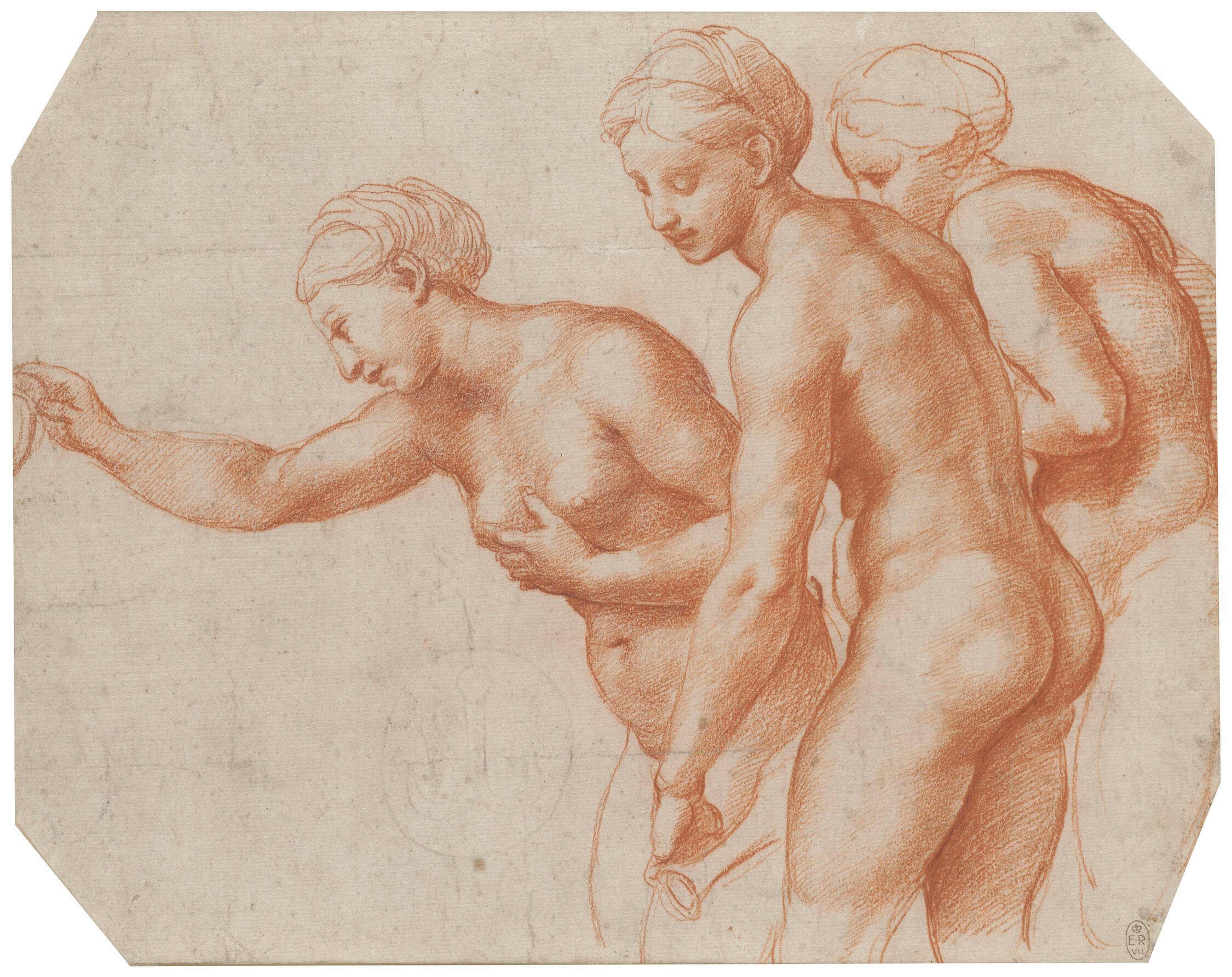 The drawing is a study for the group of the Graces sprinkling a libation over the married couple in the Wedding Feast of Cupid and Psyche, one of two large scenes frescoed in the vault of the garden loggia of Agostino Chigi's villa on the banks of the Tib
Raphael (1483-1520)
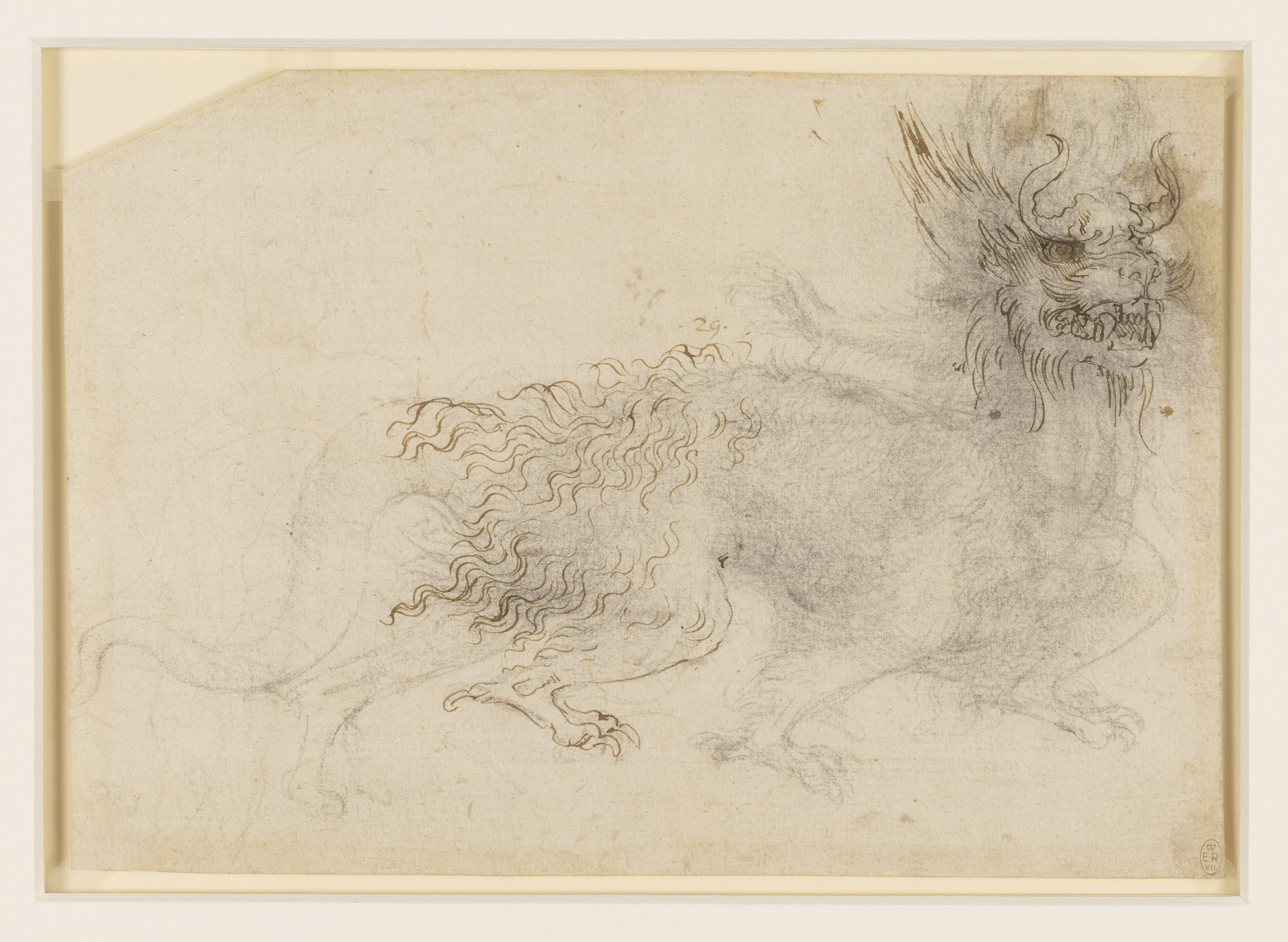
Leonardo da Vinci (1452-1519)
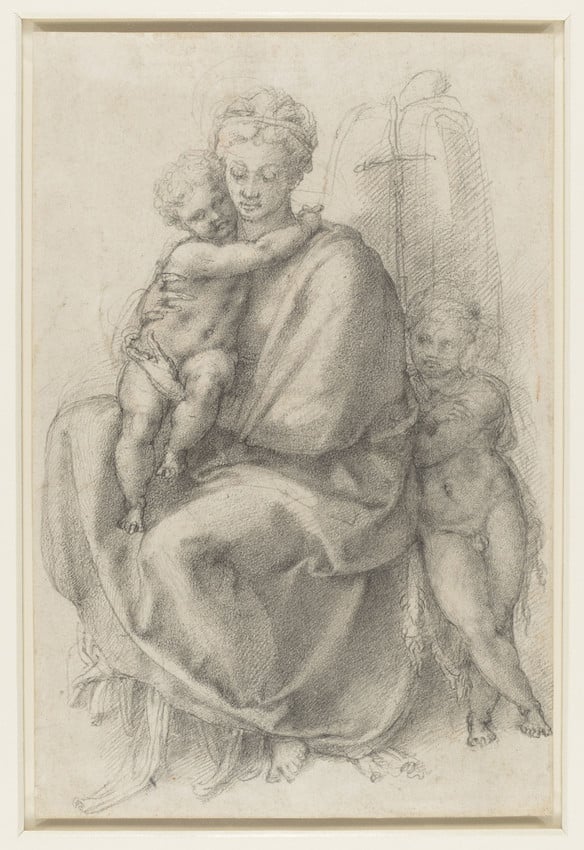
Michelangelo Buonarroti (Caprese 1475-Rome 1564)
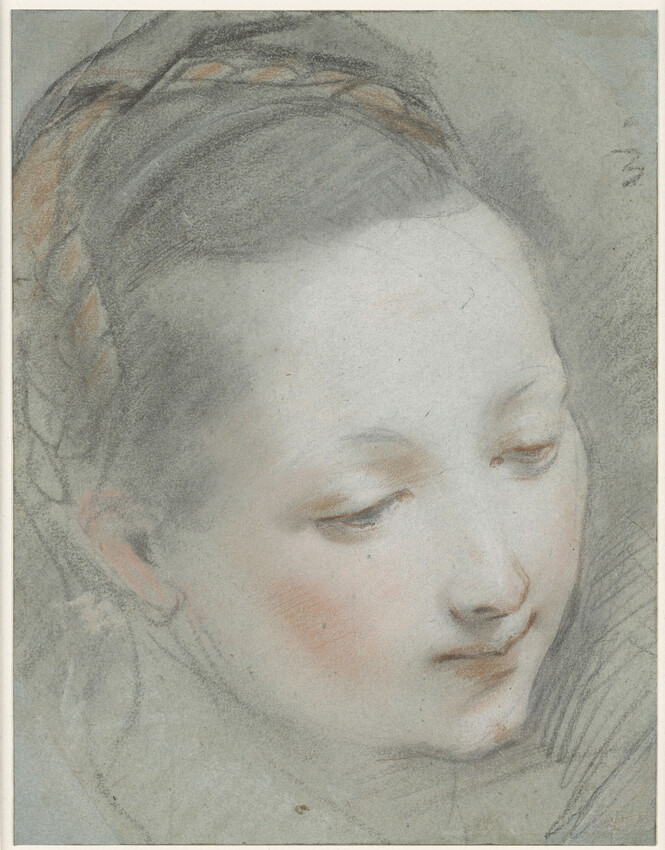
Federico Barocci (Urbino c. 1535-Urbino 1612)
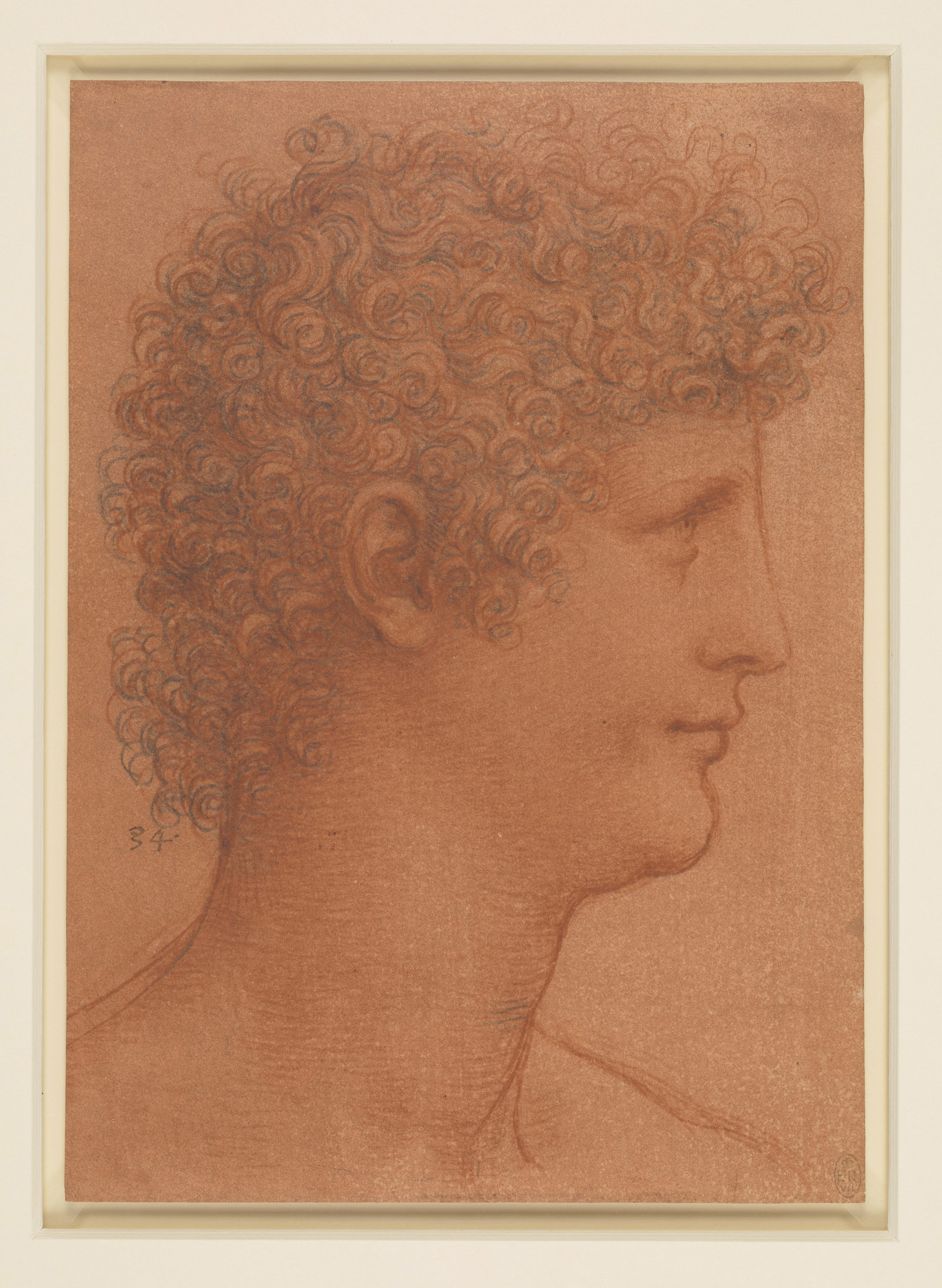
Leonardo da Vinci (1452-1519)
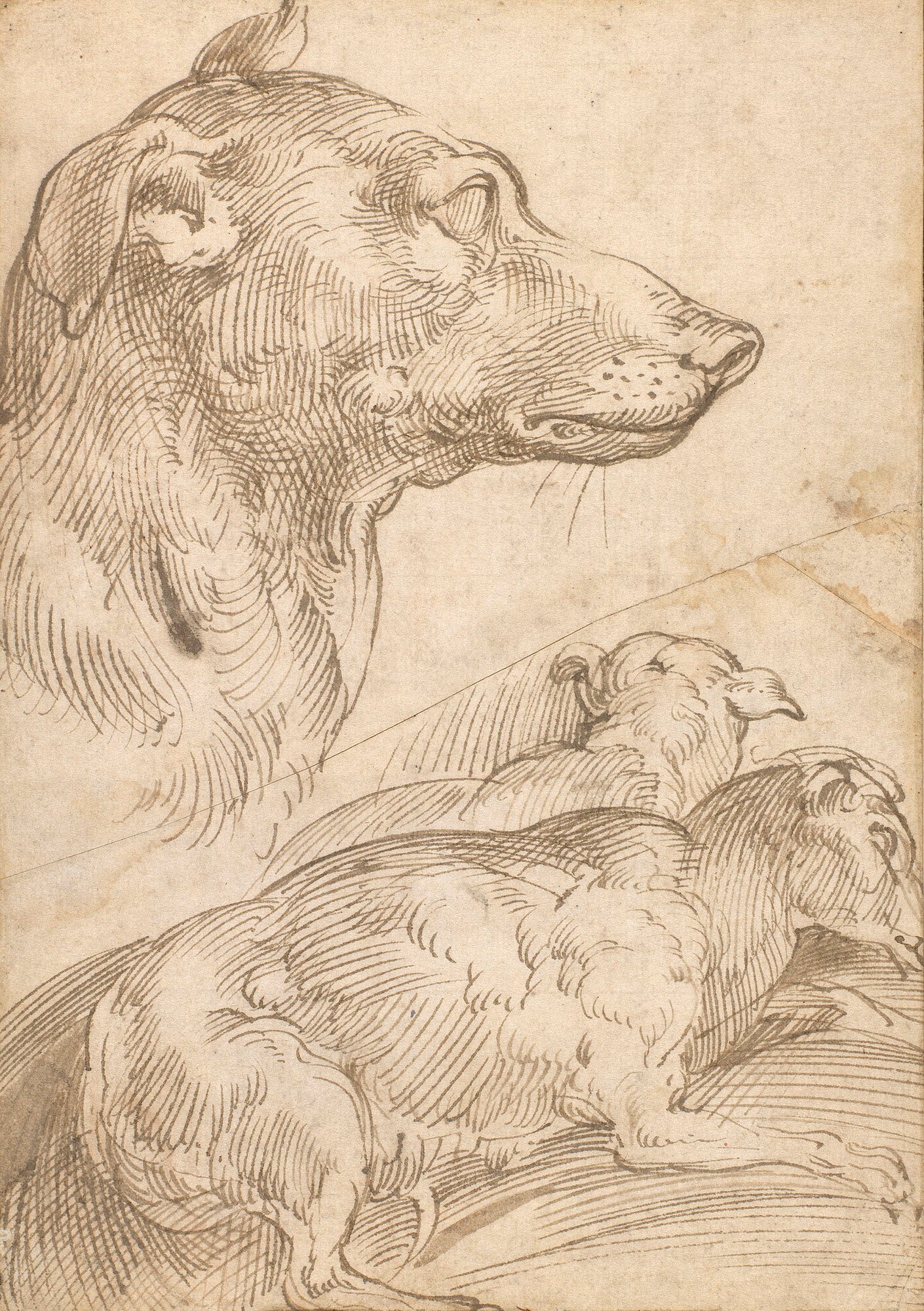
Parmigianino (Parma 1503-Casalmaggiore 1540)
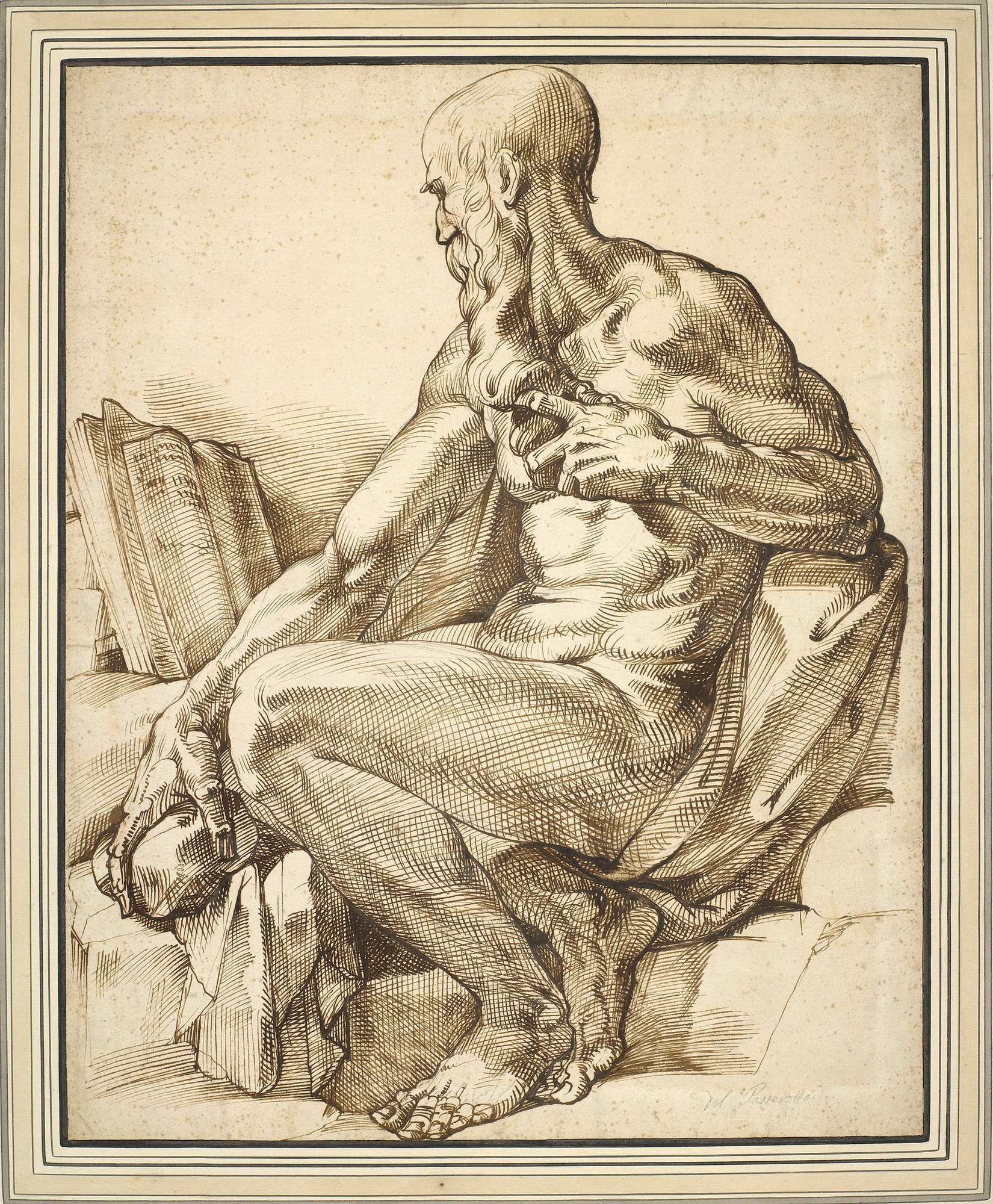
Bartolomeo Passarotti (1529-92)

Alessandro Allori (Florence 1535-Florence 1607)
Denver Art Museum
October 26, 2025 - Feb. 8, 2026
The Denver Art Museum (DAM) has announced that it will present a major exhibition of works by Camille Pissarro (1830–1903) in the fall of 2025, providing an overview of the artist’s illustrious career and examining his singular role within the Impressionist movement. Opening October 26, 2025, The Honest Eye: Camille Pissarro’s Impressionism is the first major U.S. museum retrospective of the artist’s oeuvre in more than four decades.
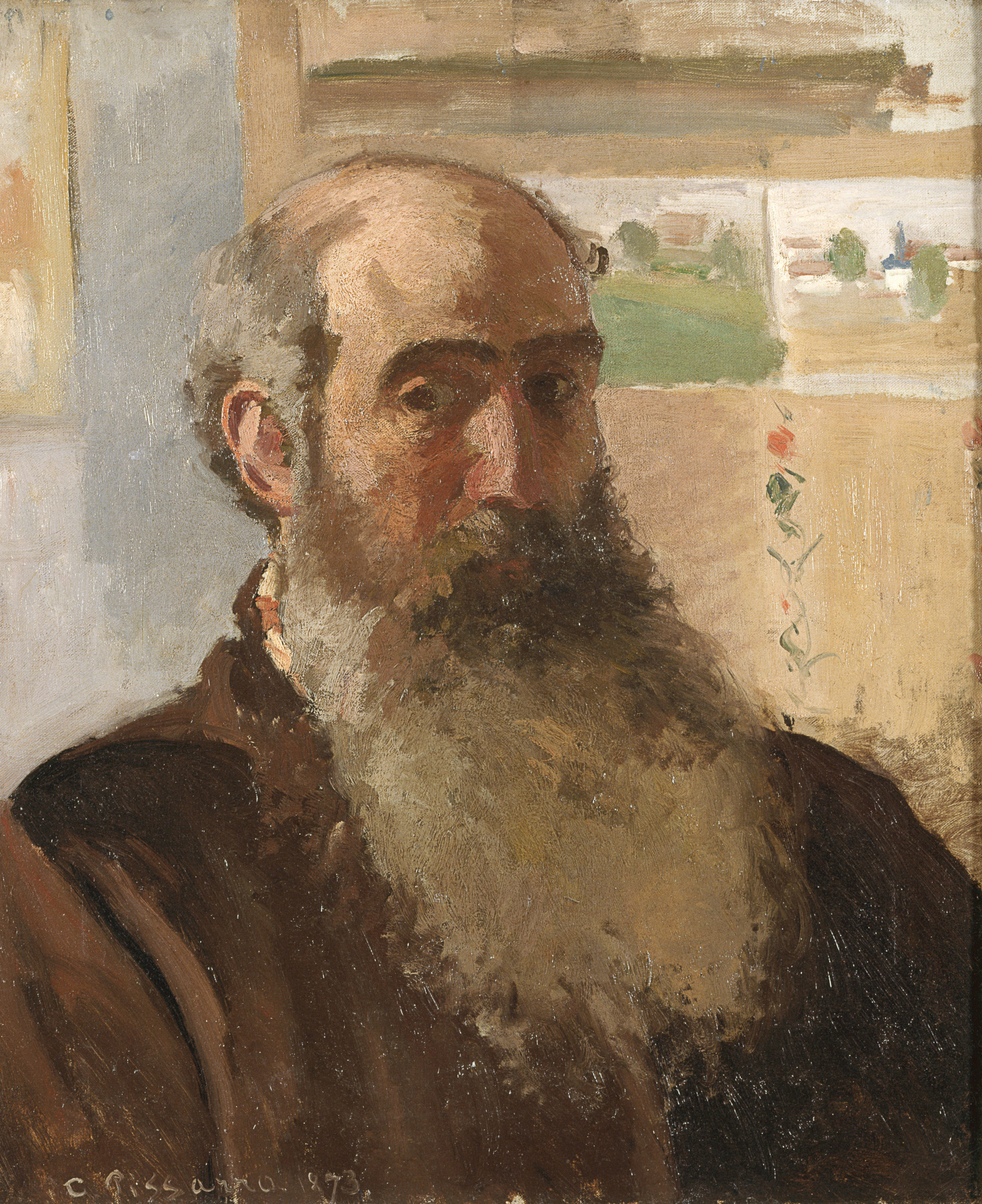
Camille Pissarro, Self-Portrait (autoportrait), 1873. Oil on canvas; 21 7/8 × 18 1/8 in. Musée d’Orsay: Donation Paul-Émile Pissarro, 1930. Image courtesy akg-images/Laurent Lecat
Co-organized by the DAM and the Museum Barberini in Potsdam, Germany, the exhibition brings together more than 80 paintings from nearly 50 international museums and private collections, alongside six works from the DAM’s holdings. On view through Feb. 8, 2026, The Honest Eye will feature landscapes, cityscapes, still lifes, and figure paintings, showcasing the breadth of Pissarro’s oeuvre and the various influences that shaped his practice as he responded to the social and political environment of the day.
“Through this exhibition, we hope visitors will explore Pissarro’s ability to capture everyday life in a way that elevates the mundane, while understanding the pivotal role he played in shaping the Impressionist movement,” said Christoph Heinrich, Frederick and Jan Mayer Director. “After our successful collaboration for Claude Monet-The truth of Nature in 2019, we’re thrilled to partner with the Museum Barberini again to bring important examples of Pissarro’s work to audiences in the U.S., including significant international loans, some of them have never been shown in this country before.”
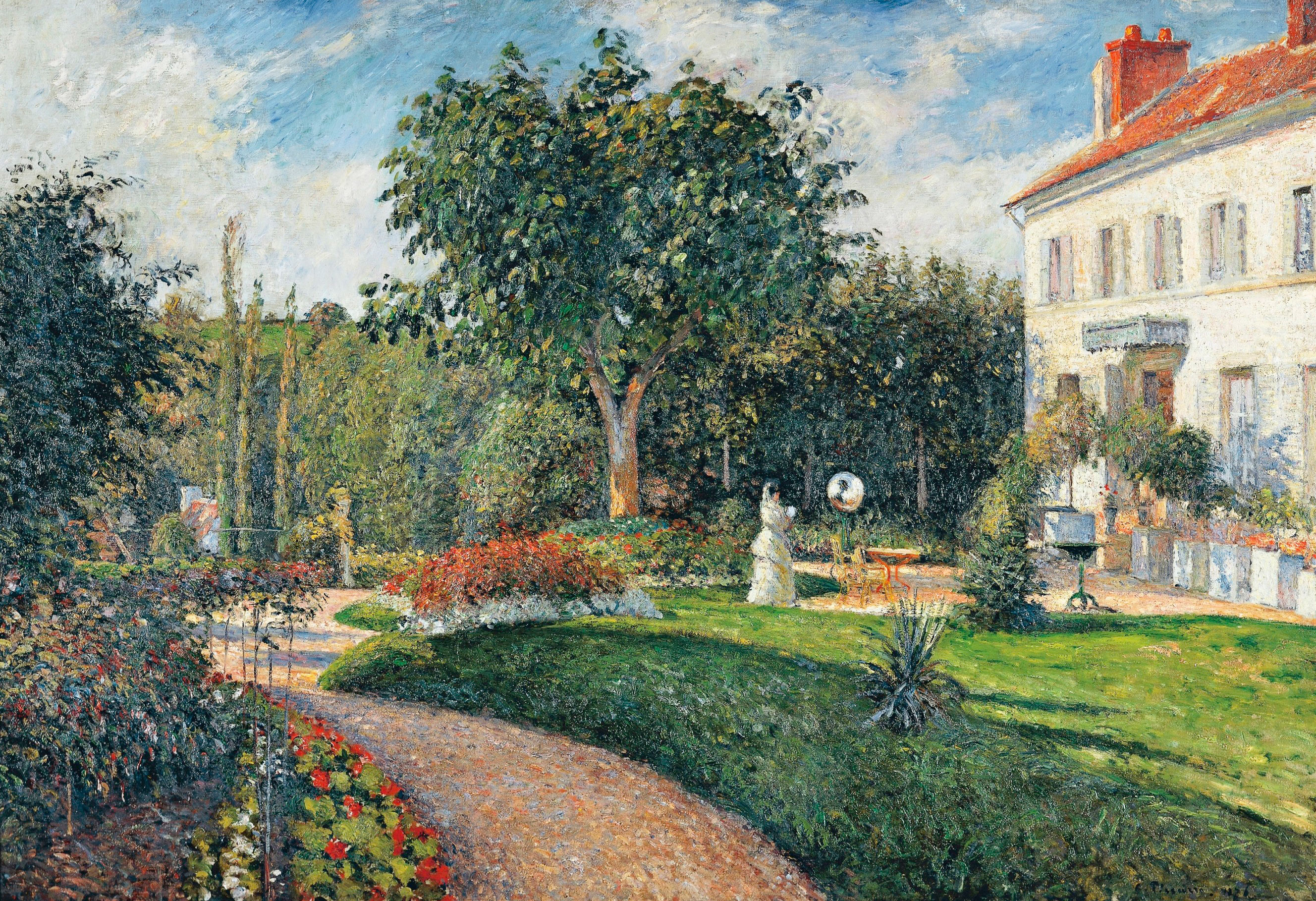
Camille Pissarro, The Garden of Les Mathurins, property of the Deraismes Sisters, Pontoise (Le Jardin des Mathurins, Pontoise, propriété des soeurs Deraismes), 1876. Oil on canvas; 44 5/8 × 65 1/8 in. The Nelson-Atkins Museum of Art, Kansas City, Missouri: Purchase: William Rockhill Nelson Trust. Image courtesy akg-images / De Agostini Picture Lib. / J. E. Bulloz
Born on the island of St. Thomas in what was then the Danish West Indies (now the U.S. Virgin Islands) to French Jewish parents, Pissarro spent time in Caracas and La Guaira, Venezuela, before settling in Paris in 1855. There, he became acquainted with a group of young artists who were challenging the traditional modes of painting and would eventually go on to birth the Impressionist movement. A versatile artist, Pissarro embodied the role of insider, contributing to the establishment of Impressionism as a coherent avant-garde phenomenon while maintaining his artistic independence as he eschewed his peers’ choice of upper-class subject matter to depict scenes of the mundane. The Honest Eye reflects this dichotomy, while selections from Pissarro’s letters provide insights into his artistic process and worldview more broadly.
“Pissarro was a true architect of the impressionist movement. His colleague and friend Cezanne called him ‘the first impressionist.’ The only artist to present work at all eight Impressionist exhibitions in Paris, Pissarro was a defining figure whose oeuvre captured a changing society in the throes of industrialization, straddling the rural and urban in his depictions of daily life,” said Clarisse Fava-Piz, Associate Curator of European and American Art before 1900.
The exhibition traces four decades of Pissarro’s career, illustrating the evolution of his practice from his early years in the Caribbean and South America, to his time in Paris at the dawn of the Impressionist movement, to his family life in Éragny, and his later years depicting the cities and harbors of northern France.
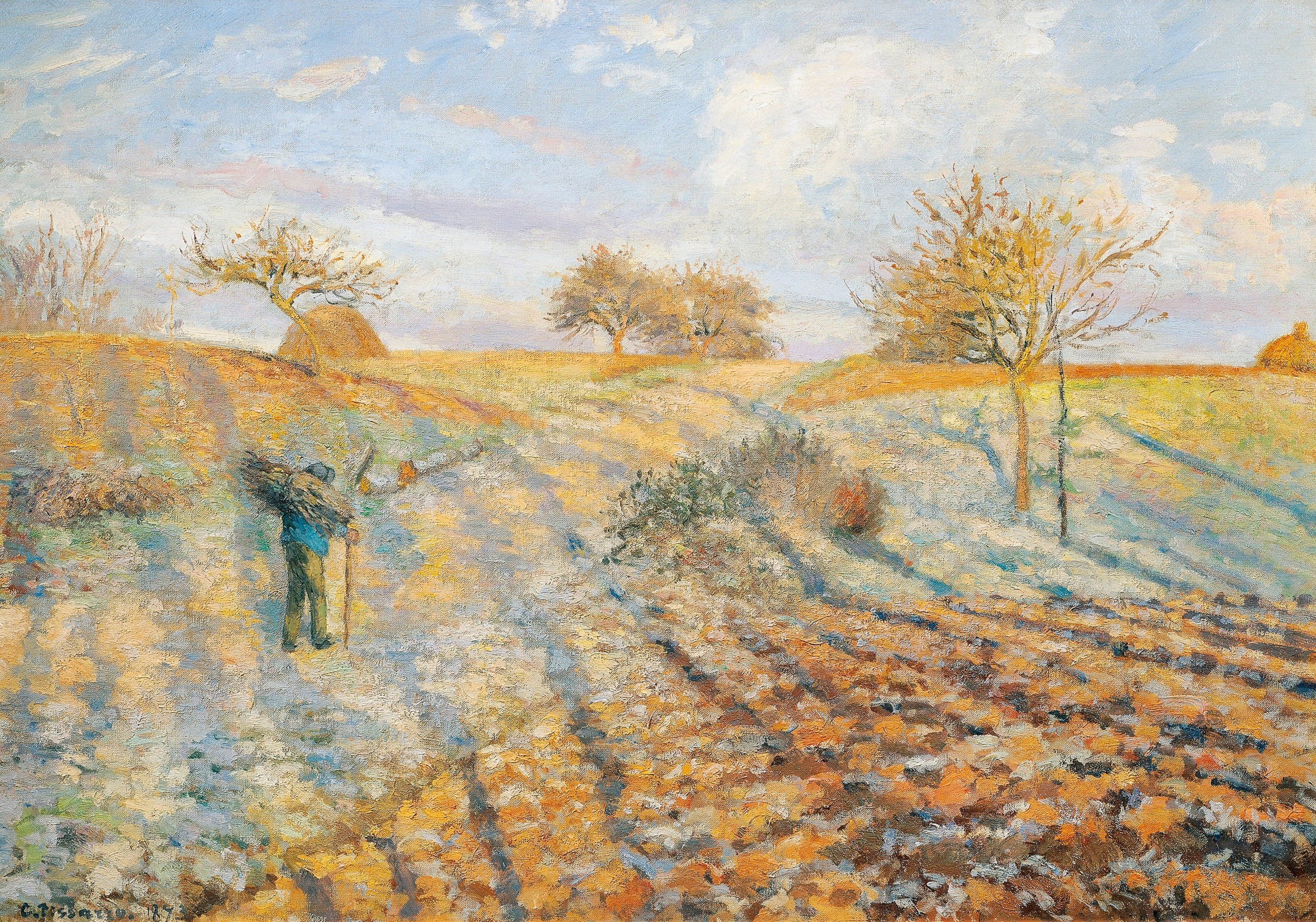
Camille Pissarro, Hoar-Frost at Ennery (Gelée blanche à Ennery), 1873. Oil on canvas. 25 3/4 × 36 3/4 in. Musée d'Orsay: Legs Enriqueta Alsop au nom du Dr. Eduardo Mollard, 1972. Image courtesy akg-images / De Agostini Picture Lib. / G. Dagli Orti
The Honest Eye opens with a focus on a lesser-known facet of Pissarro’s oeuvre, showcasing sketches, watercolors, and oil paintings he created in his native St. Thomas as well as during the time he spent in Venezuela, illustrating his early proclivity towards painting en plein air, or outdoors with the subject in full view. These works are followed by a selection of paintings that illustrate Pissarro’s journey as an artist upon his arrival in France, which showcase tendencies towards the soft lines and broken brushwork that later became hallmarks of Impressionist style. A highlight is Banks of the Oise at Pontoise (1867), a major painting from the DAM’s collection that speaks to the evolving landscape in and around Paris as industrialization took hold and reflects how Pissarro integrated modern elements into more traditional rural scenes.
The focus shifts to Pissarro’s family, to whom he was devoted, and their domestic life, as the exhibition progresses. Included are portraits of the artist and his wife Julie as well as several of their children, several of whom grew up to be artists themselves.
Canonical paintings created by the artist as his style matured into true Impressionism welcome viewers in the next section, such as Gelée Blanche (1873), on loan from the Musée d’Orsay, a major example of how Pissarro expertly captured the dynamics of light and shade across the rural landscape. Subsequent works demonstrate how Pissarro was unique among the Impressionists in his continued fascination with the daily life of the working class. These paintings illustrate the ways in which the artist drew inspiration from sources beyond nature, looking to farms and fields, town squares and marketplaces, portraying peasants harvesting hay and tending to chores, and butchers selling their wares to the local townsfolk.
Additional works explore how Pissarro’s political leanings and anarchist sympathies influenced his artistic production through the display of several works on paper prepared for the album Les Turpitudes Sociales between 1889 and 1890. This section with lavish paintings such as Hoar-Frost, Peasant Girl Making a Fire—one of seven paintings on loan from the Hasso Plattner Collection at the Museum Barberini, Potsdam—also illustrates Pissarro’s experimentation with Neo-Impressionism through works that exemplify the pointillist approach that the artist embraced as a natural evolution of Impressionism.
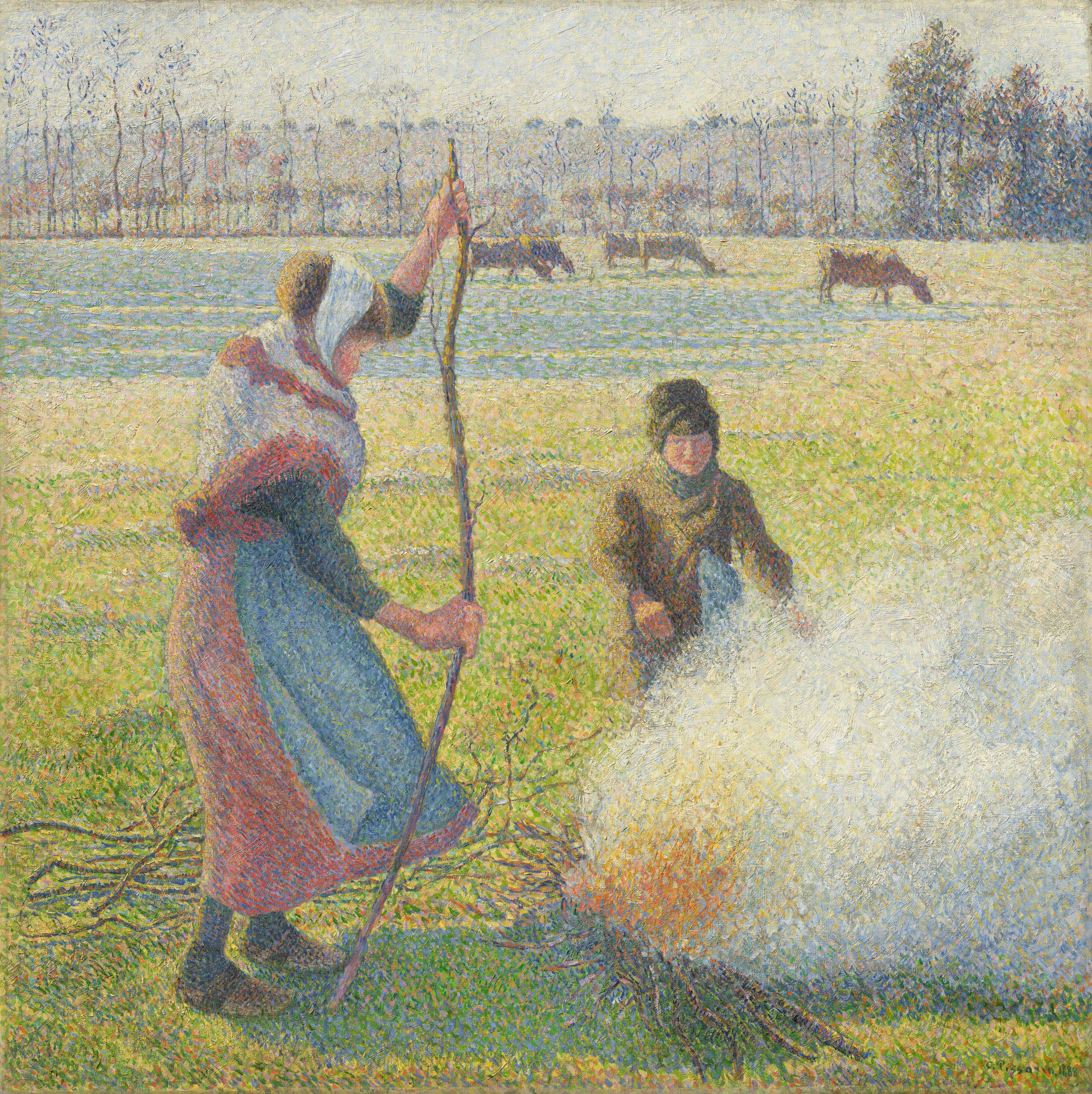
Camille Pissarro, Hoar-Frost, Peasant Girl Making a Fire (Gelée blanche, jeune paysanne faisant du feu), 1888. Oil on canvas; 36 1/2 × 36 3/8 in. Hasso Plattner Collection at the Museum Barberini. Image courtesy akg-images/Laurent Lecat
Co-organized by the DAM and the Museum Barberini in Potsdam, Germany, the exhibition brings together more than 80 paintings from nearly 50 international museums and private collections, alongside six works from the DAM’s holdings. On view through Feb. 8, 2026, The Honest Eye will feature landscapes, cityscapes, still lifes, and figure paintings, showcasing the breadth of Pissarro’s oeuvre and the various influences that shaped his practice as he responded to the social and political environment of the day.
“Through this exhibition, we hope visitors will explore Pissarro’s ability to capture everyday life in a way that elevates the mundane, while understanding the pivotal role he played in shaping the Impressionist movement,” said Christoph Heinrich, Frederick and Jan Mayer Director. “After our successful collaboration for Claude Monet-The truth of Nature in 2019, we’re thrilled to partner with the Museum Barberini again to bring important examples of Pissarro’s work to audiences in the U.S., including significant international loans, some of them have never been shown in this country before.”
Born on the island of St. Thomas in what was then the Danish West Indies (now the U.S. Virgin Islands) to French Jewish parents, Pissarro spent time in Caracas and La Guaira, Venezuela, before settling in Paris in 1855. There, he became acquainted with a group of young artists who were challenging the traditional modes of painting and would eventually go on to birth the Impressionist movement. A versatile artist, Pissarro embodied the role of insider, contributing to the establishment of Impressionism as a coherent avant-garde phenomenon while maintaining his artistic independence as he eschewed his peers’ choice of upper-class subject matter to depict scenes of the mundane. The Honest Eye reflects this dichotomy, while selections from Pissarro’s letters provide insights into his artistic process and worldview more broadly.
“Pissarro was a true architect of the impressionist movement. His colleague and friend Cezanne called him ‘the first impressionist.’ The only artist to present work at all eight Impressionist exhibitions in Paris, Pissarro was a defining figure whose oeuvre captured a changing society in the throes of industrialization, straddling the rural and urban in his depictions of daily life,” said Clarisse Fava-Piz, Associate Curator of European and American Art before 1900.
The exhibition traces four decades of Pissarro’s career, illustrating the evolution of his practice from his early years in the Caribbean and South America, to his time in Paris at the dawn of the Impressionist movement, to his family life in Éragny, and his later years depicting the cities and harbors of northern France.
The Honest Eye opens with a focus on a lesser-known facet of Pissarro’s oeuvre, showcasing sketches, watercolors, and oil paintings he created in his native St. Thomas as well as during the time he spent in Venezuela, illustrating his early proclivity towards painting en plein air, or outdoors with the subject in full view. These works are followed by a selection of paintings that illustrate Pissarro’s journey as an artist upon his arrival in France, which showcase tendencies towards the soft lines and broken brushwork that later became hallmarks of Impressionist style. A highlight is Banks of the Oise at Pontoise (1867), a major painting from the DAM’s collection that speaks to the evolving landscape in and around Paris as industrialization took hold and reflects how Pissarro integrated modern elements into more traditional rural scenes.
The focus shifts to Pissarro’s family, to whom he was devoted, and their domestic life, as the exhibition progresses. Included are portraits of the artist and his wife Julie as well as several of their children, several of whom grew up to be artists themselves.
Canonical paintings created by the artist as his style matured into true Impressionism welcome viewers in the next section, such as Gelée Blanche (1873), on loan from the Musée d’Orsay, a major example of how Pissarro expertly captured the dynamics of light and shade across the rural landscape. Subsequent works demonstrate how Pissarro was unique among the Impressionists in his continued fascination with the daily life of the working class. These paintings illustrate the ways in which the artist drew inspiration from sources beyond nature, looking to farms and fields, town squares and marketplaces, portraying peasants harvesting hay and tending to chores, and butchers selling their wares to the local townsfolk.
Additional works explore how Pissarro’s political leanings and anarchist sympathies influenced his artistic production through the display of several works on paper prepared for the album Les Turpitudes Sociales between 1889 and 1890. This section with lavish paintings such as Hoar-Frost, Peasant Girl Making a Fire—one of seven paintings on loan from the Hasso Plattner Collection at the Museum Barberini, Potsdam—also illustrates Pissarro’s experimentation with Neo-Impressionism through works that exemplify the pointillist approach that the artist embraced as a natural evolution of Impressionism.
The exhibition continues with an examination of the major themes that occupied Pissarro in the latter half of his career, with sections dedicated to the places and landscapes from which Pissarro drew continued inspiration, beginning with a focus on his family home and studio in the village of Éragny just outside of Paris. Works featured illustrate how Pissarro captured this sanctuary throughout the changing seasons, such as in Spring at Éragny (Printemps à Éragny) (1900) from the DAM’s collection. Also on view are paintings Pissarro created during his time in Rouen, Dieppe, and Le Havre towards the end of his life, showcasing his fascination with the maritime infrastructure in these cities, as seen through depictions of the iron bridge of Rouen and the frenetic movement of life along the harbor.
The exhibition closes with a significant selection of paintings capturing life in Paris, from hazy depictions of the morning commute in Montmartre and lively city scenes of the Pont Neuf to peaceful moments at the Louvre and the Tuileries. Works on view in this section illustrate Pissarro’s continued gravitation towards the quotidian even as he turned towards capturing the urban splendor of nineteenth-century Paris.
Exhibition Organization and Support
The Honest Eye: Camille Pissarro’s Impressionism is co-organized by the Denver Art Museum and the Museum Barberini, Potsdam, and curated by DAM’s Clarisse Fava-Piz, Associate Curator of European and American Art before 1900; Claire Durand-Ruel, independent art historian and co-author of the catalogue raisonné on Pissarro’s paintings; and Nerina Santorius, Curator and Head of Impressionism at the Museum Barberini, following Daniel Zamani in his position, who did groundbreaking work in the early stages of the project. The exhibition will be on view at the DAM from October 26, 2025, through February 8, 2026.

A fully illustrated catalogue accompanying the exhibition, and published by Prestel Publishing, will include essays by renowned scholars and curators Claire Durand-Ruel, Clarisse Fava-Piz, Colin Harrison, and Daniel Zamani. The publication will be available in the Shop at the Denver Art Museum and through the online shop.
MORE IMAGES


Camille Pissarro, Young Peasant Girl Wearing a Straw Hat (Jeune paysanne au chapeau de paille), 1881. Oil on canvas; 28 7/8 × 23 7/16 in. National Gallery of Art, Washington, D.C.: Ailsa Mellon Bruce Collection, 1970.17.52. Image courtesy National Gallery of Art, Washington, D.C.
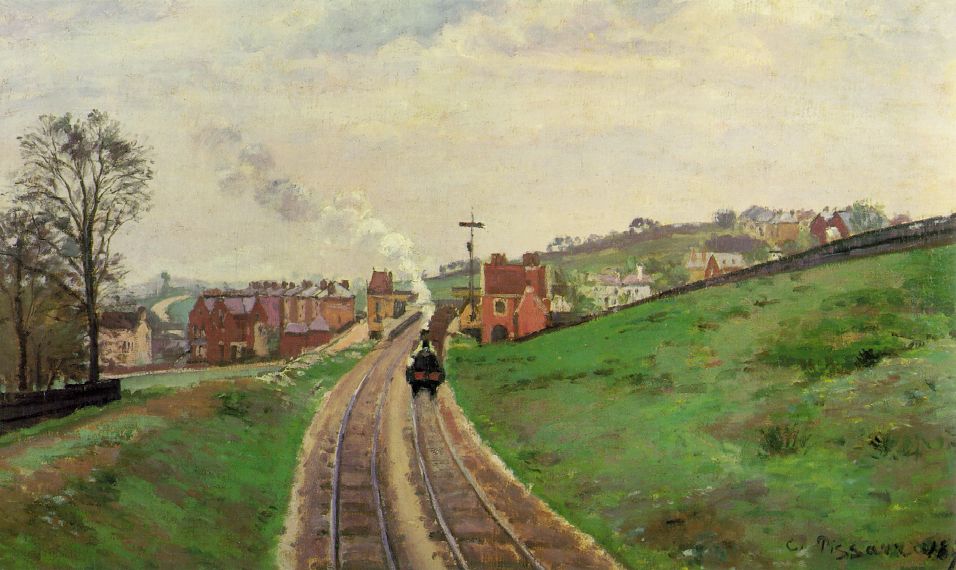
Camille Pissarro, Lordship Lane Station, East Dulwich, 1871. Oil on canvas; 17 1/2 × 28 1/2 in. Courtauld Gallery, London: Bequeathed by Samuel Courtauld, 1948. Image courtesy akgimages


Camille Pissarro, Pont Boieldieu, Rouen, Rainy Weather (Le Pont Boieldieu à Rouen, temps mouillé), 1896. Oil on canvas; 29 × 25 in. Art Gallery of Ontario, Toronto. Art Gallery of Ontario / Gift of Reuben Wells Leonard Estate, 1937 / Bridgeman Images