Wednesday, September 16, 2026

Ice Age carvers used mammoth tusk patterns to create unique art

Intricate designs engraved across the surface of 18,000-year-old female figurines carved from mammoth ivory were inspired by the distinctive growth patterns visible in the tusks, a new study has revealed.

Venus figurine 

Caption

Ice Age craftspeople carefully observed and mimicked the natural lines of mammoth ivory in the art.

Credit

University of York

An analysis of 18 famous ‘Venus’ figurines found at the Mizyn campsite in Northern Ukraine shows that Ice Age craftspeople carefully observed and mimicked the natural lines of the ivory, using them to structure their artistic engravings.

The discovery was made possible using high-resolution microscopic analysis and 3D digital modelling. The artefacts were recorded as part of urgent heritage preservation efforts led by Ukrainian NGO Archaїc.

The team found that the carvers explicitly incorporated Schreger and Owen lines, which are the natural growth rings found in mammoth tusks, into the surface patterns of the figures.

The teams at the University of York, University of Stavanger, and the National Museum of the History of Ukraine, who were behind the discovery, said the findings challenged traditional views on how Stone Age art evolved across Europe.

Dr Aimée Little at the University of York’s Department of Archaeology and Director of the Centre of Artefacts and Materials Analysis at the University of York said: “This discovery offers an extraordinary window into how Palaeolithic peoples perceived and engaged with their material world.

“Identifying visual evidence of how mammoths were integrated into artistic traditions, both through the use of their ivory and the deliberate inscription of its natural patterns, represents a genuine breakthrough in our understanding of prehistoric art and material culture.

Due to the ongoing Russian-Ukrainian war, access to the physical artefacts at the National Museum of History of Ukraine in Kyiv was limited, making digital scanning essential to ensure their preservation and study into the future.

The analysis highlights a significant gap of 1,000 to 3,000 years in the creation of human figurines across Europe, coinciding with the Last Glacial Maximum - the coldest peak of the last Ice Age.

Dr Andrew Needham, from the University of York’s Department of Archeology, said: “When figurine-making re-emerged around 18,000 years ago, it began earlier in Eastern Europe than in the West. While later Western European styles also featured abstracted female forms, none reproduced the internal tusk patterns seen at Mizyn.

“This indicates that Ice Age artists in Eastern Europe forged their own independent artistic path rather than simply following trends from Western Europe.”

There are many theories regarding the spiritual or ritualistic purpose of ‘Venus’ figurines of the Stone Age, but this new study demonstrates the crucial elements of its artistry. 

Simon Radchenko, researcher at the Archaeological Museum, University of Stavanger, said: “We are optimistic that our future digital research will shed more light on the emergence and development of artistic expression in Europe, showing an even more complex, and intriguing picture than we have now.”

Oleksandr Naumenko, researcher at the National Museum of the History of Ukraine, added: "Projects like this not only deepen our understanding of the past but also create new opportunities for research. At a time when war continues to threaten Ukraine's cultural heritage, creating high-quality digital records of artefacts is a crucial step in preserving them."

The international project, published in the Nature partner journal Heritage Science, brought together experts from Ukraine, Norway, Germany, and the UK, supported by a Marie Skłodowska-Curie Action grant.

Dr Dmytro Kiosak, from the Leibniz Centre for Archaeology, said: “Our findings challenge the long-held assumption that ancient art simply evolved in a straight line from basic to complex forms.”

Christie's Radiant Modernism: Signac to Albers


Christie's presents 
Radiant Modernism: Signac to Albers 
a landmark scholarly collection with a forward gaze

Offered in a series of sales in London, Paris and New York from October 2026, Radiant Modernism is highlighted by a remarkable selection of oils by Paul Signac and Josef Albers
Impressionist & Modern, American and Latin American ArtChristie's presents <br /><em>Radiant Modernism: Signac to Albers <br /></em>a landmark scholarly collection with a forward gaze
From left to right: Paul Signac, Sainte-Anne (Saint-Tropez), 1905 (estimate: £4,500,000-6,500,000); Saint-Briac, les balises, Opus 210, 1890 (estimate on request); and Saint-Cloud, 1903 (estimate: €1,500,000-2,000,000)

Christie's is delighted to announce Radiant Modernism, a Private European Collection of late 19th- to 20th-century art spanning paintings, works on paper and prints, which will be offered across multiple sales and regions from October 2026 throughout 2027. With an overall estimate in the region of $40,000,000 -60,000,000, Radiant Modernism will be presented in different auction rooms, starting in London during Frieze Week, then travelling to Paris for Art Basel and subsequently to New York during its November Marquee Week, with further sales in 2027.

The Collection

Assembled privately over forty years and comprising nearly 600 works, Radiant Modernism stands out for its rarity, quality and the academic rigour underpinning its acquisition. Three principal strands can be identified within the collection: Pointillism, represented predominantly by Paul Signac; Symbolism, with a number of rare works by Odilon Redon; and Expressionism, represented by artists including Lyonel Feininger. Alongside these core movements, the collection also features important works by key figures such as Henri de Toulouse-Lautrec, Félix Vallotton, Maurice Denis and Charles Théophile Angrand, among others. Together, these works form an eclectic yet scholarly selection, offering a distinctive testament to the depth of research and connoisseurship that shaped the collection and contributed to its unique character. Paul Signac stands out as his work is present across the collection in every medium - from painting to works on paper– offering a vertical and in-depth presentation of his artistic research. 

Radiant Modernism also includes an important group of works by Josef Albers, spanning the 1940s through the 1970s. Together, they illustrate the breadth of the collection and highlight its in-depth exploration of colour across different artistic movements.

Exceptional oils by Paul Signac

Radiant Modernism presents a wide ranging selection of works by Signac, spanning painting, works on paper and prints, with three important oils being the highlights of the October and November Marquee Weeks in London, Paris and New York, respectively.

Renowned as a master of colour and light, Signac was equally a builder of artistic communities. His spirit of amitié made him a trusted friend, collaborator and advocate for some of the most important artists of his time. This commitment to artistic camaraderie was embodied in the Salon des Indépendants, the radical platform Signac helped champion, founded on artistic freedom and without juries or awards, where innovation and individuality could flourish.

Signac's experiments with Pointillism began several years earlier, after he was exposed to the ground-breaking paintings of his friend Seurat, who had begun, in a new and rigorous manner, to apply colour theory to the pictorial representation of the world. Signac immediately grasped the implications and potential of his friend's breakthrough ideas, and began developing his own interpretation of Pointillism. This was a process that involved much experimentation, and it was only in the late 1880s that he had truly reached what he considered a suitably strong yet independent style. This involved a slightly less formal approach to painting than his colleague used. Where Seurat strictly used opposing colours to bring out a new intensity in his works, Signac left much of his own choice of colour to aesthetics and instinct.


A hymn to the South of France, which Paul Signac loved and where he made his home, Sainte-Anne (Saint-Tropez) (estimate: £4,500,000-6,500,000), is a 1905 landscape showing the evening light caressing the trees, buildings and distant hills. The port of Saint-Tropez is situated in the lower centre of the picture, the bell tower being clearly visible and forming a silhouette against the turquoise sea. This painting, with its subtle treatment of light and vivid colours, was admired by the artist himself and his contemporaries, as it featured in a number of important early exhibitions of Signac's work, including his 1907 retrospective at the Galerie Bernheim-Jeune. The importance of Sainte-Anne is also reflected in its provenance: it was formerly in the collection of Gustave Fayet, one of the most important supporters of the avant-garde in the early 20th century, as well as an early patron of Post-Impressionism, particularly Paul Gauguin.  The timing of the painting's presentation at auction is especially significant, underscoring its continued relevance within the current cultural zeitgeist. On 9 October, Fondation Louis Vuitton will open Gustave Fayet, Collector-Designer. Icons of Modern Art, while the Royal Academy of Arts in London will launch Painting the French Riviera on 2 October, an exhibition exploring how the Côte d'Azur captivated and inspired modern art's great innovators.
Sainte-Anne (Saint-Tropez) will be offered in the 20th/21st Century: London Evening Sale on 14 October 2026
.


Saint-Cloud
, painted in 1903 (estimate: €1,500,000-2,000,000) is a luminous example of the artist's mature Neo-Impressionist style. This oil on canvas depicts a view of Saint-Cloud, a village west of Paris. In it, Signac transforms some of the most common elements of nature into a brilliant composition of contrasting colours. Natural details such as the tall trees on the right corner are perfectly blended with the white horizon, transforming an everyday view into a richly chromatic study of light and atmosphere. With delicate and rare strokes, the artist creates multiple shades of blue, violet, pink, green, yellow, and orange tones, the scene emerges gradually from a collage of individual marks. Even though he is well-known for the scenery of the Mediterranean coast and its ports, particularly in Saint-Tropez, Signac continuously returned to the motifs of water and nature in the surroundings of Paris. In Saint-Cloud, the vertical structure of the trees contrasts with the openness of the distant view, while small, distinct touches of pigment animate the entire composition. The result is a landscape that appears to vibrate with light rather than remain static. This shift from observed nature toward a more subjective experience of colour was a key characteristic of Signac's mature work.
Saint-Cloud will be offered in the 20th/21st Century: Paris Evening Sale including Thinking Italian on 22 October 2026.


Saint-Briac, les balises
(Opus 210), 1890, (estimate on request), is a very rare and important example of a Signac 'Opus' painting, dating from the high point of the Pointillist experiment in 1890. Belonging to a group of four seascapes Signac executed that summer, in which the artist consolidates his own idiom of Pointillism, this painting is the only one from the series remaining in private hands. The others are housed in the Museum of Fine Arts, Boston; the Fondation Rau pour le Tiers Monde, Zurich; and the Pushkin State Museum of Fine Arts, Moscow.
The Opus paintings mark Signac's revolutionary breakthrough: the moment when his artistic research opened the way to Modernism and the historical avant-gardes. In these pivotal works, his vision moves away from Impressionism's fleeting portrayal of reality to a more subjective interpretation of the natural world. The surface of Saint-Briac, les balises, for instance, comprises thousands of glistening brushstrokes. Seascapes like this provided the perfect subject for Signac to explore and demonstrate his mastery of Pointillism. As a keen sailor, he was particularly observant of the moods of the water, often giving his works titles that refer to the winds or tides. Here, he shows the beacons at Saint-Briac in faultless detail, without letting the constraints of his Pointillism intrude on the subject itself. Highlighting the significance of this work, it was showcased in the acclaimed Radical Harmony exhibition at the National Gallery, London, in 2025-2026.
Saint-Briac, les balises will be offered in Christie's 20th Century Evening Sale in New York in November 2026.

Other London highlights – Josef Albers

Testifying to the wide-ranging selection comprised in Radiant Modernism, a selection of outstanding paintings by Josef Albers will also be offered in the 20th/21st Century: London Evening Sale on 14 October 2026: Study for Homage to the Square: Warm Silence from 1971 (estimate: £380,000-500,000) and R-I d-1 (1968; estimate: £250,000-350,000).

Painter, designer, teacher and theorist, Albers left behind an extraordinary body of work that transformed our understanding of the chromatic spectrum. From his early days at the Bauhaus, to his landmark treatise Interaction of Colour, his work had a profound impact upon future generations of artists. Assembled with connoisseurly vision, the works by the artist included in Radiant Modernism span twenty-five years of Albers' practice, capturing the precision and poetry that defined his oeuvre. Study for Homage to the Square: Warm Silence was previously owned by Lee V. Eastman, the celebrated lawyer and collector who represented artists including de Kooning and Albers himself. A connoisseur of the latter's oeuvre, Eastman acquired only the very best Homages, which sat in his collection alongside works by Picasso, Matisse and the Abstract Expressionists. He was also instrumental in organising Albers' career-defining retrospective at the Metropolitan Museum of Art, New York in 1971, where the striking all-red R-I d-1, a dazzling exposition of one of Albers' favourite colours, was also presented.

Giovanna Bertazzoni, Chairman Europe, and Keith Gill, Vice-Chairman 20/21, Christie's: Radiant Modernism is a remarkable testament to what can be achieved through sustained scholarship, connoisseurship and a deeply personal engagement with art. Not only does the collection showcase rare and exceptional examples of late 19th- and early 20th-century artworks, but it also creates new dialogues among various modern artistic currents. As such, Radiant Modernism provides a unique look at the creativity, friendships, and intellectual exchange that shaped the art landscape of that time. To be entrusted with the sale of this landmark collection, and to be able to share it across London, Paris and New York, is a rare privilege.”

The three major Paul Signac paintings from Radiant Modernism, to be offered in London, Paris and New York this autumn, will be on view at Christie's Paris from 9 to 12 September 2026. Following this exhibition, Saint-Cloud will remain on public view at Christie's Paris until 22 September 2026.

Key highlights from Radiant Modernism – Signac to Albers will be offered in these upcoming sales:

LONDON
14 October 2026 – 20th/21st Century: London Evening Sale
16 October 2026 – Impressionist and Modern Works on Paper and Day Sale

PARIS
22 October 2026 –
20th/21st Century: Paris Evening Sale including Thinking Italian
23 October 2026 – Impressionist and Modern Art Day Sale

NEW YORK
November 2026 – 20th Century Evening Sale and Impressionist and Modern Art Day Sale

Tuesday, September 15, 2026

Franz Marc: The Search for a Better World”

Kunstsammlung Nordrhein-Westfalen, Düsseldorf (K20)

  12.9.2026 – 24.1.2027


The Kunstsammlung Nordrhein-Westfalen presents the first comprehensive exhibition of the Expressionist and co-founder of *Der Blaue Reiter* (The Blue Rider), Franz Marc (1880–1916)—marking the first major solo exhibition of his work in a German museum in over twenty years.

Franz Marc (1880–1916) is one of the most important artists of German Expressionism and a key figure in the development of modern art. His work is captivating, characterized by vibrant colors, an intense connection to nature, and especially by his powerful depictions of animals. Marc was also part of a far-reaching artistic network spanning Paris, Berlin, and Munich. 
Together with Wassily Kandinsky, he founded the editorial group Der Blaue Reiter (The Blue Rider ), thus decisively shaping the development of modern art.

Vibrant colors, poignant themes, and world-famous animal paintings – the exhibition “Franz Marc: The Search for a Better World” at the K20 invites visitors to rediscover the life and work of this extraordinary artist. 

The first comprehensive solo exhibition in 20 years offers a unique opportunity to experience 120 masterpieces from all phases of Franz Marc's (1880–1916) career in one place. Highlights of the exhibition include his iconic animal paintings and impressive depictions of nature, which are among the most celebrated works of classical modernism.

Luminous colors, moving themes, and world-famous animal paintings—what makes the art of Franz Marc (1880–1916) so fascinating to this day? The exhibition *Franz Marc: The Search for a Better World* at the K20 invites visitors to rediscover the life and work of this outstanding artist. Until January 24, 2027, there is a unique opportunity to experience masterpieces from all phases of Marc’s career in a single location.

The exhibition *Franz Marc: The Search for a Better World* invites visitors to rediscover Franz Marc: it reveals how deeply the artist was embedded in the vibrant art and cultural scene prior to the First World War—and the impressively diverse evolution of his work between 1905 and 1914. From early animal depictions to Cubist-inspired abstractions, the exhibition traces the path of a seeker—an artist who longed for an earthly paradise during an era defined by a belief in progress. For Marc, his paintings were enclaves of harmony—but also visions of a new, ideal world—with which he fought against the rationalization and mechanization of the environment and the intellectual shallowness of society.

A Seeker. As the title *The Search for a Better World* suggests, the exhibition responds to a longing for peace and a life in harmony with nature—a need that was as pressing then as it is today. For Franz Marc, this search was simultaneously an exploration of his own artistic identity. In barely eight years, he traversed almost the entire spectrum of modern art’s evolution, moving from Post-Impressionism to abstraction. The exhibition traces his shifting motifs and painting styles, reveals the surprising ruptures and persistent doubts that characterize his work, and offers new insights into Marc’s stance on the social upheavals and the looming war.

Franz Marc’s (born Feb. 8, 1880, in Munich; died March 4, 1916, in Braquis near Verdun, France) artistic journey began at the Munich Academy, where he initially engaged with Naturalism and Art Nouveau. 

His friendship with the Swiss animal painter Jean-Bloé Niestlé (1884–1942), which began in 1905, reinforced and focused his interest on depicting animal subjects. For Marc, the goal was not so much naturalistic reproduction as it was grasping the inner essence of the animals. Marc himself described his primary approach as painting animals "as they themselves view the world and feel their own being" (Letters, April 8, 1915). These animal paintings are rooted in a pantheistic worldview that perceives animals as the embodiment of a divinity lost to humanity. 

In 1903 and 1907, Marc traveled to Paris and studied both old and new French art at the Louvre. He was particularly captivated by Post-Impressionism and Fauvism, and especially by painters such as Vincent van Gogh (1853–1890) and Paul Gauguin (1848–1903). 

From 1908 onwards, Marc’s understanding of composition and color underwent a fundamental shift. For Marc, color was not merely a means of heightening expression but held a deeper symbolic significance. Drawing on sources such as Wolfgang von Goethe’s theory of color, he developed his own color theory: yellow embodied femininity, gentleness, and sensuality; red represented the brutal and the earthbound; and blue stood for the spiritual, the intellectual, and the masculine. Through this high-contrast—Expressionist—concept of color, Marc sought to make metaphysical dimensions visible in his paintings.

Abstraction. A trip to Paris in 1912 with his friend and fellow artist August Macke (1887–1914)—during which they visited Robert Delaunay (1885–1941) and Sonia Delaunay (1885–1979) twice—marked a quantum leap in the painting of both artists. Although Franz Marc had been familiar with the Cubist works of Georges Braque (1882–1963) and Pablo Picasso (1881–1973) since 1910, it was Robert Delaunay’s light-filled, crystalline "window" paintings that inspired his own prismatic compositions.

In the months before

PUBLICATION


This publication, released to coincide with the first monographic exhibition on Franz Marc in over twenty years, traces the development of his work from 1904 to 1914. From his early works to the increasing dissolution of forms under the influence of Cubism, the volume offers a comprehensive view of his oeuvre, his artistic relationships, and his world of ideas. With approximately 130 illustrations and essays by Uwe Fleckner, Katja Förster, Susanne Meyer-Büser, and Livia Wermuth, the catalogue provides a multifaceted insight into the work of this extraordinary artist.


Images


Werktitel / Title of the work: Franz Marc, Der Traum, 1912, Öl auf Leinwand, 100,5 × 135,5 cm, Museo Nacional Thyssen-Bornemisza, Madrid 


Werktitel / Title of the work: Franz Marc, Die kleinen gelben Pferde, 1911, Öl auf Leinwand, 66 × 104 cm‚ Staatsgalerie Stuttgart, erworben 1957


Werktitel / Title of the work: Franz Marc, Die verzauberte Mühle, 1913, Öl auf Leinwand, 130,2 × 90,8 cm


Werktitel / Title of the work: Franz Marc, Fuchs (Blauschwarzer Fuchs), 1911, Öl auf Leinwand, 50 × 63,5 cm‚ Von der Heydt-Museum Wuppertal


Werktitel / Title of the work: Franz Marc, Katzen, Rot und Weiß, 1912, Öl auf Platte, 52 × 35 cm, Privatsammlung


Werktitel / Title of the work: Franz Marc, Kinderbild (Katze hinter einem Baum), 1910/11, Öl auf Leinwand, 70,2 × 50 cm, Privatsammlung


Arp. Heads or Tails

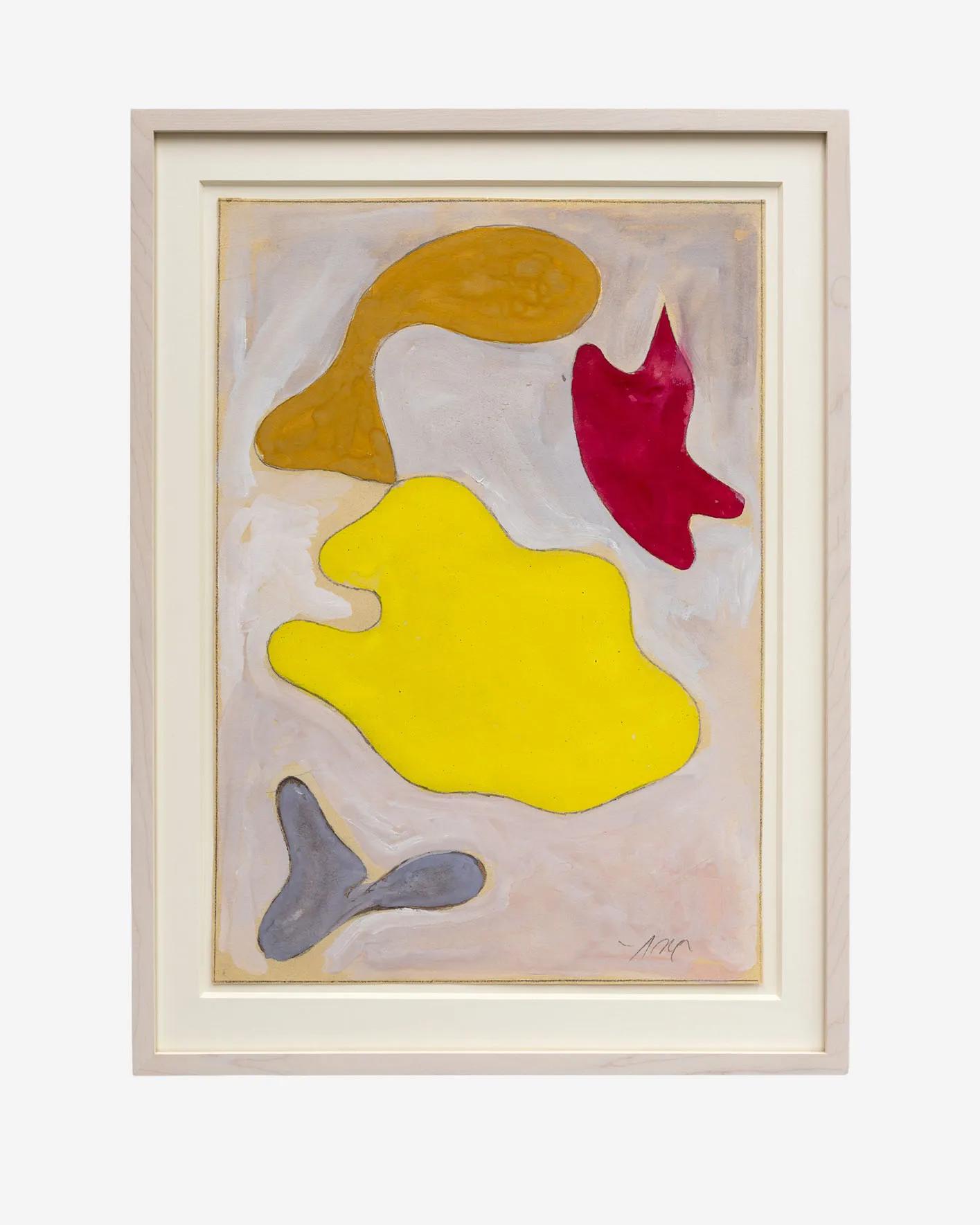
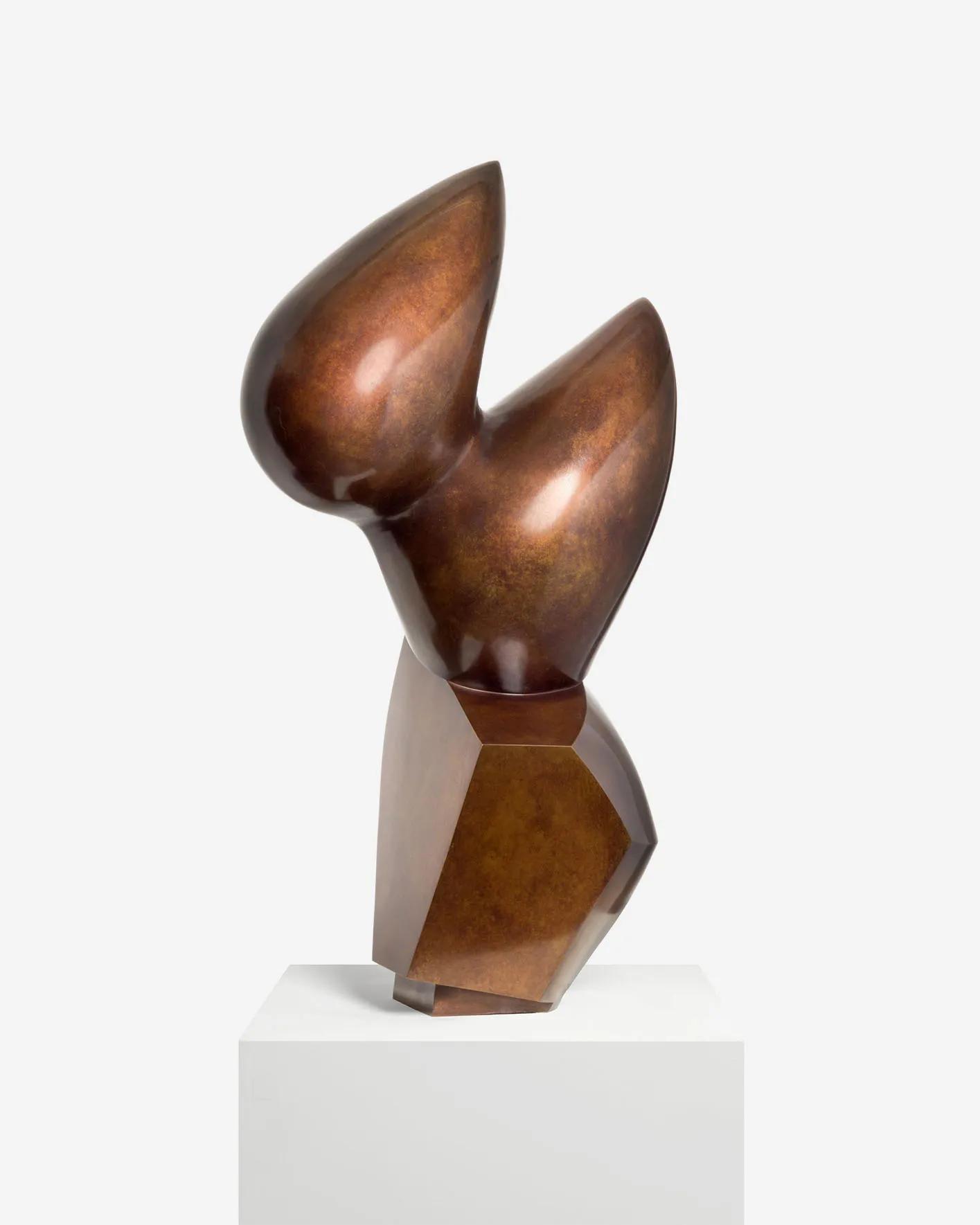
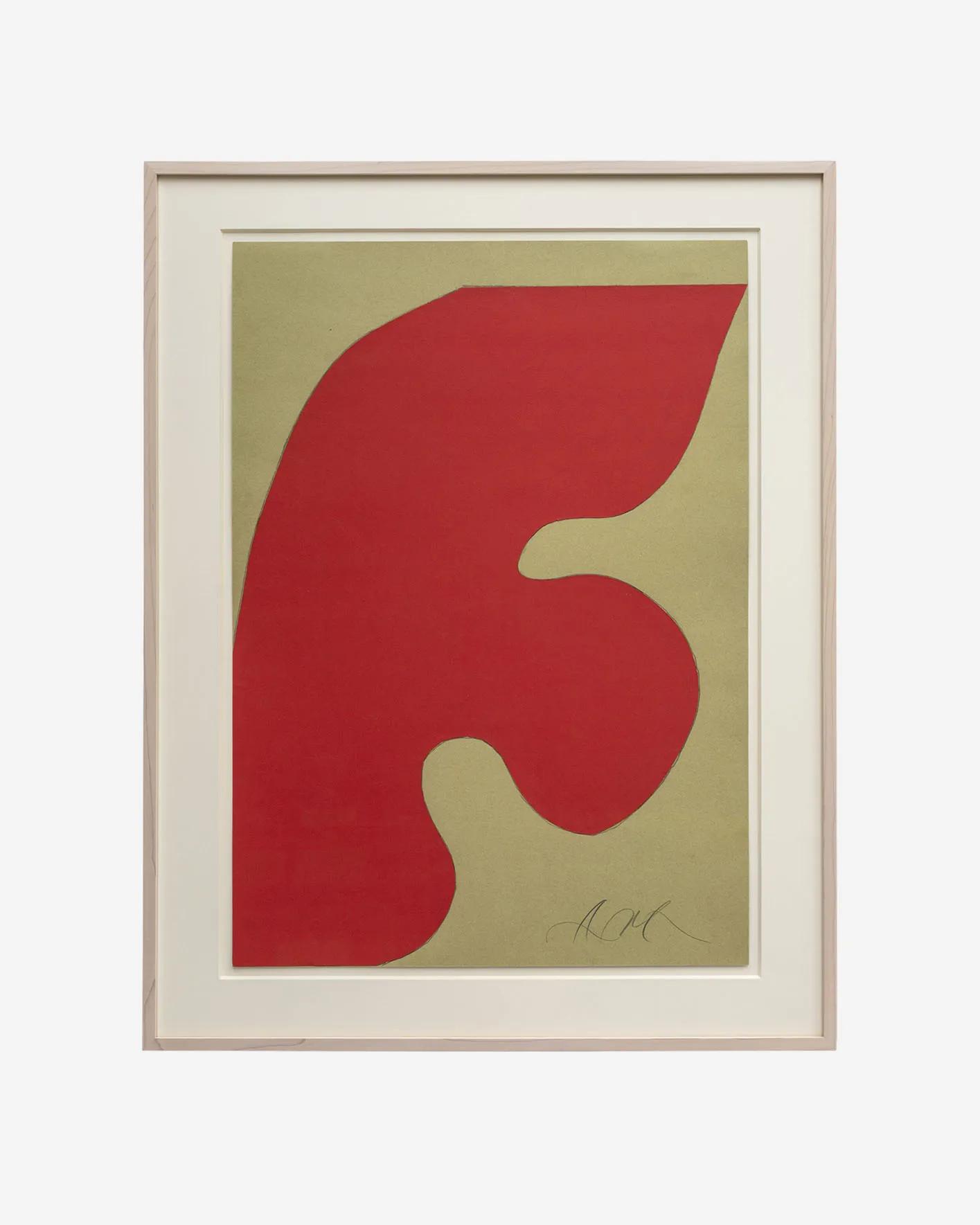
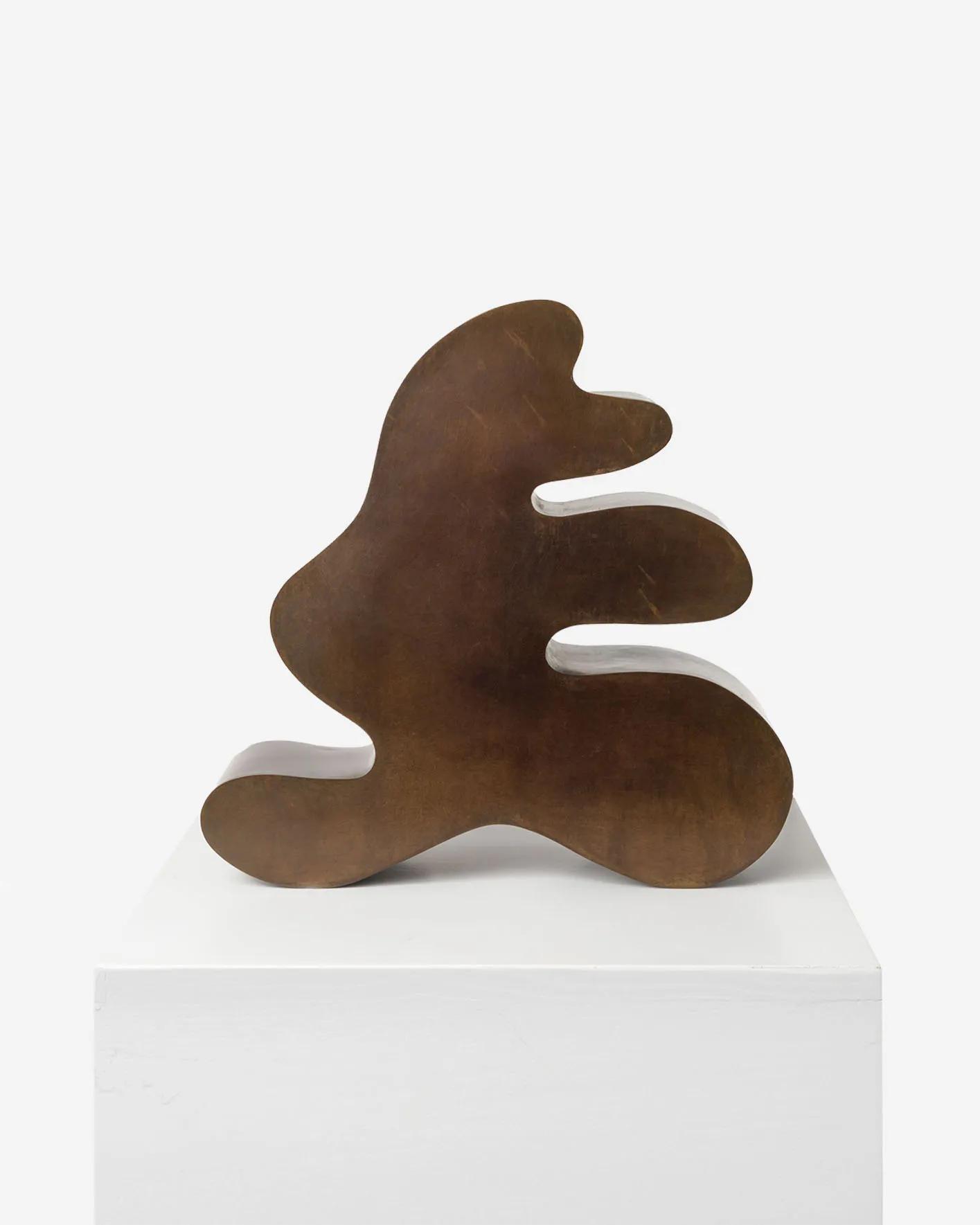
This Fall, Hauser & Wirth presents ‘Arp. Heads or Tails,’ the first New York exhibition in nearly fifteen years dedicated to the seminal German-French modernist. Organized by Curatorial Senior Director Alexis Lowry, in collaboration with the Stiftung Arp e.V., Berlin/Rolandswerth, this presentation takes Arp’s late Threshold sculptures as a point of departure, situating this pivotal but underexamined body of work within the trajectory of Arp’s long career of aesthetic and philosophical inquiry. 

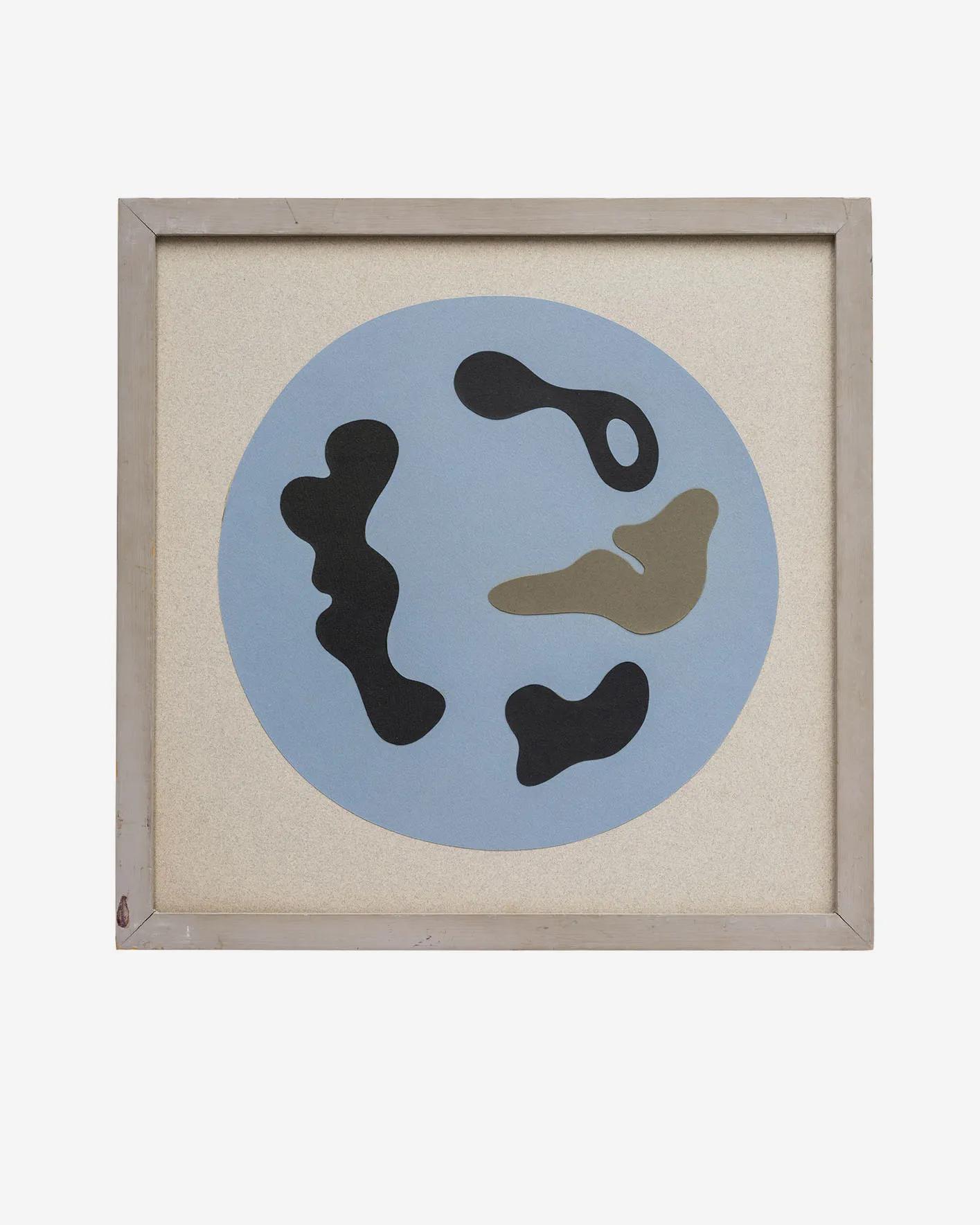
The exhibition’s design takes inspiration from Arp’s studio in Locarno, Switzerland, and traces a line from his early cut-outs and reliefs to his mastery of form as a tool for reconfiguring and transforming our perception of space. ‘Heads or Tails’ presents key examples from the Threshold series alongside a selection of rarely exhibited works on paper and late sculptures. The juxtaposition reveals how elements of Arp’s visual language migrated across materials and forms, accruing new meaning through a process of perpetual reinvention. 


The exhibition coincides with the release of ‘Arp: Paper’ from Hauser & Wirth Publishers, a survey of nearly two hundred works—many never before exhibited or published—that situates paper at the very heart of the artist’s practice. 

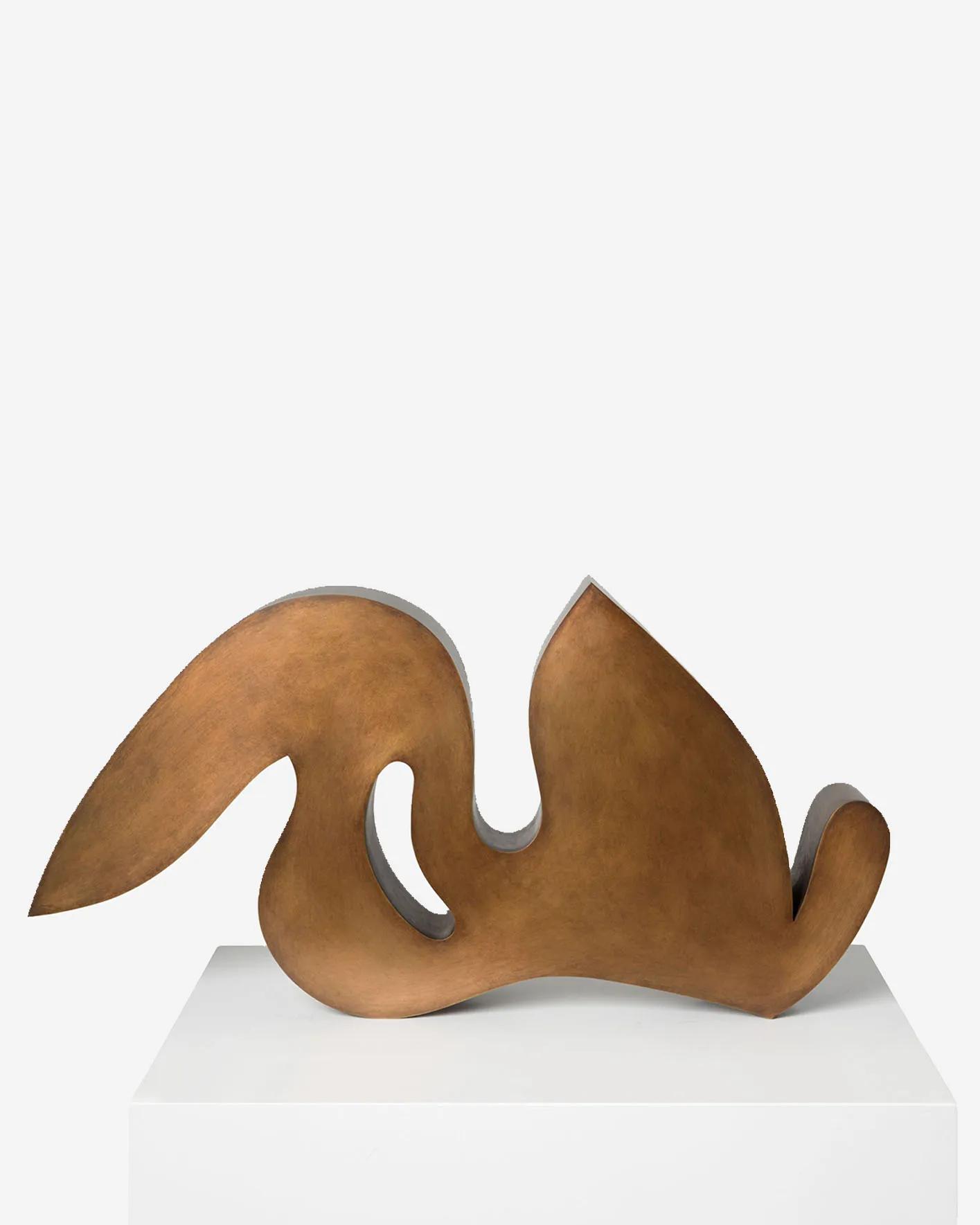
Arp described the Threshold sculptures, which date from 1958 onwards, as an extension of his established practice of cutting and collaging paper, writing that the works resulted from ‘the same principle of cut-out forms, now applied to space.’ Unlike his earlier engagements with three-dimensional form—primarily self-contained, biomorphic structures—these objects appear as if torn directly out of a picture plane. ‘


Ruhende / Allongée (Reclining)’ (1960), for example, enlarges and remixes motifs from drawings such as ‘


Stuhl und Flasche / Chaise et bouteille (Chair and Bottle)’ (1926) 


and ‘Vegetale Nacht / Nuit végétale (Vegetal Night)’ (1938), becoming a ‘threshold’ not as a fixed boundary but as a point of passage into greater dimensionality—an opening out into the world. The freestanding object is animated by the viewer’s movement around and through it, taking on a new shape and meaning as it is experienced from multiple points of view. 


The exhibition’s namesake, ‘Wappen oder Zahl / Pile ou face (Heads or Tails)’ (1959) references this double-sided nature directly in its title while also invoking chance—a generative force throughout Arp’s creative process.


‘Das kleine Theater / Le petit théâtre (The Small Theater)’ (1959) exemplifies the Threshold series’ ability to draw surrounding space into the works themselves. An image within an image, ‘The Small Theater’ appears almost like a relief whose back panel has been removed, opening the composition to its environment. Here, the spaces between forms become as important as the forms themselves, transforming a principle central to Arp’s collages into a fully realized spatial experience. 

If Arp’s early collages and reliefs informed his Threshold sculptures, the later paper compositions on view, including a selection of Diptychs and watercolors from the 1960s, suggest that the exchange was reciprocal. In dialogue, these works—ripe with motifs that recur throughout his sculptural practice—reveal an artist continually revisiting and reconfiguring his visual vocabulary across mediums. 

The bronze sculptures presented in the round further underscore the fluidity of Arp’s practice, demonstrating how forms first explored in relief, collage and drawing repeatedly found new expression in sculpture, where they were transformed by scale, material and three-dimensional space. Viewed alongside these parallel bodies of work, the Threshold sculptures take on new significance. Created during the final decade of his life, they reveal an artist working simultaneously across multiple threads of inquiry, revisiting longstanding motifs while continuing to generate new forms and ideas. For Arp, the threshold was not simply a point of passage but a space of possibility—a concept that remained central to his understanding of artistic creation and life until the end. 

About the artist 

Hans Arp is a familiar figure of classical modernism and was a key contributor in the development of dada and surrealism in the early twentieth century. Focusing his attention on everyday objects and parts of the body. Arp created his own unique ‘object language’ using a nonsensical vocabulary: plate, fork, knife, clock, tie, moustache, lips, breasts. With a playful hand he juggled the dominant art currents of the early twentieth century, combining seemingly contradictory geometric and organic formal idioms with the artistic ‘-isms’ of his epoch. Turning his back on the increasingly modernized turn-of-the-century society, Arp created biomorphic works whose organic, amoeboid forms highlighted his fascination with the physiological processes of procreation, growth and death, and counteracted the rectilinear structures of cubism. Arp studied the natural world for inspiration, while documenting the evolution of an imaginary world. Combined with his late bronze sculptures from the 1950s, these works sought to give form to natural forces—clotting, hardening, congealing and fusing—all of which weresymbols of eternal cycles in nature for Arp. 

Born in Strasbourg, in Alsace, then part of Germany (now France), in 1886 Arp was raised bilingual, French and German, and additionally Alsatian, which was fundamental for his work. After studying at Strasbourg’s Ecole des Arts et Metiers, Kunstschule Weimar and Académie Julian, Paris he co-founded the Swiss Artists association ‘Der Moderne Bund’ and the dada movement in Zurich. Arp participated the first surrealist exhibition in 1925 in Paris alongside Klee, Picasso and many others. 

In the 1930s, the Zurich-based art historian Carola Giedion-Welcker recognized the relevance of Arp’s vision of nature, and saw in his works the ‘invisible made visible, the search for a visual language capable of capturing the spiritual realms beyond the world of appearances.’ 

Arp’s innovative and influential practice prefigured the fluxus movement, inspired artists such as Anthony Caro and Joan Miró, and made way for the great contemporary performance artists. His first major solo exhibition in the USA was shown in 1949. Arp was awarded the Grand Prize for Sculpture at the Venice Biennale in 1954. In the 1960s he received the GrandPrix National des Arts and the German Federal Cross of Merit. The first Arp retrospective was shown at the Museum of Modern Art in New York in 1958. Although his later practice is often overlooked, Arp continued to produce sculpture and poetry until his death in 1966, building an extraordinary body of work that evolved beyond Dada, particularly in his increasingly experimental poetry.

MORE IMAGES

Image for exhibition

Untitled (Composition)

1958-1965


Image for exhibition

Knospe auf Schale / Bourgeon sur coupe (Bud on Bowl)

1960 (cast 2021)


Image for exhibition

Untitled

1966


Image for exhibition

Schwellengestaltung / Seuil-configuration (Threshold Configuration)

1959 (casting date unknown, before 1977)


Image for exhibition

Untitled

1965-1966 c.


Image for exhibition

Siamesisch / Siamois (Siamese)

1960 (cast 1984)


Image for exhibition

Diptychon (Diptych)

1962 c.