Celebrating one of the most notable American printmakers of the 1920s and 1930s, Mabel Dwight: Cool Head, Warm Heart foregrounds Mabel Dwight’s vivid portrayals of New York’s people, theaters, streets, and everyday rituals, rendered through a democratic print medium and a keen sense of composition.
Born in 1876 and raised in Cincinnati, New Orleans, and San Francisco, Dwight came to New York at the turn of the century as an illustrator and painter and soon became part of the downtown artistic community. She was an active member of the Whitney Studio Club in the 1910s and became the Studio Club’s first secretary in 1918, working closely with its director, Juliana Force, a foundational chapter in what would later become the Whitney Museum of American Art. In 1927, at the age of fifty-two, Dwight began working in lithography and quickly emerged as one of the era’s most respected printmakers.
Guided by her belief that art should be made with “a cool head and a warm heart,” Dwight wandered the city from Harlem to Staten Island, sketching scenes of human drama, humor, and quiet resilience before translating them into lithographs via stone or zinc plates. The Whitney holds nearly a third of her lithographs, and her work remains a gimlet-eyed, affectionate portrait of urban life. For Dwight, lithography offered not only aesthetic freedom but also political purpose. It allowed her work to circulate widely and inexpensively, aligning with her self-described “Socialist” vision of dignity across class divides.
Dwight’s work has been part of the Whitney Museum's history since its founding; the Museum holds about a third of her lithographs. Nearly a century after Dwight published her prints, they stand as examples of how to capture the varieties of urban experiences with a keen-eyed affection for New York.
Dwight, like her friend and contemporary Wanda Gág, also the subject of a recent exhibition at the Whitney, is an artist whose work offers an accessible but rigorous vision. “Dwight was always careful to avoid the grotesque,” said Dan Nadel, the Steven and Ann Ames Curator of Drawings and Prints, Whitney Museum, “preferring a gentler but no less sharp approach, rendering her subjects in rounded, solid forms, dignified and individual.”
Dwight believed that her art should be made with “a cool head and a warm heart,” so that it might become a “living influence on the world.” That philosophy shaped both her working process and her subjects. She spent days wandering the City, from Harlem to Staten Island, often sketching in a notebook concealed inside her jacket. Back in her studio, she refined these observations before transferring them onto stone or zinc plates, producing prints that capture New York as a stage of human drama, humor, and quiet resilience.
“Seeing these works fresh in 2026 is a reminder that New Yorkers, and any city dweller, havealways existed together as a community at play, work, and protest,” Nadel continued, “and it is a pleasure to show visitors that Dwight’s works and ideas are integral to the Whitney’s collection and vision, from founding to now.”
Dwight’s bustling crowd scenes portray individuals with gently curving lines, dramatic lighting, and delicate highlights, each figure distinct yet inseparable from the whole. Whether depicting balloon sellers, subway riders, parkgoers, or theater audiences, Dwight imbued her subjects with what she called “the stuff of life”—an inner glow that conveys both vulnerability and strength. Her overtly political images are as theatrical as her scenes of entertainment, and her intimate portraits reveal faces alive with expression and psychological depth.
One of the exhibition’s highlights, Life Class, exemplifies Dwight’s sharp eye for body language, crowds, and likenesses. The lithograph portrays some of the Studio Club’s regulars gathered 3 around the model in a figure drawing session. Dwight’s placement of lights and darks pulls our attention all the way around the space, making us feel the intimacy of the crowd and concentration in the room. Her likenesses of artists, including Peggy Beacon and Edward Hopper, are affectionate and broad. Dwight’s work was published widely in magazines as wideranging as Vanity Fair, The New Masses, and Theatre Guild Magazine, and circulated across the United States. Her lithographs reached a wide audience hungry for art rooted in everyday experience. At a moment when American artists were seeking new ways to connect art to lived reality, Dwight offered an enduring model of how humor, political awareness, and human warmth could coexist on a single printed sheet.
Mabel Dwight: Cool Head, Warm Heart is curated by Dan Nadel, Steven and Ann Ames Curator of Drawings and Prints, Whitney Museum of American Art, with Eli Harrison, Curatorial Fellow, Whitney Museum of American Art.
IMAGES
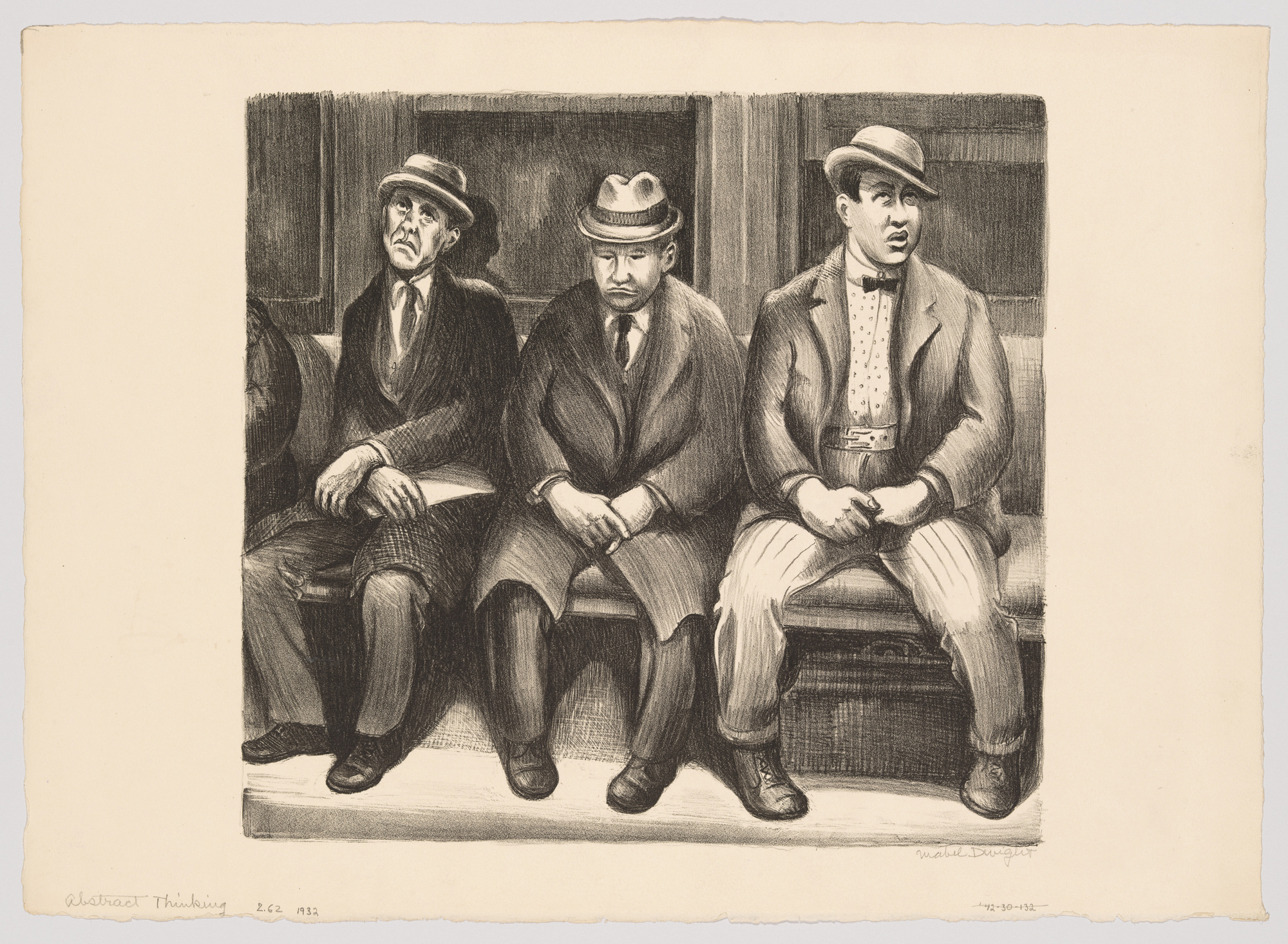
Mabel Dwight, Abstract Thinking, c. 1932. Lithograph, 11 1/2 × 15 15/16in. (29.2 × 40.5 cm). Whitney Museum of American Art, New York; purchase with funds from The Lauder Foundation, Leonard and Evelyn Lauder Fund 96.68.91
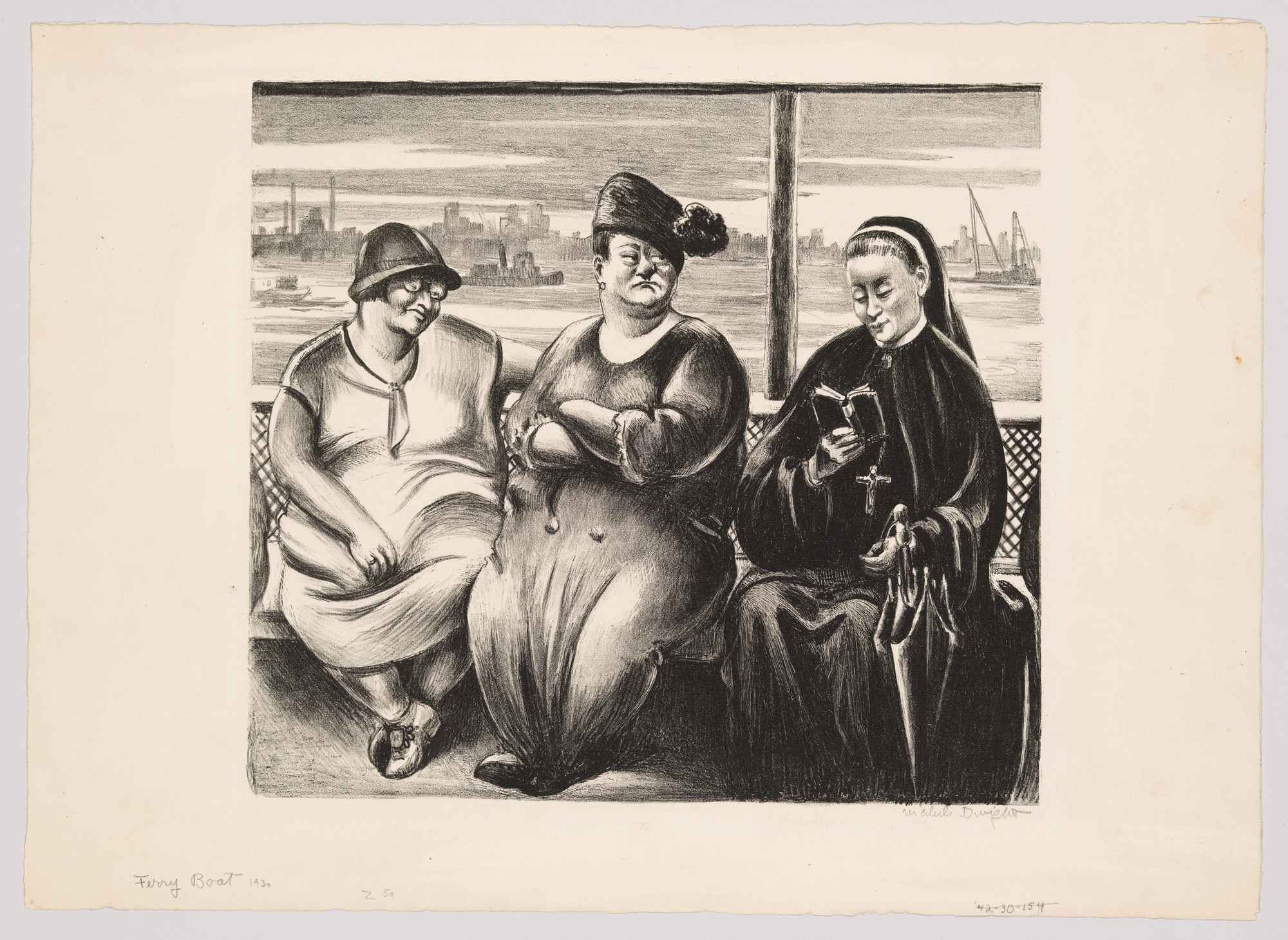
Mabel Dwight, Ferry Boat, 1930. Lithograph, 11 7/16 × 15 7/8 in. (29.1 × 40.3 cm). Whitney Museum of American Art, New York; purchase with funds from The Lauder Foundation, Leonard and Evelyn Lauder Fund 96.68.89
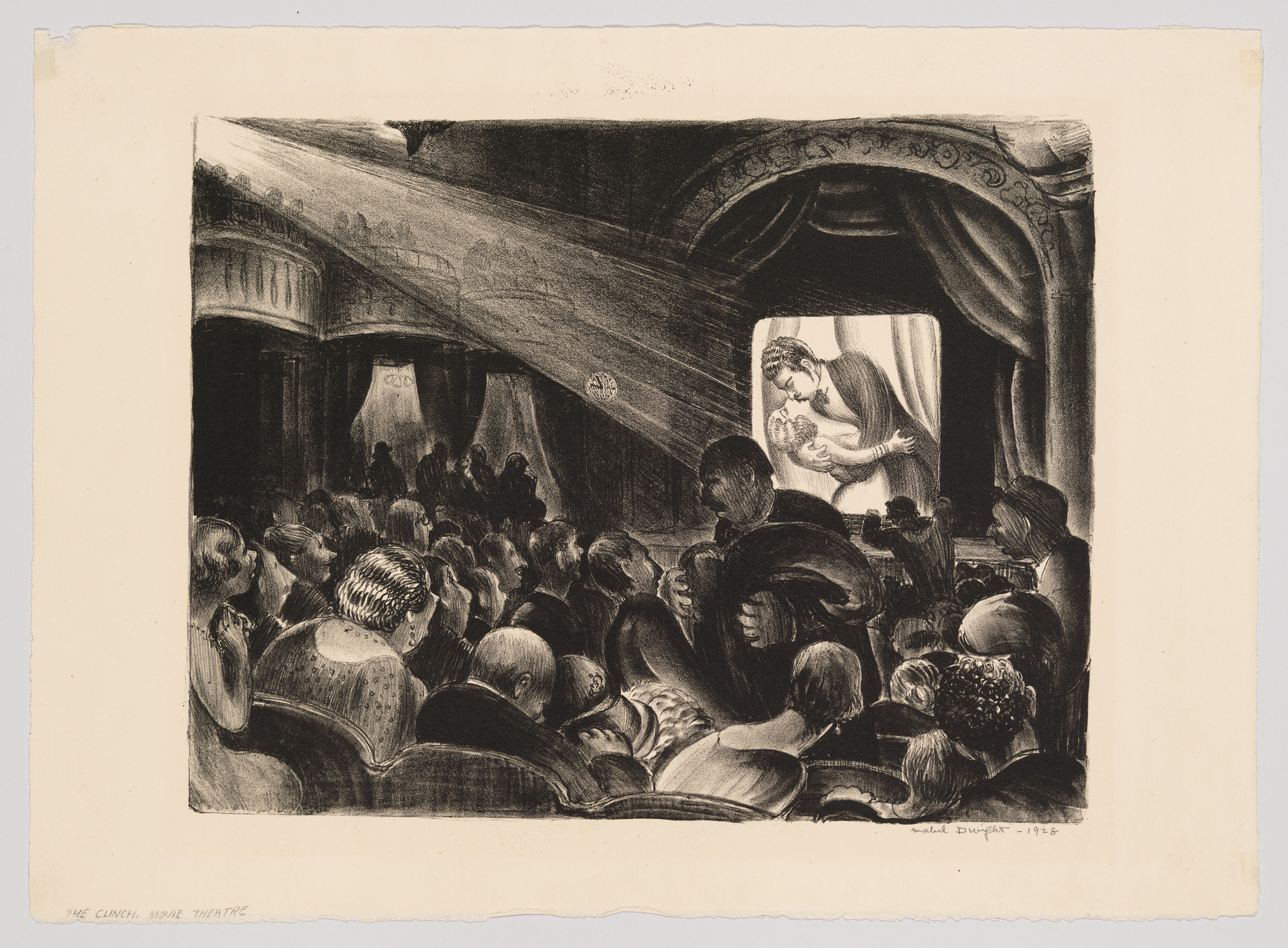
Mabel Dwight, The Clinch, Movie Theatre, 1928. Lithograph, 11 9/16 × 15 7/8in. (29.4 × 40.3 cm). Whitney Museum of American Art, New York; gift of Gertrude Vanderbilt Whitney 31.720
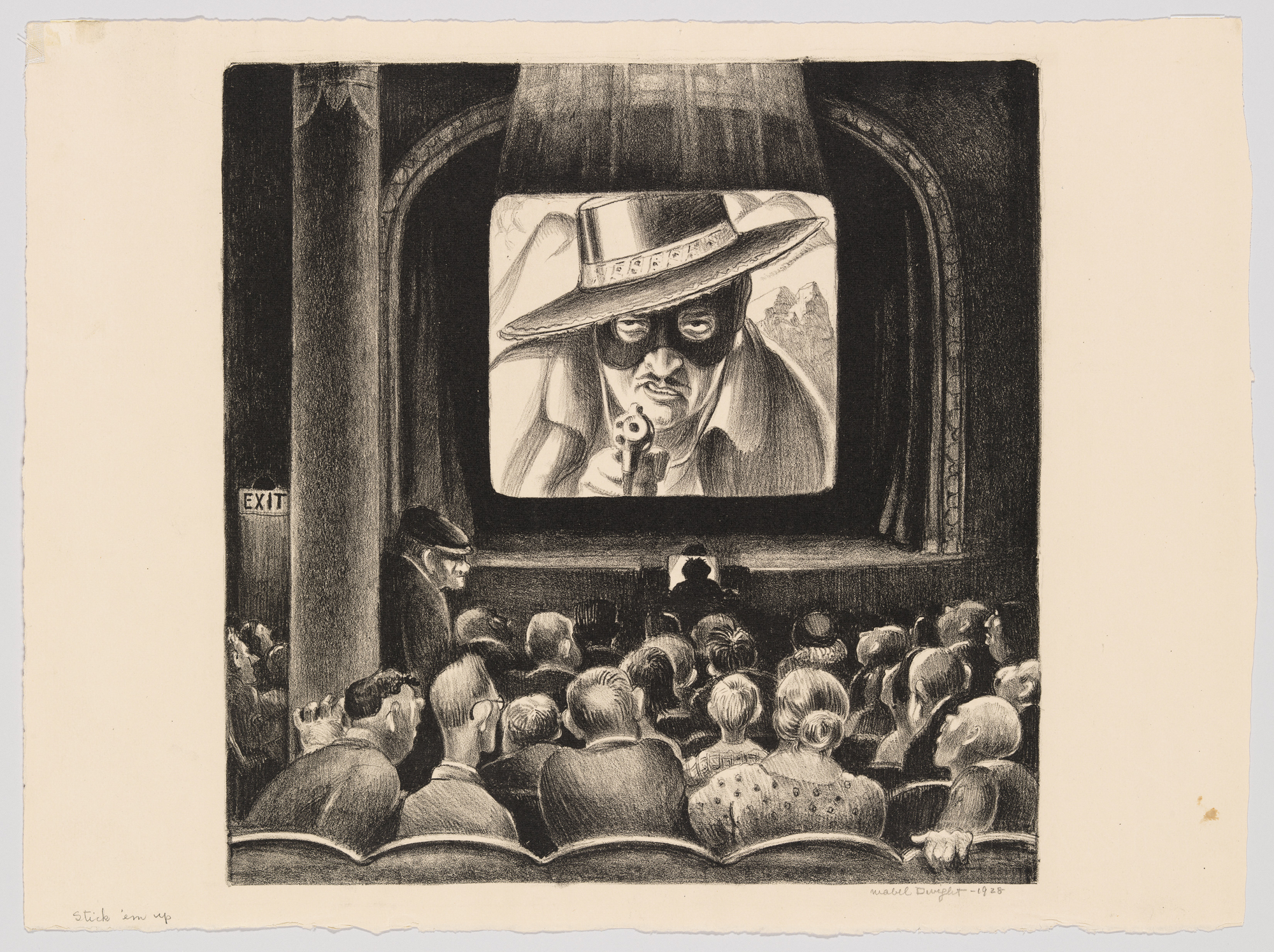
Mabel Dwight, Stick 'Em Up, 1928
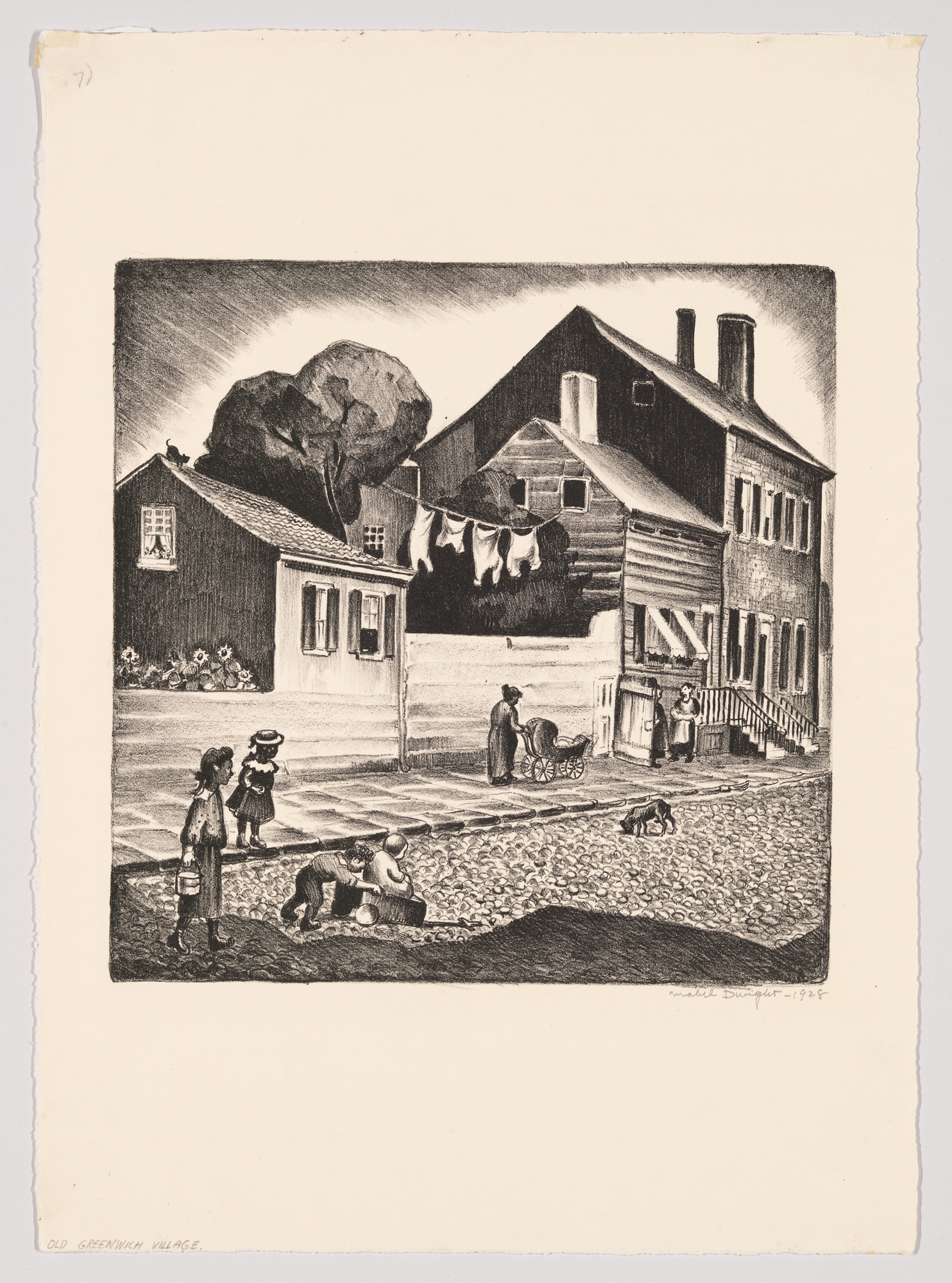
Old Greenwich Village, 1928. Lithograph, 16 1/6 × 11 3/4in. (40.8 × 29.8 cm). Whitney Museum of American Art, New York; Gift of Gertrude Vanderbilt Whitney 31.723
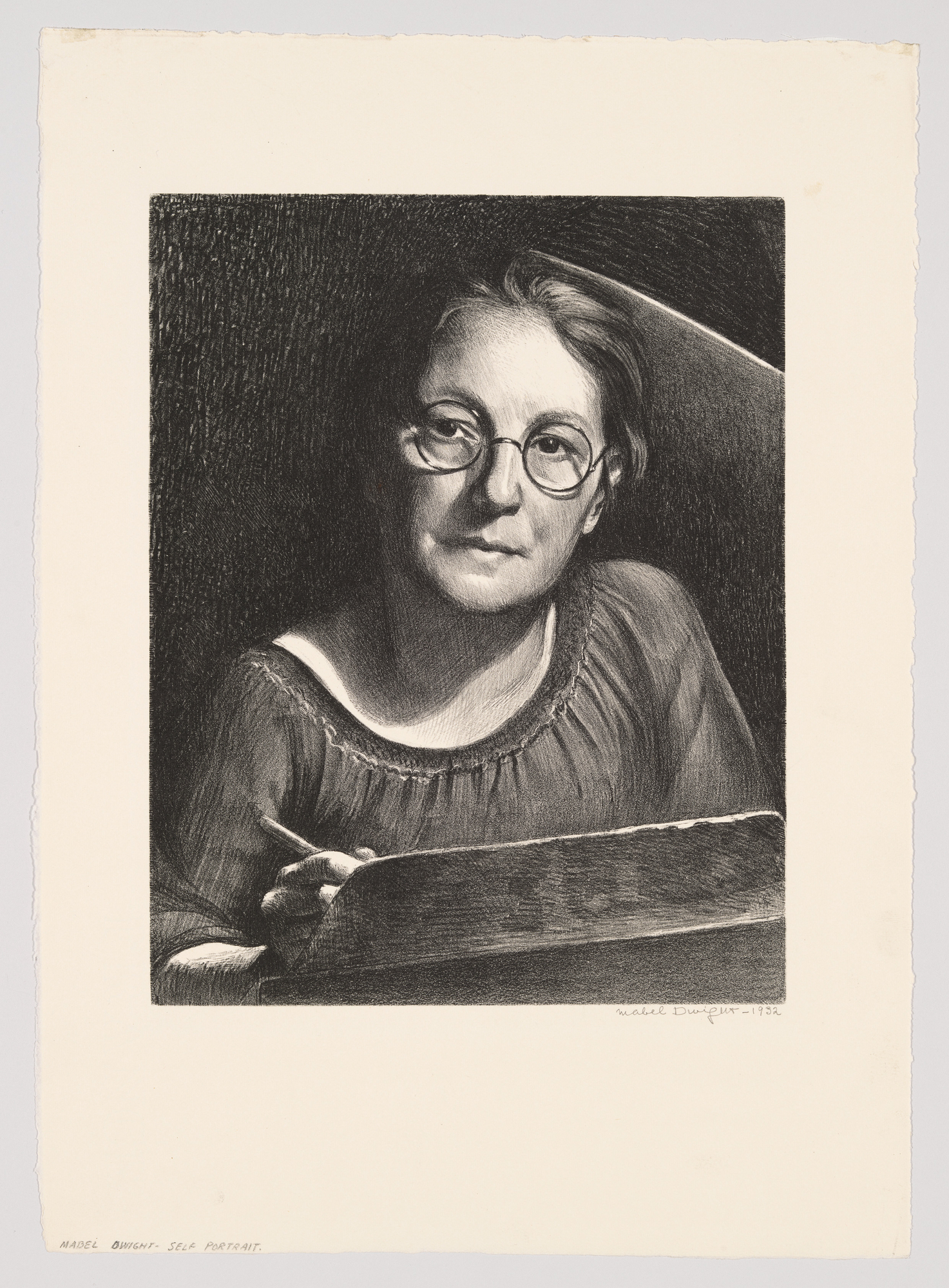
Mabel Dwight, Self-Portrait, 1932. Lithograph, 15 15/16 × 11 1/2in. (40.5 × 29.2 cm). Whitney Museum of American Art, New York; purchase 32.100
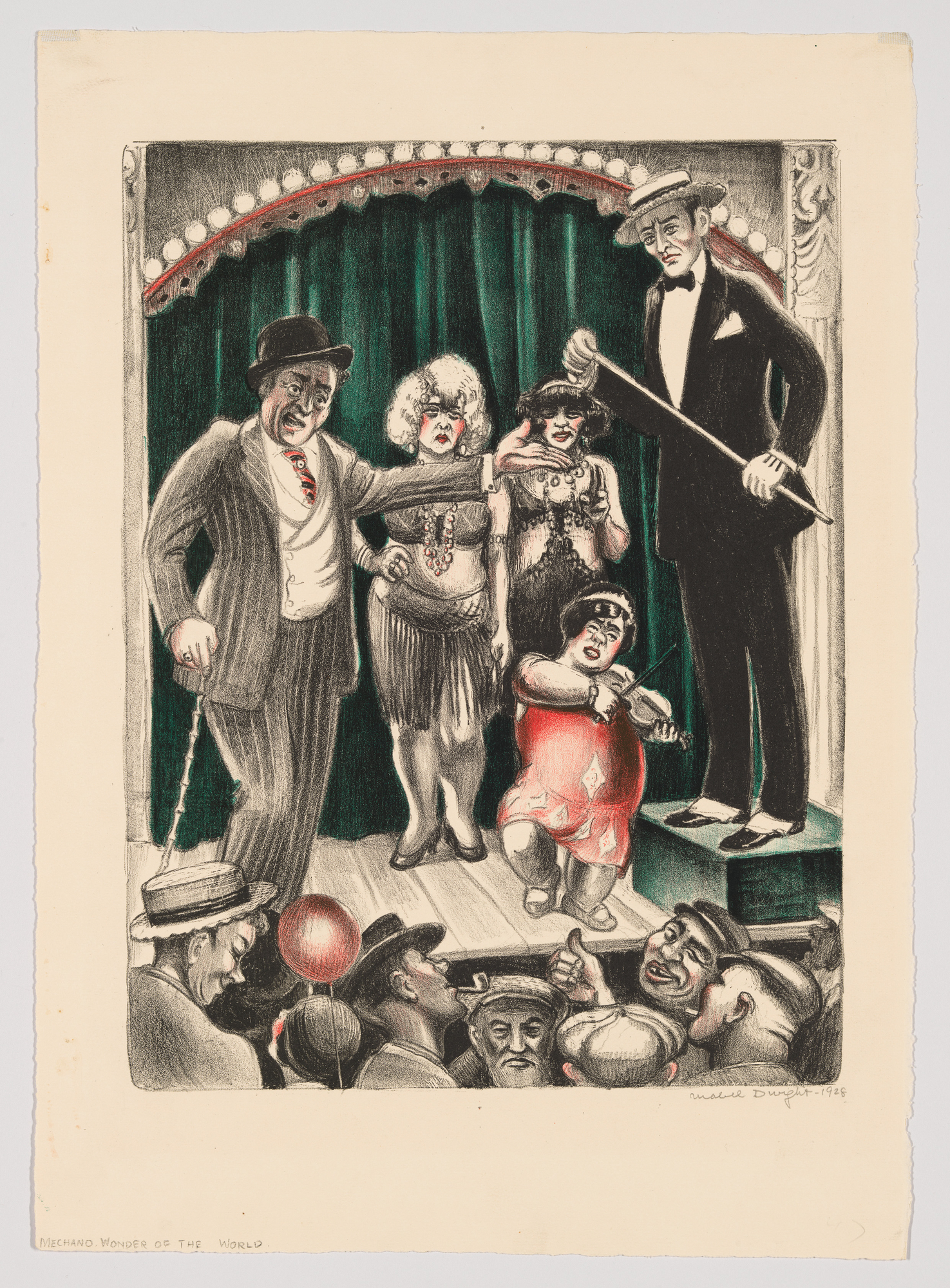
Mabel Dwight, Mechano, Wonder of the World, 1928. Lithograph, 16 × 11 3/8in. (40.6 × 28.9 cm). Whitney Museum of American Art, New York; gift of Gertrude Vanderbilt Whitney 31.722
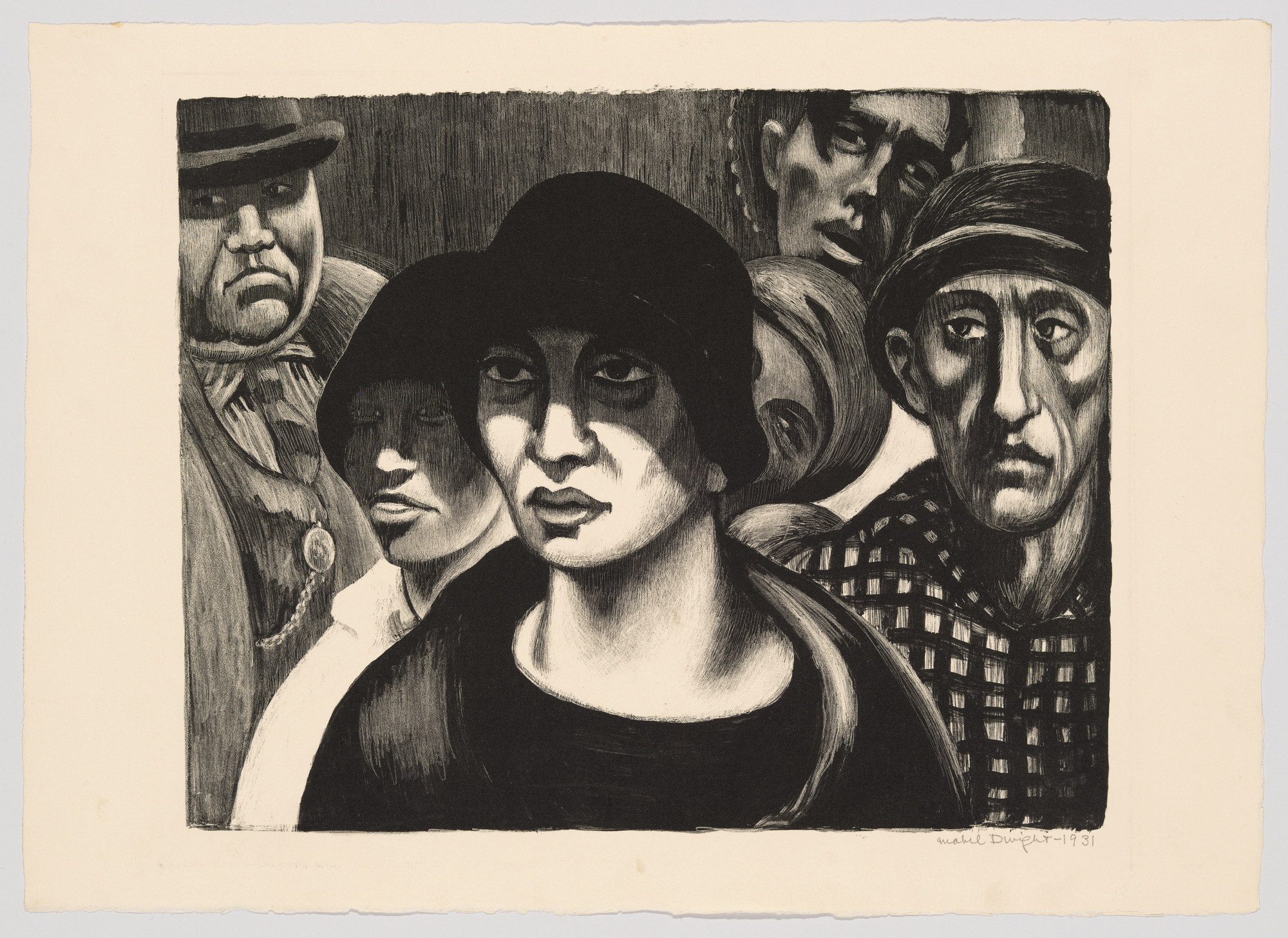
Mabel Dwight, In the Crowd, 1931. Lithograph, 11 5/16 × 15 13/16in. (28.7 × 40.2 cm). Whitney Museum of American Art, New York; purchase with funds from the Print Committee 98.
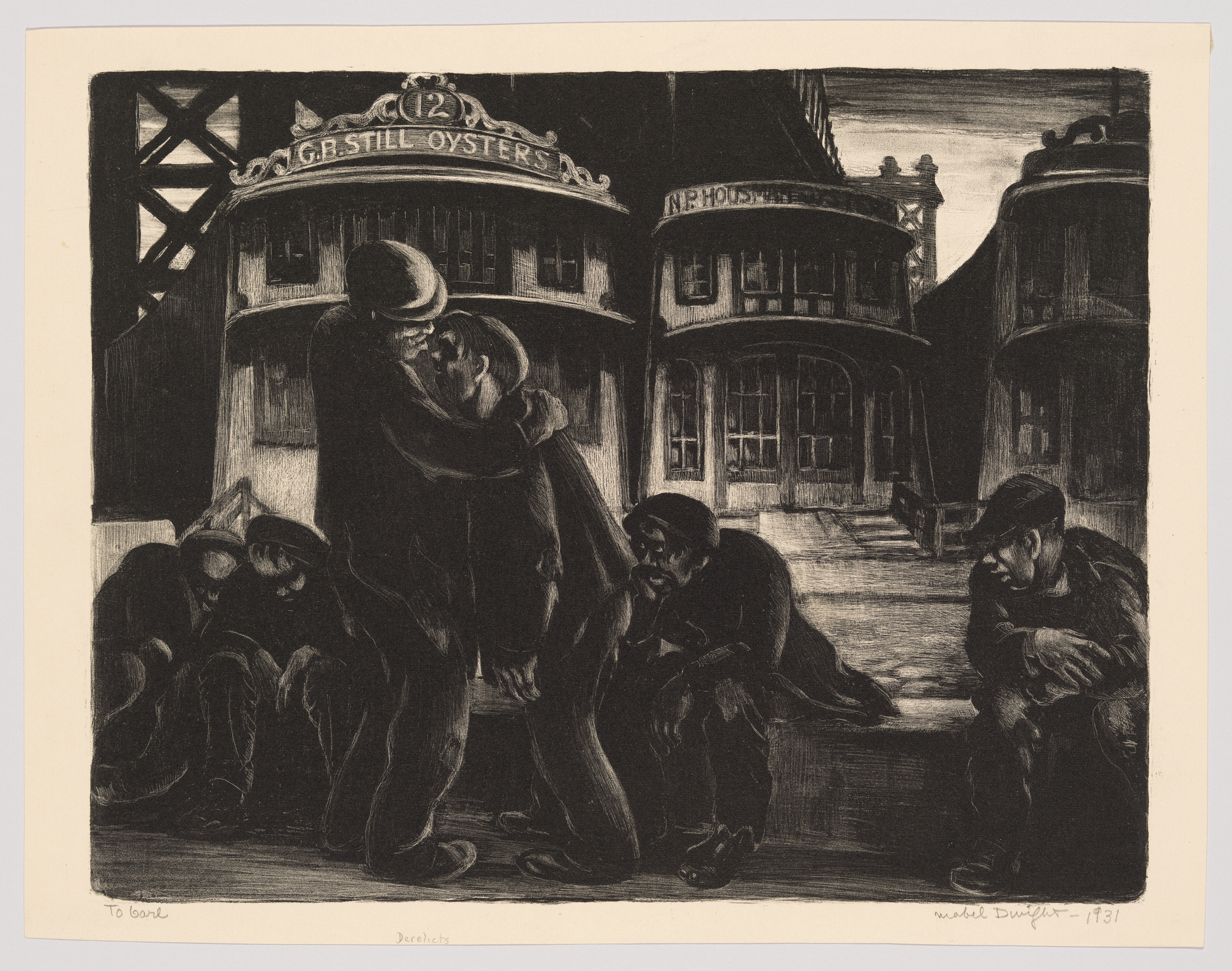
Mabel Dwight, Derelicts, 1931. Lithograph, 10 13/16 × 13 7/8in. (27.5 × 35.2 cm). Whitney Museum of American Art, New York; purchase with funds from The Lauder Foundation, Leonard and Evelyn Lauder Fund 96.68.90
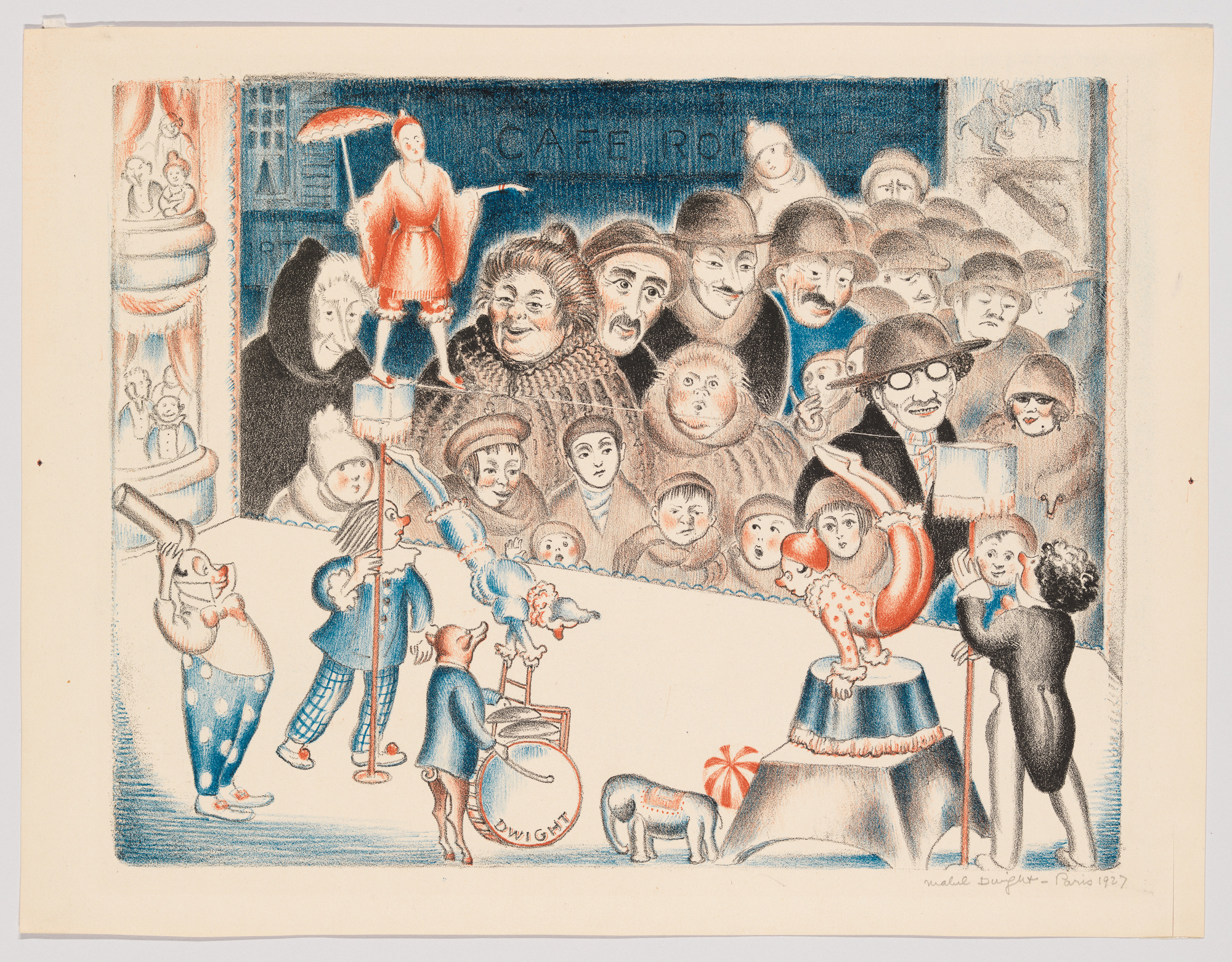
Mabel Dwight, Toy Shop Window, 1927. Lithograph, 10 13/16 × 14 1/8in. (27.5 × 35.9 cm). Whitney Museum of American Art, New York; purchase with funds from The Lauder Foundation, Leonard and Evelyn Lauder Fund 96.68.86
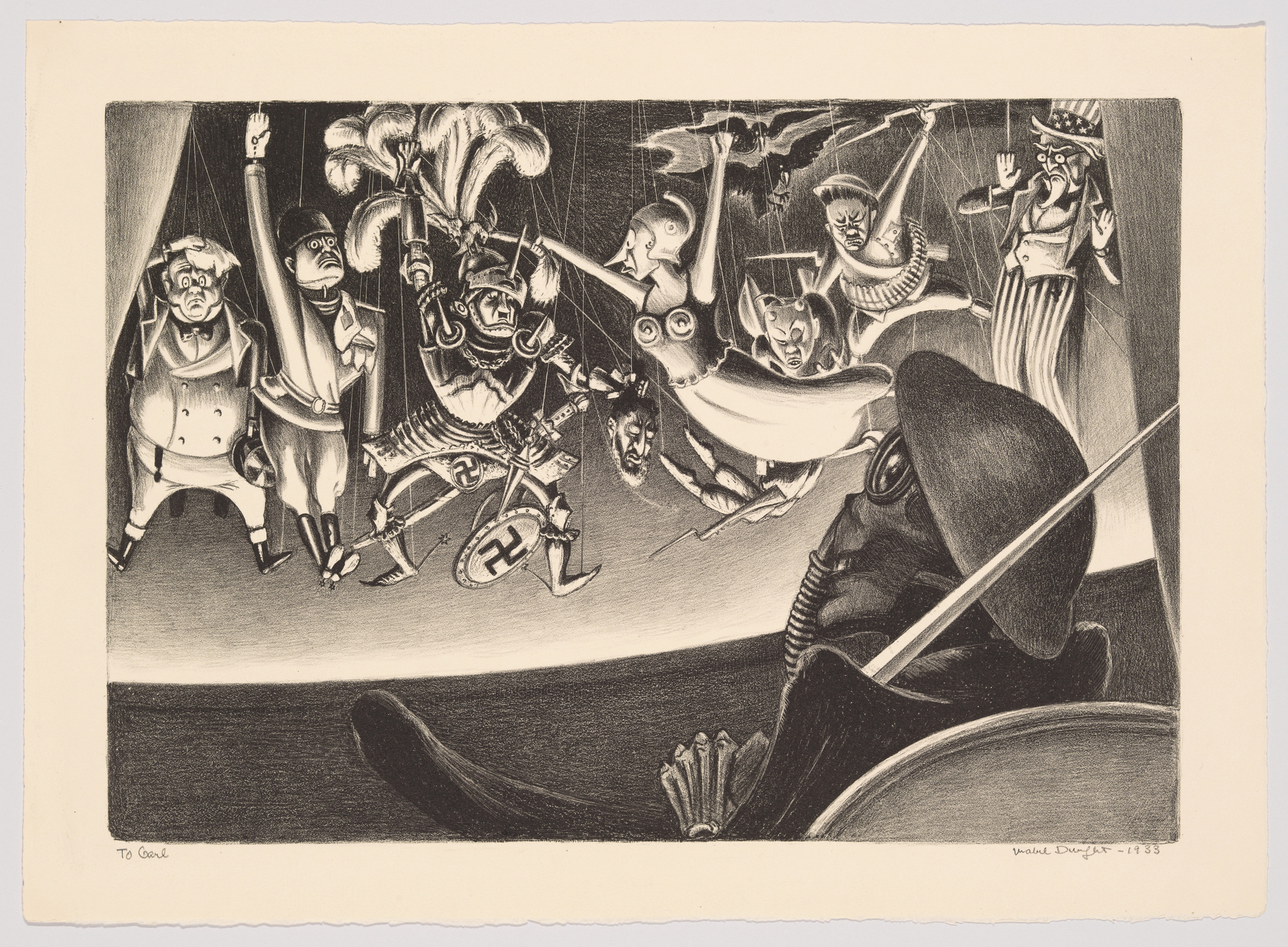
Mabel Dwight, Danse Macabre, 1933. Lithograph, 11 3/8 × 15 13/16in. (28.9 × 40.2 cm). Whitney Museum of American Art, New York; purchase with funds from The Lauder Foundation, Leonard and Evelyn Lauder Fund 96.68.92
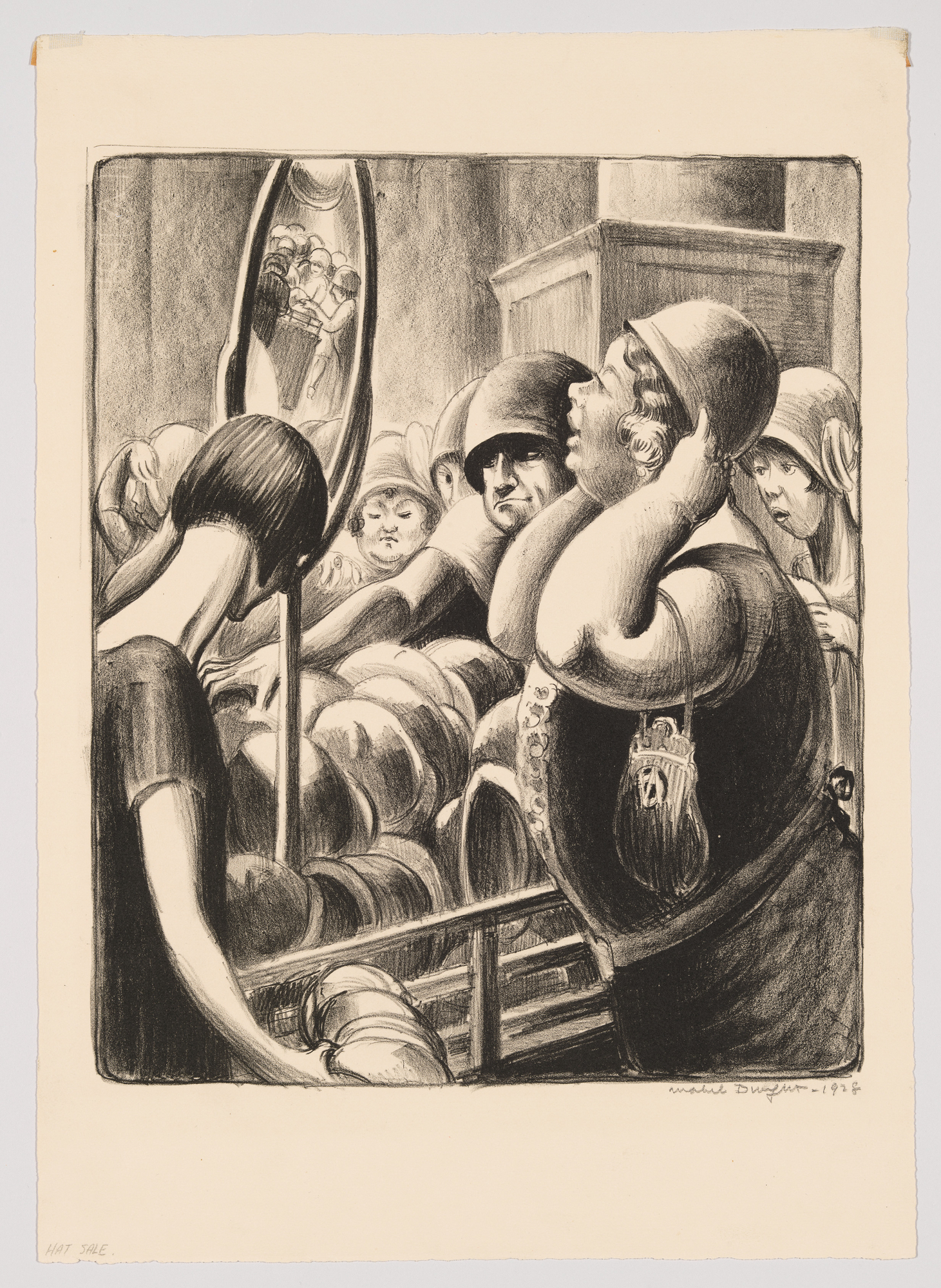
Mabel Dwight, Hat Sale, 1928. Lithograph, 16 1/8 × 11 1/2in. (41 × 29.2 cm). Whitney Museum of American Art, New York; Gift of Gertrude Vanderbilt Whitney 31.721 Mabel Dwight,
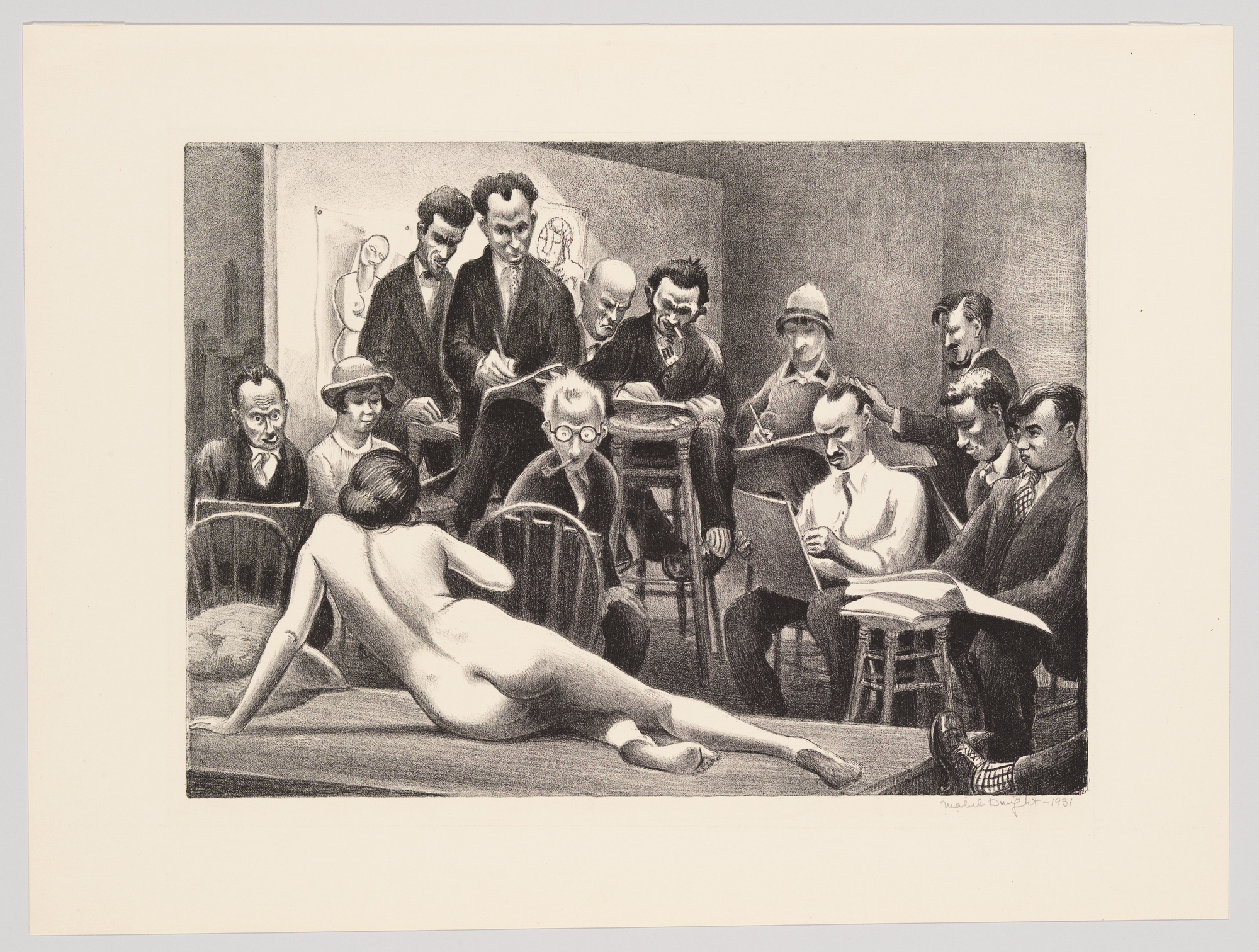
Mabel Dwight, Life Class, 1931. Lithograph, 13 11/16 × 18 1/16in. (34.8 × 45.9 cm). Whitney Museum of American Art, New York; purchase 33.90
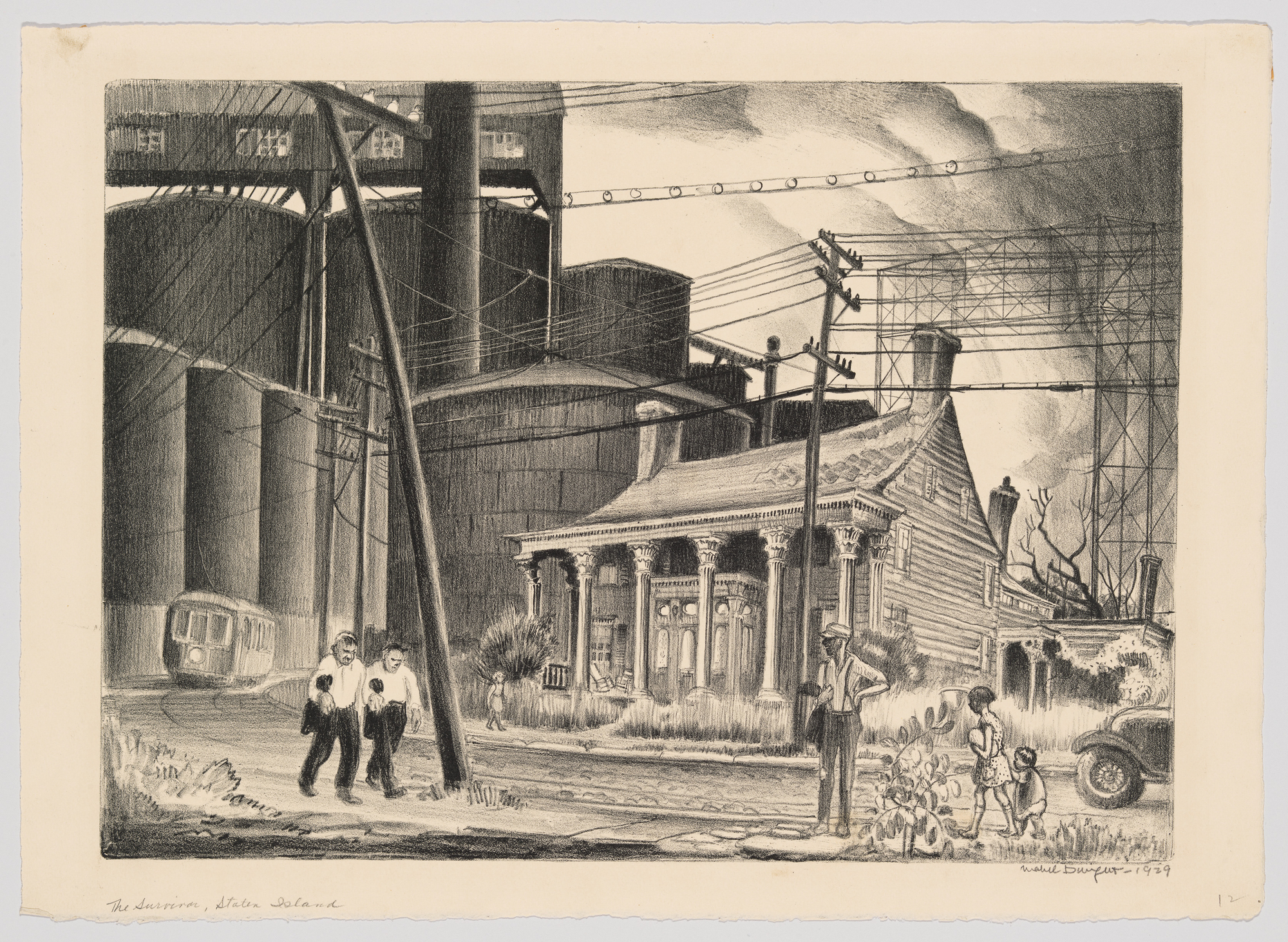
Mabel Dwight, The Survivor, Staten Island, 1929. Lithograph, 11 1/2 × 15 7/8in. (29.2 × 40.3 cm). Whitney Museum of American Art, New York; gift of Mr. and Mrs. Michael H. Irving 78.85
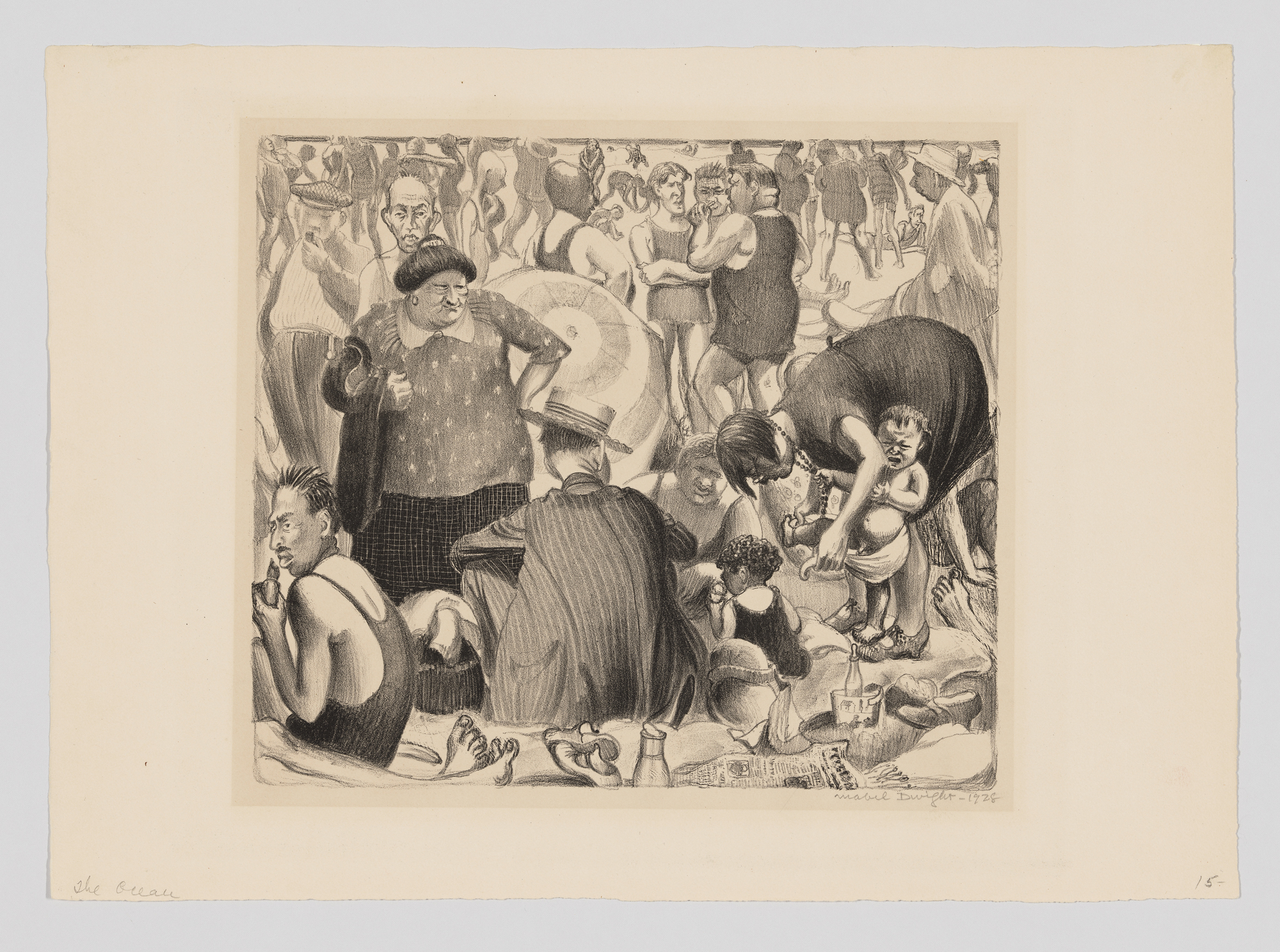
Mabel Dwight, The Ocean, Coney Island, 1928. Lithograph, 11 9/16 × 16in. (29.4 × 40.6 cm). Whitney Museum of American Art, New York; gift of Diane and Thomas Tuft 2022.165
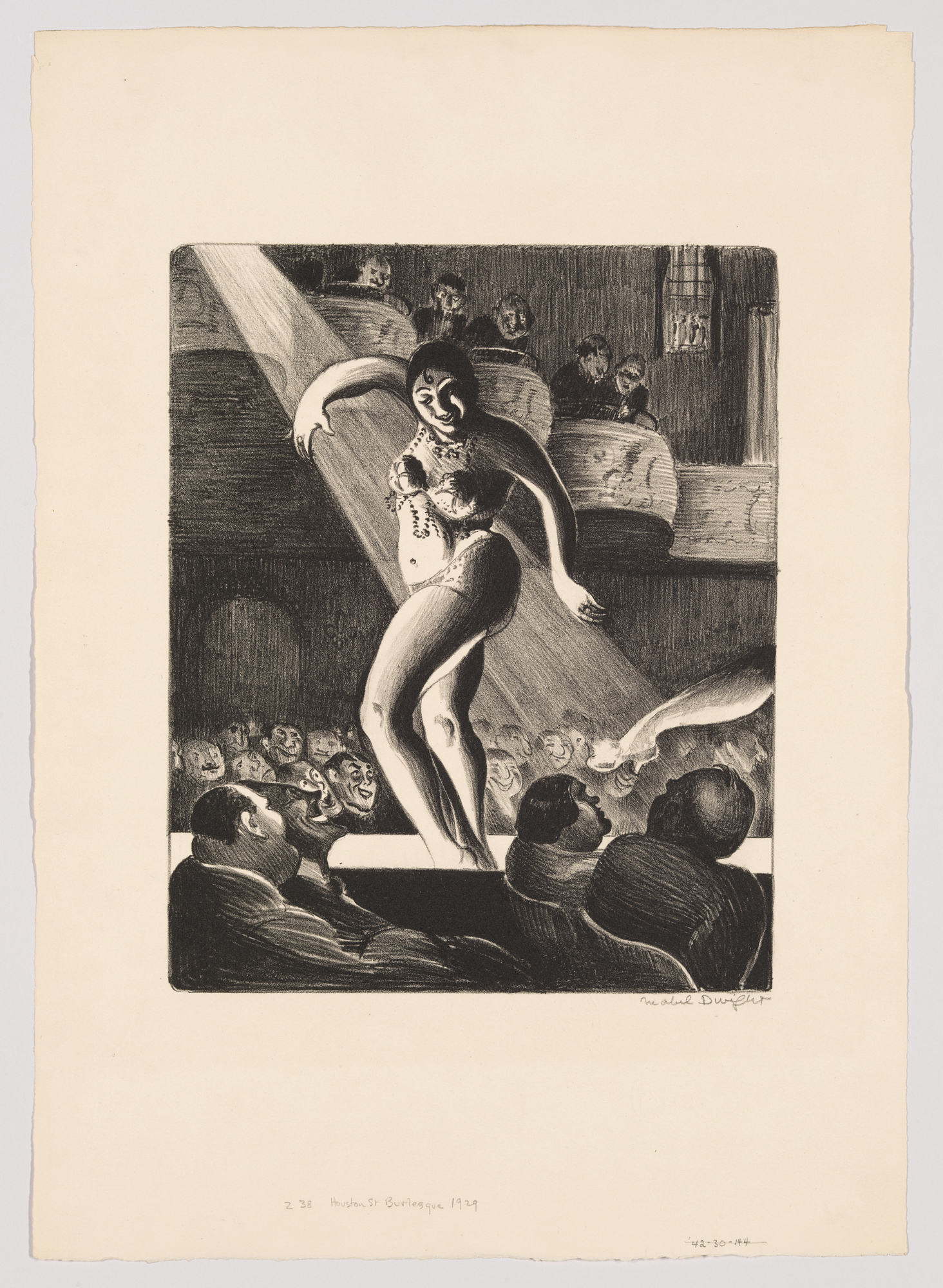
Mabel Dwight, Houston St Burlesque, c. 1929. Lithograph, 16 × 11 1/2in. (40.6 × 29.2 cm). Whitney Museum of American Art, New York; purchase with funds from The Lauder Foundation, Leonard and Evelyn Lauder Fund
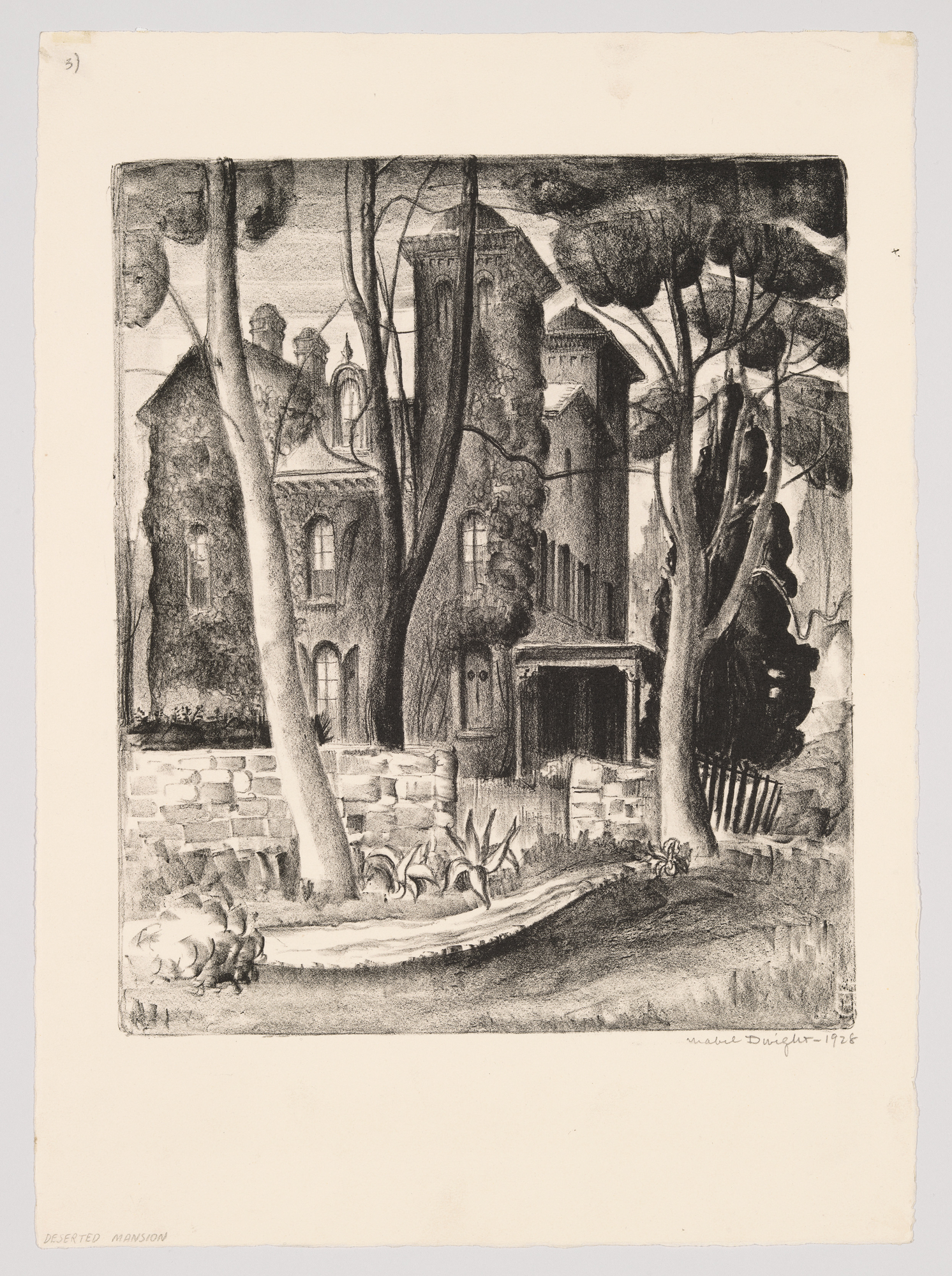
Mabel Dwight, Deserted Mansion, 1928. Lithograph, 15 7/8 × 11 1/2in. (40.3 × 29.2 cm). Whitney Museum of American Art, New York; purchase 32.6
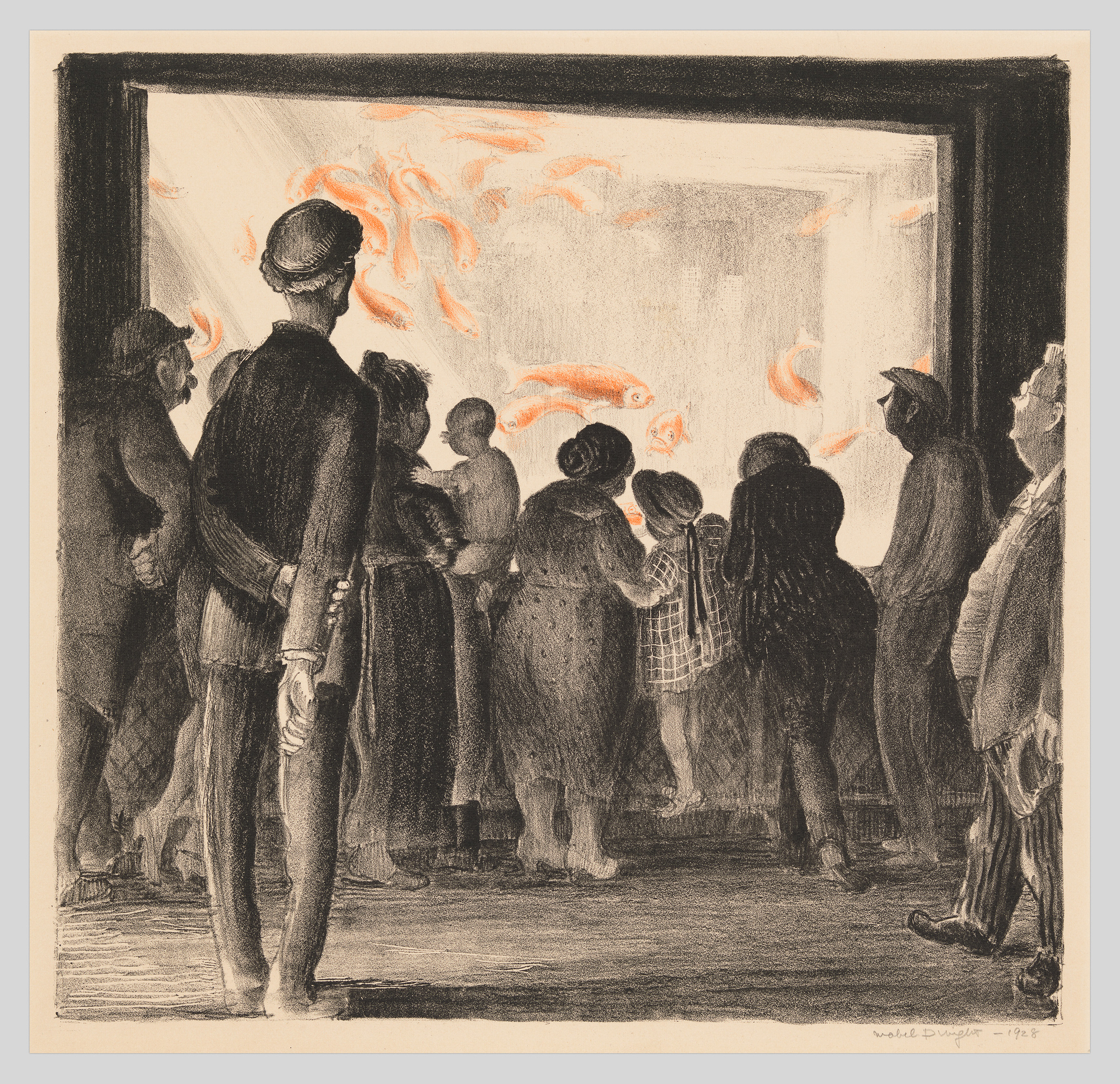
Mabel Dwight, Aquarium, 1928. Color lithograph, 11 5/8 × 16in. (29.5 × 40.6 cm). Whitney Museum of American Art, New York; Gift of Gertrude Vanderbilt Whitney 31.718
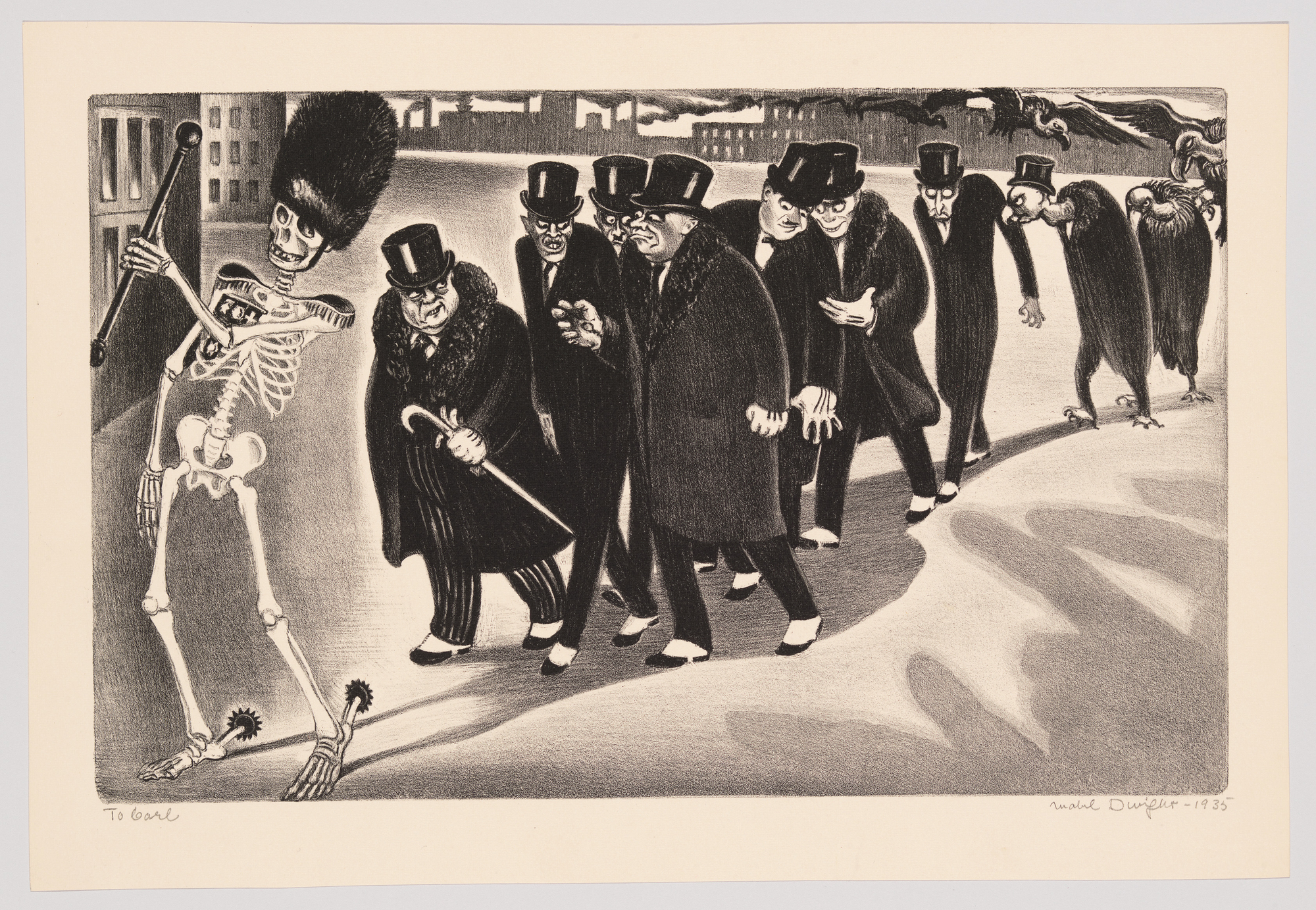
Mabel Dwight, Merchants of Death, 1935
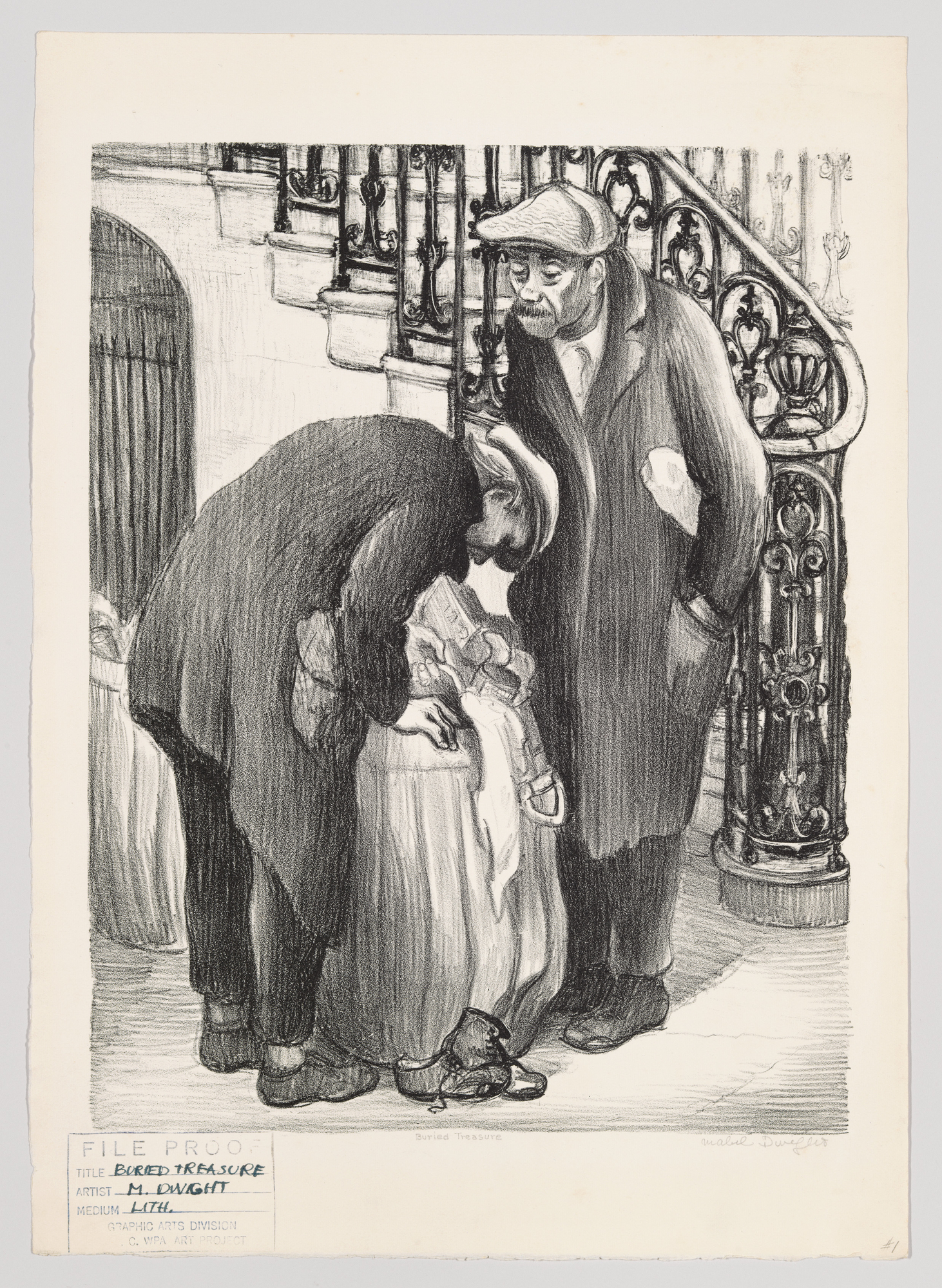
Mabel Dwight, Buried Treasure, 1935-1939. Lithograph, 16 × 11 7/16in. (40.6 × 29.1 cm). Whitney Museum of American Art, New York; purchase with funds from the Print Committee 94.119
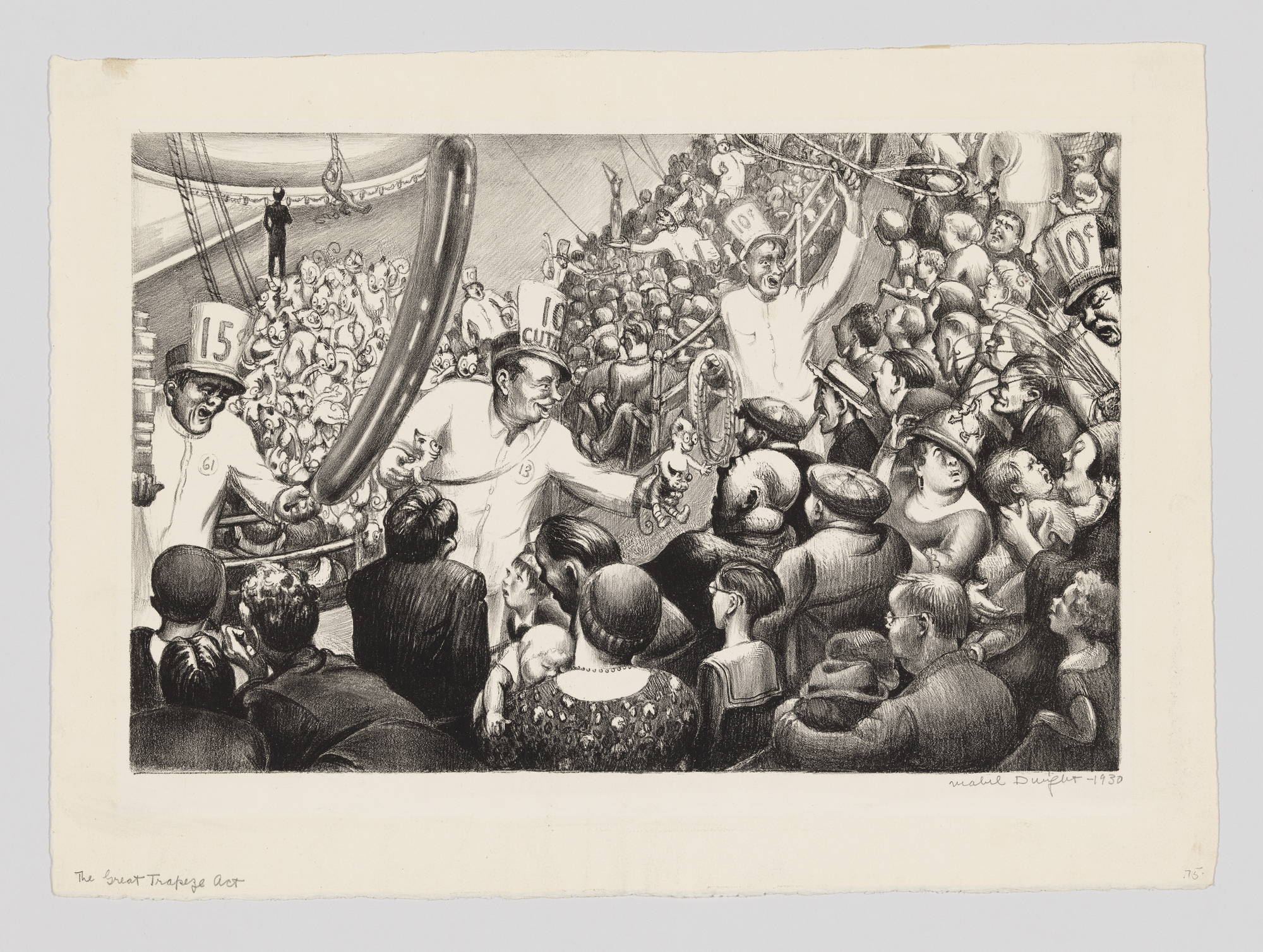
Mabel Dwight, The Great Trapeze Act, 1930. Lithograph, 11 7/16 × 15 5/8in. (29.1 × 39.7 cm). Whitney Museum of American Art, New York; gift of Diane and Thomas Tuft 2022.166
