Friday, October 3, 2014

Samuel F. B. Morse’s “Gallery of the Louvre” and the Art of Invention


The Terra Foundation for American Art announced today that Samuel F. B. Morse’s monumental painting


Gallery of the Louvre 


will embark on a multi-year national tour in January. Kicking off at The Huntington Library, Art Collections, and Botanical Gardens, in San Marino, CA (January 24–April 20, 2015), the tour will visit nine museums across the country, including venues in Fort Worth, TX; Bentonville, AR; Detroit, MI; Salem, MA; and Winston-Salem, NC.


The painting depicts masterpieces from the Louvre's collection that Morse "reinstalled" in one of that museum's grandest galleries, the Salon Carré. He also envisioned the space as a workshop where individuals study, sketch, and copy from his imagined assemblage of the Louvre's finest works, including paintings by Leonardo da Vinci, Titian, Veronese, Caravaggio, Rubens, Van Dyck, and Watteau. Morse depicted himself in front, leaning over his daughter as she sketches, and included friend and author James Fenimore Cooper at left with his wife and daughter.

Executed in Paris and New York, the Gallery of the Louvre was intended to inspire and inform American audiences. The painting was praised by critics, but rejected by the public for having little narrative interest. Crushed by the response, the artist soon ceased painting altogether and turned to his successful experiments with the telegraph and the Morse code.


The exhibition, Samuel F. B. Morse’s “Gallery of the Louvre” and the Art of Invention, is the culmination of the painting’s extensive conservation treatment in 2010 and two years of scholarly investigation. It will be accompanied by an anthology of the same title, published by the Terra Foundation and distributed by Yale University Press. 
Chicago businessman and art collector Daniel J. Terra (1911–1996) poses next to Samuel F. B. Morse’s iconic painting Gallery of the Louvre, which has been a signature work in the Terra Foundation’s collection ever since it was acquired in by Mr. Terra in 1982.
Chicago businessman and art collector Daniel J. Terra (1911–1996) poses next to Samuel F. B. Morse’s iconic painting Gallery of the Louvre, which has been a signature work in the Terra Foundation’s collection ever since it was acquired in by Mr. Terra in 1982.


“We are delighted to host the kickoff of this extraordinary tour,” said Kevin Salatino, director of the art collections at The Huntington. “And Gallery of the Louvre is particularly fitting here, where our collections span the history of American art as well that of science and technology—interests shared with Morse himself.  Los Angeles audiences are sure to be fascinated in many ways by this gem of an exhibition.”

Exhibition tour dates are as follows:

  • The Huntington Library, Art Collections, and Botanical Gardens, San Marino, CA, January 24, 2015–April 20, 2015
  • Amon Carter Museum of American Art, Fort Worth, TX, May 23, 2015–September 7, 2015
  • Seattle Art Museum, Washington, September 22, 2015–January 10, 2016
  • Crystal Bridges Museum of American Art, Bentonville, AR, January 2016–April 2016
  • Detroit Institute of Arts, MI, June 2016­–September 2016
  • Peabody Essex Museum, Salem, MA, October 2016–January 2017
  • Reynolda House Museum of American Art, Winston-Salem, NC, February 2017–June 2017
  • New Britain Museum of American Art, New Britain, CT, June 2017–October 2017
  • Iris & B. Gerald Cantor Center for Visual Arts, Stanford University, Stanford, CA, November 2017–January 2018
Known today primarily for his role in the development of the electromagnetic telegraph and his namesake code, Samuel Morse began his career as a painter. Created between 1831 and 1833 in Paris and New York, Gallery of the Louvre was Morse’s masterwork and the culmination of his studies in Europe.

“Morse’s ‘gallery picture,’ a form first popularized in the seventeenth century, is the only major example of such in the history of American art,” says Peter John Brownlee, curator at the Terra Foundation. “For this canvas, Morse selected masterpieces from the Louvre’s collection and imaginatively ‘reinstalled’ them in one of the museum’s grandest spaces, the Salon Carré.”

In addition to highlighting renowned works by the Old Masters, Gallery of the Louvre serves as a painted treatise on artistic practice, positioning Morse, depicted as the centrally placed instructor in the work, as a link between European art of the past and America’s cultural future.

In 2010 Gallery of the Louvre underwent a six-month conservation treatment in the studio of Lance Mayer and Gay Myers, specialists in American painting who have restored such major works as Emanuel Leutze’s Washington Crossing the Delaware (1851; Metropolitan Museum of Art) and Rembrandt Peale’s The Court of Death (1824; Detroit Institute of Arts). The conservation repaired damages that had occurred over time and yielded insight into Morse’s working methods.

“The conservation treatment greatly improved the overall look of the Gallery of the Louvre and confirmed that Morse was as fearless an experimenter with painting media as he was with the daguerreotype and the electromagnetic telegraph later in his career,” added Brownlee.

The painting’s conservation was documented in the 30-minute video A New Look: Samuel F. B. Morse’s “Gallery of the Louvre,” produced by Sandpail Productions for the Terra Foundation. The video provides information about Morse’s career, as well as paintings depicted in the picture, and features interviews with conservators, curators at the Terra Foundation and the Musée du Louvre, and other specialists, including Morse scholar Paul J. Staiti, Alumnae Foundation Professor of Fine Arts at Mount Holyoke College.

From 2011 to 2013, the painting was exhibited for extended periods at the Yale University Art Gallery, the National Gallery of Art, and the Pennsylvania Academy of the Fine Arts, where it was the subject of scholarly investigation and dialogue.

The new research generated from this analysis culminated in Samuel F. B. Morse’s “Gallery of the Louvre” and the Art of Invention, an anthology of essays by: 

  • Jean-Philippe Antoine, professor of aesthetics and contemporary art theory at Paris 8 University;
  • Wendy Bellion, associate professor of art history at the University of Delaware;
  • David Bjelajac, professor of art and American studies at The George Washington University;
  • Peter John Brownlee (also the editor), curator at the Terra Foundation for American Art;
  • Rachael DeLue, associate professor in the Art & Archaeology Department at Princeton University;
  • Sarah Kate Gillespie, curator of American art at the Georgia Museum of Art;
  • Lance Mayer and Gay Myers, independent painting conservators;
  • Andrew McClellan, professor of art history at Tufts University;
  • Alexander Nemerov, the Carl and Marilynn Thoma Provostial Professor in the Arts and Humanities at Stanford University;
  • Tanya Pohrt, the Marcia Brady Tucker Curatorial Fellow in the department of American Paintings and Sculpture at the Yale University Art Gallery;
  • Richard Read, Winthrop Professor in art history at the University of Western Australia in Perth; and
  • Catherine Roach, assistant professor of art history at Virginia Commonwealth University.
This anthology brings together fresh insights by academics, curators, and conservators, who focus on the painting’s visual components and the social and historical contexts that make it such a rich, complex work.

Terra Foundation for American Art

Established in 1978, the Terra Foundation for American Art is dedicated to fostering the exploration, understanding, and enjoyment of the visual arts of the United States. With financial resources of more than $350 million, an exceptional collection of American art from the colonial era to 1945, and an expansive grant program, it is one of the leading foundations focused on American art, supporting of American art exhibitions, projects, and research worldwide.

Manet to Picasso at the National Gallerry London


'Manet to Picasso: A Redisplay of Modern Masters from the National Gallery Collection' from 22 September 2006, to 23 May 2007 at the National Gallerry London, offered visitors a unique opportunity to re-examine the National Gallery's permanent collection, learning more about well-known works such as Seurat's 'Bathers at Asnières and Van Gogh's 'Sunflowers', as well as the opportunity to enjoy many works generously lent to the display by private collectors.

Camille Pissarro, The Boulevard Montmartre at Night, 1897 © The National Gallery, London.

The six rooms of Manet to Picasso were organised broadly chronologically allowing National Gallery visitors to trace the dramatic changes that occurred during some of the most exciting years of European artistic development. 

'Painting Modern Life' was the subject of the first room. It offered the opportunity to view side by side 


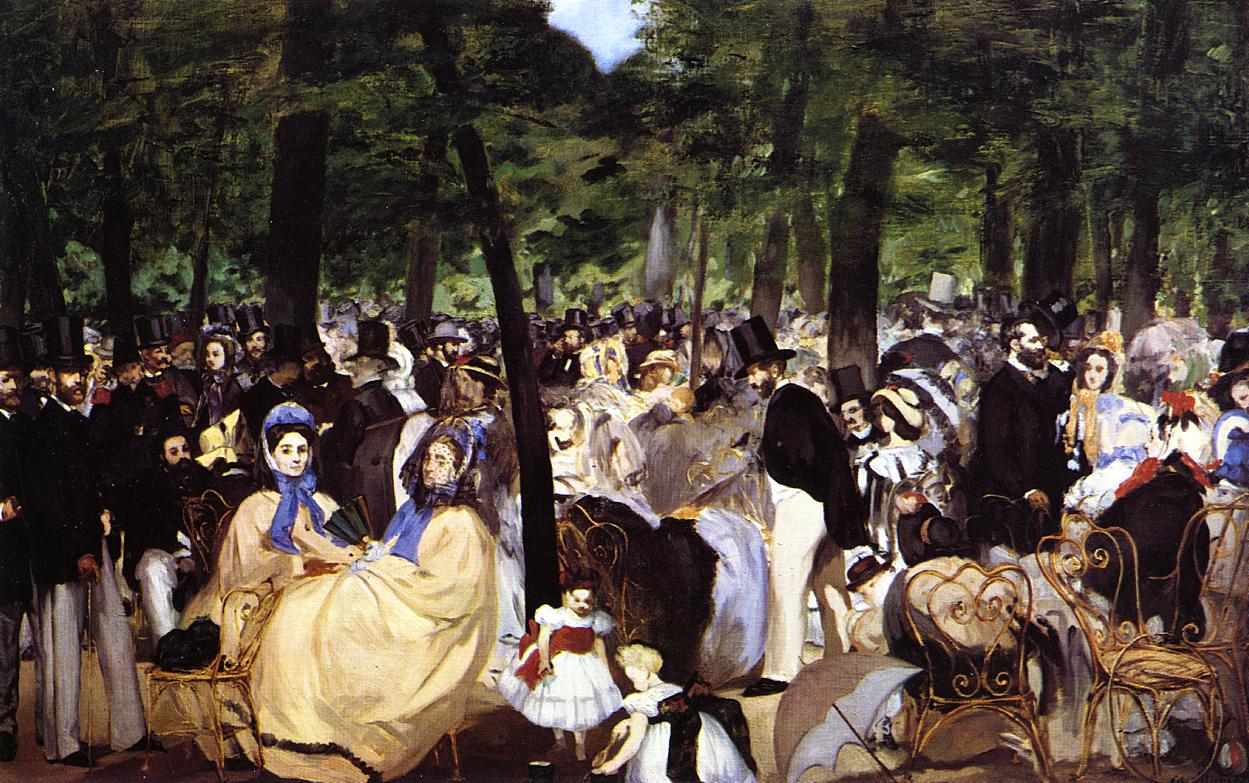
the recently acquired painting by Adolph Menzel, 'Afternoon in the Tuileries Gardens' (the first painting by this German artist to enter a UK collection), 


with its inspiration, Manet's 'Music in the Tuileries Gardens'. 

There was also a chance to explore Manet's working methods thanks to the loan of his  'Study for Music in the Tuileries Gardens' (Private Collection). 

Room 2 focused on the work of one of the founding fathers of Impressionism, Claude Monet. Spanning a 50-year period, iconic works such as 


'Bathers at La Grenouillère' and 


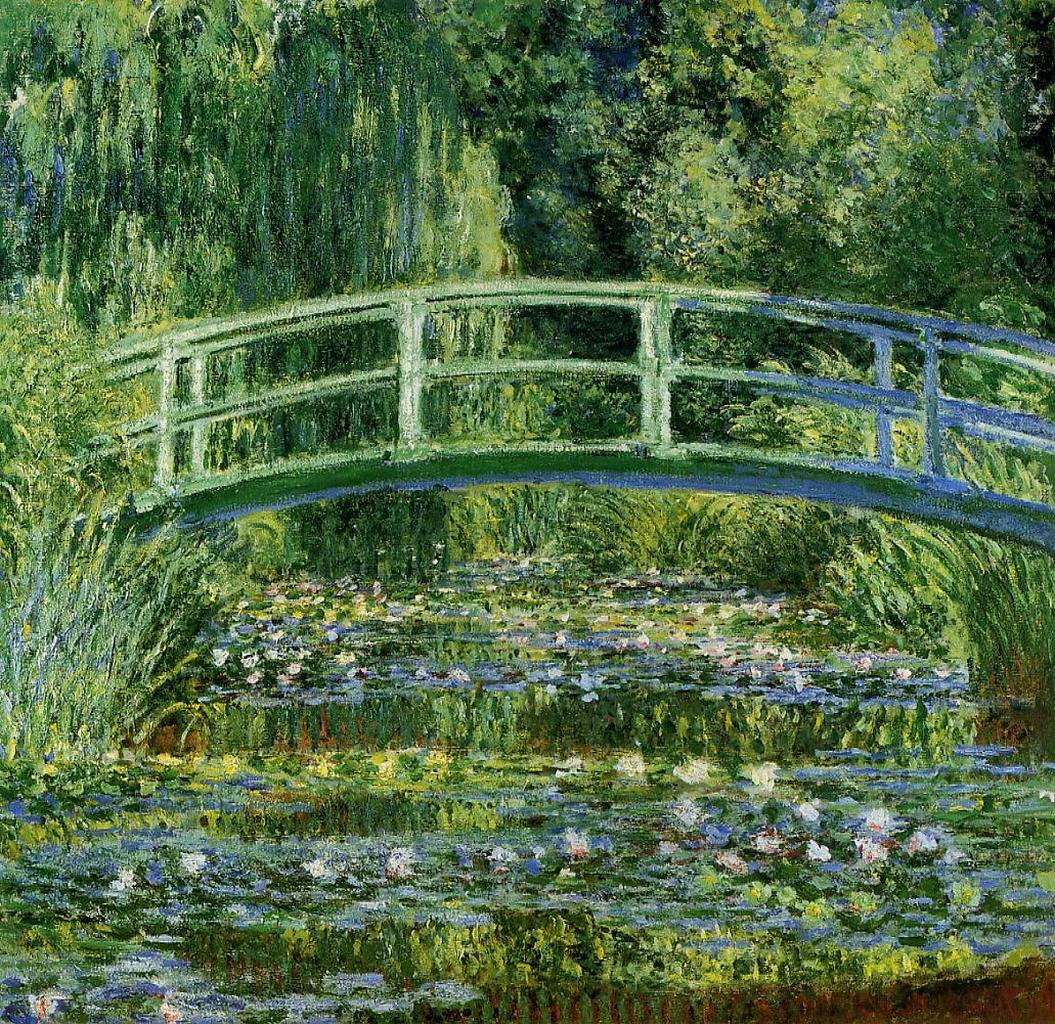
'The Water-Lily Pond' 

hung alongside loans including 

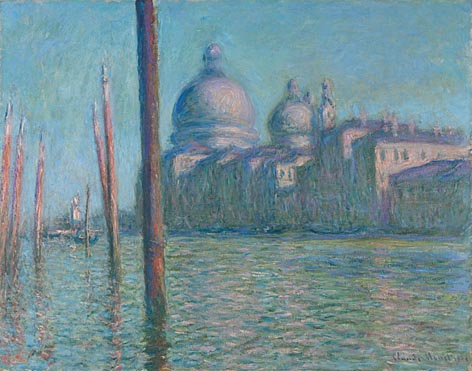
'The Japanese Bridge' and '


The Grand Canal, Venice' (both Private Collection). 

Impressionism was also the theme of the third room, which features several works by Renoir, alongside whom Monet often painted, including his celebrated 


'The Umbrellas' and


 'Boating on the Seine'.

 Two pairs of artists whose desire was to create art beyond the Impressionist techniques are featured in the fourth room. 

Seurat developed 'pointillism', a technique he began to develop on a massive scale in 


'Bathers at Asnières' 

while Pissarro also experimented with this style ('Père Melon sawing Wood, Pontoise' - Private Collection). 

Both Van Gogh and Cézanne rejected Impressionist techniques in their works such as 


'Van Gogh's Chair' and 


'Avenue at Chantilly', 

respectively. 

Images of dancers, women at their toilette and portraits from across Degas's career were shown in room 5. Now, in one space, it was possible to appreciate why he is acclaimed as a master of many techniques. Degas used various media (oils, pastel, charcoal and pencil) in works including

 'After the Bath, Woman Drying Herself' and 


'Beach Scene'. 

He also used the new skill of photography to help create his compositions. 

The final room of Manet to Picasso examined how the changing current of artistic ideas spread across the continent - in France 


(Toulouse Lautrec, 'Woman Seated in a Garden'), 


through Spanish artist Picasso ('Child with a Dove'), 


on to Denmark (Hammershøi, 'Interior', Tate, London) and


 Finland (Gallen-Kallela, 'Lake Keitele'). 

William Glackens at The Barnes Foundation

The Barnes Foundation, Philadelphia
November 8, 2014–February 2, 2015

Previous Venues:


Nova Southeastern University’s Museum of Art, Fort Lauderdale, Florida, February 23–June 1, 2014

Parrish Art Museum, Water Mill, New York, July 20–October 13, 2014

The first comprehensive survey of William Glackens in nearly half a century, this exhibition brings together more than 90 works from public and private collections throughout the United States. William Glackens presents key works from each decade of Glackens’s long career, revealing his absorption of French modernism in his attempt to push American painting forward. Several important canvases and works on paper will be on view for the first time.

A Philadelphia native, Glackens (1870–1938) studied at the Pennsylvania Academy of the Fine Arts. There, and as an artist for the Philadelphia Press, he became friends with Robert Henri, George Luks, Everett Shinn, and John Sloan, the core of the group that later formed “The Eight” in reaction to the National Academy of Design’s hidebound exhibition policies. The group exhibited together only once, in 1908, creating the opening wedge in the struggle to democratize the process by which artists could show and sell their work.

The exhibition at the Barnes Foundation reunites under one roof for the first time since 1908 six of the seven works that Glackens exhibited in The Eight’s show. One of the works, Race Track (1908–1909), is on view in the Barnes’s collection gallery (Room 12); the location of the seventh work is unknown.


At Mouquin’s(1905) and 


Furthermore, three works from the 1908 exhibition—At Mouquin’s (1905) from the Art Institute of Chicago,


The Shoppers (1907-08) from the Chrysler Museum of Art, Norfolk, Va., and


In the Buen Retiro (1906), from the Ted Slavin Collection

—are among a group of seven significant works not shown at the other venues of William Glackens.

The remaining works are:


Chateau Thierry and


its study (1906), from the Huntington Library, Art Collections, and Botanical Gardens, San Marino, Calif.;


 Shop Girls (1900), from the Metropolitan Museum of Art, New York; and


Bathers at Bellport (1912), from the Phillips Collection, Washington, DC.

Also in the Exhibition:


The Soda Fountain (1935).


William Glackens, Cape Cod Pier, 1908, oil on canvas, 26 in. x 32 in. NSU Museum of Art Fort Lauderdale, Gift of anonymous donor.


William James Glackens (American, 1870–1938), Armenian Girl, 1916. Oil on canvas, 32 x 26 inches (81.2 x 66 cm). The Barnes Foundation, Philadelphia and Merion, PA, BF176 

Glackens was a boyhood friend of Albert C. Barnes (1872–1951), the Philadelphia-born pharmaceutical entrepreneur, self-made millionaire, art collector, and creator of the Barnes Foundation. They knew each other from Philadelphia’s prestigious Central High School, and when they renewed their friendship in 1911, Glackens guided Barnes toward an appreciation of modern French painting. In early 1912, Barnes wrote to Glackens: “Dear Butts, I want to buy some good modern paintings. Can I see you on Tuesday next in New York to talk about it?”

The following month, with $20,000 from Barnes in his pocket, the artist traveled to Paris on a buying trip and returned with 33 paintings, among them works by Pierre Bonnard, Paul Cézanne, Maurice Denis, Vincent van Gogh, Pablo Picasso, Camille Pissarro, and Pierre-Auguste Renoir. These purchases became the cornerstone of Barnes’s fabled collection. The two men remained close, and Barnes became his loyal and most important patron. Barnes found Glackens indispensable, stating in 1915, “The most valuable single educational factor to me has been my frequent association with a life-long friend who combines greatness as an artist with a big man’s mind.”

Curated by writer and art historian Avis Berman and co-organized by the Barnes Foundation, the Parrish Art Museum, Water Mill, NY, and the Nova Southeastern University Museum of Art, Fort Lauderdale, Fla.  At the Barnes Foundation, the exhibition was coordinated by Judith F. Dolkart, the Mary Stripp & R. Crosby Kemper Director of the Addison Gallery of American Art at Phillips Academy, Andover, MA, and former deputy director of art and archival collections and Gund Family Chief Curator at the Barnes.

More Glackens info and images

About the Barnes Foundation

The Barnes Foundation was established by Albert C. Barnes in 1922 to "promote the advancement of education and the appreciation of the fine arts and horticulture." The Barnes has one of the finest collections of post-impressionist and early modern paintings, with extensive holdings by Pierre-Auguste Renoir, Paul Cézanne, Henri Matisse, Pablo Picasso, Henri Rousseau, Amedeo Modigliani, Chaim Soutine, and Giorgio de Chirico; American masters Charles Demuth, William Glackens, Horace Pippin, and Maurice Prendergast; old master paintings; African sculpture; Native American ceramics, jewelry and textiles; American paintings and decorative arts; and antiquities from the Mediterranean and Asia.  
The Barnes Foundation's Art and Aesthetics programs engage diverse audiences. These programs, on-site, online, and in Philadelphia communities, advance the mission through progressive interdisciplinary teaching and learning.      

In May 2012, the Barnes Foundation opened a new facility on the Benjamin Franklin Parkway designed by Tod Williams Billie Tsien Architects. The Philadelphia campus is home to the Foundation’s world-famous art collection and changing exhibitions in its 5,000-square-foot Roberts Gallery.
The Barnes Arboretum in Merion contains more than 2,000 varieties of trees and woody plants, including 31 state champion trees. Founded in the 1880s by Joseph Lapsley Wilson and expanded under the direction of Laura Barnes, the collection includes a fern-leaf beech (Fagus sylvatica 'Laciniata'), a dove tree (Davidia involucrata), a monkey-puzzle tree (Araucaria araucana), and a redwood (Sequoia sempervirens). Other important living collections include lilacs, peonies, Stewartias, and magnolias. Inaugurated in 1940 by Mrs. Barnes, the Arboretum School offers a comprehensive three-year certificate course in botanical science, horticultural practice, garden aesthetics, and design. The Foundation’s archives are also located at the Merion campus.

Thursday, October 2, 2014

Anselm Kiefer at the Royal Academy of Arts

In September 2014, the Royal Academy of Arts presented the first major retrospective of Anselm Kiefer’s work to be held in the UK. Considered to be one of the most important artists of his generation, the exhibition will span over forty years from Kiefer’s early career to the present time, bringing together artwork from international private and public collections. The exhibition will be arranged chronologically, presenting the epic scale of his artwork and the breadth of media he has used throughout his career, including painting, sculpture, photography and installation. Kiefer has also created a number of works conceived specifically for the Royal Academy’s Main Galleries, showcasing his continued interest in seeking new challenges and producing ever more ambitious artwork.

Kiefer’s fascination with history itself and with the work of past masters permeates his subject matter. From mythology, to the Old and New testaments, Kabbalah, alchemy, philosophy and the poetry of Paul Celan and Ingeborg Bachmann, Kiefer’s work wrestles with the darkness of German history and considers the complex relationship between art and spirituality. His technical use of materials such as clay, ash, earth, lead, fabric and dried flowers amongst others, adds further symbolism and depth to his work.


The Orders of the Night (Die Orden der Nacht), 1996. Emulsion, acrylic and shellac on canvas, 356 x 463 cm Seattle Art Museum. Gift of Mr. and Mrs. Richard C. Hedreen. Photo © Seattle Art Museum / © Anselm Kiefer


Interior (Innenraum), 1981. Oil, acrylic, and paper on canvas, 287.5 x 311 cm. Collection Stedelijk Museum, Amsterdam Photo Collection Stedelijk Museum / © Anselm Kiefer


Black Flakes (Schwarze Flocken), 2006. Oil, emulsion, acrylic, charcoal, lead books, branches and plaster on canvas, 330 x 570 cm. Private collection, c/o Museum Küppersmühle für Moderne Kunst. Photo Privatbesitz Famille Grothe / © Anselm Kiefer


Heroic Symbol V (Heroisches Sinnbild V), 1970. Oil on canvas, 150 x 260.5 cm. Collection Würth. Photo Collection Würth / © Anselm Kiefer


Winter Landscape (Winterlandschaft), 1970. Watercolour, gouache, and graphite pencil on paper, 42.9 x 35.6 cm. Lent by the Metropolitan Museum of Art, Denise and Andrew Saul Fund, 1995 (1995.14.5). Photo © 2014. Image copyright The Metropolitan Museum of Art/Art Resource/Scala, Florence / © Anselm Kiefer 


Highlights of the exhibition include photographs and paintings from the controversial Occupations and Heroic Symbols (Heroische Sinnbilder) series of the late 1960s and early 1970s. These images record Kiefer’s re-enactment of the Nazi salute in locations across Europe, made in the belief that one must confront rather than supress the experiences of history. 

A series of paintings from Kiefer’s Attic series are also  exhibited, including 


Father, Son and the Holy Ghost (Vater, Sohn, Heiliger Geist), 1973 


and Notung, 1973 

depicting powerful renderings of wooden interior spaces based on the studio space that Kiefer was occupying in Walldürn-Hornbach in south-west Germany, which he has referred to as “a place to teach myself history.”

 The exhibition also features his monumental architectural paintings, such as 


To the Unknown Painter (Dem unbekannten Maler), 1983 that reflect on the neo-classicist buildings of Albert Speer, Hitler’s architect, and the role of the artist in considering collective memory.

The exhibition considers the key themes and the diverse, personal iconography that Kiefer has created in his work over the years and will look at the influence of place on his oeuvre. As he said in a recent interview, “Art is an attempt to get to the very centre of truth. It never can, but it can get quite close.”

Other paintings on display include 


Palette on a Rope (Palette am Seil), 1971 

that uses the motif of the artist’s palette to represent Kiefer’s engagement with the facets of history, as well as a series of early watercolours including 


From Oscar Wilde (Von Oskar Wilde),1974 and 


Winter Landscape (Winterlandschaft), 1970 (above).

Anselm Kiefer will also present his celebrated lead books, including the paintings For Paul Celan, Ash Flowers (Für Paul Celan, Aschenblume), 2006 and Black Flakes (Schwarze Flocken), 2006. Kiefer’s new works for the exhibition will incorporate a number of large-scale paintings and sculptures, including a major installation for the Royal Academy’s courtyard.

Biography

Anselm Kiefer was born in 1945 in Donaueschingen, Germany. After studying law, he began his art education in Karlsruhe and then Düsseldorf, representing Germany at the 39th Venice Biennale in 1980. His work has been collected by and shown at major museums throughout the world including MoMA, New York; The Art Institute of Chicago; Philadelphia Museum of Art (1987); Neue Nationalgalerie, Berlin (1991); The Metropolitan Museum, New York (1998); Fort Worth Museum of Art (2005); the San Francisco Museum of Modern Art (2006); Louisiana Museum of Art, Denmark (2010); Guggenheim Museum, Bilbao; Tel Aviv Museum of Art; the Grand Palais, Paris; The Rijksmuseum, Amsterdam (2011) and Mass MoCA, Massachusetts (2013). In 2007 Kiefer became the first living artist to be commissioned to install a permanent work in the Louvre, Paris since Georges Braque some 50 years earlier. In this same year he created the first Monumenta installation for the Grand Palais, Paris. Kiefer has lived and worked in France since 1993. He was elected an Honorary Member of the Royal Academy of Arts in 1996 and was awarded the Praemium Imperiale in 1999. In 2005 he was presented with the Federal Cross of Merit, First Class, and the Austrian Decoration for Science and Art; in 2008 the Peace Prize of the German Book Trade; in 2011 a Commandeur dans l’Ordre des Arts et des Lettres by the French Ministry of Culture. 2010 saw his appointment at the Chair of Artistic Creation at the renowned Collège de France, Paris where he delivered nine lectures entitled Art will survive its ruins (Die Kunst geht knapp nicht unter).

Organisation

Anselm Kiefer
has been organised by the Royal Academy of Arts. The exhibition has been curated by Kathleen Soriano, Director of Exhibitions, Royal Academy of Arts, in close collaboration with Anselm Kiefer.

Catalogue


The exhibition is accompanied by a fully illustrated catalogue with contributions from Richard Davey, Kathleen Soriano and Christian Weikop. 

Excellent article and review


Fra Angelico, Botticelli…Rediscovered Masterpieces

From September 8th 2014 to January 4th 2016 the Domaine de Chantilly is honoring the prized collections of the Condé Museum with an exceptional exhibition of 14th and 15th century Italian paintings : “Fra Angelico, Botticelli…Rediscovered Masterpieces”.

Florentine and Sienese painters of the Quattrocentro, formally known as the Italian Primitives, make up a significant part of the legacy of the Duke d’Aumale, conserved exclusively at the Domaine de Chantilly since his death. For this exhibition, the first retrospective that the Condé Museum has dedicated to this movement… thirty major works from its collections – including paintings and drawings by Fra Angelico, Lippi, Botticelli, Leonardo da Vinci – will be presented in the reception hall of the Jeu de Paume, next to nine paintings on loan from leading international institutions.

In this vast space measuring 300m2, a free-flowing itinerary offers visitors a panorama of the history of 14th and 15th century Tuscan paintings. The scenography brings together original works by means of life-size, video-projected virtual reconstructions.


This exhibition brings certain works back together for the first time since the 15th century : the Thebaide by Fra Angelico, is thus presented in Chantilly thanks to loans by museums in Anvers, Cherbourg, Philadelphia and a private collection.


Two cassoni by Filippino Lippi and Sandro Botticelli illustrating Scenes from the Story of Esther and whose principal panels will be exhibited thanks to a loan by the Louvre Museum, are also at the heart of the exhibition. “Fra Angelico, Botticelli…Rediscovered Masterpieces” equally presents masterpieces of Italian painting and drawing from the turn of the 15th and 16th centuries, such as the graphic works by Leonardo da Vinci and Michelangelo, as well as


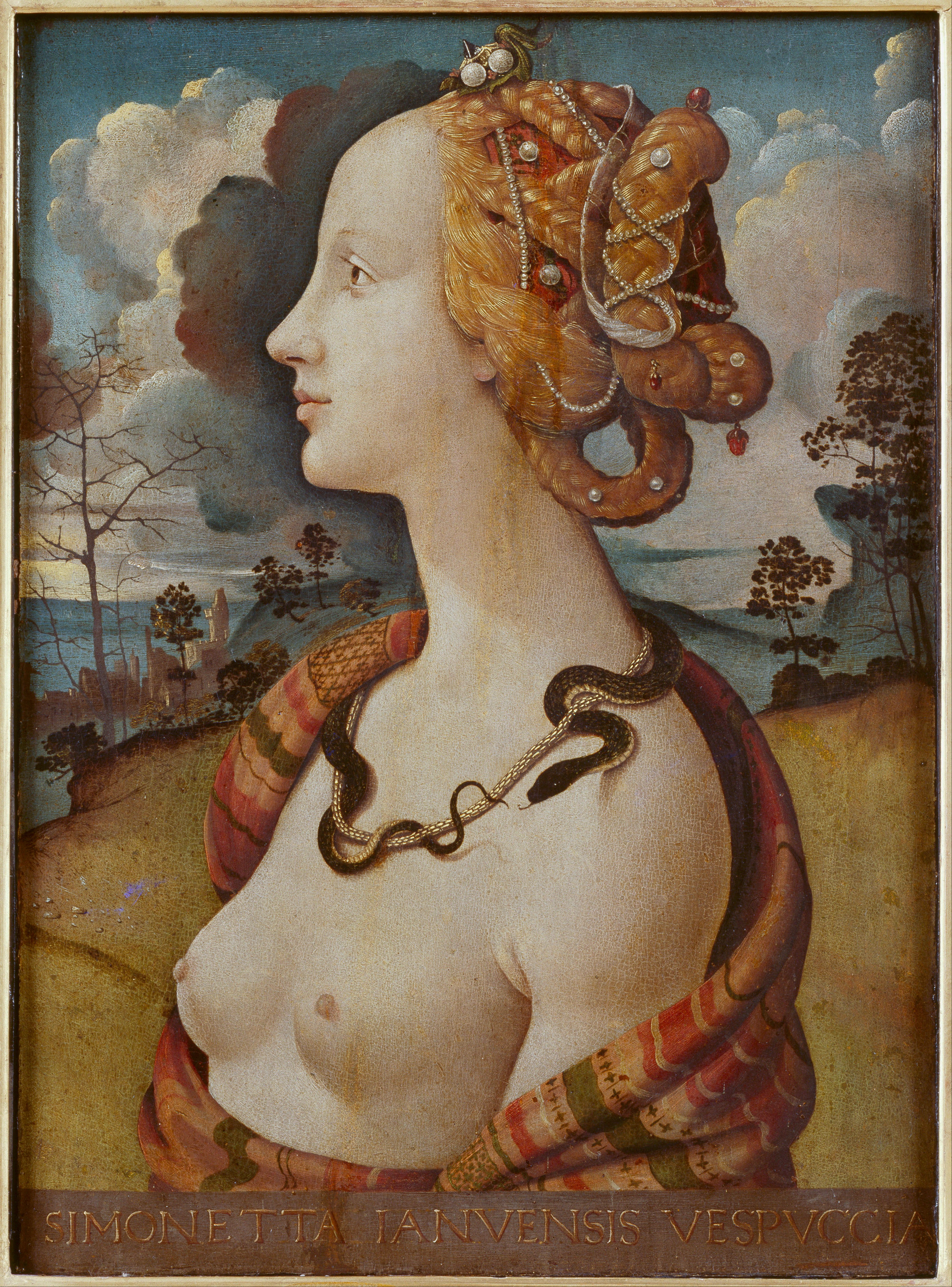
Portrait of Simonetta Vespucci by Piero di Cosimo,

restored this year thanks to the support of the American Friends of Chantilly.


Sandro Botticelli's "La fuga in Egitto"

From ANSAmed (images added)


Other works include San Marco and San Matteo by Beato Angelico;


a panel painted by the Sienese master Giovanni di Consolo (1400, about 1450), called Sassetta, for the altar of the Borgo San Sepolcro;  


the work 'Five angels dance around the Sun '(1436), by Giovanni di Paolo (1398-1482)...

A scientific catalog created under the direction of Michel Laclotte and Nathalie Volle with the participation of Nicole Garnier will be published by the Editions Cercle d’Art.