Thursday, October 9, 2014

Alibis: Sigmar Polke 1963-2010 at the Tate


Sigmar Polke (1941-2010) is one of the most experimental artists of recent times. Alongside Gerhard Richter and Blinky Palermo, Polke was a key figure in the generation of German artists who first emerged in the 1960s. This autumn Tate Modern presents the first full retrospective of Polke’s career, bringing together paintings, films, sculptures, notebooks, slide projections and photocopies from across five decades, and including works which have never before been exhibited.


Sigmar Polke, Polke as Astronaut (Polke als Astronaut) 1968 
Polke as Astronaut (Polke als Astronaut) 1968
Private Collection
© The Estate of Sigmar Polke / DACS, London / VG Bild-Kunst, Bonn


Sigmar Polke, Untitled (Quetta, Pakistan) 1974-1978 
Untitled (Quetta, Pakistan) 1974-1978
Glenstone Foundation (Potomac, USA)
© The Estate of Sigmar Polke / DACS, London / VG Bild-Kunst, Bonn
Alibis: Sigmar Polke 1963-2010 is the first exhibition to fully encompass the enormously varied range of materials with which the artist worked. Polke explored ideas of contamination and transformation, working with antiquated and sometimes poisonous pigments, extracting dye from boiled snails, and using materials as varied as gold leaf, meteorite powder, bubble wrap, potatoes, and soot. Photographs were made by exposing the paper to uranium, while paintings were created by brushing photosensitive chemicals onto canvas. The exhibition includes several films where Polke played with double-exposure, just as paintings would have layers of transparent imagery.

Polke was born in Silesia (in present day Poland) in 1941. As the Second World War ended, Polke’s family fled to East Germany, and then to West Germany in 1953. In the 1960s, while a student at the influential Kunstakademie Düsseldorf, he created sharp critiques of the growing consumer society of West Germany, transcribing by hand the cheaply printed images he found in mass media to create such works as Girlfriends (Freundinnen) 1965/1966:
Sigmar Polke Girlfriends (Freundinnen) 1965/66
Sigmar Polke (1941 - 2010)
Girlfriends (Freundinnen) 1965/66
Political and social commentary was a constant thread throughout Polke’s work, from  The Sausage Eater 1963 to 
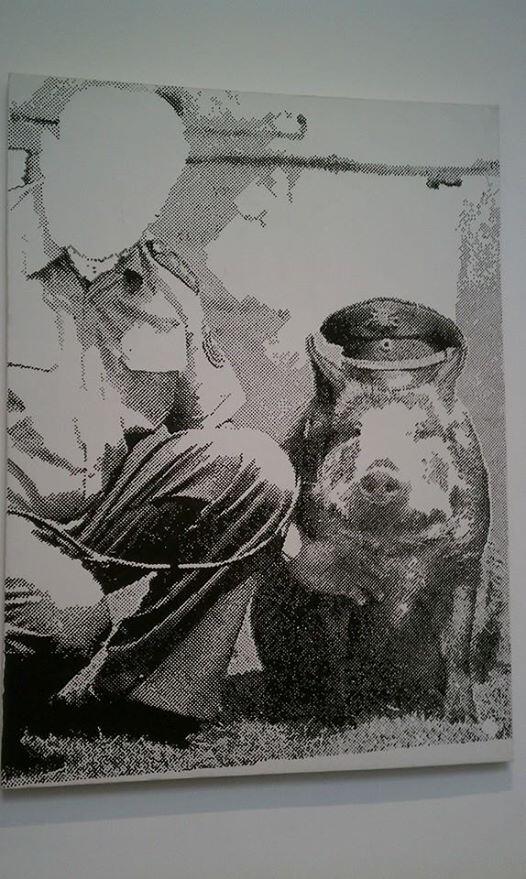
Police Pig (Polizeischwein) 1986. 
His irreverent attitude and ironic humour was a product of the cynicism with which he viewed all forms of authority, and he often confronted the remnants of National Socialism in his imagery, for instance in his haunting series of Watch Towers from the mid-80s which evoke the structures on the perimeters of concentration camps.

The radical cultures of the 1970s played a role not only in Polke’s art but also in his eccentric and unconventional lifestyle. He experimented with hallucinogenic substances and made many works featuring mushrooms. In 1973, he moved to a farm to live and work collaboratively with family, friends and other artists. He also travelled extensively and works in the exhibition will reveal the impact of his visits to Afghanistan, Pakistan, Brazil, Australia, Papua New Guinea, and New York.

Polke became even more experimental towards the end of his career, pushing the boundaries between different media right up until his death in 2010. The exhibition will show how he used photocopiers to make new distorted compositions, while the Lens Paintings made in the 2000s attempt to emulate holograms in their use of semi-transparent layers of materials.

Alibis: Sigmar Polke is curated at Tate Modern by Mark Godfrey, Curator of International Art and Kasia Radzisz, Assistant Curator. The exhibition is accompanied by a catalogue from Tate Publishing and a programme of events in the gallery. The exhibition is organised by Kathy Halbreich, Associate Director, The Museum of Modern Art, with Mark Godfrey and Lanka Tattersal, Curatorial Assistant, Department of Painting and Sculpture, The Museum of Modern Art. The exhibition is organised by The Museum of Modern Art, New York, with Tate Modern,London.

More images from the exhibition"


SIGMAR POLKE (German, 1941–2010)
The Illusionist (Der Illusionist)
2007
Gel medium and acrylic on fabric
86 5/8 × 118 1/8" (220 × 300 cm)
Jennifer and John Eagle and The Rachofsky Collection


SIGMAR POLKE (German, 1941–2010)
Telephone Drawing (Telefonzeichnung)
1975
Gouache, ballpoint pen, and felt-tip pen on stained paper with cutouts
27 1/2 x 39 5/16" (69.8 x 99.8 cm)
Kunstmuseum Bern, Sammlung Toni Gerber, Bern, Schenkung 1983, 1. Teil


SIGMAR POLKE (German, 1941–2010)
Dr. Berlin
1969-74
Dispersion paint, gouache, and spray paint on canvas 59 1/16 x 47 1/4" (150 x 120 cm)
Private collection


More images

Wednesday, October 8, 2014

Gerald Peters Gallery: American Art 1850-1950

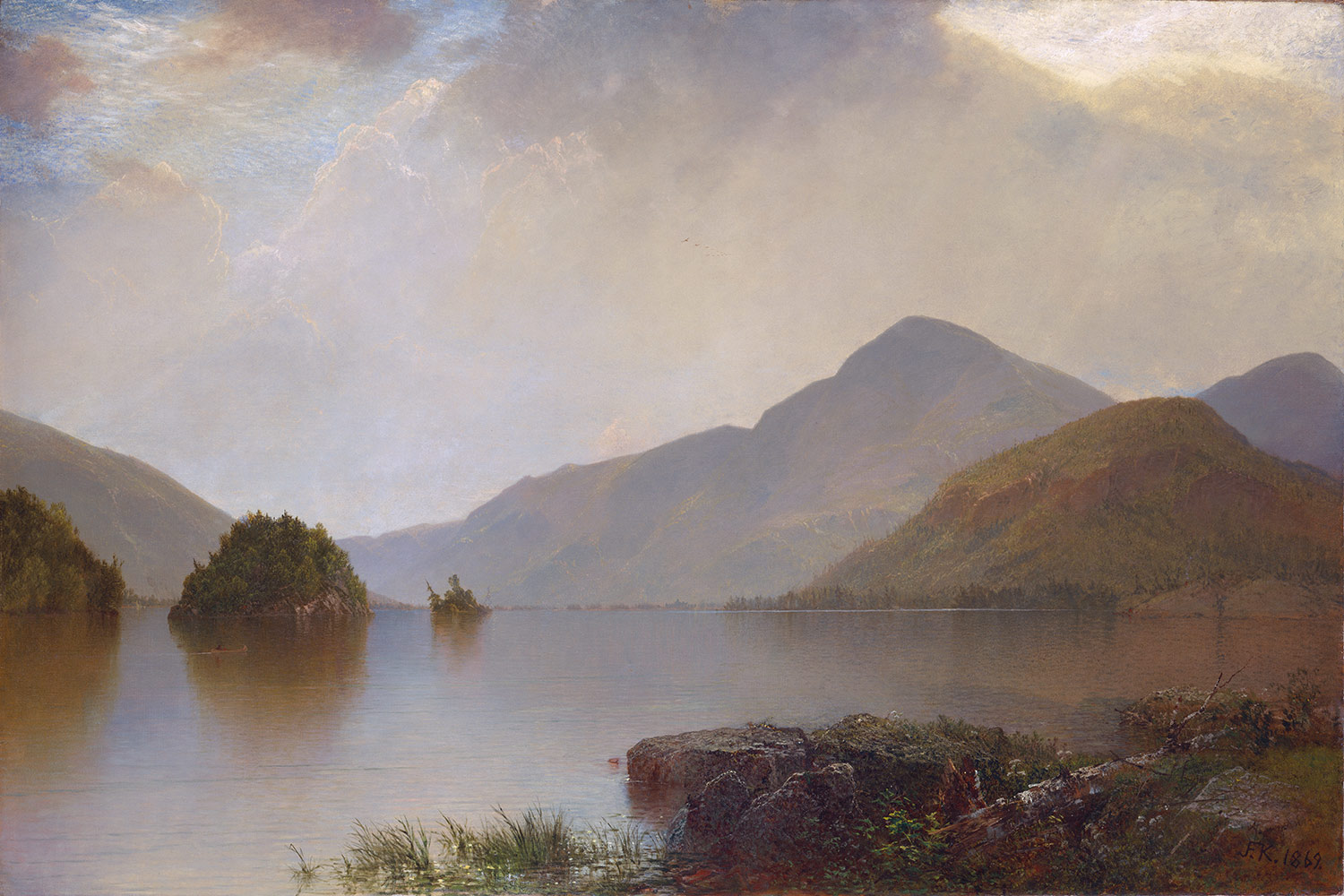
Gerald Peters Gallery presents American Art 1850-1950, an exhibition tracing the aesthetic development of the fine arts in the United States from the Hudson River School, the first self-conscious artistic movement to crystalize in the United States, through the end of American Modernism, when American art emerged as the leader in the global art world.


Thomas Anschutz, Near Cape May, 1894, watercolor on paper, 10 x 14 3/8 inches
This exhibition includes 


John Frederick Kensett’s Lake George, 


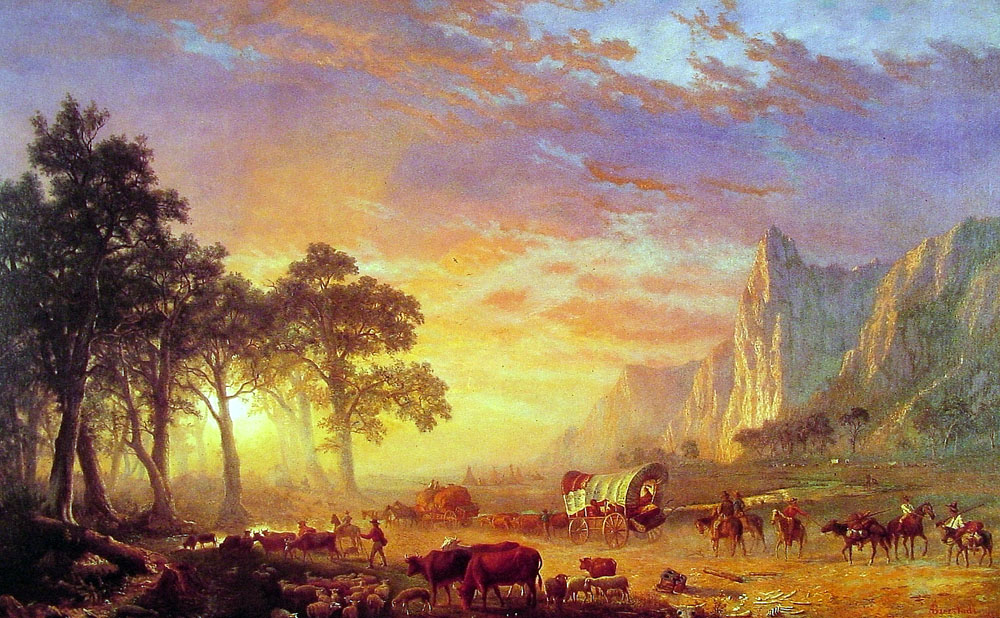
which gave visual form to the pervasive cultural ideals of Emersonian philosophy, and  Albert Bierstadt’s Sunrise on the Platte (Scotts Bluff), 

which provided a window onto the frontier as the concept of Manifest Destiny gained traction in the nineteenth century. 

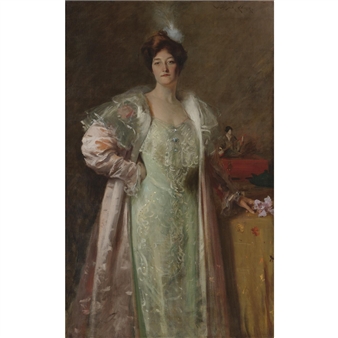
William Merritt Chase’s society portraits, represented by 


Miss J (Content Aline Johnson), 


documented the emergence of the robber barons, many of whom helped send the next generation of artists to Europe. 


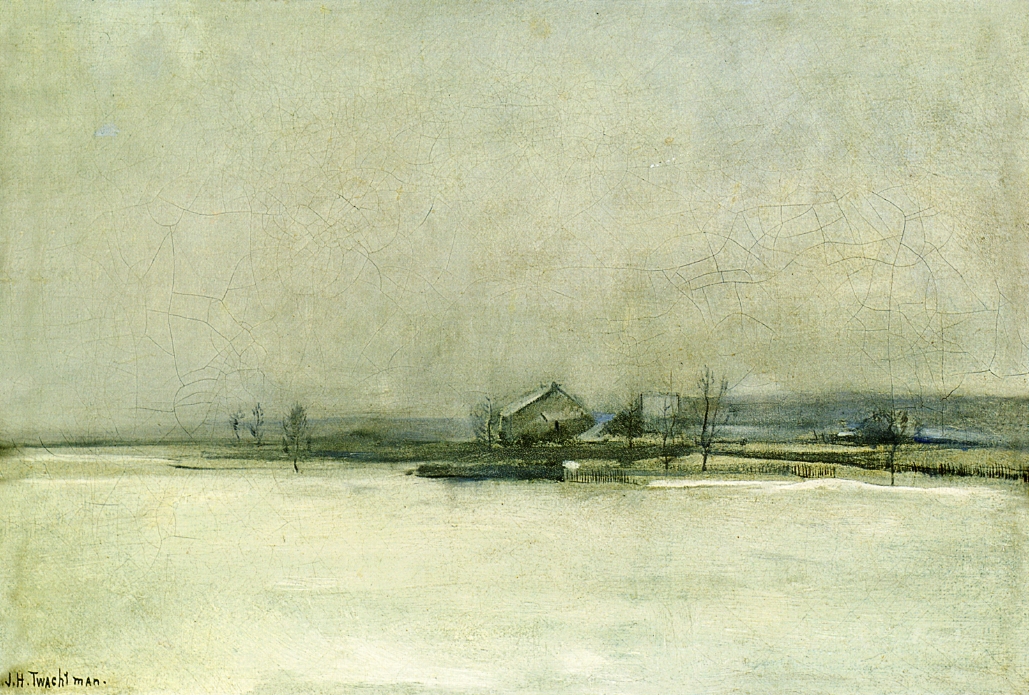
John Henry Twachtman and his contemporaries returned from abroad to translate the theories and techniques of Europe’s emerging avant garde into a new American idiom. Twachtman’s Barn in Winter and Thomas Wilmer Dewing’s Purple and Green are masterpieces of American Tonalism that introduced a level of abstraction into American art that developed in the twentieth century into several strains of American Modernism. 


Max Weber’s Joel’s Café 


and Marsden Hartley’s Flowers in a Vase 

are just two examples that show the energy, inquisitiveness, and innovation that pervaded American art in the first decades of the twentieth century and that sowed the seeds for the artistic revolution that made the United States the center of art at mid-century.
American Art (1850-1950) is the first historical exhibition that Gavin Spanierman has organized since joining Gerald Peters Gallery, New York, as Managing Director in 2014. It combines Spanierman Fine Art’s rich inventory of Hudson River School and American Impressionist works with Gerald Peters Gallery’s holdings of American Modernism. The exhibition draws on Gavin Spanierman’s vast knowledge of American art and his fierce commitment to promoting those works by the paragons of American Art history that continue to define our cultural and artistic heritage, and to fostering interest in works by lesser-known, but no less talented, artists of the nineteenth and twentieth centuries.
American Paintings 1850-1950 can be seen at Gerald Peters Gallery, 24 East 78th Street, New York, NY 10075, from October 10 through November 21, Monday through Friday, 10am-5pm, or Saturday noon to 5pm. A catalogue of the exhibition will be available for purchase at the gallery.

Similar images:


The Oregon Trail - Albert Bierstadt


Winter Landscape with Barn - John Henry Twachtman


Woman in Purple and Green by Thomas Wilmer Dewing, 

Michelangelo: Quest for Genius


Michelangelo Buonarroti (b. 1475), one of the world’s most celebrated artists, pays a visit to Toronto this fall at the Art Gallery of Ontario (AGO). Despite his enduring fame, Michelangelo was dogged by relentless struggle, disappointment and even defeat throughout his 77-year career. Due to the fickle demands of important patrons, many of his most ambitious projects remained unfinished. Revealed through a selection of rare drawings, Michelangelo: Quest for Genius tells the story of a Renaissance master and the frustrations of his creative process. Michelangelo: Quest for Genius opens in Toronto on Oct. 18, 2014, and runs until Jan. 11, 2015.

Organized by the AGO in collaboration with the Casa Buonarroti, Florence, whose collection is formed from Michelangelo’s own, the exhibition centres on a loan of 30 drawings by Michelangelo’s hand. These drawings are among the best of the esteemed Casa Buonarroti’s collection and represent the range of Michelangelo’s work. Dating from before and after the completion of the Sistine Chapel, the works on display include preliminary drawings — both architectural and figural sketches — as well as presentation drawings.


Michelangelo: Fortifications for the Porta al Prato in Florence, c 1529. Photo courtesy Casa Buonarroti via the AGO


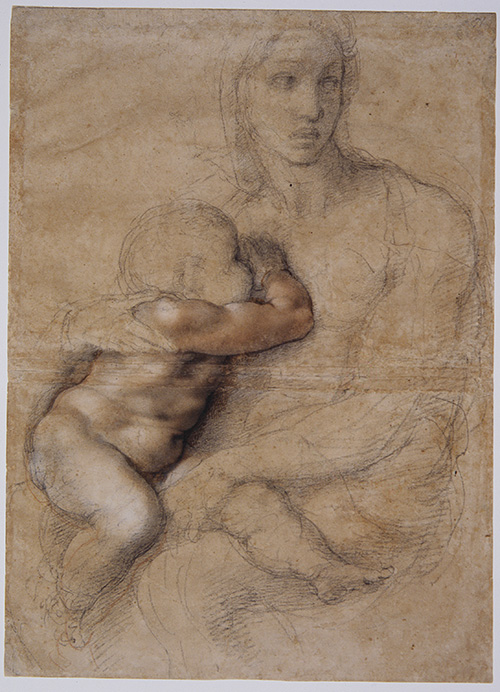
"Madonna and Child," a drawing by Michelangelo from the collection of Casa Buonarroti in Florence, Italy)


Organized thematically, the exhibition takes a critical look at the notion of the genius at work, locating the creative search at the axis of ambition, exploration, frustration, defiance and unrealized dreams. Drawings will be grouped according to these issues. Developed by Lloyd DeWitt, curator of European Art at the AGO, and David Wistow, interpretive planner, Michelangelo: Quest for Genius will feature computer animations that bring to life some of Michelangelo’s most ambitious and ultimately unfinished designs.

“This exhibition offers a direct and personal encounter with extraordinarily rare works that almost never travel by this great artist’s own hands,” said DeWitt. “We are thrilled and honoured to work with the Casa Buonarroti to bring these precious works on paper to Canada and to tell the real story behind their making, debunking the myth that genius is easy and great work untroubled. What they tell us about the motivations of a genius and the creative process is incredibly revealing.”

“The drawings are an inspiration. Creativity is a basic human activity,” said Wistow. “No matter what our background we can relate to the blood, sweat and tears behind Michelangelo’s masterpieces.”
The exhibition also examines the significant influence that Michelangelo had four centuries later on the French sculptor Auguste Rodin (b. 1840). For Rodin, whose greatest works were routinely rejected by the press and public alike, Michelangelo represented a spiritual and artistic father figure. Rodin was 36 when he produced his first major sculpture, inspired by Michelangelo’s evocative and emotional presentation of the human body. Nine sculptures from the AGO’s collection will be on display, including representative works from the Burghers of Calais(1884-1917) and his final commission, the work for which he suffered the most criticism, Balzac (1898).

Allen Jones at the Royal Academy of Arts


This autumn the Royal Academy of Arts will present the first major exhibition of Allen Jones’ work in the UK since 1995. As one of the UK’s most influential and celebrated living artists, this will be a long-overdue appraisal of Jones’ comprehensive contribution to British Pop art. Allen Jones RA will span the artist’s entire career from the 1960s to the present. Comprising over 80 works, the exhibition will feature examples of Jones’ paintings and sculpture, including the iconic furniture works from the late 60s, and new works created especially for this exhibition. 

Rarely-seen drawings will also be displayed to showcase Jones’ exceptional skills as a draughtsman, and the important influence of the medium of drawing on his practice as a whole. Moving away from a traditional chronological approach, the works will be grouped into key sequences, to allow connections and common themes to emerge and to promote a comprehensive understanding of Jones’ wide-ranging artistic practice.

Allen Jones is a key figure in British Pop art whose reputation was established in the 1960s at the Royal College of Art, London, where he studied alongside celebrated artists David Hockney RA, Derek Boshier, Peter Phillips RA and Ron Kitaj amongst others. This cohort of students was catapulted into the spotlight of the British art scene with a new visual language, firmly rooted in contemporary culture, and with the human figure often central to their work.


Stand In, 1991/2. Oil on plywood and fibreglass, 185 x 185 x 63 cm. Banbury, Private Collection. Image courtesy of the artist. © Allen Jones 


Fascinating Rhythm, 1982-3. Enamel on plywood, 205 x 143 x 98 cm. Banbury, Private Collection. Image courtesy the artist. © Allen Jones 


Interesting Journey, 1962. Oil on canvas, 61 x 51 cm. London, Private Collection. Photo: Private Collection. © Allen Jones


Curious Woman, 1965. Oil, plaster and epoxy resin on wood, 121.9 x 1016 x 20 cm approx. New York, Private Collection. Image courtesy of the artist. © Allen Jones.

The female figure has remained an enduring interest for Jones, who has continually found fascination in popular culture’s prolific and differing depictions of femininity, ranging from the erotic to the seductive and the glamorous. Allen Jones RA will present examples of portraits of cultural icons, for example a painting of Darcey Bussell and a new work of Kate Moss, reflecting the strong impact of cult images from 1960s America on his work. 

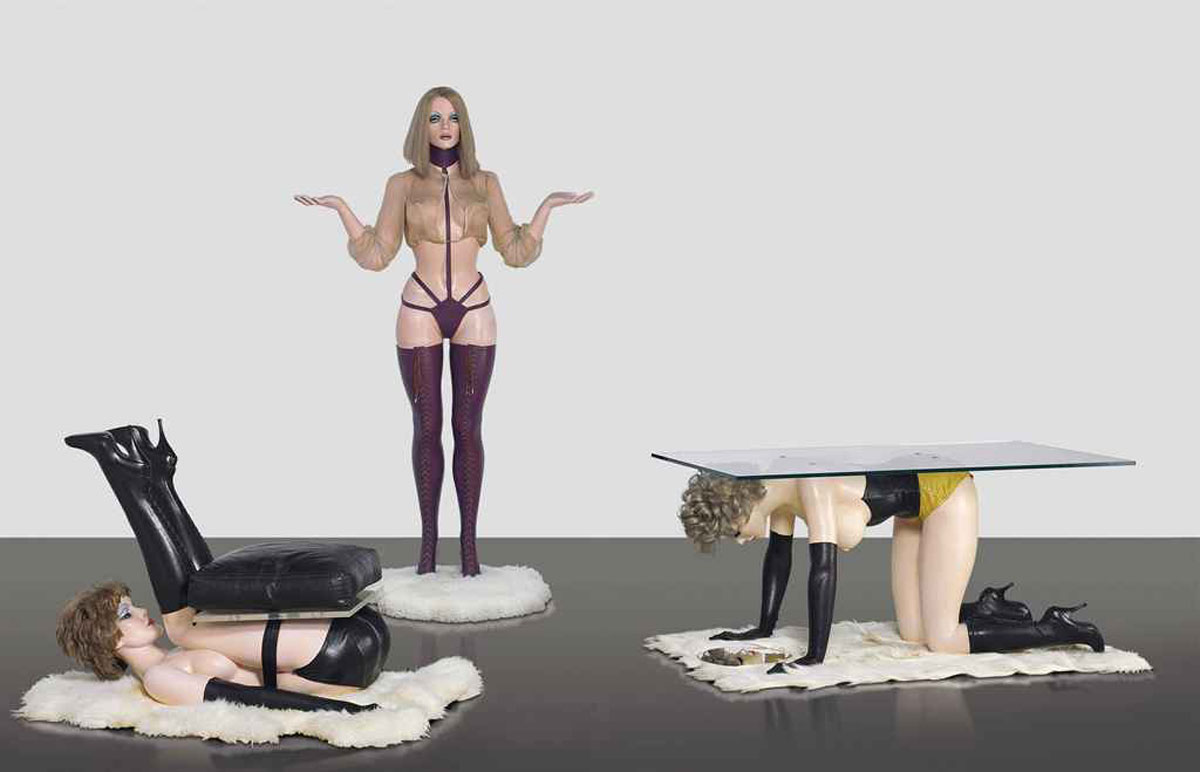
The exhibition will place a focus on Jones’ sculptural depictions of the female figure, featuring perhaps his most famous and controversial works Hat Stand (1969):


Hat Stand, 1969. Mixed media, 191 x 108 x 40 cm. London, Private collection. Image courtesy the artist. © Allen Jones


Table (1969) and 


Chair (1969):


 but also more recent examples, such as 


Refrigerator (2002) and 

Light (2002).


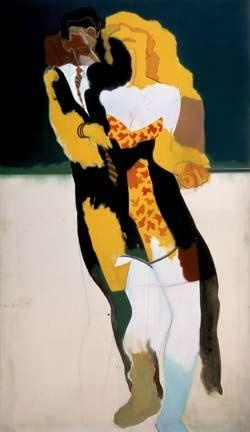
As a retrospective survey, Allen Jones RA will trace Jones’ development as an artist. The selection of paintings will explore how the early influences of European painting traditions, seen in 


Bikini Baby (1962) 


and Hermaphrodite (1963), 

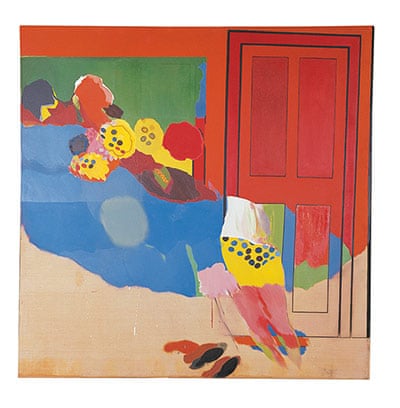
gave way to the influence of Abstract Expressionism. Jones made frequent and prolonged visits to America where he came to admire the pictorial innovations of his contemporaries Roy Lichtenstein and Tom Wesselmann in New York, and Ed Ruscha and Mel Ramos on the West Coast, with this inspiration clearly visible in First Step (1966):


First Step, 1966. Oil on canvas, 92 x 92 cm. London, Private Collection. Image courtesy of the artist. © Allen Jones


The influences of city life, transport, advertising, music and cinema all provide equally fascinating subject matter for Jones to exploit and explore. For example, 

2nd Bus (1962)

 evokes the energy and movement of people on a mode of transport which was to become a cultural icon for London. Matching Jones’ expansive world view is his ability to work with a wide variety of media, which is very much underpinned by his accomplished skills as a draughtsman. 

Drawing has played a key role throughout his career, and examples on display will explore the relationship between Jones’ drawings and finished works. Borrowing freely from other forms of expression, Jones frequently employs storyboarding techniques to imbue his work with a cinematic sense of action and atmosphere. The result is a highly developed sense of performance, as seen in


Hot Wire (1970) and 


Three-Part Invention (2002).


Allen Jones was elected a Royal Academician in 1986 and his work has been exhibited around the world in both solo and group exhibitions. Jones also designs for stage and television, with productions including Oh Calcutta! (Kenneth Tynan), Männer wir kommen (West Deutsche Rundfunk), Satie/Cinema (Ballet Rambert) and Signed in Red (Royal Ballet, London). Jones lives and works in London and Oxfordshire.


Organisation


Allen Jones RA has been organised by the Royal Academy of Arts, London, in close collaboration with the artist. It is curated by Edith Devaney, Curator and Head of Contemporary Projects at the Royal Academy of Arts.


Catalogue


The exhibition will be accompanied by a 96-page fully illustrated catalogue with contributions from Natalie Ferris, Marco Livingstone and Sir Norman Rosenthal. 


Tuesday, October 7, 2014

Peter Blume: Nature and Metamorphosis


The Pennsylvania Academy of the Fine Arts (PAFA) presents Peter Blume: Nature and Metamorphosis, the first retrospective of the American modernist Peter Blume (1906-1992) since 1976, on view November 14, 2014 – April 5, 2015.

Nature and Metamorphosis will dazzle and surprise with gorgeous allegorical paintings and virtuoso drawings that explore rebirth and transformation. The retrospective will include 159 objects, including 56 paintings and 103 drawings from 1924 through 1990, spanning Peter Blume’s entire career. From jarring early works inspired by the machine age and growth of cities through profound ruminations on the power of nature, Blume’s work helped define American modernism. The retrospective is curated by Robert Cozzolino, PAFA Senior Curator and Curator of Modern Art.

While best known as a painter, Blume was a virtuoso, dynamic draftsman, and his drawings show a dynamic, surprising range. Several focus sections in the exhibition will reveal Blume’s working methods, tracing the development of ideas in extraordinary, dynamic drawings and small paintings leading up to major works. Among the works featured are 


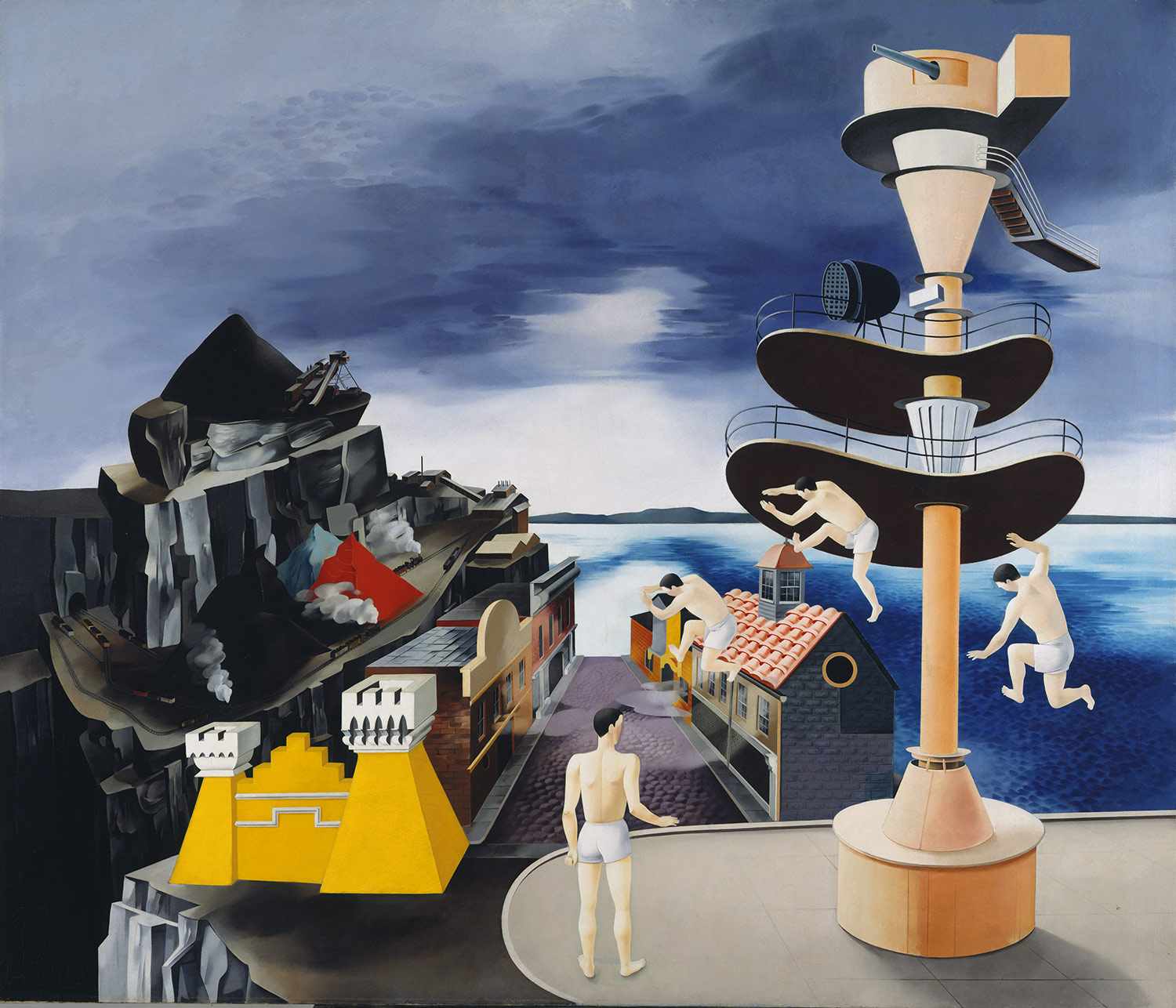
South of Scranton (1930-31), 

which caused a scandal when it won first prize at the 1934 Carnegie International;


 The Eternal City (1934-37), 

Blume’s notorious anti-fascist political work; 


The Rock (1944-48),

 a dramatic allegory of the creative and destructive capacity of nature; and


 Tasso’s Oak (1957-60), 

Blume’s largest painting, inspired by Italy, and not seen in public since 1961.

“Blume was critical to the development and reception of modernism in America. His work played a key role in disseminating avant-garde ideas in the U.S. art world using a method that resembled Flemish art transposed through the lens of Cubism and the unconscious. Politically-engaged and willing to tackle difficult subjects, Blume was among the first Americans to use Surrealist methods, but remained independent of groups all of his life. His work will be a revelation to viewers; he made some of the most startling and absorbing paintings of the 20th century,” says Robert Cozzolino.

A European émigré, Blume was born into a Russian Jewish family that came to the U.S. from what is now Belarus. He studied at New York’s Educational Alliance Art School alongside Chaim Gross and the Soyer brothers who formed his first close artistic circle. Later, he studied briefly at the Art Students League where he befriended Alexander Calder. By the age of 18, Blume was exhibiting professionally at one of the leading modernist galleries in the country, and was deeply immersed in the creative life of Greenwich Village in New York City. After 1930, Blume lived in Sherman, Connecticut, where he was eventually in the center of a community that included Surrealist artists who came to the U.S. during World War II.

Between 1939 and 1966, Blume exhibited in PAFA’s annual exhibitions of contemporary art eight times, and in 1953 he served as a juror.

Nature and Metamorphosis will consider the political background of Blume’s imagery, as well as his relationships with an international community of artists and writers. A hallmark of Blume’s work from all periods of his career is its capacity to carry multivalent meanings, always rooted in human experience, but privileging the transformative power of the imagination.


A fully illustrated catalogue edited by Robert Cozzolino accompanies the retrospective, with essays by Cozzolino on The Rock, surrealism, and automatism; a piece by Samantha Baskind on Blume’s early intellectual circles and his Jewish identity; Sergio Cortesini on The Eternal City and its reception both in the U.S. and Fascist Italy; David McCarthy on Fracture Ward and the U.S. army’s patronage of artists during World War II; Sarah Vure  on Blume’s place in early modernism; and new perspectives on Tasso’s Oak and South of Scranton (1930-31). An edited, previously unpublished interview with Blume and a selection of the artist’s writings will shed light on Blume’s enduring legacy in the postwar world.

Peter Blume: Nature and Metamorphosis will travel to the Wadsworth Atheneum, where it will be on view July 3 – September 20, 2015.

EXHIBITION-RELATED PROGRAMS:

PAFA is hosting a variety of exhibition-related programs. A selection of programs is listed below; full list to be announced soon.

CURATORIAL LECTURE: PETER BLUME
December 2, 2014, 7-8 p.m.

Curator Robert Cozzolino introduces Peter Blume’s career as a significant American modernist and narrative painter. Blume’s large-scale works often highlight themes of creative process, regeneration, political power, and cultural memory in mid-century America. (This program is preceded by a members-only talk.)

FAMILY ARTS ACADEMY: NATURE TRANSFORMS
November 23, 2014, 2-4 p.m.

Using an accordion book-folding process, transform nature right before your eyes. Inspired by Peter Blume, fold and draw a seasonal art book.


"EGON SCHIELE: PORTRAITS" OPENS AT NEUE GALERIE NEW YORK


On October 9, 2014, Neue Galerie New York will open "Egon Schiele: Portraits," a special exhibition devoted to portraiture created by the masterful Austrian artist Egon Schiele. This is the first exhibition at an American museum to focus exclusively on portraiture in Schiele's work. The show will be on view through January 19, 2015. This exhibition is supported by an indemnity from the Federal Council on the Arts and the Humanities.
Egon Schiele (1890-1918) is considered one of the twentieth century's most important artists. A protégé of Gustav Klimt, Schiele is celebrated for his singular style of draftsmanship, unusual use of color, and physically raw, often sexually provocative depictions of his sitters. Schiele's expressive style and controversial subject matter played an important role in the advancement of modernism in Europe.
"Egon Schiele: Portraits," organized by Schiele scholar Dr. Alessandra Comini, will be shown on the third floor galleries of the museum, and will include approximately 125 paintings, drawings, and sculpture. Designer Federico de Vera is responsible for the exhibition installation, which will borrow from design principles popular in Austria during the early twentieth century. The Neue Galerie is the sole venue for the exhibition. 
The show focuses on six groupings of the artist's work: Family and Academy; Fellow Artists; Sitters and Patrons; Lovers; Eros; and Self-Portraits and Allegorical Self-Portraits. In addition, there will be a special display highlighting a traumatic and pivotal period in Schiele's life: his arrest and imprisonment during the spring of 1912. The exhibition documents an evolution of the artist's style, both pre- and post-imprisonment. Schiele's controversial achievements and untimely death at the age of 28 add a mythic quality to his abbreviated career. 
Several extraordinary loans have been assembled for this exhibition, from both American and European museums and private collections. These include 

Portrait of Gerti Schiele (1909) from The Museum of Modern Art;

Portrait of Johann Harms (1916) from the Solomon R. Guggenheim Museum; 

Portrait of the Artist's Wife, Standing (Edith Schiele in Striped Dress) (1915) from the Gemeentemuseum, The Hague; and 

Self-Portrait with Peacock Waistcock, Standing (1911) from the collection of Ernst Ploil, Vienna. 
The work of Egon Schiele is central to the mission of the Neue Galerie, which holds the finest collection of paintings and drawings by the artist in the United States. The exhibition is accompanied by a fully-illustrated catalogue, published by Prestel, which features contributions from scholars Christian Bauer, Alessandra Comini, Lori Felton, Jane Kallir, Diethard Leopold, and Ernst Ploil.

Friday, October 3, 2014

Francis Bacon & Henry Moore: Terror and Beauty

The tortured British painter Francis Bacon, whose triptych recently set a new record for the most expensive artwork ever sold at auction, made his Canadian debut this spring at the Art Gallery of Ontario (AGO) alongside rarely-seen works by the British sculptor Henry Moore in the exhibition Francis Bacon & Henry Moore: Terror and Beauty. Featuring more than 130 artworks, including paintings, sculptures, drawings, photographs and archival materials, the exhibition explores the two artists’ shared fascination with the human form in relation to the violence of the Second World War and other key events of the 20th century. Organized in collaboration with the U.K.’s renowned Ashmolean Museum, the exhibition ran from April 5 to July 20, 2014.

Although they were neither friends nor collaborators, Bacon (b. 1909) and Moore (b. 1898) were contemporaries who shared an obsession with expressing themes of violence, trauma and conflict, both social and personal. Drawing on the artists’ personal experiences during the London Blitz and other conflicts, the exhibition examines how confinement and angst fostered their extraordinary creativity and unique visions.

Bacon, whose dark depictions of human torment have inspired several characters in popular culture, including the appearance of Heath Ledger’s Joker in The Dark Knight, was a sado-masochist who sought to process the trials of humanity through his canvases. A painter who embraced his passions and despairs, Bacon's work portrays the body as disfigured and deconstructed, often in states of confinement. However, he did not see his paintings as horrific but instead as life affirming, claiming, "I deform and dislocate people into appearance; or hope to.” 

Internationally renowned for his large-scale, semi-abstract bronzes, Moore was a British war artist. His sculptures evoke endurance and stability, but when considered in light of his wartime experience, they read as an effort to rebuild and redeem the fragile human psyche and body. The exhibition, which offers in particular a new perspective on Moore, examines how the two artists reflected differently upon the same torment.

The exhibition, which was guest-curated at the AGO by York University’s Dan Adler, featured numerous loans from The Henry Moore Foundation, Tate Britain, The Estate of Francis Bacon and MOMA, and was thematic in nature, pairing figural and abstract works to explore ideas of confinement, conflict and restoration.

Highlights included:


  • Bacon’s large Second Version of Triptych 1944, from the Tate Britain;


  • Bacon’s Lying Figure in a Mirror, from the Museo de Bellas Artes, Bilbao;


  • Moore’s iconic bronze sculpture Falling Warrior, on loan from Tate Britain;


  • Moore’s lithograph Pandora and the Imprisoned Statues, from the AGO collection but never before displayed;
  • more than 30 archival photographs by the acclaimed German-born British photographer Bill Brandt, including portraits of Moore and Bacon.

From an interesting review (images added)

Many of the works in Terror and Beauty were on view earlier this year at the Ashmolean Museum of Art and Archaeology at the University of Oxford as part of an exhibition titled Francis Bacon/Henry Moore: Flesh and Bone...All around, a viewer encounters voids bounded by the crooks of elbows, mouths agape in sleep or screams, bone structures that modulate and form outer skins, whether molded in bronze or paint. One of the more unexpectedly complementary pairings to emerge is

Moore’s Helmut Head and Shoulders and


Bacon’s Study for Portrait VI.
In each, the artist bilaterally splits the face and leaves a void where one would expect a mouth, resulting in a highly unnerving and disconcerting figure. While the subjects are dissimilar—one depicts a warrior, the other a pope—the horror of the World Wars is plainly reflected in both.

From another outstanding review (images added):

That light is the glare of Bacon’s white-hot fury and it’s an unforgiving one for most. Moore doesn’t emerge unchanged — this being the point, or a large part of it — but he is unbowed.


Moore’s Seated Woman: Thin Neck is placed next to


Bacon’s bright crimson Seated Figure, 
depicting a man, naked, whose lower extremities are morphing and bent double into a birdlike form. Seated Woman is more jarring, a rough carapace sprouting a sinewy, angular twist from the peak of its heavily worked hide.
Bacon’s roiling, self-inflicted disasters (one inspired pairing puts a nastily fierce small-scale

Moore, Mother and Child (1953), between a pair of simmering Bacons,

 Two Figures in a Room (1959) and 

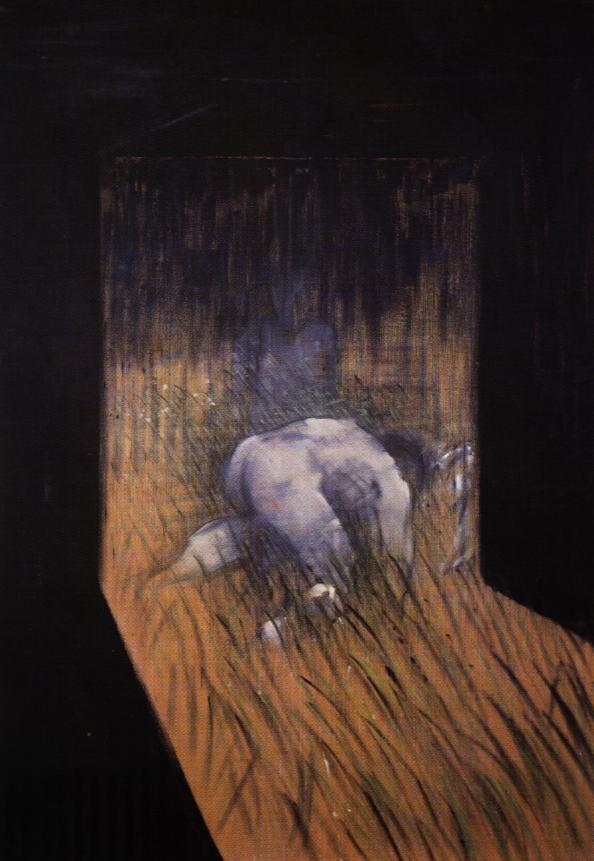
Man Kneeling in Grass (1952), 
depicting faceless male figures in compromising positions).