Sunday, February 12, 2017

The Art of the Surreal Christie’s 28 February


The sixteenth edition of The Art of the Surreal sale will take place at Christie’s on 28 February, following the Impressionist & Modern Art Evening Sale and will include 35 lots that chart the history of Dada and Surrealism.


René Magritte’s La corde sensible (1960, estimate: £14,000,000-18,000,000), one of the largest oils he created

René Magritte’s La corde sensible, a composition unique in his oeuvre, exemplifies the artist’s lifelong quest to reveal and revel in the mystery that he perceived to exist within the real world. Magritte originally presented it as a gift to his wife, Georgette. Later owned by Ronald Winston, the son of the world-renowned jeweller, Harry Winston, the painting has remained in the same private collection since 1990. Situated under a blue sky, amidst a verdant green landscape with a mountain range in the distance, an enormous crystal glass stands incongruously in the middle of the valley. Hovering just above it is a cloud, the weightless form meeting the solid glass creating a compelling contrast between lightness and weight, transparency and opacity, atmosphere and earth.


Le domaine d’Arnheim (1938, estimate: £6,500,000-8,500,000)

Le domaine d’Arnheim is René Magritte’s first realisation in oil of one of his most enduring pictorial motifs, the magisterial eagle-shaped mountain. The epic scale and romantic grandeur of this painting’s mountain imagery is echoed on a window ledge in the foreground of the painting where a small, almost minimal, still-life rests in the form of a pair of bird eggs. The present work formed part of the collection assembled by the great English patron and collector of surrealist art, Edward James.
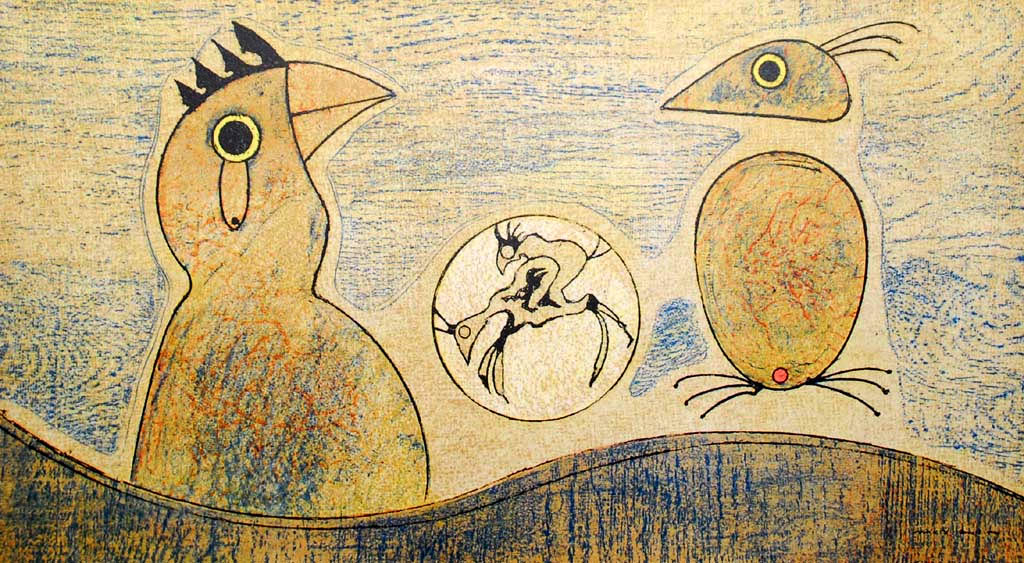


The group of seven works by Max Ernst, offered from a number of prestigious collections, includes Les deux oiseaux, (estimate: £100,000-150,000)one of a major series of object-paintings on the theme of imprisoned birds that Ernst made in 1925. The delicacy of the birds’ forms is presented in sharp contrast to the heavy texture of the sandpaper ground, imprisoning bars and the strong cork boundary of the artist’s picture-frame.
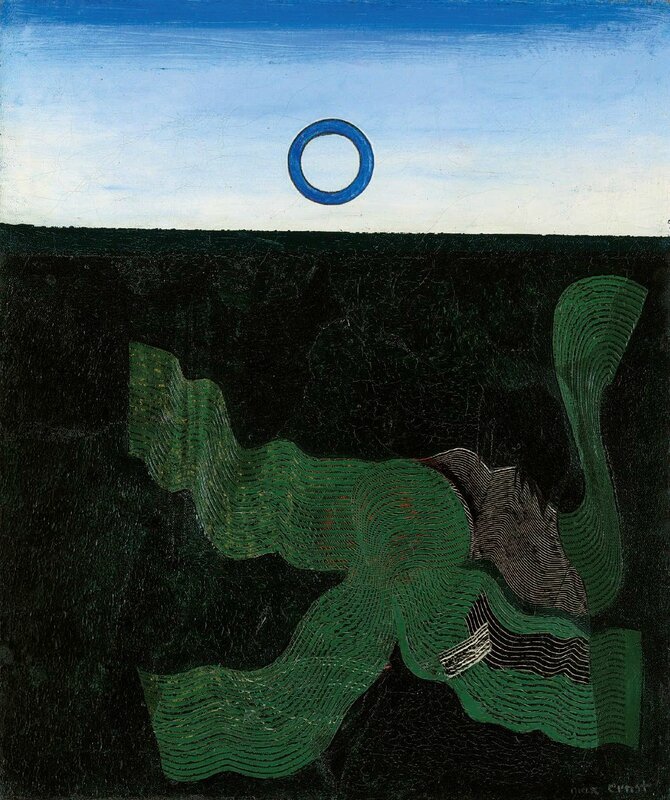


Savage Moon (1926, estimate: £250,000-350,000) is one of a series of moonlit landscape paintings that Ernst made the following year, in 1926. Depicting a mystic moon casting its ethereal light over the surface of the sea, it is one of the very first paintings that he ever made using the new technique of grattage, a method of scraping random patterns in oil paint.

Max Ernst Portrait érotique voilé (1933 and circa 1950, estimate: £1,500,000-2,500-000): Centred upon the depiction of an imperious bird-headed female figure sporting a revolutionary bonnet de la Liberté and seated on a crimson throne, this final version was unseen in public until the major retrospective of Ernst’s work held at the Staatsgalerie in Stuttgart and the Kunstsammlung Nordrhein-Westfalen in Dusseldorf in 1991.

Out of the apparent geometric simplicity of the forms a matrix of abstract pattern and colour has been created. Portrait érotique voilé is offered by the artist’s family, it was first created in 1933 and later reworked by the artist into a new, more regal and grandiose version around 1950.
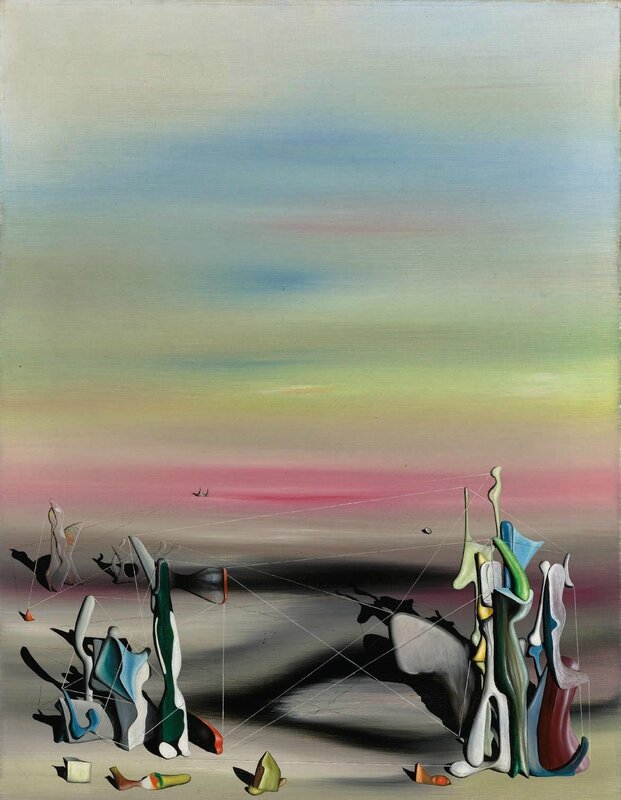


One of the first works he created upon arriving in the USA, Yves Tanguy’s La lumière, la solitude (1940, estimate: £500,000-700,000, illustrated, left) is a comparatively large, highly worked, jewel-like painting, distinctive for the rich rainbow colours of its background. With its constellation of automatic, intuitively-arrived-at, forms in the foreground, it hovers on the borderline between realist landscape and abstract fantasy.  One of the best compositions the market has seen for years this painting was hidden in a private European collection for decades until now.


Magnéto anglaise (1921-22, estimate: £400,000-600,000) is one of a much celebrated series of ironic, ‘abstract’ works that Francis Picabia made for his solo show at the Galerie Dalmau in Barcelona, in November 1922. It was first bought from the artist by the celebrated collector and Parisian fashion designer Jaques Doucet and later formed part of the English collection of E.J. Power for 20 years. Picabia’s ‘mechanomorphic’ abstractions appeared to challenge and lampoon the whole idea of modernist aesthetics, the contemporary art market and the mechanical workings of human sexual attraction and interaction.


Rich in imagery and enigmatic in its meaning, Statices (1929, estimate: £1,300,000-1,800,000) is a captivating example of Picabia’s celebrated Transparency paintings, a series of works named for their depiction of multiple images, layered atop one another in an effect similar to multiple-exposure photography.


Completing this group is Phimparey (circa 1941-42, estimate: £200,000-300,000), a painting that demonstrates a move towards pop art in its reproduction of a popular magazine image.


Two works are being offered by The Art Institute of Chicago. Paul Delvaux’s Le village des sirènes, created in 1942, one of the best years in Delvaux’s oeuvre, at the very height of the German occupation of Belgium, portrays an otherworldly scene, in which a group of elegantly dressed women sit along a gently curving street with mermaids swimming beyond. The silence conveyed offers a startling contrast to the chaos of the war that was raging in Europe at this time while the disconcerting and anachronistic architectural juxtapositions and disquieting atmosphere reveal a strong affinity with the art of Giorgio de Chirico.

Part of the collection since 1954, Giorgio de Chirico’s Guerrieri e filosofi (circa 1928, estimate: £300,000-500,000) is one of a series of gladiatorial paintings that appeared regularly in de Chirico’s oeuvre during the late 1920s and early 1930s. De Chirico stated that many of his Gladiatori from this period were intended as a satire on the art world who had turned against him.


Olivier Camu, Deputy Chairman, Impressionist & Modern Art, Christie’s: “The sale presents 16 of the leading Dada and Surreal artists in a carefully curated group of paintings and Surrealist objects from some of the most celebrated collections in the world. René Magritte’s magnificent oil La corde sensible, painted in 1960, is an exquisite composition that eludes meaning or logical explanation and is poised to achieve a significant record for the artist. It is arguably the most striking and important Magritte work we have offered at auction since 2002. It is also a privilege to be offering on behalf of the Art Institute of Chicago two great paintings by Paul Delvaux and Giorgio de Chirico. Together with the Max Ernsts from the collections of the artist’s family and the great German philanthropist and collector Barbara Lambrecht, the provenance of the works of art in this edition of The Art of the Surreal is unrivalled.”

Further artists representing the range of the movement include Jean (Hans) Arp, Alexander Calder, whose sculpture The bat (1966, estimate: £400,000-600,000) shows how Surrealism continued to influence artists throughout the second part of the 20th century, Salvador Dalí, who collaborated with Edward James on the striking bright red Mae West Lips Sofa (1938, estimate: £400,000-600,000), sold by the Edward James Foundation, Óscar Domínguez, André Masson, Joan Miró, Man Ray and Antoni Tàpies.

Saturday, February 11, 2017

Christie’s Impressionist & Modern Art Evening Sale, 2.28: Paul Gauguin, Henri Matisse, Pablo Picasso, Pierre-Auguste Renoir and Auguste Rodin


The Impressionist & Modern Art Evening Sale on 28 February will present 51 lots from the birth of Impressionism through to some of the most important and ground-breaking movements of the 20th century, and will feature two esteemed European collections, The Personal Collection of Barbara Lambrecht and Le Corbusier: Important Works from the Heidi Weber Museum Collection, forming a focal point for the sale.
 
IMPRESSIONIST & MODERN ART EVENING SALE HIGHLIGHTS

GAUGUIN


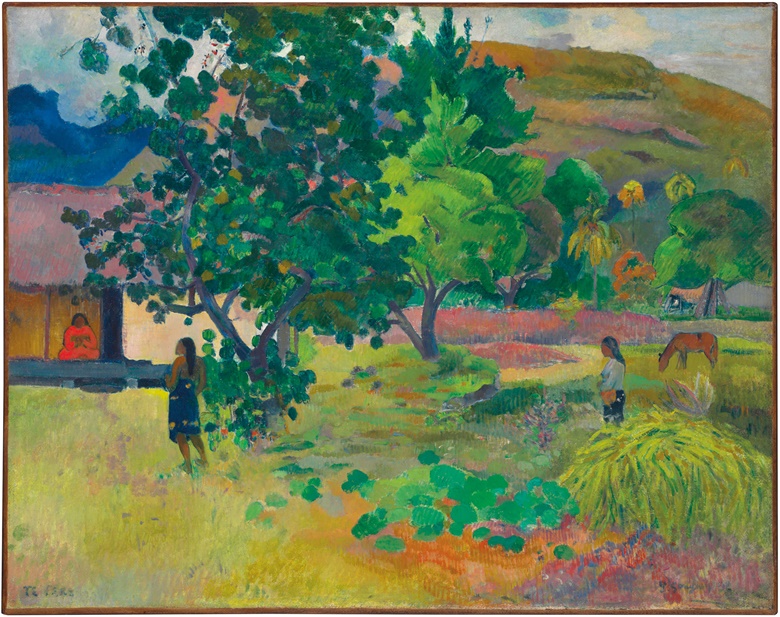
A major highlight is Paul Gauguin’s Te Fare (La maison) (estimate: £12,000,000-18,000,000), one of the most richly coloured of his Tahitian landscapes, painted on his first visit to the island. 

An homage to the spectacular Tahitian landscape, Te Fare (La maison) was created in 1892, the year that Paul Gauguin painted some of his greatest masterpieces. A large hibiscus tree dominates the composition, its rich emerald green leaves and just visible orange blossoms obscuring the purple-roofed house situated behind it. This wooden hut could, it has been suggested, be the artist’s own rented home in Mataiea. A quiet, enigmatic narrative seems to veil the scene, imbuing the composition with a deeper, psychological dimension, a reflection of Gauguin’s Symbolist involvement. In Te Fare (La maison) Gauguin has increasingly simplified and monumentalised the landscape, transcending reality by turning the natural world into a mystic vision of colour, line and form.  

PICASSO


A monumental portrait of two figures by Pablo Picasso titled Joueur de flûte et femme nue (1970, estimate: £6,500,000-8,500,000),

Joueur de flûte et femme nue depicts a voluptuous female nude, being softly serenaded by a bearded, flute-player seated next to her. The couple’s interlocking limbs, and the sensual, spontaneous style of the painting all serve to infuse the composition with a heady sense of eroticism, a feature that characterises much of Picasso’s late work. The unmistakable, hieratic profile of the seated nude in Joueur de flûte et femme nue is that of Jacqueline Roque, Picasso’s great love, wife and final muse, who first appeared in his work in 1954.

RENOIR


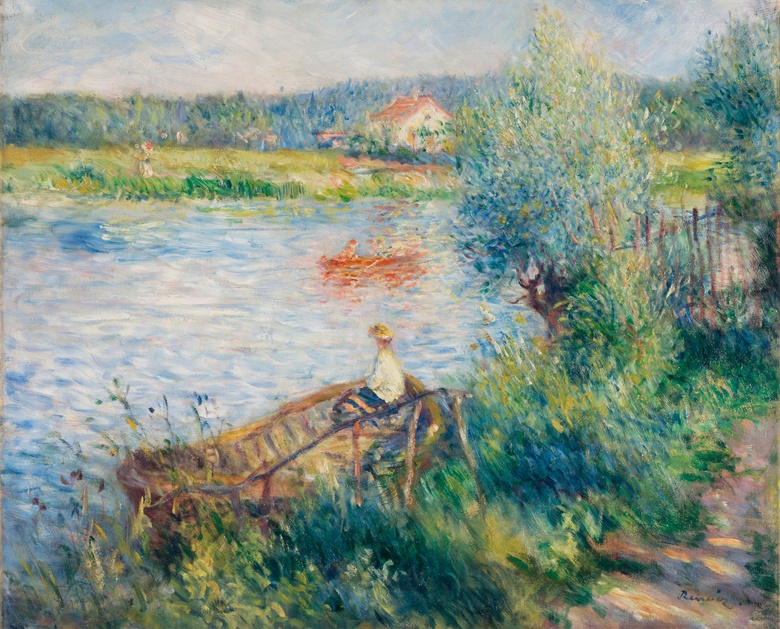
Canotage á Bougival (circa 1881, estimate: £3,700,000-4,700,000), a landscape by Pierre-Auguste Renoir, formerly in the collection of Albert C. Barnes, painted at a transitional moment in his career. 

Renoir is likely to have painted Canotage á Bougival in the spring of 1881, soon after returning from a two-month trip to Algeria, his first ever voyage outside of France.  During his travels, the artist had devoted himself fully to landscape painting, revelling in the dense and luxuriant foliage of palm and banana trees. Seeking to maintain the creative energy that the Algerian vistas had inspired in him, he continued to paint landscapes that bear witness to one of the central tenets of Impressionism: the plein-air master standing outdoors. Canotage á Bougival was acquired in 1920 by one of the most important collectors of the 20th Century: Dr Albert C. Barnes. Barnes's collection of modern art remains among the greatest of its kind, and features many works by Renoir, whom Barnes admired above all other painters.

MATISSE


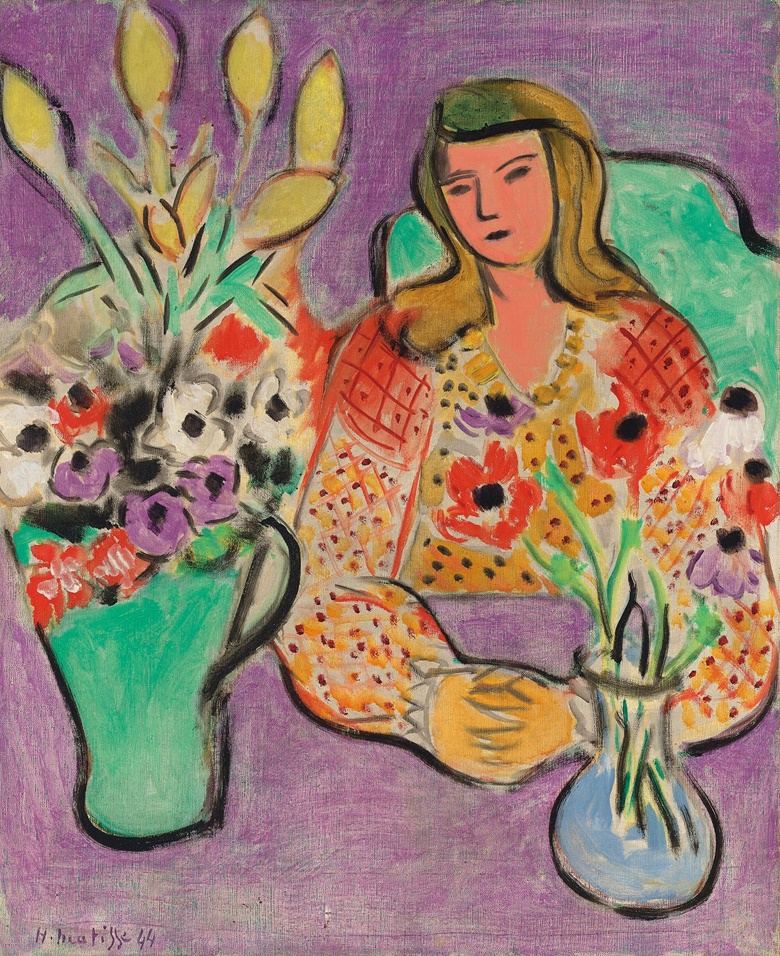
Henri Matisse’s Jeune fille aux anémones sur fond violet (1944, estimate: £5,000,000-7,000,000), is part of a series of interior scenes that the artist created whilst living in Vence in the South of France

Depicting a young artist, Annelies Nelck, Jeune fille aux anémones sur fond violet is the first of three portraits by Matisse that features this model. Of these three works, the present oil is the only one to remain in private hands; the other two reside in the Musée Matisse, Nice, and the Honolulu Museum of Art, Hawaii. Wearing a red and orange Romanian blouse – one of Matisse’s adored collection of lavish dresses and ornate costumes that he often depicted his sitters in – Nelck is surrounded by blossoming flowers against a soft, mauve background, bringing Matisse's lifelong preoccupations with colour and line to a triumphant conclusion.

RODIN


Auguste Rodin’s timeless expression of passionate love Le baiser (conceived circa 1882, estimate: £4,000,000-6,000,000). 

First conceived circa 1882, Le baiser  is one of the most iconic sculptures of Rodin’s entire oeuvre, renowned for its poetic depiction of two young lovers caught in a passionate embrace. Rodin’s work dramatically portrays the intense desire that has swept through these two figures, causing their bodies to intertwine in an almost spiral formation, as they succumb to their lustful impulses. Slightly larger than life size, the original marble version was exhibited at the Paris Salon of 1898.


Also see

THE PERSONAL COLLECTION OF BARBARA LAMBRECHT

and

LE CORBUSIER: IMPORTANT WORKS FROM THE HEIDI WEBER MUSEUM COLLECTION

Thursday, February 9, 2017

Toulouse - Lautrec Illustrates the Belle Époque


The Phillips Collection
February 4 through April 30,  2017 
 
 In a  special  exhibition opening o n February 4 ,  The Phillips Collection presents an extraordinary selection of  Henri de Toulouse - Lautrec’s  iconic and rare printed work s from  nearly the entire period of  his  lithographic career ( 1891 – 1899 ) . An  inaugural collaboration with  the Montreal Museum of Fine  Arts (MMFA),  Toulouse - Lautrec Illustrates the Belle Époque assembles, for the first time in the United States, close to 100  defining  images of late 19th - century Montmartre , drawn  from  one of the  leading collections of  prints and posters by  Toulouse - Lautrec .

The son of a wealthy noble family  from Albi, France, Henri de  Toulouse - Lautrec (1864 – 1901) is best known for capturing the heart of Parisian nightlife in dynamic cabaret and dance hall  scenes inspired by the city’s burgeoning entertainment district .  After training with academic painters in Paris, he established a  studio in bohemian Montmartre and was regularly seen at livelyhot spots like the Chat Noir, the Mirliton, and the Moulin  Rouge. His impressions of  these  local amusements fashioned a  portrait of modern life.  Toulouse - Lautrec’s  arrival in  Paris also  coincided with both  revival and innovation in the technology of color lithography .  

The sheer scale of the poste s plastered  around the city transformed Paris  nto an open air exhibition, while limited - edition lithographs and print albums designed for the home catered to collectors.  

This exhibition highlights Toulouse - Lautrec’s  embrace of printmaking and his experiments with the medium that revolutionized the field.

“I am delighted for the Phillips to exhibit such a rich collection of printed works by Henri de Toulouse - Lautrec, who forever changed and shaped the art of lithography,”  said Director Dorothy Kosinski.  “This  is a rare opportunity to see such a large colle tion that captures a defining moment in the artist’s printmaking career on view in the United States.”

Included in the special exhibition at the  Phillips is  Toulouse - Lautrec ’s first  lithograph, the poster  Moulin Rouge , La  Goulue (1891) , which made him an  overnight success. Produced in some  3,000  impressions,  the poster’s massive scale,  fragmented forms, compressed pictorial  space, and range of colors broke new  ground . By presenting this significant work  alongside  a unique trial proof in black and  white , the exhibition provid es a glimpse  into the artist’s highly involved  pr intmaking  process . Other special features  on view  include never - before - published trial  proofs , unique  images , and rare prints  displayed with richly colored final  impressions.

Many of the  poster s were commissioned by famous performers  like Jane Avril,  May  Belfort , Aristide Bruant, and  May Milton . The se  personalities,  among others, are brought to life through  Toulouse - Lautrec’s perceptive skills of observation and caricature. By maximizing the impact of just a few details, their celebrity was immortalized in these masterful works that caught the public’s  
attention.

“This show is special because it not only features an impressive number of familiar images, but by  displaying trial proofs, it also  offers visitors a behind - the - scenes look at the genius of Toulouse - Lautrec’s prints.”  said Renée Maurer,  Associate Curator at the Phillips .

“Having attracted 145, 000 visitors to the Montreal Museum of  Fine Arts, the exhibition  Toulouse - Lautrec Illustrates the Belle Époque was a great success, one that I hope our partners from The Phillips Collection will also enjoy in this first collaboration, thanks to an exceptional collection ,” said Nathalie Bondil, Director General and Chief Curator at the Montreal Museum of Fine Arts . “ The Paris of the belle époque is paraded before our eyes. What a privilege to be able to exhibit these rarely shown unique posters by Toulouse - Lautrec .”

The exhibition also includes additional works by Toulouse - Lautrec’s contemporaries, such as


Théophile Alexandre Steinlen’s famous poster Tournée du Chat Noir ( 1896 ) and


Louis Anquetin’s never-before-exhibited painting  Inside Bruant’s Mirliton ( 1886 – 1887 ) Oil on  canvas ,  57 1⁄16 × 61 13⁄16 in .  Private collection.  

Once considered lost, with only preliminary drawings as evidence of its existence, Anquetin’s large painting  invites viewers inside  Aristide Bruant’s lively cabaret the Mirliton, where Toulouse - Lautrec, Bruant, and Émile Bernard watch entertainer La Goulue perform.

THE PHILLIPS COLLECTION AND TOULOUSE - LAUTREC

During his lifetime, museum founder Duncan Phillips acquired four works on paper by Toulouse - Lautrec.  His first purchase made in 1927 was the lithograph Miss May Belfort ( large plate ) (1895) .  In 1939,  Phillips presented  the museum’s only  previous  exhibition of Toulouse - Lautrec’s art, containing 55 works  (drawings, prints, and paintings)  sourced from the Art Institute of Chicago and private  collections.  Toulouse - Lautrec Illustrates the Belle Époque marks  the first solo showing of the artist’s work at the  Phillips in nearly 80 years.  As a complement to  the exhibition, an installation of work by Toulouse - Lautrec’s contemporaries  and inspiration will be on view in nearby permanent collection galleries.


Images in the Exhibition:


Henri de Toulouse - Lautrec,  Moulin Rouge, La Goulue , 1891. Brush and spatter lithograph, printed in four colors.  Key stone printed in black, color stones in yellow, red, and  blue on three sheets of wove paper, 75 3⁄16 × 46 1⁄6 in.  Private collection


Henri de Toulouse - Lautrec,  The Englishman at the Moulin  Rouge , 1892. Brush and spatter lithograph, printed in six  or seven colors. Key stone printed in olive green, color  stones in  aubergine, blue, red, yellow , and black on wove  paper. State II/II, 21 × 14 3⁄4 in. Private collection


Henri de Toulouse - Lautrec,  Ambassadeurs, Aristide  Bruant , 1892. Brush and spatter lithograph, printed in five  colors. Key stone printed in olive green, color stones in  orange, red, blue and black on two sheets of wove paper ,  52 15⁄16 × 36 5⁄8 in. Private collection


Henri de Toulouse - Lautrec , Divan Japonais , 1892 – 93.  Crayon, brush, spatter, and transferred screen lithograph,  printed in four colors. Key stone printed in olive green,  color stones in black, yellow, and red on wove paper, 31  3/4 × 23 15⁄16 in. Private collection 


Henri de Toulouse - Lautrec , Cover for  L’Estampe originale,  1893. Brush and spatter lithograph, printed in six c olors.  Key stone printed in olive green, color stones in beige,  salmon red, red, yellow, and black on wove paper. Only  state, 22 1/4 × 25 11⁄16 in. Private collection


Henri de Toulouse - Lautrec,  Jane Avril ,  1893 . Brush and  spatter lithograph, key stone printed in olive green on  wove paper .  Trial proof, 47 9⁄16 × 33 7⁄8 in. Private  collection  


Henri de Toulouse - Lautrec,  Jane Avril , 1893. Brush and  spatter lithograph, printed in five colors. Key stone  printed in olive green, color stones in yellow, orange, red , and black on wove paper, 48 13⁄16 × 36 in. Private  collection


Henri de Toulouse - Lautrec,  At the Ambassadeurs, Singer  at the Café - Concert ,  1894 .  Crayon, brush and spatter  lithograph, printed in six colors. Key stone printed in olive  green, color st ones in yellow, beige - gray, salmon pink,  black , and blue on wove paper .  Only state ,  12 × 9  3/4  in . 


Henri de Toulouse - Lautrec ,  The Box with the Gilded Mask ,  about 1894. Crayon, brush , and spatter lithograph with  scraper, printed i n five colors. Key stone printed in olive  green, color stones in red or brown - red, yellow, gray - beige, and black - olive green or black on imitation Japan  paper. Only state, 14 5⁄8 × 12 7⁄8 in. Private collection


Henri de Toulouse - Lautrec ,  Mademoiselle Marcelle  Lender, Half - length ,  1895. Crayon, brush , and spatter  lithograph, printed in eight colors. Key stone printed in  olive green, color stones in yellow, red, dark pink,  turquoise - green, blue, gray , and yellow - green on wove  paper. State IV/IV, 12 15⁄16 × 9 5⁄8 in. Private collection


Henri de Toulouse - Lautrec ,  May Belfort ,  1895.  Crayon,  brush, and spatter lithograph , printed in five colors. K ey  stone printed in olive green, color stones in red , black,  gray , and yellow on wove paper, 31 5⁄16 × 24 in. Private  collection  


Henri de Toulouse - Lautrec ,  May Milton ,  1895. Crayon,  brush, spatter, and transferred screen lithograph, printed  in five colors. Key stone printed in olive green, color  stones in blue, red, yellow, and black on wove paper, 31  5⁄16 × 24 in. Private collection


Henri de Toulouse - Lautrec , Mademoiselle Églantine’s  Troupe ,  1895 – 96.  Brush, spatter, and crayon l ithograph,  printed in three colors. Key stone printed in turquoise,  color stones in red and yellow on wove paper, 24 5⁄16 ×  31 5⁄8 in. Private collection


Henri de Toulouse - Lautrec , The Photographer Sescau , 1896.  Brush, crayon, and spatter lithograph , printed in five  colors. Key stone printed in blue, color stones in red,  yellow , and green on wove paper, remarque in black, 23  7⁄8 × 31 ½ in. Private Collection


Henri de Toulouse - Lautrec ,  The Simpson Chain ,  1896 .  Brush, c rayon,  and spatter  lithograph , printed in three  colors. Key stone printed in blue, color stones in red and  yellow on wove paper ,  32 5⁄8 × 47  1/4  in. Private  Collection Toulouse - Lautrec Illustrates the Belle Époque February 4 – April 30, 2017  


Henri de Toulouse - Lautrec , The Jockey ,  1899 .  Crayon ,  brush, and spatter lithograph, printed in  six colors. Key  stone printed in black, color stones in turquoise - green,  red, brown, gray - beige and blue on China paper .  State  II /II ,  20  3 / 8 × 14  1/4 in .  Private c ollection


Henri de Toulouse - Lautrec , Jane Avril ,  1899 .  Brush  lithograph, printed in four colors from three stones . Key  stone printed in black,  one color stone in red, one in  yellow and  blue on wove paper , 22 1⁄16 × 14 15⁄16 in.  Private collection 


Alfred Sisley (1839-1899): Impressionist Master


Bruce Museum, Greenwich, Connecticut 
January 21–May 21, 2017

Hôtel de Caumont Centre d’Art, Aix-en- Provence
June through October 2017


The Bruce Museum and the Hôtel de Caumont Centre d’Art in Aix-en- Provence, France, are mounting a major monographic exhibition of the art of the French Impressionist Alfred Sisley (1839-1899). The first retrospective in more than 20 years of this purest of all the major Impressionists, Alfred Sisley (1839-1899): Impressionist Master spotlights about 50 of Sisley’s paintings, which come from private collections and major museums in Europe and North America. The Bruce Museum in Greenwich, Connecticut, will premiere the exhibition and is the only venue in the United States. The show will then travel to France, where it will be on exhibit from

Born in Paris in 1839 to well-to-do British parents, Alfred Sisley at first intended to pursue a career in commerce and spent two years in London from 1857 - 1859. During this time, he visited museums, studying both the Old Masters and the great British landscape painters John Constable and J.M.W. Turner. 

On his return to Paris, he was determined to become a landscape painter and enrolled in Charles Gleyre’s studio, where he met the future Impressionists Claude Monet, Pierre-Auguste Renoir and Frédéric Bazille. 

Initially Sisley worked in the naturalistic landscape tradition of the Barbizon School but increasingly adopted a proto-Impressionistic style, recording specific locations in a sequence of visual records of different times of the day, weather conditions and seasons. In so doing he charted comprehensively and from multiple points of view the landscapes of his residences in the villages along the Seine west of Paris and beyond the Forest of Fontainebleau at Veneux- Nadon and Moret-sur-Loing.

Sisley was first and foremost a painter of light. He knew how to imbue all of his paintings with it.One could say that light floods his landscapes, deliciously bathing even the most modest of details. - Anonymous, “Echo de Paris,” Le Gaulois 1899

While his landscapes are generally modest in scale and tonally relatively restrained, the magic with which he was able to capture the effects of the light dancing on water, the brilliance of winter sun on snow and hoar frost, the movement of the wind in trees, the exploration of the depth of a rural scene, and the vastness of the skies create compelling works akin to poetry. They demand close, quiet contemplation and their re-evaluation is well overdue. 


His very delicate, lively sensibility was at ease before all the glories of nature... Sisley understood lovely light, the transparency of the envelope of air, the mobility and changeability of reflections, the speed of movement. – Octave Mirbeau, 1892

The exhibition Alfred Sisley (1839-1899): Impressionist Master is organized by the Bruce Museum, Greenwich, Connecticut and Culturespaces. The show is curated by MaryAnne Stevens, independent art historian and curator of the 1992/3 and 2002/3 retrospective exhibitions on the artist. 


It is accompanied by a fullyillustrated catalogue published by Editions Hazan. Contributors to this volume, Richard Shone, who wrote a book on the painter, and Kathleen Adler, a 19th-century French specialist, bring new insights that ensure the publication will be an indispensable reference on the artist and his oeuvre. 


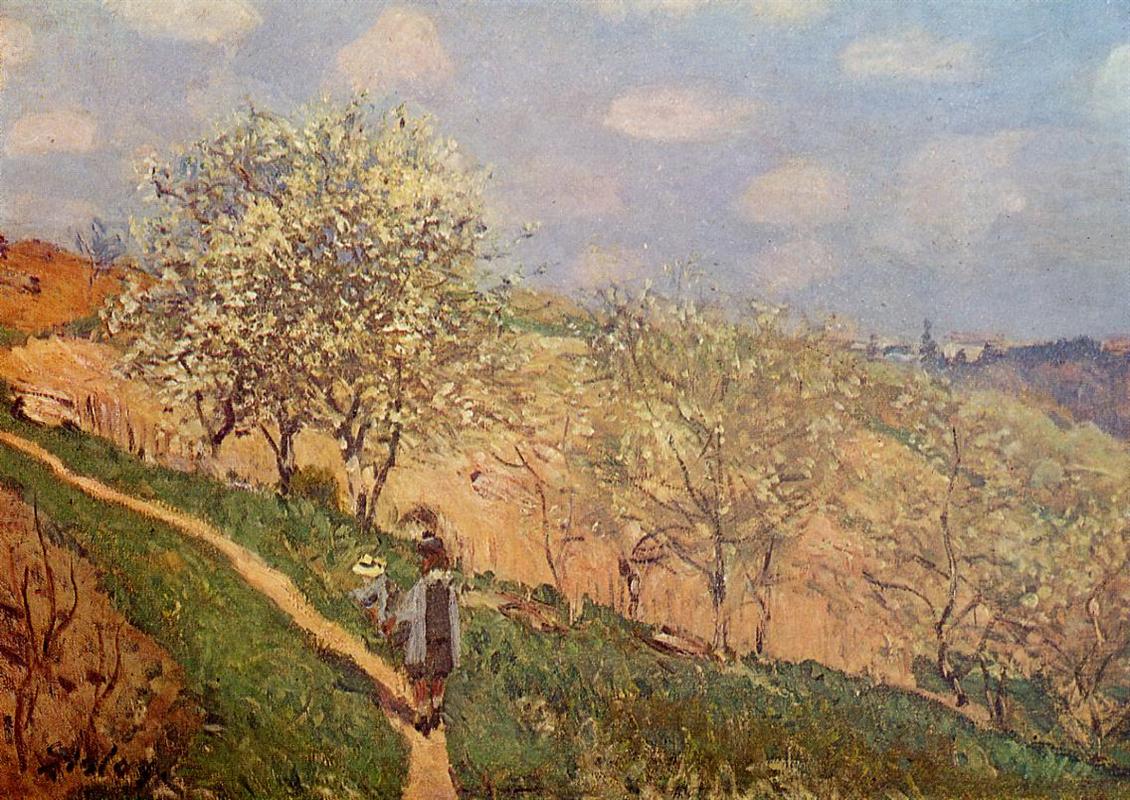
Alfred Sisley
Spring, Peasant under Trees in Blossom, 1865-66
Oil on canvas, 46.5 x 56 cm
Galerie Bailly, Geneva
Image courtesy of Galerie Bailly, Geneva


Alfred Sisley (French, 1839-1899)
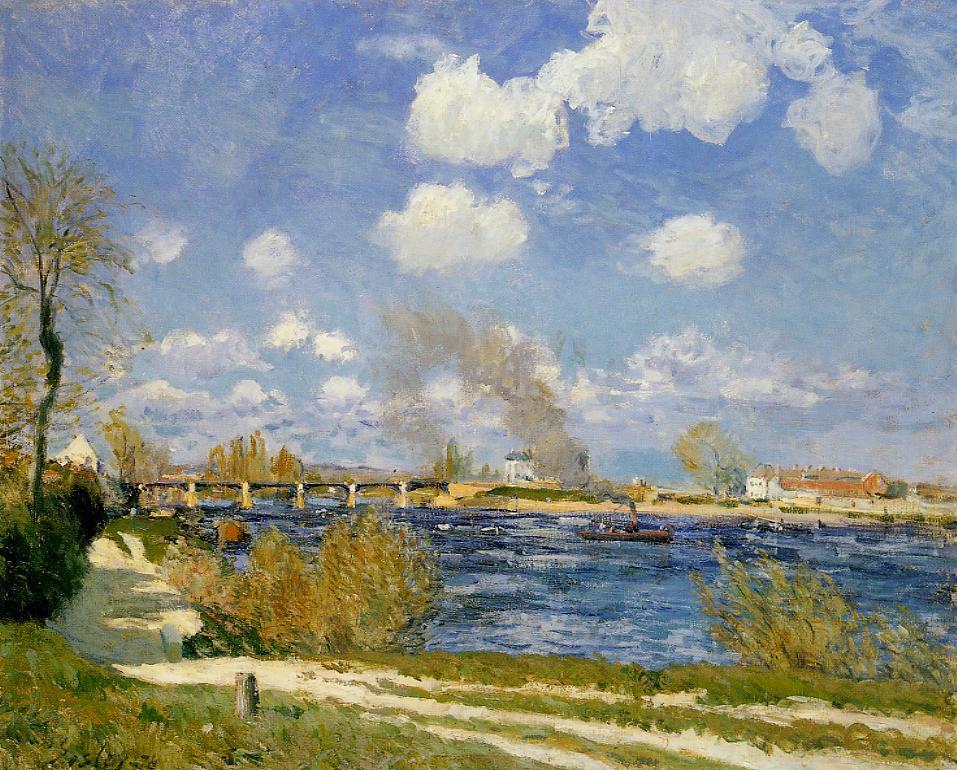
The Seine at Bougival, 1872
Oil on canvas, 50.8 x 65.5 cm
Yale University Art Gallery, New Haven, Gift of Henry Johnson Fisher, B.A. 1896 (1962.54) Photo credit: Yale University Art Gallery 


Alfred Sisley
Fishermen Spreading their Nets (Drying Nets), 1872
Oil on canvas, 42 x 65 cm Kimbell Art Museum,

Fort Worth, Texas (APx1977.01)
Photograph: Robert LaPrelle. © 2009 Kimbell Art Museum, Fort Worth, Texas


Alfred Sisley 
Bougival, 1876
Oil on canvas, 60 x 73 cm
Cincinnati Art Museum, John J. Emery Fund (1922.38)

Image courtesy of Cincinnati Art Museum


Alfred Sisley
The Rue de la Princesse, Louveciennes, c. 1873 Oil on canvas, 38 x 54 cm
The Phillips Family Collection
Photography by Hyla Skopitz copyright 2016


Alfred Sisley
The Bridge at Villeneuve-la-Garenne, 1872
Oil on canvas, 49.5 x 65.4 cm
The Metropolitan Museum of Art, Gift of Mr. and Mrs. Henry Ittleson, Jr., 1964 (64.287)
Image courtesy of Metropolitan Museum of Art


Alfred Sisley
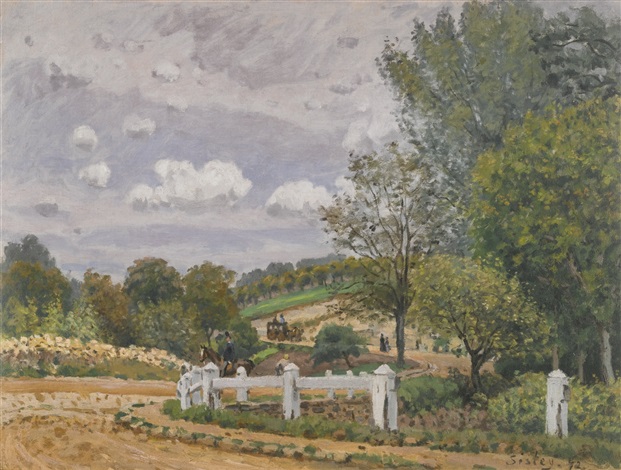
The Route to Verriéres, 1872
Oil on canvas, 47.5 x 63 cm
Private Collection, Thomas Gibson, England


Alfred Sisley
Spring at Bougival, c. 1873
Oil on canvas, 40.6 x 57.1 cm
Philadelphia Museum of Art, Bequest of Charlotte Dorrance Wright, 1978 (1978-1-31) Image courtesy of the Philadelphia Museum of Art


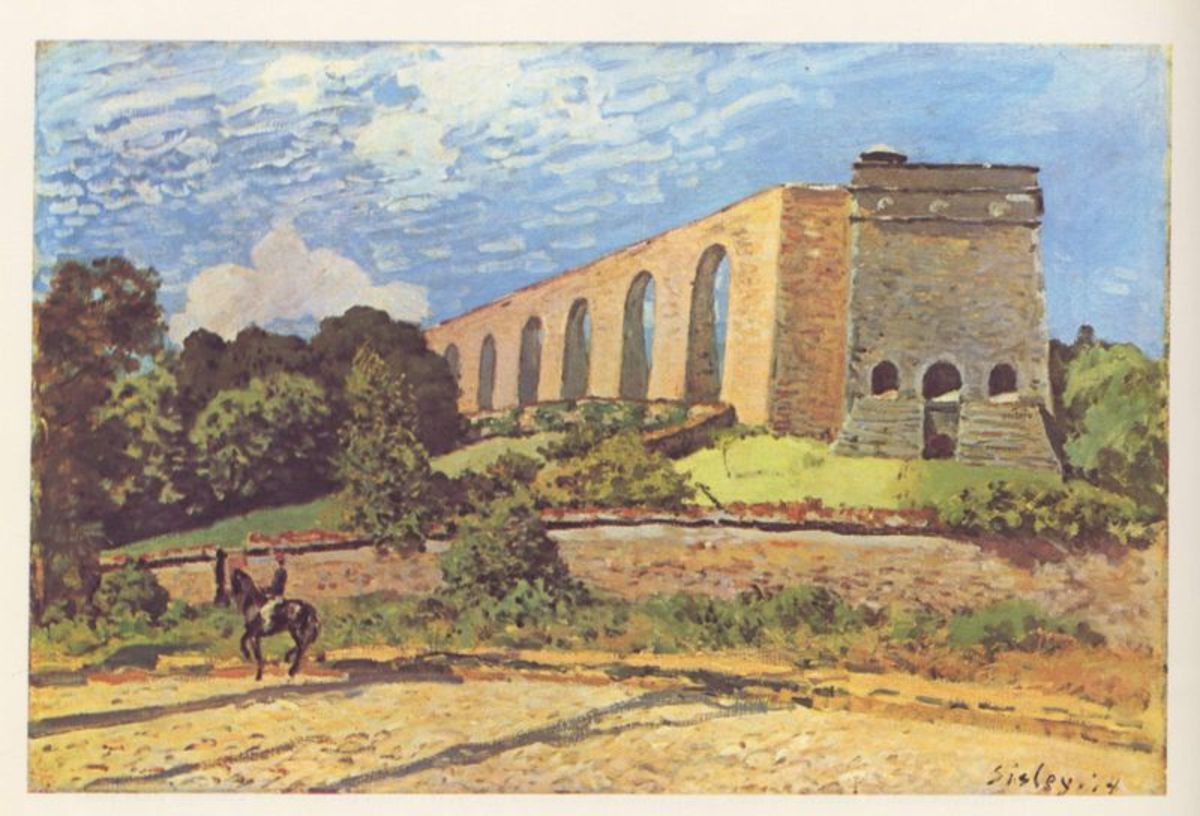
Alfred Sisley
The Marly Aqueduct, 1874
Oil on canvas, 54.3 x 81.3 cm
Toledo Museum of Art, Purchased with funds from the Libbey Endowment, Gift of Edward Drummond Libbey (1951.371)
Image courtesy of Toledo Museum of Art


Alfred Sisley
Under Hampton Court Bridge, 1874
Oil on canvas, 50 x 76 cm
Kunstmuseum Winterthur, Donated by Dr. Herbert and Charlotte Wolfer-de-Armas, 1973
© Schweizerisches Institut für Kunstwissenschaft, Zürich, Lutz Hartmann


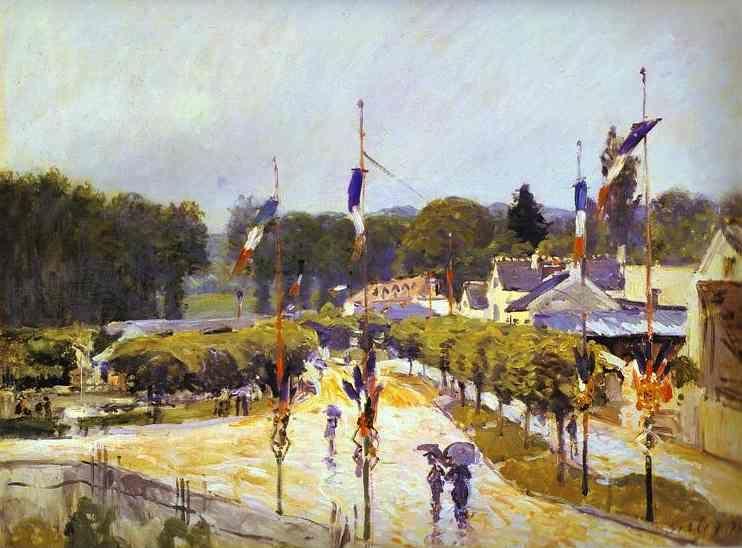
Alfred Sisley
Fête Day at Marly-le-Roi, 1875
Oil on canvas, 54 x 73 cm
The Higgins Art Gallery & Museum, Bedford 

Image courtesy of The Higgins Art Gallery & Museum


Alfred Sisley
The Bridge at Saint-Mammès, 1881
Oil on canvas, 54.6 x 73.2 cm
Philadelphia Museum of Art, John G. Johnson Collection, 1917 (Cat. 1082)
Image courtesy of the Philadelphia Museum of Art


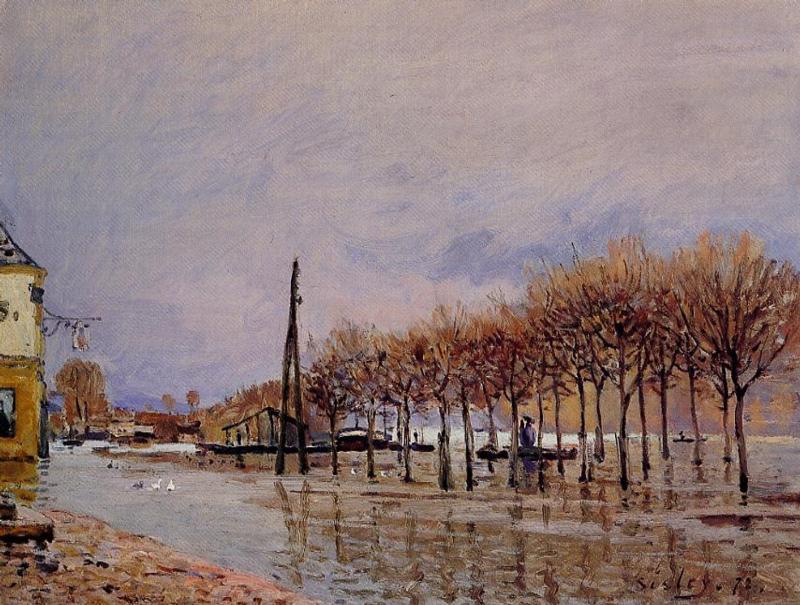
Alfred Sisley Flood at Port-Marly, 1872
Oil on canvas, 46.4 x 61 cm
National Gallery of Art, Washington, D.C., Collection of Mr. and Mrs. Paul Mellon (1985.64.38)
Image courtesy of National Gallery of Art


Alfred Sisley
A Farmyard at Chaville-December, 1879 Oil on canvas, 46 x 55.5 cm
Private Collection


Alfred Sisley
Church at Moret-sur-Loing: Morning, Rainy Weather, 1893
Oil on canvas, 65.9 x 81.3 cm
Hunterian Art Gallery, University of Glasgow (GLAHA 43815)
© The Hunterian, University of Glasgow 2016


Alfred Sisley
The Flood at Port Marly, 1876
Oil on canvas, 50 x 61 cm
Carmen Thyssen-Bornemisza Collection on loan at the Thyssen-Bornemisza Museum, Madrid (CTB.1974.25)
© Colección Carmen Thyssen-Bornemisza on loan at the Museo Thyssen-Bornemisza


Alfred Sisley
The Hilly Path, Ville d'Avray, 1879
Oil on canvas, 50 x 65 cm
Collection of The Speed Art Museum, Louisville, Kentucky, Museum purchase, by exchange, and Gift of the Charter Collectors, 2010.18
Image courtesy of The Speed Art Museum


Alfred Sisley
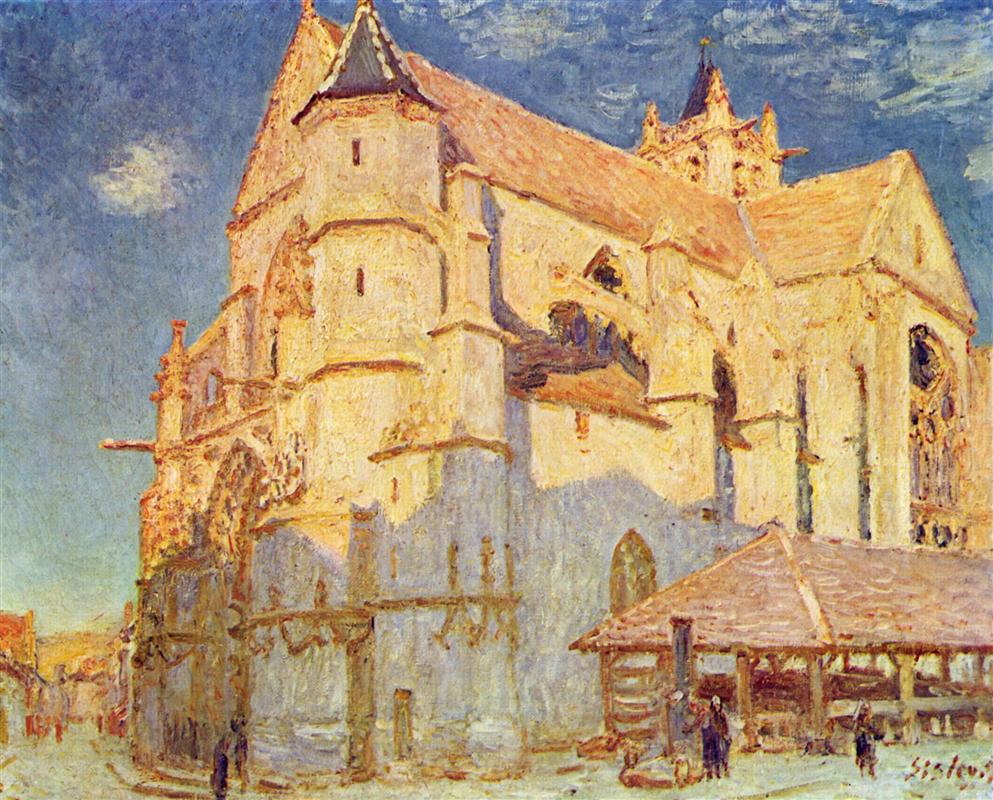
Church at Moret, 1893
Oil on canvas, 55 x 46 cm
Musée Calvet d’Avignon – Gift of Joseph Rignault, 1997, Fondation Calvet (22.279) Image courtesy of Musée Calvet d’Avignon