Friday, July 6, 2018

Gustav Klimt. Artist of the Century - Leopold Museum


Comprehensive exhibition divided into eight thematic emphases highlights periods in the artist’s oeuvre

Marking the transition from historicism to Jugendstil, Gustav Klimt’s oeuvre shaped the beginning of modern art in Vienna. 100 years after his death, the Leopold Museum pays tribute to the leading figure in Vienna around 1900 with a comprehensive exhibition divided into eight thematic emphases and illustrating all the periods of the artist’s oeuvre by means of some 35 paintings, 90 drawings, 30 photographs and approx. 150 archival documents.

Along with exhibits from the Leopold Museum and the Leopold Private Collection, the exhibition also features numerous works given to the museum by a Klimt descendant as a new permanent loan, as well as four paintings and six drawings from a private collection, which were also entrusted to the museum as permanent loans. The presentation further includes select loans from Austrian and international collections, and for the first time provides comprehensive insights into the collection of the Klimt Foundation, which acts as scientific research and cooperation partner to this exhibition.

The presentation Gustav Klimt. Artist of the Century traces an arc from Klimt’s beginnings at the height of the Gründerzeit era dominated by historicism, via his artistic paradigm shift and the evolution of his own, individual style from the mid-1890s, when he created his first drafts for the Faculty Paintings for the ceremonial hall of Vienna University, which would cause a scandal. The overview continues with Gustav Klimt as a leading figure of the Vienna Secession, whose members broke with esthetical conventions and paved the way for Jugendstil, and goes on to shine the spotlight on his activities as a sought-after portraitist of the wealthy Viennese bourgeoisie as well as on his highly erotic, symbolistically charged female depictions.

Sommer sojourns in the Salzkammergut region – Klimt’s landscapes

Gustav Klimt’s regular summer sojourns on the Attersee with Emilie Flöge and her family set in around the turn of the century. Klimt’s need for privacy and distance was especially great after the controversy caused by his Faculty Paintings. Far from the city and surrounded by intimate friends, Klimt found both relaxation and inspiration. A selection of his works created during these stays in the Salzkammergut region can be seen in the exhibition.

“Along with exceptional works from international collections and from the museum’s own holdings, a new permanent loan is now on display at the Leopold Museum – Klimt’s only Viennese landscape, the work Schönbrunn Landscape (1916). Klimt’s landscapes make up around one quarter of his painterly oeuvre. They were predominantly created in nature, or at times from photographs and picture postcards in his Vienna studio. The artist wanted to depict a natural environment independent of man that reflects a tranquil atmosphere – his interest in a symbolic expression and in aspects of timelessness and transience were central to these works,” explains Hans-Peter Wipplinger, the curator of the exhibition.

Death and Life and The Bride enter into a dialogue for the first time

The exhibition sees two monumental allegorical works by Klimt enter into a dialogue for the first time: Death and Life (1910/11, reworked in 1915/16) has been part of the Leopold Museum’s collection compiled by Rudolf Leopold for 40 years, while The Bride(1917/18) was brought into the collection of the Klimt Foundation in 2013. Since the Faculty Paintings, Gustav Klimt had addressed the cycle of life and its individual phases.

During the last years of his oeuvre, and shaped by personal experiences, Klimt started to rework the first version of Death and Life in 1915 and transferred depictions of individual stages of life as solitary figures to his work The Bride. The paintings, which are both shown in the exhibition, were prepared by Klimt with numerous drawings. The sketchbook for his last allegory has survived, and affords valuable insights into the process of the work’s composition and creation.

“The first presentation of drawings along with the extant sketchbook and the painting The Bride from the collection of the Klimt Foundation allows visitors to delve directly into the fantasies and visions of this exceptional artist. The painting further affords scope for new interpretations and, through its Expressionist accents, links Gustav Klimt as a pioneer of modernism in Austria with his successors Oskar Kokoschka and Egon Schiele,” according to the exhibition’s curator Sandra Tretter.
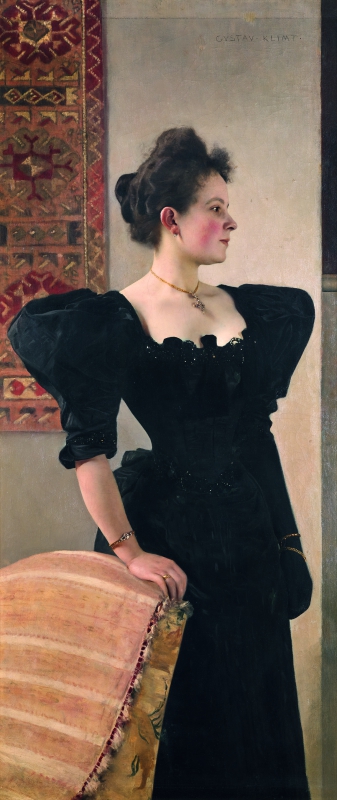


GUSTAV KLIMT
1862–1918
FRAUENBILDNIS, UM 1893
PORTRAIT OF A WOMAN, C. 1893
Öl auf Leinwand
| Oil on canvas
155 × 75 cm
Belvedere, Wien, 2013, Dauerleihgabe aus Privatbesitz
Belvedere, Vienna, 2013, Permanent loan from private collection
Foto
| Photo:
Belvedere, Wien
| Vienna/
Johannes Stoll
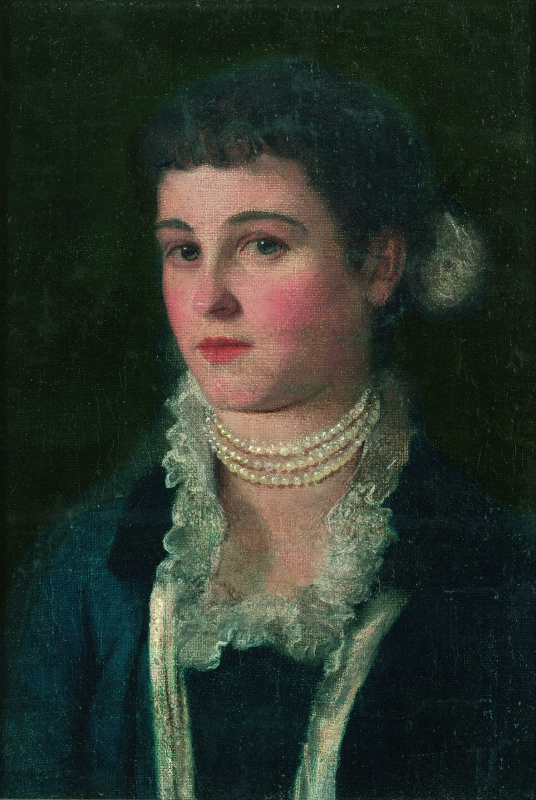
 

GUSTAV KLIMT
1862–1918
KLARA KLIMT, UM 1880
KLARA KLIMT, C. 1880
Öl auf Leinwand
| Oil on canvas
30,3 × 21,3 cm
ARGE Sammlung Gustav Klimt/Dauerleihgabe im Leopold Museum, Wien
ARGE Collection Gustav Klimt/Permanent loan, Leopold Museum, Vienna
Foto
| Photo:
Leopold Museum, Wien
| Vienna/
Manfred Thumberger
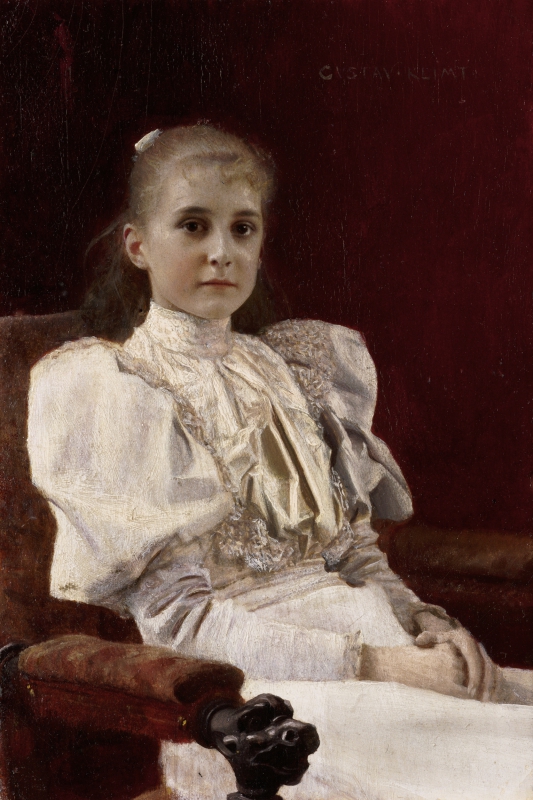
 

GUSTAV KLIMT
1862–1918
SITZENDES JUNGES MÄDCHEN, UM 1894
SEATED YOUNG GIRL, C. 1894
Öl auf Holz
| Oil on wood
14,1 × 9,6 cm
Leopold Museum, Wien
| Vienna
Foto
| Photo:
Leopold Museum, Wien
| Vienna/
Manfred Thumberger

Studie für 'Schubert am Klavier' 1898

GUSTAV KLIMT
1862–1918
SCHUBERT AM KLAVIER (ENTWURF), 1896
SCHUBERT AT THE PIANO (STUDY)
Öl auf Leinwand
| Oil on canvas
30 × 39 cm
Privatsammlung/Dauerleihgabe im Leopold Museum, Wien
Private collection/Permanent loan, Leopold Museum, Vienna
Foto
| Photo:
Leopold Museum, Wien
| Vienna/
Manfred Thumberger
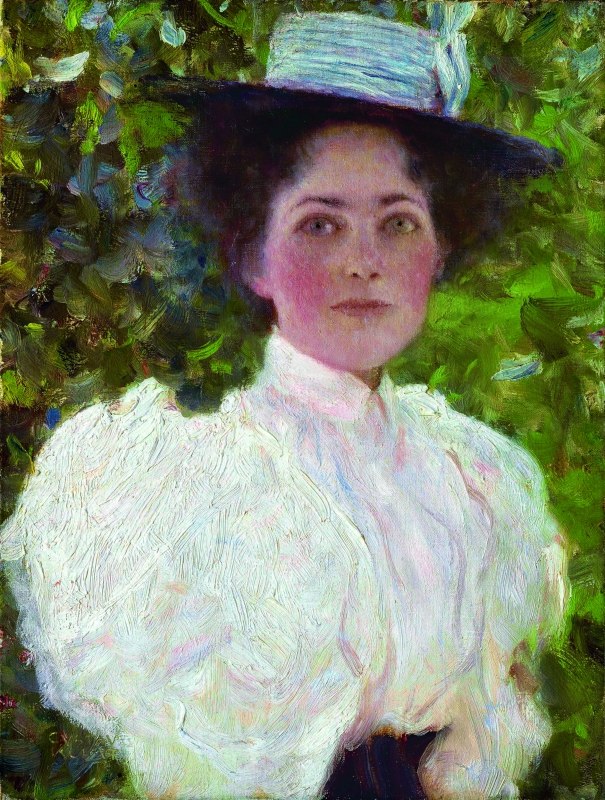
 

GUSTAV KLIMT
1862–1918
MÄDCHEN IM GRÜNEN, 1896–1899
GIRL IN THE FOLIAGE
Öl auf Leinwand
| Oil on canvas
32,4 × 24 cm
Klimt-Foundation, Wien
| Vienna
Foto
| Photo:
Klimt-Foundation, Wien
| Vienna


GUSTAV KLIMT
1862–1918
AM ATTERSEE, 1900
ON LAKE ATTERSEE
Öl auf Leinwand
| Oil on canvas
80,2 × 80,2 cm
Leopold Museum, Wien
| Vienna
Foto
| Photo:
Leopold Museum, Wien
| Vienna/
Manfred Thumberger


GUSTAV KLIMT
1862–1918
DIE GROSSE PAPPEL II (AUFSTEIGENDES GEWITTER), 1902/03
THE LARGE POPLAR II (GATHERING STORM)
Öl auf Leinwand
| Oil on canvas
100,8 × 100,8 cm
Leopold Museum, Wien
| Vienna
Foto
| Photo:
Leopold Museum, Wien
| Vienna/
Manfred Thumberger
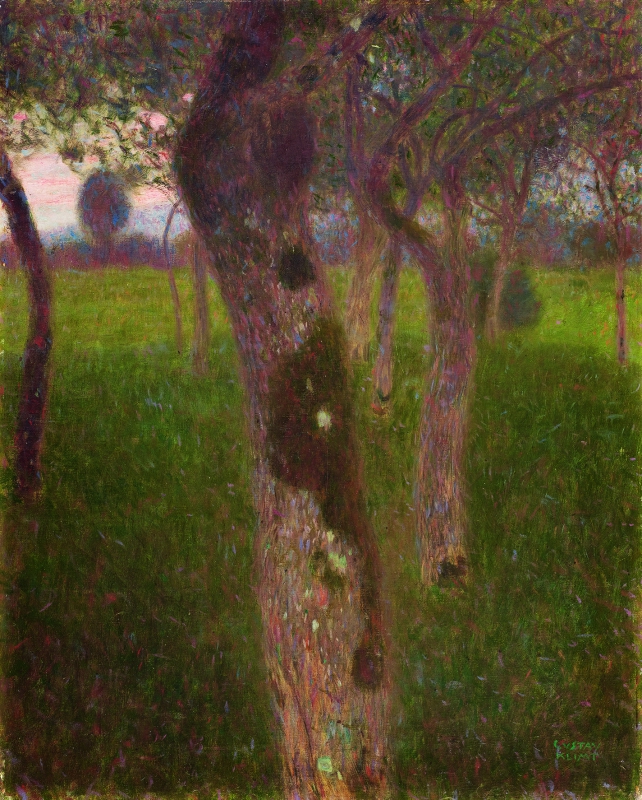
 

GUSTAV KLIMT
1862–1918
OBSTGARTEN AM ABEND, 1898
ORCHARD IN THE EVENING
Öl auf Leinwand
| Oil on canvas
69 × 55,6 cm
Privatsammlung/Dauerleihgabe im Leopold Museum, Wien
Private collection/Permanent loan, Leopold Museum, Vienna
Foto
| Photo:
Leopold Museum, Wien
| Vienna/
Manfred Thumberger
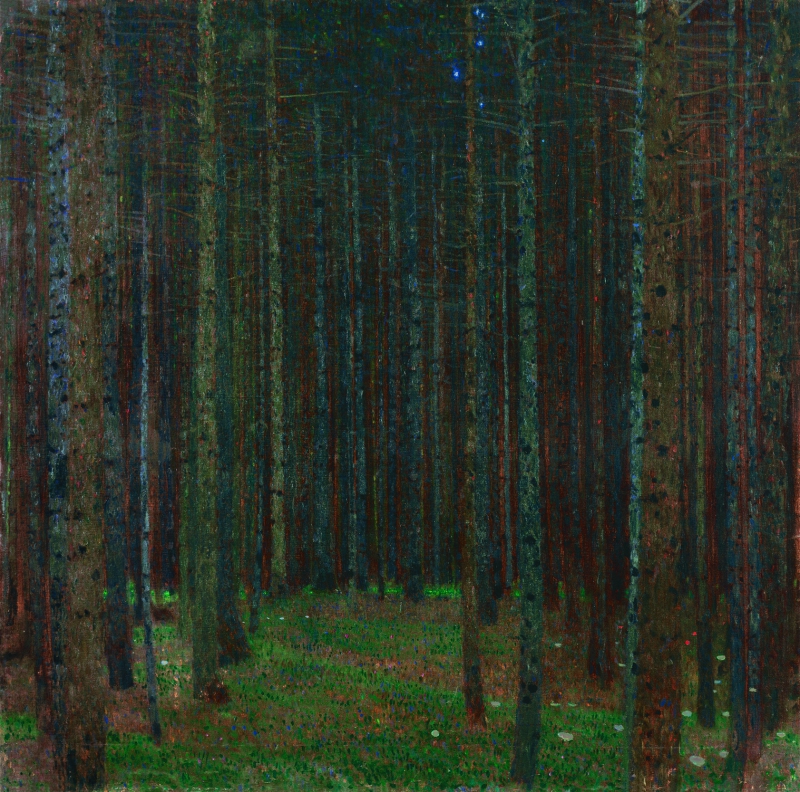
 

GUSTAV KLIMT
1862–1918
TANNENWALD I, 1901
PINE FOREST I
Öl auf Leinwand
| Oil on canvas
90,5 × 90 cm
Kunsthaus Zug, Stiftung Sammlung Kamm
Foto
| Photo:
Kunsthaus Zug, Stiftung Sammlung Kamm/Alfred Frommenwiler
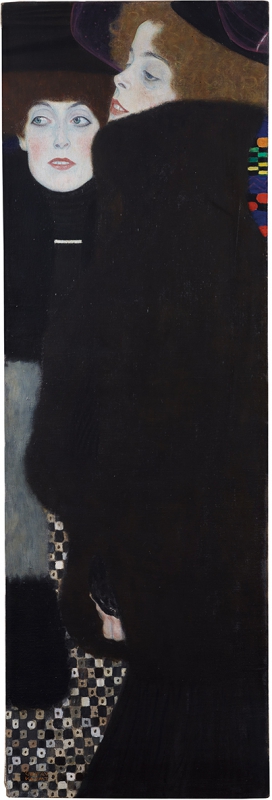


GUSTAV KLIMT
1862–1918
FREUNDINNEN I (DIE SCHWESTERN), 1907
FRIENDS I (SISTERS)
Öl auf Leinwand
| Oil on canvas
125 × 42 cm
Klimt-Foundation, Wien
| Vienna
Foto
| Photo:
Klimt-Foundation, Wien
| Vienna
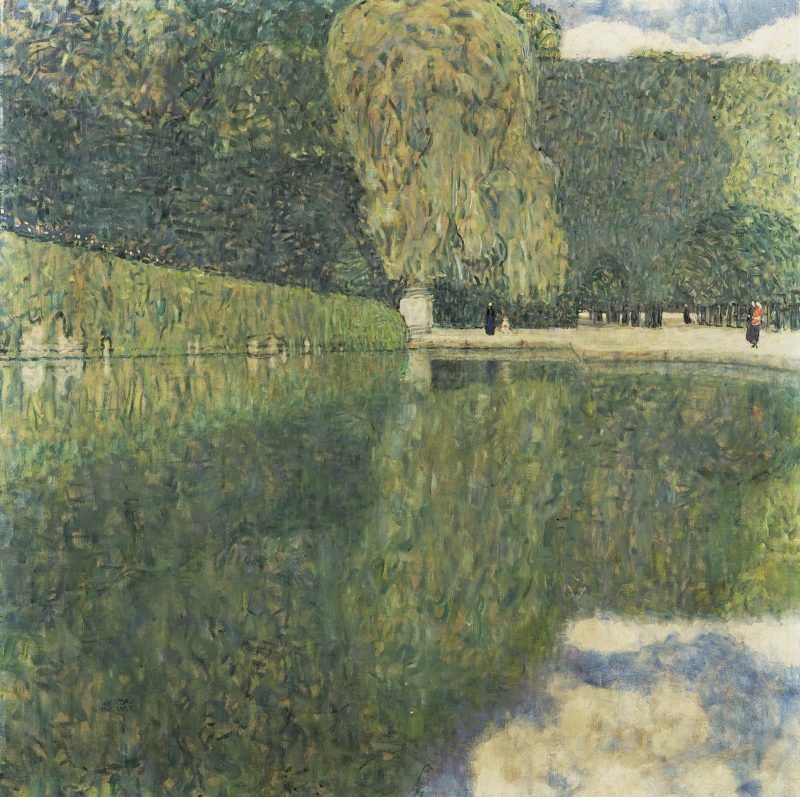


GUSTAV KLIMT
1862–1918
SCHÖNBRUNNER LANDSCHAFT, 1916
SCHÖNBRUNN LANDSCAPE
Öl auf Leinwand
| Oil on canvas
110 × 110 cm
Privatbesitz
| Private collection
Foto
| Photo:
Leopold Museum, Wien
| Vienna/
Manfred Thumberger
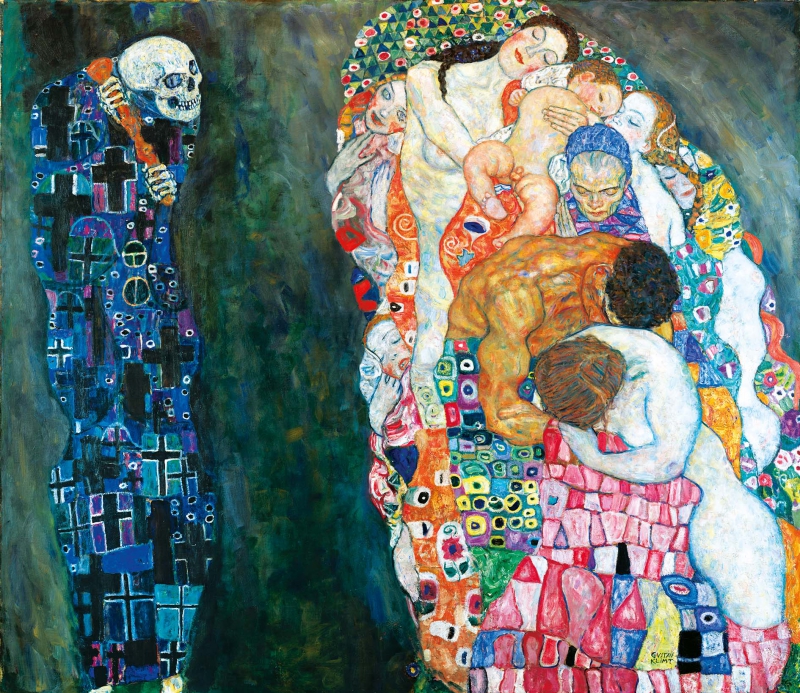
 

GUSTAV KLIMT
1862–1918
TOD UND LEBEN, 1910/11, UMGEARBEITET 1915/16
DEATH AND LIFE, REWORKED IN 1915/16
Öl auf Leinwand
| Oil on canvas
180,8 × 200,6 cm
Leopold Museum, Wien
| Vienna
Foto
| Photo:
Leopold Museum, Wien
| Vienna/
Manfred Thumberger


GUSTAV KLIMT
1862–1918
DIE BRAUT, 1917/18 (UNVOLLENDET)
THE BRIDE, 1917/18 (UNFINISHED)
Öl, schwarze Kreide auf Leinwand
| Oil, black chalk on canvas
165 × 191 cm
Klimt-Foundation, Wien
| Vienna
Foto
| Photo:
Klimt-Foundation, Wien
| Vienna
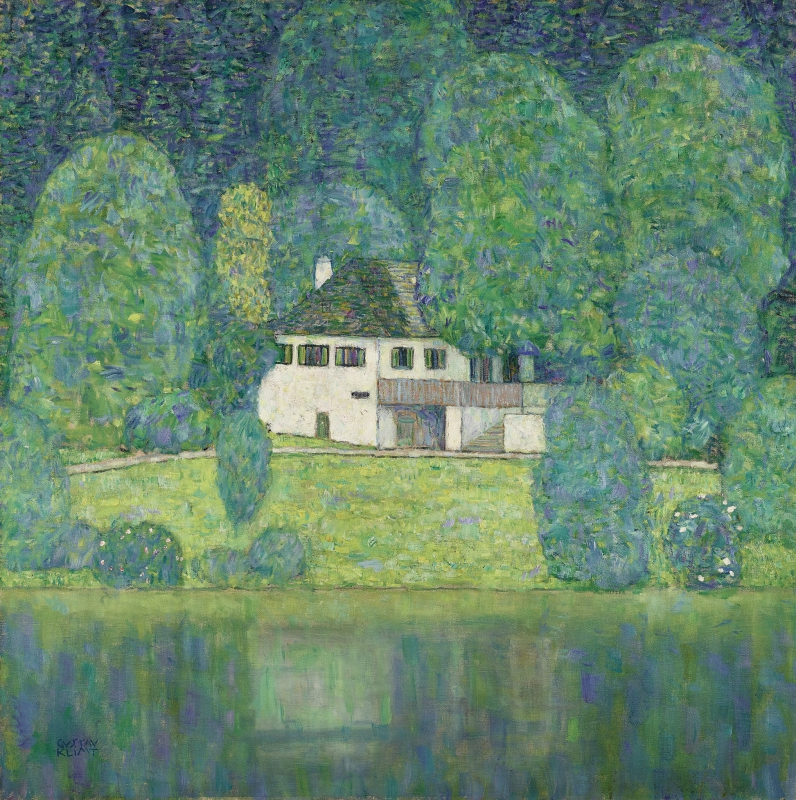
 

GUSTAV KLIMT
1862–1918
LITZLBERGKELLER, 1915/16
Öl auf Leinwand
| Oil on canvas
110 × 110 cm
Privatsammlung
| Private collection
Foto
| Photo:
Bildarchiv
| picture archives
Manfred Thumberger
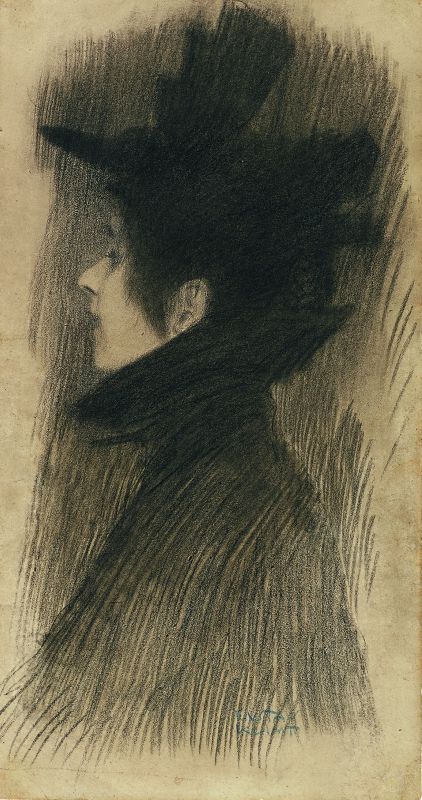


GUSTAV KLIMT
1862–1918
BRUSTBILD EINER JUNGEN DAME MIT HUT UND CAPE IM PROFIL NACH LINKS, 1897/98
BUST PORTRAIT OF A YOUNG LADY WITH HAT AND CAPE IN PROFILE FROM THE LEFT
Kohle, schwarze Kreide auf Packpapier
| Charcoal, black chalk on brown paper
42,3 × 22,6 cm
Leopold Museum, Wien
| Vienna
Foto
| Photo:
Leopold Museum, Wien
| Vienna/
Manfred Thumberger
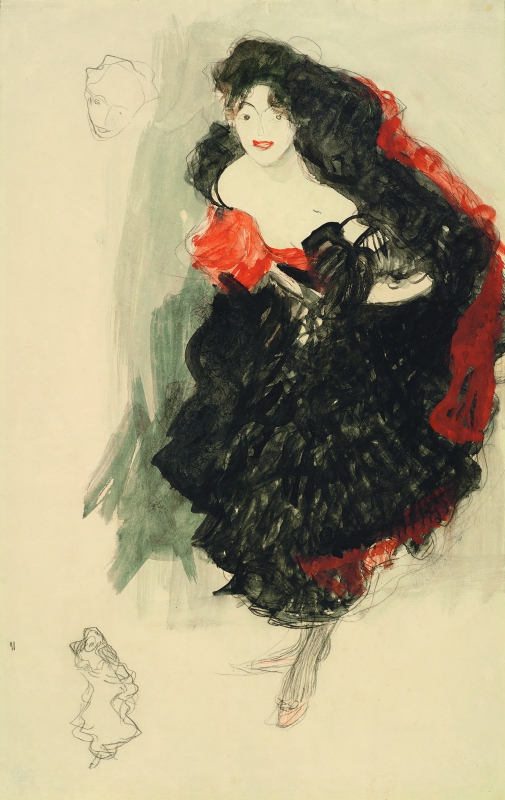
 
 
GUSTAV KLIMT
1862–1918
TÄNZERIN IM FLAMENCO-KOSTÜM,
STUDIE ZU „JUDITH II (SALOME)“, UM 1908
DANCER IN A FLAMENCO COSTUME,
STUDY FOR
“
JUDITH II (SALOME), C. 1908
Bleistift, roter Farbstift, schwarze Kreide, Gouache, Deckweiß auf Japanpapier
Pencil, red crayon, black chalk, gouache, opaque white on Japanese paper
55 × 34,9 cm
Leopold Museum, Wien
| Vienna
Foto
| Photo:
Leopold Museum, Wien
| Vienna/
Manfred Thumberger


Monday, July 2, 2018

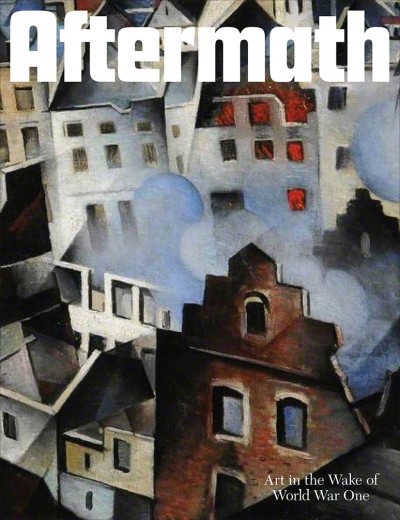
Aftermath: Art in the Wake of World War One

Tate Britain, Linbury Galleries

 5 June – 23 September 2018


George Grosz Grey Day 1921.
George Grosz Grey Day 1921. Staatliche Museen zu Berlin, Nationalgalerie. Acquired by the Federal State of Berlin © Estate of George Grosz, Princeton, N.J. 2018.
Marking 100 years since the end of the First World War, this exhibition explores the immediate impact of the conflict on British, German and French art. As the first exhibition to examine the culture of memorials alongside new developments in post-war art it will consider how artists responded to the physical and psychological scars left on Europe. Aftermath brings together over 150 works from 1916 to 1932 by artists including George Grosz, Fernand Léger and C.R.W. Nevinson. During this tumultuous period, artists began to explore new imagery and new ways of making art in their responses to the experience of war, the culture of remembrance, and the rebuilding of cities and societies.
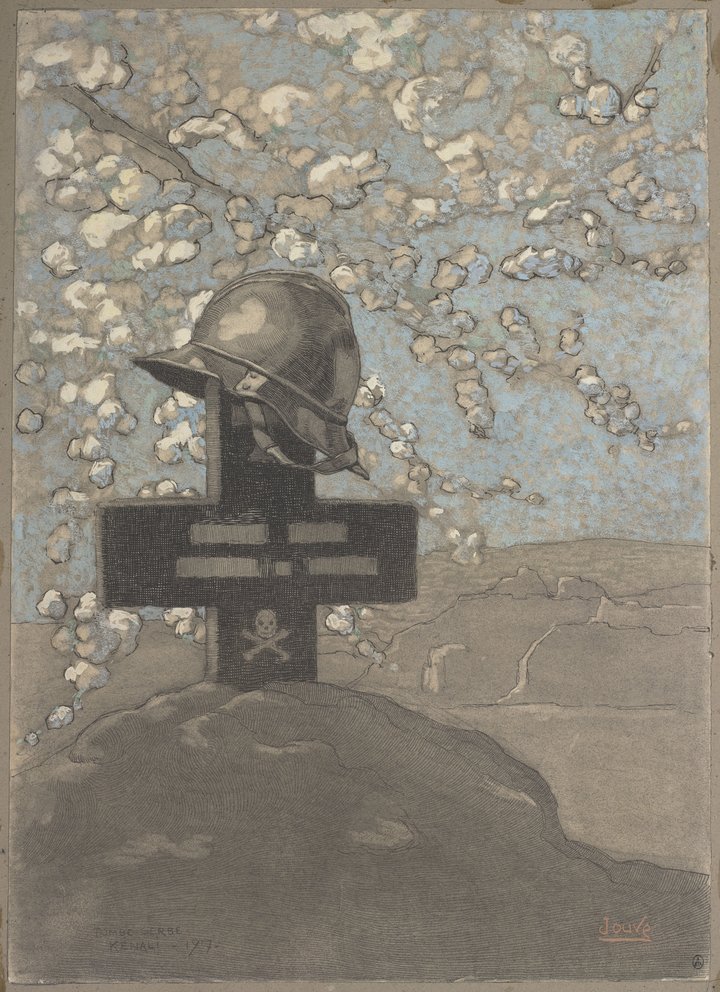
The First World War began to be constructed as memory almost as soon as it had begun. During the war artists created works which reflected on its long-term impact. Battlefield landscapes and images of soldiers’s graves such as

 Image result for [[["xjs.sav.en_US.y5vqFNLwkD0.O",5]],[["id","type","created_timestamp","last_modified_timestamp","signed_redirect_url","dominant_color_rgb","tag_info","url","title","comment","snippet","image","thumbnail","num_ratings","avg_rating","page","job"]],[["dt_fav_images"]],10000]

William Orpen’s A Grave in a Trench 1917

 Image result for [[["xjs.sav.en_US.y5vqFNLwkD0.O",5]],[["id","type","created_timestamp","last_modified_timestamp","signed_redirect_url","dominant_color_rgb","tag_info","url","title","comment","snippet","image","thumbnail","num_ratings","avg_rating","page","job"]],[["dt_fav_images"]],10000]

and Paul Jouve’s Tombe d’un soldat serbe a Kenali 1917 evoked silence and absence in the aftermath of battle.
After the armistice official public memorials provided a focus for mourning and remembrance. Artists including Käthe Kollwitz, André Mare and Charles Sargeant Jagger produced sculptural memorials to commemorate those who lost their lives in the conflict. The exhibition explores the different forms that memorials took, and their importance for social and political cohesion. It also shows the more personal memorials created using relics of the battlefield such as shrapnel and mortar shells.
Soldiers’ wounds were an alternative memorial, visible in flesh rather than stone, and disabled veterans were a constant reminder of the terrible cost of war.

Works such as


George Grosz - “Daum” Marries her Pedantic Automaton “George” 1920.jpg

George Grosz (1893-1959)
Grey Day
1921
Oil paint on canvas
1150 x 800 mm
Staatliche Museen zu Berlin, Nationalgalerie. Acquired by the Federal State of Berlin.
© Estate of George Grosz, Princeton, N.J. 2018. 

George Grosz’s Grey Day 1921


Otto Dix - Prostitute and Disabled War Veteran. Two Victims of Capitalism 1923.jpg

Otto Dix (1891-1969)
Prostitute and Disabled War Veteran. Two Victims of Capitalism
1923
Pen and ink on yellow card-board
469 x 373 mm
LWL- Museum für Kunst and Kultur (Westfälisches Landesmuseum) / Sabine Ahlbrand-Dornseif. © Estate of Otto Dix 2018.

and Otto Dix’s Prostitute and Disabled War Veteran 1923 used imagery of disabled veterans to demonstrate the inequalities in German society. In France, veterans were an important part of the visual culture of memorial ceremonies. In Britain, images of wounded soldiers such as Henry Tonks’s medical pastel portraits were usually seen in the context of therapy and healing.
This turbulent period also saw the birth of dada and surrealism in the work of Hannah Höch, Max Ernst, André Masson and Edward Burra among others. Artists used new visual forms to process experiences and memories of conflict. Dada photomontages by Hannah Höch reused war imagery while fragmented bodies and prosthetic limbs featured in works like Grosz and Heartfield’s The Petit-Bourgeois Philistine Heartfield Gone Wild. Electro-Mechanical Tatlin Sculpture 1920.

As well as the physical and psychological scars left on Europe, the exhibition also shows how post-war society began to rebuild itself, inspiring artists such as Georges Braque, Christian Schad and Winifred Knights to return to classicism and tradition while others such as Fernand Léger, Paul Citroen and C.R.W. Nevinson turned their minds to visions of a technological future in the modern city.

Aftermath: Art in the Wake of World War One is curated by Dr Emma Chambers, Curator, Modern British Art and Dr Rachel Rose Smith, Assistant Curator, Modern British Art.

 Aftermath Art in the Wake of World War One

The exhibition is accompanied by a catalogue from Tate Publishing .

Aftermath: Art in the Wake of World War One
Tate Britain, 5 June – 20 September 2018

C.R.W Nevinson - Paths of Glory 1917.jpg

Christopher Richard Wynne Nevinson (1889 – 1946)
Paths of Glory
1917
Oil paint on canvas
457 x 609 mm
© IWM (Art.IWM ART 518)

Christian Schad - Self-Portrait 1927.jpg

Christian Schad 1894 – 1982
Self-Portrait
1927
Oil on wood
760 x 620 mm
Lent from a private collection 1994
© Christian Schad Stiftung Aschaffenburg/VG Bild-Kunst, Bonn and DACS, London 2017

Christopher Richard Wynne Nevinson - Ypres After the First Bombardment 1916.jpg

Christopher Richard Wynne Nevinson (1889 – 1946)
Ypres After the First Bombardment
1916
Oil paint on canvas
991 x 1248 x 73 mm
Museums Sheffield 

Curt Querner - Demonstration 1930.jpg

Curt Querner (1904 – 1976)
Demonstration
1930
Oil paint on canvas
870 x 660 mm
Staatliche Museen zu Berlin, Nationalgalerie.
Photo credit: bpk/ Jörg P. Anders
© DACS, 2018

Edward Burra, The Snack Bar 1930 (c) The Estate of Edward Burra, courtesy Lefevre Fine Art, London.jpg

Edward Burra 1905-1976
The Snack Bar
1930
Oil paint on canvas
762 x 559 mm
Tate
© The estate of Edward Burra, courtesy Lefevre Fine Art, London
George Grosz - Grey Day 1921.jpg

George Grosz (1893-1959)
“Daum” Marries her Pedantic Automaton “George” in May 1920, John Heartfield is Very Glad of It (Meta-Mech. Constr. After Prof. R. Huasmann)
1920
Watercolour, pencil, pen, ink and collage on card
425 x 319 mm
Berlinische Galerie, Landesmuseum für Moderne Kunst, Berlin
© Estate of George Grosz, Princeton, N.J. 2018. 

George Grosz -The Petit-Bourgeois Philistine Heartfield Gone Wild. Electro-Mechanical Tatlin Sculpture 1920.jpg

George Grosz (1893-1959)
The Petit-Bourgeois Philistine Heartfield Gone Wild. Electro-Mechanical Tatlin Sculpture
1920
900 x 450 x 450 mm
Berlinische Galerie, Landesmuseum für Moderne Kunst, Berlin
© Estate of George Grosz, Princeton, N.J. 2018. 

Georges Rouault - Arise, you dead! (War, plate 54) .jpg

Georges Rouault (1871-1958)
"Arise, you dead!" (War, plate 54)
1922-27
Photo-etching, aquatint and drypoint on paper
800 x 630 x 30 mm
Fondation Georges Rouault
© ADAGCP, Paris and DACS, London 2018

Hannah Hoch - Dada Rundschau 1919.jpg

Hannah Hoch (1889 – 1978)
Dada Rundschau
1919
437 x 345 mm
Berlinische Galerie, Landesmuseum für Moderne Kunst, Berlin
© DACS, 2018

Jacob Epstein - Torso in Metal from 'The Rock Drill' 1913-14.jpg

Jacob Epstein (1880-1959)
Torso in Metal from “The Rock Drill”
1913-14
Bronze
705 x 584 x 445 mm
Tate
© The Estate of Jacob Epstein

Otto Dix - War, Skull 1924.jpg

Otto Dix (1891-1969)
War: Skull
1924
Etching on paper
257 x 195 mm
The George Economou Collection.
© Estate of Otto Dix 2018

Paul Nash - Wire 1918-19.jpg

Paul Nash (1889 – 1946)
Wire
1918-9
Watercolour, chalk and ink on paper
486 x 635 mm
© IWM (Art.IWM ART 2705)

William Orpen - To the Unknown British Soldier in France 1921-8.jpg

William Orpen (1878 – 1931)
To the Unknown British Soldier in France
1921-8
Oil paint on canvas
1542 x 1289 mm
© IWM (Art.IWM ART 4438)

William Roberts - The Dance Club (The Jazz Party) 1923.jpg

William Roberts (1895 – 1980)
The Dance Club (The Jazz Party)
1923
Oil paint on canvas
762 x 1066 mm
Leeds Museums and Galleries
© Estate of John David Roberts. By permission of the Treasury Solicitor


Matisse et Picasso, la comédie du modèle


Musée Matisse

Du 23 juin 2018 au 29 sept. 2018

Image result for [[["xjs.sav.en_US.y5vqFNLwkD0.O",5]],[["id","type","created_timestamp","last_modified_timestamp","signed_redirect_url","dominant_color_rgb","tag_info","url","title","comment","snippet","image","thumbnail","num_ratings","avg_rating","page","job"]],[["dt_fav_images"]],10000]

Henri Matisse, Marguerite, 1907. Huile sur toile Musée national Picasso-­‐Paris. Donation en 1973 © Succession H. Matisse. Photo: © RMN-­‐Grand Palais (Musée national Picasso-­‐Paris) / Mathieu Rabeau.

Henri Matisse

Henri Matisse
Jeune fille en blanc, fond rouge, hiver 1946
Huile sur toile
Dation Pierre Matisse en 1991
Musée national d’art moderne / Centre de création industrielle, Centre Pompidou, Paris
Dépôt au musée des Beaux-arts de Lyon, 1993
© Succession H. Matisse
Photo : © RMN-Grand Palais / René-Gabriel Ojéda / Thierry Le Mage  


Pablo Picasso tableau

Pablo Picasso
Peintre à la palette et au chevalet, 1928
Huile sur toile
Musée national Picasso-Paris
Dation en 1979
© Succession Picasso, 2018
Photo : © RMN-Grand Palais (Musée national Picasso-Paris) / Adrien Didierjean


 Pablo Picasso. The Pan Flute, 1923


La Flûte de Pan, Pablo Picasso, 1923, Antibes, huile sur toile, 205 x 174 cm, , Dation Pablo Picasso, 1979, MP79, Musée national Picasso, -, Paris © RMN, -, Grand Palais (Musée national P, icasso, -, Paris) / Jean, -, Gilles Berizzi © , Succession Picasso 2017,

Sunday, July 1, 2018

Classic Beauties. Artists, Italy and the Esthetic Ideals of the 18th Century

 
Hermitage Amsterdam’s new exhibition (through Jan. 18), Classic Beauties. Artists, Italy and the Esthetic Ideals of the 18th Century, is a summer art highlight on the Continent.

amsterdam_hermitage_beauties_003.jpg


The show tells how artists and tourists flocked to Italy, and more especially Rome, in the second half of the eighteenth century. From all over Europe they travelled to the Eternal City in search of inspiration and to see for themselves the newly excavated classical Greco-Roman sculptures and buildings. Their experiences prompted a new and austere kind of fashionable architecture and, in the visual arts, an unprecedentedly sensual style that sent shock waves through society: a naked, superhuman beauty more daring than anything attempted by the Greeks and Romans. Neoclassicism was born.

Image result for [[["xjs.sav.en_US.y5vqFNLwkD0.O",5]],[["id","type","created_timestamp","last_modified_timestamp","signed_redirect_url","dominant_color_rgb","tag_info","url","title","comment","snippet","image","thumbnail","num_ratings","avg_rating","page","job"]],[["dt_fav_images"]],10000]
 

The archaeological finds sparked a craze for travel among young aristocrats across the continent. Many spent months travelling to and sightseeing in Italy. Among them were Johann Wolfgang von Goethe and the ‘Count and Countess of the North’ (the later Russian Tsar Paul I and his wife Maria Fyodorovna). In the course of their ‘Grand Tour’ they encountered the greatest artists of the day.
With over sixty sculptures, paintings and drawings by 25 top names, the exhibition offers visitors their own Grand Tour of Italy. On the way, it introduces them to the artists of the period, including Pompeo Batoni, Anton Raphael Mengs, Angelica Kauffmann and – most celebrated of all – Antonio Canova. The show features no fewer than eight sculptures by the latter, including his iconic

Three Graces, Cupid and Psyche and Hebe.

photo: Aurelio Amendola, State Hermitage Museum, St Petersburg

To create Classic Beauties, the Hermitage Amsterdam has had exclusive access to the collection of the State Hermitage Museum in St Petersburg. The displays are further enriched with loans from other private and public collections, including Paul and Maria’s Pavlovsk Palace in Russia and the Teylers Museum in Haarlem (The Netherlands).

Lots of images