Monday, October 5, 2020

ARTEMISIA


National Gallery

6 April – 26 July 2020 (postponed)

New dates: 3 October 2020 – 24 January 2021

For the first time in the UK, a major monographic exhibition of the work of Artemisia Gentileschi, will open at the National Gallery in April 2020.

At the centre of the exhibition will be the Gallery’s recently acquired

 Artemisia Gentileschi - Self-Portrait 5365.jpg

Self Portrait as Saint Catherine of Alexandria, which will be displayed alongside other closely related works by Artemisia for the first time since its discovery in 2017.

Artemisia Gentileschi is considered one of the most accomplished followers of Caravaggio, whom she must have known personally through her father, Orazio Gentileschi. At a time when women artists were not easily accepted, she was exceptional for becoming the first female member of the Accademia delle Arti del Disegno in Florence and for enjoying a long and successful career, spanning more than forty years.

'Artemisia' will bring together around thirty-five works by the Italian Baroque artist from both public institutions and private collections around the world. The exhibition will present a highly selective survey of Artemisia’s career – from her youthful training in Rome, where she learnt to paint under the guidance of her father, to her formative years in Florence and her return to Rome just a few years later. The exhibition will end with Artemisia’s brief trip to London to join her dying father, and the establishment of her studio in Naples, where she lived for the last 25 years of her life.
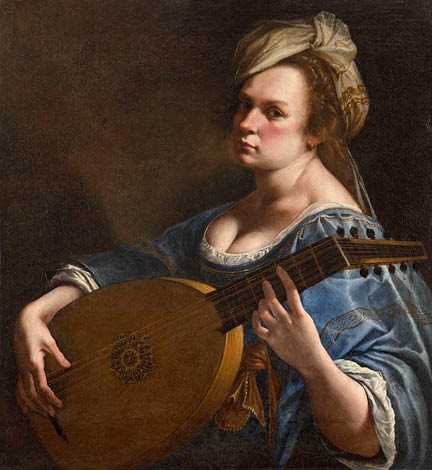

Artemisia Gentileschi, Self-Portrait as a Lute Player, c. 1615-18 © Wadsworth Atheneum Museum of Art

Artemisia Gentileschi, 'Self-Portrait as a Lute Player', about 1615-18 © Wadsworth Atheneum Museum of Art


Key loans will include Artemisia Gentileschi’s 'Self-Portrait as a Lute Player' (about 1615-18) from the Wadsworth Atheneum Museum of Art in Hartford, Connecticut, painted around the same time as the National Gallery’s own painting.


‘I will show Your Illustrious Lordship what a woman can do’
(Letter from Artemisia Gentileschi to Don Antonio Ruffo, 7 August 1649)

 
The inspiration for this exhibition is the National Gallery’s recent acquisition of Artemisia Gentileschi’s Self Portrait as Saint Catherine of Alexandria (about 1615–17), the first painting by the artist to enter a UK public collection.

At a time when women artists were not easily accepted, Artemisia was exceptional. Her career spanned more than 40 years and she gained fame and admiration across Europe, counting leading rulers among her patrons. She was the first woman to gain membership to the artists’ academy in Florence.

Although Artemisia was greatly admired during her lifetime, she was essentially rediscovered in the 20th century. Certain elements of her biography – particularly her rape as a young woman and the torture she endured during the trial that followed – have sometimes overshadowed discussions about her artistic achievements, but today she is recognised as one of the most gifted painters of the Italian Baroque period. Her art and life continue to inspire novels, films, documentaries, musical and theatrical productions.

‘with me Your Lordship will not lose and you will find the spirit of Caesar in the soul of a woman’
(Letter from Artemisia Gentileschi to Don Antonio Ruffo, 13 November 1649)

'Artemisia' will present a highly selective survey of the artist’s career, bringing together around thirty of her works from both public institutions and private collections around the world - the majority of the loans in the exhibition have never been seen in the UK before.

The earliest work in the exhibition will be her first signed and dated work, 'Susannah and the Elders' (1610, Kunstsammlungen Graf von Schönborn, Pommersfelden) painted when she was just 17. Artemisia returned to this subject throughout her career, approaching its story afresh with each retelling, and her last-known painting, of the same subject, dating from 42 years later, will also be included in the exhibition ('Susannah and the Elders', 1652, Polo Museale dell’Emilia Romagna, Collezioni della Pinacoteca Nazionale, Bologna).

Visitors will be invited to get to know Artemisia more fully ‘in the round’ – appreciating her wit, passion and resilience, as well as her vulnerability - through a number of her recently discovered personal letters, especially conserved for the show.

The exhibition is arranged broadly chronologically, starting with Artemisia’s training in Rome, where she learnt to paint under the guidance of her father Orazio, whose 'Judith and her Maidservant' (about 1608, The National Museum of Art, Architecture and Design, Oslo) will be on display beside Artemisia’s earliest paintings. In addition to her 'Susannah', the first room will also include her 'Cleopatra' (about 1611-12, Etro Collection) and 'Danaë' (about 1612, Saint Louis Art Museum, Museum Purchase).


Many of Artemisia’s paintings have been read in the past as autobiographical and there is no doubt that her personal identity is closely intertwined with her artistic production. This is especially true of the paintings she produced in Florence (1612/13-20), where she repeatedly used her own image; perhaps as a vehicle for self-promotion. The room dedicated to her Florentine period ('Becoming Artemisia in Florence') opens with a trio of works for which she is the model, and which all date from the mid-1610s - 'Self Portrait as a Female Martyr' (Private collection USA), 'Self Portrait as a Lute Player' (Wadsworth Atheneum Museum of Art, Hartford, CT. Charles H. Schwartz Endowment Fund) and 'Self Portrait as Saint Catherine of Alexandria' (The National Gallery, London). Nearby will also be displayed her 'Saint Catherine of Alexandria' (Gallerie degli Uffizi, Florence) which, as recent scientific analysis in Florence and London has shown, is closely related to the National Gallery’s own self portrait.
This room will also include one of the undoubted highlights of the exhibition, bringing side by side for the first time in the UK the two versions of Artemisia’s most famous and iconic composition of 'Judith beheading Holofernes' (one about 1612-13 Museo e Real Bosco di Capodimonte, Naples and the other about 1613-14, Gallerie degli Uffizi, Florence). In this depiction of female determination over brute strength, Artemisia spares us none of the gore. Blood streams down the white bedsheets as the Assyrian general Holofernes writhes under the weight of Judith's maidservant. Blood spatters Judith's clothes as she grasps the sword with one hand and pulls his hair with the other, a look of determination on her face. The visceral violence of these paintings has frequently been interpreted as Artemisia taking revenge in paint, translating onto canvas her own experience of physical attack. 'Judith and her Maidservant with the Head of Holofernes' (about 1623-25, Detroit Institute of Arts, Gift of Mr. Leslie H. Green), a Caravaggesque masterpiece which shows a moment later in the narrative, just as Judith prepares to make her escape from the enemy camp with Holofernes’s head, can be seen in a nearby room of the exhibition.

‘…a woman’s name raises doubts until her work is seen…’
(Letter from Artemisia Gentileschi to Don Antonio Ruffo, 30 January 1649)
Artemisia had enormous gifts as a storyteller and she brought an unprecedented, female, perspective to traditional subjects, many of which are drawn from the Bible or ancient history. Her paintings treat well-known themes often featuring female heroines – Judith, Susannah, Cleopatra, Lucretia – and Artemisia was able to get under the skin of her protagonists with astonishing sensitivity and truthfulness. Her ability to paint female figures of strength, passion and vulnerability remain a feature of her work throughout her career.

Highlights of ‘female heroes’ in 'Artemisia' include 'Lucretia' (about 1620-25, Etro Collection), 'Cleopatra' (about 1633-35, Private Collection), 'Clio, Muse of History' (1632, Property of the Fondazione Pisa, exhibited at Palazzo Blu, Pisa), 'David and Bathsheba' (Columbus Museum of Art, Ohio: Museum Purchase, Schumacher Fund), 'Jael and Sisera' (dated 1620, Szépművészeti Museum / Museum of Fine Arts, Budapest) 'Susannah and the Elders' (1622, The Burghley House Collection, UK), and the recently discovered 'Mary Magdalene in Ecstasy' (about 1620-25, Private European collection), on display in the UK for the first time.  

A room called 'The Hand of the Famed Artemisia' considers the artist through the eyes of others – a 1625 ‘portrait’ drawing of her hand by the French artist Pierre Dumonstier II, 'The Right Hand of Artemisia Gentileschi Holding a Brush' (The British Museum), a bronze medal 'Portrait of Artemisia Gentileschi' (unknown artist, about 1625, The Stephen K. and Janie Woo Scher Collection, New York) and a 'Portrait of Artemisia Gentileschi' with painter’s palette in hand by her friend, the French painter Simon Vouet (about 1623-6, Property of the Fondazione Pisa, exhibited at Palazzo Blu, Pisa). Here we also get to see Artemisia’s own handwriting - and ‘hear’ her voice - through a series of passionate letters to her Florentine lover Francesco Maria Maringhi, written between 1618 and 1620. These were only discovered in 2011 and have never been seen outside of Italy (Archivio Storico Frescobaldi, Florence).  

Two rooms of the exhibition will be dedicated to Artemisia’s time in Naples, the city in which she settled for the last 25 years of her life and where she established a thriving studio with her daughter Prudenza, also a painter. Here, Artemisia’s first altarpieces will be on show – 'Annunciation' (1630, Museo e Real Bosco di Capodimonte, Naples) and 'Saint Januarius in the Amphitheatre at Pozzuoli' (about 1635-7, Cathedral Basilica San Procolo, Diocese of Pozzuoli, Naples) – as well as works made in collaboration with other leading Neapolitan artists.

The exhibition will end with Artemisia’s brief trip to London, where she was reunited with her father just months before his death.  It was here, at the court of Charles I of England, that she painted 'Self Portrait as the Allegory of Painting (La Pittura)' (about 1638-9, The Royal Collection / HM Queen Elizabeth II), which has long been regarded as the pinnacle of her achievements. Although not a literal self portrait, it embodies the artist’s vision of Painting as a physical and purposeful act and the inspired woman at her easel is unquestionably intended to refer to Artemisia herself.

‘I shall not bother you any longer with this womanly chatter, for the works will speak for themselves’
(Letter from Artemisia Gentileschi to Don Antonio Ruffo, 1649-51)

The exhibition is curated by Letizia Treves, the National Gallery James and Sarah Sassoon Curator of Later Italian, Spanish, and French 17th-century Paintings. She says:
"Artemisia is an inspirational figure of resilience and unbowed creativity in the face of exceptionally challenging odds. I hope that this exhibition will bring Artemisia’s artistic achievements to the fore, so that visitors can fully appreciate what a talented painter and extraordinary woman she really was."

Dr Gabriele Finaldi, Director of the National Gallery, says:
“The first exhibition devoted to Artemisia Gentileschi in Britain, a country she visited and worked in at the end of the 1630s, celebrates her astounding artistic achievements with a superb selection of her paintings. She was a remarkable and immensely admired artist in her lifetime and she is an inspirational figure in our own time.”

Michele Coppola, Executive Director Art, Culture, and Historical Heritage, Intesa Sanpaolo says:
“Intesa Sanpaolo is delighted to support Artemisia and to make possible the conservation of a key and rarely-lent work by Artemisia Gentileschi, ‘The Martyrdom of St Januarius in the Amphitheatre’ from Pozzuoli Cathedral, in Naples. As Italy’s leading bank, we believe it is vital to support and promote the best of Italian art, heritage and culture at home and abroad. This belief is the cornerstone of our own cultural project, ‘Progetto Cultura’, one of the most ambitious arts and cultural programmes to be established by a financial institution. The acclaim of Intesa Sanpaolo’s ‘Progetto Cultura’ programme, its extraordinary exhibitions, and the reputation of its museums, the Gallerie d’Italia in Milan, Naples and Vicenza, have ensured our Bank’s standing as a world class partner in the field of art and culture. We are delighted to be in partnership with the National Gallery, London for Artemisia and look forward to our own 2021 exhibition at the Gallerie d’Italia in Naples dedicated this extraordinary Italian artist and her relationship with Southern Italy.”


Sunday, October 4, 2020

The Piranesi Principle Marking the 300th Birthday of the Great Italian Master

An exhibition of the Kunstbibliothek – Staatlichen Museen zu Berlin and the Humboldt-Universität zu Berlin, in cooperation with the Kupferstichkabinett – Staatlichen Museen zu Berlin.

Giovanni Battista Piranesi (1720–1778) was one of the great polymaths of the 18th century. He carved out an international career as an archaeologist, artist, collector, designer, publisher and author. The principle behind his success was to grasp the multifaceted nature of reality and transform it into something new. He found inspiration everywhere: in the artifacts of bygone epochs and faraway regions, in images from science, technology and opera, and even in denunciations and defeats.

This exhibition celebrating the 300th anniversary of his birth brings this Piranesi principle back to life in all its creativity. It is centred around Piranesi’s masterpieces of engraving, his books, pamphlets, satirical illustrations, and drawings from the collections of the Kunstbibliothek and the Kupferstichkabinett, some of which are being shown for the very first time.

Piranesi's Rome

The exhibition begins with a trip back through time to Piranesi’s Rome. While today’s tourists marvel at the city’s ancient ruins in an urban setting, in the 18th century the Venetian-born artist lived and worked in a city surrounded by a landscape of ruins, in which monuments overgrown by plants protruded from the ground. It was in this context that Piranesi found the motifs for his images and architectural visions, collected artefacts for his “Museo”, and conducted research into art and architectural history – the results of which he published in monumental works such as the Antichità Romane (1756). And it was here that he found his clientele and his audience: artists, art scholars, archaeologists, antiques and art dealers came from all over the world to make their fortune in the ‘eternal city’ – or, like Piranesi himself – to earn their immortality.

Piranesi’s Stage

Opera and theatre have been influential mass media since the Baroque era. Performances took place not only in private residences, but also on the street and in public squares, where religious festivities were staged as elaborate spectacles. In the 18th century, theatre was a big business, for which artists designed stage sets and decorations, and in doing so revolutionised the viewing habits of their audiences. Piranesi, who had already become acquainted with this scene in Venice, picked up on these ideas and used them to dramatise his compositions. Both his Vedute (Views) and his famous Carceri (Prisons) largely owe their magic to the influence of the theatre of the time.

Piranesi’s Laboratory

As well as the dream factory of theatre, the technical imagery of the sciences was another a source of great fascination for Piranesi. Imagining his workshop as a laboratory, he experimented with creating futuristic images in order to find ways to communicate the findings of his research on archaeology and art with scholars and the public alike. In the section Piranesi’s Laboratory, the exhibition focuses on the monumental display panels, reconstructions and maps that made him famous within the sciences far beyond Italy, and saw him named a member of the Society of Antiquaries in London in 1757 and an honorary member of the Accademia di San Luca in Rome in 1761. His images are ground-breaking and ahead of their time above all because of their resemblance to a computer desktop featuring a multitude of windows open simultaneously. They succeeded in sealing Piranesi’s status as a pioneer of visual communication.

Piranesi’s Palazzo

The chapter Piranesi’s Palazzo takes viewers to the central site of his work: Palazzo Tomati, not far from the Spanish steps, where Piranesi resided from 1761 onwards, ran a large workshop, and opened his “Museo” (a warehouse of antiques and self-manufactured objects) to tourists and art scholars. The drawings by Piranesi that are held by the Kunstbibliothek, including his renowned fireplace designs, provide important information about his work process. Piranesi was open to everything: he drew on both Roman and Egyptian antiquity, Etruscan and Greek art, and often came up with daring hybrid forms. Even the wastepaper in his studio provided points of departure and stimulus for his creative processes. Recycling and re-using were part of his daily routine in the workshop, especially as paper was a valuable resource. The exhibition makes evident how the recto and verso of his prints, drawings and notes were used over and over again for new sketches.

Piranesi’s Arena

Finally, in the section Piranesi’s Arena, the exhibition also presents Piranesi as a polarising figure in the international art scene. Four people in his life are presented to exemplify this tension, beginning with fellow Venetian Pope Clement XIII (1693­–1769), who was particularly important due to his role as a patron, and then looking at three antagonists who infuriated Piranesi to such an extent that he resorted to unusual artistic weapons. He dedicated an entire publication to taking down the argument of French art scholar Pierre-Jean Mariette (1694­–1774), who had questioned the significance of Roman antiquity, with words and pictures. The name of his Irish patron, Lord Charlemont (1728–1799), who had withdrawn funding for one of his largest projects, was visually erased from public memory. And to express his displeasure in a dispute with French archaeologist Bertrand Capmartin de Chaupy (1720–1798), he produced a detailed and masterfully elaborate depiction of his own excrement.

The exhibition and catalogue were jointly conceived by students, curators and researchers at the Kunstbibliothek and the Department for Art and Visual History at the Humboldt-Universität zu Berlin

An exhibition of the Kunstbibliothek – Staatlichen Museen zu Berlin and the Humboldt-Universität zu Berlin, in cooperation with the Kupferstichkabinett – Staatlichen Museen zu Berlin

Exhibition Catalogue

An exhibition catalogue will be published by E.A. Seemann Verlag. Leipzig, 144 pages, 135 colour illustrations, ISBN 978-3-86502-443-5 (German edition), 978-3-86502-444-2 (English edition), RRP: €27.

Art Library 
Matthäikirchplatz 8 
10785 Berlin

Organizer

Kunstbibliothek

Website
www.smb.museum/en/e…
Monday
closed
Tuesday - Wednesday
10:00 - 18:00
Thursday
10:00 - 20:00
Friday
10:00 - 18:00
Saturday - Sunday
11:00 - 18:00
1. January
12:00 - 18:00
24. December
Closed
25. December
11:00 - 18:00
26. December
11:00 - 18:00
31. December
Closed

Images


Friday, October 2, 2020

'Storm of Progress': 200 Years of German Art

 From Friedrich to Richter, ‘Storm of Progress’ will feature masterworks from the Saint Louis Art Museum’s renowned collection

The Saint Louis Art Museum will highlight its world-class collection of German art in an exhibition presenting more than 120 works of the last 200 years, from Romanticism in the 1800s to the eclectic globalism that followed the fall of the Berlin Wall in 1989. “Storm of Progress: German Art from the Saint Louis Art Museum” opens Nov. 8 and will be presented free of charge.

“Storm of Progress” explores transformative moments in the history of German art and draws connections across time, showing how art, history and politics are inextricably linked. Through violent revolutions and wars, German artists produced insightful and thought-provoking images that continue to have a lasting impact.

Because of disruptions to international art shipping caused by COVID-19, museum staff revised the exhibition schedule and developed this main exhibition from an area of the collection renowned for its depth and breadth.


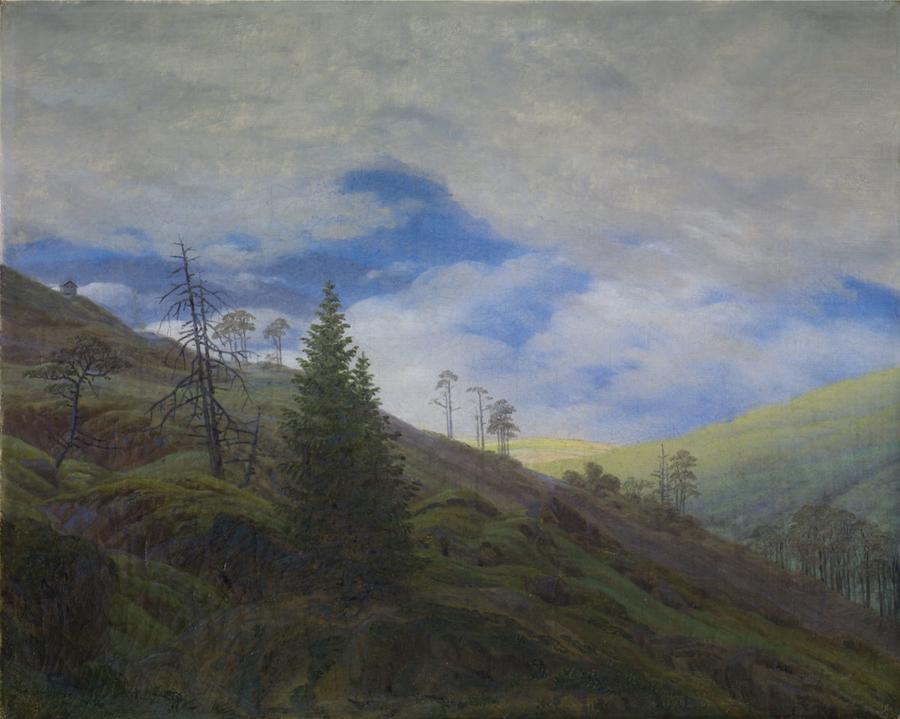
Caspar David Friedrich, German, 1774–1840; “Sunburst in the Riesengebirge”, 1835; oil on canvas; 10 × 12 1/2 inches; Saint Louis Art Museum, Friends Fund, Museum Purchase, Director's Discretionary Fund, the Ann Goddard Trust, and the Third Wednesday Group 1:2019
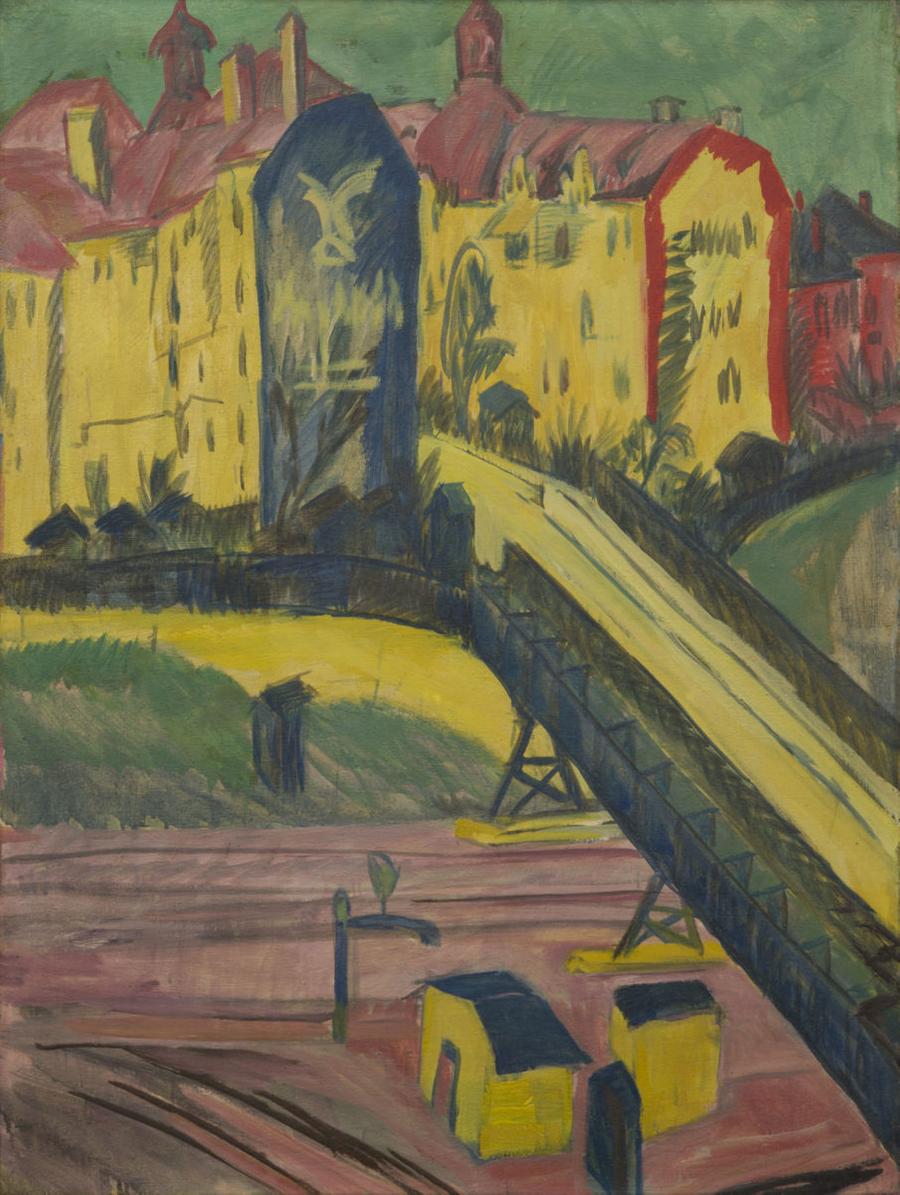
Ernst Ludwig Kirchner, German (active Switzerland), 1880–1938; “View from the Window”, 1914; oil on canvas; 47 1/2 x 35 3/4 inches; Saint Louis Art Museum, Bequest of Morton D. May 902:1983
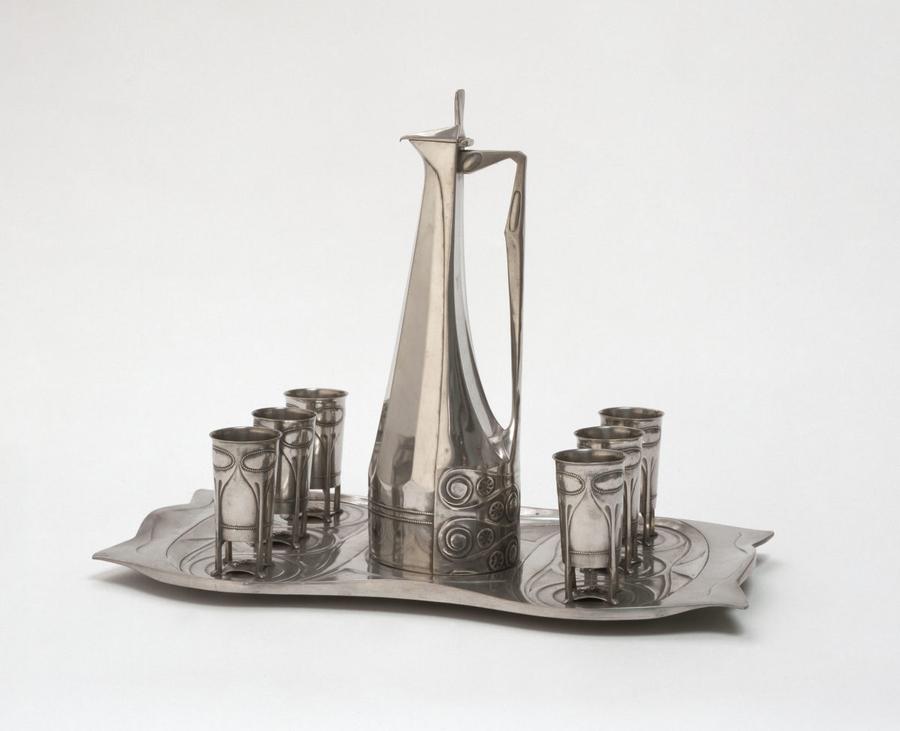
Joseph Maria Olbrich, Austrian, 1867–1908; Eduard Hueck Metallwarenfabrik, Lüdenscheid, Germany, founded 1864; “Wine Service”, c.1901; pewter; Overall (assembled): 13 1/2 x 18 x 10 3/8 inches; Saint Louis Art Museum, Museum Shop Fund and funds given by Mr. and Mrs. Sam Langsdorf Jr. and Mrs. John W. Calhoun 57:1995a-h
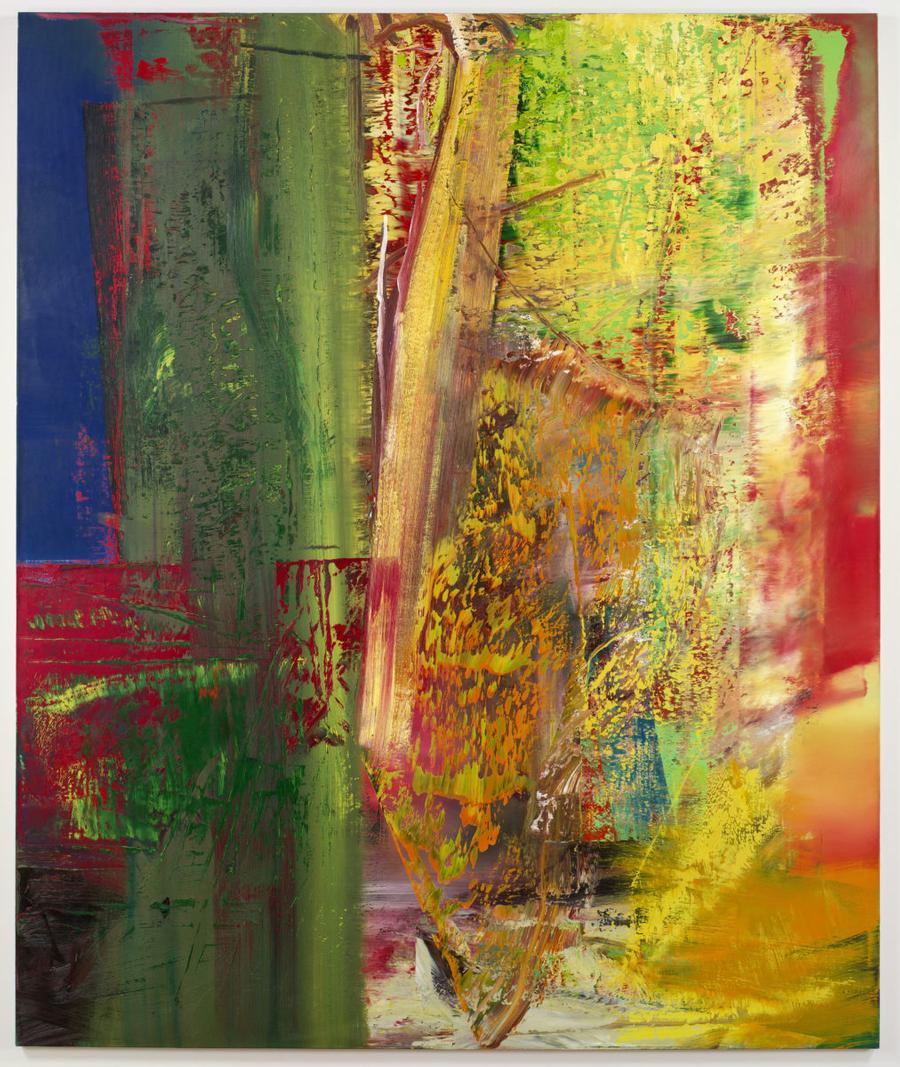
Gerhard Richter, German, born 1932; “Ölberg”, 1986; oil on canvas; 118 1/2 x 98 9/16 inches; Saint Louis Art Museum, Museum Purchase 107:1987; © 2013 Gerhard Richter
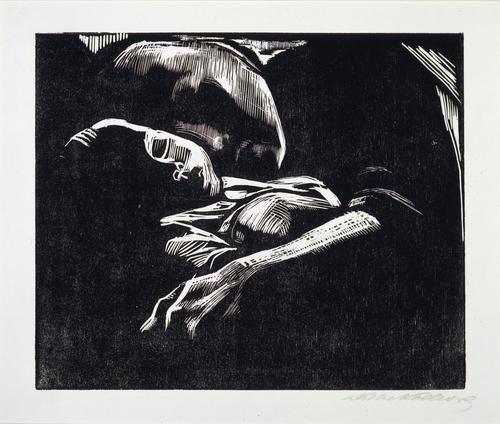
Käthe Kollwitz, German, 1867–1945; “Sleeping Woman with Child”, 1929; woodcut; image: 11 3/4 x 14 1/8 inches, sheet: 16 1/8 x 20 inches; Saint Louis Art Museum, The Julian and Hope Edison Print Fund and Museum Shop Fund 221:1992
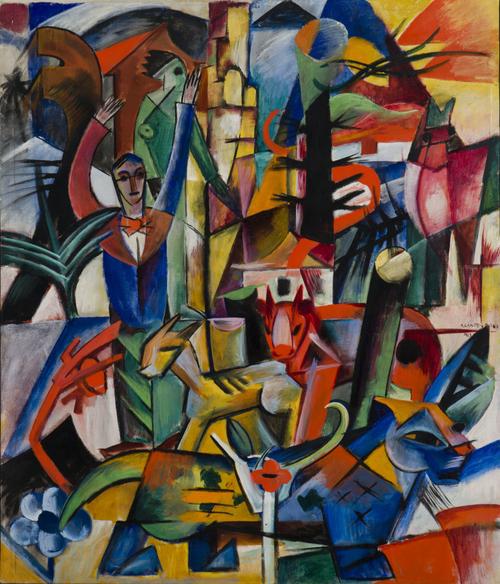
Heinrich Campendonk, German (active Netherlands), 1889–1957; “Bucolic Landscape”, 1913; oil on canvas; 39 5/8 x 33 3/4 inches; Saint Louis Art Museum, Bequest of Morton D. May 875:1983; © 2020 Artists Rights Society (ARS), New York, NY / VG Bild-Kunst, Bonn
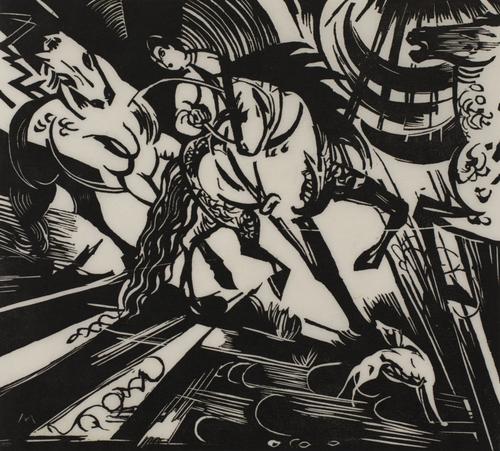
Franz Marc, German, 1880–1916; “Riding School”, 1913; woodcut; image: 10 9/16 x 11 11/16 inches, sheet: 14 x 15 1/4 inches; Saint Louis Art Museum, Funds given by the Children's Art Bazaar 478:1979
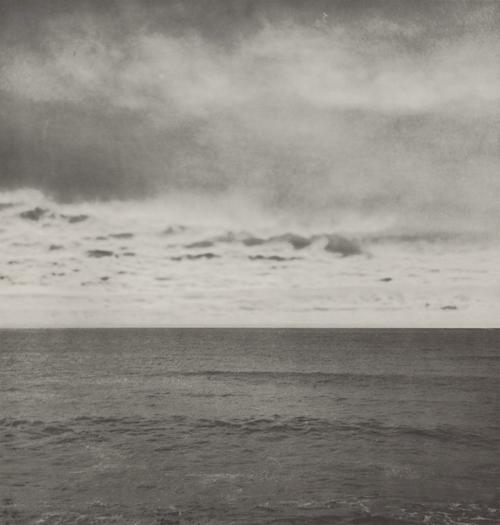
Gerhard Richter, German, born 1932; “Seascape I”, 1969; offset lithograph; image: 16 1/2 x 15 11/16 inches, sheet: 19 15/16 x 19 5/16 inches; Saint Louis Art Museum, Museum Shop Fund 171:1990; © Gerhard Richter, 2013

“This extraordinary exhibition tells a 200-year story of German art drawing on our holdings, a collection that is virtually unparalleled outside of Germany,” said Brent R. Benjamin, the Barbara B. Taylor Director of the Saint Louis Art Museum. “This unique civic treasure is a testament to the philanthropic support of our patrons, notably Morton D. May. In honor of these transformative donations, we are offering this exhibition free of charge.”

May, who led May Department Stores Co., was the Saint Louis Art Museum’s most prolific donor of works of art. His broad range of collecting included German Expressionism, and his 1983 bequest included a large collection of paintings by Max Beckmann (1884-1950). The gift spurred the museum to prioritize acquisitions of important works by contemporary German artists. This began in the late 1980s, expanding through the Earl and Betsy Millard gift in 2003.

Totaling more than 2,500 objects by artists from Germany, Austria and Switzerland, the museum’s holdings include strengths in German Expressionism and postwar German art. The collection continues to grow. With the recent purchase of “Sunburst in the Riesengebirge,” the museum joined a small number of American museums to own a painting by Caspar David Friedrich (1774-1840), widely regarded as the leading figure in German Romantic painting.

“Storm of Progress” will showcase a wide range of media, including paintings, sculpture, photographs, prints and decorative arts. Highlights include the Friedrich, as well as works by Beckmann, Ernst Ludwig Kirchner, Käthe Kollwitz, Joseph Beuys, Isa Genzken, Gerhard Richter and Georg Baselitz. The exhibition features many objects on view for the first time, including a recently acquired painting by Gabriele Münter.

Organized chronologically, the exhibition explores key events and ideas through the lens of the museum’s collection.

In the 19th century, German artists embraced nature as a complex and deeply symbolic subject. Picturesque forests, mountains and coasts offered spiritual and physical renewal as well as a common ground for the fragile project of nation-building. Before the German Empire was established in 1871, the region was a mosaic of autonomous states. The German landscape symbolized a collective cultural identity that transcended political division.

By 1900, Germany had transformed from an agrarian society to the prosperous crossroads of Europe. German artists asserted their independence from Paris, the capital of the 19th-century art world, and Berlin emerged as the industrial metropolis of the new century. Germany’s growth also fed a nationalism that led to two world wars and mass genocide.

Artists working after the Holocaust confronted the nation’s guilt and the political consequences that left Germany divided between democracy and communism. The Berlin Wall fell in 1989; this was the start of a long process of reunifying German society after decades of division.

The exhibition will be on view through Feb. 28, 2021. It is co-curated by Simon Kelly, curator of modern and contemporary art; Hannah Klemm, associate curator of modern and contemporary art; Melissa Venator, the Andrew W. Mellon Foundation Fellow for Modern Art; and Molly Moog, research assistant for modern and contemporary art.

Although the exhibition is free, visitors will need to secure timed tickets, which will be available starting Oct. 13. Tickets are available in person at the museum, or through MetroTix, which charges a service fee.

Wednesday, September 30, 2020

Diego Rivera, Jose Clemente Orozco, and David Alfaro Siqueiros. ​​Los Tres Grandes: Obras de Rivera, Siqueiros y Orozcois

 The McNay Art Museum in San Antonio is offering a rare opportunity to see nearly all of the prints in its Permanent Collection by los tres grandes or “the three greats” of Mexican modernism–Diego Rivera, Jose Clemente Orozco, and David Alfaro Siqueiros. ​​Los Tres Grandes: Obras de Rivera, Siqueiros y Orozcois on view in the Frost Galleries through January 3, 2021.

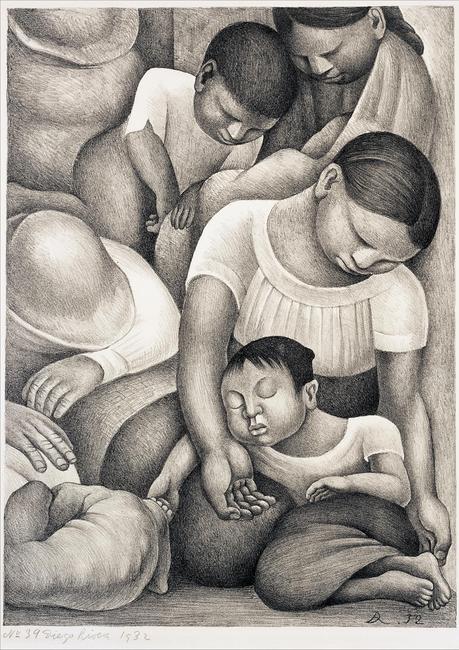
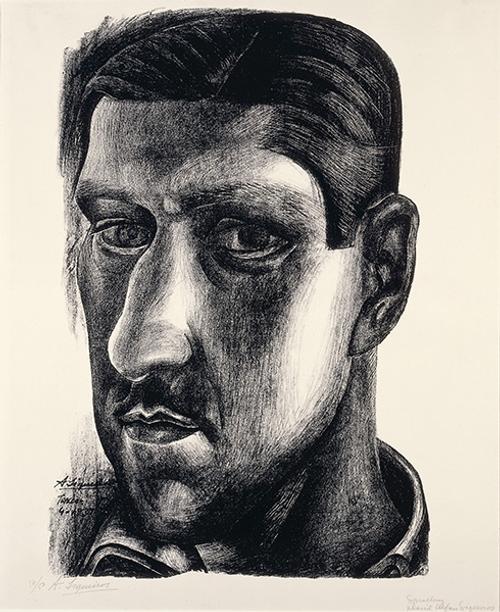
Mexico has the longest printmaking tradition in all the Americas—dating back to 1539. Spurred by the Mexican Revolution of 1910, the golden age of printmaking began in the 1920s and lasted through the 1940s. The great influence of the revolution reveals itself in the prints on view, ranging from Rivera’s heroic depiction of Emiliano Zapata, to Siqueiros’s exploration of sculpture in his large-scale lithographs, to Orozco’s condemnation of war. Through their monumental mural cycles, these three artists became the first Mexican artists to achieve worldwide fame.

A selection of artworks in the exhibition by the next generation of Mexican printmakers—the artists who founded the collaborative print workshop El Taller de Gráfica Popular (TGP) in 1937—illustrate the lasting influence of los tres grandes and include masterful lithographs and linocuts by Jesus Escobedo, Leopoldo Mendez, and Francisco Mora. Like “the three greats,” these artists continued to explore the history and aftermath of the Mexican Revolution.

“The McNay has one of the strongest collections of Mexican modernist prints in the world,” said Lyle W. Williams, Curator of Collections. “The Collection dates back to the late 1920s, when our founder Marion Koogler McNay purchased Diego Rivera’s painting, Delfina Flores.”

The museum’s commitment to Mexican art deepened over the last 66 years through a number of acquisitions, including a highly important group of prints produced at TGP in Mexico City, and the acquisition of duplicate prints by los tres grandes from the Philadelphia Museum of Art in 2000.

Los Tres Grandes: Obras de Rivera, Siqueiros y Orozco is organized for the McNay Art Museum by Lyle W. Williams, Curator of Collections.

José Clemente Orozco. Mexican, 1883 - 1949. Rear Guard, 1929. Lithograph. McNay Museum purchase with funds from the Cullen Foundation, the Friends of the McNay, Charles Butt, Margaret Pace Willson, and Jane and Arthur Stieren
McNay Art Museum
Diego Rivera, Mexican, 1886 - 1957, Sleep, 1932. Lithograph. McNay Museum purchase with funds from the Cullen Foundation, the Friends of the McNay, Charles Butt, Margaret Pace Willson, and Jane and Arthur Stieren. © Banco de México Diego Rivera Frida Kahlo Museums Trust, México, D.F. / Artists Rights Society (ARS), New York
McNay Art Museum
David Alfaro Siqueiros, Mexican, 1896 - 1974, Portrait of William Spratling, Taxco 1939. Lithograph. Gift of Mr. and Mrs. Harry C. Burkhalter 1962.10
McNay Art Museum

Monday, September 28, 2020

Reckoning with “The Incident”: John Wilson’s Studies for a Lynching Mural.


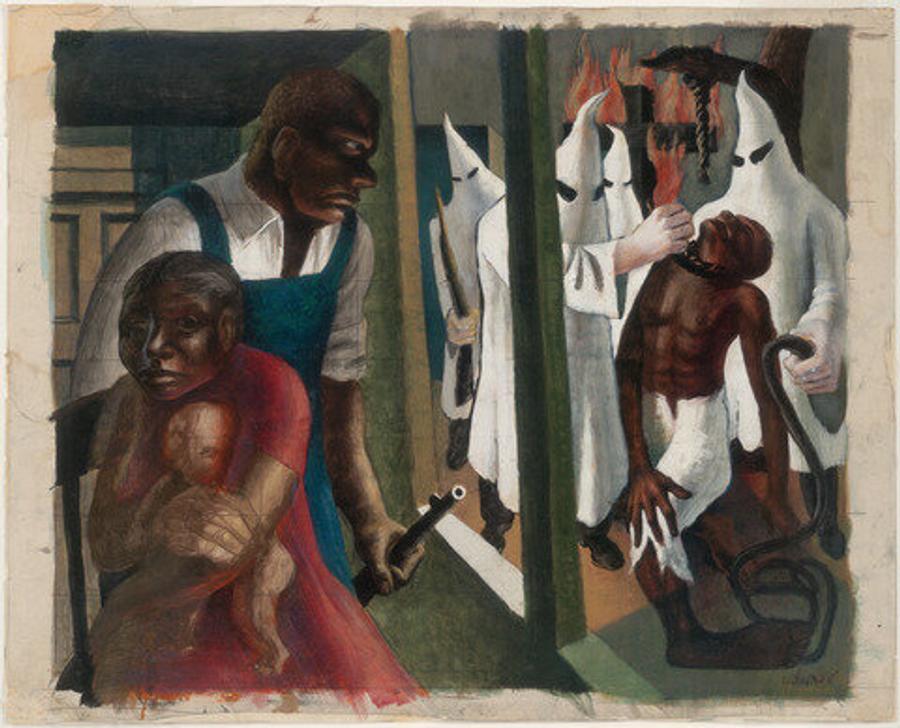
John Wilson, Compositional study for The Incident, 1952. Opaque and transparent watercolor, ink, and graphite, squared for transfer. Yale University Art Gallery, Janet and Simeon Braguin Fund. © Estate of John Wilson
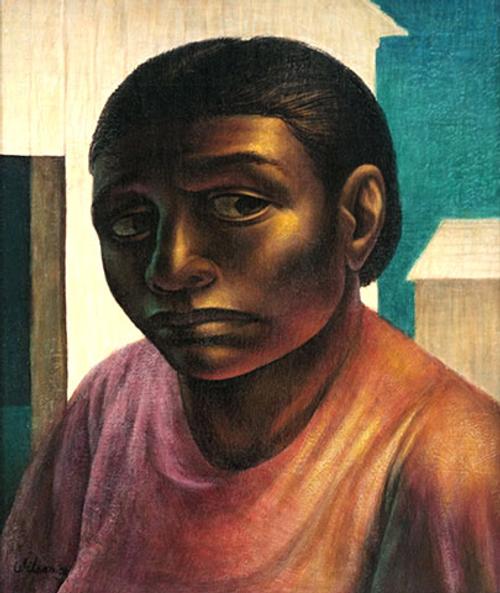
John Wilson, Negro Woman, study for The Incident, 1952. Oil on Masonite. Clark Atlanta University Art Collection, Atlanta Annuals. © Estate of John Wilson. Courtesy Clark Atlanta University Art Collection

On September 25, the Yale University Art Gallery opened to visitors for the first time in nearly seven months with new covid-19 safety measures in place.

“Our world has transformed in ways we never could have imagined since the Gallery closed in March. Now, more than ever, cultural institutions strive to be a place for communities to listen, learn, and grow amid rapidly changing current events,” said Stephanie Wiles, the Henry J. Heinz II Director, Yale University Art Gallery.

Three timely exhibitions have been extended through Sunday, February 28, 2021, including Reckoning with “The Incident”: John Wilson’s Studies for a Lynching Mural.

In 1952, while studying at La Esmeralda, the national school of art in Mexico City, African American artist John Wilson (1922–2015) painted The Incident, a fresco mural of a racial terror lynching at the hands of the Ku Klux Klan. Executed on an exterior wall at street level, the mural was intended to be temporary, but its commanding composition prompted renowned Mexican muralist David Alfaro Siqueiros—who was then the head of Mexico’s department for the protection and restoration of murals—to advocate for its preservation. Though the mural itself is no longer extant, Reckoning with “The Incident”: John Wilson’s Studies for a Lynching Mural brings together nearly all of the known preparatory sketches and painted studies for the fresco, as well as related drawings and prints, from the collections of the Faulconer Gallery, Grinnell College, Iowa, the Clark Atlanta University Art Museum, the Yale University Art Gallery, and select private lenders.