Saturday, December 19, 2020

Arthur Dove: A Catalogue Raisonné


Fields of Grain as Seen from Train, 1931, oil on canvas, 24 x 34 1/8 in. Albright-Knox Art Gallery, Buffalo. Gift of Seymour H. Knox Jr., K1958:1


 The Arthur G. Dove Catalogue Raisonné Project today announced the publication of a complete and authoritative catalogue raisonné of the pioneering modernist’s work. Edited and written by scholar and curator Debra Bricker Balken, Arthur Dove: A Catalogue Raisonné of Paintings and Things sheds expansive new light on the artist’s work with an illustrated survey of the full corpus of his known paintings and assemblages (or “things”), along with a wealth of essays that draw on previously unpublished materials. Together, these add important context and texture to our understanding of the artist, his work, and the context in which it was created. 

The first book on Dove to include color illustrations of all of his extant paintings, Arthur Dove: A Catalogue Raisonné of Paintings and Things is published by the Arthur Dove Catalogue Raisonné Project and distributed by Yale University Press. The nearly 400-page book will be of compelling interest to scholars, curators, collectors, gallerists, and more, including, of course, those who are simply fans of Dove’s work. It will be available for purchase on the Yale University Press website as of February 22, 2021, and at booksellers nationwide on its official publication date of March 23. 
Debra Balken notes, “In our work to create a fully authoritative publication, every one of the 447 entries in the previous Dove catalogue raisonné has been updated, and a number of new works have been added, including some that had been presumed lost. I am deeply grateful to the Arthur Dove Catalogue Raisonné Project for enabling this work and to Jessie Sentivan, our researcher, in addition to the numerous archivists, librarians, art historians, collectors and dealers who, over the course of eight years, have enriched our view of Dove, his work, and the context in which it was created.” 

Arthur Dove: A Catalogue Raisonné opens with an in-depth essay in which Ms. Balken assesses Dove’s critical reception, examining essays and reviews by a variety of writers, from Sherwood Anderson to Lewis Mumford, Alfred Barr, and Robert Goldwater, among others. In so doing, she also illuminates Dove’s position in the circle of young American artists, including John Marin, Marsden Hartley, Charles Demuth, Max Weber, and, later, Georgia O’Keeffe, that was cultivated by preeminent photographer and art dealer Alfred Stieglitz. 

Twenty-four short essays woven into the catalogue of Dove’s work include an assessment of the radical formal traits of the artist’s painting, a new look at the ways in which his works surpassed the known languages of abstraction, and a reading of their evocations of the ephemeral aspects of nature, such as the sun, moon, rain, and wind—Dove’s core subject—among other topics. Together, these essays provide both a pictorial and biographical narrative that traces Dove’s role as a forerunner of midcentury movements including Abstract Expressionism and others. 

In addition to the essays, all by Ms. Balken, the Arthur Dove Catalogue Raisonné of Paintings and Things includes an illustrated chronology, an extensive exhibition bibliography, and an exhibition history. 

Arthur Dove 
Arthur Dove (1880–1946) was a pioneering American modernist of the early 20th century. While he is frequently associated with the circle of artists linked to Alfred Stieglitz, Dove’s work is uniquely radical. Thanks to his early use of abstract forms derived from nature, he is frequently cited as the first American artist to pursue purely nonrepresentational compositions. Dove’s work, which had an impact on a subsequent generation of artists associated with the New York School, may be found in U.S. museums, including The Metropolitan Museum of Art (New York City), the Art Institute of Chicago, the Museum of Fine Arts (Boston), The Phillips Collections, and the National Gallery of Art (both Washington, D.C.), among many others. 

Debra Bricker Balken 
Debra Bricker Balken is an independent curator, scholar, and writer who works on subjects related to American modernism and contemporary art. She served as the lead curator on Arthur Dove, A Retrospective, an exhibition that toured nationally in 1997–98. In addition, she has assembled shows that have examined John Marin’s late work, the overlapping circles of artists who surrounded Alfred Stieglitz and Marcel Duchamp in New York, and the interrelationship between the work of Dove and O’Keeffe, among numerous other projects.


Tuesday, December 15, 2020

Tiepolo. Venezia, Milano, l’Europa

From 30 October 2020 to 21 March 2021, the Gallerie d’Italia – Piazza Scala (the Intesa Sanpaolo museum complex in Milan) hosts the exhibition Tiepolo. Venezia, Milano, l’Europa, curated by Fernando Mazzocca and Alessandro Morandotti with general coordination by Gianfranco Brunelli.

To commemorate the 250th anniversary of Giambattista Tiepolo’s death (Venice 1696 - Madrid 1770), the first dedicated exhibition in Milan is now being staged. The exhibition, under the High Patronage of the Italian President of the Republic and in partnership with the Gallerie dell’Accademia of Venice, presents around seventy works by Tiepolo and his most important peers (including the Venetian artists Antonio Pellegrini, Giovanni Battista Piazzetta and Sebastiano Ricci as well as Lombardy-born Paolo Pagani) to trace the artistic career of the Venetian maestro, and his main patrons in the cities where he achieved his success: Venice, Milan, Dresden and Madrid.

​​​​​​​THE EXHIBITION:

In the logical and concise exhibition path designed by the curators to help track Tiepolo’s international success - from his years of apprenticeship in Venice to his consecration within the major European courts - extraordinary masterpieces are revealed. These range from the youthful mythological creations of the Gallerie dell’Accademia of Venice to the Martyrdom of St. Bartholomew, painted in 1722 for the San Stae church in Venice (a true museum of early eighteenth-century Venetian art), displayed alongside the Martyrdom of St. James by Piazzetta (a contemporary work completed for the same location). 

The vast series of paintings for Venetian palaces commissioned by ambitious and newly-ennobled families such as the Sandi and Zenobio households, sealed Tiepolo’s early success, as he proved able to mastermind works with many figures and recreate ancient tales with fantasy and flair.

On separate occasions (1730-1731, 1737 and 1740), Milan proved to be the first stop on his route to international success: the exhibition allows us to admire a series of works restored for the occasion, which are normally rarely or not at all available for public viewing, including the frescoes of the Basilica of Sant’Ambrogio and the fresco created for Palazzo Gallarati Scotti. The two removed frescoes that were created for the Sant’Ambrogio church present holy events in the epic style of this renowned history painter, while the allegory from Palazzo Gallarati Scotti reveals the fluid spatial illusion that would become a recurring theme in his works.

It will be possible to follow the preparatory process of the fresco for the Galleria on the piano nobile of Palazzo Clerici, thanks to some drawings and a wonderful sketch on loan from the Kimbell Art Museum of Fort Worth (United States).

Tiepolo's German output includes a sketch for a drawing room for the Würzburg family residence (based in Stuttgart), and a freehand interpretation of a work designed, in agreement with his friend Francesco Algarotti, for the Elector of Saxony and king of Poland, Augustus III: the Banquet of Antony and Cleopatra, here visible in the version from the National Gallery of London.

The years in Germany and Spain produced a close working relationship between Tiepolo and his sons, especially Giandomenico: the exhibition closes with a symbolic ‘showdown’ between father and son, with St. Francis of Assisi receiving the stigmata by Tiepolo senior from the Museo del Prado on one side and Abraham and the Three Angels from Gallerie dell’Accademia of Venice, by Giandomenico on the other. 


Giovanni Battista Tiepolo (1696 - 1770), Cacciatore a cavallo, 1718, Olio su tela, 262 x 148 cm , Fondazione Cariplo

Giambattista Tiepolo, Trionfo delle arti e delle scienze, 1731 circa, Olio su tela, 55.5 x 72 cm, Lisbona, Museu Nacional de Arte Antiga | © MNAA/DGPC/ADF, Luísa Oliveira


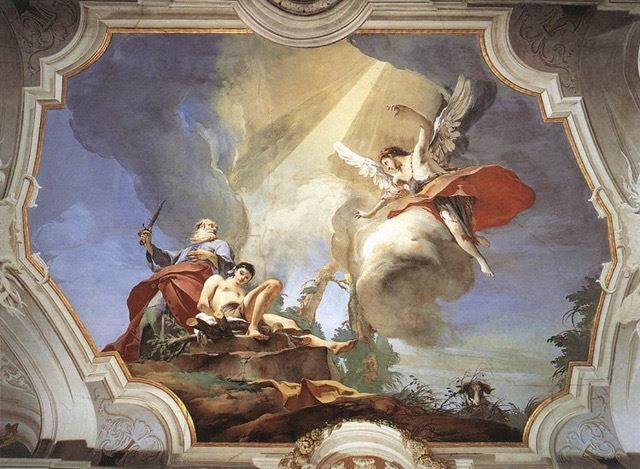
Giambattista Tiepolo, The Sacrifice of Isaac, fresco, 1724-29, 4000 x 5000 cm., Palazzo Patriarcale, Udine © Courtesy of Palazzo Patriarcale, Udine. This artwork will be shown in “Tiepolo. Venezia, Milano, l’Europa.”


The exhibition offers the chance to admire a series of works restored for the event: Apollo flaying Marsyas, Hercules suffocating Antaeus, Ulysses discovering Achilles among the daughters of Lycomedes, The Triumph of Virtue and Nobility over Ignorance, The Martyrdom of St. Victor, The Shipwreck of St. Satyrus by Giambattista Tiepolo; Spartacus leading the slaves' uprising by Antonio Pellegrini; Bacchus and Ariadne and The Contest of Apollo and Pan judged by King Midas by Sebastiano Ricci.

THE SECTIONS:

1. The first section, The cities of Tiepolo: Venice, Milan, Madrid - figuratively summarises the places that played a part in the life and fortunes of Tiepolo, providing a birds-eye view of the eighteenth century, an era of international success for Italian artists. In the first half of the eighteenth century, Venice was perhaps themost beloved city in Europe for its artists, beginning with the ‘vedutista’ group, the city-scape painters: these included Canaletto and Bellotto along with Antonio Joli, an artist who studied in Rome and was influenced by the work of Gaspar van Wittel.

2. The next section focuses on Academy studies of nudes in Venice. Sketching nudes is a fundamental part of training for artists all over Europe, especially since the academies started to favour this drawing exercise in the seventeenth century. Venice became a centre which made this particular type of exercise its own, enlivened by the presence of many foreign artists with whom Tiepolo exchanged ideas, drawing and painting his own first independent works.

3. In the third section, closely connected to the previous element, The beginnings of Tiepolo betwixt Pagani, Pellegrini and Piazzetta takes different perspectives on the inspiration Tiepolo drew from his contemporaries. 

4. The exhibition then arrives at Early success in Venice. History and mythology on the wings of fantasy. Here, the main elements of two periods of work in Venice for the Sandi and Zenobio families, are emblematically represented. Tiepolo started to creatively conjure up mythological and historical stories with an incredible skill in orchestration and free interpretation; the key to his success in Europe would be as a wonderful storyteller at the service of his patrons for their own glorification.

5. The fifth section of the exhibition looks at Venice and Milan, a backstory: Sebastiano Ricci. Milan and Venice share a special relationship, with Milan representing the first step to international success for many Venetian artists: this was the case for Tiepolo and Bellotto, as it had been some time earlier for Sebastiano Ricci.

6. The sixth section, Tiepolo in Milan: the first step to international success, revolves around the complex network of relationships that allowed Tiepolo to enjoy success in Milan in two important moments of his career. The artist’s choices in many frescoes of the city allow us to trace, through a succession of drawings and sketches, his modus operandi and ability to offer solutions that were increasingly spacious and airy, as well as increasingly spectacular. These solutions include his work in Palazzo Clerici, practically a forerunner to what the painter would complete some years later in Würzburg and Madrid.

7. Between 1751 and 1753, Tiepolo moved to Würzburg in Germany, with his children. The section Tiepolo and Germany focuses on how Giandomenico (by now, the famous maestro’s travel companion) had begun to work alongside his father. In this context, Tiepolo’s time in Würzburg is traced via a preparatory sketch for the fresco and his version of the Banquet of Antony and Cleopatra, a theme much-loved by the court of Dresden (one of the most modern artistic centres of that time in Europe) where he was enthusiastically welcomed and acclaimed in a career orchestrated by Francesco Algarotti.

8. The last stage in Giambattista’s life, as encapsulated in Tiepolo and his children in Spain, was marked by an increasingly close relationship with his children who would then follow him to Madrid, remaining there after his death. Challenged by Giandomenico’s emerging talent, Gianbattista Tiepolo was led to make new stylistic choices, marked by an unusually expressive tenderness, an air of melancholic introspection, withrepercussions in the softer brushstrokes, and in the more meticulous and less resentful drawing. This final stage in the story of Tiepolo is particularly evocative and marked by only a few works, with father and son being symbolically placed head-to-head in the field of Character Heads, a very popular genre with international audiences.

BIOGRAPHICAL NOTES:

Giambattista Tiepolo first visited the Republic of Venice in 1715, benefiting from a particular historicalpolitical climate that kept Venice safe from European turbolence for almost a century, while guaranteeing a proliferation of art and literature. A contemporary of Canaletto, Tiepolo understood how to win favour with the clergy and Venetian aristocracy, decorating churches and palaces with his artwork on canvas and frescoes - allegorical, mythological and holy themes, richly theatrical and magnificent.

Tiepolo’s greatness, which would make him one of the most acclaimed and sought-after artists of his time (and, in a certain sense, a forerunner of Enlightenment) can be attributed to his capacity for observation of nature. Indeed, nature became his main source of inspiration, of his unlimited narrative flair and expert skill in the use of colours, light and perspective.

His success took him to Milan, ruled by the Hasburgs, where he and Sebastiano Ricci revolutionised the art scene. Tiepolo developed a freedom of expression and an extraordinary skill in orchestrating grandiose compositions consisting of hundreds of figures in series of frescoes for the palazzi Archinto, Casati, Clerici and Gallarati Scotti as well as at the Basilica of Sant’Ambrogio.

Launched to the top of the international art scene, he would become an artist sought-after in all the major European courts. He enjoyed a strong relationship with Germany, struck up in the 1730s, particularly with the court of Dresden where his philosopher, intellectual and connoisseur friend Francesco Algarotti, his avid supporter and admirer, acted as a diplomat for Augustus III (Elector of Saxony and King of Poland).

The painter’s success in Germany led him to settle between 1751 and 1753 in Würzburg, capital of Franconia, where he created the artwork for prince-bishop Carl Phillip von Greiffenclau’s official residence. From the 1760s until his death in 1770, he lived in Spain, under the patronage of King Charles III (Charles Bourbon). In Madrid he decorated the vast areas of the royal palace and later remained at the Bourbon court as an altarpiece painter.

His posthumous reputation was subject to a slow decline until he was again revalued by Francesco Hayez almost a century later - in fact, it was Hayez who was responsible for the rediscovery of Tiepolo, slightly earlier than collector Edward Cheney who stayed in Venice in the 1840s and managed to purchase a large number of magnificent oil sketches and various drawing books.

Saturday, December 12, 2020

Power and Piety in 17th-Century Spanish Art”


Georgia Museum of Art at the University of Georgia
through November 2021

Following up on last year’s extended display of paintings celebrating Caravaggio’s influence, the Georgia Museum of Art at the University of Georgia is now showcasing six more paintings on loan from Bob Jones University Museum and Gallery in Greenville, South Carolina. The exhibition “Power and Piety in 17th-Century Spanish Art” focuses on the Golden Age of Spanish painting and is on view through November 2021. 

t
Attributed to Francisco de Zurbarán (1598 – 1664), “The Annunciation,” 1639 – 40. Oil on canvas. Bob Jones University Museum & Gallery, Greenville, SC.

It features paintings by Francisco de Zurbarán, José Antolínez, Pedro Orrente, the workshop of Bartolomé Esteban Murillo and Francisco de Herrera, the Elder, marked by dramatic lighting and strong emotion. Wall texts appear in both English and Spanish. 

Spain was one of the most important political powers in Europe in the 16th and 17th centuries, partially due to the other countries it colonized. The resources Spain extracted from the places it conquered in the Americas and other parts of the world helped to finance its rulers’ ambitions as well as their patronage of the arts. A growth in religious institutions and an ambitious building program sponsored by the royal family and members of the nobility provided artists with opportunities to decorate churches and palaces across Spain. The Counter-Reformation movement defined this period, encouraging artists to represent religious subjects to elicit emotions and piety in the viewer. The goal was to renew confidence in the Catholic faith in response to the rise of Protestantism by highlighting theological differences and focusing on the role of the Virgin Mary and saints. 

 Nelda Damiano, Pierre Daura Curator of European Art at the Georgia Museum of Art, co-organized the exhibition with Julia Kilgore, Pierre Daura Curatorial Research Assistant, and said, “We are pleased to continue our collaboration with Bob Jones University Museum and Gallery to display examples of 17th-century Spanish painting, which are not present in our permanent collection. This exhibition will truly be a unique opportunity for our visitors to discover a rich period in history of art.” 

 Related virtual events include Coffee with the Curators, a lively conversation on Zoom with Damian and Kilgore on February 23 at 1 p.m., and a talk by Dana Bultman, UGA professor of Spanish, through the lens of her expertise in Spanish literature and cultural history, on March 10 at 2 p.m. on Zoom. Both events are free and open to the public but require registration on the museum’s website.

Tuesday, December 8, 2020

Christie’s The Art of the Surreal Evening Sale 9 MARCH 2021


René Magritte, Le mois des vendanges, oil on canvas, 51.1/4 x 63 in. (127.6 x 160 cm.), Painted in 1959, Estimate: £10,000,000-15,000,000


Three works by Max Ernst, René Magritte and Joan Miró from the Collection of Claude Hersaint, one of the most important collectors of Surrealist art in the 20th century, will lead the annual The Art of the Surreal Evening Sale. The auction will take place on 9 March 2021 as part of 20th Century at Christie’s in March 2021. Exhibited extensively, the group is comprised of Magritte’s iconic Le mois des vendanges (1959, estimate: £10,000,000-15,000,000), Miró’s Peinture (1925, estimate: £9,000,000-14,000,000) and Ernst’s Cage, forêt et soleil noir (1927, estimate: £2,000,000-3,000,000).

Claude Hersaint was born in São Paulo in 1904. He spent his early childhood in Manaus, before the family returned to Paris where he continued his education at the Lycée Janson de Sailly. In 1921, at the age of 17, he visited the first exhibition dedicated to Max Ernst at the Galerie au Sans-Pareil in Paris, and acquired his first painting. A lifelong passion for Surrealism was born and Hersaint would go on to befriend and support many artists during his lifetime, including Balthus, Victor Brauner, Salvador Dalí, Oscar Domínguez, Jean Dubuffet, Marcel Duchamp, Max Ernst, Jean Fautrier, René Magritte, Joan Miró and Man Ray, as well as Surrealist patrons, poets, dealers and art historians such as Bill Copley, Paul Éluard, Jacques Maritain, Marie-Laure de Noailles, and Jean-Louis Prat amongst others.

François Curiel, Chairman, Christie’s Europe: “It is an honour to represent the Hersaint family, for the first time at auction, in our world-renowned The Art of the Surreal Evening Sale this coming March.”

Olivier Camu, Deputy Chairman, Impressionist & Modern Art, Christie’s: “It is thrilling enough to present at auction one masterpiece of Surrealist art, let alone three. Together, these paintings illustrate the rich diversity of ideas, styles, subject matter and techniques that inspired Surrealist artists throughout the 20th century. The Magritte, one of the four largest works by the artist still in private hands, is among the most significant paintings of his entire oeuvre and focuses on the unnerving presence of the eternally enigmatic character of the bowler hatted man. The Ernst explores the mysterious depths of a dark, imaginary forest, and is one of just five forest paintings the artist created on this huge scale in 1927, three of which are now in important museum collections around the world. The Miró, also painted on a dramatically large canvas, is one of the most beautiful of his radical dream series from the mid-1920s, inspired by the work of Alfred Jarry as well as the artist’s own hunger-induced hallucinations. This painting is on a par with any of the same series by Miró in museums around the world. Each of these works represents a major creative statement by their respective artists, as they boldly explored the central tenets and techniques of Surrealism. They are a testament to Claude Hersaint’s connoisseurship and unwavering passion for Surrealism.”

René Magritte
Painted in 1959, Le mois des vendangesillustrated page one, is one of the largest and most important works in Magritte’s oeuvre, and one of the four largest works by the artist still in private hands. Featuring the totemic, enigmatic figure of the bowler hatted man, a familiar character in the artist’s work, the painting focuses on the view through an open window, where an infinite number of these figures stand, each painted with subtle differences in their facial features. Though he usually offers a reassuring counterpoint to the surprising and sometimes shocking revelations Magritte proposes, in Le mois des vendanges, the presence of the bowler-hatted man generates the surreal, unnerving element of the composition. As his letters attest, Magritte considered Le mois des vendanges very highly, writing: “at the moment [Le mois des vendanges] is the one which best reminds us how strange reality can be, if one has ‘a sense of reality.’”

Joan Miró
Painted on a monumental scale, Joan Miró’s Peinture, of 1925, illustrated left, is among the finest of the artist’s radical and much celebrated ‘dream’ or ‘oneiric’ paintings, the series which saw him break through the boundaries of pictorial convention to reach a new form of poetic and abstract art. These works were often inspired by hallucinatory episodes induced by extreme hunger – patterns and cracks on his studio wall provided the stimulus for their creation, together with poetry and music. With these dream paintings, Miró broke with the hyper-realist precision which had dominated his work of the early 1920s, and instead began to explore an unconscious, inner world governed by instinctive subconscious impulses.


Max Ernst
Painted in 1927, Max Ernst’s Cage, forêt, et soleil noir was executed at the height of his involvement with the Surrealist movement. These works, which incorporate Ernst's newly developed techniques of grattage and frottage, feature a seemingly impenetrable wall of trees, their forms overlapping and interlocking, while a mysterious solar disk hovers in the sky above. Having grown up on the edge of a forest in Brühle in the Rhineland, the motif had come to represent a labyrinth of mystery, danger, darkness and possibility within Ernst’s imagination. In the foregournd, a small bird (a possible alter-ego for the artist) is trapped within a small cage. Cage, forêt, et soleil noir is one of just five forest paintings the artist created on this huge scale.

René Magritte, Le mois des vendanges, oil on canvas, 51.1/4 x 63 in. (127.6 x 160 cm.), Painted in 1959, Estimate: £10,000,000-15,000,000

Friday, December 4, 2020

Masterpieces from Buckingham Palace

The Queen’s Gallery, Buckingham Palace
 4 December 2020 – January 2022

Spectacular paintings widely recognised as among the highlights of the Royal Collection – including works by Titian, Rembrandt, Rubens, Vermeer, van Dyck and Canaletto – have gone on display together in a gallery exhibition for the first time. Masterpieces from Buckingham Palace, opening at The Queen’s Gallery in London tomorrow (Friday, 4 December), brings together 65 of the most treasured paintings that usually hang in the Picture Gallery, one of the State Rooms at Buckingham Palace. 

 The exhibition gives visitors a unique opportunity to view these world-renowned paintings afresh in a modern gallery setting, away from the historic interiors of Buckingham Palace, where they can usually be seen as part of the annual Summer Opening of the State Rooms. The more intimate display at The Queen’s Gallery gives audiences the chance to enjoy each painting close up, inviting them to consider what made these works astonishing at the time of their creation, what they can offer a modern viewer and why these paintings deserve to be described as ‘masterpieces’. 

 Masterpieces from Buckingham Palace is organised by school, with groupings of Italian, Dutch and Flemish paintings each containing some of the finest examples ever produced. A series of works created in the Low Countries between 1630 and 1680, the heyday of the so-called Dutch Golden Age, includes Johannes Vermeer’s ‘The Music Lesson’, early 1660s; Gerrit Dou’s The Grocer’s Shop, 1672; A Woman at her Toilet, 1663, by Jan Steen; 


and Pieter de Hooch’s Cardplayers in a Sunlit Room, 1658. 

Modest in scale and depicting scenes of everyday life, these works are often admired for their minute detail, tactile surfaces and ability to suggest spaces filled with light and air. 

 Artists from the Low Countries also produced works belonging to the more traditionally prestigious branches of art, such as narrative paintings, commissioned portraits and ambitious landscapes, often larger in scale. Portraits by Dutch artists including Rembrandt van Rijn and Frans Hals imbue their sitters with character, vitality and movement, often achieved through their skillful and innovative handling of paint. 


Frans Hals’ serrated brushstrokes on the sleeve of his Portrait of a Man, 1630, convey a sense of movement by creating the shimmering effect of light on black satin. 

Rembrandt uses fine lines scratched with the back of a brush to etch time into the wrinkled skin of Griet Jans and Jan Rijcksen in his ‘The Shipbuilder and his Wife’, 1633. He uses the same technique in his Portrait of Agatha Bas, 1641, to give the impression of soft downy hairs around his subject’s temple. 


"The Shipbuilder and his Wife": Jan Rijcksen (1560/2-1637) and his Wife, Griet Jans © 

Traditionally called The Shipbuilder and his Wife, this couple were identified in 1970 as Jan Rijcksen (1560/2-1637) and his wife Griet Jans. He was a shareholder in the Dutch East India Company and from 1620 their master shipbuilder; both were Roman Catholics.  

 The exhibition includes paintings created in Italy over a period of 200 years, encompassing several strands of Italian art. Expressive landscapes range from the cataclysmic storm in Gaspard Dughet’s Seascape with Jonah and the Whale, c.1654, to the unruffled stillness and hazy, diffused light of 


Claude Lorrain’s Harbour Scene at Sunset, 1643. 


In The Bacino di San Marco on Ascension Day, c.1733–4, Canaletto is at his most recognisable, transporting the viewer to the lively festival celebrating Venice’s marriage to the sea. 

 The exhibition has been made possible by the removal of the paintings from the Picture Gallery at Buckingham Palace as the next phase of the Reservicing Programme begins. The major ten-year project will overhaul the Palace’s essential services, including ageing pipes, electrical wiring and boilers, to ensure the building is fit for the future as an official residence of the Sovereign and a national asset for generations to come.

Made in Connecticut

Wadsworth Atheneum Museum of Art in Hartford

  through Sunday, February 7, 2021 

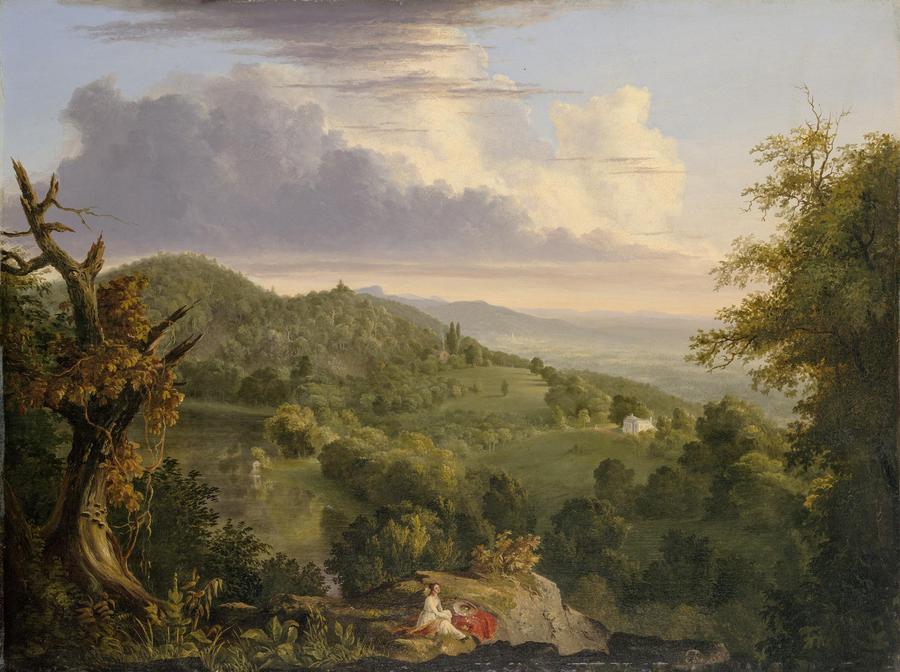
Thomas Cole, View of Monte Video, the Seat of Daniel Wadsworth, Esq, 1828. Oil on wood. Wadsworth Atheneum Museum of Art, Bequest of Daniel Wadsworth
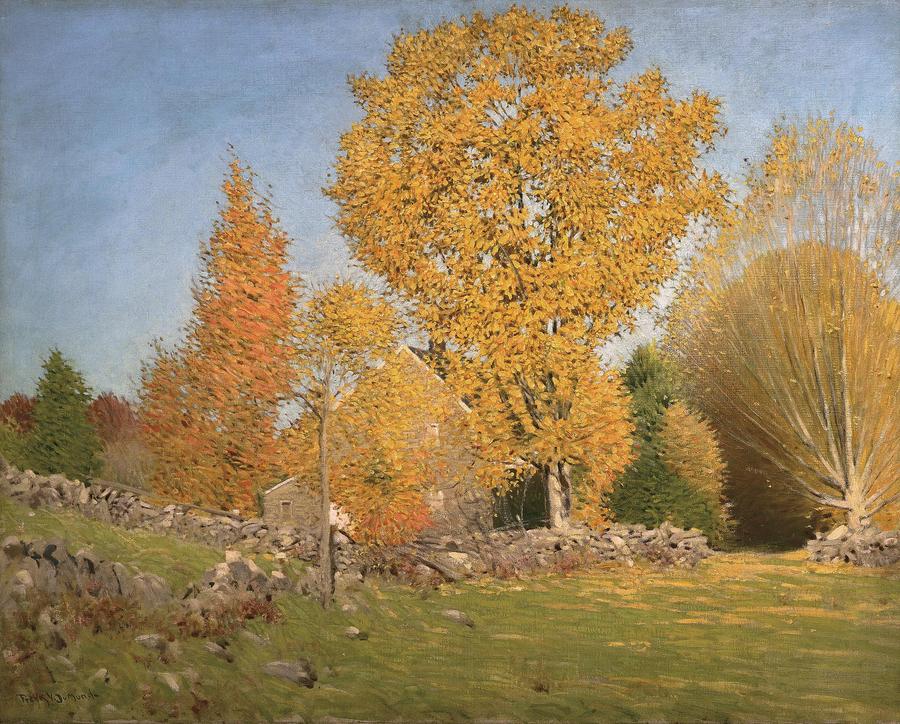
Frank Vincent Dumond, Grassy Hill, 1920. Oil on canvas. Florence Griswold Museum, Gift of Elisabeth DuMond Perry
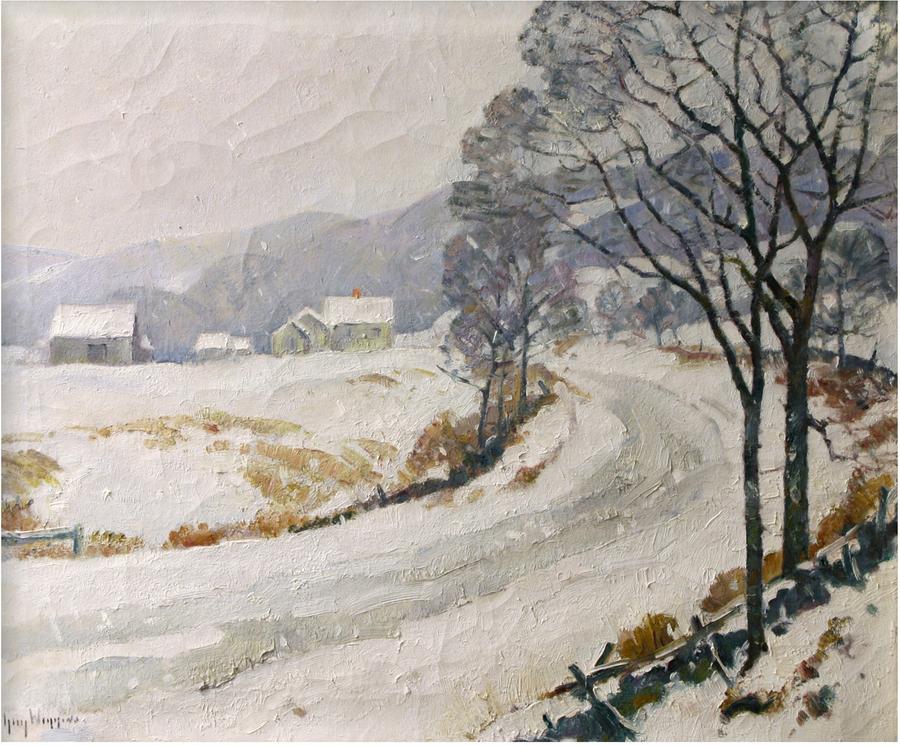
Guy C. Wiggins, Mantle of Winter, 1924. Oil on canvas. William Benton Museum of Art, University of Connecticut
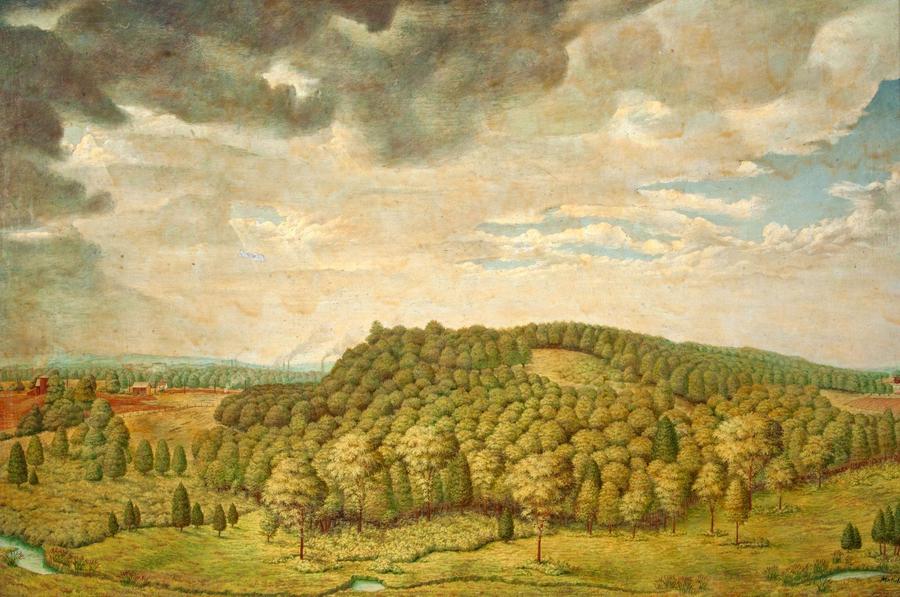
John G. Matilus, New Britain Seen From Newington, 1942. Tempera on panel. New Britain Museum of American Art, Gift of David Matulis
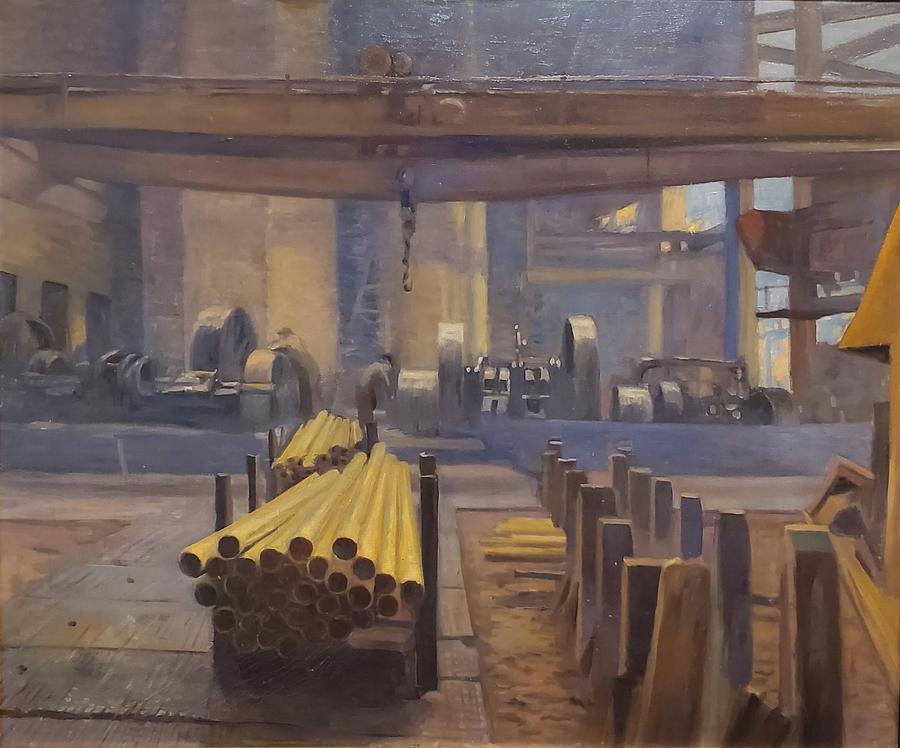
Elsie Rowland Chase, Chase Rolling Mill, c. 1895. Oil on masonite board. Mattatuck Museum, Gift of Fredericka Chase
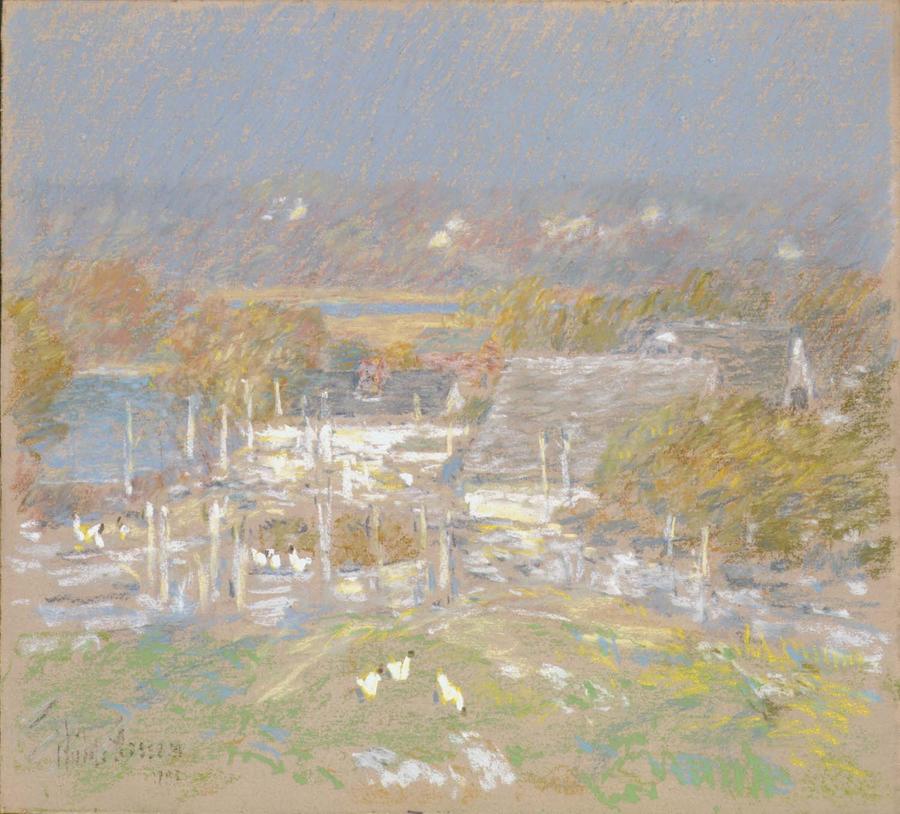
Childe Hassam, Chicken Yard, Back of the Holley House, 1902. Pastel on paperboard. Greenwich Historical Society
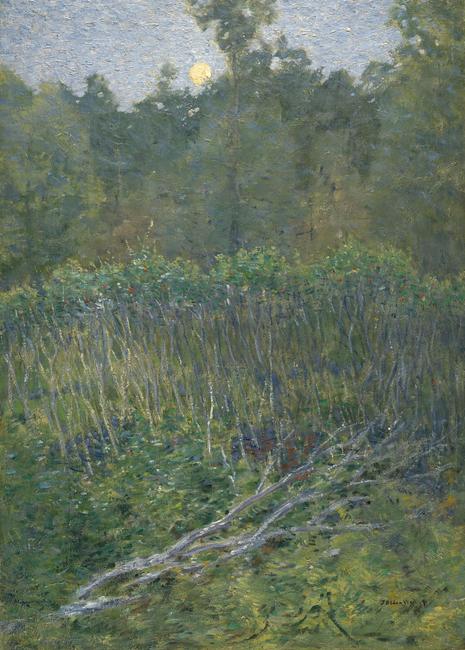
Julian Alden Weir, Early Moonrise, 1891. Oil on canvas. Weir Farm National Historic Site, The Friends of Weir Farm NHS, The Weir Farm Art Alliance, and the Weir Farm Donation Account
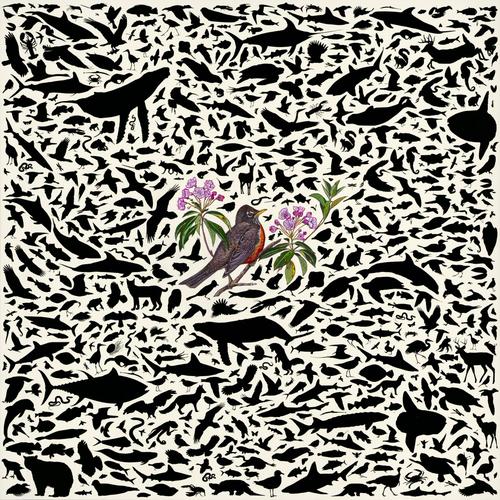
James Prosek, Connecticut Composition No. 1, 2020. Oil and acrylic on panel. Courtesy of the artist
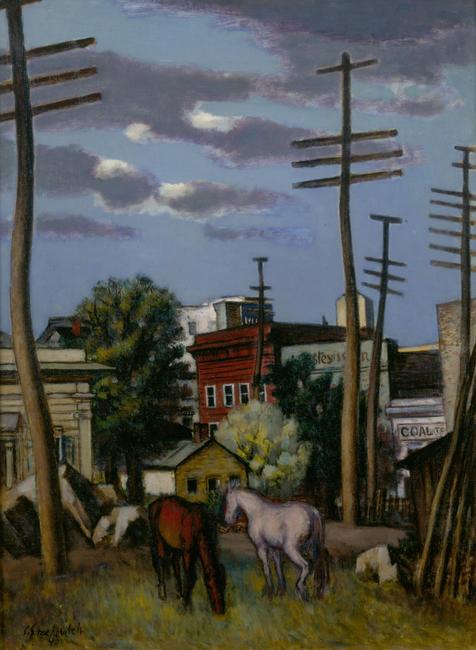
Simka Simkhovitch, Early Morning in Connecticut, 1940. Oil on canvas. Bruce Museum, Museum Purchase in Memory of Eugene G. Schwartz
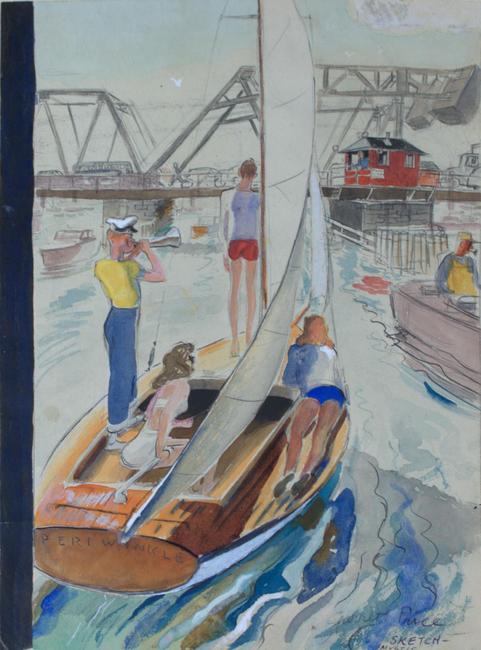
Garett Price, Cover for the New Yorker, Mystic River Draw Bridge, 1954. Lyman Allyn Art Museum, Gift of the Artist

Julian Alden Weir, Early Moonrise, 1891. Oil on canvas. Weir Farm National Historic Site, The Friends of Weir Farm NHS, The Weir Farm Art Alliance, and the Weir Farm Donation Account
James Prosek, Connecticut Composition No. 1, 2020. Oil and acrylic on panel. Courtesy of the artist
Simka Simkhovitch, Early Morning in Connecticut, 1940. Oil on canvas. Bruce Museum, Museum Purchase in Memory of Eugene G. Schwartz
Garett Price, Cover for the New Yorker, Mystic River Draw Bridge, 1954. Lyman Allyn Art Museum, Gift of the Artist

One of the first tourism trails in the state--The Connecticut Art Trail--is celebrating 25 years of guiding art aficionados on a journey that includes 22 worldclass museums and historic sites. Originally launched in 1995 as the Connecticut Impressionist Art Trail, encompassing 10 museums, today the Trail includes more than double that number, plus a growing range of affiliate members including galleries and art-based environments.

"When the founding museums first gathered, over two decades ago, I'm not sure that anyone imagined that this Trail would not only continue to thrive but grow in reach and reputation, across the country," shares Carey Weber, volunteer President of the Connecticut Art Trail and Executive Director of the Fairfield University Art Museum. "When considering how to celebrate 25 years of collaboration, the answer was clear--curating and opening a collaborative exhibition comprised of works from all of our member museums, hosted by a member." The resulting Made in Connecticut collaborative exhibition is open to the public through Sunday, February 7, 2021 at the Wadsworth Atheneum Museum of Art in Hartford.

James Prosek, American artist, writer, naturalist, and current Artist-in-Residence at the Yale University Art Gallery will be the independent curator for the exhibition. "This exhibition is made possible thanks to the tremendous collaboration of the partner museums, and the generosity of our guest curator James Prosek. We are excited about building on this energy for our next 25 years," continues Ms. Weber. "In addition to paintings, drawings, prints and other traditional works of art, this exhibition will feature a number of decorative and industrial art objects including a rubber desk, an early typewriter, a selection of historic buttons and much more."

"The member museums and historic sites of the Connecticut Art Trail are spread statewide," shared Mr. Prosek. "Their combined collections number over half a million objects and are filled with astonishing works. It is an honor to be working with the museums to showcase the diversity of objects that have impacted Connecticut's rich cultural landscape over the centuries." 

In addition to works from the collections of the member museums, Prosek has included works by two contemporary artists and members of the Mohegan Tribe of Indians of Connecticut, Bill Donehey and Kristin Emilyta. Together the artwork in the exhibition tells the story of Connecticut's natural and industrial landscape. It showcases the state's makers and builders,
workers and thinkers, artists and innovators.

Made in Connecticut is the highlight of this milestone year for the Trail, which will also include educational programming and unique anniversary exhibits among individual members. This will also be the final year that the popular Connecticut Art Trail passport, which provides no-cost admission to all 22 member sites," will be available for its original price, $25.

Entrance to the Wadsworth and Made in Connecticut are included with the purchase of the Passport which can be done online at ctarttrail.org or at any member location. "The proceeds of passports purchased directly at a member location results in a $25 donation directly to that museum," concludes Ms. Weber. "Not everyone realizes that the Trail currently does not receive any state or federal funding and that we strictly operate from members dues and the sales of passports. Therefore the sales of the passports have a direct impact on the ability of the museums to promote their great work."

Docent-led tours of Made in Connecticut will be on Sundays at 11am to February 7, 2020. Advanced registration is required via thewadsworth.org

For more info: thewadsworth.org. 

Thursday, December 3, 2020

Church & Rothko: Sublime

 A current exhibition titled Church & Rothko: Sublime at Mnuchin Gallery in New York pairs the Hudson River School paintings of Frederic Edwin Church (1826-1900) with the Color Field canvases of Mark Rothko (1903-1970). The gallery collaborated with Michael N. Altman and Christopher Rothko, the artist's son, to coordinate ten abstract 20th century works with an array of atmospheric 19th century landscapes -- glimpse the show online.

Roberta Smith writes for the New York Times, "The show’s opening combination is breathtaking. On one wall Rothko’s 'Browns and Blacks in Reds' (1957) presents a glowing stack in brown, red and black on a red ground. Adjacent is Church’s 'Marine Sunset (The Black Sea),' from 1881-82, an expanse of shockingly deep red sky with a little sun peeping over a choppy black sea tossing a dark ship. The colors are as blunt as the Rothko’s."

Also among the stellar works on view are 


Church's Above the Clouds at Sunrise (1849), 


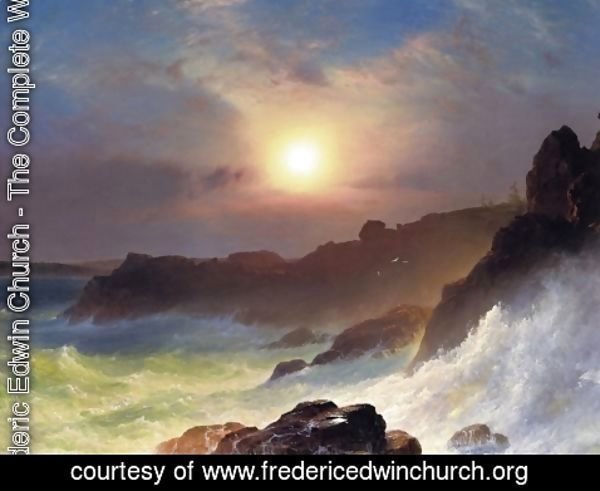
Coast Scene, Mount Desert (1852) 

and Oil Study for Cotopaxi (1861); 


and by Rothko, No. 1 (1949), Orange, Red, Yellow (1956) and No. 10 (1963).

See the works in the gallery's online Viewing Room; limited in-person viewings are by appointment through December 12th, 2020. A fully-illustrated publication with an essay written by art historian Dr. John Wilmerding is available.