Monday, March 15, 2021

Calder-Picasso

de Young museum

through May 23, 2021
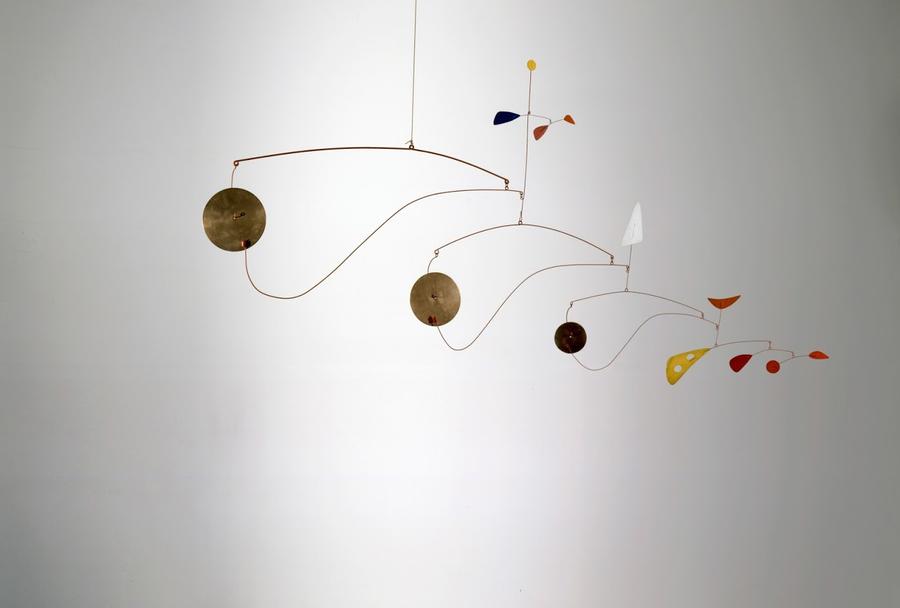

Alexander Calder, Triple Gong, ca. 1948. Brass, sheet metal, wire, and paint, 39 x 75 x 2 3/4 in. Image provided courtesy of the Fine Arts Museums of San Francisco
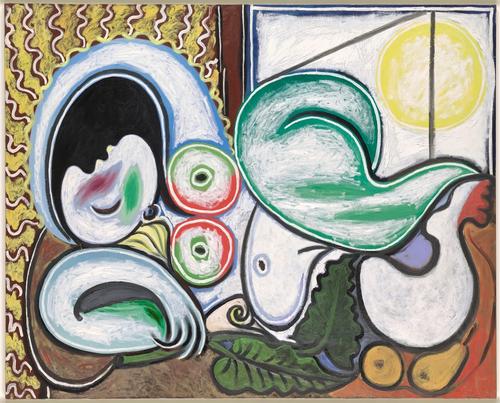
Pablo Picasso, Nu couché. Paris musée national Picasso- Paris. MP142. Image provided courtesy of the Fine Arts Museums of San Francisco.
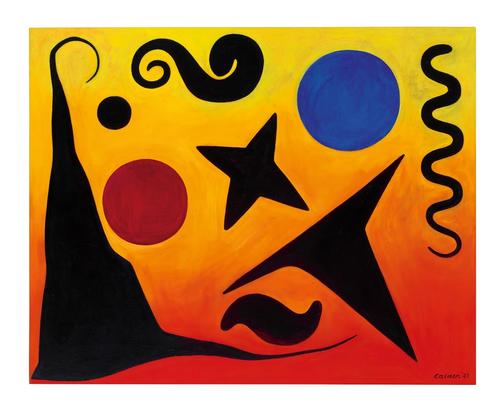
Alexander Calder, Red, Black, Blue. Image provided courtesy of the Fine Arts Museums of San Francisco
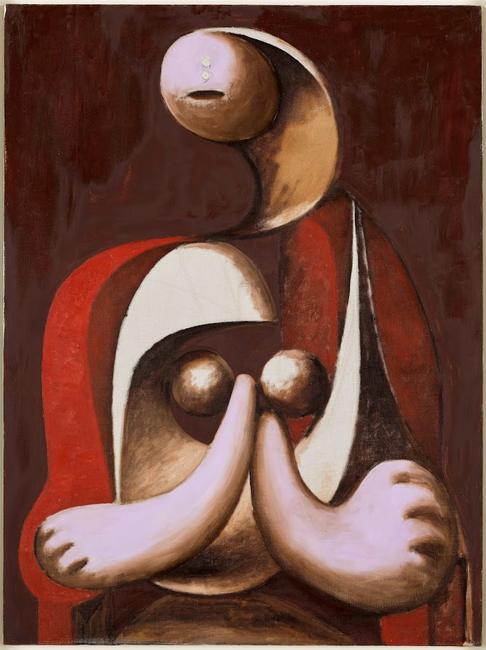
Pablo Picasso, Woman Sitting in a Red Armchair (MP139), 1932. Oil on canvas. Musée national Picasso Paris. Image provided courtesy of the Fine Arts. Museums of San Francisco.
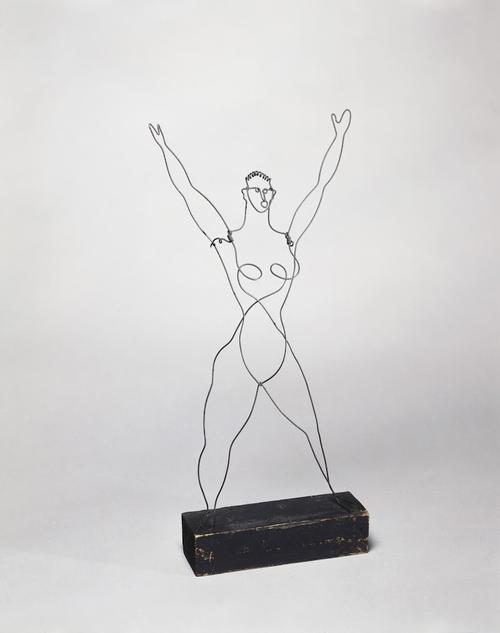
Alexander Calder, Acrobat. Image provided courtesy of the Fine Arts Museums of San Francisco.
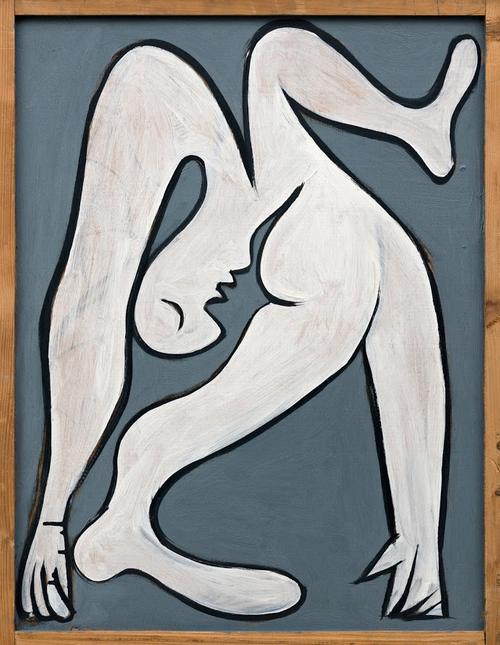
Pablo Picasso, Acrobat (Acrobate), Paris, January 19, 1930, oil on plywood, Fundación Almine y Bernard Ruiz-Picasso para el Arte, Madrid. © 2020 Estate of Pablo Picasso / Artists Rights Society (ARS), New York. Photo © FABA, Hugard & Vanoverschelde Photography Image provided courtesy of the Fine Arts Museums of San Francisco

The Fine Arts Museums of San Francisco are presenting the U.S. debut of Calder-Picasso at the de Young museum, now through May 23, 2021. Conceived by the artists’ grandsons Alexander S. C. Rower and Bernard Ruiz-Picasso, it is the first major museum exhibition to explore the artistic relationship between Alexander Calder and Pablo Picasso, two of the most innovative and influential artists of the 20th century. In more than 100 paintings, sculptures, drawings, and photographs—including many iconic works—the exhibition presents a compelling visual conversation centering around the artists’ exploration of the void, or the absence of space, which they defined from the figure through to abstraction. 

“Calder-Picasso provides an in-depth investigation of the relationship between two of the most influential artists of the 20th century,” states Thomas P. Campbell, Director and CEO of the Fine Arts Museums of San Francisco. “We are delighted to share this fascinating exhibition with audiences on the West Coast. It reaffirms the revolutionary impact of their work as each grappled with the representation of form, space, and time in art—and in doing so, redefined the conception of art itself.” 

Calder-Picasso invites visitors to explore a visual dialogue of works from the mid-1920s to the early 1970s. In this time, Calder sought to capture the unseen and unknown forces that lie beyond traditional physical dimensions in order to express what he called grandeur immense, or “immense grandeur.” In the same period, Picasso, who described his works as pages from his diary, was engaged in fusing the personal with the universal and was determined to achieve “a deeper likeness, more real than real, thus becoming sur-real.”

“Through his mobiles, Calder animated sculpture, embraced chance as a crucial artistic element and engaged the viewer in a dynamic dialogue with the ever-evolving artwork. Exploring the concept of metamorphosis while alternating between representation and abstraction, Picasso revealed the infinite potential inherent in both styles—often in the same work of art,” states Timothy Anglin Burgard, Distinguished Senior Curator and Ednah Root Curator in Charge of American Art at the Fine Arts Museums of San Francisco.

Portraits of the artists’ studios will reveal deeply personal environments that offer windows into each artist’s creative process, as well as their respective psychological outlooks. Adding to our understanding of the connection shared between the two artists, the exhibition will also explore one of the artists’ four in-person meetings. While their first encounter was in 1931 at Calder’s premiere Paris exhibition of his abstract sculptures, the exhibition explores his second, at the Paris World’s Fair (1937), where Picasso exhibited his painting Guernica (1937) and Calder exhibited his sculpture Mercury Fountain (1937) in the Spanish Pavilion. Two further documented meetings took place in Antibes in 1952 and Vallauris in 1953.

Calder-Picasso will showcase a wealth of pioneering mobiles, stabiles, standing mobiles, paintings, prints, and drawings by Calder, juxtaposed with major paintings, sculptures, and drawings by Picasso, drawn largely from the extensive holdings of the Calder Foundation, Musée national Picasso-Paris, and the Fundación Almine y Bernard Ruiz-Picasso para el Arte. Additional loans will come from the Centre Pompidou; Fine Arts Museums of San Francisco; Ateneum Art Museum, Finnish National Gallery; Minneapolis Institute of Art; Museum of Fine Arts, Houston; Tate Britain; Whitney Museum of American Art; and private collections.

In detail
Thematically arranged, Calder-Picasso will take visitors on a journey through the Herbst Exhibition Galleries that reveals compelling resonances and parallels between these great artists, as well as the unique visions that make each distinctive. 

Calder and Picasso were both engaged by the relationship of volume to space. In the exhibition’s opening gallery, Calder’s Ball Player (ca. 1927) captures the silhouette of the figure as he reaches out into space in a moment of focused action, radiating kinetic energy through the slight trembling of the wire lines. Picasso’s Figure (Project for a Monument to Guillaume Apollinaire) of 1928 embodies the artist’s attempt to make “a statue out of nothing, out of emptiness.” 

The next gallery, “Drawing in Space”—a phrase coined by critics for Calder’s wire sculpture in 1929—explores the two artists’ use of line to separate volume from void. Calder’s wire proto-mobile, Aztec Josephine Baker (1930), which sways with air currents, captures the dazzling energy and dynamism of the legendary African American dancer and cabaret performer who took Jazz Age Paris by storm in the late 1920s. Picasso also experimented with wire and his Figure (1931), seems to conflate a human figure with a geometric object that recalls an artist’s easel. 

In “Capturing the Void,” Calder’s and Picasso’s works explore the idea of activating negative space as an essential component of their compositions. With Croisière (1931), Calder depicts unifying yet disparate forces in his non-objective work: solidity and transparency, stasis and activity, volume and void. The upraised left arm of Picasso’s Nu couché (Reclining Nude) of 1932, which frames a half-moon profile against a black void, finds a resonant echo in the wire lines encircling the voids in Calder’s sculptures. 

Works in “The Void and the Volume / In Suspense” reveal that both Calder and Picasso were deeply engaged with ideas concerning the articulation of volume within the space of the canvas, and in Calder’s case, expanding works beyond their two-dimensional confines. Calder’s Little Yellow Panel (1936) explores the idea of animating two-dimensional painting with a projecting three-dimensional element in motion. Picasso’s Femme assise dans un fauteuil rouge (Woman Seated in a Red Armchair) of 1932 transforms the subject into a floating arrangement of bone and stone shapes that would collapse in the real world. 

In “Sculpting the Void,” Calder’s and Picasso’s works utilize a sculptural vocabulary to shape voids into sensed and seen elements in their compositions. Calder’s standing mobile Four Leaves and Three Petals (1939) employs gracefully slender wire rods and organic sheet-metal shapes to sculpt the surrounding space. Picasso’s Femme dans un fauteuil, (Woman in an Armchair), April 2, 1947, depicts the female sitter as partially transparent and suggests that the voids in her body assume equally significant sculptural form.

“Vanitas” represents a post–World War II period of rebirth. Calder’s mobile Dispersed Objects with Brass Gong (1948) ingeniously introduces randomly generated sound as an essential element, while Picasso’s Still Life with Skull, Leeks, and Pitcher (1945) uses a skull, bone-like leeks, and a pitcher painted with the French flag colors to suggest the dawn of a new era.

In “Making and Deconstructing,” Calder and Picasso construct and deconstruct their subjects and forms to visualize invisible worlds. Key works include Calder’s mobile Scarlet Digitals (1945), a sculpture that projects into places that it doesn’t occupy; its three disparate movements present a shifting presence of absence that is alive with gestures. Picasso’s iconic Bull’s Head (1942), a bronze sculpture made from a discarded bicycle seat and handlebars, reveals the artist’s fascination with the process of distillation to access the truth of the subject. 

Works in “Gravity and Grace” have substantial mass yet seem to defy the rules of gravity. Calder’s perfectly balanced Tightrope Worker (1944) is an unusual excursion into solid and fully three-dimensional sculpture that still retains the artist’s preoccupation with movement, while Picasso’s Vase with Flower (1951) challenges conceptions of mass and weight by depicting a soft and fragile flower in hard and durable cast bronze. 
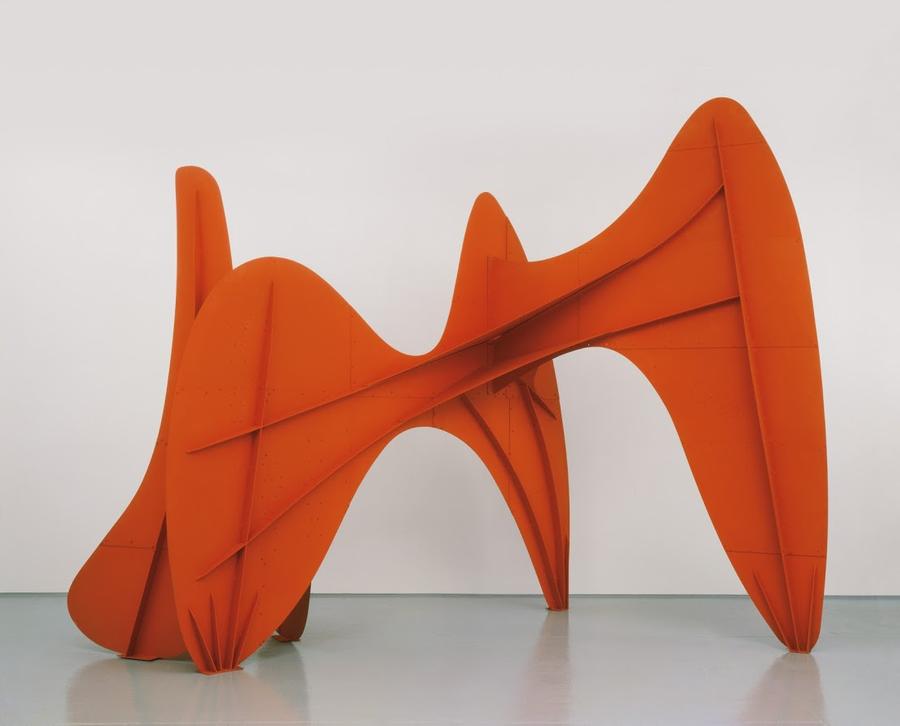
Alexander Calder, La Grande vitesse (1:5 intermediate maquette). 1969. Sheet metal, bolts, and paint, 102" x 135" x 93". Image provided courtesy of the Fine Arts Museums of San Francisco

The exhibition’s final section, “Folding and Piercing,” will challenge traditional definitions that equate sculpture with solid three-dimensional mass. The sheet-metal standing mobile Louisa’s Valentine (1955), with a miniature mobile animating the heart-shaped void, was made by Calder as a valentine for his wife. Picasso’s Woman with Outstretched Arms (1961), sculpted out of metal yet retaining the lightness of paper, flattens the female form into silhouettes and plays on the dialogue between substance and void. 

Thursday, March 11, 2021

The Charles Hosmer Morse Museum of American Art Receives the Extraordinary American Art Collection


Theodore E. Stebbins Jr. and Susan Cragg Stebbins have given their outstanding collection of American art to The Charles Hosmer Morse Museum of American Art in Winter Park, Florida. The couple have made their gift in honor of Mrs. Stebbins’s parents, Evelyn and Henry Cragg, longtime residents of Winter Park. Mr. Cragg was a member of the Charles Homer Morse Foundation board of trustees from its founding in 1976 until his death in 1988. 


All images are courtesy of The Charles Hosmer Morse Museum of American Art, Winter Park,Florida.


​​​​​​​1.Long Island Sound View,c. 1827–35. Oil on wood panel; Thomas Birch, American, 1779–1851; 9 3/4x 13 1/2 in. (24.8 x 34.3 cm);gift ofTheodore E. and Susan Cragg Stebbins(2020-004:4).


2.Castle of Chillon,1859.Oil on canvas; Sanford Robinson Gifford, American, 1823–80; 12 x 20 in. (30.5 x50.8 cm);gift of Theodore E. and Susan Cragg Stebbins(2020-008).


3.Calla Lilies,1874.Oilon panel; George Cochran Lambdin, American, 1830–96;20 x 11 7/8 in. (50.8 x 30.2cm);gift of Theodore E. and Susan Cragg Stebbins(2020-004:28).


4.Barnard Castle,1862.Watercolor and gouache on blue-green paper;Thomas Moran, American, 1837–1926125/8 x 18 5/8 in. (32.1 x 47.3 cm);gift of Theodore E. and Susan Cragg Stebbins

The gift of 65 works of art (and an additional three future gifts and two long-term loans) includes late 19th-century and early-20th century American sculpture, watercolors, drawings, and paintings by preeminent American masters such as Albert Bierstadt (1830–1902) and Martin Johnson Heade (1819–1904). John LaFarge (1835–1910) and John Frederick Peto (1854–1907) are also represented in the gift. Paintings by Fidelia Bridges (1834–1923) and the botanical illustrator Ellen Robbins (1828–1905) diversify the Morse’s American paintings collection while also illuminating the achievements of these lesser-known artists. 

The gift contains outstanding works by such artists as Thomas Moran (1837–1926), Worthington Whittredge (1820–1910), and Sanford Robinson Gifford (1823–80). 


It is impossible to think about American art scholarship, museum culture, and collecting without the name Theodore Stebbins coming to mind. Stebbins has had an illustrious career as a professor of art history and as curator at the Yale University Art Gallery (1968–77), the Museum of Fine Arts, Boston (1977–2000), and the Harvard Art Museums (2001–14). Many of Stebbins’s former students occupy positions of importance throughout the art world. Among his numerous publications are his broad survey of American works on paper, American Master Drawings and Watercolors: A History of Works on Paper from Colonial Times to the Present (1976), and his definitive works on American painter Martin Johnson Heade (1819–1904) including the Life and Work of Martin Johnson Heade (2000). American art gained recognition beyond the United States in the 1980s and 1990s, furthered by Stebbins’s efforts internationally. In 1981, he took to the People’s Republic of China the first exhibition of American paintings ever shown in that country, and, in 1983, his blockbuster exhibition A New World: Masterpieces of American Painting, 1760–1910 was shown in Paris at the invitation of the Musée du Louvre. 

Susan Cragg Stebbins, a scholar in literature and Romance languages with a lifelong love for French and Italian culture, was a driving force behind the exhibition The Lure of Italy. She and Ted wrote the lead essay in that exhibition catalogue, which became the first American publication ever to win the prestigious Minda de Gunzburg Prize. With Susan’s own passions and discerning eye complementing her husband’s, the two built an extraordinary collection in which individual works of art are enriched by carefully selected pairings and a heightened sensitivity to the intimate, poetic, and subtly exquisite. 

The Morse Museum was founded by Jeannette Genius McKean (1909–89) in 1942 in honor of her grandfather, and successful industrialist, Charles Hosmer Morse (1833–1921). Her husband, Hugh F. McKean (1908–95) was its first and visionary director from the Museum’s founding until his death in 1995. 

 The Morse Museum is home to the world’s most comprehensive collection of works by American designer and artist Louis Comfort Tiffany (1848–1933), including the chapel interior he designed for the 1893 World’s Columbian Exposition in Chicago and art and architectural objects from Tiffany’s celebrated Long Island home, Laurelton Hall. The Museum's holdings also include American art pottery, late 19th- and early 20th-century American paintings, graphics, and decorative art. Owned, operated, and funded by the Charles Hosmer Morse Foundation, the Museum receives additional support from the Elizabeth Morse Genius Foundation. It receives no public funds. The Morse Museum is open 10 a.m. to 3 p.m., Tuesday through Saturday. All visits are by appointment only. Appointments may be made online by visiting the Museum’s “Plan Your Visit” page or by calling (407) 644-1429. Regular admission is $6 for adults, $5 for seniors, $1 for students, and free for children under 12. More information may be found on the Museum’s website, morsemuseum.org. ###


Sunday, March 7, 2021

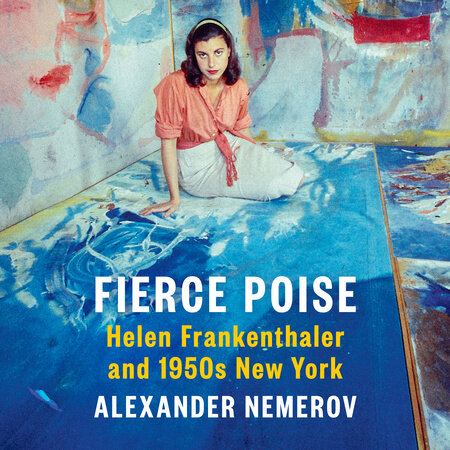
Book - portrait of Helen Frankenthaler


Hardcover | $28.00 
Published by Penguin Press
Mar 23, 2021 | 288 Pages | 6 x 9| ISBN 9780525560180

A dazzling biography of one of the twentieth century's most respected painters, Helen Frankenthaler, as she came of age as an artist in postwar New York

"The magic of Alexander Nemerov's portrait of Helen Frankenthaler in Fierce Poise is that it reads like one of Helen's paintings. His poetic descriptions of her work and his rich insights into the years when Helen made her first artistic breakthroughs are both light and lush, seemingly easy and yet profound. His book is an ode to a truly great artist who, some seventy years after this story begins, we are only now beginning to understand."--Mary Gabriel, author of Ninth Street Women


At the dawn of the 1950s, a promising and dedicated young painter named Helen Frankenthaler, fresh out of college, moved back home to New York City to make her name. By the decade's end, she had succeeded in establishing herself as an important American artist of the postwar period. In the years in between, she made some of the most daring, head-turning paintings of her day and also came into her own as a woman: traveling the world, falling in and out of love, and engaging in an ongoing artistic education. She also experienced anew--and left her mark on--the city in which she had been raised in privilege as the daughter of a judge, even as she left the security of that world to pursue her artistic ambitions.

Brought to vivid life by acclaimed art historian Alexander Nemerov, these defining moments--from her first awed encounter with Jackson Pollock's drip paintings to her first solo gallery show to her tumultuous breakup with eminent art critic Clement Greenberg--comprise a portrait as bold and distinctive as the painter herself. Inspired by Pollock and the other male titans of abstract expressionism but committed to charting her own course, Frankenthaler was an artist whose talent was matched only by her unapologetic determination to distinguish herself in a man's world.

Fierce Poise is an exhilarating ride through New York's 1950s art scene and a brilliant portrait of a young artist through the moments that shaped her.

PRAISE

“Alexander Nemerov’s biography of the painter Helen Frankenthaler is more than just an exploration of an artist, it’s also a look back into the lost world of the 1950s Manhattan art scene. Frankenthaler is inarguably a great talent, and it’s a pleasure to learn about her life and work, but equally enjoyable is learning how she fit into (or sometimes didn’t) a world of painters, critics, collectors, and hangers-on whose impact on American culture can still be seen today.” —Town & Country

“Nemerov. . . [creates] a collage-like narrative that conjures the glamor and bustle of postwar New York City, when high art met downtown renegades.” —O, The Oprah Magazine

“Tantalizing. . . . lively.” —The Los Angeles Times

“Informative and erudite.” —Harper’s Magazine

“Neither conventional biography nor arm’s-length critical appraisal, Alexander Nemerov’s Fierce Poise shines a light on Helen Frankenthaler’s early artistic breakthrough by blending both forms. . . . A thrillingly alive account of a woman unapologetically pursuing her own vision in an era and a milieu largely defined by men.” —Vogue 
 
“Moody and textured, Fierce Poise celebrates, and mimics, Frankenthaler’s sweetly explosive paintings.” —Vulture 

“Pairing vivid anecdotal biography with energetic descriptive analysis, the author recalibrates our perception of Frankenthaler’s undulating and entrancing canvases, on which she channeled in-the-moment feelings and celebrated the ‘beauty and power and glory’ of life. With reverence and irreverent wit, nimble narration, pertinent art history, and a vibrant cast of characters, Nemerov chronicles the first round in Frankenthaler’s extraordinary artistic adventure.” —Booklist

“Fascinating.”—Kirkus

“The magic of Alexander Nemerov’s portrait of Helen Frankenthaler in Fierce Poise is that it reads like one of Helen’s paintings. His poetic descriptions of her work and his rich insights into the years when Helen made her first artistic breakthroughs are both light and lush, seemingly easy and yet profound. His book is an ode to a truly great artist who, some seventy years after this story begins, we are only now beginning to understand.”—Mary Gabriel, author of Ninth Street Women
 
“Throughout his book, Alexander Nemerov refers to Frankenthaler as ‘Helen,’ even though the two never met. By the time I was done reading, I was calling her that, too, and felt she and I had a close connection. It takes courage for a major scholar to assume the personal approach, and voice, that Nemerov does in this biography, but by plunging so deep into Frankenthaler’s mind and life, he makes new sense of the veils and stains in her paintings.”—Blake Gopnik, author of Warhol
 
“Fierce Poise is an exquisite blend of biography and criticism that excavates Helen Frankenthaler’s creative beginnings—and so much more. Every page sparks with Alexander Nemerov’s deep knowledge and insights into the everyday exaltations and terrors of making art of any kind, at any time. Anyone who burns to forge their own life should read this book.”—Kate Bolick, author of Spinster
 
“Reading Alexander Nemerov’s Fierce Poise felt like basking in the sun on the first warm day of spring. With great sensitivity, Nemerov demonstrates why Helen Frankenthaler’s colorful, beautiful paintings deserve our attention. And with warmth and empathy, he chronicles Helen’s devotion to her art, which she maintained even in times of turmoil. I finished reading the book feeling newly attuned to the brief moments of grace and joy that can be found in daily life. Fierce Poise, like Helen’s paintings, shows us how art can drive away darkness, leaving us to take in the brilliant day.”—Maggie Doherty, author of The Equivalents

Friday, March 5, 2021

The Frick Collection Newly Installed At The Breuer Building


Room 24: Four grand panels of Fragonard’s series The Progress of Love are shown together at Frick Madison in a gallery illuminated by one of Marcel Breuer’s trapezoidal windows. This view shows two of the 1771 –72 paintings, with two later overdoors visible in the next gallery; photo: Joe Coscia
Room 22: The Frick Collection houses more works by American-born James McNeill Whistler than by any other artist. This view shows three of four full-length portraits on display in a Frick Madison gallery; photo: Joe Coscia

The Frick Reframed: The Frick Collection Presents Highlights Reconsidered at Frick Madison

A temporary move during The Frick's renovation posits the collection in an iconic modernist building 

On Thursday, March 18, 2021, The Frick Collection launches Frick Madison, the long-awaited public opening of its temporary new home at 945 Madison Avenue. Frick Madison invites audiences to experience the beloved holdings of the institution, reframed in a completely new context. Serving as the Frick’s temporary home for the next two years while its historic buildings at 1 East 70th Street undergo renovation, Frick Madison marks the first time that a substantial gathering of collection highlights will be presented outside the walls of the museum’s Gilded Age mansion.

Room 6: Vermeer’s Mistress and Maid (left) and Officer and Laughing Girl (right), as shown at Frick Madison by The Frick Collection; photo: Joe Coscia
Room 7: The third-floor galleries at Frick Madison begin with three rare marble examples of Italian Renaissance portrait sculpture. By Laurana and Verrocchio, they date to the 1470s. The next room features early Italian religious painting from The Frick Collection, including works by Paolo Veneziano and Piero della Francesca; photo: Joe Coscia

In a departure from the Frick’s customary presentation style, works are organized at Frick Madison chronologically and by region, allowing for fresh juxtapositions and new insights about the treasured paintings and sculptures by Bellini, Clodion, Gainsborough, Goya, Holbein, Houdon, Ingres, Piero della Francesca, Rembrandt, Titian, Turner, Velázquez, Vermeer, Whistler, and many others.

The installation also spotlights the Frick’s impressive holdings of decorative arts and sculpture, as well as rarely seen works, including the entirety of canvases from the famed series by Jean-Honoré Fragonard, shown together for the first time in the institution’s history. Frick Madison is located at 945 Madison Avenue at 75th Street, the former site of the Met Breuer and, previously, the Whitney Museum of American Art, which commissioned the building in 1966 by architect Marcel Breuer.

Room 23: Nineteenth-century French Neoclassical works are shown in this gallery, among them painted portraits by Ingres and David, and an expressive terracotta bust by Chinard in the center; photo: Joe Coscia

Comments Ian Wardropper, Anna-Maria and Stephen Kellen Director, “We are thrilled that the public can continue to enjoy these great works of art from our collections during a time when they otherwise would be inaccessible as we renovate and enhance our home at 1 East 70th Street. The minimalism of Marcel Breuer’s midcentury architecture provides a unique backdrop for our Old Masters, and the result is a not-to-be-missed experience, one that our public is sure to find engaging and thought-provoking.”

Room 9: Two rare and infrequently displayed seventeenth-century Indian Mughal carpets from The Frick Collection occupy this gallery at Frick Madison; photo: Joe Coscia

The Frick has created a sequence of gallery spaces at Frick Madison that reflects the museum’s traditional emphasis on intimate encounters with both art and architecture and allows direct access to objects without the interference of vitrines or stanchions. Recognizing that Marcel Breuer’s stark creation of stone and concrete provides a very different museum experience than that offered by the Frick’s Beaux Arts mansion, the curatorial team has embraced this modernist setting as a unique opportunity. Rather than attempting to replicate the mansion’s domestic display, the installation respects the forms and materials Breuer used, juxtaposing beloved Frick masterpieces with the building’s distinct architectural features, such as its signature trapezoid windows.

Room 21: There are more paintings by Gainsborough at The Frick Collection than any other New York City museum. The wall of this Frick Madison gallery features five of the artist’s works, with his scene The Mall in St. James’s Park at center; photo: Joe Coscia

Comments Deputy Director and Peter Jay Sharp Chief Curator Xavier F. Salomon, “From the very beginning we sought to marry our holdings with Marcel Breuer’s great modernist building, with the intention of revealing the Frick’s strengths in a new way, while inspiring fresh conversations and observations. Throughout the installation, we’ve maintained the core value of the Frick experience: offering visitors the opportunity to study works of art in a direct and immediate way, surrounded by a beautiful and peaceful environment. Rather than trying to recreate the rooms of the mansion, we celebrate this architectural icon, hoping audiences emerge with new understandings of both its features and spaces, and of our remarkable and very distinct collection.”

Room 11: This grand gallery of Italian Renaissance paintings includes work by Veronese (back right wall) as wel l as Titian . Centrally located is a bronze by Francesco da Sangallo, placed atop a replica of its original base. To the left, in Room 12, are works by later Venetian masters Guardi, Tiepolo, and Carriera; photo: Joe Coscia

Tuesday, March 2, 2021

Exceptional 20th Century Art Collection Donated to the Seattle Art Museum


Franz Kline’s “Painting No. 11,” and Clyfford Still's "PH-338 (1949-No. 2)" in the Lang Residence. Spike Mafford/Zocalo Studios

An exceptional collection of 20th century art assembled over a decade by late collectors Jane Lang Davis and Richard E. Lang will find permanent homes and be accessible to the public at the Seattle Art Museum and the Yale University Art Gallery.

The Friday Foundation, established to realize the Langs’ passion and philanthropy, has announced gifts of 19 masterworks and $10.5 million in dedicated funds to the Seattle Art Museum. In addition, the Friday Foundation announced a gift of six specifically chosen artworks to the Yale University Art Gallery. [The whole collection is worth about $400 million, according to a third-party estimate from Sotheby's.]

Clyfford Still (1904-1980), PH-338 (1949-No. 2), 1949, Oil on canvas, 91 3/4 x 68 7/8 in

Longtime philanthropists and arts supporters, the Langs wanted to ensure a strong, diverse, and vibrant arts community. To help achieve this, they imagined a gift that would first and foremost share with the public their own rich experience of engaging thoughtfully, deeply, and personally with compelling objects and, through them, their creators. They hoped to inspire others to join the arts community by engaging with local organizations, and perhaps collecting themselves, and, ultimately, giving back as they did, thus enriching the lives of future generations. These gifts by the Friday Foundation follow the announcement in October 2020 of monetary gifts totaling $9 million to nine Seattle arts organizations.

The Langs thoroughly enjoyed sharing their collection and frequently opened their home to artists, scholars, students, museum groups and other collectors from around the world to experience the art. During their lifetimes, the Langs enjoyed hosting these visitors and always planned for works from their art collection to be accessible to the public. Living with the artworks in their Seattle-area home, they collected with a discerning eye, assembling one of the most important collections in the United States, including exceptional examples of Abstract Expressionism and post-war European modernism. Their art collection, which was displayed entirely in their home, was distinguished by its quality, rather than size.

Donation Makes Seattle Art Museum’s Post-War Collection ‘Soar’

The Friday Foundation’s signature gift is to the Seattle Art Museum (SAM), the institution closest to the Langs’ hearts. SAM has received 19 artworks that formed the core of the Lang Collection. Iconic artworks by Francis Bacon, Lee Krasner, Clyfford Still, Philip Guston, Joan Mitchell and David Smith, are exceptional examples of their best work.

Lang Residence: Spike Mafford/Zocalo Studios

Lyn Grinstein, President of Friday Foundation and daughter of Jane Lang Davis, said, “The gift of artworks to the Seattle Art Museum represents the richest core of my mother’s and stepfather’s fearlessly disciplined and tightly focused art collecting decade, as well as their commitment to the museum.

“Taken together, these 19 artworks tell that story to the highest level possible, while each one individually is a definitive example of each artist’s work,” Grinstein said. “The accompanying gift of funds provides support for the museum’s ambitious agenda, particularly the presentation and care of not only these artworks, but also those already at SAM and future gifts from other donors. With these gifts, we fulfill my mother’s and Richard’s conviction that a strong cultural sector is a critical pillar of a thriving community and honor their dedication to Seattle, its citizens, and its future.”

Don Hussong, Jane Lang Davis’ son, said, “Our family enjoyed the company of these artworks for many years. Many special family events took place by the David Smith sculpture that was such a source of joy for my mother. We will keep the stories of having lived around the collection, and now others will make their own visiting them.”

Lee Krasner (1908-1984), Night Watch, 1960, Oil on canvas, 70 x 99 in.

Amada Cruz, SAM’s Illsley Ball Nordstrom Director and CEO, said, “This extraordinary gift from the Friday Foundation is transformational for the Seattle Art Museum. The 16 paintings, one drawing and two sculptures form a breathtaking ensemble that will allow visitors to study one of the greatest collections in our region with excellent representations of work by some of the most important figures in Abstract Expressionism and post-war art. Each work is a stellar example of the artist’s oeuvre and attests to the discerning eyes and discipline of the Langs, who only collected the best.”

Joan Mitchell’s “The Sink,” on left, in the Lang Residence. Spike Mafford/Zocalo Studios

Many of the artworks donated to SAM represent a first for its collection: The first major paintings by Lee Krasner and Joan Mitchell, the first Ad Reinhardt and Clyfford Still, the first paintings with iconic compositions by Adolph Gottlieb and Robert Motherwell, and, especially important considering the museum’s post-war European holdings, the first paintings by Francis Bacon and a major sculpture by Alberto Giacometti.

“The Lang Collection will make the museum’s collection of post-war art soar,” Cruz said. “Richard E. Lang and Jane Lang Davis were longtime trustees and supporters of SAM, and this gift attests to the continued commitment of the family to the institution and, indeed, the City of Seattle. We are honored to be the custodians of this important collection, which will become the keystone for future exhibitions and installations.”

David Smith, 1906-1965, Cubi XXV, 1965, stainless steel, 119 1/4 x 120 3/4 x 31 3/4 in.

In addition to artwork, Friday Foundation has donated a total of $14.5 million to SAM. Today alone, Friday Foundation announced gifts totaling $10.5 million to SAM, including funds to support SAM’s post-war and contemporary art conservation programs, purchase technical equipment for art conservation, and to fund costs related to presenting the Lang Collection and other artworks. The Friday Foundation previously announced – among other gifts – its contribution of $2 million to the Seattle Art Museum’s Closure Relief Fund, and $2 million to endow the Richard E. Lang and Jane Lang Davis Acquisition Fund for Global Contemporary Art. Included in today’s gift announcement is an additional $200,000 to inaugurate this acquisition fund so the museum can begin acquiring artworks without waiting for endowment distributions.

Yale University Art Gallery Deepens Rothko and Kline Collection

The Friday Foundation selected six artworks to complement and expand the already strong representation of artists Mark Rothko and Franz Kline in the Yale University Art Gallery collection. The Gallery’s extraordinary modern and contemporary collection features rich holdings in abstract paintings by Pablo Picasso and Wassily Kandinsky as well as masterworks by Constantin Brancusi, Helen Frankenthaler, Jackson Pollock, Mark Rothko, and the Abstract Expressionists. Like the Friday Foundation donation, many of these works came to Yale in the form of gifts and bequests from important American collections. This gift honors the Langs’ interest in following the paths of Rothko and Kline and adding depth to the study of these artists’ working methods and a greater understanding of the evolution of their careers within an academic museum setting.

Philip Guston’s 1976 work “The Painter,” in the Lang Residence. Spike Mafford/Zocalo Studios

Stephanie Wiles, Henry J. Heinz II Director, Yale University Art Gallery, said, “We are grateful to the Friday Foundation for this extraordinary gift of art that will expand the ways the Yale University Art Gallery can present, research, and teach with great works of modern art. Jane Lang Davis and Richard E. Lang’s superb collection was a very personal one, and we are honored that the Friday Foundation chose Yale to honor their legacy with this transformative gift of six paintings and drawings by Mark Rothko and Franz Kline.”

Major gift to Yale art Gallery{ six artworks by Franz Kline (1910–1962) and Mark Rothko (1903–1970). I


The Yale University Art Gallery has received an extraordinary gift from the Friday Foundation honoring the legacy of late Seattle philanthropists Jane Lang Davis and Richard E. Lang. The Lang collection is one of the most important private collections of 20th-century art in the country, with masterworks by renowned postwar American and European artists and incredible examples of Abstract Expressionism. The gift from the Friday Foundation includes six artworks by Franz Kline (1910–1962) and Mark Rothko (1903–1970). It augments the Gallery’s collection of midcentury European and American art and brings increased attention to these two remarkable artists and their range of artistic output. With this gift, the Gallery’s holdings of Kline’s and Rothko’s paintings and drawings have broadened significantly and now provide a more nuanced view of the artists’ styles, techniques, and overlapping interests—for example, in psychology and the theater. Kline’s Portrait of Nijinsky (1942) and Rothko’s untitled painting from 1941–42, both of which address such subjects, are the earliest paintings by these artists to enter the Gallery’s collection, and Rothko’s No. 11 (Yellow, Green, and Black) (1950) is now the earliest of his famous Color Field paintings in the museum’s collection. The works on paper from the Friday Foundation, such as an untitled drawing by Kline from 1961, hint at the human figure, revealing how its presence endured well after the artist had seemingly abandoned representation for large-scale abstractions featuring gestural brushwork.


Franz Kline, Untitled, 1961. Oil and brush on paper. Yale University Art Gallery, Gift of the Friday Foundation in honor of Richard E. Lang and Jane Lang Davis. © 2021 The Franz Kline Estate/Artists Rights Society (ARS), New York


Mark Rothko, No. 11 (Yellow, Green, and Black), 1950. Oil on canvas. Yale University Art Gallery, Gift of the Friday Foundation in honor of Richard E. Lang and Jane Lang Davis. © 2021 Kate Rothko Prizel & Christopher Rothko/Artists Rights Society (ARS), New York