Thursday, August 13, 2015

Goya: The Portraits


7 October 2015 – 10 January 2016

Portraits make up a third of Goya’s output – and more than 150 still survive today – but there has never been an exhibition focusing solely on Goya’s work as a portraitist, until this autumn when almost half this number will come together at the National Gallery, London.


Francisco de Goya, 'The Duchess of Alba', 1797. On Loan from The Hispanic Society of America, New York A102 © Courtesy of The Hispanic Society of America, New York

Francisco de Goya y Lucientes (1746–1828) is one of Spain’s most celebrated artists. He was an incisive social commentator, considered (even during his own lifetime) as a supremely gifted painter who took the genre of portraiture to new heights. Goya saw beyond the appearances of those who sat before him, subtly revealing their character and psychology within his portraits.

Born before Mozart and Casanova, and surviving Napoleon, Goya’s life spanned more than 80 years during which he witnessed a series of dramatic events that changed the course of European history. 'Goya: The Portraits' will trace the artist’s career, from his early beginnings at the court in Madrid to his appointment as First Court Painter to Charles IV, and as favourite portraitist of the Spanish aristocracy. It will explore the difficult period under Joseph Bonaparte’s rule and the accession to the throne of Ferdinand VII, before concluding with his final years of self-imposed exile in France.
Exhibition curator Dr Xavier Bray says:
“The aim of this exhibition is to reappraise Goya’s status as one of the greatest portrait painters in art history. His innovative and unconventional approach took the art of portraiture to new heights through his ability to reveal the inner life of his sitters, even in his grandest and most memorable formal portraits.’’
This landmark exhibition will bring to Trafalgar Square more than 60 of Goya’s most outstanding portraits from both public and private collections around the world. These include works that are rarely lent, and some which have never been exhibited publicly before, having remained in possession of the descendants of the sitters. The exhibition will show the variety of media Goya used for his portraits; from life-size paintings on canvas, to the miniatures on copper and his fine black and red chalk drawings. Organised chronologically and thematically, we will for the first time be able to engage with Goya’s technical, stylistic, and psychological development as a portraitist.

From São Paulo to New York, and Mexico to Stockholm, private and institutional lenders have been outstandingly generous, including 10 exceptional loans from the Museo del Prado, Madrid. One of the stars of the show will undoubtedly be the iconic 'Duchess of Alba' (The Hispanic Society of America, New York) (pictured above), which has only once left the United States and has never travelled to Britain. Painted in 1797, this portrait of Goya’s close friend and patron shows the Duchess dressed as a 'maja', in a black costume and 'mantilla' pointing imperiously at the ground where the words ‘Solo Goya’ (‘Only Goya’) are inscribed.

Other patrons who assisted Goya on his upward trajectory to become First Court Painter, as Velázquez had done more than 150 years before him, are well represented: these include


'The Count of Floridablanca' (Banco de España, Madrid)

Image result

and 'The Duke and Duchess of Osuna and their Children' (Museo Nacional del Prado, Madrid)

– both key and influential patrons.


The immense group portrait of 'The Family of the Infante Don Luis de Borbón' (Magnani-Rocca Foundation, Parma), will be reunited with some of the other portraits Goya painted of the Infante’s young family who were living in exile from the Spanish court.
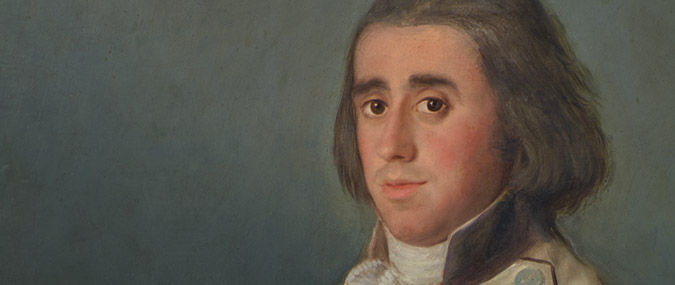


Other highlights will include the charismatic portrait of 'Don Valentin Bellvís de Moncada y Pizarro' (Fondo Cultural Villar Mir, Madrid) (detail above) which is unpublished and has never been seen before in public,
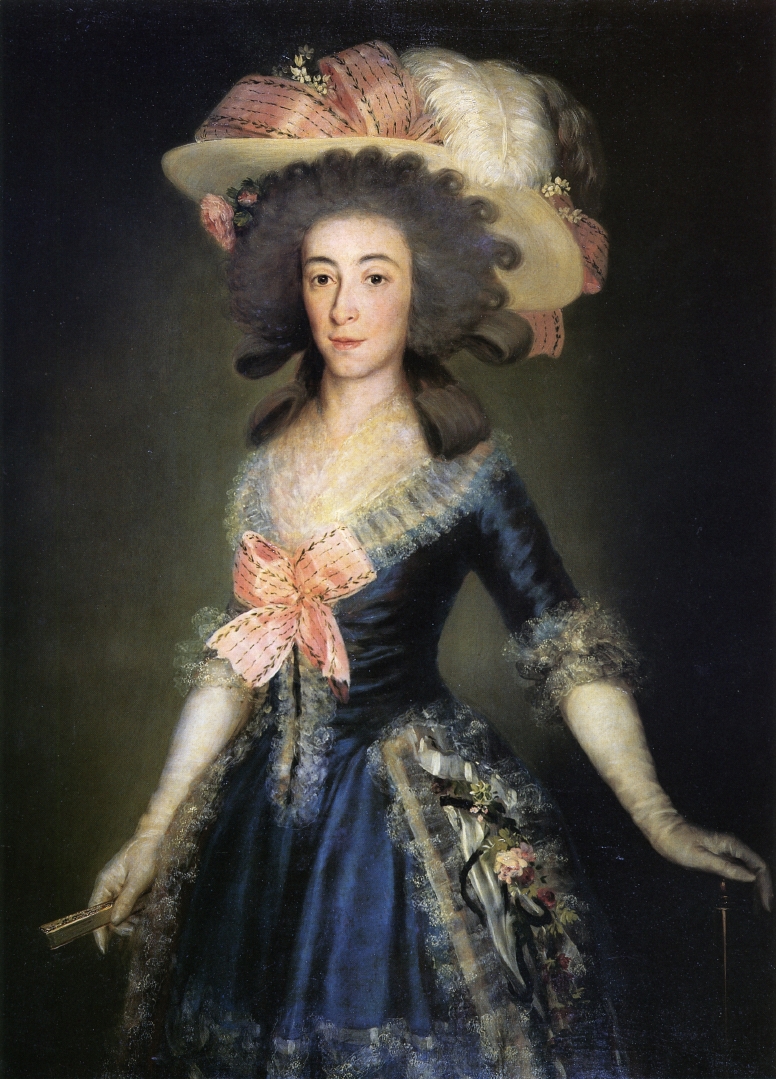


and the rarely exhibited 'Countess-Duchess Benavente' (Private Collection, Spain).


The recently conserved 1798 portrait of Government official 'Francisco de Saavedra' (Courtauld Gallery, London) will be exhibited for the first time in more than 50 years


alongside its pendant painted in the same year, showing his friend and colleague 'Gaspar Melchor de Jovellanos' (Museo del Prado, Madrid).
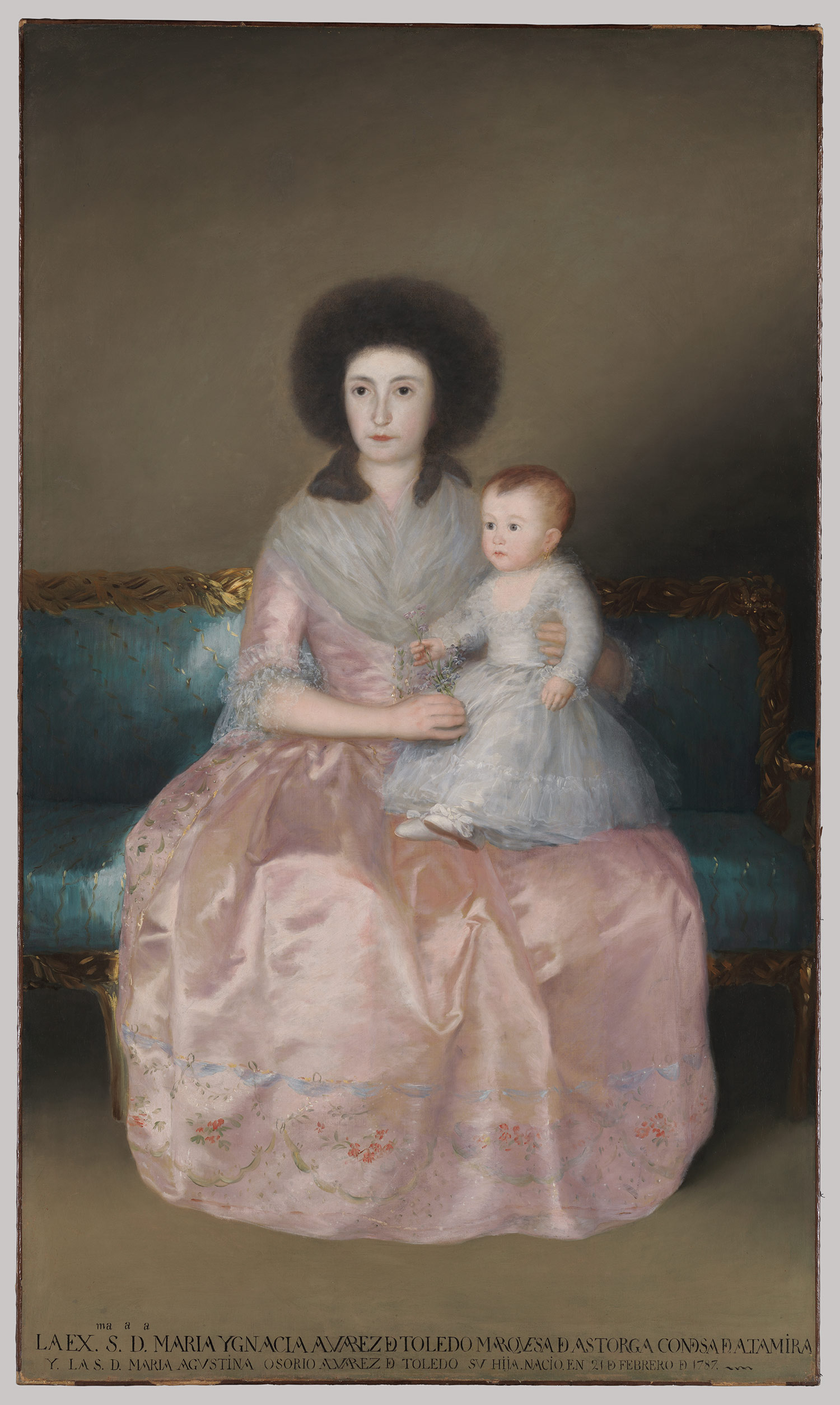


'The Countess of Altamira and her daughter, María Agustina', which has never been lent internationally from the Lehman Collection at the Metropolitan Museum of Art, New York,
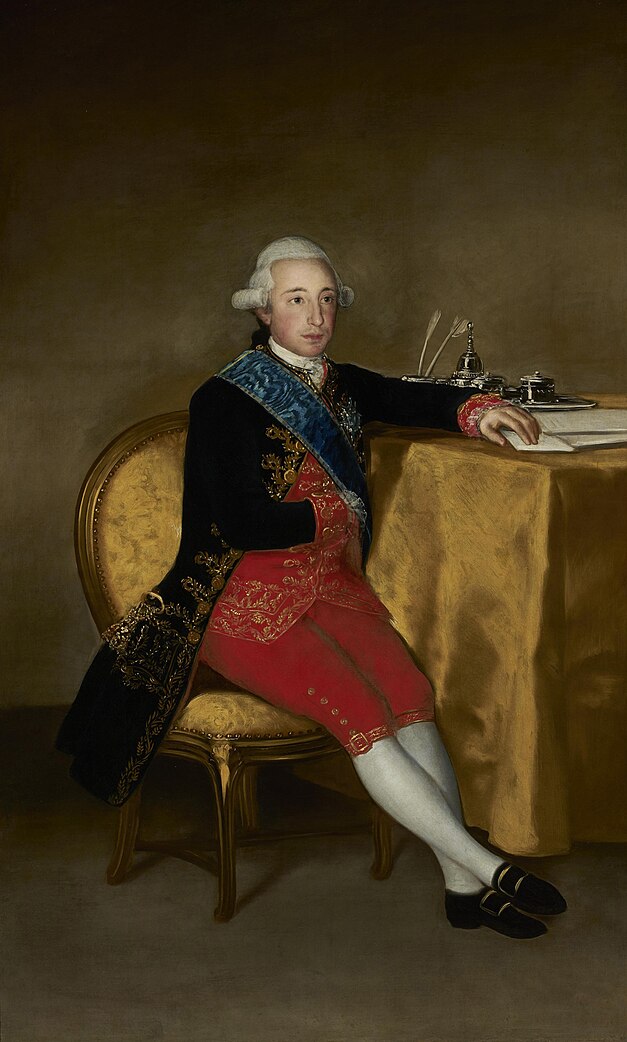
https://upload.wikimedia.org/wikipedia/commons/thumb/9/9a/Vicente_Joaqu%C3%ADn_Osorio_de_Moscoso%2C_conde_de_Altamira_by_Goya.jpg/627px-Vicente_Joaqu%C3%ADn_Osorio_de_Moscoso%2C_conde_de_Altamira_by_Goya.jpg

will come to Europe for the very first time to be reunited with her husband 'The Count of Altamira' (Banco de España, Madrid)


and their son 'Manuel Osorio Manrique de Zuñiga' (The Metropolitan Museum of Art, New York),

wearing a fashionably expensive red costume and playing with a pet magpie (which holds the painter's calling card in its beak).

It was shortly after completing his imposing portrait of the Countess, wearing a shimmering embroidered silk gown and shown with an introspective expression, that Goya was appointed court painter to Charles IV, King of Spain.

It was in his royal portraits in particular that Goya managed to combine his insightful observation and technical refinement to create unique, memorable portraits; in these he condensed the various aspects of his sitter’s personality into a subtle look or gesture, which often did not flatter his sitters.


'Charles III in Hunting Dress' (Duquesa del Arco) stands in a pose directly inspired by Velázquez’s hunting portraits of the Spanish royal family in the previous century, but the candid portrayal of a weather-beaten face with its marked wrinkles and a somewhat ironic gesture is unique to Goya, clearly revealing to us the personality of the King – an enlightened man, a lover of nature and his people, who wished to be approached as ‘Charles before King’.


Similarly, in the portrait of 'Ferdinand VII' (Museo del Prado, Madrid) we can imagine Goya’s mistrust of the pompous and selfish monarch who abolished the constitution and reintroduced the Spanish Inquisition: dressed in all his finery and carrying a sceptre, his vacuous expression captures in a moment exactly what Goya must have thought of him.

In contrast to the formality of his royal portraits, the exhibition also features more personal works by Goya, including a number of self-portraits in different media, and depictions of his friends and family.
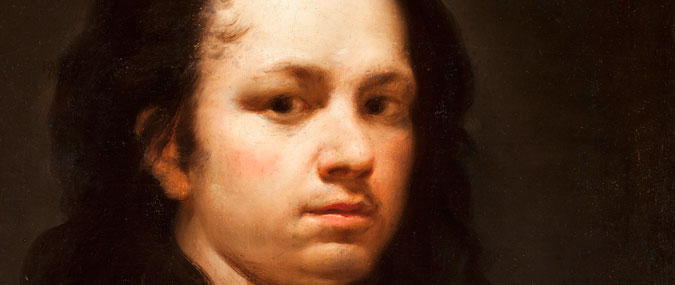


47 years lie between the first 'Self Portrait' (about 1773, Museo Goya, Colección Ibercaja, Zaragoza) (detail) in the show, completed when Goya was in his late 20s, and the last, the poignant


'Self Portrait with Doctor Arrieta' (1820, The Minneapolis Institute of Art) painted after an illness from which he almost died when he was 74 years old.

There will also be a chance to ‘meet’ the people who were closest to Goya;


his wife 'Josefa Bayeu' (Abelló Collection, Madrid),

his son 'Javier Goya' (Courtesy of The Metropolitan Museum of Art, Private Collection; Museo de Bellas Artes, Zaragoza)
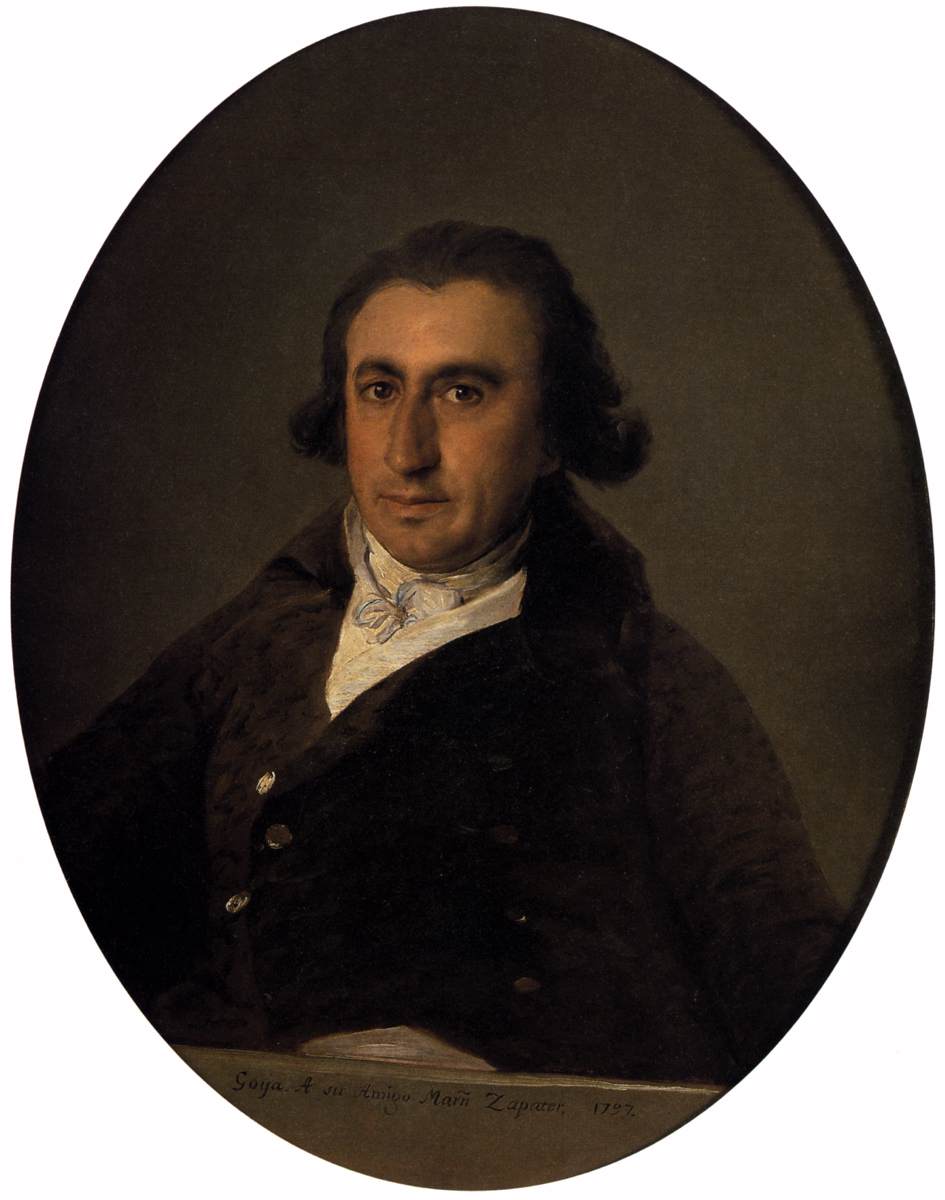


and his best friend and life-long correspondent 'Martin Zapater' ( Museo de Bellas Artes de Bilbao).
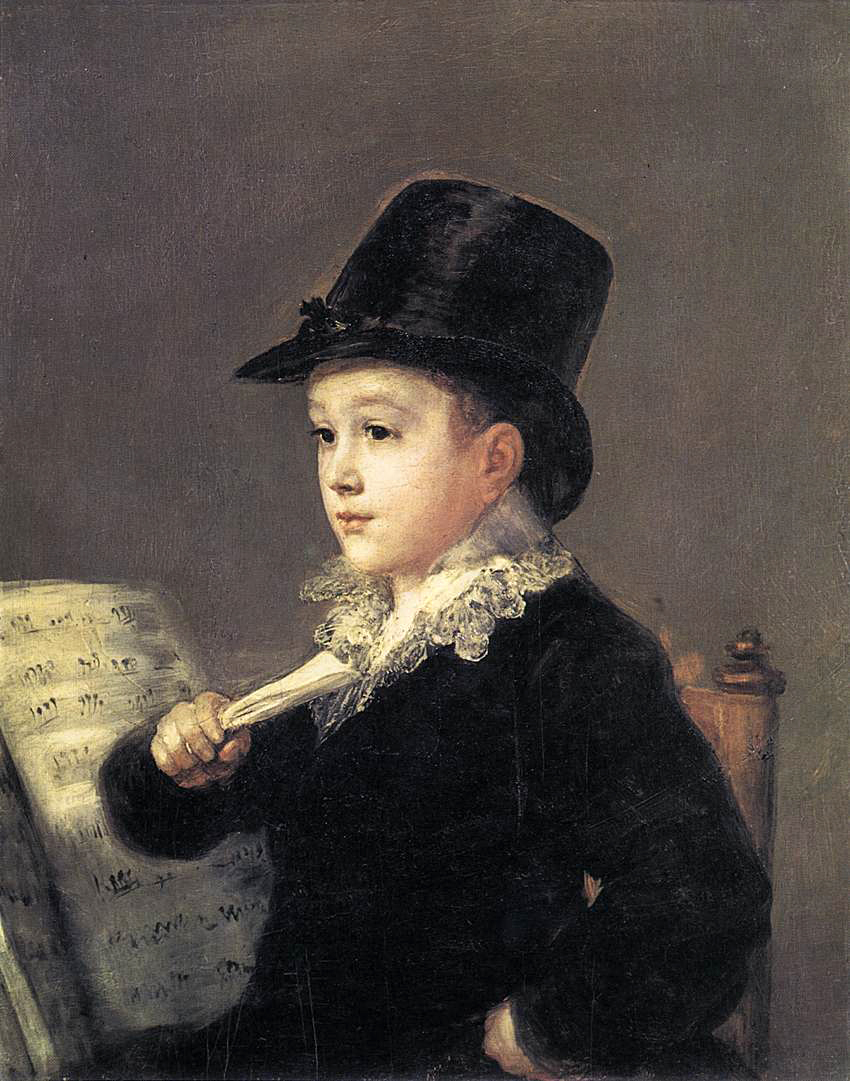


The exhibition also includes the last work Goya ever painted, of his only, beloved grandson 'Mariano Goya' (Meadows Museum, SMU, Dallas) – painted just months before Goya’s death on 16 April, 1828, this portrait is a testament to the genius, skill, and unfaltering creativity of an artist who persevered with his craft to his very last days.


More Images from the Exhibition: Title, Artist and Date
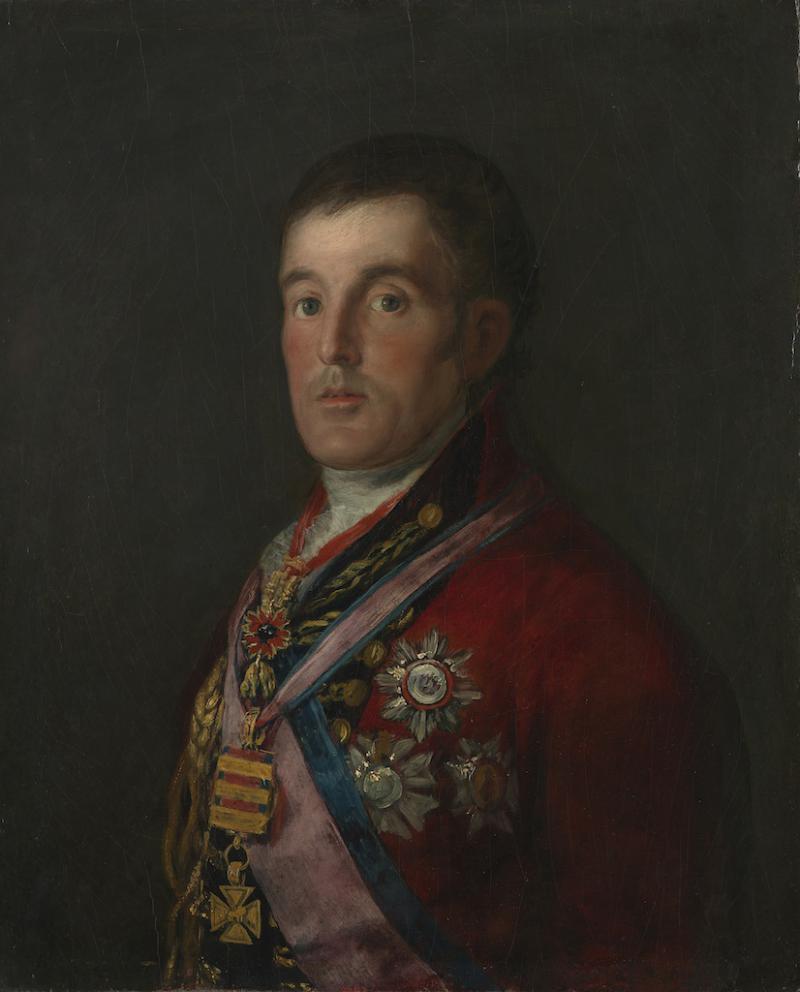

The Duke of Wellington
Francisco de Goya
1812-14


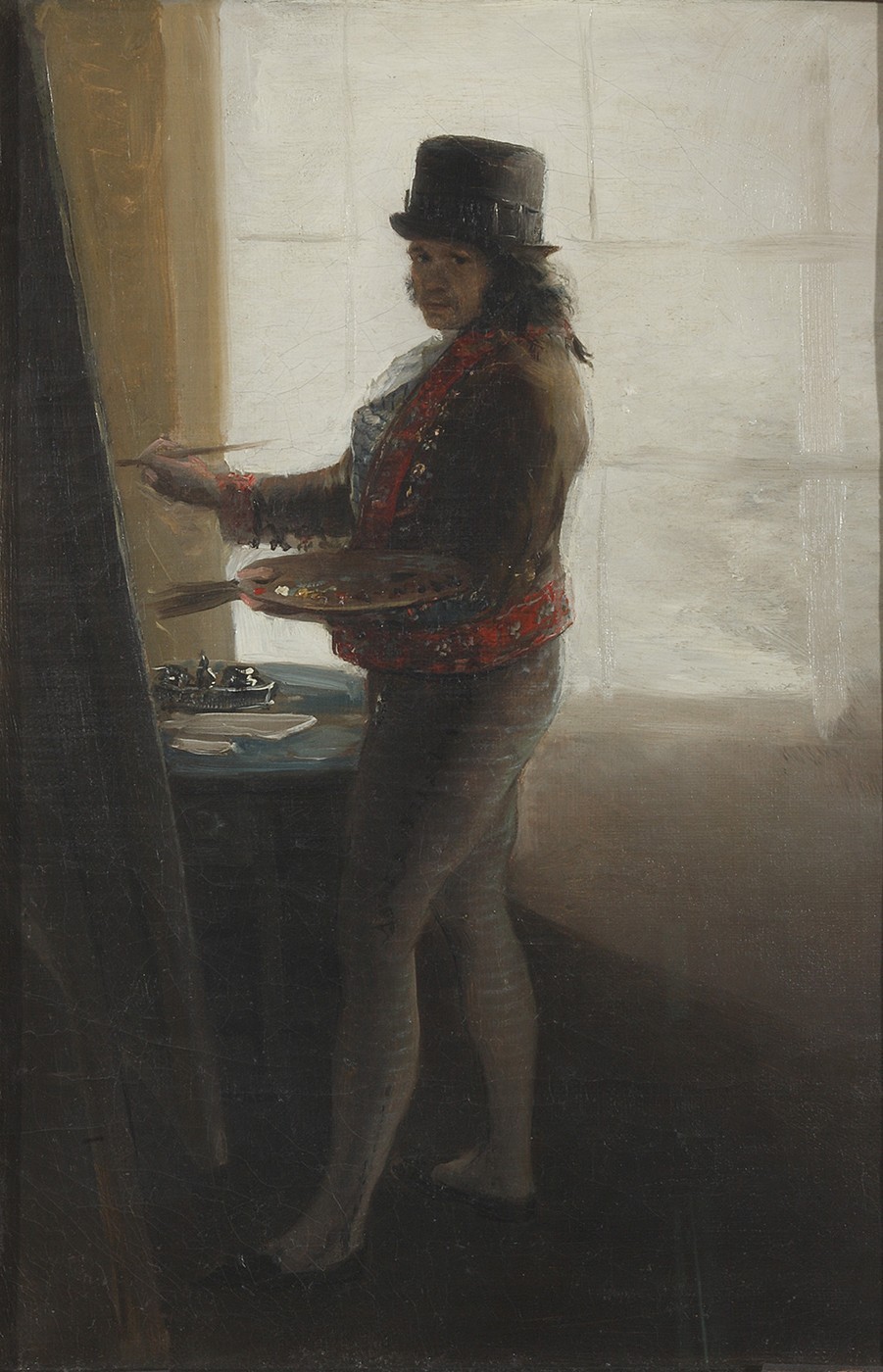
Self Portrait before an Easel
Francisco de Goya
1792-5


The Marchioness of Santa Cruz
Francisco de Goya
1805


Tuesday, August 11, 2015

300 Years of French Landscape Painting


Works by some  of France’s most celebrated painters are featured in From the Collection: 300 Years of French Landscape Painting, a new exhibition open July 17 – October 11 at the Toledo  Museum of Art. Curated by Lawrence W. Nichols,  William Hutton senior curator of European and American  painting and sculpture before 1900, this small, insightful show offers a chronological survey of the  French approach to painting landscape . 

“Drawn entirely from the  Museum’s collection, the exhibition includes a single, stunning  example selected from each of the many styles of representation that define the tradition of rendering  nature,” Nichols said.

Beginning with Claude Lorrain’s 17th - century classicism 


Claude Lorrain - Landscape with Nymph and Satyr Dancing
and François Boucher’s Rococo fantasy, 


François Boucher - Mill at Charenton

it continues through the 19th century with
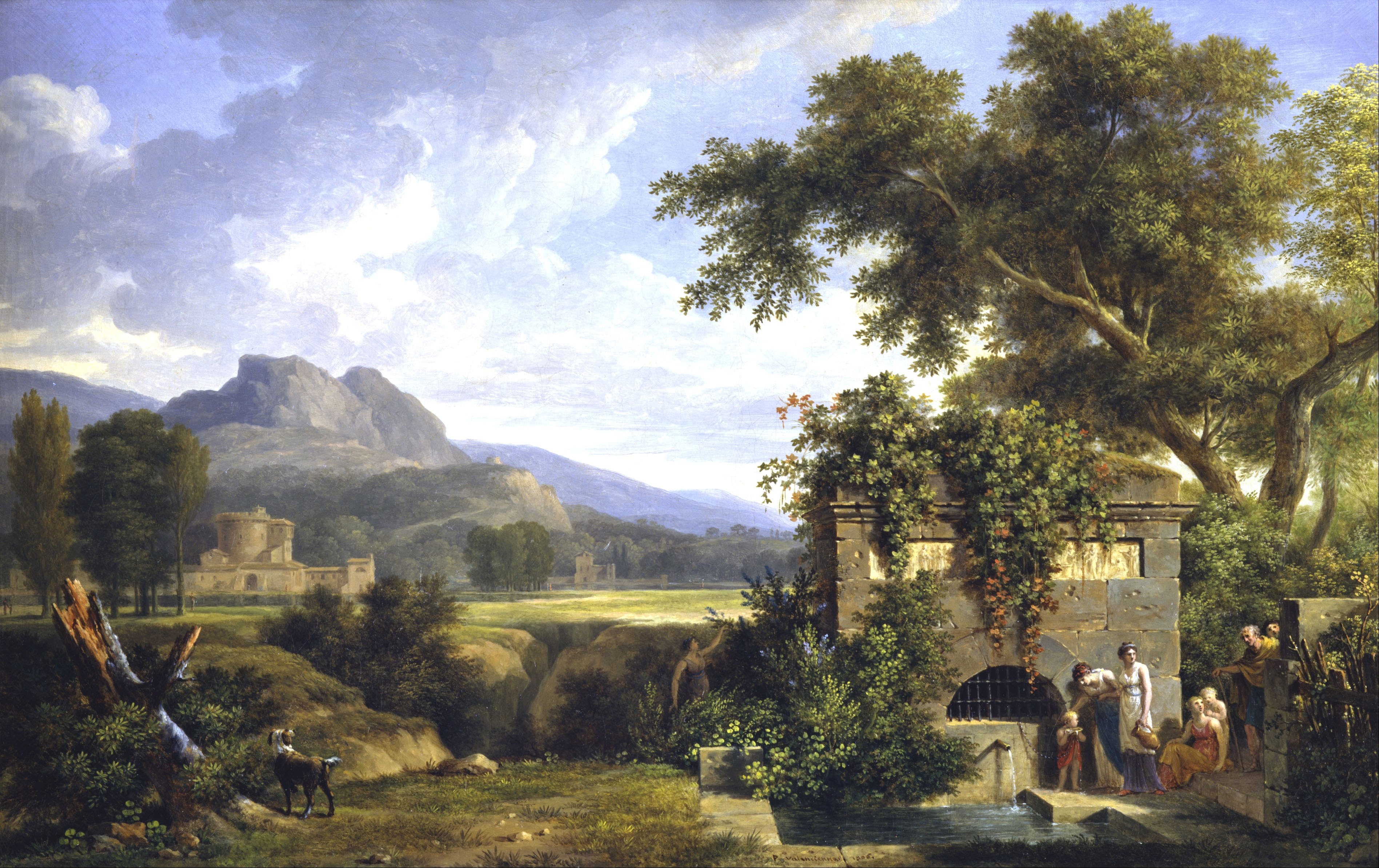
Pierre-Henri de Valenciennes (Neo classicism),   


Pierre-Henri de Valenciennes - Classical Landscape with Figures Drinking by a Fountain

Pierre -Etienne-Théodore Rousseau (Barbizon School ), 


Pierre-Étienne-Théodore Rousseau (French, 1812–1867), Under the Birches, Evening, oil on wood panel, 1842–43. 16 5/8 x 25 3/8 in. 
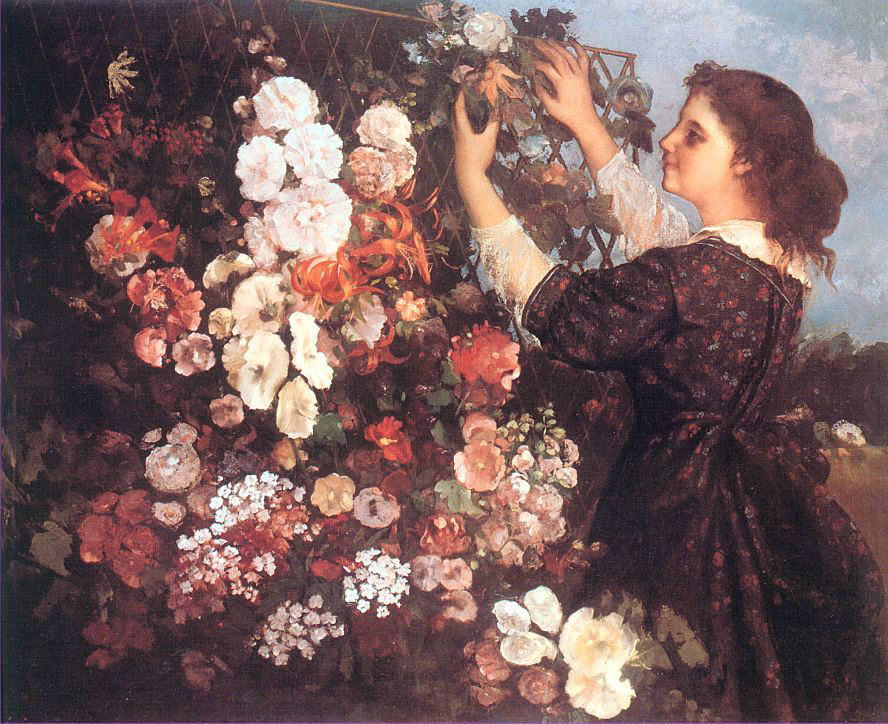
Gustave Courbet (Realism), 


Gustave Courbet The Trellis (Young Woman Arranging Flowers) 
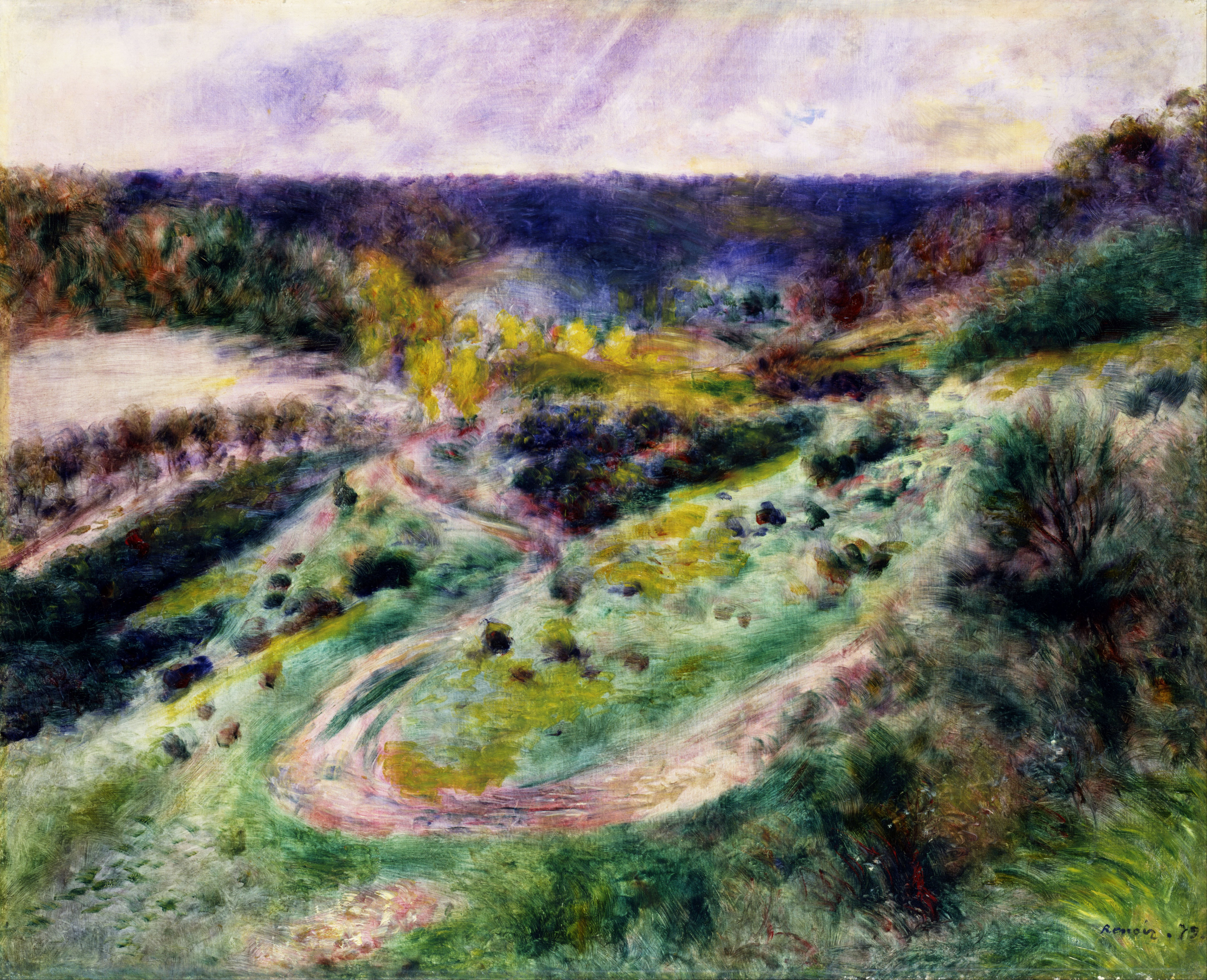
Pierre-Auguste Renoir (Impressionism) 
and concludes with Paul Cézanne (Post - Impressionism).


Avenue at Chantilly landscape painting (1888) by Paul Cézanne at Toledo Museum of Art

“This exhibition is unusual in that paintings  spanning three centuries  are being installed chronologically in the gallery. Visitors will be able to see  the common threads among these artists as  well as the emergence of new  styles,” Nichols noted.   

Among the works  displayed are the Museum’s recently acquired   


Charles – François Daubigny painting,  Auvers, Landscape with Plough , in which the French countryside is  realistically  captured , and   


 Renoir’s Road at Wargemont, which  focuses on the effect of light and color in nature. 

“Daubigny is considered to be part of the Barbizon School, but in this particular painting you can see the influence of Impression ism emerging in his work. Renoir paints a real place, but he is more  interested in using emotional means to express it,” Nichols said , comparing them . 

Thursday, August 6, 2015

Rubens in private. The master portrays his family


A unique exhibition was held on Peter Paul Rubens the portrait painter in the spring of 2015, . Even though Rubens is said to have disliked painting portraits with a passion, and painting portraits was not highly regarded in art theory either, Rubens is one of best portraitists of his time. These works were not commissioned but were a labour of love and served as keepsakes. For the first time, these amazing works are exhibited together, and not least at a place where they belong: Rubens’ former home in Antwerp, the Rubenshuis.

His finest and most intimate portraits are undoubtedly those of his relatives: both his wives – Isabella who died young and beautiful Helena –, his children, along with his sisters and brothers in law. And of course, the master also indulged in self-portraits.

Rubens in private. The master portrays his family was curated by international Rubens experts and includes some 50 paintings and drawings from top-ranking museums, including the Uffizi in Florence, the British Museum in London, the Musée du Louvre in Paris, the Hermitage in St Petersburg and the collections of the Prince of Liechtenstein, and the Royal Collection, generously loaned by her Majesty Queen Elizabeth II.

From an outstanding review :

One of the most captivating and tender paintings is of his five-year-old daughter Clara Serena (below right), who was his eldest child from his first marriage to Isabella Brant. The key aspect of the work, dating from around 1616, is the close-up of her smiling face and the way she looks directly at the viewer, or rather her father.

Rubens in Private: The Master Portrays his Family - Antwerp

It is extraordinary how Rubens’ use of colour and oil captures her delicate features, from her rosy cheeks and fair hair to her asymmetrical eyes, one has a slight squint. He seems only interested in her beautiful face as her clothes lack fine detail; this is probably because he never intended to sell it. His affection for his daughter is what makes the portrait so personal, as well as universal. It is also particularly poignant because Clara Serena died just seven years later, in 1623, at the age of 12.
People queued up to see her timeless gaze. It had been thought it was the only remaining original painting of her. However, experts at the Rubens House, which is now a museum and study centre, recently announced that after painstaking research a second portrait of Clara Serena, initially thought to be a copy, is a work of Rubens. The oil on wood also hangs in the exhibition and experts believe it was painted just before or after she died. It is on loan from the Prince of Liechtenstein’s collection (above left).

Rubens in Private: The Master Portrays his Family - Antwerp

The master’s love for his family also radiates out in the intimate portraits of his adored wives and his seven other children. He married Isabella (above right)in 1609 and where he paints her smiling, there’s a suggestion she is sharing a private moment with him. The knowing looks are also captured in the portraits of Helena Fourment (above left), who he married four years after Isabella died in 1626. Rubens, who was 53, described his 17-year-old bride, as the “the most beautiful girl in Antwerp”.


The famous portrait of her wearing nothing but a fur wrap was painted on wood and is too fragile to be transported to the exhibition. A copy hangs on the wall.

Another fascinating review 


Helena Fourmentwith gloves

Friday, July 31, 2015

Masterpieces from the Hermitage: The Legacy of Catherine the Great


More than 400 works from the personal collection of Catherine the Great will travel to Australia 31 July 2015 – 8 November 2015. Gathered over a 34-year period, the exhibition represents the foundation of the Hermitage’s collection and includes outstanding works from artists such as Rembrandt, Velasquez, Rubens and Titian. Exemplary works from Van Dyck, Snyders, Teniers and Hals will also travel, collectively offering some of the finest Dutch and Flemish art to come to Australia.


Rembrandt Harmensz. Van Rijn, Young woman trying on earrings 1657. Oil on wood panel, 39.5 х 32.5 cm. The State Hermitage Museum, St Petersburg (Inv. no. ГЭ-784). Acquired from the collection of the Comte de Baudouin, Paris, 1781.


The exhibition, presented by the Hermitage Museum, National Gallery of Victoria and Art Exhibitions Australia, is exclusive to Melbourne as part of the Melbourne Winter Masterpieces series.

Catherine the Great’s reign from 1762 to 1796 was known as the golden age and is remembered for her exceptional patronage of the arts, literature and education.

Of German heritage, Catherine the Great was well connected in European art and literature circles. She saw herself as a reine-philosophe (Philosopher Queen), a new kind of ruler in the Age of Enlightenment. Guided by Europe’s leading intellectuals, such as the French philosophers Voltaire and Diderot, she sought to modernise Russia’s economy, industry and government, drawing inspiration both from classical antiquity and contemporary cultural and political developments in Western Europe.

A prolific acquirer of art of the period, Catherine the Great’s collection reflects the finest contemporary art of the 18th century as well as the world’s best old masters of the time, with great works by French, German, Chinese, British, Dutch and Flemish artists. Notable in this exhibition are entire groups of works acquired from renowned collections from France, Germany and England representing the best collections offered for sale at the time.

Exquisite decorative arts will be brought to Australia for this exhibition, including 60 items from the Cameo Service of striking enamel-painted porcelain made by the Sèvres Porcelain Manufactory in Paris. Commissioned by Catherine the Great for her former lover and military commander, Prince Grigory Potemkin, the dinner service features carved and painted imitation cameos, miniature works of art, based on motifs from the French Royal collection.

Director of the Hermitage Museum, Mikhail Piotrovsky said, ‘These outstanding works from the personal collection of Catherine the Great represent the crown jewels of the Museum. It was through the collection of these works and Catherine the Great’s exceptional vision that the Hermitage was founded. Today it is one of the most visited museums in the world. We are very pleased to be able to share these precious works with Australian audiences at the 250-year anniversary of this important institution.’

Catherine the Great’s love of education, art and culture inspired a period of enlightenment and architectural renaissance that saw the construction of the Hermitage complex. This construction includes six historic buildings along the Palace Embankment as well as the spectacular Winter Palace, a former residence of Russian emperors. On view in the exhibition will be remarkable drawings by the Hermitage’s first architects Georg Velten and Giacomo Quarenghi, complemented by excellent painted views of the new Hermitage by Benjamin Patersen.


Alexander Roslin Swedish 1718–1793 Portrait of Catherine II 1776–77 oil on canvas

These, along with Alexander Roslin’s majestic life-size portrait of Catherine, set the scene for a truly spectacular exhibition.

Visitors to the exhibition will be able to immerse themselves in Catherine the Great’s world evoking a sensory experience of a visit to the Hermitage Museum in St Petersburg. The exhibition design will have rich treatments of architectural details, interior furnishings, wallpapers and a colour palette directly inspired by the Hermitage’s gallery spaces. Enveloping multimedia elements will give visitors a sense of being inside the Hermitage, evoking the lush and opulent interiors.

The Hermitage Museum was founded in 1764 by Catherine the Great and has been open to the public since 1852. With 3 million items in its holdings, the Hermitage is often regarded as having the finest collection of paintings in the world today. In 2014, The Hermitage celebrated its 250-year anniversary and opened a new wing of the museum with 800 rooms dedicated to art from the 19th to 21st centuries.

The exhibition is organised by The Hermitage Museum, St Petersburg in association with the National Gallery of Victoria and Art Exhibitions Australia.


Titian
Italian [1488–90]–1576
Portrait of a young woman [c.1536]
oil on canvas
96.0 х 75.0 cm
The State Hermitage Museum, St Petersburg [Inv. No. ГЭ-71].
Acquired from the collection of Baron Louis-Antoine Crozat de Thiers, Paris 1772


Anthony van Dyck
Flemish 1599–1641
Family portrait (c. 1619)
oil on canvas
113.5 х 93.5 cm
The State Hermitage Museum, St Petersburg
(Inv. no. ГЭ-534)
Acquired from a private collection,
Brussels, 1774


Frans Snyders
Flemish 1579–1657
Concert of birds (1630–40)
oil on canvas
136.5 х 240.0 cm
The State Hermitage Museum, St Petersburg
(Inv. no. ГЭ-607)
Acquired from the collection of Sir Robert
Walpole, Houghton Hall, 1779


 Peter Paul Rubens and workshop
Flemish 1577–1640
The Adoration of the Magi (c. 1620)
oil on canvas
235.0 х 277.5 cm
The State Hermitage Museum, St Petersburg
(Inv. № ГЭ-494)
Acquired from the collection of Dufresne,
Amsterdam, 1770


Diego Velázquez 
Spanish 1599–1660
Luncheon (c. 1617–18)
oil on canvas
108.5 х 102.0 cm
The State Hermitage Museum, St Petersburg
(Inv. no. ГЭ-389)
Acquired 1763–74


Leonardo Da Vinci (school)
Female nude (Donna Nuda) (early 16th
century)
oil on canvas
86.5 х 66.5 cm
The State Hermitage Museum, St Petersburg
(Inv. no. ГЭ-110)
Acquired from the collection of Sir Robert
Walpole, Houghton Hall, 1779


Peter Paul Rubens and workshop
Flemish 1577–1640
The Apostle Paul (c. 1615)
oil on wood panel
105.6 х 74.0 cm
The State Hermitage Museum, St Petersburg
(Inv. no. ГЭ-489)
Acquired before 1774


Cornelis de Vos
Dutch/Flemish (c. 1584)–1651
Self-portrait of the artist with his wife
Suzanne Cock and their children (c. 1634)
oil on canvas
185.5 х 221.0 cm
The State Hermitage Museum, St Petersburg
(Inv. no. ГЭ-623)
Donated by Prince G. A. Potemkin, 1780s


 Jean-Baptiste Santerre
French 1651–1717
Two actresses 1699
oil on canvas
146.0 х 114.0 cm
The State Hermitage Museum, St Petersburg
(Inv. no. ГЭ-1284)
Acquired 1768


Anthony van Dyck 
Portrait of Philadelphia and Elizabeth Wharton 1640
oil on canvas
162.0 х 130.0 cm
The State Hermitage Museum, St Petersburg
(Inv. no. ГЭ-533)
Acquired from the collection of Sir Robert
Walpole, Houghton Hall, 1779


Charles Vanloo
French 1705–65
Sultan's wife drinking coffee (1750s)
oil on canvas
120.0 х 127.0 cm
The State Hermitage Museum, St Petersburg
(Inv. no. ГЭ-7489)
Acquired from the collection of Madame
Marie-Thérèse Geoffrin, Paris, 1772


Domenico Capriolo
Italian (c. 1494)–1528
Portrait of a young man 1512
oil on canvas
117.0 х 85.0 cm
The State Hermitage Museum, St Petersburg
(Inv. no. ГЭ-21)
Acquired from the collection of Baron LouisAntoine
Crozat de Thiers, Paris, 1772


Jean Louis Voille
French 1744–1804
Portrait of Olga Zherebtsova (1790s)
oil on canvas
73.5 х 58.0 cm
The State Hermitage Museum, St Petersburg
(Inv. no. ГЭ-5654
Acquired from the collection of E. P. Oliv,
Petrograd, 1923


Peter Paul Rubens
Flemish 1577–1640
Landscape with a rainbow 1632–35
oil on canvas
86.0 х 129.0 cm
The State Hermitage Museum, St Petersburg
Acquired, 1769 (Inv. № ГЭ-482)


David Teniers II
Flemish 1610–90
Kitchen 1646
oil on canvas
171.0 х 237.0 cm
The State Hermitage Museum, St Petersburg
(Inv. no. ГЭ-586)
Acquired from the collection of Sir Robert
Walpole, Houghton Hall, 1779


Melchior d’Hondecoeter
Dutch 1636–95
Birds in a park 1686
oil on canvas
136.0 х 164.0 cm
The State Hermitage Museum, St Petersburg
(Inv. no. ГЭ-1042)
Acquired from the collection of Jacques
Aved, Paris, 1766


Jean-Baptiste Perronneau
French 1715–83
Portrait of a boy with a book (1740s)
oil on canvas
63.0 х 52.0 cm
The State Hermitage Museum, St Petersburg
(Inv. no. ГЭ-1270)
Acquired from the collection of A. G.
Teplov, St Petersburg, 1781


Rembrandt Harmensz. Van Rijn
Dutch 1606–69
Portrait of a scholar 1631
oil on canvas
104.5 х 92.0 cm
The State Hermitage Museum, St Petersburg
(Inv. no. ГЭ-744)
Acquired from the collection of Count
Heinrich von Brühl, Dresden, 1769