Prado National Museum. Madrid17/11/2026 - 7/3/2027
To mark the centenary of the death of Rainer Maria Rilke (Prague, 1875-Montreux, 1926), the Prado National Museum, in collaboration with the Madrid City Council and the Community of Madrid, presents an exhibition dedicated to analyzing the influence that Spanish art and culture exerted on the intellectual and literary trajectory of one of the great European poets of the 20th century.
The exhibition explores Rilke's relationship with Spanish art, from his early writings on Velázquez and Murillo to his interest in El Greco, Goya, Ignacio Zuloaga, Pablo Picasso, and María Blanchard. Through paintings, drawings, historical photographs, publications, manuscripts, and correspondence, the exhibition reveals how artistic contemplation became an essential source of knowledge and creation for the poet.
Before traveling to Spain, Rilke had the opportunity to explore Spanish painting in museums, collections, and exhibitions in cities such as Prague, Vienna, Munich, Berlin, and Paris. In these settings, he encountered the work of both the great masters and some contemporary artists, gradually forming an image of the country closely linked to its artistic heritage.
Among these encounters, the discovery of El Greco's paintings proved particularly decisive. At the 1908 Salon d'Automne in Paris, Rilke saw View of Toledo , now in the Metropolitan Museum of Art in New York and on loan for this exhibition. The work made a profound impression on him and fueled his interest in the city, which he would visit four years later as the first stop on his trip through Spain.
Rilke arrived in Toledo in November 1912 and stayed for nearly a month. During his time there, he explored its streets, churches, and monuments, and contemplated the works of El Greco housed in the city. Among them was the Immaculate Conception in the Oballe Chapel, which became a source of inspiration for his poem " The Assumption of Mary ." The city, its architecture, and the landscape of the Tagus River left a lasting mark on his literary imagination.
After passing through Córdoba and Seville, the poet settled in Ronda, where he remained until February 1913. The city's unique layout and the monumental landscape of its surroundings fostered a period of intense reflection and writing. There he composed, among other works, The Spanish Trilogy , one of the most significant manifestations of the influence that the Spanish landscape exerted on his work.
Madrid was the final stop on this journey. During his time in the capital, Rilke visited the Prado Museum several times, paying particular attention to the works of El Greco, Velázquez, and Goya. The exhibition reconstructs this experience through paintings, historical photographs, publications, and documents that offer a glimpse into both the city and the museum galleries that the poet visited in 1913.
The exhibition also explores Rilke's relationship with contemporary Spanish art. The poet maintained close contact with Ignacio Zuloaga, whose paintings inspired some of his poems. He also became acquainted with works by Pablo Picasso, including The Family of Saltimbanques , a work that has been linked to the fifth of the Duino Elegies , and he was interested in the paintings of María Blanchard, especially The Communicant .
One of the exhibition's main strengths lies in its collection of paintings and documents from more than twenty public and private institutions and collections, both Spanish and international. Among the most exceptional loans are three works from the Musée Bonnat-Helleu in Bayonne:

El Greco's Supposed Portrait of the Duke of Benavente and

Saint Jerome ,
and

Goya's Self-Portrait with Glasses
. The special conditions governing the loan of works from this institution lend an extraordinary character to their presence in Madrid, as none of the three paintings had been exhibited outside Bayonne since 1901, the year the museum opened. Other lenders include The Metropolitan Museum of Art in New York, the Musée d'Orsay, the Nationalgalerie in Berlin, the Szépmüvészeti Múzeum in Budapest, the Deutsches Literaturarchiv Marbach, the Schweizerisches Literaturarchiv in Bern, the parish of San Nicolás de Bari (Toledo), the Museo Nacional Centro de Arte Reina Sofía, the Museo Nacional Thyssen-Bornemisza and Patrimonio Nacional.
More Images

- The Resurrection
- El Greco (Domenikos Theotokopoulos)
- Date: 1597–1600
- Medium & Dimensions: Oil on canvas, 275 × 127 cm (approx. 108.2 × 50 in)
- Collection & Accession: Museo Nacional del Prado, Madrid (P000825)
- Commission: Created for the chapel altarpiece of the Colegio de la Encarnación (Doña María de Aragón) in Madrid.

- The Virgin of the Immaculate Conception
- Artist: El Greco (Doménikos Theotokópoulos)
- Date: Between 1607 and 1613
- Medium & Dimensions: Oil on canvas, 348 cm × 174.5 cm (137 in × 68.7 in)
- Original Commission: Painted for the high altar of the Oballe Chapel (San Vicente church) in Toledo.
- Current Location: Museum of Santa Cruz, Toledo, Spain

View of Toledo
El Greco
Oil on canvas
c. 1599-1600
New York, The Metropolitan Museum of Art, HO Havemeyer Collection, Bequest of Mrs. HO Havemeyer, 1929 (29.100.6)
The exhibition also includes materials of particular relevance to understanding the poet's creative process, among them previously unpublished fragments from three notebooks and equally unpublished letters. These highly significant documents, carefully edited in the catalogue, allow us to trace how Rilke recorded and reworked his impressions of Spanish works of art, cities, and landscapes, ultimately integrating them into his writing.
Alongside these materials, a remarkable collection of historical photographs of Toledo, Ronda, and Madrid is presented. Some were acquired, selected, or sent by Rilke himself and retain his handwritten annotations. Others allow us to reconstruct the appearance of the places he visited and how Spanish painting was displayed in major European museums during the first decades of the 20th century.
Curated by Javier Arnaldo, head of the Center for Studies at the Prado Museum, and Javier Barón, head of 19th-century painting conservation, the exhibition is organized into an introductory section and four subsections: Spain in Paris , From El Greco to Toledo , Ronda and the Spanish Landscape , and Madrid, Coda to a Journey . This structure allows visitors to trace the evolution of Rilke's interest in Spain, from his early youthful encounters with Spanish art to the incorporation of this experience into some of the key writings of his later work.Javier Arnaldo, Director of the Center for Studies, and Javier Barón, Head of the 19th Century Painting Collection.
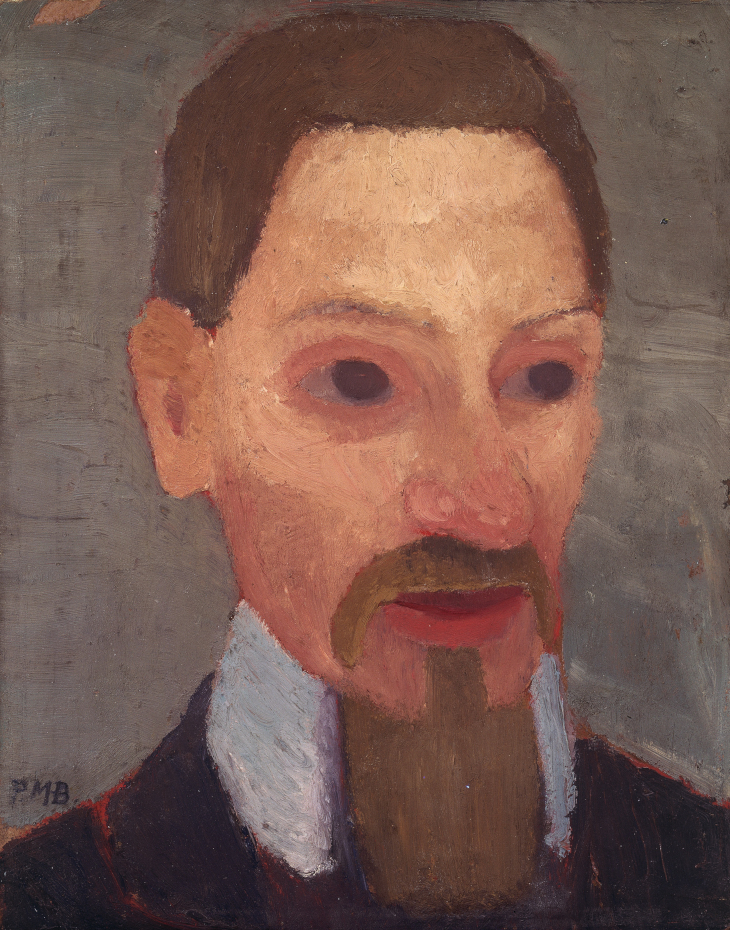
Rainer Maria Rilke
Paula Modersohn-Becker
Tempera and oil on cardboard
1906
Bremen, Paula-Modersohn-Becker-Stiftung, Leihgabe aus Privatbesitz
The centenary of the death of the great European poet Rainer Maria Rilke, which occurred in Montreux, Switzerland, on December 29, 1926, at the age of fifty-one, provides an excellent opportunity to delve deeper into his intellectual legacy. The Prado Museum is dedicating an exhibition to the writer, focusing on the attention he paid to Spanish art throughout his life and work. Rilke felt a keen interest in the history of art, as well as in the artistic reality of his own time. He associated and collaborated with many artists and wrote extensively on topics related to the visual arts. The artistic language of Spanish painters captivated him from his youth.
Among the modern artists, Ignacio Zuloaga, Pablo Picasso, and María Blanchard were extremely important influences for Rilke at various points in his life; Velázquez, Murillo, Goya, and especially El Greco were key figures among the Old Masters. His trip to Spain in the winter of 1912-13 gave concrete expression to these cultural interests. And, beyond his writings on art, Rilke's work stands out in modern poetry for its remarkable visual character. The exhibition invites us to discover the sensitivity of this immense poet as an interpreter of Spanish art and cultural landscape during a period that also coincided with the flourishing of modern art history.
Spain in Paris
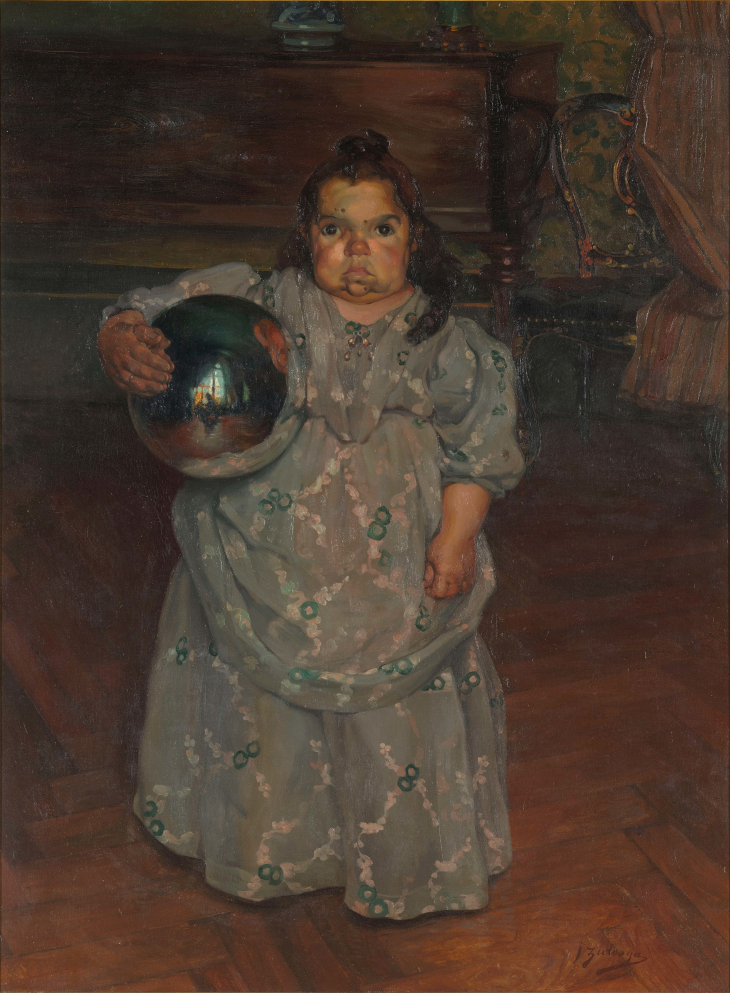
The dwarf Doña Mercedes
Ignacio Zuloaga
Oil on canvas
1899
Paris, Musée d'Orsay
Rilke's trip to Paris in the summer of 1902 and his subsequent stays there were aimed at writing a book about Auguste Rodin, the teacher of his wife, the sculptor
Clara Westhoff, which was published in 1903. The poet became Rodin's secretary at his home and studio in Meudon, where he was photographed by the writer George Bernard Shaw. He was also drawn to the personality of Ignacio Zuloaga, whose paintings, such as La enana doña Mercedes (The Dwarf Doña Mercedes), he had already seen with enthusiasm in Berlin in 1900. His paintings of flamenco dances and bullfighters inspired Rilke to write two poems, "Bailarina española" ("Spanish Dancer") and "Corrida" (Bullfight). Zuloaga's fascination with El Greco, of whom he had collected several paintings, and his passion for old Spanish cities, inspired Rilke, who began planning a trip to the Iberian Peninsula, as revealed in his correspondence with the painter. He did not make the trip until 1912, by which time he had lost contact with Zuloaga. The poet became interested in other Spanish artists active in Paris, such as Picasso, whose work influenced him later, and María Blanchard, whose Comulgante he appreciated through a photograph in 1921.
From El Greco to Toledo
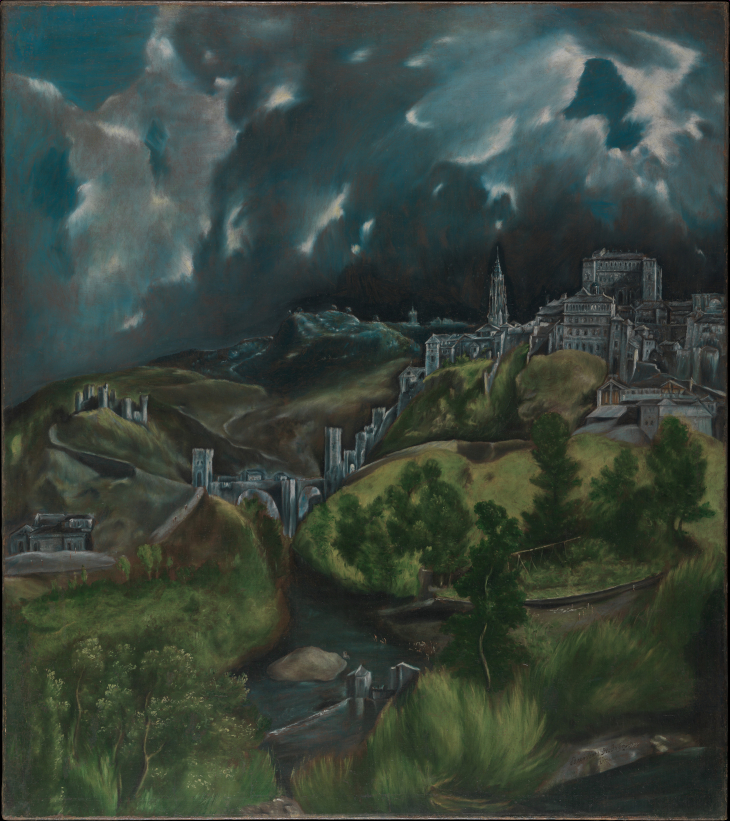
View of Toledo
El Greco
Oil on canvas
c. 1599-1600
New York, The Metropolitan Museum of Art, HO Havemeyer Collection, Bequest of Mrs. HO Havemeyer, 1929 (29.100.6)
El Greco, one of the painters most admired by Rilke, significantly influenced not only some of his poems but also the evolution of his poetry. The writer viewed the works exhibited here between 1908 and 1913, the latter being the year of his visit to the Prado Museum. The unreality of the space created by the Cretan artist, the estrangement of the figures, their upward thrust, the richness of his colors, and the fantastical quality of his lighting deeply captivated him.
Contemplating the image of Toledo in some of the artist's paintings, such as the View of Toledo and the Laocoön, and considering the city a spiritual center, led him to plan a long trip to Spain. According to his correspondence, the poet's expectations were more than fulfilled, not only by the El Grecos he saw there but, above all, by the revelation of the city itself—its bridges, churches, and streets, as well as the surrounding landscapes—in which he perceived a transcendent character that left a profound impression on him.
Ronda and the Spanish landscape
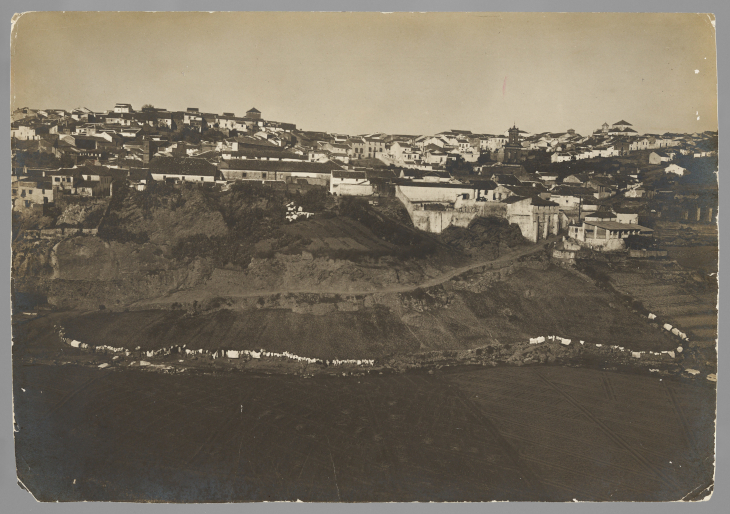
Ten views of Ronda with annotations by Rilke on the back
Attributed to José María Reyes
Gelatin silver prints
c. 1900-13
Bern, Swiss National Library
After a month's stay in El Greco's city, Rilke decided to travel to the south of the peninsula, where he visited Córdoba between December 1st and 2nd and Seville between the 3rd and 8th of the same month, before settling in Ronda until February 19th, 1913. Ronda, an unexpected destination on his journey, was the Spanish town where he stayed the longest; it became for him an observatory of a characteristically local landscape, whose features, in his descriptions, bear the marks of a colossal erosion that equates the cultural landscape with the terrestrial one and situates the city's present within a consummated time. Its memory left a strong imprint on the poet's later work: from the Poems to the Night (Gedichte an die Nacht) , a cycle begun with "The Spanish Trilogy" ("Die spanische Trilogie"), to the Duino Elegies (Duineser Elegien) . In 1913, Rilke was experiencing a creative crisis and a desire to overcome it. "Here there is a strong and magnificent air, mountains that seem to have opened like a book of psalms to be chanted," he wrote upon arriving in Ronda.
Madrid, coda to a journey
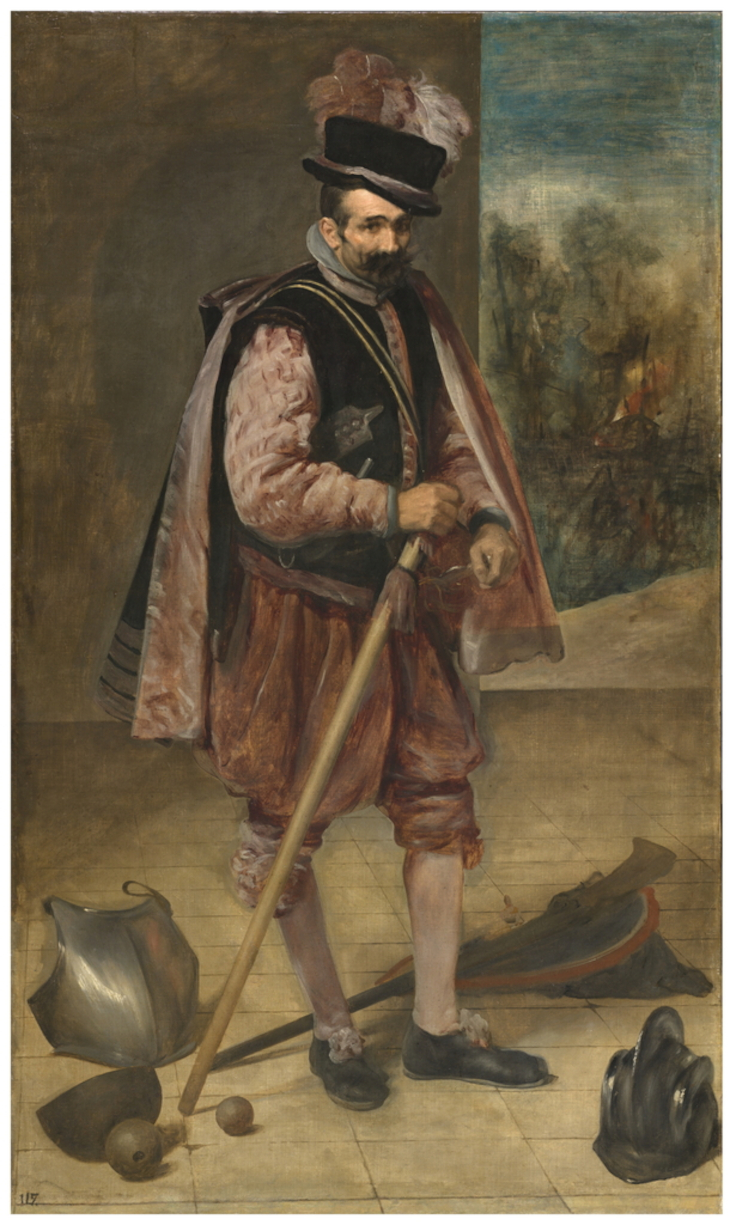
The Jester Called Don Juan of Austria
Diego Velázquez
Oil on canvas
c. 1632
Madrid, Museo Nacional del Prado
“On my return, I will stop in Madrid to spend a few days at the Prado Museum,” Rilke wrote to Pia Valmarana on January 24, 1913. The poet left Ronda on February 18 for Madrid, where he stayed until the 24th. Madrid was merely a stopover on his journey, but he would extend his stay somewhat longer than planned, making frequent visits to the Prado Museum, which he would embrace as a place to rediscover the work of Spanish artists. He had learned to appreciate their painting in books and in other cities—especially Vienna, Munich, Berlin, and Bayonne. His greatest passion for Velázquez and Murillo dated back to his youth, when he had been so receptive to the Spanish artistic culture of the Baroque. His curiosity also led him to visit the Royal Armory. Rilke's assessment of that experience is captured in a phrase whose meaning the visitor is invited to clarify: "I saw the Grecos in the Prado with passion, the Goyas with admiration, and the Velázquez with due courtesy."
