Monday, July 16, 2012

Modern Life: Edward Hopper and His Time


Edward Hopper: Selected Images (Click on links for interesting audio)


Woman Walking, 1906


Le Bistro or The Wine Shop, 1909


Soir Bleu 1914


East Side Interior, 1922


Self Portrait, 1925–30


The Sheridan Theater, 1937
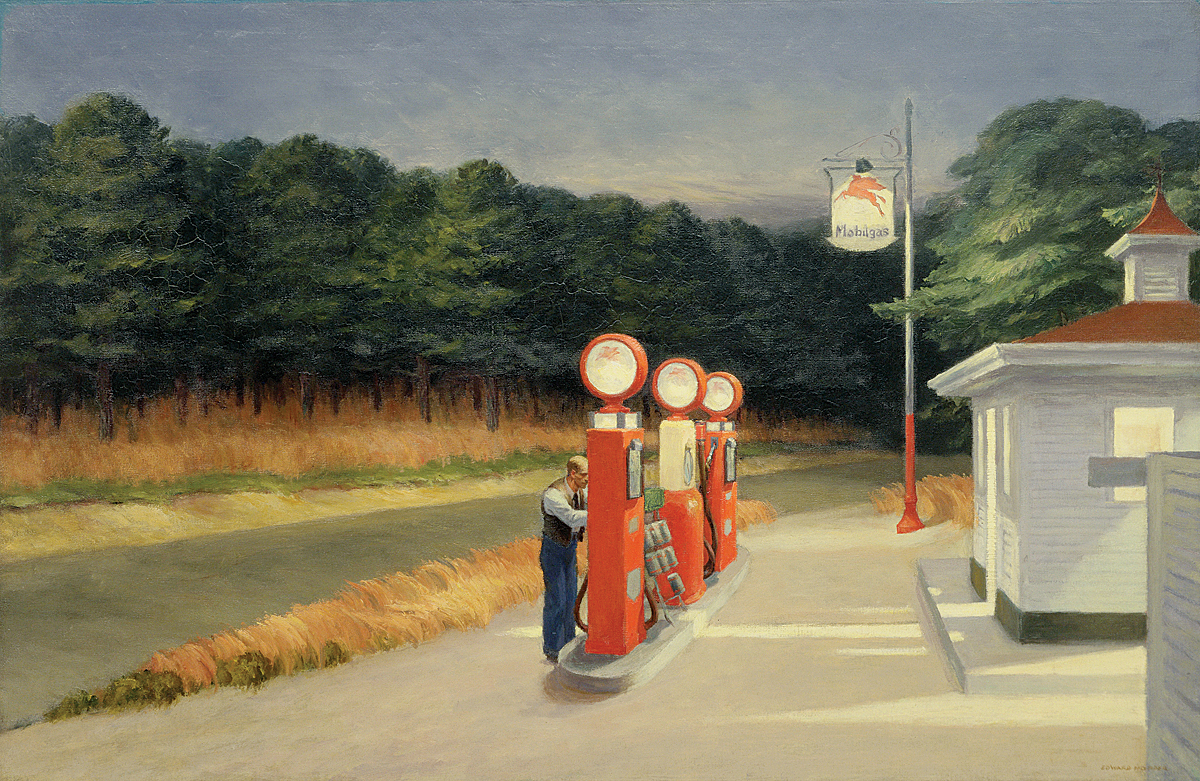


Gas, 1940


Seven A.M.


South Carolina Morning, 1955.


A Woman in the Sun, 1961


As American artists rebelled against the academic art and aristocratic portraiture that predominated at the turn of the twentieth century, they began looking to modern life for their subject matter. One of central figures in this dramatic shift was Edward Hopper, whose work is exhibited in relation to his most important contemporaries in Modern Life: Edward Hopper and His Time, which opened at the Whitney Museum of American Art on October 28, 2010.

Watch Modern Life: Edward Hopper and His Time on PBS. See more from SundayArts.


Placing Hopper beside such artists as Robert Henri, William Glackens, John Sloan, George Ault, Guy Pène du Bois, George Bellows, Alfred Stieglitz, Edward Steichen, Charles Demuth, Ralston Crawford, Paul Strand, Charles Sheeler, Charles Burchfield, Ben Shahn, Lisette Model, Thomas Hart Benton, and Reginald Marsh, the show traces the development of realism in American art in the first half of the twentieth century. The exhibition, organized by Whitney curator Barbara Haskell and senior curatorial assistant Sasha Nicholas, and shown previously in different form at the Bucerius Kunst Forum, Hamburg, and the Kunsthal Rotterdam, is being installed in the second-floor Mildred & Herbert Lee Galleries, where it remains on view until April 10, 2011.

The work of Edward Hopper (1882-1967) has been presented often by the Whitney throughout the institution's history, beginning with his first-ever solo exhibition, held at the Whitney Studio Club in 1920, but Modern Life is the first Whitney exhibition to focus specifically on the context in which he worked. It follows Hopper’s evolution into America's most iconic realist painter, tracing his connections to the artistic movements that paralleled his work while also highlighting his development of a singular aesthetic that would ultimately distinguish his art from that of his contemporaries.


William J. Glackens, Hammerstein’s Roof Garden, c. 1901

Modern Life began in 1900, the year that Hopper arrived on New York’s art scene. In the exhibition's first section, his art was seen alongside the work of the Ashcan School artists, who boldly depicted the changing social and political environment of New York using rapid, loose, impressionistic brushstrokes, heavy impasto, and a dark, gritty palette.


John Sloan, The Picnic Grounds, 1906–07

In the first decade of the century, Hopper studied with both Robert Henri and John Sloan, and quickly began to exhibit with the artists in their circle.


John Sloan, Backyards, Greenwich Village, 1914

The lessons Hopper learned from them—especially the urge to paint everyday, even mundane subjects, and a passion for capturing dramatic light effects— were immediately evident in his early paintings.


Robert Henri, Gertrude Vanderbilt Whitney, 1916

Among the wealthy art patrons of the time, only Gertrude Vanderbilt Whitney would stake her reputation and fortune on the work of the Ashcan artists and their successors. Her advocacy, crucial to the flourishing of a distinctly American modernism, led to the founding of the Whitney Museum of American Art in 1930 and to the formation of the collection on view in this exhibition.

The next section of Modern Life examined Hopper's relationship to artists who painted the excitement of urban life in the "Roaring Twenties," including Guy Pène du Bois and George Bellows who, like Hopper, were students of Robert Henri and represented a younger generation of the realist school initiated by the Ashcan group.


Everett Shinn 1876-1953, Revue, 1908. Oil on canvas, 18 × 24 in. (45.72 x 60.96 cm). Whitney Museum of American Art, New York; Gift of Gertrude Vanderbilt Whitney 31.346. Photograph by Geoffrey Clements

These artists, together with sculptors such as Gaston Lachaise, departed from the loose brushwork of the Ashcan aesthetic, instead using smooth curves and monumental, tubular forms to depict their figures.


Paul Strand 1890-1976, Wall Street, New York, (1915, printed 1976-77). Platinum palladium print, Sheet: 11 × 13 7/8in. (27.9 × 35.2cm) Image: 10 1/8 × 12 11/16in. (25.7 × 32.2cm). Whitney Museum of American Art, New York; Gift of Michael E. Hoffman in honor of Sondra Gilman 91.102.2. Photograph by Sheldan C. Collins

Purged of anecdotal detail, their compositions are balanced between the idealized forms of abstraction and the particularities of realism.


New York Interior, c. 1921

Though not as stylized as the work of these artists, Hopper's paintings and prints of the 1920s share a similar approach.


Works like his iconic Early Sunday Morning are drawn from observed reality and yet are devoid of characteristic details that tie them to a specific place and time. Hopper was not interested in the lively social world depicted by many of his colleagues, but he shared their interest in capturing moments of solitude and in using bold, simplified forms to infuse his scenes with dramatic monumentality.

Also explored were the connections between Hopper's art and that of the Precisionists, who began to paint American factories, skyscrapers, and machine-made structures during the 1920s. Characterized by crisp lines, hard-edged geometric shapes, and flat planes of color, the Precisionist style embodied the sense of order, logic, and purity identified with science and the machine.


Charles Demuth My Egypt, 1927.

For many of the Precisionists, including Charles Demuth, Charles Sheeler, and Ralston Crawford, this style also reflected a desire to create a distinctly American aesthetic rooted in shared national experience.


Charles Sheeler, River Rouge Plant, 1932

Although Hopper did not share their optimistic embrace of industry and its hard-edged aesthetic, his work of the period shares certain affinities with theirs. For Hopper, as for the Precisionists, architecture offered a means of exploring formal geometries and light effects. In Hopper's paintings of urban scenes and industrial structures, as in those of the Precisionists, the interaction between diagonal planes and expanses of light is often as much a focal point as the subject itself. Both Hopper and the Precisionists depicted recognizable subjects, but their work conveys in equal measure the desire to reduce modern architectural forms to their abstract essence.

The next section of the exhibition examined Hopper's rural paintings of the 1930s in the context of other American artists who retreated to the countryside in search of a reprieve from the commotion of modern urban life. In 1930, Hopper and his wife Jo began spending summers in Cape Cod, Massachusetts, where he painted the coastal landscape and scenes inspired by the small town life he observed there. Together with Charles Burchfield, who painted in and around Buffalo, New York, Hopper came to represent the movement known as American Scene painting. Both artists elicited from the vernacular architecture and landscapes of small town America a mood of desolation and melancholy, in part for a way of life that was rapidly being abandoned as more people moved to urban centers. For many viewers, their art captured the sturdy individualism at the heart of the American ethos, particularly during the hardships of the Great Depression.


Paul Cadmus, Sailors and Floosies, 1938

The exhibition's final room presented Hopper's urban paintings of the 1930s alongside those of the Social Realists, including Reginald Marsh, Paul Cadmus, and the Soyer brothers, Raphael and Isaac. Hopper was friendly with these artists—all were closely allied with the Whitney Studio Club and exhibited frequently at the Whitney Museum after its opening in 1931. At the time, Hopper's depictions of city life were often associated with those of the Social Realist circle, but his images differ from the work of his contemporaries, who gravitated to the chaos and vitality of urban life in the 1930s. Unlike his peers, Hopper uses the city as a springboard for exploring moments of solitude, transforming scenes of everyday life into meditations on the human condition.


Thomas Hart Benton, Poker Night (from “A Streetcar Named Desire”), 1948

Modern Life: Edward Hopper and His Time included approximately eighty-five works in a range of media, primarily from the Whitney’s collection, which includes more than 2,500 works from Hopper's estate bequeathed to the Whitney in 1968, and combining well-known works with rarely exhibited early paintings and works on paper. Also featured were several loans of key Hopper paintings from other museums, including The Museum of Modern Art, The Brooklyn Museum, and the Neuberger Museum of Art.


Nearly all the works by other artists in the show are from the Whitney’s collection, with the exception of a John Sloan painting, The Haymarket, Sixth Avenue (1907), originally owned by Gertrude Vanderbilt Whitney, now in the collection of The Brooklyn Museum. In addition, the exhibition features a case of photographs of Hopper at work, with other artists, and at various stages of his life, drawn from the archives of the Whitney's Frances Mulhall Achilles Library.

Modern Life: Edward Hopper and His Time was accompanied by a 250-page illustrated catalogue with essays by American and German scholars, produced in conjunction with an exhibition of the same title, which appeared at the Bucerius Kunst Forum, Hamburg, and the Kunsthal Rotterdam in 2009-10.

Reviews worth reading:

1. Wall Street Journal

2. Financial Times

3. New York Magazine

Friday, July 13, 2012

Picasso and Matisse: The Detroit Institute of Arts’ Prints and Drawings,


Works by two artists who have long been favorites of the public will be on display at the Detroit Institute of Arts (DIA). Picasso and Matisse: The DIA’s Prints and Drawings, on view July 11, 2012–January 6, 2013, will feature almost all of the works by Pablo Picasso (1881–1973) and Henri Matisse (1869–1954) in the museum’s collection, showcasing their revolutionary achievements that came to define much of 20th-century art. This exhibition has been organized by Detroit Institute of Arts and is free with museum admission. Support has been provided by Comerica Bank.

The story of Picasso’s and Matisse’s stylistic progression and artistic range will be told through more than 100 prints and drawings, including exceptional works such as


Matisse’s 1919 drawing The Plumed Hat and


Picasso’s 1939 gouache of The Bather by the Sea. Other highlights include Matisse’s famous series Jazz (see below)


and Picasso’s etchings for The Dream and Lie of Franco, as well as many linoleum cuts by both artists.

The DIA’s 13 paintings and two bronze sculptures on permanent display will be on view in the museum’s modern art galleries.


Circus, Henri Matisse, 1943. Pochoir. Detroit Institute of Arts. © 2012 Succession H. Matisse/Artists Rights Society (ARS), New York.

“We have such a rich collection of modern art, and are delighted to showcase nearly all our significant works by Picasso and Matisse,” said Graham W. J. Beal, DIA director. “In the early years of the 20th century, these two seminal artists engaged in a fierce rivalry, each trying to out-do the other and be seen as the premier Modern artist of the time. Once established, they went their separate, equally prolific, ways but continued to watch one another’s development from afar, this time, more in the spirit of a mutual admiration shared by seasoned veterans.”


Woman with Hairnet, Pablo Picasso, 1949. Lithograph. Detroit Institute of Arts. © 2012 Estate of Pablo Picasso/Artists Rights Society (ARS), New York.

Picasso and Matisse were ground-breaking visionaries who constantly experimented with techniques and materials. They were friends, colleagues, and rivals for half a century. By 1907, Picasso was vying with Matisse for leadership of the Parisian avant-garde art world but both men came to that position via very different routes.

Picasso began creating art when he was seven years old, trained by his artist/art teacher father. By age 13 it was evident that his talent would surpass that of his father. When he was 19, after studying art in Spain, Picasso went to Paris and within a few years became a favorite of prominent collectors and established entrepreneurs. His early realistic paintings and prints known as his Blue and Rose Period were well regarded, but it was his fractured studies of form and space known as Cubism that revolutionized artists’ attitudes about perception and vision and vaulted Picasso to the pinnacles of achievement in modern art.

His international influence, stature, and fame increased through the rest of his life as he worked through the major styles of each era, from a return to classical, realistic forms in the 1920s such as the lithograph Face, Surrealism in the 1930s and 1940s exemplified by the two etchings that form The Dream and Lie of Franco, and in an ever-growing body of innovative printmaking in all mediums well into the 1960s.

Matisse, 12 years Picasso’s senior, was born to a prosperous business family in northern France. He earned a law degree in Paris and was practicing back home as a court assistant when in his early 20’s he decided to change careers. He left for Paris to become an art student and by 1896 his work was in major Parisian exhibitions. His rise to prominence as a major artist was complete by 1905. Matisse’s lifework, while as broad as Picasso’s in exploring drawing, printmaking, painting, sculpture, and decorative arts, was far more focused as an intellectual study.

Matisse’s interest with pattern dominated his career, whether abstractly in thinking about lines as shapes or in thinking about brilliantly colored shapes playing off each other. He constantly tried to refine his subjects into their elemental linear components, as in The Plumed Hat. In the early 1940s, when poor health affected his dexterity, Matisse turned to what he called “drawing with scissors,” in which he cut forms out of brightly colored paper and pinned them together. Some of these stood on their own as artworks, and others served as models for more elaborate projects.


See more Jazz images here.

One such project is Jazz , which consists of a book and album, each with the same 20 prints. Two hundred and seventy copies of the book and 100 copies of the album were created, resulting in a total of 7,400 prints. A team of printers worked for years to create stencil prints from the collages designed by Matisse. The sheer level of skill, control, and dedication required to create Jazz is one of the reasons it is among the greatest achievements in printmaking. The exhibition will display 17 of the 20 prints from the Jazz album.

William Eggleston: Democratic Camera—Photographs and Video, 1961-2008


Nearly fifty years of extraordinary image-making by the photographer William Eggleston was presented in a major retrospective, William Eggleston: Democratic Camera—Photographs and Video, 1961-2008, at the Whitney Museum of American Art from Friday, November 7, 2008, through Sunday, January 25, 2009. Organized by the Whitney in association with Haus der Kunst, Munich, the exhibition was the most comprehensive yet devoted to Eggleston in this country. It was co-curated by Elisabeth Sussman, Whitney curator and Sondra Gilman Curator of Photography, and Thomas Weski, deputy director of the Haus der Kunst in Munich, where the show traveled (February 20-May 17, 2009), following its Whitney debut.


William Eggleston: Democratic Camera traced the artist’s evolution from the beginnings of his career some 50 years ago to the present day, and includes more than 150 photographs, some never-before-exhibited, as well as the artist’s rarely screened video diary of his legendary nocturnal wanderings, “Stranded in Canton.” A key figure in American photography, Eggleston, who was born in 1939 in Memphis, is credited with almost singlehandedly ushering in the era of color photography. The psychological intensity of the saturated color in Eggleston’s pictures has had an enormous impact on the entire field of photography; as an influence, Eggleston has cited the Technicolor technique in the films of Alfred Hitchcock.


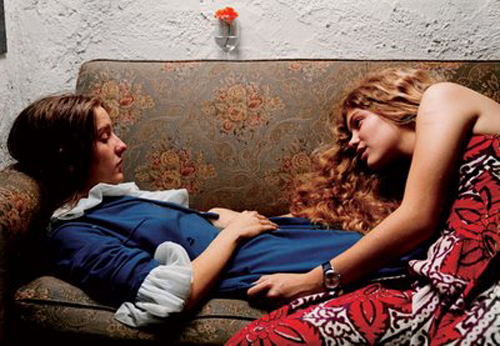
Co-curator Elisabeth Sussman noted, “Eggleston’s sense of color and composition is impeccable. His work is marked by a deep concern with equal consideration and evenhanded treatment of all his subjects. He knows and loves his terrain: the new supermarkets, sidewalks, driveways, patios, shiny cars, dinner settings, gas stations, and houses of the middle class, the interiors of elegant old Southern homes, the bars and their habitués. He captures landscape and architecture in unexpected ways—for instance his famous view upwards to the ceiling in a red room, or the empty space of a green tiled bathroom. And, importantly, Eggleston, though not a portraitist in a traditional sense, has a cool, but not uncomplicated view of the people he often photographs in these environments.”

The show begins with Eggleston’s early black-and-white photographs and covers his groundbreaking shift to color and his dye transfer work of the early seventies. Highlights from the last twenty years include selections from the “Graceland” series and “The Democratic Forest,” Eggleston’s anthology of the quotidian. An unparalleled chronicler of the American South, Eggleston has produced a veritable encyclopedia of the Southern vernacular. His focus has been primarily upon his native locales of Memphis, New Orleans, and the Mississippi River Delta, although his commissioned projects have taken him all over the world.

In the mid-1970s, Eggleston became famous as a photographer. His color photographs, printed in the rich dye transfer medium, were recognized by The Museum of Modern Art’s curator John Szarkowski, who showed them in 1976 in a historic and controversial exhibition at the museum. With this one-person show and the accompanying book, William Eggleston’s Guide, Eggleston emerged as the first color photographer of note in America, the first to make color an issue in an art photography context.

Eggleston’s trademark photograph is snapshot-like. It is an intuitive response to a fleeting configuration of elements in the tradition of Henri Cartier-Bresson, whom he greatly admired and in whose credo of “The Decisive Moment” he has found a counterpart to his own life’s work. As co-curator Thomas Weski writes in the exhibition catalogue, “In many of his early pictures, the observer gets the feeling that Eggleston composed the photograph only roughly and accepted everything that fell within the established frame. This approach led to prints that integrated the unpredictable into the picture and thus accepted the stroke of chance. For Eggleston, everything in front of the camera was basically worthy of a picture.”

Many more images can be found


1. Here


2. and Here


Nice article about this image here


The exhibition included Eggleston’s cult video work, “Stranded in Canton.” Eggleston and a friend had begun using film to document Fred McDowell, a well-known Delta blues musician, but they ultimately abandoned the film project. Eggleston later acquired a video camera and began using video to shoot in bars and in people's homes; sometimes he shot monologues of friends delivered for his video camera, most often at night. The result, “Stranded in Canton,” recently rediscovered and re-edited, is a portrait of a woozy subculture that adds dimension and texture to the world of Eggleston’s color photographs.

As Sussman writes, “Though the epic, multi-episodic project Stranded in Canton cannot be described as a nocturnal work in its entirety, its mood is nonetheless established by the fact that many episodes were shot late at night. It is thus in contrast to the well-known color work, where the powers of color and light are absolutely keyed to Eggleston’s daytime vision. In his video work, the photographer was able to give visual shape to a demimonde in which he was both participant and observer.”

Catalogue

The exhibition was accompanied by a full-color catalogue that provides new insight into the ways in which Eggleston’s photography has influenced generations of American artists, filmmakers, writers, and public perceptions of art. It includes essays by co-curators Elisabeth Sussman and Thomas Weski; Whitney Chief Curator and Associate Director of Programs Donna De Salvo; Senior Curatorial Assistant Tina Kukielski; and noted American music journalist Stanley Booth. The publication includes an illustrated chronology, checklist of the exhibition, list of publications, selected exhibition history, selected bibliography, and index. It is co-distributed by Yale University Press.

The Curators

Elisabeth Sussman, Whitney curator and the Museum’s Sondra Gilman Curator of Photography, recently curated the Whitney’s acclaimed exhibition Gordon Matta-Clark: You Are the Measure. Her latest photography project was the celebrated 2003–04 Diane Arbus: Revelations, the first retrospective of this controversial and highly influential photographer since 1972; it opened at the San Francisco Museum of Modern Art (SFMOMA), then traveled to the Metropolitan Museum of Art, and elsewhere in the U.S. and abroad, including the Victoria & Albert Museum in London. She is currently organizing a Whitney exhibition on Paul Thek.

Thomas Weski is deputy director of the Haus der Kunst, Munich. As chief curator there from 2003 to 2008, his exhibitions included Andreas Gursky (2007); Click Doubleclick – The Documentary Factor (2006, in cooperation with the Palais des Beaux Arts, Brussels); and Robert Adams: Turning Back, which received the 2005 Deutsche Börse Award. Formerly, Weski was chief curator at the Museum Ludwig in Cologne, where he was curator of the traveling exhibition William Eggleston: Los Alamos (2003); co-curator with Emma Dexter of Cruel and Tender: The Real in the Twentieth-Century Photograph (2003, co-organized with Tate Modern, London); and co-curator with Heinz Liesbrock of How You Look at It: Photographs of the Twentieth Century (2000).

This exhibition was organized by the Whitney Museum of American Art, New York, in association with Haus der Kunst, Munich.

See as Artists See: American Art from The Phillips Collection


Walt Kuhn (1877–1949) Plumes, 1931 Oil on canvas Acquired 1932, The Phillips Collection, Washington, D.C.


Georgia O’Keeffe (1887–1986) Pattern of Leaves, 1923 Oil on canvas © The Georgia O'Keeffe Foundation / Artists Rights Society (ARS), New York Acquired 1926, The Phillips Collection, Washington, D.C.


Winslow Homer (1836–1910) To the Rescue, 1886 Oil on canvas Acquired 1926, The Phillips Collection, Washington, D.C.


On October 6, 2012, the Amon Carter Museum of American Art will present To See as Artists See: American Art from The Phillips Collection, a landmark exhibition tracing American art from the 1890s to the 1960s. It will be the first time this impressive collection from the esteemed institution in Washington, D.C., has been organized into a large-scale, traveling exhibition. The show features 100 works by 63 artists, and the Amon Carter is one of only two U.S. museums to host the exhibition; (Frist Center for the Visual Arts (Nashville, Tennessee) February 2–May 6, 2012) previous touring cities include Madrid, Tokyo and Rovereto, Italy.

“This fall the Amon Carter will be the destination for what will surely be one of the most exceptional concentrations of American art ever to appear in North Texas,” says Andrew J. Walker, director of the Amon Carter. “Viewed alongside the Amon Carter’s collection, more than 200 preeminent American paintings from some of the greatest names in American art will be on view, free and open to the public through January 6, 2013. The opportunity to view the collections of these two institutions under one roof is unprecedented; it’s an exhibition not to miss.”

Founded by Duncan Phillips in 1918, The Phillips Collection opened to the public in 1921 as America’s first museum of modern art. Duncan Phillips acquired work that was personal yet connected to the great traditions of the past and present, according to Dorothy Kosinski, director of The Phillips Collection.

“He was one of the few collectors between the wars to champion America’s artistic diversity, collecting works by self-taught artists, artists of color, immigrants and naturalized Americans,” she says. “This early and steadfast commitment to American artists of fresh vision propelled The Phillips Collection as an essential force in American art.”

The paintings are arranged in 10 thematic groups: Romanticism and Realism (with works by Edward Hicks, George Inness, Winslow Homer, Thomas Eakins, Albert Pinkham Ryder); Impressionism (Childe Hassam, Ernest Lawson, John Henry Twachtman, William Merritt Chase, Maurice Prendergast); Forces in Nature (Marsden Hartley, Rockwell Kent, John Marin, Harold Weston); Nature and Abstraction (Arthur Dove, Hartley, Georgia O'Keeffe, Kent, Marin, Max Weber); Modern Life (Robert Henri, George Luks, Walt Kuhn, Edward Hopper, Guy Pene du Bois); The City (John Sloan, John Marin, Charles Sheeler, Ralston Crawford, Edward Hopper,); Memory and Identity (Grandma Moses, Yasuo Kuniyoshi, Jacob Lawrence, Horace Pippin, Rufino Tamayo); Legacy of Cubism (John Marin, Karl Knaths, Stuart Davis, John Graham, Ilya Bolotowsky); Transition to Abstract Expressionism (Morris Graves, Jackson Pollock, Milton Avery, Alexander Calder); and Abstract Expressionism (Adolf Gottlieb, Mark Rothko, Clyfford Still, Helen Frankenthaler, Robert Motherwell, Philip Guston).

The urban landscape figures prominently in the show as well with the work of Edward Hopper, Charles Sheeler and John Sloan. American scene painters, like Allan Rohan Crite, Yasuo Kuniyoshi and Jacob Lawrence, are represented in addition to landmark artists of Abstract Expressionism such as Richard Diebenkorn, Jackson Pollock and


Mark Rothko.

From http://www.leisahammett.com: (images added)

Throughout this exhibition, specific paintings are connected to inventions and innovations that changed the world. These include:


the Erie Canal (Arthur B. Davies, Along the Erie Canal, 1890);


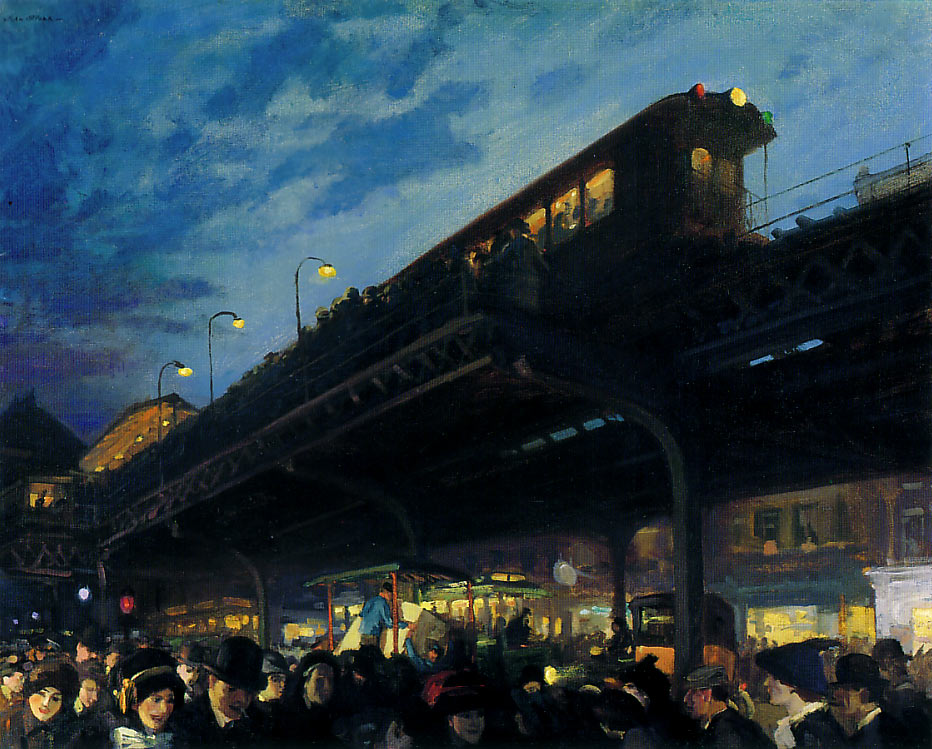
the electric light bulb (John Sloan, Six O’Clock, Winter, 1912);


tube paint (Theodore Robinson: Giverny, ca. 1889)


and acrylic paint (Helen Frankenthaler, Canyon, 1965); skyscrapers (Edward Bruce, Power, ca. 1933);


the egg beater and electric fan (Stuart Davis, Egg Beater, No., 4, 1928)


“Duncan Phillips created a truly unique institution, carefully and cogently structuring within it one of the world’s great collections of American art,” says Rebecca Lawton, the Amon Carter’s curator of paintings and sculpture. “Today, what makes the collection so impressive, and what we take away from the experience of viewing this exhibition, is the astonishing breadth of Phillips’ vision. It encompassed not just the acknowledged heroes of the 19th century, the modernist masters and the giants of mid-20th-century painting, but also those artists who figure prominently with the modern tradition but whose works fall outside the conventional art historical ‘isms’.”

To See as Artists See: American Art from The Phillips Collection, was organized by The Phillips Collection, Washington, D.C. After its run in Fort Worth the exhibition returns home to The Phillips Collection for a special presentation in 2014. Additional information about The Phillips Collection is available at http://www.phillipscollection.org/.


Exhibition Catalog

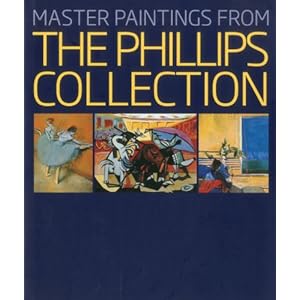
A new publication featuring highlights of The Phillips Collection's holdings—and most of the works in this exhibition is entitled Master Paintings from The Phillips Collection. It includes essays by Eliza Rathbone and Susan Behrends Frank and texts on more than 100 pictures from the Collection.