Saturday, January 31, 2026

Abstract Expressionists: The Women


Muscarelle Museum of Art, Williamsburg, Va.

 Jan. 23-April 26, 2026


Speed Art Museum in Louisville, Kentucky 

May 23–Aug. 30, 2026


 Grinnell College Museum of Art, Grinnell, Iowa

Sept. 19, 2026–Jan. 3, 2027


Mobile Museum of Ar, Mobile, Alabama 

Jan. 30–April 25, 2027


Long overshadowed in the story of Abstract Expressionism, women artists played a pivotal role in shaping the artistic movement. A new exhibition at the Muscarelle Museum of Art spotlights these influential women, presenting nearly 50 paintings by 32 artists in “Abstract Expressionists: The Women,” on view Jan. 23-April 26.


The exhibition underscores the critical contributions these artists made to the growth of Abstract Expressionism through works that span the movement’s formative years in the late 1930s, peak visibility in the postwar era and later evolution through 1977. By examining stylistic crosscurrents among artists working in New York, California and Paris, the exhibition situates these painters within a broader international dialogue that defined mid-century abstraction.


            The paintings are drawn from the renowned Christian Levett Collection and the FAMM (Female Artists of the Mougins Museum), France, and organized by the American Federation of Arts (AFA).


“Abstract Expressionists: The Women” reframes the history of Abstract Expressionism by returning women artists to the center of the story. For decades, women were treated as exceptions or peripheral figures in the movement — or consigned to the role of muse. This exhibition challenges that history, presenting these painters as key figures whose bold, original work helped shape one of the 20th century’s most influential artistic movements.


“It’s an important moment of recognition that we get to be part of at the Muscarelle,” said David Brashear, the museum’s director. “For many years, the story of Abstract Expressionism has overlooked its women pioneers. ‘Abstract Expressionists: The Women’ offers a more complete understanding of the artistic movement, highlighting the contributions of the ambitious and visionary women artists who were creating work alongside their more celebrated male peers. We hope our visitors find inspiration in both the powerful artworks and the stories behind them.”


“Abstract Expressionists: The Women” unfolds across four thematic sections. The first, “The New York School” focuses on women artists working in New York City around the time of World War II. Figures such as Lee Krasner, Perle Fine and Mercedes Matter drew inspiration from Cubist and Surrealist artists who fled Nazi repression and brought new artistic ideas to Manhattan.


“San Francisco Early Years” shifts the focus west, emphasizing the greater creative freedom many artists experienced working in California. Innovative works by Claire Falkenstein, Ruth Armer and Emiko Nakano illustrate core principles and west coast contributions to Abstract Expressionism.


“A Tale of Two Cities: New York and Paris” considers how American female artists helped drive a creative cross-pollination, spotlighting cultural differences and similarities between the U.S. and France at midcentury. Joan Mitchell, Janice Biala, Amaranth Ehrenhalt and Claire Falkenstein are among the artists who lived and worked in Paris for significant periods, navigating and influencing both cultural contexts.


The final section, “Vocal Girls and Beyond,” highlights artists such as Joan Mitchell, Helen Frankenthaler and Grace Hartigan who were notable for articulating the ideas and intentions behind their work. Their willingness to speak openly challenged the prevailing belief, widely held by many of their more famous male contemporaries, that only one’s canvas should “speak.”


Works on view showcase the breadth of approaches women brought to Abstract Expressionism, from the vigorous engagement with movement and form in Elaine de Kooning’s “The Bull” (1959) to the emotional force in Joan Mitchell’s large-scale canvas “When They Were Gone” (1977) to Helen Frankenthaler’s innovative soak-stain method that created radiant hues in “Bending Blue” (1977).


The presentation is enhanced by contextual multimedia content, including an audio tour hosted by Bloomberg Connects and documentary videos, allowing visitors to engage more deeply with the artworks on view.


The exhibition is accompanied by a free educational brochure produced by the AFA featuring lavish illustrations and a scholarly essay by Guest Curator Ellen G. Landau, Ph.D. An exhibition catalogue (Merrell Publishers, April 2023) provides greater insights into the world-class Levett Collection through in-depth analysis of each artist’s practice and rich reproductions of their work.


IMAGES


1. Mercedes Matter, Untitled, 1936. Oil on canvas, 38 x 35 in. Courtesy of Mark Borghi, the Levett 

Collection, and FAMM. Photo: Fraser Marr.


2. Sonja Sekula, Untitled, c. 

1943-44. Oil on canvas, 25 1/3 x 29 1/8 in. © Sonja Sekula. 

Courtesy of the Levett Collection and FAMM. Photo: Fraser Marr.


3. Claire Falkenstein, Untitled, 1946. Oil on canvas wrapped panel in artist's wood sculptural frame, 14 ¼ x 17 ¼ in. © The Falkenstein Foundation, Courtesy of Michael Rosenfeld Gallery LLC, New York, NY, the Levett 

Collection, and FAMM. Photo: Fraser Marr.


4. Helen Frankenthaler, Circus Landscape, 1951. Oil and charcoal on sized, primed canvas, 40 x 44 in. © 2023 Helen Frankenthaler Foundation, Inc. / Artists Rights Society (ARS), New York. 

Courtesy of the Levett Collection and FAMM. Photo: Fraser Marr. 


5. Grace Hartigan, Cedar Bar, 1951. Oil on canvas, 39 x 31 ¾ in. Courtesy of Grace Hartigan Estate, the Levett Collection, and FAMM. Photo: Fraser Marr.


6. Ethel Schwabacher, Woman: Red Sea, Dead Sea, 1951. Oil on canvas, 30 x 37 in. © Estate of Ethel Schwabacher. Courtesy of Berry Campbell Gallery, the Levett Collection, and FAMM. Photo: Fraser Marr.

7. Charlotte Park, Jubilee, 1955. Oil on canvas, 68 x 58 in. © James and Charlotte Brooks Foundation. Courtesy of Berry Campbell, the Levett Collection, and FAMM. Photo: Fraser Marr.


8. Janice Biala, Yellow Still Life, c. 1955. Oil on canvas, 64 x 51 in. © 2023 The Estate of Janice Biala / Licensed by VAGA at Artists Rights Society (ARS), New York. 

Courtesy of the Levett Collection and FAMM. Photo: Fraser Marr. 


9. Lee Krasner, Prophecy, 1956. Oil on cotton duck, 58 1/8 x 34 in. © 2023 The Pollock-Krasner Foundation / Artists Rights 

Foundation (ARS), New York. Courtesy of the Levett Collection and FAMM. Photo: Fraser Marr. 


10. Emiko Nakano, Composition in Yellow, 1957. Oil on canvas, 34 x 46 in. Courtesy of the Levett Collection and FAMM. Photo: Fraser Marr.


11. Perle Fine, Summer I, 1958-59. Oil and collage on canvas, 57 x 70 in. © 1960 A. E. Artworks, LLC, image used with permission. Courtesy of the Levett Collection and FAMM. Photo: Fraser Marr.

12. Pat Passlof, Stove, 1959. Oil on linen, 77 x 69 in. © The Milton Resnick and Pat Passlof 

Foundation. Courtesy of Eric Firestone Gallery, the Levett Collection, and FAMM. Photo: Fraser Marr.


13. Elaine de Kooning, The Bull, 1959. Acrylic and collage on Masonite, 30 ½ x 35 /4 in. © Elaine de Kooning Trust. Courtesy of the Levett Collection and FAMM. Photo: Fraser Marr.

14. Michael (Corinne) West, 

Dancing Figure, 1962. Oil and collage on canvas, 91 x 50 in. Courtesy of the artist’s estate, Hollis Taggart, New York, the 

Levett Collection, and FAMM. Photo: Fraser Marr.


Christie's Old Master and 19th-Century Drawings & Terracottas: The First Gesture March 25


Saturday, January 24, 2026

Jasper Johns Between the Clock and the Bed

Gagosian, 980 Madison Avenue, New York

January 22–March 14, 2026 


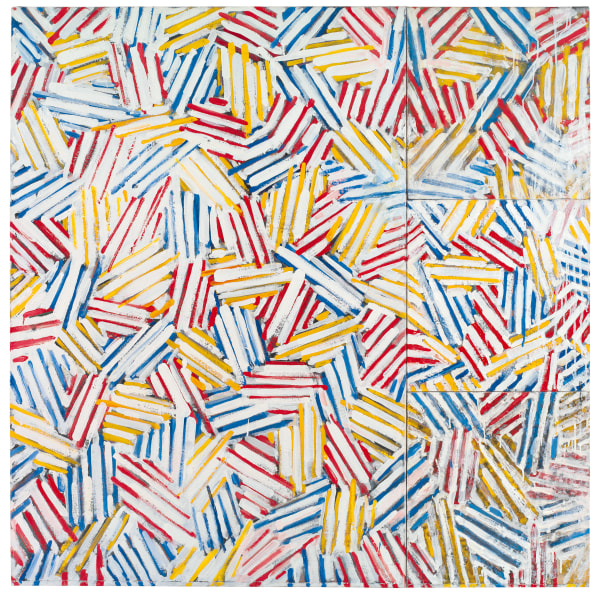
Gagosian, in partnership with Castelli Gallery, is pleased to announce an exhibition of historic works by Jasper Johns at the 980 Madison Avenue gallery from January 22 to March 14, 2026. This exhibition surveys the crosshatch paintings and drawings that dominated his practice from 1973 to 1983 and have reverberated across his subsequent production. It unites works that have rarely been seen with loans from sources including distinguished American museums. Commemorating the fiftieth anniversary of this body of work’s debut at Castelli Gallery in 1976, it also bookends Gagosian’s occupancy of its flagship gallery at 980 Madison Avenue, which opened in 1989 with an exhibition of the 
Map paintings.

Johns is lending major works from his own collection to the exhibition, including paintings on long-term loan to the Art Institute of Chicago; National Gallery of Art, Washington, DC; and Philadelphia Art Museum. Other notable lenders include The Broad, Los Angeles; Museum of Modern Art, New York; and Virginia Museum of Fine Arts, Richmond; with additional works from private collectors.

Johns has redirected the course of contemporary art many times over a lengthy career. His introduction of the crosshatch in 1972 was an unforeseen development, representing a departure from his images of everyday objects, signs, and linguistic fragments—subjects he described as “things the mind already knows.” These allover compositions, characterized by parallel lines arrayed in interlocking configurations, and composed in encaustic, collage, acrylic and oil paint, watercolor, ink, and even sand, are admired for both their visual, material, and conceptual intricacy and their intuitively striking beauty.

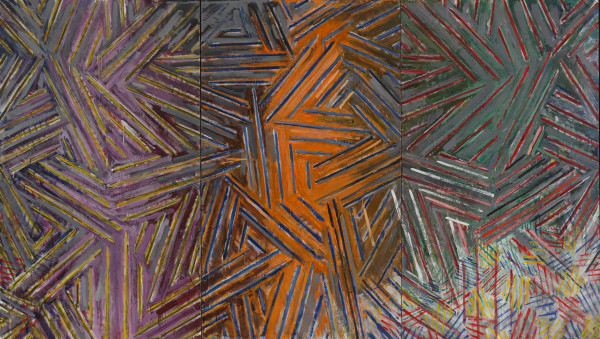
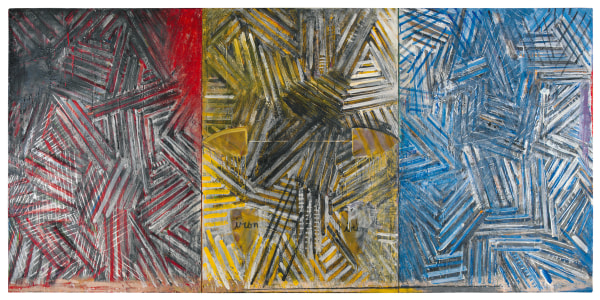
Major works on view include definitive paintings from the Corpse and Mirror series (1974–84); the seminal Weeping Women (1975), with its allusions to Picasso’s oeuvre; and Dancers on a Plane (1980–81), a tribute to choreographer Merce Cunningham. The exhibition also brings together all six Between the Clock and the Bed paintings (1981–83)—improvisations on Edvard Munch’s self-portrait from 1940–43 that are an inspired example of the artist’s perpetual engagement with his predecessors.

Gagosian will publish a catalogue to accompany the exhibition that will feature essays by noted American art critic Roberta Smith and Carlos Basualdo, the cocurator of Jasper Johns: Mind/Mirror, a two-part lifetime retrospective held simultaneously at the Philadelphia Museum of Art and the Whitney Museum of American Art, New York, in 2021–22.


IMAGES


  •  
    Jasper Johns
    Corpse and Mirror, 1974
    Oil, encaustic, and collage on canvas, in 2 parts (joined)
    50 x 68 1/8 inches (127 x 173 cm)
    © 2026 Jasper Johns/Licensed by VAGA at Artists Rights Society (ARS), New York
    Photo: Jeff McLane
    Courtesy Gagosian

  •  
    Jasper Johns
    Untitled, 1975
    Oil, encaustic, and collage on canvas, in 4 parts (joined)

    50 1/8 x 50 1/8 inches (127.3 x 127.3 cm)
    The Eli and Edythe L. Broad Collection
    © 2026 Jasper Johns/Licensed by VAGA at Artists Rights Society (ARS), New York
    Photo: Jamie Stukenberg, Professional Graphics, Rockford, Ill. © The Wildenstein Plattner Institute, Inc., New York, 2025
    Courtesy Gagosian

  •  
    Jasper Johns
    End Paper, 1976
    Oil on canvas, in 2 parts (joined)
    60 x 69 1/2 inches (152.7 x 176.9 cm)
    Museum of Modern Art, New York
    © 2026 Jasper Johns/Licensed by VAGA at Artists Rights Society (ARS), New York
    Photo: © The Museum of Modern Art/Licensed by SCALA/Art Resource, New York
    Courtesy Gagosian

  •  
    Jasper Johns
    Between the Clock and the Bed, 1981
    Encaustic on canvas, in 3 parts (joined)
    72 x 126 ¼ inches (182.9 x 320.7 cm)
    Museum of Modern Art, New York
    © 2026 Jasper Johns/Licensed by VAGA at Artists Rights Society (ARS), New York
    Photo: © The Museum of Modern Art/Licensed by SCALA/Art Resource, New York
    Courtesy Gagosian

  •  
    Jasper Johns
    Between the Clock and the Bed, 1981
    Oil on canvas, in 3 parts (joined)
    72 x 126 inches (182.9 x 320 cm)
    © 2026 Jasper Johns/Licensed by VAGA at Artists Rights Society (ARS), New York
    Photo: Jamie Stukenberg, Professional Graphics, Rockford, Ill. © The Wildenstein Plattner Institute, Inc., New York, 2025
    Courtesy Gagosian

  •  
    Jasper Johns
    Between the Clock and the Bed, 1982–83
    Encaustic on canvas, in 3 parts (joined)
    72 x 126 1/4 inches (182.9 x 320.7 cm)
    Virginia Museum of Fine Arts
    © 2026 Jasper Johns/Licensed by VAGA at Artists Rights Society (ARS), New York
    Photo: Katherine Wetzel, © Virginia Museum of Fine Arts
    Courtesy Gagosian

  •  
    Jasper Johns
    Weeping Women, 1975
    Encaustic, charcoal, and collage on canvas, in 3 parts (joined)

    50 1/8 x 102 3/8 inches (127.3 x 260 cm)
    © 2026 Jasper Johns/Licensed by VAGA at Artists Rights Society (ARS), New York
    Photo: Jamie Stukenberg, Professional Graphics, Rockford, Ill. © The Wildenstein Plattner Institute, Inc., New York, 2025
    Courtesy Gagosian

  •  
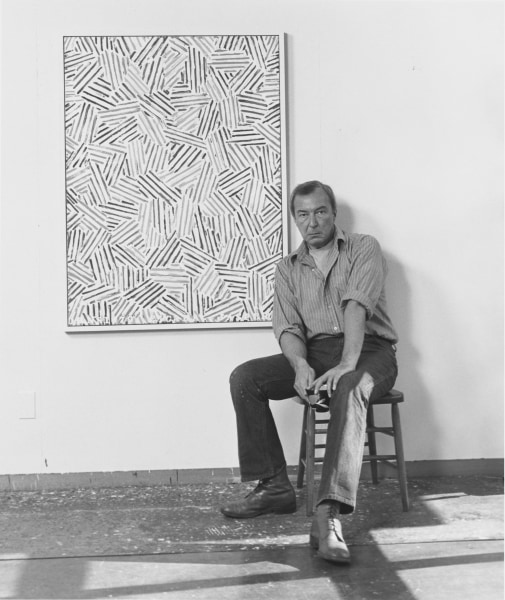
    Jasper Johns in his studio, c. 1976–80
    © 1991 Hans Namuth Estate
    Photo: Hans Namuth
    Courtesy Center for Creative Photography, University of Arizona


Friday, January 23, 2026

Book - Michelangelo and Titian -A Tale of Rivalry and Genius


From the acclaimed author of
 Michelangelo, God’s Architect, a dual biography of two towering artists of the Renaissance, whose decades-long rivalry spurred both to greater heightsIn 1529, Michelangelo was in Venice when he first met Titian, Venice’s famed painter of princes, gods, and goddesses. Coming face-to-face with Titian’s drama-infused, richly colored works, the creator of David and the Sistine Chapel ceiling realized he had met a worthy opponent. Twenty-five years later, Titian came to Rome to paint the pope, and the two met again. Painting in the Vatican, Titian experienced the full power of Michelangelo’s work and vowed to surpass the achievements of his older contemporary.

Michelangelo and Titian is the untold story of history’s greatest artistic rivalry, a competition between two monumental figures more admiring of one another than either would ever admit. William Wallace brings the world of the sixteenth century to life, and in particular its culture of gossip and intrigue. Wallace challenges the established narrative of this relationship as mostly one-sided, with the younger artist in competition with the reigning master. He shows how the artists moved in overlapping courtly and papal circles, sharing the patronage, power, and sometimes friendship of the most important people of their era, including members of the Medici, Este, and Farnese families. Wallace traces how, over the span of some forty years, this unspoken rivalry was reciprocal and mutually beneficial, with each learning from the other’s brilliance, quietly seeking to best the other’s work and secure his own legacy.

An extraordinary achievement, Michelangelo and Titian is a compelling account of two supremely gifted rivals who inspired each other to test the limits of their creative genius, and in doing so created some of the most astonishing works of art the world has ever known. 

Princeton University Press

Hardcover

Price:
$35.00/£30.00
ISBN:
Published (US):
Feb 3, 2026
Published (UK):
Mar 31, 2026
Copyright:
2026
Pages:
248
Size:
5.5 x 8 in.
Illus:
48 color + 49 b/w illus. 2 maps.

William E. Wallace is the Barbara Murphy Bryant Distinguished Professor of Art History at Washington University in St. Louis. His books include Michelangelo, God’s Architect: The Story of His Final Years and Greatest Masterpiece (Princeton); Discovering Michelangelo: The Art Lover’s Guide to Understanding Michelangelo’s Masterpieces; and Michelangelo: The Artist, the Man, and His Times.


"Wallace wraps his analysis of the men’s relationship around these two encounters, using them partly to debunk theories that frame Titian as an imitator of the older artist. Instead, Wallace depicts a layered and complex relationship between two highly competitive men whose art energized, influenced, and sometimes contradicted each other’s.... Maps and ample illustrations enliven this vivid window into the relationship between two artistic giants and a creatively fertile time in Italian history. Armchair art historians will be riveted."—Publishers Weekly

“William Wallace offers a brilliant reappraisal of the lifelong dialogue between Michelangelo and Titian—two rivals who were also, in unexpected ways, companions in genius. With sharp insights and vivid prose, he shows how admiration, competition, and influence flowed both ways. A captivating study that brings fresh light to a famous rivalry and the masterpieces it inspired.”—Ross King, author of Brunelleschi’s Dome: How a Renaissance Genius Reinvented Architecture

Michelangelo and Titian showcases the imagination and knowledge of a scholar at the top of his game. William Wallace has distilled and refined decades of work on Michelangelo to present the sculptor’s achievements in a new light and to tell a vibrant story of the mutual regard and rivalry between two artistic titans.”—Deborah Parker, author of Michelangelo and the Art of Letter Writing

“Writing with the confidence of an expert and the imagination of a novelist, William Wallace raises penetrating questions about how artists became aware of artworks they hadn’t seen in person and weren’t reproduced in prints and what it means when two of the most famous artists in Europe confront one another’s work. This is an innovative study by the premier Michelangelo scholar writing today.”—Maria Ruvoldt, author of The Italian Renaissance Imagery of Inspiration