The Frick Collection
October 24, 2017, through March 11, 2018
This
fall, The Frick Collection will present a focused exhibition on two
important Renaissance paintings by the celebrated artist Paolo Veronese
(1528– 1588), St. Jerome in the Wilderness and St. Agatha Visited in Prison by St. Peter.
While the paintings are known to scholars, their remote location in a
church in Murano, an island in the lagoon of Venice known today for its
glassmaking studios and shops, has made them difficult to study.
St. Jerome in the Wilderness has been exhibited outside the church only once—in 1939, in the Paolo Veronese exhibition at Ca’ Giustinian, in Venice— while St. Agatha Visited in Prison by St. Peter
has not left the church since being installed in the early nineteenth
century.
These two rarely seen canvases now leave Italy for the first
time since their creation, over 450 years ago. And thanks to Venetian
Heritage and the sponsorship of BVLGARI, they have been fully restored
and returned to their original glory. Veronese in Murano: Two Venetian Renaissance Masterpieces Restored,
on view October 24, 2017, through March 11, 2018, will provide a unique
opportunity for an international audience to discover these two
masterpieces in the Frick’s unique setting. The exhibition is organized
by the Frick’s Peter Jay Sharp Chief Curator Xavier F. Salomon, an
eminent Veronese scholar (who wrote
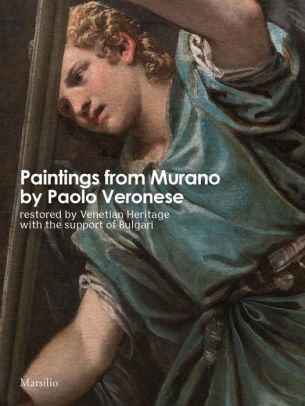
the accompanying catalogue), and
Venetian Heritage.

Paolo Veronese (1528–1588)
St. Jerome in the Wilderness,
1566–67
Oil on canvas
91 × 57 1⁄4 inches
San Pietro Martire, Murano
Photo: Ufficio Beni Culturali del
Patriarcato di Venezia

Paolo Veronese (1528–1588)
St. Jerome in the Wilderness (detail)
1566–67
Oil on canvas
91 × 57
1⁄4 inches
San Pietro Martire, Murano
Photo: Ufficio Beni Culturali del
Patriarcato di Venezia
Paolo Veronese (1528–1588)
St. Jerome in the Wilderness (detail)
1566–67
Oil on canvas
91 × 57 1⁄4 inches
San Pietro Martire, Murano
Photo: Ufficio Beni Culturali del
Patriarcato di Venezia
Paolo Veronese (1528–1588)
St. Jerome in the Wilderness (detail)
1566–67
Oil on canvas
91 × 57 1⁄4 inches
San Pietro Martire, Murano
Photo: Ufficio Beni Culturali del
Patriarcato di Venezia
The
first of these two works depicts St. Jerome , who lived between the fourth
and fifth century in Dalmatia and is known primarily for having translated the
Hebrew and Greek versions of the Bible into Latin. Jerome spent substantial
time in the desert, probably in Syria, where he led an ascetic life. In a
letter to his friend Eustochium, Jerome describes his trials:
“living in the
wilderness, in the vast solitude that provides a horrid, sun- scorched abode to
monks . . . Tears all day, groans all day —and if, resist it as I might, sleep
overwhelmed me, my fleshless bones, hardly holding together, scraped against
the bare ground. I say nothing about food or drink... All the company I had was
scorpions and wild beasts . . . So it was that I wept continually an d starved
the rebellious flesh for weeks at a time. Often I joined day to night and did
not stop beating my breast until the Lord restored my peace of mind . . . Angry
and stern with myself I plunged alone, deeper and deeper, into the wasteland;
and, as th e Lord is my witness, from time to time and after many tears I
seemed to be in the midst of throngs of angels.”
While living as a monk in
Bethlehem, Jerome was visited by what was to become one of his most frequent iconographic symbols. As he and the other monks were reading the Scriptures, a lion limped
into the monastery . The men fled in terror, but Jerome realized that the
animal was injured. He asked his fellow monks to help him remove the thorn that
tormented the animal’s paw, then dress ed the wound. Once healed, the lion
“lost all his wildness, and lived among [them] like a house pet.”
Veronese
portrays Jerome in the desert, with trees framing the composition. On the
right, wooden beams held together by ropes and covered by a roof of leaves
indicate a rudimentary hut, a shelter from the elements. Underneath this
structure is a still life of objects traditionally associated with Jerome: a
crucifix, an hourgla ss, a skull, and two open books. The hourglass and skull
refer to the transience of life, while the volumes allude to Jerome’s
translation of the Bible. The saint is an isolated figure in this landscape ,
alone in his gruel ling devotion. His muscular body is tense, covered only by a
red cloth secured by a cord. Toothless and haggard, his face is transfixed as
he focuses his tear -filled eyes on the crucifix, while beating his chest with
a rock. The bruised ribs are visible, and drops of blood testify to his self -punishment.
A divine wind rustles the saint’s graying beard, an extraordinary passage of
bravura painting. The faithful lion on the left is the only witness to his
frenzied state.
While St. Jerome in the Wilderness was a common subject for
Italian Renaissance paintings and was a theme often treated by Venetian artists
, the second Murano canvas depicts a less typical narrative:
Paolo Veronese (1528–1588)
St. Agatha Visited in Prison by St. Peter, 1566–67
Oil on canvas,
65 1⁄2 × 81 1⁄2 inches
San Pietro Martire, Murano
Photo: Ufficio Beni Culturali del Patriarcato di Venezia

Paolo Veronese (1528–1588)
St. Agatha Visited in Prison by St. Peter (detail), 1566–67
Oil on canvas,
65 1⁄2 × 81 1⁄2 inches
San Pietro Martire, Murano
Photo: Ufficio Beni Culturali del Patriarcato di Venezia
Agatha was a third-century martyr from Sicily who
lived in Catania at the time of the Christian persecution under the Roman emperor
Decius. Of noble origin, she had pledged her chastity to God and therefore
would not yield to the advances of Quintianus, a
Roman consul, who was enticed by her beauty . Quntianus first tried to bend
Agatha to his will by forcing her to live for a month in the brothel of a woman
named Aphrodisia. Firm in her resolve, Agatha left the house untouched.
Quintianus then commanded Agatha to worship pagan idols; when she refused, he sent
her to jail where she was tortured and Quintianus ordered her breasts to be cut
off. Left in prison without food or water and with no medical aid, she suffered
greatly. One night she was visited by an old man who revealed himself to be St. Peter, telling her he had been sent by God to comfort and heal her. When the
jailers were alerted by Peter’s supernatural light, the saint vanished, and
Agatha knelt in prayer, finding that her wounds were gone.
Quintianus, however,
did not desist. He had her placed naked over burning coals, but she was saved
by a heaven sent earthquake. Finally, having been sent back to jail, she
prayed to God to end her torture, and she peacefully died in prison.
Veronese
sets the scene in Agatha’s dark prison cell , which he describes in detail. A
high, barred window and a door to the right are the only portals to the outside
world. Below the window is a bed, a simple wooden frame covered by a thin
mattress; underneath it is a chamber pot.
A candle at left illuminates a wood
shelf on which Veronese has created a modest yet exquisite, still life: a
glass pitcher with red wine, a bowl, and a loaf of bread.
Agatha has been
interrupted during her prayers in the semi darkness. She is clothed in a green
dress and clutches a pink drapery around her. A heavy chain below the bench
makes clear that Agatha is a prisoner in this room. With her left hand, she
draws a white blood- stained cloth to her wounded breasts.
She steadies
herself against the bench, surprised by the two visitors that have burst into
her cell.
Paolo Veronese (1528–1588)
St. Agatha Visited in Prison by St. Peter (detail), 1566–67
Oil on canvas,
65 1⁄2 × 81 1⁄2 inches
San Pietro Martire, Murano
Photo: Ufficio Beni Culturali del Patriarcato di Venezia
A glorious blond angel dressed in light blue holds a long taper,
bringing light into the shadowy room. He precedes St. Peter, who stands by
the open door, monumentally dominating the right part of the picture. The
saint is dressed in blue and burnt orange.

Paolo Veronese (1528–1588)
St. Agatha Visited in Prison by St. Peter (detail), 1566–67
Oil on canvas,
65 1⁄2 × 81 1⁄2 inches
San Pietro Martire, Murano
Photo: Ufficio Beni Culturali del Patriarcato di Venezia
In his left hand he holds the keys
to heaven (one gold, one silver), his standard attribute.
With his right hand
he gestures upward, referring at once to his celestial mission and to Agatha’s
imminent healing, and possibly to her death and heavenly reward .
H ISTORY OF
THE WORKS
The two paintings were not originally intended for San Pietro
Martire, but for a small chapel built near the church of Santa Maria degli
Angeli , on another part of the island. In 1566, a priest named Francesco degli
Arbori, the chaplain of the Augustinian nuns of Santa Maria degli Angeli, was
given a plot of land in the nuns’ cemetery, adjoining the church, to construct
a chapel dedicated to S t. Jerome, and it was for this chapel that Veronese’s
two canvases were commissioned. Contemporary descriptions indicate that t he
chapel was simply decorated , with the two canvases being the main images in
its interior : the St. Jerome hung over the altar with the St. Agatha facing
it , on the counterfaçade, over the main door. At the time, Veronese was one of
the most successful and highest paid painters in Venice, creating magnificent
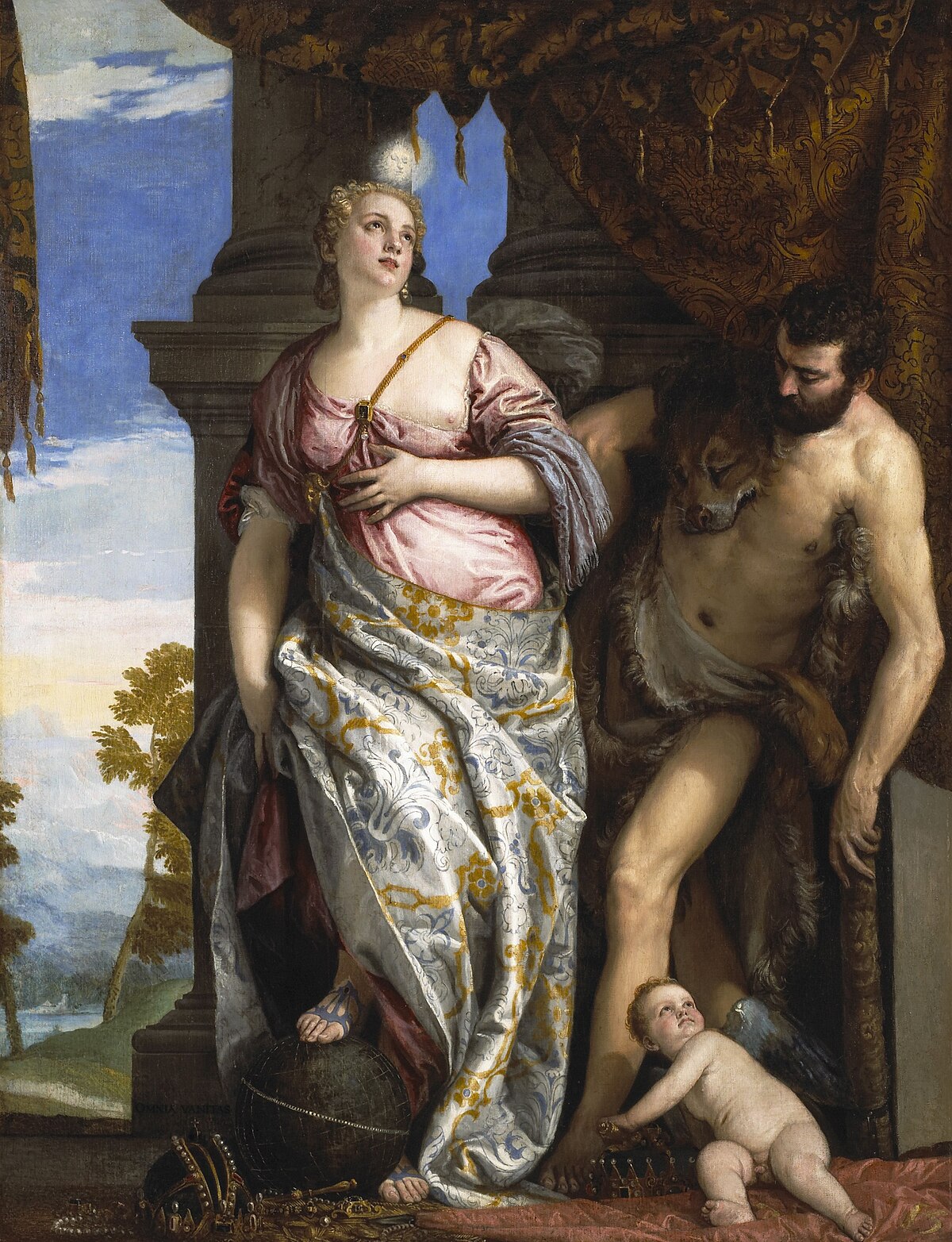
images for the European aristocracy. (About 1565, he had painted
The Choice
between Virtue and Vice
and Wisdom and Strength for an unknown patron.
Both
canvases now hang in the West Gallery of The Frick Collection .)
How a priest
on a small island got to know such a prominent painter and came to commission such
costly paintings remains a mystery. Little is known about Degli Arbori’s life,
but the research conducted in preparation for this exhibition has uncovered two
important documents relating to him: his deed of gift of the chapel to the nuns
of Santa Maria degli Angeli, in 1566, and the priest’s will, written soon
before his death, in 1579.
In 1667, after hanging for a century in the chapel
for which they had been created, Veronese’s canvases were removed. On August 1
of that year, the nuns of Santa Maria degli Angeli, having determined that the
paintings were “notably suffering damage from the injuries of time, inside the
said chapel” had them relocated to the main church of Santa Maria deg li
Angeli. The nuns were also worried about possible theft.
From the second half
of the seventeenth century to the early nineteenth century, the works were frequently
described by Veronese’s biographers and guidebook authors, who consistently
gave their location as Santa Maria degli Angeli. With the fall of the Venetian
Republic and the Napoleonic invasion of Italy in the early nineteenth century,
most religious institution s were suppressed, and, in the late spring and
summer of 1810, the majority of monasteries and convents in Venice were closed. Such was the fate of the nun’s monastery at Santa Maria degli Angeli, which
was officially suppressed in July of that year.
By 1815, the St. Jerome in the
Wilderness and the St. Agatha Visited in Prison by St. Peter had been moved to
a neighboring Dominican church, San Pietro Martire, where they have remained.
The chapel for which they were originally painted was left empty, abandoned,
and eventually demolished, in 1830. The chapel’s stone door, recently identified
during research for this exhibition, is the sole architectural element of the
structure known to survive. It is visible in the right wall of Santa Maria
degli Angeli, presumably embedded there since the mid -nineteenth century.
Few
examples of free- standing chapels created for single patrons are known to have
existed in Venice. The chapel built for Francesco degli Arbori must have been an
exceptional structure , and its destruction has meant the loss to subsequent
generations of a fascinating site for Veronese’s work .
The island of Murano,
however, has retained its enchanting character, and the humble monastic
cemetery of Santa Maria degli Angeli still remains in its forsaken northwestern
corner of the island . After his death, Francesco degli Arbori was buried in
the cemetery, and his body presumably still lies there in the small plot of
land adjacent to the church.
Although the details of Degli Arbori’s prestigious
commission remain shrouded in the fog of the past, Veronese’s compositions can
be appreciated for their outstanding originality and skillful execution. The
recent restoration of both canvases, as well as the technical analysis that
accompanied their treatment, will enable future scholars to better understand
these paintings and, perhaps, the nature of their commission.