Saturday, January 13, 2018

Christie’s New York in the Spring of 2018


In spring of 2018, the sale of The Collection of Peggy and David Rockefeller  will take place at Christie’s Rockefeller Center Galleries in New York. In keeping with David Rockefeller’s pledge to direct the majority of his wealth to philanthropy and provide for the cultural, educational, medical, and environmental causes long supported by him and his wife, all of the Estate’s proceeds from the sales across a wide variety of categories will be donated to the Rockefeller family’s charities of choice. As such, it will be the most important philanthropic auction ever held.

Impressionist & Modern Art Highlights

https://upload.wikimedia.org/wikipedia/en/thumb/9/96/Pablo_Picasso%2C_1905%2C_Fillette_nue_au_panier_de_fleurs_%28Le_panier_fleuri%29%2C_oil_on_canvas%2C_155_x_66_cm%2C_private_collection%2C_New_York.jpg/318px-Pablo_Picasso%2C_1905%2C_Fillette_nue_au_panier_de_fleurs_%28Le_panier_fleuri%29%2C_oil_on_canvas%2C_155_x_66_cm%2C_private_collection%2C_New_York.jpg

A Picasso Rose Period masterpiece, executed in 1905, Fillette à la corbeille fleurie is a highlight of the collection (estimate in the region of $70 million). Rich in pathos in its depiction of bohemian life at the turn of the 20th century, this rare work is a technical tour de force of draftsmanship and atmosphere. The painting maintains a storied provenance; it was acquired in 1905 by brother and sister, Leo and Gertrude Stein, and passed to Alice B. Toklas upon Gertrude’s death in 1946, where it remained throughout Alice’s lifetime for another 21 years. In 1968, David Rockefeller formed a group of important art collectors to acquire the renowned collection of Gertrude Stein. Drawing slips of numbered paper from a felt hat, David Rockefeller drew the first pick in the syndicate, and he and Peggy were able to acquire their first choice of the Young Girl with a Flower Basket, and placed it in the library of their 65th Street New York townhouse.

https://i.pinimg.com/originals/f8/de/5e/f8de5e79a6e5c03c67080bcf3caac1ac.jpg

The most important work by Henri Matisse to be offered on the market in a generation is Odalisque couchée aux magnolias, painted in Nice in 1923 (estimate in the region of $50 million). The subject of the odalisque, the reclining female figure, held special significance for Matisse as it presented the opportunity to measure his art against past masters. Odalisque couchée aux magnolias, with its symphonic synthesis of pattern and form, has long been counted among the greatest of Matisse’s paintings in private hands. This sumptuous painting resided in the living room of Peggy and David’s Hudson Pines home. Odalisque couchée aux magnolias is also the highest estimated work by Matisse to ever be offered at auction.
http://www.christies.com/media-library/images/features/articles/2017/11/03/rockefeller-highlights-collection/55664899.jpg?w=780

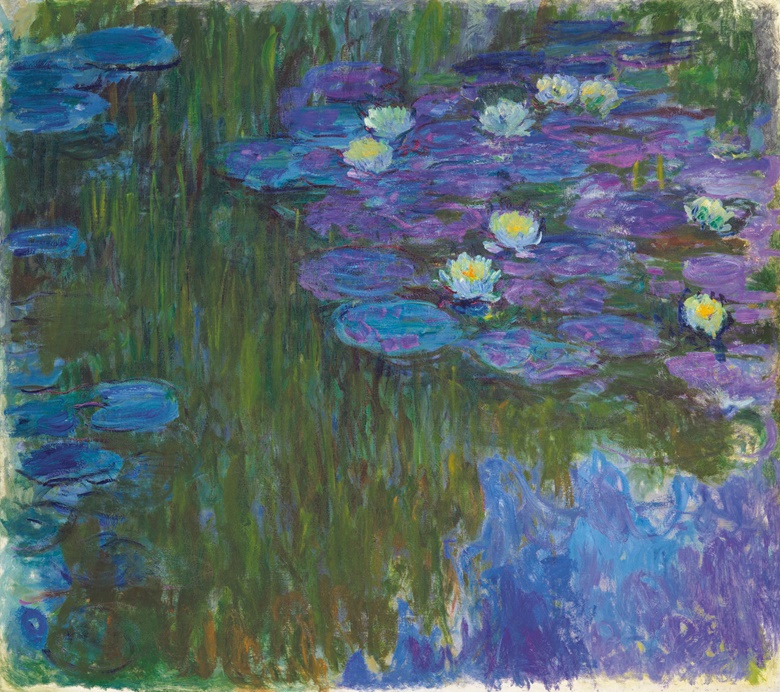
Monet’s beloved garden of Giverny was a source of unending inspiration. Nymphéas en fleur is among the largest scale, most brilliantly colored, and vigorously worked canvases that the artist executed – a glorious tribute to the natural world (estimate in the region of $35 million). This work belongs to a group of paintings Monet painted in a burst of untrammeled creativity between 1914 and 1917, as Europe plunged into the chaos of war. Upon the recommendation of Alfred Barr, the first director of the Museum of Modern Art, Peggy and David Rockefeller visited the Parisian dealer Katia Granoff and purchased the present painting in 1956. “One, which was almost certainly painted in the late afternoon and in which the water is a dark purple and the lilies stand out a glowing white, we bought immediately,” David Rockefeller recalled in Memoirs.

https://upload.wikimedia.org/wikipedia/commons/thumb/3/3a/Signac_-_Portrait_de_F%C3%A9lix_F%C3%A9n%C3%A9on.jpg/962px-Signac_-_Portrait_de_F%C3%A9lix_F%C3%A9n%C3%A9on.jpg

Paul Signac - Portrait de Félix Fénéon

Also on offer: significant works by ,Georges Seurat, Juan Gris, Paul Signac, Edouard Manet, Paul Gauguin, Jean Baptiste and Camille Corot, among others.

 American Art
http://www.christies.com/media-library/images/features/articles/2018/01/04/rockefeller-age-of-america/55665254.jpg?w=780

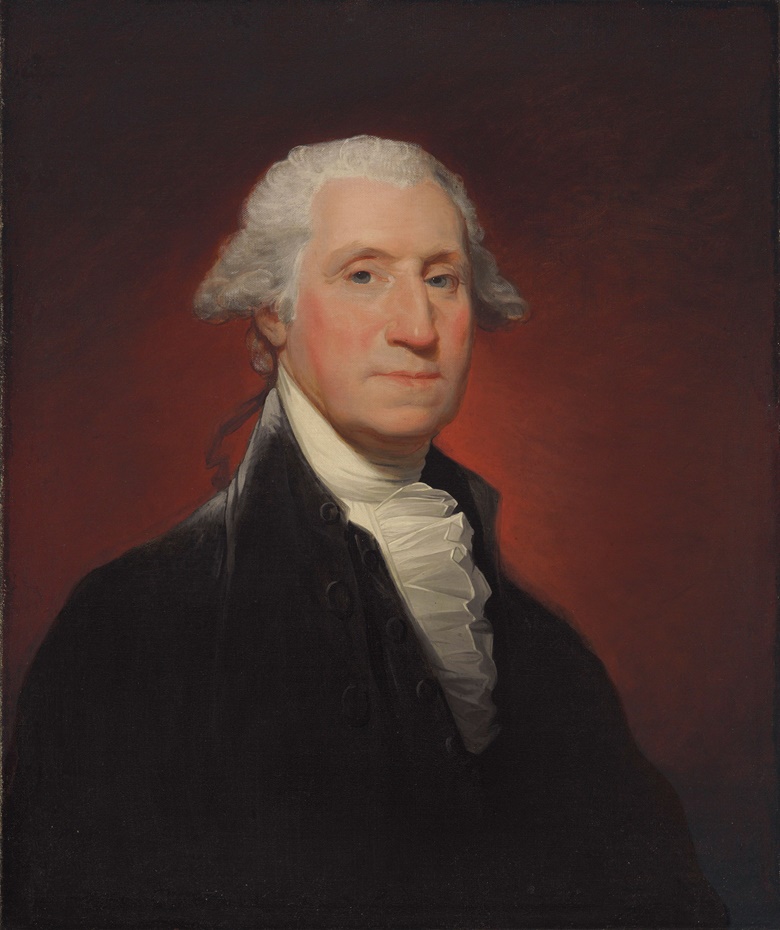
Gilbert Stuart (1755-1828), George Washington (Vaughan type), 1795. Oil on canvas. 29 x 24 in (74 x 61.3 cm). Estimate: $800,000-1,200,000.
http://www.christies.com/media-library/images/features/articles/2018/01/04/rockefeller-age-of-america/55665247.jpg?w=780
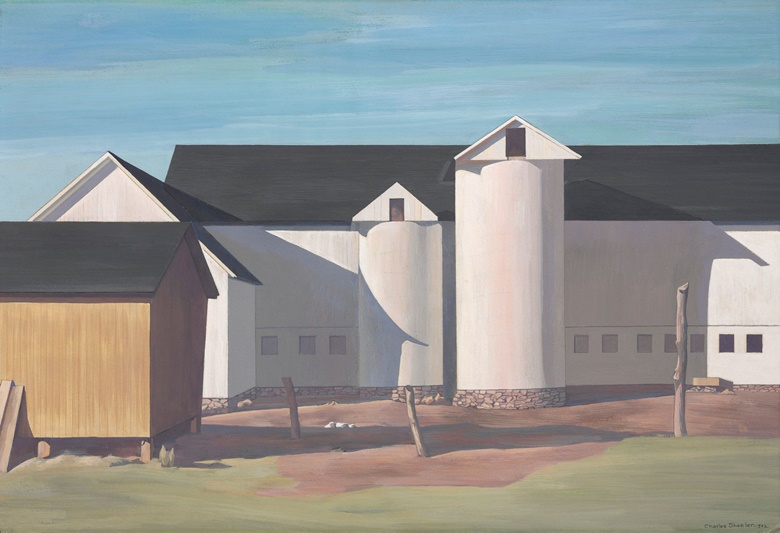
Charles Sheeler (1883-1965), White Sentinels, 1942. Tempera on board. 15 x 22 in (38.1 x 55.9 cm). Estimate: $1,000,000-1,500,000.
http://www.christies.com/media-library/images/features/articles/2018/01/04/rockefeller-age-of-america/55665179rs.jpg?w=780

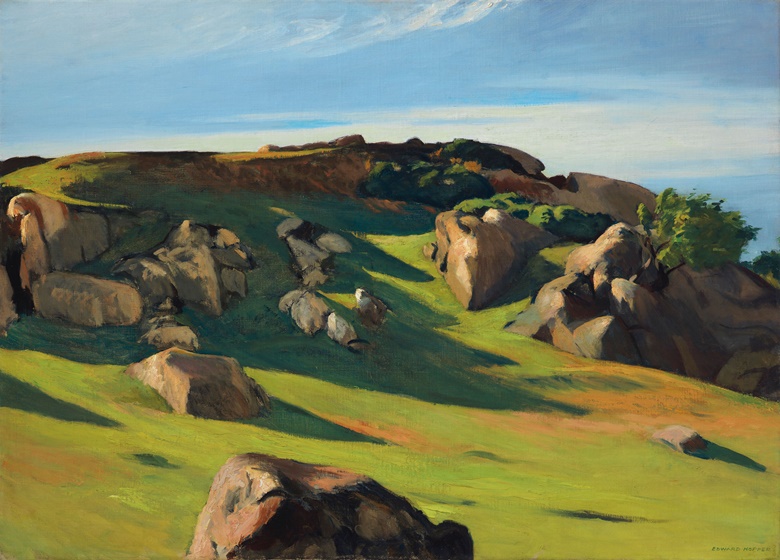
Edward Hopper (1882-1967), Cape Ann Granite, 1928. Oil on canvas 29 x 40 in (71.1 x 102.2 cm). Estimate: $6,000,000-8,000,000
http://www.christies.com/media-library/images/features/articles/2018/01/04/rockefeller-age-of-america/55665216rs.jpg?w=780
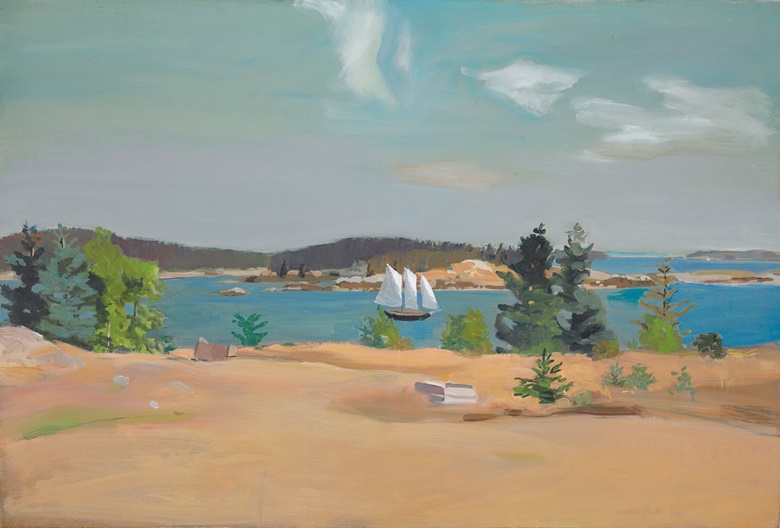
Fairfield Porter (1907-1975), The Schooner I, 1965. Oil on canvas. 37 x 54 in (94.2 x 137.5 cm). Estimate: $1,000,000-1,500,000. 

Sotheby’s Evening Sale of Master Paintings on 1 February 2018

 
An exceptional selection of European paintings, spanning from the 14th to the 19th centuries will be offered in Sotheby’s Evening Sale of Master Paintings on 1 February 2018 in New York. 

http://www.sothebys.com/content/dam/stb/lots/N09/N09812/122N09812_8M22G.jpg

The February sale features a rare and striking portrait of Cristoforo Segni, Maggiordomo to Pope Innocent X  painted and signed by Velazquez and Cremonese painter Pietro Martire Neri Martire (estimate $3/4 million). Painted around 1650, during Velazquez’s second trip to Rome, the work is one of a series of portraits painted for the Court of Pope Innocent X on the occasion of his Jubilee, the most famous being Portrait of Innocent X (1650, Galleria Doria Pamphilij). 

Having remained hidden in the present collection since the mid -20 th century, the painting was recently featured in a dedicated exhibition to Velazquez at the Grand Palais, Paris in 2015. Velazquez’s highly expressive and distinctive brushwork is clearly evident in areas of the canvas, in particular the head of the sitter. 

http://www.sothebys.com/content/dam/stb/lots/N09/N09812/034N09812_9MFM4.jpg

A Wooded River Landscape with a Landing Stage, Boats, Various Figures and Village Beyond is a stunning work by 17 th -century Flemish master Jan Bruegel the Elder, and stands as one of the finest river landscapes by the artist in private hands (front page, middle, estimate $2.5/3.5 million). A primary example of his work on copper, the painting’s vibrant colors, intact glazes and thick impasto are evidence of its remarkable condition, and its meticulous attention to detail further contributes to the captivating jewel -like effect so prized in works by the major Flemish mas ter. 

The February auction offers an impressive pair of Venetian views by Canaletto, whose inimitable success in capturing the architecture of 18th -century Venice has made him the undisputed leader of the genre (estimate $3/4 million). Most likely completed in England in the 1740s, the pair offers waterfront views of two of the most recognizable façade in La Serenissima: 

 http://www.sothebys.com/content/dam/stb/lots/N08/N08825/763N08825_69XYB.jpg

the Church of the Redentore 

http://www.sothebys.com/content/dam/stb/lots/N08/N08516/N08516-89-lr-1.jpg.thumb.500.500.png

and the Prisons of San Marco. 

While there are other known views of the Church of the Redentore by Canaletto, the present view of the Prisons of San Marco is a unique composition for the artist of which no other version is known. 

http://www.sothebys.com/content/dam/stb/lots/N09/N09812/138N09812_6M6WN.jpg

The sale includes a monumental painting by leading Italian Renaissance master Titian and his workshop. One of only two known versions of the subject by the artist, Saint Margaret Sotheby’s New York Evening auction of Master Paintings on 1 February 2018 will offer a monumental and striking painting by Titian and his workshop. One of only Titian, and Workshop  two known versions of the subject by the artist, Saint Margaret (estimate $2/3 million) was first recorded in the English royal collection of King Charles I (1600 – 1649), where it was displayed alongside the King's most highly prized works at Whitehall Palace. 

The present  work is being offered at a particularly poignant time, as the Royal Academy of Art’s upcoming exhibition Charles I: King and Collector (27 January – 15 April 2018) seeks to reunite the King’s treasures that were dispersed following his execution. 

During his reign, Charles I competed ferociously with the great powers of Europe to assemble an art collection rivaling to all others. Born into a family with deep ties to art, Charles I had an immense appreciation of art history and traveled across Europe to acquire works by some of the greatest artists, including Leonardo Da Vinci, Raphael and Correggio. It was in the Privy Lodging Rooms at Whitehall Palace – a series of private apartments – where Charles kept his most highly- prized paintings. 

According to inventory records and notes from 1639, Saint Margaret is listed as hanging in the First Privy Lodging Room, an apartment so distinguished that no other could rival in splendor, where it was displayed alongside the King's collections of Titians, including the early  

https://upload.wikimedia.org/wikipedia/commons/thumb/b/be/Jacopo_Pesaro_presented_to_St._Peter_by_Pope_Alexander_VI_-_Tizian-2.jpg/1200px-Jacopo_Pesaro_presented_to_St._Peter_by_Pope_Alexander_VI_-_Tizian-2.jpg 

Jacopo Pesaro Presented to Saint Peter (Koninklijk Museum voor Schone Kunsten, Antwerp),  

 https://upload.wikimedia.org/wikipedia/commons/thumb/d/dc/Venus_and_organist_and_little_dog.jpg/1200px-Venus_and_organist_and_little_dog.jpg

Venus with an Organ Player 

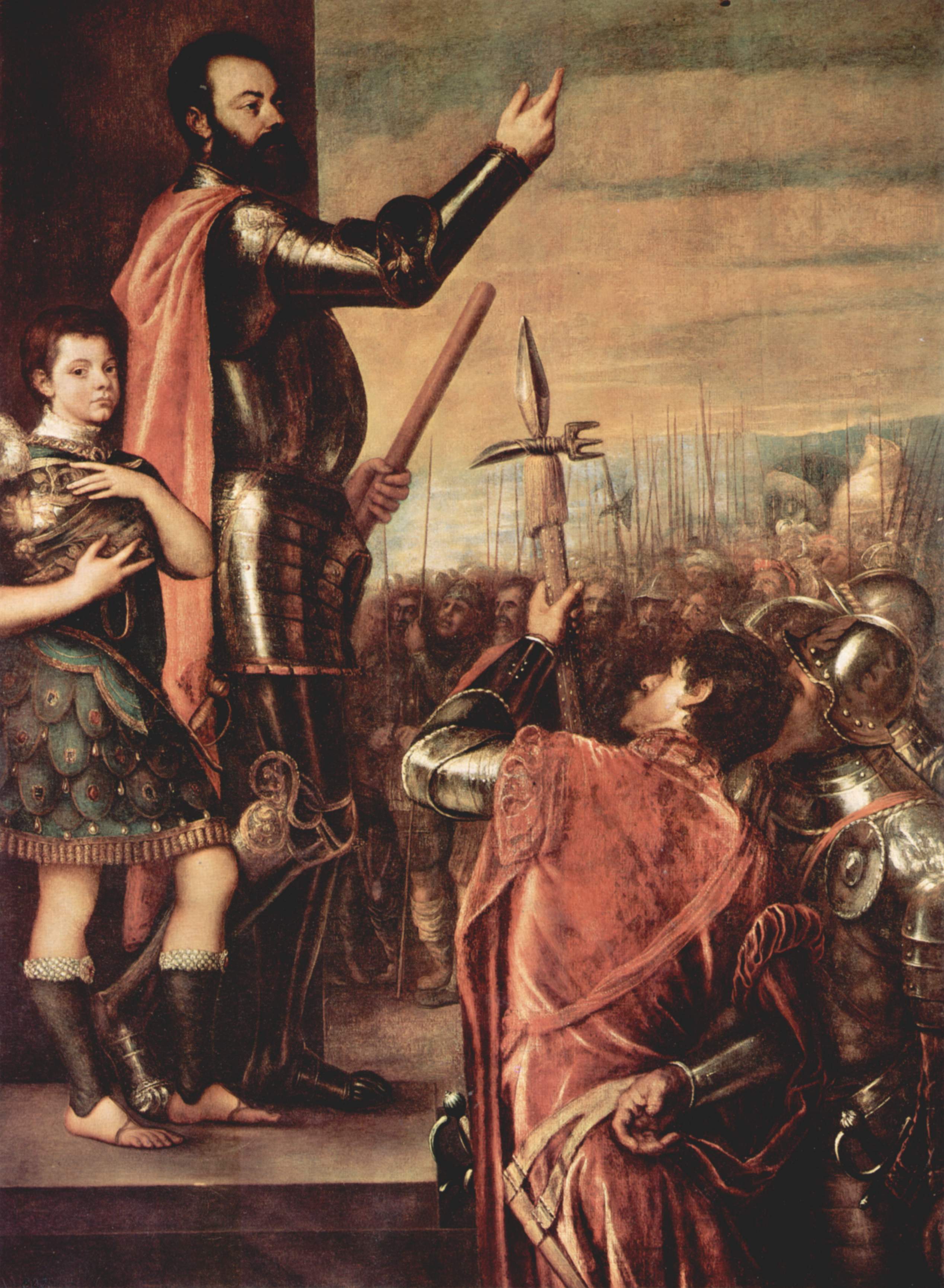
https://uploads8.wikiart.org/images/titian/the-marchese-del-vasto-addressing-his-troops-1541.jpg

and Alonso de Avalos addressing his Troops (both Prado, Madrid), and three other remarkable works currently hanging at the Musée du Louvre, Paris. 

Soon after the King's execution in 1649, the decision was taken by Parliament to sell off his grand collection. Much of the collection was sold quickly to raise funds for the state, while others were sold to pay off the King’s debt. 

Alexander Bell, Worldwide Co -Chairman of Sotheby’s Old Master Paintings Department, commented: (images added)

“The inventories and valuations of Charles I’s collection compiled mainly in 1649 are unique document s that provide fascinating insights into the relative value of the works at this particular moment in time. The inventories record Saint Margaret at £100 – a little less than the more celebrated paintings by Titian, such as Venus with an Organist (Prado, Madrid) at £150 and the Allegory of Alfonso d’Avalos (Louvre, Paris) at £250, but more than the vast majority of works in the 3 enormous and storied collection, including the now-world-famous

 https://upload.wikimedia.org/wikipedia/commons/5/5c/Leonardo_da_Vinci%2C_Salvator_Mundi%2C_c.1500%2C_oil_on_walnut%2C_45.4_%C3%97_65.6_cm.jpg
Salvator Mundi by Leonardo Da Vinci at £30.
The most renowned pictures in the King’s collection were valued considerably higher:
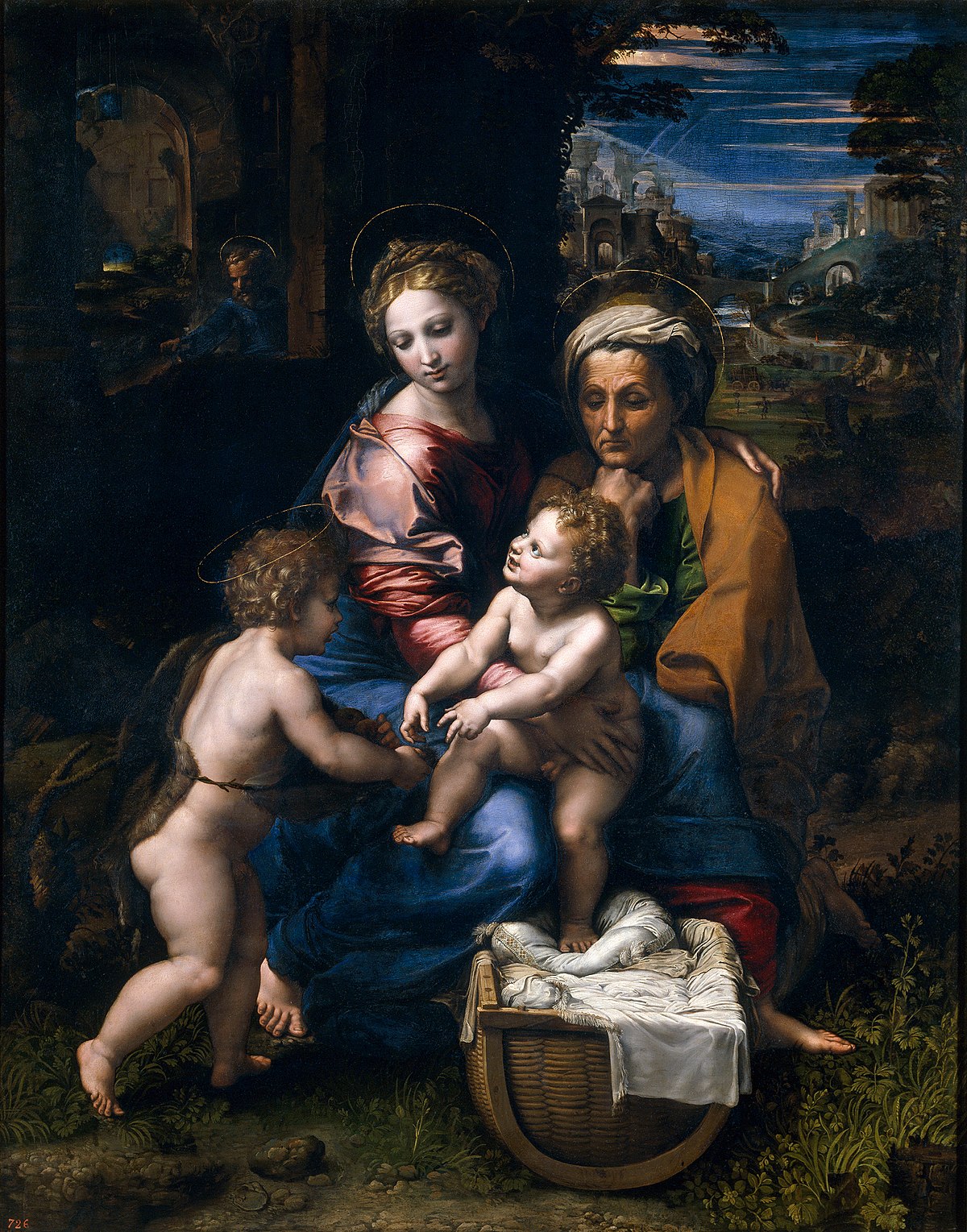
 https://upload.wikimedia.org/wikipedia/commons/thumb/6/60/Rafael_-_La_Perla.JPG/1200px-Rafael_-_La_Perla.JPG
Raphael’s Madonna della Perla (Prado, Madrid) was recorded at £2,000,
 https://upload.wikimedia.org/wikipedia/commons/8/8a/V%C3%A9nus_et_l%27Amour_d%C3%A9couverts_par_un_satyre%2C_Corr%C3%A8ge_%28Louvre_INV_42%29_02.jpg
and Correggio’s Jupiter and Antiope (Louvre, Paris) at £1,000.”

 As one of two versions of the subject of Saint Margaret signed by Titian – the other being in the Museo del Prado, Madrid – it seems probable that the works were painted alongside one another , with Titian utilizing his workshop to block in areas of the painting and finishing the key areas himself. The expressive power of Titian’s later style is nowhere more clearly demonstrated than in the atmospheric depiction of the city of Venice on fire in the background. On the skyline, the campanile of St Mark glows in fiery orange and pinks, whilst the stormy waves of the sea are animated by dark blue and green brushstrokes. As is characteristic with Titian’s late works, the darker tones, fiery landscape and swift handling of the paint in the present work create a sense of drama that is entirely fitting to the narrative. 

Titian depicts the legendary virgin martyr, Saint Margaret, as she emerges unscathed from the body of Satan, who had appeared to her in the form of a dragon and swallowed her whole. The cross she held in her hand irritated the monster’s insides and the dragon burst open allowing her to escape unharmed. Painted in a myriad of colors, her luminous light green tunic with its bright white sleeves and rose pink veil stand out from the earthier, brown based tones of the rest of the canvas. The dragon that occupies the bottom register of the canvas is predominantly painted in brown and blackish hues and the only flashes of color are the strokes of red and white delineating his vicious mouth. Depicted in dramatic contrapposto, the implied movement in Saint Margaret’s twisting body contrasts to the solidarity of the rock behind her , emerging from the picture plane as an impressive figure, trampling the dragon underfoot and holding her crucifix aloft.

Tuesday, January 9, 2018

Rueland Frueauf the Elder and his Circle

Belvedere, Vienna
23 November 2017 until 11 March 2018

https://www.belvedere.at/press

This exhibition at the Upper Belvedere focuses on the works of the Late Gothic painter Rueland Frueauf the Elder and his workshop. It has been organized to display the panels from Frueauf’s Salzburg altarpiece following the painstaking conservation work undertaken by the Belvedere.

These works are at the heart of the exhibition about the generation of artists preceding Albrecht Dürer , who are so rarely placed in the spotlight . Rueland Frueauf the Elder was probably born around 1440/50. He first lived and worked in Salzburg and later on, from the 1480s, in Passau, where he completed the painting of the town hall, taking over from the official city painter. Frueauf the Elder, who died in Passau in 1507, can be regarded as one of the greatest Late Gothic painters in the German-speaking area. 

At the heart of the exhibition are eight altarpiece panels by the artist. These scenes from the Passion and the Life of the Virgin were painted in 1490/91, presumably for St. Peter’s Church in Salzburg, and they are the starting point for qu estions of attribution concerning the many works associated with the Frueauf circle. 


http://p0.storage.canalblog.com/07/55/119589/118606874_o.jpeg
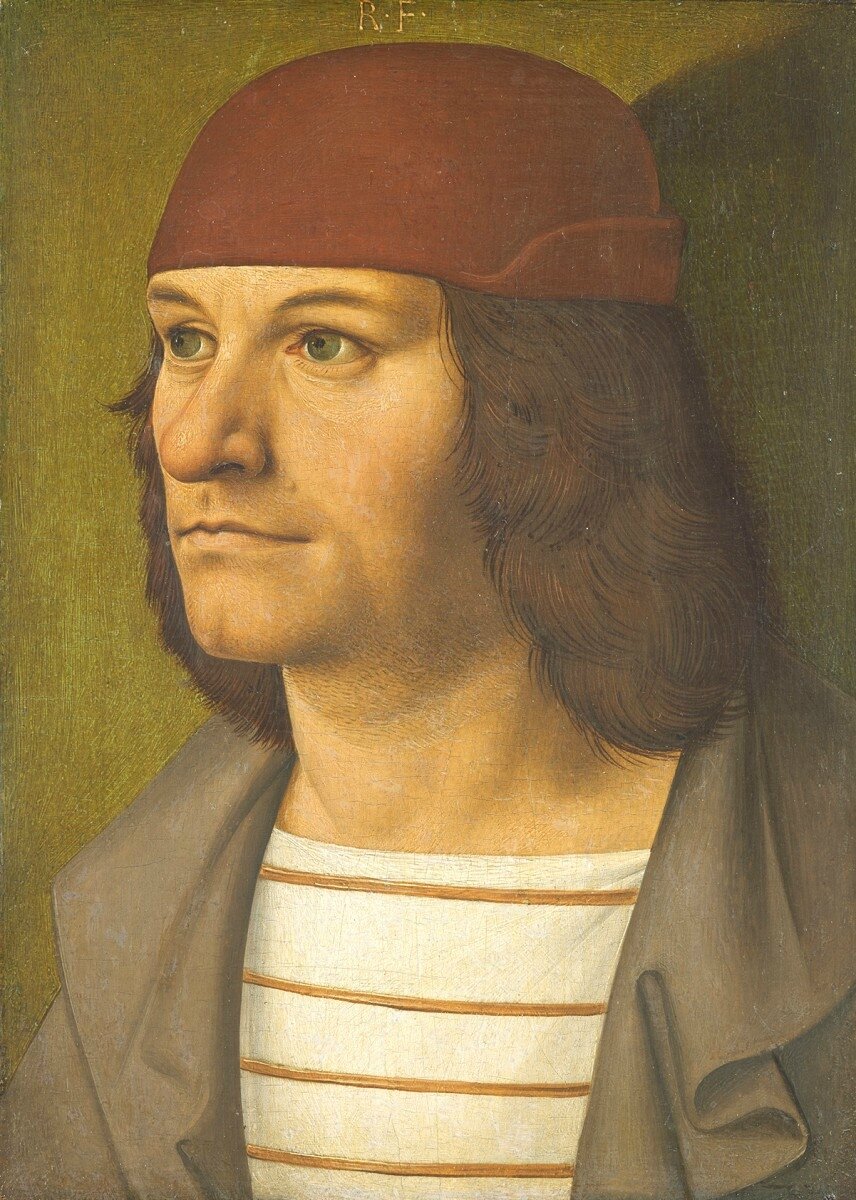
Rueland Frueauf the Elder, Portrait of the painter Jobst Seyfried, around 1495 Photo: Johannes Stoll, © Belvedere,

A further masterpiece by the artist in the Belvedere’s collection is the portrait of a man, whom recent discoveries in the archives have identified as the Passau-based painter Jobst Seyfrid.

“For this exhibition, we were able to bring togethe r more works by the Frueauf group than have ever before be en shown at one place. This opens up new perspectives on these extremely valuable paintings that have long preoccupied art history scholars and interested museum visitors,” said Björn Blauensteiner, the curator of the exhibition.

Besides the oeuvre of Frueauf the Elder, the exhibition also presents a selection of works by artists from his circle. These include several examples by the Master of Großgmain that are striking for their exquisite painting technique. 

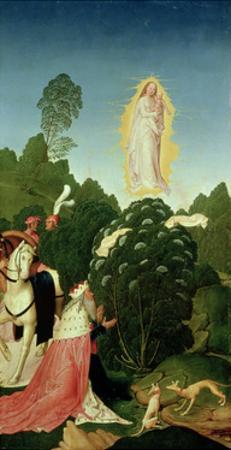
Thanks to generous loans from Klosterneuburg Monastery art collections, all of the known works by Frueauf’s son, Rueland Frueauf the Younger, are also on display, including the famous

https://imgc.allpostersimages.com/img/print/rueland-frueauf-the-younger-the-finding-of-the-veil-from-the-legend-of-st-leopold-1505_u-l-pw98lf0.jpg?src=gp

Legend of Saint Leopold. This first juxtaposition of the younger Frueauf’s oeuvre with his father’s work means that both painters can be compared in detail and promises plenty of food for thought conc erning questions surrounding the Frueauf circle. 

“The combination of works by the Frueauf father and son offers Klosterneuburg Monastery the unique opportunity to re-evaluate major works f rom its own picture gallery and see them in a fresh light. I am delighted about this temporary ‘family reunion’ after over 500 years,” said Wolfgang Christian Huber, custodian of the art collections at Klosterneuburg Monastery. 

The Salzburg altarpiece panels showing scenes from the Passion and the Life of the Virgin are in the Belvedere’s collection and have been painstakingly conserved in recent years. 

What was different about this project was that it was partially carried out as a public restoration at the Upper Belvedere and was thus made accessible to visitors. 

One particular challenge for the conservators was that the panels, originally painted on both sides, had been separated in the 1920s and 1930s. For a long time, this was common practice in order to be able to present both sides of the panels at the same time. However, the paintings were left very fragile as a result. 

A major aim of this conservation project was therefore to improve the stability of the paintings and secure the layers of paint. A further objective was to respectfully draw out the beauty of Rueland Frueauf the Elder’s unique art. 

Stella Rollig, CEO of the Belvedere, said: 

“The altarpiece panels by Rueland Frueauf the Elder are an example of the outstanding achievements of the Belvedere’s Conservation Department. The exhibition is the output of years of meticulous work – almost detective work – that has safeguarded the fu ture existence of these masterpieces from the Late Gothic period.” 

In addition to the eight paintings from the Salzbur g altarpiece, many other works from the Frueauf group were examined in preparation for the exhibition. 

The underdrawings hidden beneath layers of paint were brought to light using infrared reflectography, revealing original ideas that had actually been abandoned centuries ago. 

These paintings were also examined using X-rays and pigment analysis, ultraviolet light, raking light, and also under the microscope. The results are presented in the exhibition and published in the accompanying catalogue, the first monograph about Rueland Frueauf the Elder for over seventy years. 

The exhibition is curated by Björn Blauensteiner and has been organized in collaboration with Klosterneuburg Monastery.


https://www.belvedere.at/jart/prj3/belvedere/data/tmp_zip/lr-MeistervonGrogmainHl.AugustinusInv.4859.jpg

Meister von Großgmain, Hl. Ambrosius, 1498


Rueland Frueauf the Younger, Baptism of Jesus, beginning of the 16th century
Painting on spruce wood, 74 x 43 cm

Sunday, January 7, 2018

Michelangelo to Degas: Major New Acquisitions


  • La Surprise, ca.  1718, Jean Antoine Watteau (French, 1684 – 1721).  Oil on panel.  36.3 x 28.2 cm.  The J.  Paul Getty Museum, Los Angeles
    La Surprise, ca. 1718, Jean Antoine Watteau (French, 1684 – 1721). Oil on panel. 36.3 x 28.2 cm. The J. Paul Getty Museum, Los Angeles

    In July 2017, the J. Paul Getty Museum announced one of the most important acquisitions in its history: sixteen major drawings and an exquisite painting by Jean Antoine Watteau. Michelangelo to Degas: Major New Acquisitions, presents these newly acquired works to the public from January 17–April 22, 2018 at the J. Paul Getty Museum at the Getty Center.

    “This latest acquisition has been the most transformative ever in the history of the Department of Drawings, bringing into the collection a number of extremely rare masterpieces by some of the greatest artists of the Renaissance through the 19th century,” says Timothy Potts, director of the J. Paul Getty Museum. “Showcasing these works together will demonstrate the monumental nature of this purchase, which also includes a famous painting by the French artist Jean Antoine Watteau. It is increasingly rare to be able to acquire masterpieces of this stature, which have been highly sought after by connoisseurs since the 16th century, and by now have long been swept up by museums.”

    With a particularly strong group of rare Italian Renaissance sheets, the acquisition features exceptional works by many of the most celebrated draftsmen in the history of European art, including Michelangelo, Lorenzo di Credi, Parmigianino, Andrea del Sarto, Domenico Tiepolo, Goya, and Degas.

https://usaartnews.com/wp-content/uploads/michelang.jpg


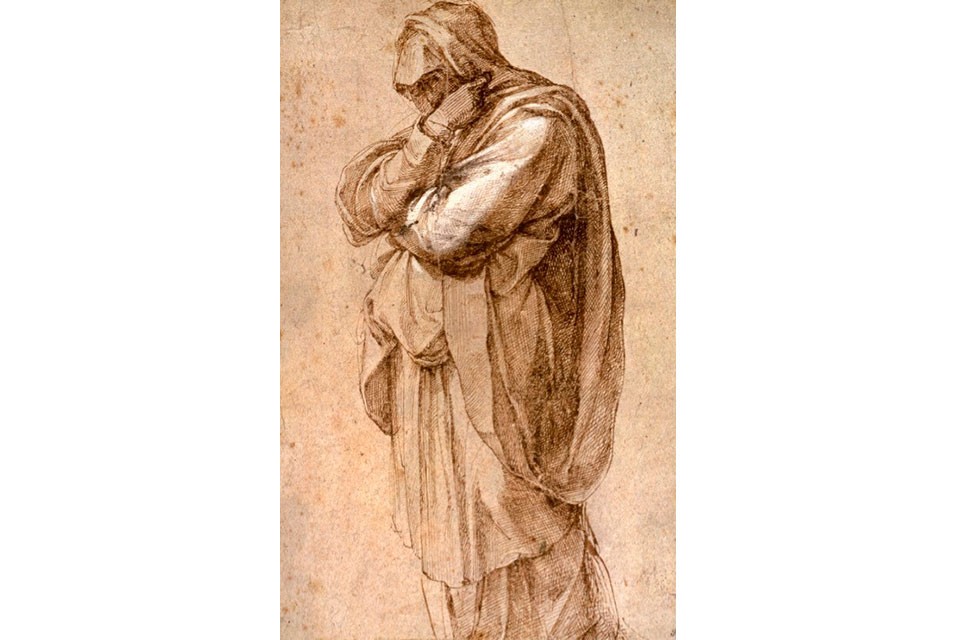
Study of a Mourning Woman, ca. 1500-05, Michelangelo Buonarroti (Italian, 1475-1564). Pen and brown ink, heightened with white. 26 x 16.5 cm. The J. Paul Getty Museum, Los Angeles

Highlights include Michelangelo’s Study of a Mourning Woman (about 1500-1505), a celebrated drawing of a mourning figure, with her face semi-hidden. Michelangelo made the work at a pivotal moment early in his career when, already renowned as a sculptor, he became increasingly esteemed as a painter. The drawing was discovered pasted into an album in the library at Castle Howard, England in 1995.

http://www.trbimg.com/img-596ff1b4/turbine/la-1500508593-jvjh8a6qd3-snap-image

Parmigianino, "Head of a Young Man," circa 1539-40, ink (Getty Museum)
The Head of a Young Man (about 1539-40), made toward the end of Parmigianino’s short life when he was at the peak of his artistic mastery, is one of his most famous drawings. Working in pen and ink on an under-lifesize scale with absolute precision and control of line, Parmigianino yields an astonishing impression of the sitter, who was probably a studio assistant. The influence of classical portrait busts on this jewel of a drawing is apparent in the gaze of the eyes and the sense of delicate perfection.

Degas is represented by two exceptional, complementary works. Two Studies of Dancers (about 1873), a superbly-preserved preparatory drawing on green paper, captures two dancers as one extends her leg and the other looks down, while strokes of white chalk indicate light streaming in from an unseen source. After the Bath (Woman Drying Herself) (about 1886) is a magnificent, large pastel of a nude in a densely patterned, dizzily colorful interior, made when the artist had all but ceased to exhibit, retreating into his studio to produce increasingly bold, experimental work.

“To be able to share any one of these drawings with our visitors would be an extraordinary privilege, but to add a group such as this to the collection, and to exhibit them together, is beyond a dream,” said Julian Brooks, senior curator of drawings.

https://i.pinimg.com/736x/f9/66/2c/f9662c082dbc76104ba07de84bf58d9c--jean-antoine-watteau-rococo.jpg

The exhibition also includes one of Jean Antoine Watteau’s finest paintings, La Surprise (The Surprise), painted in 1718-19. Watteau created and defined the genre of the fěte galante, evocative outdoor scenes of romantic encounters and entertainment, which embodies the light-hearted spirit of French painting in the early eighteenth century. Thought to have been lost for centuries, and only known to historians from a 1731 engraving and copy in the British Royal Collection, this painting was rediscovered in 2007. At the Getty, it joins other exceptional eighteenth-century French paintings by Lancret, Chardin, Greuze, Fragonard, and Boucher.

Michelangelo to Degas: Major New Acquisitions will be on view January 17-April 22, 2018, at the J. Paul Getty Museum. The exhibition is curated by Julian Brooks, senior curator of drawings at the J. Paul Getty Museum.

Excellent review, more images,video

Caravaggio: Masterpieces from the Galleria Borghese

The  J.  Paul  Getty  Museum
November  21,  2017 through  February  18,  2018 

http://news.getty.edu/image-gallery/recent-news/caravaggio-masterpieces-from-galleria-borghese/ 


The J. Paul Getty Museum is presenting a rare exhibition of three celebrated works by the great Italian painter Michelangelo Merisi da Caravaggio (1571 -1610) , on loan from the Galleria Borghese in Rome, home to the largest collection of Caravaggio’s paintings in the world. Caravaggio: Masterpieces from the Galleria Borghese will be on view at the Getty Center from November 2 1, 2017 through February 18, 2018. 

According to Timothy Potts, director of the J. Paul Getty Museum, “These three masterpieces are among Caravaggio’s best -known paintings , and we are extremely grateful to the Galleria Borghese for sharing them with our public. Caravaggio’s revolutionary genius made him one of the most  important and beloved figures in European art history.  The opportunity to see three of his most renowned works alongside the exceptional 17th -century Italian master pieces in our own collection is an event not to be missed.” 

One of the most admired painters in history, Caravaggio developed a bold ly naturalistic style that employed striking theatrical compositions and emphasized the common humanity of his protagonists. His art was both widely celebrated and highly controversial among his contemporaries and remained influent ial for centuries afterward. The three paintings presented in the exhibition exemplify the crucial stages in Caravaggio’s short but intense career (he died at age 39). 

http://www.getty.edu/360/event_images/car.jpg 
 
http://www.trbimg.com/img-5a39c462/turbine/la-1513735257-hbkzlybpmy-snap-image
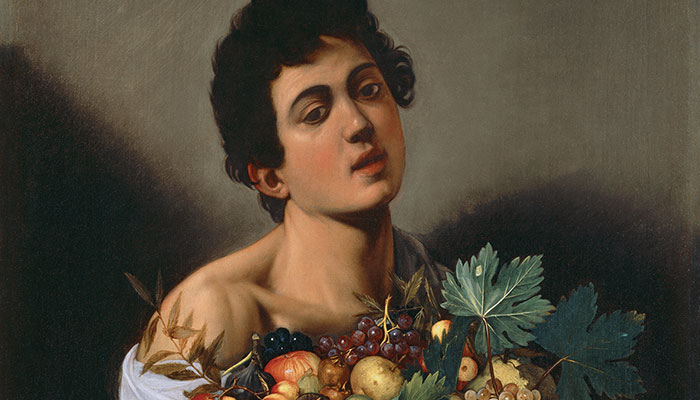
Boy with a Basket of Fruit, about 1593 - 94. Caravaggio (Italian, 1571 -1610). Oil on canvas. Ministero de Beni e delle Attività Culturali e del Turismo –Galleria Borghese. 

Boy with a Basket of Fruit (ca. 1593- 94) represents the beginning of the artist’s career when he moved from Lombardy to Rome and first attracted attention as a painter of realistic genre scenes and still lifes.

https://upload.wikimedia.org/wikipedia/commons/d/db/Caravaggio_-_San_Gerolamo.jpg
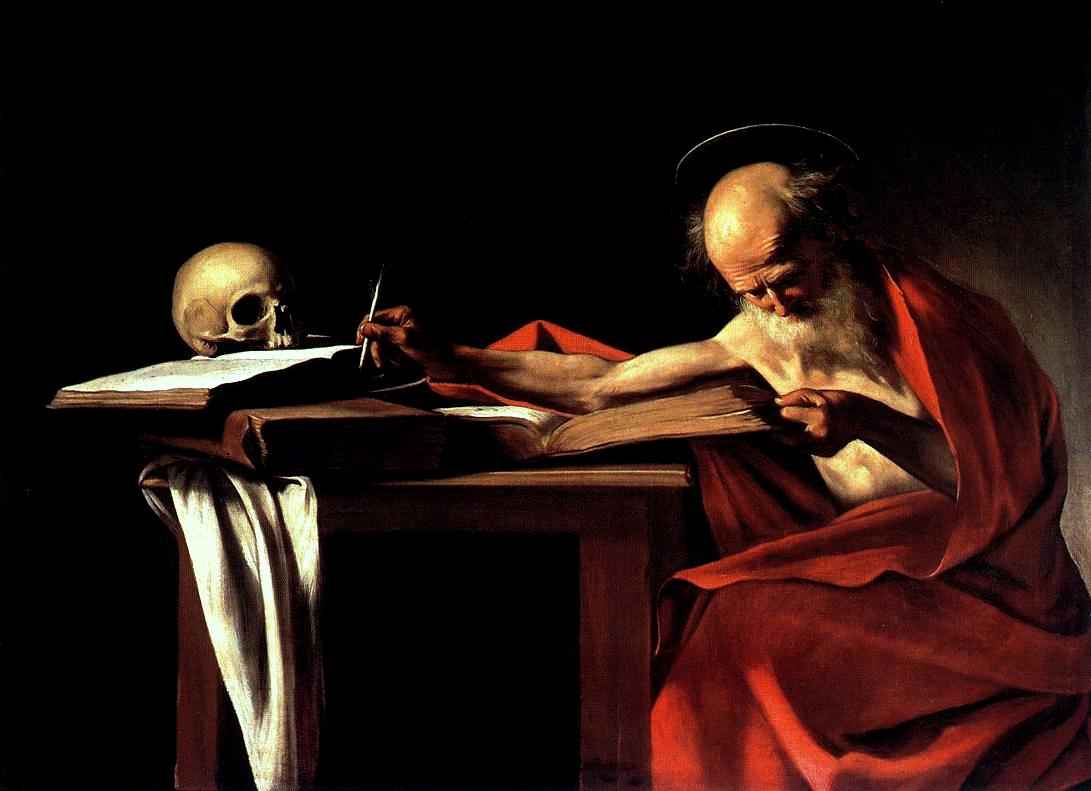
Saint Jerome, about 1605 - 6. Caravaggio (Italian, 1571 - 1610). Oil on canvas. Ministero dei Beni e delle Attività Cultu rali e del Turismo – Galleria Borghese. 

Saint Jerome (ca. 1605) portrays the saint as a scholar reading and annotating sacred passages in the dramatically spotlight manner that Caravaggio made famous. 

https://upload.wikimedia.org/wikipedia/commons/thumb/9/9a/Michelangelo_Caravaggio_071.jpg/1200px-Michelangelo_Caravaggio_071.jpg
David with the Head of Goliath, about 1609 - 1610. Caravaggio (Italian, 1571 -1610). Oil on canvas. Ministero dei Beni e delle Attività Culturalie del Turismo –Galleria Borghese.

In David with the Head of Goliath (ca. 1610) , painted at the end of the artist’s career in his more somber and expressive later style, Caravaggio included his own features in Goliath’s head, purportedly in penance for his having committed a murder in May 1606. 

All three paintings were acquired by Cardinal Scipione Borghese, a nephew of Pope Paul V, who knew Caravaggio personally and was one of his primary patrons. 

“Caravaggio continues to exert tremendous influence on art today. His exceptional  combination of truth to life and drama, and that famous chiaroscuro, gave birth not only to a new style of painting, but also inspired generations of painters with his psychological naturalism,” said Davide Gasparotto, senior cur ator of paintings at the Getty Museum. “These rare loans are prime examples of Caravaggio’s exceptional talent and innovation.” 


CARAVAGGIO RESEARCH INSTITUTE 

With in its collection, the Galleria Borghese houses the most important and chronologically best preserved paintings by Caravaggio, an ideal collection to study the whole of his career. Indeed, the six works owned by the Museum, are from his early established paintings, reportedly dated to around the late 16th century and created in the Cavalier d’Arpino’s atelier – the Young Sick Bacchus and the Boy with a Basket of Fruit (1593 -1594) – to his latest works, David with the Head of Goliath and John the Baptist , created during his dramatic getaway, while waiting for Pope Paul V Borghese’s grace, which was unfortunately granted too late, in 1610, at the end of the artist’s endless wanderings between Naples, Sicily and Malta. 

From this outstanding collection, exceptionally preserved over the centuries, originates the idea of the Caravaggio Research Institute, which will see the creation of an international center of studies at Galleria Borghese, as an ideal and paradigmatic place for the study of Caravaggio's entire body of work. 

The aim of the Caravaggio Research Institute is to create the most complete database containing all data about Caravaggio through the creation of a digital platform so as to become an internationa l primary reference for humanistic and scientific studies on the artist. The database will include bibliographic, documentary, archival, philological, historiographical, iconographic information and updates, as well as a diagnostic documentation in digital form. 

The scientific validity of the database is assured by the high profile scientific committee, which include many outstanding professionals among Caravaggio’s scholars, with the intention to provide a valuable tool for specialists The Caravaggio Research Institute will start scientific partnerships with all the museums, art galleries, foundations, churches and private collections around the world hosting Caravaggio paintings, thus creating an extensive network of national and international partners. 

The project addresses amateurs, art historians, restorers, conservators, museum professionals, diagnosticians, historians, students, and, above all, aims at employing a relevant number of young researchers in the different steps of data collection and data analysis. 

Researchers will be able to access the database through different levels and personalized methods for consultation. Database queries will be accepted through a dedicated website providing different access levels: general, fully accessible data open to everybody; strictly specialist information reserved to scholars and technicians who submit a substantiated application to the museum; a third access level strictly reserved to the Caravaggio Research Institute operators and project partners. 

The Caravaggio database will therefore become the final repository of an inter -institutional undertaking: its digital format will intrinsically offer a synoptic, integrated understanding of data which might otherwise be less exact and complete, if they were acc essed with a linear consecutive approach failing to afford the requested combination of elements. 

When consulting the Caravaggio database for information, it should be possible to access, as rapidly as possible, the following data about a work of art : implementation techniques, date of execution, dimensions, origin, exhibitions it has been presented in, bibliography, conservative history card, images and written reports about diagnostic tests, and when the latest update of the data provided was carried out.