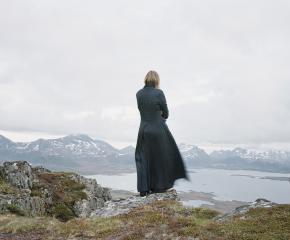
Friday, September 1, 2023

BAROQUE – Out of Darkness

This summer, SMK – National Gallery of Denmark presents a major exhibition on Baroque art, unpacking the history of this time of turmoil in seventeenth-century Western Europe. Several of the exhibits have been brought out of storage especially for this event: now, after several years of conservation work, they are on public display again for the first time in generations.

Drama and draperies. Theatre and the Thirty Years’ War. Sensuality and strong emotions. For the first time ever, SMK presents a comprehensive exhibition specifically about the Baroque.

Setting the mood with draped curtains and Baroque music, the show presents more than eighty works by European artists such as Rembrandt van Rijn, Peter Paul Rubens and Margareta Haverman. All exhibits are part of SMK’s rich collection of European art from the seventeenth century, and many of them have been brought out from the museum’s storage or brought back from Danish castles where they have been stored for generations. After extensive restoration work, they are now on public display for the first time in over 100 years, helping to shed new light on the period.
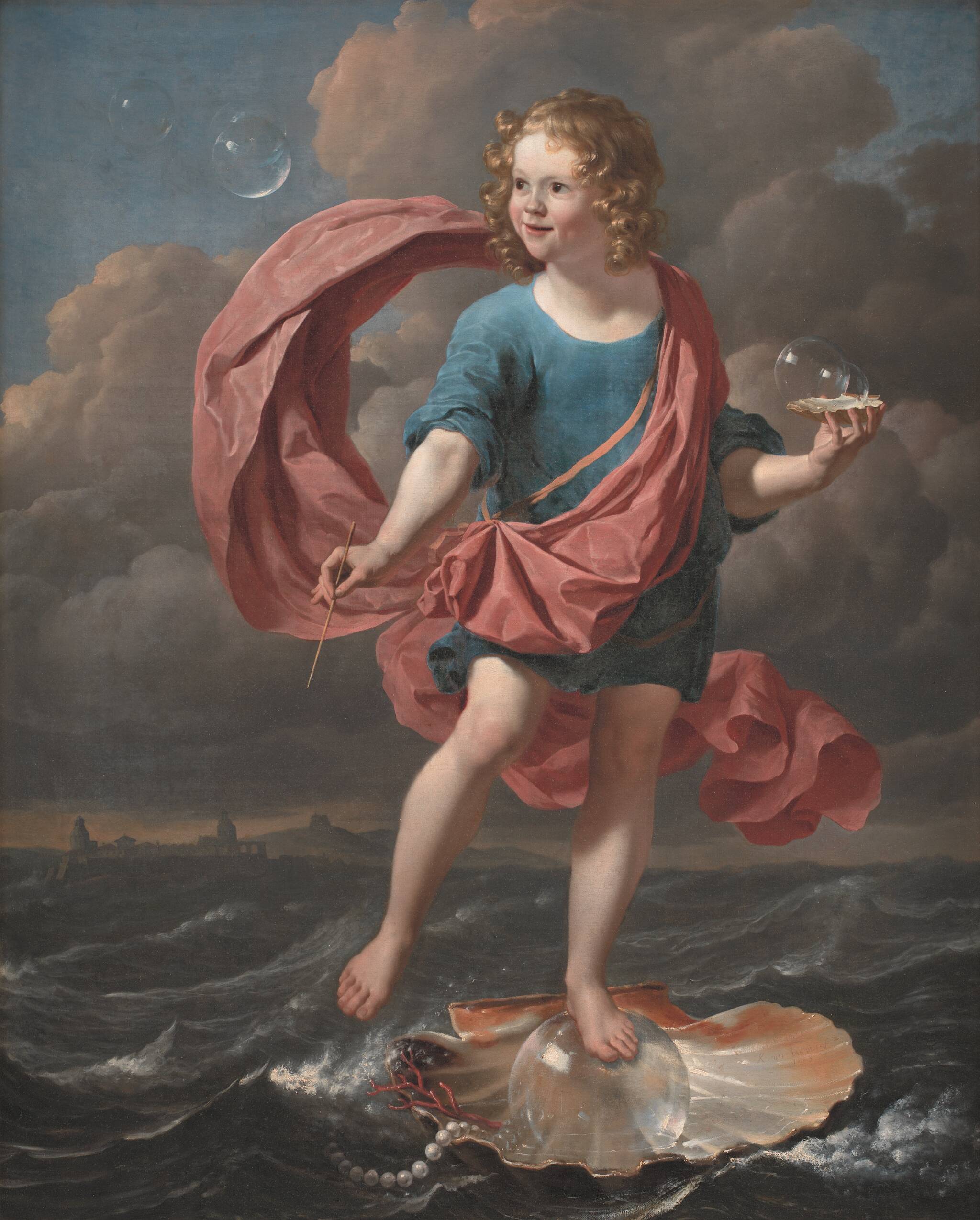
Karel Du Jardin, Boy Blowing Soap Bubbles. Allegory on the Transitoriness and the Brevity of Life, 1663

The exhibition BAROQUE – Out of Darkness focuses on an exuberant and turbulent time. Through paintings, works on paper and plaster casts, visitors will see the Baroque unfold as an age of free-thinking philosophers, alchemy, faith and superstition, witch hunts, war, capitalism and climate challenges

Life is short, death is near

Baroque-era Europe was a time of many crises, but even so the bourgeoisie and the middle class flourished. With their greater prosperity came a greater demand for art – especially art that addressed the viewer directly. Art had to speak to the viewer’s emotions, intellect and moral sense, and the goal of art was not only to delight, move and captivate, but also to teach and even convert.

During the period, the idea of life as a theatre was widely cultivated. We human beings were seen as actors on the great stage of the world, and our main and noblest task in life was to play the part we had been assigned. Our time on earth was considered fleeting: one of the fundamental ideas of the Baroque was that life is short and death is ever near.
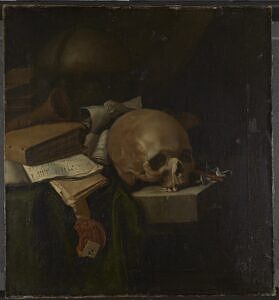
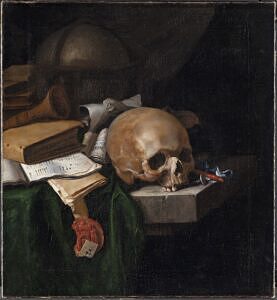
               
Before and after conservation. Pieter van der Willigen created Vanitas Still Life in 1670, and the subsequent 350 years had settled on the scene like a shadow before the SMK conservators brought the work back to its original appearance.

In art, such thinking found expression in so-called vanitas symbols: arrangements of flowers and fruit, hourglasses, skulls, soap bubbles and extinguished candles. These motifs served to remind the viewer of the transience of life.

Drama and symbolism

Baroque artists had a penchant for the theatrical and the dramatic. They worked with contrasts between light and dark, life and death, and Baroque images are full of symbolism.
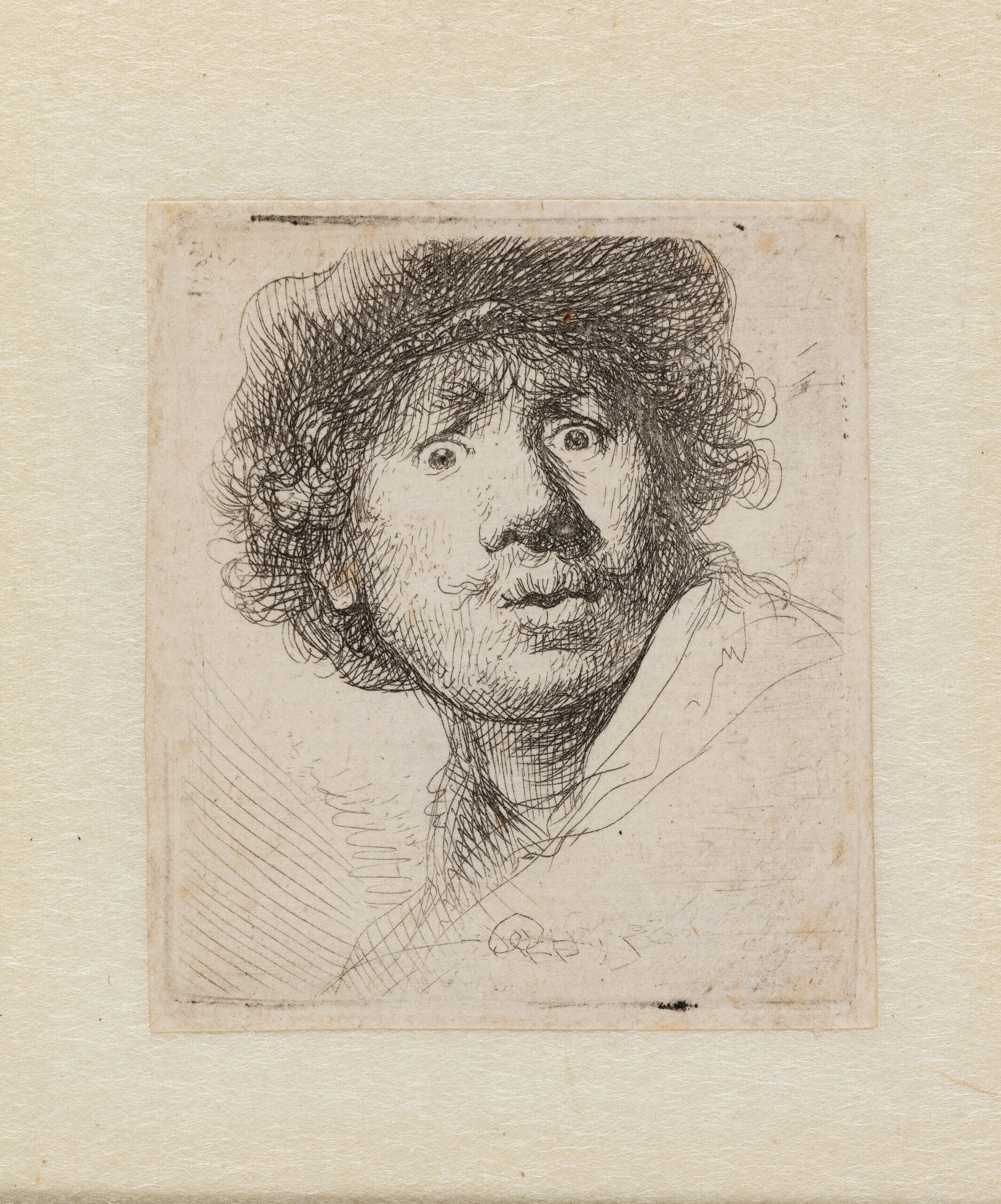
Rembrandt played with various facial expressions in his small self-portraits, taking on the role of an actor to express different emotions. / Rembrandt van Rijn, Rembrandt in a cap, open mouthed and staring, 1630

The exhibition and the accompanying book homes in on the many signs and symbols typical of the era. Through close readings of individual works of art, audiences are presented with different interpretations of the various scenes and motifs. By unfolding the worldview, culture and thinking of the Baroque, the exhibition also makes clear how the period has many similarities with our present time: from depictions of the horrors of war and a pervasive dark realism to the cultivation of all things staged and an enduring fascination with nature, simultaneously seen as threatening and fragile.

Furthermore, the exhibition delves into some of the many technical innovations that arrived during the period and takes a look at the artistic devices used in Baroque painting. For example, some artists began to paint on canvas rather than wooden panels, and one of the characteristic techniques of the age was the so-called chiaroscuro technique, where the most important elements were emphasised by theatrical lighting, leaving other parts in shade. In that way, the narratives emerged out of a deep darkness.


Publication

To coincide with the exhibition, SMK publishes a richly illustrated art book that lets you immerse yourself in SMK’s Baroque paintings and read much more about the period, the artworks and the artists behind them.

The authors are:

  • Mikkel Bogh, former director of SMK
  • Eva de la Fuente Pedersen, curator and senior researcher at SMK
  • Anne Haack Christensen, conservator in charge of research at SMK
  • Troels Filtenborg, senior conservator and senior researcher at SMK

Baroque – 17th-century art in the SMK collections will be published on 22 May 2023. 

Sunday, August 27, 2023

Caravaggio: Four Paintings in Focus and more

 The Art Institute of Chicago ihas announced Among Friends and Rivals: Caravaggio in Rome, on view from September 8, 2023 through December 31, 2023. This intimate exhibition will include two rarely loaned Caravaggio paintings alongside works from the Art Institute’s collection by some of his closest friends and rivals from the 17th century Roman art scene. 


With only seven Caravaggio paintings in collections in the United States, this is a rare opportunity to view the innovation and influence of Caravaggio’s work in person. Two of the paintings within this exhibition—The Cardsharps, on loan from the Kimbell Art Museum, and Martha and Mary Magdalene, on loan from the Detroit Institute of Arts—showcase Caravaggio’s ability to capture drama through gesture, light, and composition.

Born in Milan in 1571, Michelangelo Merisi da Caravaggio entered the art scene in Rome around 1592 and over a short career developed an original and captivating style that attracted eminent patrons and passionate followers including Giovanni Baglione, Bartolomeo Manfredi, and Francesca Buoneri. 

“Caravaggio’s work invites slow looking to take in the deliberate details of the narratives within familiar scenes of drinking and gambling, or of saints and holy figures,” said Rebecca Long, Patrick G. and Shirley W. Ryan Curator, Painting and Sculpture of Europe. “He was a true storyteller whose paintings are most striking in person.” 

Caravaggio’s legacy and influence are seen in the work of many other artists working in Rome. Three paintings from the Art Institute’s collection round out this focused exhibition including one by Caravaggio’s great rival, Baglione, and two of his closest associates and followers, Manfredi and Buoneri.  

Among Friends and Rivals: Caravaggio in Rome is curated by Rebecca Long, Patrick G. and Shirley W. Ryan Curator, Painting and Sculpture of Europe.


The Toledo Museum of Art (TMA) will bring to light Caravaggio’s far-reaching impact with “The Brilliance of Caravaggio: Four Paintings in Focus,” on view Jan. 20-April 14, 2024. The landmark exhibition pairs four theatrical paintings by the renowned Italian artist with four works by Italian, French, Dutch and Spanish artists in TMA’s collection who found inspiration in his technique and subject matter. The exhibition assembles four Caravaggio paintings in the United States for the first time in more than a decade and marks just the second showing ever of the artist’s work at the Toledo Museum of Art.

       “The Toledo Museum of Art endeavors to present the full scope of art history through its exhibitions,” said Adam Levine, the Toledo Museum of Art’s Edward Drummond and Florence Scott Libbey director. “‘The Brilliance of Caravaggio: Four Paintings in Focus’ brings European masterworks to the forefront, illuminates Caravaggio’s impact on a succeeding generation of artists and introduces our audience to a dramatic aesthetic that has relevance today.”

       Caravaggio’s genre scenes and paintings of Christian saints embody the timelessness of human experience. Themes of threat, seduction, love, deceit and religion are prevalent in his work and align with modern-day experiences.


Michelangelo Merisi da Caravaggio. The Cardsharps, about 1595. Kimbell Art Museum, Fort Worth, Texas.

The Cardsharps” (ca. 1595), one of Caravaggio’s earliest and most highly regarded endeavors, presents players engaged in a game of primero — a precursor of poker. In the painting, players exchange deceptive glances and put marked cards into play in a dramatic scene that signals trickery and loss of innocence. The painting caught the attention of Cardinal Francesco Maria del Monte, who purchased the artwork, welcomed Caravaggio to live in his palace and facilitated his introduction to elite Roman society.

       “The Cardsharps” inspired other artists to create works with related themes. 


Valentin de Boulogne’s “Fortune-Teller with Soldiers” (ca. 1620) depicts a loss of human innocence that starts with a child who steals something from a man’s cloak. That man, also a thief, steals from a Roma woman. The only presumably innocent man in the painting has his fortune told — and his ring stolen — by a fortune teller.

       Secular ideas continue in 


Caravaggio’s “The Musicians” (1597), one of his most intriguing paintings. Youths dressed in classical attire play instruments and practice a love song. One of the figures likely is a self-portrait of Caravaggio. Music was a popular subject of that time, and in conjunction with the presence of Cupid, the rendering is to be understood as an allegory of Music and Love


That theme continues in Jusepe de Ribera’s “Portrait of a Musician” (1638). Ribera, who was born in Spain but spent most of his life in Italy, patterned much of his work after Caravaggio’s style, mirroring his realism and dramatic contrasts between light and shadows.

       Caravaggio also included Christian saints in his work. His first religious painting, 


“Saint Francis of Assisi in Ecstasy” (ca. 1595-96), presents the 13th-century saint’s vision of his miraculously receiving the stigmata, the wounds left in Christ’s body by the Crucifixion. Although the scene was popular among painters of that time, Caravaggio’s work marked a departure from the norm with a more intimate scene.

       Heavily influenced by Caravaggio, Dutch painter Hendrick ter Brugghen spent 10 years in Italy and returned to his native Utrecht, the Netherlands with a style characterized by dramatic contrasts of light and shade. That influence is apparent in “


The Supper at Emmaus” (1616), the earliest known painting after the Dutch artist’s return home.

       Caravaggio manipulates light to characterize the morality of two sisters in “Martha and Mary Magdalene.” The painting depicts a modestly dressed Martha sharing Jesus Christ’s miracles with her sister Mary. Mary’s divine glow signals her conversion from a life of sin to one that aligns with Christ’s teachings.


       Artemisia Gentileschi’s “Lot and his Daughters” (ca. 1636-1638) combines themes of faith and deceit with a scene from the Book of Genesis when Lot’s wife disobeys God’s command not to look back at the burning city of Sodom and is turned to a pillar of salt. Lot’s two daughters use drunkenness and incest to continue the human race after concluding that they are the last three people on Earth. Gentileschi worked throughout Italy in Rome, Florence and Venice and painted this work in TMA’s collection in Naples.

       “The Brilliance of Caravaggio” is curated by Lawrence W. Nichols, the Toledo Museum of Art’s curator emeritus and former William Hutton senior curator of European and American paintings and sculpture before 1900. He served the Museum for nearly three decades before retiring in June 2021. During his time at TMA, Nichols oversaw the acquisition of approximately 50 works of art and organized more than 25 special exhibitions. Among them were several international exhibitions of Dutch and Flemish art, including “Frans Hals Portraits: A Family Reunion” (2018), which traveled to Brussels and Paris; “Rembrandt: What Was He Thinking?” (2006); and “Hendrick Goltzius: Prints, Drawings and Paintings” (2003), which also appeared in Amsterdam and New York. His organization of “The Brilliance of Caravaggio: Four Paintings in Focus” was five years in the making.

       “It is both an honor and a joy to present visitors, new and frequent, with these gems from the brush of one of the greatest painters who ever lived,” said Nichols. “The extremely rare opportunity to dwell with the spellbinding art of Caravaggio will simultaneously afford the Toledo Museum of Art the occasion to showcase the Museum’s extensive holdings of paintings by so-called Caravaggisti, artists who sought to emulate his compelling realism.”

       “The Brilliance of Caravaggio: Four Paintings in Focus” is organized by the Toledo Museum of Art. The Caravaggio paintings on view are on loan from the Kimbell Art Museum (Fort Worth, Texas), the Wadsworth Atheneum Museum of Art (Hartford, Connecticut), The Metropolitan Museum of Art (New York) and the Detroit Institute of Art (Detroit). Admission to “The Brilliance of Caravaggio” at the Toledo Museum of Art is $10.

Tuesday, August 8, 2023

CASPAR DAVID FRIEDRICH. Art for a New Age


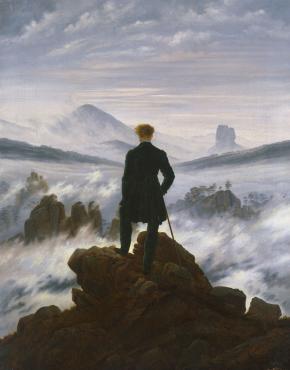
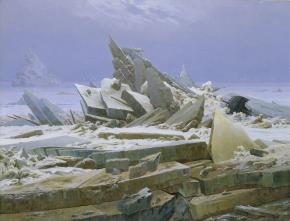
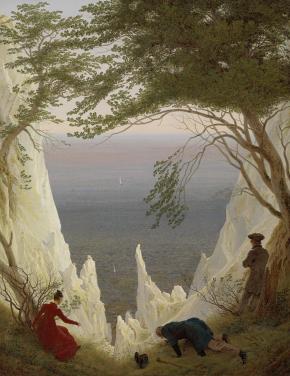
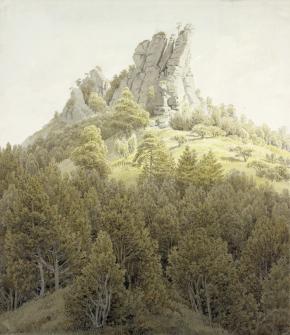
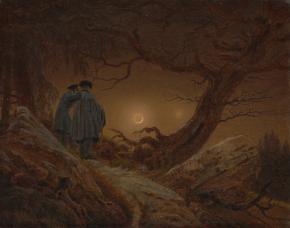
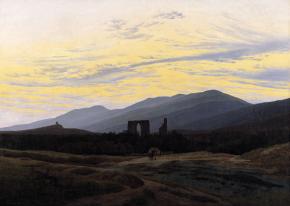
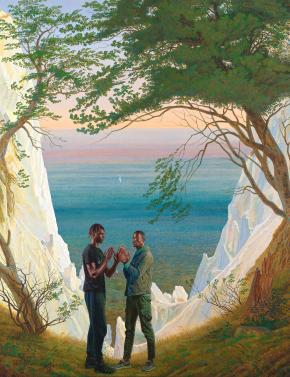
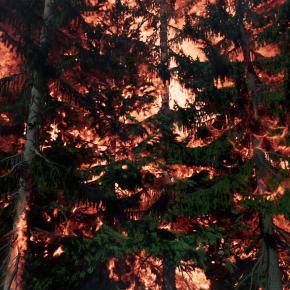
The Hamburger Kunsthalle will mark the 250th anniversary of the birth of Caspar David Friedrich (1774 Greifswald–1840 Dresden) with a celebratory exhibition. CASPAR DAVID FRIEDRICH. Art for a New Age, to run from 15 December 2023 until 1 April 2024, will be the biggest review of work by the exceptional Romantic painter for many years. It centres on a themed retrospective with more than 60 paintings, among them many major iconic works, and about 100 drawings. Also featured are selected works by Friedrich’s colleagues, notably Carl Blechen, Carl Gustav Carus, Johan Christian Dahl, August Heinrich and Georg Friedrich Kersting. The relationship between people and nature, which found novel expression in Friedrich’s landscapes, is a key thematic strand. His treatment of this subject was an essential factor, during the first third of the 19th century, towards transforming landscape painting into »art for a new age«. The deep fascination unleashed by these works has been enduring and they lend themselves with great facility to issues of now-time, as demonstrated by a second, separate section of the exhibition that brings together responses to Friedrich in contemporary art. In contributions ranging from video and photography to installations, some 20 artists working across a variety of genres and media, both here in Germany and abroad, set out to explore the Romantic era, its attitude to nature, and the art of Caspar David Friedrich. The participants include Elina Brotherus, Julian Charrière, David Claerbout, Olafur Eliasson, Alex Grein, Hiroyuki Masuyama, Mariele Neudecker, Ulrike Rosenbach, Susan Schuppli, Santeri Tuori and Kehinde Wiley.


Superb and extremely rare loans of paintings by Friedrich, among them Chalk Cliffs on Rügen (1818), The Monk by the Sea (1808–10) and Two Men Contemplating the Moon (1819/20), will be on show alongside works from the holdings of the Hamburger Kunsthalle such as Wanderer Above the Sea of Fog (c.1817) and The Sea of Ice (1823/24). These works are Romantic icons.


Friedrich applied his painterly skills to probing the ability of a landscape to express questions of his time, to tapping the potential associated with representations of nature and to finding ways to communicate with the viewer. His output of drawings was likewise prolific and the exhibition devotes special attention to these. Spending time in a natural outdoor environment in order to produce art was a distinctive characteristic of Romantic practice and essential to Friedrich’s œuvre.


The unique atmosphere that speaks to us from Friedrich’s works with their powerful motifs and compositions has inspired many artists to enter into a dialogue with their Romantic colleague, especially given the current relevance of ecological issues. The tension between the gradual destruction of the environment and a yearning for »untouched nature« has been an unbroken force from the Romantic age down to our own times. In Friedrich’s day, however, the Romantic perception of nature carried national connotations, whereas today’s artists approach the natural world and climate change from a global perspective. In this spirit, the exhibition also embraces recent work devoted to the darker sides and absences in Romantic art and later reactions to it. Colonialism and its impact on people and natural resources are as much a theme here as the Western, hegemonial concept of nature and its expressions in art. The exhibits include imposing adaptations of Friedrich by the American artist Kehinde Wiley (*1977), which reflect critically on an art canon informed by white Western input.


The exhibition at the Hamburger Kunsthalle is the prelude to the Caspar David Friedrich Festival. To celebrate the anniversary year, the Alte Nationalgalerie/Staatliche Museen zu Berlin and the Staatliche Kunstsammlungen Dresden will each follow suit with shows on their own themes. The three museums boast the world’s biggest collections of works by Friedrich. A reciprocal flow of substantial loans will permit unprecedented displays on different aspects of his œuvre. These exhibitions to mark the 250th anniversary of Caspar David Friedrich’s birth enjoy the patronage of Germany’s president Frank-Walter Steinmeier.

To complement the Festival, the Hamburger Kunsthalle has teamed up with the Alte Nationalgalerie/Staatliche Museen zu Berlin and the Staatliche Kunstsammlungen Dresden to set up a Web portal with curated multi-media content around Friedrich’s art as part of a project called Datenraum Kultur. This is one of several flagship projects set up under the Federal government’s Digital Strategy to facilitate digital networking between cultural establishments and to promote the independent exchange of arts-related data. Its development has been entrusted to the Deutsche Akademie der Technikwissenschaften e.V. (acatech), the Ministry of Culture and Media in the Free and Hanseatic City of Hamburg and the Fraunhofer Institute for Applied Information Technology (FIT).


Curator and project manager: Dr. Markus Bertsch, Head of the 19th Century Collection

External curator: Prof. Johannes Grave, Friedrich-Schiller-University Jena

Curatorial assistant: Ruth Stamm

Coordinator for the Caspar David Friedrich project and Web portal: Petra Bassen

Datenraum Kultur / Web portal Caspar David Friedrich: Christian Auffarth, Clara Blomeyer, Dr. Katharina Hoins


The exhibition has been organised in partnership with: Friedrich-Schiller-University Jena


Principal exhibition sponsors: Hapag-Lloyd, Hapag-Lloyd Foundation

Exhibition sponsor: Else Schnabel


The project Datenraum Kultur is funded by the Federal Government Commissioner for Culture and the Media.


Haspa-Galerie: The Hamburger Sparkasse has been committed for many years to supporting the Hamburger Kunsthalle. As a token of gratitude for this generosity, the second upper level of the Gallery for Contemporary Art, where the contemporary responses to Friedrich will be on show, has been named the »Haspa-Galerie«.


Cultural partners: NDR Kultur, Ministry of Culture and Media in the Free and Hanseatic City of Hamburg

Media partner: Hamburger Abendblatt


Tuesday, August 1, 2023

Freeman’s August 23 Art and Design auction

 Freeman’s August 23 Art and Design auction offers collectors a dynamic selection of modern and contemporary furniture, painting, prints, sculpture, and design objects.

“We’re delighted to bring such a distinguished selection of work to market,” says Lauren Colavita, Head of Sale for Art offerings. “With sculpture and ceramics by Betty Woodman and Dale Chihuly to paintings and prints 

by Diane Burko 

and Alexander Calder, there’s something for everyone across many collecting categories.”

The sale’s leading lots include an early and important sculptural bull by Peter Voulkos; 

a large Persian basket rendered in hand-blown class by Dale Chihuly; 


and Day Barrette, an abstract canvas by the multidisciplinary artist and musician Don Van Vliet.


PRINTS AND MULTIPLES FROM THE 20TH CENTURY’S FINEST

Art and Design continues its track record of bringing distinguished prints and multiples to market in Freeman’s upcoming sale. The auction presents a selection of more than a dozen prints and multiples from such 20th-century greats as Joan Miró, Pablo Picasso, Nan Goldin, and Henri Matisse.

Among the sale’s print selection is 


Frank Stella’s Steller’s Albatross from the artist’s 1970s Exotic Bird series. Made concurrently with sculptures that explored the same subject matter, the works mark a critical turning ​​​​​​​in the celebrated artist’s career. 


Botticelli Drawings

 
Legion of Honor 

November 19, 2023–February 11, 2024


A quintessential artist of the Italian Renaissance, Alessandro di Mariano di Vanni Filipepi—better known as Sandro Botticelli—has had an enduring influence on contemporary culture, from art and design to dance, music, fashion, and film. Known for some of the world’s greatest paintings, from La Primavera (1477–1482) to the Birth of Venus (1485–1486), Botticelli has inspired the likes of artists Andy Warhol, Jean Paul Gaultier, and Cindy Sherman, among others. He was an expert draftsman, creating drawings that underlie and animate his greatest compositions. Although key to the aesthetic driving his continued relevance and popularity, there has been no major exhibition dedicated to Botticelli’s art of drawing—until now. 

Reuniting rare works from across the United States and Europe, Botticelli Drawings—presented exclusively at the Legion of Honor—is the first exhibition to explore the central role that drawing played in Botticelli’s art and workshop practice. Anchored by extensive research by Furio Rinaldi, curator of prints and drawings at the Fine Arts Museums of San Francisco, the exhibition unveils five newly attributed drawings alongside nearly 60 works from 42 lending institutions. 

Pairing Botticelli’s graphic output as a whole from the Gallerie degli Uffizi, Florence; British Museum, London; and The Morgan Library & Museum, New York alongside key paintings on loan from The National Gallery, London; the Galleria Borghese, Rome; and the Musée du Louvre, Paris, Botticelli Drawings offers a rare opportunity to explore the artistic process behind such renowned works as The Adoration of the Magi (1475–1476), reunited here with three preparatory designs. 


“Botticelli’s paintings are world-renowned for their grace and exquisite line, but the relationship between his drawings and paintings has never been fully investigated,” remarked Thomas P. Campbell, Director and CEO of the Fine Arts Museums of San Francisco. “Now, in this stunning and groundbreaking exhibition, the majority of Botticelli’s graphic output takes us below the surface of the paintings to illuminate the artist’s creative process, from conception and development to final execution.”


The art of drawing underwent major functional changes and technical advancements in 15th-century Florence. Among the first artists to make draftsmanship central to his aesthetic and design practice, Botticelli developed a new visual style for the era, elevating the line as the primary force behind his figures and their rhythmic movement. Striking a delicate balance between realistically portraying individual subjects and abstracting their features, Botticelli created portraits that have endured through centuries as potent symbols of beauty. A prolific portraitist, he made a practice of drawing from life, one that would become an artistic standard in Renaissance Florence and beyond. Yet despite the centrality of drawing to Botticelli’s work, less than three dozen confirmed drawings by the artist survive today. The hardships he experienced later in life, including penury and the decline of his workshop business, may have led to the loss of the vast majority of Botticelli’s graphic output.

Botticelli Drawings features 27 drawings by the artist, exploring the medium as his primary form of artistic expression. The incredible rarity and fragility of these works precludes frequent travel, and many are leaving their lending institutions for the very first time in modern history solely for this exhibition. The result of original, exacting research, the exhibition unveils five newly attributed drawings by Botticelli. The preparatory drawing for the Louvre’s The Virgin and Child with the Young Saint John the Baptist (ca. 1468–1480), newly attributed, is reunited here with the resulting painting. Other unprecedented pairings, such as the brush drawings on linen—divided between the Fitzwilliam Museum in Cambridge, England, and the Morgan Library & Museum in New York—with the resulting painting of The Adoration of the Magi (1475–1476, Uffizi), offer insight into the artist's transformative method of composition and design process. Departing from the standard interpretation of Botticelli’s later years as a period of decline marred by successive political upheavals in the wake of the Medici’s ouster, the exhibition rethinks the artist’s works from the 1490s and 1500s as one of his most experimental phases yet. The Museums’ presentation will offer a new lens through which to consider the artist’s unconventional stylistic evolution toward linear abstraction, resistance to perspective, and anti-naturalism.


Botticelli Drawings reunites this beloved artist’s graphic output as a whole for the very first time, a challenging endeavor given the rarity and fragility of these works,” noted Furio Rinaldi. “42 public and private institutions have staunchly supported this exhibition with unique loans, contributing drawings from their collections, the majority of which have never before left their lending institutions. This exhibition offers a truly unique opportunity to see and understand Botticelli’s thought and design process leading to the making of his memorable masterpieces.” 


The exhibition is accompanied by a richly illustrated catalog (copublished by the Fine Arts Museums of San Francisco and Yale University Press) by organizing curator Furio Rinaldi, offering the first systematic study of Botticelli’s graphic output and the underdrawing of his paintings. Botticelli Drawings is a celebration of the artist’s quest for the perfect line, expressing the centrality of draftsmanship in the history of human creativity. 


Images


  1. Sandro Botticelli and Workshop. Virgin and Child with Saint John the Baptist and Six Singing Angels, ca. 1490. Tempera on panel, diameter: 67 in. (170 cm). Galleria Borghese, Rome, inv. 348 Courtesy Borghese Gallery. Photographer Mauro Coen

  1. Sandro Botticelli. "Study of the head of a woman in profile ("La Bella Simonetta") (recto); Study of the figure of Minerva (verso)," ca. 1485. Metalpoint, white gouache on light-brown prepared paper (recto), black chalk, pen and brown ink, brown wash, white gouache (verso). 13 7/16 x 9 1/16 in. (34.2 x 23 cm.) The Ashmolean Museum, University of Oxford. Bequeather by Francis Douce, 1834. ©️ Ashmolean Museum


  1. Sandro Botticelli. The Virgin and Child with the Young Saint John the Baptist (‘Madonna of the Rose Garden’), ca. 1468. Tempera and gold on poplar panel, 35 3/4 x 26 3/8 in. (90.7 x 67 cm).Musée du Louvre, Département des Peintures, inv. 286 / L 3936 © RMN-Grand Palais. Photo: Tony Querrec

  1. Sandro Botticelli. “Two standing men, one draped (recto), A standing young man with his arm raised (verso),” silverpoint, heightened with white gouache, on yellow-ocher prepared paper (recto and verso), inscribed ‘Piero Pollaiuolo’ (lower right, recto), 7 3/4 x 10 3/8 in. (19.8 x 26.5 cm) Gabinetto Disegni e Stampe degli Uffizi, Florence, inv. 391E R-V

  1. Francesco Rosselli based on a design by Sandro Botticelli. The Assumption of the Virgin, ca. 1493. Broad manner engraving, two separate sheets of medium-thin laid paper, not joined, 32 ⅛ x 21 13/16 in. (81. 6 x 55.4 cm) Museum of Fine Arts Boston, Julia Bradford Huntington James Fund, 16.486.1-2


  1. Sandro Botticelli. The Annunciation, ca. 1490-1495. Oil, tempera, gold lead on walnut panel. Framed: 31 1/4 x 36 7/8 x 6 5/8 in. (79.299 x 93.726 x 16.8 cm). 19 1/2 x 24 3/8 in. (49.5 x 61.9 cm) Lent by Glasgow Life (Glasgow Museums) on behalf of Glasgow City Council, Archibald McLellan Collection, purchased, 1856.

  1. Sandro Botticelli. "The Devout Jews at Pentecost," ca. 1505. Black chalk, pen and brown ink, brown wash, highlighted with white gouache on paper. 9 1/8 x 14 3/8 in. (23.1 x 36.5 cm.) Hessisches Landesmuseum Darmstadt, Photograph by Wolfgang Fuhrmannek.

  1. Sandro Botticelli. Judith with the Head of Holofernes, ca. 1497-1500. Tempera and oil on panel. 14 3/8 x 7 7/8 x 2 3/4 in., (36.5 x 20 x 7 cm.) Rijksmuseum. J.W.E. vom Rath Bequest, Amsterdam. Image courtesy Rijksmuseum


Exhibition Organization 

Botticelli Drawings is organized by the Fine Arts Museums of San Francisco.


About Sandro Botticelli 

One of the world’s most famous and beloved artists, Alessandro di Mariano di Vanni Filipepi (Florence, ca. 1445–1510), known as Sandro Botticelli, epitomizes the flowering of the Renaissance in 15th-century Italy. Botticelli established his reputation and prosperous business from the late 1460s, as painter of portraits and religious images (notably, Madonnas). Yet it is his frescoes in the Vatican and a series of mythological pictures in the 1480s, distinguished by narrative ambiguity and sensual appeal—from La Primavera to The Birth of Venus—that ignited Botticelli’s later revival and ensured his continued popularity today. The quest for beauty and poetic ideas that underlie his art moved Botticelli to the highest hierarchies of the Medici family, which unofficially ruled Florence at the time. Much of his work is imbued with the philosophic ideas of the Florentine neo-Platonists surrounding Lorenzo the Magnificent, his most prominent patron, and later by the feverish spirituality of the Dominican friar Girolamo Savonarola, who took Florence by storm preaching against the rampant corruption of the Church.