Thursday, December 7, 2017

Bosch to Bloemaert: Early Netherlandish Drawings from the Museum Boijmans Van Beuningen, Rotterdam


National Gallery of Art, Washington
October 8, 2017, through January 7, 2018
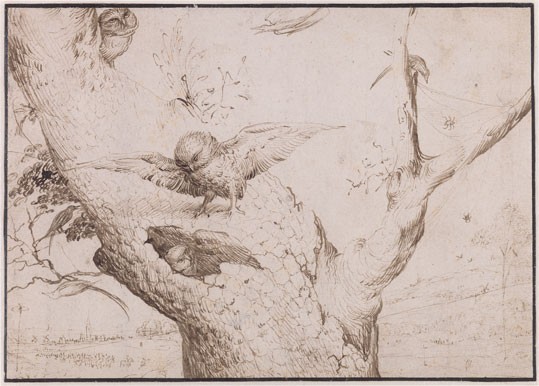


Hieronymus Bosch, The Owl's Nest, c. 1505/1515, pen and brown ink on paper, laid down. Museum Boijmans Van Beuningen, Rotterdam
  • Hieronymus Bosch, The Owl's Nest, c. 1505/1515
    pen and brown ink on paper, laid down
    Museum Boijmans Van Beuningen, Rotterdam
Rotterdam's historic Museum Boijmans Van Beuningen holds one of the finest collections of Netherlandish master drawings. In a special presentation of this collection at the National Gallery of Art, Washington, some 100 works explore the many functions of drawings, from preparatory studies for paintings and designs for prints to finished works of art. On view from October 8, 2017, through January 7, 2018, Bosch to Bloemaert: Early Netherlandish Drawings from the Museum Boijmans Van Beuningen, Rotterdam includes landscapes, portraits, biblical scenes, and historical and mythological scenes that will be exhibited in the United States only in Washington.


  • Hendrick Goltzius, The Sense of Sight from the series The Five Senses, c. 1595/1596. Black chalk, pen and brown ink, brown wash, and red chalk, heightened with white and indented, partially overdrawn in graphite, overall: 15.9 12.4 cm. Museum Boijmans Van Beuningen, Rotterdam.

"This exhibition presents a stunning selection of Netherlandish drawings," said Earl A. Powell III, director, National Gallery of Art, Washington. "The National Gallery of Art has a nearly 50-year tradition of presenting drawing exhibitions that focus on specific treasures from other collections around the world, and we are delighted to be able to introduce our visitors to this selection of rare, innovative, and distinctive sheets from this distinguished Rotterdam institution. As the final venue for the exhibition's tour, we are delighted to be the only U.S. museum presenting these works to our millions of visitors in the nation's capital."

Organization

The exhibition is organized by the Museum Boijmans Van Beuningen, Rotterdam.
The exhibition premiered at the Fondation Custodia, Paris, from March 22 through June 22, 2014, and traveled to the Museum Boijmans Van Beuningen, Rotterdam, where it was presented in three parts from November 1, 2014, through July 26, 2015.

About the Exhibition

While the exhibition features the remarkable skill and virtuosity of masters such as Hieronymus Bosch, Abraham Bloemaert, Pieter Bruegel the Elder, and Hendrick Goltzius, several key examples also reveal the variety of functions served by drawings across the 15th through 17th centuries.
In the 15th-century artist's workshop, meticulous studies recorded compositions and motifs for reuse in later works. Several drawings on view likely served this purpose, including a newly discovered sheet of the crucifixion dating from around 1440 to 1450, from the workshop of Jan van Eyck (c. 1390–1441). A selection of 16th-century drawings includes a number of preliminary studies, such as a rare complete set of preparatory drawings for a print series by Hans Bol (1534–1593). Two very different figure studies for a painting by Abraham Bloemaert (1566-1651) offer a glimpse into artistic practices in the early 17th century.

http://collectie.boijmans.nl/images/900x450_90680.jpg

Pieter Bruegel Mountain Landscape with a Mule Caravan, c. 1553/1555pen and dark brown ink with traces of red chalk and blue inkoverall: 21.7 ×30.2 cm (8 9/16 ×11 7/8 in.)framed: 43.5 ×57.5 cm (17 1/8 ×22 5/8 in.)Museum Boijmans Van Beuningen, Rotterdam

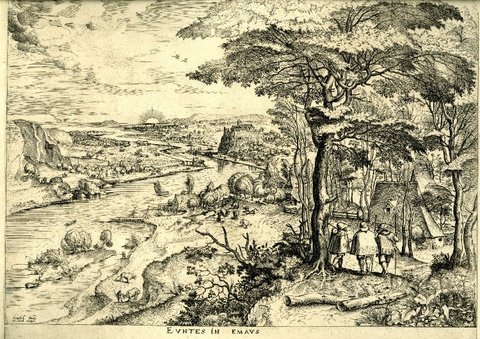
https://apps.carleton.edu/reason_package/reason_4.0/www/sized_images_custom/1128078/32927a91c1990ca04284975c44bd47bb.jpg

Pieter Bruegel Mountain Landscape with the Journey to Emmaus, c. 1560pen and brush and gray and brown ink with traces of black chalkoverall: 24.4 ×37.1 cm (9 5/8 ×14 5/8 in.)framed: 43.5 ×57.5 cm (17 1/8 ×22 5/8 in.)Museum Boijmans Van Beuningen, Rotterdam

http://www.pieterbruegel.net/sites/default/files/styles/node_display/public/54_View_of_Reggio_di_Calabria.jpg?itok=pW93Ouq_

Pieter Bruegel View of Reggio di Calabria, c. 1560 pen and brown ink with brown and gray wash (added later)overall: 15.6 ×24.2 cm (6 1/8 ×9 1/2 in.)framed: 43.5 ×57.5 cm (17 1/8 ×22 5/8 in.)Museum Boijmans Van Beuningen, Rotterdam


The exhibition also traces the major artistic developments of the time. Among the most important was the emergence of landscape as a genre, a movement marked in the exhibition by several panoramic mountain views by the great master Pieter Bruegel the Elder (c. 1525/1530–1569).

Studies of local and faraway scenes by later artists include

http://collectie.boijmans.nl/images/900x450_90661.jpg

Flooded Valley with Trees by Pieter's son, Jan Breughel (1568–1625),
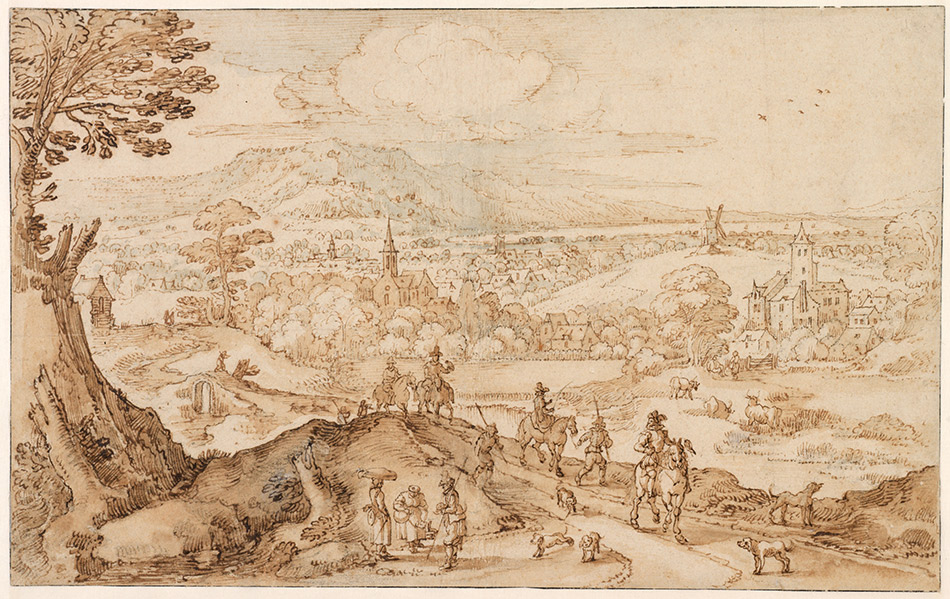
https://patrons.org.es/wp-content/uploads/2017/10/Joos-de-Momper_3957-093_950pz_w.jpg

 and Landscape with Horsemen out Hawking, by Joos de Momper (1564–1635).

This period reflects a shift in attitudes toward drawings themselves, as both artists and collectors began to view them as autonomous works of art.

Hieronymus Bosch, The Owl's Nest, c. 1505/1515, pen and brown ink on paper, laid down. Museum Boijmans Van Beuningen, Rotterdam

  • Hieronymus Bosch, The Owl's Nest, c. 1505/1515
    pen and brown ink on paper, laid down
    Museum Boijmans Van Beuningen, Rotterdam

The Owl's Nest (c. 1505/1515) by Hieronymus Bosch (c. 1450–1516) is a spectacular early example of this trend.

Decades later, the innovative painter and printmaker Hendrick Goltzius (1558-1617) made independent drawings in a variety of media. The exhibition includes 14 works by Goltzius, drawings that range from tiny metalpoint portraits to elaborate pen studies. His work also exemplifies the increasingly international character of Netherlandish art, as Goltzius absorbed the influence of the classical and Renaissance works he saw in Italy and adapted the sophisticated style his counterparts brought home from the imperial court in Prague.

Curators and Catalog

The exhibition is curated by Albert J. Elen, senior curator of drawings and prints, Museum Boijmans Van Beuningen, Rotterdam. Stacey Sell, associate curator, department of old master drawings, National Gallery of Art, Washington, is the coordinating curator for the presentation in Washington.
Published by the Fondation Custodia and Uitgeverij THOTH, Bussum, the fully illustrated exhibition catalog is the result of a long-term research project into this unique collection of drawings at the Museum Boijmans Van Beuningen. Some 400 old master drawings have been cataloged in recent years, and a selection of 140 of the finest works is presented in full-page format and color in this catalog, together with explanatory texts and supporting illustrations. The 296-page catalog will be available in softcover.
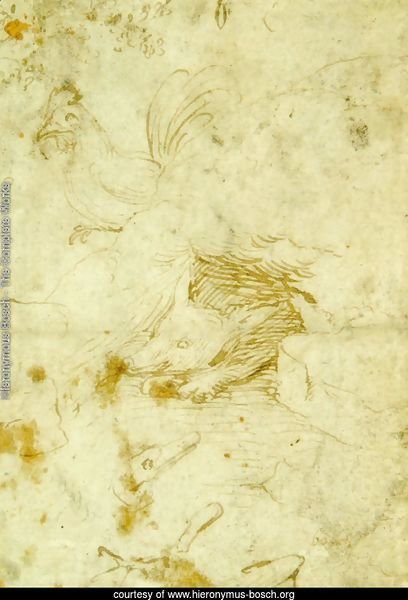
https://www.hieronymus-bosch.org/thumbnail/393000/393961/mini_large/Fox-And-Rooster.jpg?ts=1459229076

Hieronymus Bosch Spinster and Old Woman (recto), c. 1480/1490pen and brown and gray ink over all: 12 ×8.5 cm (4 3/4 ×3 3/8 in.)framed: 57.5 ×43.5 cm (22 5/8 ×17 1/8 in.)Museum Boijmans Van Beuningen, Rotterdam


https://www.hieronymus-bosch.org/thumbnail/393000/393961/mini_large/Fox-And-Rooster.jpg?ts=1459229076

Hieronymus Bosch Fox and Rooster (verso), c. 1480/1490pen and brown and gray inkoverall: 12 ×8.5 cm (4 3/4 ×3 3/8 in.)framed: 57.5 ×43.5 cm (22 5/8 ×17 1/8 in.)Museum Boijmans Van Beuningen, Rotterdam

https://images.metmuseum.org/CRDImages/dp/web-large/DP819144.jpg

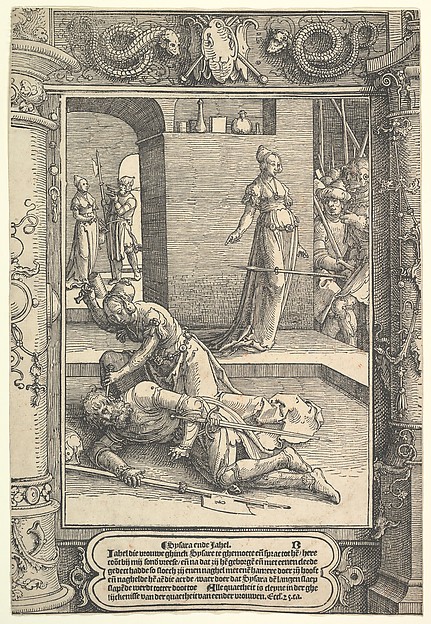
Lucas van Leyden JaĆ«l Killing Sisera, c. 1520/1525 pen and brown ink overall: 27.1 ×20.3 cm (10 11/16 ×8 in.)framed: 57.5 ×43.5 cm (22 5/8 ×17 1/8 in.)Museum Boijmans Van Beuningen, Rotterdam
https://i.pinimg.com/originals/35/78/df/3578df32d19e03e85fa92ae9d551bd53.jpg

Jan Swart van Groningen The Elders Spying on Susanna, c. 1530/1550pen and black and brown ink with brown washoverall: 26.3 ×19.8 cm (10 3/8 ×7 13/16 in.)framed: 57.5 ×43.5 cm (22 5/8 ×17 1/8 in.)Museum Boijmans Van Beuningen, Rotterdam

https://upload.wikimedia.org/wikipedia/commons/d/d7/Hans_Bol_-_The_month_January_%28Aquarius%29.jpg

Hans Bol January (Aquarius) from the series The Twelve Months, c. 1580/1581pen and brown ink with brown wash, on a circular piece of paper, laid downdiameter: 14 cm (5 1/2 in.)framed: 43.5 ×57.5 cm (17 1/8 ×22 5/8 in.)Museum Boijmans Van Beuningen, Rotterdam
https://upload.wikimedia.org/wikipedia/commons/thumb/9/98/Hans_Bol_-_The_month_February_%28Pisces%29.jpg/766px-Hans_Bol_-_The_month_February_%28Pisces%29.jpg

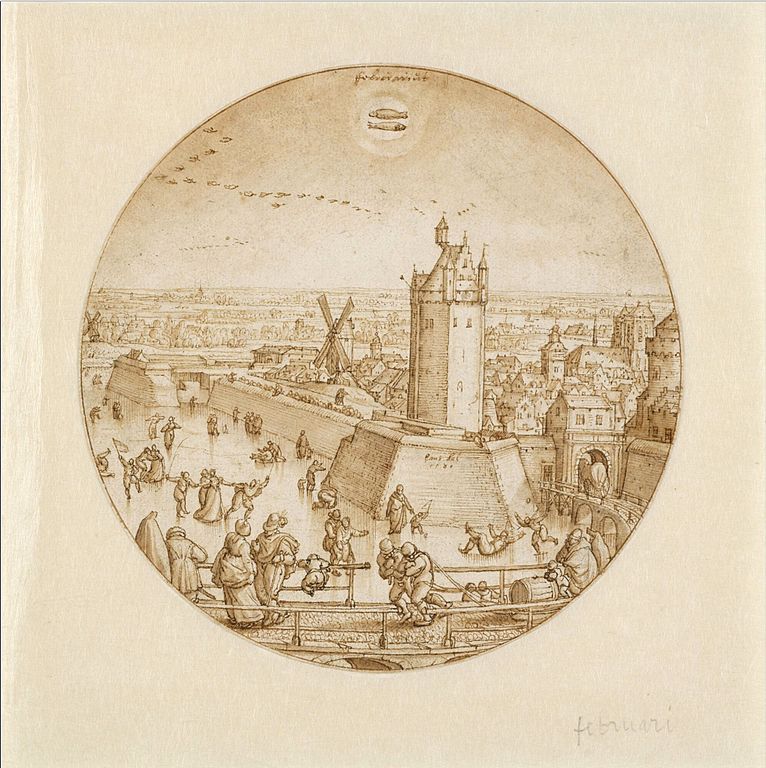
Hans Bol February (Pisces) from the series The Twelve Months, c. 1580/1581pen and brown ink with brown wash, on a circular piece of paper, laid downdiameter: 14 cm (5 1/2 in.)framed: 43.5 ×57.5 cm (17 1/8 ×22 5/8 in.)Museum Boijmans Van Beuningen, Rotterdam

https://upload.wikimedia.org/wikipedia/commons/thumb/a/af/Hans_Bol_-_The_Month_March_%28Aries%29.jpg/762px-Hans_Bol_-_The_Month_March_%28Aries%29.jpg

Hans Bol March (Aries) from the series The Twelve Months, c. 1580/1581pen and brown ink with brown wash, on a circular piece of paper, laid downdiameter: 14 cm (5 1/2 in.)framed: 43.5 ×57.5 cm (17 1/8 ×22 5/8 in.)Museum Boijmans Van Beuningen, Rotterdam
http://www.artnet.com/WebServices/images/ll01273lld4u0GFgDVECfDrCWvaHBOcpSxD/abraham-bloemaert-the-annunciation.jpg

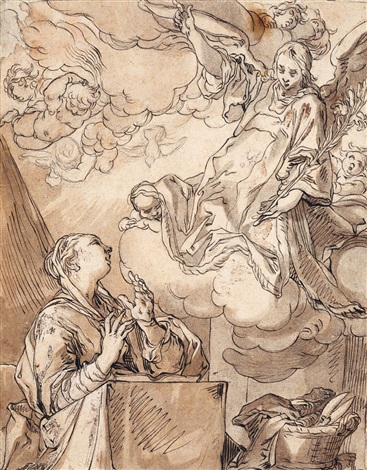
Abraham Bloemaert The Annunciation, c. 1615/1618black chalk with pen and brown ink and brown wash, heightened with white and indented, ondiscolored blue paperoverall: 34.5 ×27.8 cm (13 9/16 ×10 15/16 in.)framed: 57.5 ×43.5 cm (22 5/8 ×17 1/8 in.)Museum Boijmans Van Beuningen, Rotterdam

https://i.pinimg.com/originals/90/ad/49/90ad4935626fcfbfe09323cf361e5ce3.jpg

Hendrick Goltzius The Man with the Potato Nose, c. 1600/1605pen and brown inksheet: 23.8 ×16.7 cm (9 3/8 ×6 9/16 in.)framed: 57.5 ×43.5 cm (22 5/8 ×17 1/8 in.)Museum Boijmans Van Beuningen, Rotterdam

https://i.pinimg.com/originals/33/8c/8a/338c8a26572f808559db668bd4a73ef3.jpg

Abraham Bloemaert The Lamentation of Christ, c. 1625black and white chalk with stumping on light brown papersheet: 14.6 ×26.3 cm (5 3/4 ×10 3/8 in.)framed: 43.5 ×57.5 cm (17 1/8 ×22 5/8 in.)Museum Boijmans Van Beuningen, Rotterdam

http://collectie.boijmans.nl/images/900x450_127967.jpg


Hans Bol April (Taurus) from the series The Twelve Months , c. 1580/1581 pen and brown ink with brown wash, on a circular piece of paper, laid down diameter: 14 cm (5 1/2 in.) framed: 43.5  × 57.5 cm (17 1/8  × 22 5/8 in.) Museum Boijmans Van Beuningen, Rotterdam


https://upload.wikimedia.org/wikipedia/commons/5/5c/Hans_Bol_-_The_Month_May_%28Gemini%29.jpg

Hans Bol May (Gemini) from the series The Twelve Months , c. 1580/1581 pen and brown ink with brown wash, on a circular piece of paper, laid down diameter: 14 cm (5 1/2 in.) framed: 43.5  × 57.5 cm (17 1/8  × 22 5/8 in.) Museum Boijmans Van Beuningen, Rotterdam

https://upload.wikimedia.org/wikipedia/commons/9/9a/Hans_Bol_-_The_Month_June_%28Cancer%29.jpg

Hans Bol June (Cancer) from the series The Twelve Months , c. 1580/1581 pen and brown ink with brown wash, on a circular piece of paper, laid down diameter: 14 cm (5 1/2 in.) framed: 43.5  × 57.5 cm (17 1/8  × 22 5/8 in.) Museum Boijmans Van Beuningen, Rotterdam

https://upload.wikimedia.org/wikipedia/commons/d/d3/Hans_Bol_-_The_month_July_%28Leo%29.jpg

Hans Bol July (Leo) from the series The Twelve Months , c. 1580/1581 pen and brown ink with brown wash, on a circular piece of paper, laid down diameter: 14 cm (5 1/2 in.) framed: 43.5  × 57.5 cm (17 1/8  × 22 5/8 in.) Museum Boijmans Van Beuningen, Rotterdam

https://upload.wikimedia.org/wikipedia/commons/2/27/Hans_Bol_-_The_Month_August_%28Virgo%29.jpg

Hans Bol August (Virgo) from the series The Twelve Months , c. 1580/1581 pen and brown ink with brown wash, on a circular piece of paper, laid down diameter: 14 cm (5 1/2 in.) framed: 43.5  × 57.5 cm (17 1/8  × 22 5/8 in.) Museum Boijmans Van Beuningen, Rotterdam

https://upload.wikimedia.org/wikipedia/commons/5/59/Hans_Bol_-_The_Month_September_%28Libra%29.jpg

Hans Bol September (Libra) from the series The Twelve Months , c. 1580/1581 pen and brown ink with brown wash, on a circular piece of paper, laid down diameter: 14 cm (5 1/2 in.) framed: 43.5  × 57.5 cm (17 1/8  × 22 5/8 in.) Museum Boijmans Van Beuningen, Rotterdam

https://upload.wikimedia.org/wikipedia/commons/b/bb/Hans_Bol_-_The_Month_October_%28Scorpio%29.jpg

Hans Bol October (Scorpio) from the series The Twelve Months , c. 1580/1581 pen and brown ink with brown wash, on a circular piece of paper, laid down diameter: 14 cm (5 1/2 in.) framed: 43.5  × 57.5 cm (17 1/8  × 22 5/8 in.) Museum Boijmans Van Beuningen, Rotterdam

https://upload.wikimedia.org/wikipedia/commons/1/19/Hans_Bol_-_The_Month_November_%28Sagittarius%29.jpg

Hans Bol November (Sagittarius) from the series The Twelve Months , c. 1580/1581 pen and brown ink with brown wash, on a circular piece of paper, laid down diameter: 14 cm (5 1/2 in.) framed: 43.5  × 57.5 cm (17 1/8  × 22 5/8 in.) Museum Boijmans Van Beuningen, Rotterdam
https://upload.wikimedia.org/wikipedia/commons/8/8b/Hans_Bol_-_The_Month_December_%28Capricorn%29.jpg

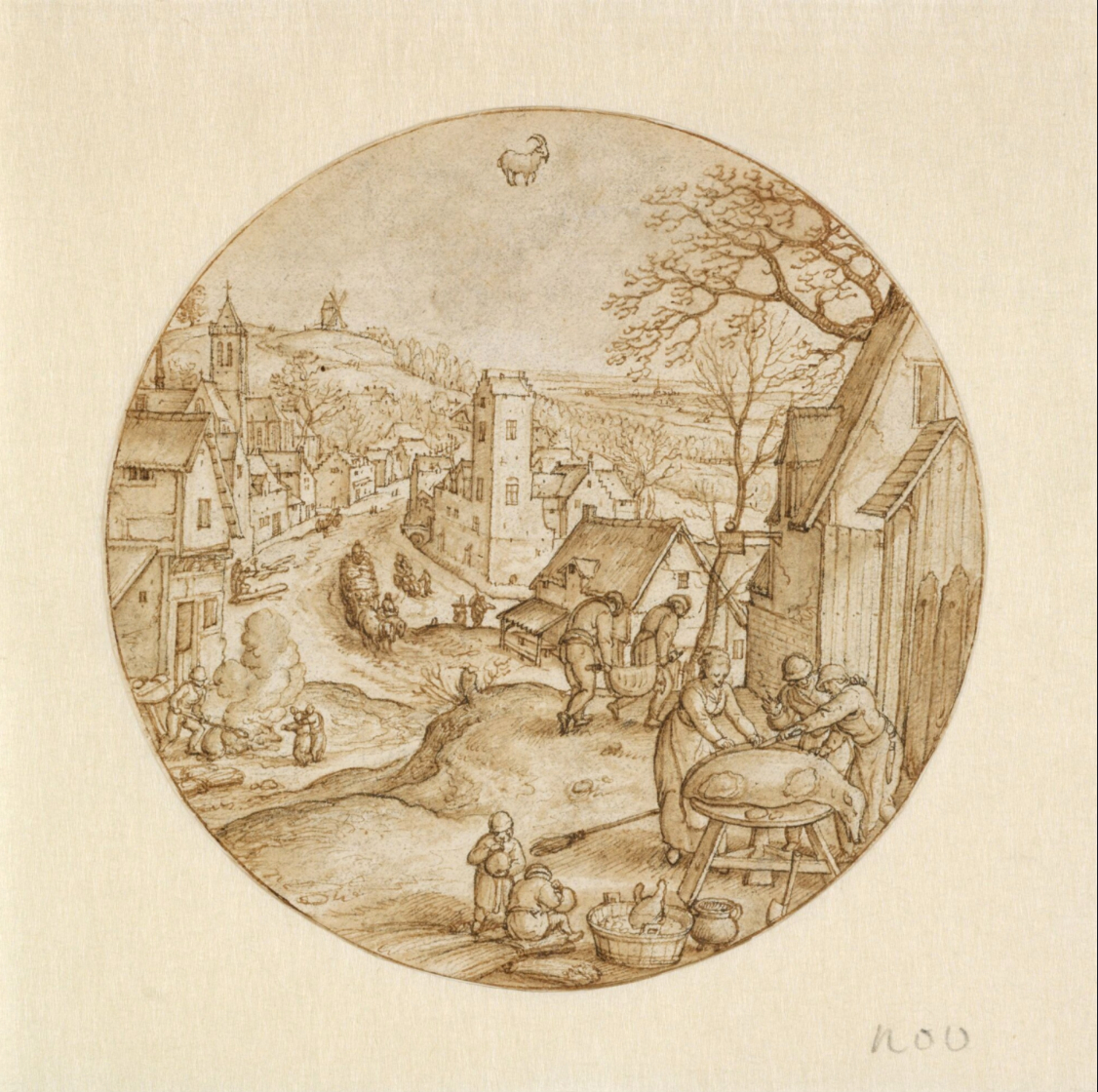
Hans Bol December (Capricorn) from the series The Twelve Months , c. 1580/1581 pen and brown ink with brown wash, on a circular piece of paper, laid down diameter: 14 cm (5 1/2 in.) framed: 43.5  × 57.5 cm (17 1/8  × 22 5/8 in.) Museum Boijmans Van Beuningen, Rotterdam

http://collectie.boijmans.nl/images/900x450_90579.jpg

 Hans Bol The Prodigal Son Squandering His Wealth , 1584 pen and dark brown ink with brown wash, indented overall: 12.4  × 17.9 cm (4 7/8  × 7 1/16 in.) framed: 43.5  × 57.5 cm (17 1/8  × 22 5/8 in.) Museum Boijmans Van Beuningen, Rotterdam


. No. 34 / File Name: 3957-039.

 Hans Bol Forest Landscape with a Stream , 1588 pen and brown ink with gray wash and traces of black chalk overall: 14.6  × 21.2 cm (5 3/4  × 8 3/8 in.) framed: 43.5  × 57.5 cm (17 1/8  × 22 5/8 in.) Museum Boijmans Van Beuningen, Rotterdam


. No. 40 / File Name: 3957-042.

 Maarten van Heemskerck The Triumph of Joseph , 1559 pen and brown ink overall: 18.3  × 26.2 cm (7 3/16  × 10 5/16 in.) framed: 43.5  × 57.5 cm (17 1/8  × 22 5/8 in.) Museum Boijmans Van Beuningen, Rotterdam
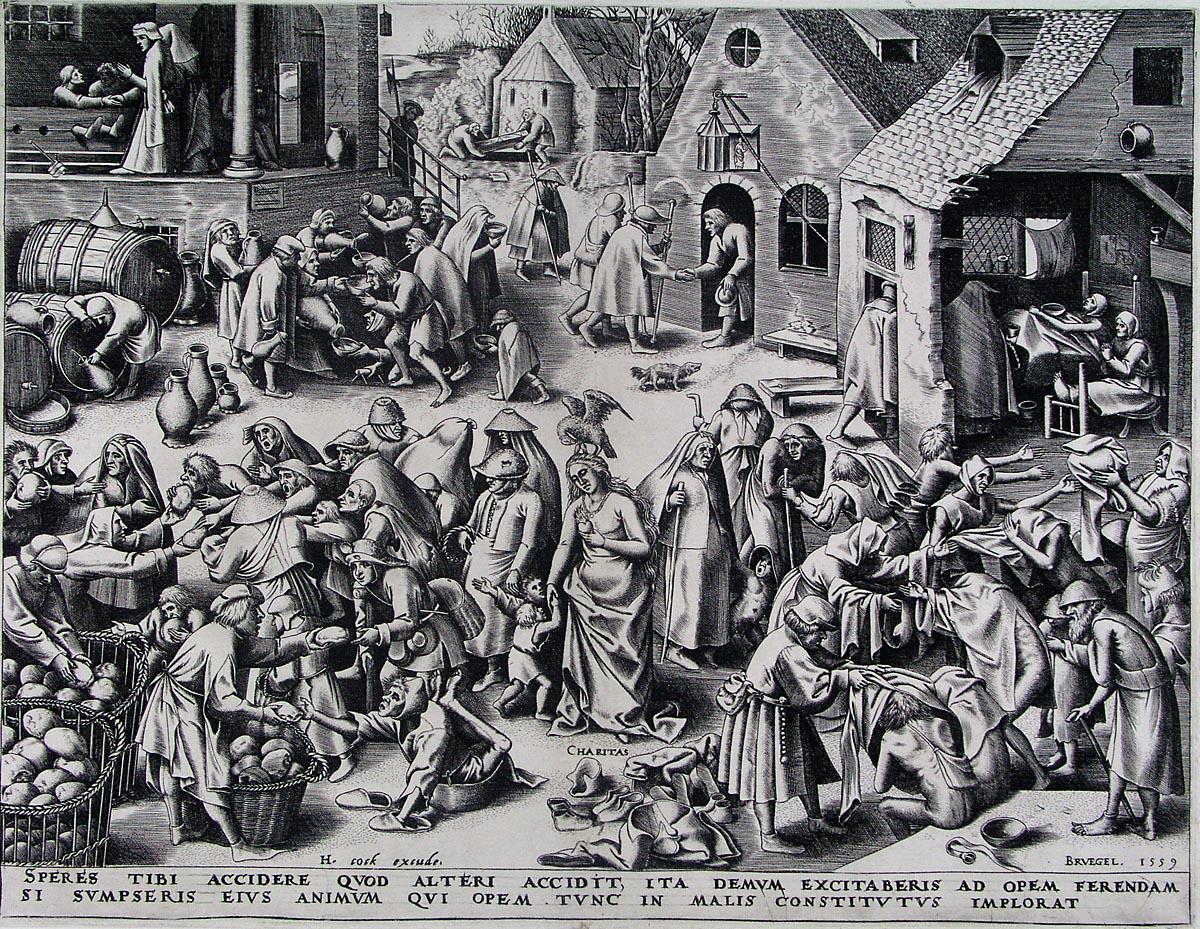
https://uploads2.wikiart.org/images/pieter-bruegel-the-elder/charity.jpg

 Pieter Bruegel Charity , 1559 pen and brown ink, indented overall: 22.4  × 29.3 cm (8 13/16  × 11 9/16 in.) framed: 43.5  × 57.5 cm (17 1/8  × 22 5/8 in.) Museum Boijmans Van Beuningen, Rotterdam

https://www.masterworksfineart.com/wp-content/uploads/2015/10/bruegel2096.jpg

 Pieter Bruegel Fortitude , 1560 pen and brown ink, indented, on paper, laid down overall: 22.5  × 29.6 cm (8 7/8  × 11 5/8 in.) framed: 43.5  × 57.5 cm (17 1/8  × 22 5/8 in.) Museum Boijmans Van Beuningen, Rotterdam  
https://upload.wikimedia.org/wikipedia/commons/3/32/Brueghel_-_Sieben_Tugenden_-_Temperantia.jpg

 Pieter Bruegel Temperance , 1560 pen and brown ink, indented overall: 22.1  × 29.4 cm (8 11/16  × 11 9/16 in.) framed: 43.5  × 57.5 cm (17 1/8  × 22 5/8 in.) Museum Boijmans Van Beuningen, Rotterdam


https://upload.wikimedia.org/wikipedia/commons/thumb/6/6b/Hans_Speckaert_-_The_Battle_of_the_Gods_and_Giants.jpg/669px-Hans_Speckaert_-_The_Battle_of_the_Gods_and_Giants.jpg

 Hans Speckaert The Battle of the Gods and Giants , c. 1575 black chalk with pen and brown ink and brown wash, heightened with white overall: 41.5  × 26.8 cm (16 5/16  × 10 9/16 in.) framed: 52.5  × 68.7 cm (20 11/16  × 27 1/16 in.) Museum Boijmans Van Beuningen, Rotterdam

Portrait of Jan Baertsz., Hendrick Goltzius, 1580 | Museum Boijmans Van Beuningen

 Hendrick Goltzius Portrait of Jan Baertsz , 1580 metalpoint, heightened with white, partially reworked with pen and brown ink, with gouache, on ivory-colored prepared tablet overall: 8.3  × 7.7 cm (3 1/4  × 3 1/16 in.) framed: 43.5  × 57.5 cm (17 1/8  × 22 5/8 in.) Museum Boijmans Van Beuningen, Rotterdam

Portrait of Maritgen Pietersdochter, Hendrick Goltzius, 1580 | Museum Boijmans Van Beuningen

 Hendrick Goltzius Portrait of Maritgen Pietersdochter , 1580 metalpoint, heightened with white, partially reworked with pen and brown ink, with gouache, on ivory-colored prepared tablet overall: 8.2  × 7.5 cm (3 1/4  × 2 15/16 in.) Museum Boijmans Van Beuningen, Rotterdam


http://www.britishmuseum.org/collectionimages/AN00051/AN00051649_001_l.jpg

 Hendrick Goltzius The Sense of Hearing from the series The Five Senses, c. 1595/1596 pen and brown ink and brown wash with traces of black chalk, heightened with white, indented, partially overdrawn in graphite overall: 15.9  × 12.4 cm (6 1/4  × 4 7/8 in.) framed: 43.5  × 57.5 cm (17 1/8  × 22 5/8 in.) Museum Boijmans Van Beuningen, Rotterdam 

https://art.famsf.org/sites/default/files/artwork/saenredam/3185201204400080.jpg


Hendrick Goltzius, The Sense of Smell from the series The Five Senses , c. 1595/1596 pen and brown ink and brown wash with traces of black chalk, heightened with white, indented and partially overdrawn in pencil overall: 15.9  × 12.4 cm (6 1/4  × 4 7/8 in.) framed: 43.5  × 57.5 cm (17 1/8  × 22 5/8 in.) Museum Boijmans Van Beuningen, Rotterdam

https://art.famsf.org/sites/default/files/artwork/saenredam/3185201204400081.jpg


Hendrick Goltzius The Sense of Taste from the series The Five Senses , c. 1595/1596 black chalk, pen and brown ink, and brown wash, heightened with white, indented, and partially overdrawn in graphite overall: 15.9  × 12.4 cm (6 1/4  × 4 7/8 in.) framed: 43.5  × 12.4 cm (17 1/8  × 4 7/8 in.) Museum Boijmans Van Beuningen, Rotterdam
http://collectie.boijmans.nl/images/900x450_19155.jpg

 Abraham Bloemaert Interior of a Cooper's Workshop , c. 1600/1610 black chalk and pen and brown ink with brown and red wash overall: 19  × 24.2 cm (7 1/2  × 9 1/2 in.) framed: 43.5  × 57.5 cm (17 1/8  × 22 5/8 in.) Museum Boijmans Van Beuningen, Rotterdam


https://i.pinimg.com/originals/33/8c/8a/338c8a26572f808559db668bd4a73ef3.jpg

Abraham Bloemaert The Lamentation of Christ , c. 1625 black chalk with pen and brown ink and brown wash, heightened with white and squared overall: 23.1  × 37.8 cm (9 1/8  × 14 7/8 in.) framed: 43.5  × 57.5 cm (17 1/8  × 22 5/8 in.) Museum Boijmans Van Beuningen, Rotterdam 

Robert Rauschenberg: Erasing the Rules


San Francisco Museum of Modern Art
November 18, 2017–March 25, 2018


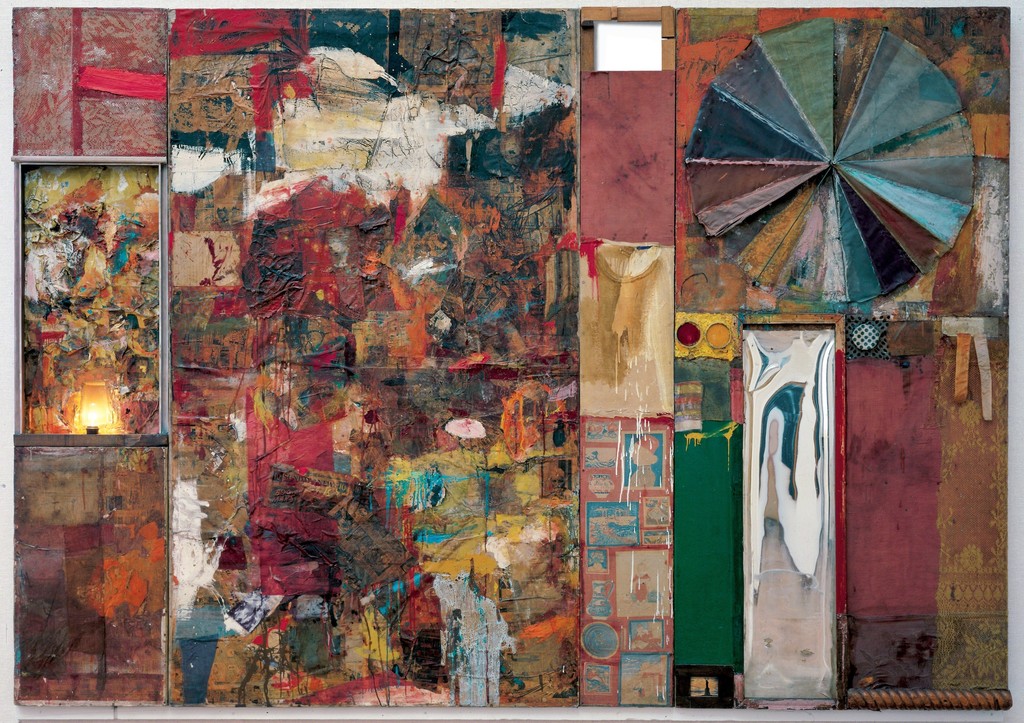
Robert Rauschenberg, Retroactive I, 1963; oil and silkscreen ink on canvas; Wadsworth Atheneum Museum of Art, Hartford, Connecticut, gift of Susan Morse Hilles; © Robert Rauschenberg Foundation

A fuse was lit in the 1953 art world when Robert Rauschenberg convinced artist Willem de Kooning to allow him to erase one of his drawings; fellow artist Jasper Johns executed the inscription within the frame: “ERASED DE KOONING DRAWING ROBERT RAUSCHENBERG 1953.” Now seen as a bombshell that shook the foundations of Abstract Expressionism, Erased de Kooning Drawing (1953) is an outstanding example of Rauschenberg’s irreverent yet incisive style, and it famously pushes the limits of what art can be.

This special work was acquired by the San Francisco Museum of Modern Art (SFMOMA) from Rauschenberg through a gift of Phyllis C. Wattis, an instrumental member of the board of trustees who befriended Rauschenberg late in her life. It now anchors the museum’s exceptional holdings of the artist’s early work and is a highlight in the West Coast exclusive of Robert Rauschenberg: Erasing the Rules, on view at SFMOMA from November 18, 2017 through March 25, 2018.

Formerly presented at Tate Modern, London, and the Museum of Modern Art, New York, the exhibition’s iteration in San Francisco pays special tribute to SFMOMA’s close and longstanding relationship with Rauschenberg. From hosting his first retrospective — organized by Walter Hopps in 1976 — to spearheading the recent Rauschenberg Research Project — an ambitious digital resource published on sfmoma.org that makes art historical and conservation research about Rauschenberg works widely accessible — SFMOMA has long been devoted to this extraordinary and trail-blazing figure. This presentation is also dedicated to Phyllis C. Wattis, in honor of her generosity and cherished relationship with the artist and SFMOMA.

“Robert Rauschenberg and Phyllis Wattis were kindred spirits,” said Gary Garrels, Elise S. Haas Senior Curator of Painting and Sculpture at SFMOMA. “Both were eager to discover new ideas that broke old boundaries. They relished life and art with expansiveness of spirit and always with a twinkle in their eyes.”

A defining figure of contemporary art, Rauschenberg produced a prolific body of work across a wide range of media — including painting, sculpture, drawing, prints, photography and performance — frequently and fearlessly defying the traditional art practice of his time. Robert Rauschenberg: Erasing the Rules marks the first retrospective of the artist’s work in nearly 20 years, celebrating the depth and scope of his six-decade career.

SFMOMA’s presentation emphasizes his iconoclastic approach, his multidisciplinary working processes and frequent collaborations with other artists.

Largely organized chronologically, the exhibition begins with the artist’s wide-ranging early work, from bold blueprint photograms and intimate photographs to his delicate Scatole personali (boxes filled with found objects). These galleries introduce Rauschenberg’s eagerness to experiment with and break from artistic conventions, his innovative approach to materials and his multi-disciplinary and collaborative nature, all of which were driving forces throughout his career.

This early period plays out across three locales: Black Mountain College, a fertile ground for experimentation where Rauschenberg studied with Josef Albers and Hazel Larsen Archer, and undertook his first important collaborations with Susan Weil, Cy Twombly, John Cage and Merce Cunningham; North Africa and Italy, where Rauschenberg traveled with Twombly; and lower Manhattan, where he set up his early studios and worked in close dialogue with Jasper Johns.


Among the many highlights of the exhibition is Automobile Tire Print (1953) in SFMOMA’s collection, made when the artist instructed composer John Cage to drive his Model A Ford through a pool of paint and then across 20 sheets of paper. The layered paper and fabrics in his Black paintings and Red paintings led to the artist’s landmark Combines (1954–64), a body of work that breaks down the boundaries between painting and sculpture.  

https://s3-us-west-2.amazonaws.com/sfmomamedia/media/research-projects/downloads/COLL_72.26.jpg

Collection (1954/1955)

https://d32dm0rphc51dk.cloudfront.net/Cm_2FLdNBeZBcxKhMRCaiA/larger.jpg

and Charlene (1954) are presented together for the first time in almost four decades, providing a rare opportunity to see and compare the range of strategies Rauschenberg explored in the Combines’ formative stages. Monogram (1955–59), his landmark work assembled from a taxidermied goat with a painted tire around its body, anchors this presentation.


The exhibition continues by presenting key periods of the artist’s career in depth, including a gallery devoted to transfer drawings and silkscreen paintings. For the

 https://www.rauschenbergfoundation.org/sites/default/files/images_artwork/60.D001_0.jpg

 https://www.rauschenbergfoundation.org/sites/default/files/images_artwork/60.D008_MoMA.jpg

 https://www.rauschenbergfoundation.org/sites/default/files/images_artwork/60.D007_MoMA.jpg
Thirty-Four Illustrations for Dante’s Inferno (1958–60), Rauschenberg clipped pictures from magazines and newspapers, illustrating Dante’s epic poem with images from contemporary American life. Rauschenberg’s merging of classical themes, art history references, contemporary politics and pop culture culminate in the silkscreen paintings, such as the vibrant Scanning (1963) and Persimmon (1964).

 Rauschenberg also actively explored technological innovations for his performances and artworks in the early 1960s. Collaborations with Billy Klüver and a team of engineers lead to the inclusion of embedded radios in Oracle (1962–65). For the sound-activated work Mud Muse (1968–71) the artist constructed an enormous vat of vigorously spurting and bubbling mud. Originally conceived for an exhibition in Los Angeles and inspired by a hydrothermal basin in Yellowstone National Park, this presentation marks Mud Muse’s first return to California since 1971.

In 1970, Rauschenberg relocated his primary residence and studio to Captiva Island, Florida, where he lived and worked for the rest of his life. These new surroundings prompted the creation of the series Cardboards (1971–72).

 https://s3-us-west-2.amazonaws.com/sfmomamedia/media/uploads/images/ROSA_2013.149_007.jpg

SFMOMA’s Rosalie/Red Cheek/Temporary Letter/Stock (Cardboard) (1971), one of the earliest of the series, encapsulates this move with a mailing label from Rauschenberg’s New York studio to his Captiva address affixed to its front.

Far from isolated in Florida, Rauschenberg constantly welcomed visitors, many of them artists, and continued to travel frequently. A trip to India inspired his striking, lively series Jammers (1975–76); a 1982 visit to China ultimately lead to the launch of ROCI (the Rauschenberg Overseas Culture Interchange), an intense seven-year project encompassing travel, art-making and exhibitions in over 10 countries. Rauschenberg’s own photos from this period of travel appear in many later works including

 https://s3-us-west-2.amazonaws.com/sfmomamedia/media/research-projects/downloads/PORT_99.360.jpg

SFMOMA’s Port of Entry [Anagram (A Pun)] (1998).

SFMOMA’s presentation also will be distinguished by a single gallery presentation featuring Hiccups (1978), an extraordinary work comprising 97 pieces of handmade paper, each with transfer images and collaged bits of fabric and ribbon. Individual sheets are connected with zippers, with the intent that they could be reorganized into any order. In 1999, Rauschenberg gave Hiccups to SFMOMA in honor of Phyllis Wattis. This treasured work will be installed as a continuous frieze around the perimeter of a gallery.

The exhibition culminates with Rauschenberg’s late work, including his series Gluts (1986–94), assemblages of scrap-metal that point to the excessive consumption of American society, yet also incorporate humor.

https://www.rauschenbergfoundation.org/sites/default/files/styles/zoom/public/images_artwork/91.157_0.jpg?itok=Jl8sE5WK&slideshow=true&slideshowAuto=false&slideshowSpeed=4000&speed=350&transition=fade

The artist’s metal paintings of the 1990s, such as Holiday Ruse (Night Shade) (1991), feature subtly layered images silkscreened onto sheets of aluminum and bronze with tarnishing agents. The color transfer paintings of the 1990s and 2000s employ photographs printed with environmentally-friendly inks via cutting-edge digital printers and image-editing software, a testament to the artist’s ongoing embrace of emerging technologies and materials.

About Robert Rauschenberg

Born in Port Arthur, Texas, Robert Rauschenberg (1925–2008) was creative from a young age, and active in school theatre as a costume and set designer throughout high school. He attended the University of Texas, Austin, before he was drafted into the United States Navy. After his honorable discharge in 1945, he studied at the Kansas City Art Institute and the AcadĆ©mie Julian in Paris, France. Later he attended Black Mountain College in North Carolina, where he studied with Josef Albers, among others.

Rauschenberg launched his artistic career in the early 1950s, during the peak of Abstract Expressionism. Challenging this painterly tradition with an egalitarian approach to materials, he brought objects and images from the everyday world into his art. Working alone as well as in collaboration with artists, dancers, musicians and writers, Rauschenberg invented new interdisciplinary forms of artistic practice that set the course for present day art. He developed new modes of performance work, organized collaborative projects that crossed the boundaries between different mediums and different cultures and created works that merged traditional art materials with ordinary objects, found imagery and the cutting-edge technology of an emergent digital age. Major exhibitions include Robert Rauschenberg: A Retrospective (Solomon R. Guggenheim Museum, 1997); Robert Rauschenberg: The Early 1950s (Menil Collection, 1991); Robert Rauschenberg: The Silk-Screen Paintings, 1962–64 (Whitney Museum of American Art, 1990); and Robert Rauschenberg (National Collection of Fine Arts, 1976).

Rauschenberg’s work took him throughout the U.S. and across the globe, including Central and South America, Asia, Europe and Africa. From 1970, he worked from his home and studio on Captiva Island, Florida.

Catalogue

Robert Rauschenberg: Erasing the Rules is accompanied by a richly illustrated catalogue, which examines the artist’s entire career across a full range of mediums. Edited by Leah Dickerman and Achim Borchardt-Hume, the book features commissioned essays by eminent scholars and emerging new writers, including Yve-Alain Bois, Andrianna Campbell, Hal Foster, Mark Godfrey, Hiroko Ikegami, Branden W. Joseph, Ed Krčma, Michelle Kuo, Pamela M. Lee, Emily Liebert, Richard Meyer, Helen Molesworth, Kate Nesin, Sarah Roberts and Catherine Wood. Each essay focuses on a specific moment in Rauschenberg’s career, exploring his creative production across disciplines. Integrating new scholarship, documentary imagery, and archival materials, this is the first comprehensive catalogue of Rauschenberg’s career in 20 years.

Designing English: Graphics on the Medieval Page,

The origins of early English graphic design are explored in a new exhibition opening at the Bodleian Libraries' Weston Library.

Image of The Twenty Jordans, MS, Ashmole 1413

 Diagnosing disease from the colour of urine was common in medieval medicine; almost five hundred copies survive of writings in English alone on this topic.

Designing English: Graphics on the Medieval Page, open from 1 December 2017, brings together a stunning selection of manuscripts and other objects to uncover the craft and artistry of Anglo-Saxon and medieval scribes, painters and engravers.

Designing English looks at the skills and innovations of these very early specialists who worked to preserve, clarify, adorn, authorize and interpret writing in English. For almost a thousand years most texts had been written in Latin, the common European language. Beyond the traditions established for Latin, books in English were often improvisatory, even homespun, but they were just as inventive and creative. In an age when each book was made uniquely by hand, each book was an opportunity for redesigning. The introduction of the English text posed questions: How did scribes choose to arrange the words and images on the page in each manuscript? How did they preserve, clarify and illustrate writing in English? What visual guides were given to early readers of English in how to understand or use their books?

The exhibition explores all elements of design, from the materials used, such as the size and shape of animal skins used to create parchment, to the design of texts for different uses, such as for performing songs, plays or music. Medical texts and practical manuals feature alongside ornate religious texts, including rare examples of unfinished illustrations that reveal the practical processes of making pages and artefacts. The use of English is traced from illicit additions made to Latin texts, to its more general, every day use, and spread to more ephemeral formats.

The exhibition features incredible early manuscripts held in the Bodleian collections, one of the largest medieval collections in the UK, alongside loan items from the Ashmolean Museum, Oxford and the British Museum.

Highlights of Designing English include:


Image of the Macregol Gospel
  • The Macregol Gospels, one of the treasures of the Bodleian Libraries, dating from Ireland in around 800 CE, with English translations added to the original Latin text;
  • English translations of hymns composed by Caedmon (657-680), an illiterate cowherd who lived at Whitby Abbey and is the first named English poet;
Image of the Alfred Jewel
  • The Alfred Jewel, an ornate enamel and gold jewel on loan from the Ashmolean Museum that contains the inscription 'Alfred ordered me to be made'. The jewel is widely believed to have been commissioned by King Alfred the Great (849-899 BCE), who championed the use of English;
  • Gravestones and other medieval objects engraved with English text, including an Anglo-Saxon sword and a gold ring found at Godstow Abbey, Oxford;
  • Medical texts such as revolving 'volvelle' diagrams, magical charms and colourful drawings and diagrams for doctors;
  • Some of the earliest known works in the English language, including Geoffrey Chaucer's The Canterbury Tales and early drama and songs; and
  • Examples of intricate texts with colour coded instructions on how to read them, such as an English translation of the Bible which may have belonged to Henry VI.
Designing English is curated by Daniel Wakelin, Jeremy Griffiths Professor of Medieval English Palaeography at the University of Oxford, one of the few posts in the world dedicated to the study of medieval English manuscripts.
Professor Wakelin said:
'Medieval writers had to be graphic designers every time they wrote or carved their words. Tracing the earliest uses of English, from illicit annotations on Latin texts, to more everyday jottings in ephemeral formats, this exhibition celebrates the imagination and skill of these early writers. Their craft and inventiveness resonates today when digital media allow users to experiment with design through word processing, social media and customized products.'
Richard Ovenden, Bodley's Librarian said:
Image of The Canterbury Tales'The Bodleian Libraries holds one of the most important collections of medieval manuscripts in the world, and this exhibition celebrates all aspects of the ingenuity and craftsmanship that went into some of the most beautiful, and everyday items that still survive today. The exhibition provides an intriguing and surprising history of English literature in one room.'
To show the likeness of these medieval documents to modern craft, Designing English will, until 11 March 2018, be exhibited alongside Redesigning the Medieval Book: a display of contemporary book arts inspired by the exhibition. The exhibited contemporary artworks include calligraphy, prints, embroidery, pop-up books, videos, games and jewellery.
The exhibition will be opened by award-winning designer Jay Osgerby, who with Edward Barber, designed the new Bodleian Chair. The exhibition runs until 22 April 2018 and is accompanied by two new titles from Bodleian Library Publishing. A beautifully illustrated exhibition catalogue, Designing English: Early Literature on the Page, written by exhibition curator Daniel Wakelin is available in hardback for £30. A second title, Revolting Remedies from the Middle Ages, brings together weird and wonderful medical tips for everyday use in medieval England, some of which are displayed in the exhibition. Both titles are available to preorder from www.bodleianshop.co.uk.
An exciting programme of talks and events, including family-friendly activities, will be held over the course of the Designing English exhibition, starting with a special opening weekend celebration at the Bodleian's Weston Library on 2 December. For more information visit www.bodleian.ox.ac.uk/designing.
The Weston Library is one of the newest cultural destinations in Oxford and has welcomed more than 2 million visitors since opening to the public in March 2015. The Library has also won numerous ar

Two Gustav Klimt masterpieces on loan to the National Gallery of Canada


The National Gallery of Canad,. Ottawa, (NGC) is currently offering a rare opportunity to view three paintings by Gustav Klimt (1862-1918), one of the greatest painters of the twentieth century, owing to a long term loan from a private collection. Portrait of Elisabeth Lederer (1914-16),  a commanding example of Klimt’s trademark female portraiture, and Forest Slope in Unterach on the Attersee (1916), a lush example of Klimt’s lesser-known, yet equally impressive landscape paintings, are now on view in the European galleries, along with  

 https://dg19s6hp6ufoh.cloudfront.net/pictures/612292731/large/Gustav_Klimt-Hope_I__1903.jpeg?1401003151


Hope I (1903), which the Gallery purchased in 1970. Hope 1 is the only painting by Klimt in a Canadian public collection.

“This long-term display is an unprecedented opportunity to see three exceptional Klimt paintings together in Canada, ”  said NGC Deputy Director and Chief Curator Paul Lang. “It enables the Gallery to offer a complete survey of the artist’s work spanning two decades of his career. A truly transformative loan, these works will allow our visitors to experience the full visual splendor of one of the most inventive artists of his day. ”

The most renowned member of the fin-de-siĆØcle Art Nouveau movement known as the Vienna Secession, Gustav Klimt is celebrated for his painterly expressiveness and extravagant devotion to colour and surface materiality. He sought to break with the past and propose a new style and experimental mode of expression commensurate with the realities of modern life.

http://artgen.billerantik.de/articles/Klimt_A2/073_D.jpg


https://www.gustav-klimt.com/images/paintings/Portrait-of-Baroness-Elisabeth-Bachofen-Echt.jpg

Commissioned in 1914 by the artist’s most important patrons, the wealthy Viennese couple August and Szerena Lederer, Portrait of Elisabeth Lederer (1914-16) portrays their twenty-year-old daughter. Elisabeth Lederer stands life-sized, her expression one of elegant self-confidence and youthful freshness.

 “Klimt has transformed her cloak into a dazzling, quasi-abstract array of ornamentation and placed her on a brightly-coloured carpet that flattens the space while simultaneously drawing the woman out toward the viewer,”  says Curatorial Assistant and Provenance Researcher Kirsten Appleyard.

“Surrounding her is an assortment of Chinese figures, a nod to the Lederers’ reputation as erudite collectors and a testament to the artist’s own connoisseurship of Asian art. While earlier portraits by the artist seduce via the rich physicality of their ornament—often conveyed in a gold-encrusted mosaic style—here Klimt relies on exotic marvels to evoke curiosity and command attention. ”

“While the artist is primarily celebrated for his portraits and allegories, ”  explains Appleyard, ‘’his landscapes comprise almost one half of his oeuvre from the last two decades of his life.” Indeed, Klimt devoted himself intensely to this genre, retreating every summer to the countryside around Lake Attersee in Upper Austria to paint and reflect.

https://www.gallery.ca/sites/default/files/styles/ngc_scale_1200/public/klimt_forest_slope_photojuantrujillo.jpg?itok=Ug6Eg8I0&timestamp=1511884594

Like the majority of Klimt's landscapes, Forest Slope in Unterach on the Attersee (1916) follows a square format achieved through the use of optical devices such as a telescope or opera glasses. “In this carefully crafted two-dimensional painting, planes are artificially stacked one upon the other, with powerful strokes of related colours creating an overall mood of meditative calm,”  says  Appleyard. ‘’Klimt’s landscape is withdrawn and timeless—a tranquil daydream. While echoes of CĆ©zanne’s ordered structures and Van Gogh’s expressive handling can be felt, it is nevertheless a work of exceptional daring and originality, ”  she adds.

Tuesday, December 5, 2017

Christie’s 19 th Century European & Orientalist Art 14 December 2017

 http://www.christies.com/media-library/images/features/articles/2017/12/14/delacroix/in-text-55174398_012.jpg?w=780


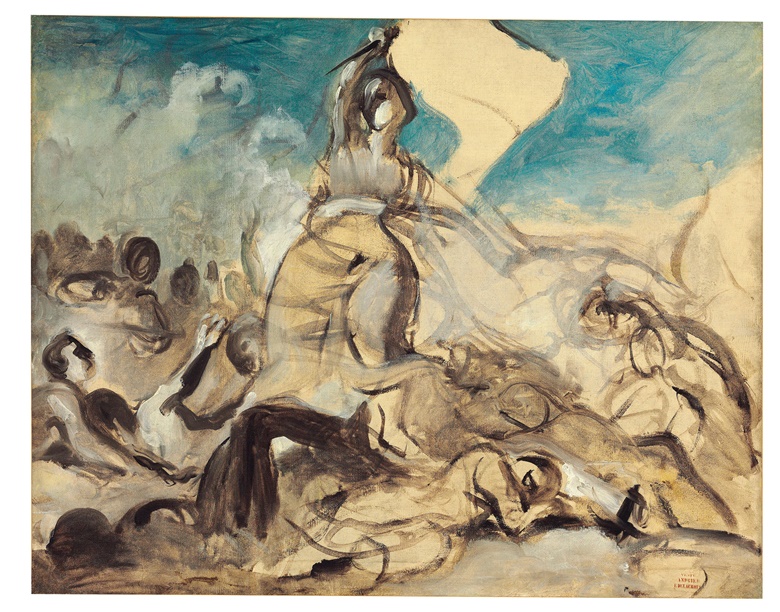
 EUGƈNE DELACROIX (FRENCH, 1798 - 1863) Le 28 juillet – la libertĆ© guidant le peuple, 1830 stamped ‘VENTE/ANDRIEU/E. DELACROIX’ (lower right) oil on canvas, 25 x 32 in. (64.5 x 81.3 cm.), painted in 1830. Estimate: £700,000 - 1,000,000

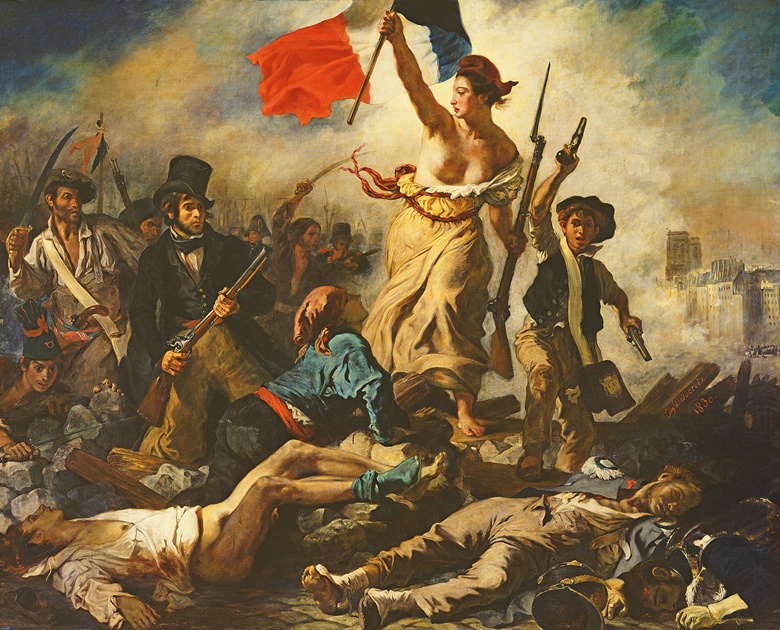
On 14 December 2017, Le 28 juillet – la libertĆ© guidant le peuple, 1830 by EugĆØne Delacroix (estimate: £700,000 - 1,000,000) will lead Christie’s Classic Week 19 th Century European & Orientalist Art auction . This vibrant and spontaneous autograph painting is the only known sketch in oil that fully outlines the intended final composition for 

http://www.christies.com/media-library/images/features/articles/2017/12/14/delacroix/delacroixlibertyleadingthepeoplelenslouvrebridgemanxir3692.jpg?w=780

Delacroix’s masterpiece La libertĆ© guidant le peuple , in the collection of Le Louvre, Paris. Providing a rare insight into Delacroix’s creative process, the fast and fluid lines of the final composition takes form with the figure of Liberty at the centre, surrounded by the fallen men who populate the primary plane. A pivotal figure, looking up in hope and admiration, is present to the left in both the preparatory and the final painting. 

Further highlights range from

 Gustave Courbet - Le bord de mer Ć  Palavas (1854).jpg

a contemplative seascape by Gustave Courbet, Bords de la Mer, Palavas (estimate: £200,000 - 300,000),

https://image.invaluable.com/housePhotos/christies/55/226055/H0027-L08667610.jpg

to a bustling street scene, Mercato a Costantinopoli, by Alberto Pasini, circa 1880 (estimate: £200,000 - 300,000).


Monday, December 4, 2017

The Charterhouse of Bruges: Jan van Eyck, Petrus Christus, and Jan Vos


The Frick Collection

September 18, 2018, through January 13, 2019

For the first time in twenty-four years and only the second time in their history, two masterpieces of early Netherlandish painting commissioned by the Carthusian monk Jan Vos will be reunited for The Charterhouse of Bruges: Jan van Eyck, Petrus Christus, and Jan Vos.

 These works, 

 https://upload.wikimedia.org/wikipedia/commons/3/37/Jan_van_Eyck_-_Virgin_and_Child%2C_with_Saints_and_Donor_-_1441_-_Frick_Collection.jpg
Jan van Eyck and Workshop,  The Virgin and Child with St. Barbara, St. Elizabeth and Jan Vos , ca. 1441 –43.  oil on  panel , 8 5/8 × 24 1/8 in ches, The Frick Collection, New York
The Frick Collection’s Virgin and Child with St. Barbara, St. Elizabeth, and Jan Vos, commissioned from Jan van Eyck and completed by his workshop, 

https://upload.wikimedia.org/wikipedia/commons/4/44/Petrus_christus%2C_madonna_exeter%2C_1450_ca._01.JPG 
Petrus Christus, The Virgin and Child with St. Barbara and Jan Vos , c. 1445-50 , oil on panel, 7 5/8 x 5 ½ in ches, Staatliche  Museen  zu Berlin Preussischer Kulturbesitz, GemƤldegalerie,  Berlin  

and The Virgin and Child with St. Barbara and Jan Vos (known as the Exeter Madonna, after its first recorded owner) , painted by Petrus Christus and now in the GemƤldegalerie, Berlin, will be shown with a selecti on of objects that place the m in the rich monastic context for which they were created . 

The exhibition will explore the works’ patronage, function, reception, and spiritual environment , offering a focused look at devotional practices in Bruges during the m id-fifteenth century. 

The Charterhouse of Bruges: Jan van Eyck, Petrus Christus, and Jan Vos will be on view in the museum’s Cabinet Gallery and is organized by Emma Capron, the Frick’s 2016–18 Anne L. Poulet Curatorial Fellow. 

In 1441, Jan Vos was elected prior of the Bruges Charterhouse of Genadedal, an important monastery patronized by the dukes of Burgundy and some of the city’s foremost patrician families. Vos commis sioned at least four works during his decade -long tenure at the helm of the prestigious charterhouse, but only the Frick s Virgin and Child and the Exeter Madonna survive today. Though different in scale, the two panels share remarkably close imagery, composition, and fine execution. Each depicts Vos being introduced to the Virgin by St. Barbara within an elaborate portico that opens onto a panoramic cityscape. Both panels achieve remarkable monumentality while incorporating myriad minute details. Together, they afford rare and valuable insights into the patronage of leading monastic figures in fifteenth century Bruges. 

The Carthusian Order is known for its strict adherence to the principles of austerity, silence , and seclusion, with its monks entirely removed from worldly affairs and their lives dominated by solitary prayer in their cells. These ascetic ideals belied the order’s complex attitude toward devotional works: at once valued as vital tools, elaborate images were at times shunned as distracting luxuries. Nonetheless, late medieval charterhouses became filled with sculpture, illuminated books, tapestries  and panel paintings, material accumulation often bolstered by lay patronage. The charterhouse of Genadedal is a prime example of that phenomenon. 

In addition to the splendid Frick and Exeter Virgins another panel can be connected to the monastery: 

https://www.metmuseum.org/toah/images/hb/hb_49.7.19.jpg

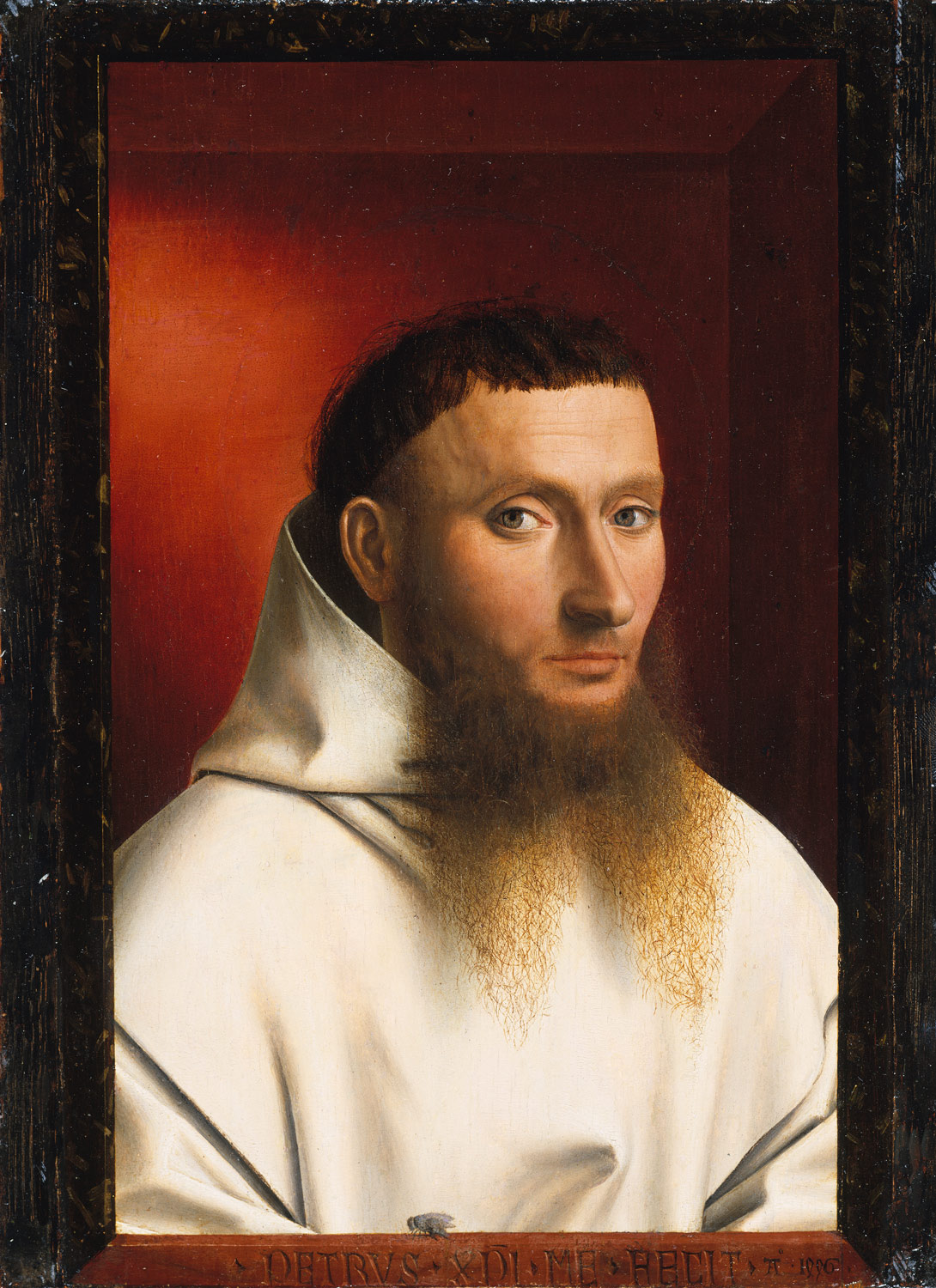
 Petrus Christus, Portrait of a Carthusian , signed and dated 1446 on the lower edge of the fictive frame, oil on panel, 11 ½ x 8 ½ inches, The Metropolitan Museum of Art,
Petrus Christus’s Portrait of a Carthusian at  the Metropolitan Museum of Art. The portrait, arguably one of the most beautiful created during the early Renaissance, will be part of the Frick exhibition. 

By discussing the Frick and Exeter Virgins in conjunction with manuscripts from the monastery’s library, sculptures, and other devotional aids, the exhibition will show how such images shaped the order’s contemplative life, liturgical services, and commemorative activities. 

The imagery of the two paintings also will be examined in relation to the centrality of the Virgin in Carthusian worship. Despite their similarities and though they were both intended to be seen within the confines of the charterhouse, the Frick and Exeter Virgins served entirely different functions. The Exeter Madonna’s diminutive size points to its use as an object of private devotion for Vos, meant for the intimacy of his cell, while the Frick Virgin was first described in contemporary documents as a memorial to Vos. It was to be displayed in a public part of the monastery, where, it was intended to prompt prayers for the repose of his soul. 

The Charterhouse of Bruges: Jan van Eyck, Petrus Christus, and Jan Vos will be accompanied by a fully illustrated scholarly catalogue published by T he Frick Collection in association with D Giles Ltd., London. It will include essays by Maryan Ainsworth, Curator of European Paintings, The Metropolitan Museum of Art; Till -Holger Borchert , Director, Musea Brugge, Bruges; and Emma Capron, Anne L. Poulet Curatorial Fellow, The Frick Collection . 

Friday, December 1, 2017

Whistler and the American Etching Revival

The Nelson-Atkins Museum of Art Kansas City, MO

December 1 2017 - May 29 2018 


“In an exhibition of etchings, the etchings are the last things people come to see,” joked James Abbott McNeill Whistler (1834-1903), America’s premier etcher.

In truth, the etchings that Whistler himself created were incredibly popular. They awed the public, critics and fellow artists alike. Whistler’s talents earned him a reputation for being among the most influential and internationally respected modern etchers. The prowess and technical innovations he brought to the medium sparked a renewed interest in this centuries-old printmaking method.

Although Whistler’s etchings exist in multiples, each impression he created was a unique work of art. This helped etching achieve recognition as an artist’s medium, elevating it beyond commercial craft. Following Whistler’s lead, other American artists experimented with etching as a serious art form. Joseph Pennell, Whistler’s biographer and an acclaimed etcher, summarized the power and essence of the medium: “A great etching by a great etcher is a great work of art . . . on a small piece of paper, expressed with the fewest vital indispensable lines of the most personal character.”

This installation of American etchings celebrates Whistler’s achievements. It also showcases the wide-ranging possibilities of etching during the American Etching Revival of the late-19th and early-20th centuries and beyond.


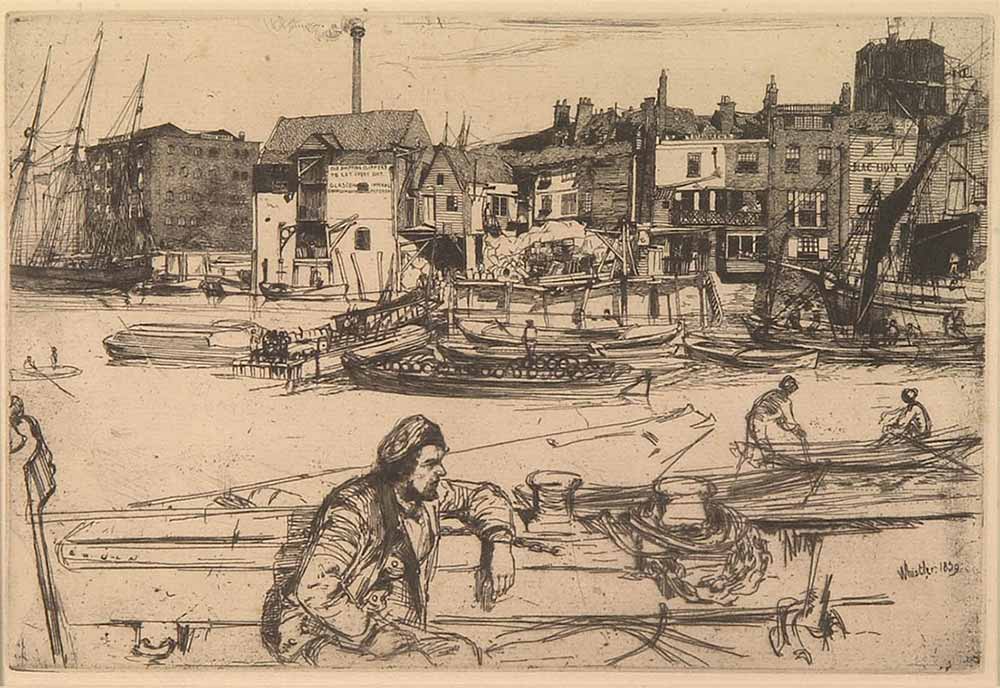
Black Lion Wharf by James Abbott McNeill Whistler
 
James Abbott McNeill Whistler, American (1834-1903). Black Lion Wharf, 1859. Etching on paper, Overall: 5 15/16 x 8 13/16 inches. Purchase: William Rockhill Nelson Trust, 33-284.

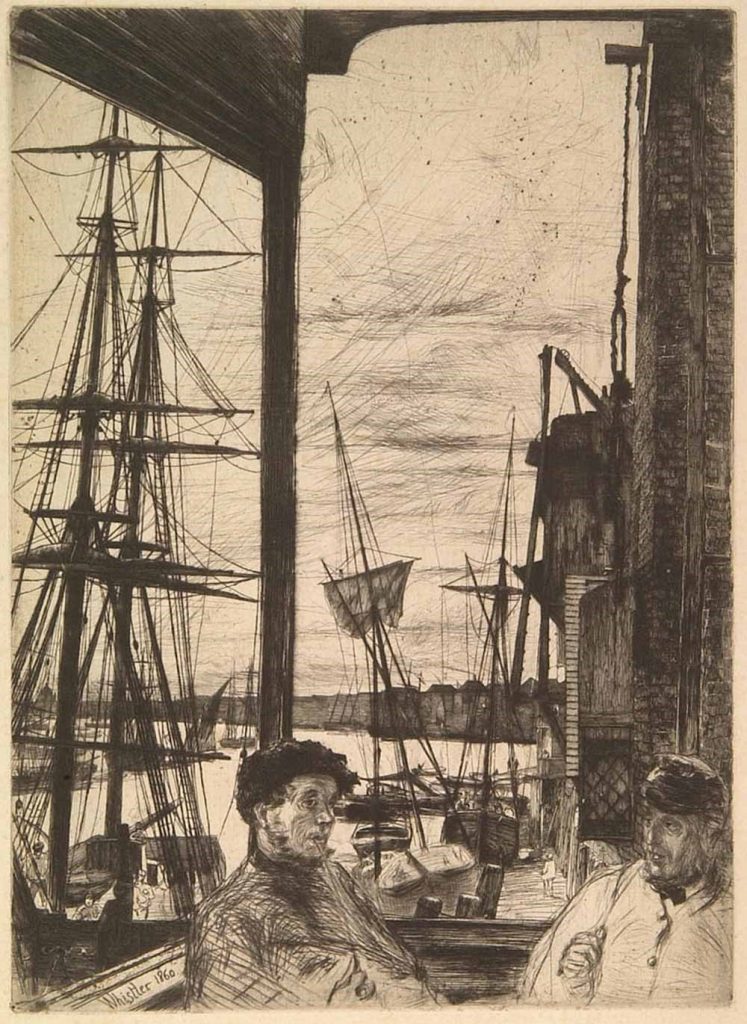
James Abbott McNeill Whistler (American, 1834-1903). Rotherhithe, 1860. Etching, Overall: 10 13/16 x 7 3/4 inches. Purchase: William Rockhill Nelson Trust, 33-290.

Doug Osa:

My etching, "11th and Mulberry", will be included in the upcoming show Fine Lines: Whistler and the American Etching Revival on view at the Nelson-Atkins Museum of Art, Kansas City, MO:


Also See


http://www.tfaoi.com/am/5am/5am148.jpg

James McNeill Whistler,The Japanese Dress, 1890s, pencil, black chalk and pastel on brown paper, mounted on board, Bequest of George W. Davison (B.A. Wesleyan 1892), 1952.D1.10;

http://www.tfaoi.com/am/5am/5am149.jpg

J. Alden Weir (1852-1919), The Haystacks, etching and drypoint, some pen and blue ink, working proof, Gift of George W. Davison (B.A. Wesleyan 1892), 1947.D1.249;


Whistler & Company: The Etching Revival

http://www.readingpublicmuseum.org/img/exhibit_whistler_gallery-1.jpg

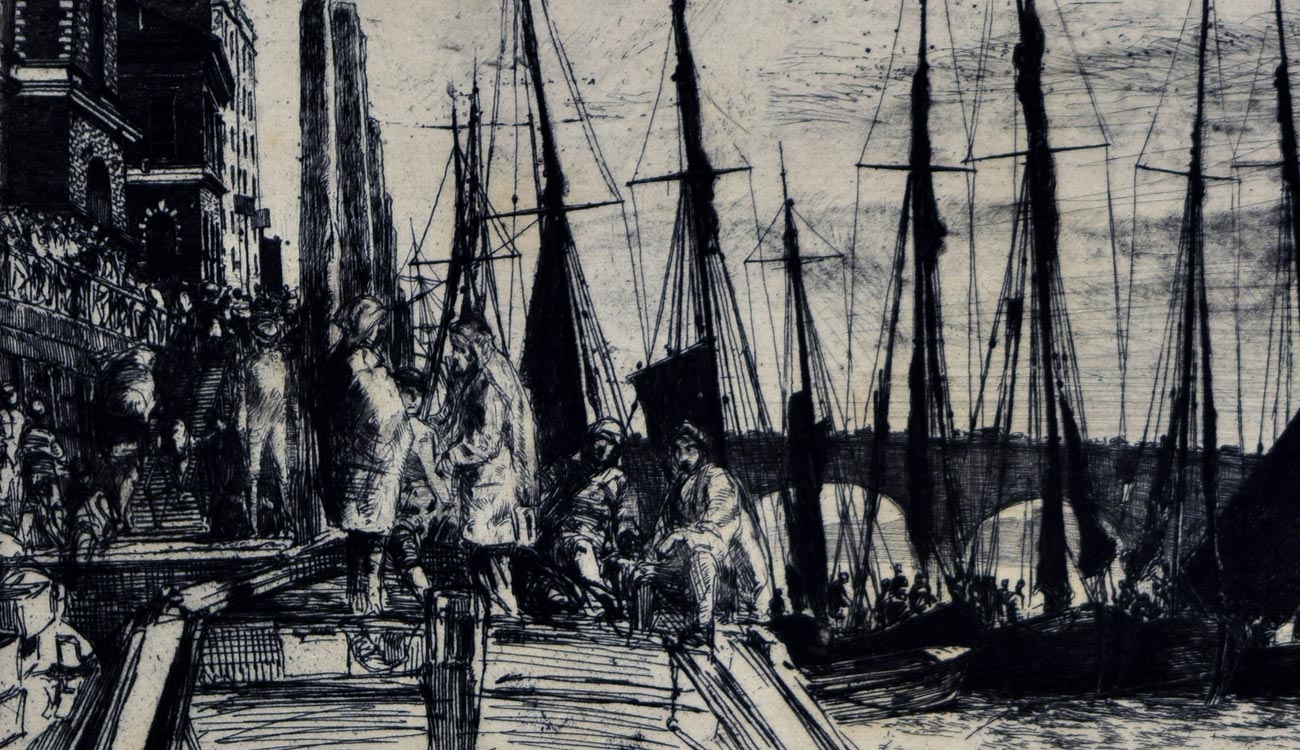
James Abbott McNeill Whistler (America, 1834 — 1903), Billingsgate, 1859, etching, 5 15/16 x 8 7/8 inches, Museum Purchase, 2003.5.1C

In an open doorway of a shop sits an old woman in right profile, hands in lap, and head bent forward in sleep. On the shelves above and beyond her are various odds and ends.

James Abbott McNeill Whistler (American,1834 – 1903) La Vieille aux Loques (The Old Rag Woman), 1858, etching and drypoint, state: iv/iv, Gift, Kathryn M. Klingeman, 2006.4.1.

 
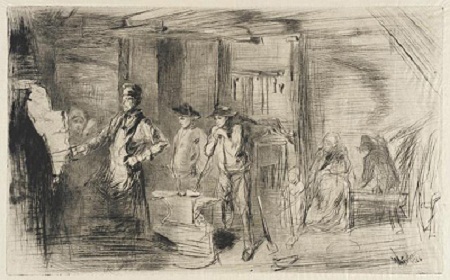
https://lacma.files.wordpress.com/2012/05/the-forge1.jpg?w=600

The Forge (1861)
by James Abbott McNeill Whistler Reading Public Museum